


Where Northern California modernism meets one of the strangest chapters in coastal history.
Book now
Why DNA Hotels loves it
A 62-acre retreat above Tomales Bay with a remarkable past that stretches from Guglielmo Marconi’s pioneering wireless station to Synanon and decades as a conference centre.
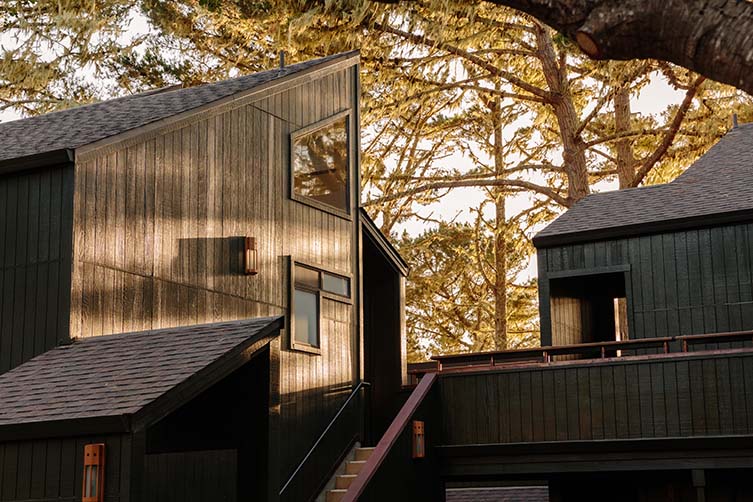
Home Studios has reworked the property through the lens of Northern California’s Third Bay Tradition, using cedar, ceramics, earthy colours and locally made pieces rather than conventional resort polish.
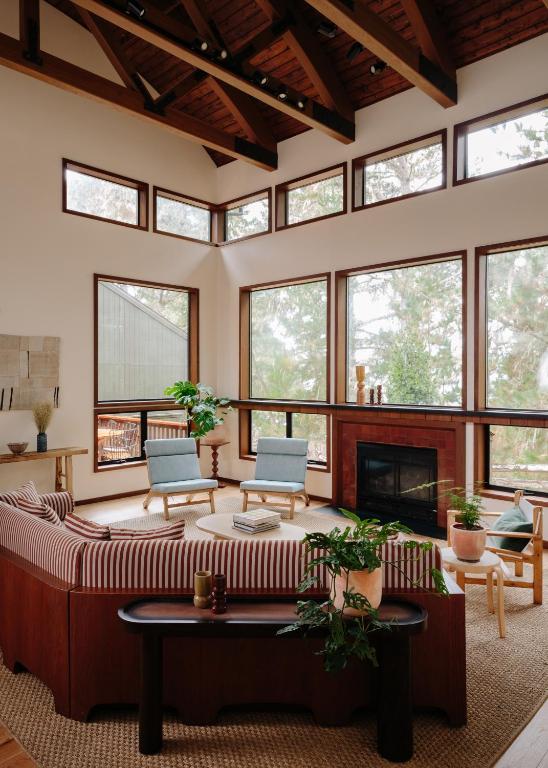
The atmosphere is deliberately more summer camp than luxury hotel: communal lounges, fire pits, trails, no televisions and a strong connection to West Marin’s landscape, food culture and creative community.
The Stay
Lodge at Marconi - Marshall, California, USA
A Signal from the Past
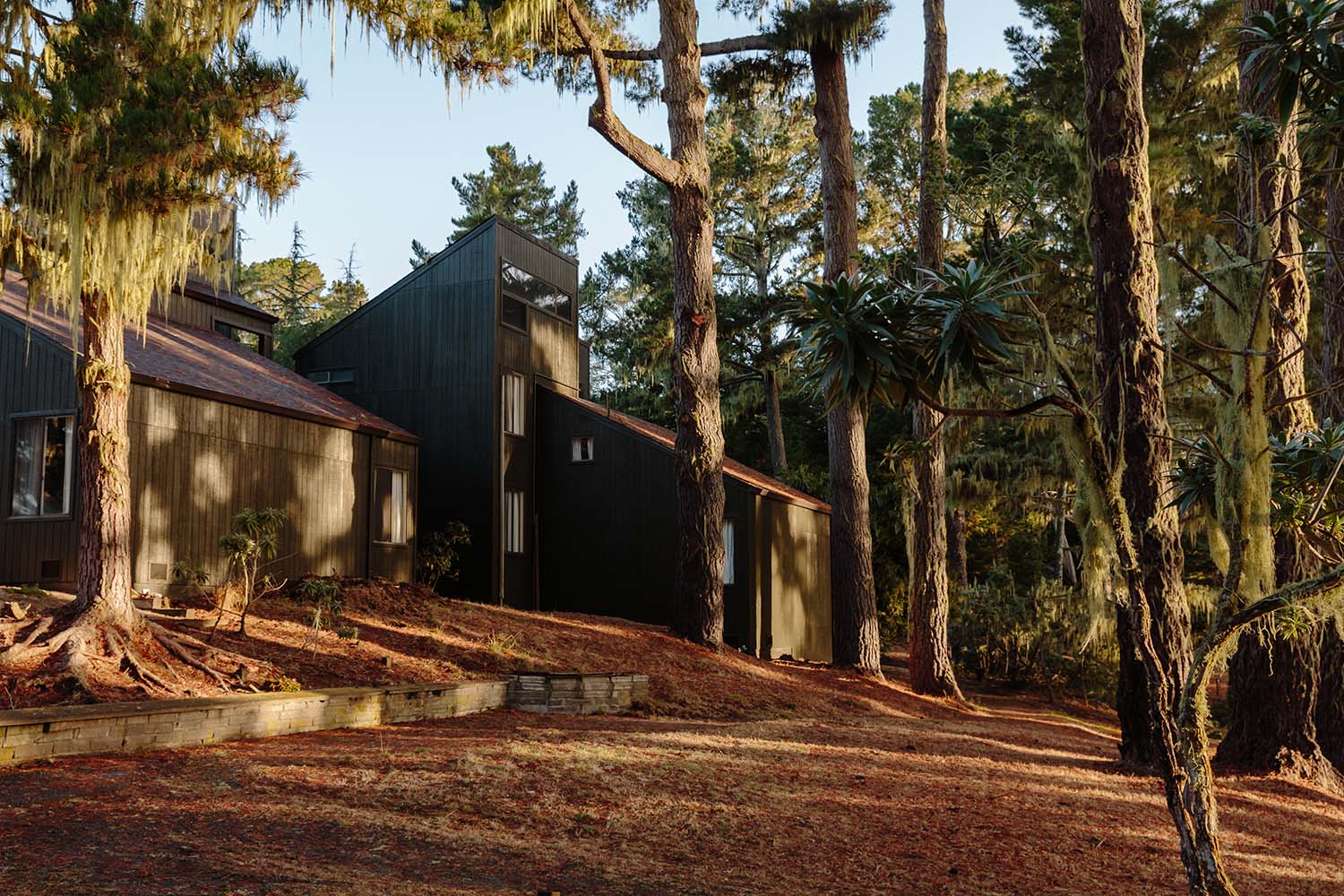
Few hotels arrive with quite this much history already embedded in the land. Lodge at Marconi sits high above Tomales Bay in West Marin, an hour north of San Francisco, within what is now Marconi State Historic Park. The story begins in the early 20th century, when Italian inventor Guglielmo Marconi chose this stretch of Northern California coast as the site of a trans-Pacific wireless receiving station. A hotel was built alongside it for employees and visitors of the Marconi Company, making hospitality part of the site almost from the beginning. What followed is considerably less conventional. The property later became a rehabilitation centre run by Synanon, the organisation that evolved into the notorious Church of Synanon, before finding another life as a conference and retreat centre. New buildings were added in the 1970s by architect Ellis Kaplan, and over the decades the estate accumulated an unusually layered architectural and cultural history. Today, all of those chapters are still quietly present.
Third Bay, Not Generic California
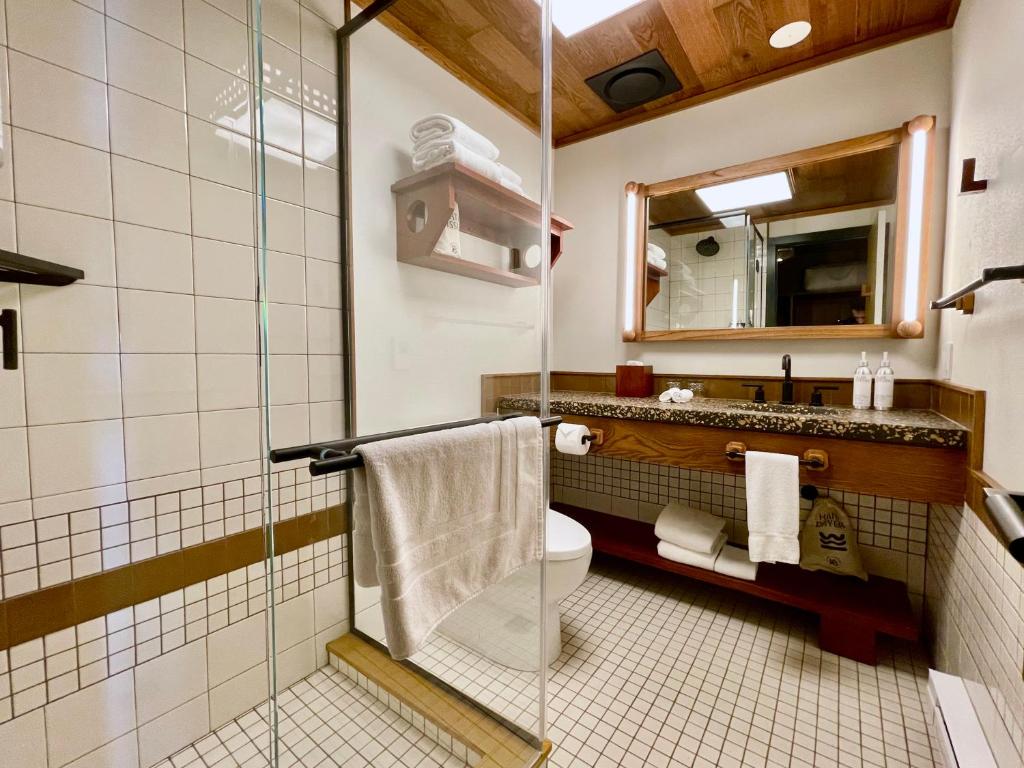
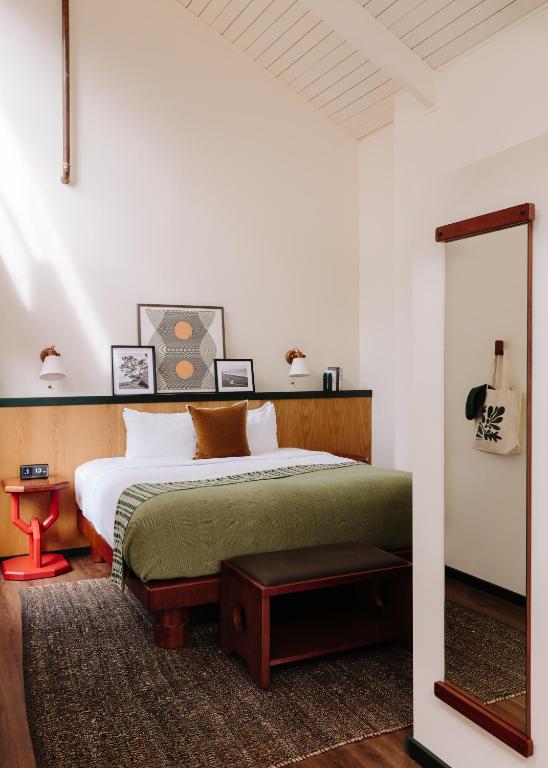
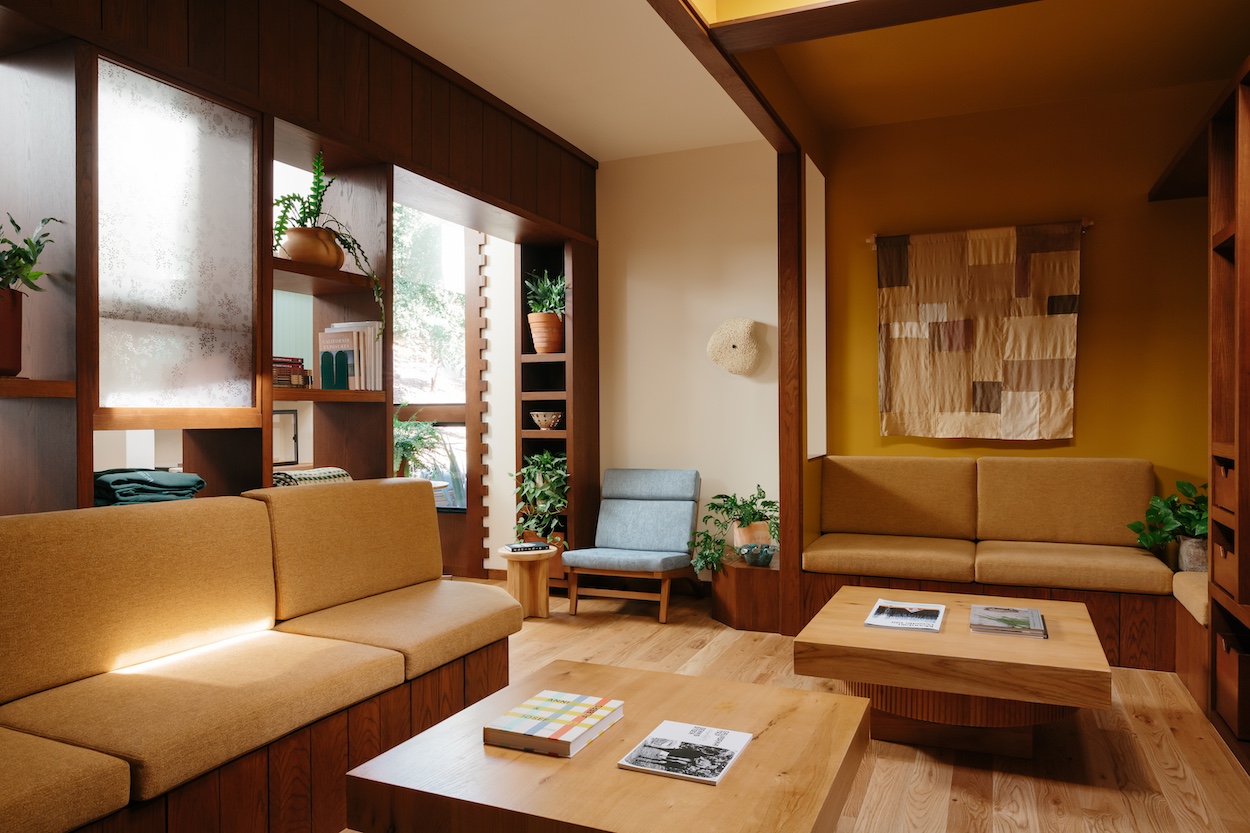
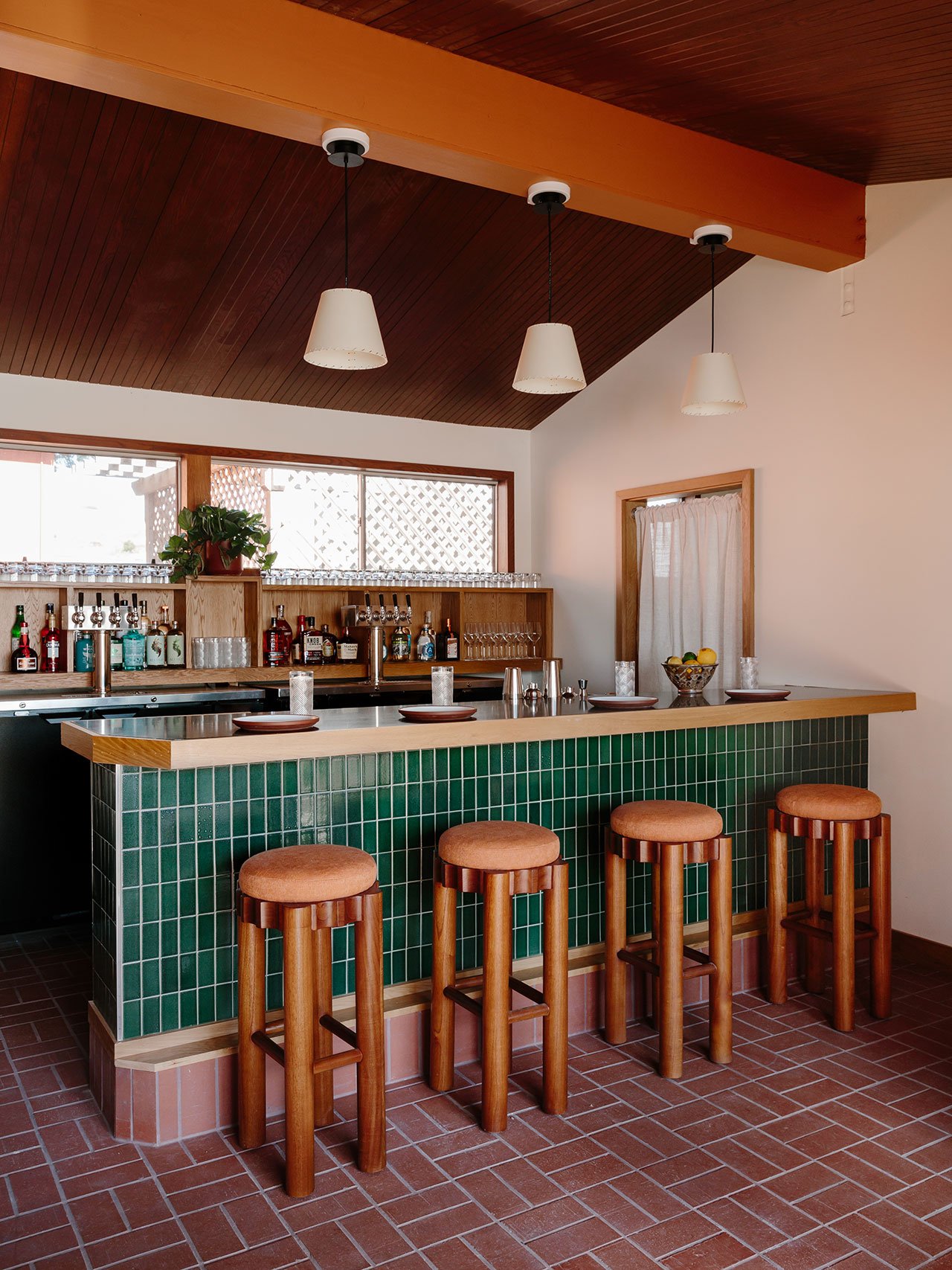
For its latest incarnation, operator Oliver Hospitality brought in Brooklyn-based Home Studios for a 17-month renovation of the 45-room lodge. Rather than smoothing away the quirks of the existing buildings, the designers leaned into them. The reference point was the Third Bay Tradition, the distinctly Northern Californian architectural movement that emerged after the Second World War and combined modernism with the forms, materials and pragmatism of vernacular farm buildings and ranch houses. Think less Palm Springs glamour, more Sea Ranch restraint. Cedar panelling, exposed timber, textured ceramics, earthy fabrics and generous millwork give the interiors their character. Bay Area-made tiles and locally sourced decorative pieces reinforce the sense that this belongs to West Marin rather than to some interchangeable idea of coastal luxury. The palette comes directly from the landscape outside: redwood bark, dry grasses, soil, fog, water and muted coastal greens.
More Summer Camp Than Resort
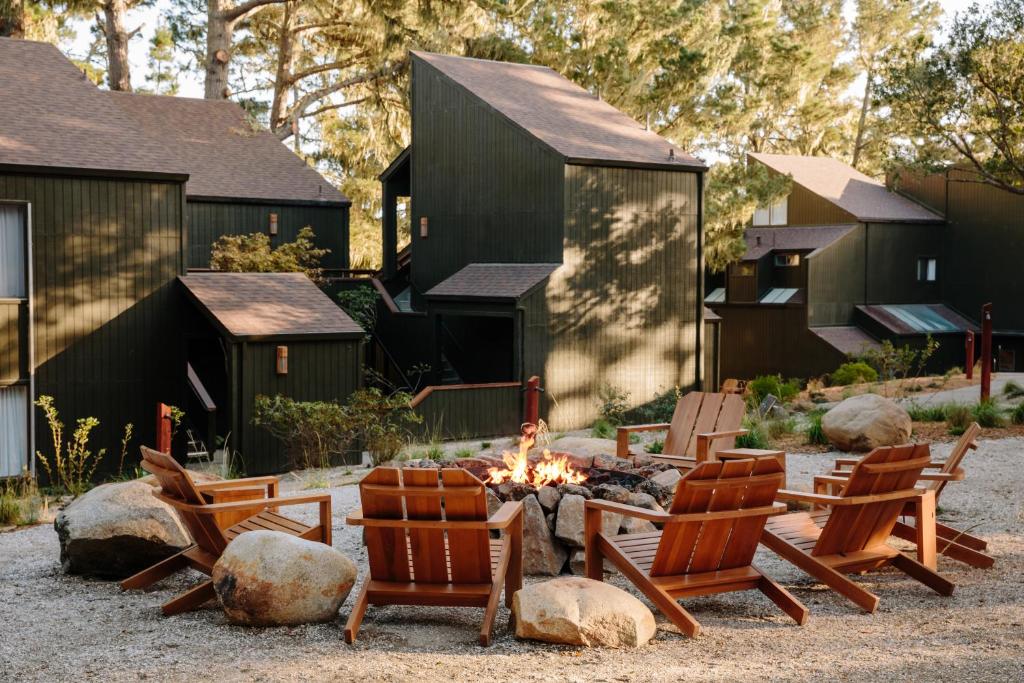
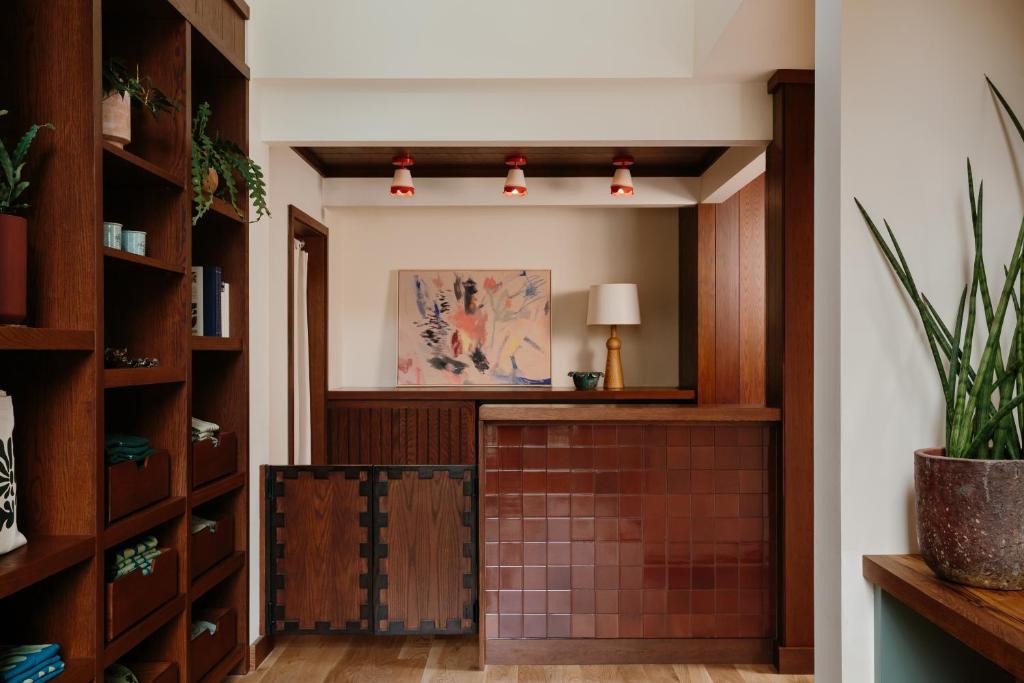
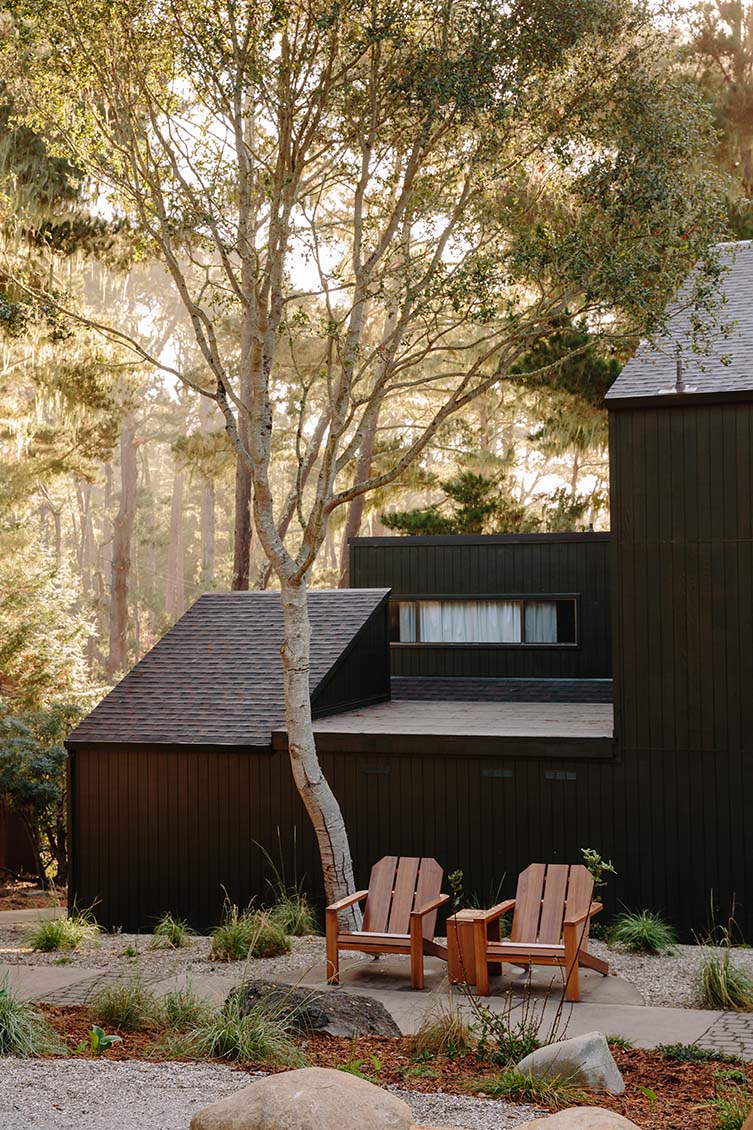
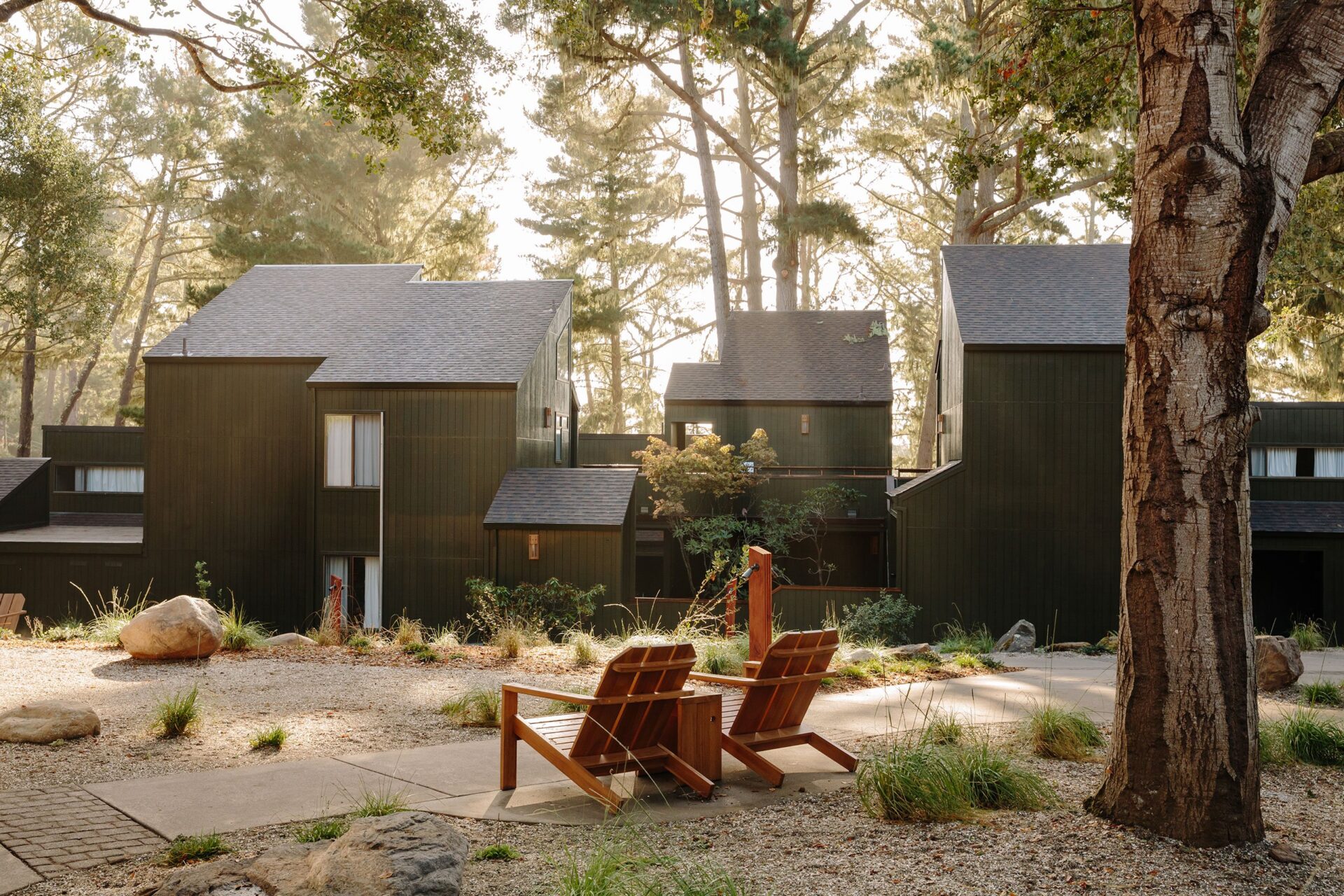
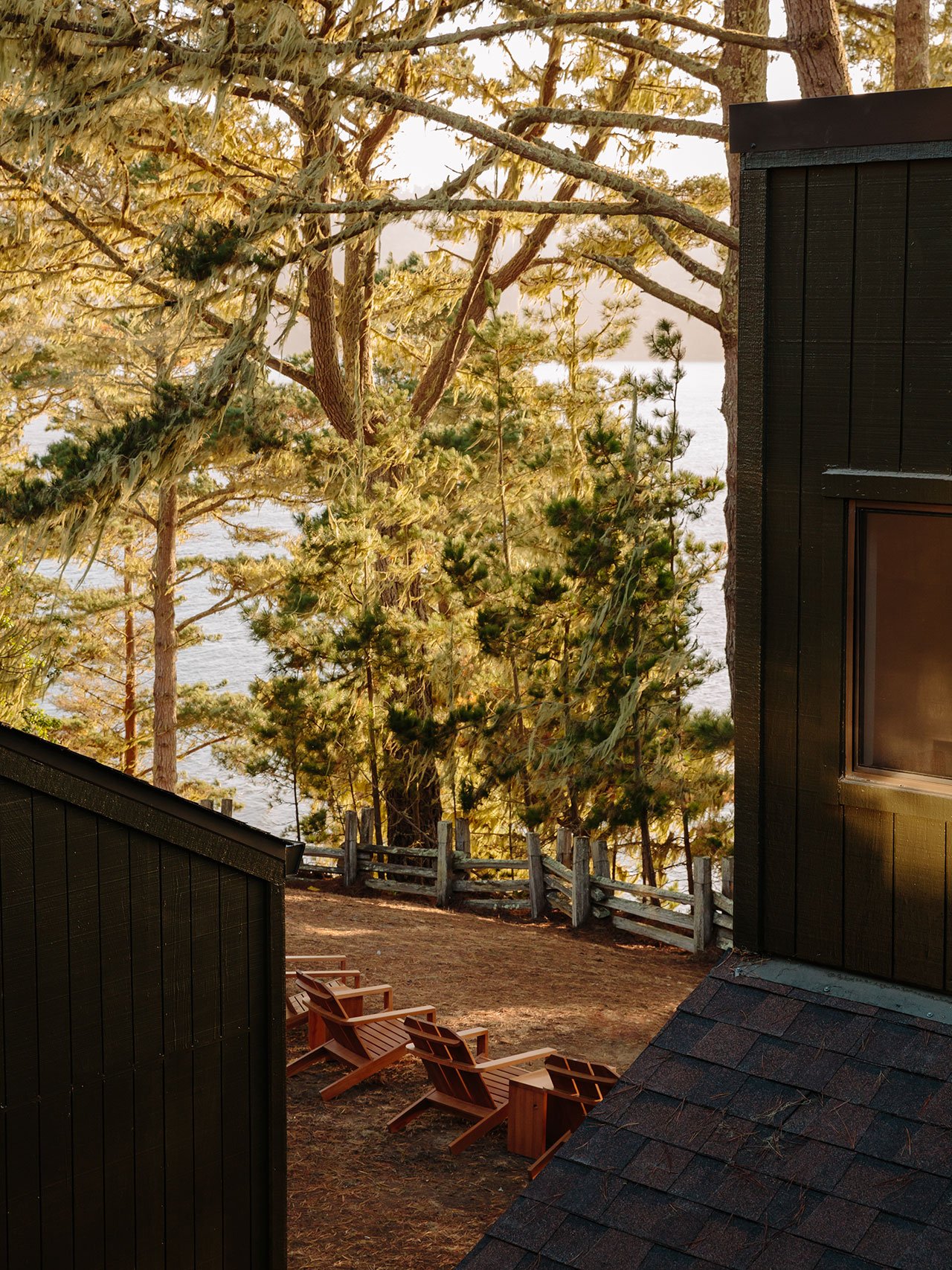
The most successful decision may be what Lodge at Marconi does not have. There is no grand hotel lobby. Instead, arrival unfolds through a collection of communal rooms designed to feel informal and residential. A reception desk doubles as a coffee bar, with pastries from local makers. Nearby, a small market stocks wine, beer and artisanal provisions, while books from independent Point Reyes Books add another local layer. The main sitting room is arranged around a central fireplace, and smaller lounges provide places to read, talk or simply disappear for a while. Outside, the different buildings are connected through landscaped paths leading towards a central courtyard and fire pit, surrounded by Adirondack chairs, benches and natural boulders. It is deliberately camp-like. Not childish. Not rustic in the faux-lodge sense. Just social, loose and uncomplicated. The kind of place where you might arrive intending to spend the evening alone and end up drinking local wine around a fire with people you met an hour earlier.
Rooms Designed for Switching Off
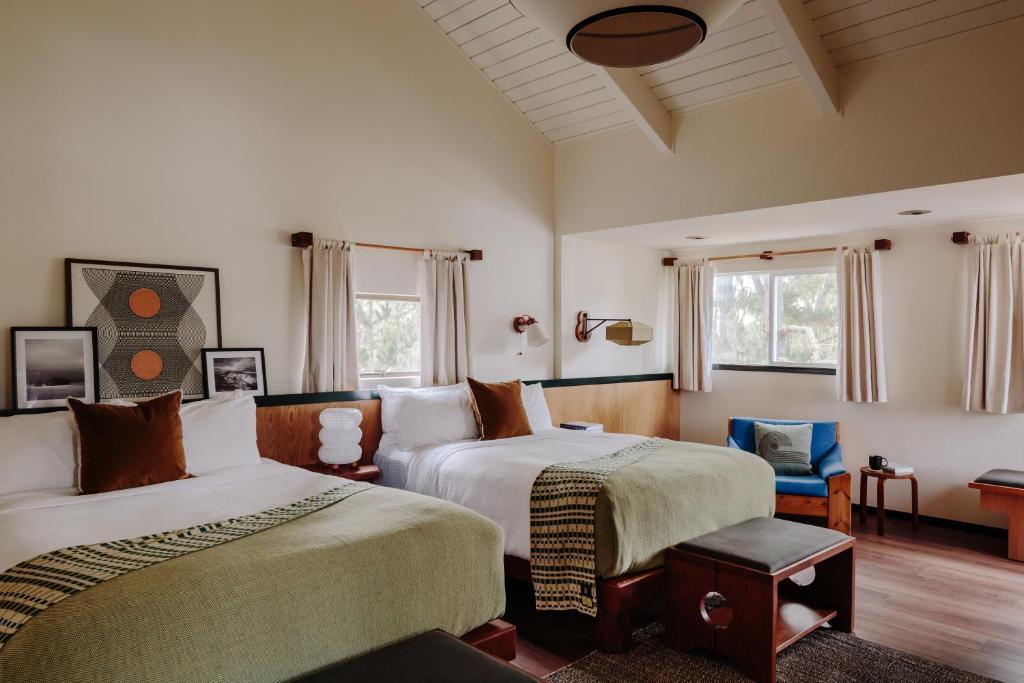
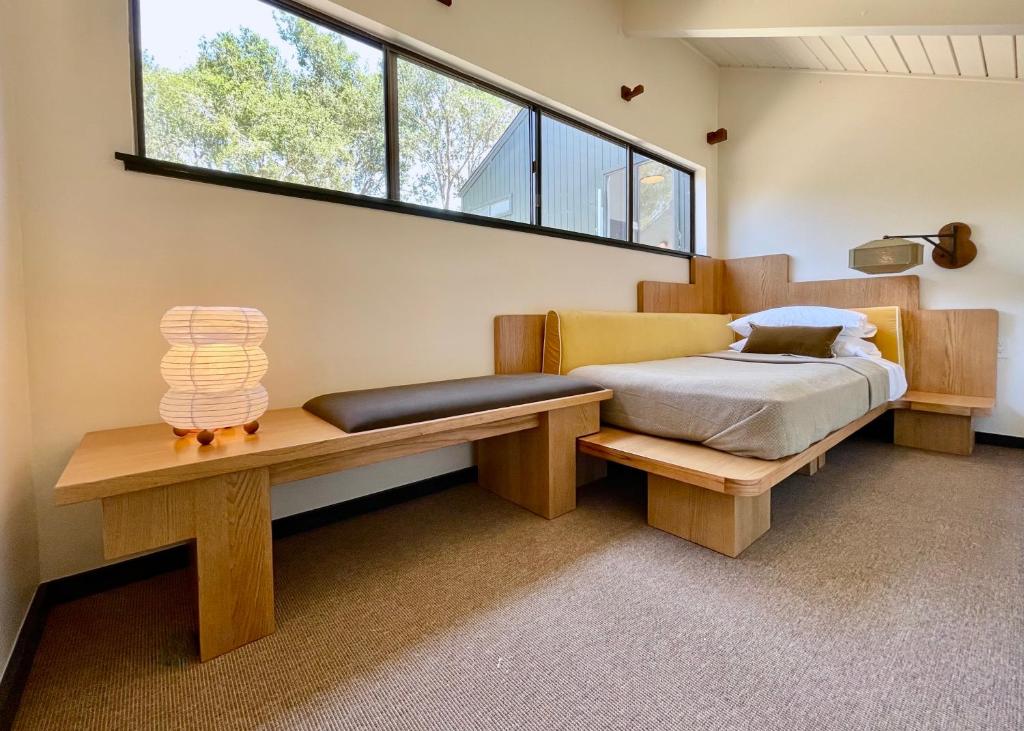
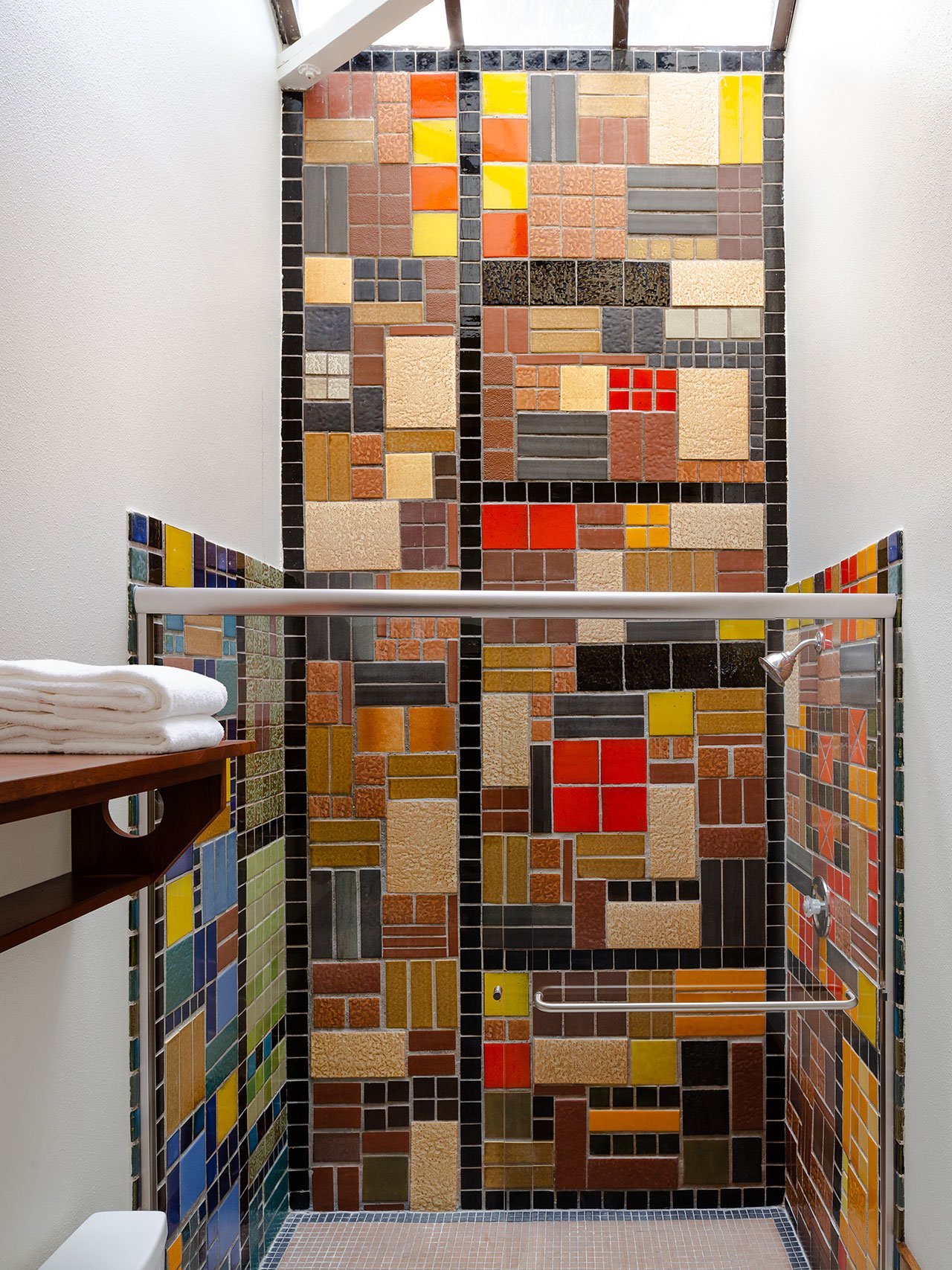
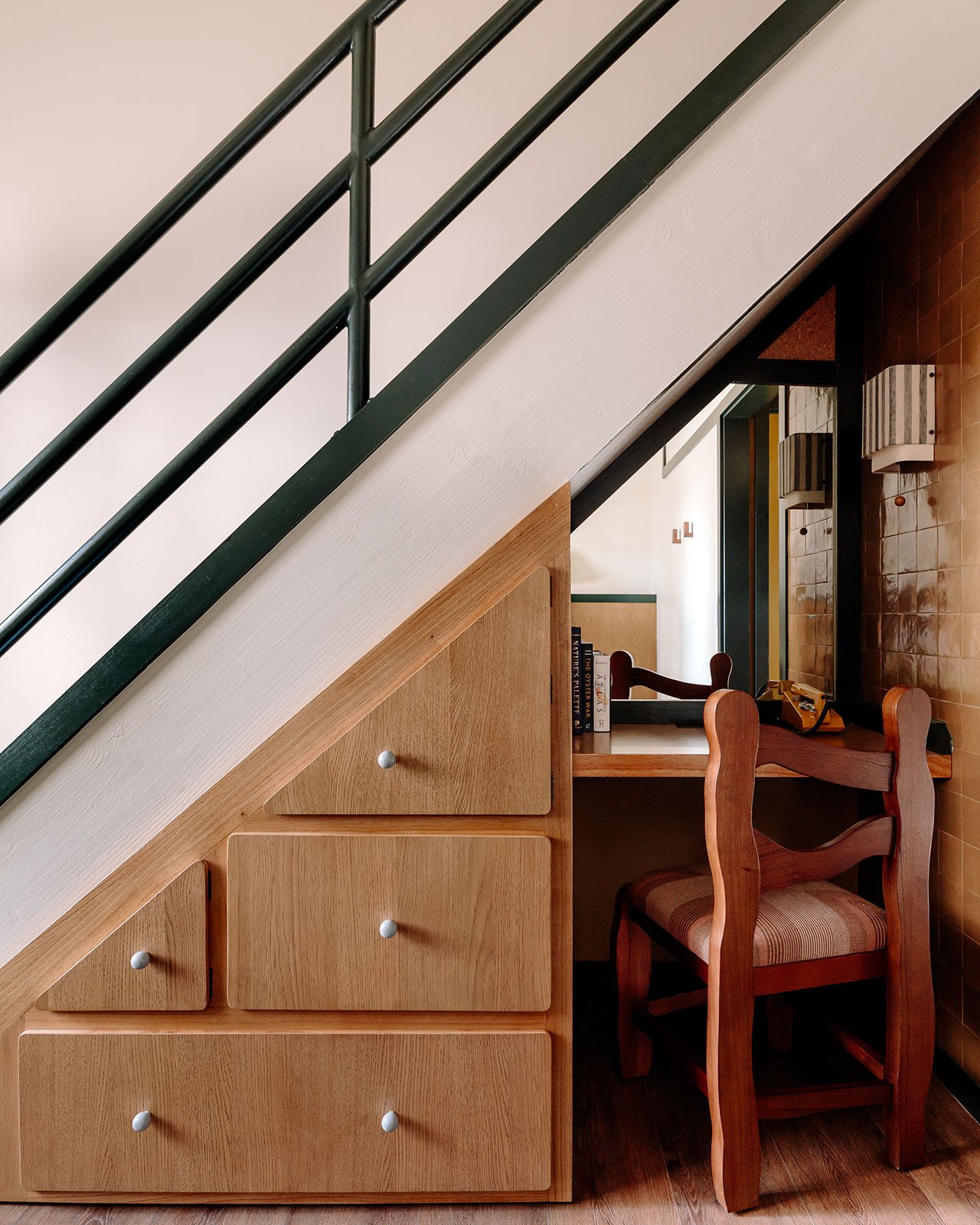
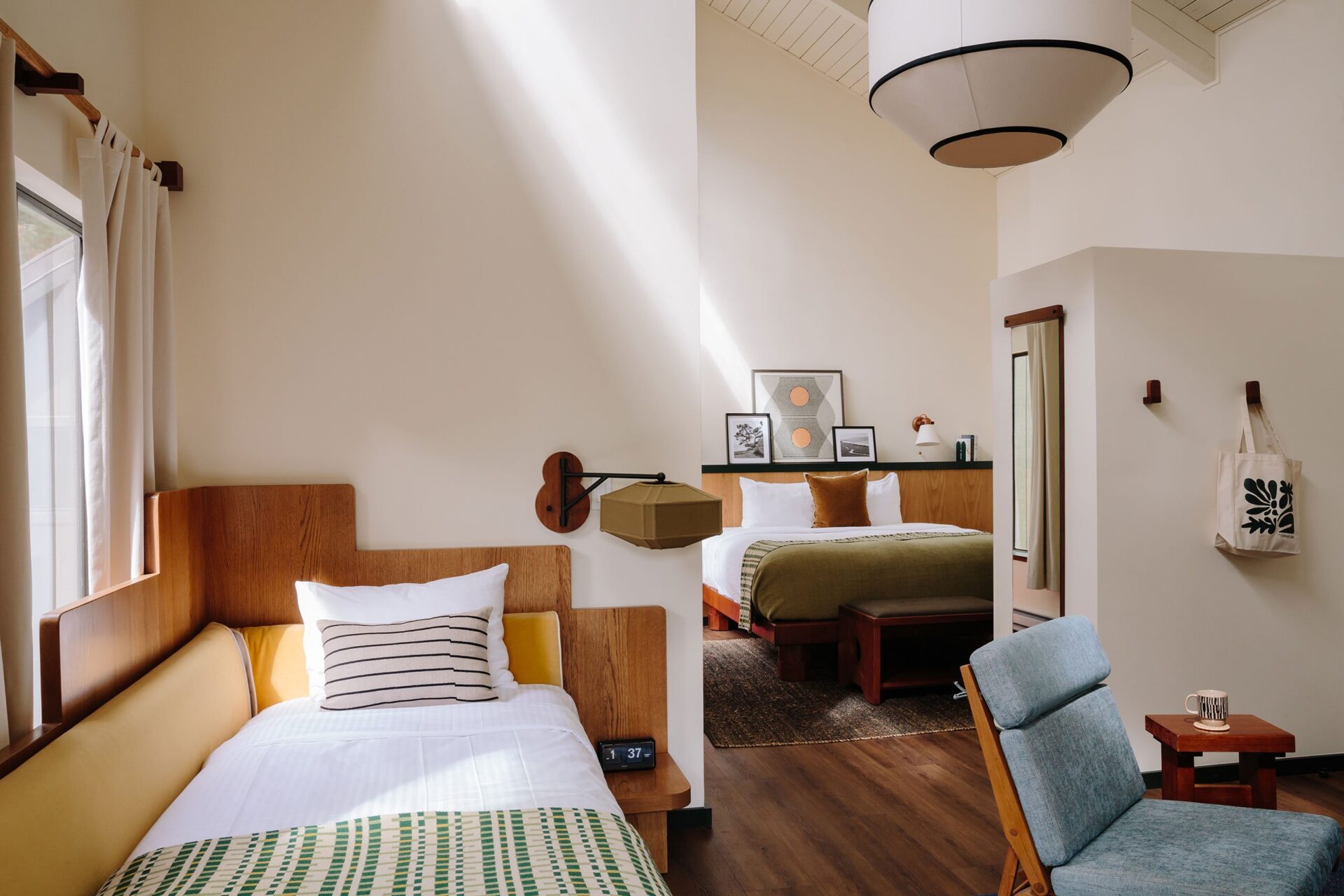
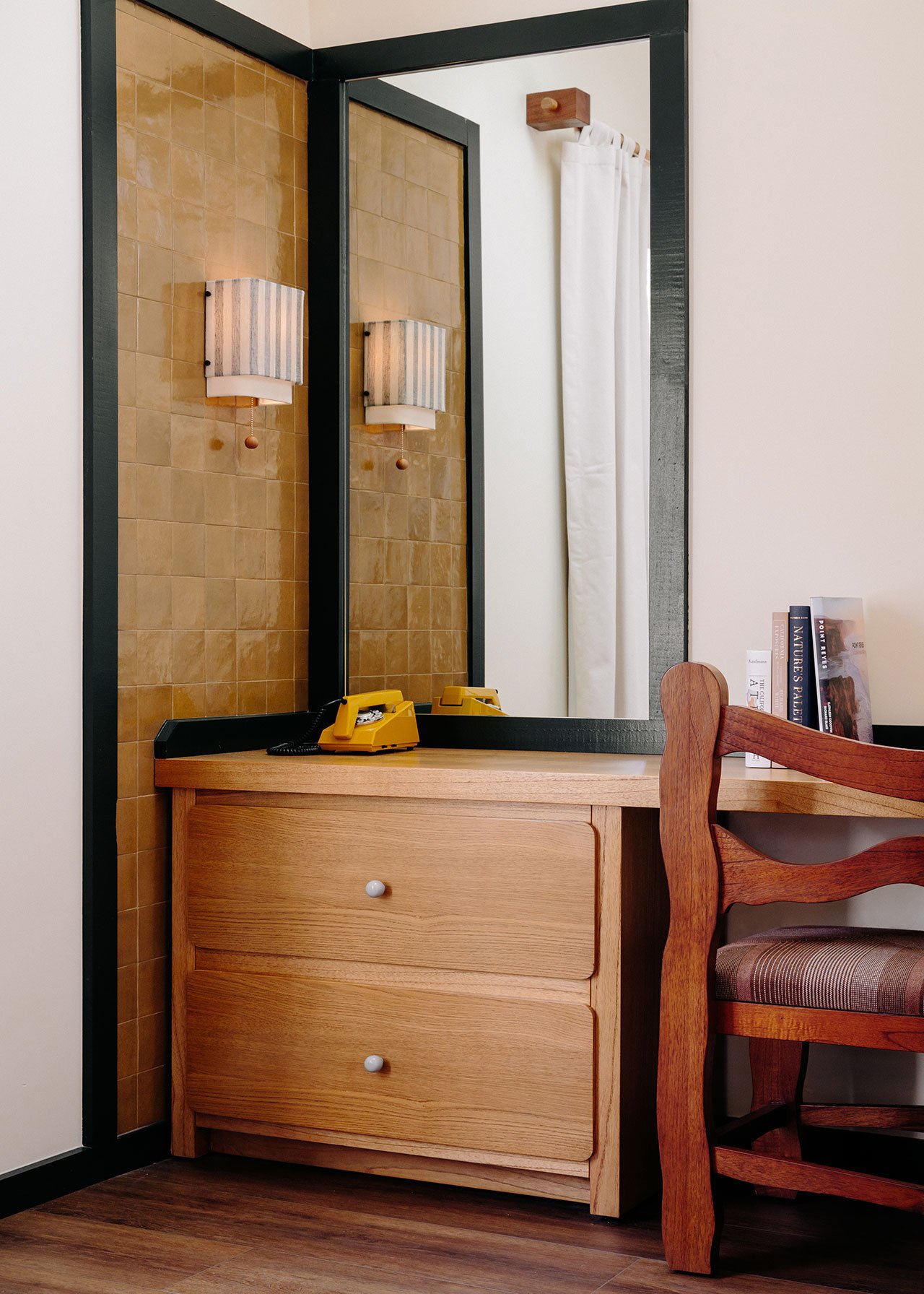
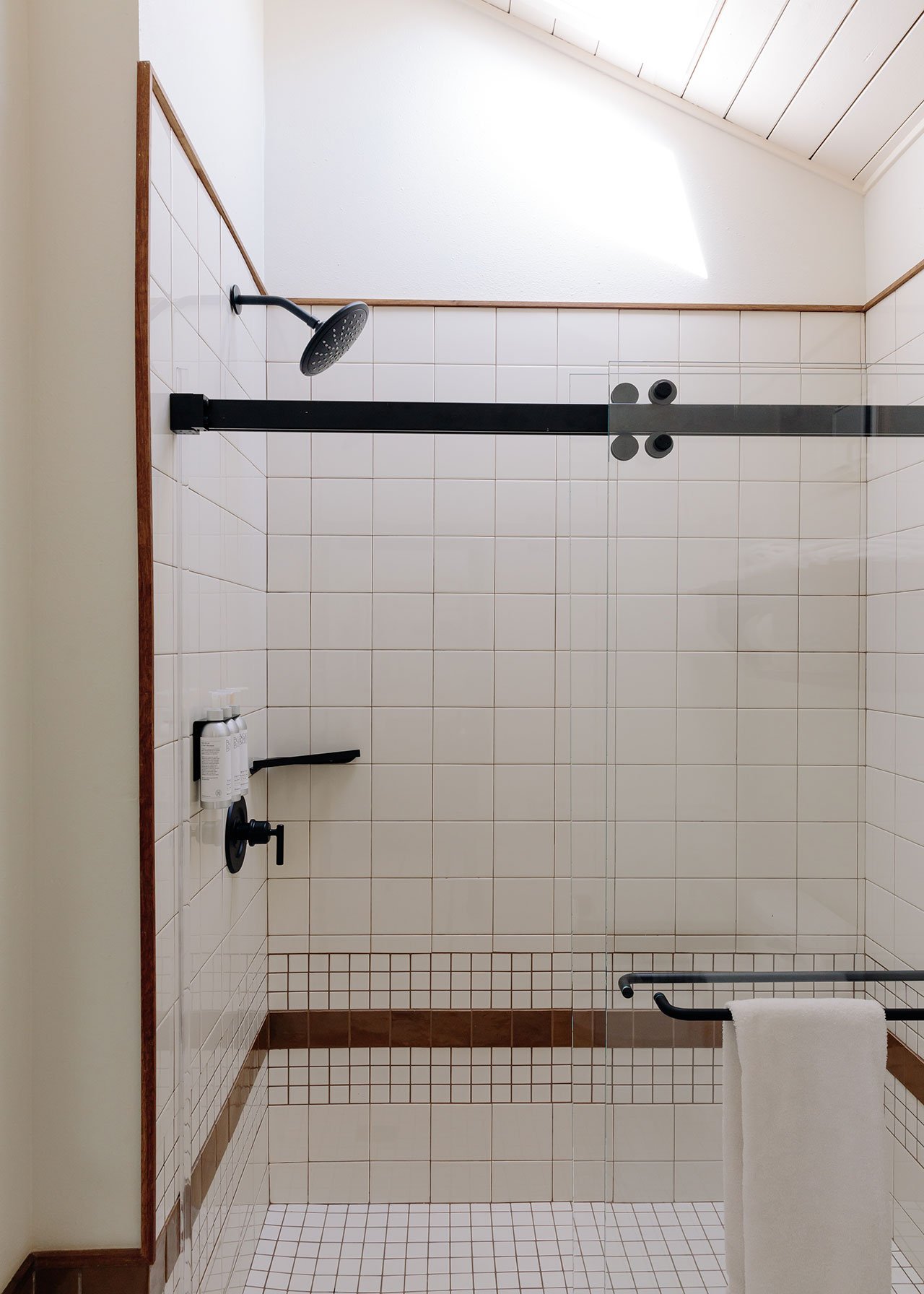
The 45 rooms and suites continue the same philosophy. Home Studios designed much of the furniture specifically for the hotel, combining warm natural woods with playful details: sculptural wooden chairs, geometric headboards, colourful tiled backsplashes and handmade lighting. Some original elements have been left in place, including sloped timber ceilings and, in a few bathrooms, tiles dating from the Synanon era. That history is treated as texture rather than theme. There are no televisions in the rooms. It is a small but telling decision. At a property surrounded by 62 acres of forested hills, hiking trails and wide views across Tomales Bay, the design encourages you to look outward rather than at another screen. Oversized windows do much of the work, pulling the landscape into rooms that otherwise remain calm, tactile and deliberately unfussy.
Art with a Local Accent
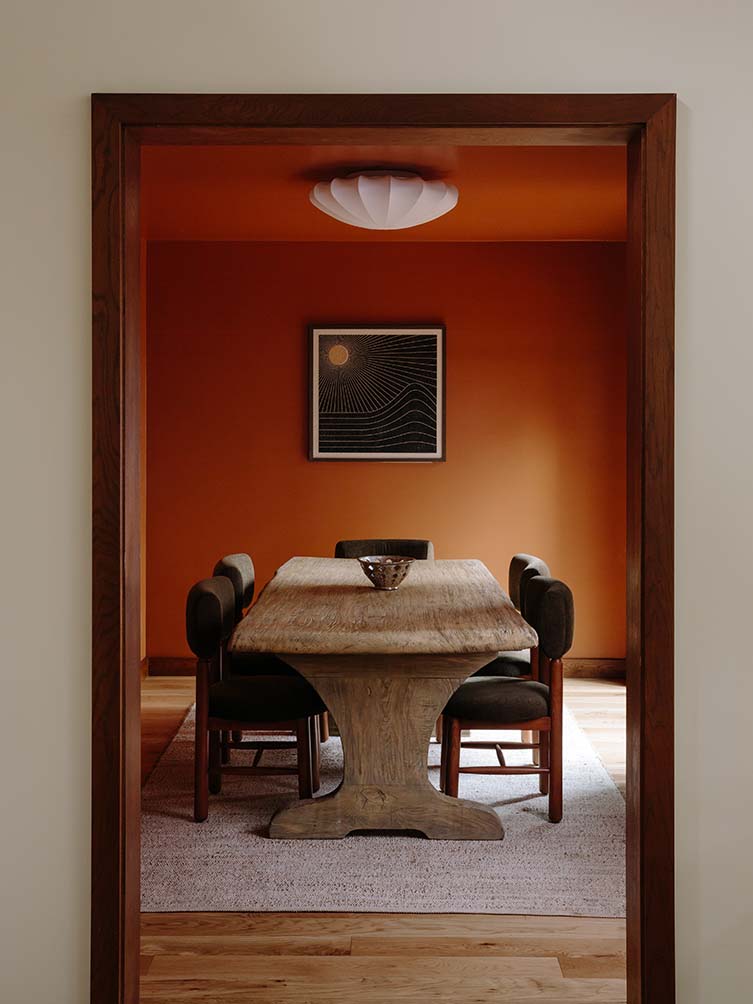
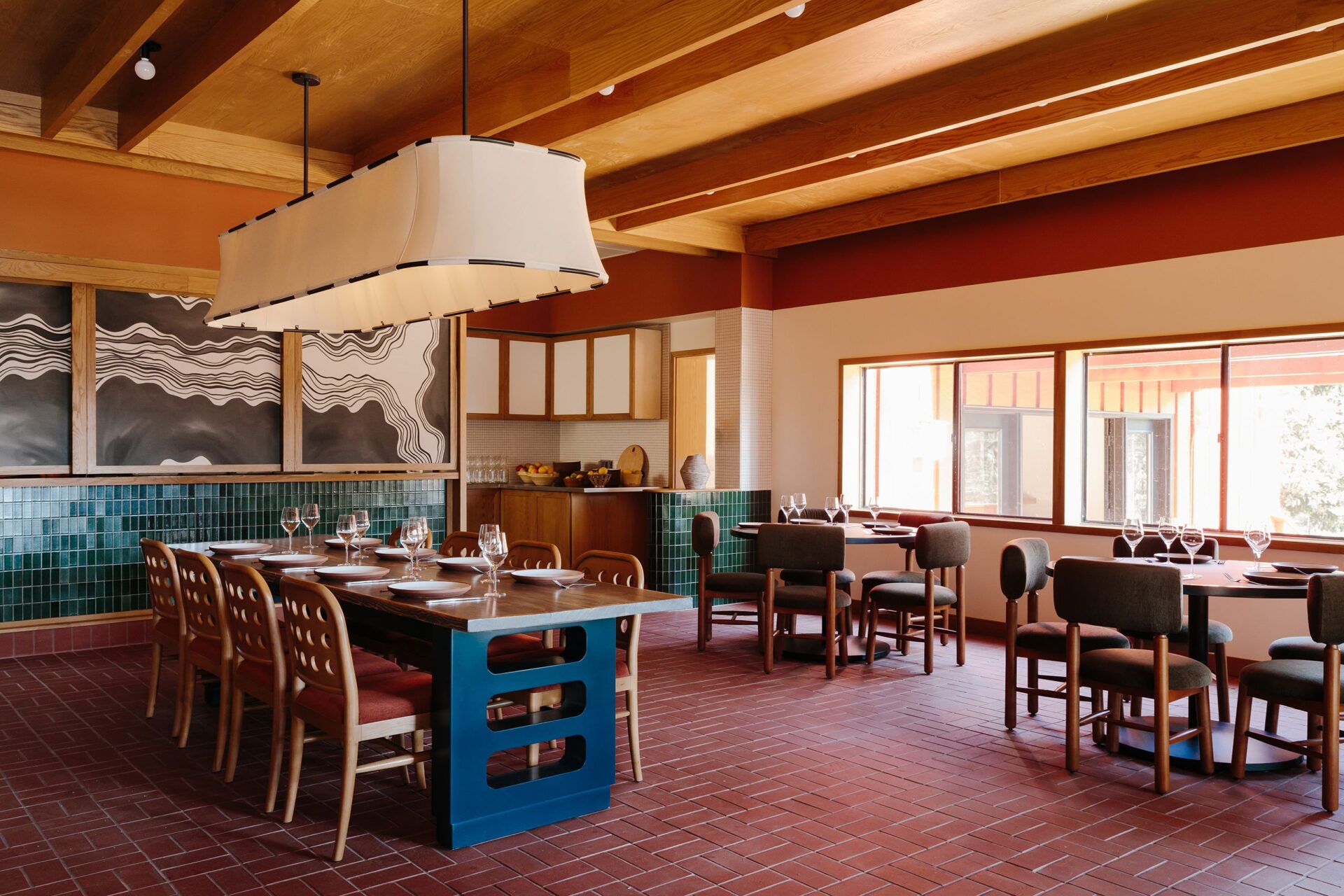
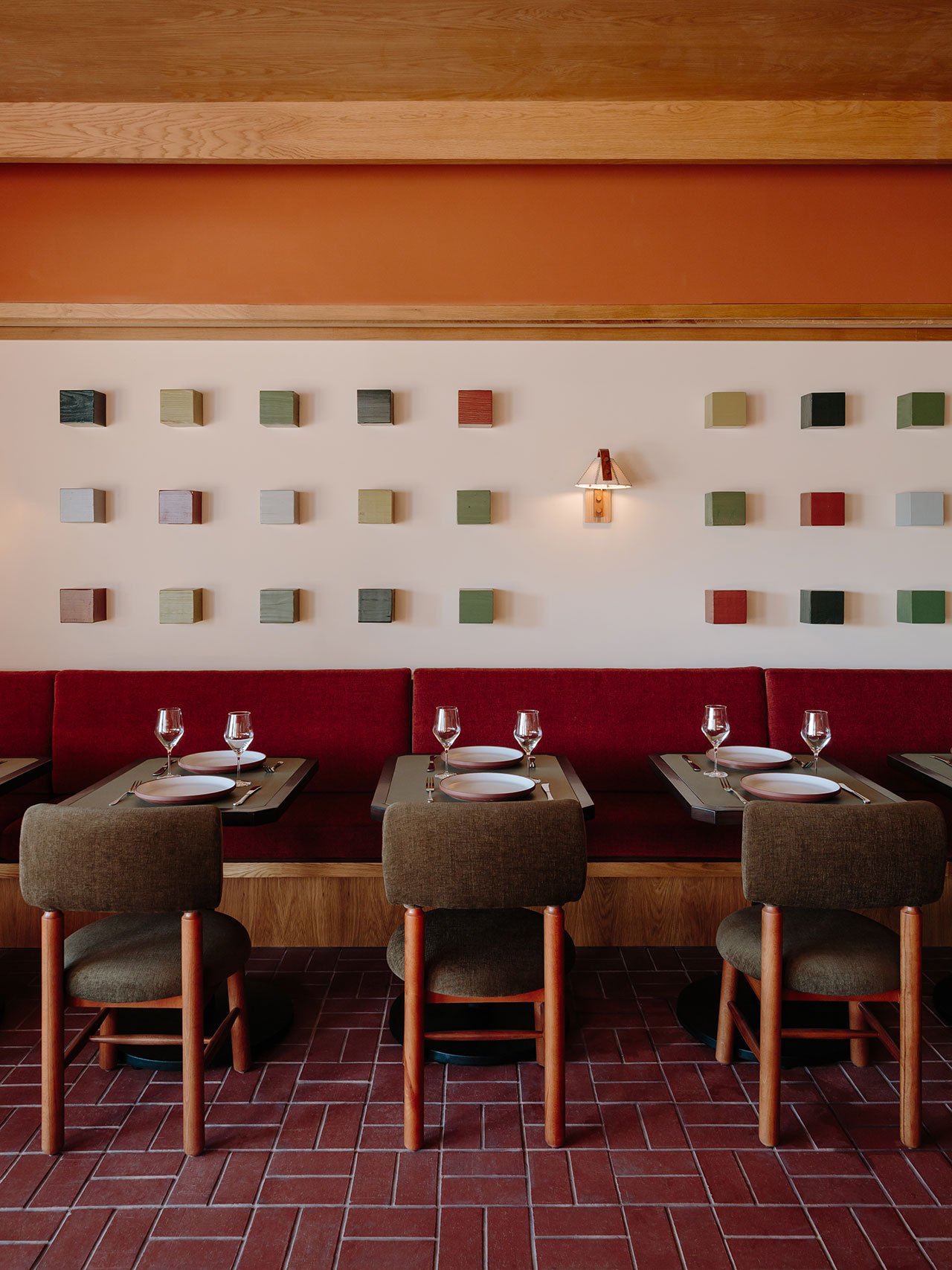
The artistic details are similarly specific. Home Studios worked with artists and craftspeople to create pieces that feel connected to Northern California rather than simply decorative. A custom tapestry by Los Angeles duo Lookout & Wonderland hangs in reception, while California artist Lukas Geronimas Giniotis created works for the dining hall. Ceramics by local makers appear throughout, alongside custom furniture and objects that introduce just enough eccentricity to stop the interiors becoming overly earnest. It fits the property’s own slightly surreal history. A place that has been a radio station hotel, rehabilitation centre, religious commune and conference retreat probably shouldn’t take itself too seriously.
Eat, Gather, Repeat
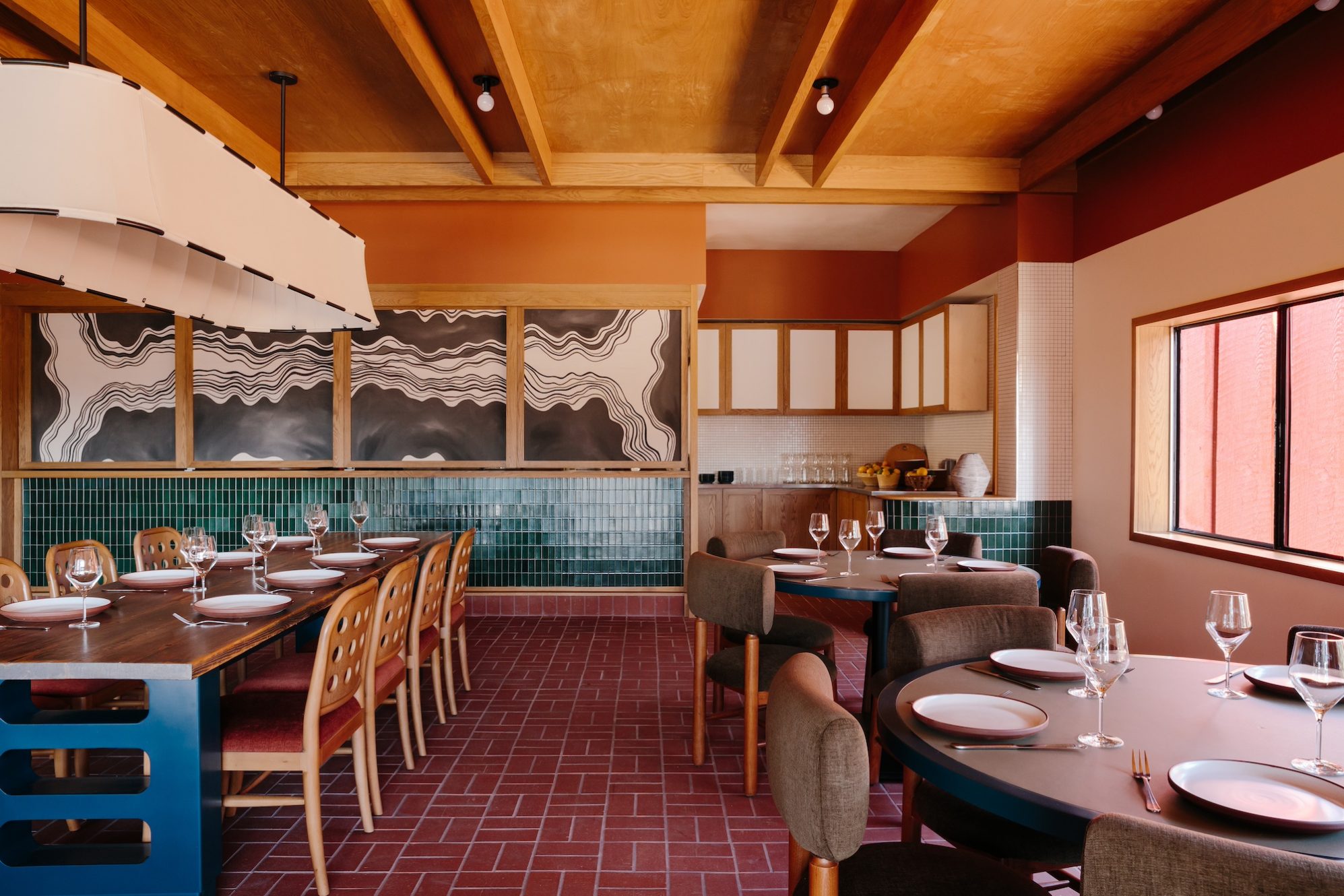
Food follows the same local, low-formality approach. The Redwood Dining Hall has a relaxed, almost cafeteria-like spirit rather than the choreography of a fine-dining hotel restaurant. The focus is West Marin itself — a region where dairy farms, oyster beds, vineyards, bakeries and small producers create one of Northern California’s richest food landscapes. That connection continues beyond the lodge. Nearby Tomales Bay is famous for its oysters, while Point Reyes and the surrounding countryside are dotted with creameries, farms and independent food producers. Wine country begins almost immediately inland. The Lodge at Marconi isn’t trying to contain all of that within the hotel. It gives you a base from which to go out and find it.
62 Acres of West Marin
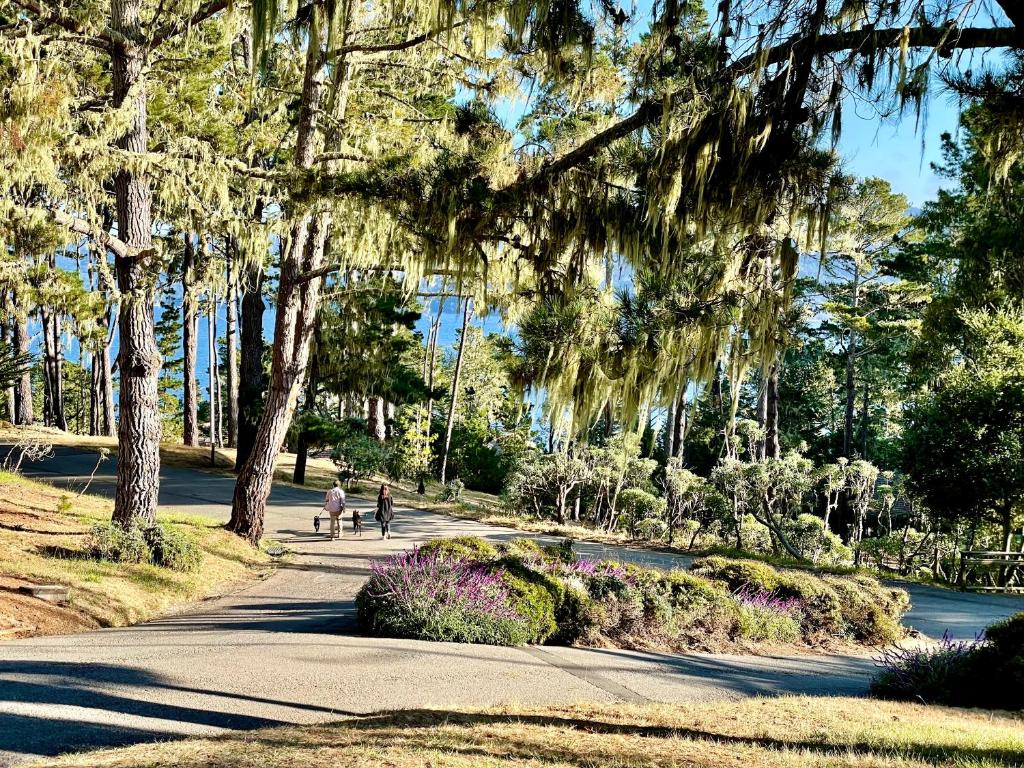
The land may ultimately be the property’s greatest luxury. There are around 3.5 miles of trails within the estate itself, crossing hillsides and forest with expansive views over Tomales Bay. Further afield, the possibilities become distinctly Northern Californian: kayaking on the bay, fungi identification walks, wildlife excursions, oyster farms, vineyards and long drives along Highway 1. Even the landscaping around the hotel reflects that connection. Landscape studio Dune Hai preserved as much existing vegetation as possible, introduced low-water planting and reused local materials, including reclaimed redwood and oyster shells. Nothing feels excessively manicured. The landscape is allowed to remain recognisably West Marin — slightly wild, windswept and more interesting because of it.
History Without the Museum Treatment
What makes Lodge at Marconi work is that nobody appears to have tried to clean up its story. The property’s past is too unusual for that. Instead, Home Studios has treated the different architectural eras and historical layers as something to work with, allowing old tiles, timber structures and odd traces of previous lives to remain visible beneath a contemporary design language. It creates a hotel that feels less like a restoration and more like another chapter. Marconi once used this hillside to connect California with the wider world through radio. More than a century later, Lodge at Marconi offers almost the opposite proposition: switch off, look across Tomales Bay and reconnect with the place immediately around you.
Information
At a glance
Architecture
Opened / Renovated
2023
Size matters
45 rooms & suites (21-50m2) (226-538 sq ft)
Interior design
Bathroom Amenities
custom
Featured in
Don't take our word for it





Handpicked worldwide
A carefully curated collection of exceptional boutique and design hotels across the globe.
Design with soul
Architecture, atmosphere and craftsmanship come together in stays with a clear identity.
Hidden, not hyped
Independent boutique hotels you rarely find on mainstream booking platforms.
Travel guidance
Personal recommendations and thoughtful support from people who actually know the places.