


Two centuries of Swiss innkeeping meet charred timber, quiet design and a seriously impressive wine cellar
Book now
Why DNA Hotels loves it
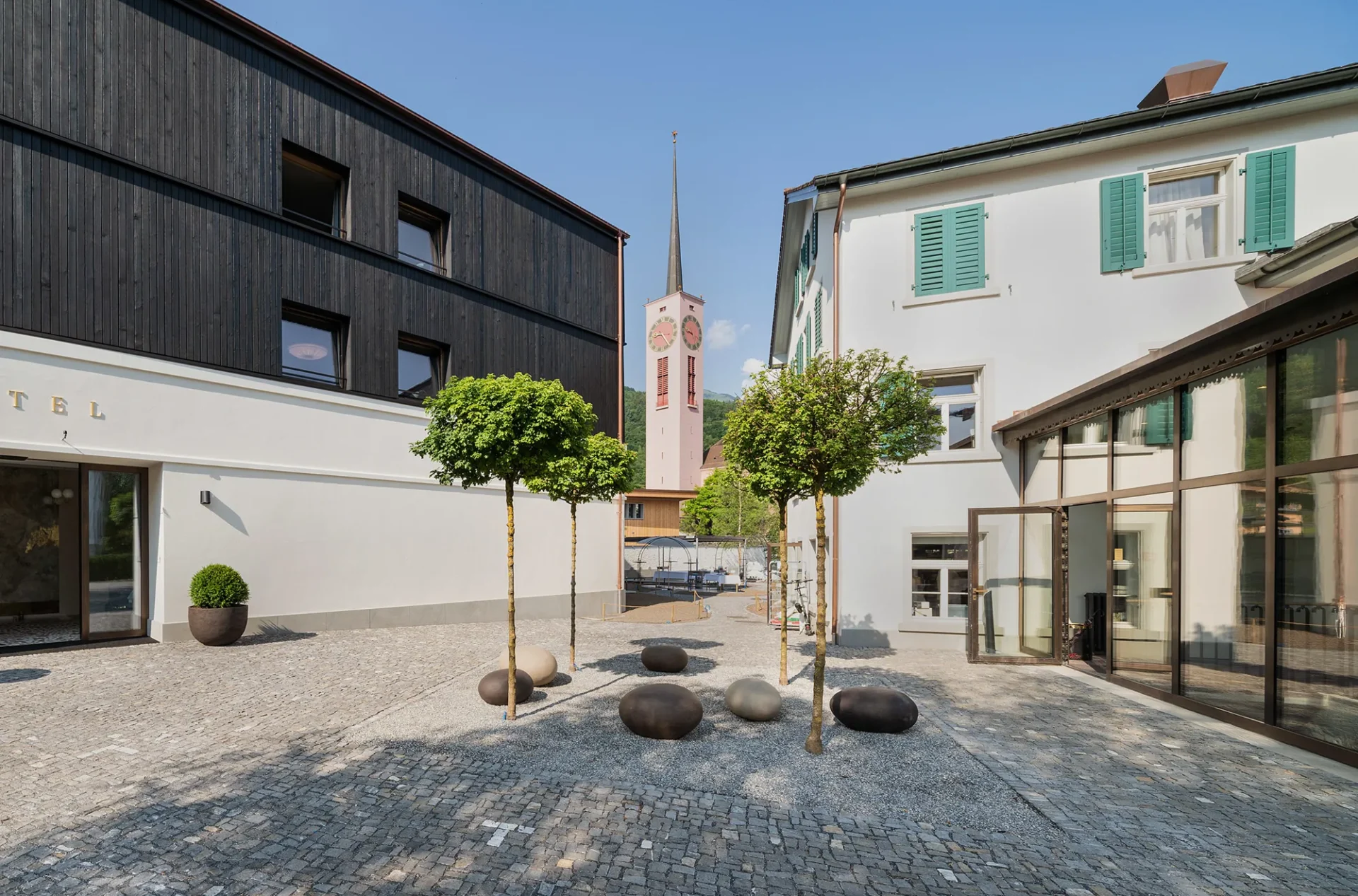
A centuries-old village inn given a contemporary second life, with a new 14-room hotel replacing the former stable while allowing the historic Gasthaus to remain very much the heart of the property.
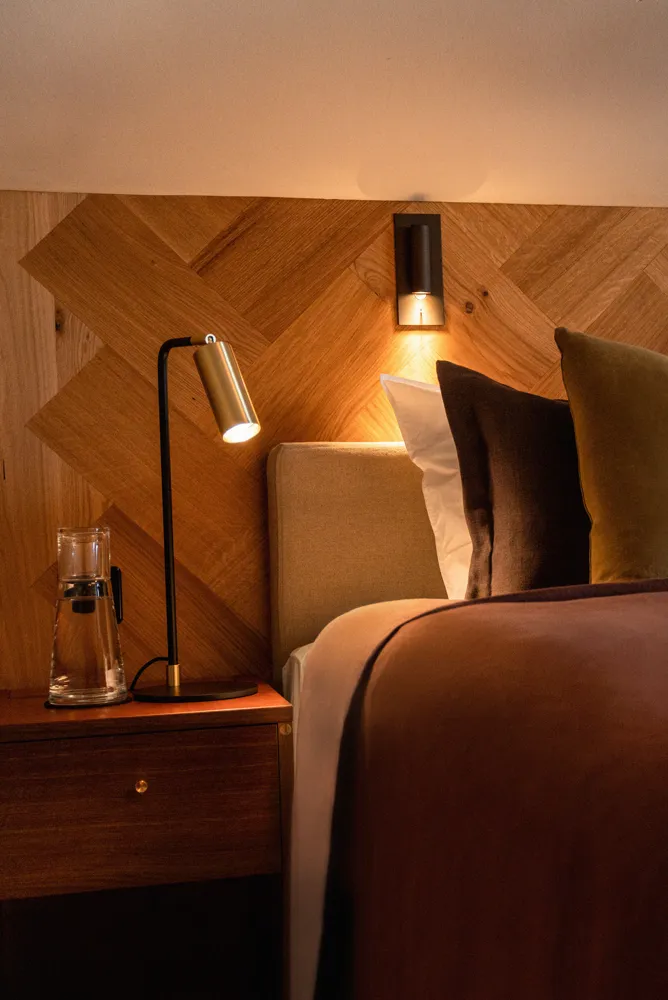
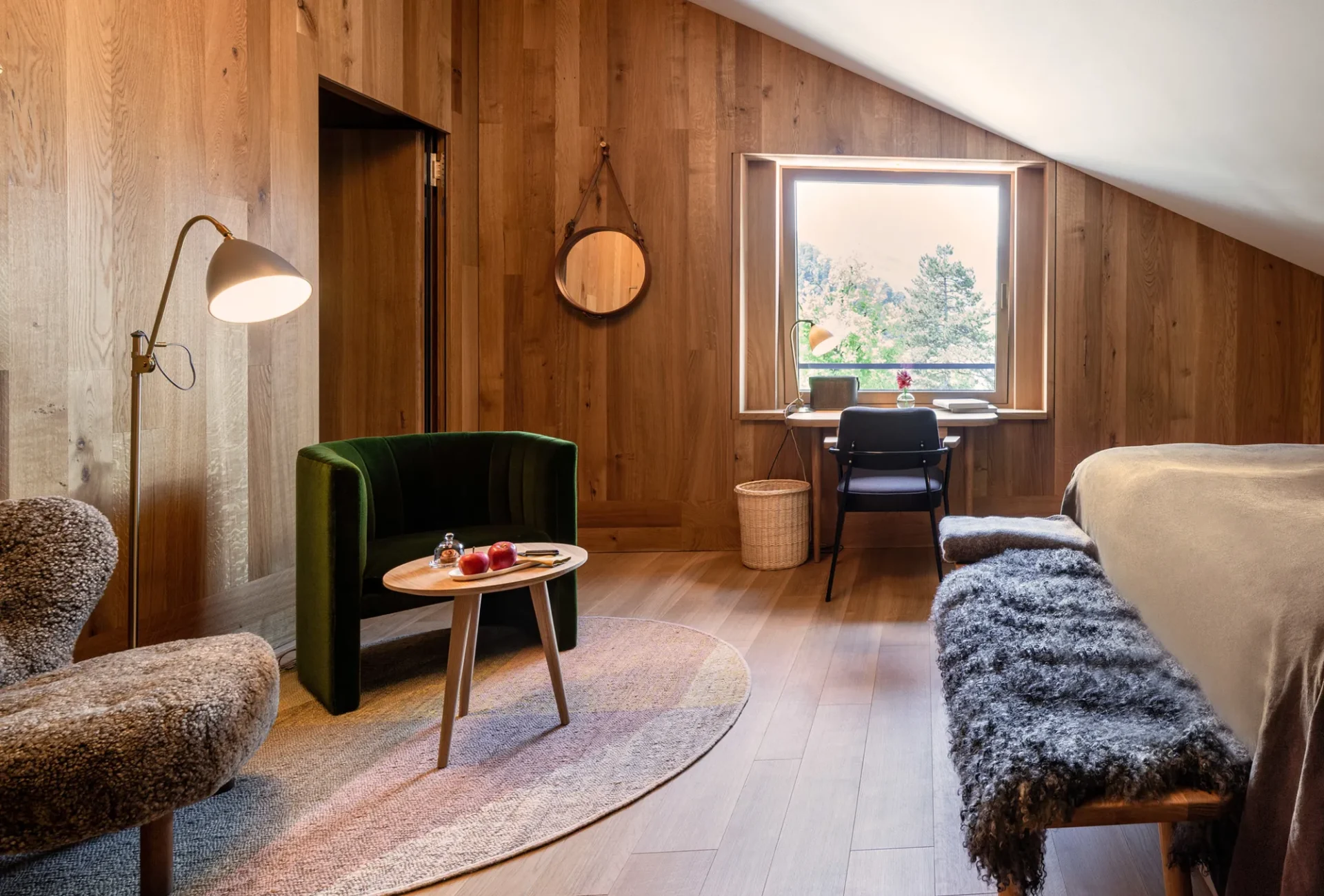
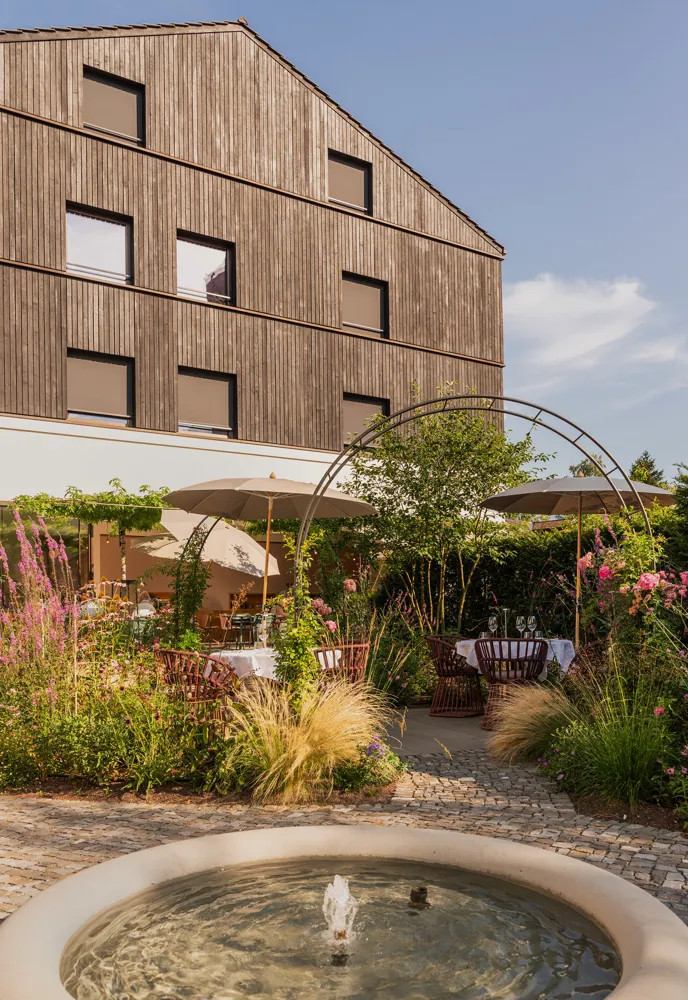
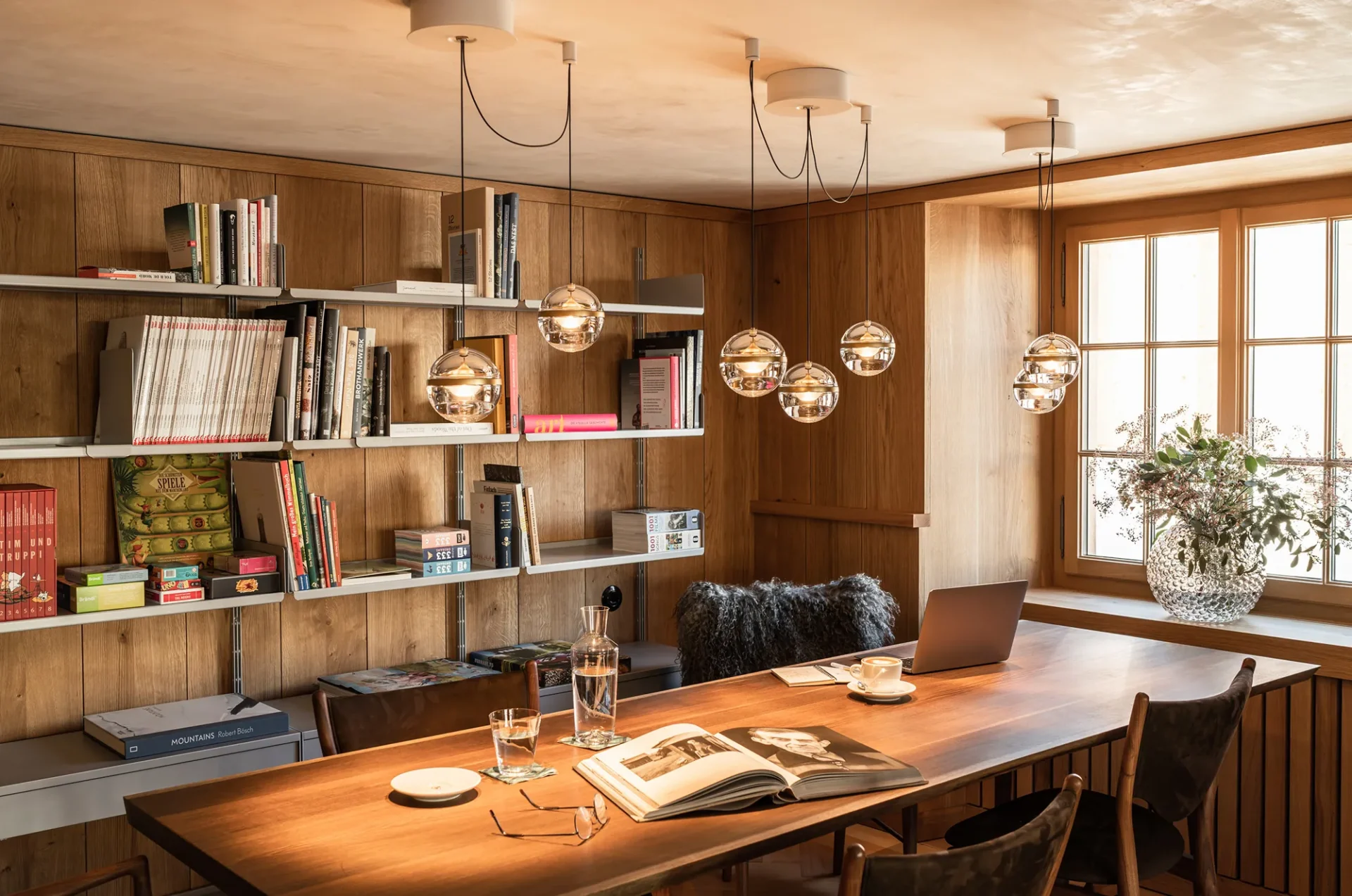
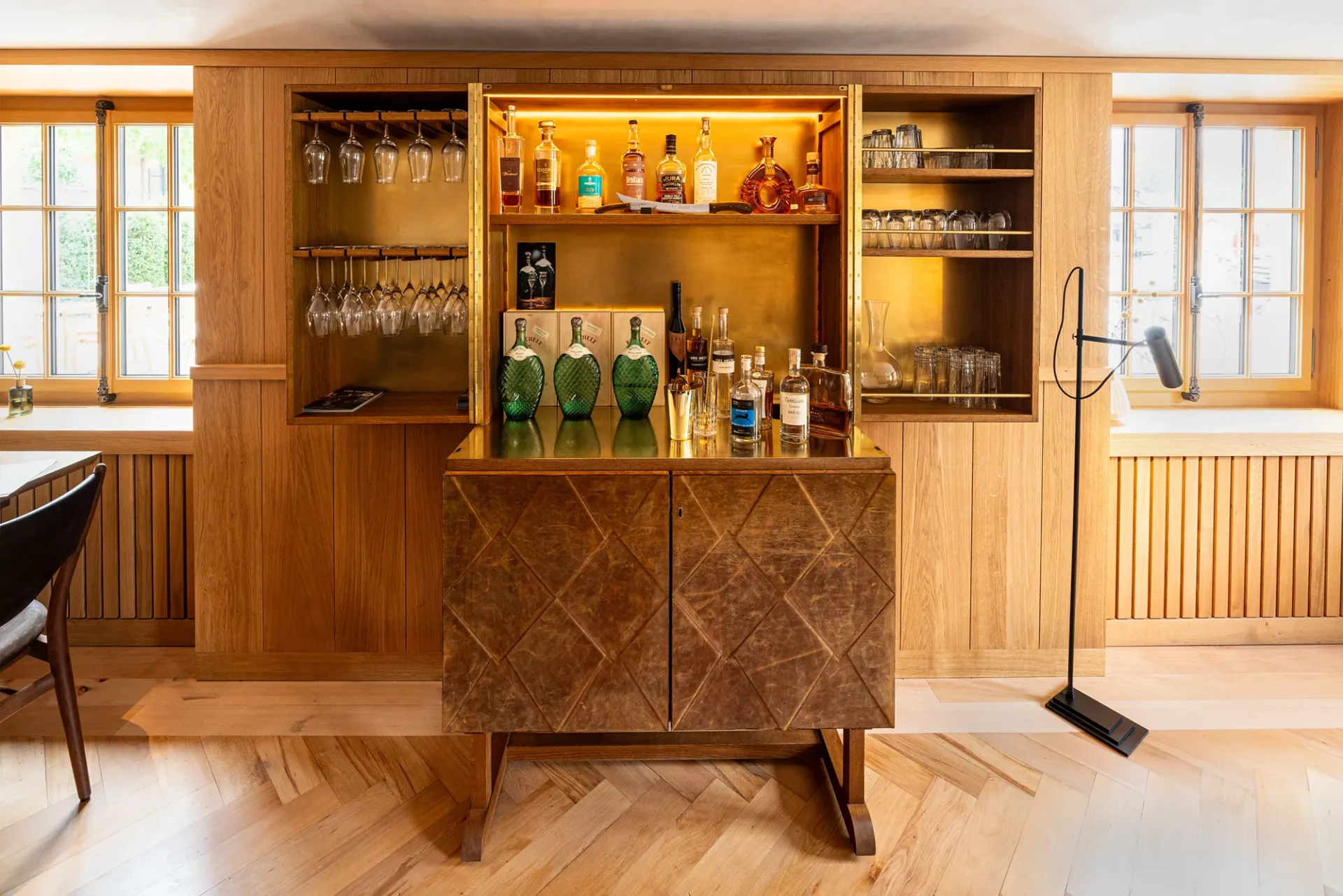
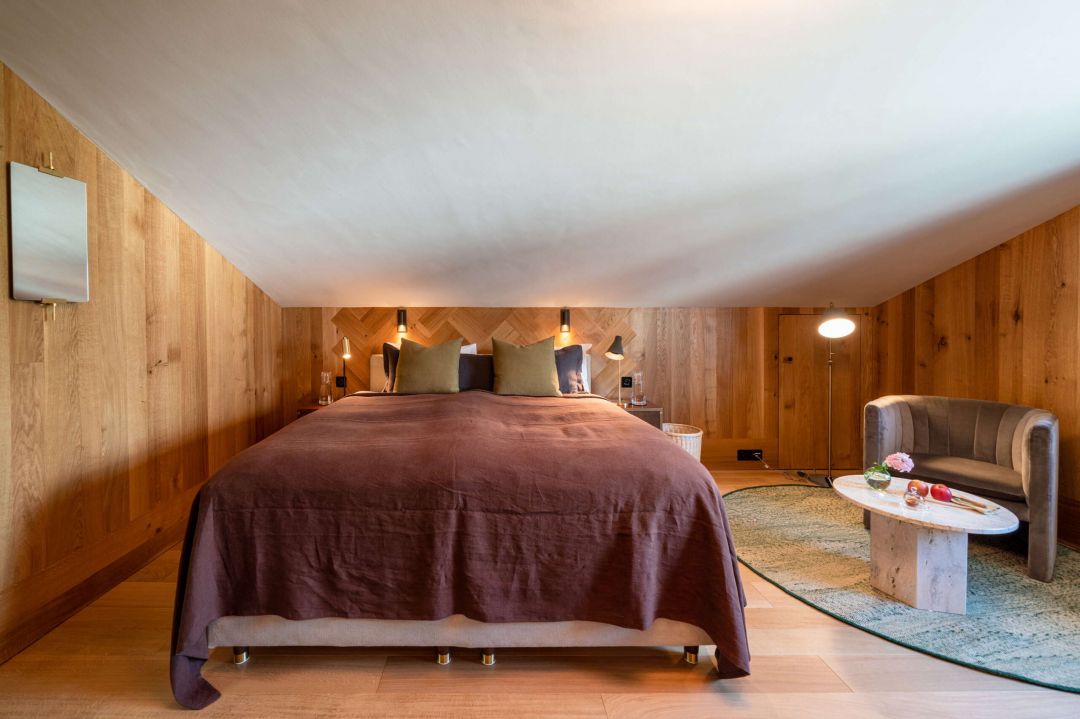
Designer Ruth Kramer keeps things beautifully restrained: solid oak, natural stone, handcrafted ceramics and a charred larch façade create a modern Swiss aesthetic without losing the warmth of the original inn.
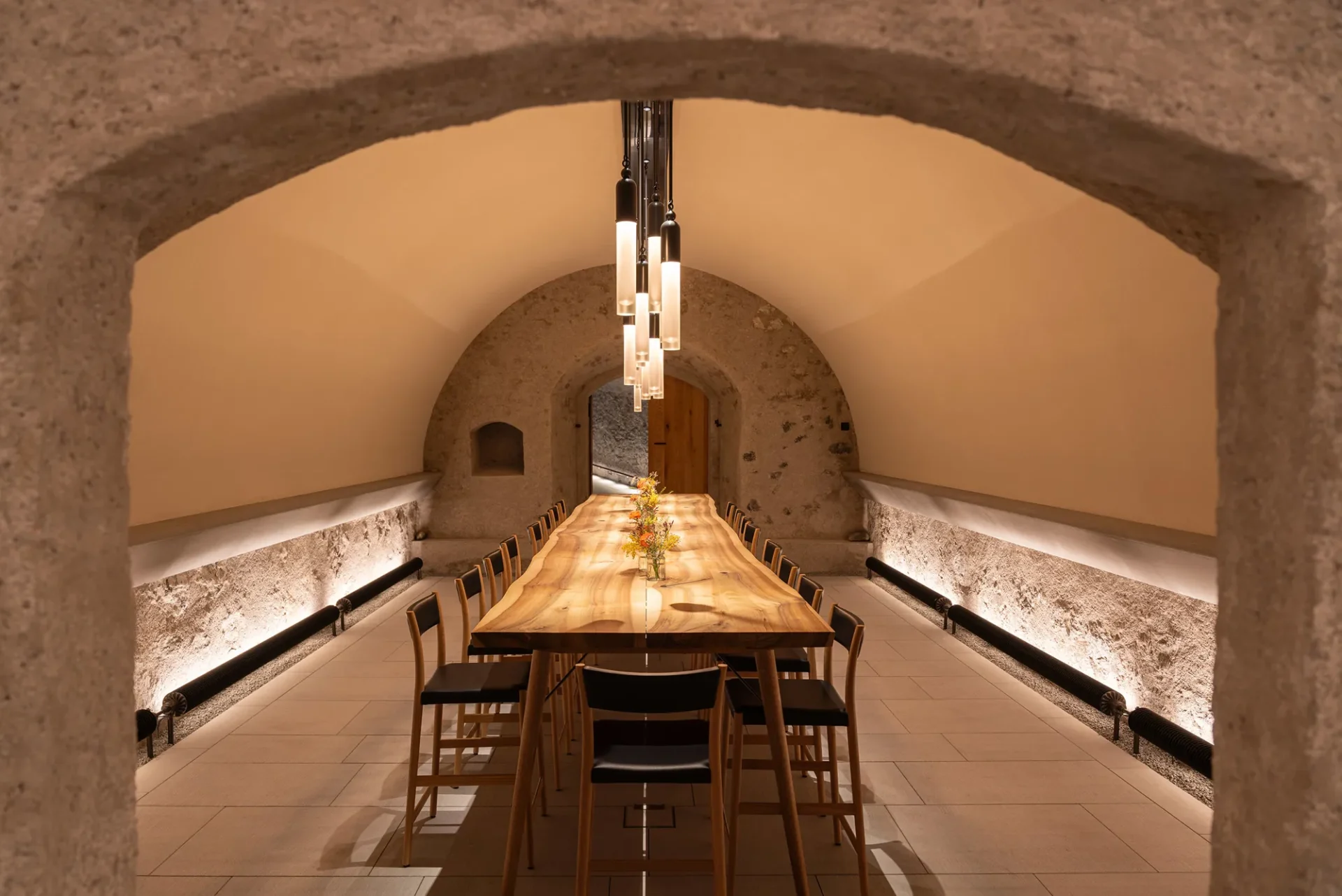
Food and wine are fundamental rather than supplementary, with market-driven cooking and an extraordinary cellar of around 900 labels—including more than 200 Champagnes.
The Stay
Gasthaus Traube - Buchs, Switzerland
The Village Inn, Reconsidered
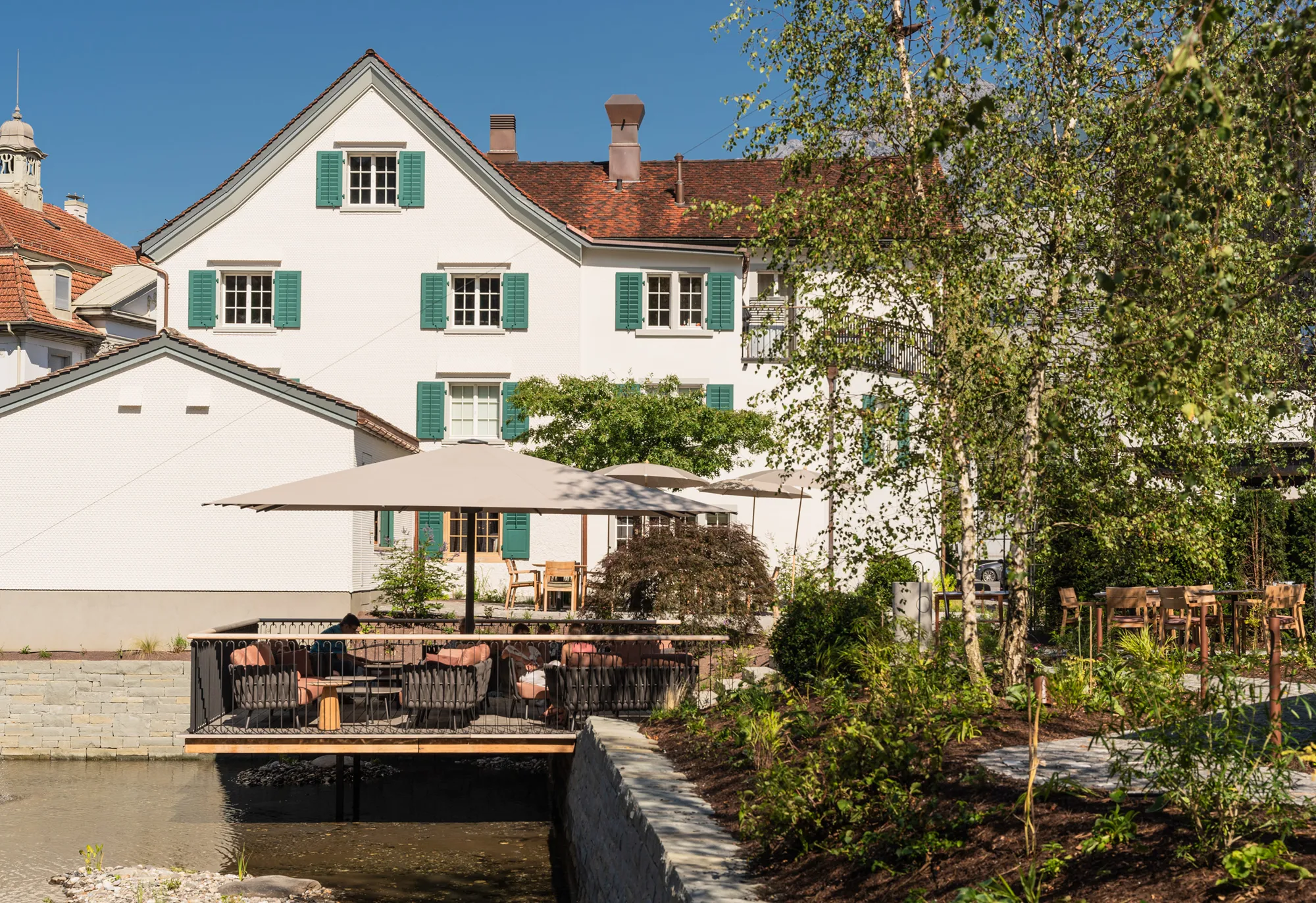
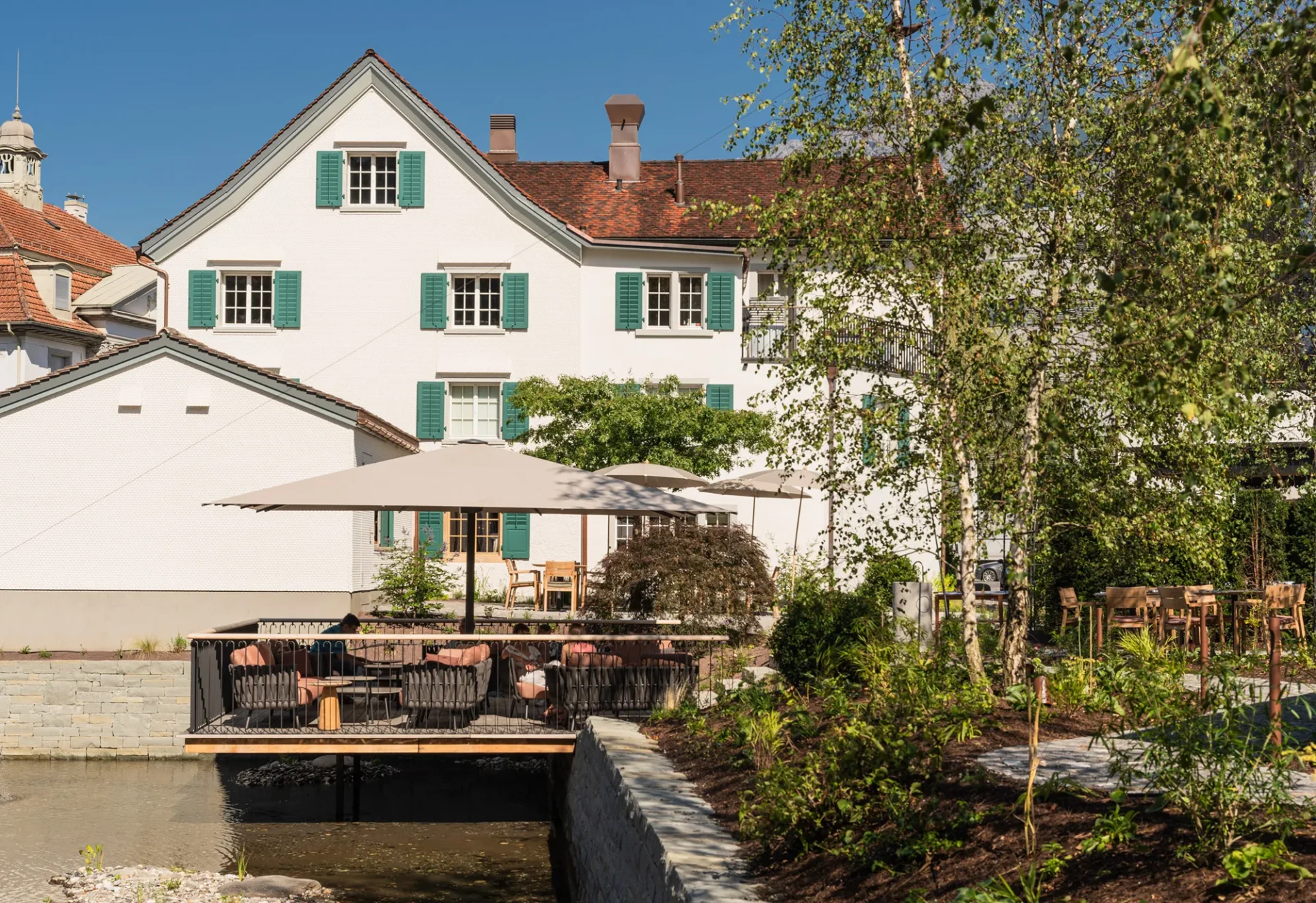
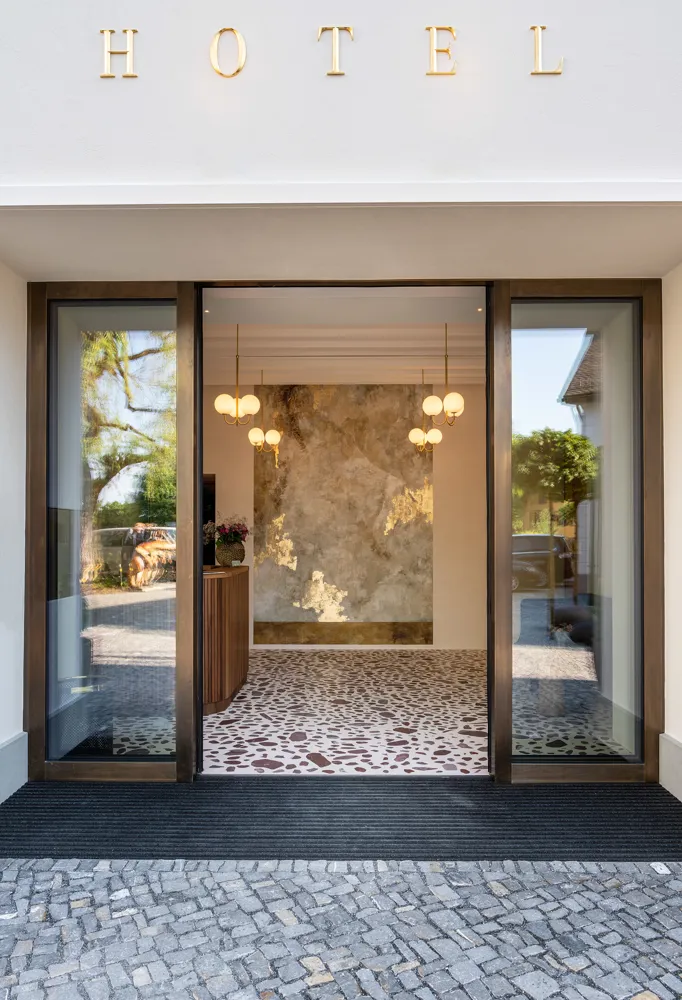
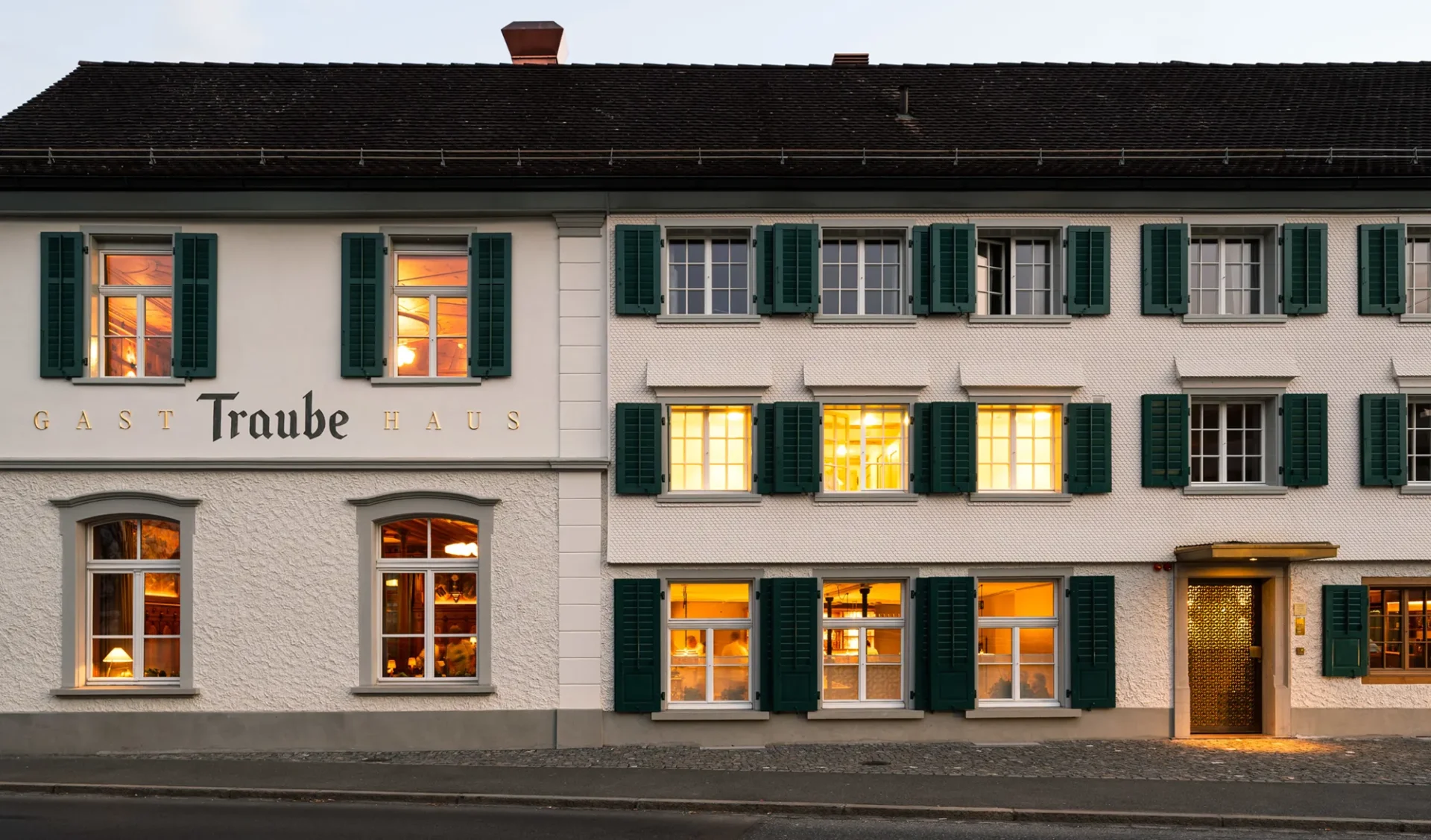
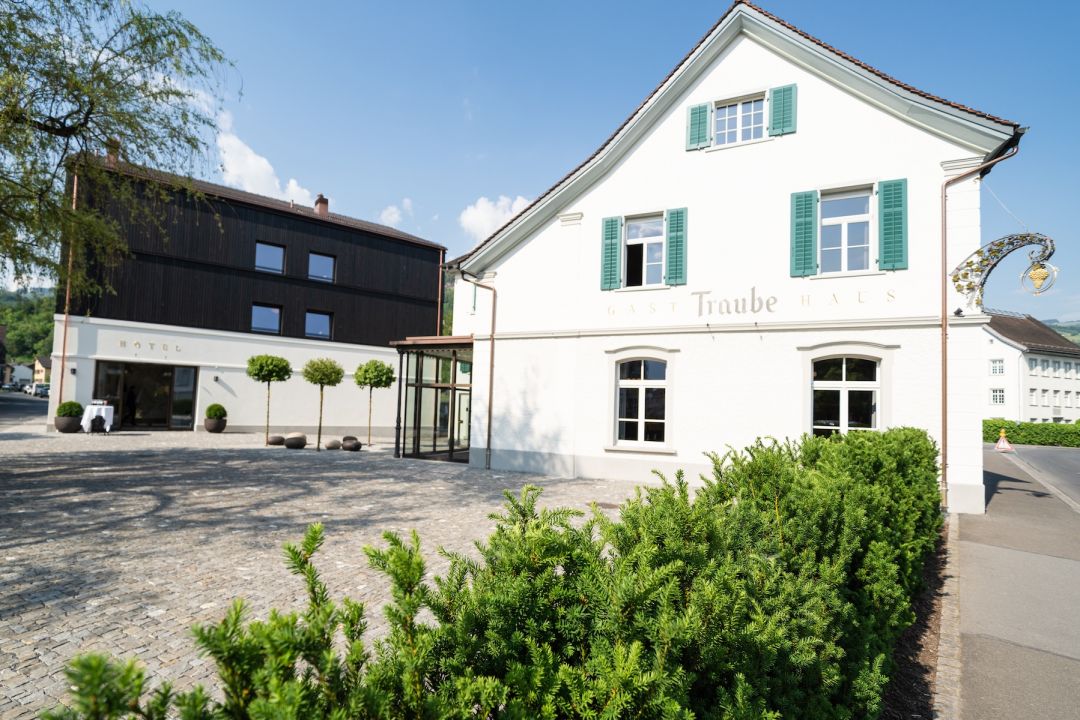
There is something wonderfully reassuring about a proper Gasthaus. A restaurant downstairs, rooms upstairs, people from the village at one table and travelers at another. No invented lifestyle concept required. In Buchs, Gasthaus Traube has been part of local life for more than 200 years. But when owners Kathrin Schertler-Secli and Ivan Secli decided to add a hotel, they resisted the temptation to turn that history into nostalgia. Instead, in 2024, the former stable beside the historic inn became something distinctly contemporary: a small 14-room design hotel built around natural materials, craftsmanship and simplicity. Old and new aren’t disguised as one another. That’s precisely why they work so well together.
Black Timber Beside an Old Inn
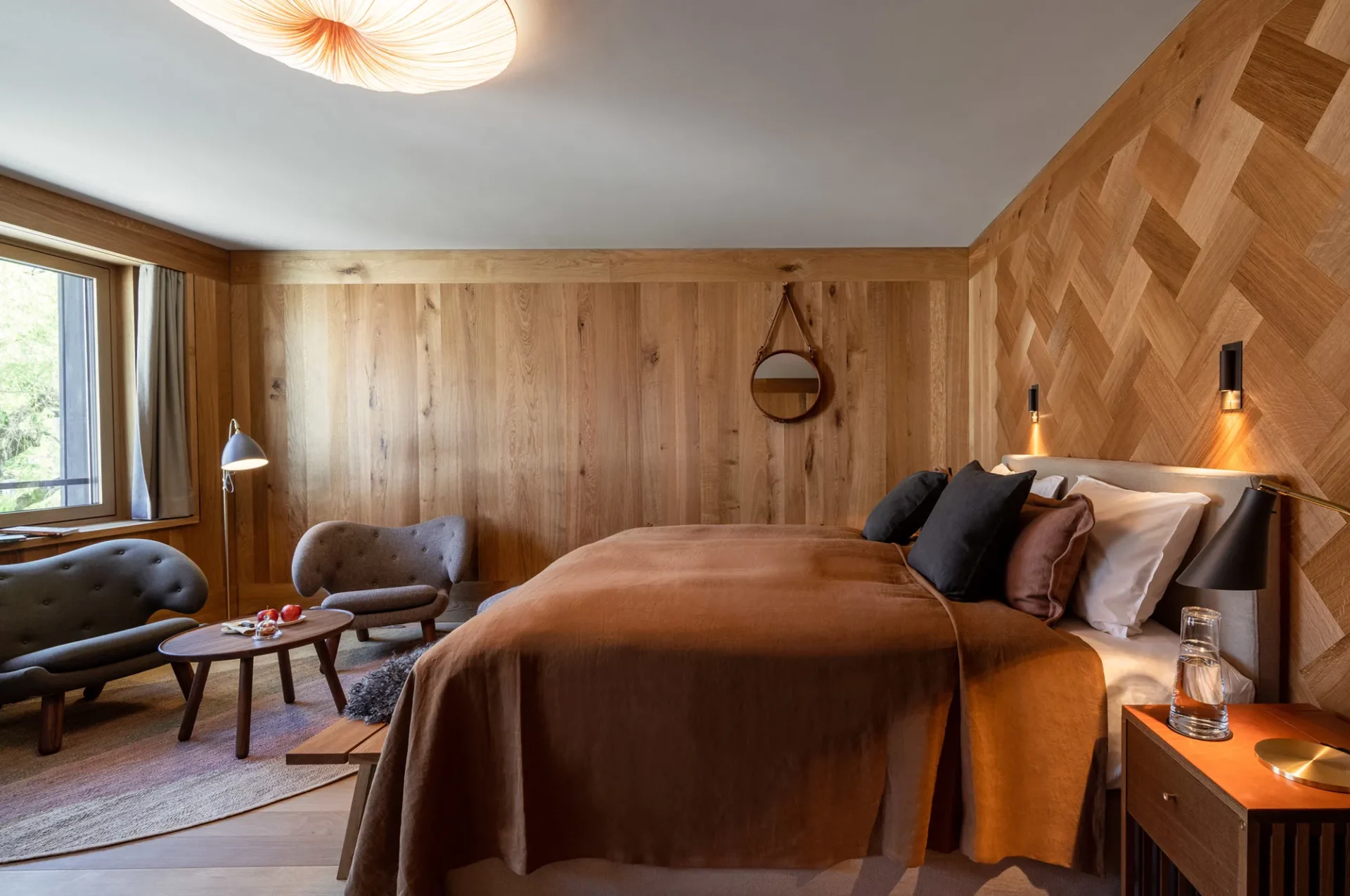
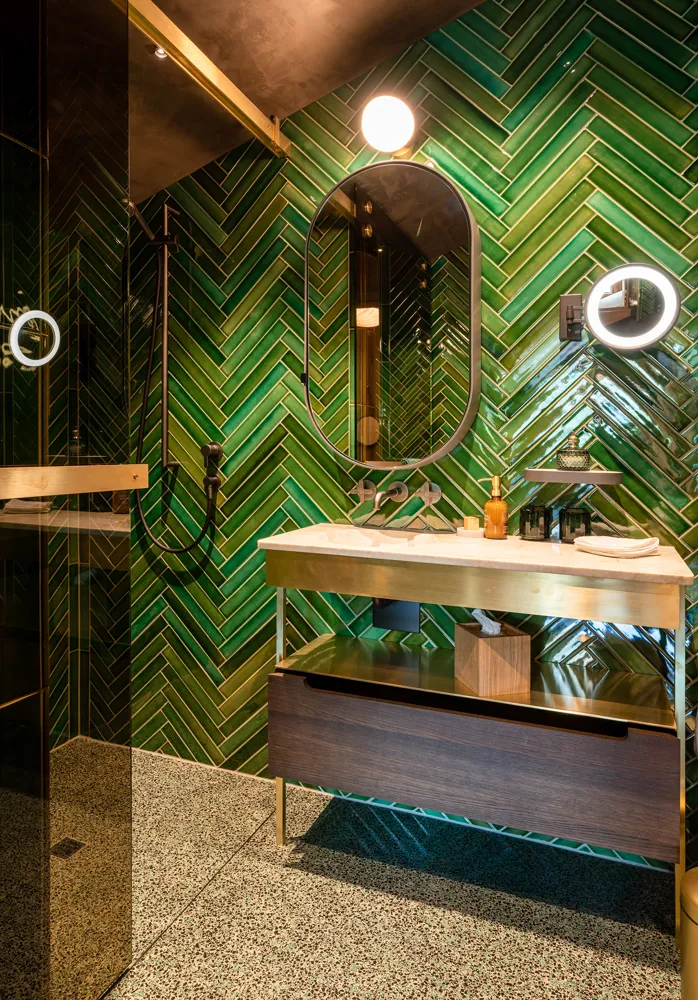
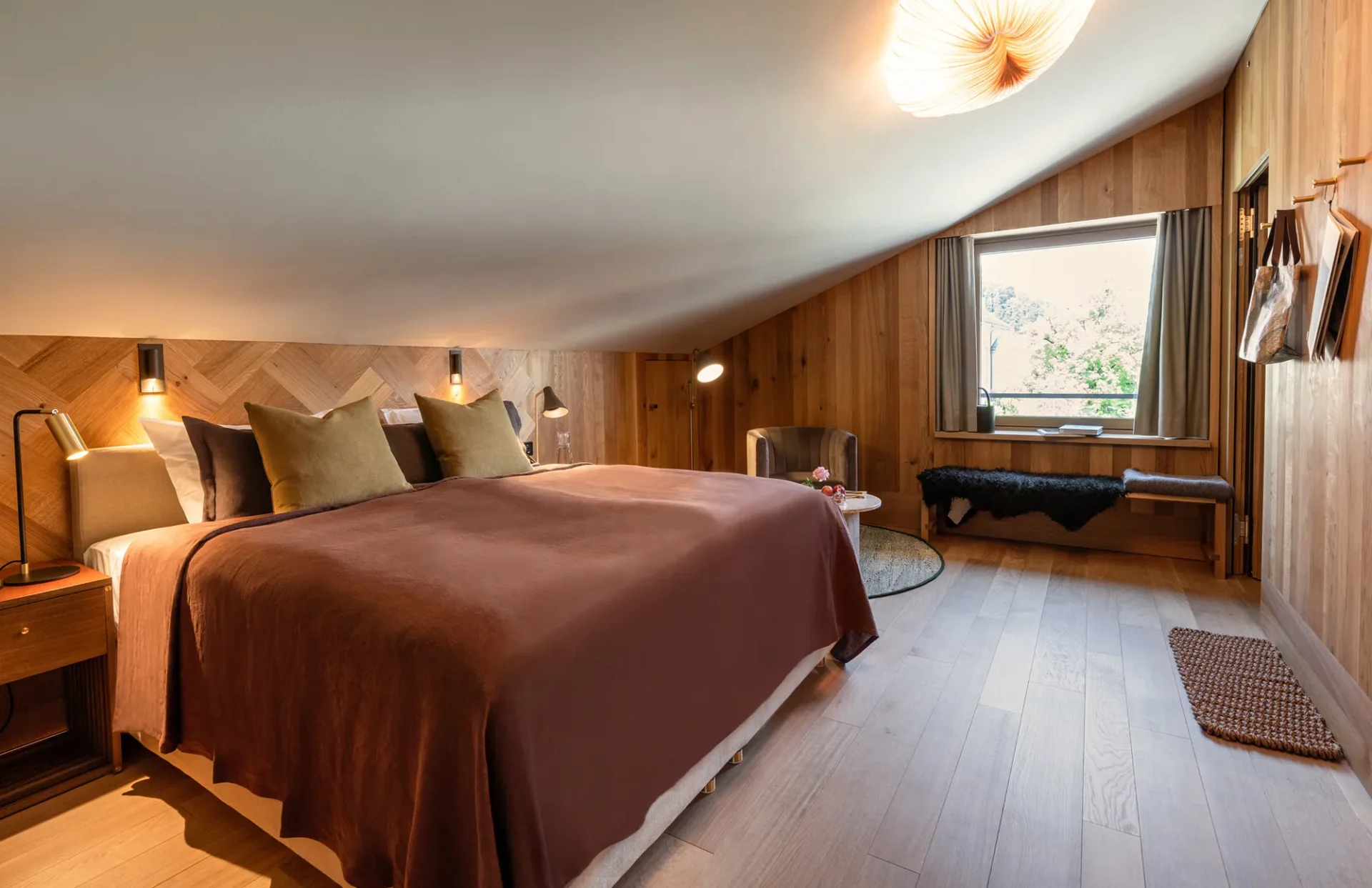
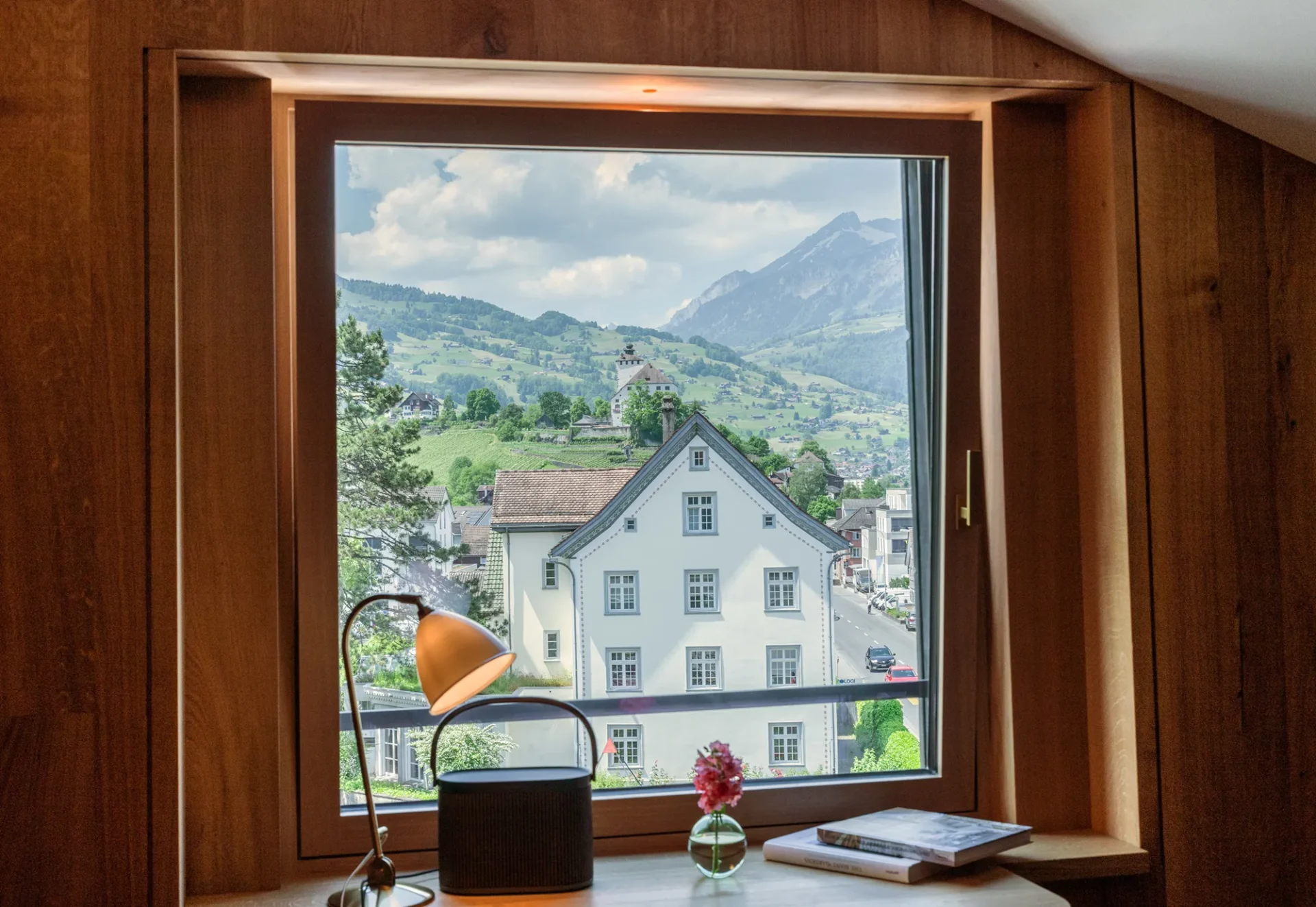
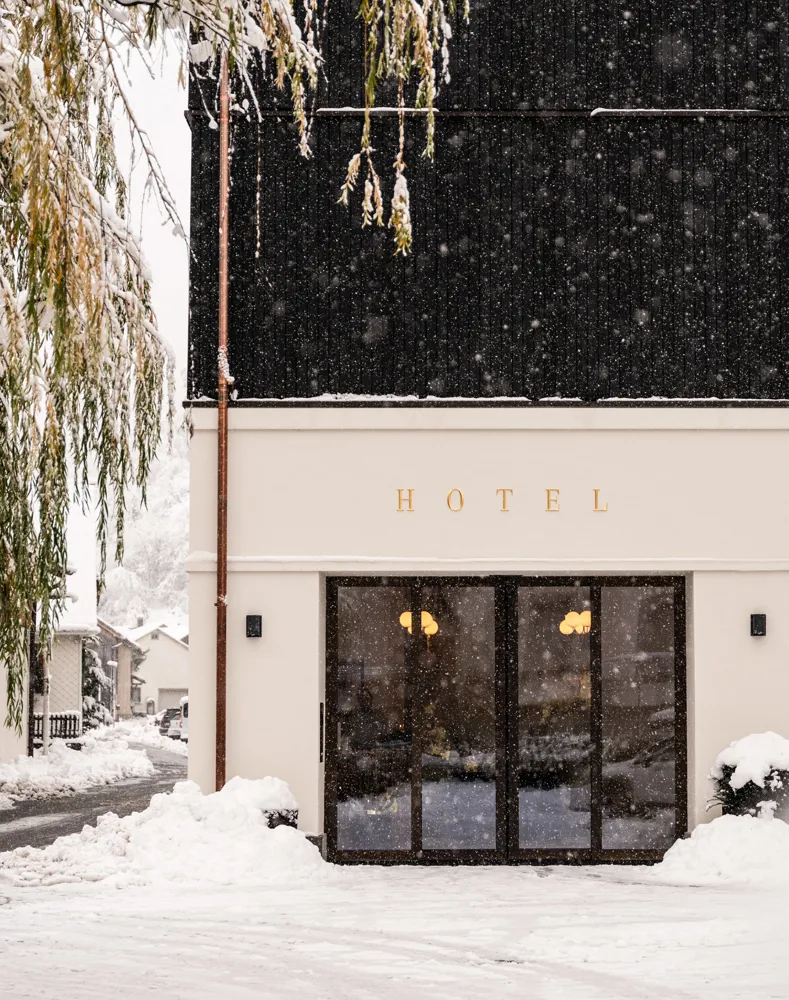
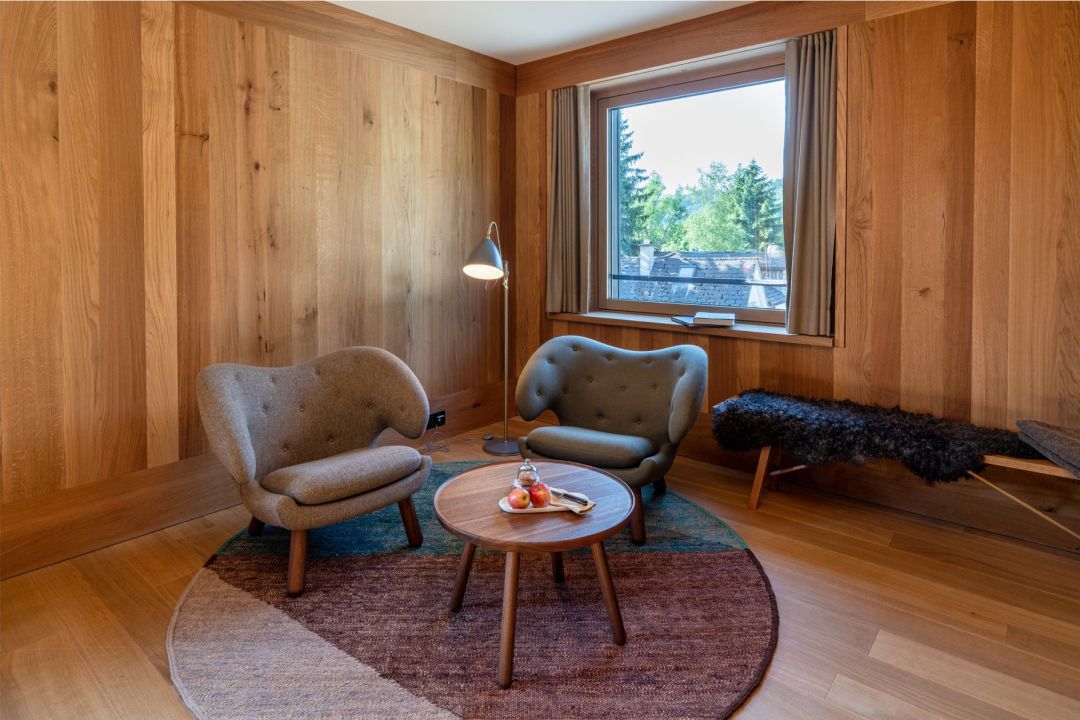
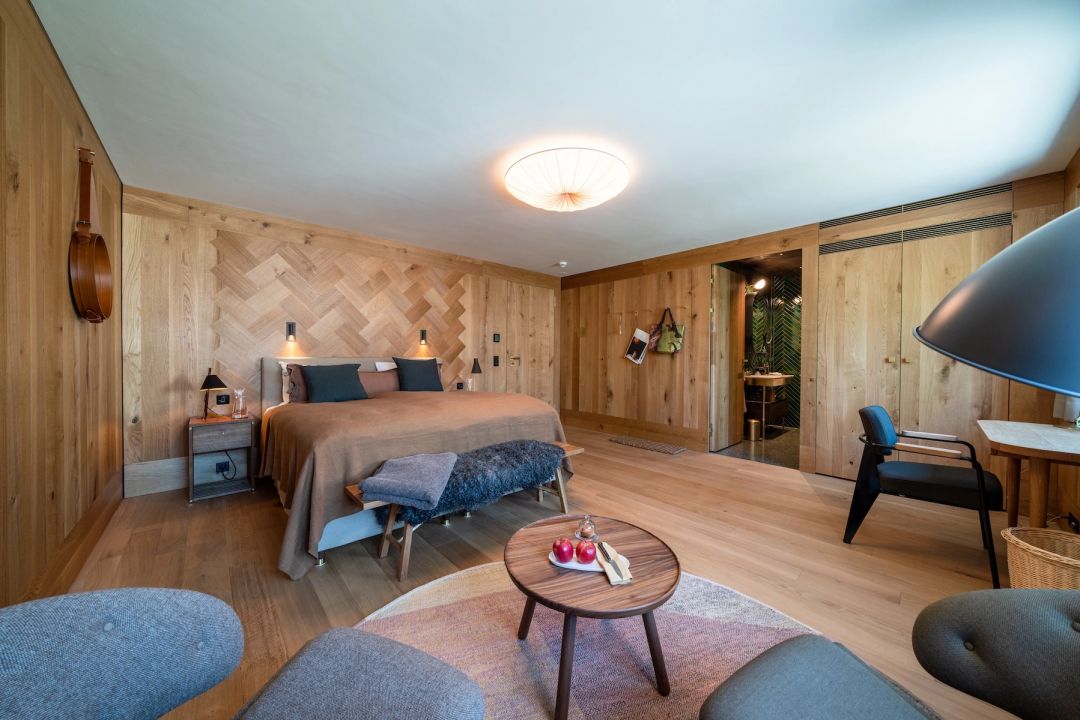
From outside, the new building immediately announces that it belongs to another century. Its façade is clad in charred larch, using the Japanese yakisugi technique to create a deep, almost black surface. Against the older Gasthaus, the contrast is striking, but the material itself keeps the architecture connected to the rural setting. Inside, the palette becomes lighter and softer. Designer Ruth Kramer worked with solid oak, natural stone, warm textiles and clean architectural lines, creating interiors that have something of Scandinavian restraint without feeling imported from Copenhagen. Craft matters here. Handmade tiles and ceramics introduce irregularity into the otherwise precise interiors, while artworks by Heloisa Ackermann add another organic layer. Large windows pull daylight and the surrounding landscape into rooms that deliberately avoid unnecessary decoration. It feels modern, but never clinical.
Just 14 Rooms
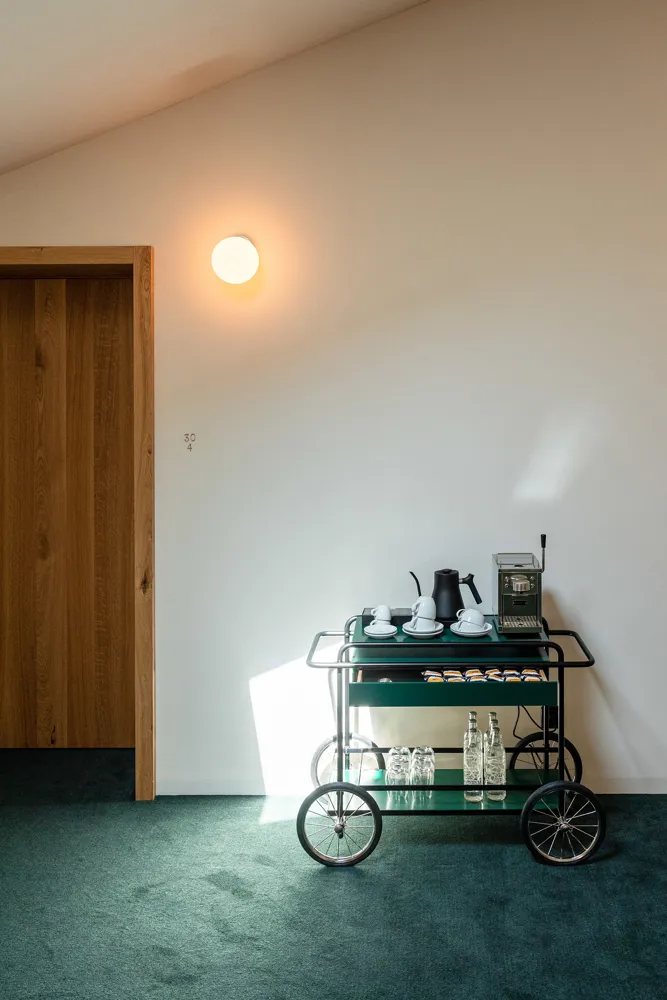
The small scale is part of the appeal. There are only 14 rooms, divided principally between the compact Trüübli rooms, at around 18–20 square metres, and larger Truuba rooms of approximately 24–30 square metres. The smaller rooms demonstrate how much can be achieved with good planning. Built-in elements make intelligent use of the space, while oak, tactile fabrics and carefully positioned lighting prevent them from feeling tight. The larger rooms add desks and sitting areas for guests who intend to stay a little longer. For families or friends travelling together, a Truuba-Trüübli combination connects two rooms behind a shared entrance—an elegant alternative to turning the hotel itself into a family resort. Throughout, walk-in rain showers, well-chosen furniture and natural materials reinforce the same idea: comfort without clutter.
Where Old and New Meet
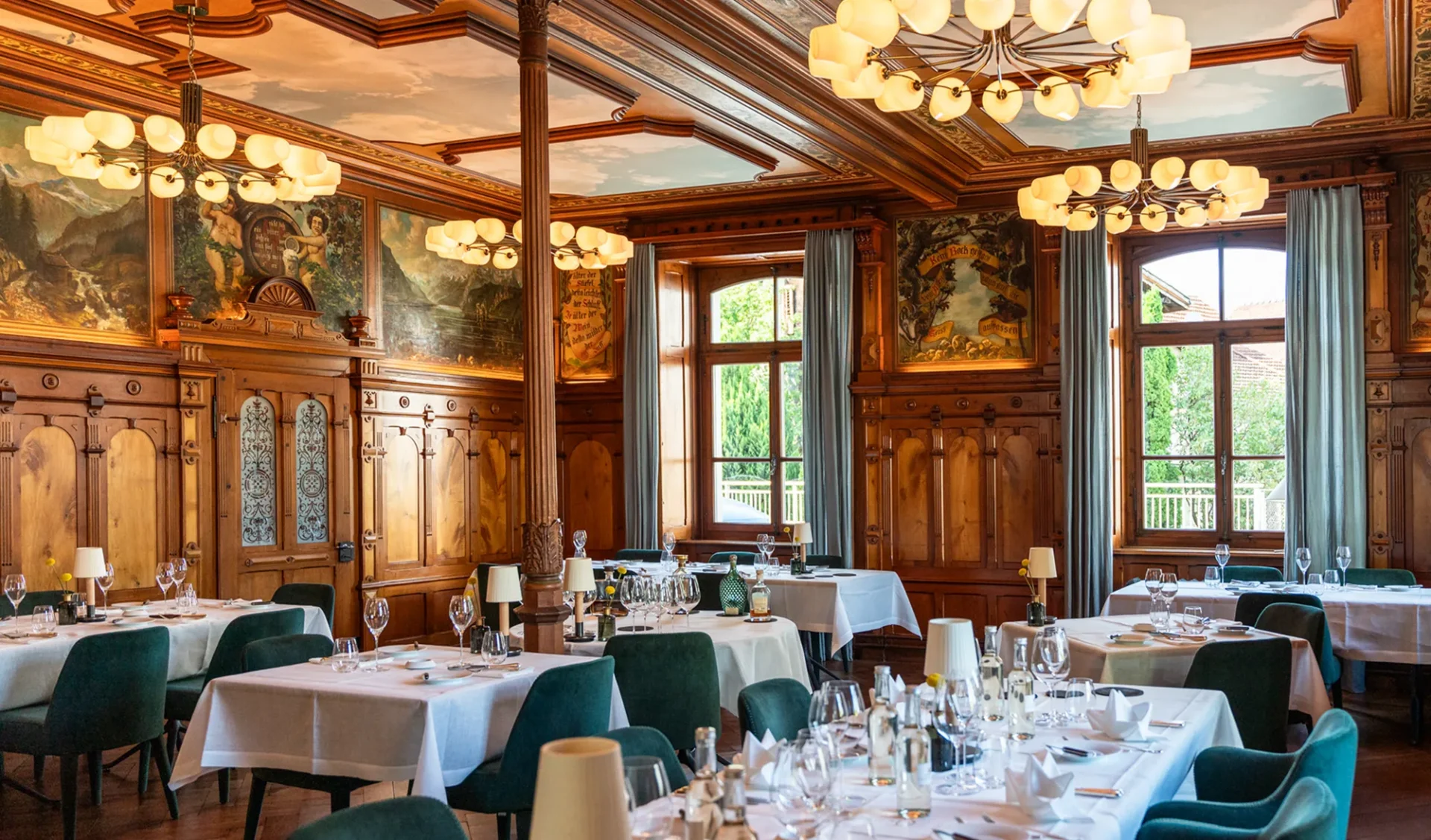
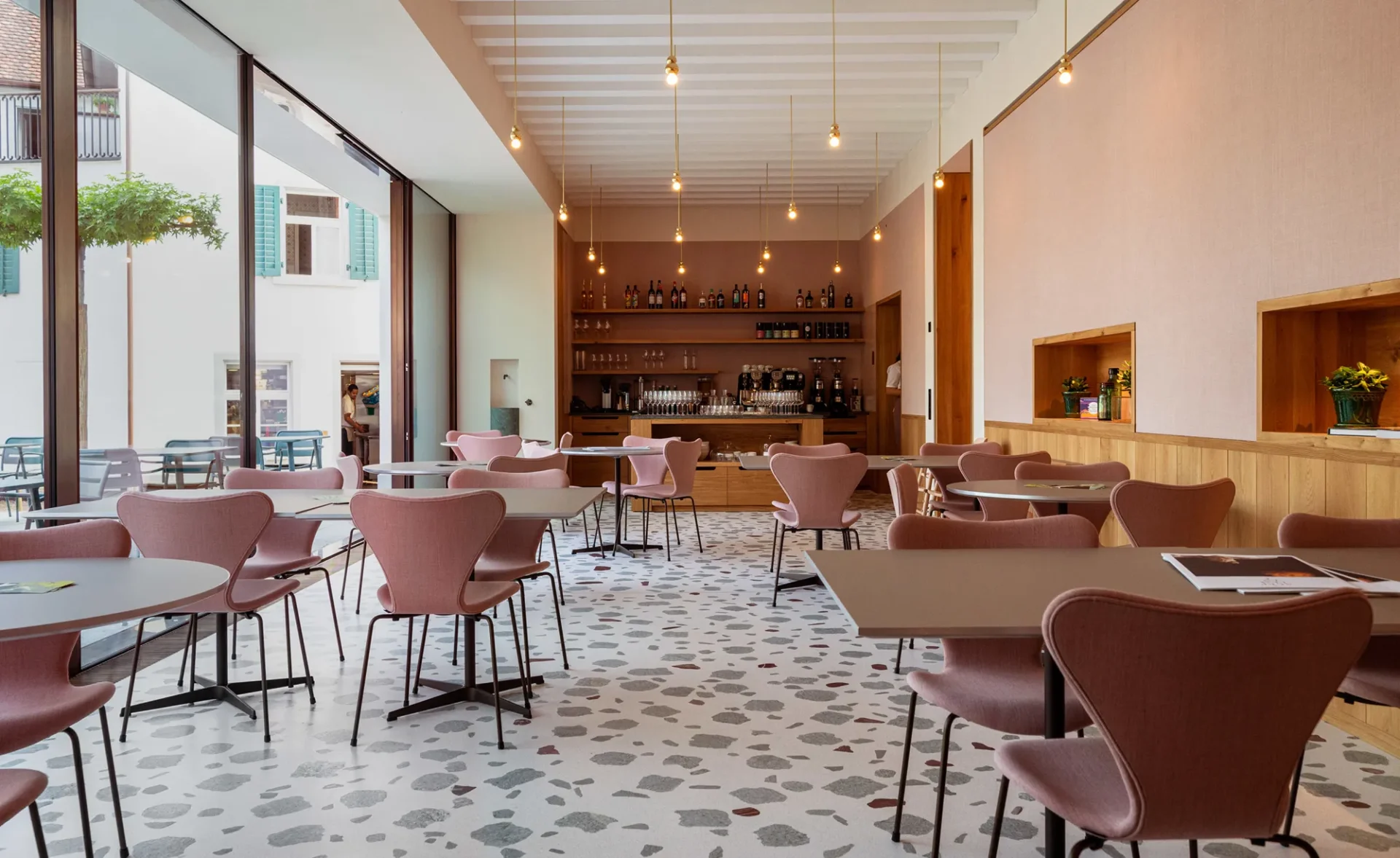
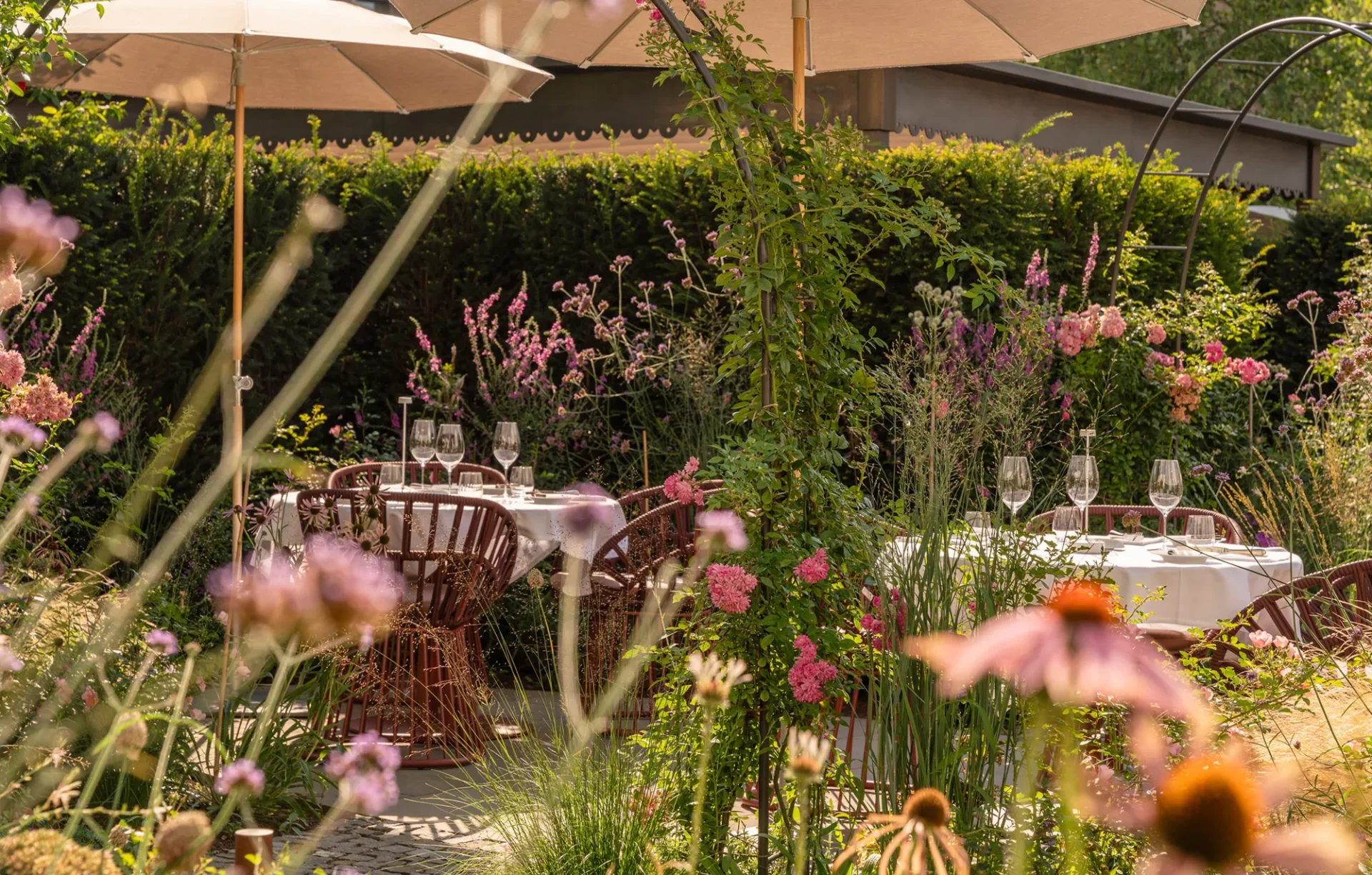
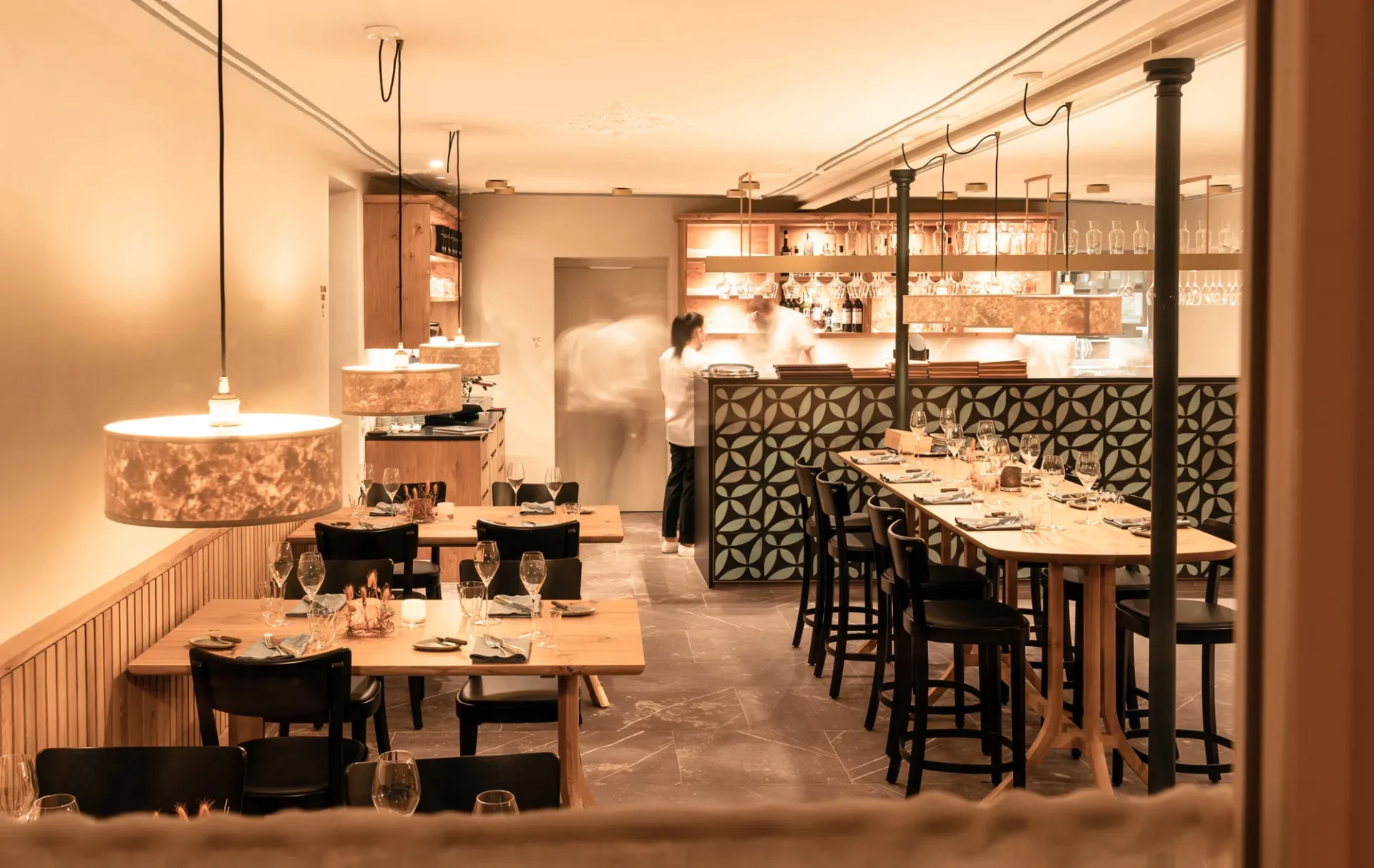
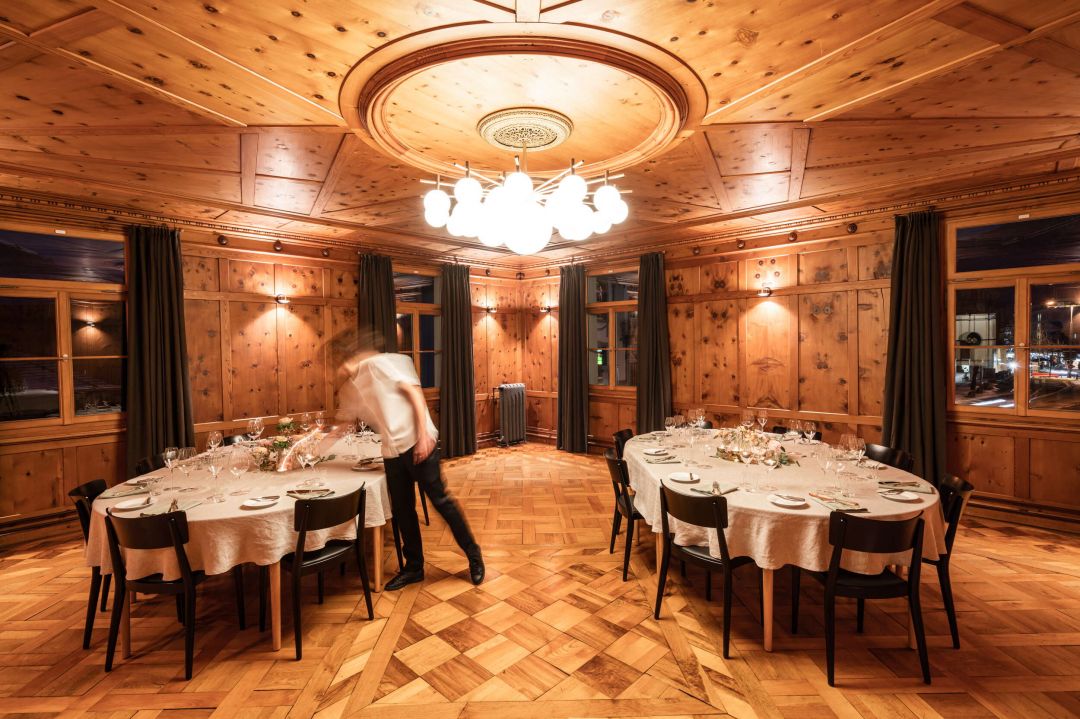
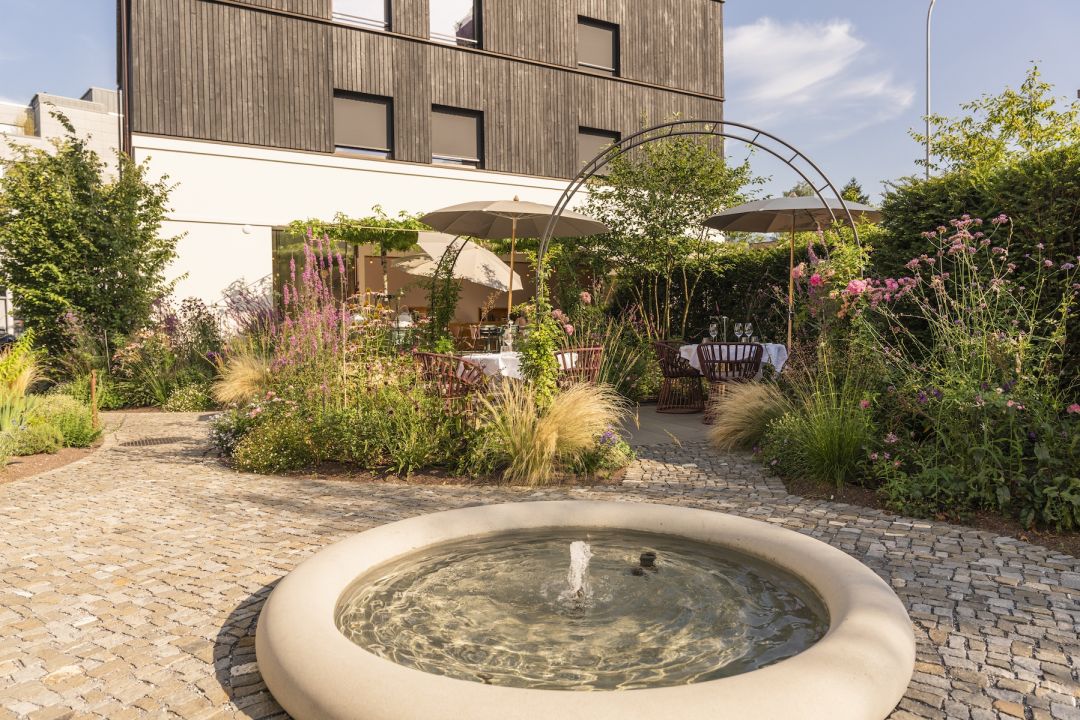
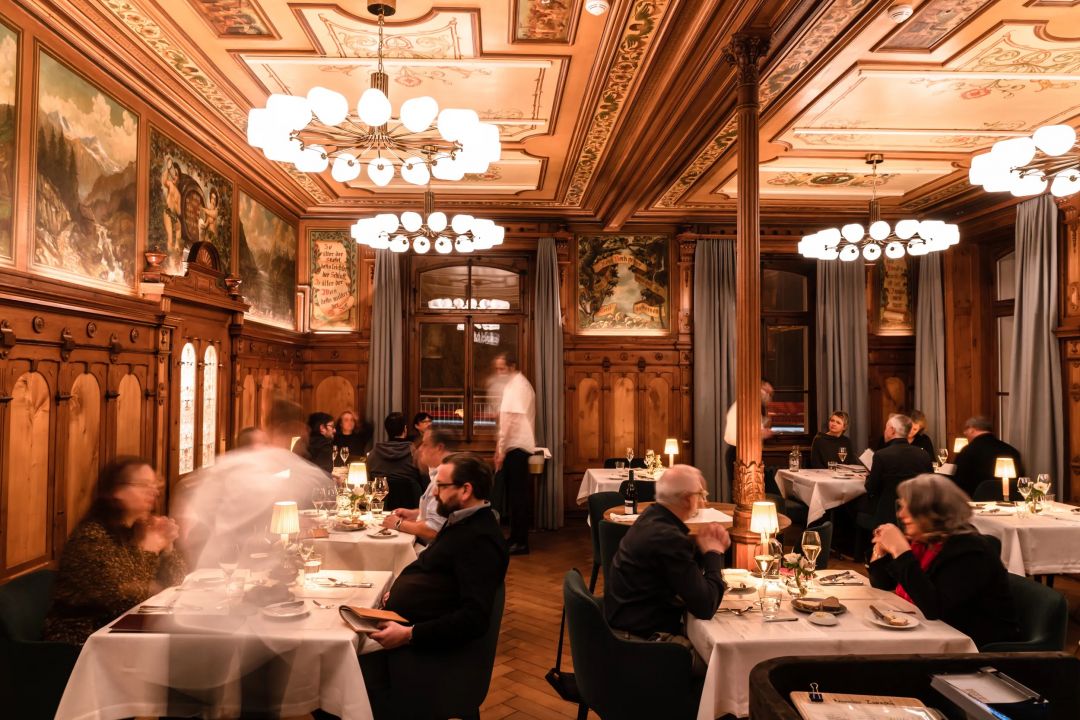
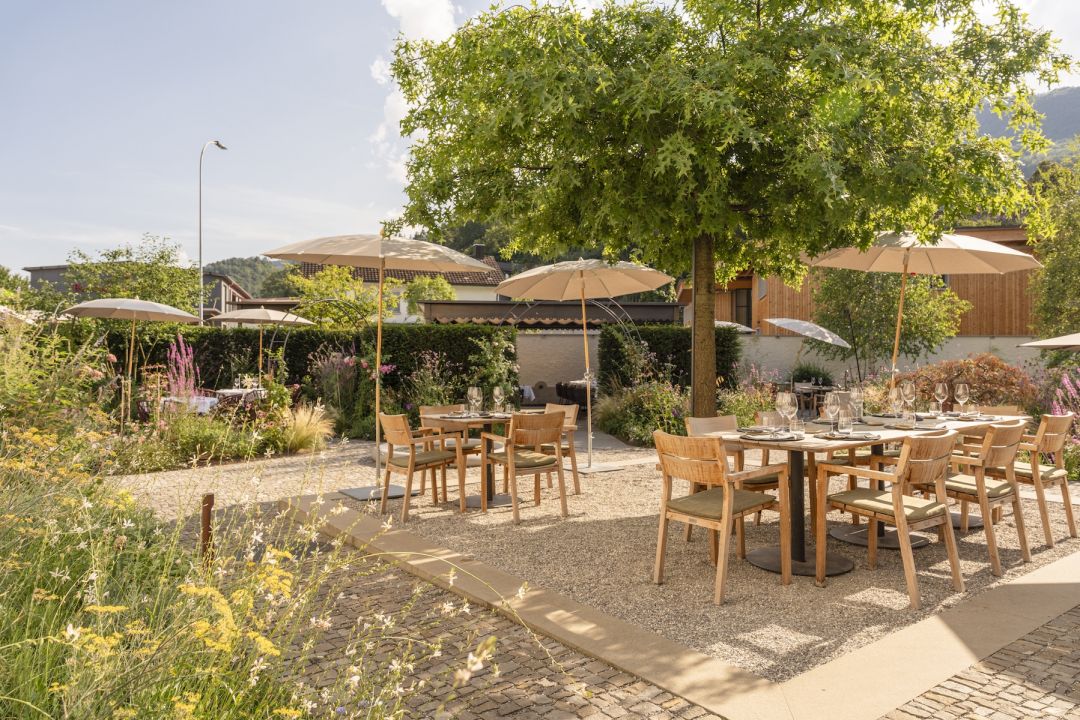
One of the smartest additions is the Gartenzimmer, a light-filled garden room that physically and atmospherically connects the contemporary hotel with the historic restaurant. It is here that the project begins to make complete sense. The new rooms might bring you to Gasthaus Traube, but the old inn remains its social heart. Breakfast centres on regional produce, while later in the day the Braustube and Traubensaal return to what this address has been doing for generations: feeding people. The kitchen works with a contemporary interpretation of market cuisine, driven by season and produce rather than unnecessary complication. And then there is the cellar.
900 Reasons to Stay for Dinner
For a 14-room countryside hotel, the wine collection is wonderfully disproportionate. The cellar holds around 900 labels, including more than 200 Champagnes, curated with the kind of enthusiasm that makes wine an integral part of the experience rather than an intimidating list handed across the table. That passion makes more sense when you meet the people behind the hotel. Owner Ivan Secli is also behind Secli World of Wine, while Kathrin Schertler-Secli is closely involved in the local cultural scene and directs the nearby theatre. Gasthaus Traube consequently feels less like an isolated boutique hotel and more like an extension of the community surrounding it. Come for dinner and you may find locals at the next table. Stay for another bottle and the distinction between restaurant, hotel and village gathering place starts to disappear. Exactly as it should.
The New Swiss Countryside Hotel
What makes Gasthaus Traube interesting isn’t simply the juxtaposition of an old building and a modern one. It’s the fact that nothing essential about the Gasthaus has been sacrificed in the process. The restaurant still matters. The owners are present. Local life hasn’t been designed out of the experience. The new architecture simply gives an old institution another reason to survive. And there is something particularly appealing about that model of hospitality: small, independent, locally connected and confident enough not to manufacture an identity it already possesses. Gasthaus Traube shows how beautifully the traditional Swiss inn can evolve: 14 thoughtful rooms, contemporary architecture, seriously good food and an exceptional cellar, all built around something no designer can create from scratch—more than two centuries of belonging to its place.
Information
At a glance
Architecture
Opened / Renovated
2024
Size matters
14 rooms (18-30m2) (194-323 sq ft) - combined (43m2) (463 sq ft)
Interior design
Ruth Kramer
Bathroom Amenities
custom (organic)
Featured in
Don't take our word for it


Handpicked worldwide
A carefully curated collection of exceptional boutique and design hotels across the globe.
Design with soul
Architecture, atmosphere and craftsmanship come together in stays with a clear identity.
Hidden, not hyped
Independent boutique hotels you rarely find on mainstream booking platforms.
Travel guidance
Personal recommendations and thoughtful support from people who actually know the places.