


A New Address on Lincoln’s Inn Fields
The Webster Covent Garden brings magical realism, analogue nostalgia and Italian nightlife together in a narrative-driven social hotel overlooking London’s Lincoln’s Inn Fields.

Why DNA Hotels loves it
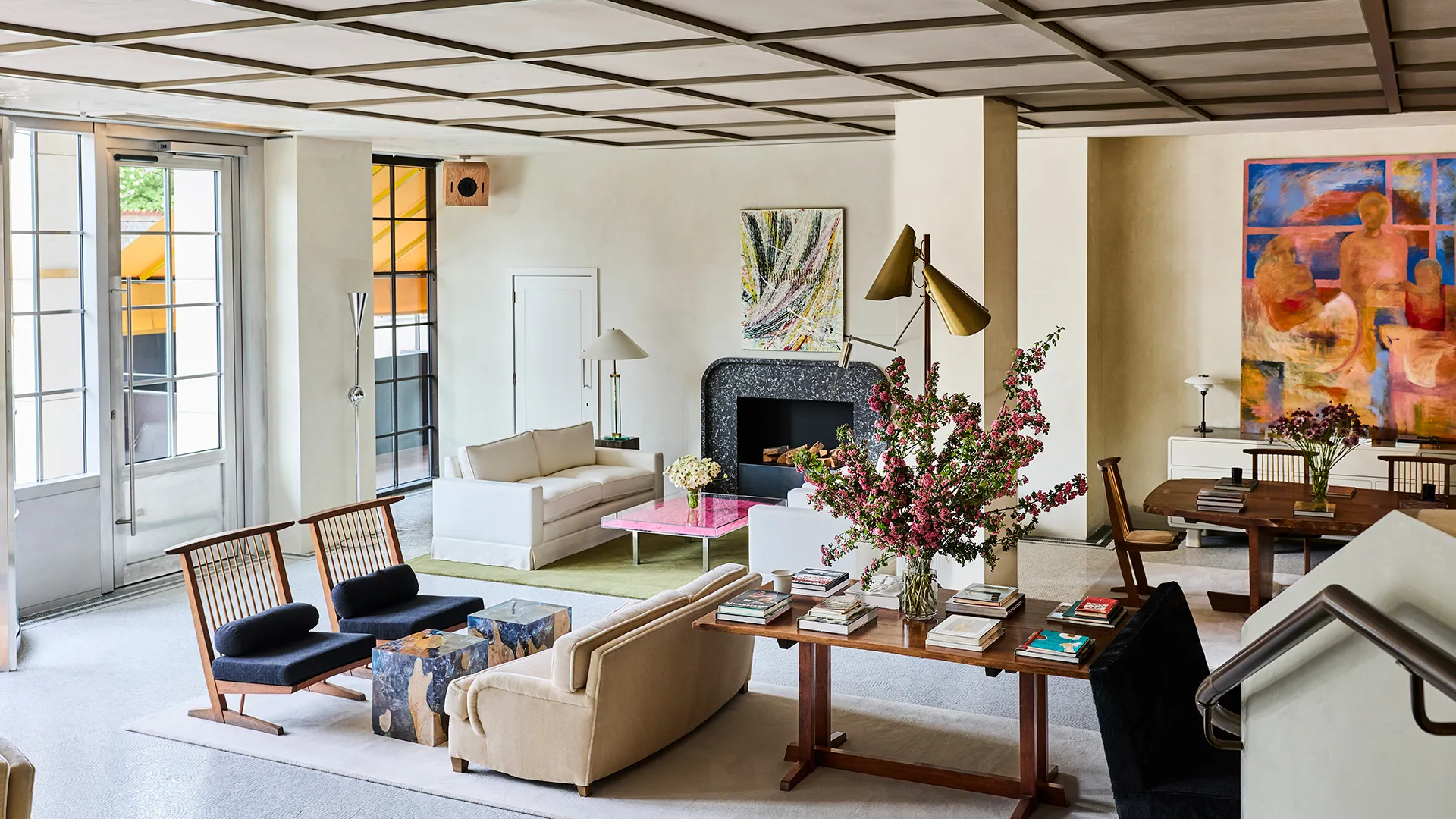
Red Deer brings a narrative-driven approach to the interiors, using magical realism to combine literary references, mid-century pieces, tactile materials and moments of unexpected whimsy.
The concept deliberately pushes back against digital overload, with books, intimate lounges and analogue details designed to encourage conversation, curiosity and genuine social interaction.
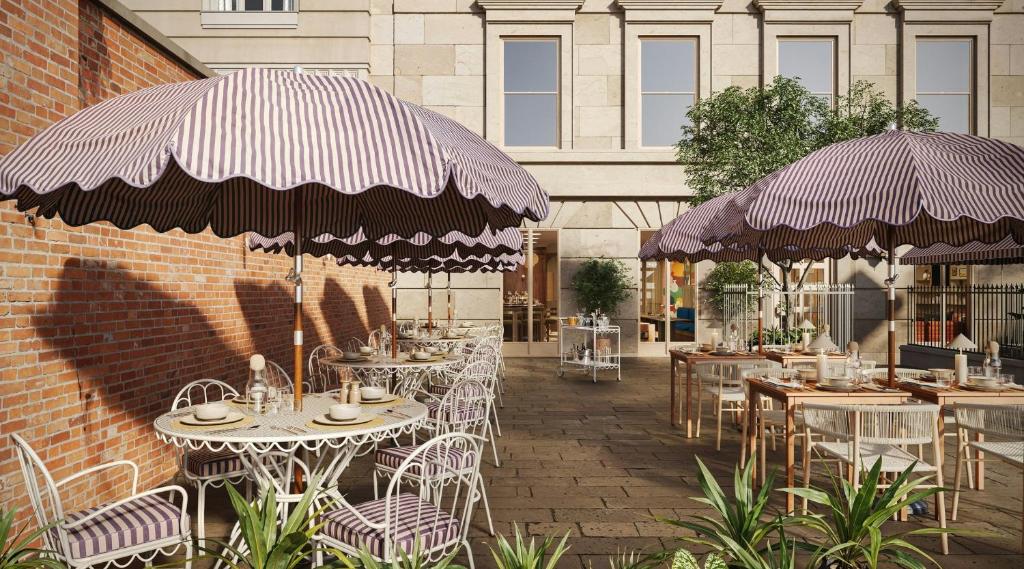
Three distinct food and drink spaces — from terrace aperitivo to subterranean Italian dining and Italo-Disco — turn the hotel into a place for Londoners as much as overnight guests.
The Stay
Magical realism, analogue nostalgia and Italian nightlife come together in a new social hotel overlooking Lincoln’s Inn Fields.
The Webster arrives in one of those parts of London where history seems to accumulate on every corner. Set beside Lincoln’s Inn Fields, between Covent Garden and Holborn, the 167-room hotel draws inspiration from a neighbourhood long associated with literature, theatre, law and intellectual life. Charles Dickens found material in the surrounding streets; today galleries, theatres and cultural institutions continue that creative energy. The hotel is the first property from The Webster, a new lifestyle brand from Altus Hospitality, with a second address planned for New York. Rather than simply transplanting the same aesthetic between cities, the idea is to let each hotel grow from the stories of its location.
Red Deer and Magical Realism
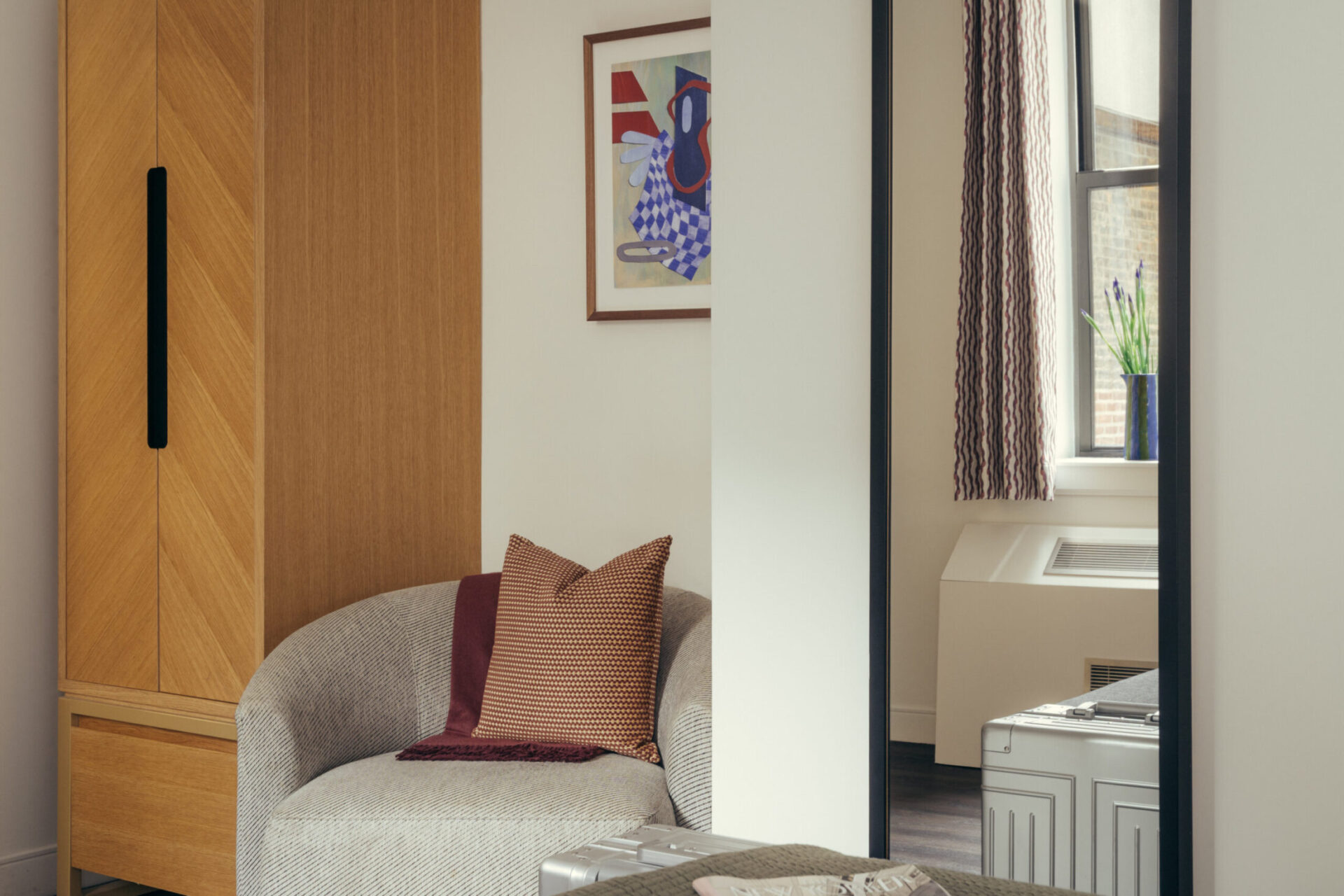
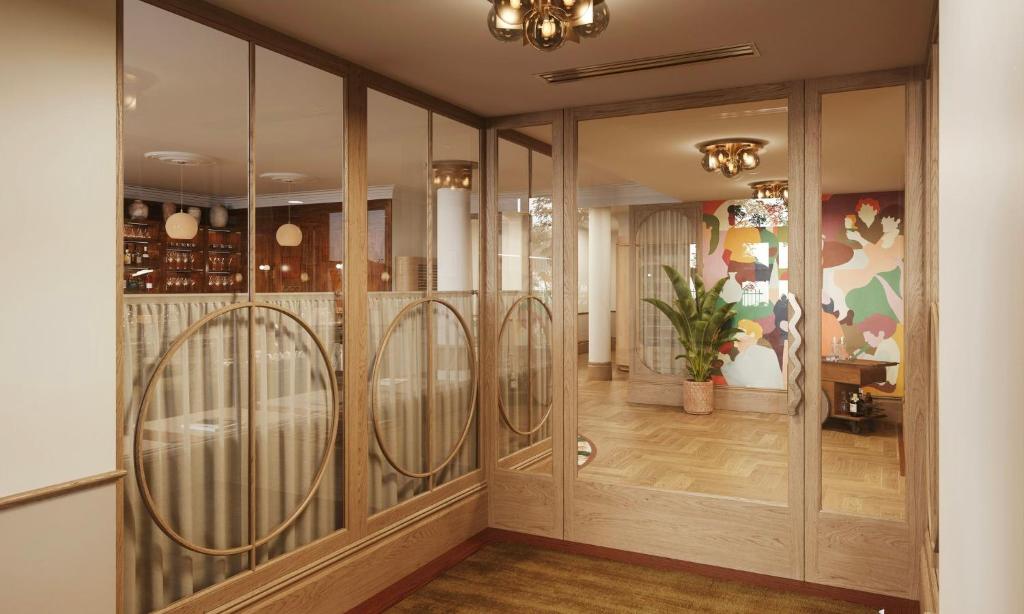
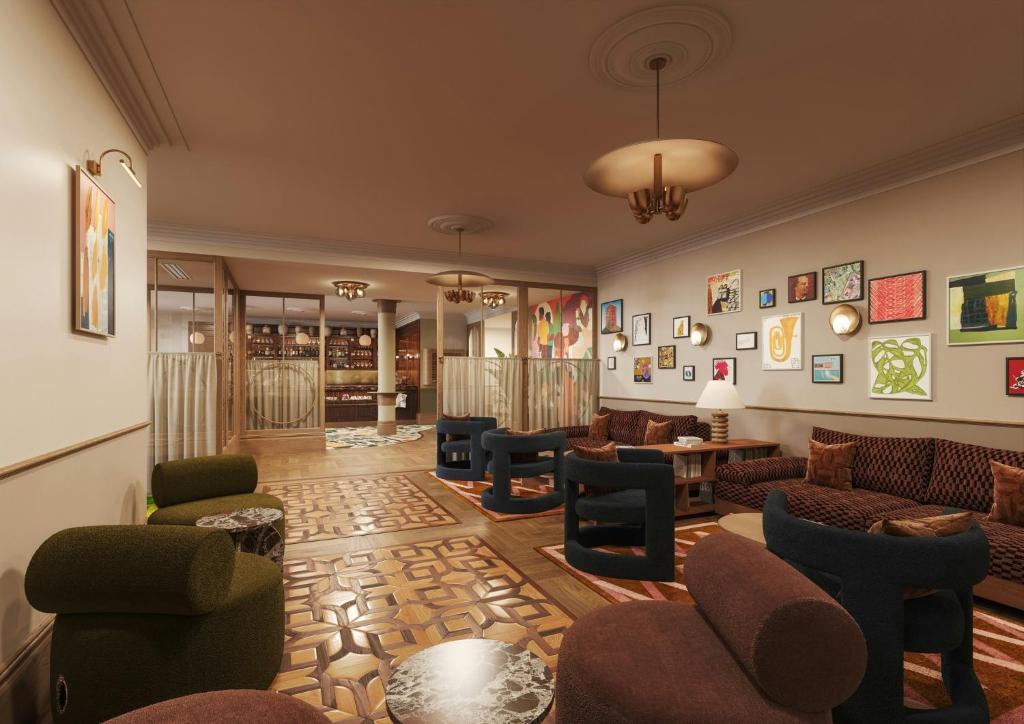
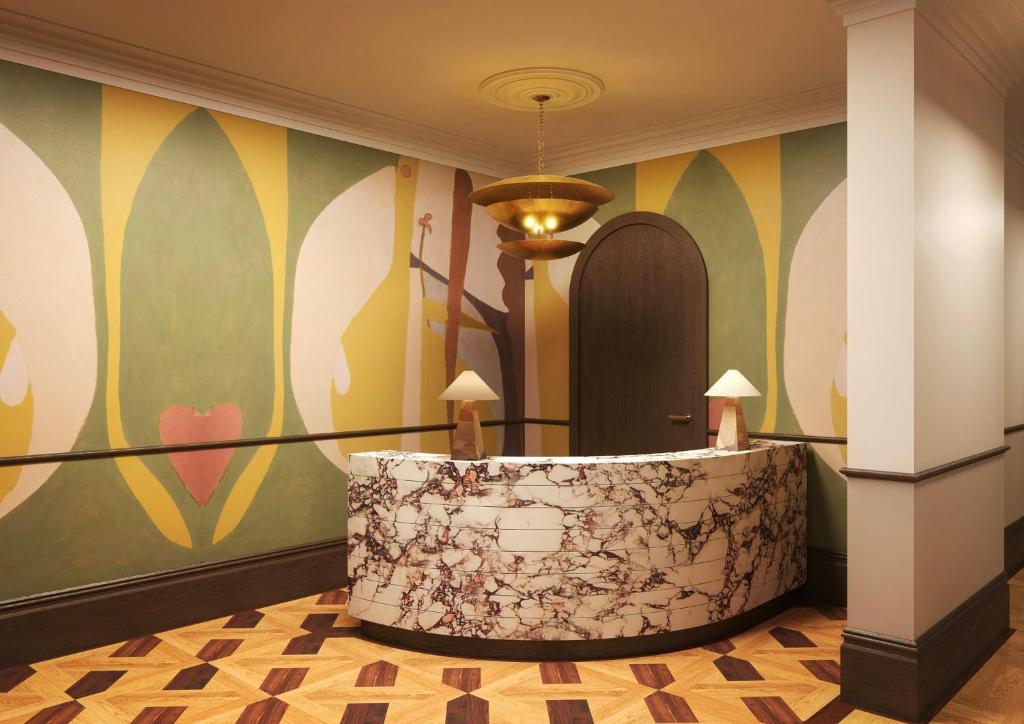
London architecture and interior studio Red Deer approaches The Webster through the idea of magical realism: recognisable spaces in which something slightly unexpected is always allowed to happen. That translates into interiors balancing heritage references with contemporary pieces, patterned floors, expressive furniture and layered lighting. Mid-century armchairs might sit beside hand-selected books; restrained architectural details are interrupted by stronger colour and pattern. The result feels collected rather than overtly themed. There is nostalgia here, but it isn’t interested in recreating a particular decade. Old and new are deliberately allowed to blur.
The Analogue Hotel
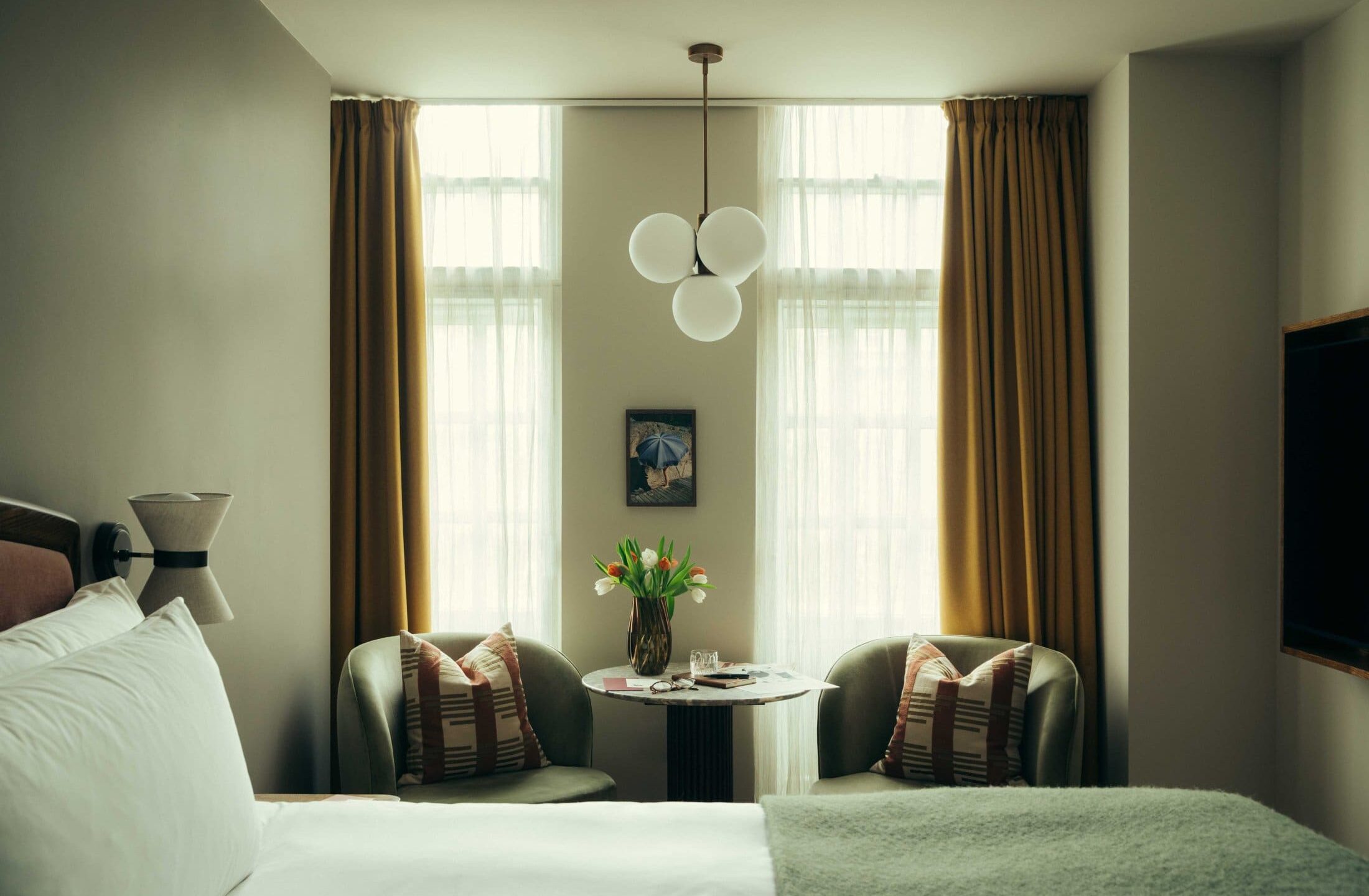
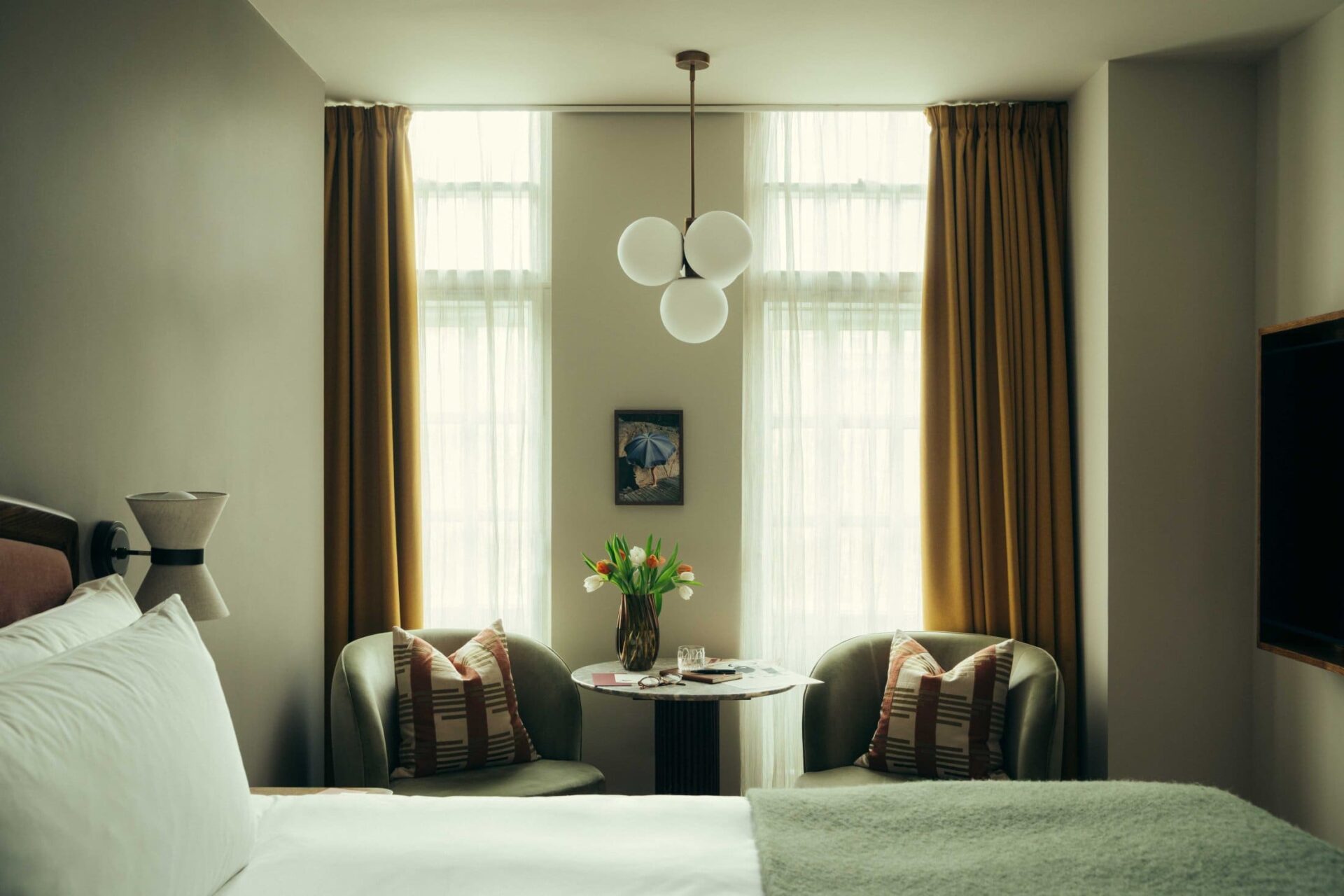
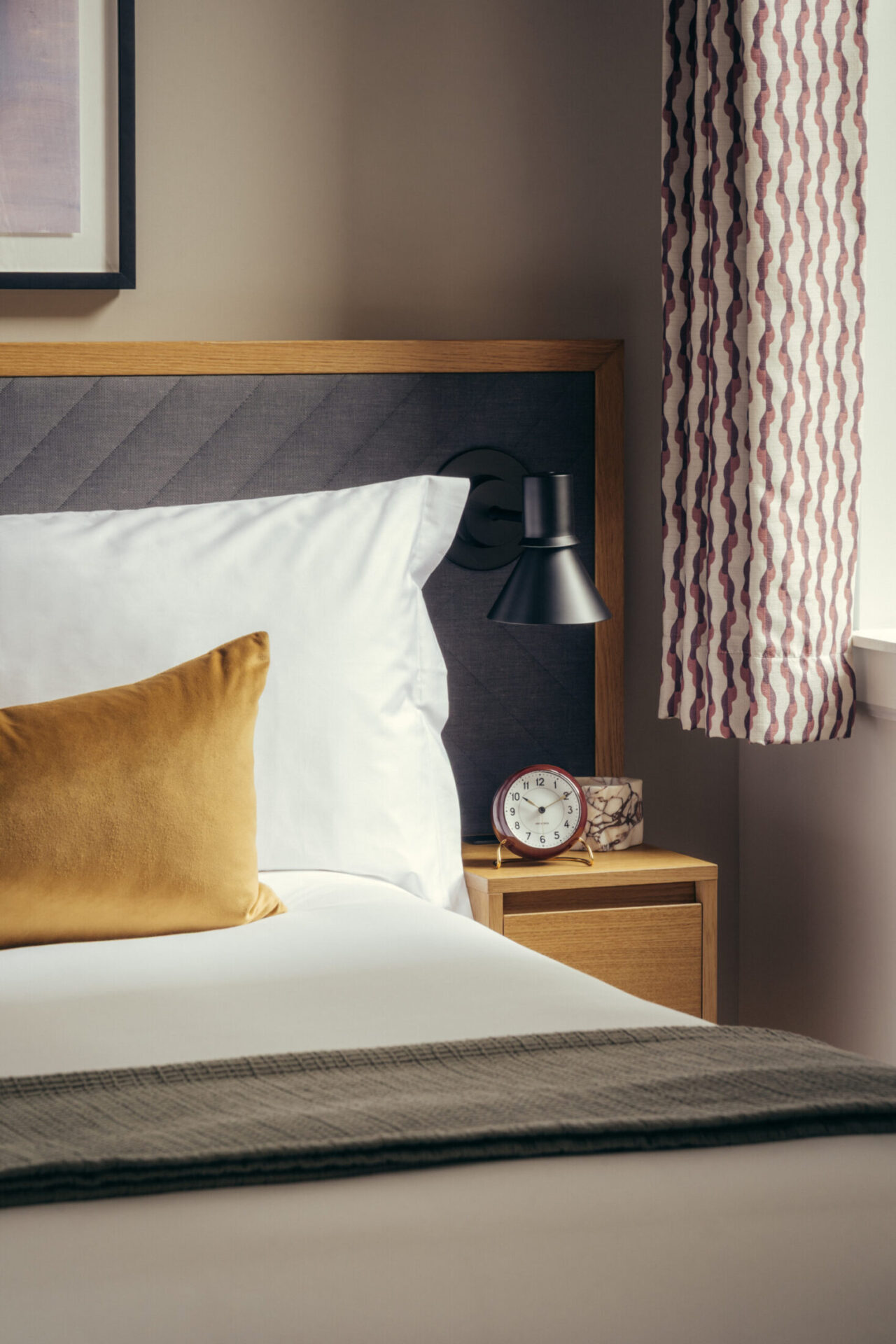
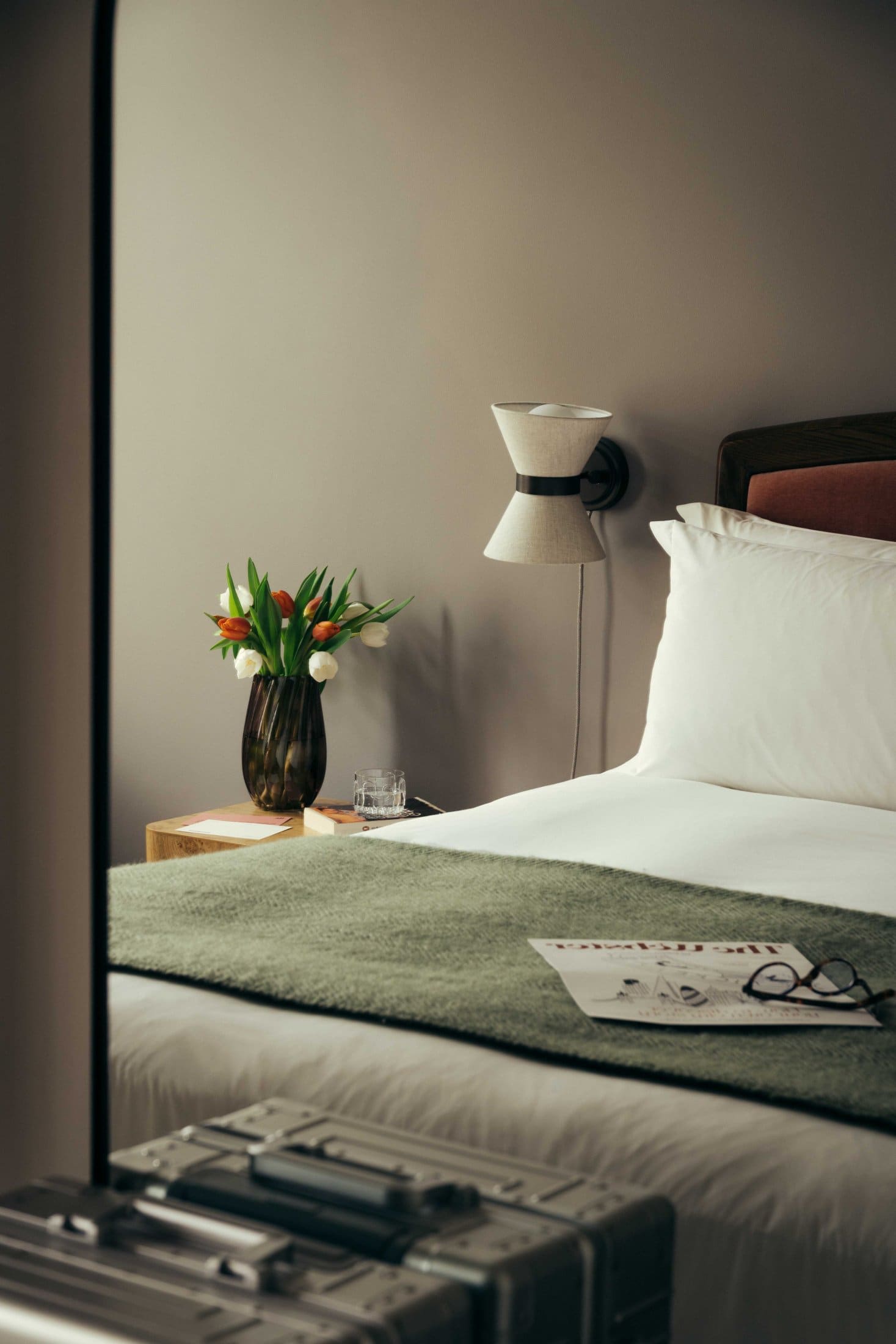
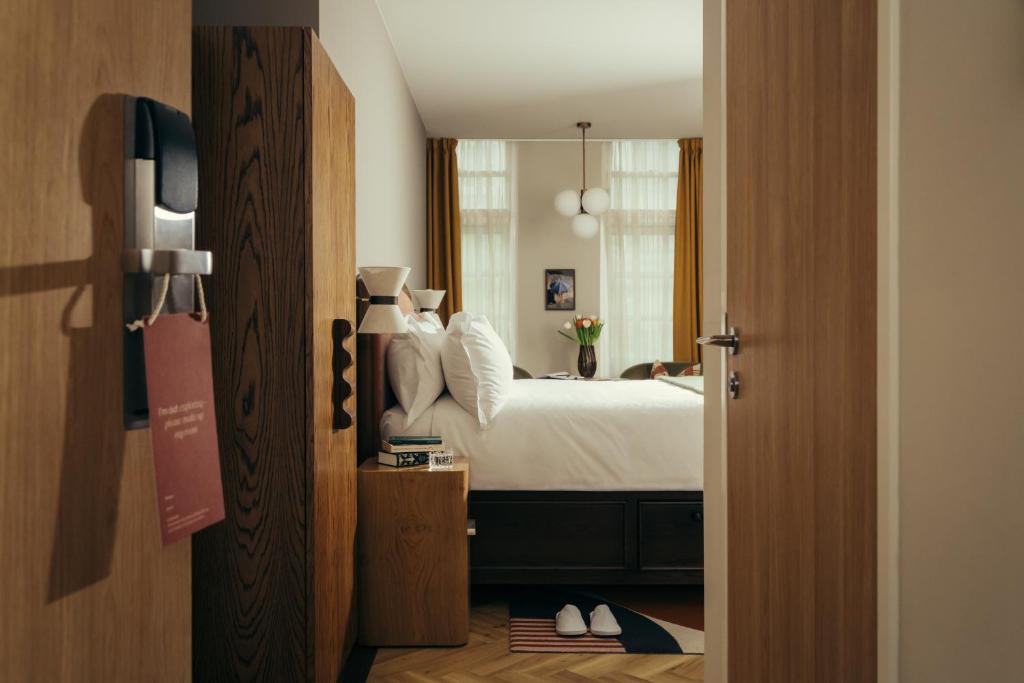
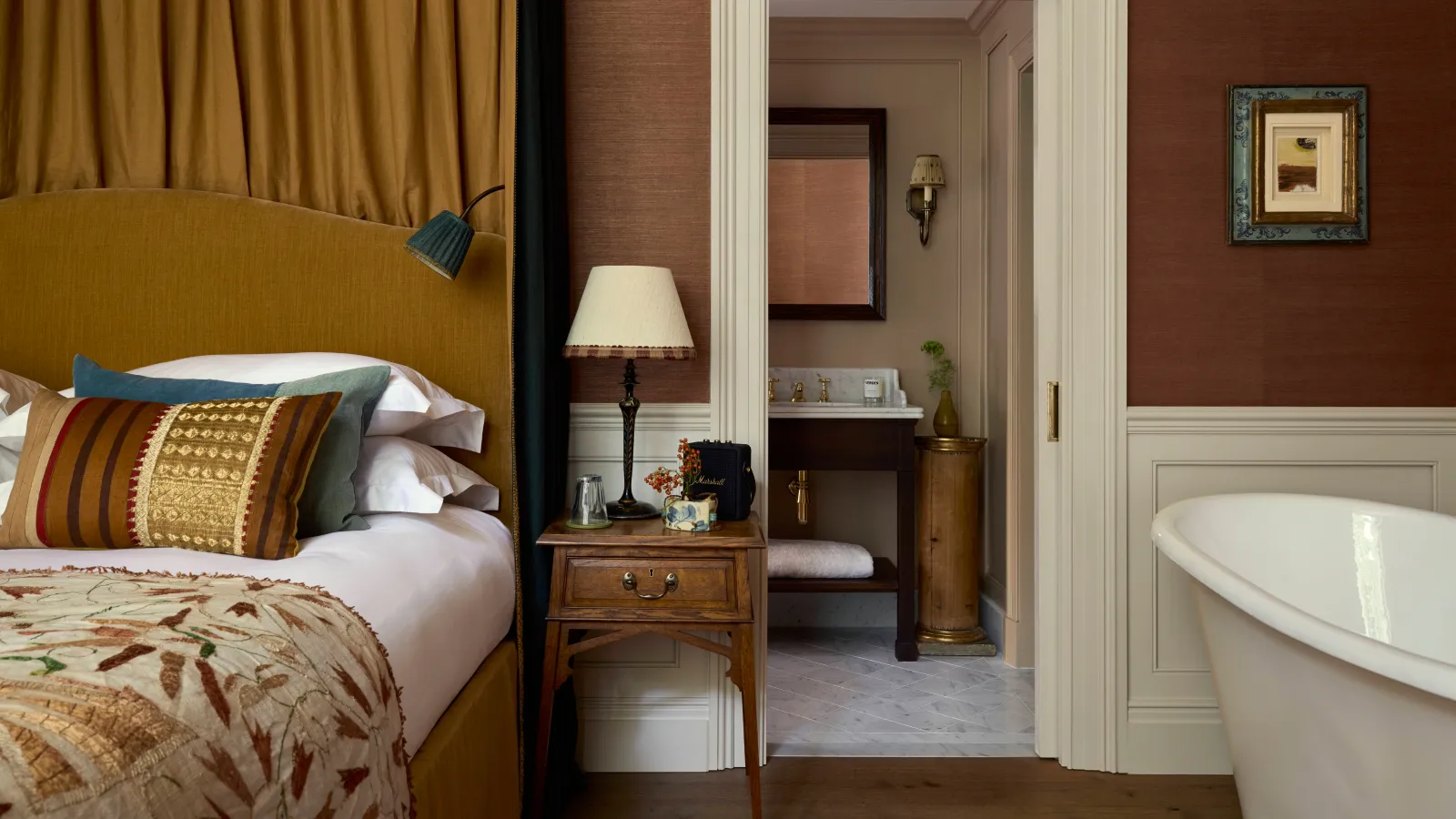
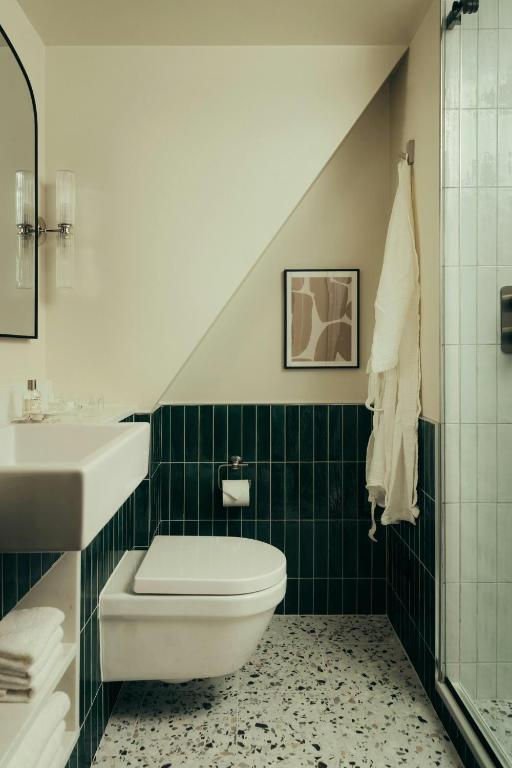
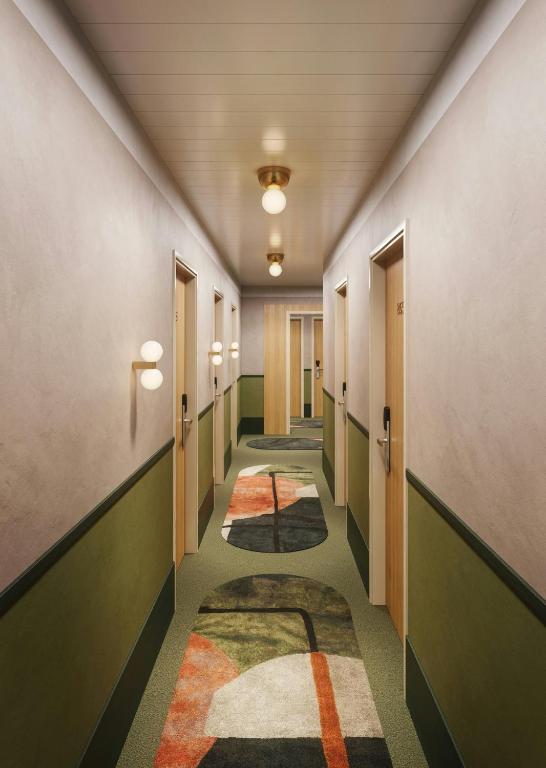
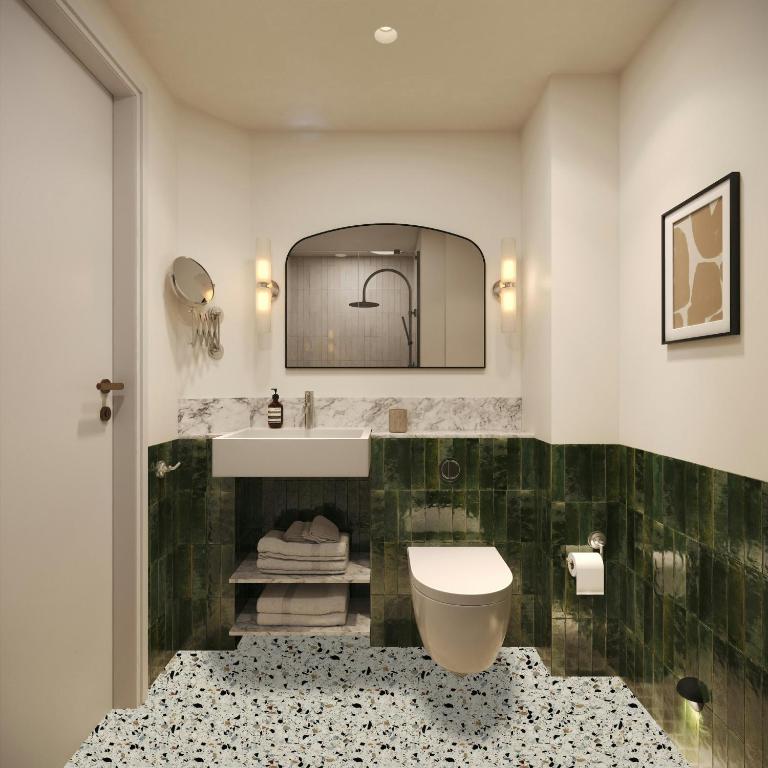
At a time when almost every hotel is trying to become more frictionlessly digital, The Webster moves in the opposite direction. Books, classic alarm clocks, Jacob Jensen telephones and Marshall speakers introduce physical objects back into the guest experience. The bedrooms are deliberately calmer than the social spaces downstairs. Warm neutral colours, textured plank floors and hand-knotted wool rugs are combined with brass and alabaster lighting, bespoke artwork and custom-patterned curtains. Mid-century-style desk chairs bring another subtle historical reference. Bathrooms continue the quieter palette through terrazzo floors, organic ceramic tiles and brushed-nickel fittings. The effect is grown-up rather than fashionable: rooms designed as a retreat from both London and the more theatrical spaces below.
Designed for Conversation
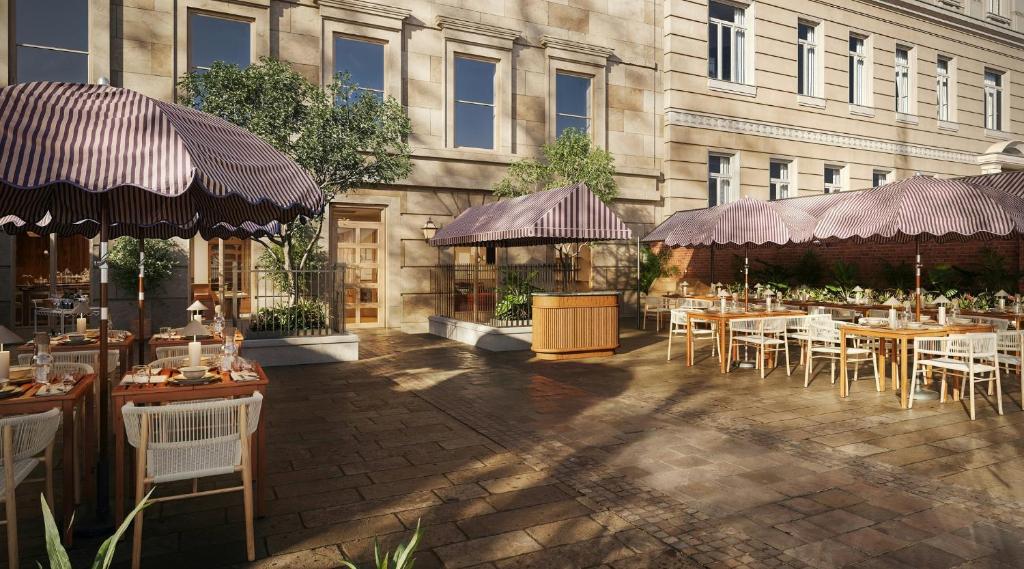
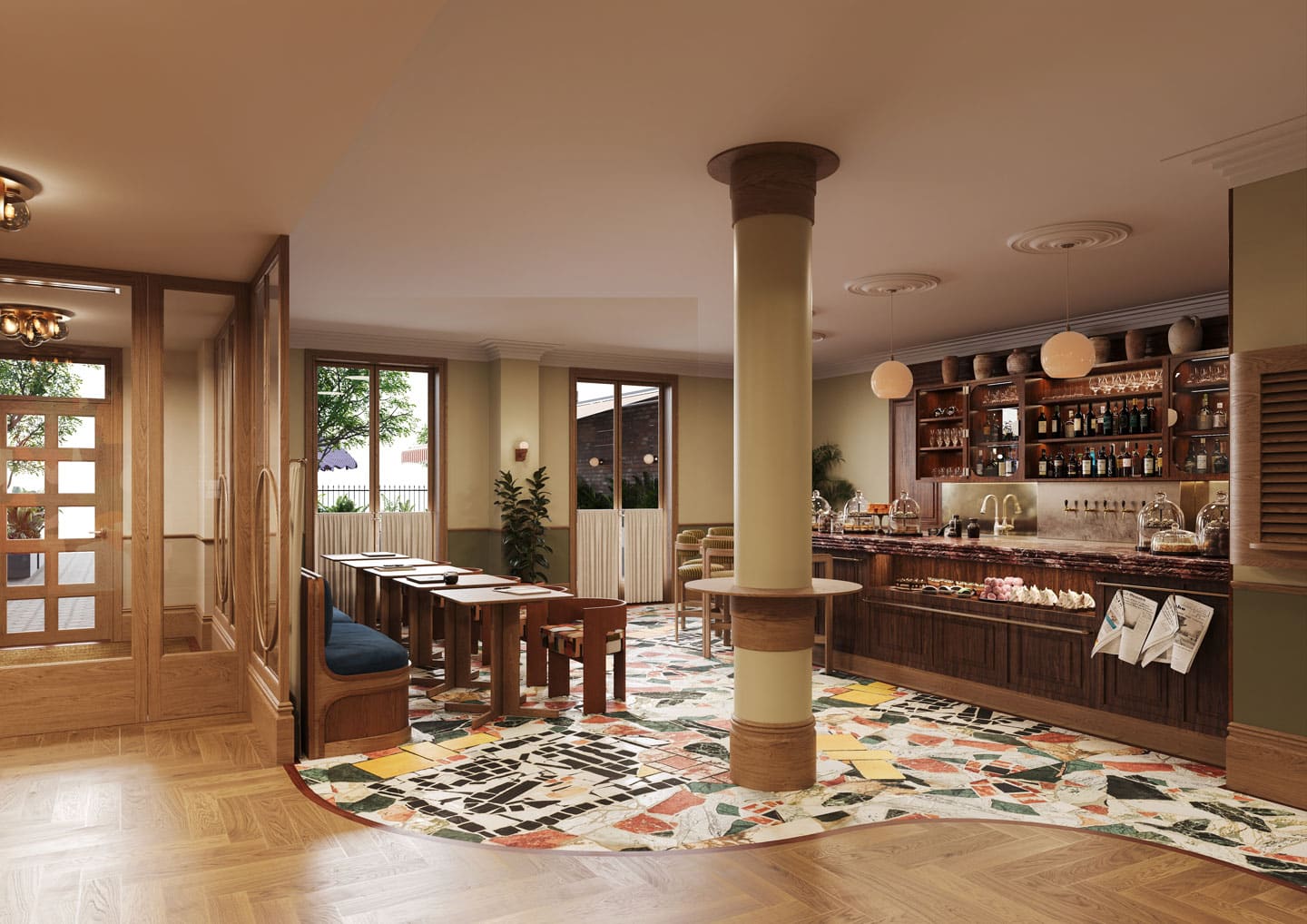
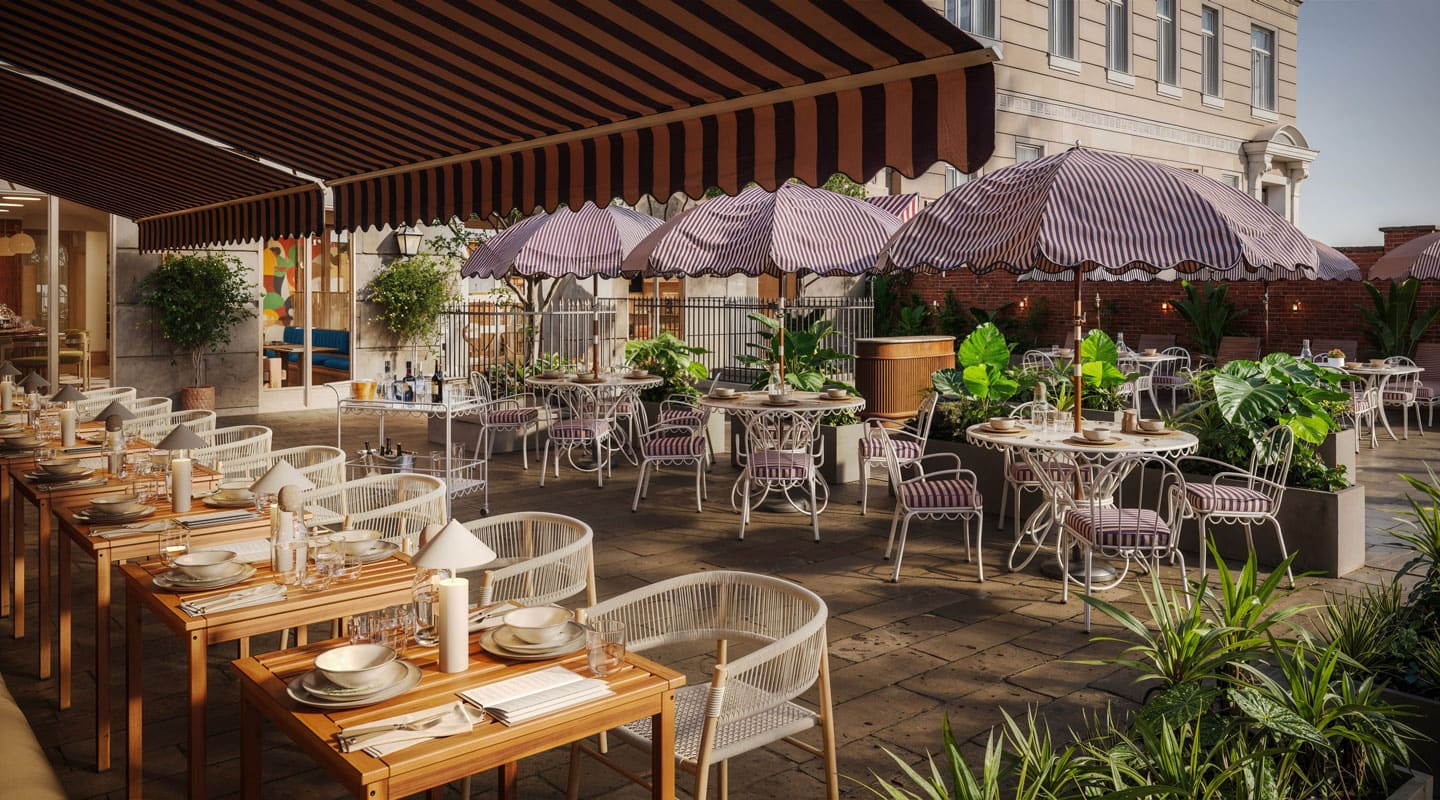
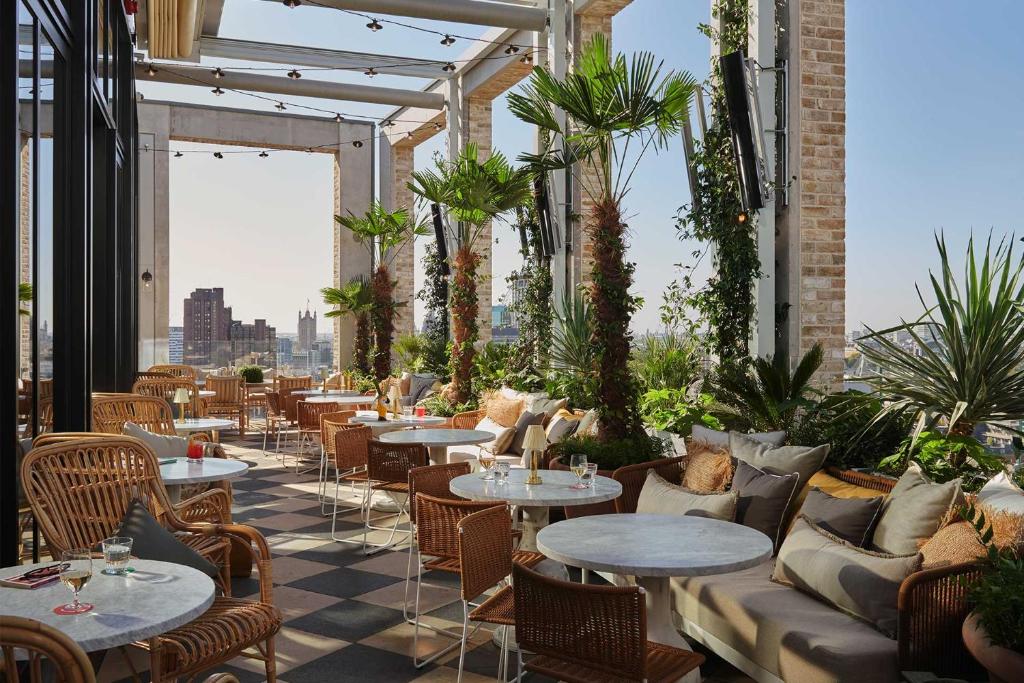
The Webster isn’t conceived around a grand lobby to pass through on the way to the lift. Its ground floor is intended as a collection of places to occupy. Library corners provide quieter spaces for reading or working, while lounges, café seating and the outdoor terrace encourage a more social rhythm. Lighting and furniture allow the spaces to shift naturally from daytime coffee to evening drinks. That principle extends into the hotel’s cultural programme, with literary salons, artist residencies, performances and neighbourhood collaborations planned as part of its identity. The intention is less private members’ club than contemporary salon — a hotel where staying might actually involve meeting somebody you didn’t arrive with.
From Aperitivo to Italo-Disco
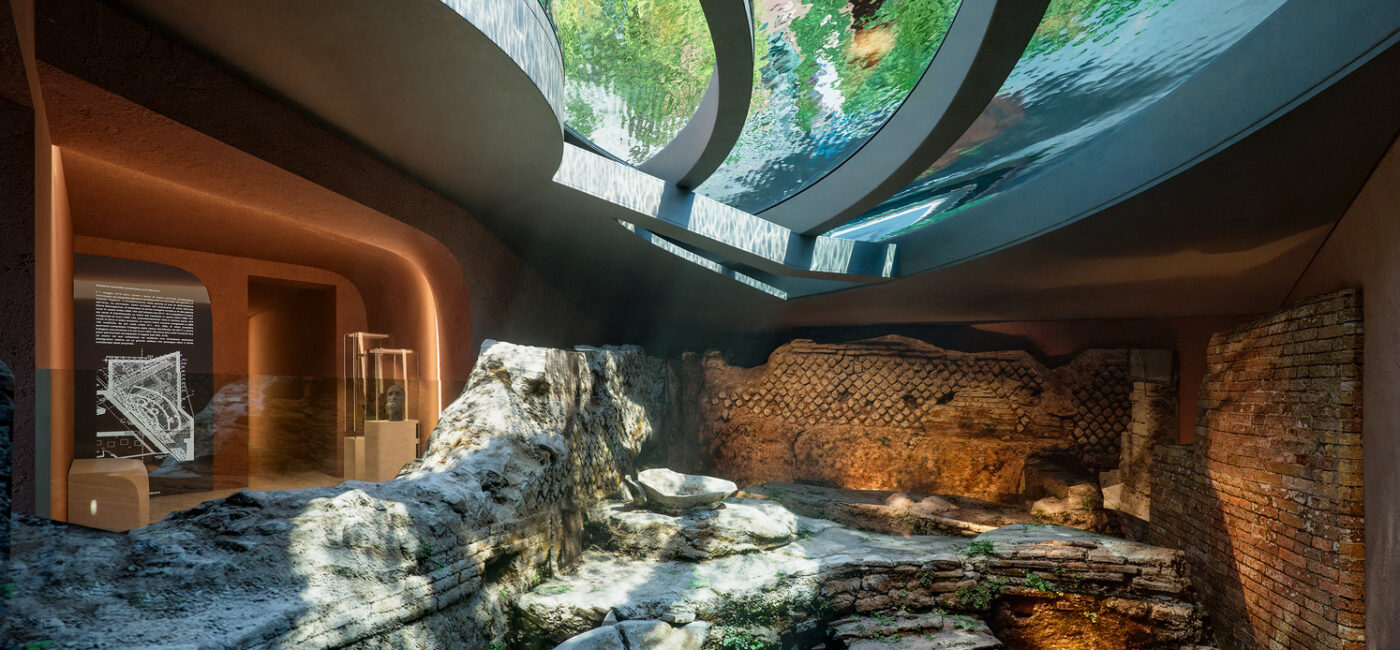
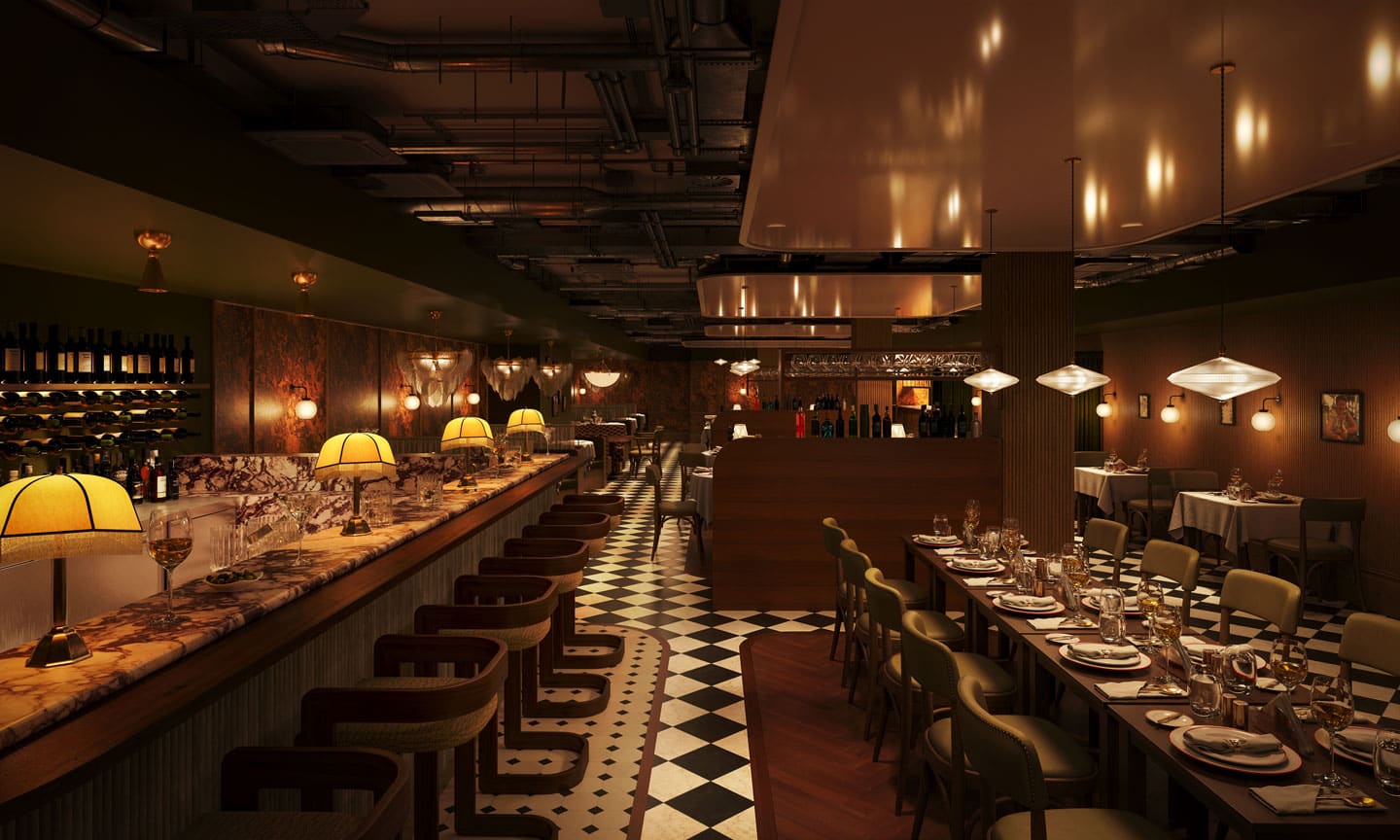
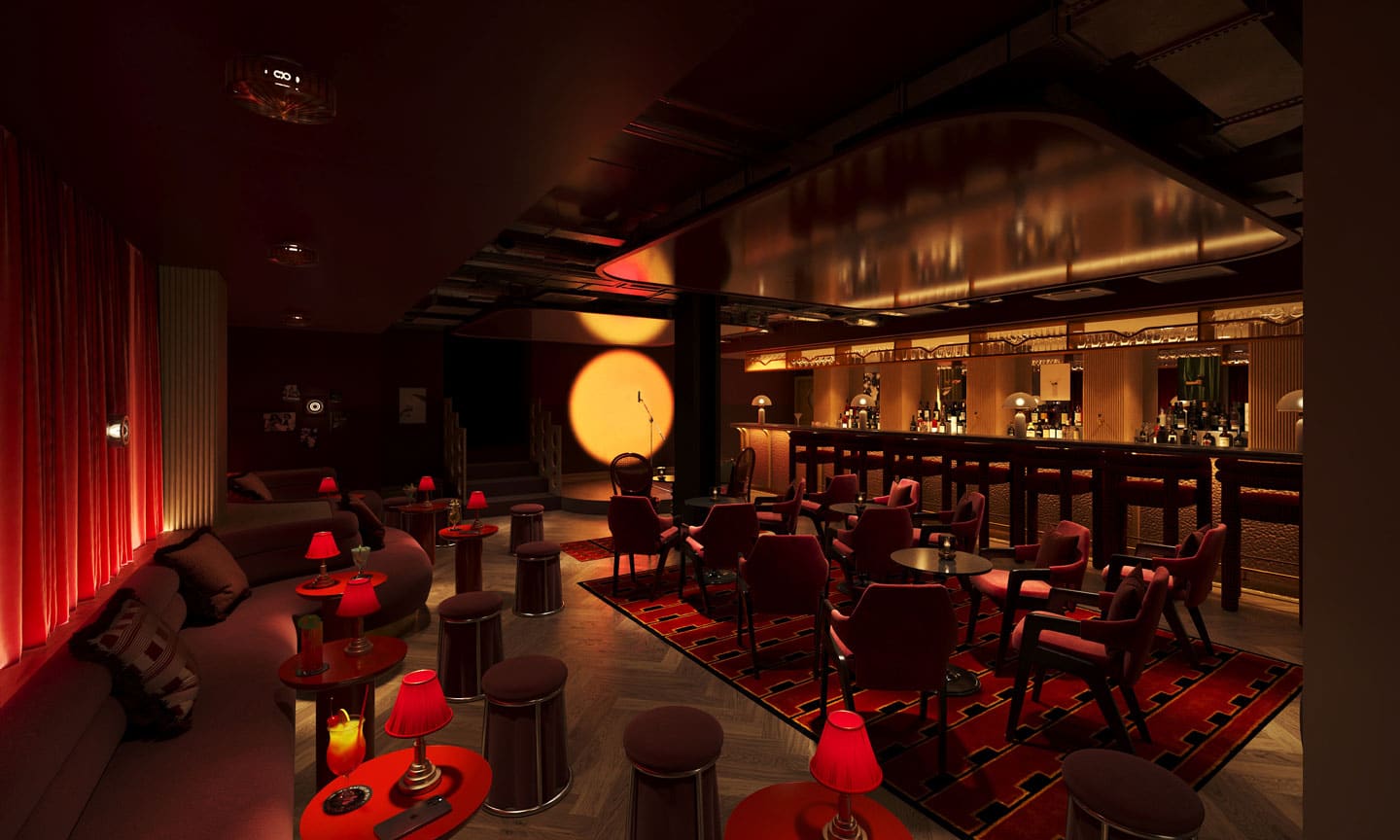
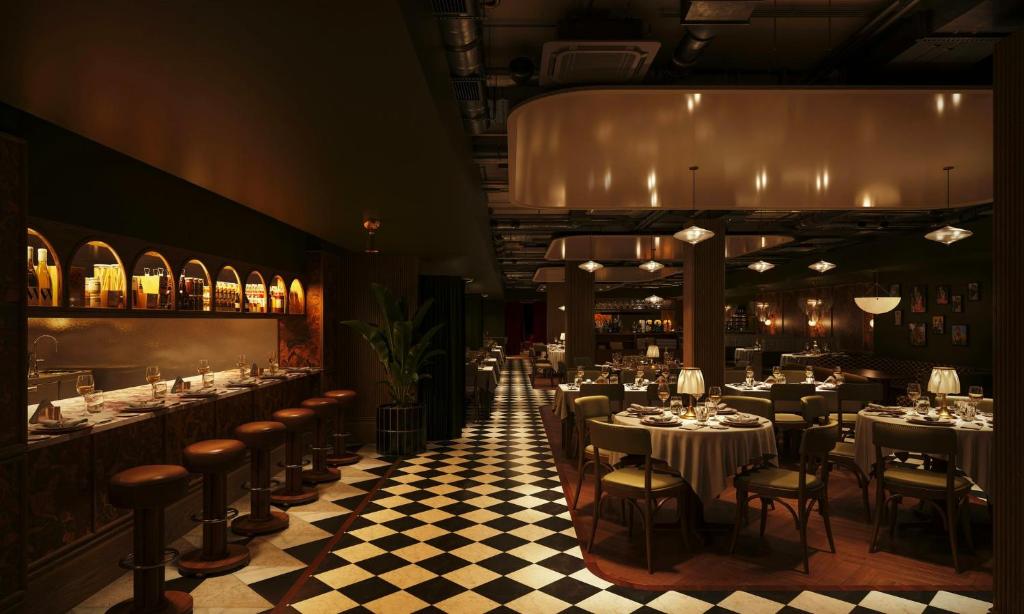
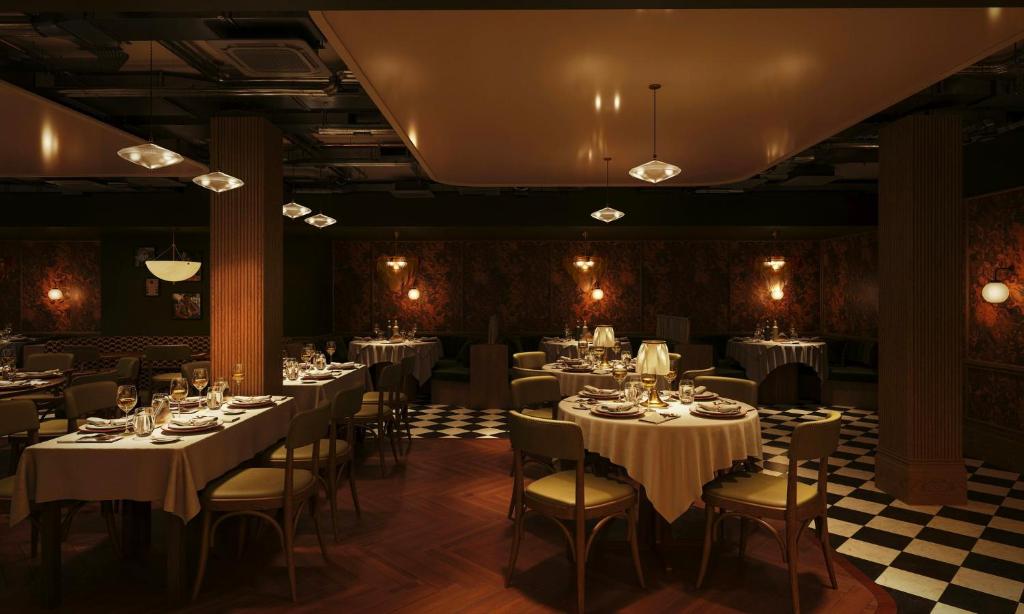
Food and drink provide The Webster’s more theatrical side. Carmelina’s sits downstairs, combining an Italian-inspired restaurant and speakeasy atmosphere with deep red velvet, bold tiled floors and a sculptural hammered-gold bar. Live jazz adds another layer after dark. Upstairs, the lobby café and aperitivo bar spill towards the terrace, creating an all-day meeting place connected more directly with the neighbourhood. Then there is Carla’s List, a discreet late-night Italo-Disco space where the design abandons restraint altogether. A shimmering disco ball and nightlife references introduce a deliberately playful finale to a hotel that can move from morning coffee and books to martinis and dancing without changing address.
London as a Story, Not a Theme
The Webster could easily have become another lifestyle hotel assembled from fashionable ingredients. Instead, Red Deer gives those ingredients a narrative: books, furniture, art, food and nightlife are connected by the idea of discovery. That feels particularly appropriate beside Lincoln’s Inn Fields, where layers of London history, literature and contemporary culture already coexist. The Webster doesn’t try to reproduce historic London. It treats the city more like a well-thumbed novel — familiar in places, surprising in others, and considerably more interesting when you keep turning the pages.
Information
At a glance
Opened / Renovated
2026 (previously Club Quarters Covent Garden)
Size matters
167 rooms & studios (14-27m2) (151-291 sq ft)
Interior design
Handpicked worldwide
A carefully curated collection of exceptional boutique and design hotels across the globe.
Design with soul
Architecture, atmosphere and craftsmanship come together in stays with a clear identity.
Hidden, not hyped
Independent boutique hotels you rarely find on mainstream booking platforms.
Travel guidance
Personal recommendations and thoughtful support from people who actually know the places.