


A Little Spain in Midtown Atlanta
Hotel Granada transforms a century-old Spanish Colonial landmark in Midtown Atlanta into a vibrant boutique hotel where Mediterranean courtyards, colourful bohemian interiors, contemporary local art and Southern hospitality come together.

Why DNA Hotels loves it
A thoughtful adaptive reuse of the 1920s Granada Apartments preserves one of Midtown Atlanta’s distinctive Spanish Colonial buildings amid the neighbourhood’s modern high-rises.
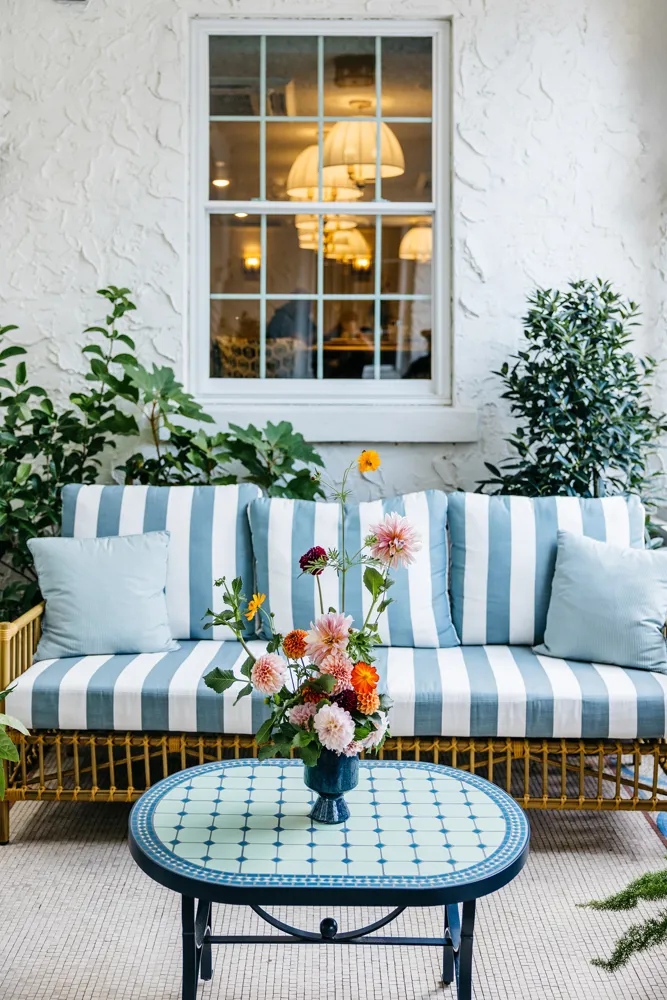
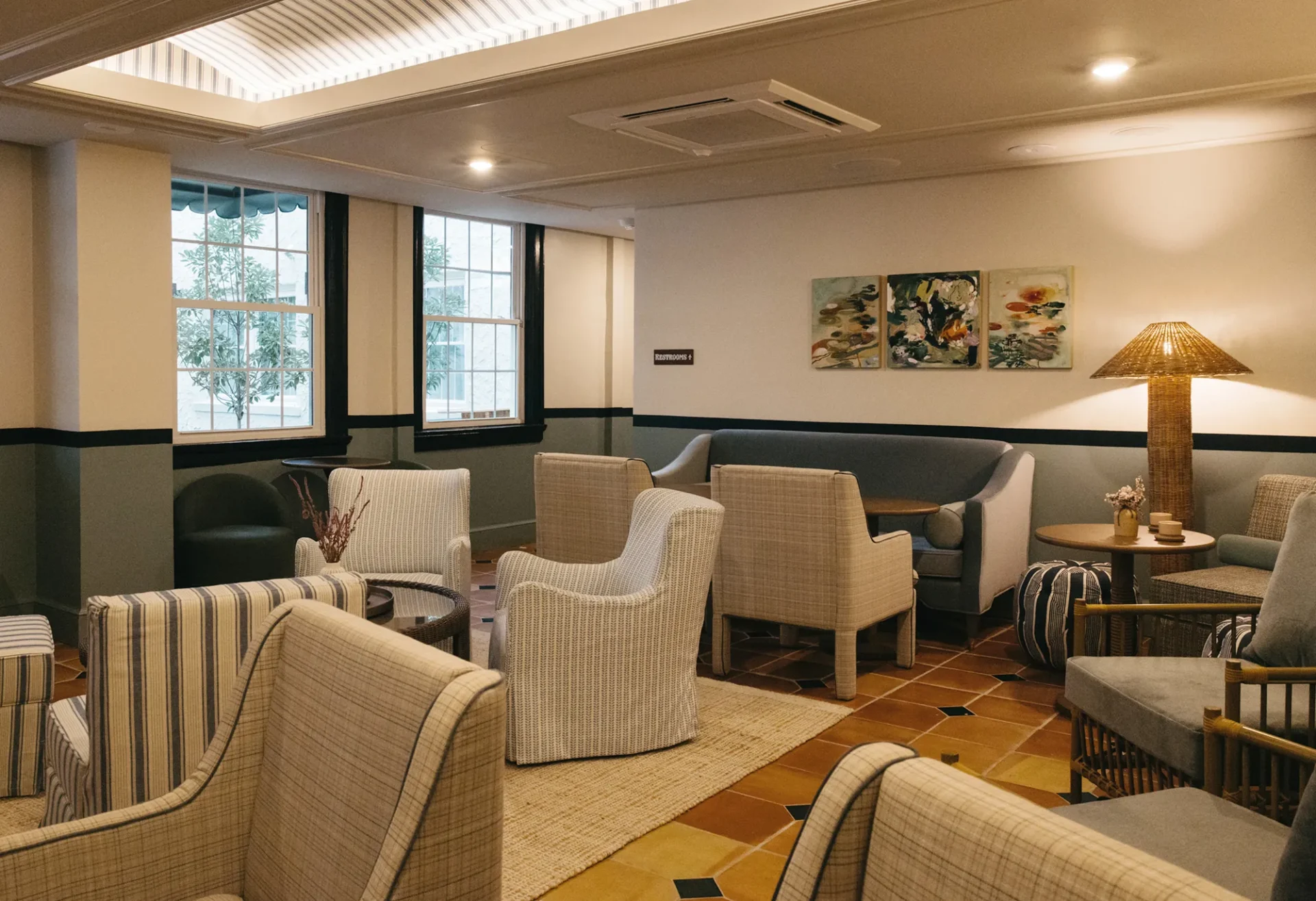
Terracotta floors, stucco walls, archways and a lush central courtyard are complemented by colourful contemporary interiors, local craftsmanship and art curated with the Savannah College of Art and Design.
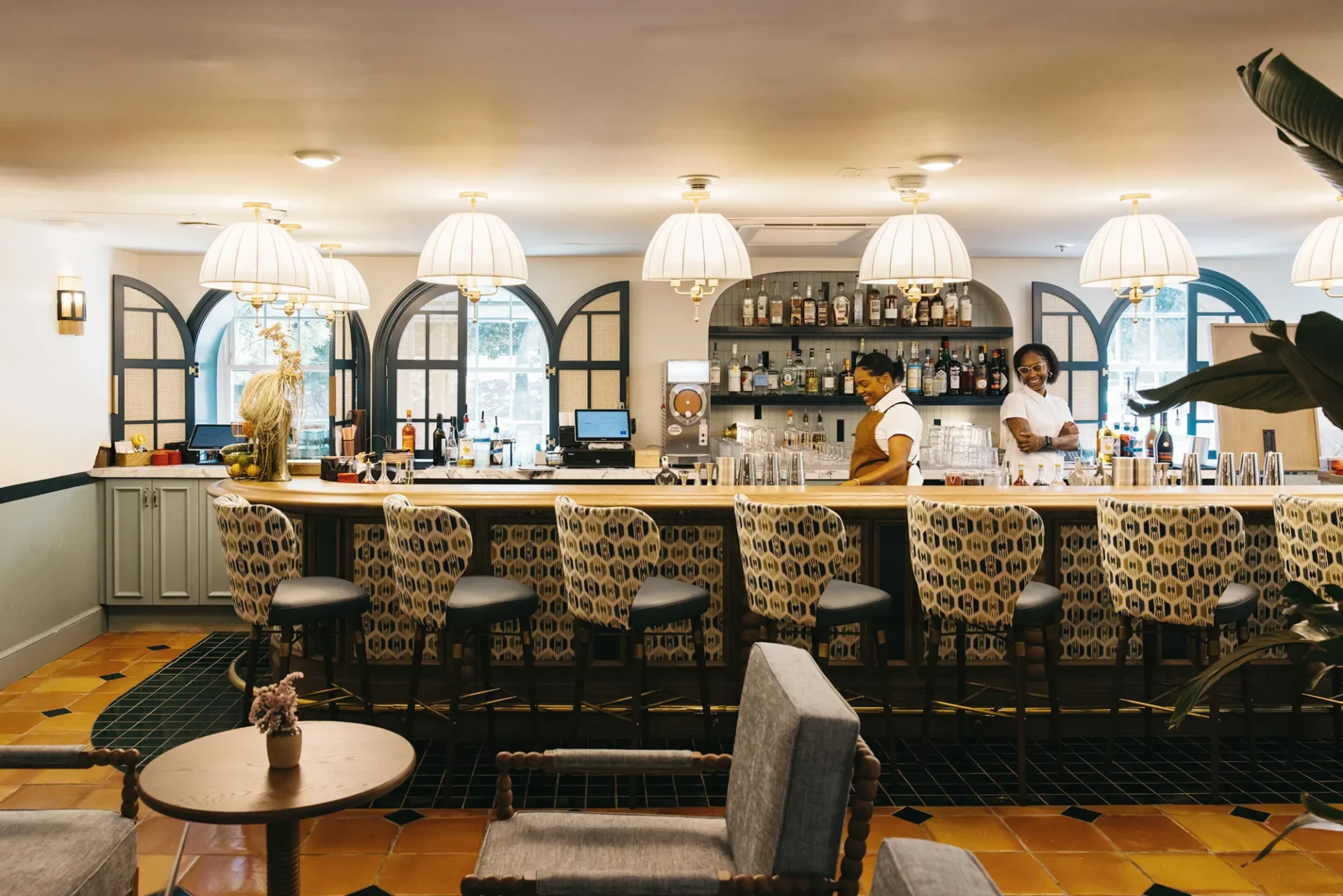
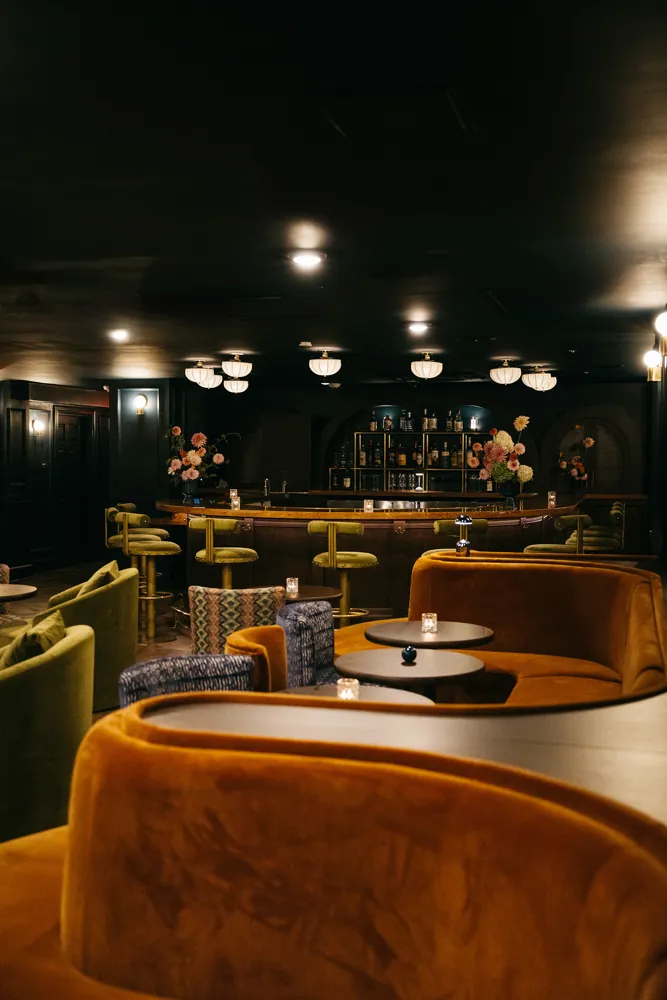
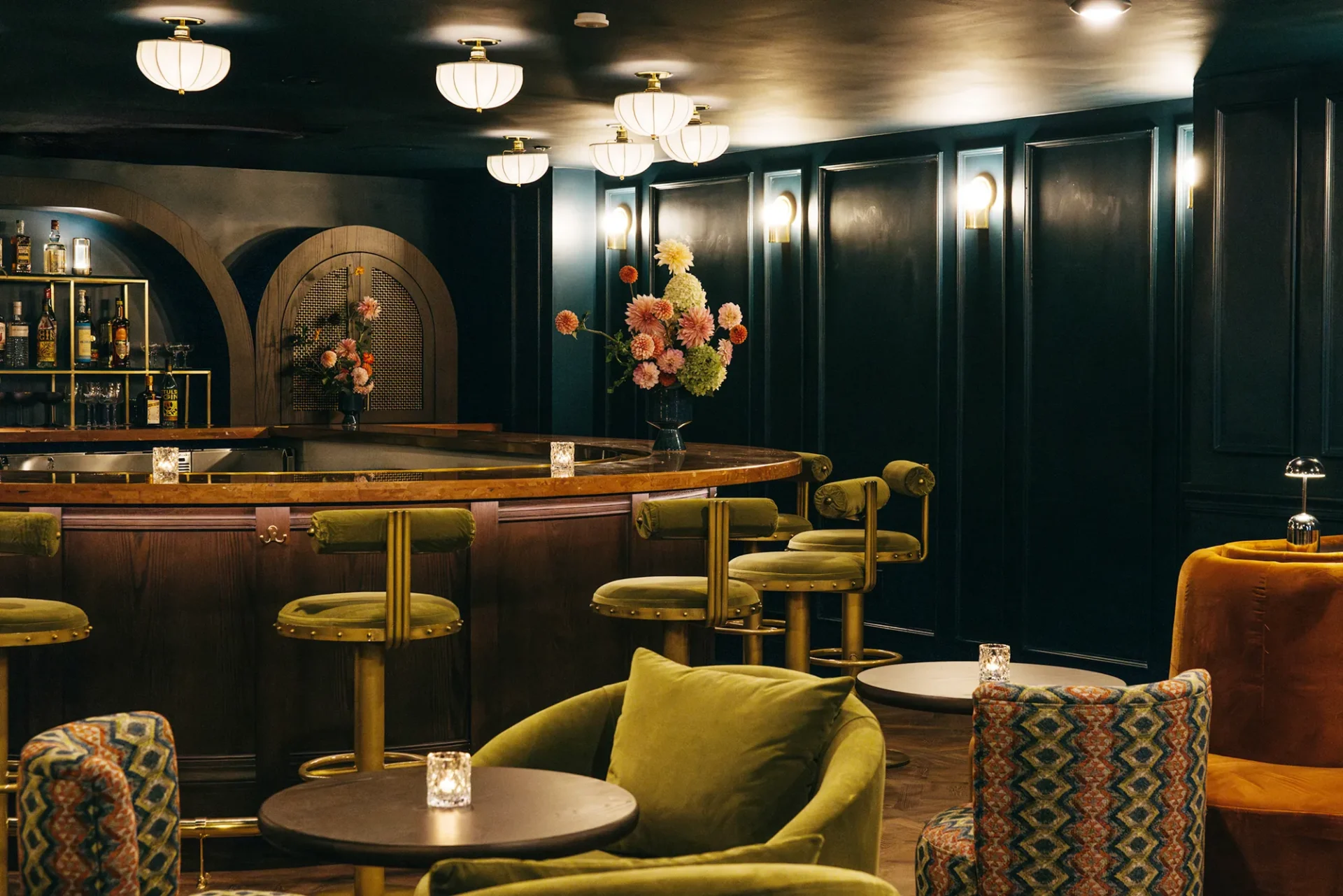
Pom Court brings Spanish-Southern dining into the open air, while the intimate May Peel cocktail bar gives this historic address a second personality after dark.
The Stay
Spanish Colonial architecture meets Southern charm in a century-old Midtown landmark, where a Mediterranean courtyard brings new life to an Atlanta original.
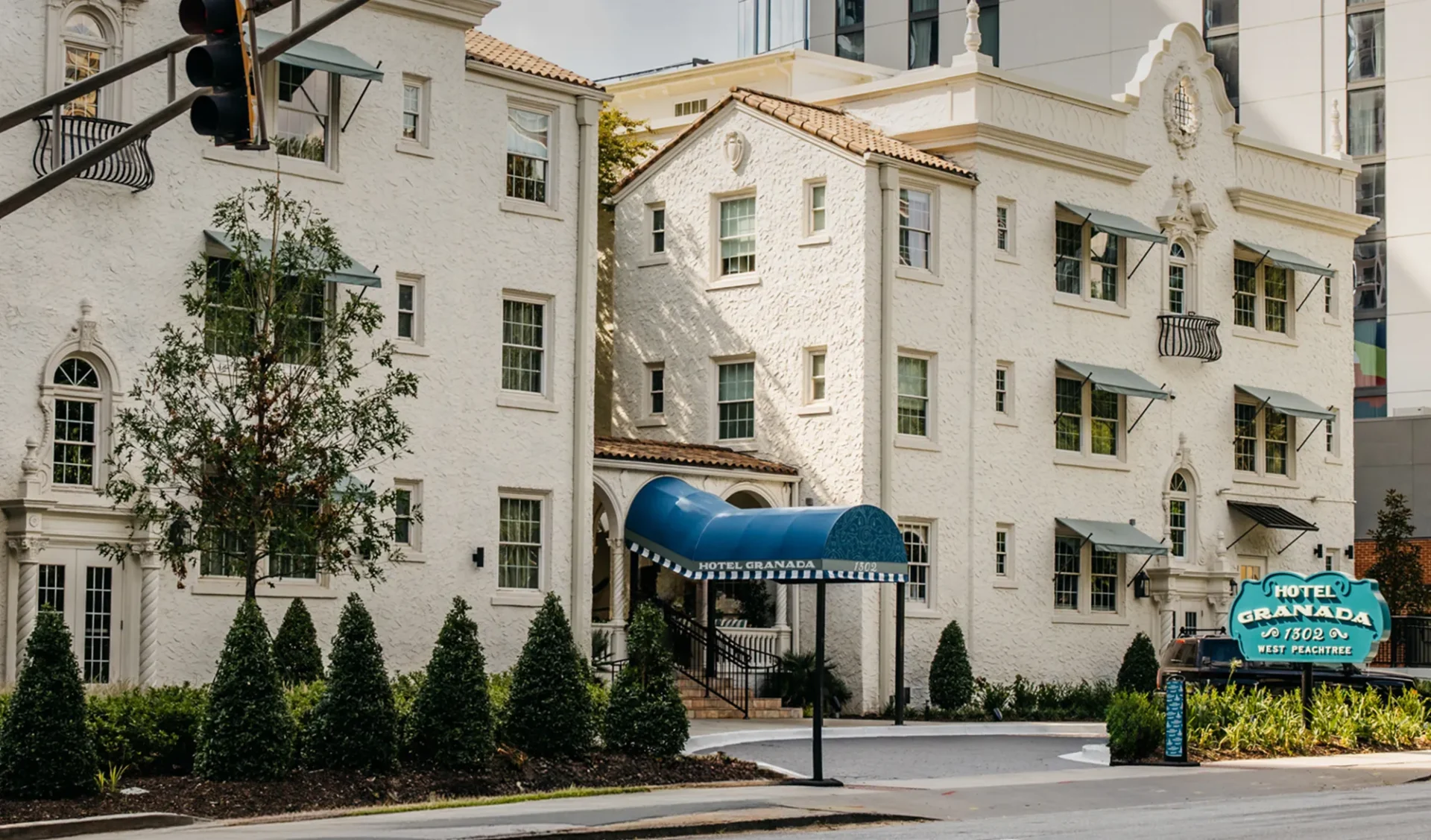
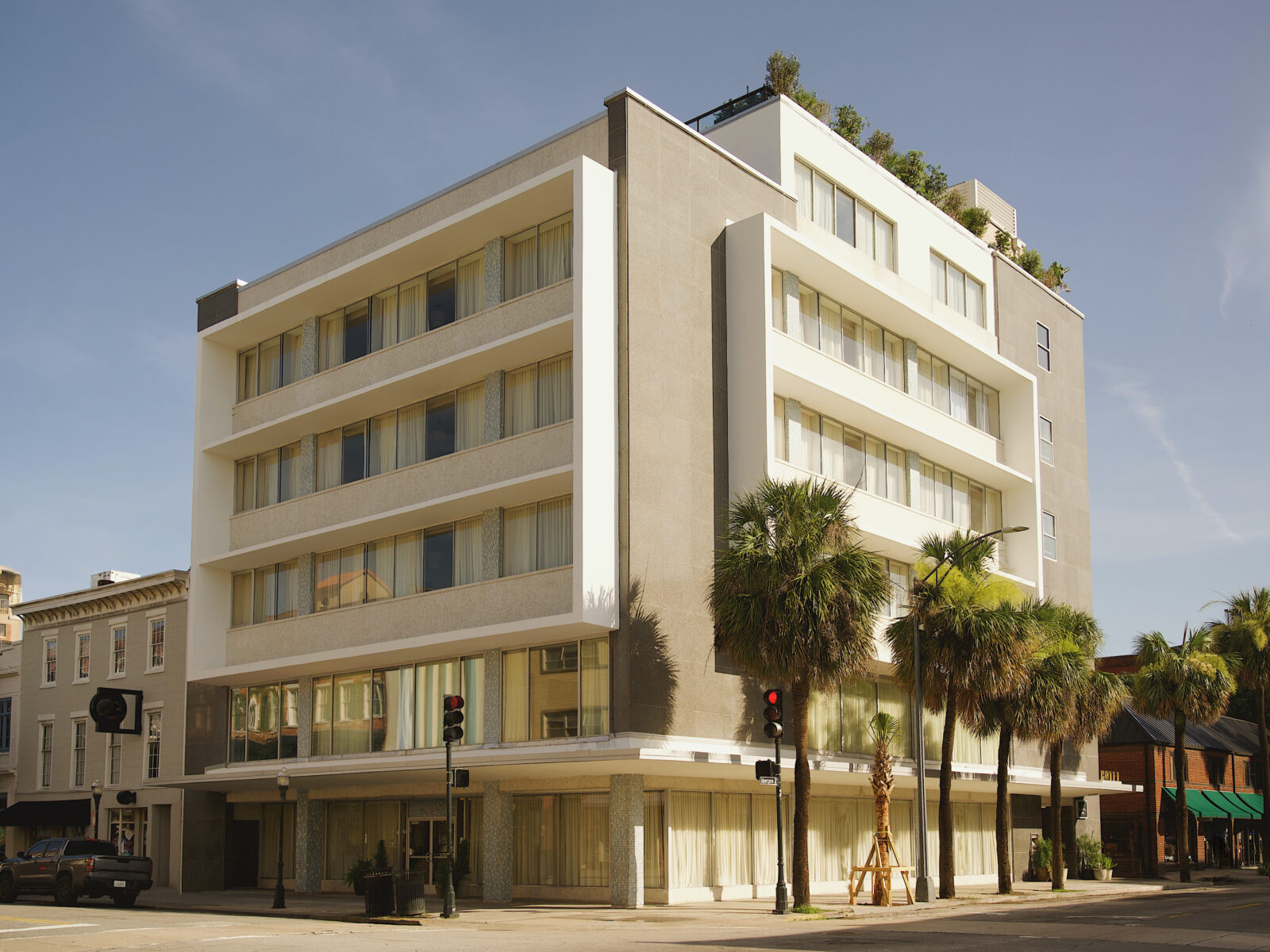
Atlanta has never been particularly sentimental about its older buildings. In a city where development frequently means demolition, the survival of the former Granada Apartments is something worth celebrating. Originally built in 1923–1924 as an upscale residential complex, the four-storey Spanish Colonial building stands in striking contrast to the glass towers of Midtown. Its stucco façade, red-tiled roof, arched openings and horseshoe-shaped layout recall a different architectural era, when apartment buildings were designed with a little more personality. After operating for years as the Artmore Hotel, the property underwent a substantial restoration before reopening as Hotel Granada in 2024. The transformation preserves its historic character while introducing a contemporary hospitality concept that feels firmly connected to Atlanta.
Spanish Bohemian, Southern Soul
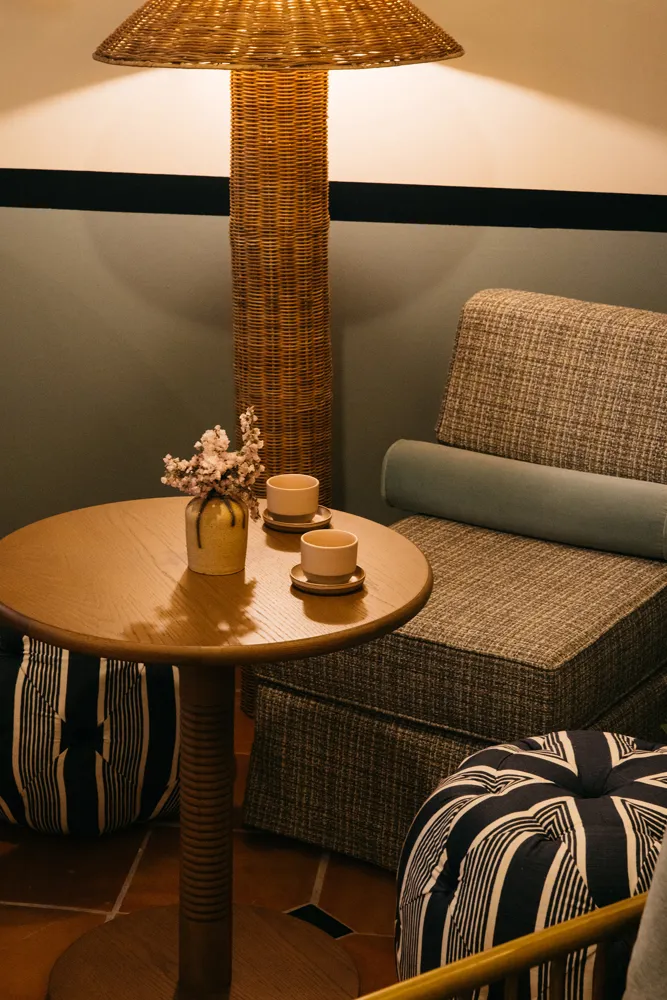
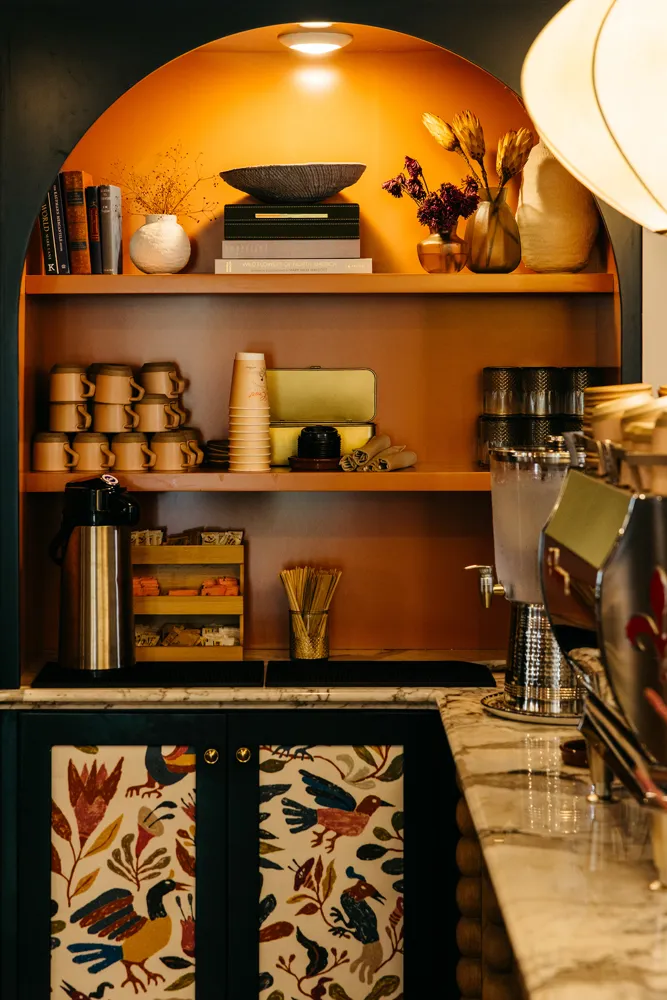
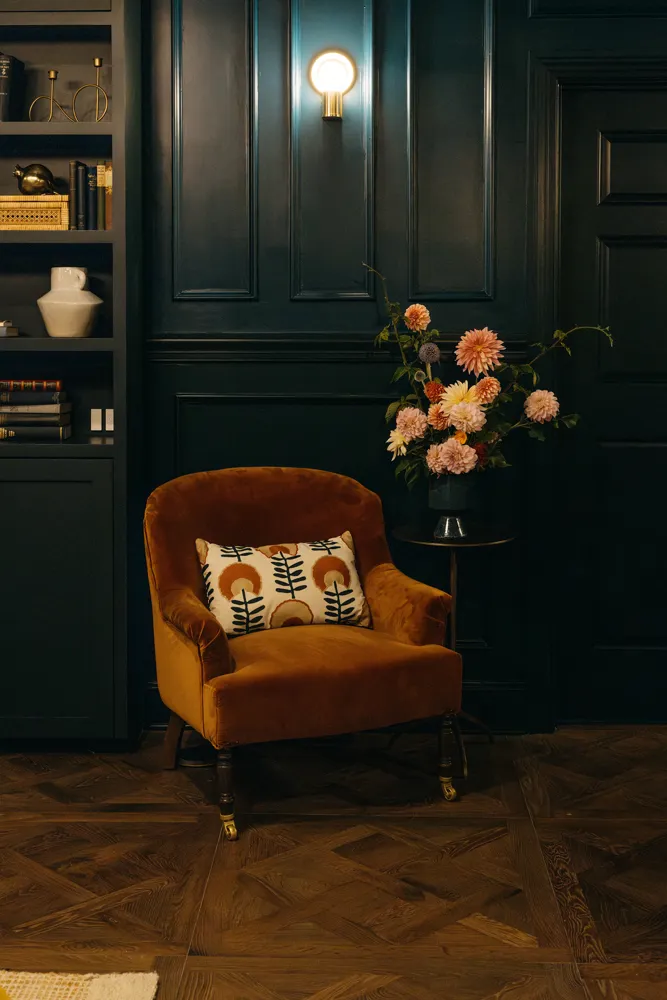
The interiors embrace what the hotel calls Spanish Bohemian meets Southern Charm. It is an expressive combination, bringing together Mediterranean architectural references with a distinctly local sense of colour, craft and character. Terracotta floors, rustic greens, rich blues and warm yellows establish the palette, while brass details, textured fabrics and decorative lighting introduce a more contemporary layer. Original architectural features remain central to the experience, including a historic mosaic bearing the Granada name. The design avoids becoming a period reconstruction. Custom wallpaper incorporates references to Atlanta, including the Fox Theatre marquee and crape myrtle flowers, while furniture and decorative objects create the relaxed atmosphere of a well-travelled private residence. It feels collected rather than coordinated.
A Courtyard Worth Staying For
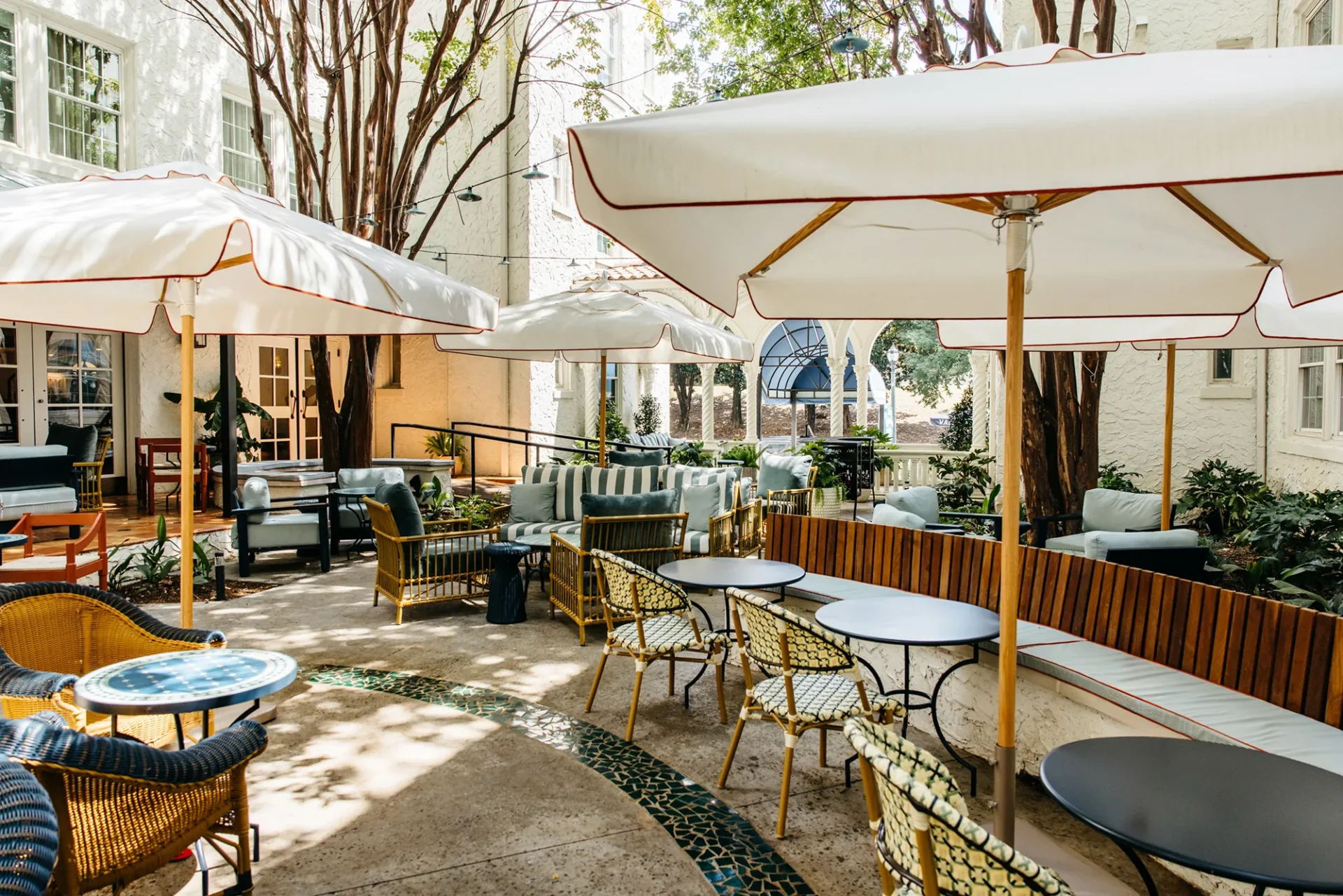
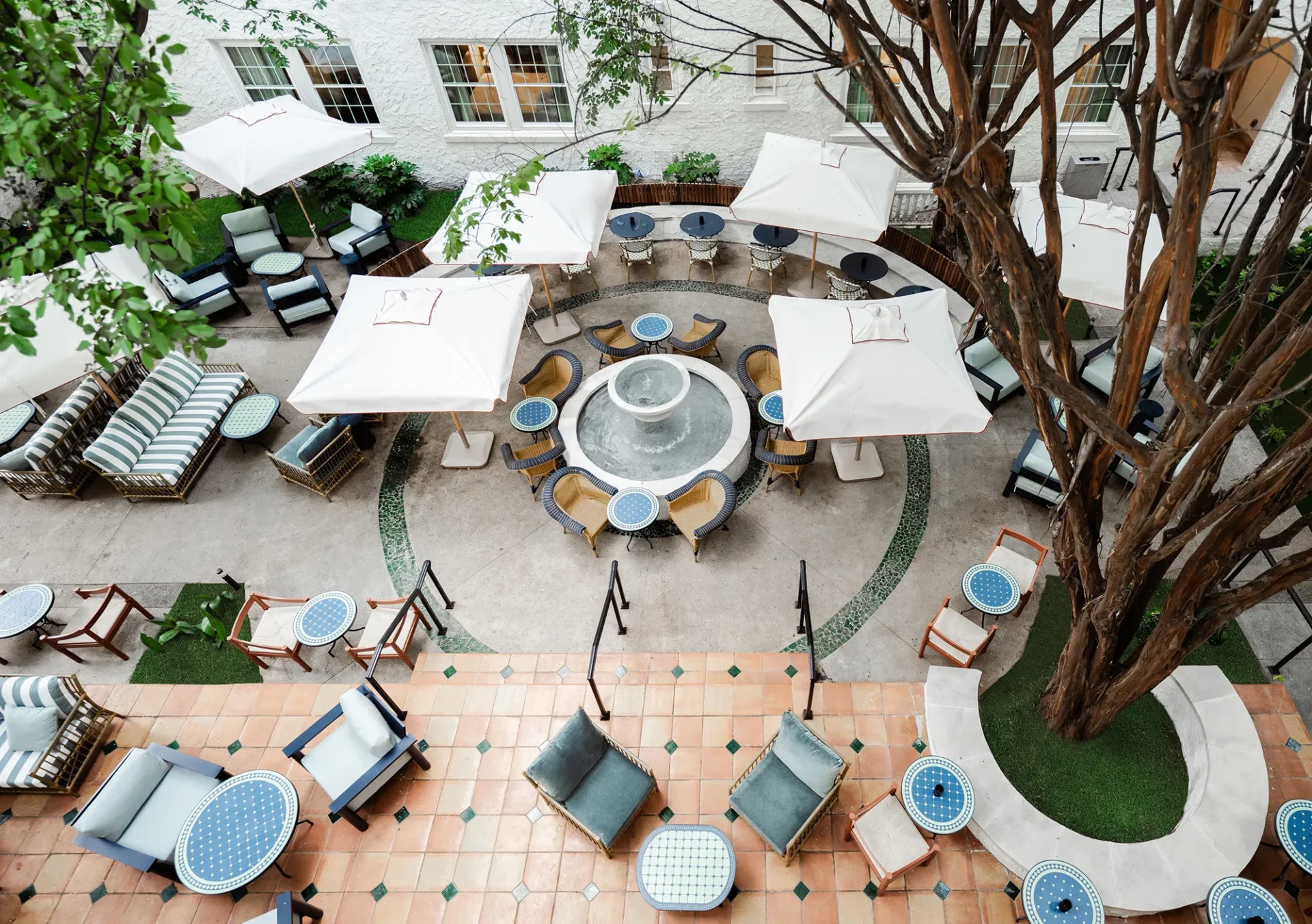
The building’s most distinctive feature is its horseshoe-shaped arrangement around Pom Court, a landscaped open-air courtyard that has become the social heart of the hotel. Surrounded by the historic façades, with mature greenery and crape myrtles softening the architecture, the courtyard feels almost Mediterranean. The surrounding Midtown skyline provides a rather different backdrop, making the contrast between old Atlanta and new particularly enjoyable. Pom Court operates throughout the day, combining Spanish-inspired small plates with Southern favourites, cocktails and wine. Pimento cheese and tapas are unlikely companions in Spain, but in Atlanta they make perfect sense. The atmosphere moves naturally from relaxed daytime dining to a livelier evening gathering place. Below ground, May Peel offers a different experience altogether. The intimate, low-lit cocktail bar trades the courtyard’s openness for a more discreet setting, with drinks and conversation taking priority. Together, the two venues give the hotel a social identity that extends well beyond its guestrooms.
Rooms with a Local Accent
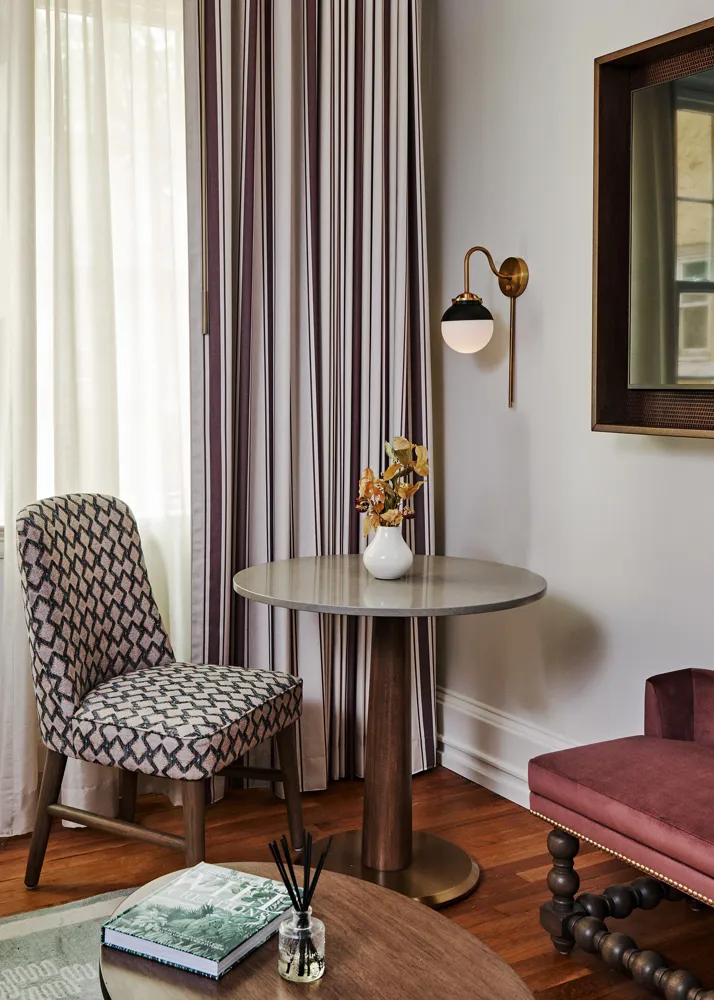
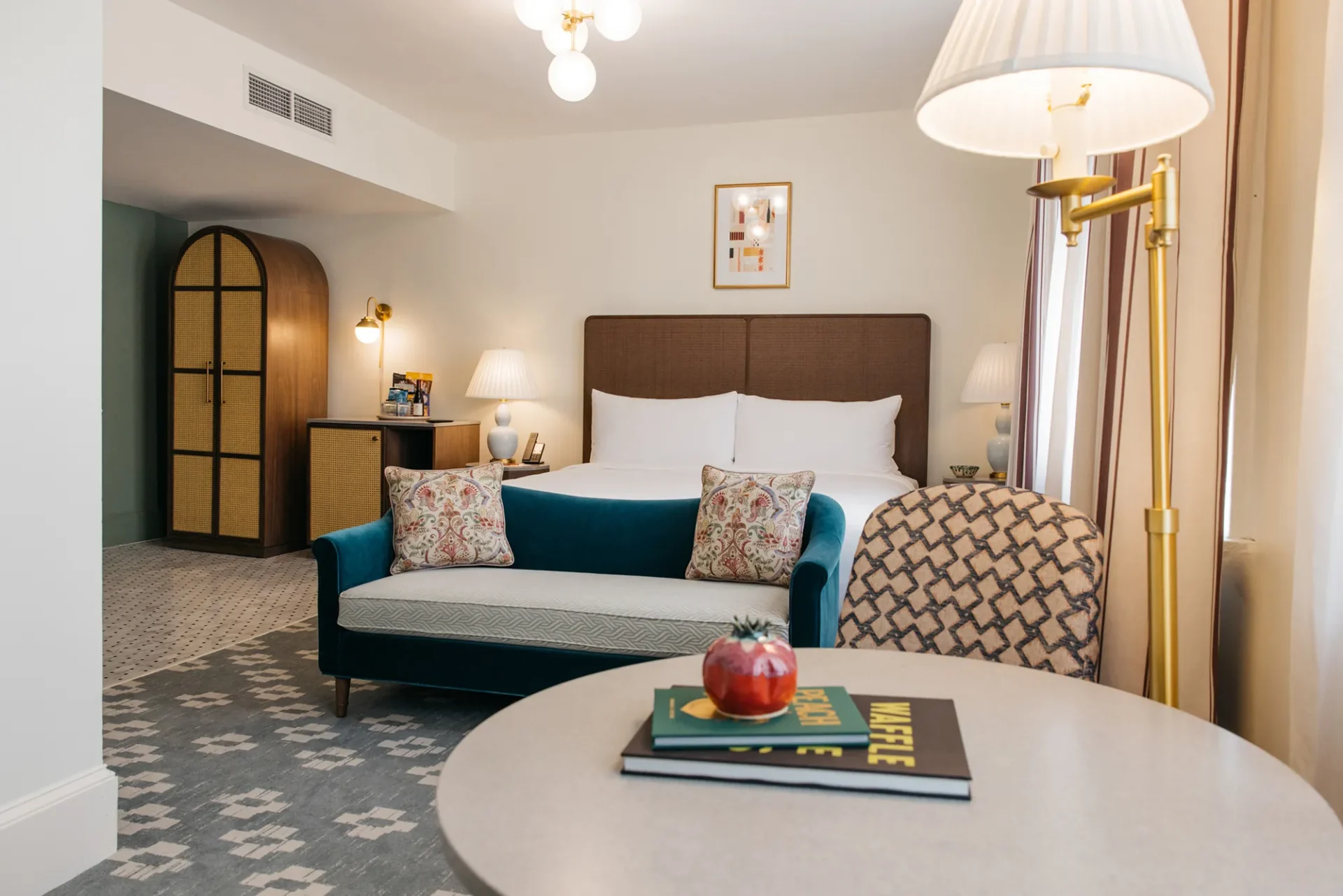
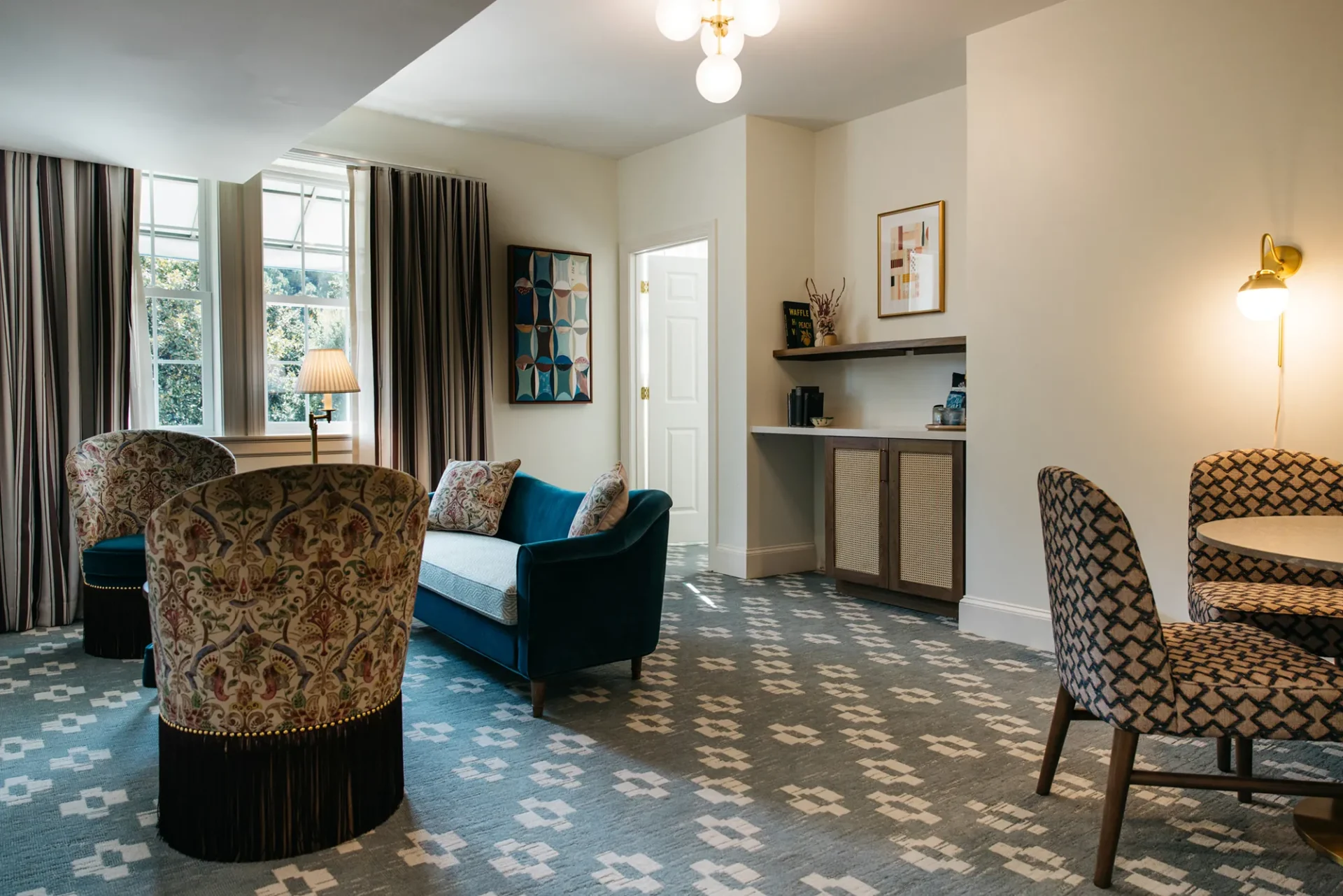
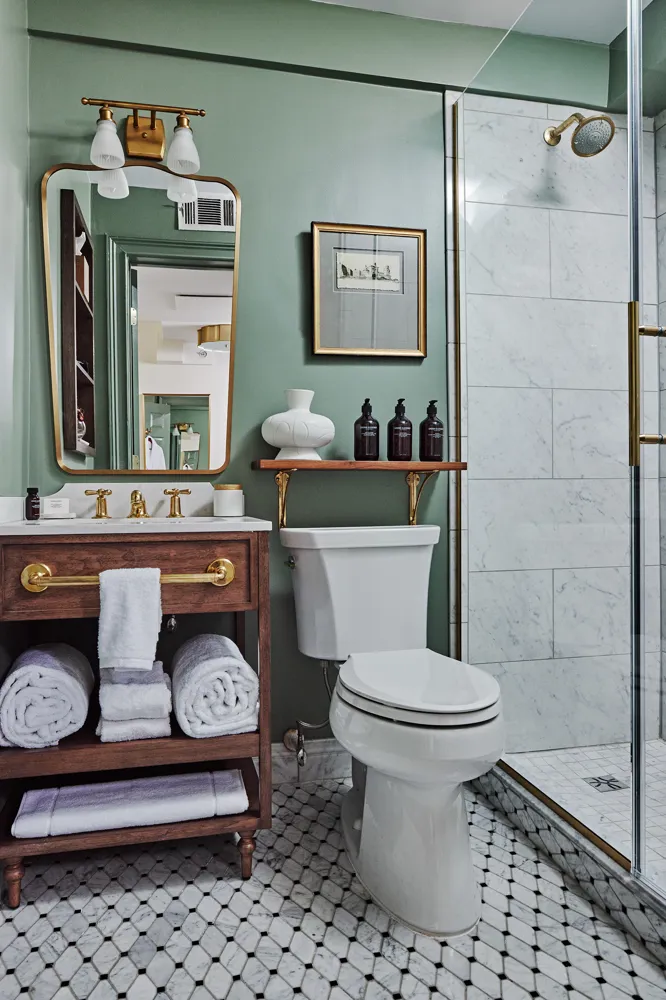
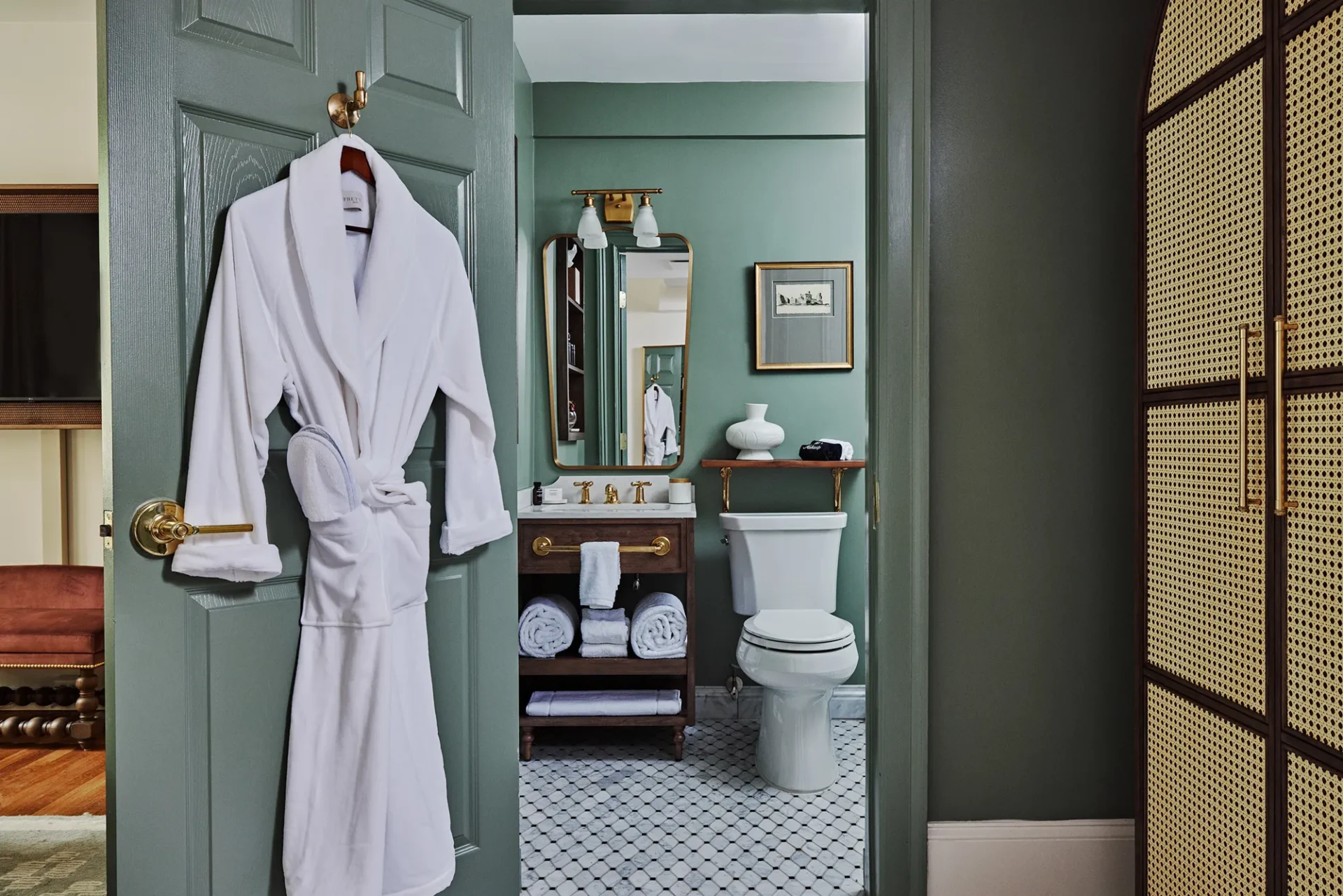
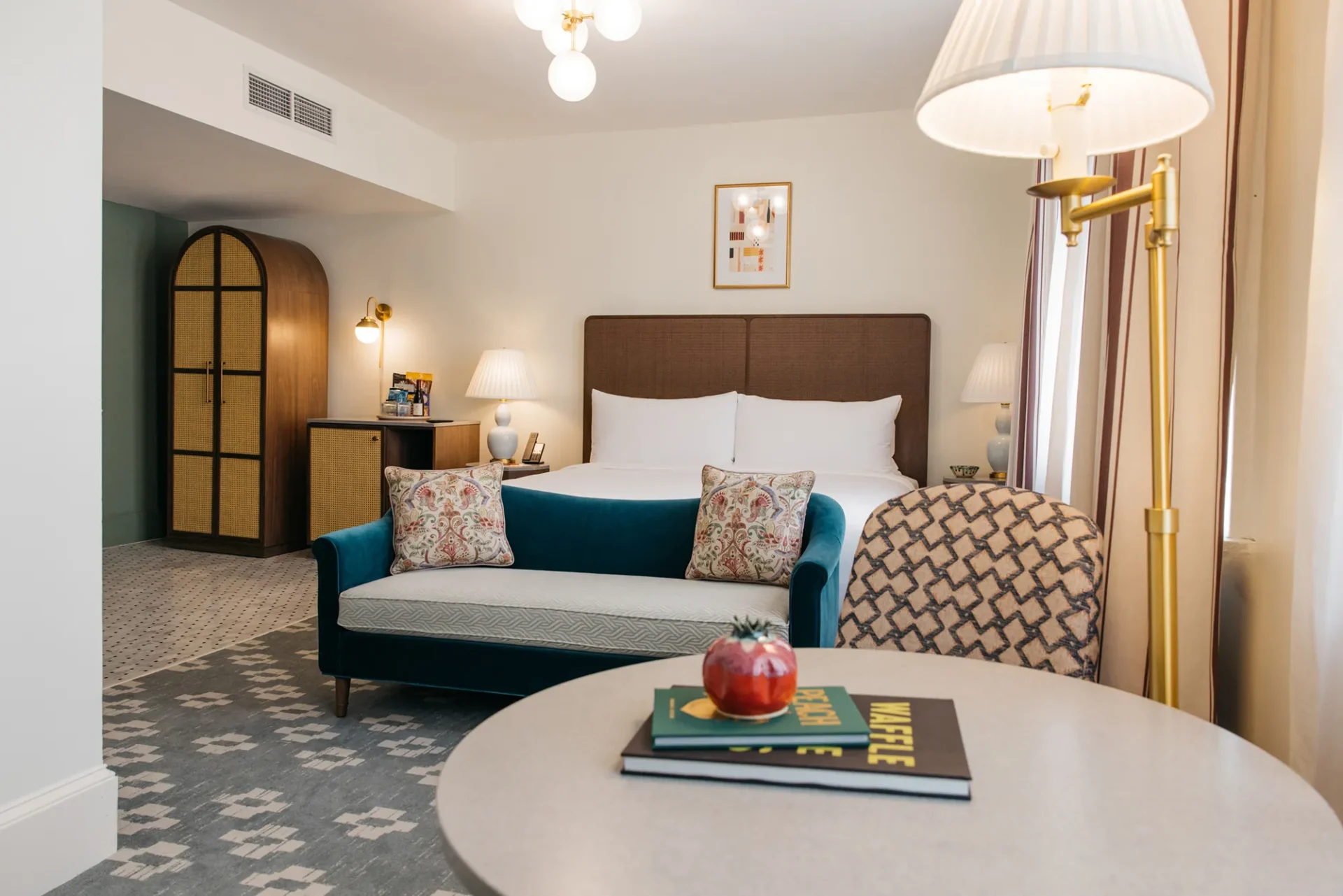
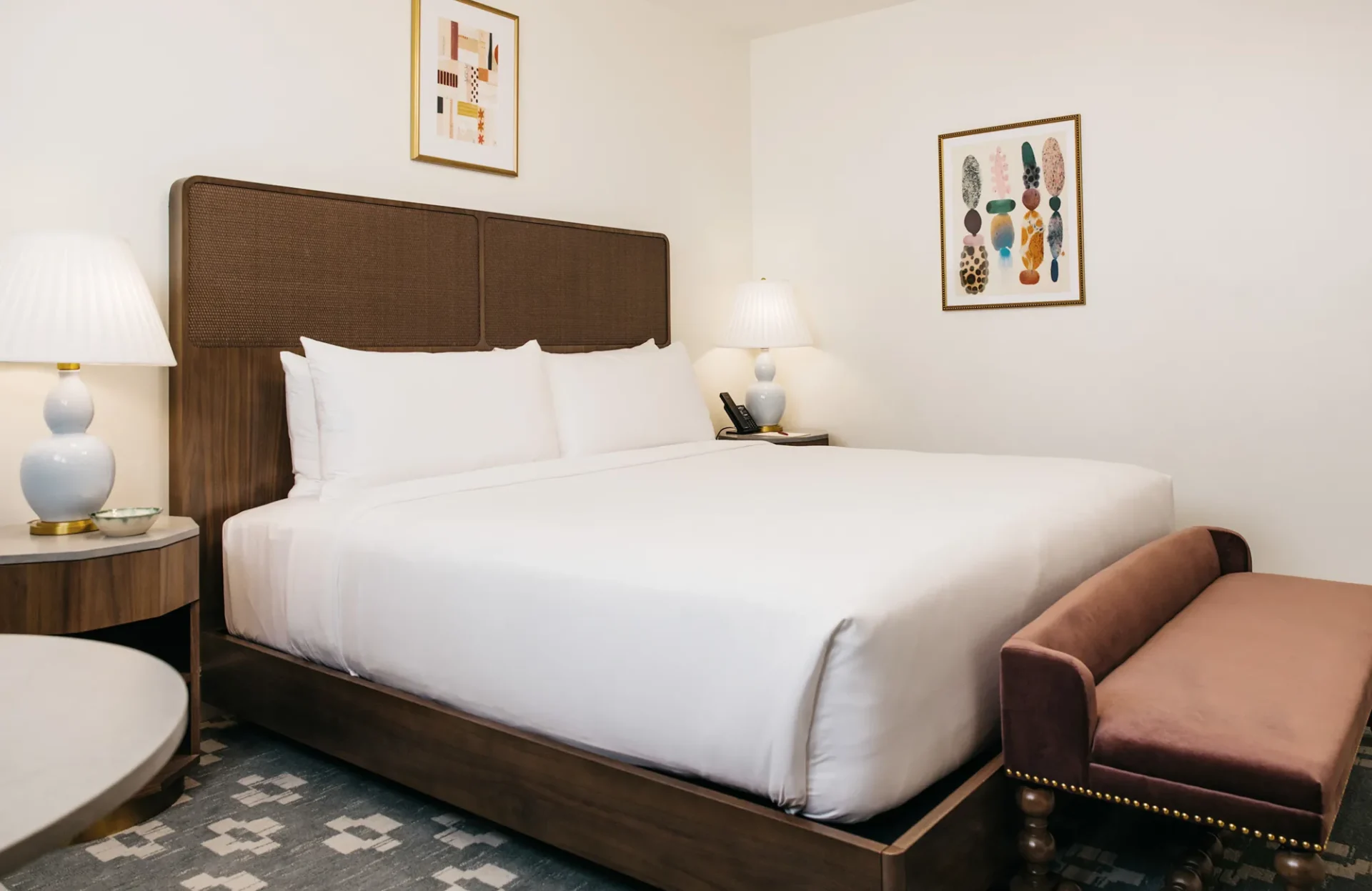
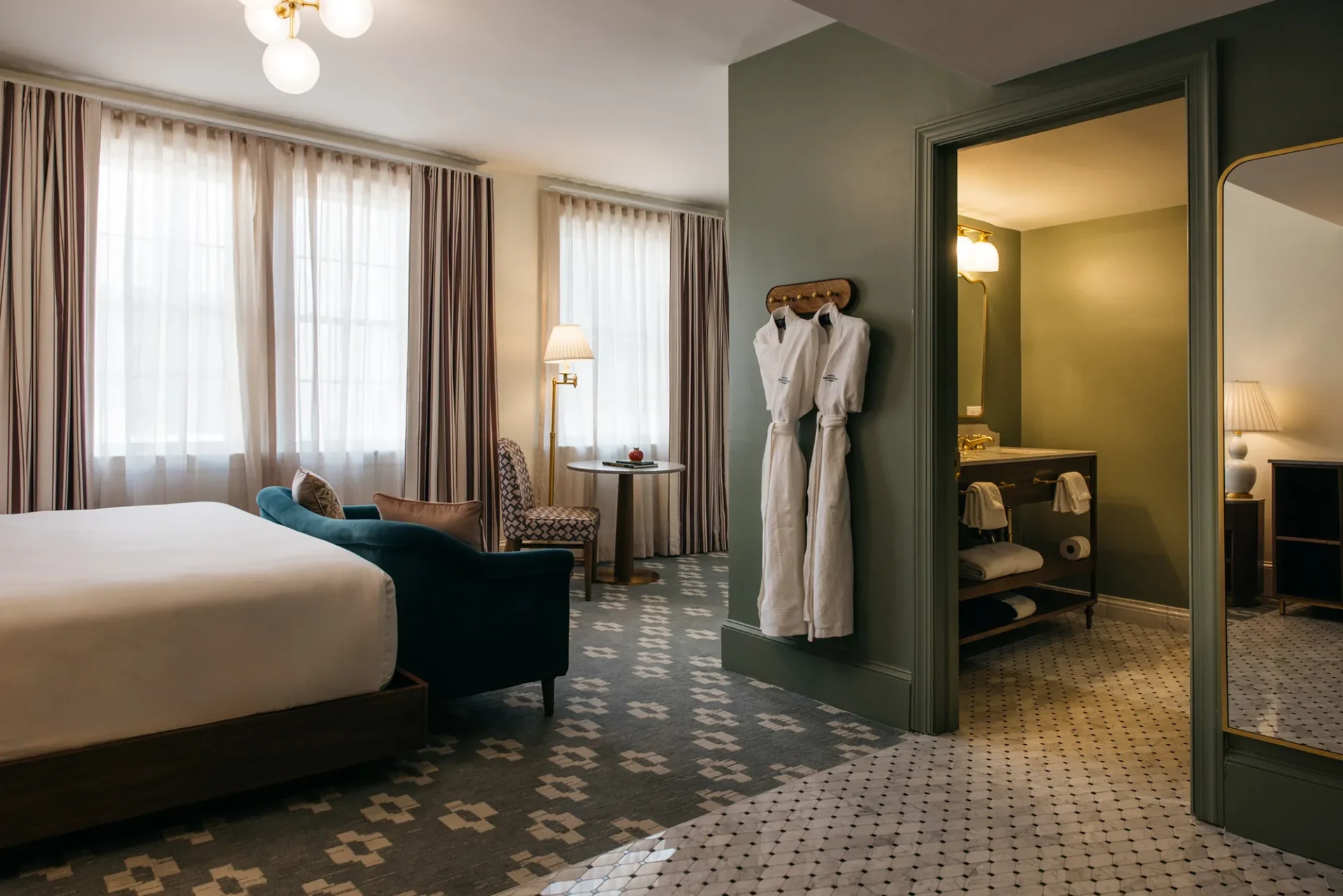
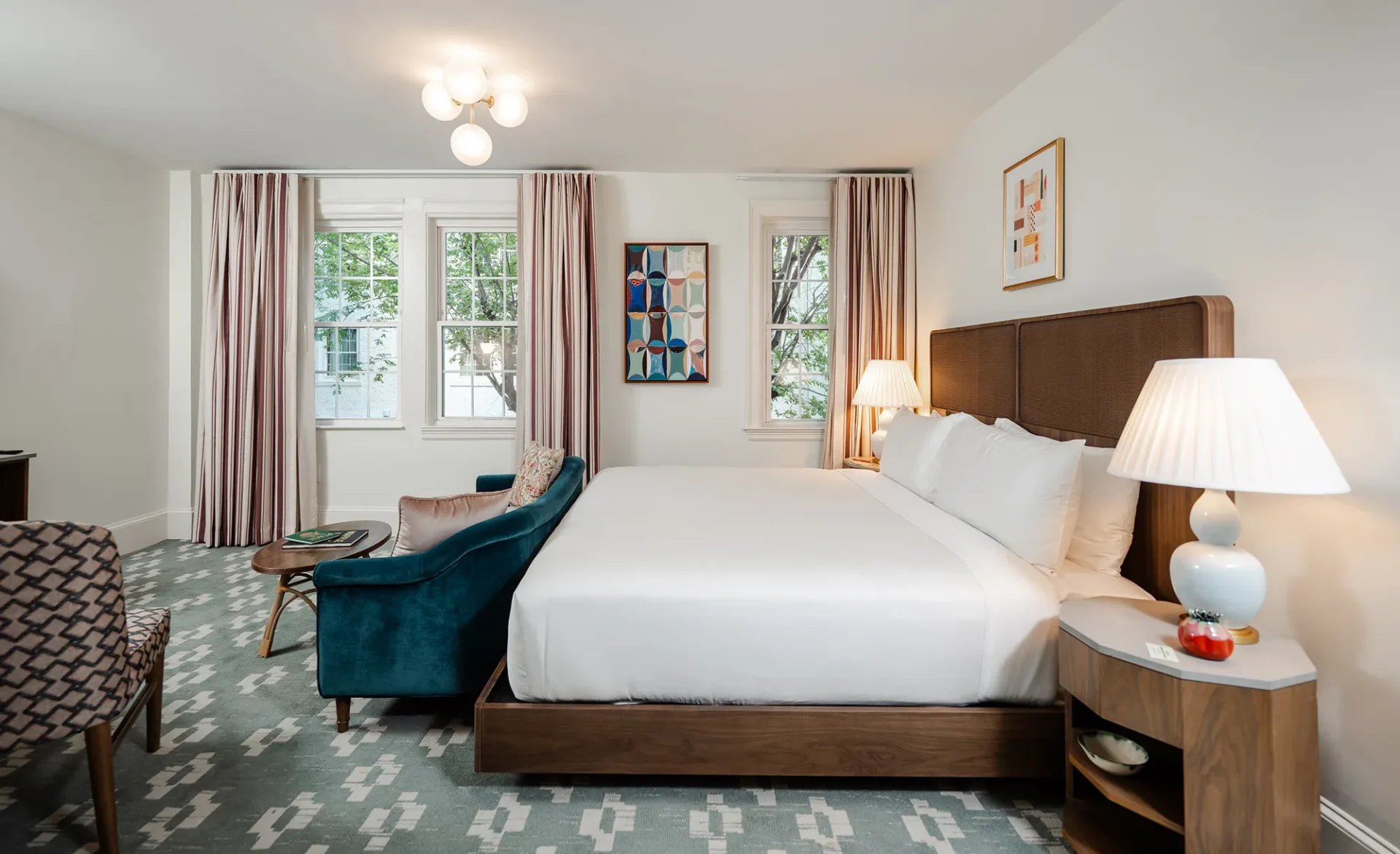
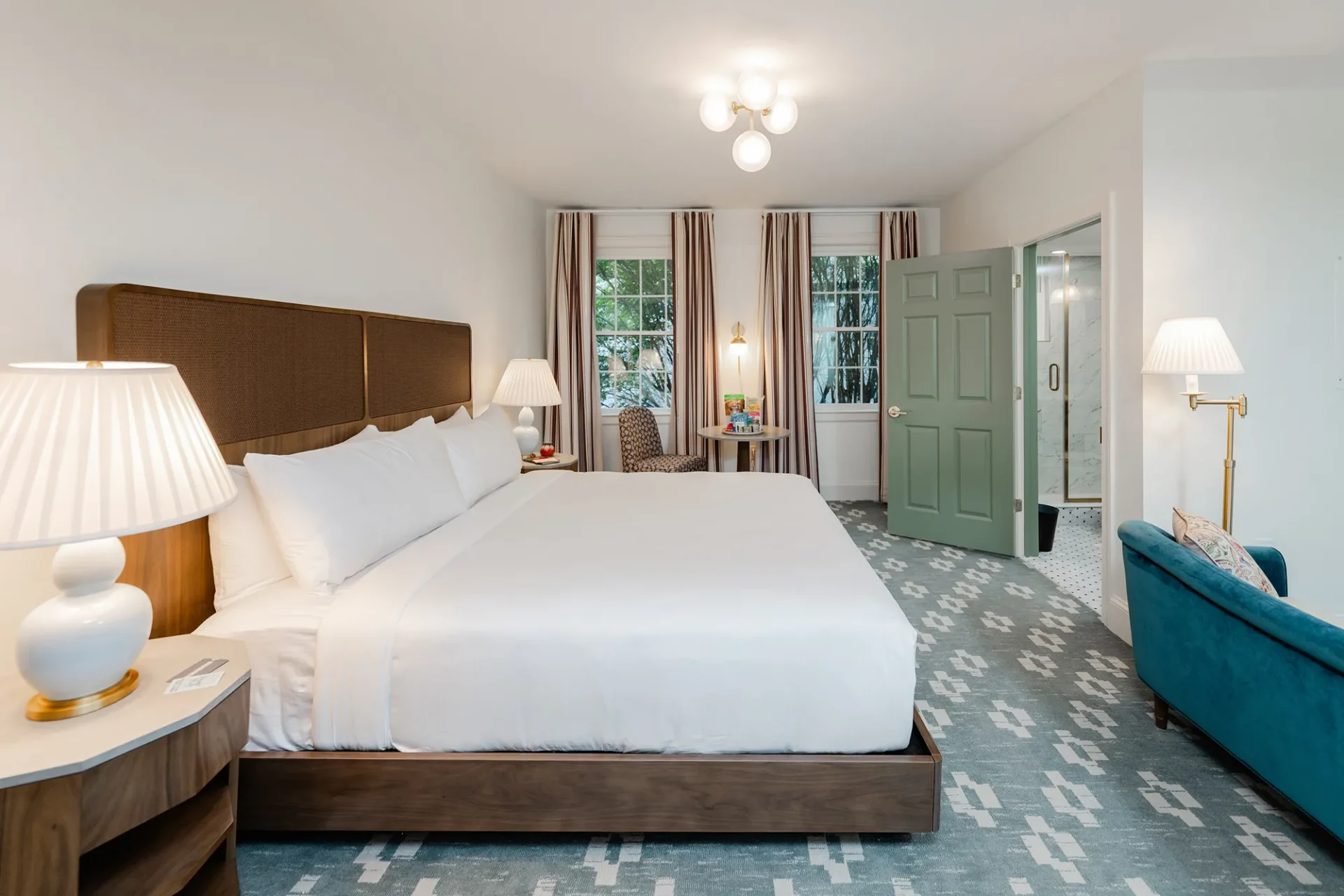
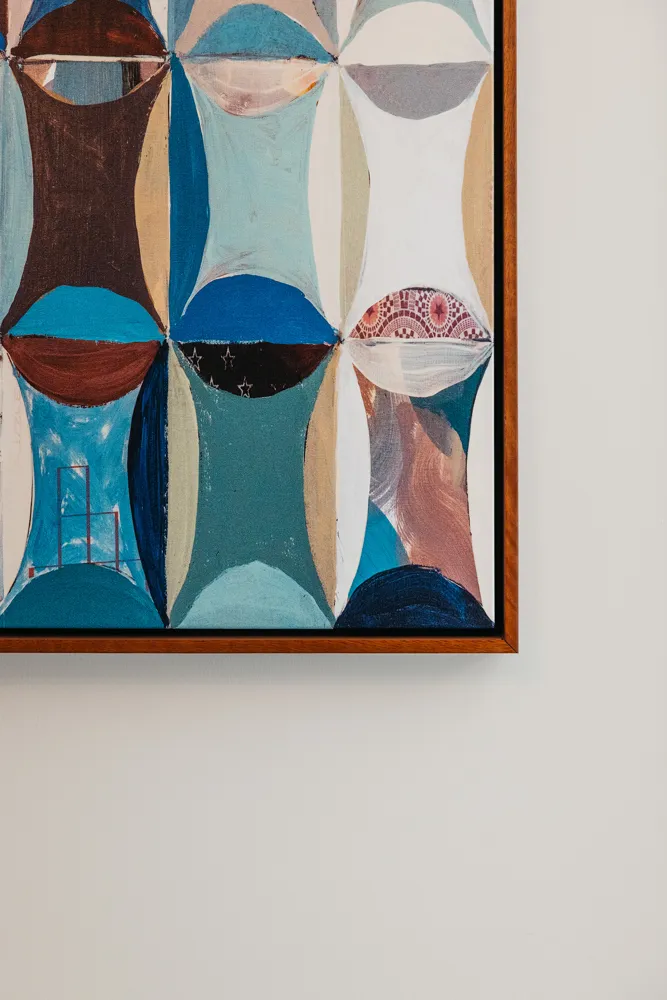
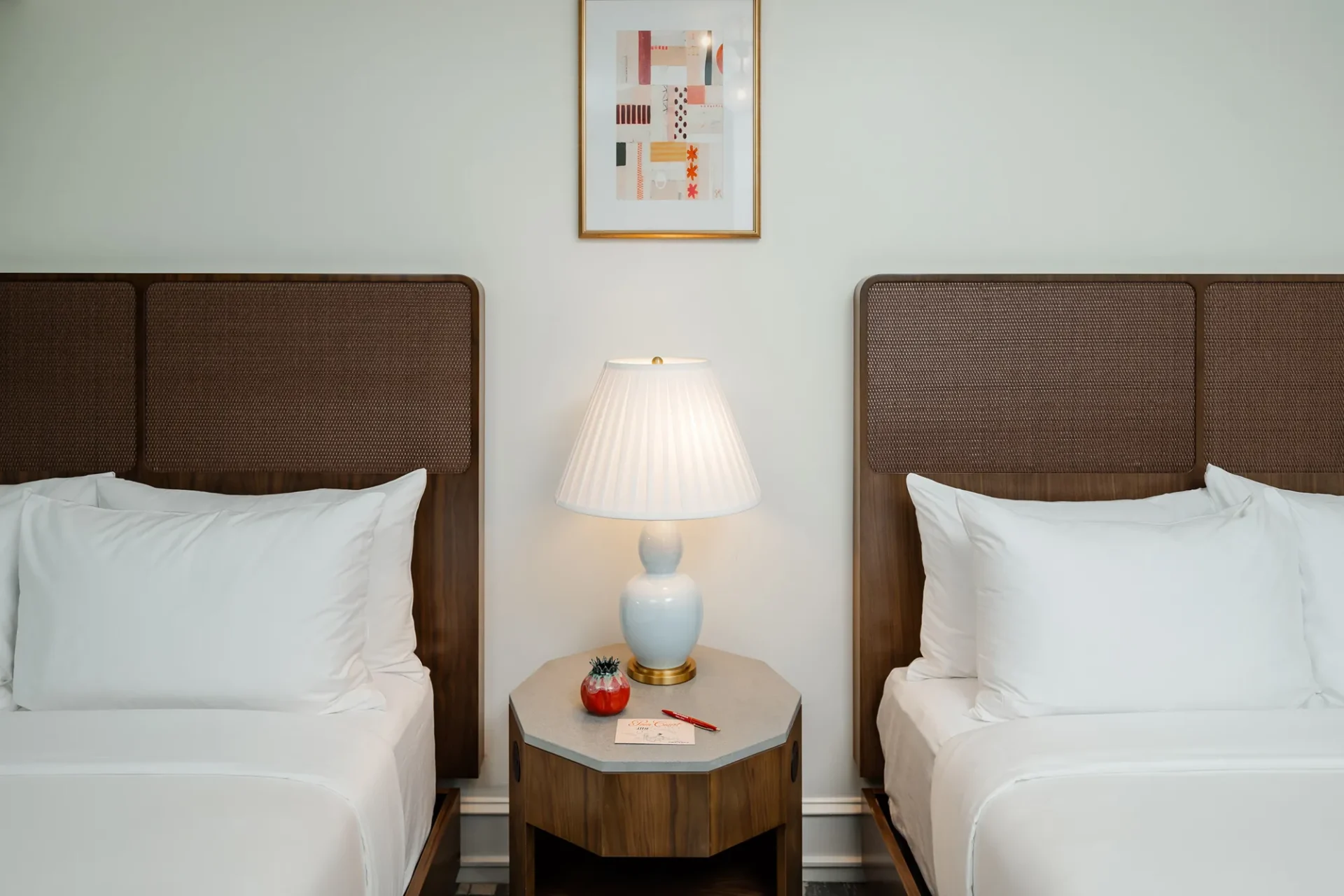
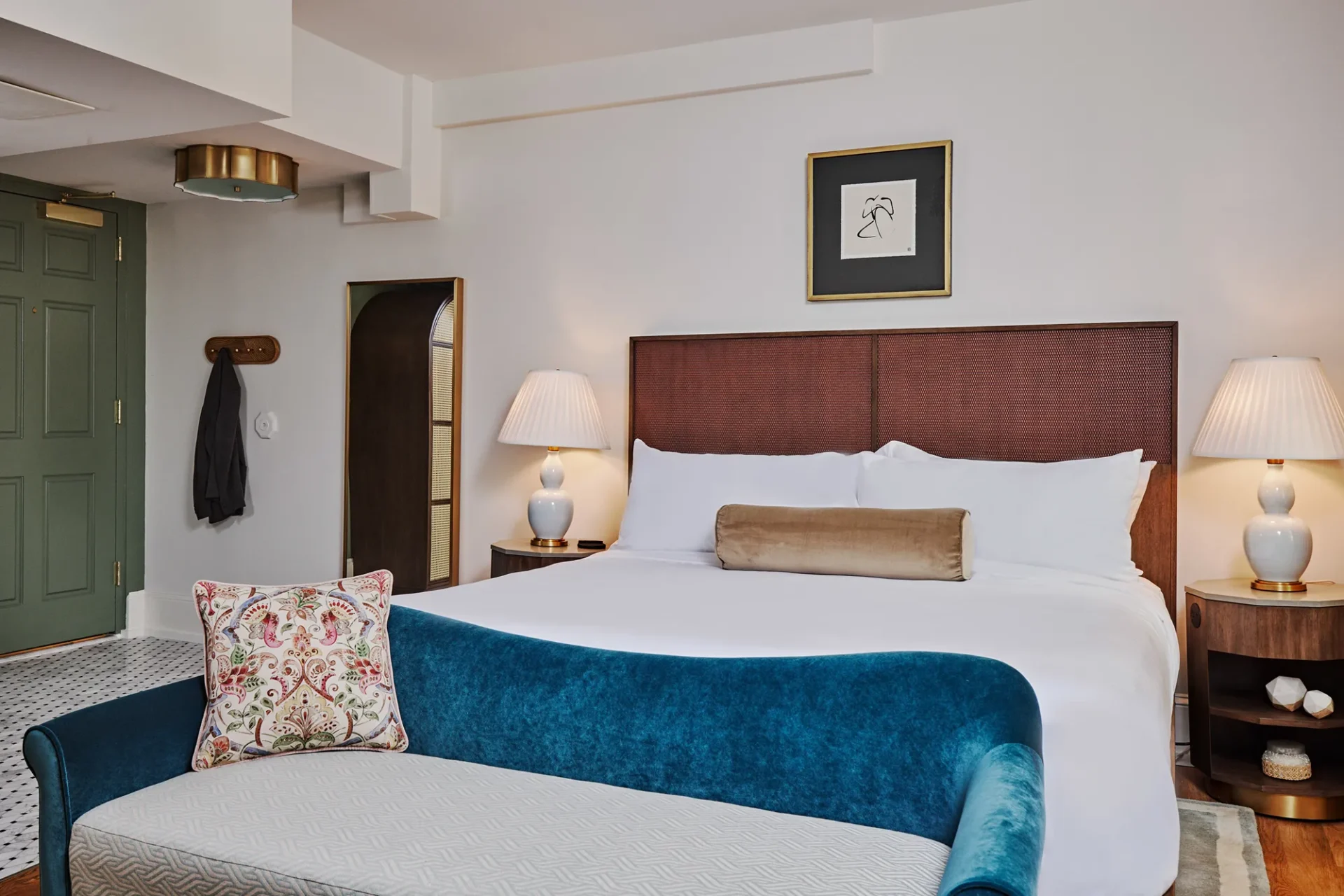
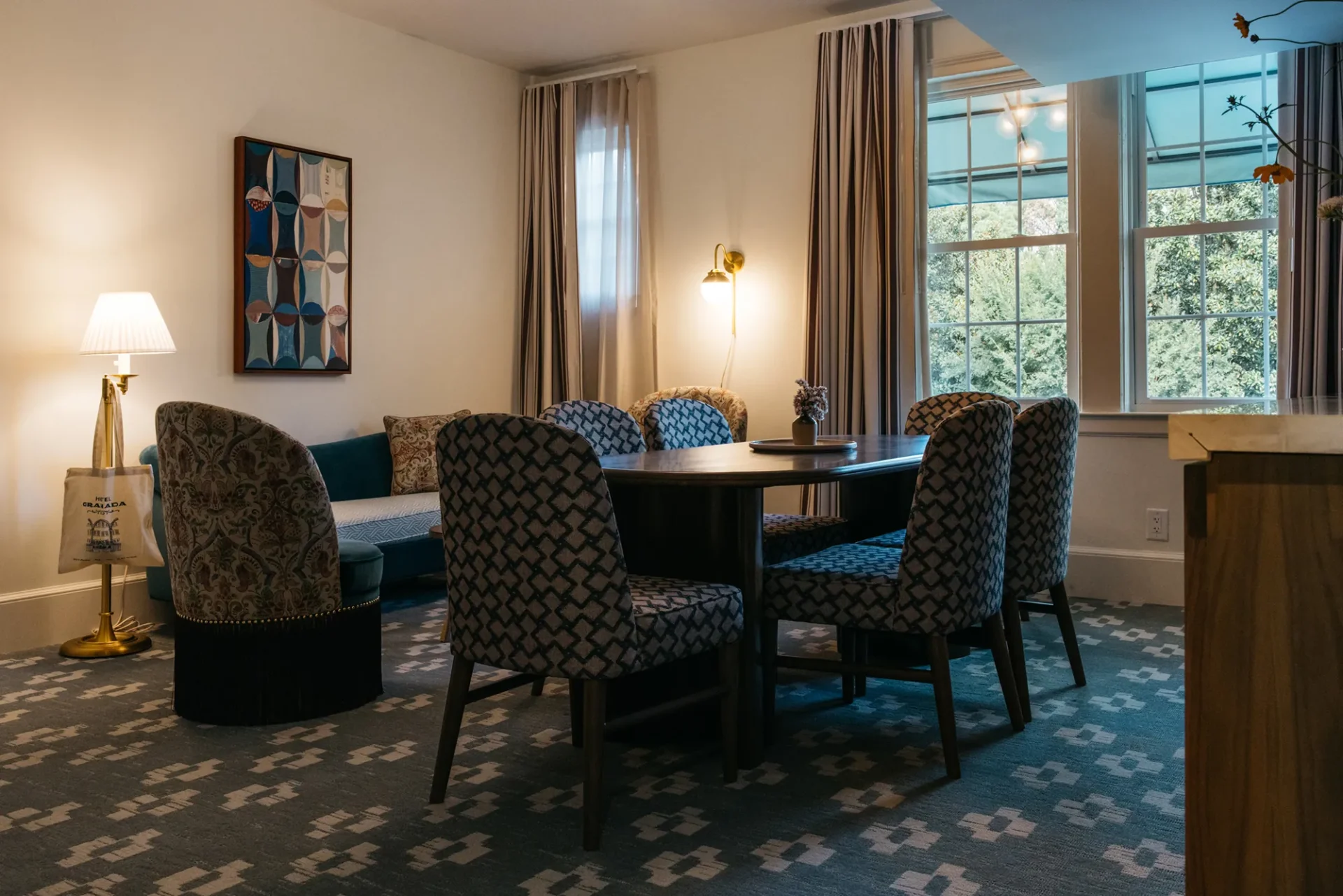
The 120 guestrooms continue the hotel’s balance between historic character and contemporary comfort. Soft green walls, textured finishes, brass fixtures and carefully selected furnishings create a calm, residential atmosphere, while original architectural proportions provide a sense of individuality. Art plays an important role. A collaboration with the Savannah College of Art and Design brings contemporary works into the hotel, introducing colour, humour and regional perspectives. Local makers contribute smaller details, including ceramics and decorative objects that reinforce the connection to Georgia. The result is deliberately less formal than a traditional luxury hotel. Rooms are comfortable and thoughtfully equipped, with practical workspaces and occasional seating areas, but the overall mood remains intimate. Beyond the windows lies busy West Peachtree Street. Inside, the pace is considerably slower.
Midtown Beyond the Glass Towers
Hotel Granada occupies a particularly interesting corner of Atlanta. Midtown is known for its commercial towers, cultural institutions and increasingly urban character, yet pockets of historic residential architecture remain among the newer developments. The High Museum of Art and Museum of Design Atlanta are nearby, as is the Woodruff Arts Center, home to the Atlanta Symphony Orchestra. Colony Square adds restaurants, cafés and nightlife, while the surrounding streets reveal an architectural mix of early twentieth-century buildings, modest bungalows and contemporary towers. For visitors interested in art, design and urban culture, the location is particularly appealing. Hotel Granada is not isolated from its neighbourhood; its courtyard, restaurant and bar are intended to become part of Midtown’s everyday social life.
An Atlanta Original, Reconsidered
Hotel Granada succeeds because its greatest asset was already there. The Spanish Colonial architecture, century-old courtyard and distinctive residential proportions provide a character that would be difficult to recreate convincingly today. The restoration builds on those qualities rather than overwhelming them. Contemporary art, playful Southern references and approachable food and drink introduce a new generation to the building without erasing its history. As a member of Design Hotels, Granada also demonstrates that architectural interest does not necessarily require an extravagant contemporary statement. Sometimes the most compelling design decision is simply to preserve something worth keeping — and give it a good cocktail bar.
Information
At a glance
Architecture
Opened / Renovated
1924, renovated 2024
Size matters
120 rooms & suites (19-38m2) (210-409 sq ft)
Interior design
Bathroom Amenities
Grown Alchemist
Featured in
Don't take our word for it

Handpicked worldwide
A carefully curated collection of exceptional boutique and design hotels across the globe.
Design with soul
Architecture, atmosphere and craftsmanship come together in stays with a clear identity.
Hidden, not hyped
Independent boutique hotels you rarely find on mainstream booking platforms.
Travel guidance
Personal recommendations and thoughtful support from people who actually know the places.