


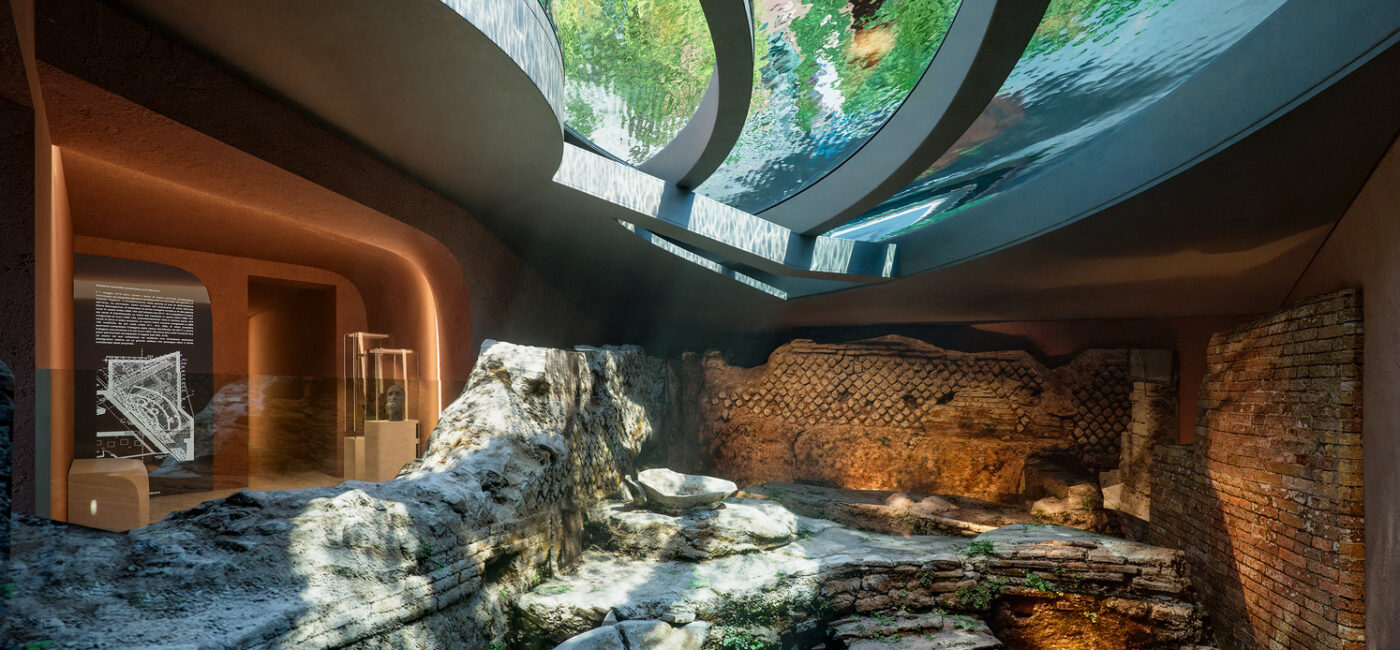
A Monastery Built Like a Fortress
Pousada Mosteiro Crato transforms a 14th-century fortified monastery into an extraordinary heritage hotel, where João Luís Carrilho da Graça contrasts monumental Gothic stonework, Renaissance and Mudéjar details and vaulted interiors with minimalist white walls, exposed concrete, expansive glazing and understated contemporary furnishings.

Why DNA Hotels loves it
An extraordinary 14th-century fortified monastery transformed into one of Portugal's most architecturally compelling heritage hotels, preserving centuries of Gothic, Renaissance and Mudéjar history.
A remarkable restoration by Portuguese architect João Luís Carrilho da Graça, whose minimalist interventions create a beautiful dialogue between monumental medieval stonework and contemporary design.
A peaceful Alentejo retreat where historic interiors, regional gastronomy, landscaped gardens and swimming pools offer an escape into one of Portugal's most unspoiled landscapes.
The Stay
Medieval Grandeur Meets Contemporary Portuguese Architecture
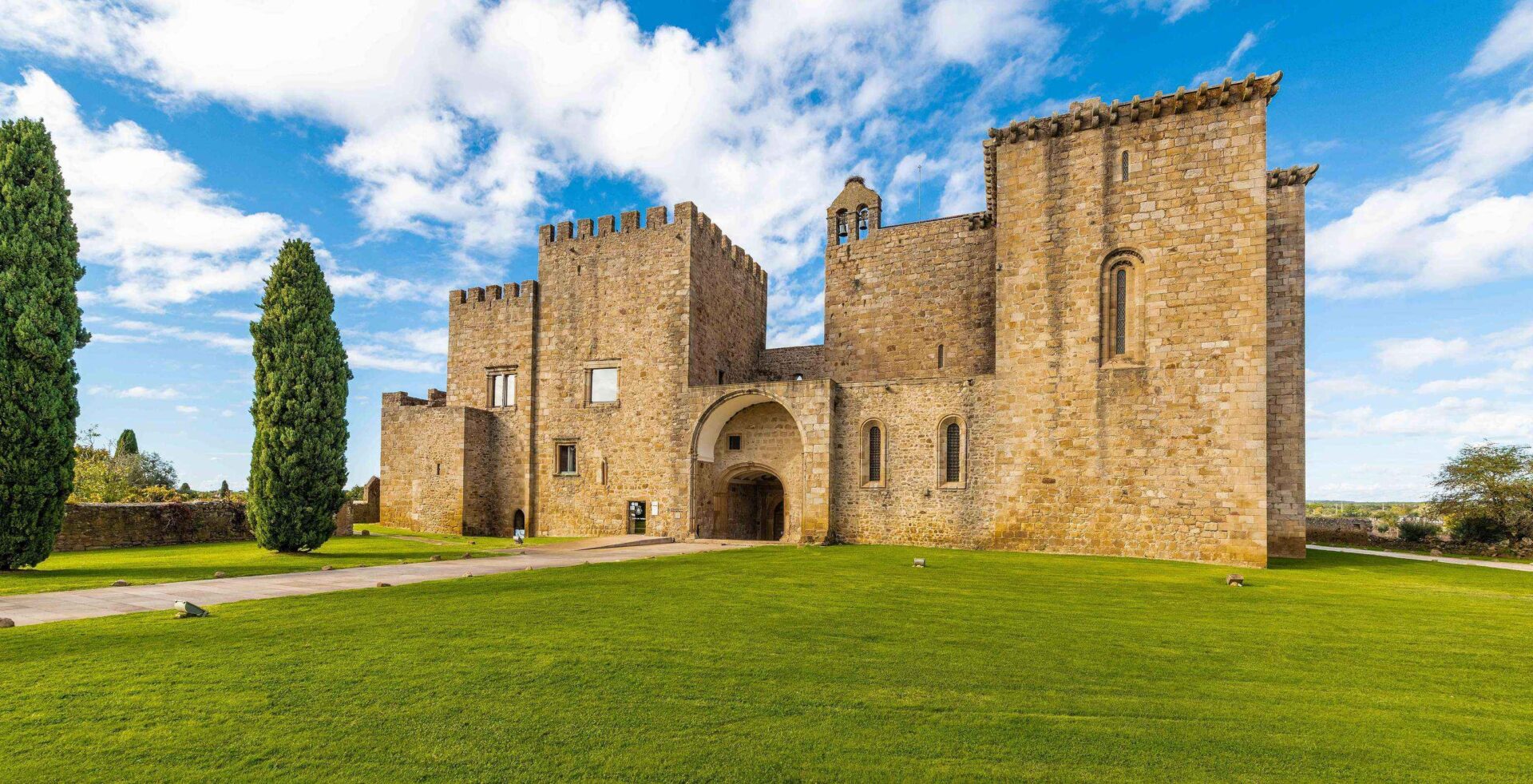
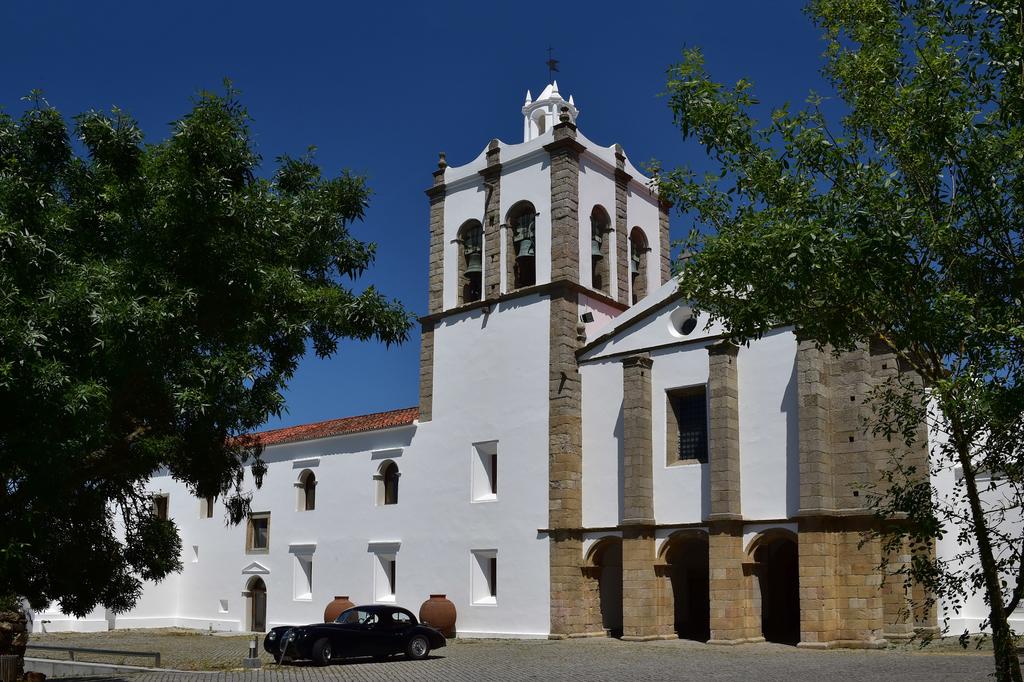
Portugal has no shortage of historic buildings converted into hotels, but few are as extraordinary as Pousada Mosteiro Crato. Standing in the village of Flor da Rosa, near Crato in northern Alentejo, this monumental complex looks more like a medieval castle than a monastery. Built during the 14th century, when this part of Portugal remained vulnerable to conflict, it was designed for both spiritual and defensive purposes. The complex was commissioned by Álvaro Gonçalves Pereira, father of one of Portugal’s most celebrated historical figures, and entrusted to the Knights Hospitaller, later associated with the Order of Malta. Over the centuries, it served as a religious institution, aristocratic residence and fortified stronghold. Today, following an ambitious architectural restoration, the former monastery offers something rather different: a heritage hotel where centuries of history coexist with contemporary design.
Seven Centuries of Architecture
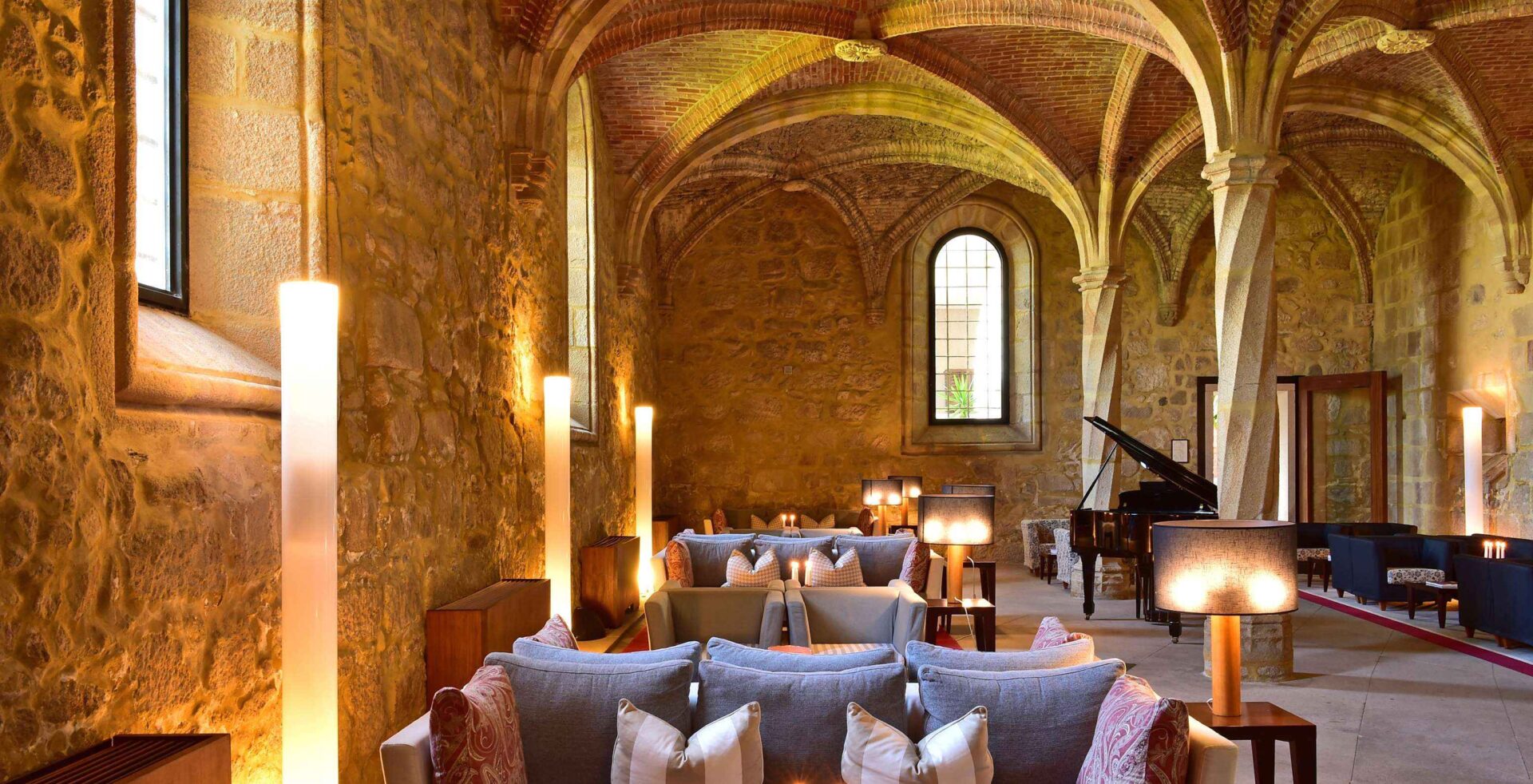
The architectural significance of Flor da Rosa lies in its unusual combination of styles and functions. The complex incorporates a Gothic fortified church, a castle-like residential palace and conventual buildings with Renaissance and Mudéjar influences. These elements were constructed and altered over several centuries, creating a fascinating composition of towers, courtyards, vaulted rooms and defensive walls. The building survived wars, earthquakes, fires and periods of neglect, although by the time it was classified as a Portuguese National Monument in 1910, much of the complex had fallen into disrepair. Restoration began in the 1940s, but it was not until the 1990s that the monastery found its new purpose as part of Portugal’s celebrated Pousadas network.
Carrilho da Graça’s Architectural Dialogue
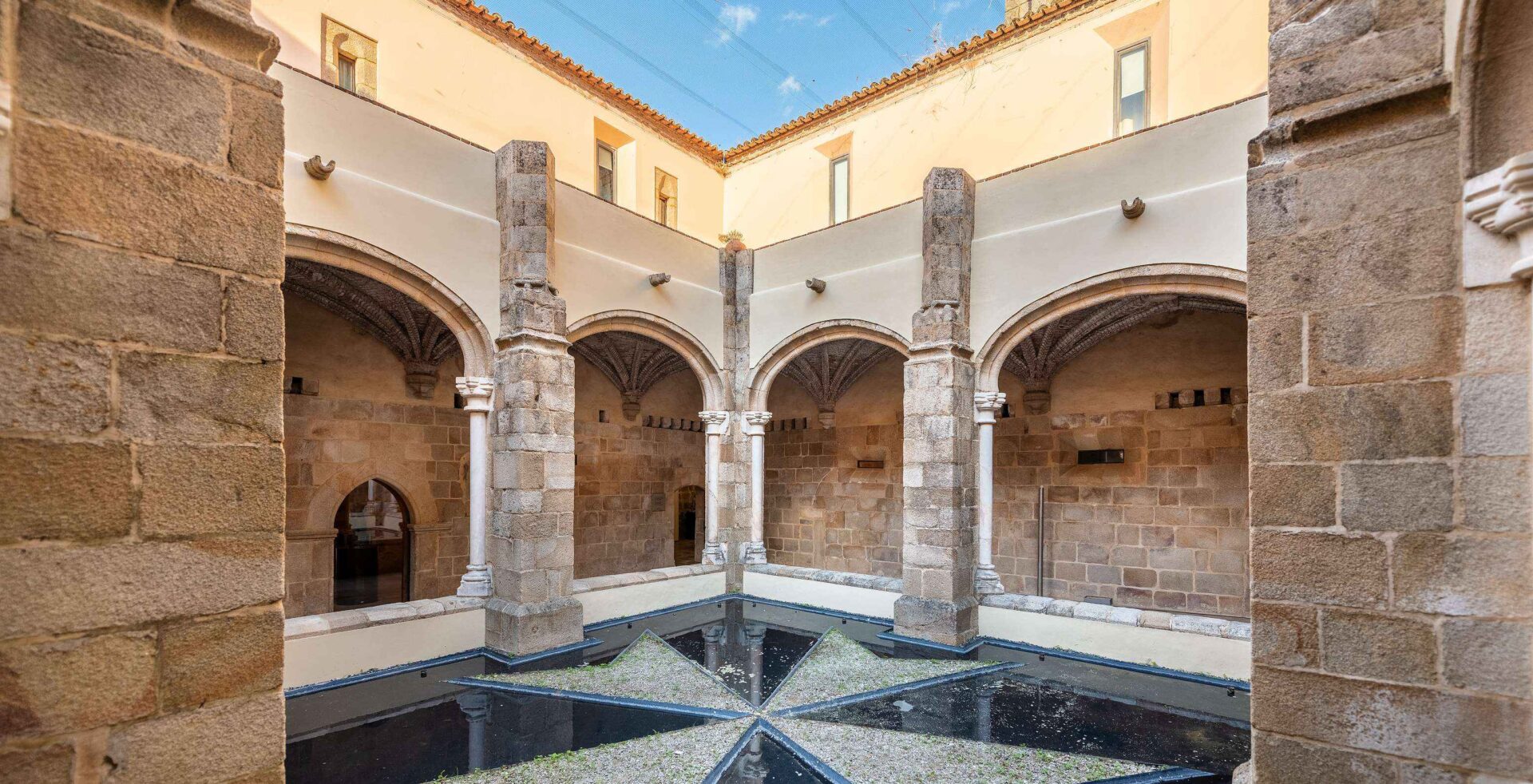
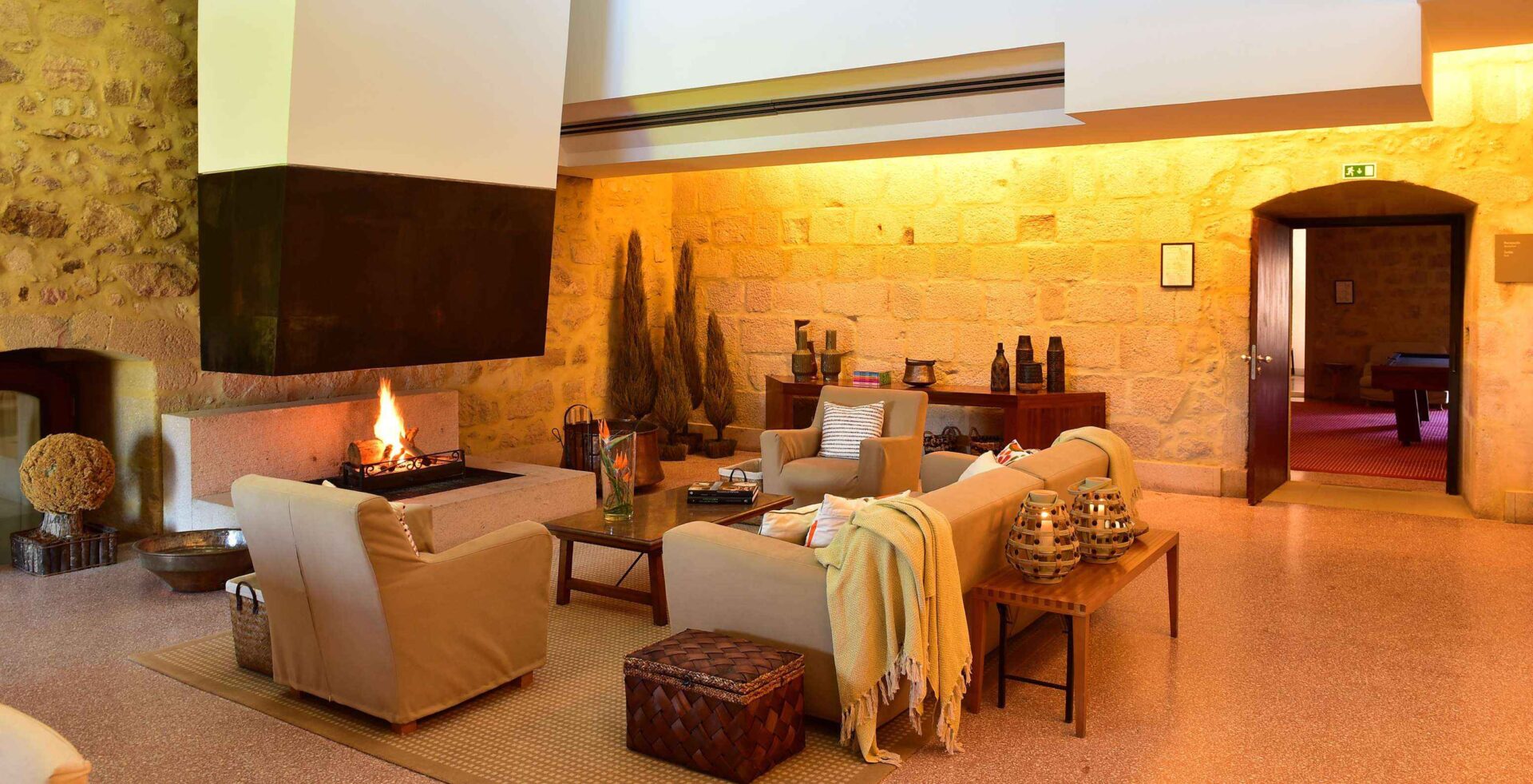
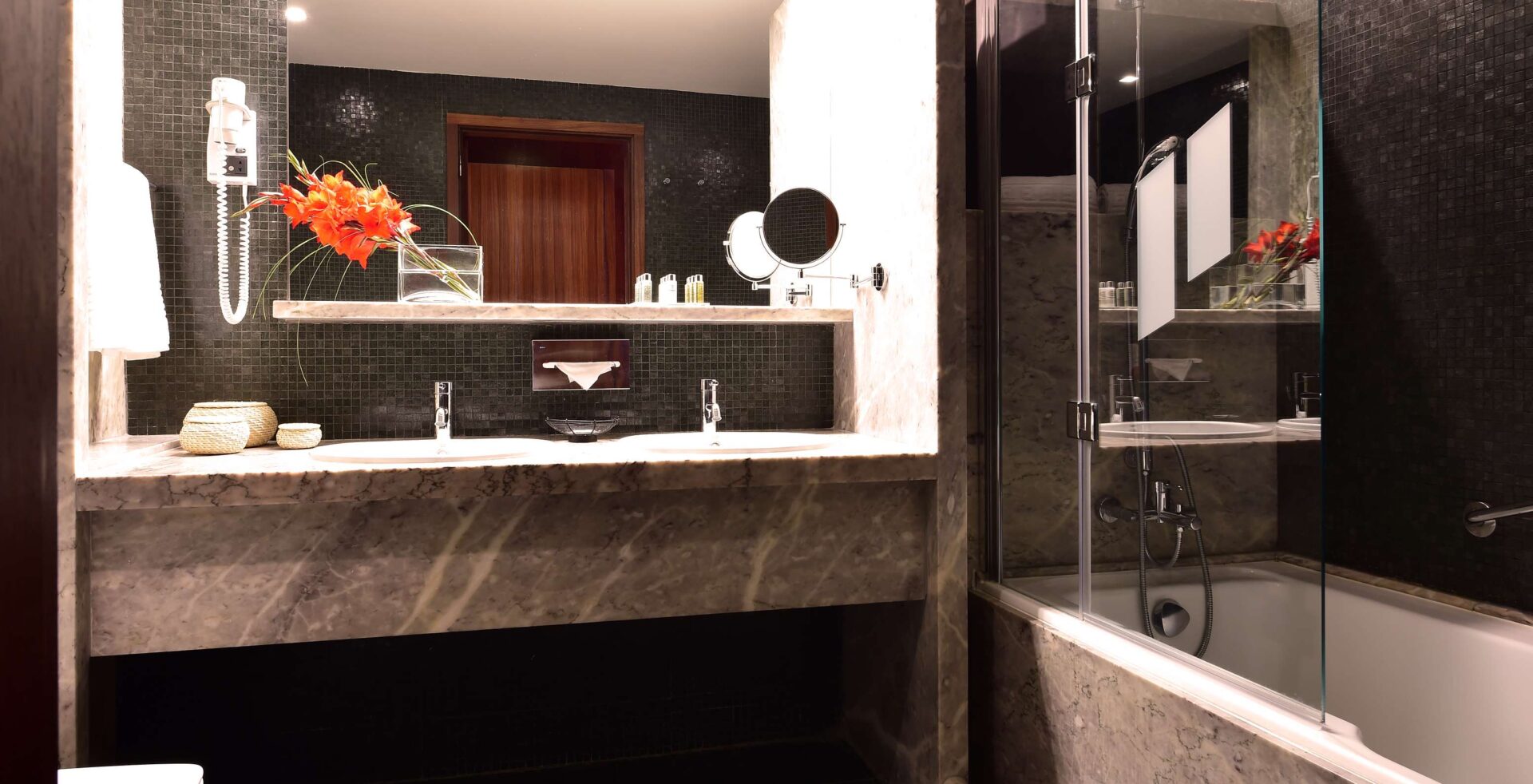
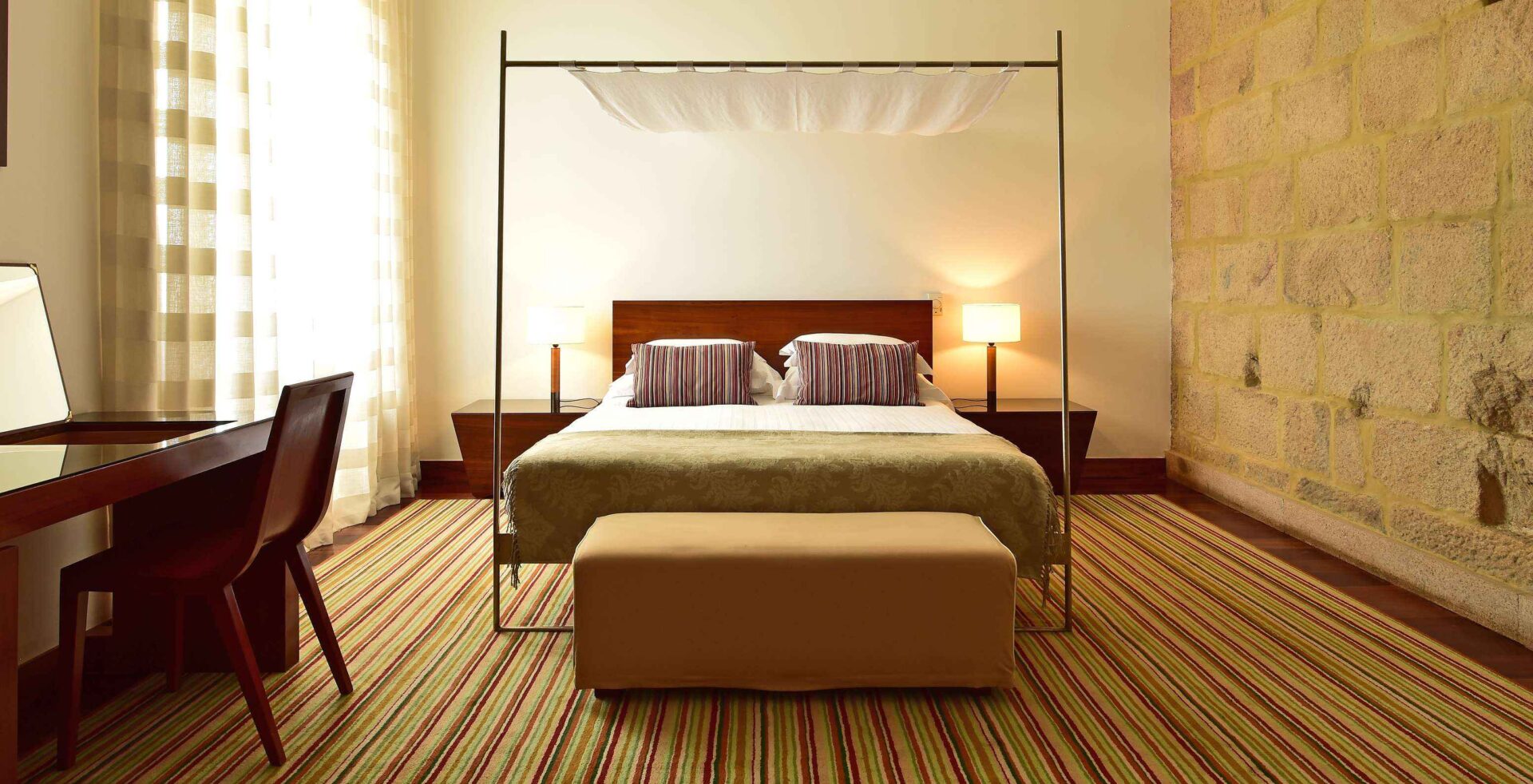
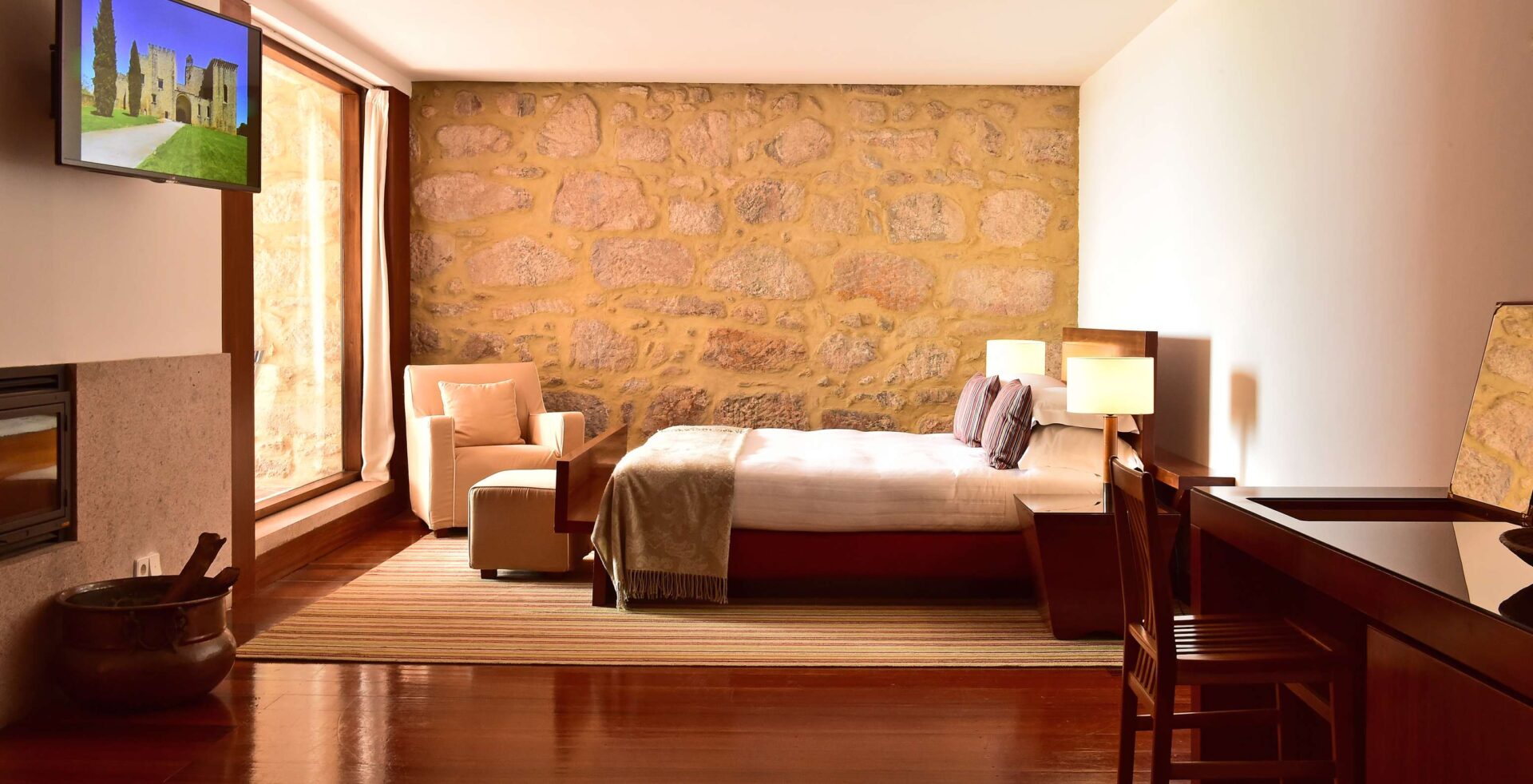
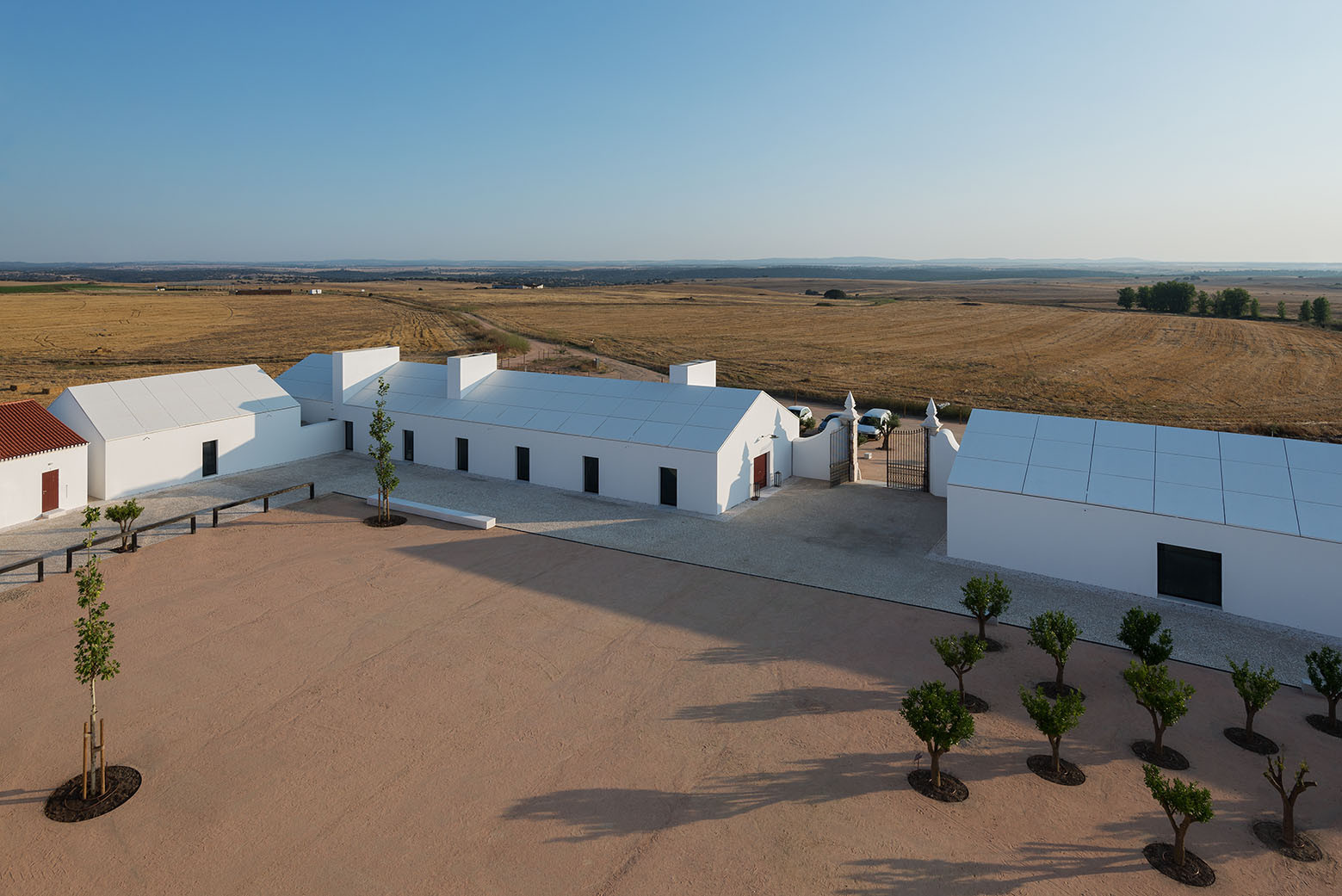
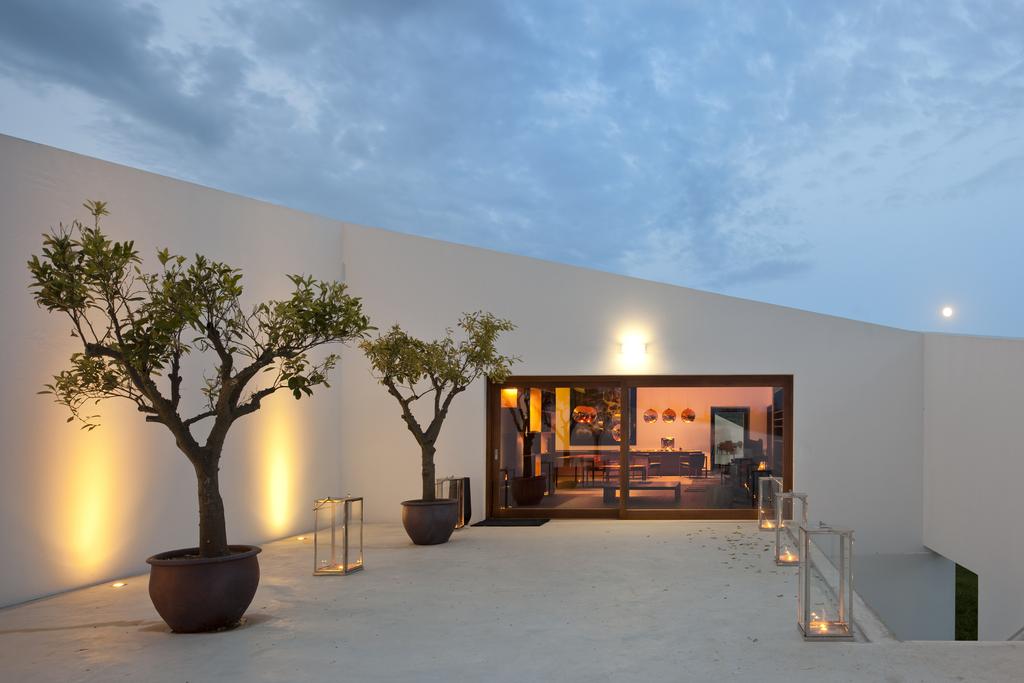
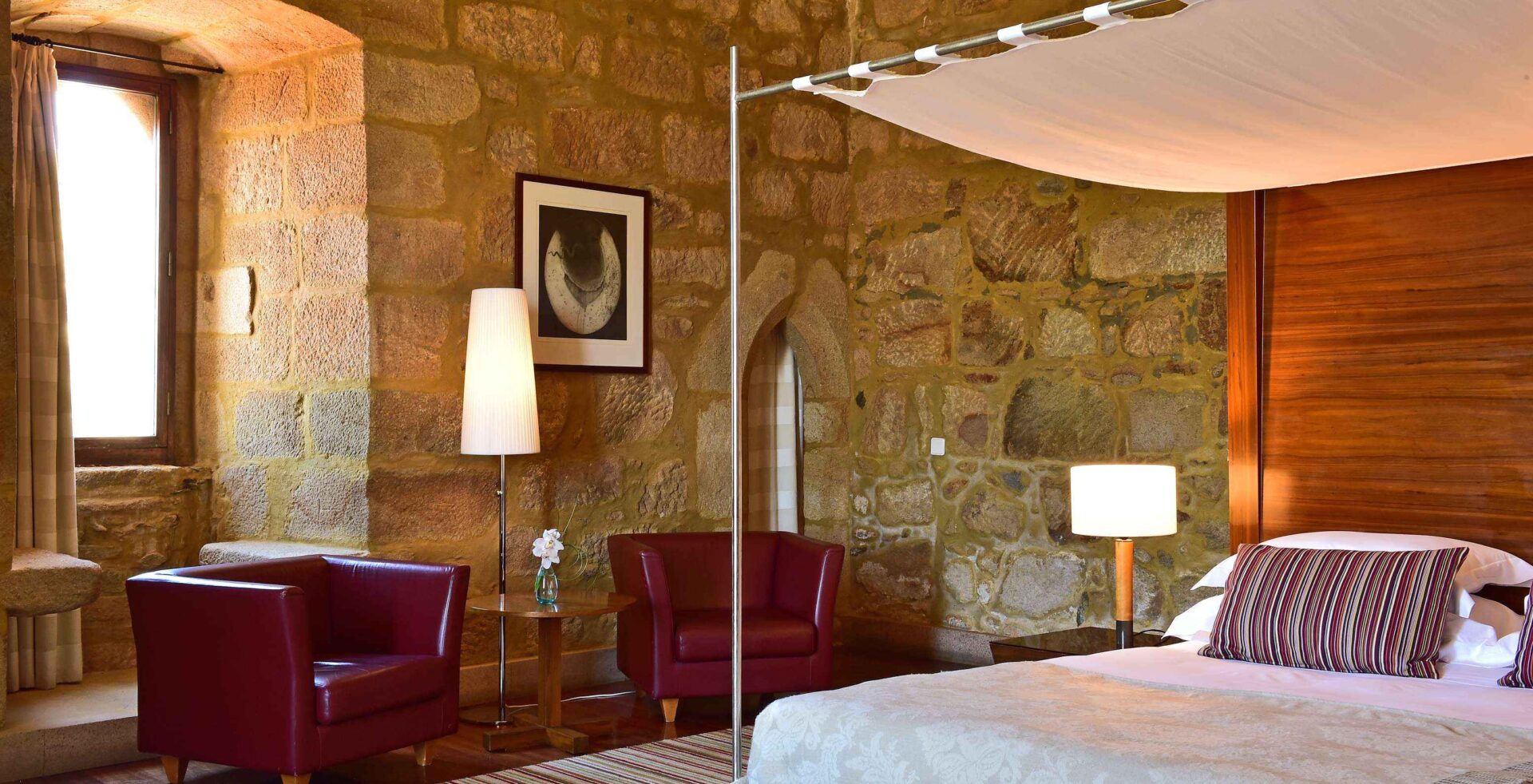
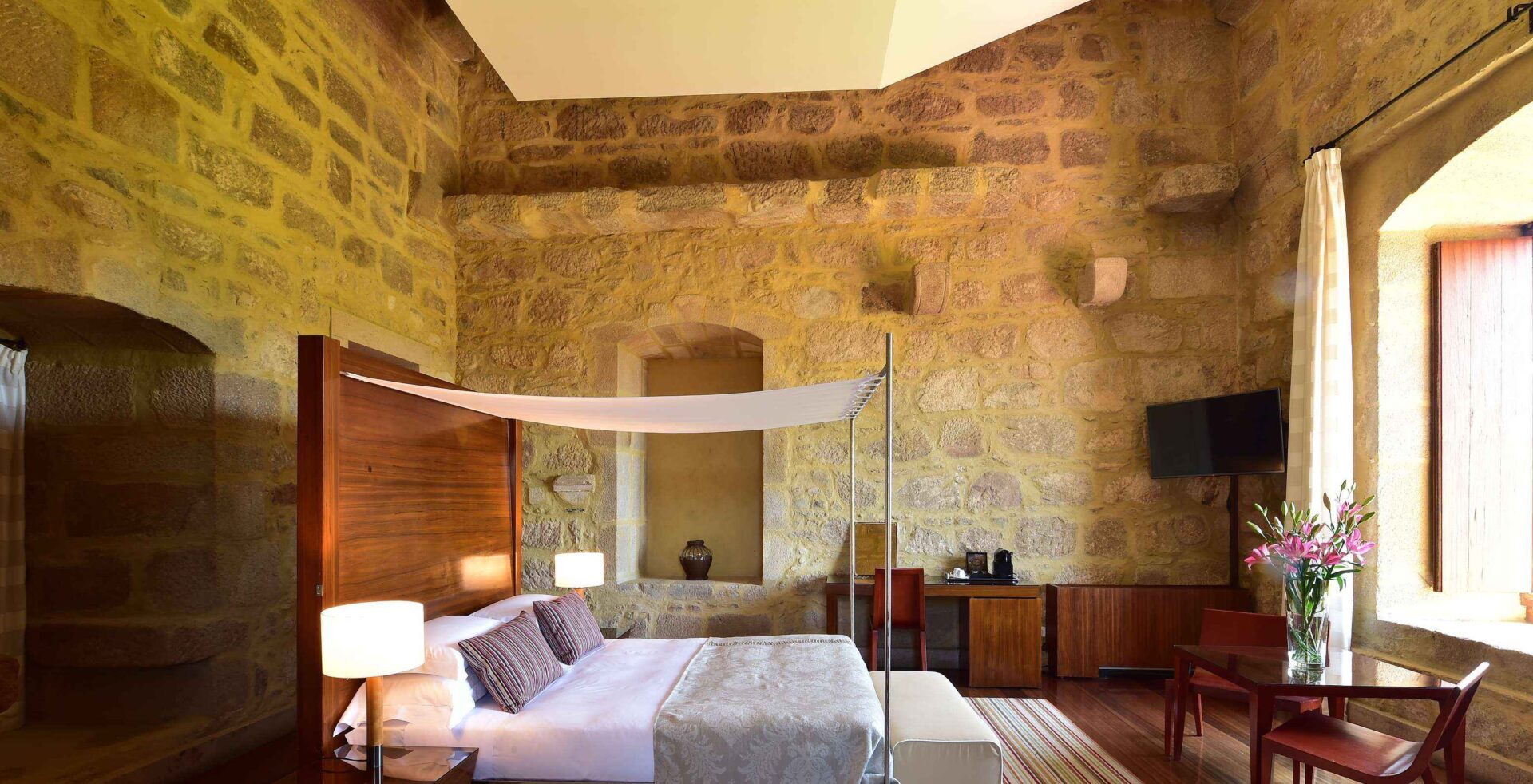
The transformation was entrusted to João Luís Carrilho da Graça, one of Portugal’s most respected contemporary architects. Rather than reconstructing an idealised medieval past, he approached the monastery as an architectural composition shaped by time. Historic stonework was preserved, while smooth white walls, exposed concrete, large glass openings and carefully positioned contemporary elements establish a quiet contrast with the original granite structures. The historic building contains most communal spaces and several guestrooms, while a new wing introduces additional accommodation and wellness facilities. Together, the buildings form an L-shaped arrangement around a sheltered garden. Inside, monumental stone walls meet clean white surfaces, contemporary furniture occupies centuries-old vaulted rooms and natural light reveals the texture of weathered granite. Furnishings are deliberately sparse, allowing the architecture to remain the principal attraction. It is a particularly successful example of adaptive reuse, where old and new retain their identities without competing for attention.
Rooms Within the Walls
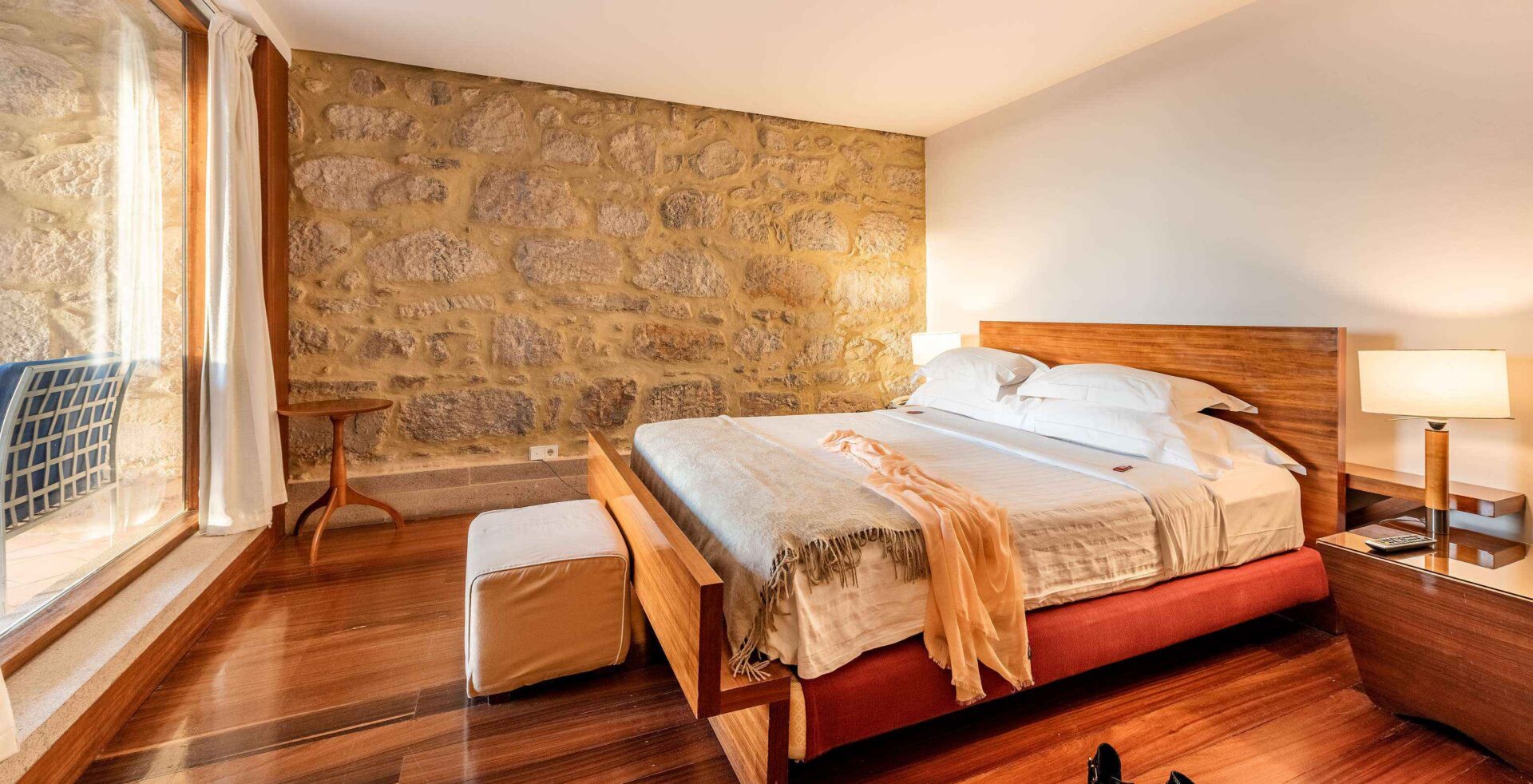
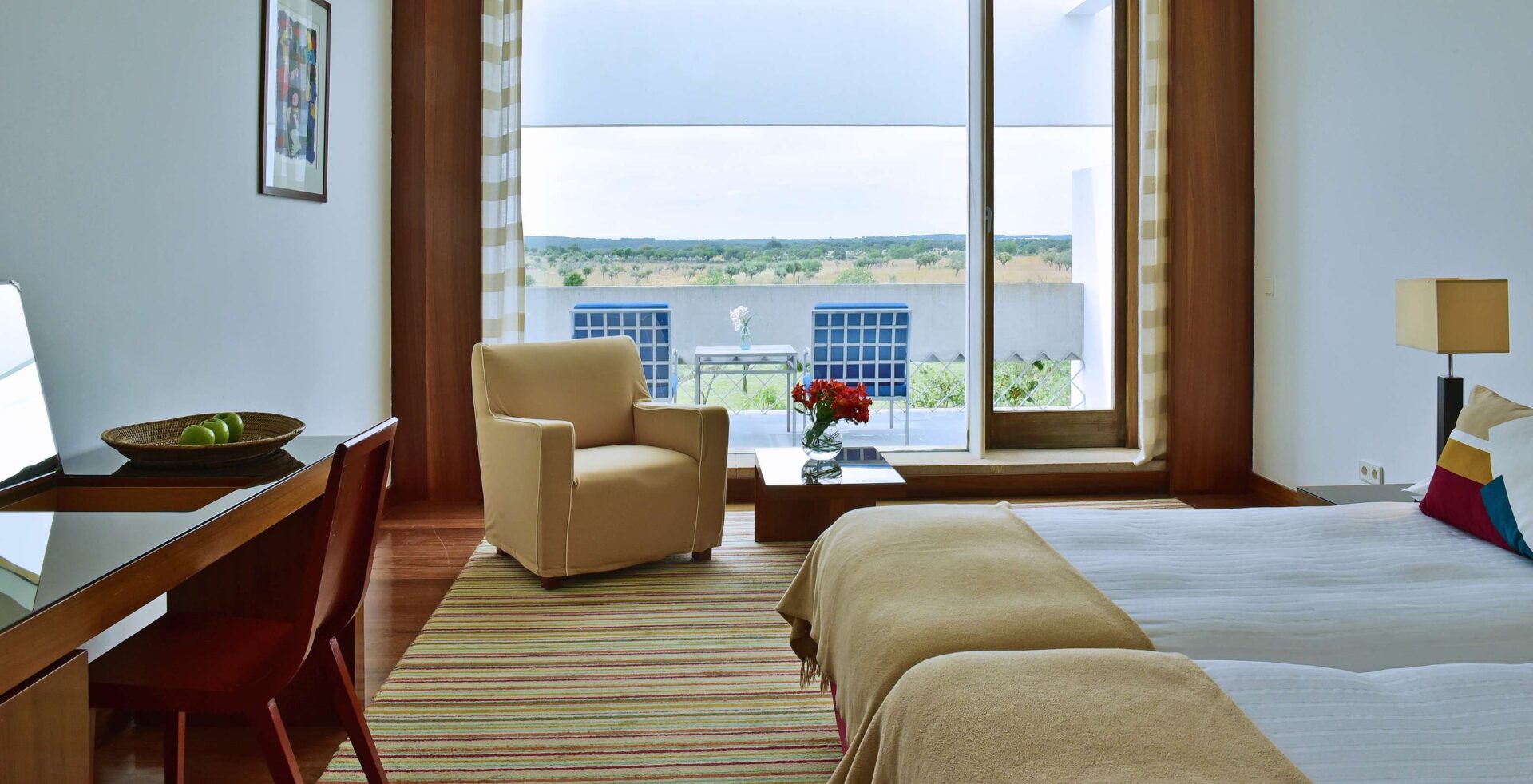
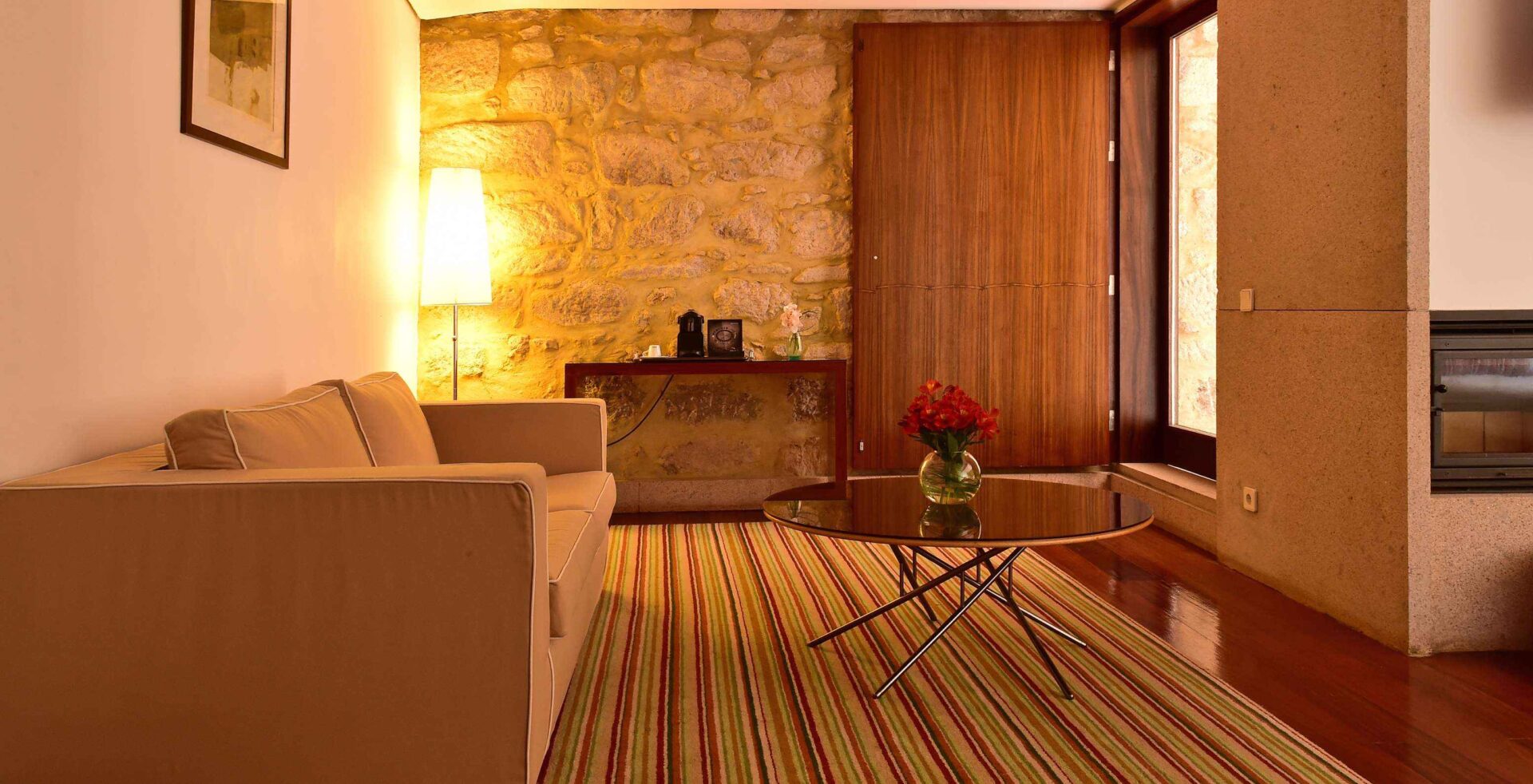
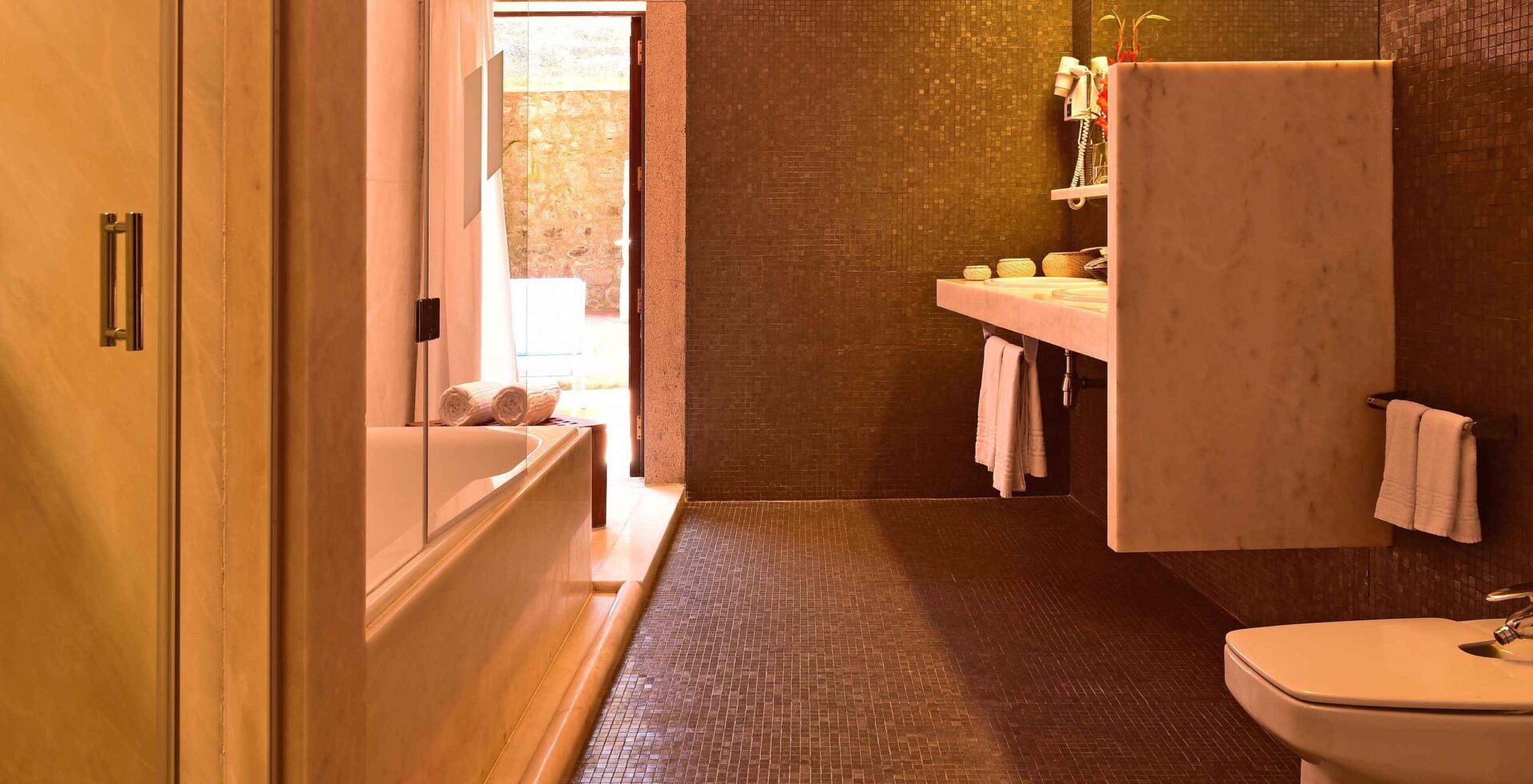
Accommodation is divided between the historic monastery and its contemporary extension, offering distinctly different experiences. Rooms within the original building benefit from thick stone walls, historic windows and irregular proportions that give each space its own personality. The most memorable accommodation occupies the former fortified tower, where suites are arranged across its historic levels. Here, ancient masonry forms the backdrop to understated contemporary furnishings and modern comforts. The newer wing offers simpler architectural lines, generous natural light and views across the gardens and surrounding countryside. Throughout the property, white walls, natural materials and carefully selected furniture allow the building’s extraordinary proportions and textures to take centre stage. Medieval atmosphere, thankfully, without medieval discomfort.
The Old Refectory and the Flavours of Alentejo
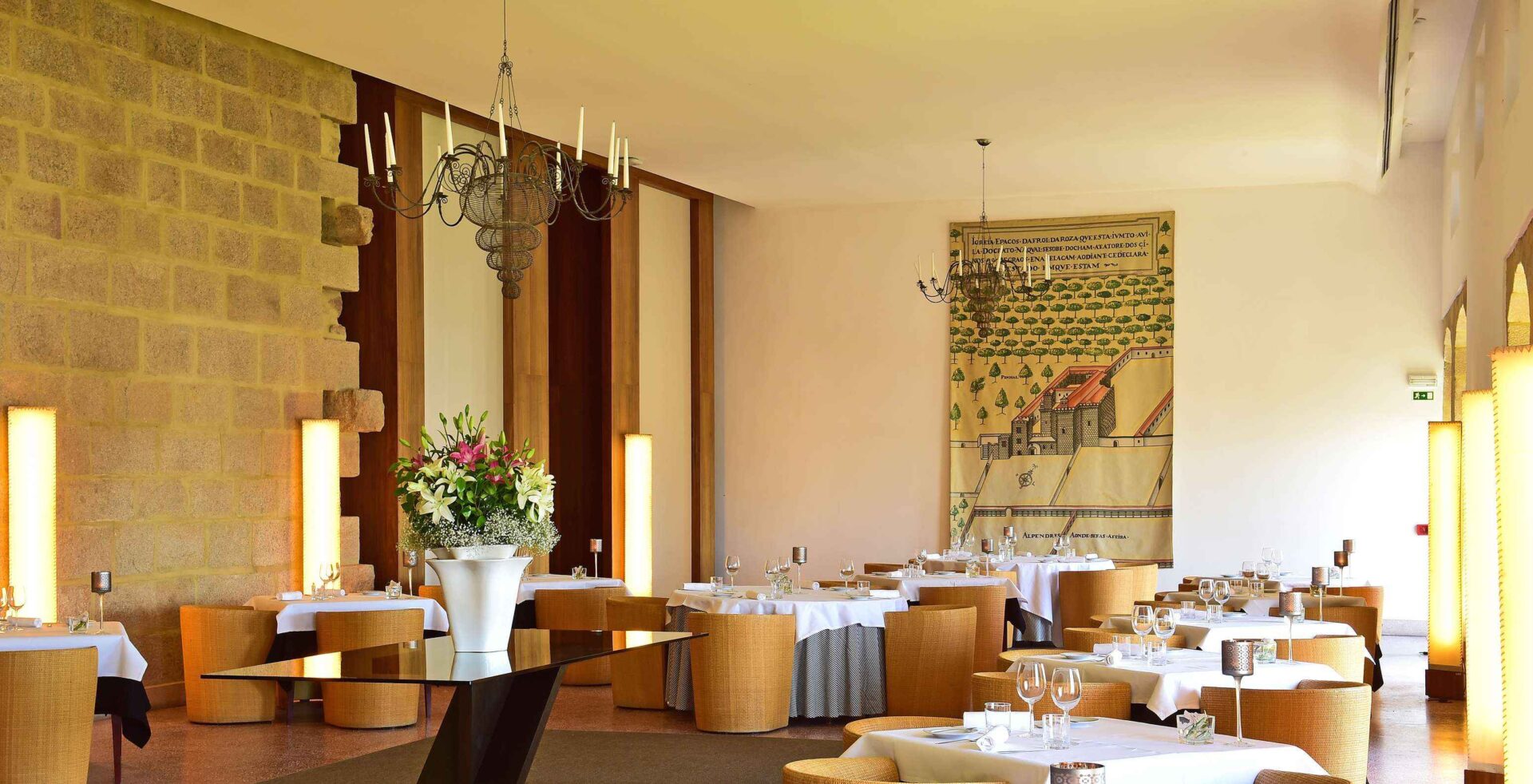
One of the most beautiful spaces in the complex is the former monastic refectory, now home to the hotel’s bar. Its monumental proportions and historic stonework create an exceptional setting for a glass of Portuguese wine. The restaurant occupies another historic part of the monastery, overlooking the gardens and offering traditional Alentejo cuisine. This region has one of Portugal’s most distinctive culinary identities, shaped by olive oil, bread, herbs, pork, lamb, local cheeses and an agricultural landscape that has changed relatively little over generations. Regional specialities, seasonal ingredients and increasingly respected Alentejo wines provide a fitting complement to the extraordinary architectural surroundings.
Swimming Beneath Medieval Walls
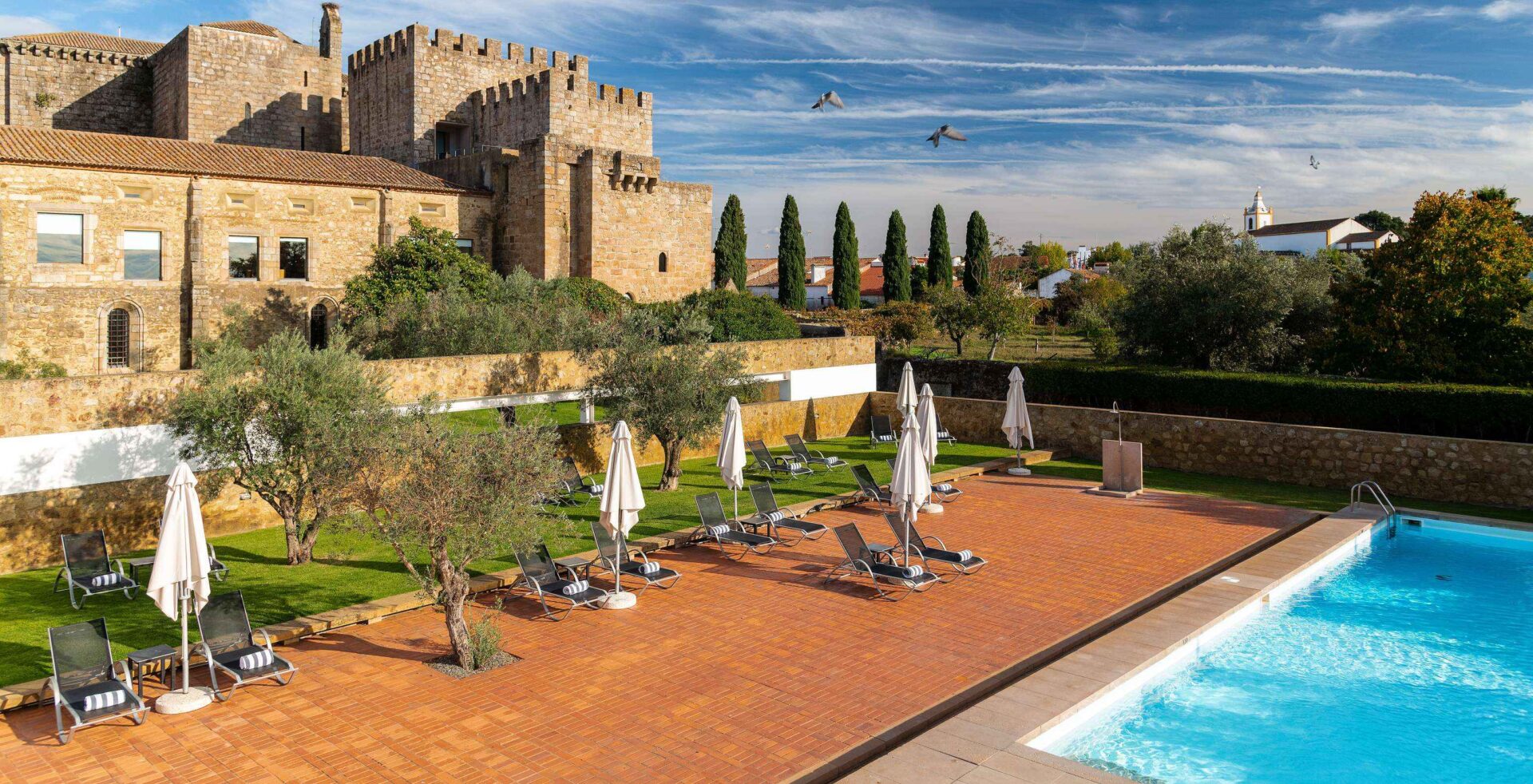
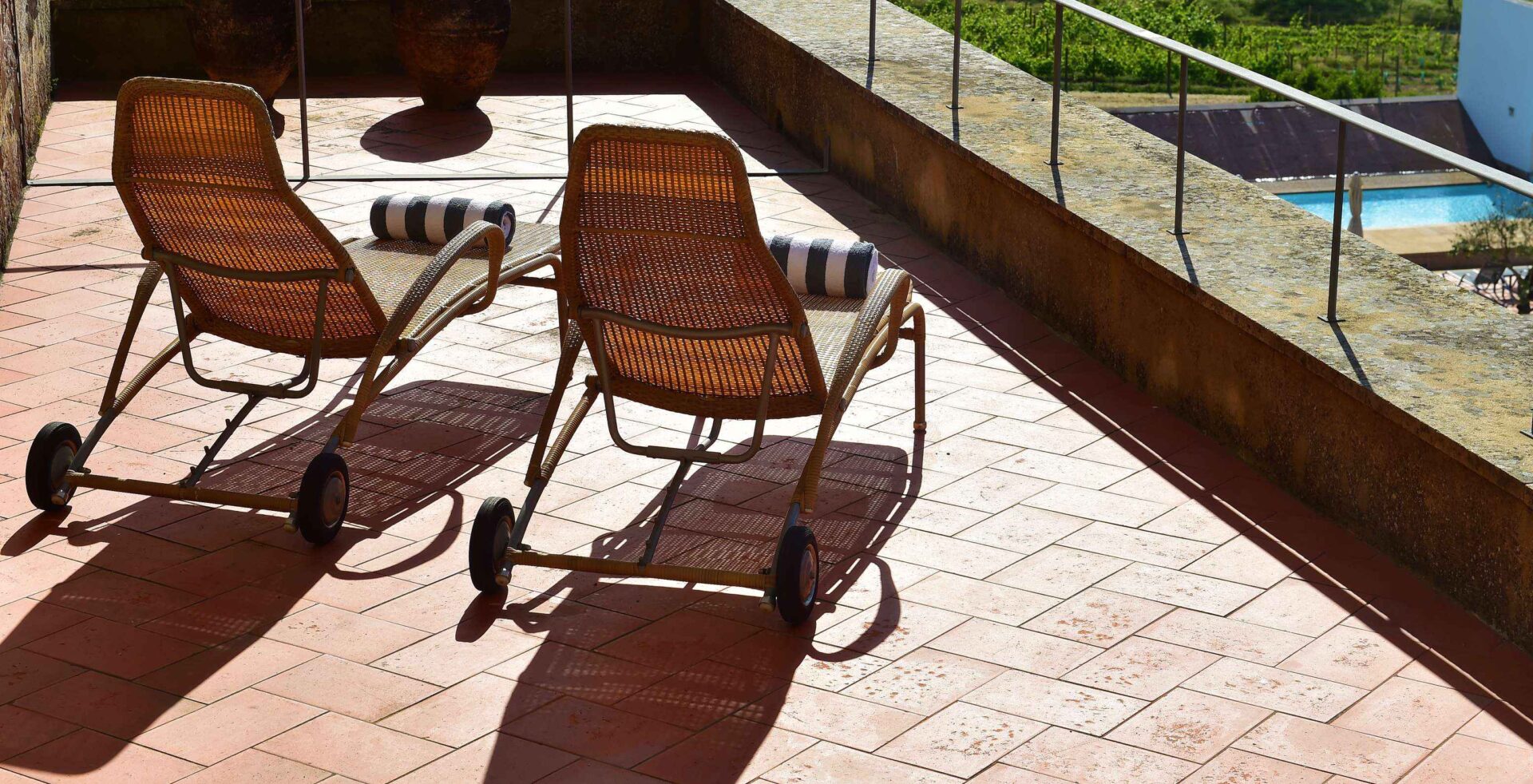
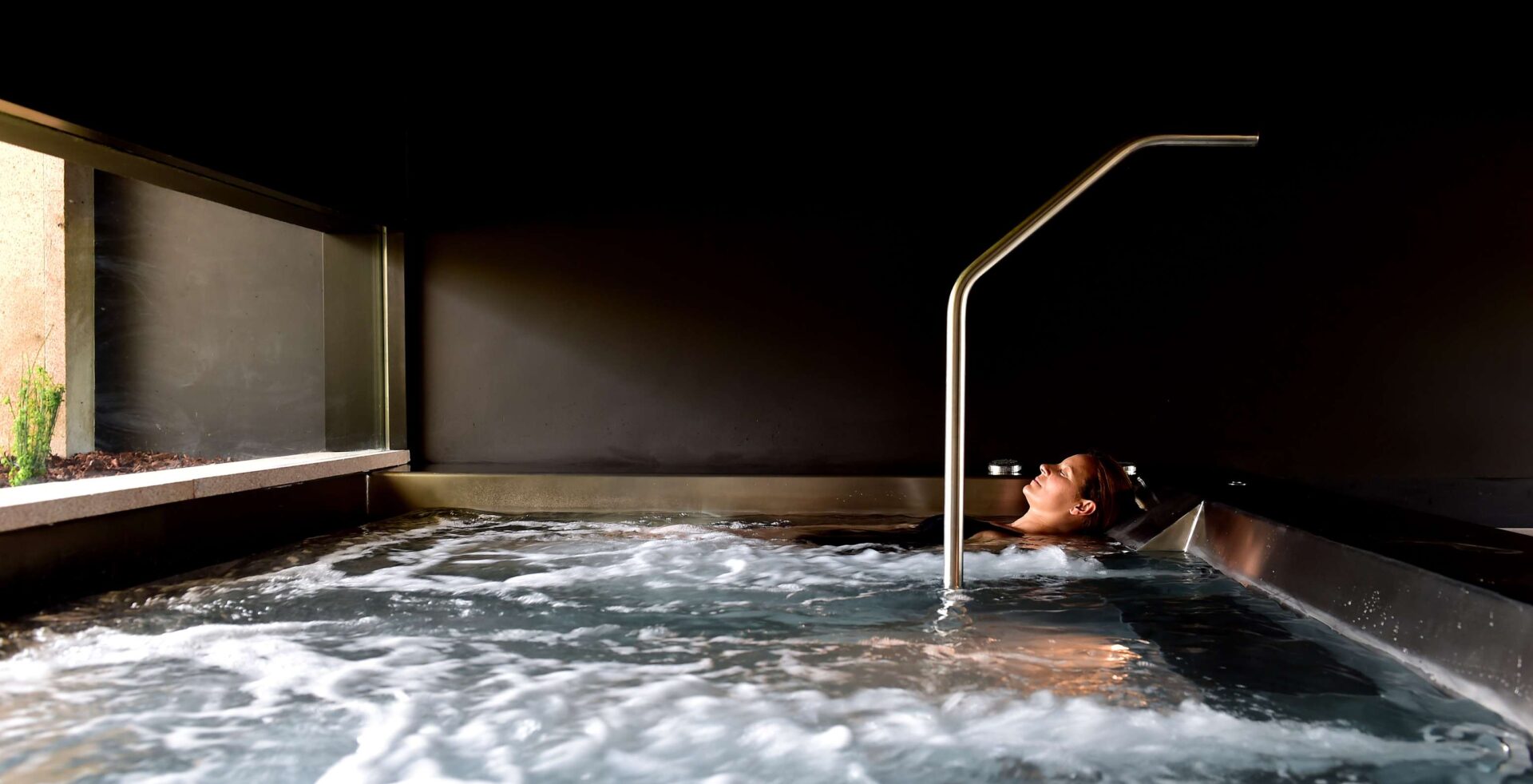
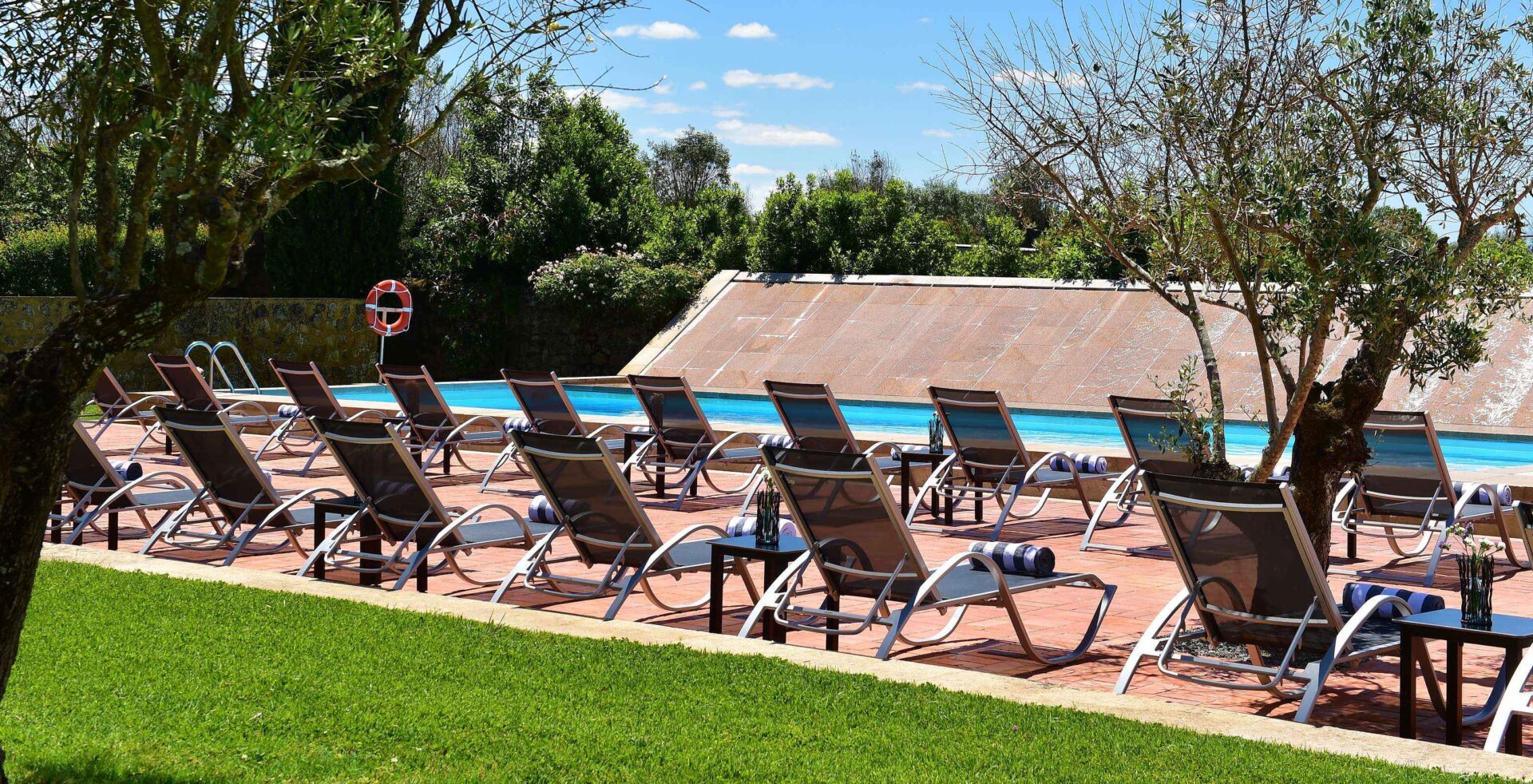
Outside, the contrast between fortress architecture and peaceful countryside becomes particularly appealing. Massive granite walls frame landscaped gardens, shaded terraces and quiet corners where guests can appreciate the scale of the building. The outdoor swimming pool sits slightly elevated within the grounds, surrounded by greenery and overlooking the historic architecture. There is something wonderfully incongruous about relaxing beneath a parasol with a glass of vinho verde while looking up at walls originally designed to withstand medieval attack. The contemporary wing also contains an indoor swimming pool, sauna and Turkish bath, with large windows connecting the wellness facilities to the surrounding landscape. Enclosed by the monastery’s historic buildings, the gardens offer a sheltered environment where the only real obligation is to slow down.
The Alentejo Beyond the Monastery
Northern Alentejo remains one of Portugal’s most rewarding regions for travellers interested in architecture, history, food and landscape. Far removed from the busier coastal resorts, the countryside unfolds through olive groves, vineyards, cork oak forests and rolling plains punctuated by whitewashed villages and medieval fortifications. Nearby Castelo de Vide and Marvão offer memorable excursions, the latter dramatically positioned on a rocky ridge overlooking the Spanish border. The Serra de São Mamede Natural Park provides opportunities for walking, cycling and exploring a landscape refreshingly untouched by mass tourism. But perhaps the greatest pleasure is simply driving through the countryside without an ambitious itinerary. Pousada Mosteiro Crato captures everything that makes Portugal’s historic pousadas such an interesting alternative to conventional luxury hotels. Its architecture is extraordinary, its restoration intellectually confident and its setting wonderfully peaceful. A medieval fortress may seem an unlikely place to discover contemporary minimalism, but that is precisely what makes this hotel so compelling.
Information
At a glance
Architecture
Opened / Renovated
1995
Size matters
24 rooms & suites (19-42m2) (205-452 sq ft)
Bathroom Amenities
custom
Featured in
Don't take our word for it
Handpicked worldwide
A carefully curated collection of exceptional boutique and design hotels across the globe.
Design with soul
Architecture, atmosphere and craftsmanship come together in stays with a clear identity.
Hidden, not hyped
Independent boutique hotels you rarely find on mainstream booking platforms.
Travel guidance
Personal recommendations and thoughtful support from people who actually know the places.