


Blossom House Prince Kung’s Mansion Beijing Houhai – China
A cluster of 1950s buildings beside Houhai Lake, radically reworked by Ministry of Design to explore what contemporary Chinese heritage can be.
● Singapore-based Ministry of Design transformed six disparate 1950s buildings into an 80-room hotel rather than erasing them for another piece of new Beijing.
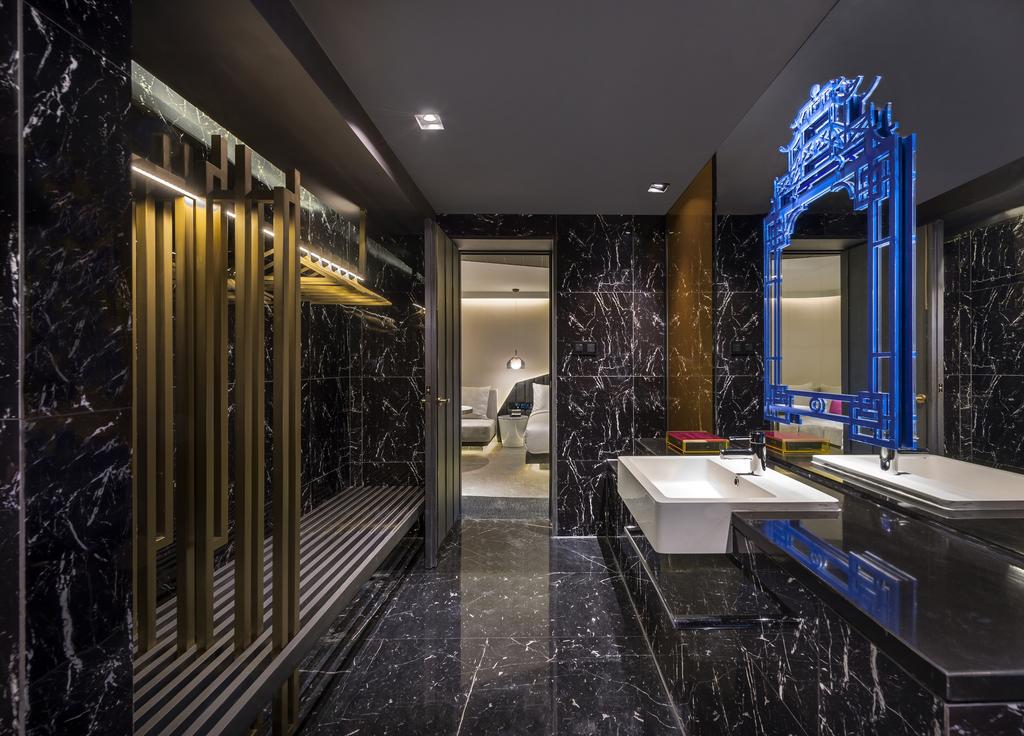
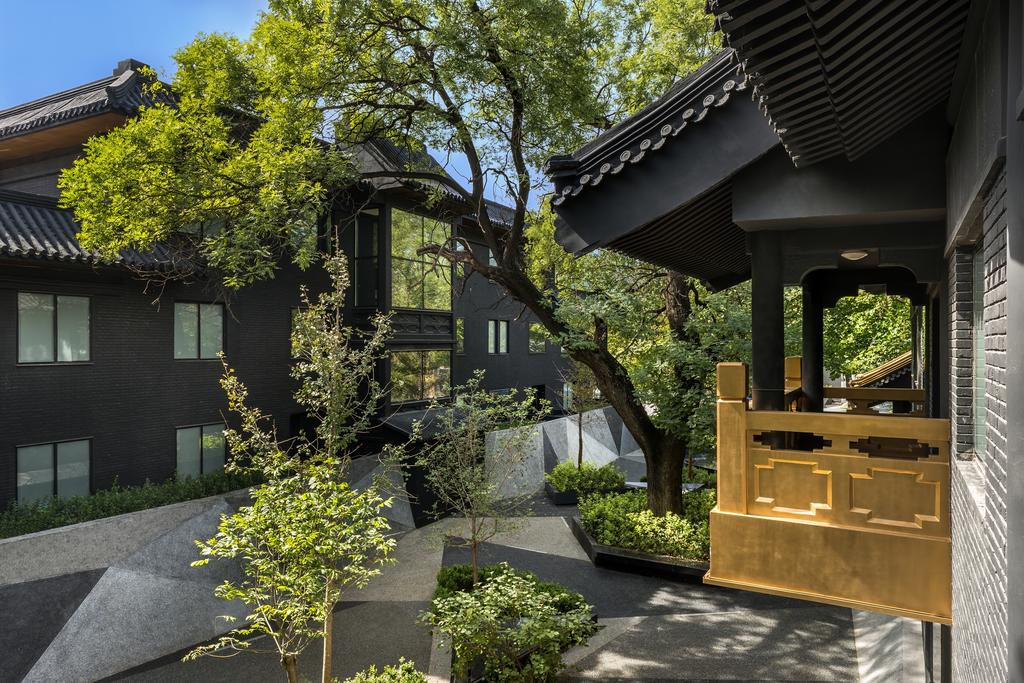
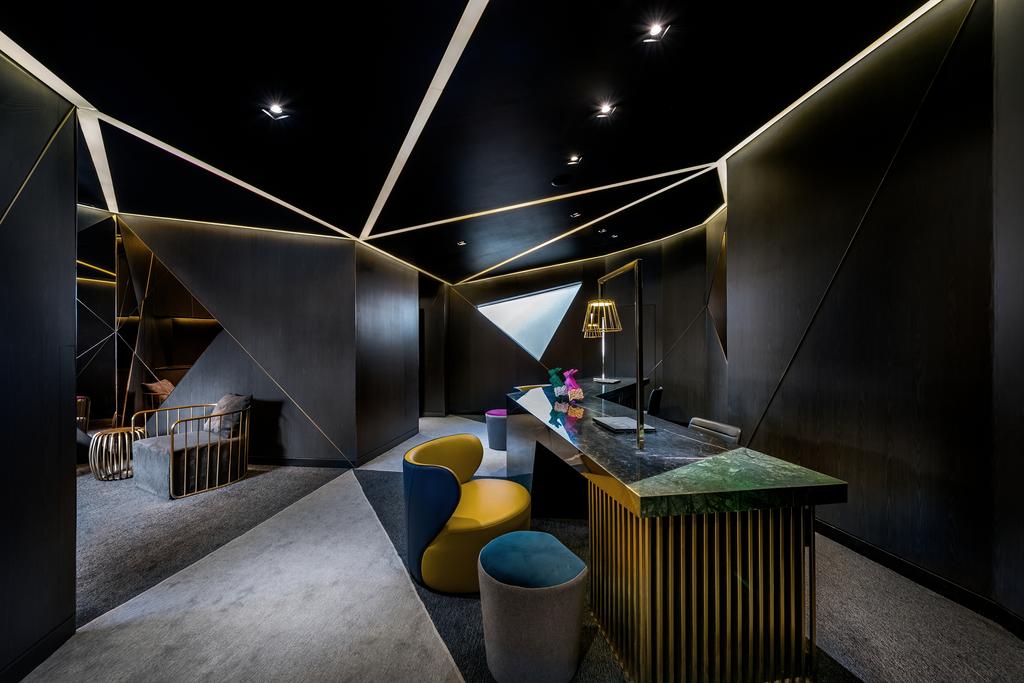
● Traditional Chinese references are deliberately abstracted: charcoal façades, gold-patina architectural details and the historic cracked ice-ray pattern create a contemporary interpretation of the hutong environment.
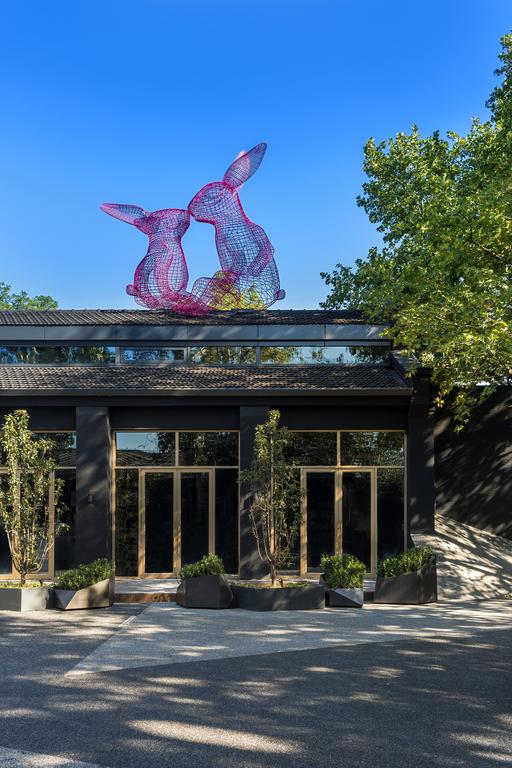
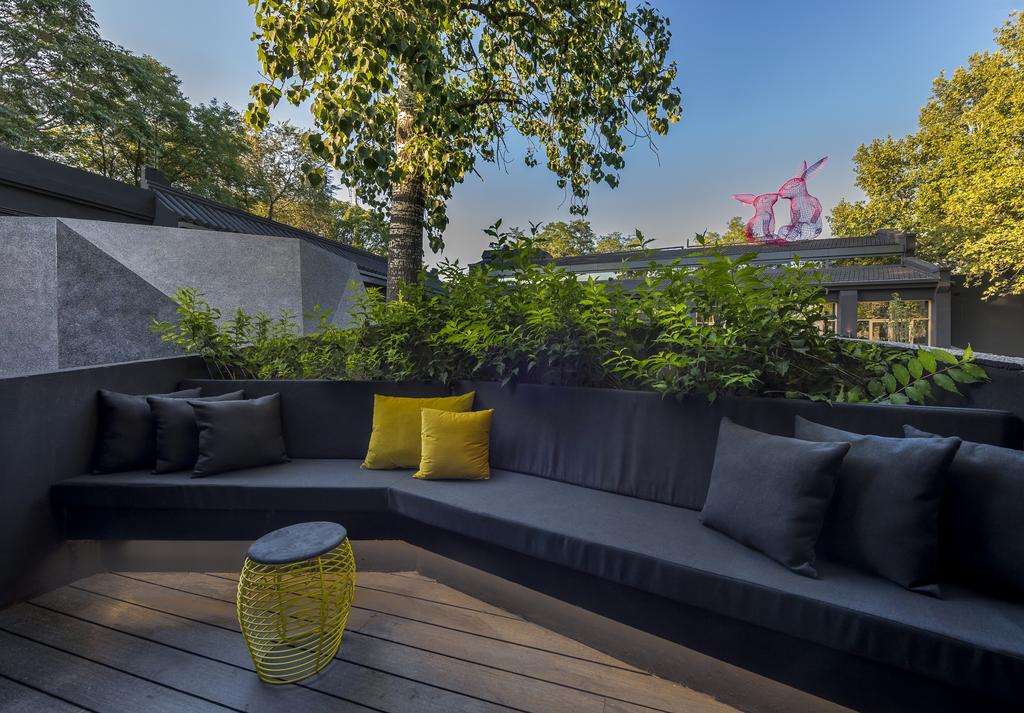
● Giant wireframe rabbits, intense colour and industrial spaces introduce an unexpected playfulness — proof that adaptive reuse doesn’t have to become overly reverential.
Another Side of Beijing
Beijing’s architectural extremes can be extraordinary. Futuristic towers and monumental new developments coexist with hutongs, courtyard houses, imperial architecture and fragments of a much more intimate city. Beside Houhai Lake, Blossom House Beijing Houhai occupies precisely that territory. The hotel began life as a rather unlikely collection of six buildings dating from the 1950s. They weren’t precious historic monuments. Their architecture was an inconsistent mixture of decorative roof eaves, gargoyles, brick walls and simpler structures accumulated across the site. And that’s exactly what made them interesting. Rather than demolishing everything and starting again, Ministry of Design (MOD) asked a much better question: how could the character of Beijing’s older architecture be retained without pretending these buildings were ancient relics?
Paint It Charcoal
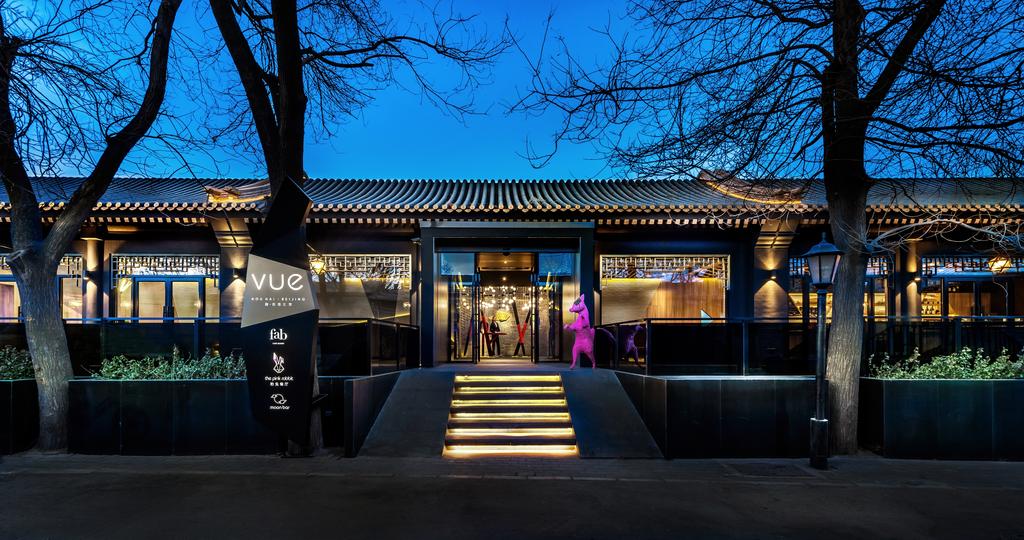
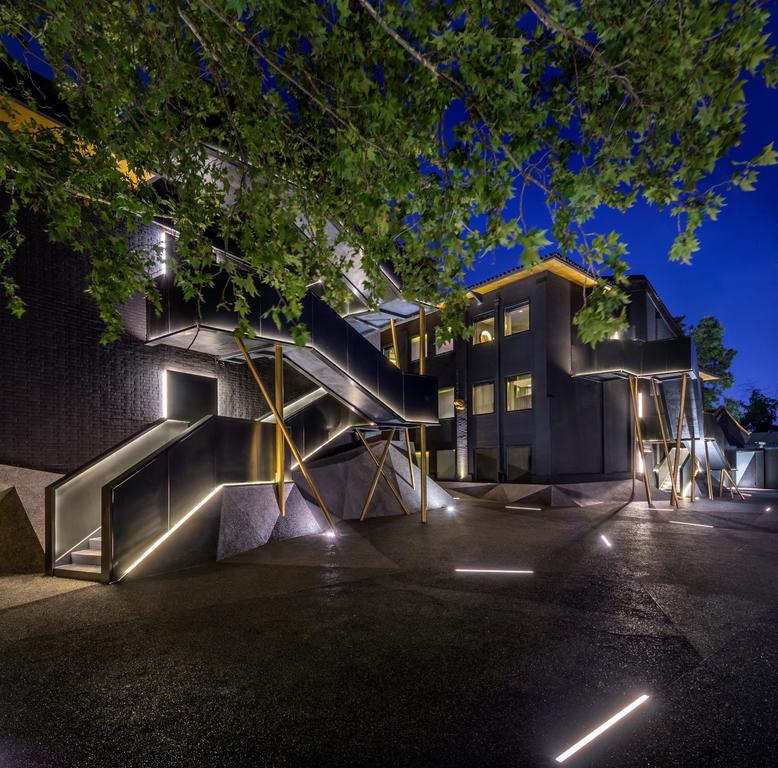
MOD’s first move was remarkably simple. The entire collection of buildings was visually brought together through deep charcoal grey. Against this dark background, selected architectural elements are picked out in a contemporary gold patina. Ornamental eaves and other details suddenly become almost like objects in a catalogue — acknowledged as references to China’s architectural past without being presented as something older or more historically important than they really are. The strategy gives the complex an unexpectedly graphic quality. Old and new aren’t blurred together. They’re deliberately distinguished.
Cracking the Ice
One motif ties much of the project together. MOD turned to the traditional Chinese cracked ice-ray pattern, inspired by the irregular geometry created when the surface of a frozen lake begins to fracture. Traditionally encountered in timber screens and doors, here the two-dimensional motif escapes its conventional setting. It becomes architecture. The pattern appears in screens and structures that connect previously awkward spaces between the different buildings, helping transform what was once an assortment of unrelated volumes into a coherent hotel landscape. The reference becomes particularly appropriate beside Houhai, where water — and winter ice — has shaped the identity of the neighbourhood for generations.
Colour Behind the Grey
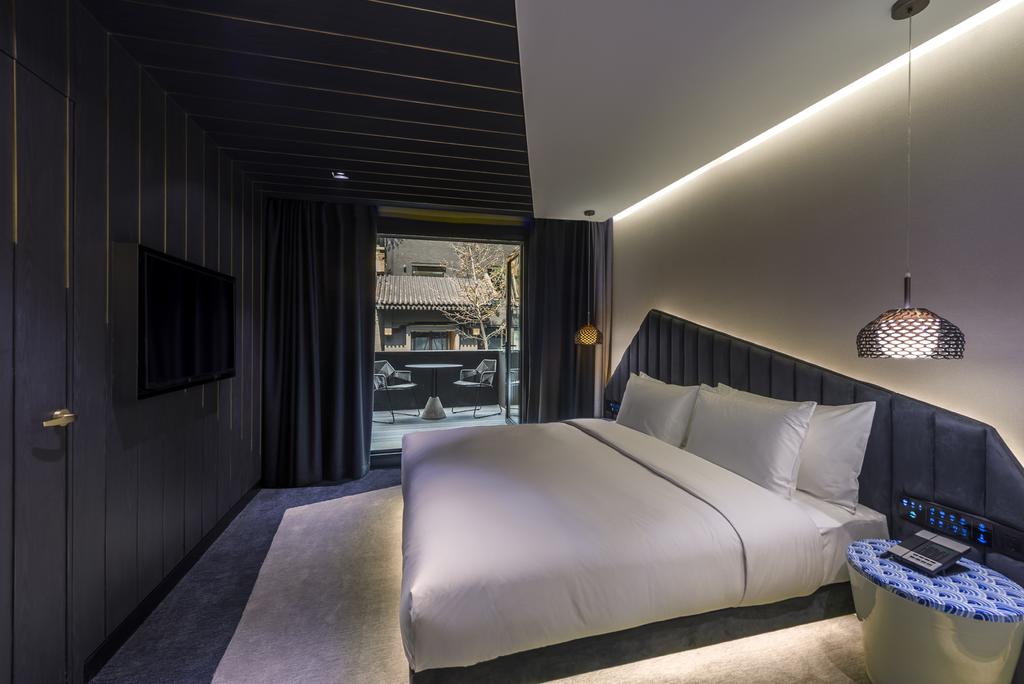
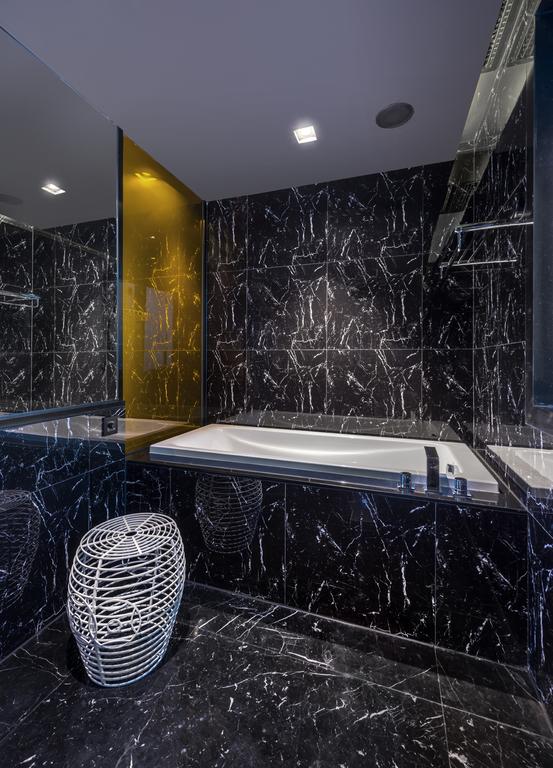
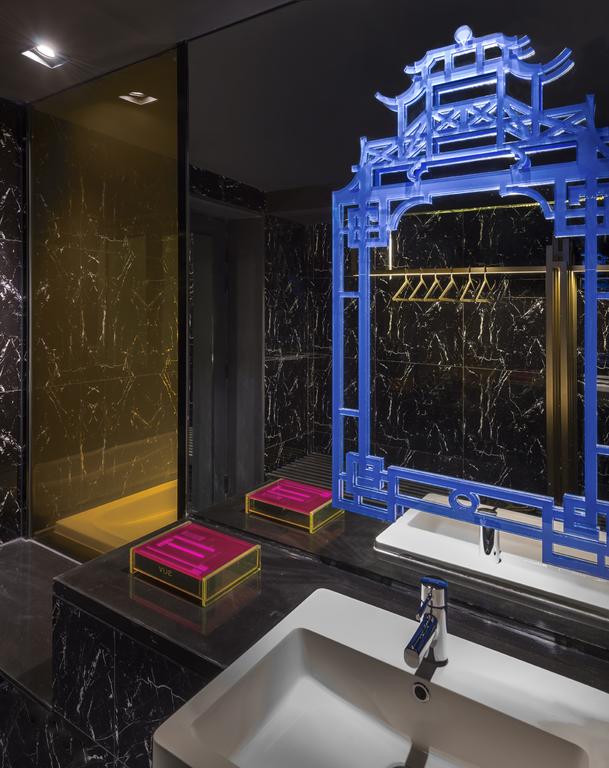
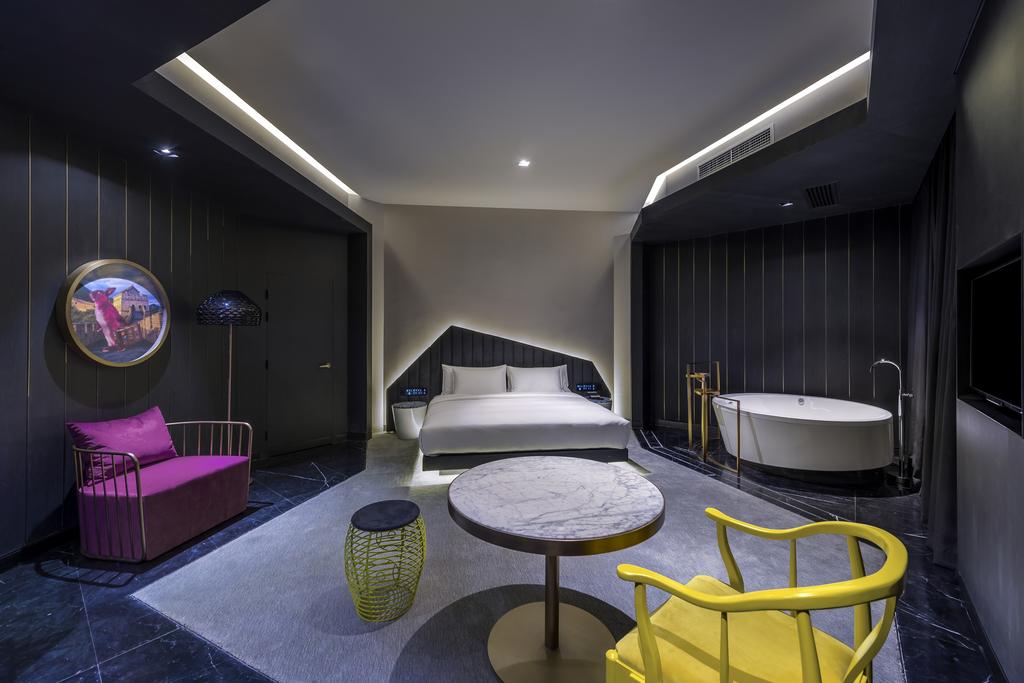
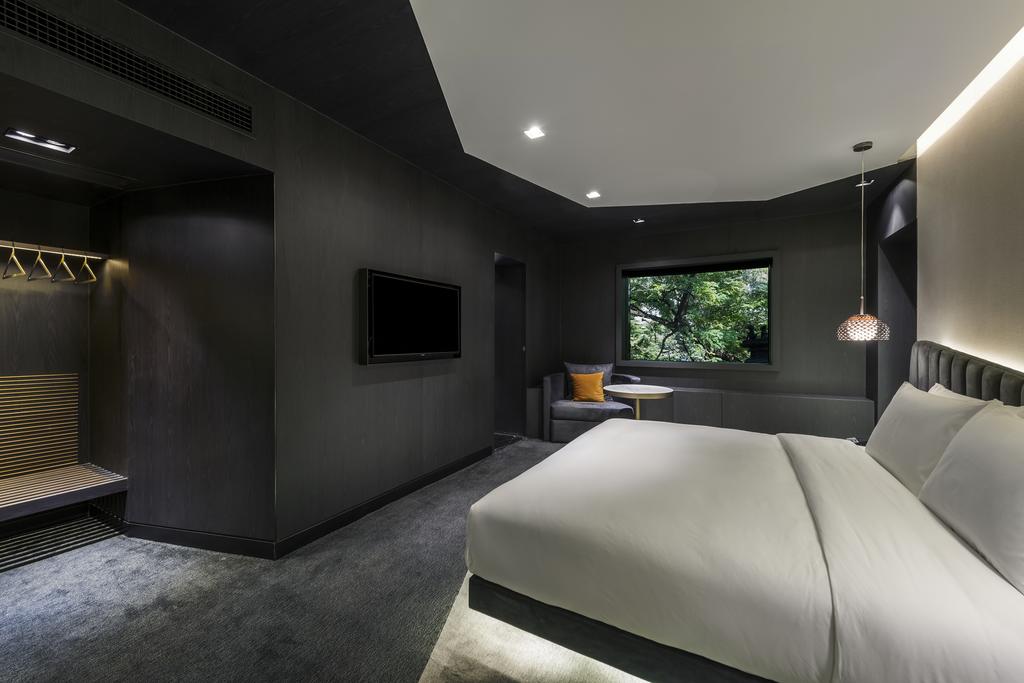
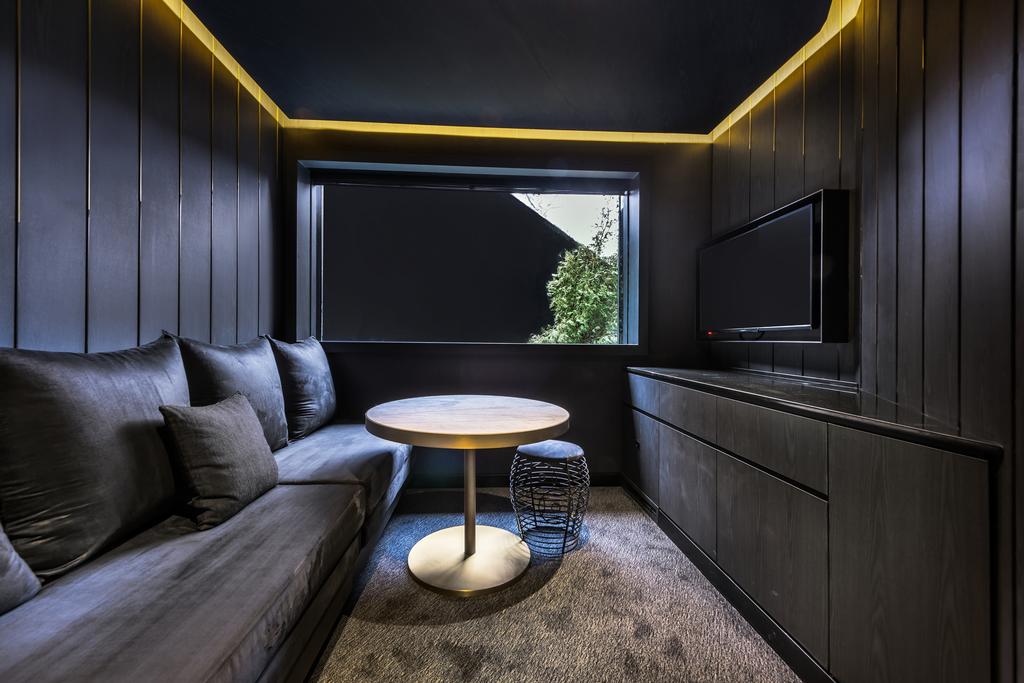
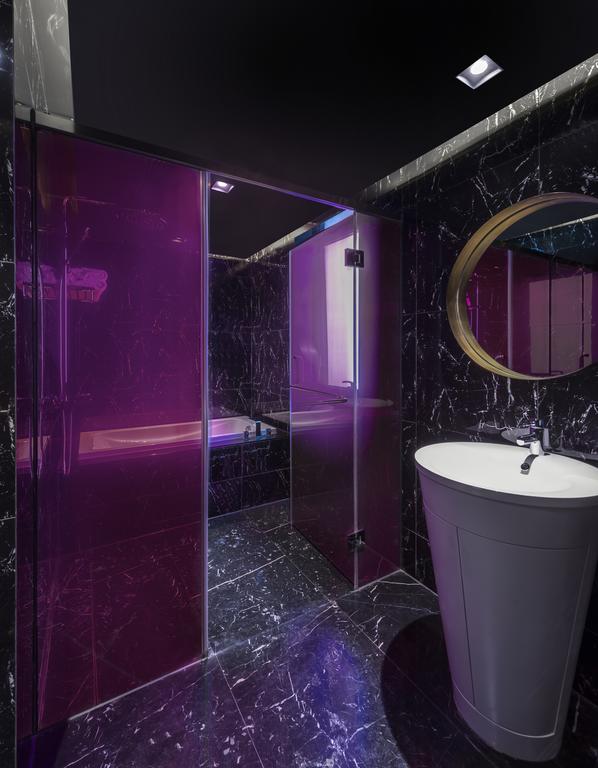
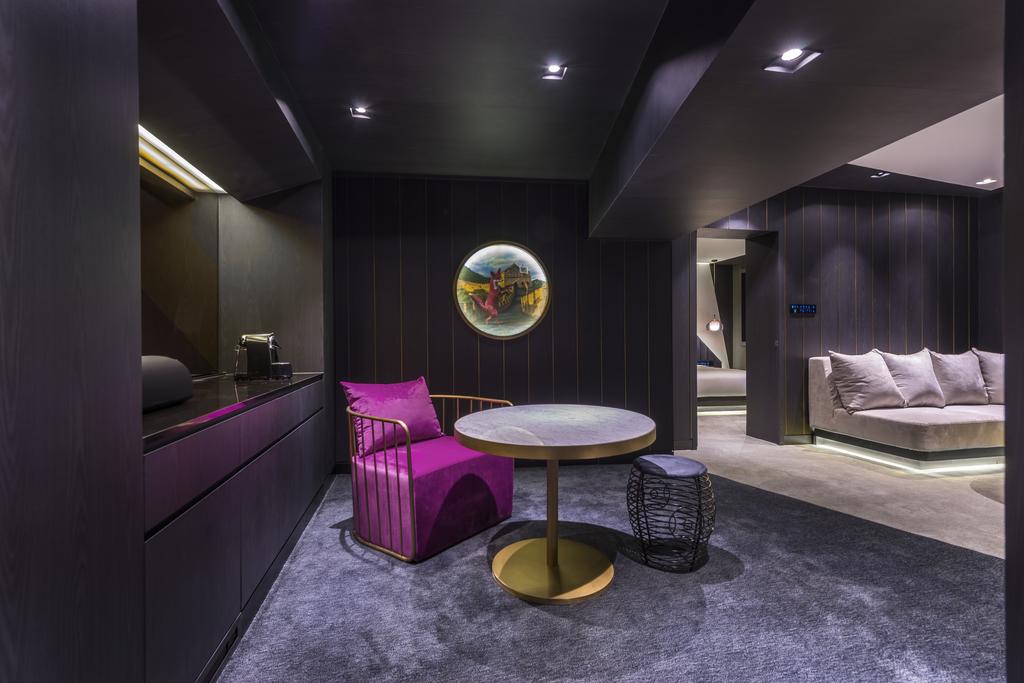
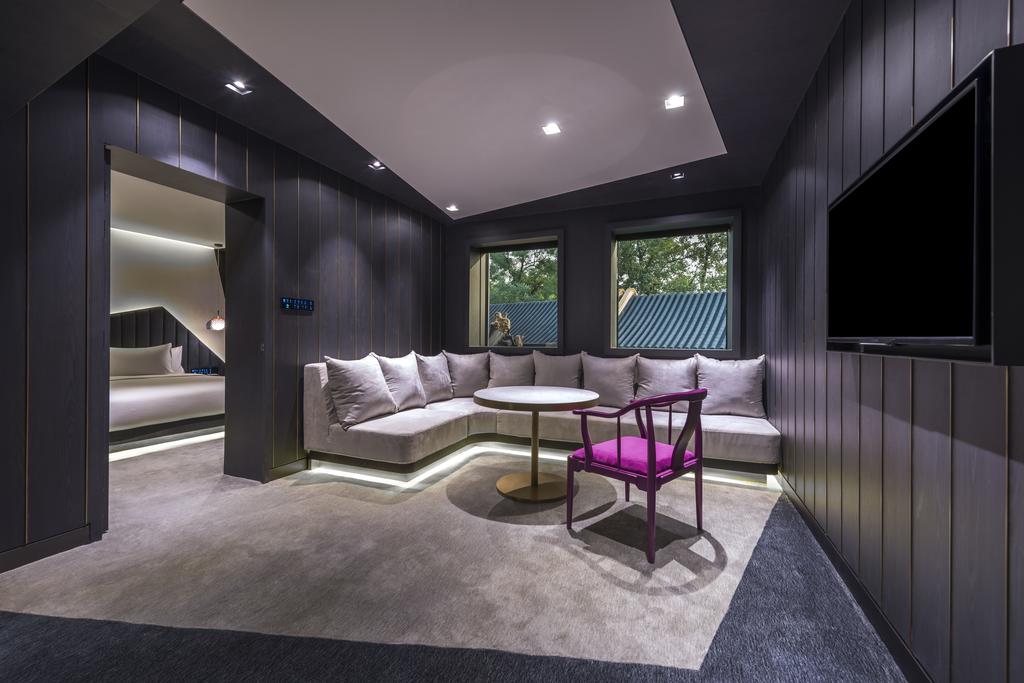
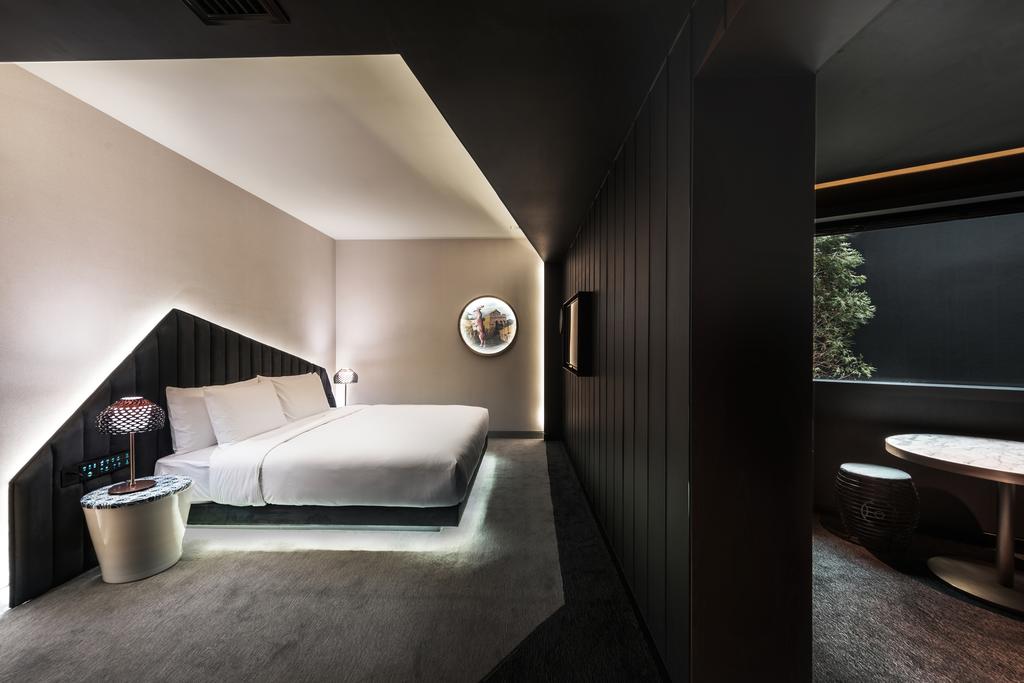
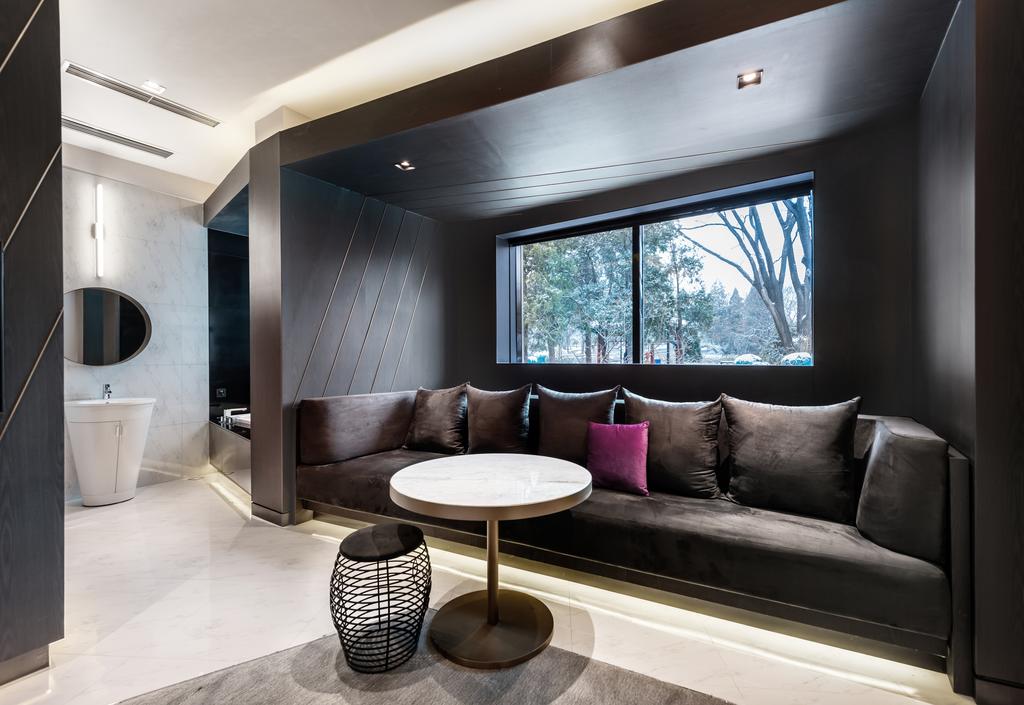
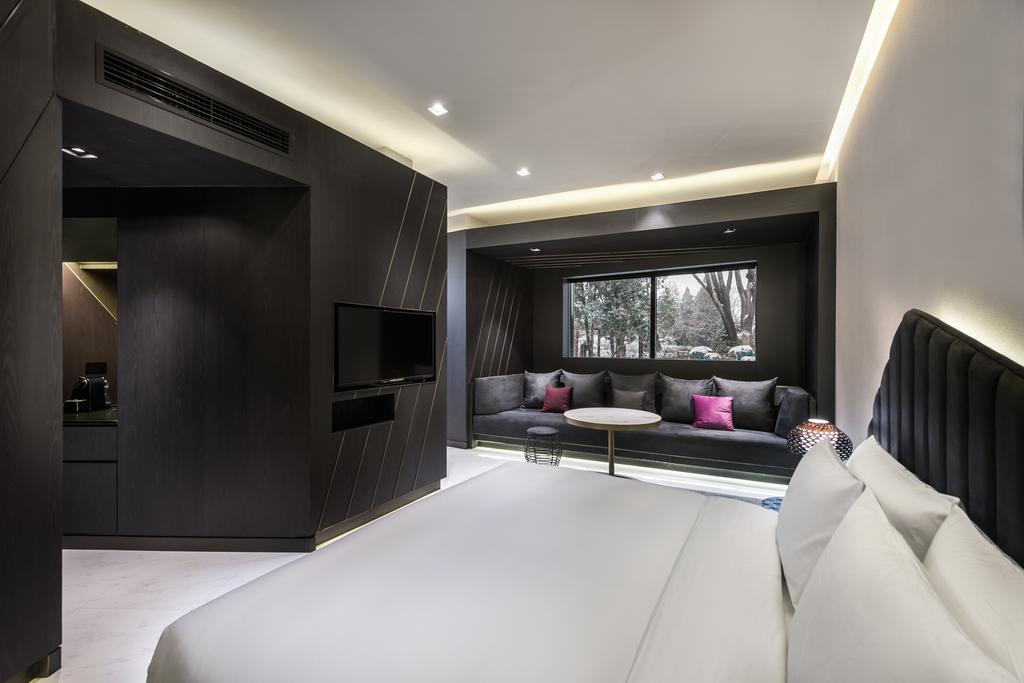
If the exterior is controlled, the guestrooms are anything but predictable. Across the hotel’s 80 rooms, vivid cobalt blue, fuchsia and yellow break through otherwise restrained backgrounds. Bright contemporary furniture appears against more muted architectural surfaces, while unmistakably Chinese objects — including striking yellow interpretations of Ming-style chairs — provide another collision between eras. Room shapes vary because the architecture dictates them. Some have decks or balconies, others frame views towards Houhai Lake or the surrounding neighbourhood. That irregularity is part of the appeal. This doesn’t feel like 80 repetitions of the same hotel room.
Enter the Rabbits
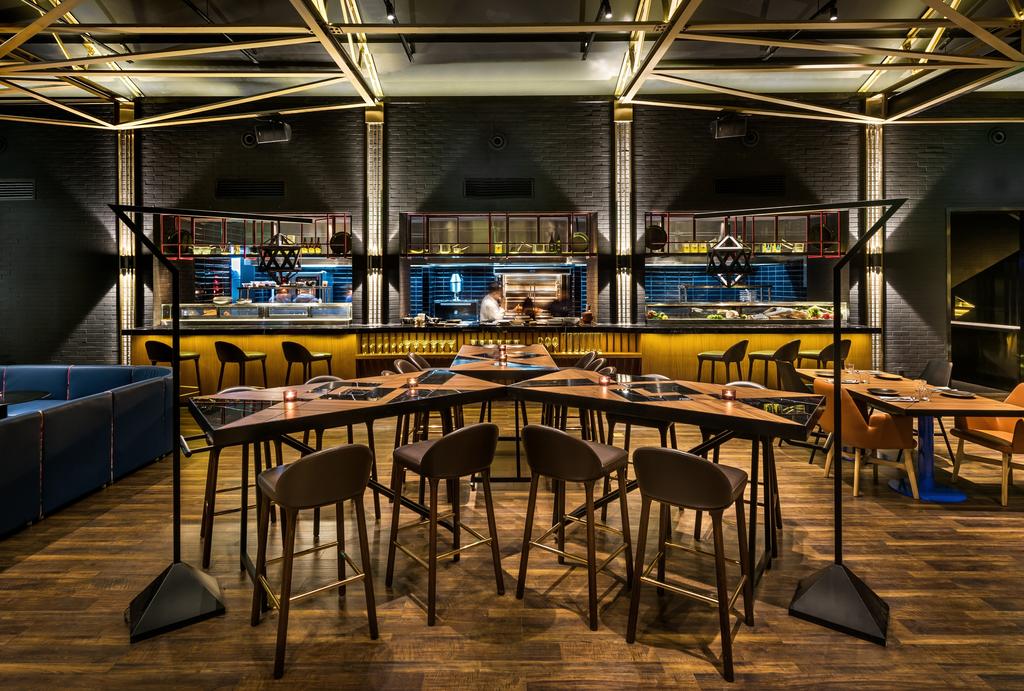
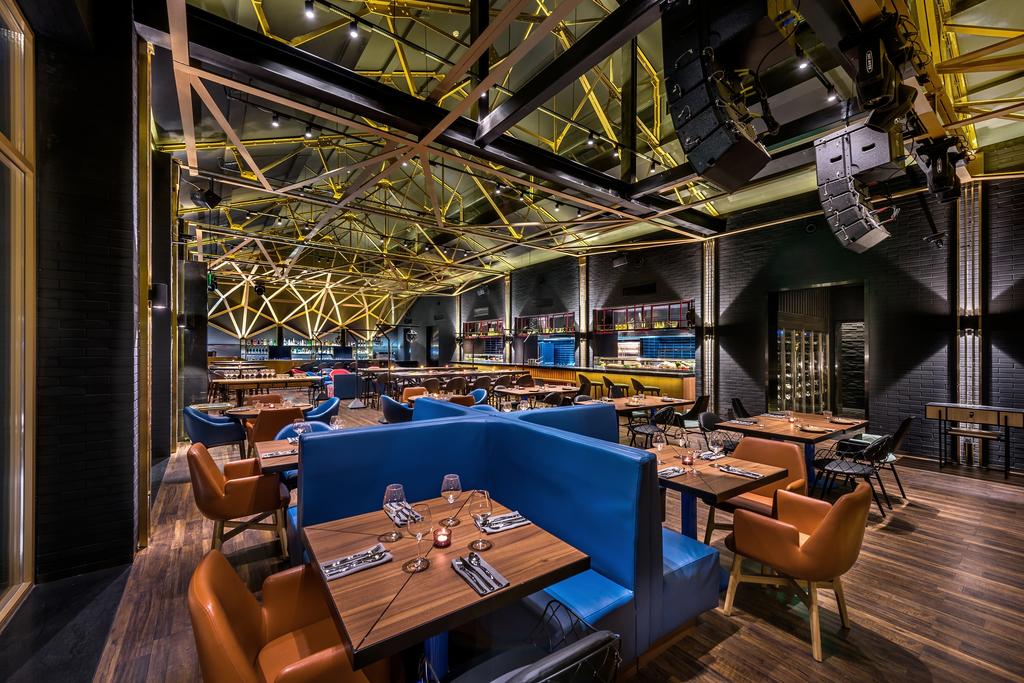
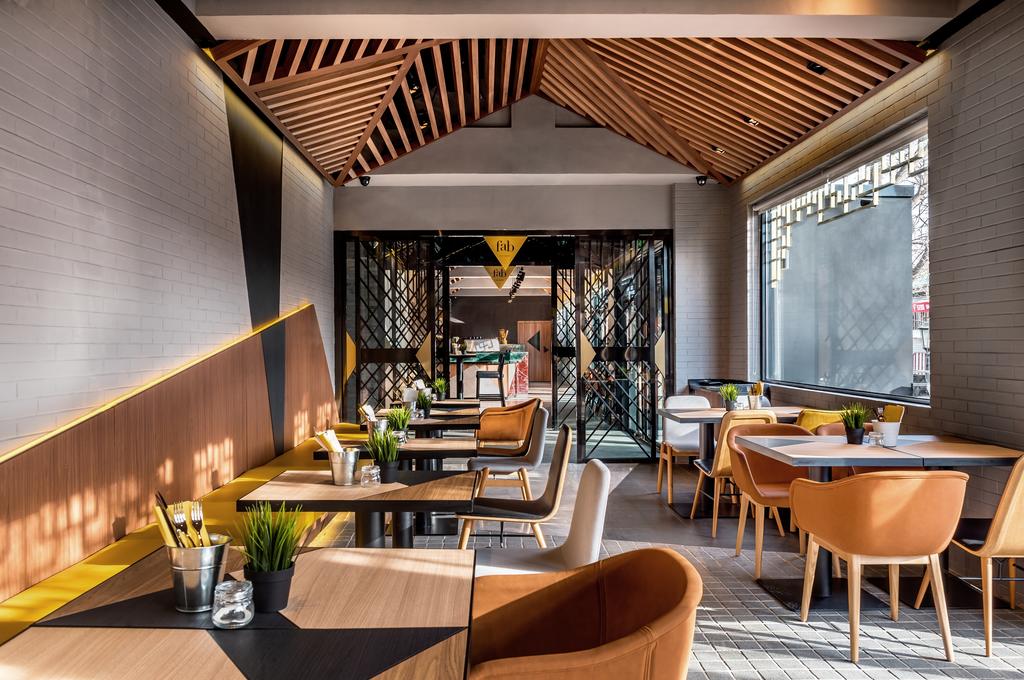
And then there are the rabbits. Huge pink wireframe rabbits lounge above the restaurant, turning what could have been an earnest exercise in heritage regeneration into something wonderfully absurd. They’re impossible to miss. Inside, the restaurant occupies a former warehouse-like structure where exposed metal and timber roof trusses provide an industrial counterpoint to more theatrical contemporary interventions. The cracked-ice geometry returns across the interiors, connecting the restaurant visually to the rest of the complex. It’s precisely this willingness to introduce humour that prevents the hotel’s heritage narrative from becoming too serious.
A Rooftop Over Houhai
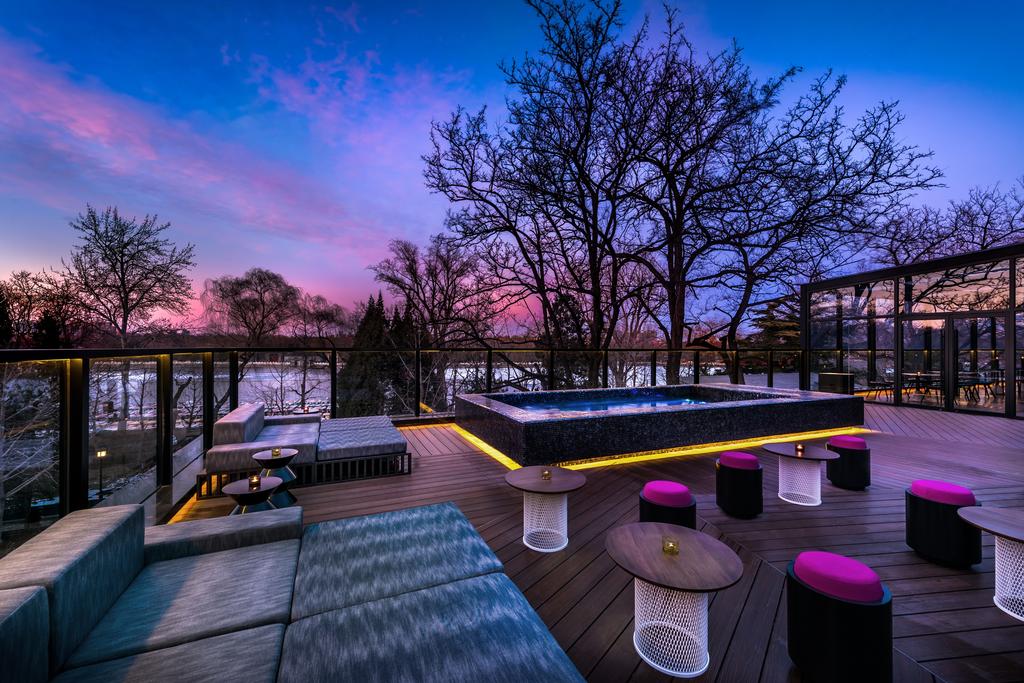
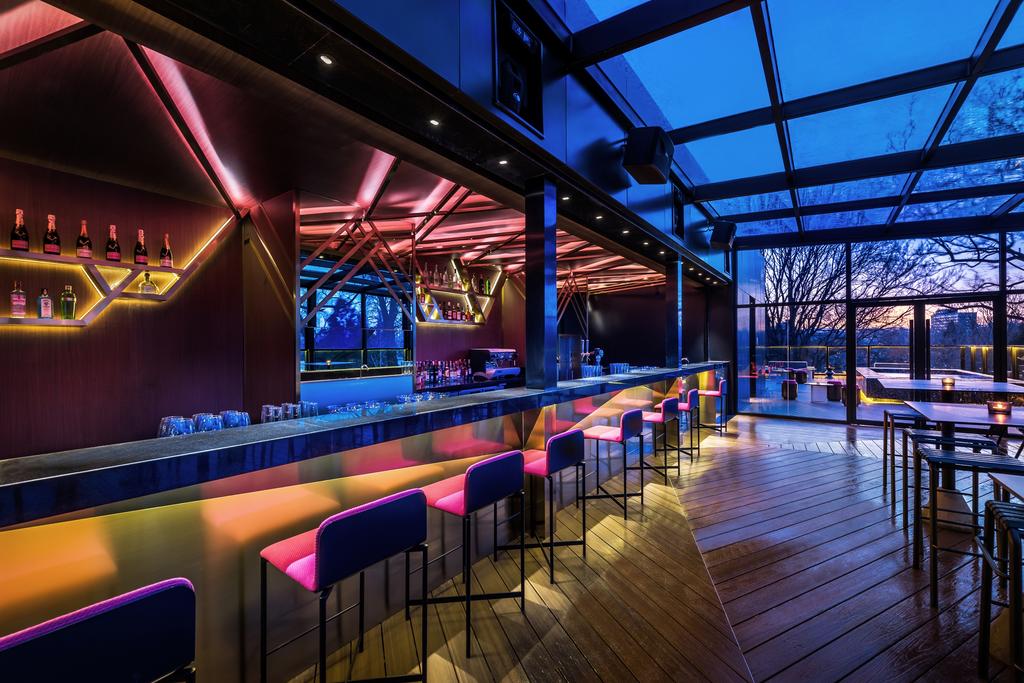
Climb higher and Beijing changes again. From the rooftop, views stretch across Houhai Lake and the comparatively low-rise historic neighbourhood around it — a remarkable contrast to the megacity beyond. It’s an important part of the experience because this corner of Beijing still operates at a human scale. Prince Kung’s Mansion and the former residence of Soong Ching-ling are nearby, but much of Houhai’s pleasure comes from everyday life: walking beside the water, disappearing into narrow lanes and watching one of the world’s largest cities suddenly behave like a neighbourhood. The hotel doesn’t isolate you from that. It frames it.
Not Old. Not New. Both.
What makes Blossom House Beijing Houhai interesting isn’t that MOD saved an architectural masterpiece. They didn’t. The original buildings were relatively ordinary. Instead, the project demonstrates something potentially more valuable: that ordinary existing architecture can carry memory too. At a time when Chinese urban development frequently meant choosing between demolition and highly controlled heritage preservation, MOD explored a third possibility. Keep the building. Acknowledge its imperfections. Add another layer. And allow its story to continue. Blossom House Beijing Houhai treats heritage as something alive rather than something frozen in time. Ministry of Design took six unremarkable 1950s buildings and turned their inconsistencies into the foundation of the project — then added charcoal, gold, fractured geometry, explosive colour and a few enormous pink rabbits. Serious architecture with a sense of humour, in a part of Beijing where the city’s many lives still collide.
Information
At a glance
Architecture
Opened / Renovated
2017 (previously Vue Hotel)
Size matters
80 rooms & suites (27-135m2) (291-1,453 sq ft)
Interior design
Featured in
Don't take our word for it



Handpicked worldwide
A carefully curated collection of exceptional boutique and design hotels across the globe.
Design with soul
Architecture, atmosphere and craftsmanship come together in stays with a clear identity.
Hidden, not hyped
Independent boutique hotels you rarely find on mainstream booking platforms.
Travel guidance
Personal recommendations and thoughtful support from people who actually know the places.