



Where to Stay
Boutique & Design Hotels in the Douro Valley
The DNA of the Douro Valley
Where Terraced Vineyards Meet Portugal’s Wine Heritage
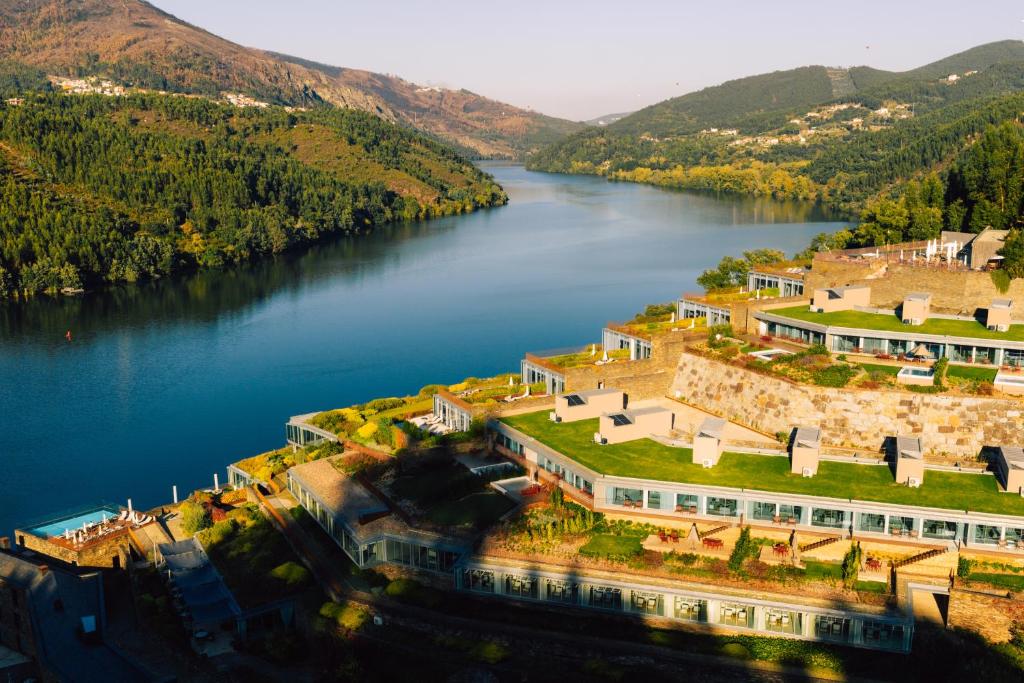
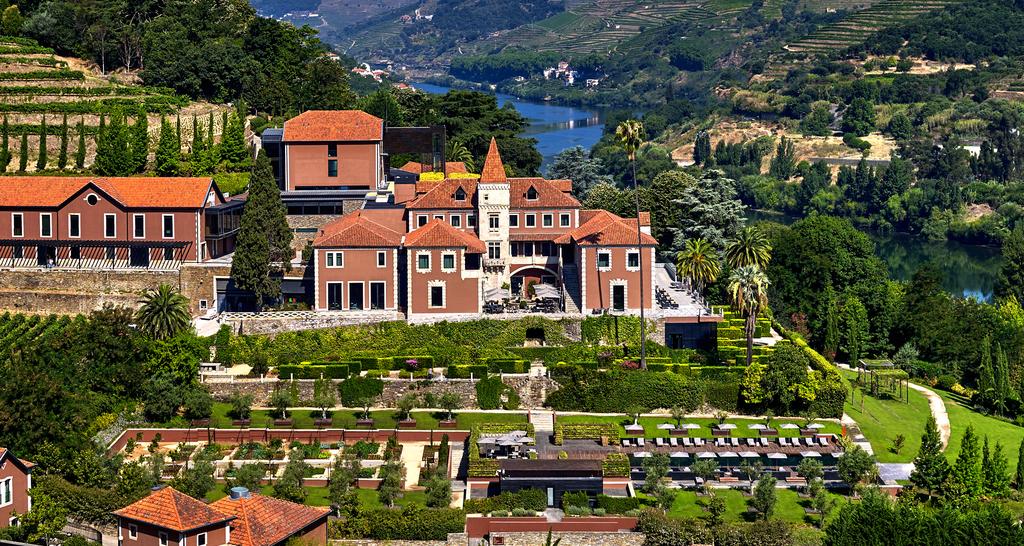
The Douro Valley is one of Europe’s most extraordinary man-made landscapes. For centuries, steep slopes have been carved into terraces above the Douro River, creating a monumental patchwork of vineyards, stone walls and whitewashed quintas. The Alto Douro was the world’s first formally demarcated wine region, and its cultural landscape is now UNESCO-listed, but this is no open-air museum. Historic wine estates coexist with striking contemporary architecture, including wineries, private houses and hotels that use concrete, schist, timber and glass to respond to the severe geometry of the landscape. Roads twist impossibly along hillsides, trains follow the river and almost every turn reveals another view that makes stopping seem necessary.
Wine is naturally the reason much of this landscape exists. Port made the Douro internationally famous, but the region now produces some of Portugal’s most exciting still wines from indigenous grapes including Touriga Nacional, Touriga Franca and Tinta Roriz. Food is robust and inland rather than coastal: roast meats, river fish, smoked sausages, local cheeses, olive oil and dishes built around produce from the surrounding hills. Historic estates increasingly combine tastings with ambitious restaurants, while long vineyard lunches make a convincing argument for abandoning any tightly organised afternoon itinerary.
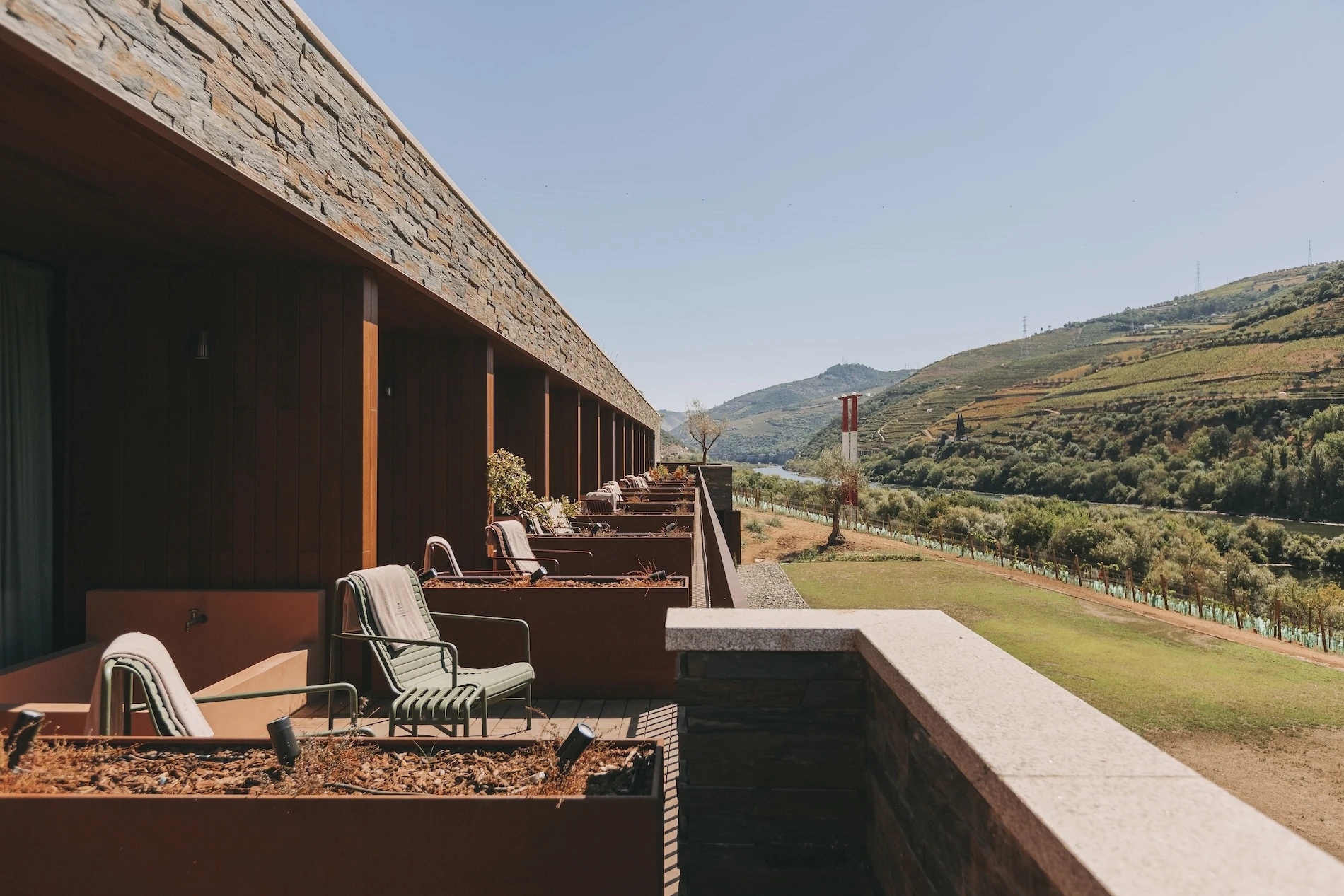
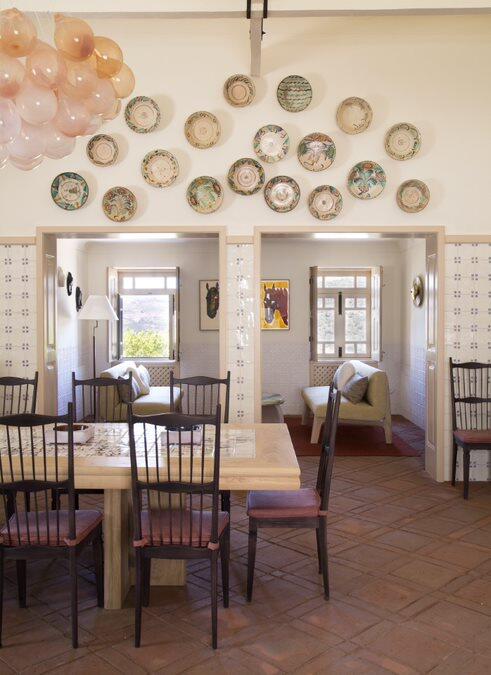
The Douro’s most interesting hotels occupy working wine estates, historic quintas and contemporary buildings embedded directly into the terraces. Some embrace old stone and traditional interiors; others use bold modern architecture to frame the river and vineyards. At DNA Hotels, we curate the places where architecture, wine, food and landscape become inseparable—hotels that understand the Douro is best experienced slowly, preferably from a terrace with a glass produced somewhere within eyesight.