



Where to Stay
Boutique & Design Hotels in Basilicata
The DNA of Basilicata
Where Ancient Cave Cities Meet Wild Southern Italy
Basilicata is one of Italy’s most elemental regions. Mountains, forests and deep ravines stretch between the Tyrrhenian and Ionian seas, while hilltop villages seem carved directly from the landscape. Matera provides its extraordinary architectural centrepiece: the ancient Sassi cave dwellings, churches and stone houses form one of Europe’s most remarkable inhabited landscapes. Beyond Matera, abandoned villages, medieval castles and traditional farm buildings reveal a region that remained isolated for generations. That remoteness is now inspiring sensitive restorations and contemporary architecture that works with stone, earth and existing structures rather than attempting to erase their history.
Food and drink are equally rooted in this rugged landscape. Durum wheat, handmade pasta, peppers, pulses, lamb and peperoni cruschi—the region’s distinctive dried, crispy peppers—form the foundations of a cuisine shaped by farming and preservation. Basilicata’s volcanic soils also produce Aglianico del Vulture, one of southern Italy’s great red wines, grown around the extinct Monte Vulture volcano. Traditional village kitchens and agriturismi remain essential, while Matera has introduced a more contemporary generation of restaurants exploring Lucanian ingredients and traditions.
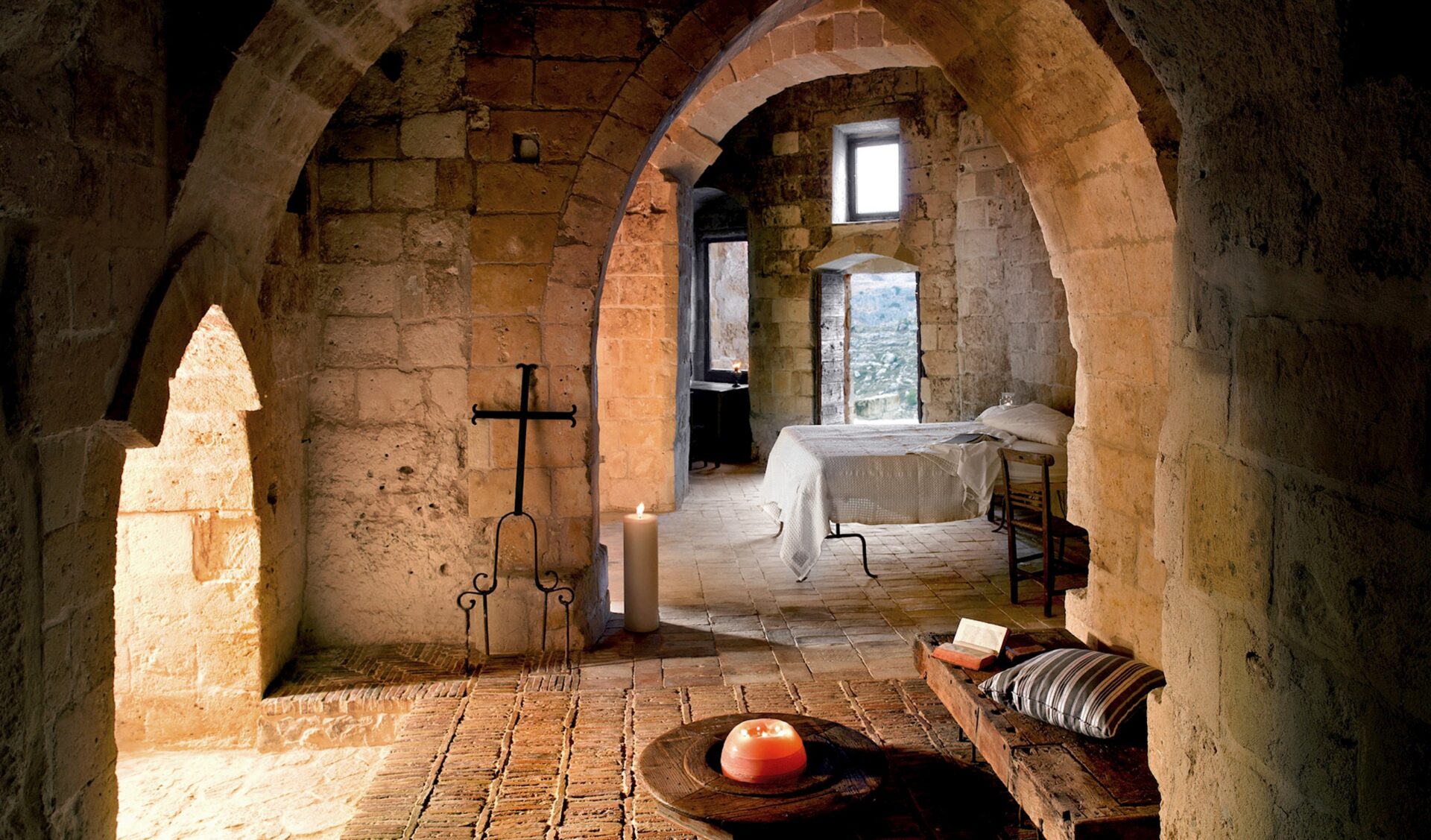
Basilicata’s most interesting hotels often involve extraordinary acts of adaptive reuse. Cave dwellings, abandoned village houses, monasteries and historic palazzi have been transformed into atmospheric places to stay where rough stone, handmade furniture and contemporary Italian design coexist with centuries of history. At DNA Hotels, we curate the places where architecture, food, landscape and the deep cultural identity of southern Italy come together—hotels that reveal why one of Italy’s least obvious regions can also be one of its most unforgettable.