



Where to Stay
Boutique & Design Hotels on Folegandros
The DNA of Folegandros
Where Cycladic Simplicity Meets the Wild Aegean
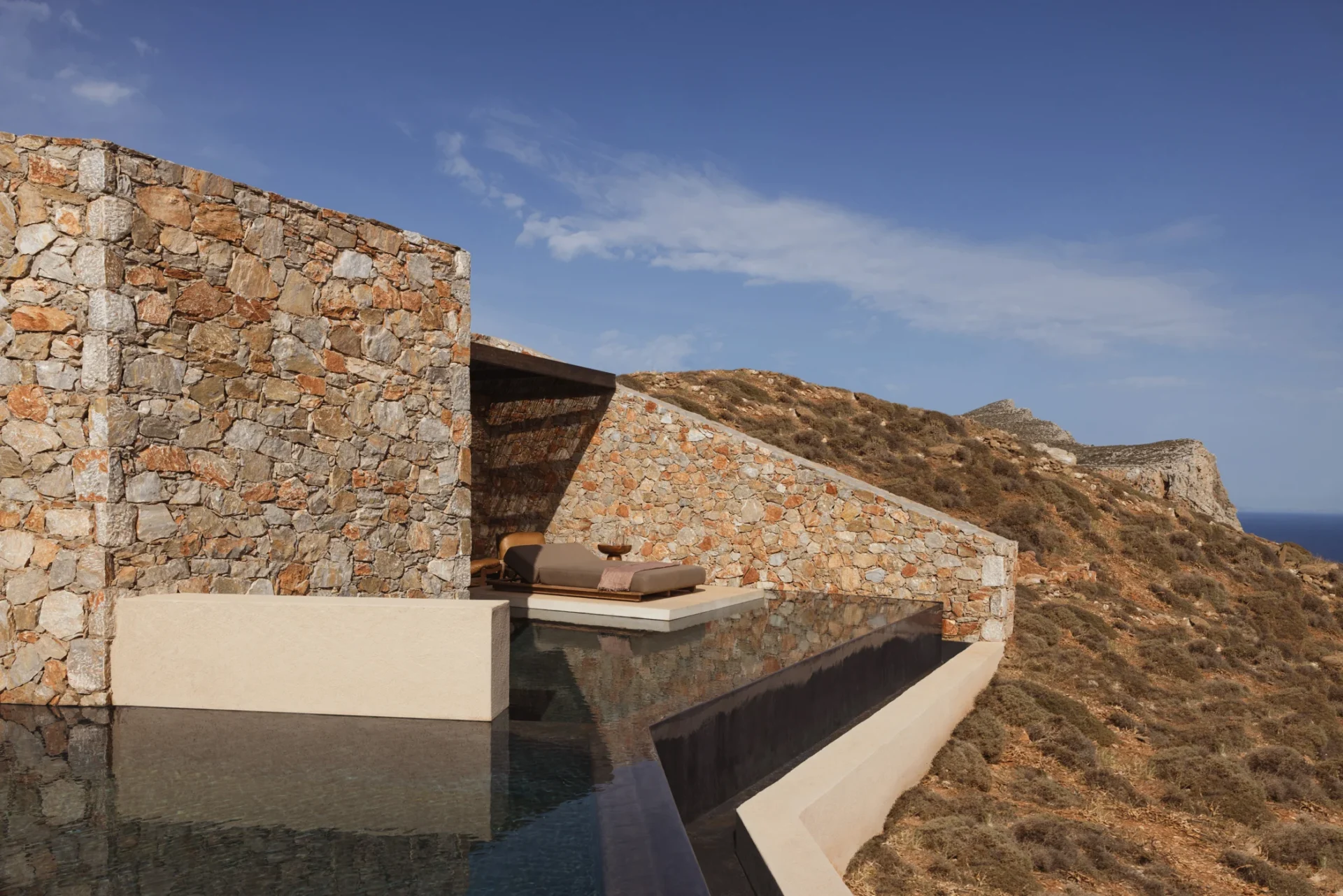
Folegandros has the whitewashed houses and blue Aegean views of the Cyclades, but considerably less interest in spectacle than some of its famous neighbours. The island is rugged and dramatic, with sheer cliffs, dry-stone walls, windswept hills and small settlements that still feel closely connected to the landscape. Chora is its architectural heart: a beautifully preserved maze of narrow lanes, tiny squares and traditional Cycladic houses gathered around the medieval kastro. Above it, the zigzagging path to the Church of Panagia has become one of the island’s defining images. Contemporary architecture tends to work best when it follows the same principles as the traditional buildings—simple geometric forms, local stone, white plaster and an understanding that the Aegean view needs very little assistance.
Food is similarly straightforward and rooted in island life. Matsata, handmade pasta traditionally served with braised meat or rooster, is the local signature, alongside cheeses, capers, vegetables, honey and fish from the surrounding waters. Chora’s tavernas spill into its small squares, creating evenings that revolve around shared plates, local wine and considerably less choreography than the restaurant scene on Mykonos. The limited scale of the island is part of its appeal: dinner still feels connected to the place rather than designed as another Mediterranean lifestyle concept.
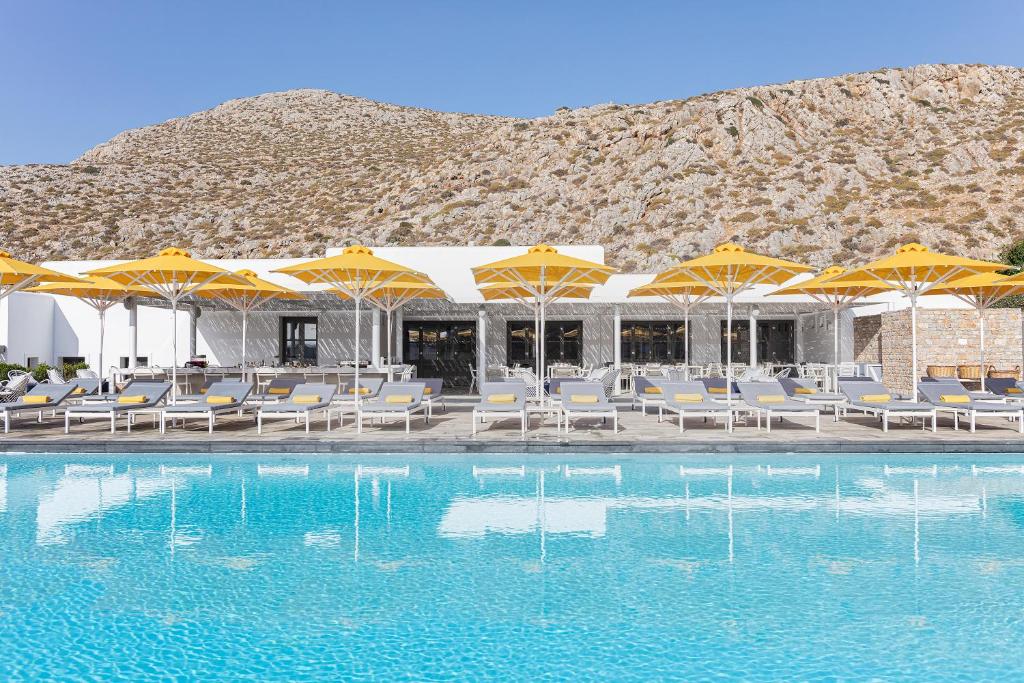
Folegandros has only a small collection of hotels, which suits it perfectly. Traditional houses, intimate retreats and increasingly sophisticated design hotels use terraces, courtyards, stone and pools to frame the extraordinary landscape without overwhelming it. At DNA Hotels, we curate the places where Cycladic architecture, food and island life remain beautifully connected—hotels for travellers who want the Aegean without the beach clubs, crowds and persistent suspicion that they should have booked a table three months ago.