



Where to Stay
Discover Guangxi through its Hotels
The DNA of Guangxi
Where Dramatic Karst Landscapes Meet Ethnic Heritage and Southern Chinese Culture
Guangxi, officially the Guangxi Zhuang Autonomous Region, is one of southern China’s most visually spectacular and culturally diverse destinations. Its extraordinary landscape is defined by limestone karst mountains, winding rivers, terraced rice fields and subtropical forests, creating scenery that has inspired Chinese landscape painting for centuries. The dramatic peaks surrounding Guilin and Yangshuo, particularly along the Li River, are among China’s most recognisable natural landmarks. Further north, the Longji Rice Terraces reveal generations of agricultural ingenuity, while traditional villages preserve the distinctive timber architecture of the Zhuang, Yao and Dong communities. The remarkable wind-and-rain bridges and drum towers of the Dong villages demonstrate sophisticated traditional craftsmanship. In contrast, the regional capital Nanning presents a rapidly developing contemporary Chinese city, while the historic port of Beihai introduces colonial-era architecture and a different coastal identity. Guangxi’s appeal lies precisely in these contrasts, where spectacular natural landscapes coexist with a rich variety of architectural traditions and cultural influences.
Food and drink reflect the region’s subtropical climate, agricultural diversity and proximity to Southeast Asia. Guilin rice noodles are perhaps Guangxi’s best-known culinary speciality, while dishes featuring river fish, bamboo shoots, fermented vegetables and aromatic herbs reveal a distinctive regional cuisine. In Liuzhou, the famously pungent luosifen noodle soup has become a culinary phenomenon far beyond the region. Traditional markets, village kitchens and lively street-food stalls remain central to local food culture, while contemporary restaurants and independent cafés are increasingly appearing in destinations such as Guilin, Yangshuo and Nanning. Tea also plays an important role, particularly in rural communities where traditional cultivation and preparation methods remain part of everyday life.
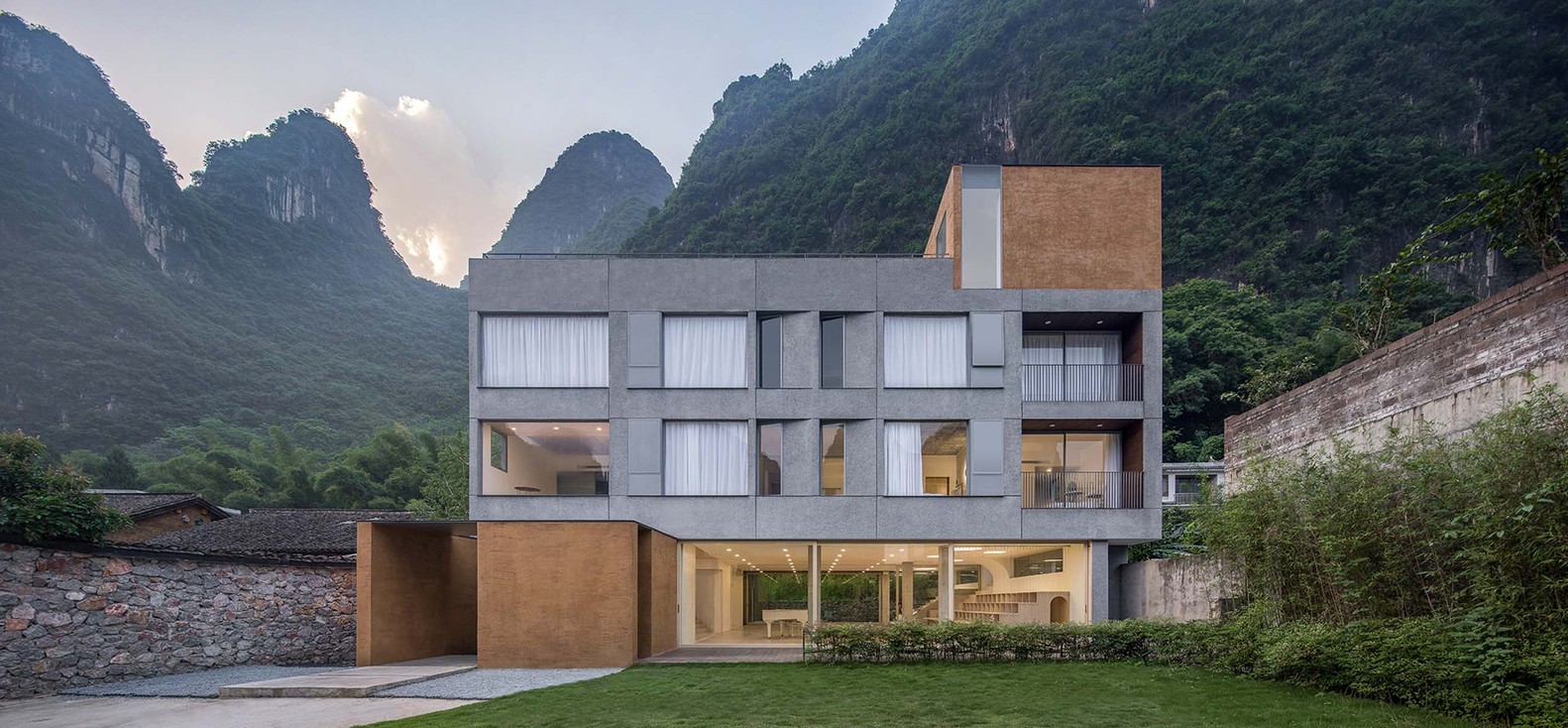
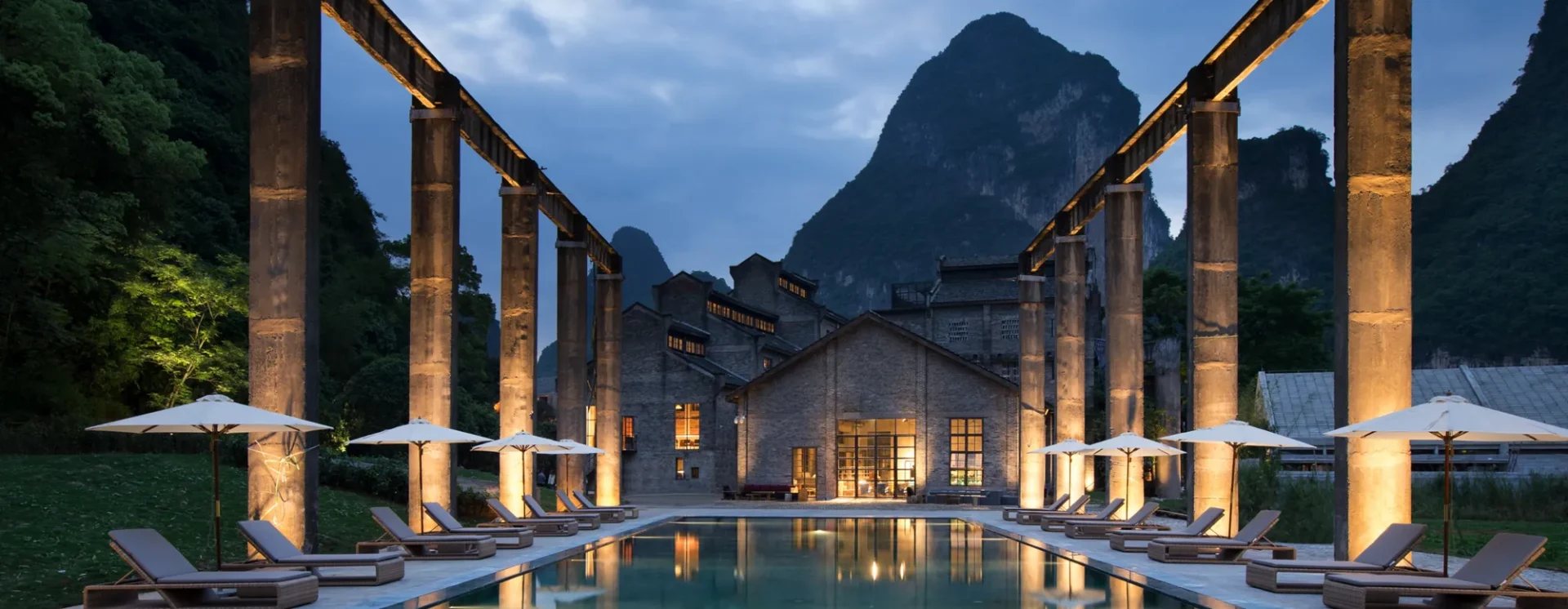
Guangxi’s most interesting hotels often draw their identity directly from the extraordinary landscape and local architectural traditions. Intimate riverside properties, converted village houses, contemporary design retreats and architecturally ambitious countryside hotels offer alternatives to the conventional luxury resorts found in larger Chinese cities. Local stone, bamboo, timber and traditional construction techniques frequently inspire buildings that respond to the surrounding karst formations, rice terraces and rural settlements. Some embrace a minimalist contemporary aesthetic, while others reinterpret the region’s vernacular architecture through thoughtful restoration and modern design. At DNA Hotels, we favour properties that establish a meaningful relationship with their surroundings rather than simply treating the landscape as a spectacular backdrop. In Guangxi, where architecture, culture and nature are so closely intertwined, the most compelling hotels become an integral part of discovering one of China’s most remarkable regions.