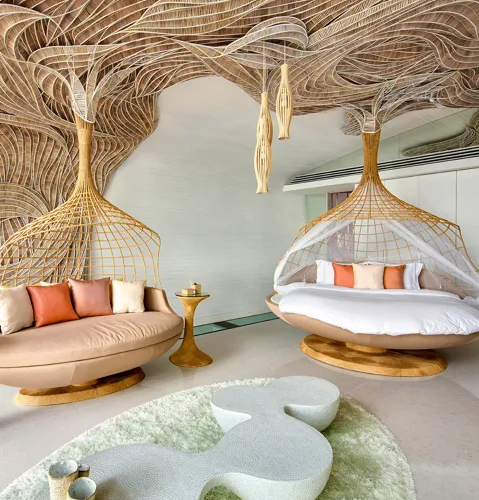
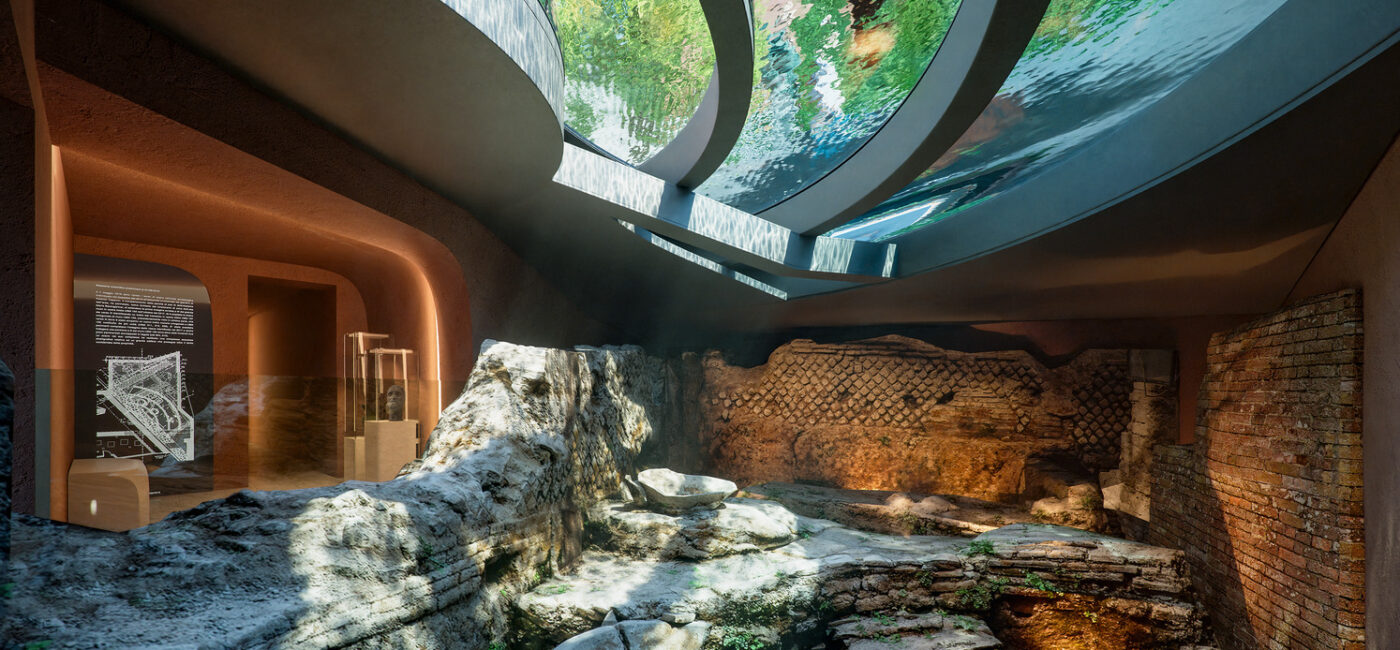
Phang-Nga is Thailand at its most dramatically sculptural. North of Phuket, the province stretches from forested mountains and mangroves to an Andaman coastline punctuated by immense limestone karsts, hidden lagoons and islands rising almost vertically from the water. Phang Nga Bay provides the cinematic scenery, while the beaches around Khao Lak offer a quieter, greener alternative to Phuket. Inland, national parks, waterfalls and dense tropical forest add another dimension. Architecture here works best when it responds rather than competes: low-slung buildings, open pavilions, timber, stone and tropical gardens that frame the landscape instead of attempting to improve upon something nature has already designed rather well.
Southern Thai cooking gives Phang-Nga plenty of character beyond the scenery. Seafood is naturally central—crab, prawns, squid and fish arrive with chilli, lime, coconut, turmeric and intensely aromatic herbs. Muslim, Chinese and southern Thai influences overlap throughout the region, while local markets and modest restaurants can be considerably more exciting than polished resort dining rooms. Phuket’s increasingly sophisticated food scene is close enough for comparison, but Phang-Nga remains more rooted in local cooking, fishing communities and the ingredients of Thailand’s tropical south.
The most compelling hotels are spread along beaches, islands and forested hills rather than concentrated in a single resort centre. There are secluded beach retreats, contemporary tropical resorts and extraordinary hideaways where arriving by boat is part of the experience. At DNA Hotels, we curate the places that use architecture and design to bring you closer to this landscape rather than seal you away from it—hotels where jungle, limestone and the Andaman Sea provide most of the decoration, which is probably just as well.