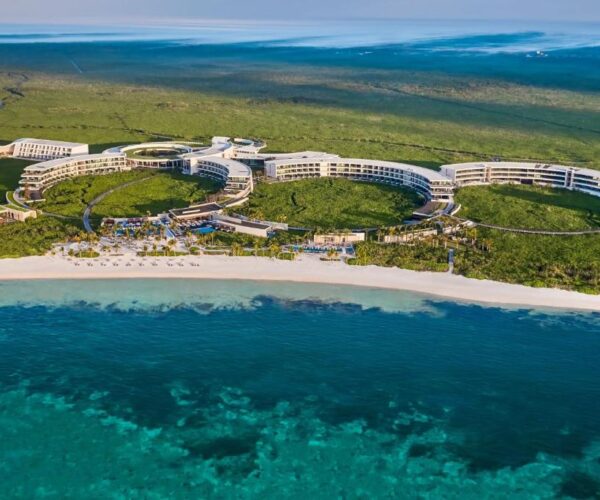
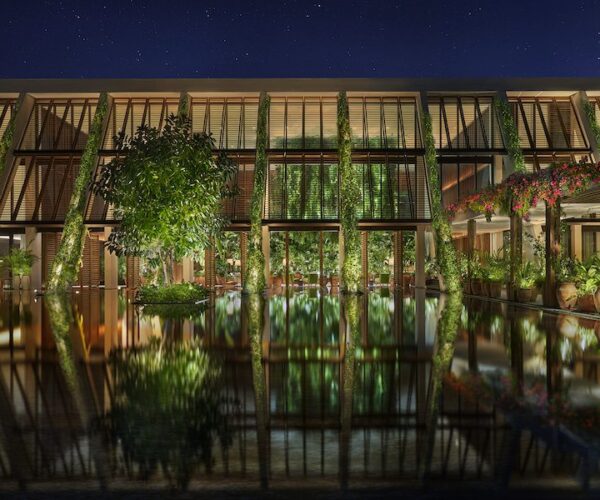
The Riviera Maya stretches along Mexico’s Caribbean coast from south of Cancún towards Tulum, combining white-sand beaches and turquoise water with dense jungle, cenotes and one of the world’s great archaeological landscapes. Maya cities and temples provide the deepest architectural layer, while traditional palapa construction and local materials continue to influence contemporary design. More recently, the region has become a laboratory for tropical architecture: sculptural concrete, chukum plaster, timber, stone and buildings designed around existing vegetation rather than against it. Tulum may receive most of the attention, but beyond its increasingly busy hotel strip are quieter coastal communities, nature reserves and ambitious new projects exploring a more thoughtful relationship between architecture and the Yucatán landscape.
Food draws equally from the Caribbean and the Yucatán Peninsula. Cochinita pibil, achiote, citrus, tortillas and fire-cooked meats sit alongside ceviche, grilled fish and seafood from the Caribbean. Traditional Maya and Yucatecan ingredients increasingly appear in contemporary kitchens, while the international influence around Tulum and Playa del Carmen has brought open-fire restaurants, natural wine, serious cocktail bars and plenty of mezcal. The best places retain a connection to regional cooking rather than simply importing whatever happens to be fashionable in Mexico City, New York or Copenhagen.
The Riviera Maya’s most interesting hotels range from small beach houses and jungle hideaways to architect-designed resorts and secluded properties surrounded by mangroves and tropical forest. At DNA Hotels, we look for places where architecture, food and landscape create a genuine sense of the Yucatán rather than another interchangeable Caribbean resort—hotels where the jungle is allowed to remain slightly wild, the sea is never far away and contemporary design still remembers where it is.