


Where to Stay
Boutique & Design Hotels in Yangshuo
The DNA of Yangshuo
Where Dramatic Karst Landscapes Meet Rural Chinese Heritage and Contemporary Design
Yangshuo, in China’s Guangxi region, is surrounded by one of the country’s most extraordinary landscapes. Towering limestone peaks rise almost vertically from emerald rice fields, winding rivers and traditional villages, creating scenery that has inspired Chinese artists and poets for centuries. The Li River and the quieter Yulong River define the region’s remarkable natural character, while ancient stone bridges, traditional farmhouses and historic market towns reveal a more intimate side of rural China. Beyond Yangshuo’s increasingly busy centre, villages such as Jiuxian and Fuli preserve elements of traditional architecture and local craftsmanship. Cycling through the countryside, exploring the karst formations and travelling along the rivers offer a fascinating perspective on a landscape where human settlement and nature have coexisted for generations.
Food and drink reflect Guangxi’s agricultural traditions, with fresh river fish, seasonal vegetables, rice noodles and locally grown ingredients featuring prominently. Yangshuo’s famous beer fish is a regional speciality, while traditional village restaurants offer a more authentic introduction to local cooking. The town’s lively West Street combines Chinese restaurants with international cafés, independent coffee shops and casual bars, reflecting its long-standing popularity among travellers. Away from the busiest streets, countryside restaurants and intimate riverside terraces provide a quieter setting for discovering the region’s culinary culture.
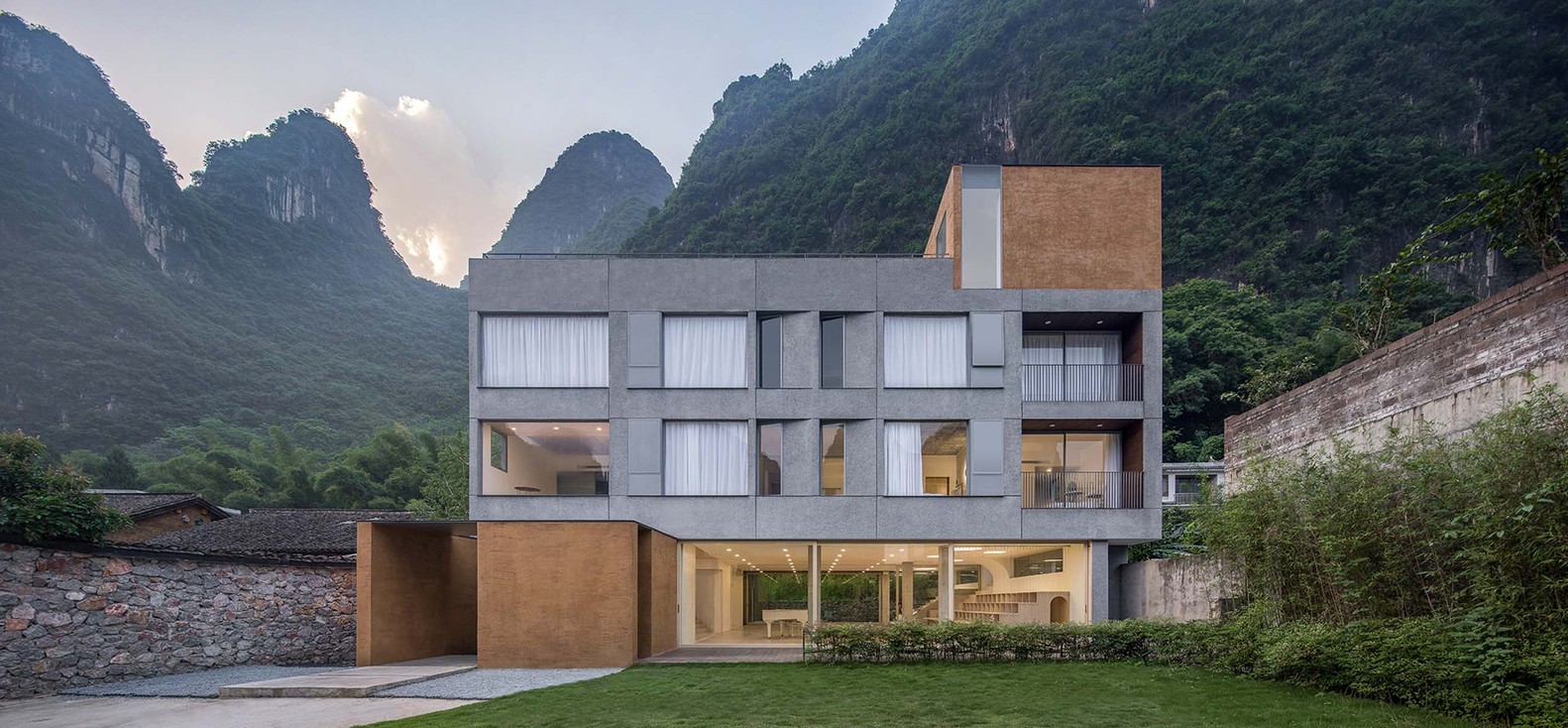
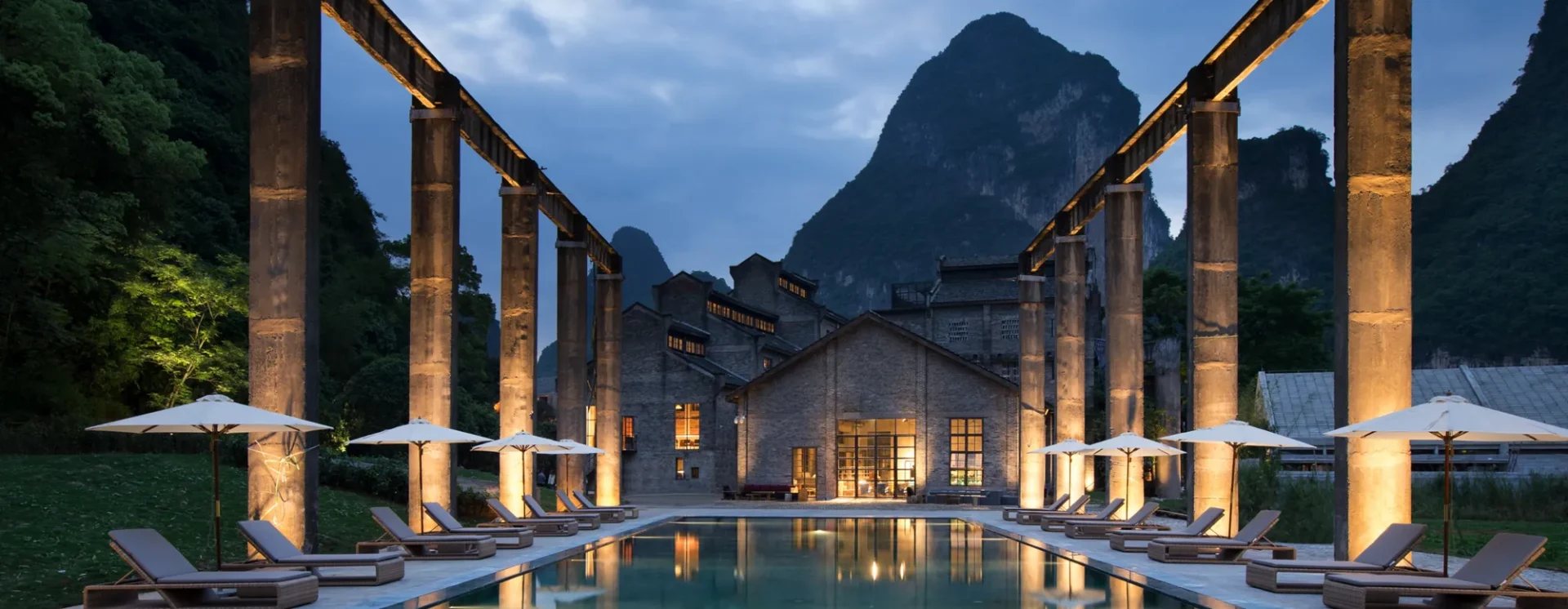
Yangshuo has developed one of China’s most interesting rural hospitality scenes, particularly for travellers drawn to architecture and landscape. Former farmhouses, traditional village residences and abandoned industrial buildings have been transformed into distinctive boutique hotels, while contemporary architectural projects reinterpret local stone, timber and traditional construction methods. Some properties embrace minimalist design, allowing the dramatic karst scenery to become part of the architecture itself; others preserve historic structures and introduce contemporary interiors without erasing their original character. At DNA Hotels, we favour places that engage thoughtfully with this extraordinary environment, offering an alternative to the conventional resort experience. In Yangshuo, the most compelling hotels are not simply surrounded by remarkable scenery: their architecture becomes part of the conversation between landscape, heritage and contemporary Chinese design.