The Italian Holiday, Revisited

Giuliano Andrea Dell’Uva revives the glamour of the Italian seaside holiday, with 1960s optimism, Vietri ceramics and views across the Gulf of Naples.

Book now

Why DNA Hotels loves it

Architect Giuliano Andrea Dell’Uva has transformed a 1960s family-run hotel without erasing its past, preserving original features while reinterpreting the easy glamour of Italy’s post-war seaside resorts.

The restored spiral staircase, Vietri ceramics and pieces by Gio Ponti and Gianfranco Frattini sit alongside contemporary Italian design, creating interiors that feel collected rather than newly decorated.

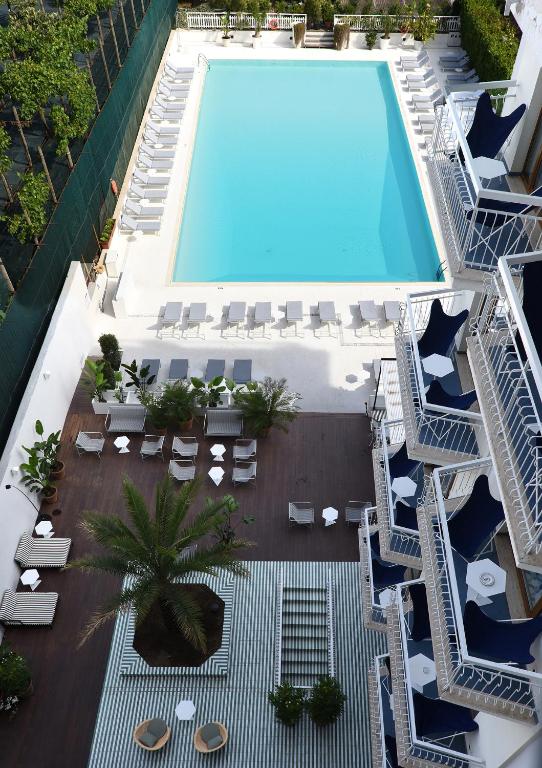
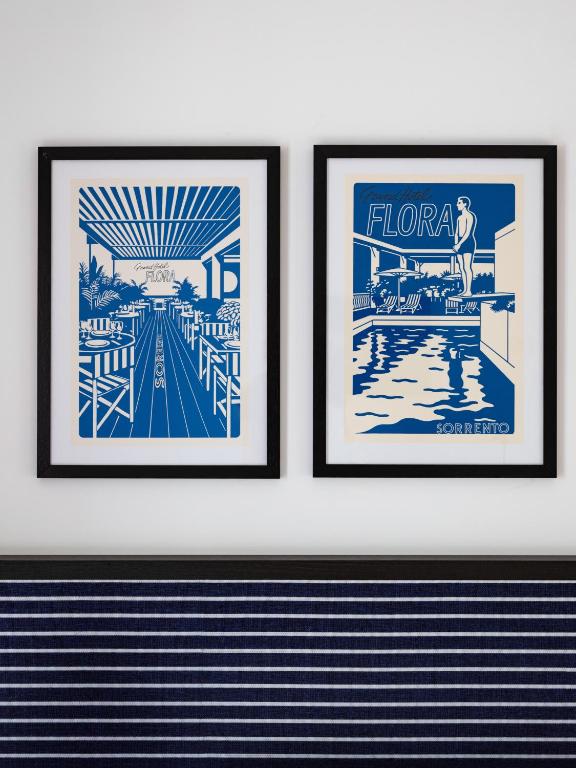
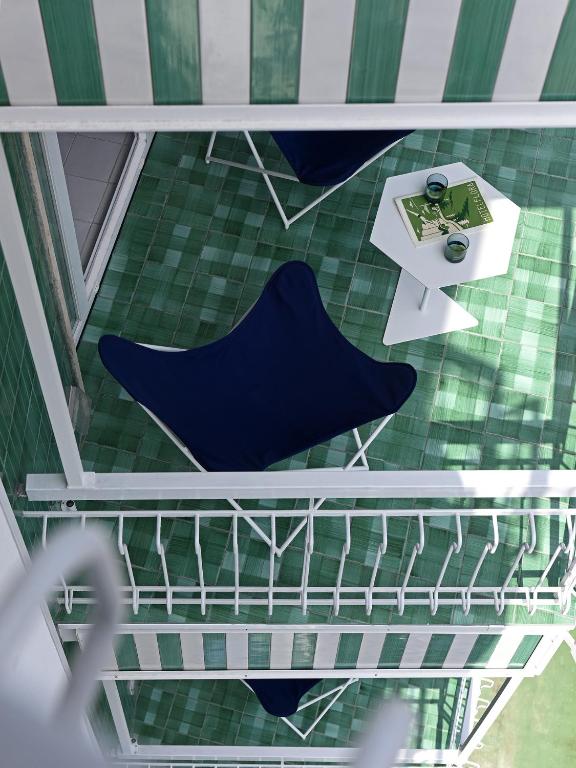
From the striped sage-green balconies to the recurring swimmers motif and rooftop pool overlooking Vesuvius, the design embraces Sorrento’s Mediterranean setting without slipping into coastal cliché.

The Stay

A revived 1960s Sorrento icon where Italian Rationalism, Mid-Century design and Mediterranean glamour meet above the Gulf of Naples.

Grand Hotel Flora has been part of Sorrento since the 1960s, founded by Pasquale Ruggiero and his wife Flora and still run by the Ruggiero family today. Its latest chapter is less reinvention than revival. Giuliano Andrea Dell’Uva looked to the optimistic Italy in which the hotel was born: an era of long summers, sociable lobbies, swimming pools and an increasingly glamorous culture of seaside travel. In 1966, Hotel Flora even appeared in Mario Amendola’s Viaggio di nozze all’italiana, preserving some of that carefree atmosphere on film. Dell’Uva uses this history as material rather than theme. The result feels unmistakably retro, but never like a reconstruction of the 1960s.

Rationalism Meets the Mediterranean

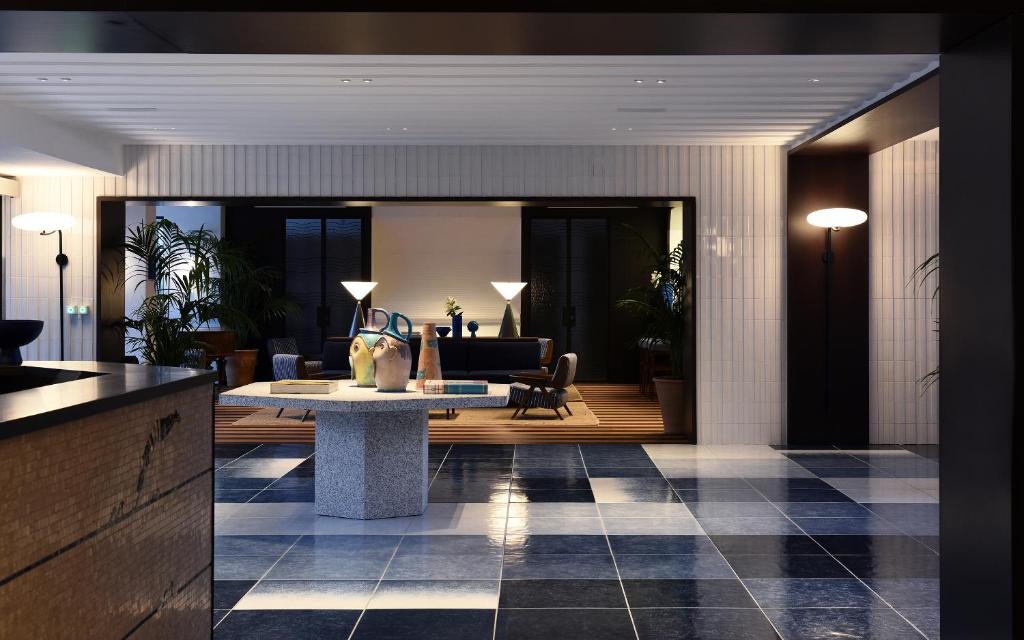
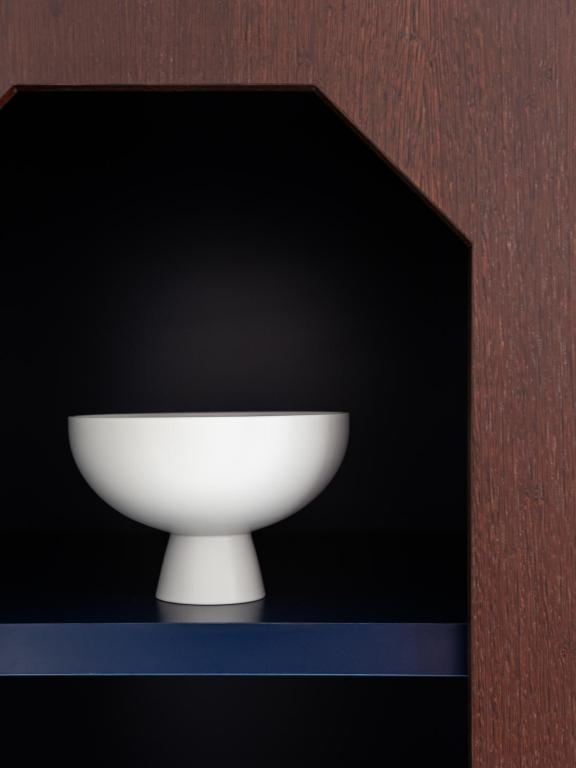
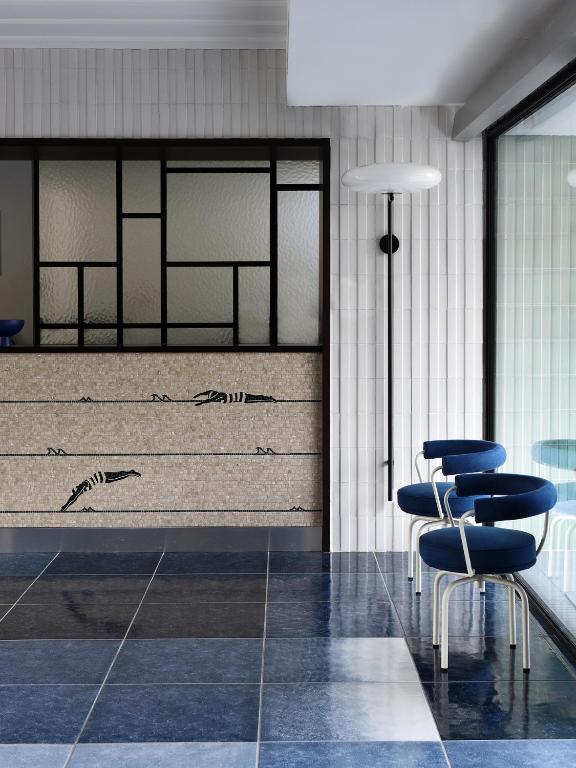
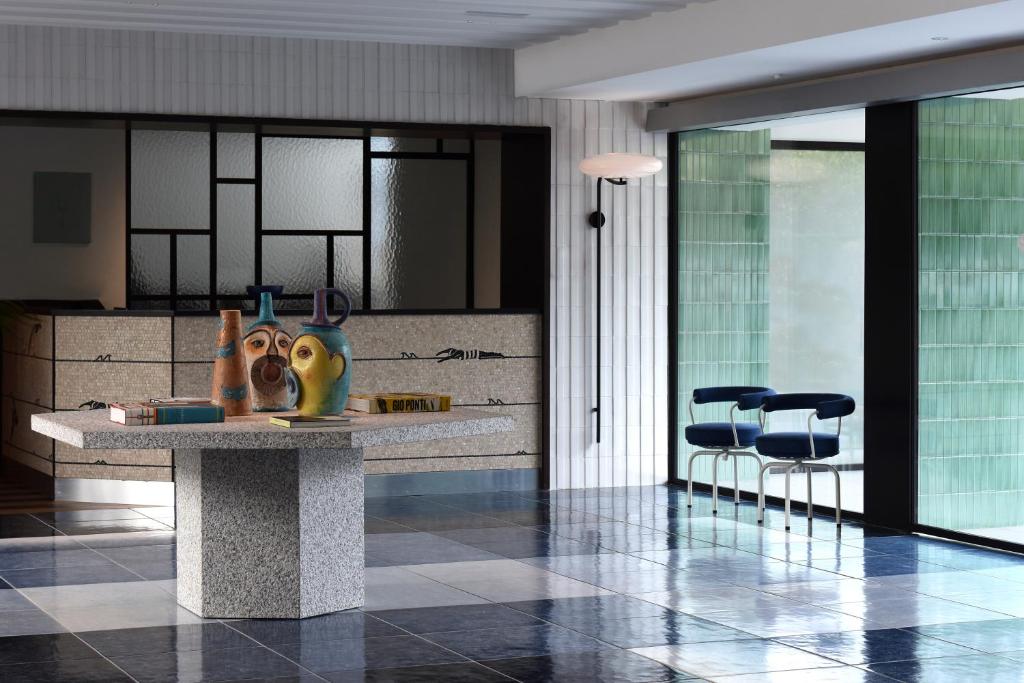
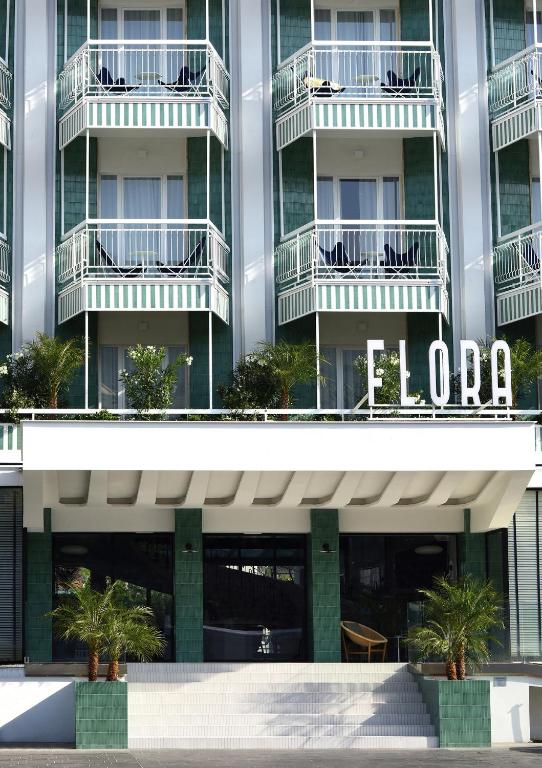
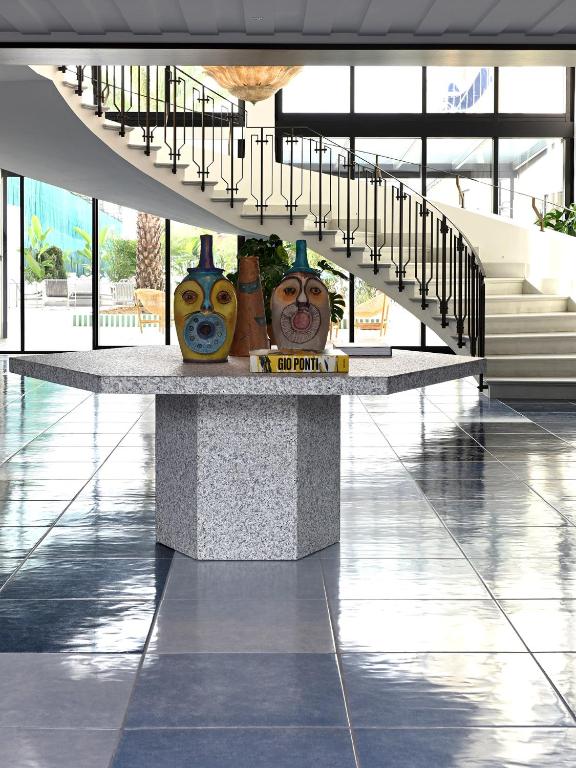
The architecture establishes the idea before entering the hotel. Its pale geometric volume has the discipline of Italian Rationalism, softened by green tiles and a rhythmic grid of projecting balconies. Striped white and sage-green balustrades introduce a more playful note. There is something almost Miami about them, yet against Sorrento’s light and vegetation they become convincingly Mediterranean. Inside, tall windows pull the landscape towards the lobby and continue the sense of openness towards the pool. Large custom-designed floor tiles in blue, pale blue and grey reflect the daylight with an almost watery quality. At its centre is an octagonal granite table displaying anthropomorphic ceramic vases made during the 1950s by the historic C.A.S. workshop in Vietri. Local craft is immediately part of the architecture.

The Staircase Stayed

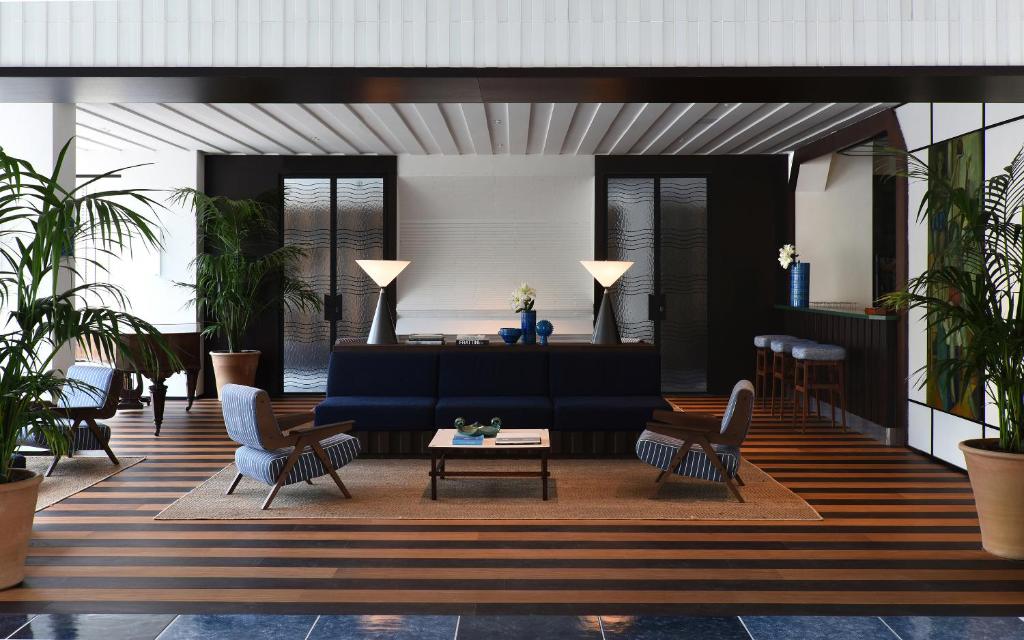
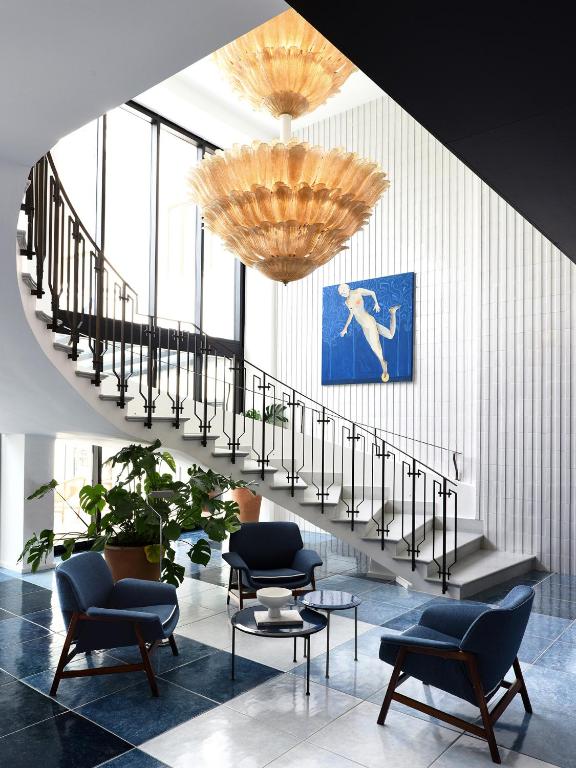
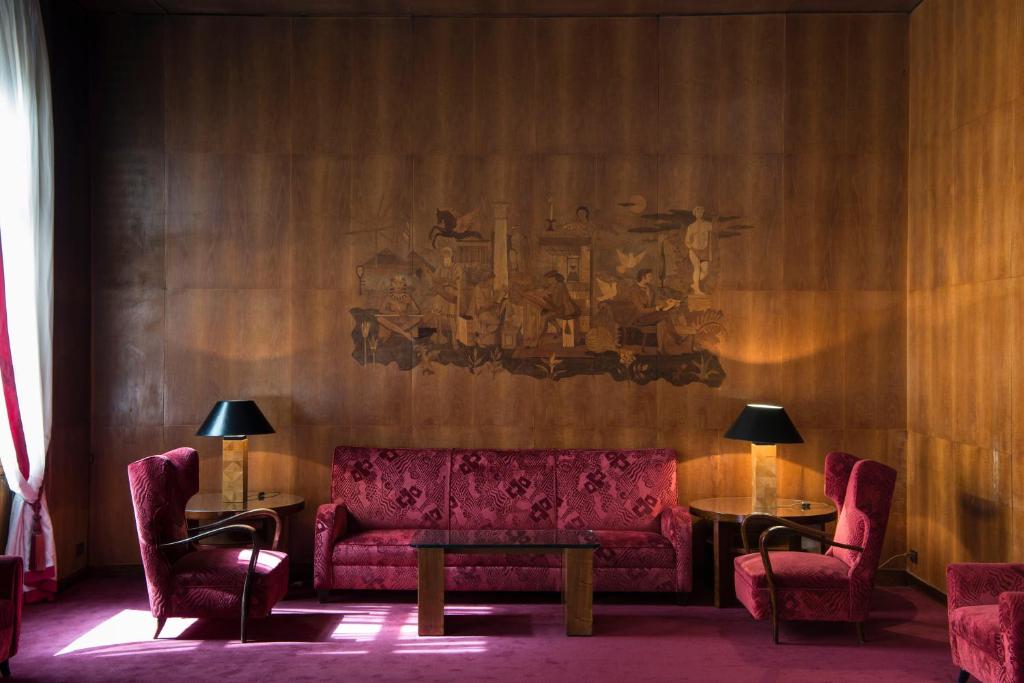
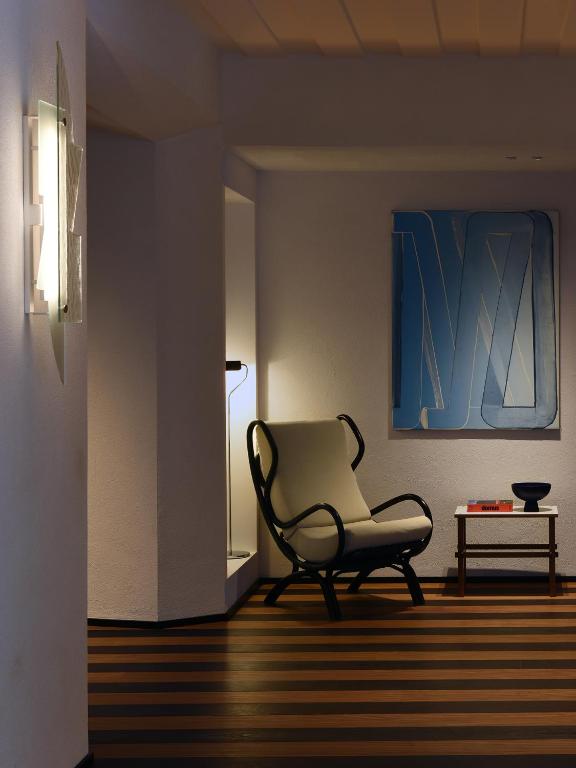
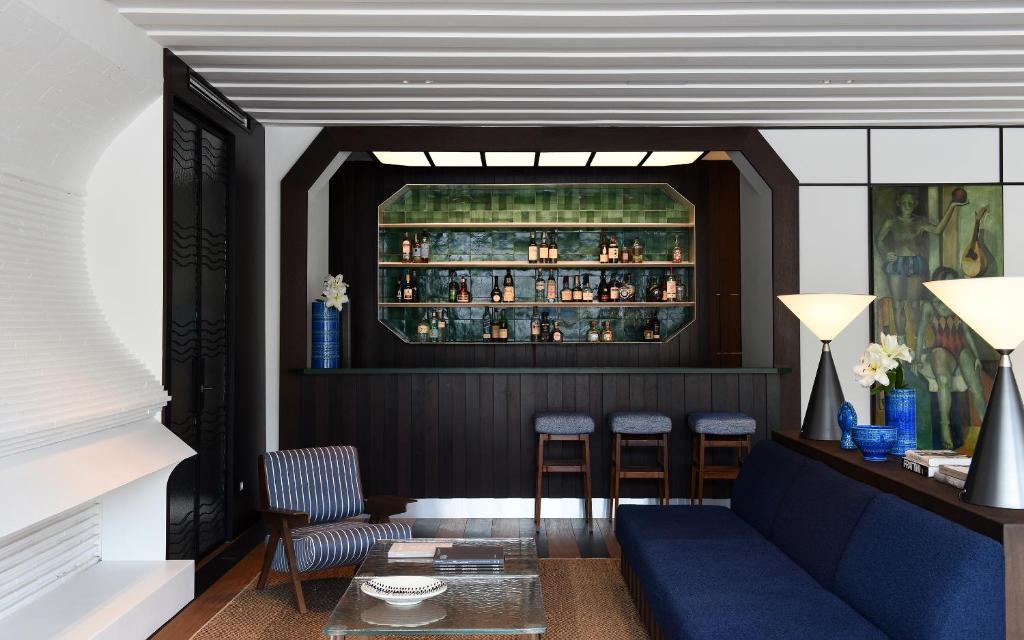
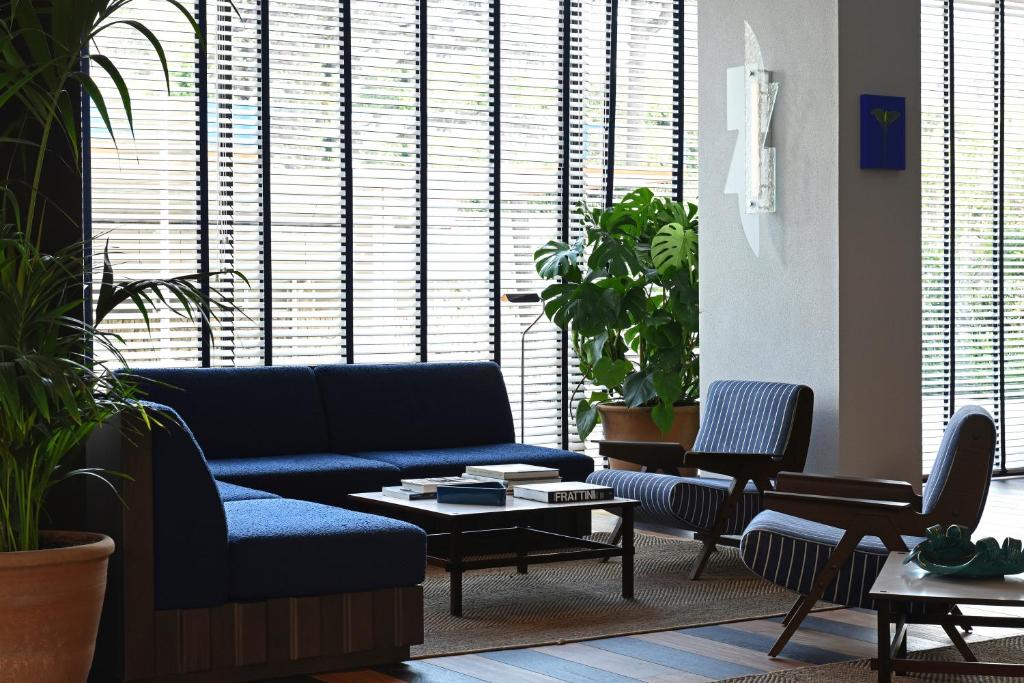
One of the most important decisions was also one of the simplest: keep what was already good. The original spiral staircase, designed by Flora Ruggiero when the hotel opened, has been meticulously restored. Its pale steps curl upwards beside a black wrought-iron balustrade with gilded details, illuminated by floor-to-ceiling windows and a monumental Mazzega chandelier composed of Murano glass leaves. Original furniture has also returned, mixed with pieces by Gio Ponti for Cassina, Gianfranco Frattini and other figures of 20th-century Italian design. Contemporary work from Cassina, Flos, Molteni&C, Paola Lenti, Tacchini and others continues the story rather than competing with it. Dell’Uva’s interiors consequently avoid the polished uniformity of a newly renovated hotel. History remains visible.

Swimmers in the Corridors

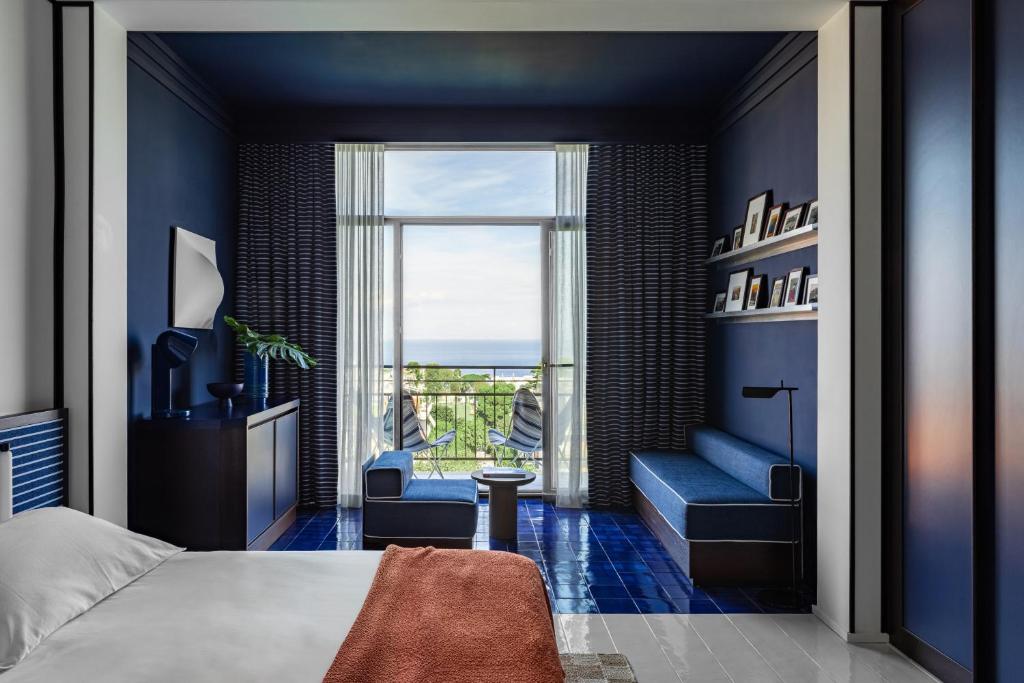
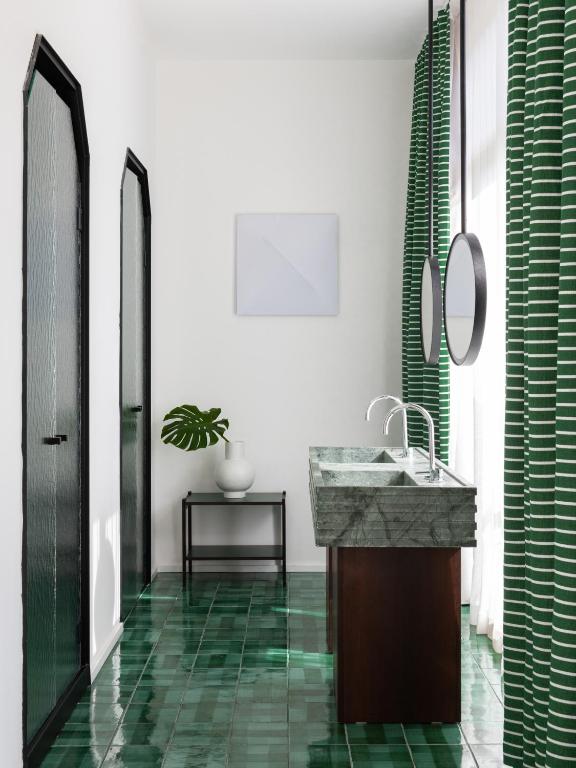
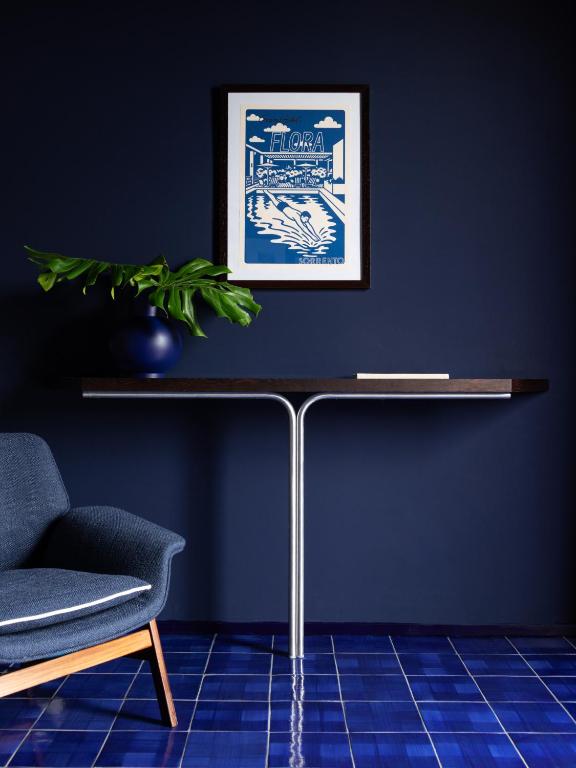
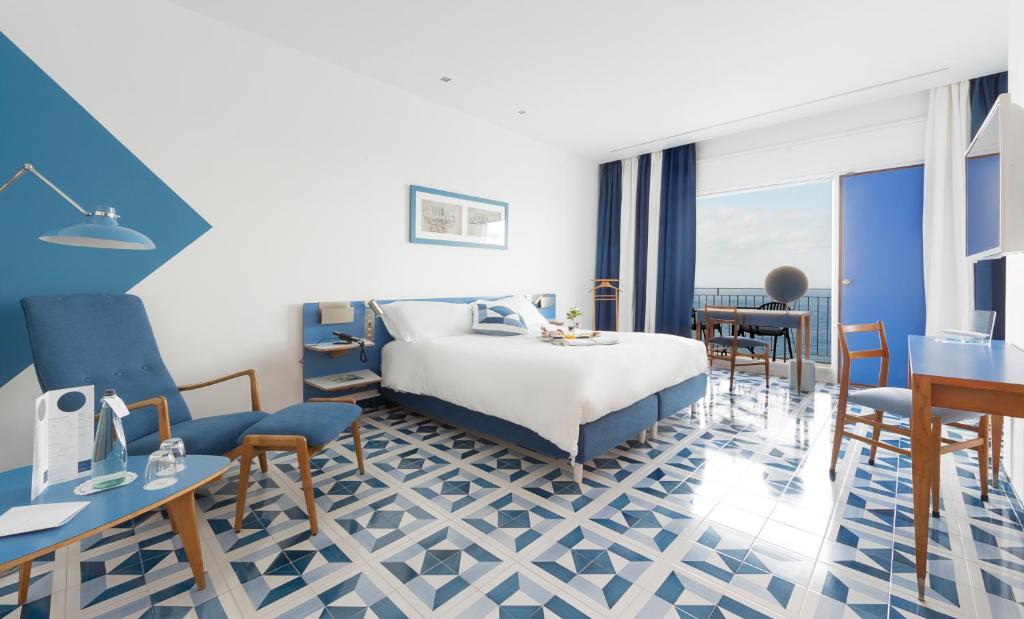
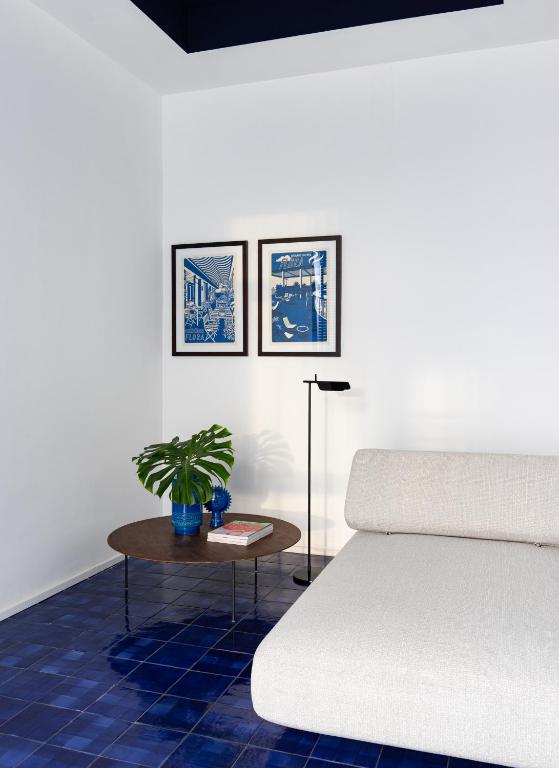
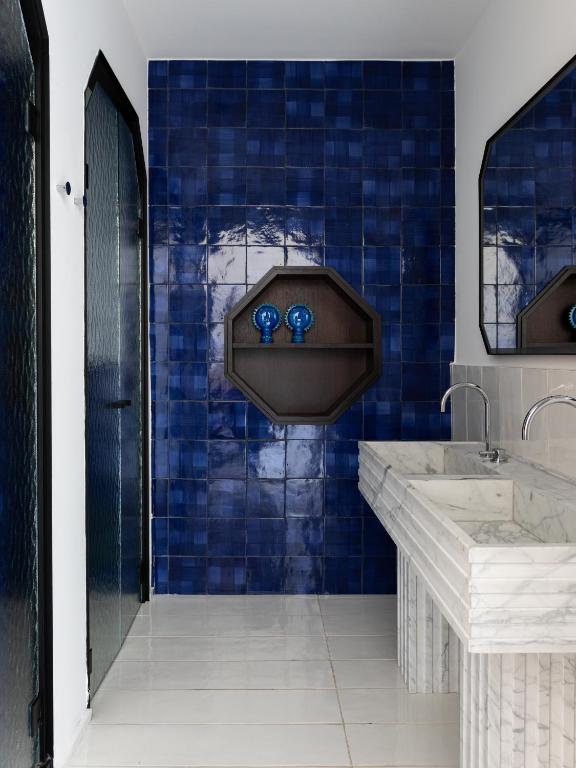
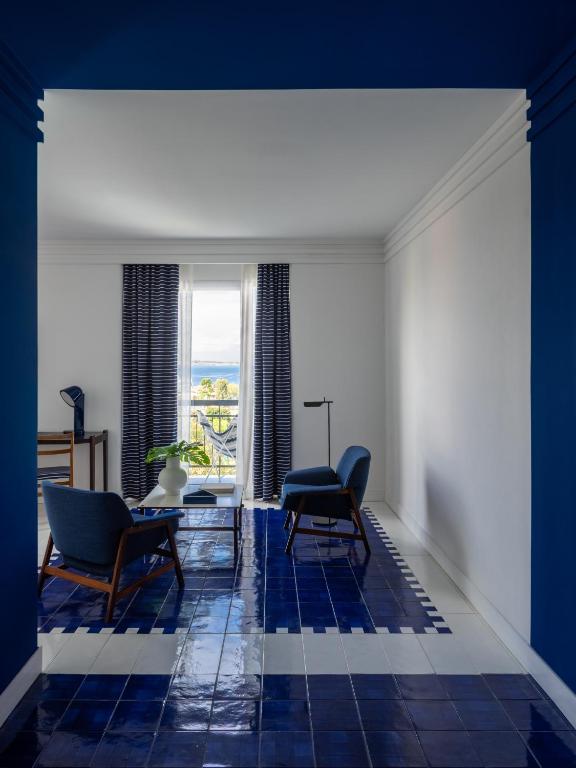
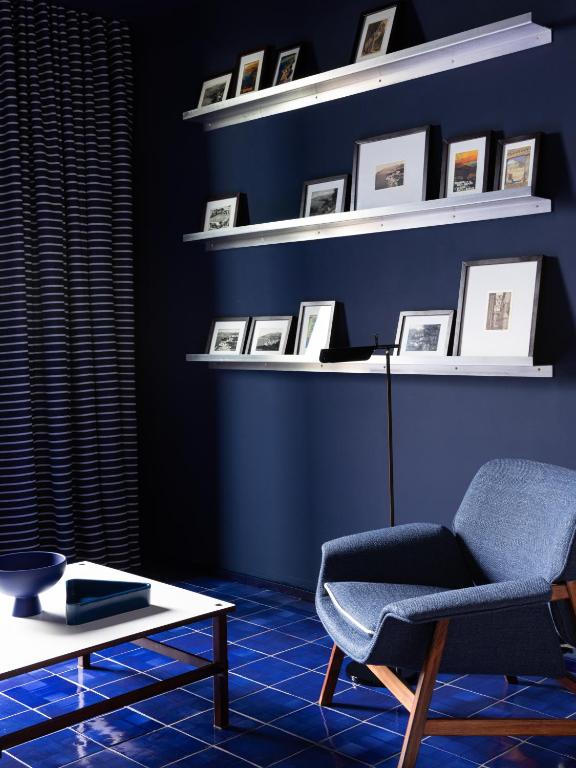
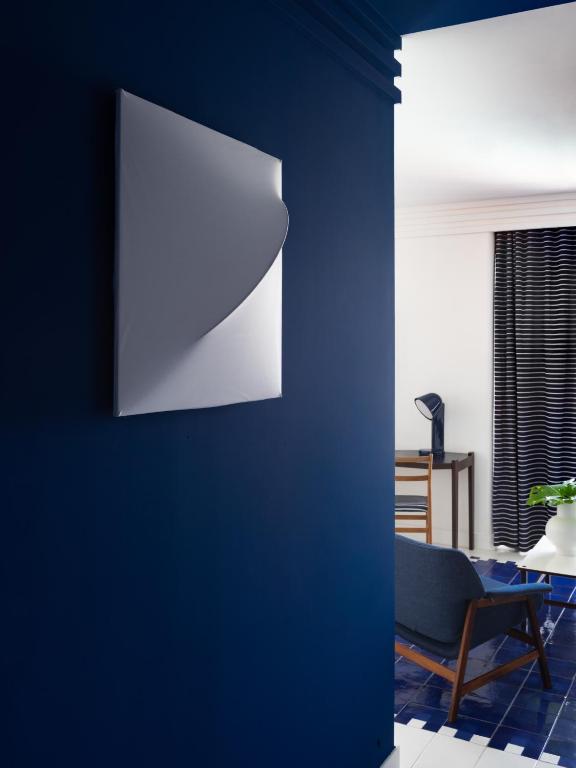
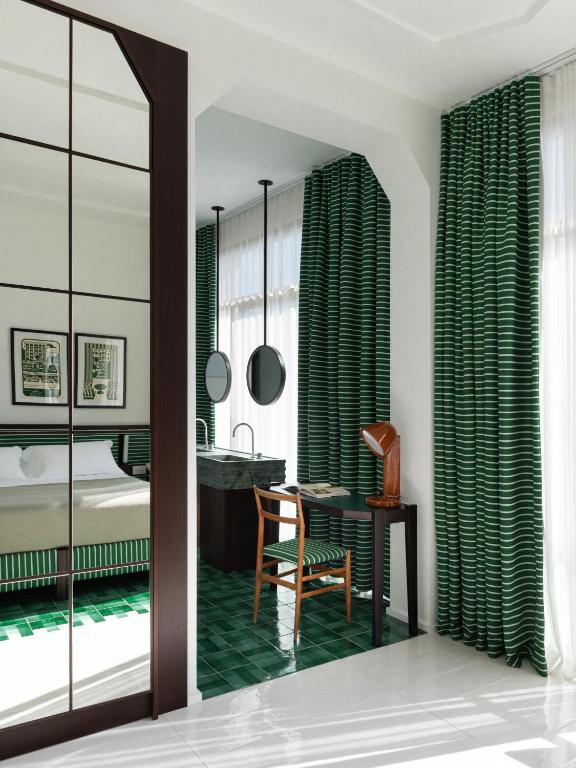
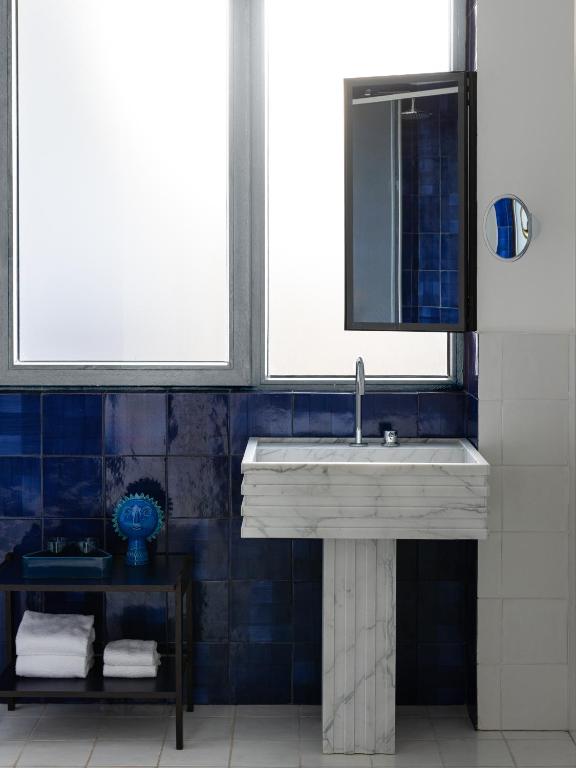
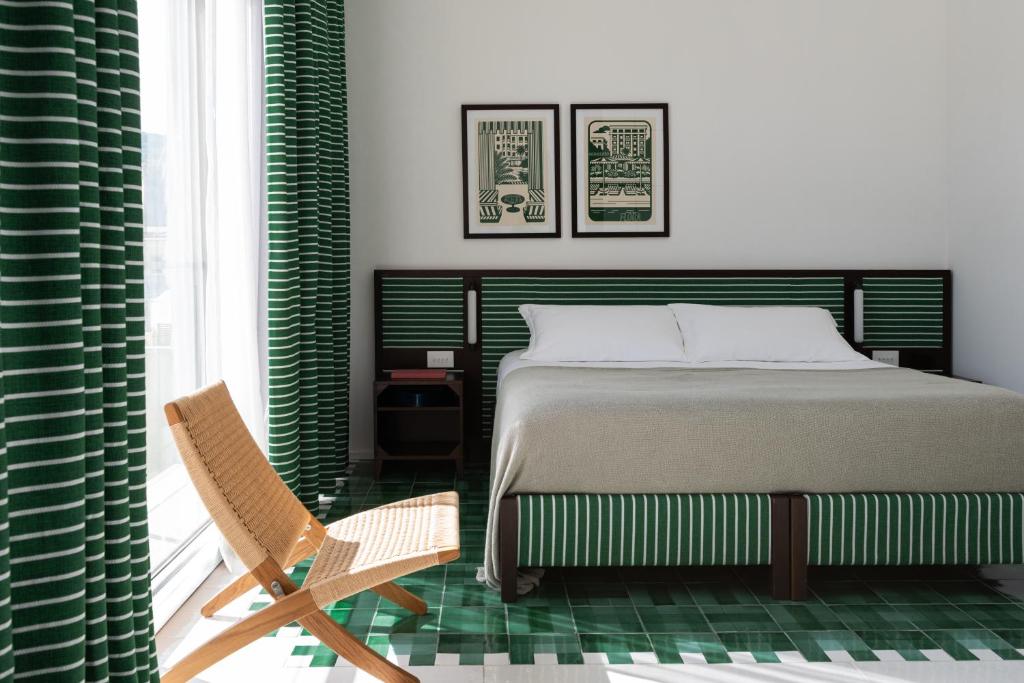
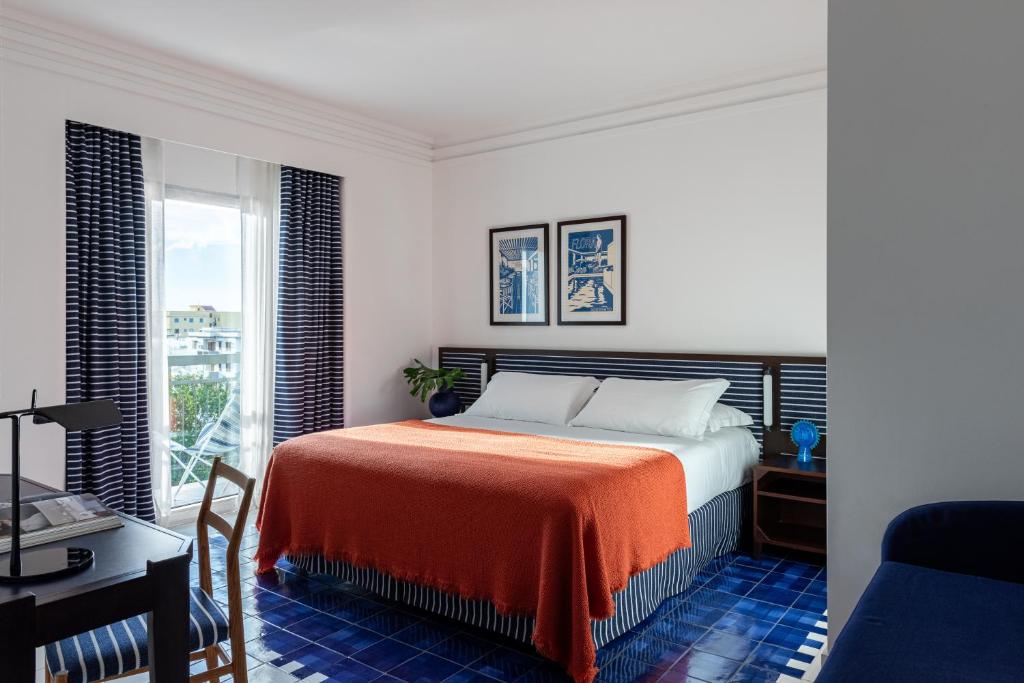
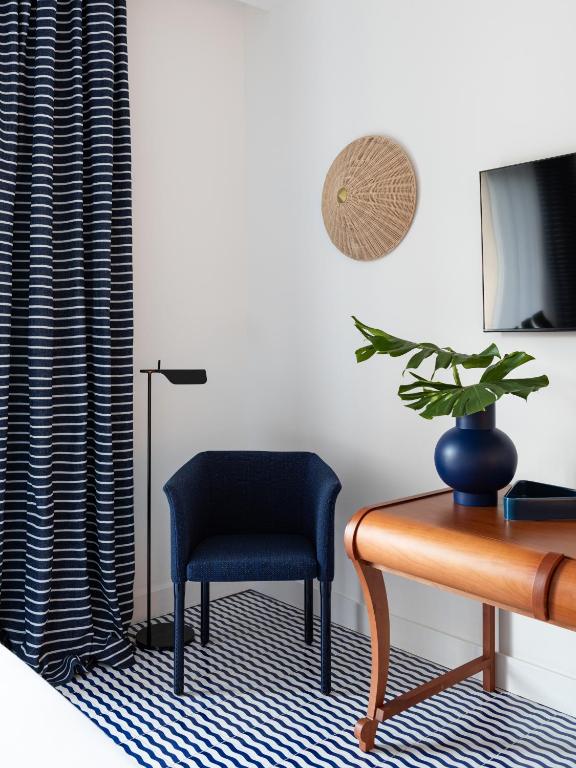
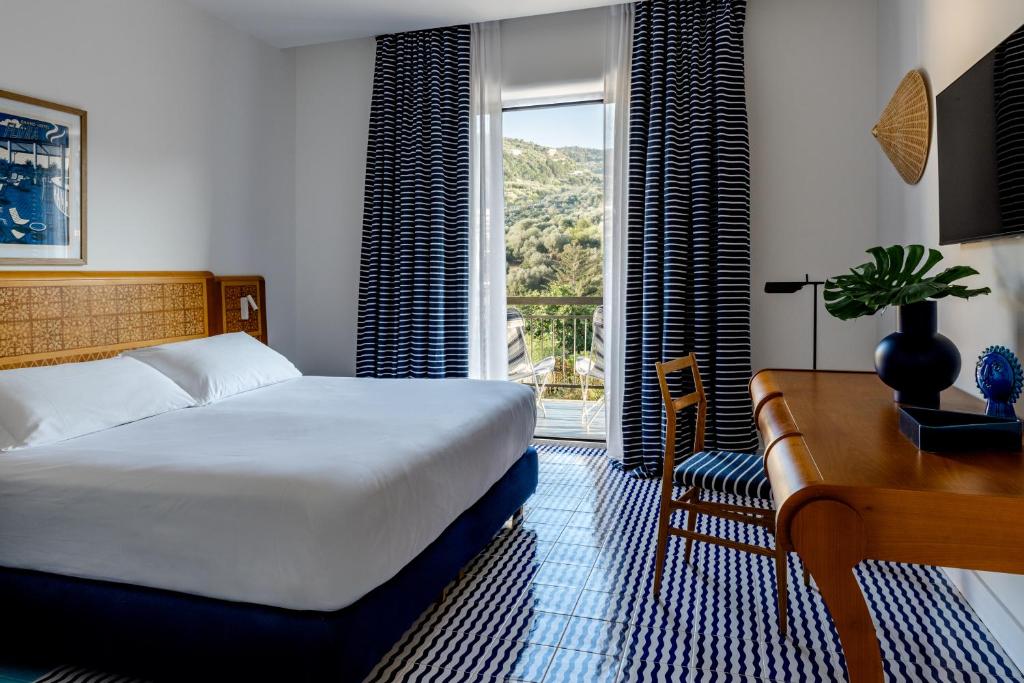
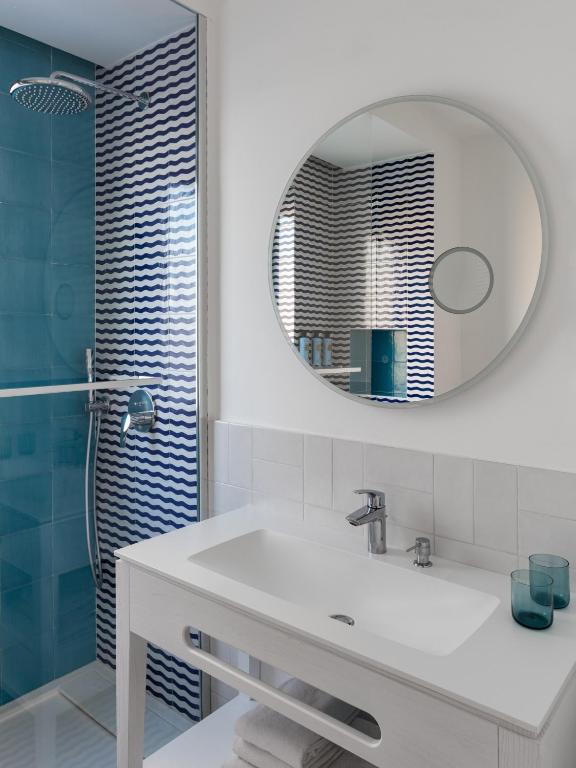
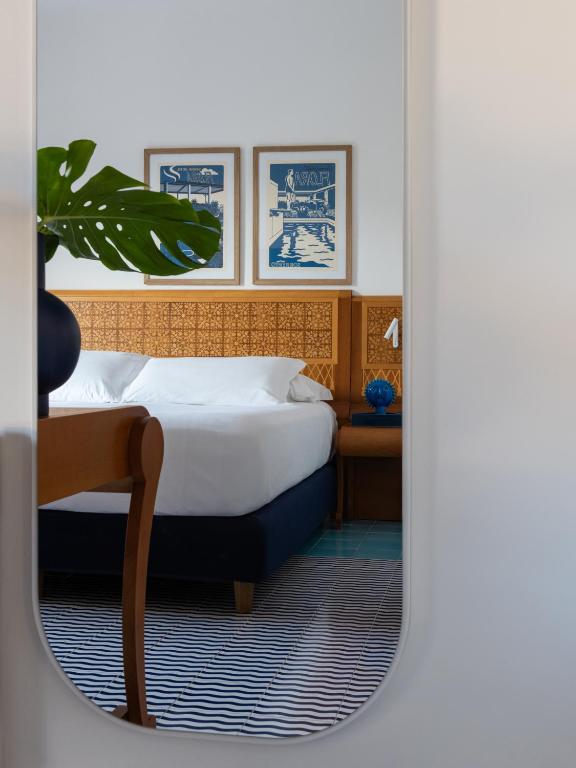
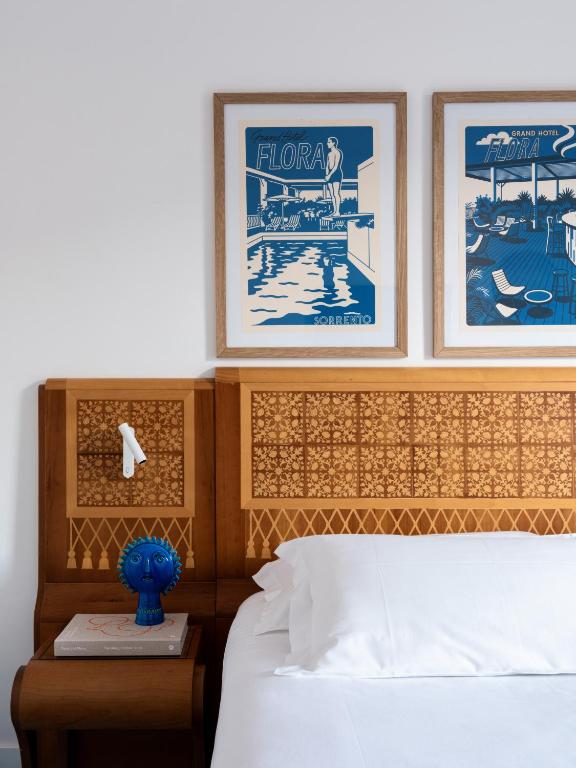
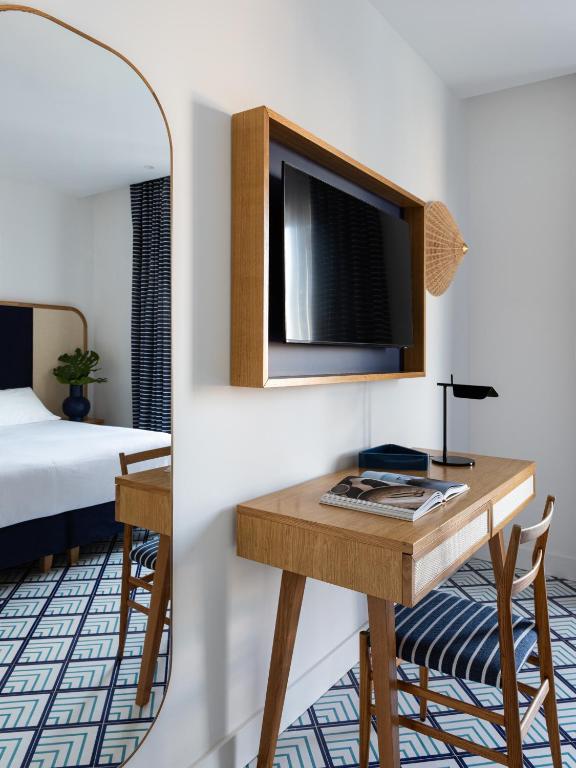
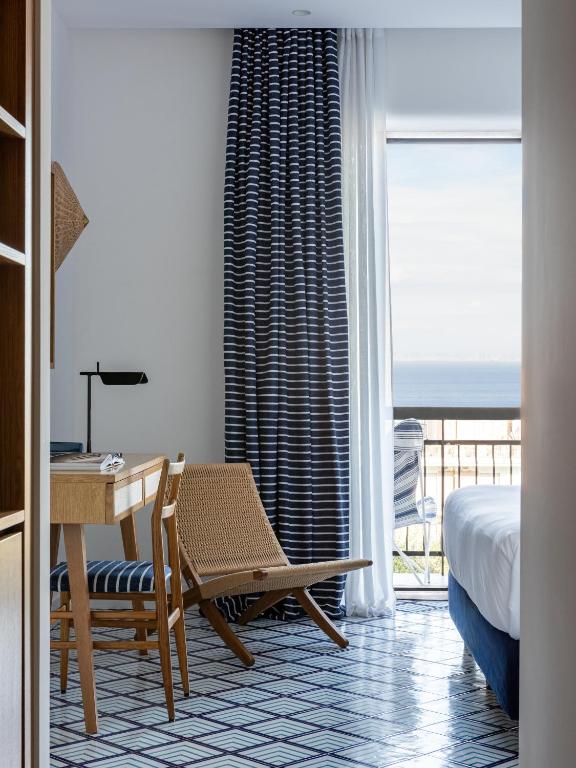
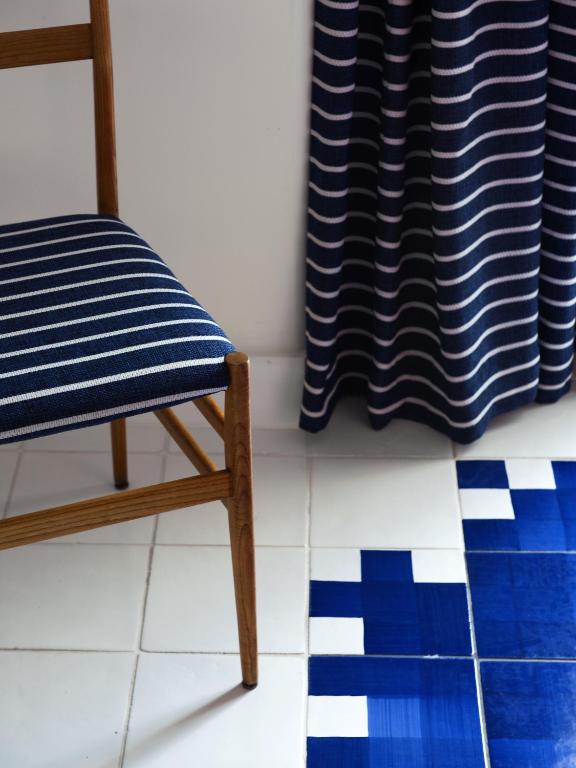
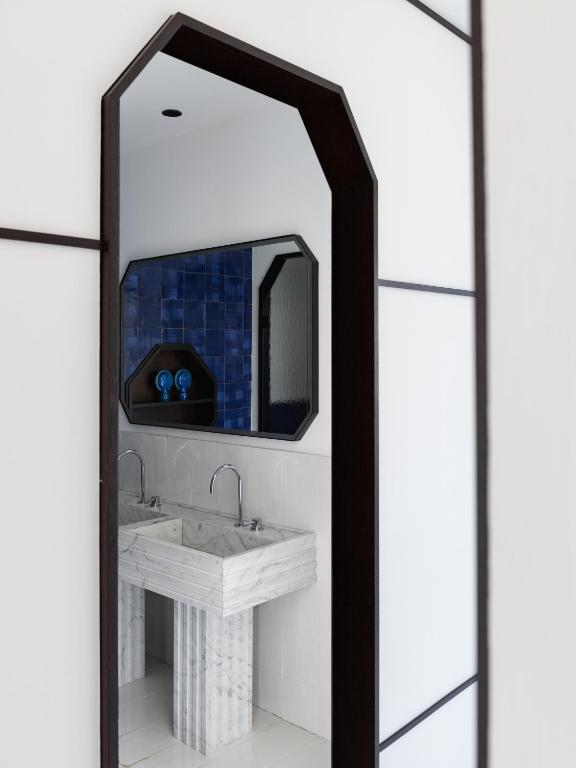
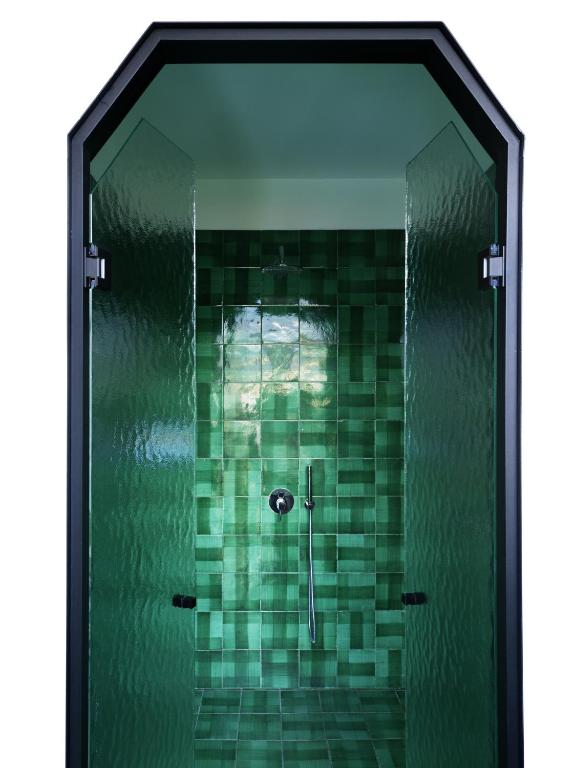
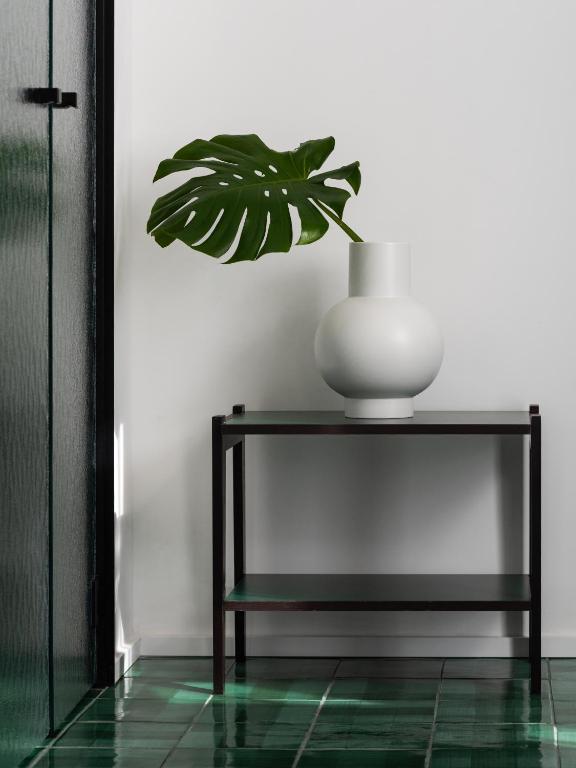
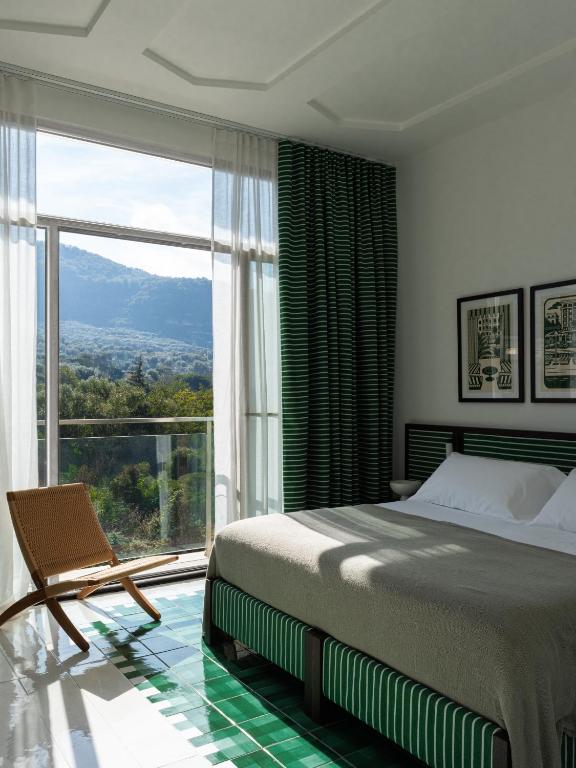
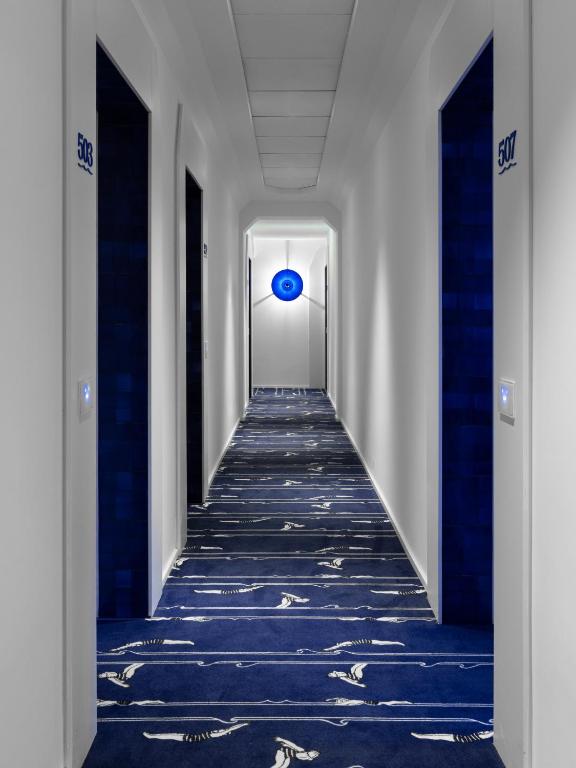
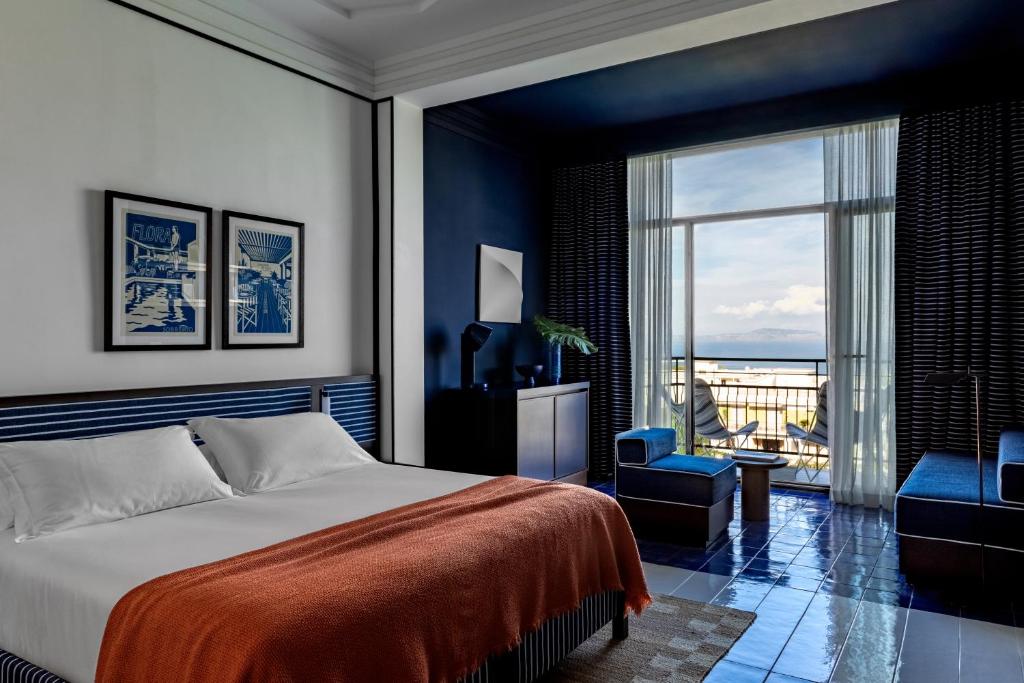
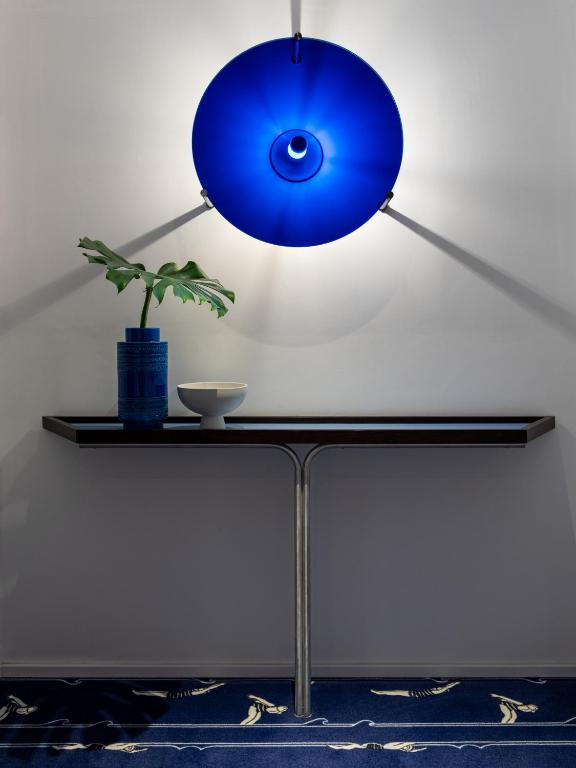
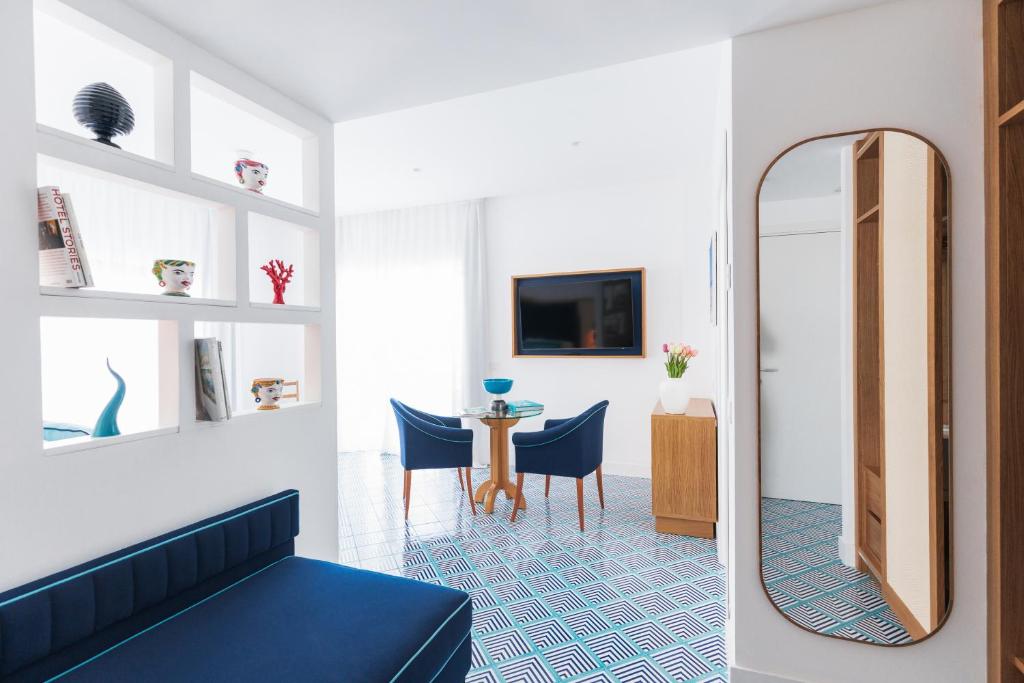
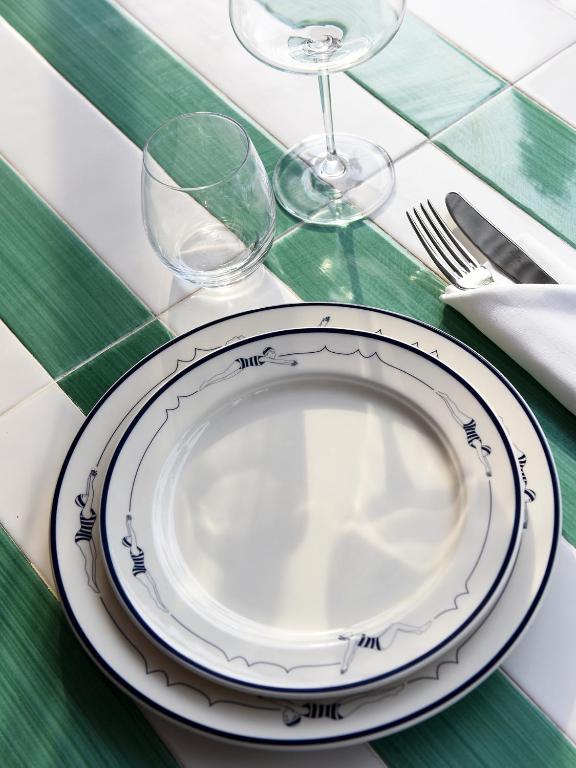
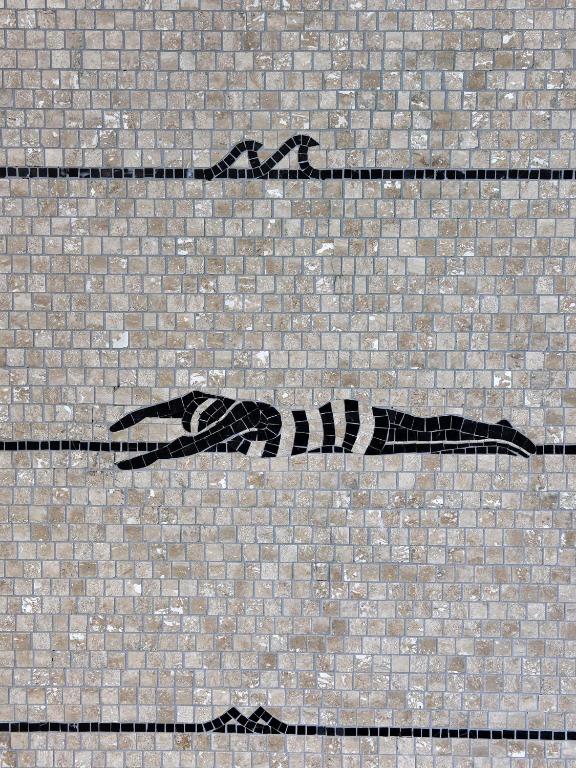
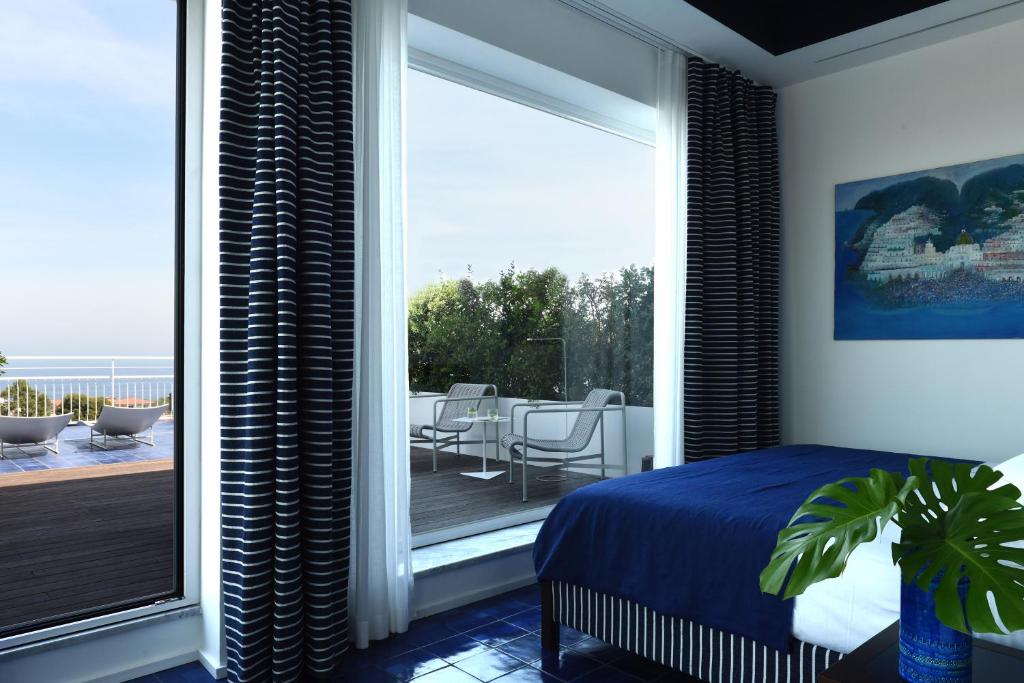
The project’s most playful device is a recurring graphic of swimmers, developed by Dell’Uva’s studio from the visual culture of post-war Italian seaside holidays. They appear in corridor carpets, reception mosaics, restaurant porcelain and smaller details throughout the building. Repetition turns the motif into a kind of visual breadcrumb trail linking the interiors back to the swimming pool and the hotel’s original identity. The same balance shapes the 121 rooms and 14 suites. Sea-facing rooms use deep blue and cobalt, while inland-facing Signature rooms shift dramatically into emerald green. Vietri majolica floors meet striped textiles, carved walnut furniture, straw-seated chairs, vintage pieces and contemporary photography. Open bathrooms introduce Carrara marble basins and suspended mirrors, while suites with floor-to-ceiling glazing extend onto private terraces conceived as outdoor living rooms above the Gulf.

From the Pool to Vesuvius

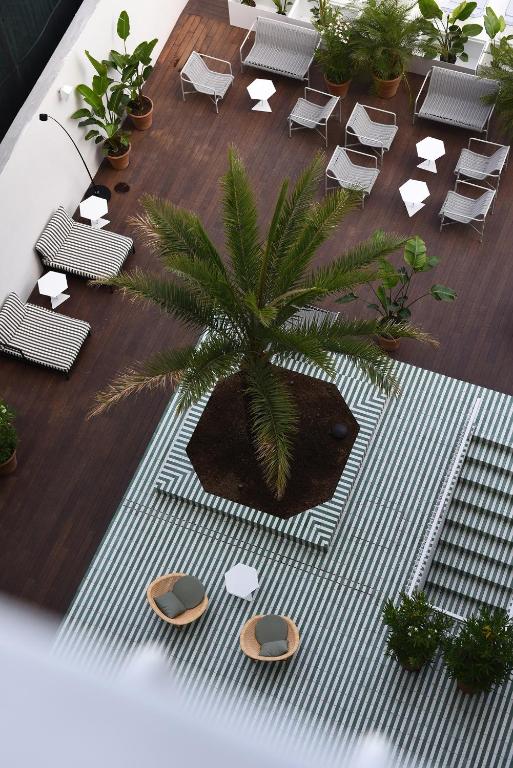
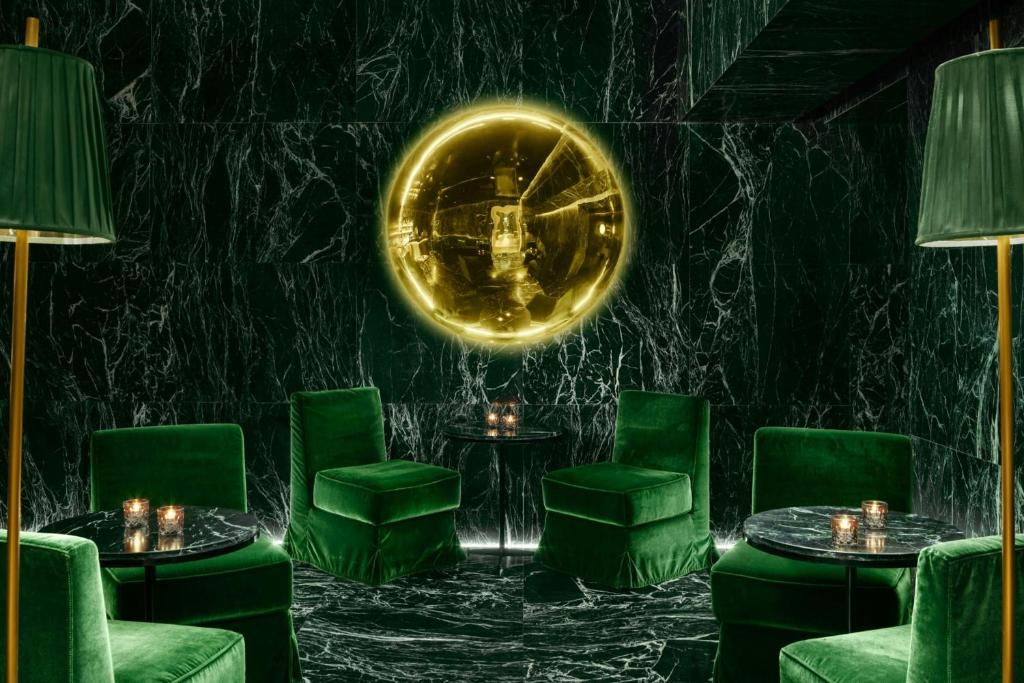
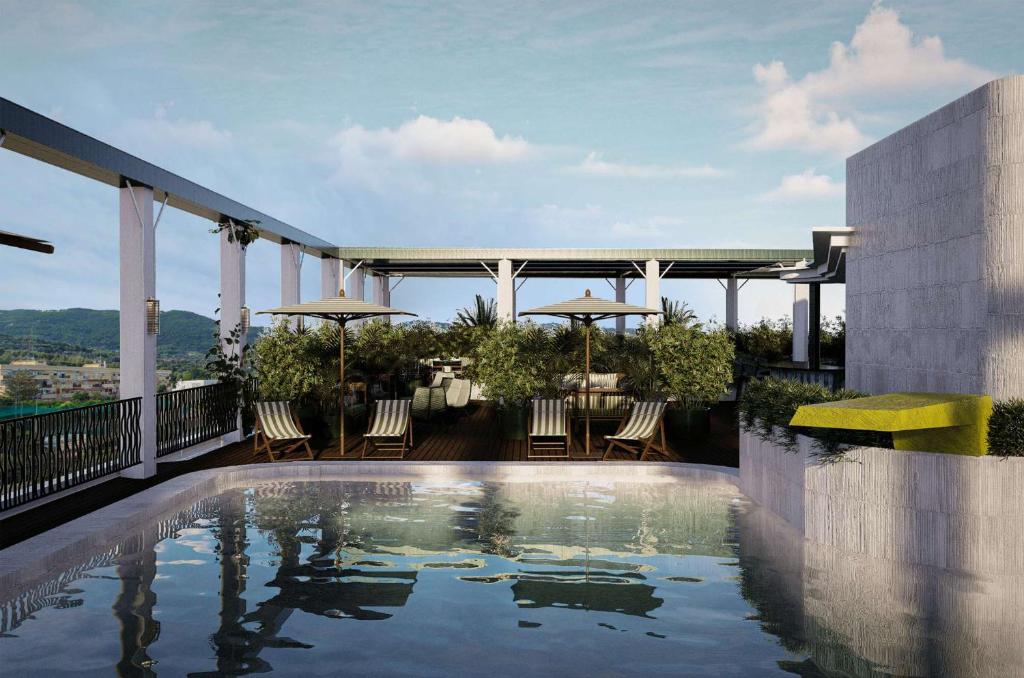
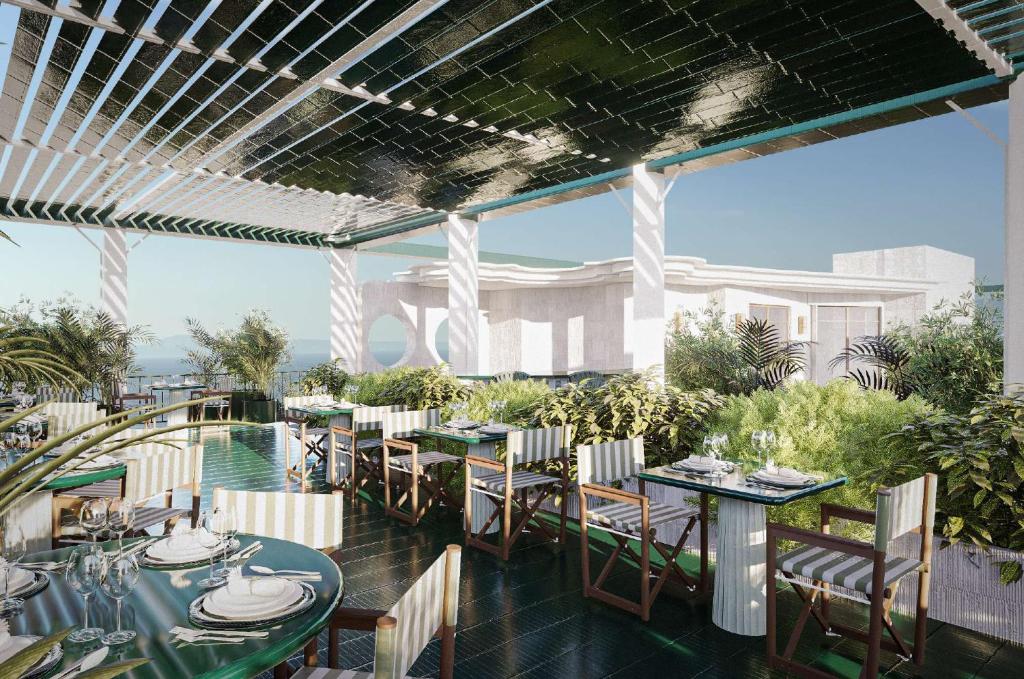
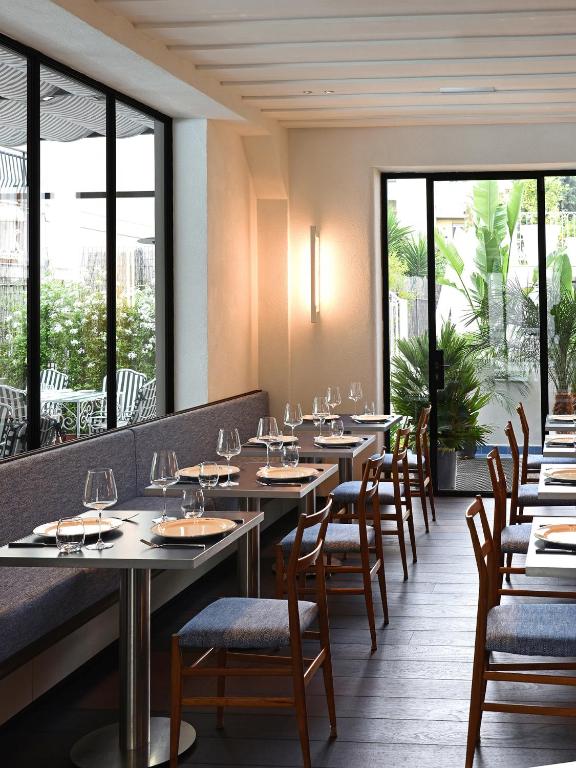
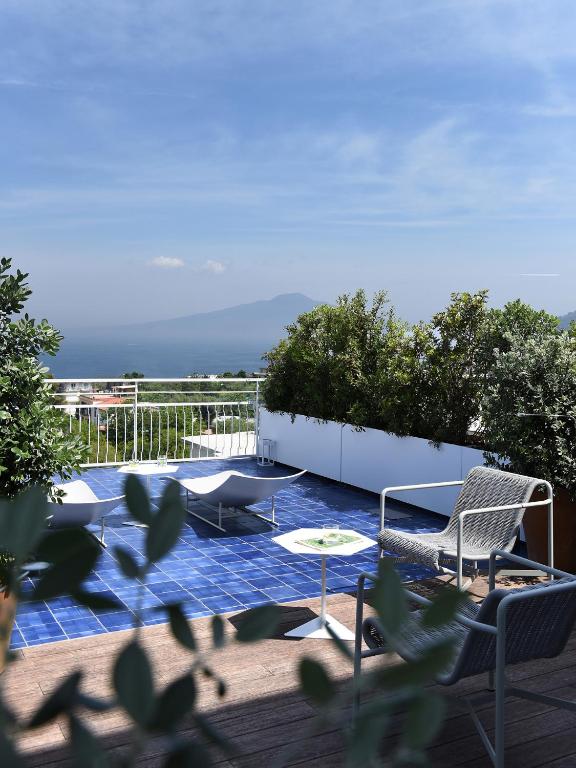
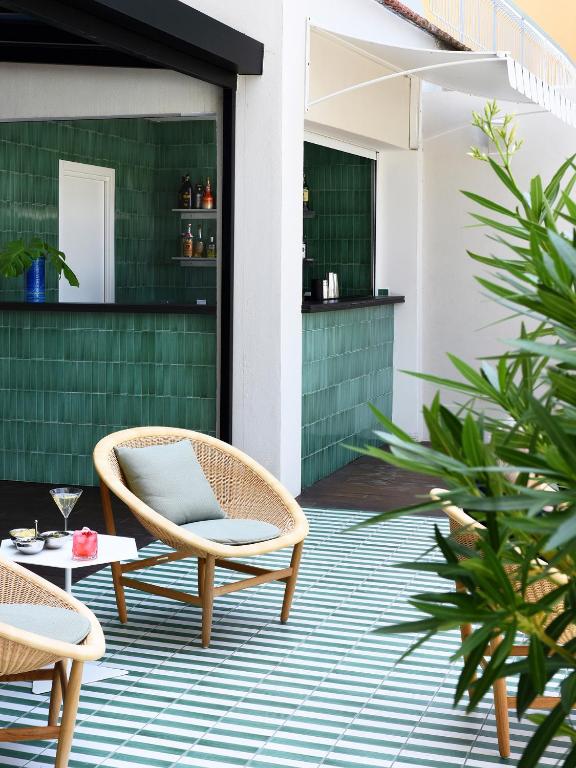
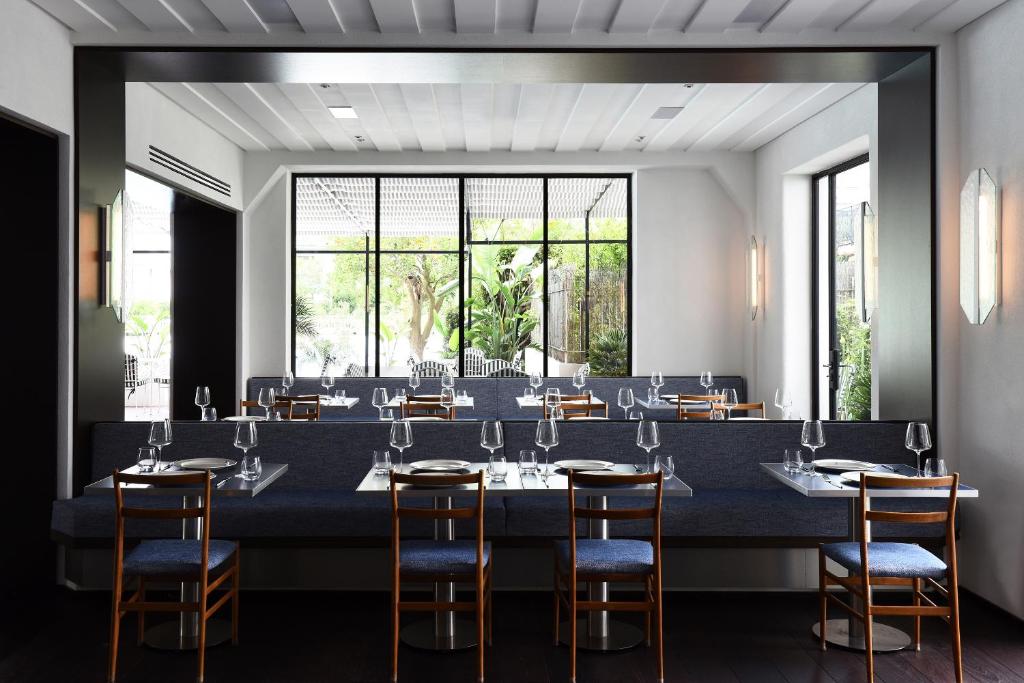
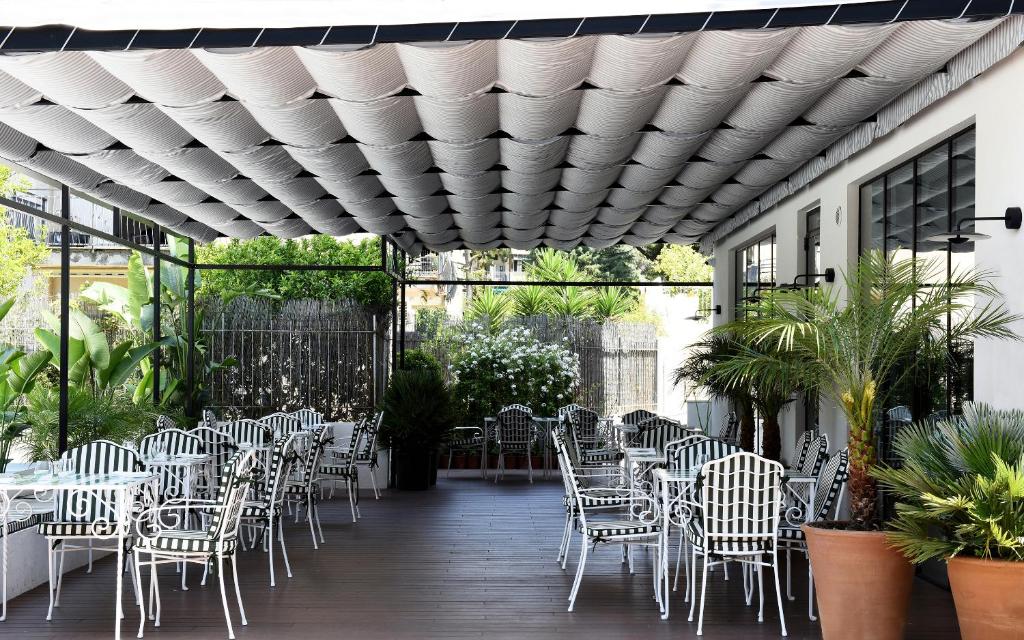
The social spaces retain the spirit of the traditional grand seaside hotel. Silva Bistrot opens through large windows onto a terrace of white wrought-iron furniture, striped cushions, terracotta pots and Mediterranean planting, with the garden and swimming pool beyond. It feels deliberately relaxed: somewhere the boundary between lunch and afternoon can become pleasantly vague. Upstairs, Oliva Rooftop provides the more theatrical conclusion. The hotel’s original rooftop pool has been restored rather than replaced, preserving its curving retro form and surrounding it with open-air lounges and a cocktail bar. Beyond it are the Gulf of Naples and Mount Vesuvius — scenery that requires remarkably little assistance from an interior designer.

Sorrento, Still in the Sixties

Grand Hotel Flora works because Dell’Uva recognised that its original character was more valuable than a completely new identity. The architecture, staircase, furniture and pool provide the historical framework; Vietri ceramics, Murano glass and Italian design deepen it. Even the contemporary art programme developed with Berlin’s Galerie König is inserted into that existing narrative rather than allowed to overwhelm it. What emerges is not nostalgia for nostalgia’s sake, but a contemporary interpretation of the Italian holiday hotel at its most optimistic: colourful, cultured and inherently sociable. Sorrento has changed considerably since Hotel Flora appeared on screen in 1966. Grand Hotel Flora allows a little of that world to remain.

Information

At a glance

Design Icons Bar Culture Beach Independent Pets allowed Vibe: Quiet Rooftop Bar Wheelchair accessible

Opened / Renovated

1966, renovated 2026

Size matters

121 rooms, including 14 suites (18-55m2) (194-592 sq ft)

Interior design

Giuliano Andrea Dell’Uva
Featured in

Don't take our word for it

Handpicked worldwide

A carefully curated collection of exceptional boutique and design hotels across the globe.

Design with soul

Architecture, atmosphere and craftsmanship come together in stays with a clear identity.

Hidden, not hyped
Independent boutique hotels you rarely find on mainstream booking platforms.

Travel guidance

Personal recommendations and thoughtful support from people who actually know the places.