


Frank Gehry’s titanium landmark turns Rioja wine country into an architectural pilgrimage
Book now
Why DNA Hotels loves it
One of Spain’s most recognisable contemporary hotel buildings, designed by Frank Gehry as a sculptural counterpoint to Marqués de Riscal’s historic winery.
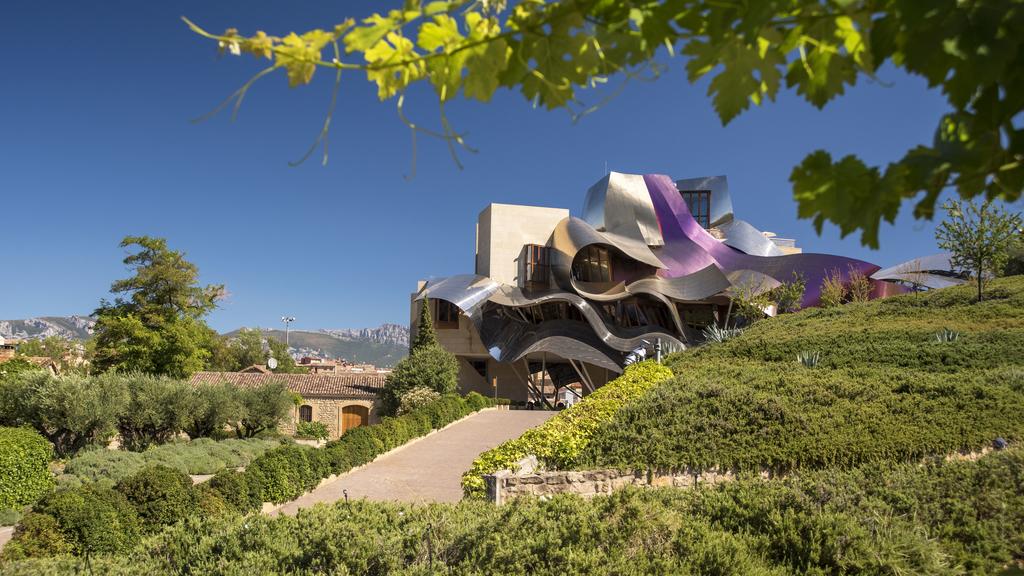
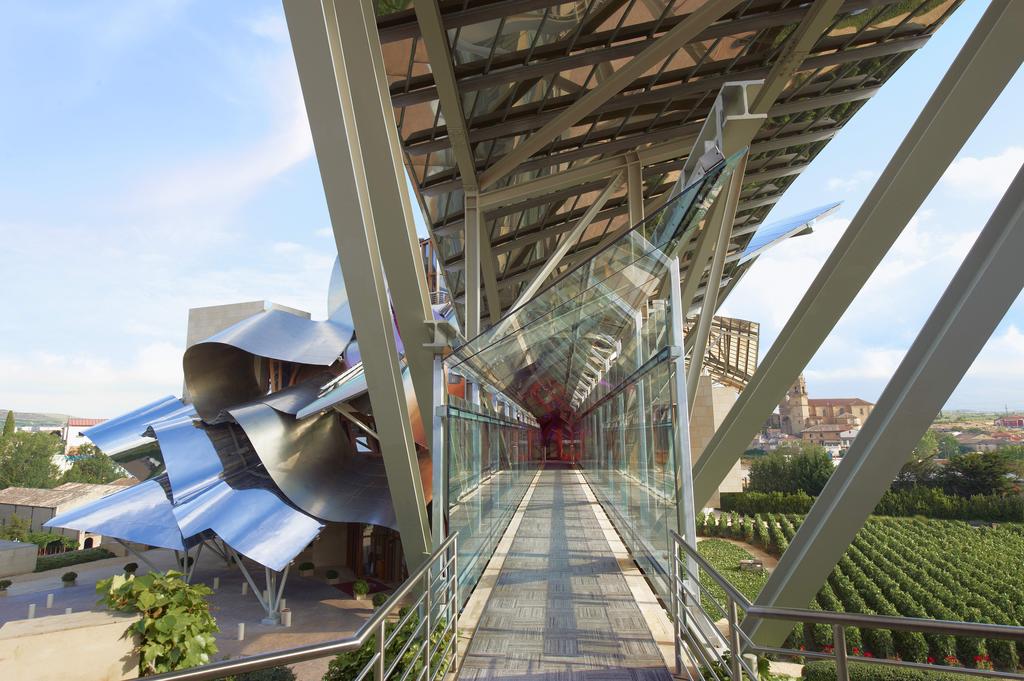
The multicoloured titanium ribbons reference the estate itself: wine red, bottle-gold, and silver, turning brand identity into architecture.
A rare place where avant-garde design, serious gastronomy, vinotherapy, and one of Rioja’s most historic wine estates genuinely belong to the same story.
The Stay
Hotel Marqués de Riscal | Elciego, Spain
A New Landmark in an Old Landscape
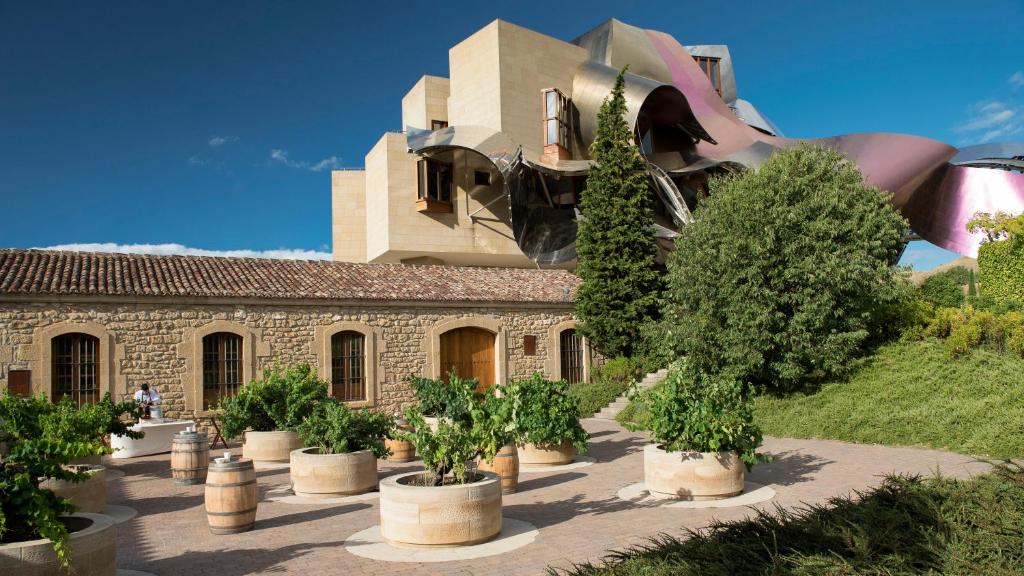
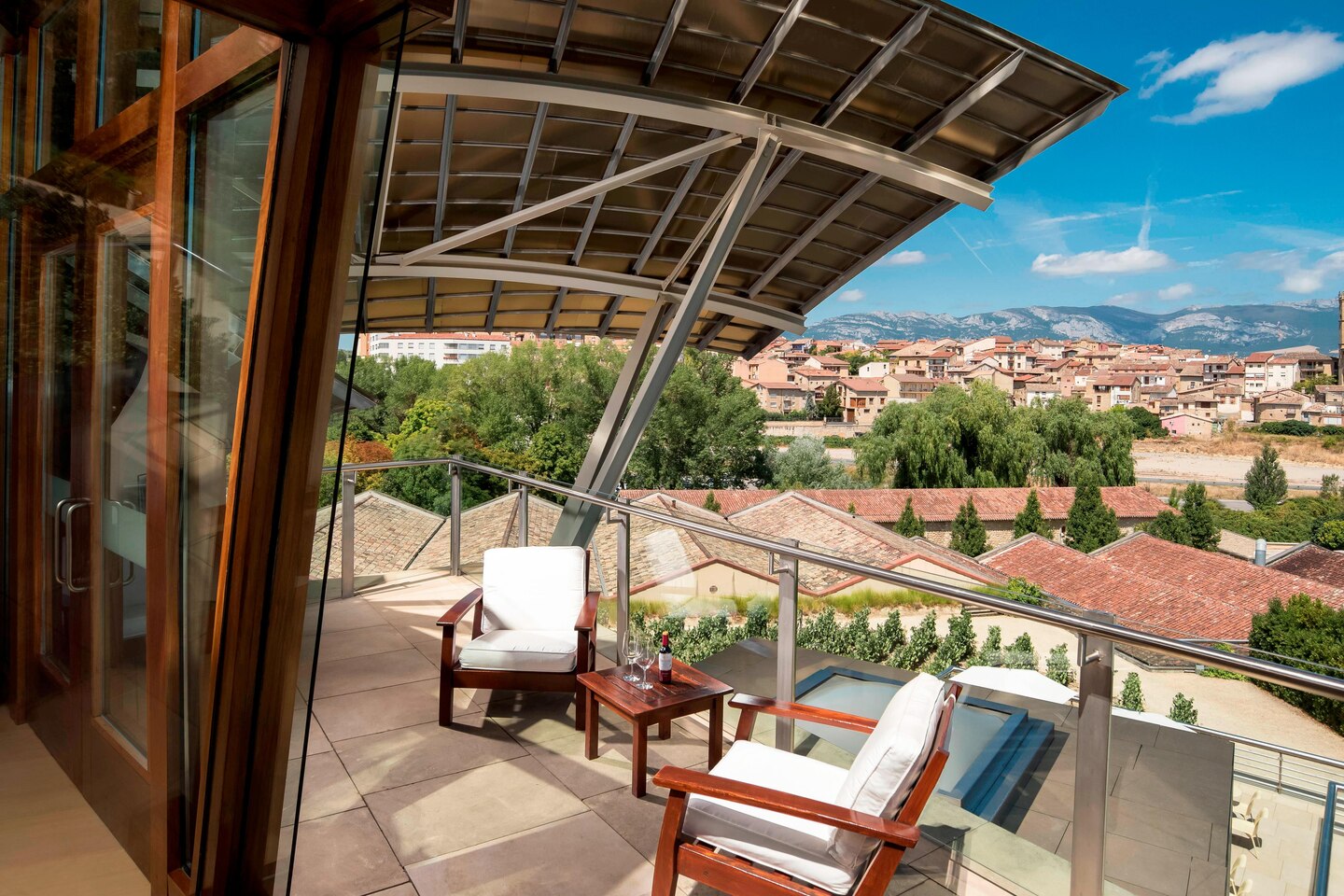
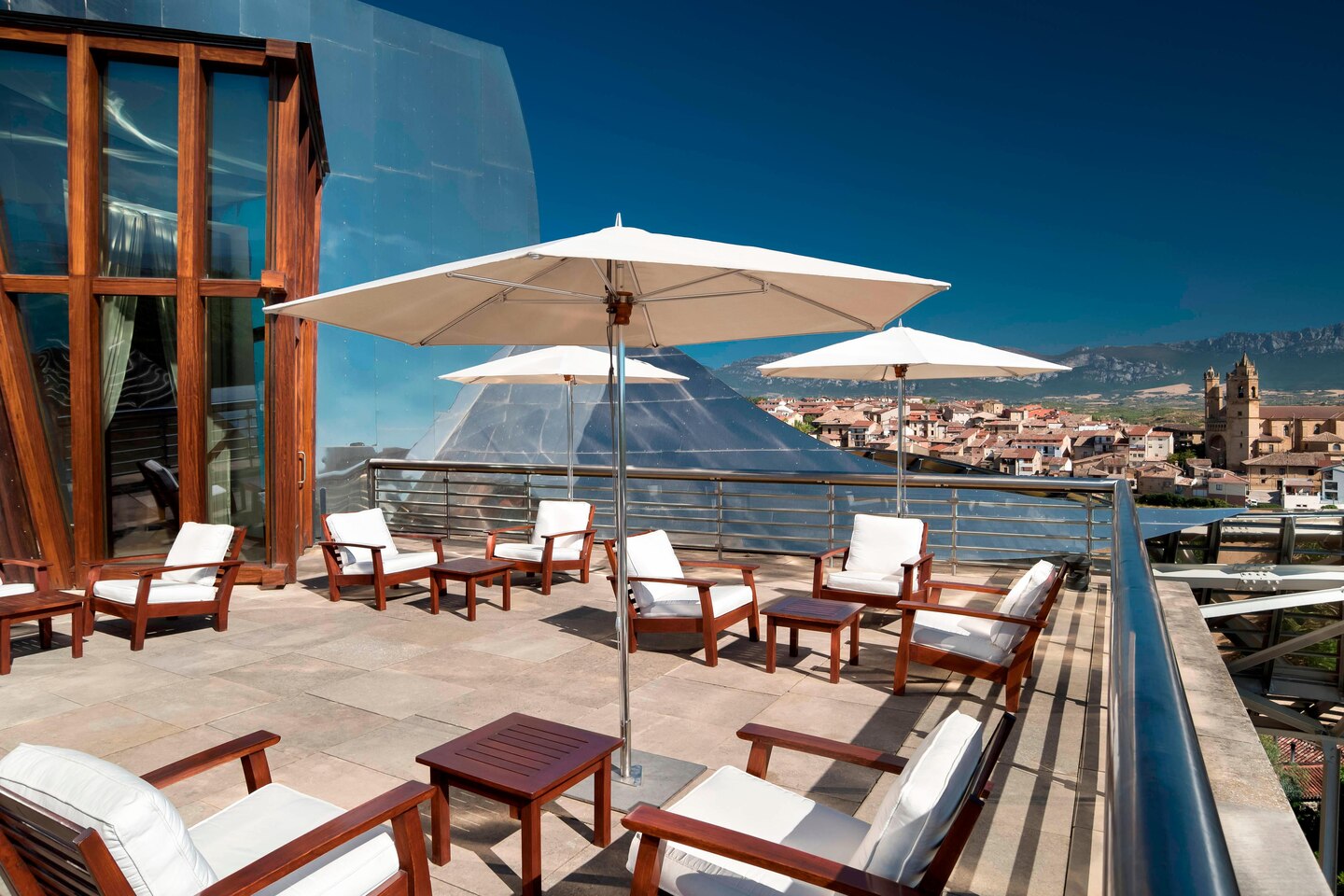
Elciego is a place of vineyards, stone buildings, cellar doors, and centuries of winemaking. Then Frank Gehry arrived. Set beside Marqués de Riscal’s original 19th-century winery buildings, the hotel rises from the landscape in a mass of angled volumes and rippling titanium. It is deliberately impossible to ignore. Originally conceived as part of the estate’s wider City of Wine project, Gehry’s intervention became too significant to remain purely corporate. The building was transformed into a hotel, allowing guests to inhabit one of Rioja’s most extraordinary pieces of contemporary architecture. History remains all around it. The architecture simply refuses to imitate it.
Titanium in Motion
The exterior is the defining gesture. Around 3,000 square metres of corrugated titanium wrap and fold around the building in long metallic ribbons, creating something that appears almost weightless despite its complexity. The colours are specific. Pink-red evokes wine. Gold recalls the mesh surrounding a traditional Marqués de Riscal bottle. Silver references the bottle capsule. Depending on the light, the entire composition changes character. Morning makes it pale and almost ethereal. Evening gives the metal deeper, warmer tones. Architecture becomes movement.
Living Inside a Gehry Building
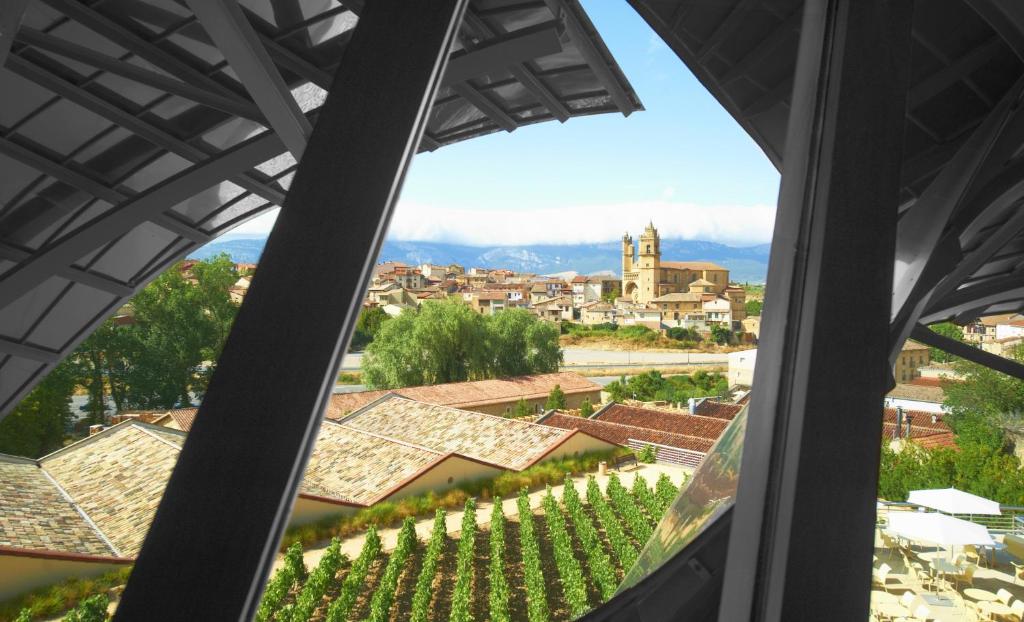
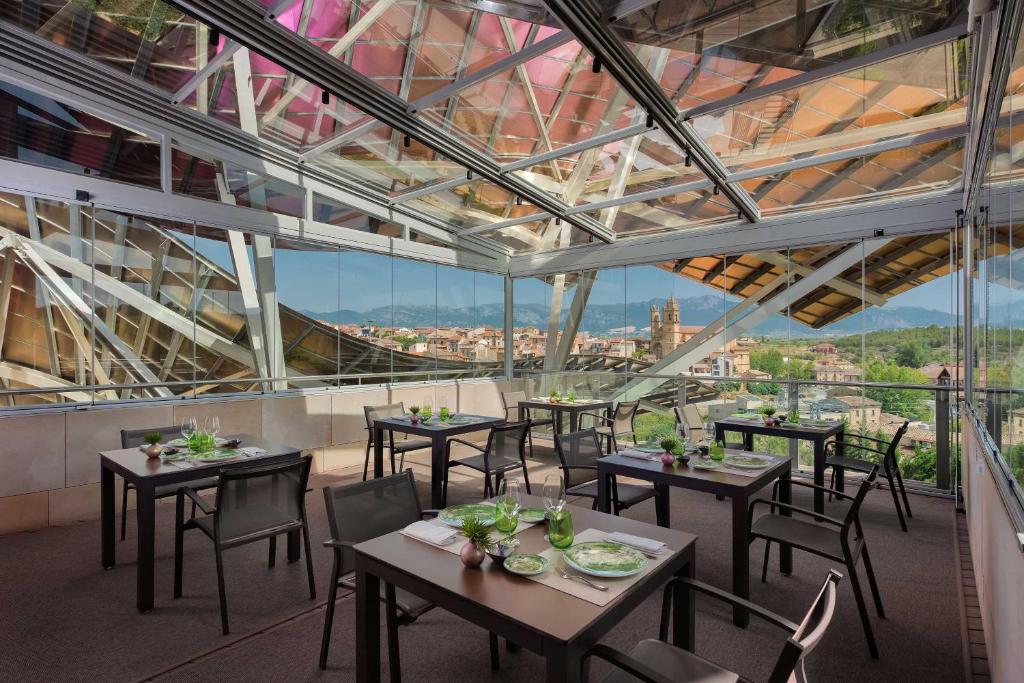
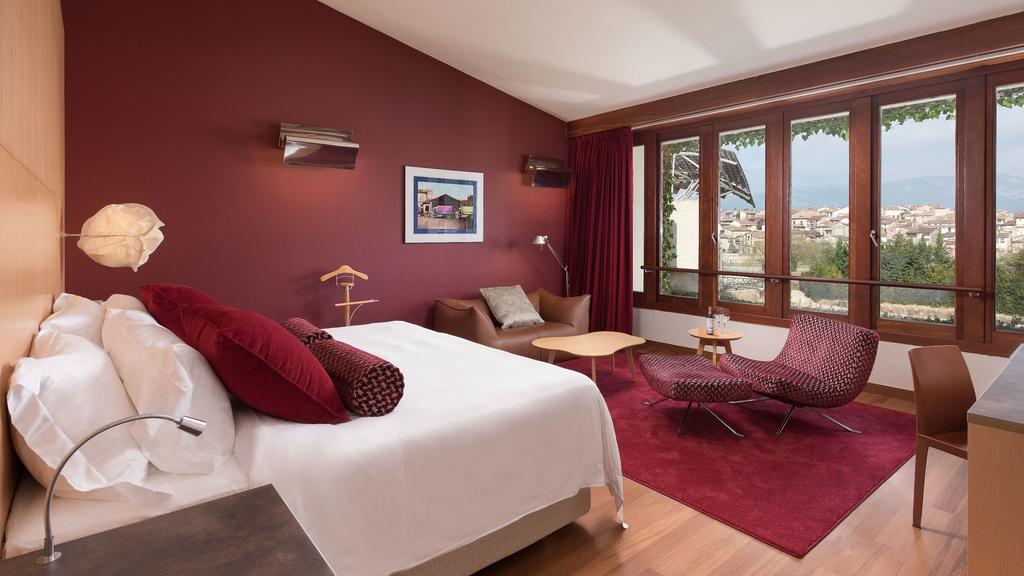
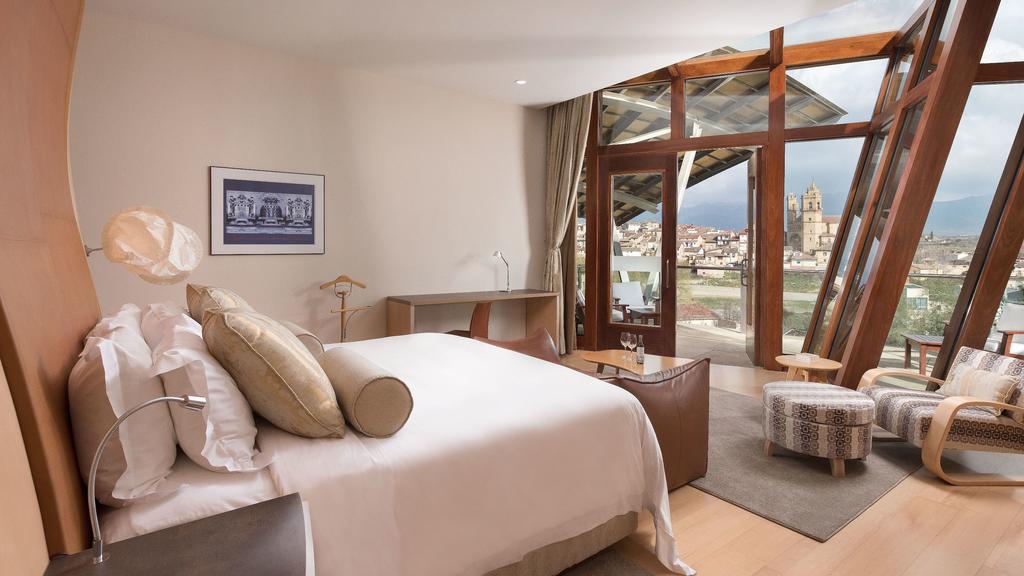
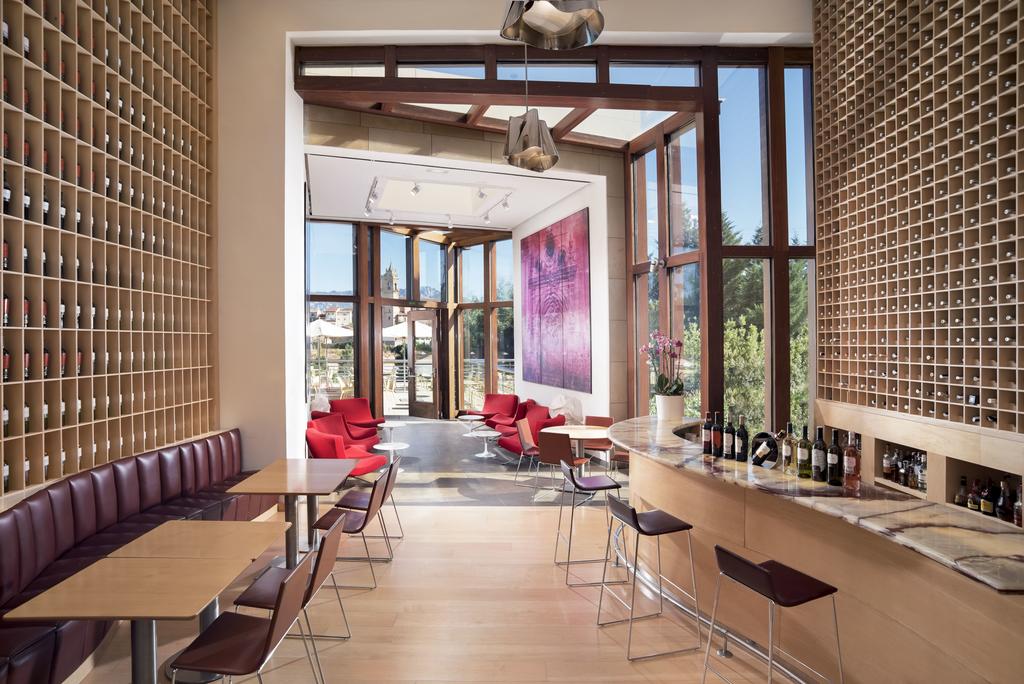
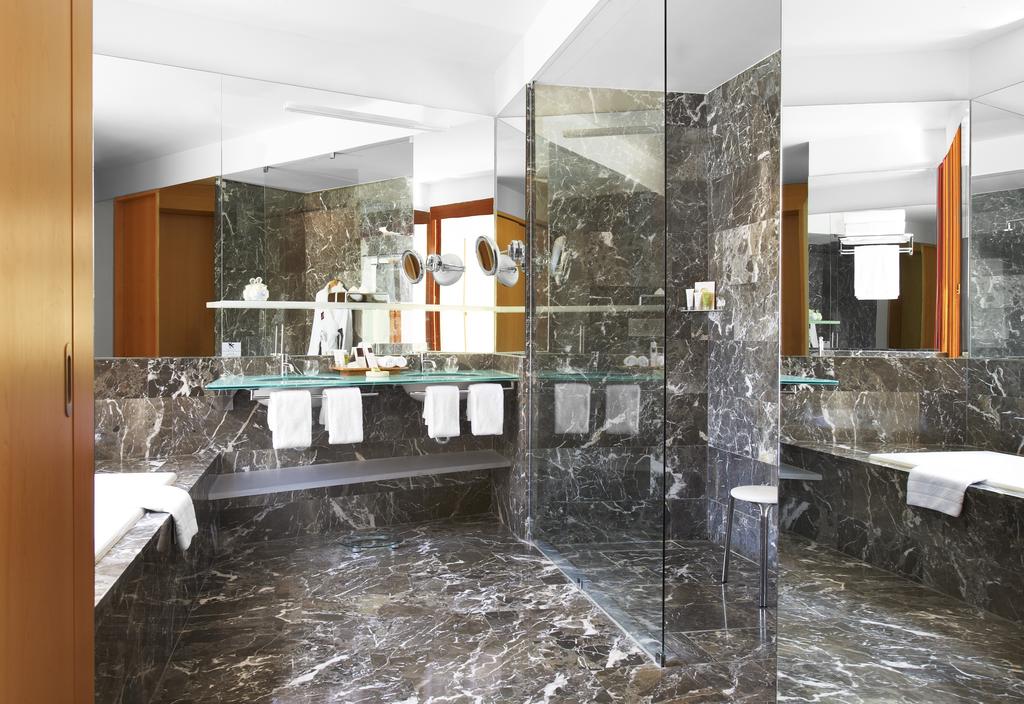
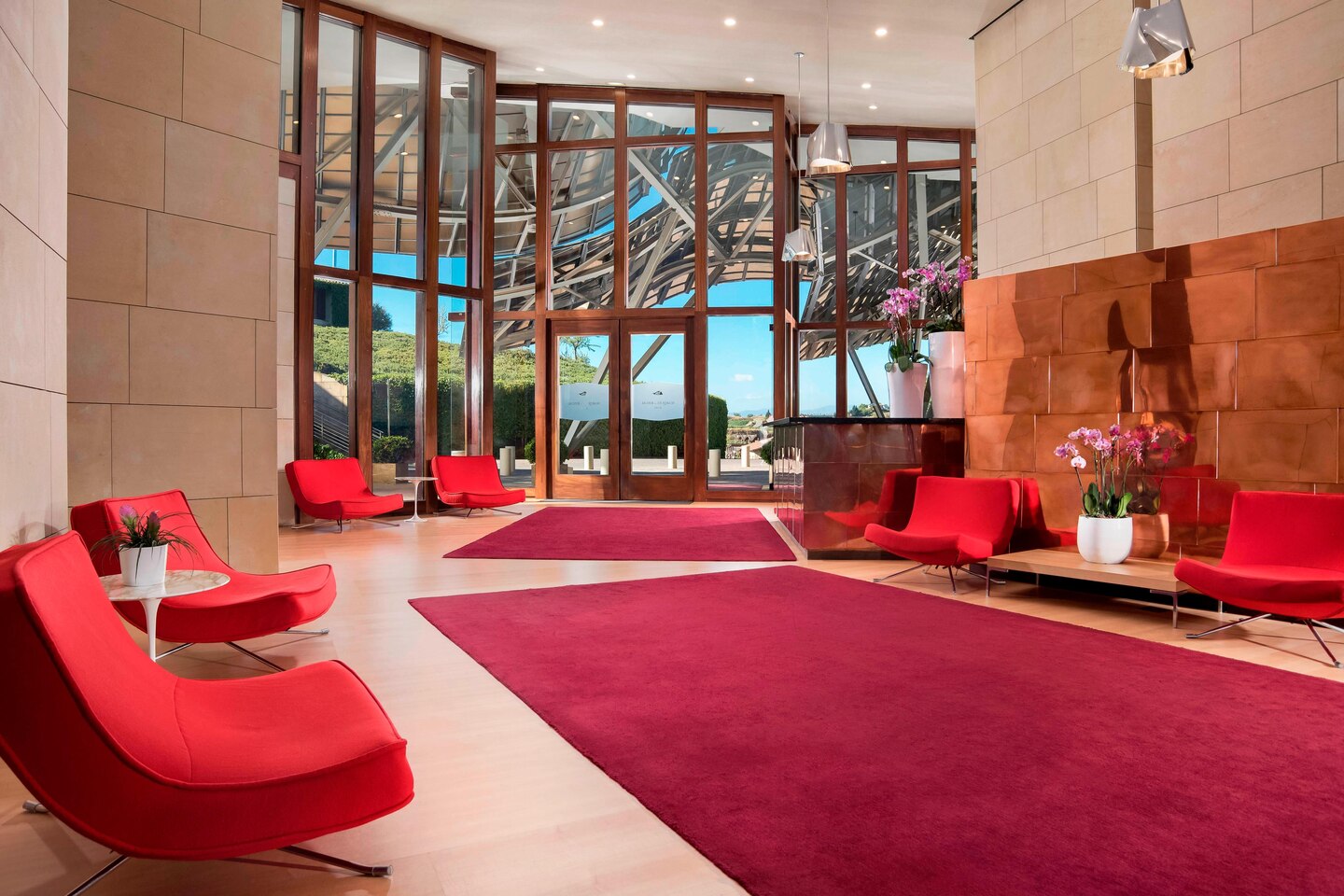
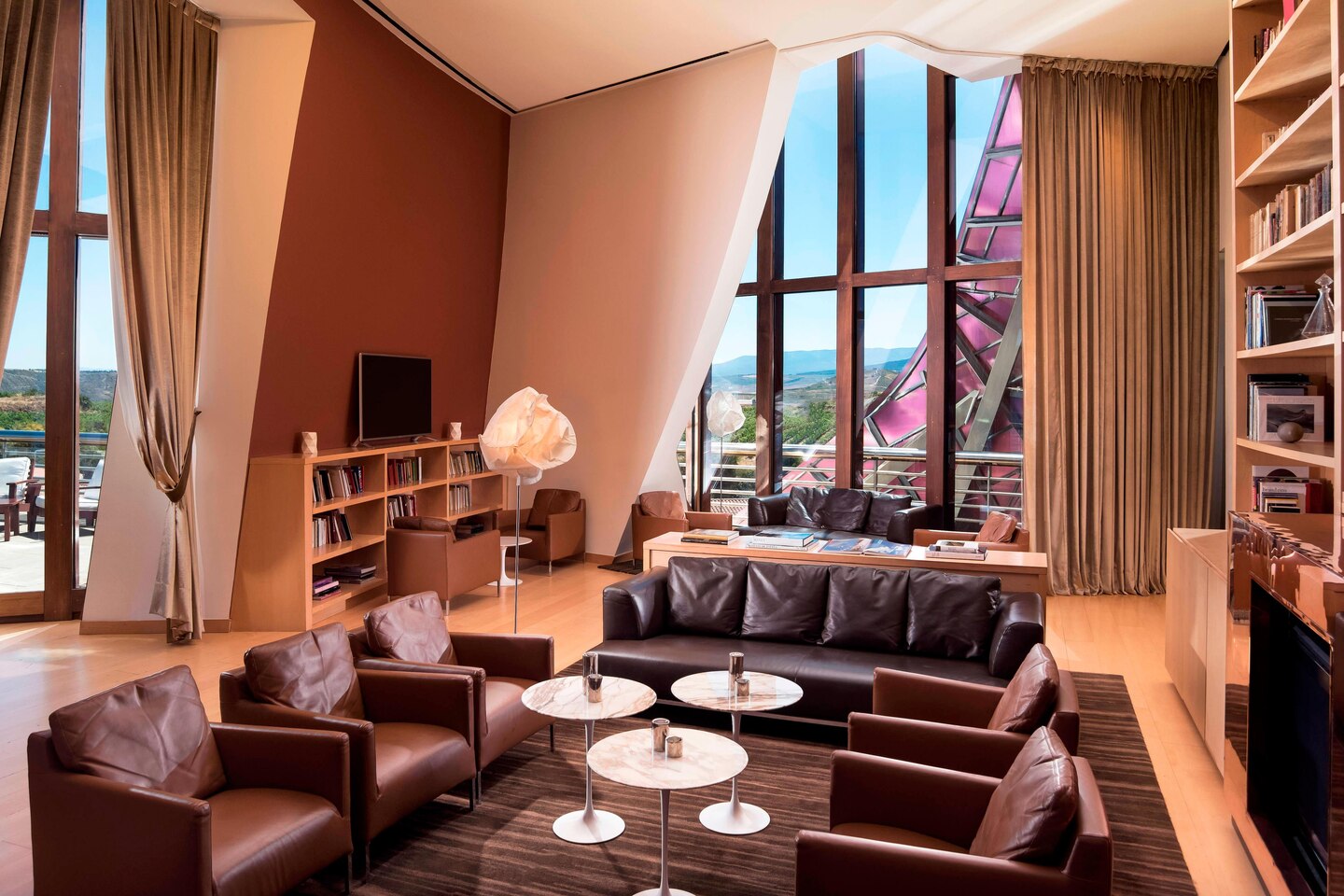
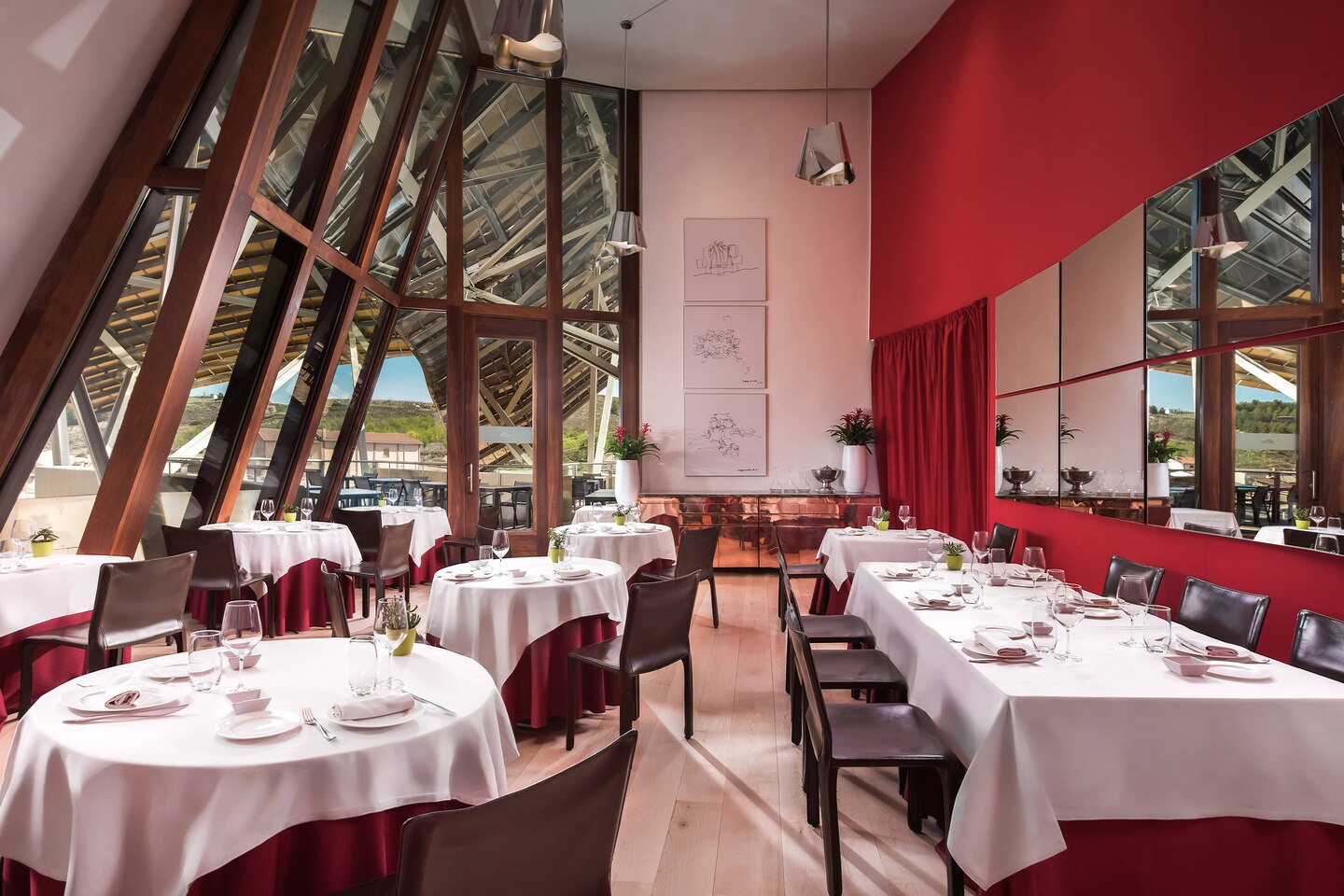
The guestrooms reveal what happens when conventional hotel planning is forced to accommodate sculptural architecture. Rooms in the main Gehry building follow its irregular geometry. Walls angle unexpectedly. Windows tilt outward. Structural elements intersect the views. Nothing feels generic. That complexity is part of the pleasure. Other rooms are located in an adjoining structure with more conventional proportions, but gain something equally compelling: direct views back towards Gehry’s metallic composition. Across the hotel, contemporary furnishings, leather, timber, and carefully controlled lighting soften the harder architectural gestures. The building remains the protagonist.
Wine as Architecture’s Counterweight
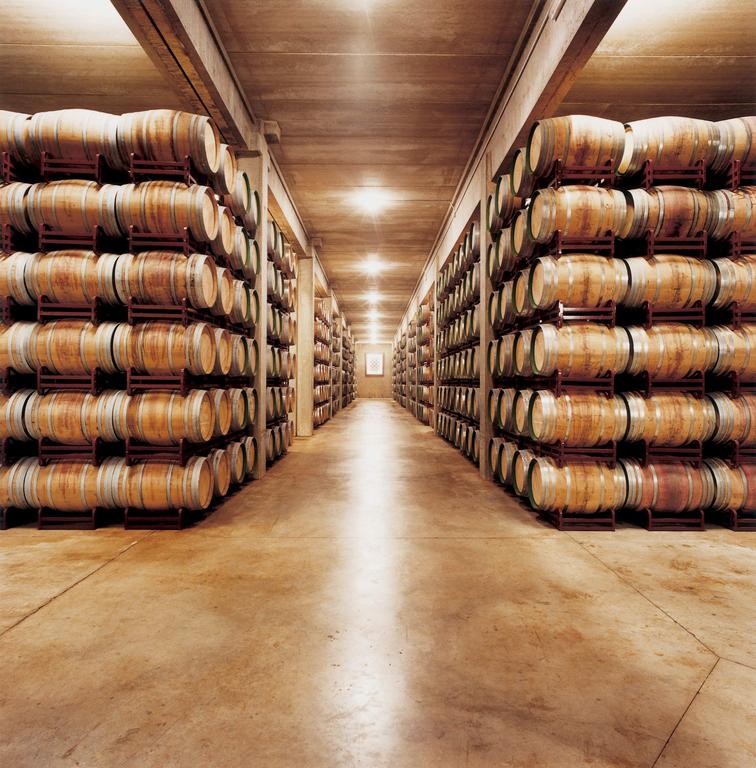
The hotel belongs to Marqués de Riscal, an estate whose history extends far beyond Gehry’s intervention. Below and around the contemporary structure sit vaulted cellars and historic winery buildings that tell a very different architectural story—stone, darkness, repetition, and permanence. That contrast gives the hotel its depth. Guests can move from titanium ribbons to historic barrel rooms, from contemporary luxury to centuries of wine production, without ever leaving the estate. Tours and tastings make the winery part of the stay rather than a neighbouring attraction. Wine is not branding here. It is the reason the place exists.
Gastronomy and Vinotherapy
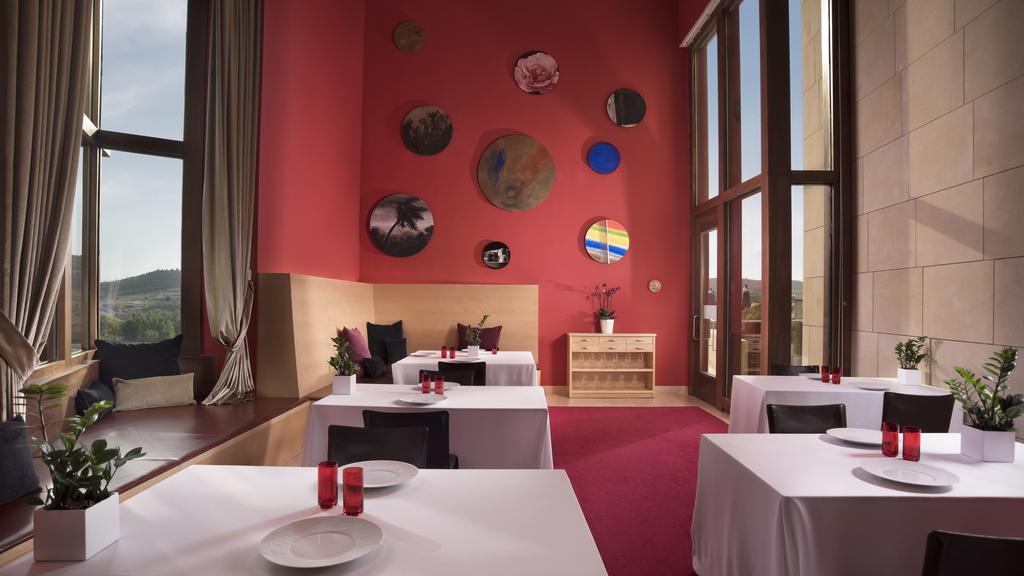
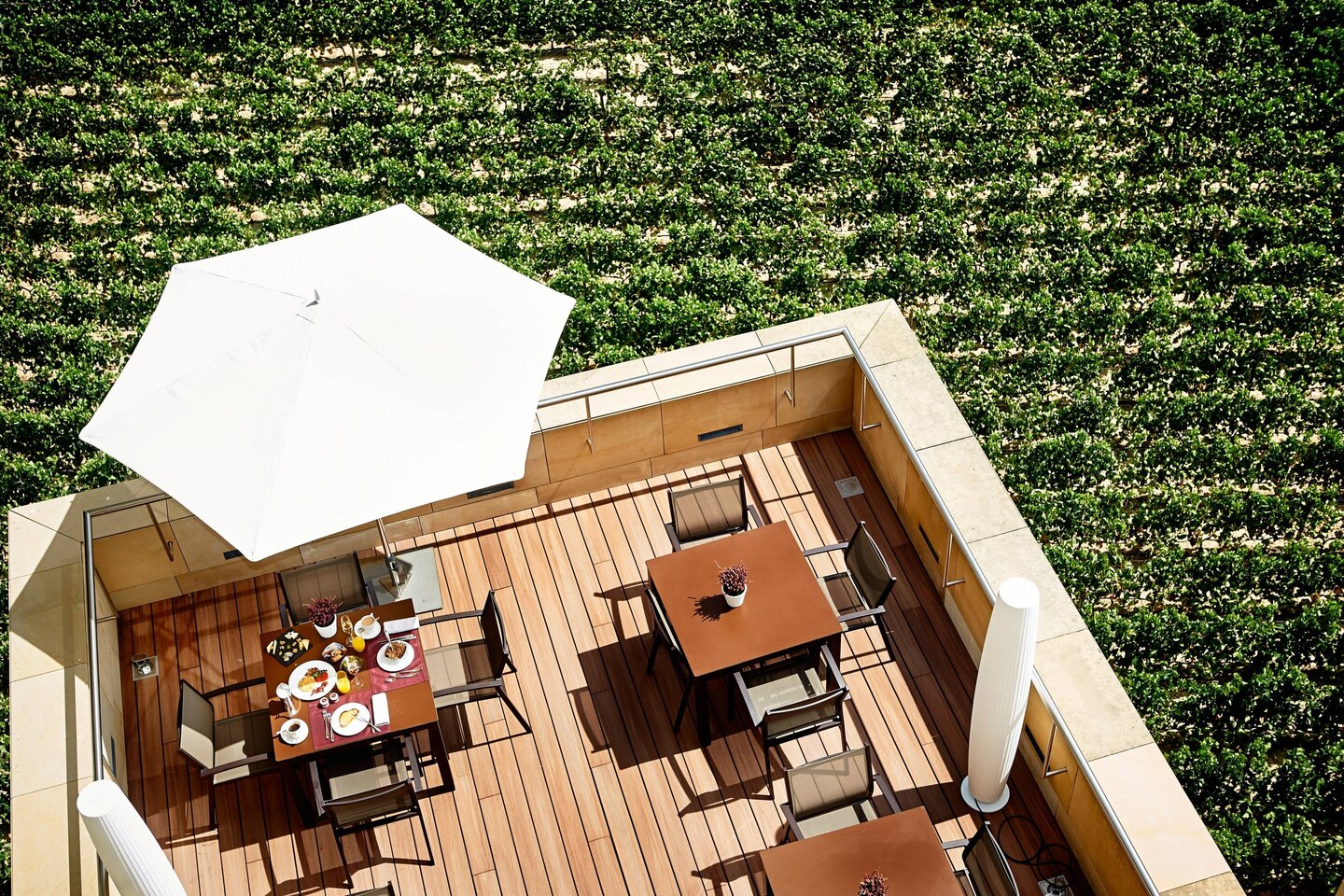
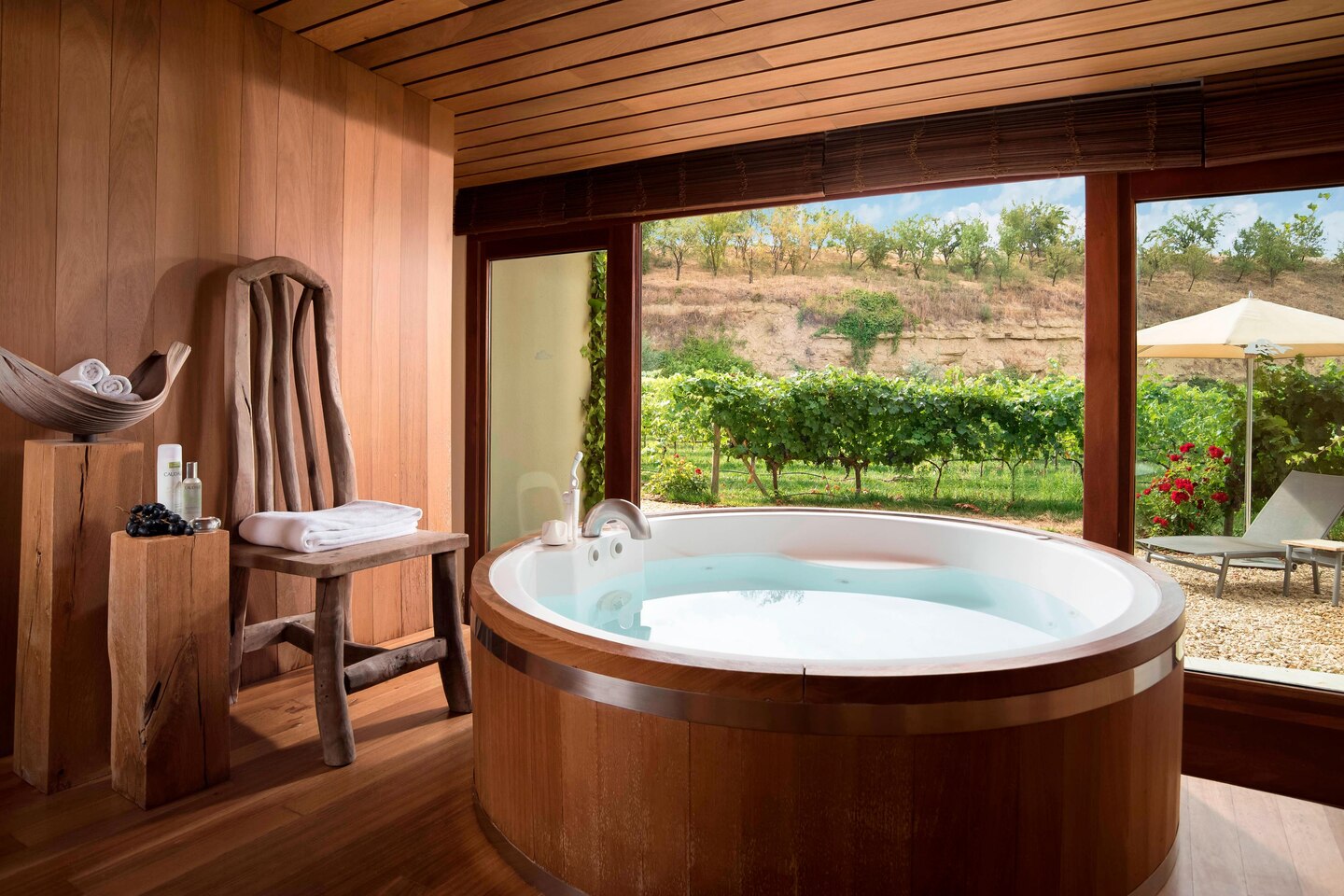
Food completes the connection to Rioja. The hotel’s restaurants place regional produce and contemporary technique at the centre of the experience, supported, inevitably, by the estate’s wines. Then there is the Caudalie Vinothérapie Spa. Its treatments draw on grape-derived ingredients and the wellness traditions associated with wine country, while an indoor pool, treatment rooms, and fitness facilities provide a quieter counterpoint to the building’s visual intensity. Outside, the vineyards stretch towards medieval villages and distant hills. Inside, everything leads back to the landscape.
Why It Works
Hotel Marqués de Riscal works because it embraces contrast rather than trying to resolve it. Frank Gehry’s titanium architecture is flamboyant, futuristic, and unmistakably contemporary, yet it sits within an estate defined by centuries of winemaking, stone cellars, and agricultural tradition. The tension between those worlds gives the hotel its identity. Add the winery, serious gastronomy, vinotherapy, and the chance to actually sleep inside one of Gehry’s most distinctive European buildings, and this becomes more than a hotel in Rioja. It is an architectural destination built around wine.
Information
At a glance
Architecture
Frank Gehry
Opened / Renovated
2006
Size matters
51 rooms (27-52m2) (291-560 sq ft) & 10 suites (65-83m2) (700-893 sq ft)
Interior design
Frank Gehry
Featured in
Don't take our word for it


Handpicked worldwide
A carefully curated collection of exceptional boutique and design hotels across the globe.
Design with soul
Architecture, atmosphere and craftsmanship come together in stays with a clear identity.
Hidden, not hyped
Independent boutique hotels you rarely find on mainstream booking platforms.
Travel guidance
Personal recommendations and thoughtful support from people who actually know the places.