


A New Creative Address in South Pigalle
Hôtel Massé transforms a 19th-century Haussmannian building in Paris into an intimate creative retreat, where Gasparetto Parenti combines warm okoumé wood, burgundy lacquer, vintage 1970s furniture and bespoke craftsmanship with contemporary art and understated Parisian sophistication.

Why DNA Hotels loves it
A beautifully understated transformation of a Haussmannian building by emerging Parisian architecture studio Gasparetto Parenti, combining warm minimalism, vintage 1970s furniture and carefully considered craftsmanship.
An independently owned, family-run hotel where contemporary artists, designers and artisans have contributed to an interior that feels collected rather than conventionally decorated.
A genuinely neighbourhood-oriented address in South Pigalle, with relaxed all-day breakfasts, a welcoming residential atmosphere and the adjoining Le Trente bar bringing together guests and Paris's creative community.
The Stay
Seventies Modernism, Contemporary Art, and the Creative Spirit of South Pigalle
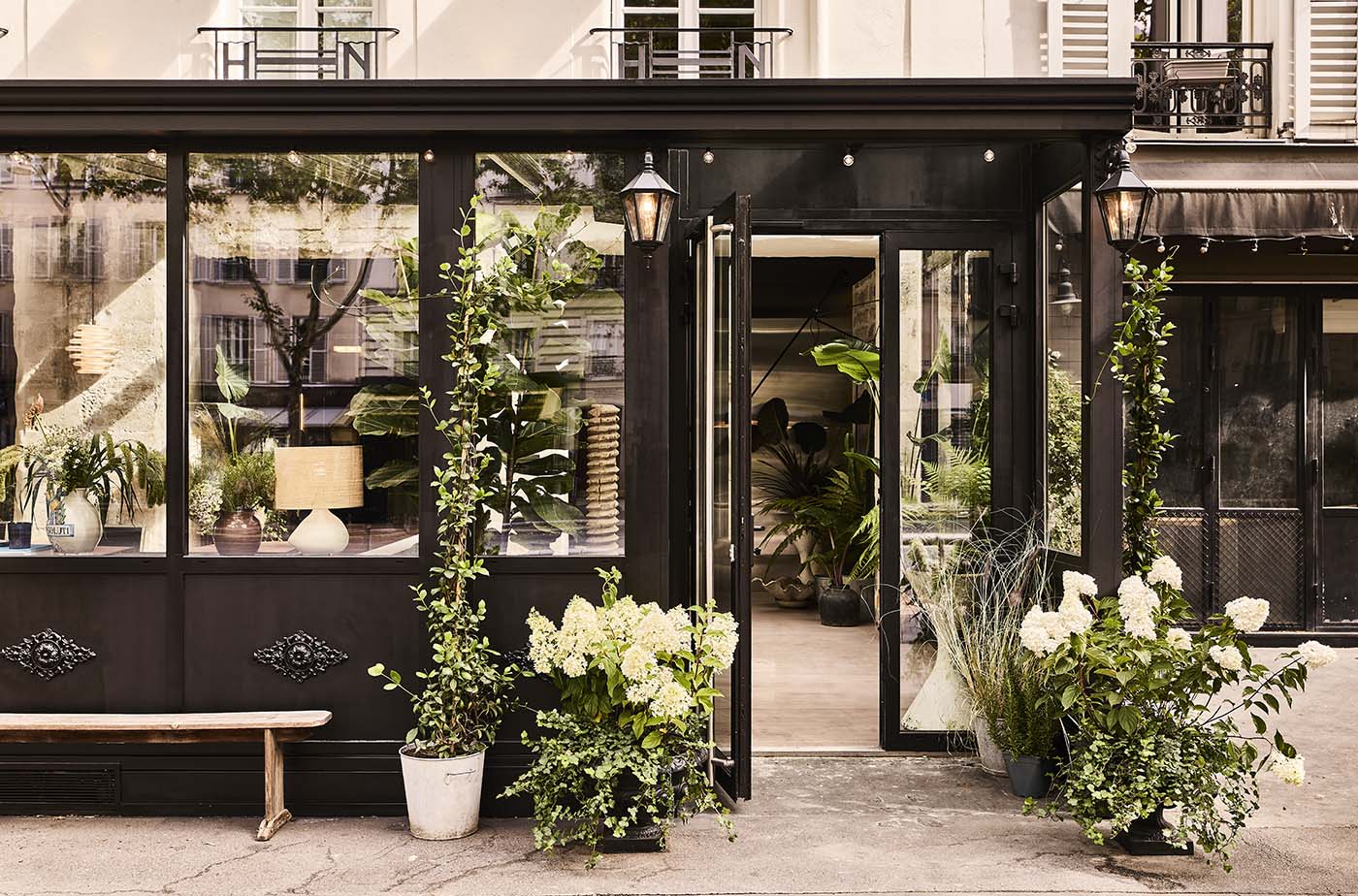
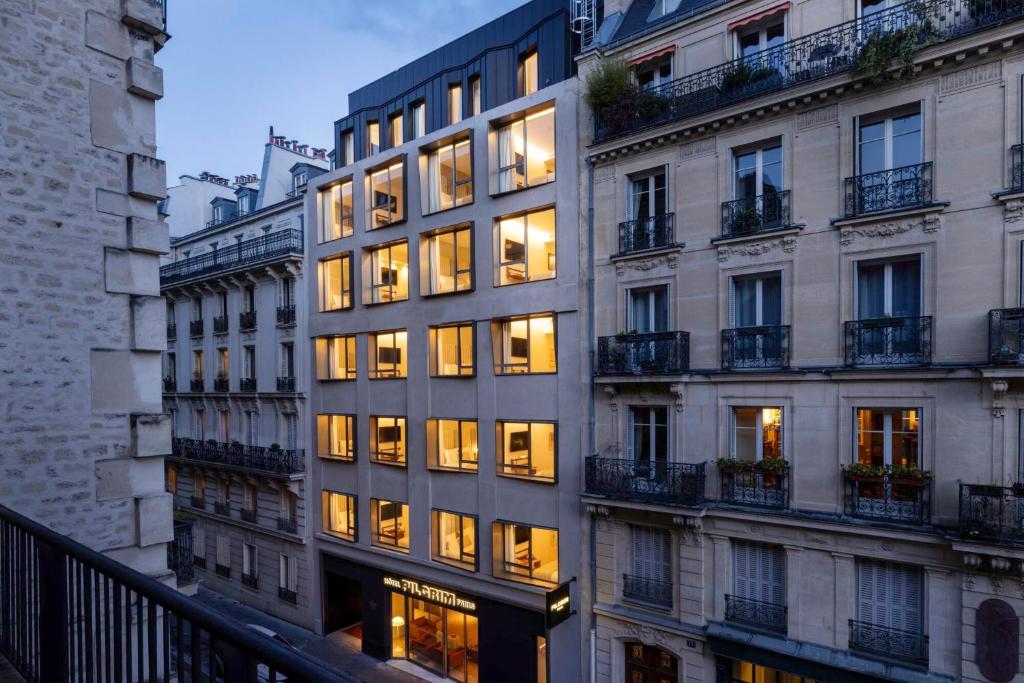
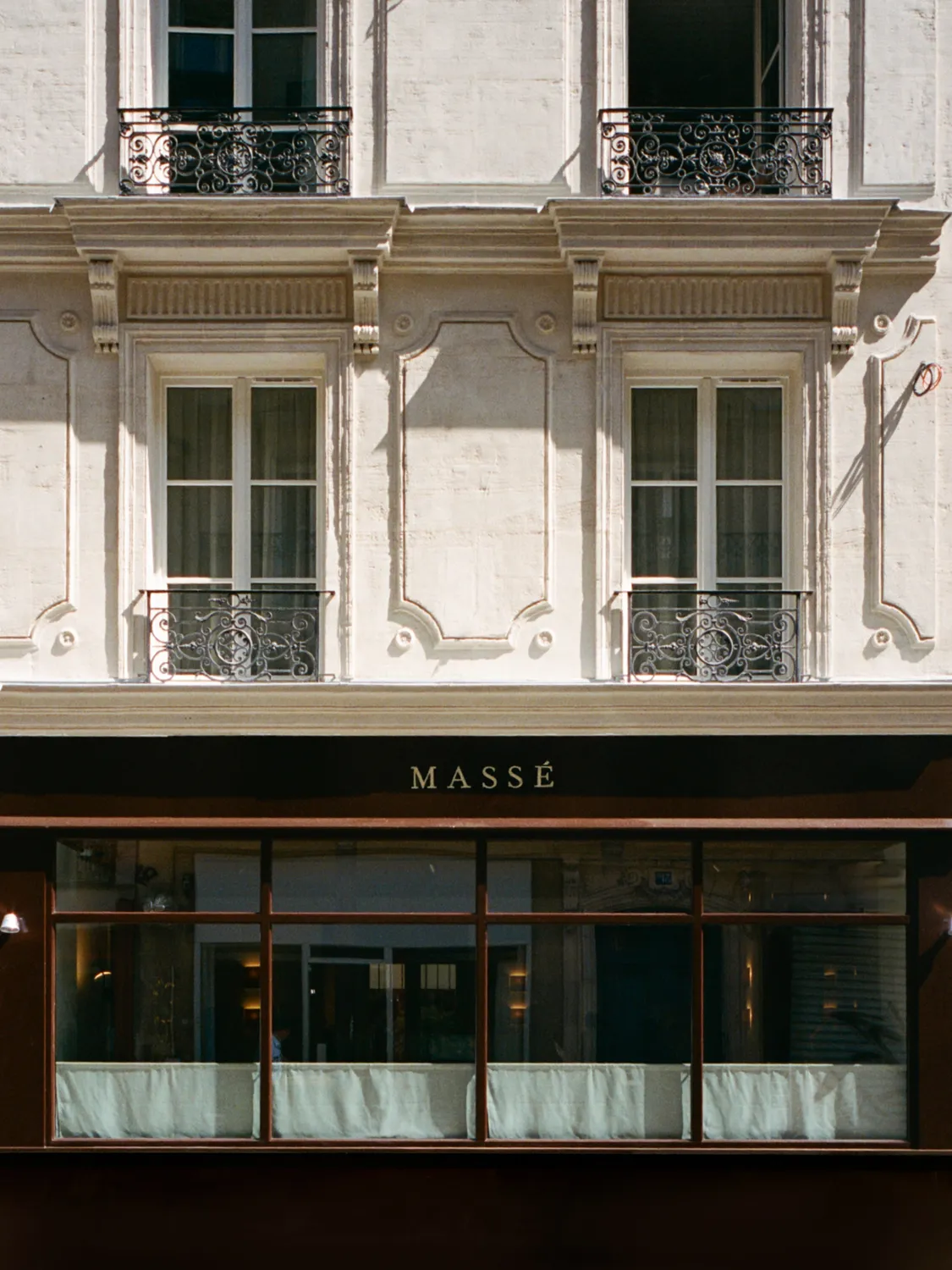
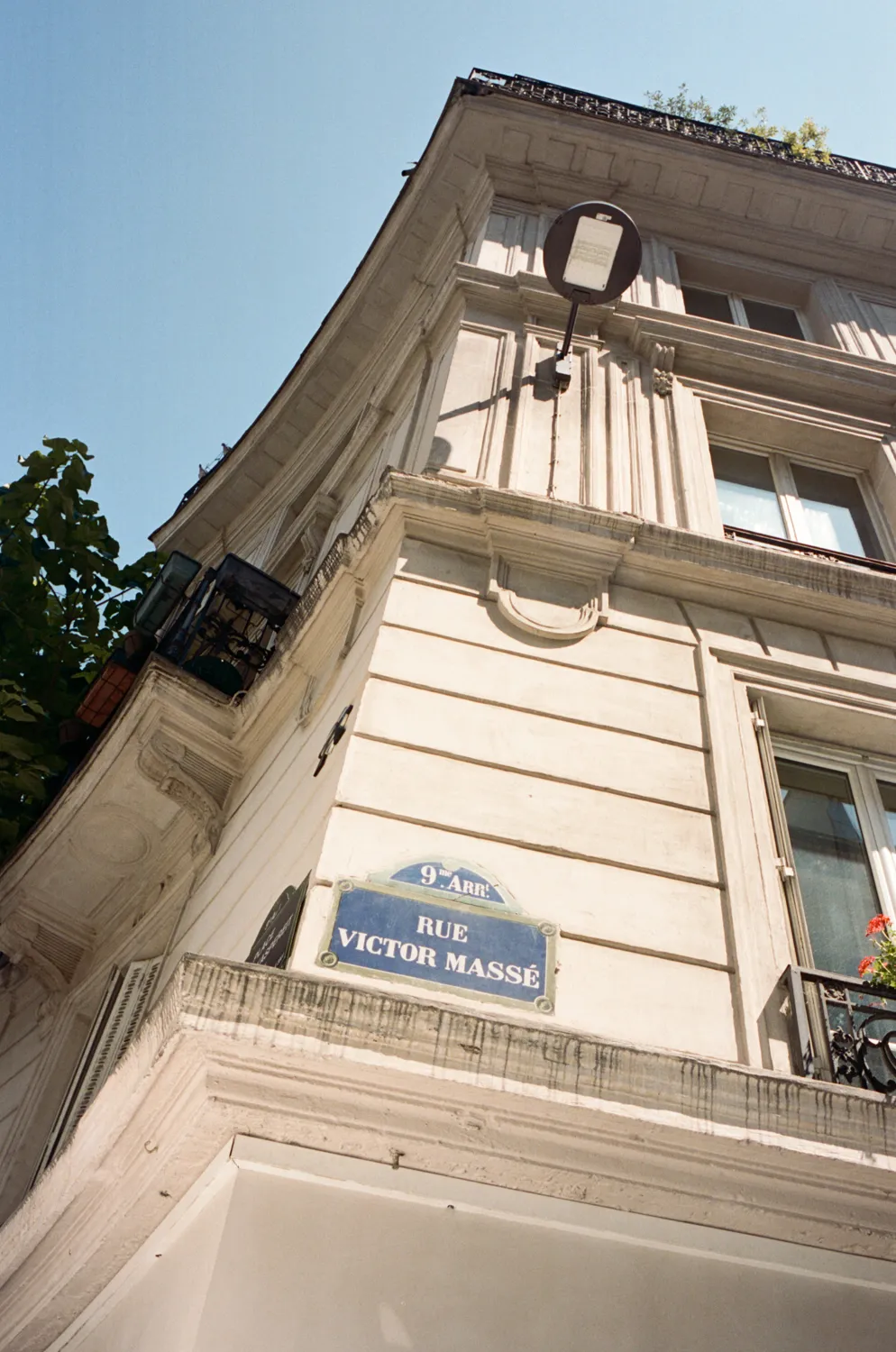
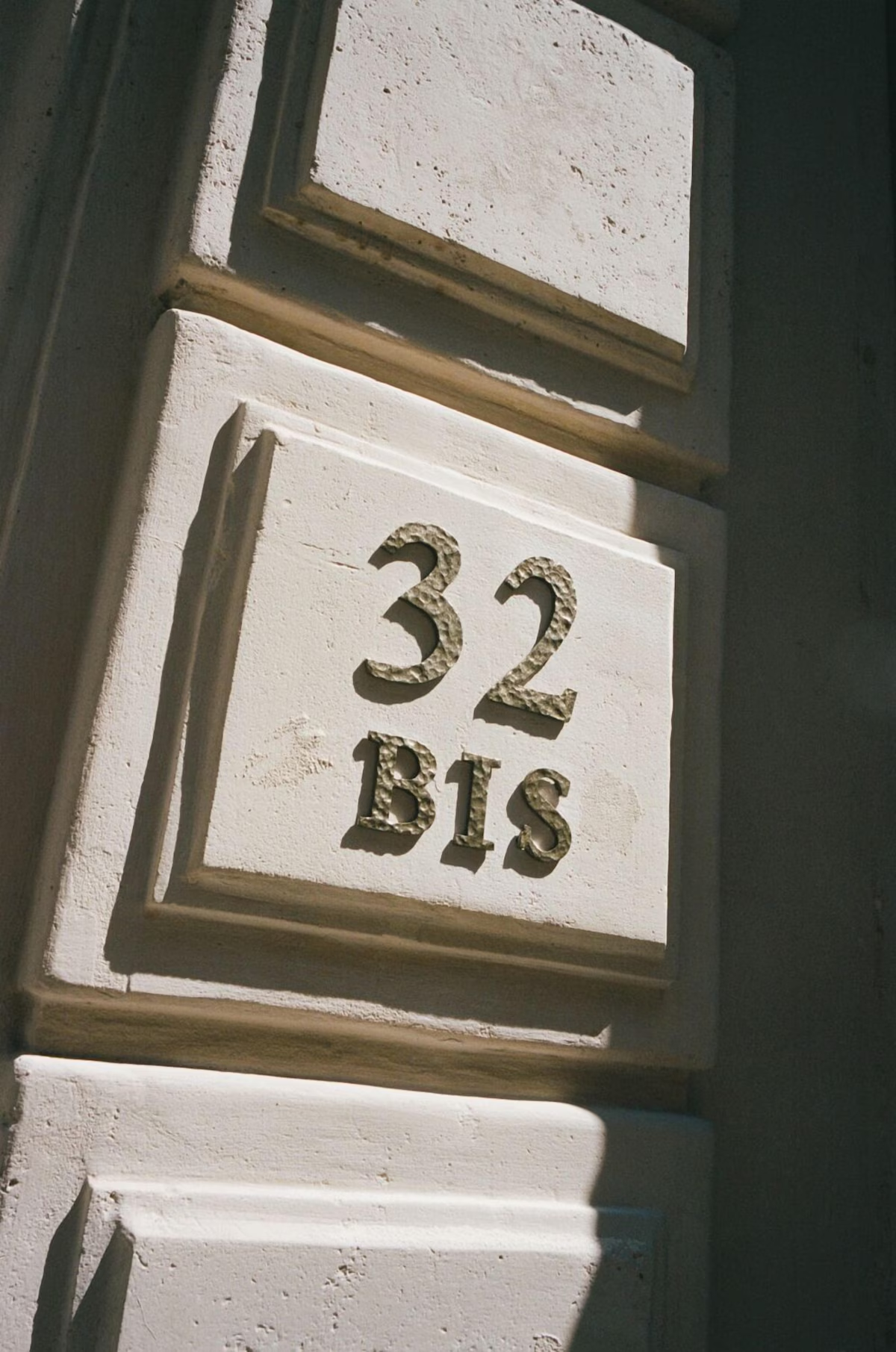
Paris has no shortage of fashionable boutique hotels, particularly in the neighbourhoods surrounding Pigalle. But Hôtel Massé manages something increasingly difficult: looking effortlessly stylish without appearing to try particularly hard. Occupying a nineteenth-century Haussmannian building on Rue Victor-Massé, the 40-room hotel is the creation of siblings Corto and Éole Peyron. Their ambition was not simply to establish another fashionable Parisian address, but to create somewhere that felt personal, welcoming and closely connected to the creative community around it. Corto brought his hospitality experience to the project, while Éole took responsibility for its artistic direction, inviting a network of architects, designers, craftspeople and artists to contribute. The result feels closer to the apartment of a particularly well-connected Parisian collector than a traditional four-star hotel. And that, of course, is precisely the attraction.
Gasparetto Parenti’s Warm Minimalism
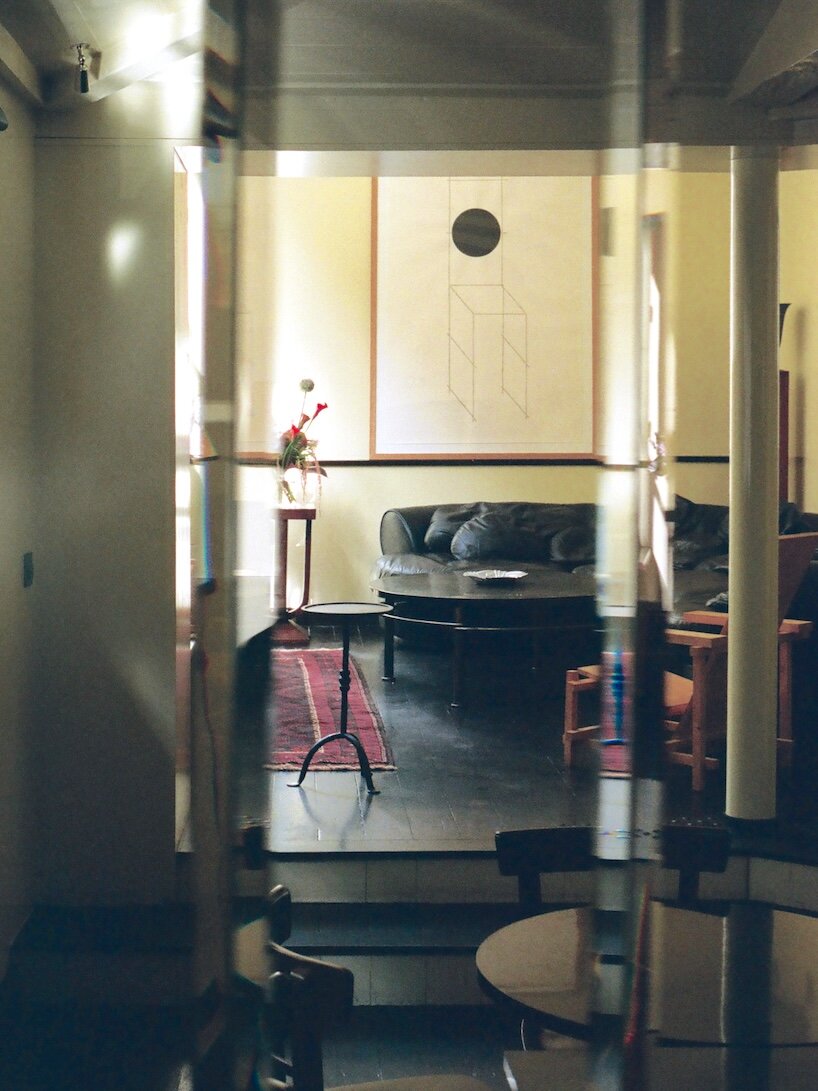
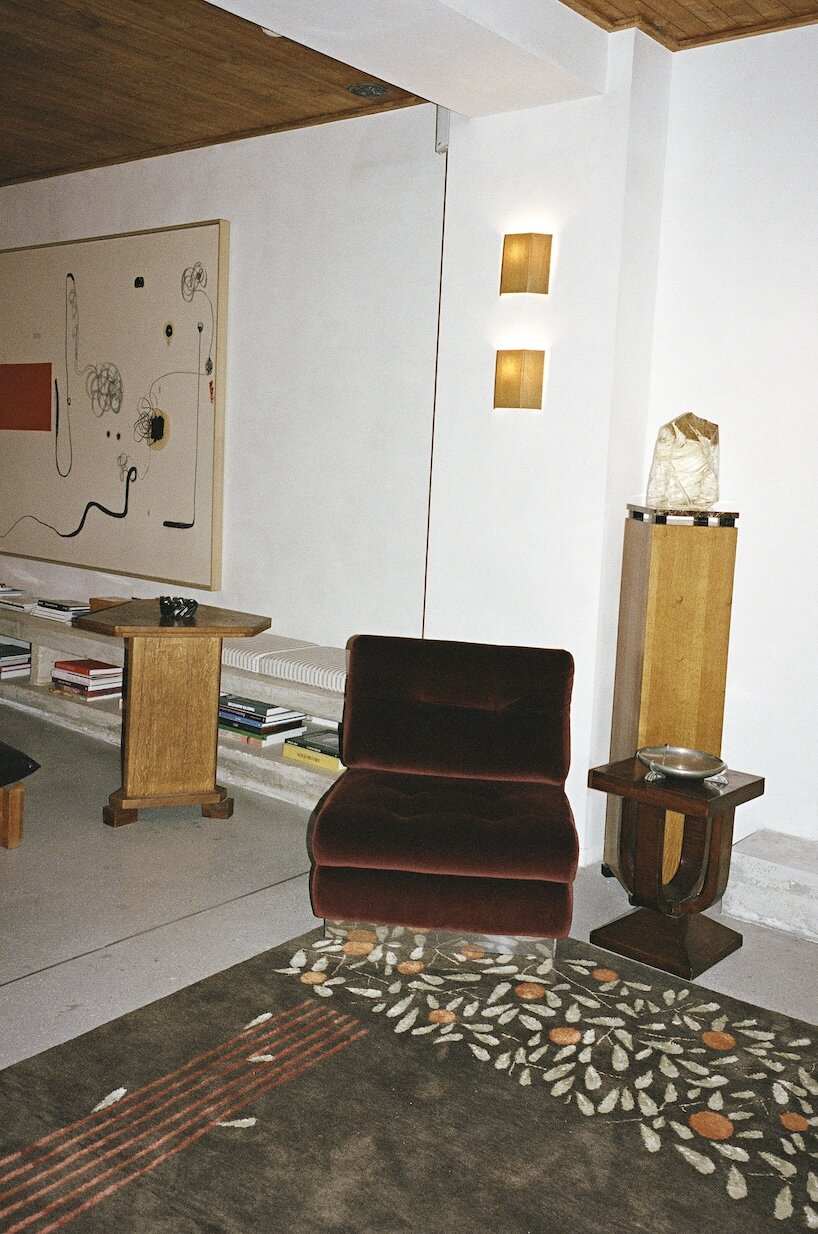
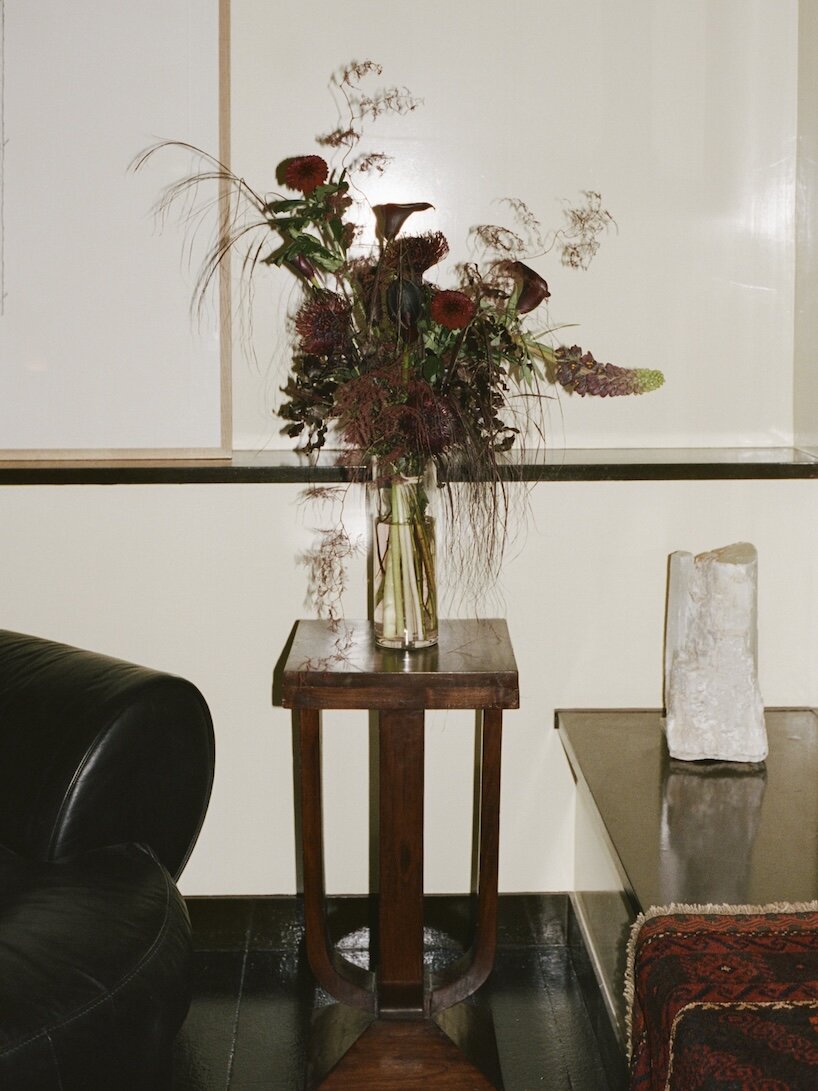
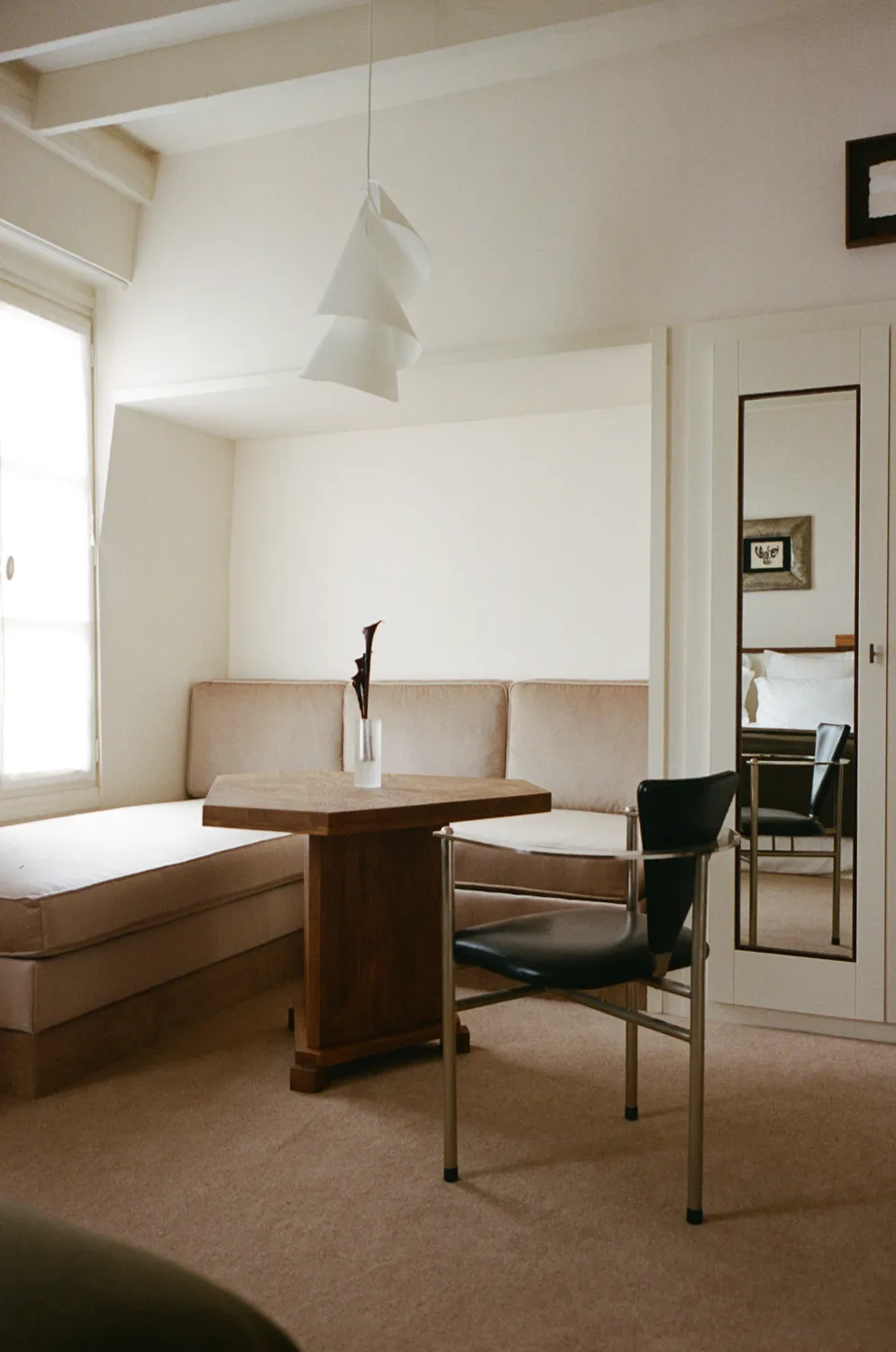
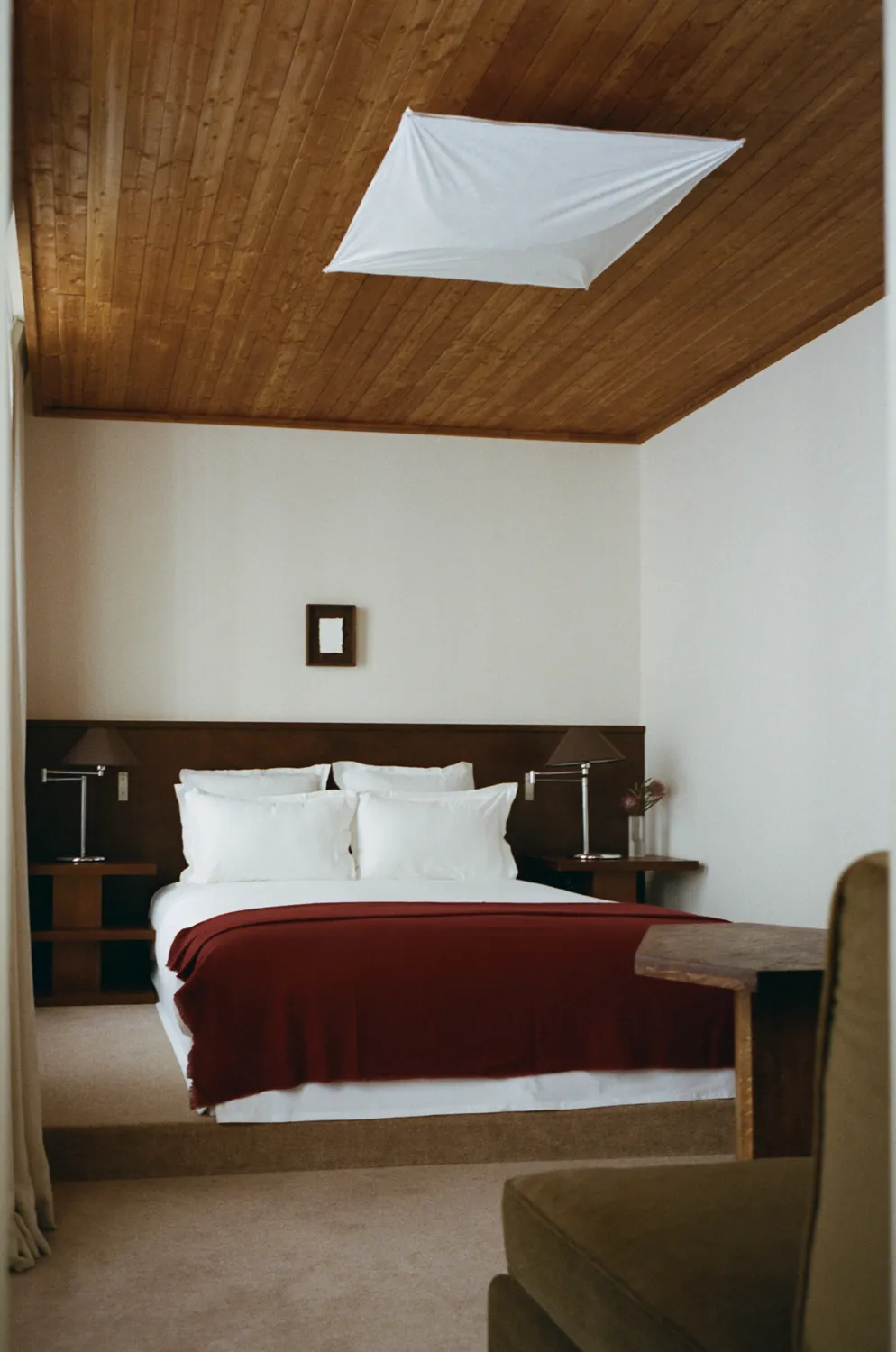
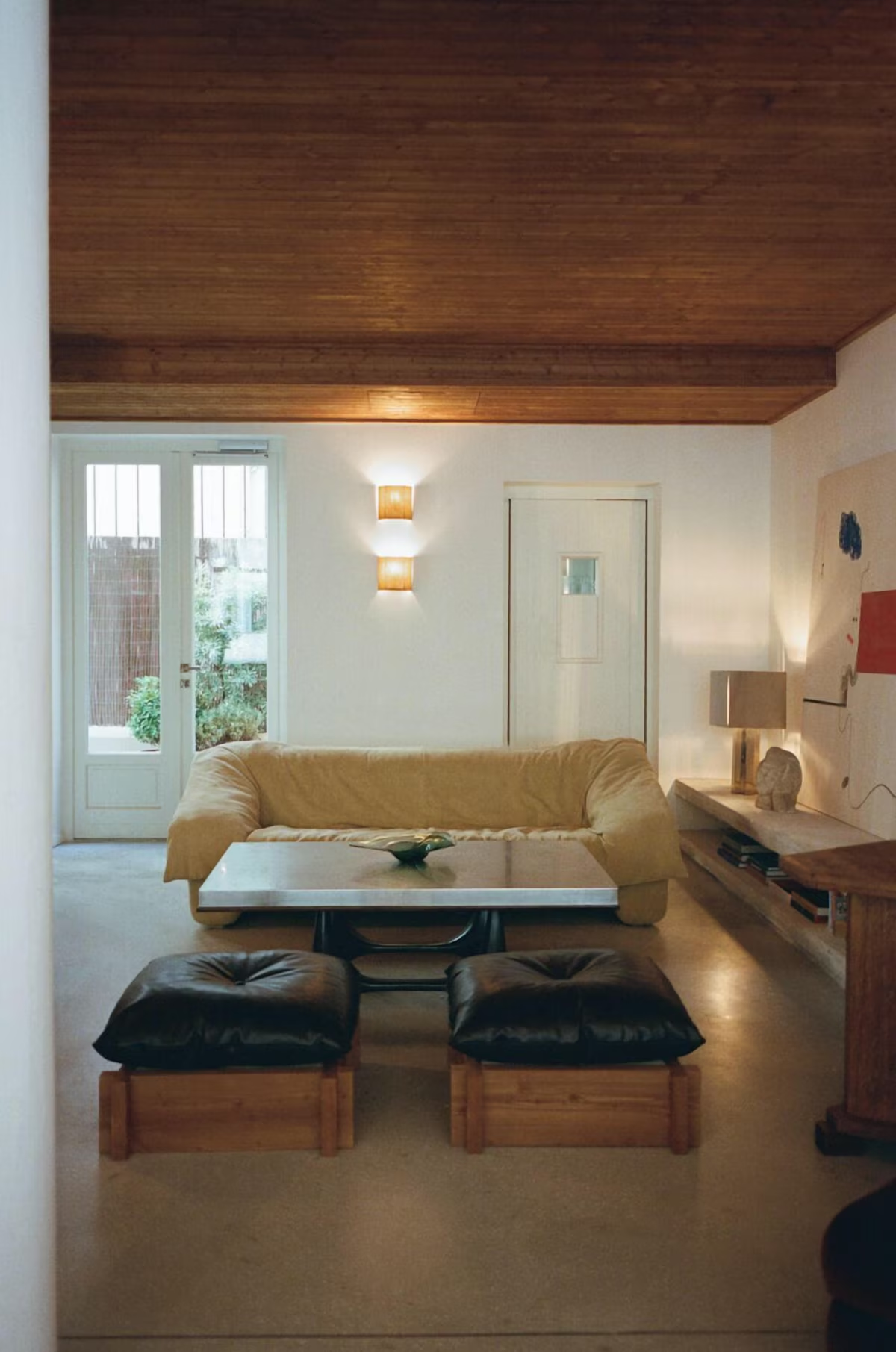
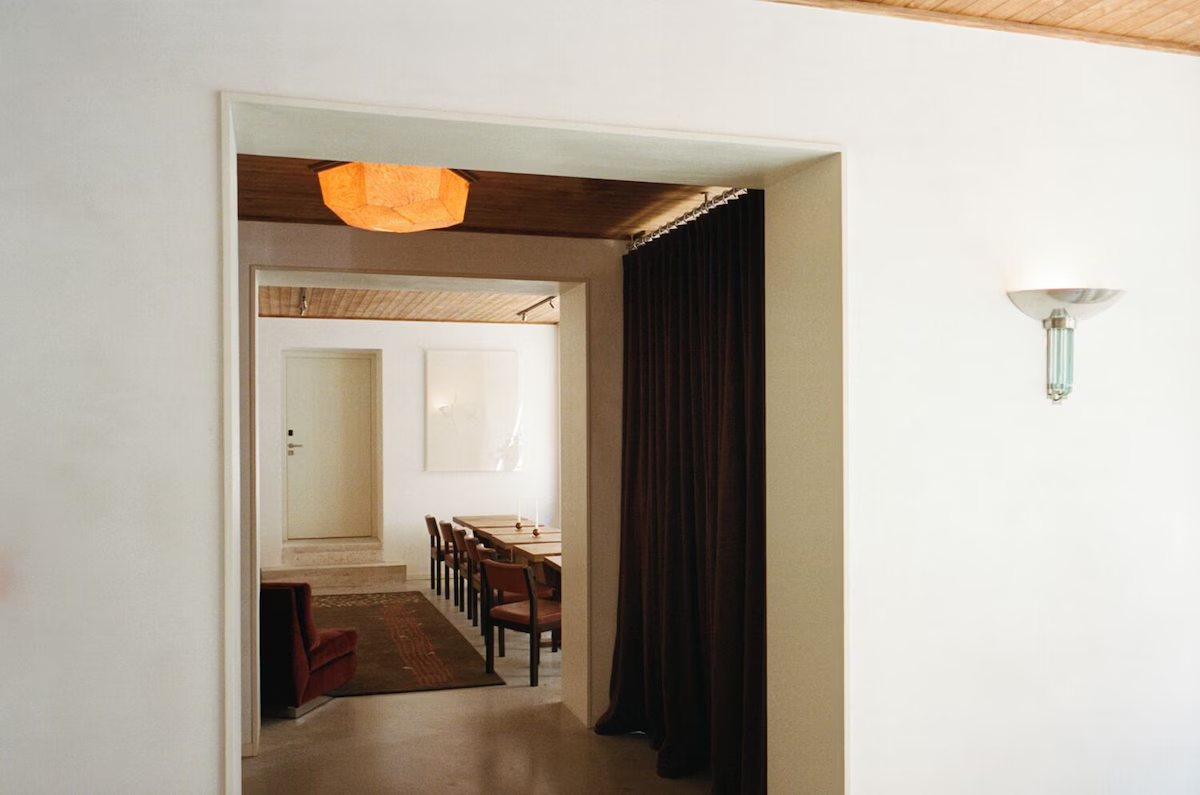
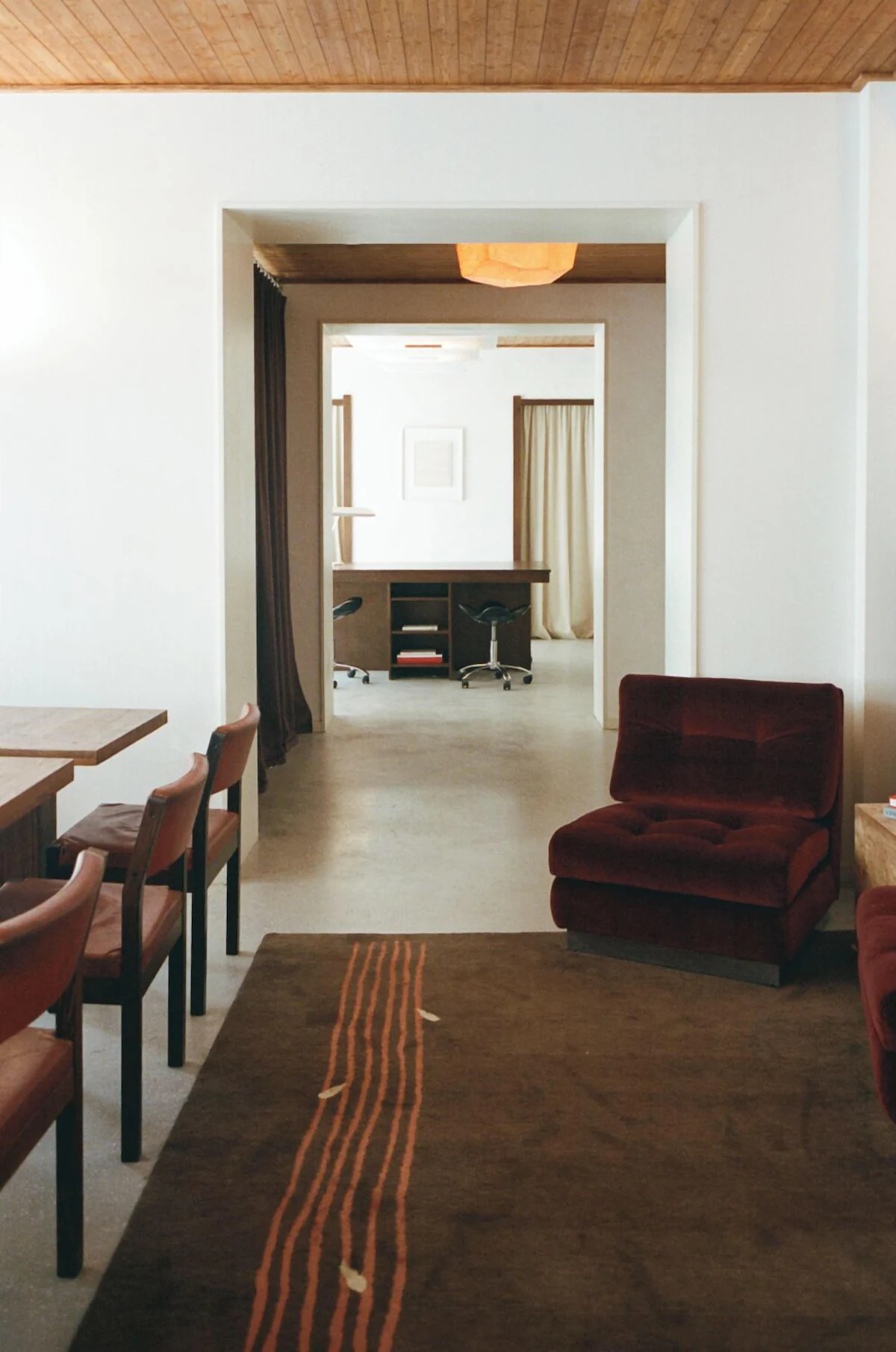
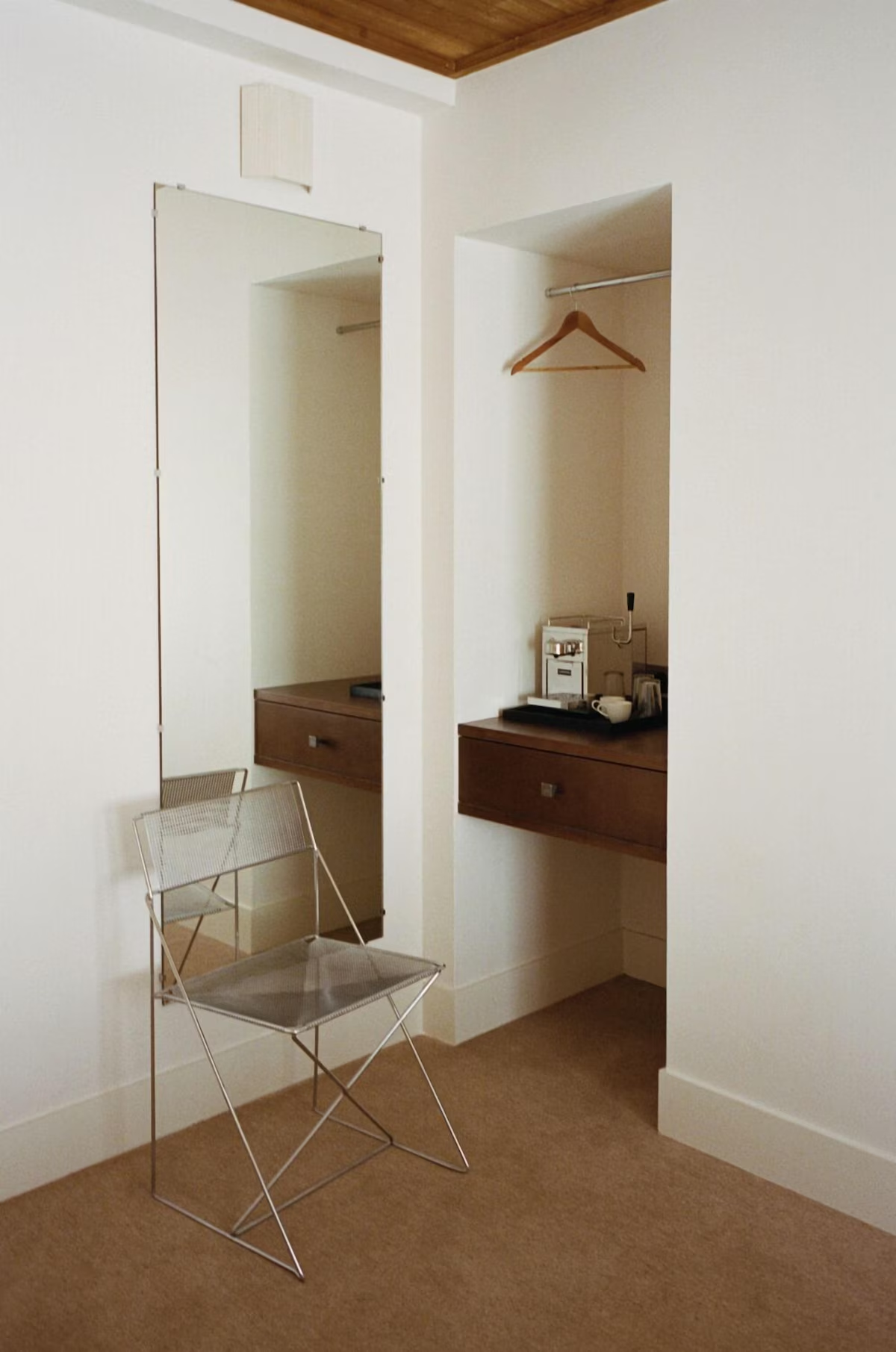
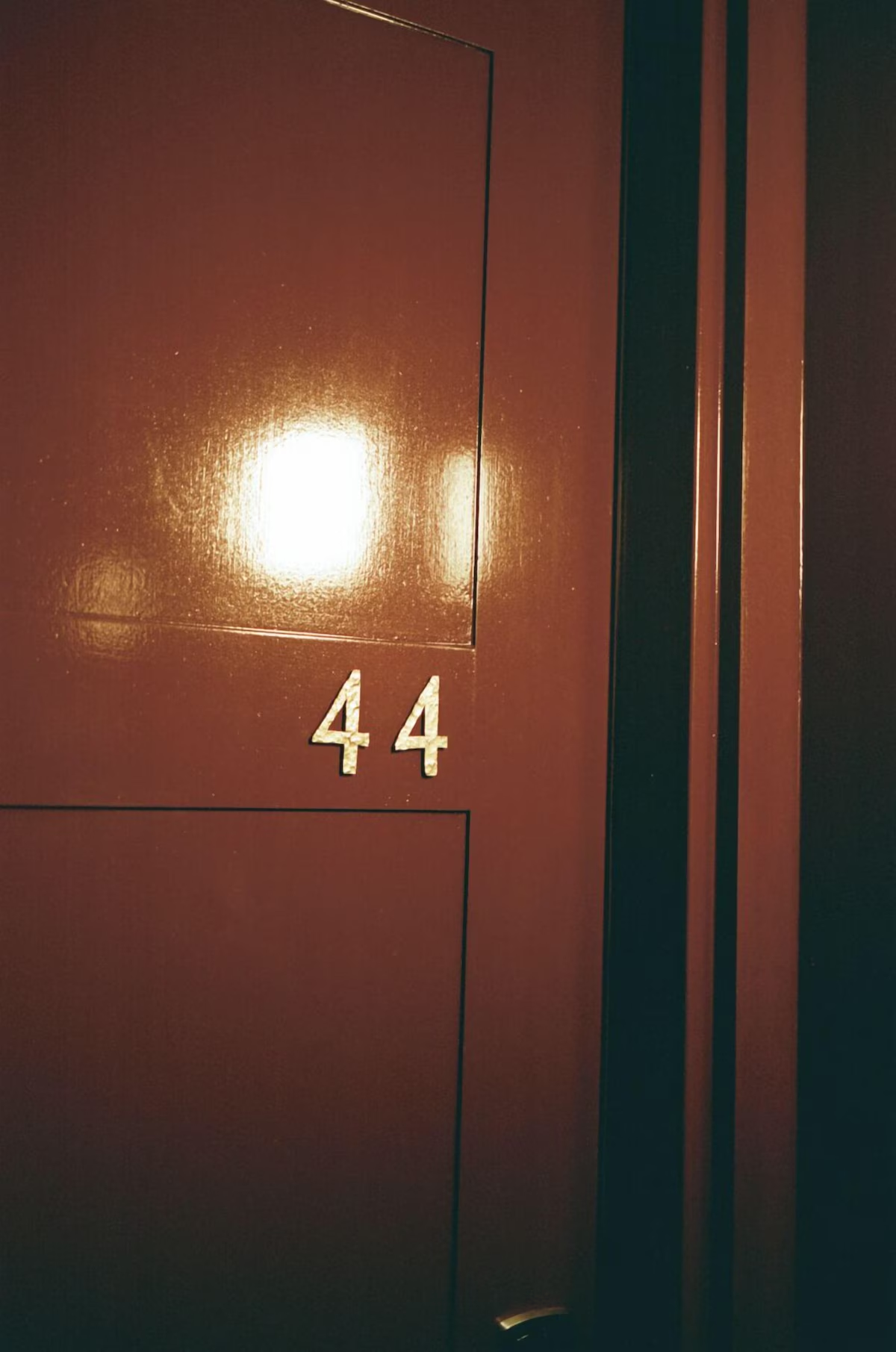
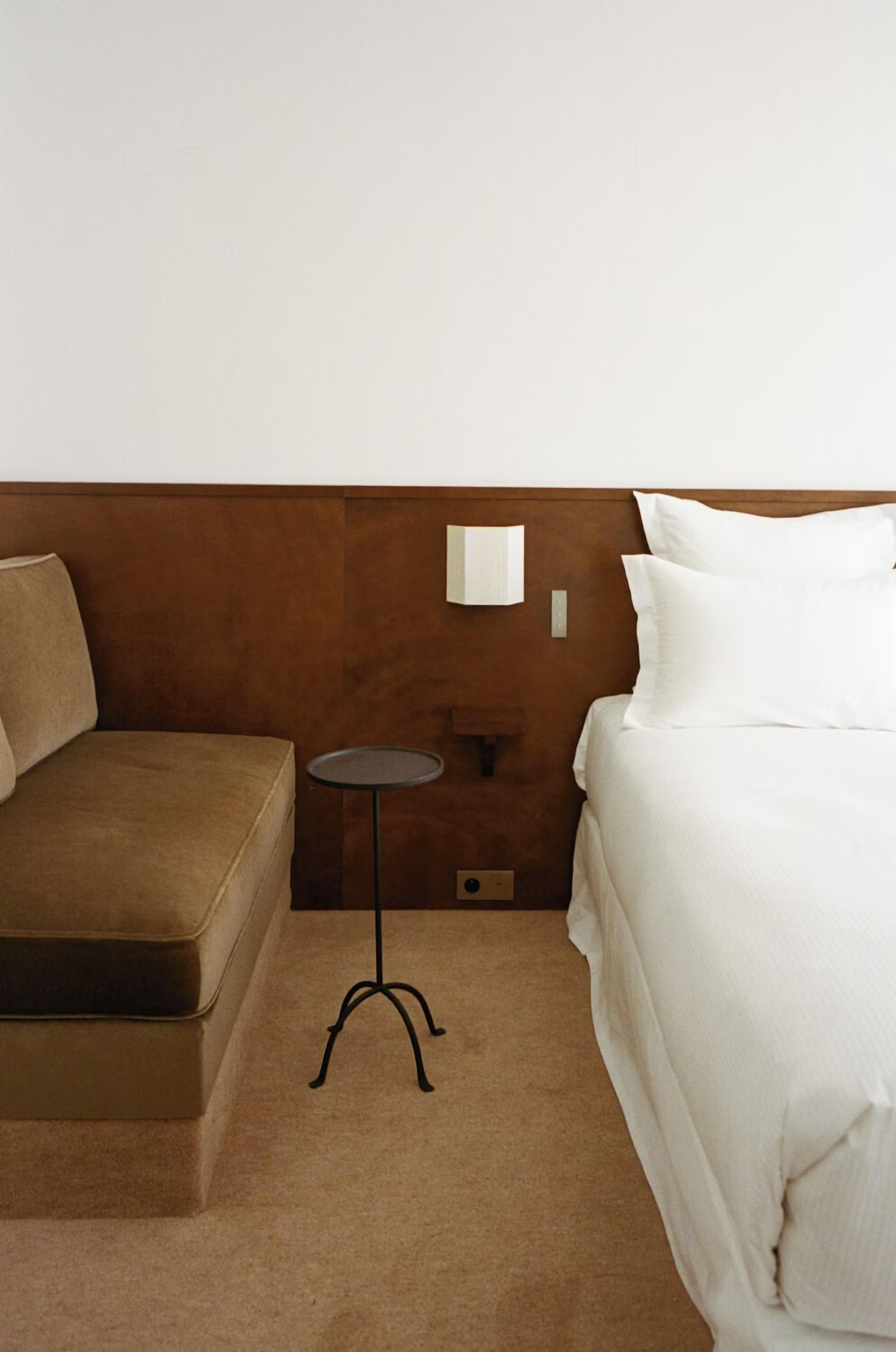
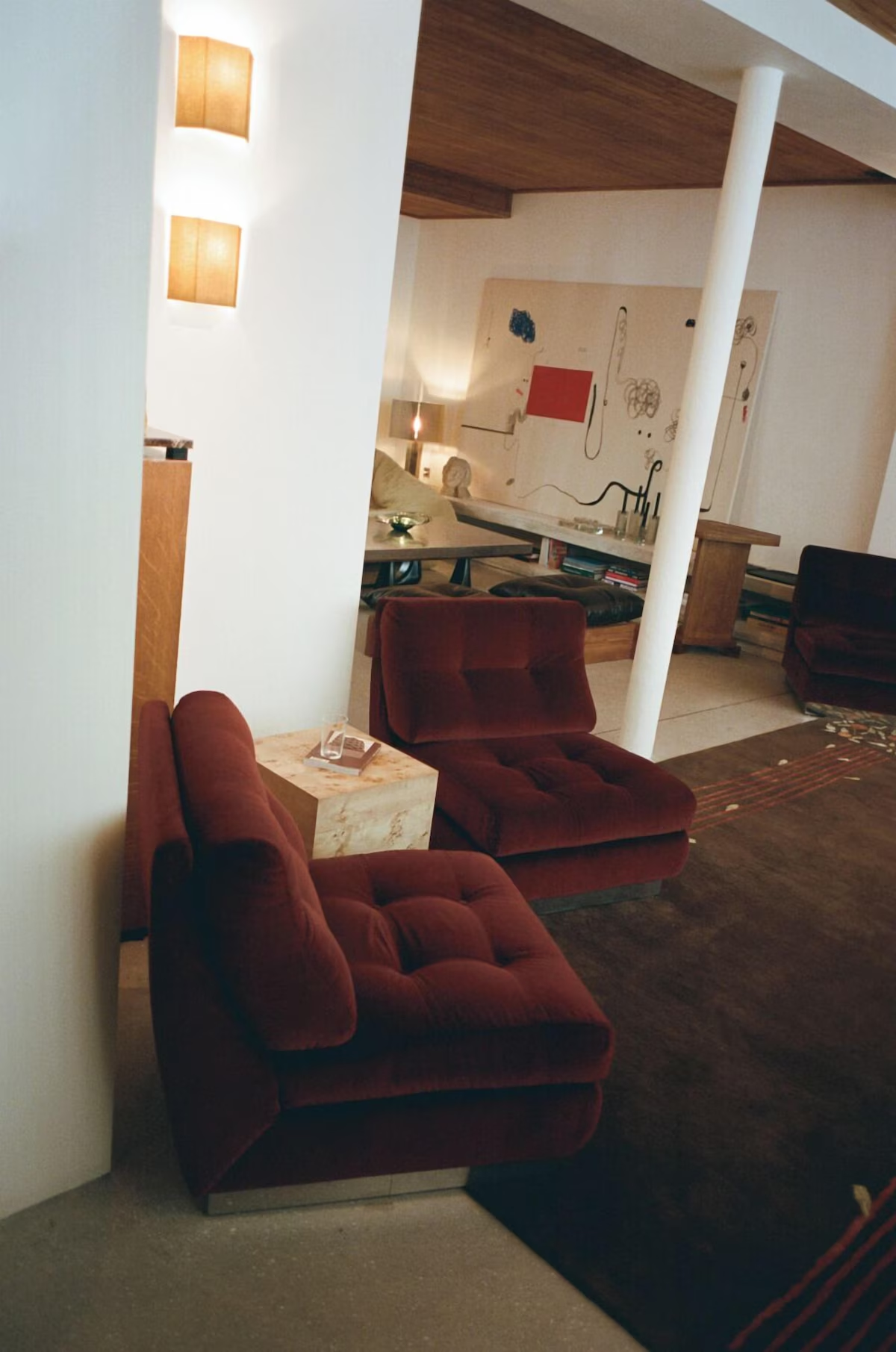
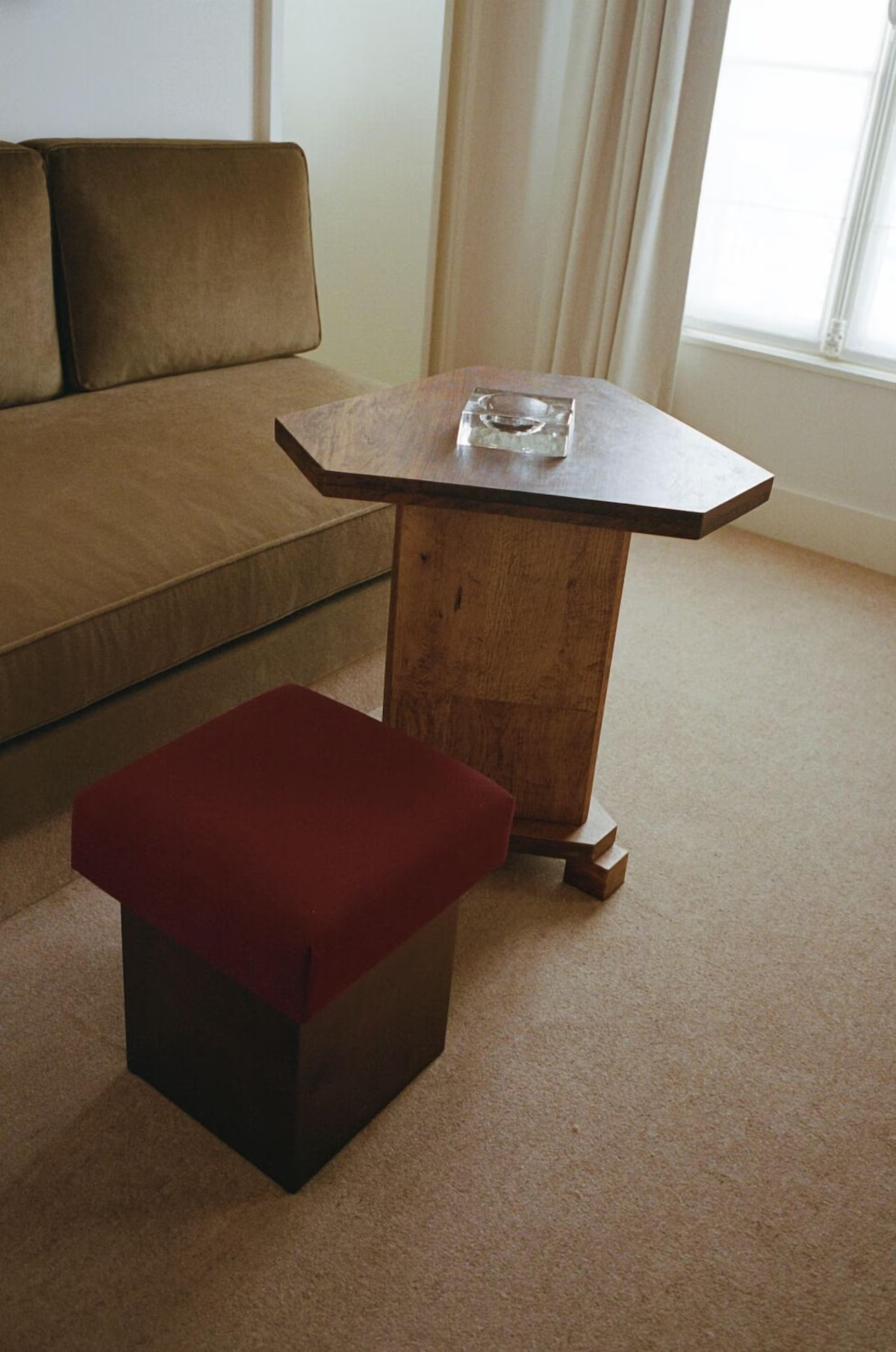
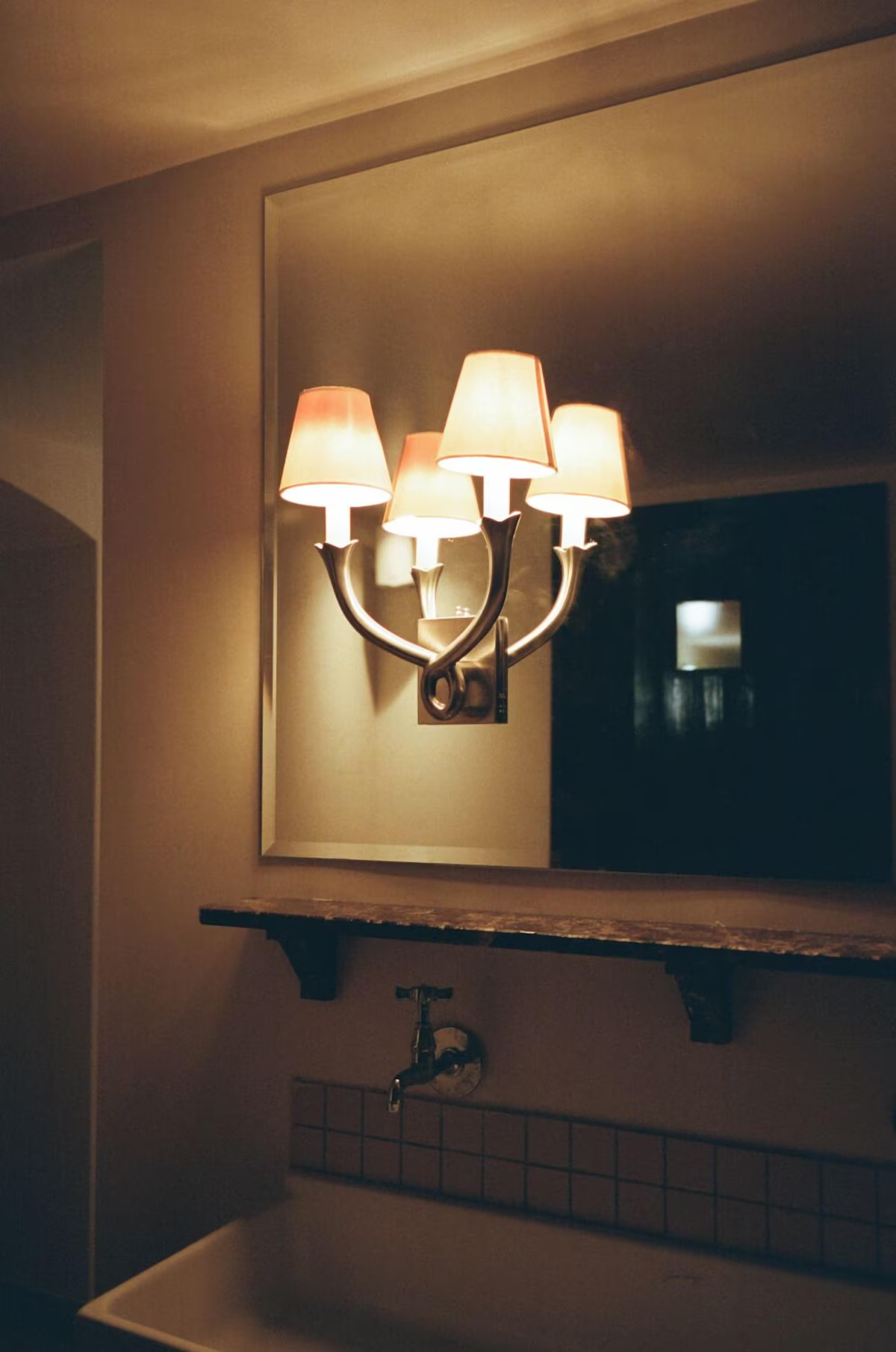
The building’s architectural renovation was undertaken by Studio Olivier Guyot, with interiors by Gasparetto Parenti, the Paris-based practice founded by Juliette Gasparetto and Julie Parenti. Both designers previously worked at Festen Architecture, the studio behind some of Paris’s most sophisticated contemporary hotel interiors, including Château Voltaire and Hôtel Balzac. Hôtel Massé represents their first hotel project under their own name, and it is an exceptionally confident debut. Rather than relying on decorative extravagance, the designers have developed a restrained palette of okoumé wood, maritime pine, soft beige carpeting, warm neutral walls and carefully selected vintage furniture. Rich burgundy lacquer introduces a striking contrast in the corridors and staircase, while the guestrooms remain considerably lighter and softer. There are references to 1970s residential interiors throughout, from vintage Ingo Maurer lighting to velvet seating, mirrored furniture and richly textured carpets. Yet the overall atmosphere avoids becoming overtly retro. The vintage pieces sit naturally alongside contemporary craftsmanship and understated architectural details. It is a particularly Parisian kind of sophistication: carefully composed, but never excessively polished.
Forty Rooms, Forty Personalities
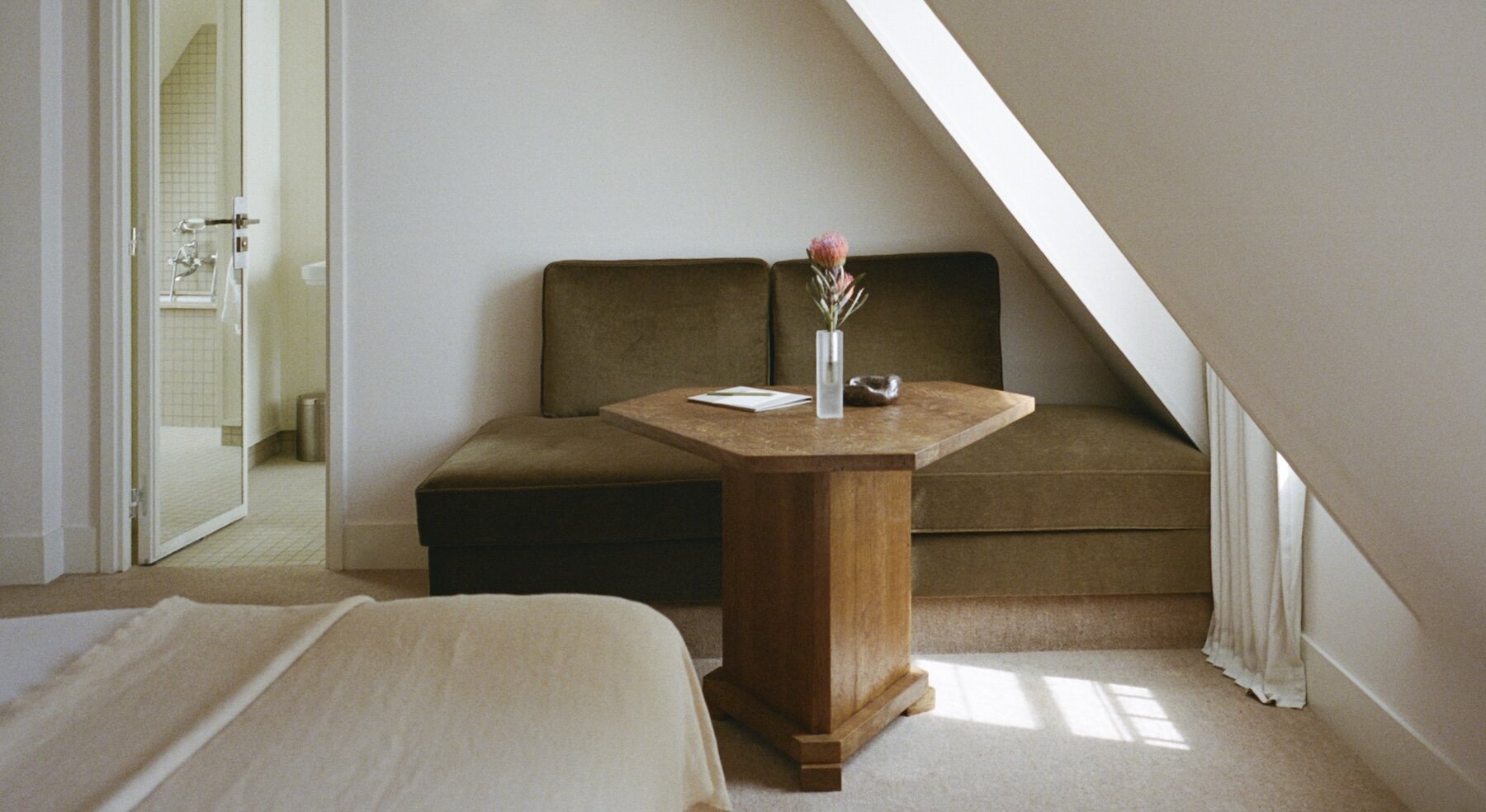
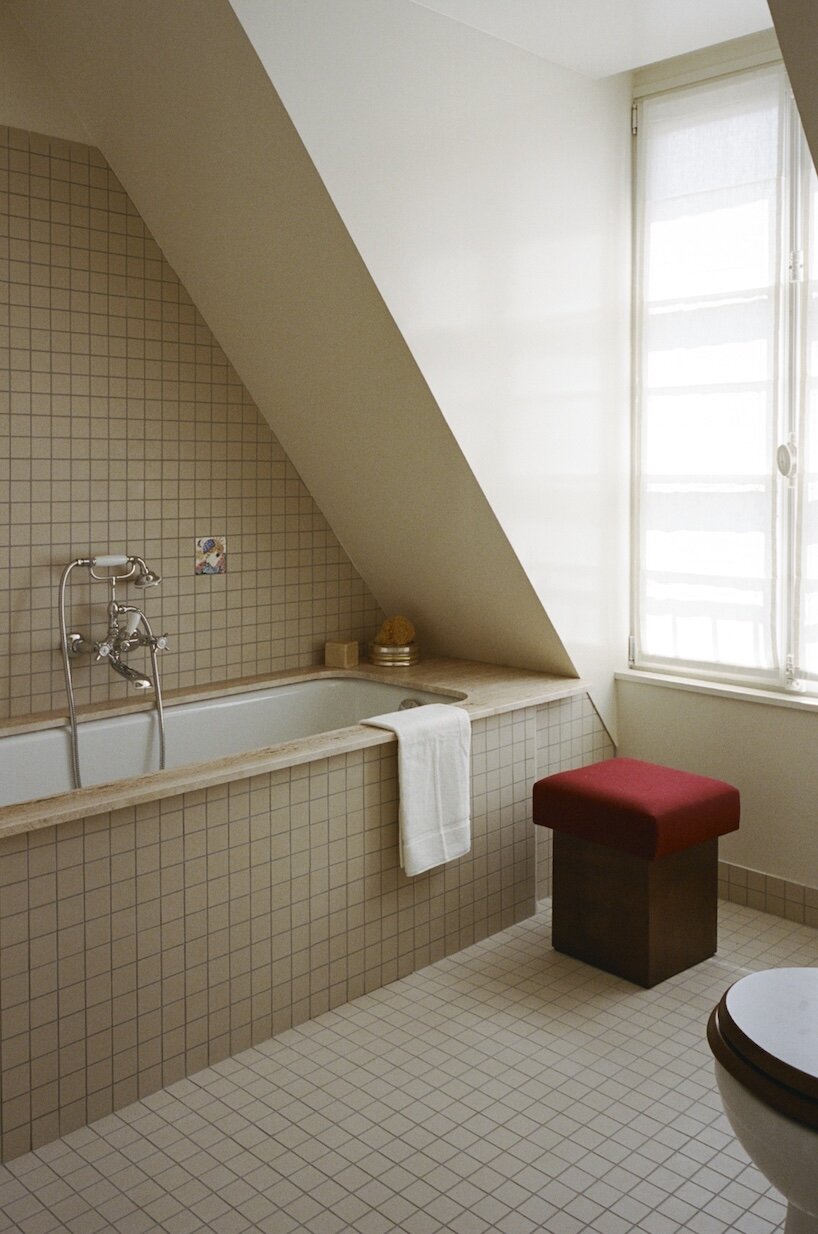
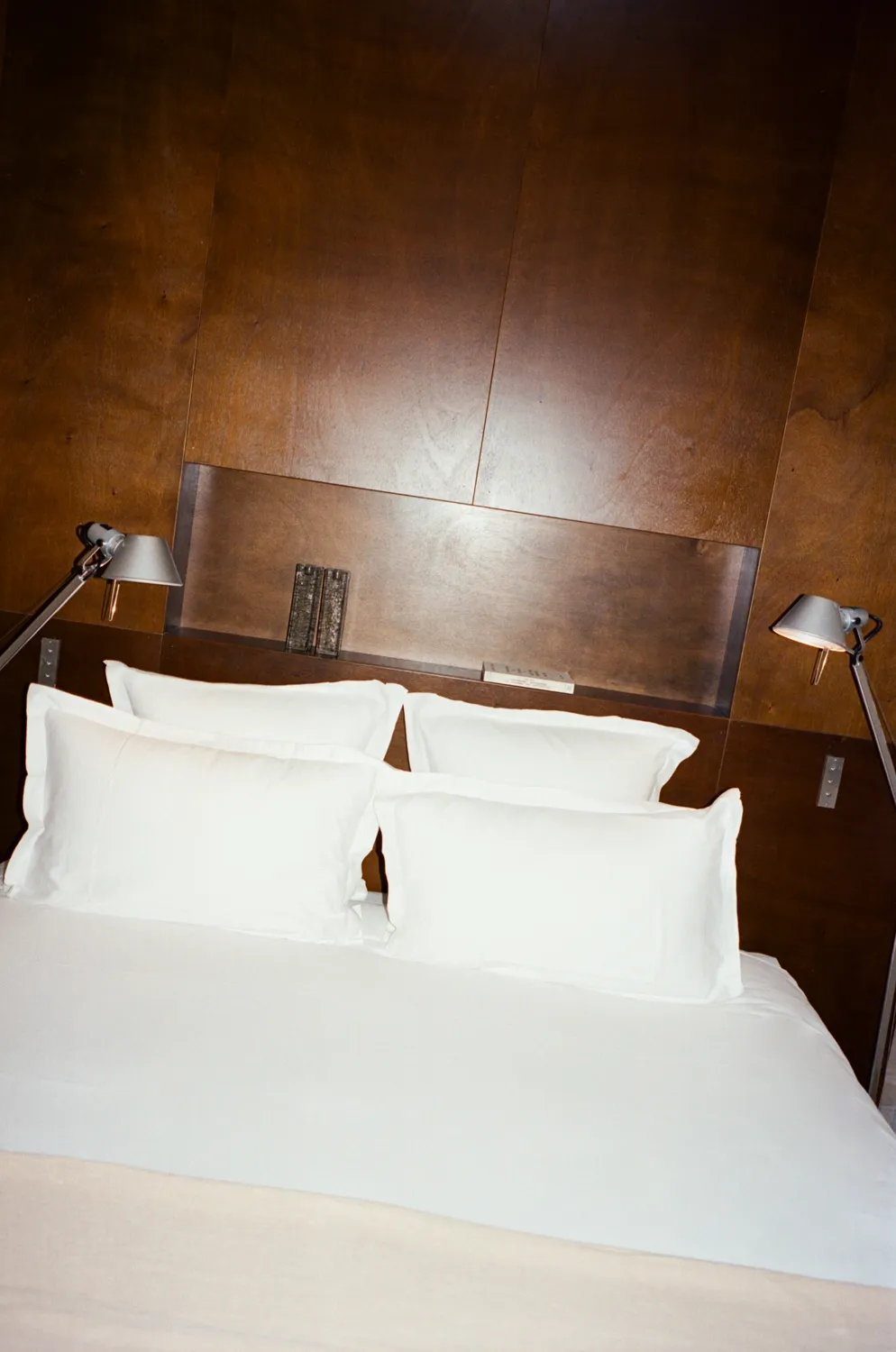
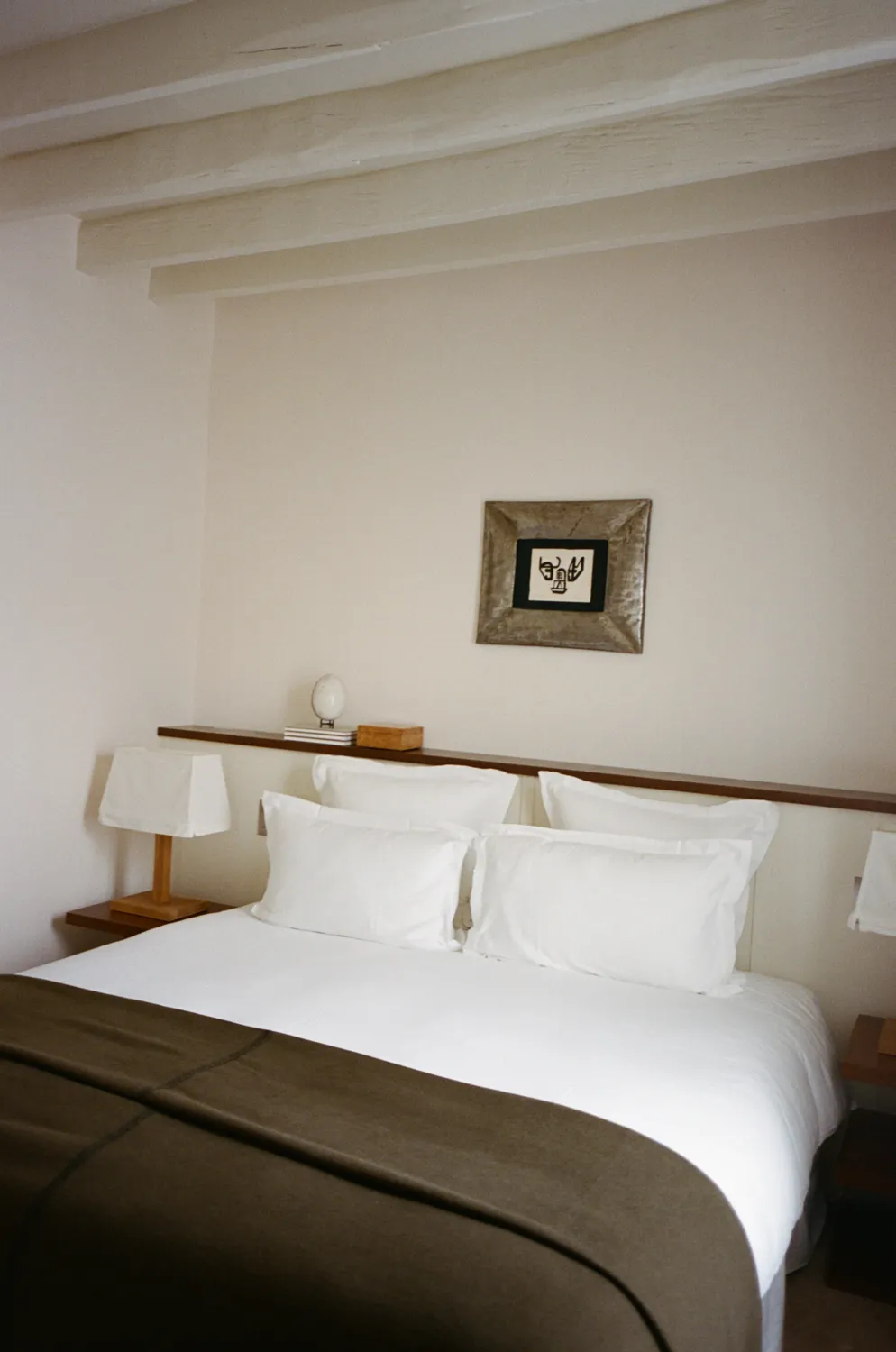
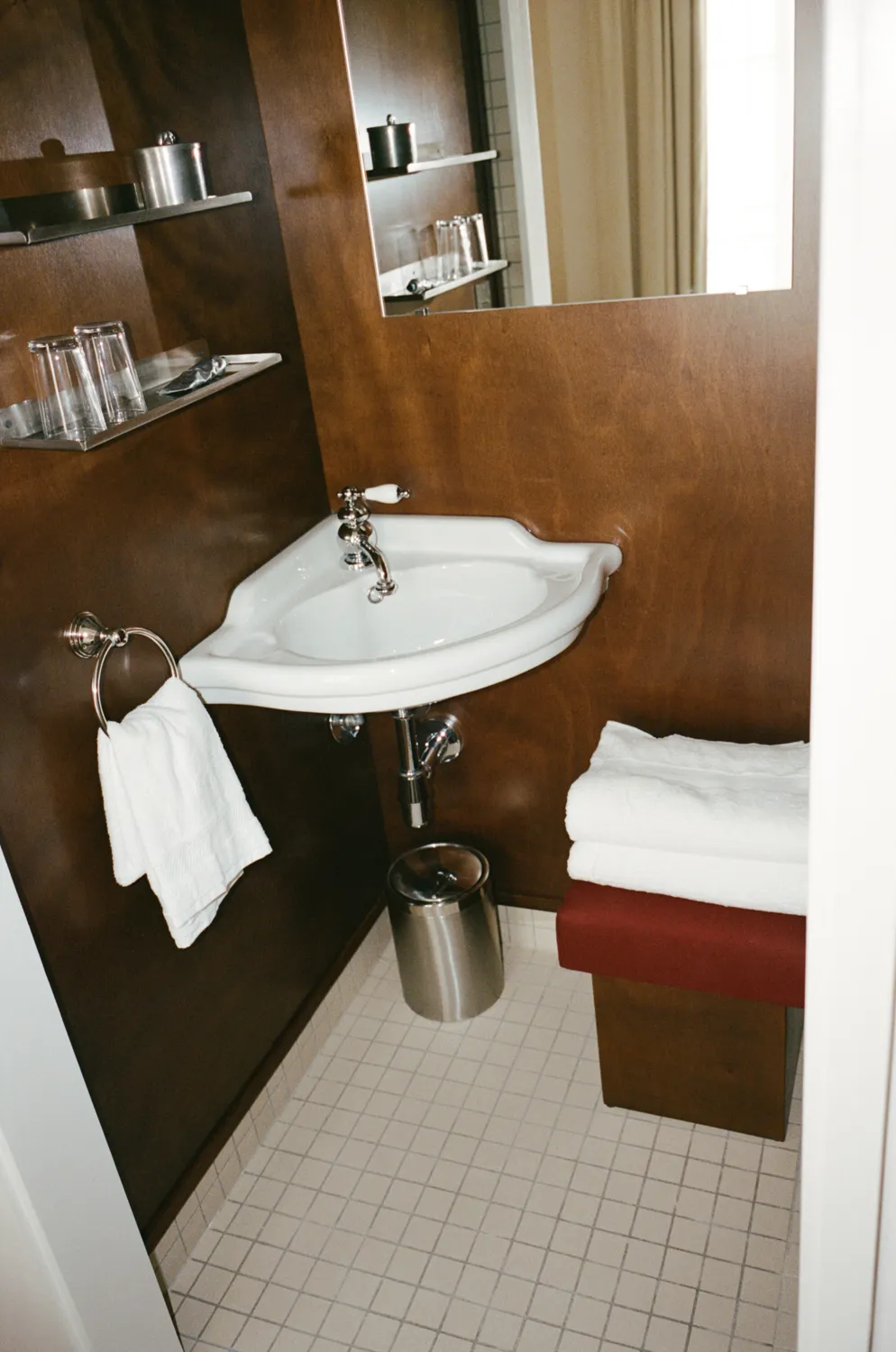
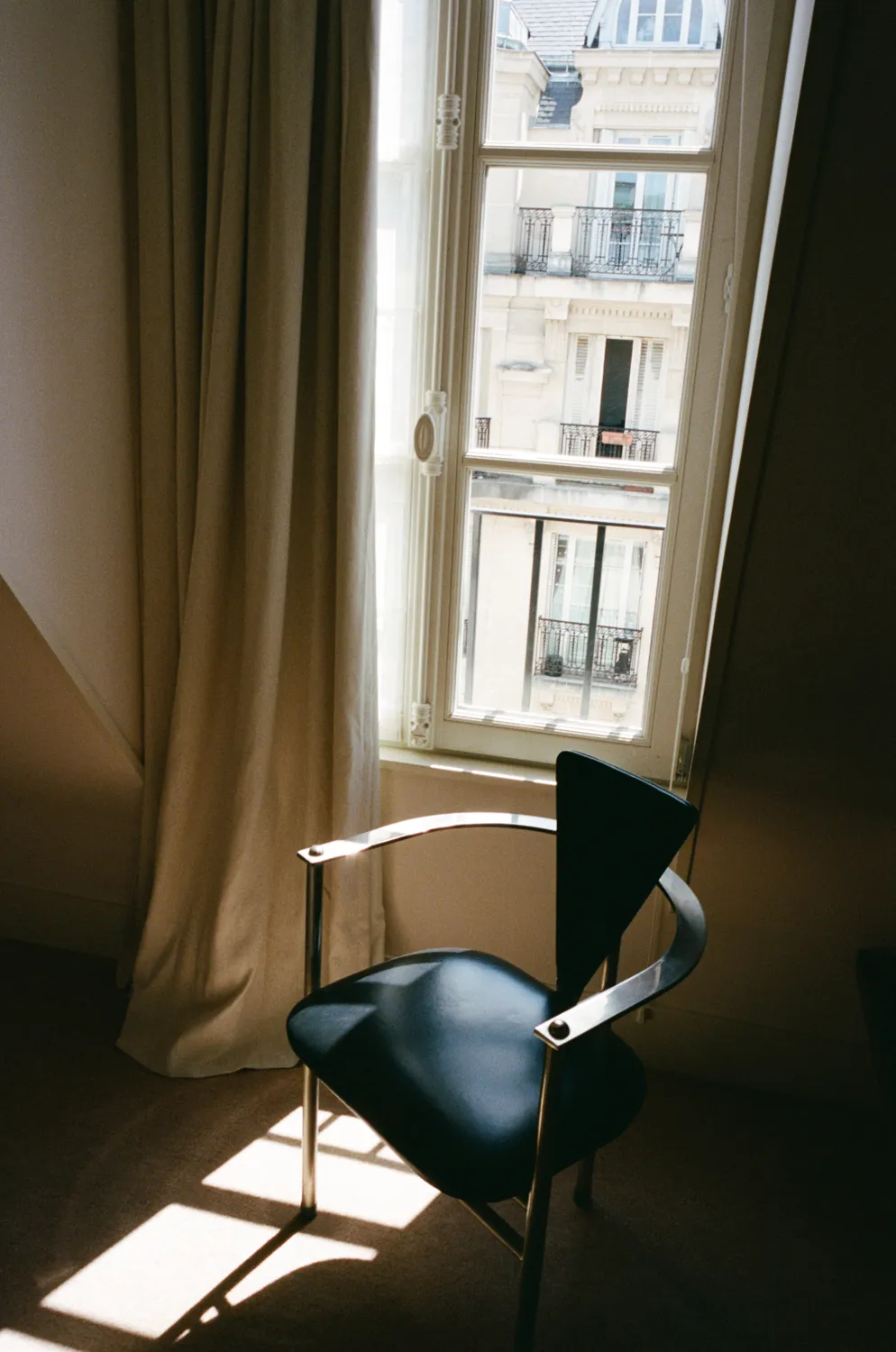
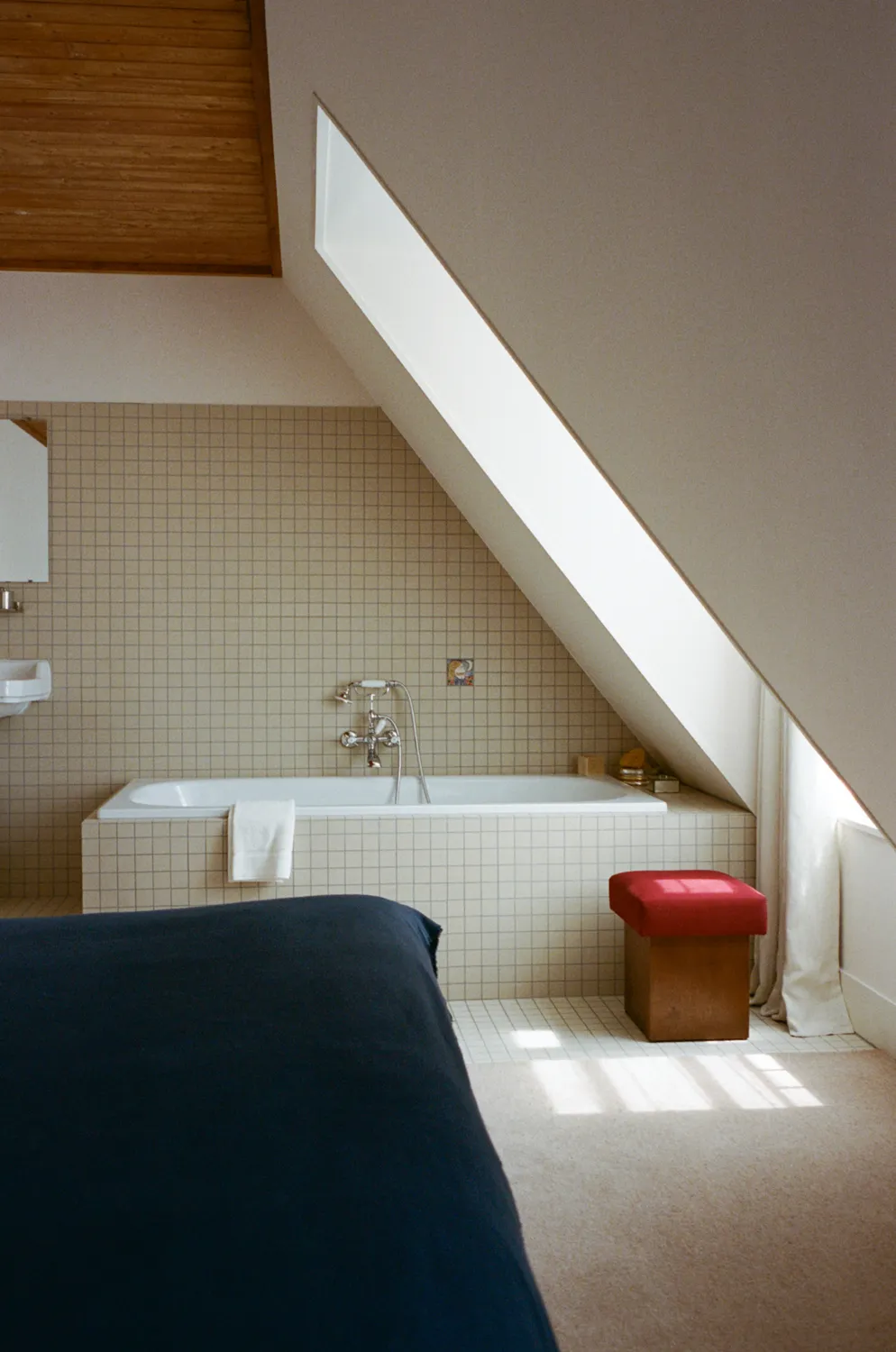
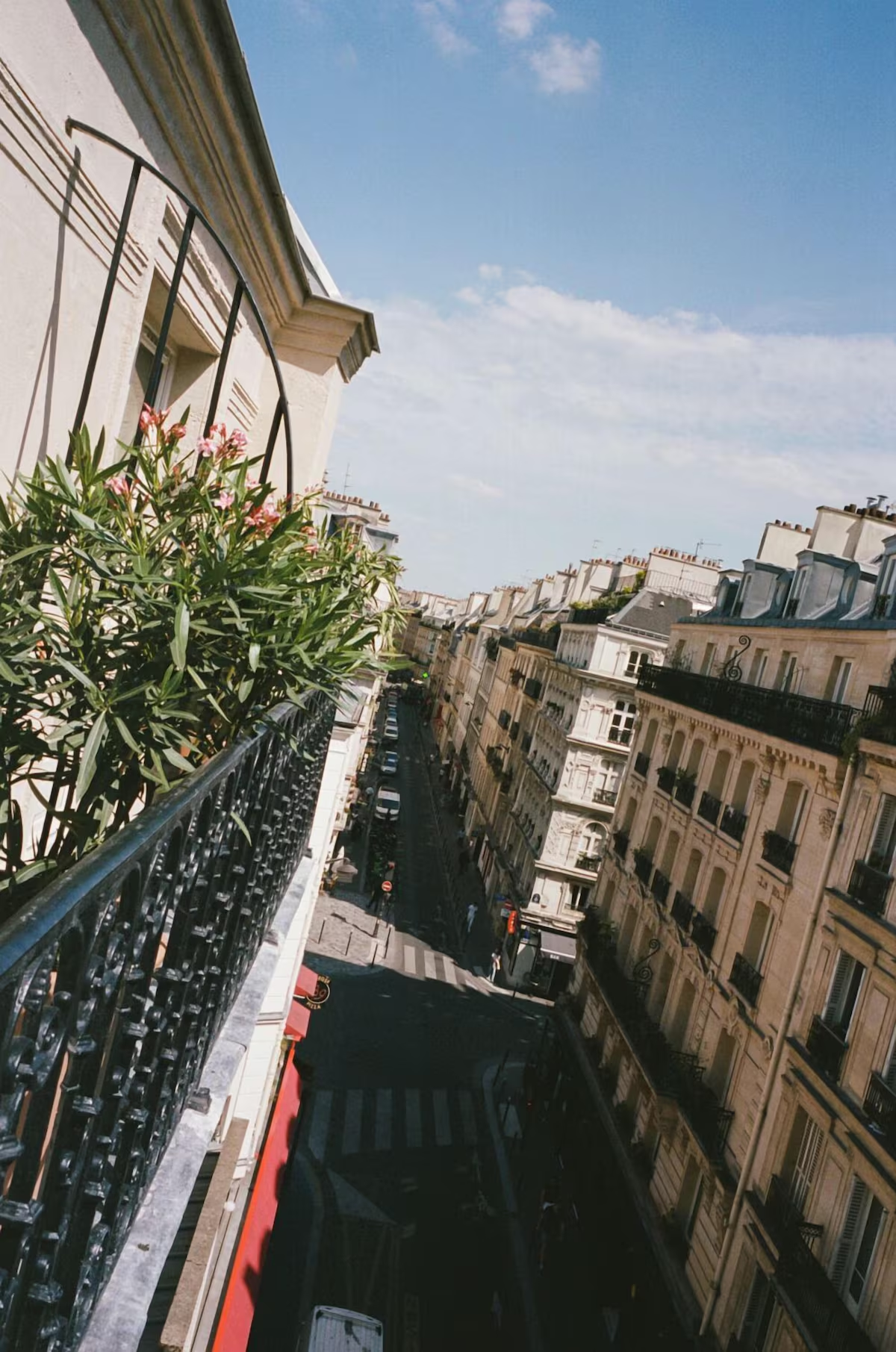
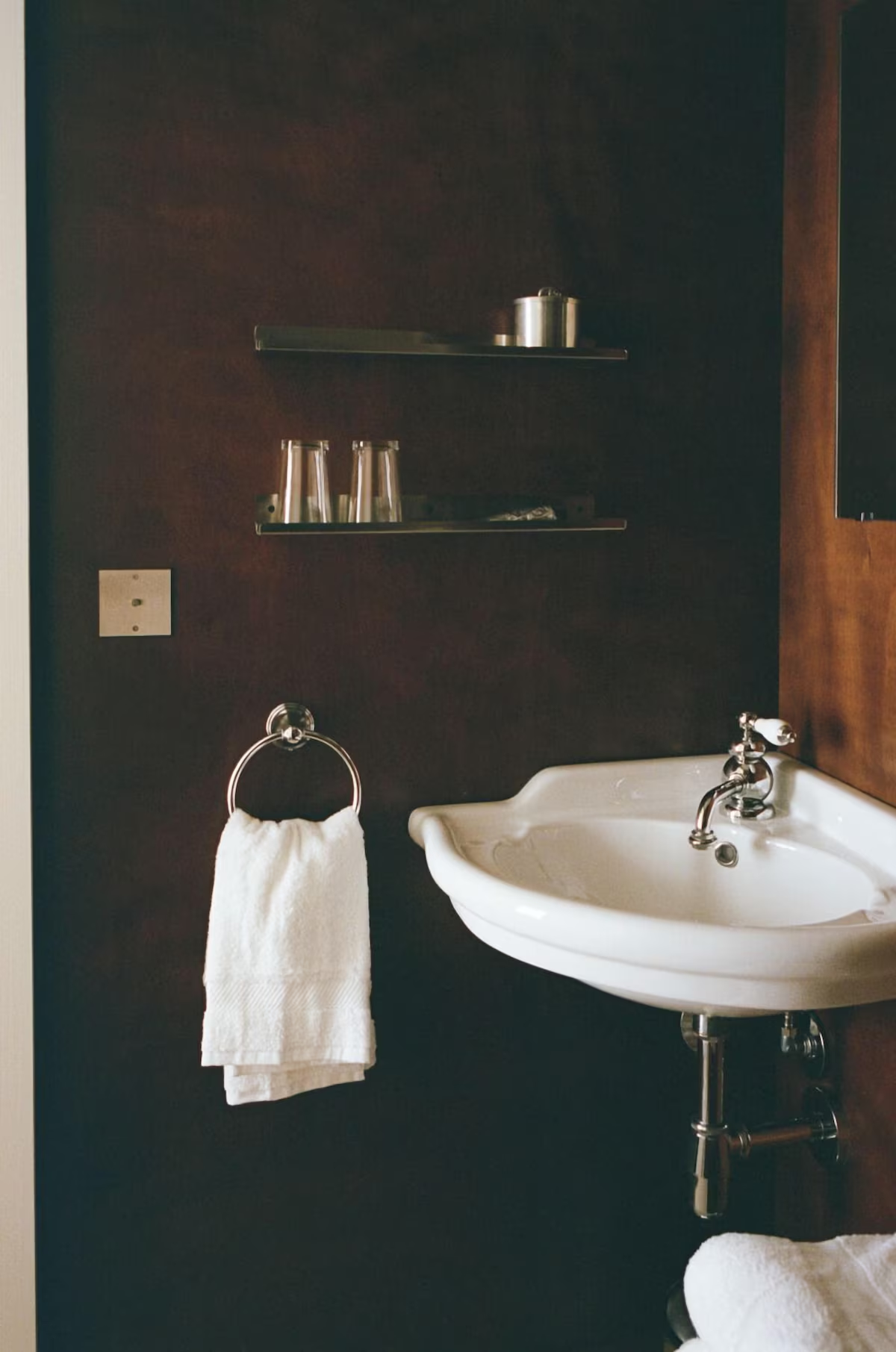
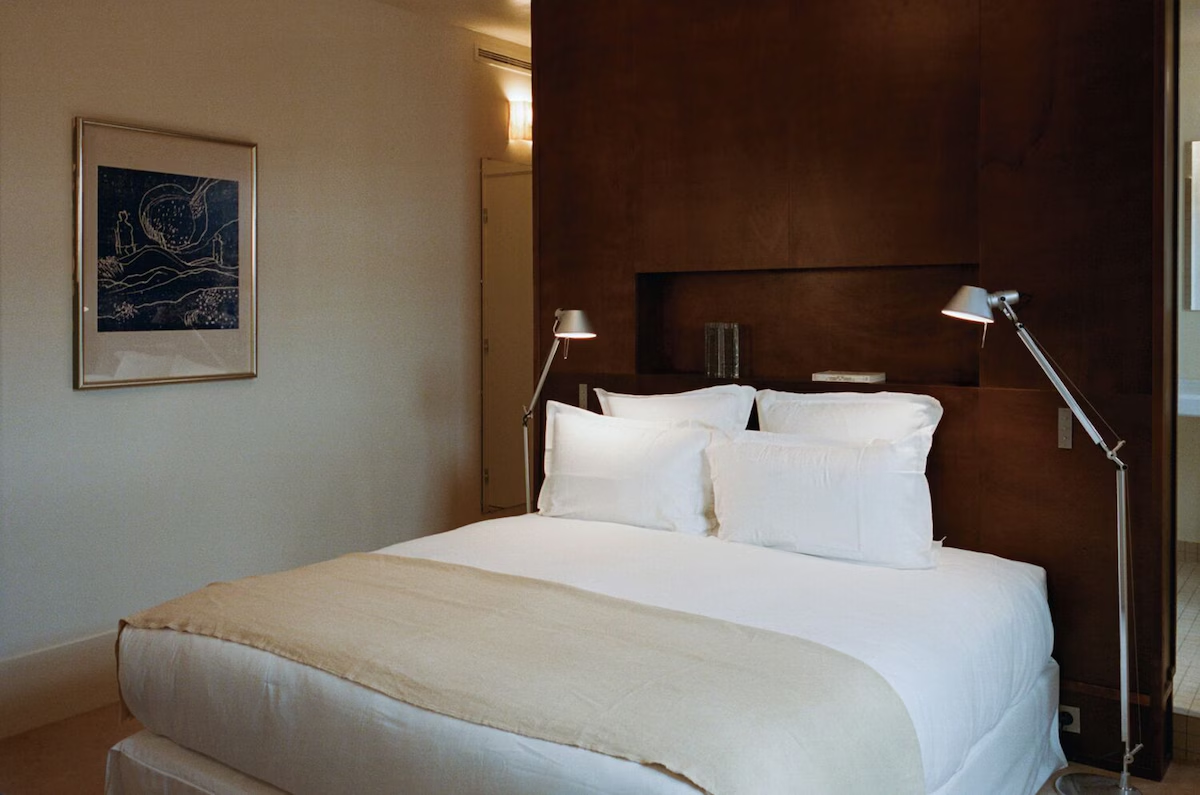
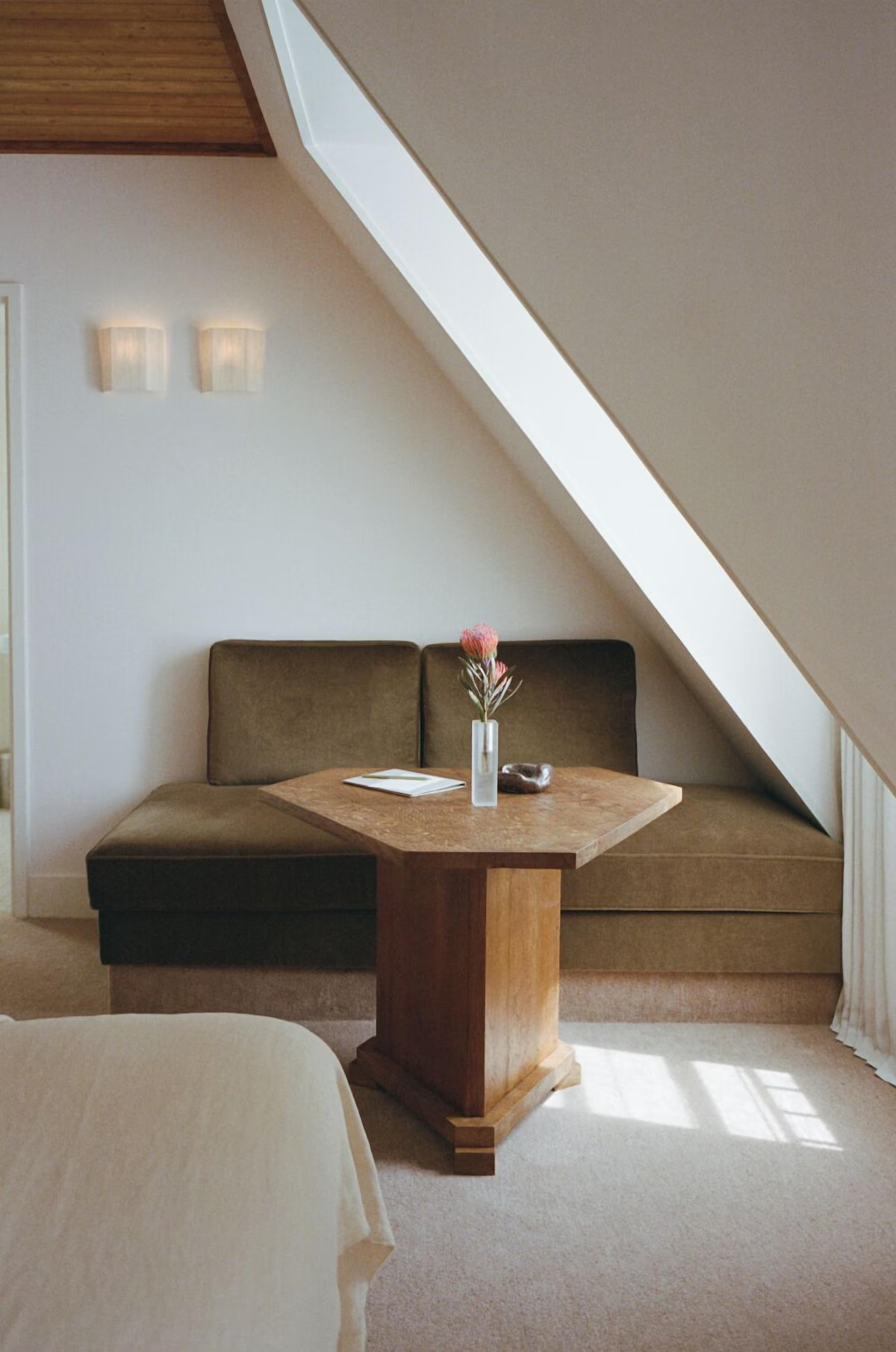
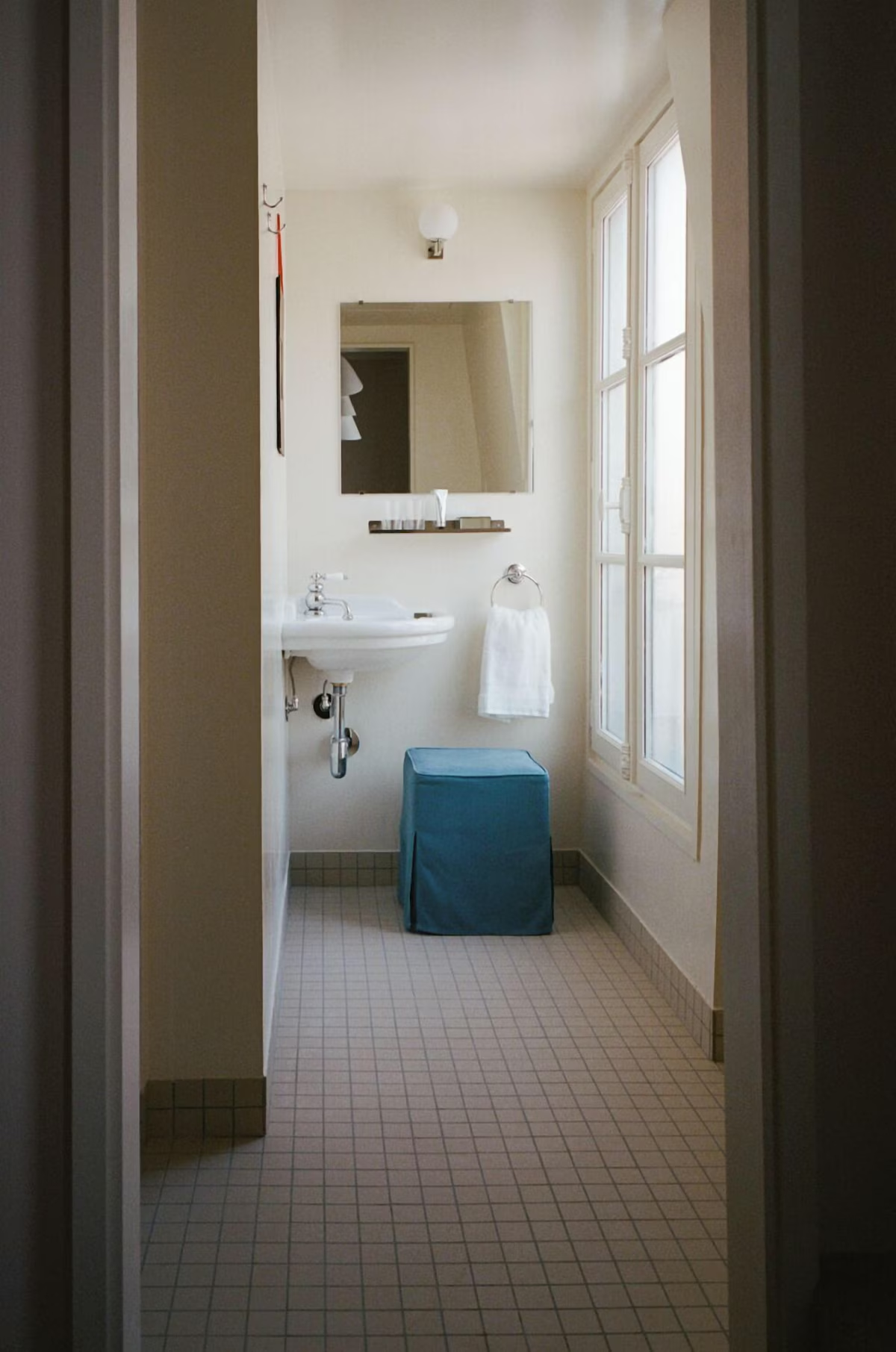
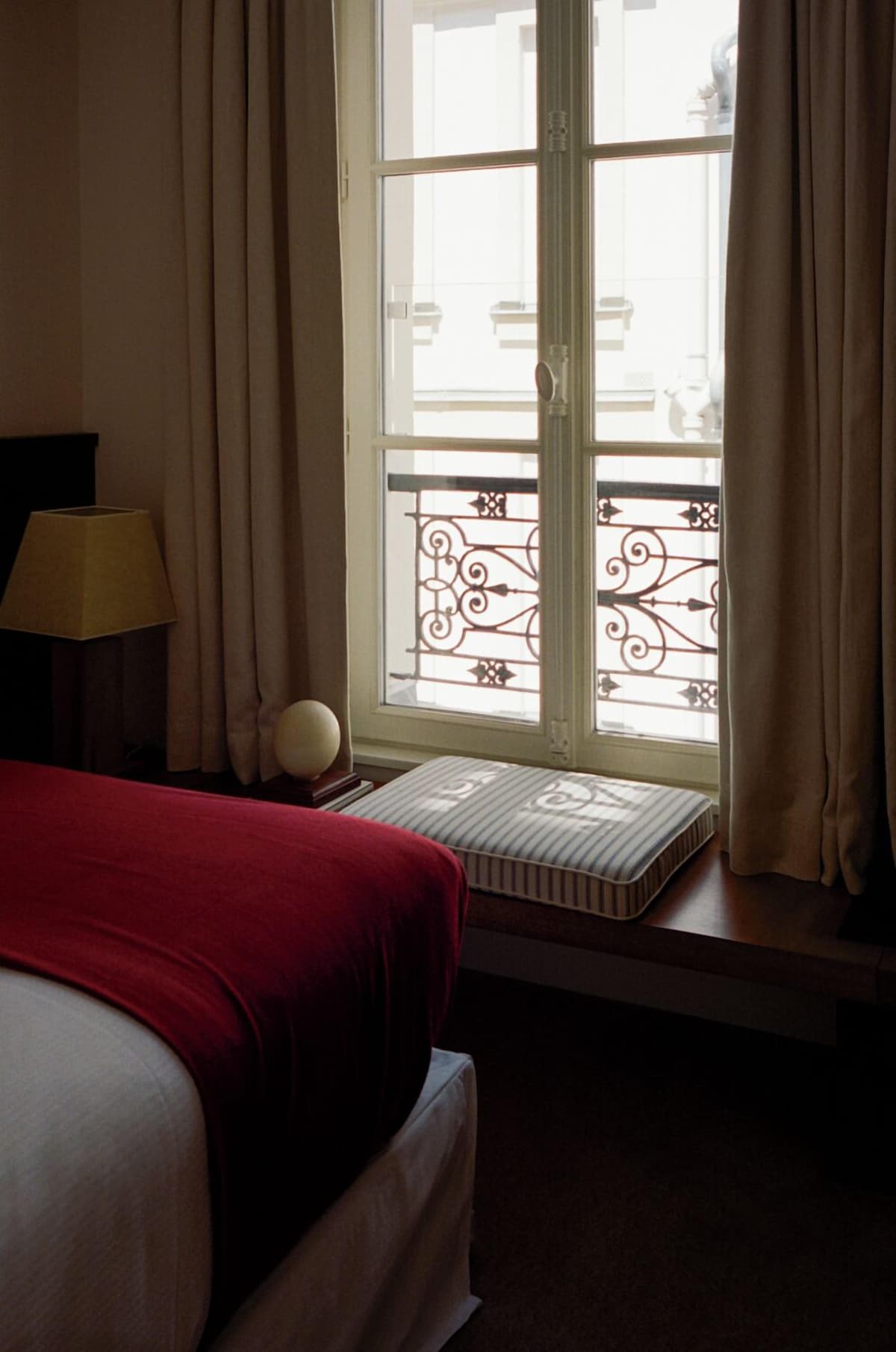
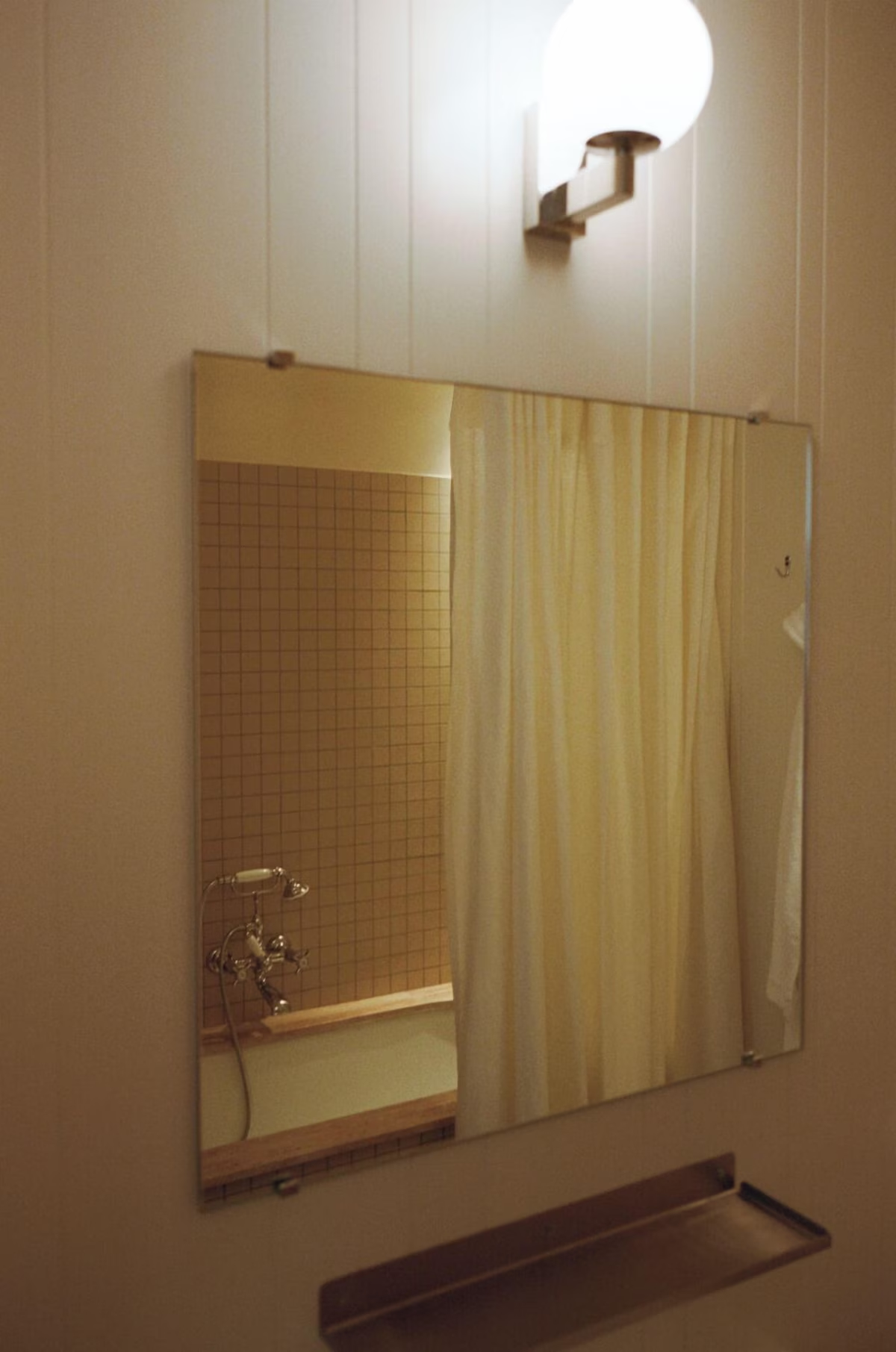
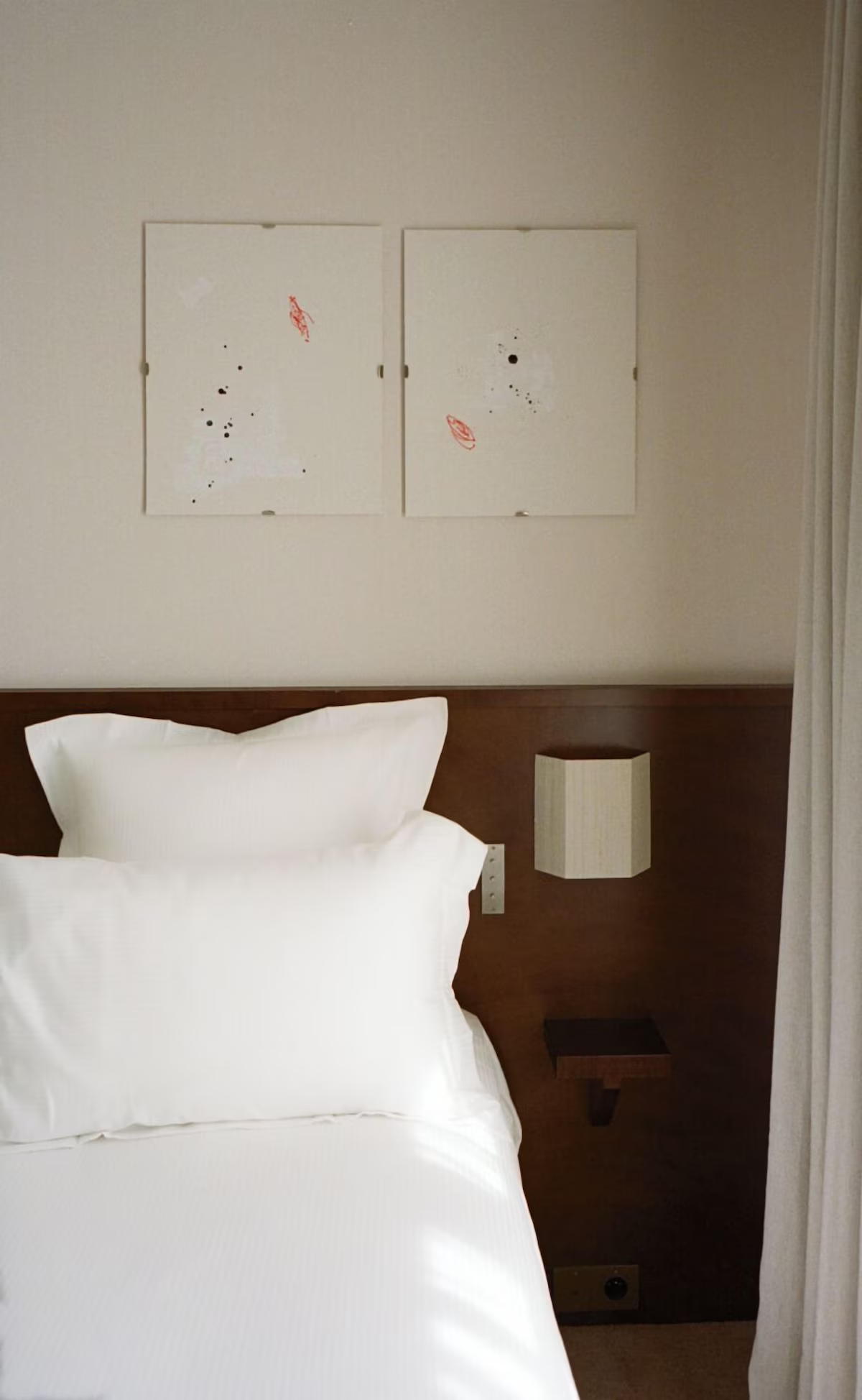
The hotel’s 40 guestrooms are spread across six floors, with individual layouts reflecting the proportions and irregularities of the original Haussmannian building. Some overlook Rue Victor-Massé through tall windows and delicate wrought-iron balconies. Others occupy the upper floors beneath sloping roofs, offering romantic views across Paris’s characteristic zinc rooftops. The interiors continue the hotel’s warm, minimalist aesthetic. Wood-panelled walls, integrated headboards, bespoke joinery and plush carpeting create a cocoon-like atmosphere, while brushed stainless steel, vintage lighting and carefully selected artwork introduce subtle contrasts. Custom furniture by cabinetmaker Alexis Mazin, who works extensively with reclaimed and recycled timber, gives the rooms a distinctive handcrafted quality. Bathrooms are equally considered, with simple geometric tiling, individual ceramic artworks by Héloïse Rival and toiletries from French skincare brand Typology. Selected rooms feature generously proportioned bathtubs, while others offer showers. The larger rooms beneath the eaves are particularly appealing for their unusual layouts and intimate atmosphere. There is little unnecessary decoration. Instead, the emphasis falls on materials, lighting, proportions and the pleasure of being somewhere thoughtfully designed.
An Art Collection with a Personal Story
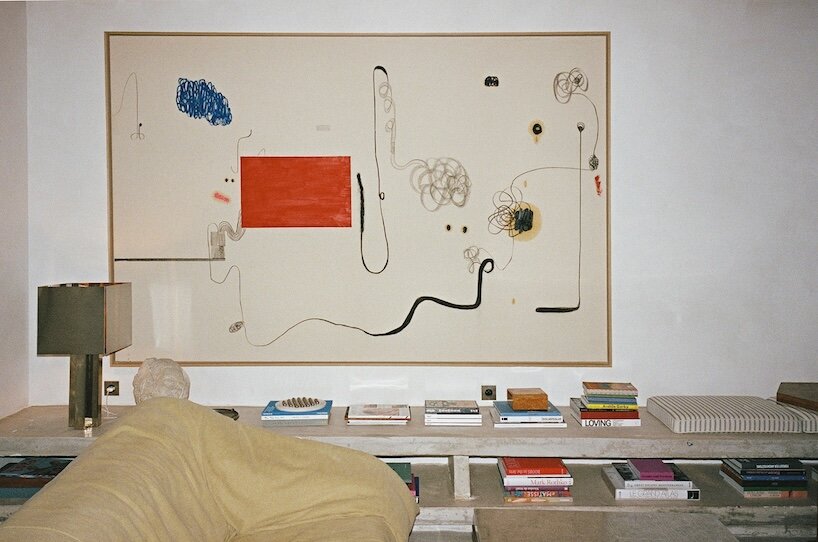
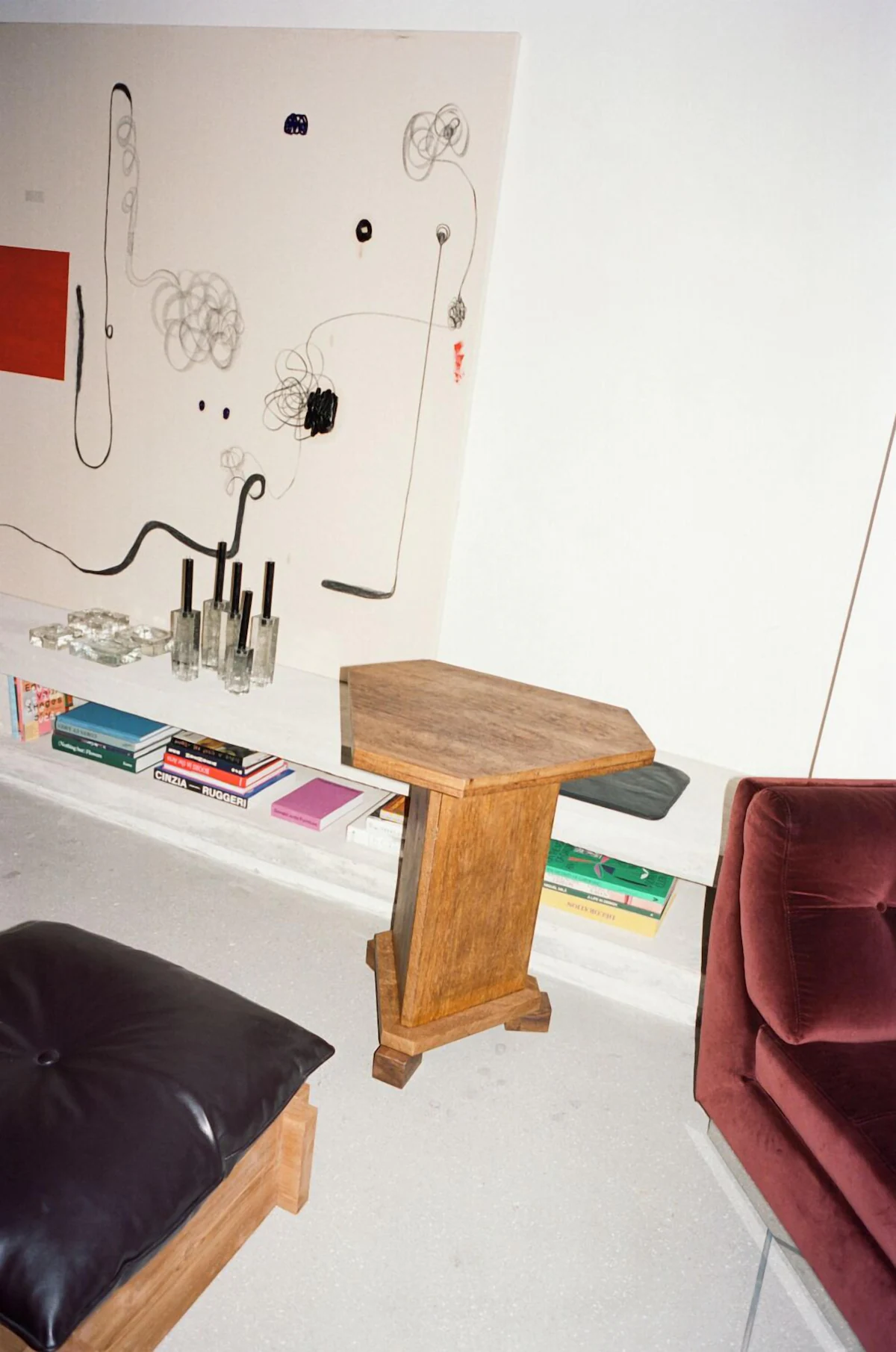
Contemporary art is central to Hôtel Massé’s identity, but the collection has developed through personal relationships rather than a conventional hotel art consultancy. Éole Peyron invited a group of artists to contribute works that would become part of the building’s everyday life. Among them is painter Christian Rosa, who spent time in residence during the hotel’s renovation, creating several works directly on site. His expressive abstract painting in the communal living room has become one of the property’s defining visual features. Elsewhere, works by Eduardo Lalanne and Sophie d’Esteve introduce different artistic perspectives, while smaller objects, sculptures and vintage finds create moments of discovery throughout the interiors. The collaborative approach extends beyond the artworks themselves. Alexis Mazin contributed bespoke furniture, Thomas Coccimiglio created textiles, Héloïse Rival developed ceramic details and Studio de Lostanges designed the staff uniforms, drawing inspiration from traditional French naval restaurant jackets. These individual contributions give Hôtel Massé a sense of authenticity that would be difficult to achieve through a more conventional design process. Nothing feels selected simply to match the colour of the sofa.
A Living Room Rather Than a Lobby
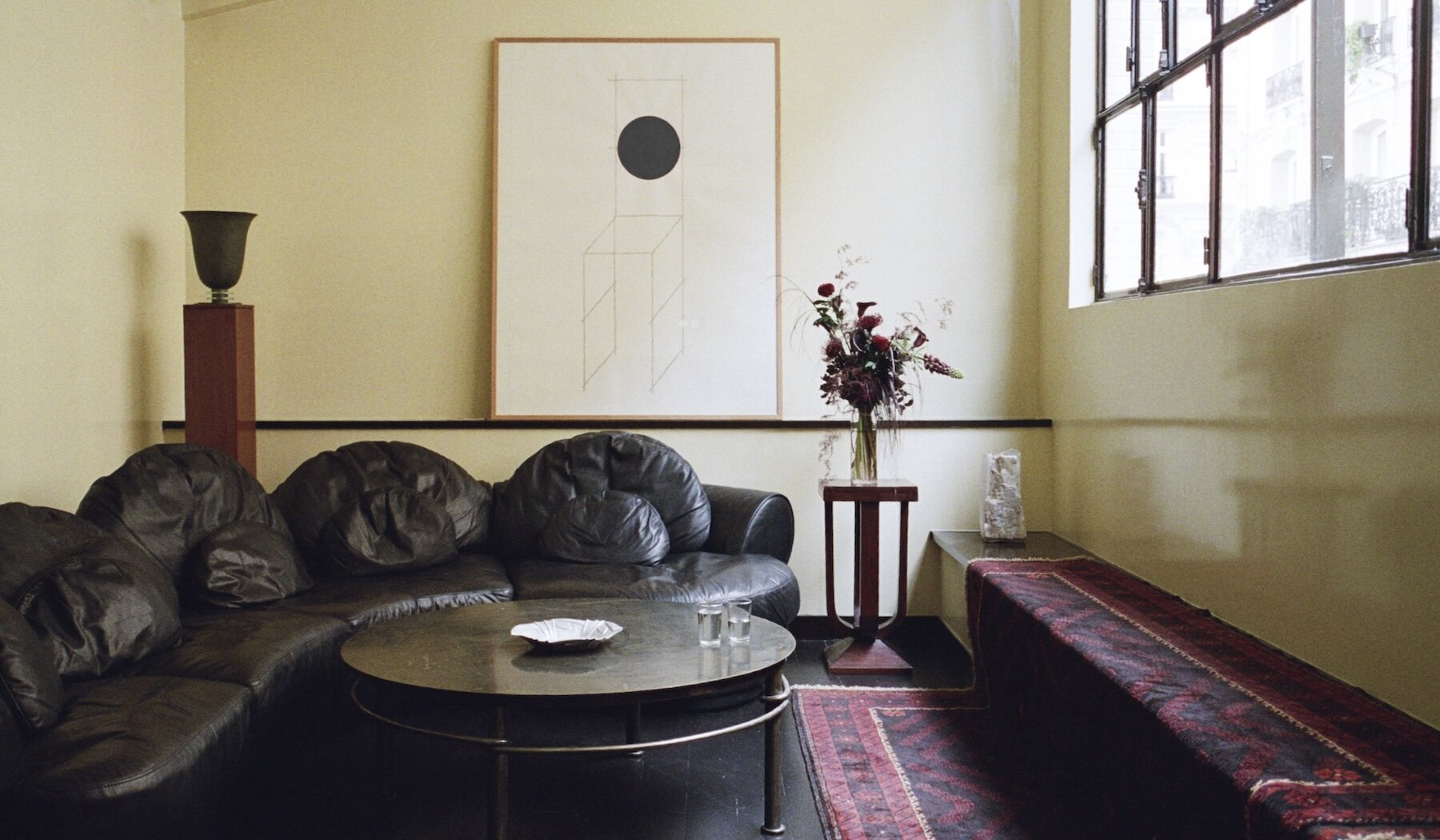
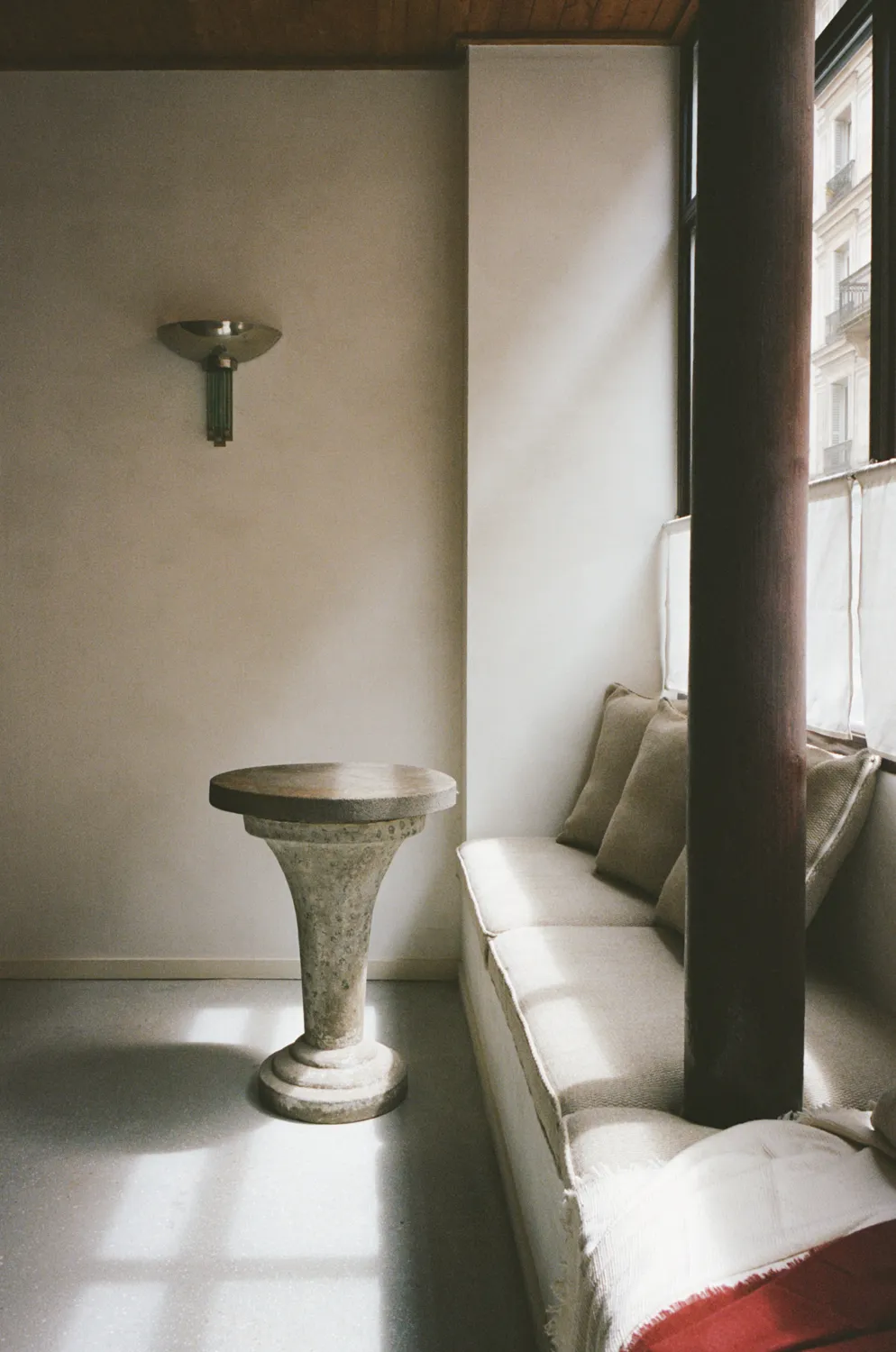
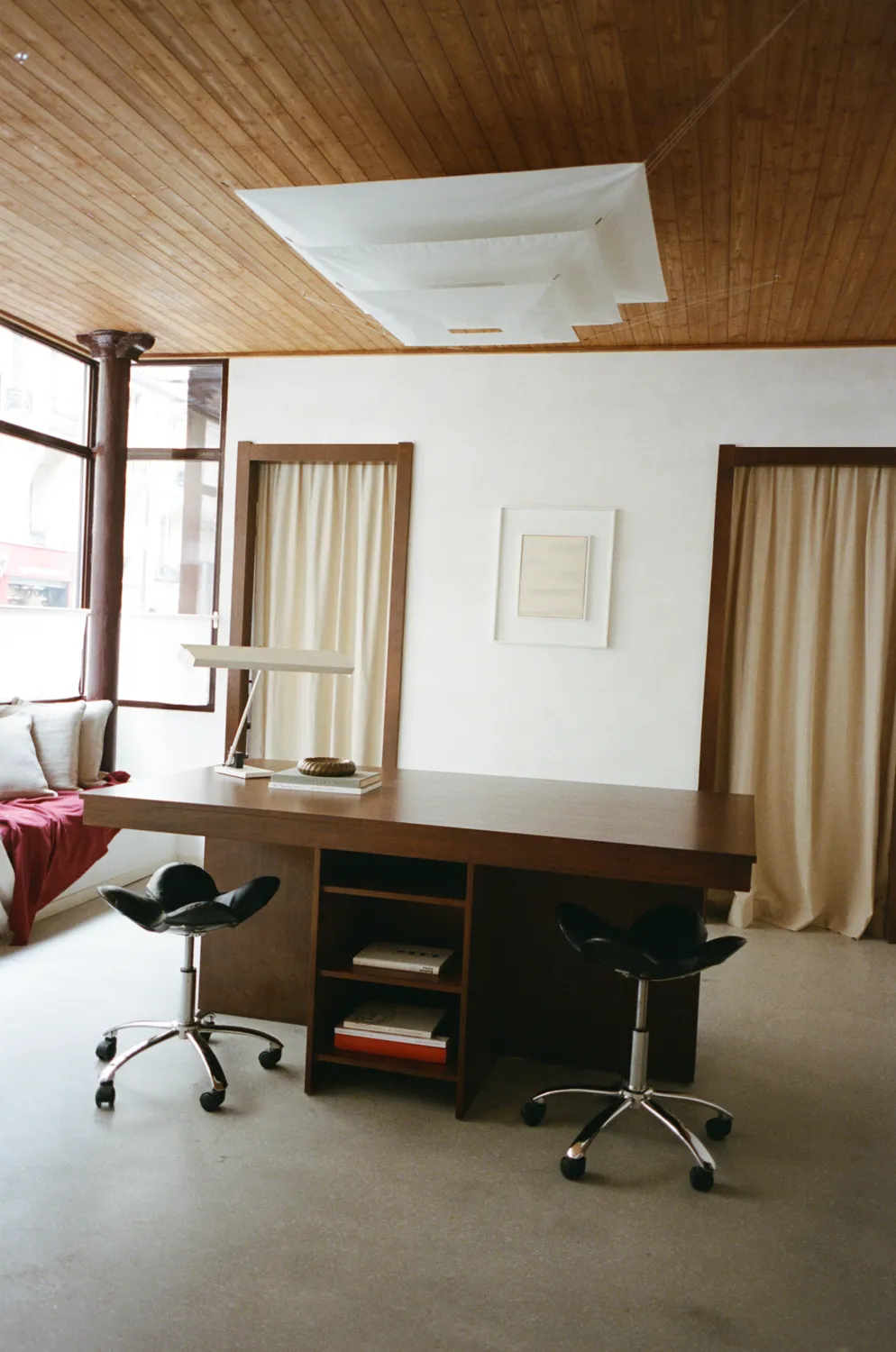
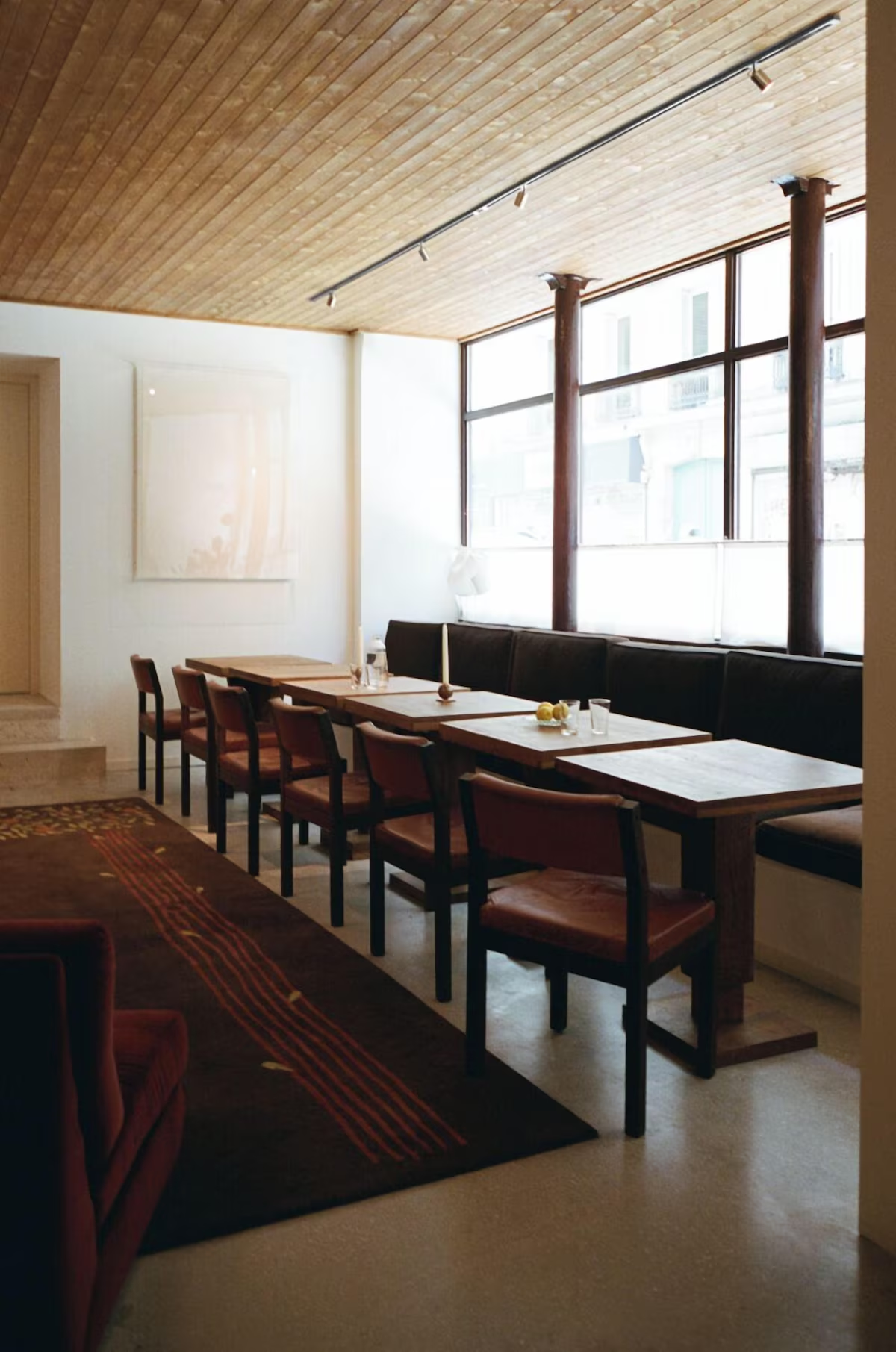
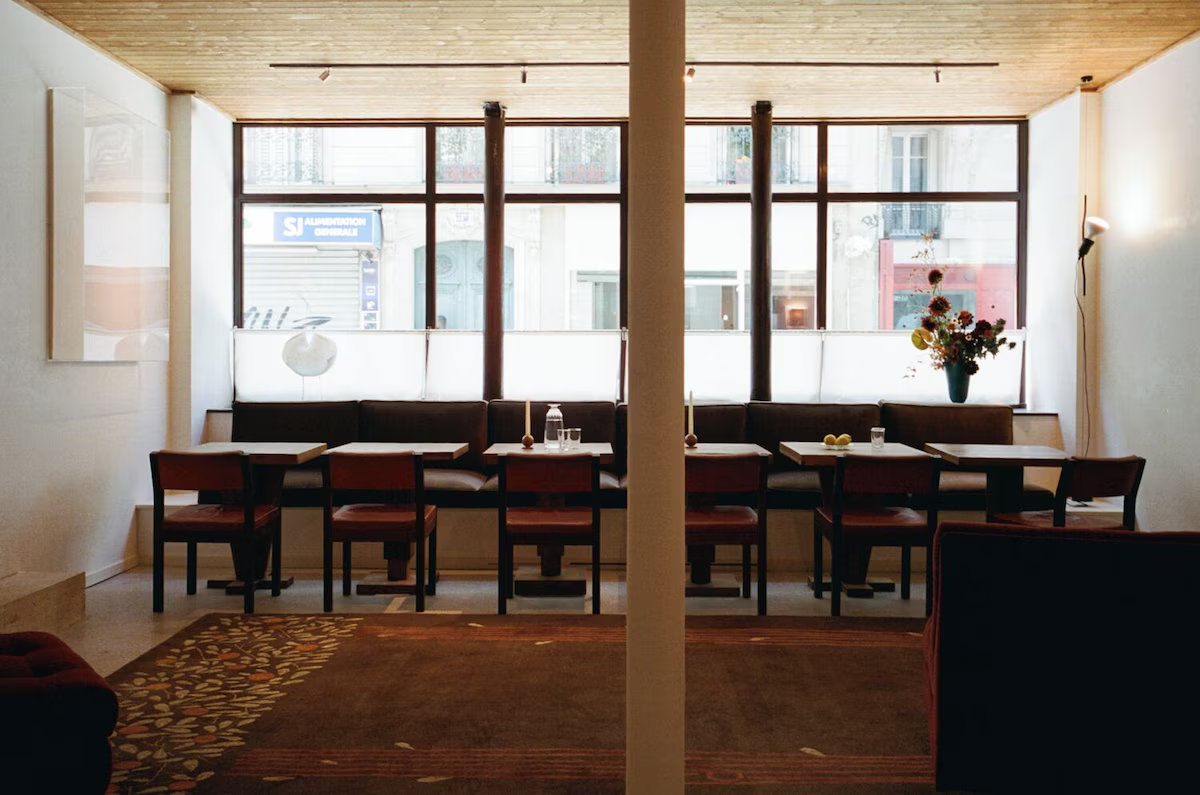
Hôtel Massé’s public spaces reflect the Peyron family’s desire to remove some of the formality traditionally associated with hotel hospitality. There is no imposing reception counter. Instead, guests are welcomed at a custom wooden table, accompanied by recycled stools from design duo Clueless. Beyond it, the communal living room combines comfortable sofas, vintage furniture, contemporary artworks and intimate seating areas. Large street-facing windows provide a view of the neighbourhood, making the space particularly appealing for reading, working or simply watching Paris go about its day. Breakfast follows the same relaxed philosophy. Fresh pastries and bread from neighbourhood bakeries, homemade cakes, fruit, yoghurt, granola and eggs are served without unnecessary ceremony. The hotel takes a flexible approach to breakfast hours, allowing guests to enjoy a slower start. Much of the produce comes from nearby Rue des Martyrs, one of Paris’s most enjoyable food-shopping streets. Even the small details reinforce the sense of personal hospitality, from carefully selected teas and Parisian chocolate to homemade cakes prepared by someone within the hotel’s extended neighbourhood network. A compact basement gym provides an additional convenience, although the greatest exercise opportunity remains the city outside.
Le Trente: The Nightlife Connection
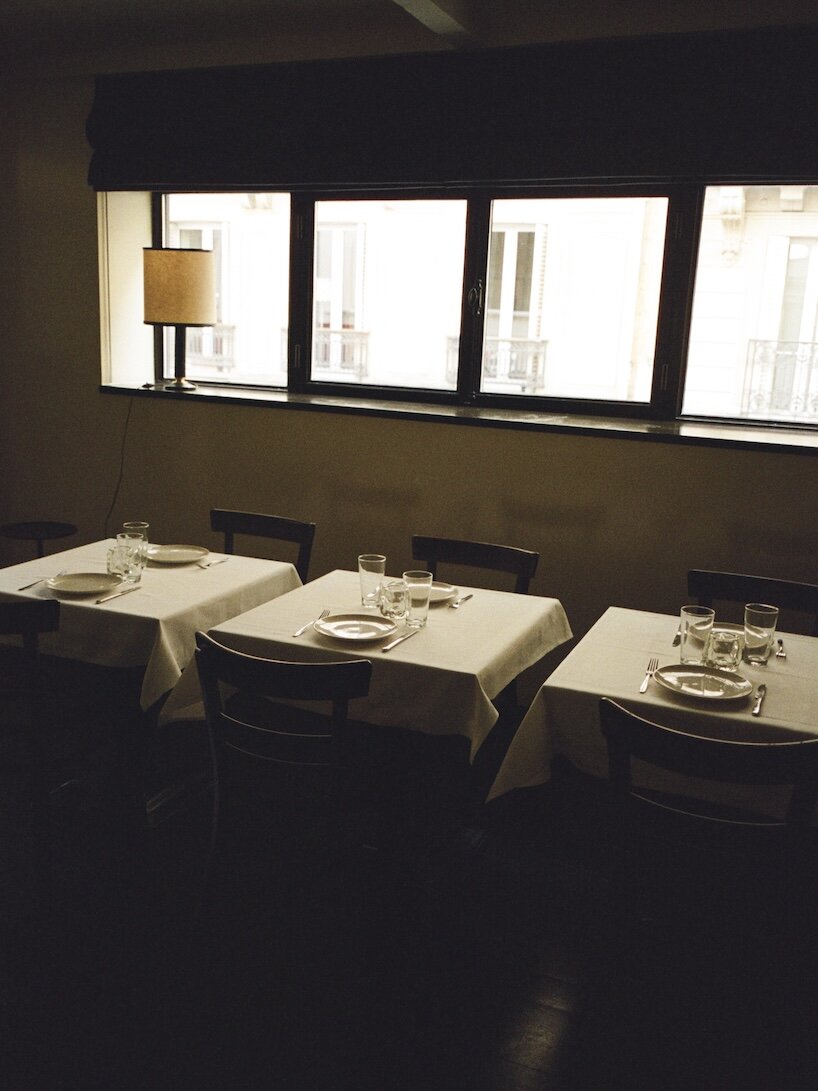
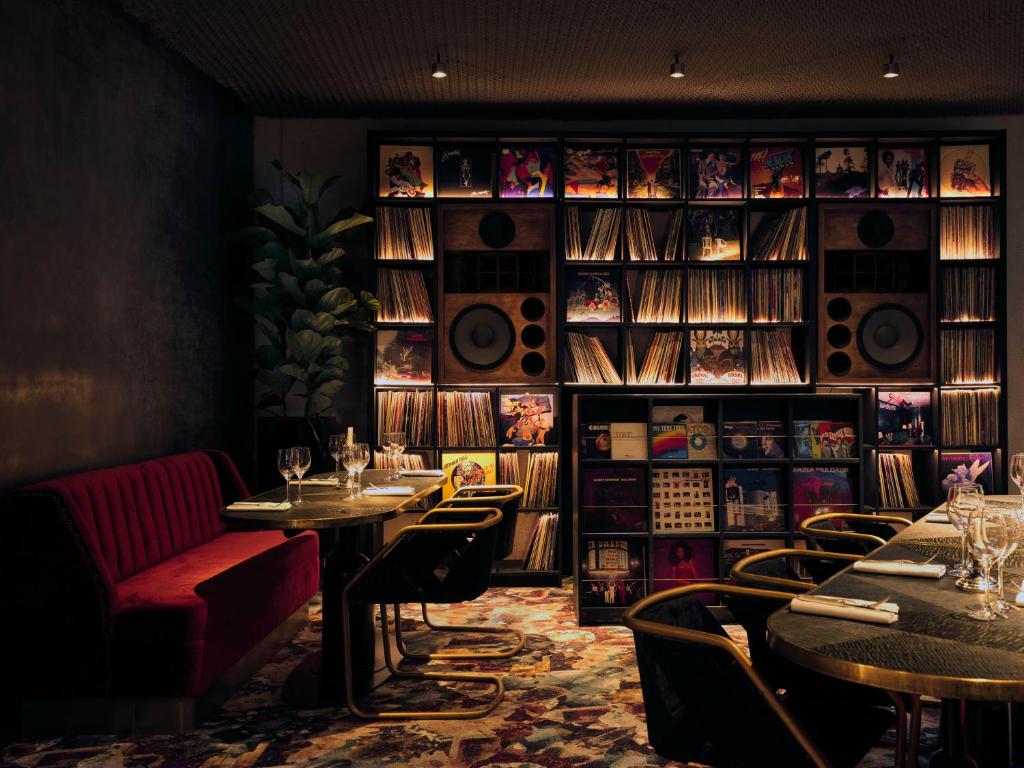
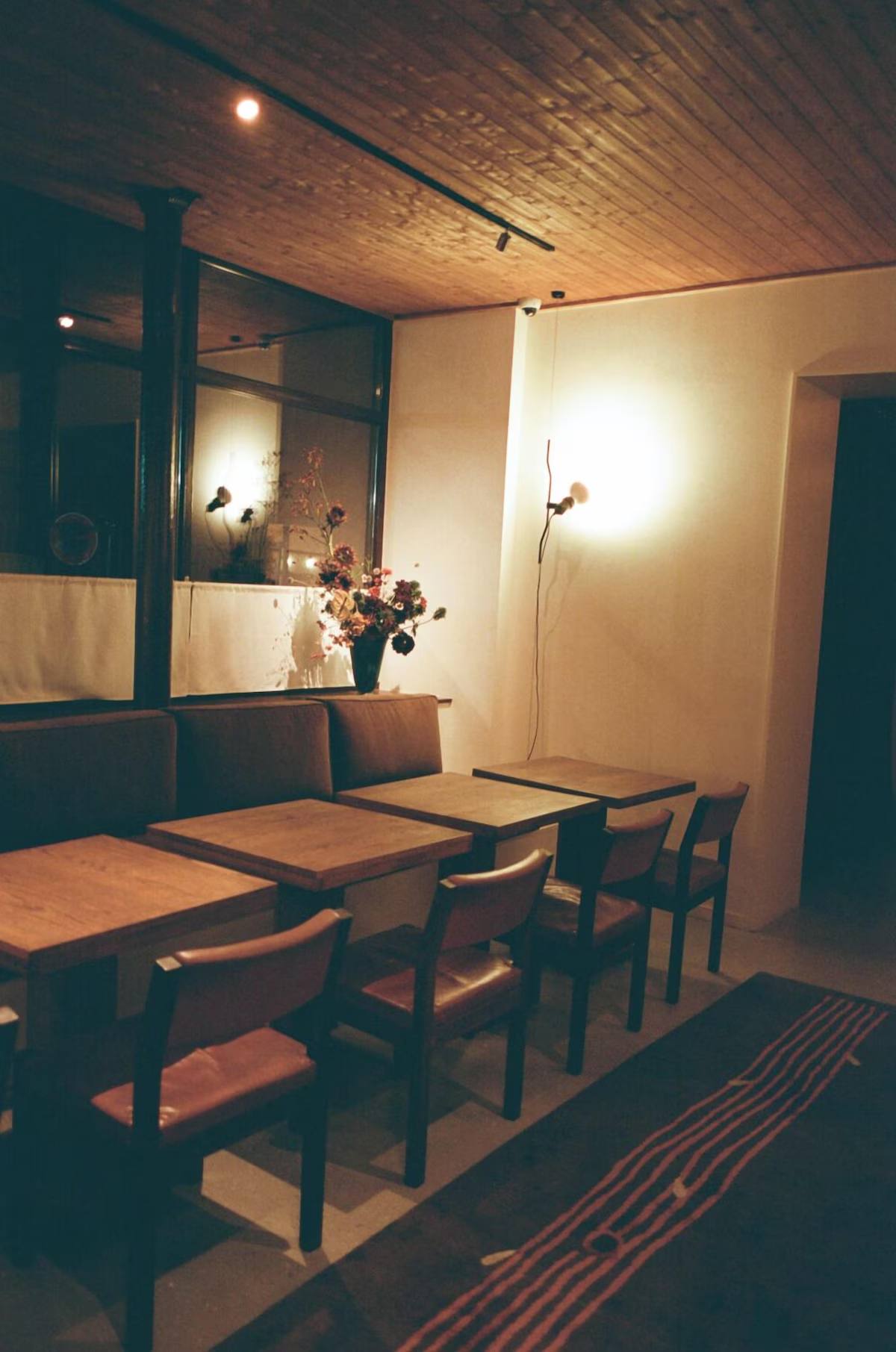
The hotel’s social ambitions extend next door to Le Trente, a bar and restaurant at number 30 Rue Victor-Massé, also developed by the Peyron siblings. Conceived as a more energetic counterpart to the hotel’s quieter interiors, Le Trente occupies a former loft transformed by Olivier Guyot and Gasparetto Parenti. A green marble façade introduces the space, with lettering by contemporary artist Konstantinos Kyriakopoulos. Inside, a vintage wooden bar, red-painted floors, second-hand furniture and intimate seating areas establish an atmosphere somewhere between a Parisian neighbourhood bar and a private creative club. Family photographs provide a personal touch, while an extraordinary collection of miniature Ricard bottles references the family’s Mediterranean connections. The restaurant serves seasonal dishes designed for sharing, accompanied by natural wines and cocktails. Music plays an equally important role. A vinyl-focused programme brings together DJs playing jazz, ambient, house and electronic music, with custom speakers incorporating cabinetry by JJ Booth. An upstairs space beneath a large glass roof provides room for private gatherings and creative events, continuing a tradition established when artists used the building during the hotel’s development. Together, Hôtel Massé and Le Trente offer two complementary experiences: somewhere to retreat from Paris and somewhere to become part of it.
Pigalle, Beyond the Moulin Rouge
Hôtel Massé’s location is essential to its appeal. The hotel sits in South Pigalle, often abbreviated to SoPi, a neighbourhood that has evolved from its colourful red-light reputation into one of Paris’s most interesting districts for independent shops, restaurants, galleries and nightlife. Rue Victor-Massé provides a relatively peaceful setting, yet the surrounding streets are full of activity. Rue des Martyrs is just around the corner, lined with bakeries, cheese shops, wine merchants, cafés and neighbourhood restaurants. To the north, Pigalle’s historic cabarets and music venues retain their unmistakable after-dark energy, while Montmartre’s winding streets, artists’ studios and Sacré-Cœur are within walking distance. Nearby Avenue Frochot recalls the area’s nineteenth-century artistic and literary heritage. It is a neighbourhood where old Paris and contemporary creative culture coexist particularly well. For travellers interested in design, independent fashion, contemporary art and the city’s evolving food scene, few locations offer a more engaging starting point.
A Hotel Built Around People
What makes Hôtel Massé particularly interesting is that its identity has emerged through collaboration rather than a single overarching design statement. Gasparetto Parenti have created an architectural framework that feels refined and timeless, but the hotel’s personality comes equally from its owners, artists, furniture makers, local suppliers and neighbourhood connections. The result is neither a conventional luxury hotel nor an aggressively fashionable lifestyle concept. It is a quietly confident, beautifully designed place that understands the appeal of good furniture, interesting art, thoughtful hospitality and a neighbourhood worth exploring. With Le Trente adding another dimension to its creative community, Hôtel Massé has become something more than a stylish place to sleep. It is a small piece of contemporary Parisian life, and an excellent reminder that the most memorable hotels are often those that feel as though they belong to someone rather than a brand.
Information
At a glance
Architecture
Opened / Renovated
2025 (previously Hôtel Victor Massé)
Size matters
40 rooms (11-21m2) (118-226 sq ft)
Interior design
Bathroom Amenities
Typology
Featured in
Don't take our word for it


Handpicked worldwide
A carefully curated collection of exceptional boutique and design hotels across the globe.
Design with soul
Architecture, atmosphere and craftsmanship come together in stays with a clear identity.
Hidden, not hyped
Independent boutique hotels you rarely find on mainstream booking platforms.
Travel guidance
Personal recommendations and thoughtful support from people who actually know the places.