


Osaka, Without the Neon
Overlooking Osaka Castle, Patina Osaka combines contemporary Japanese craftsmanship, ambitious art installations, vinyl listening culture, inventive dining and high-tech wellness in a striking urban retreat.

Why DNA Hotels loves it
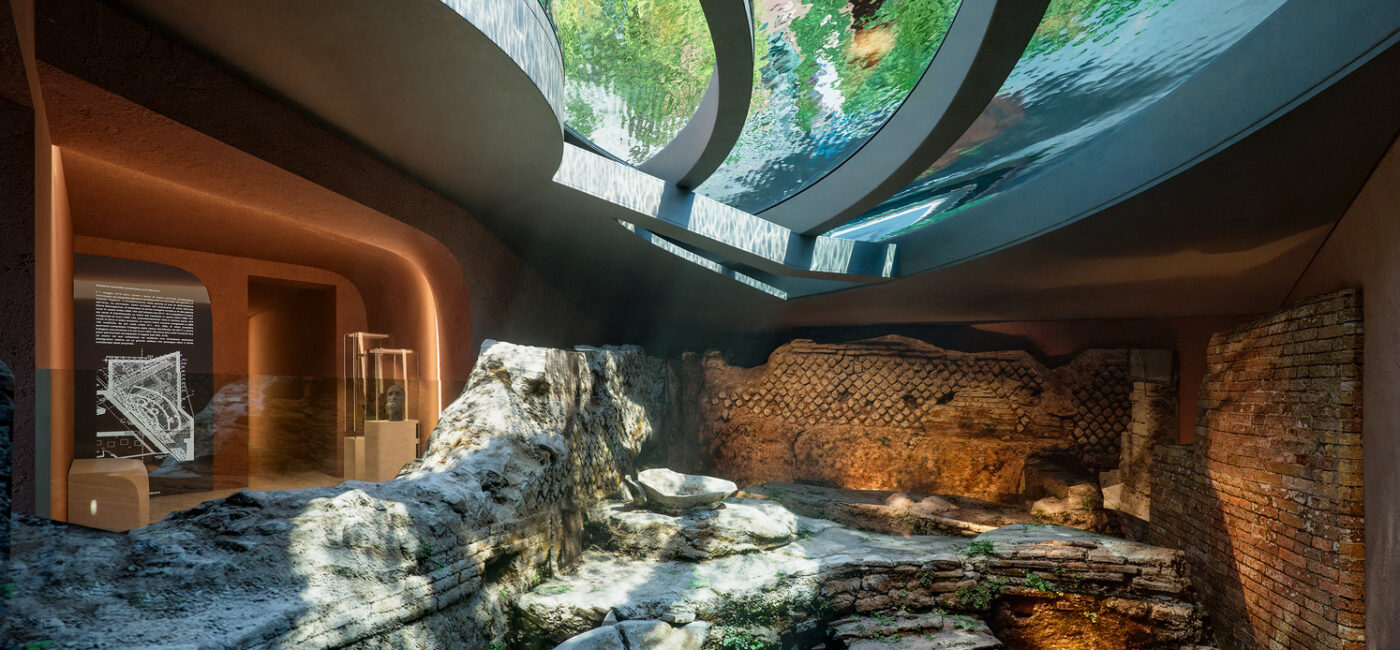
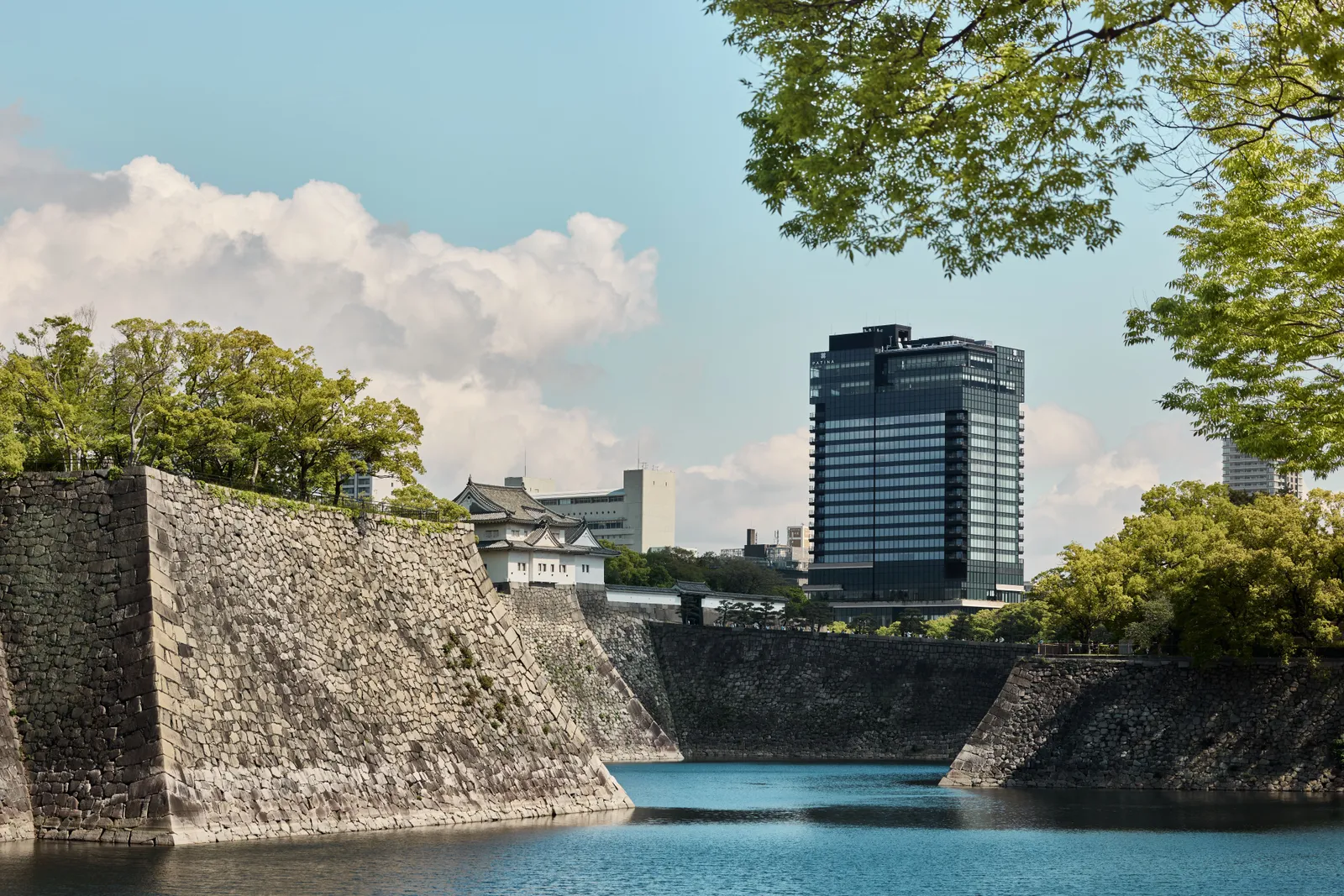
contemporary glass tower overlooking Osaka Castle and the remains of an ancient imperial palace, with interiors that draw intelligently on Japanese craftsmanship, materials and history.
An unusually rich creative programme, from monumental installations made with reclaimed materials to a remarkable collection of vintage Japanese speakers and a dedicated analogue listening room.
A culinary scene that takes Osaka's reputation for food seriously, with seasonal, vegetable-led cooking, Basque influences, teppanyaki, Japanese tea and cocktails accompanied by vinyl records.
The Stay
Ancient Japan, Contemporary Craft, and the Art of Listening to a City
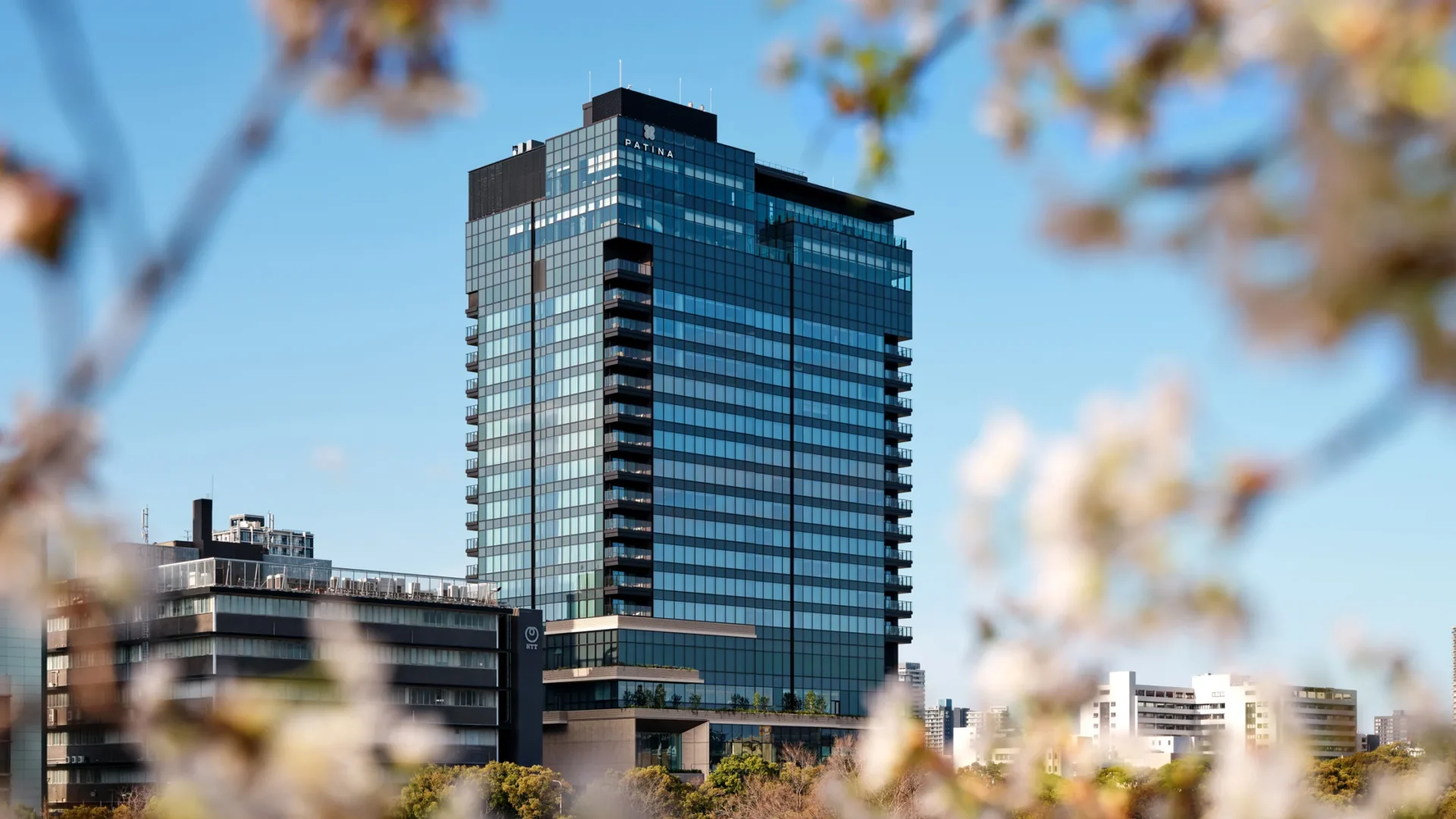
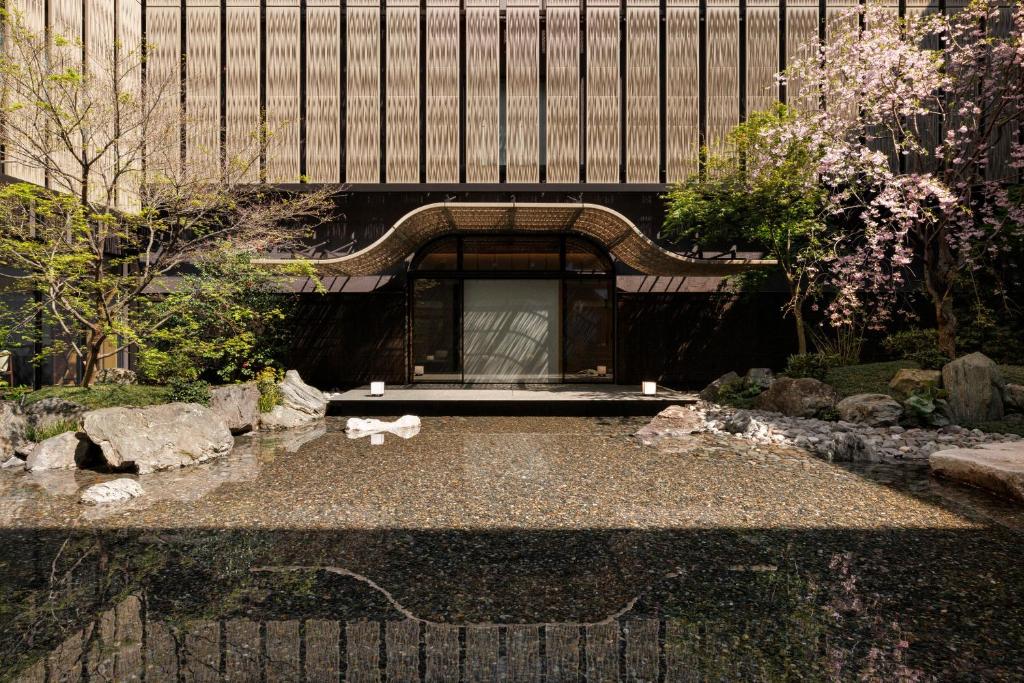
Osaka is not a city generally associated with restraint. It is loud, sociable, occasionally chaotic and famously obsessed with food. Its hotels, however, have often been rather more conventional, particularly at the luxury end of the market. Patina Osaka offers a different interpretation. Opened in 2025 as the first Japanese property from Capella Hotel Group’s younger Patina brand, the 221-room hotel occupies a 20-storey glass tower overlooking Osaka Castle and the former site of Naniwa-no-Miya Palace, an imperial residence dating back some 1,300 years. It is an unusual location, surrounded by parkland rather than department stores and entertainment districts. The contrast with Osaka’s more frenetic neighbourhoods is immediate, although the city remains close enough to explore without difficulty. Patina makes considerable use of its historical surroundings, sometimes quite literally, but its most interesting qualities emerge where Japanese traditions meet contemporary design, art and technology.
A Castle as Design Reference
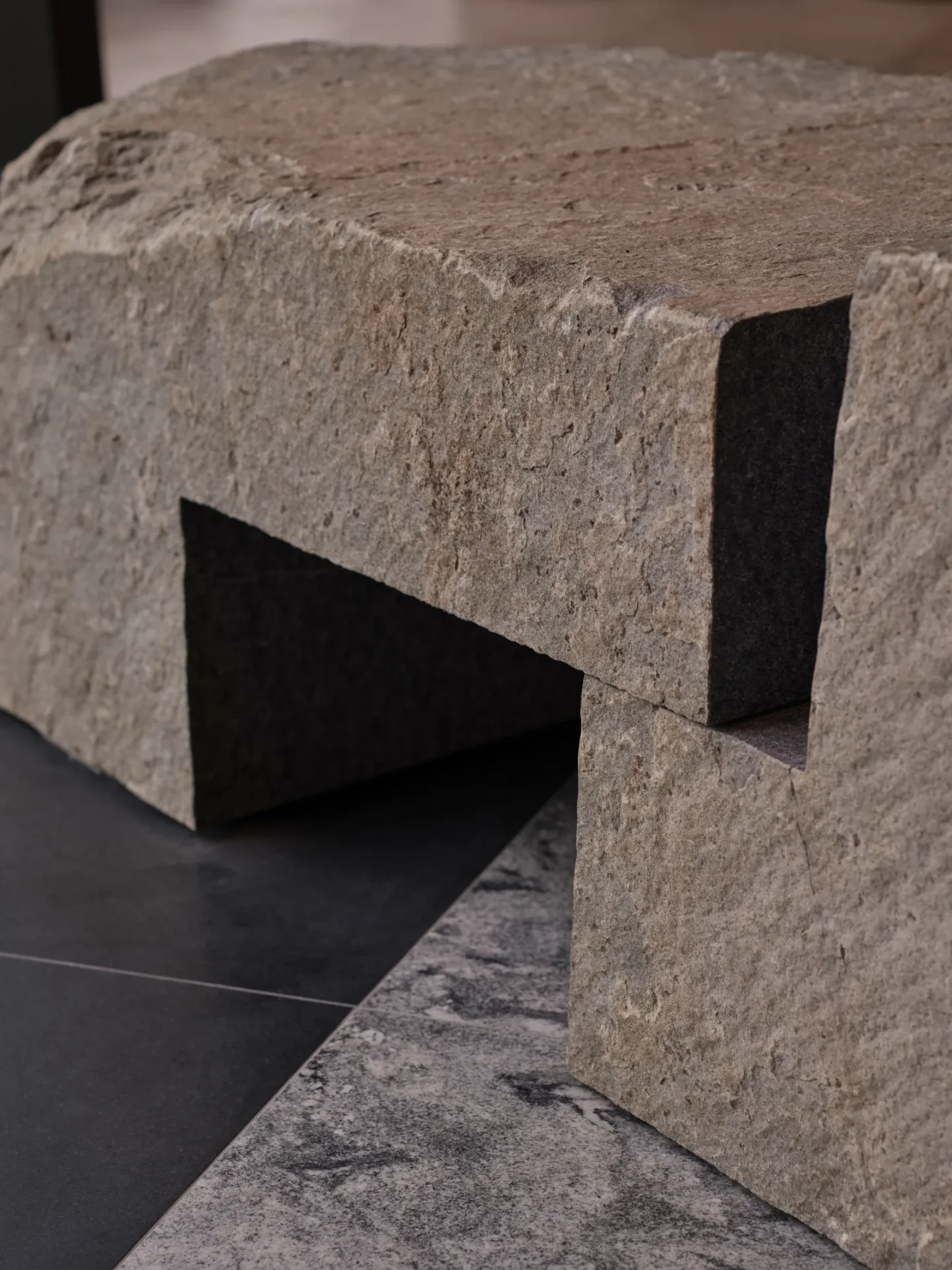
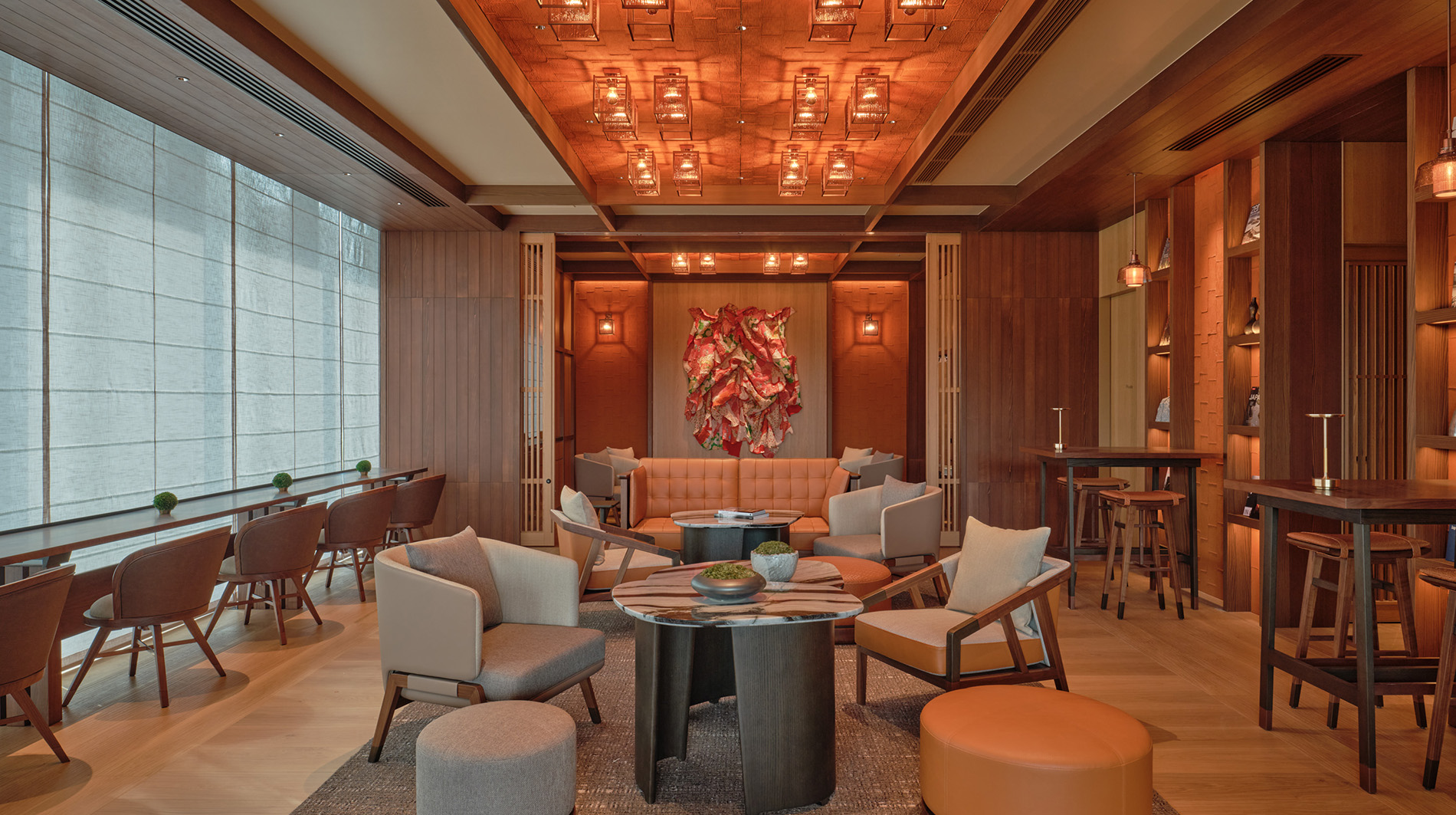
The building was designed by Jun Mitsui & Associates, with interiors by Strickland, whose approach draws on Japanese seasonal awareness and the materials associated with the surrounding landscape. Granite, timber, copper, ceramics and handmade paper appear throughout, with references to Osaka Castle’s enormous stone walls and weathered copper roof. The entrance introduces a layered stone surface suggesting the geological history beneath the city, while a large vessel fashioned from a salvaged ship component adds an unexpected industrial note. The interiors are carefully composed, with warm earth tones, substantial timber surfaces and generous glazing framing the surrounding greenery. There is a certain amount of contemporary luxury-hotel choreography, but also some genuinely interesting details, particularly the use of traditional materials in unfamiliar settings.
Rooms with a Sense of Place
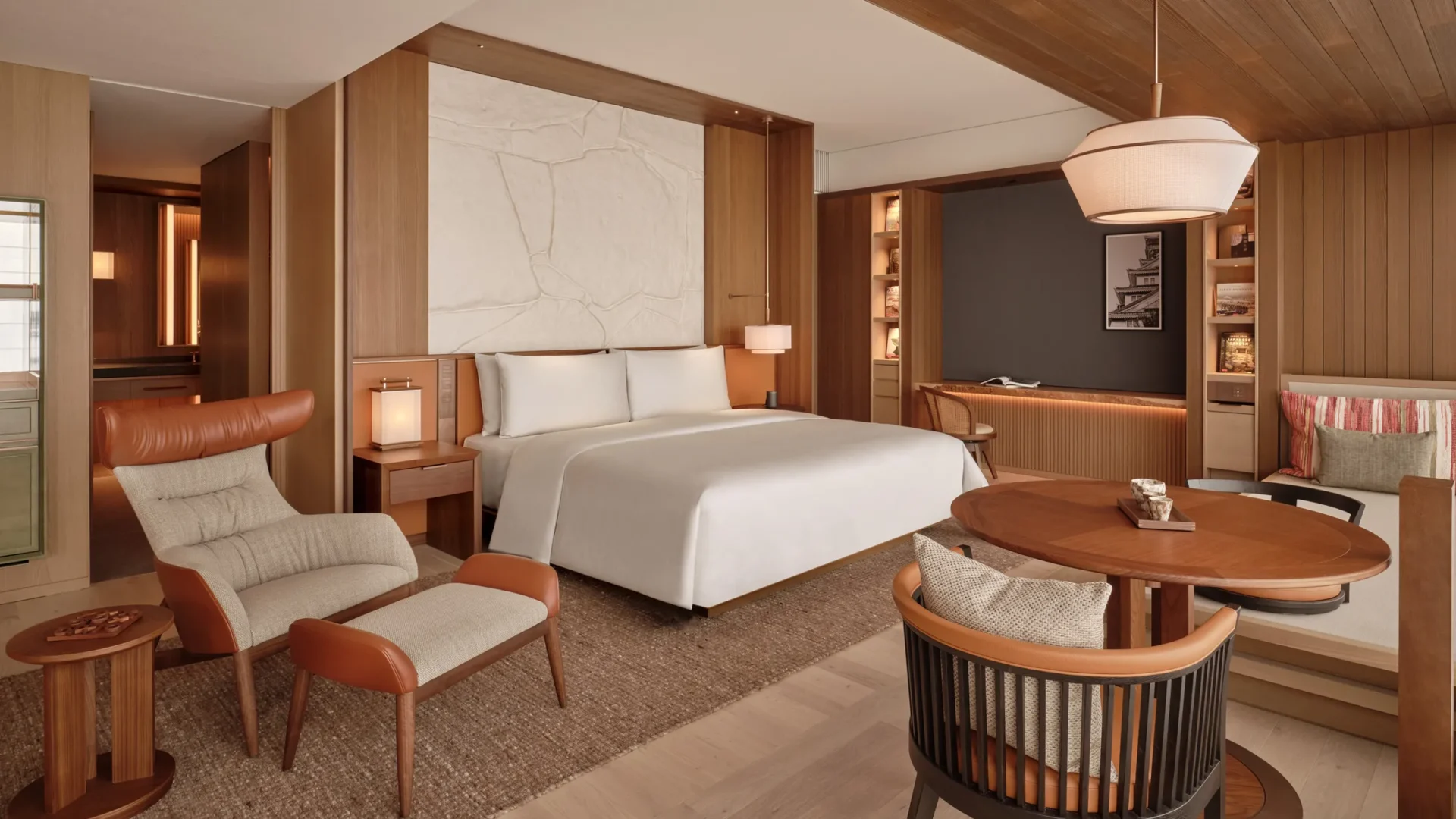
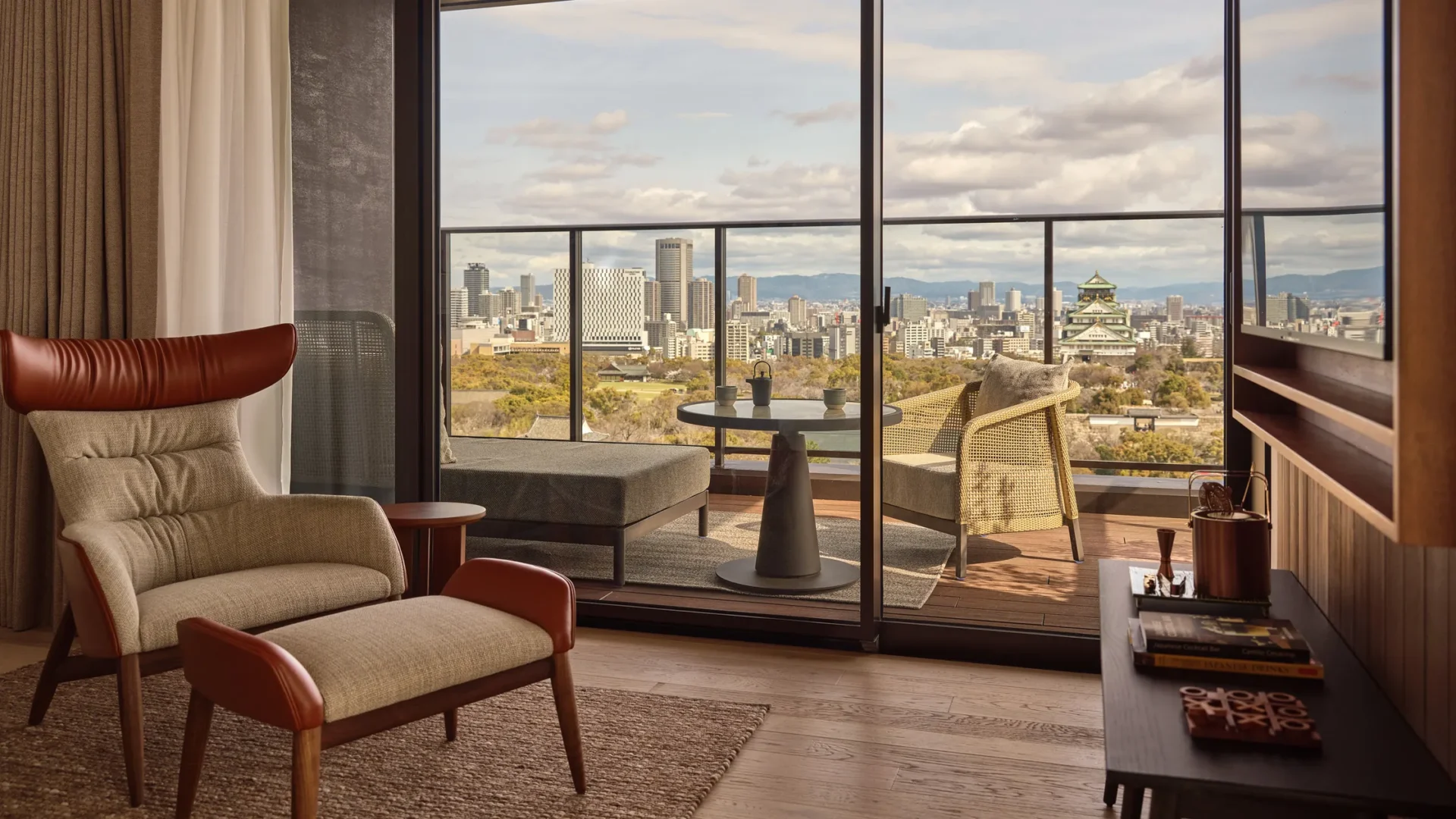
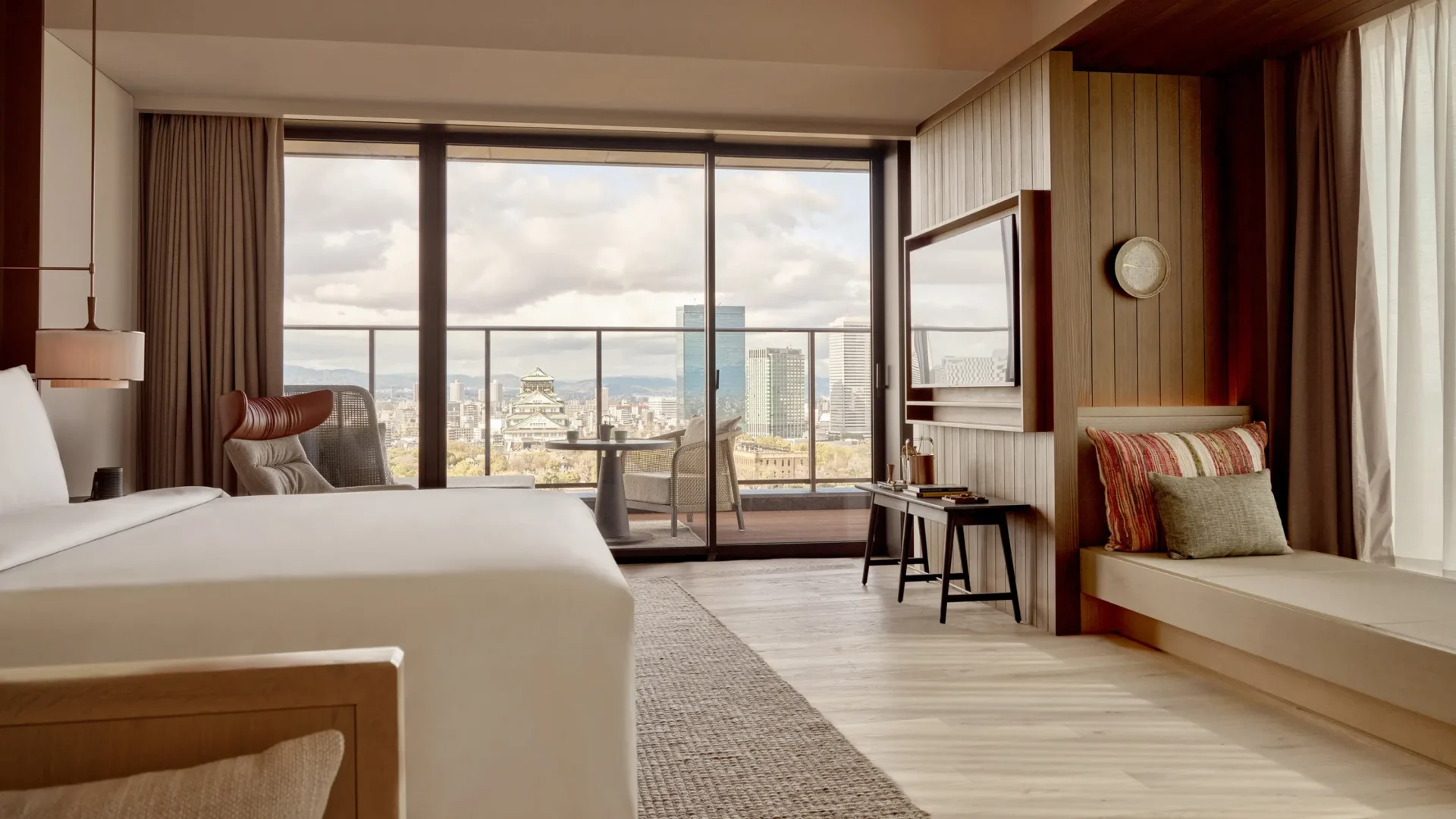
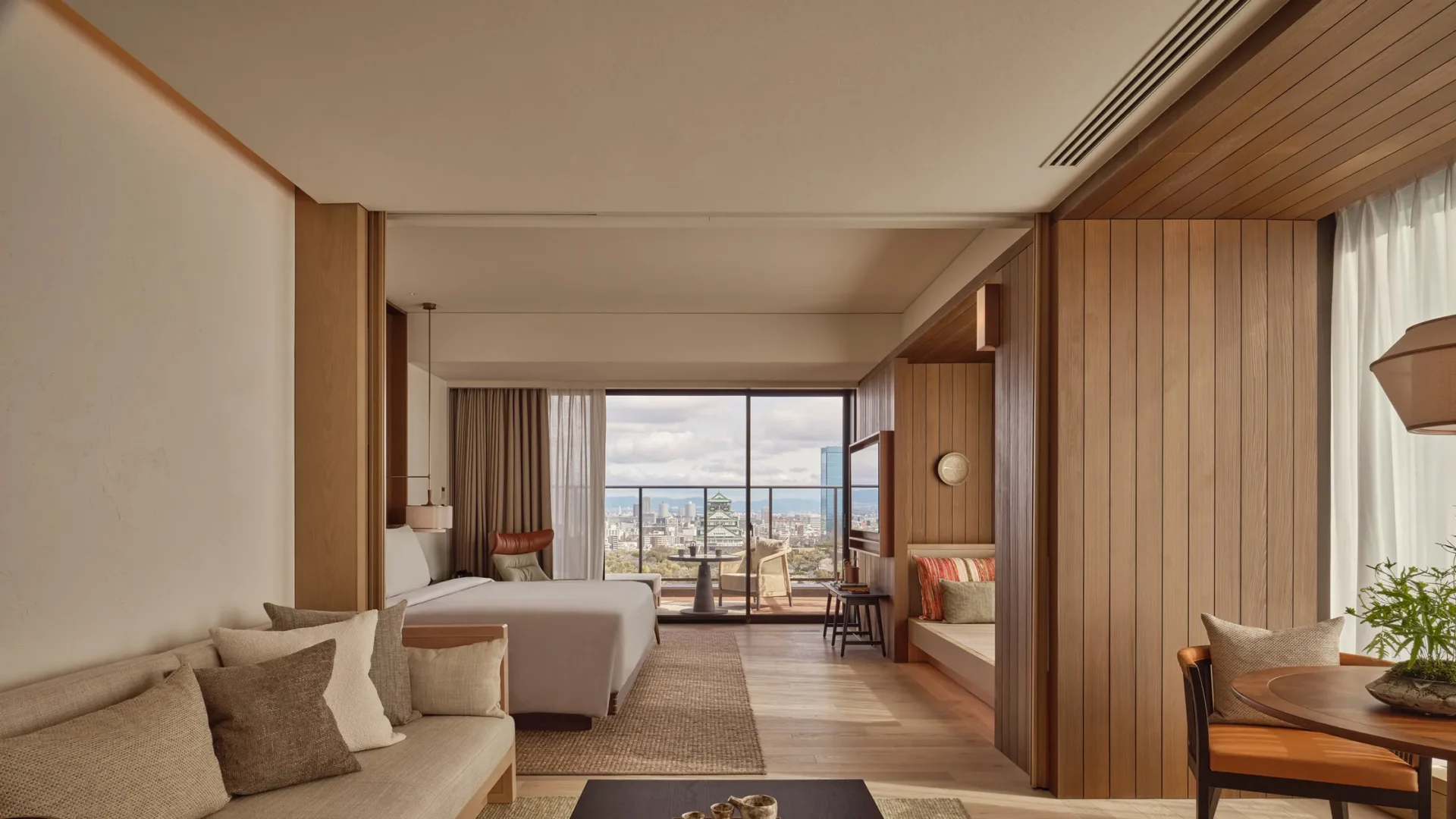
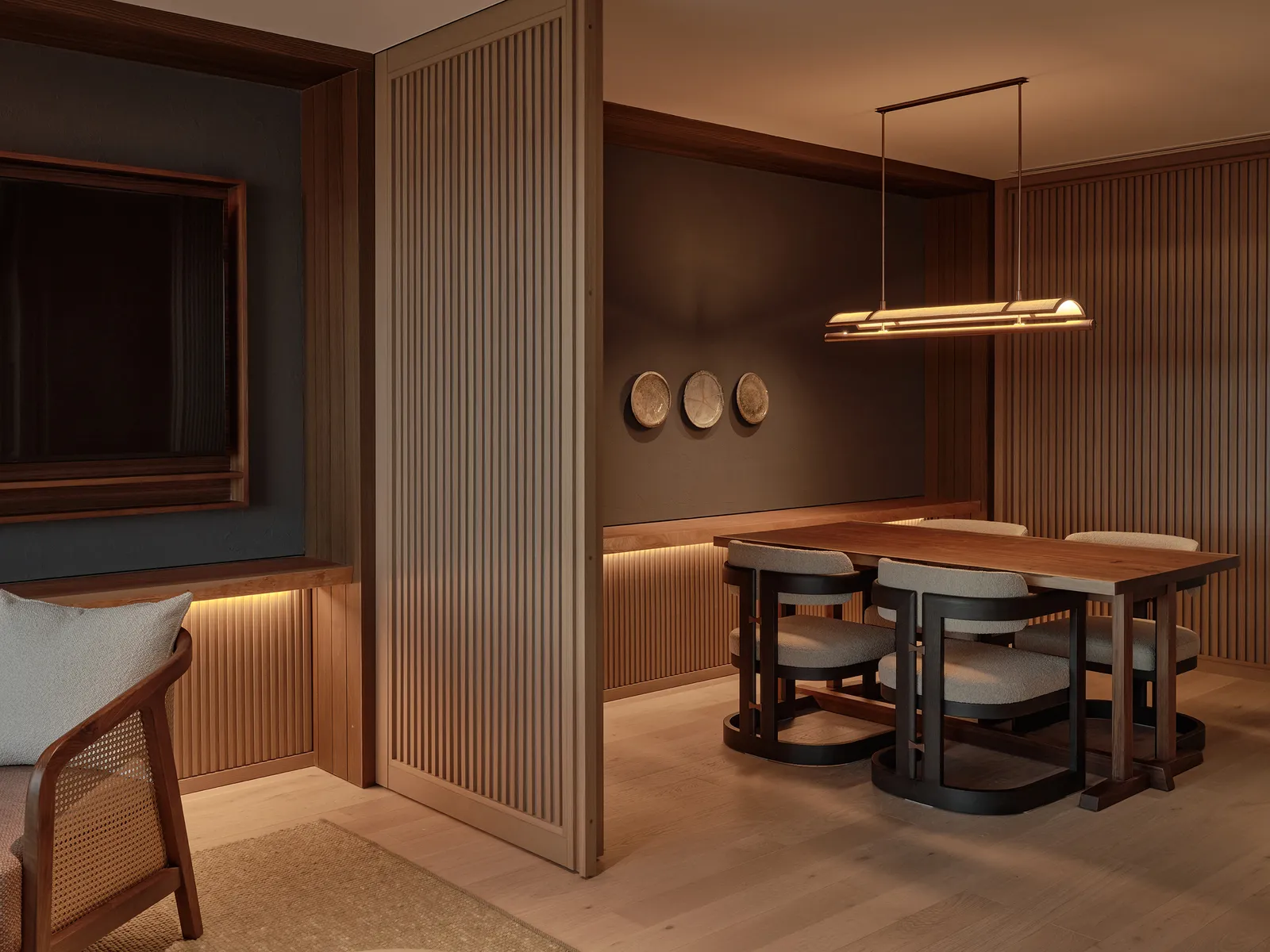
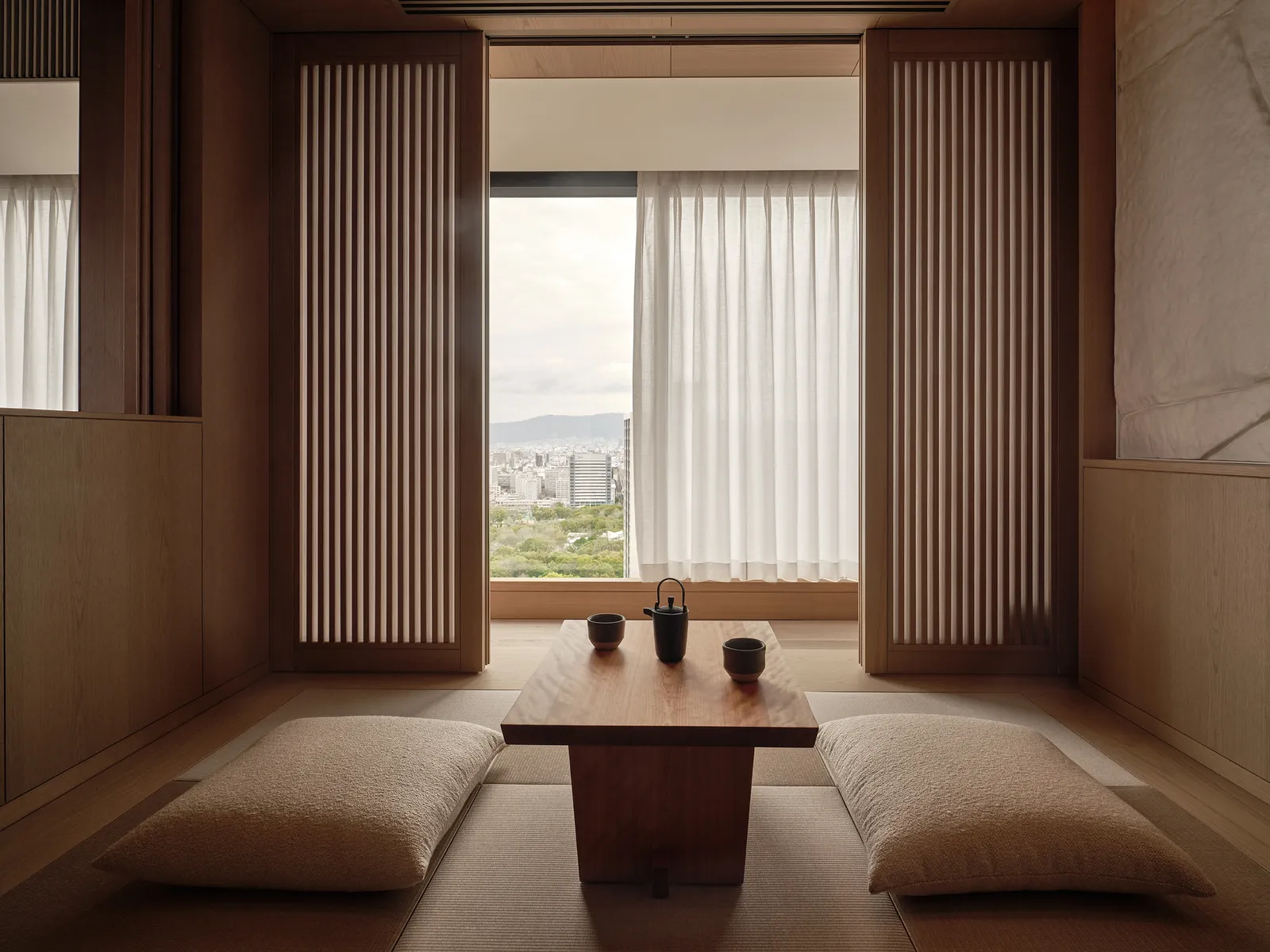
The 221 guestrooms and suites are spacious and deliberately residential, combining natural materials with furniture by Japanese manufacturer Ritzwell and bespoke decorative pieces. The most distinctive feature is the sculptural washi paper headboard, moulded from the irregular surfaces of Osaka Castle’s granite walls. Window-side tatami platforms provide a place to read, relax or simply watch the changing light over the park, while bathrooms feature stone surfaces, deep soaking tubs and copper detailing. The palette is restrained, with dark timber, muted greens, leather and textured fabrics. Forty-eight rooms have balconies, and the castle-facing corner suites are particularly appealing. The views are an important part of the experience, with the historic castle rising above the trees and the modern city stretching beyond. It is a carefully considered interpretation of contemporary Japanese luxury, although one that owes as much to international design sensibilities as to traditional hospitality.
Art That Does More Than Decorate
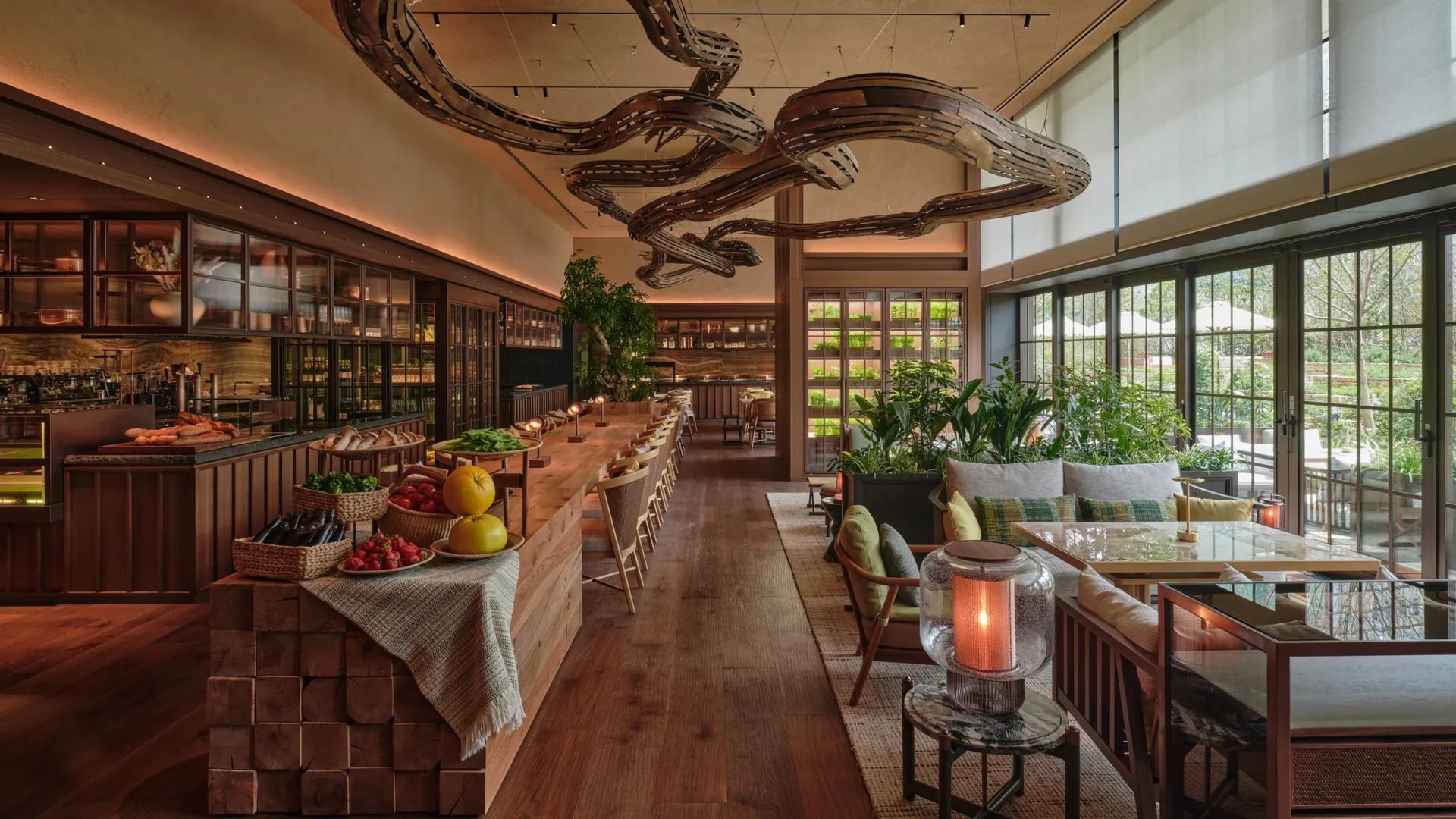
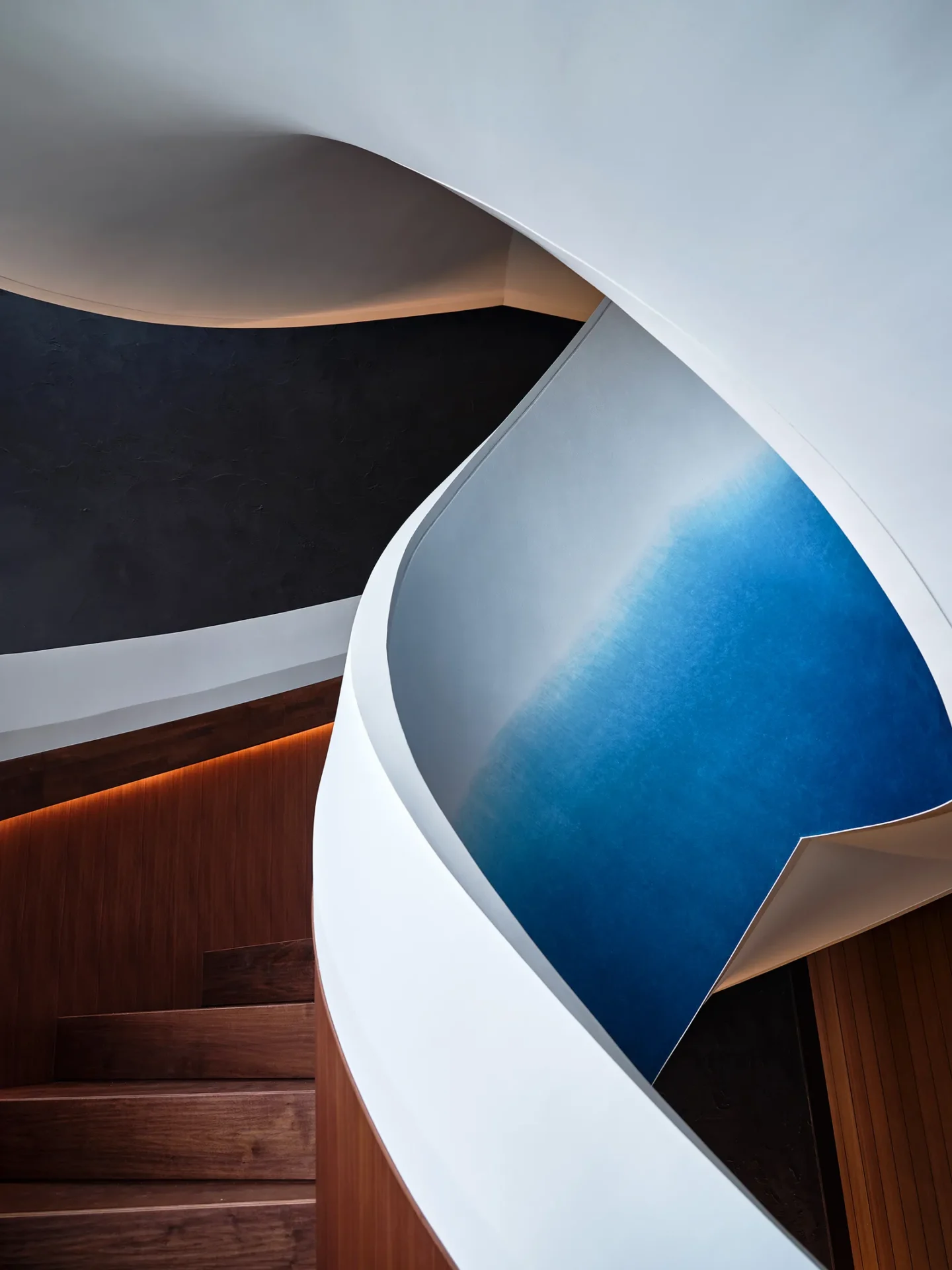
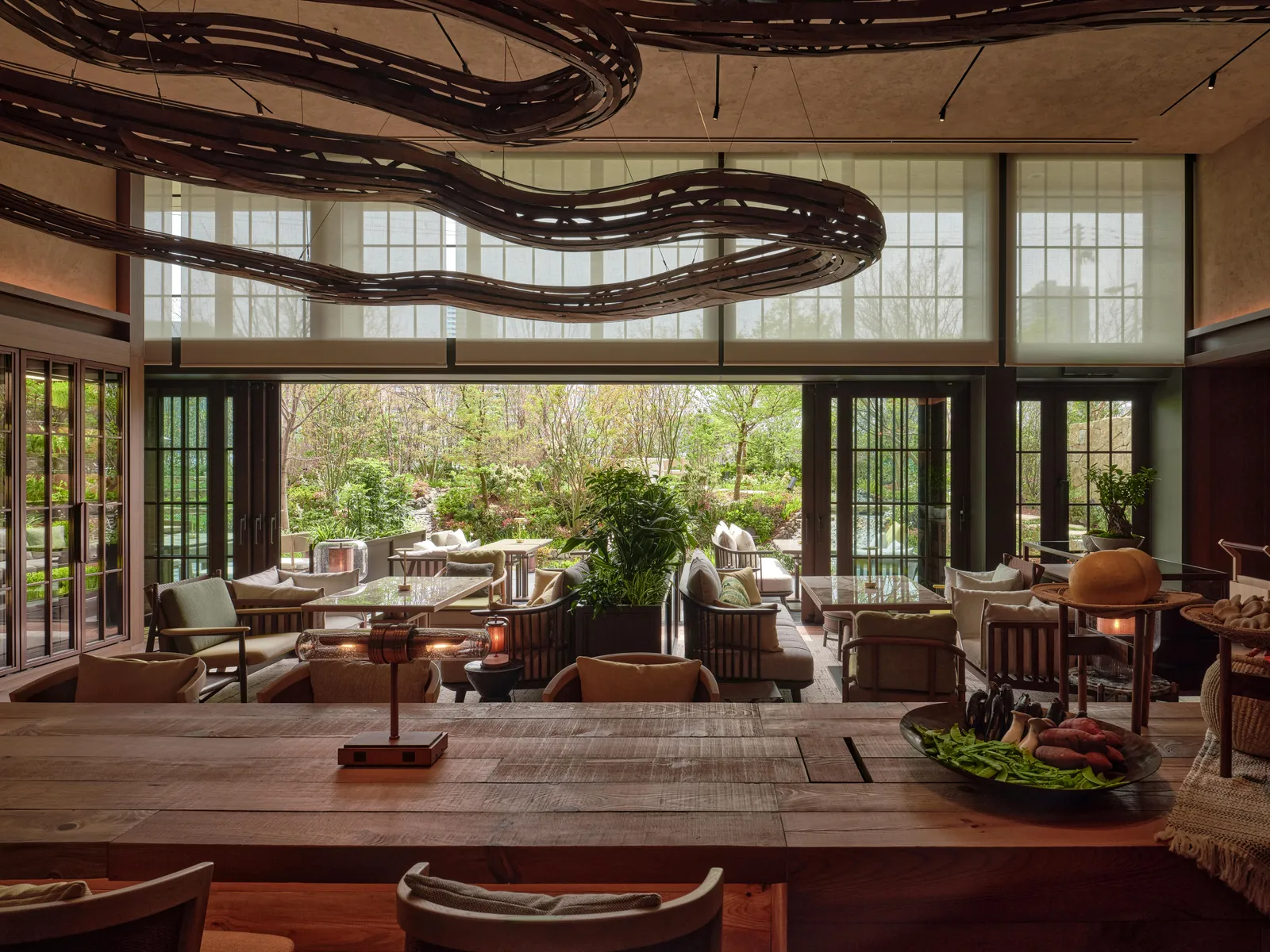
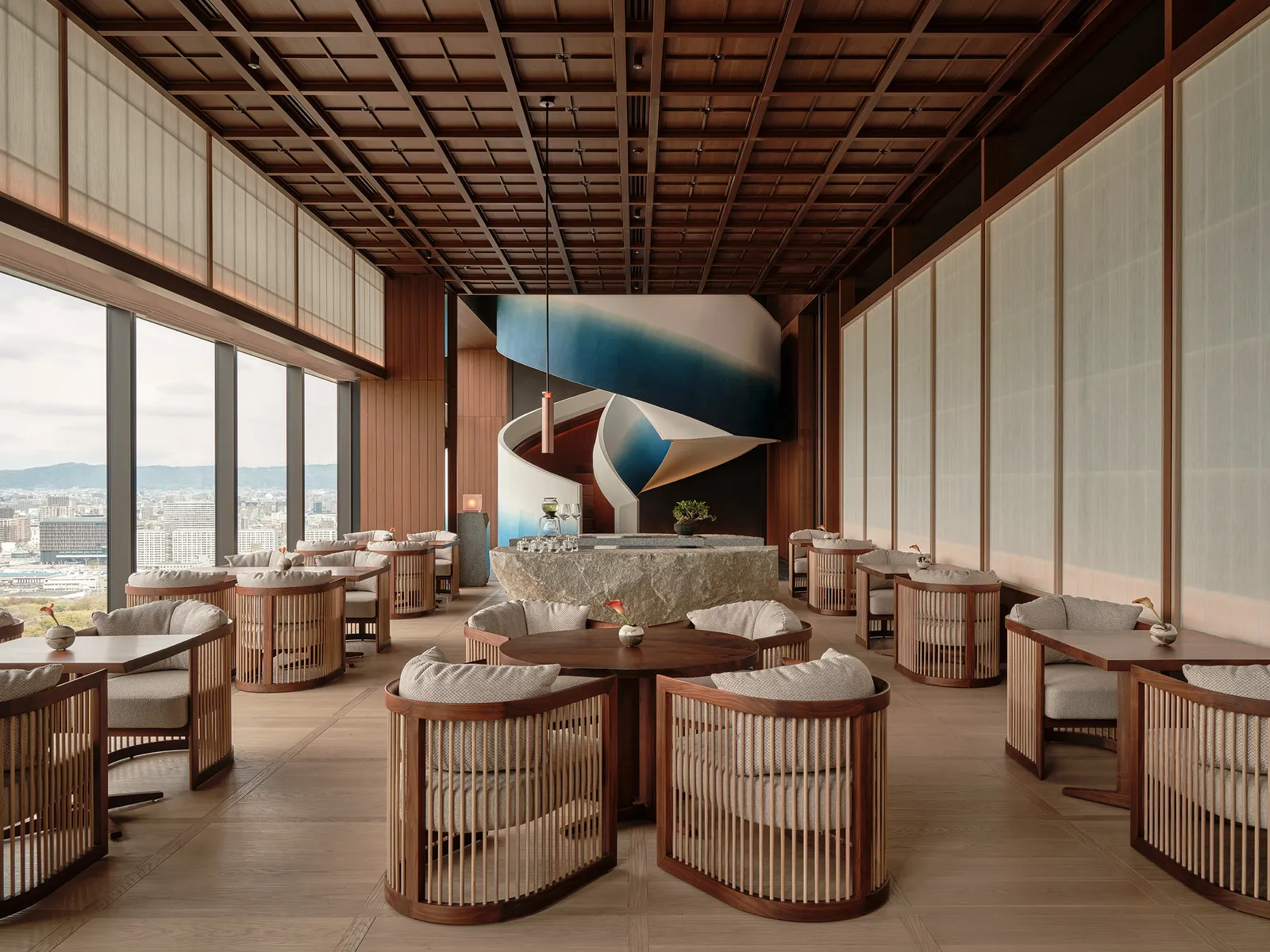
Patina’s art programme is at its most convincing when it engages with materials and their previous lives. At ground-floor restaurant P72, an extraordinary 52-metre installation made from reclaimed timber salvaged from local factories hangs overhead like a suspended root system. Elsewhere, artworks incorporate excavated earth, discarded construction materials and recycled paper. A video installation by Japanese filmmaker Takashi Makino explores the changing seasons, while a dramatic staircase wrapped in indigo-dyed washi paper connects the upper public spaces. The emphasis on reuse is not entirely new in contemporary hospitality, but here it produces some genuinely memorable pieces. Rather than relying on a collection of decorative objects, the hotel frequently treats art as an architectural element in its own right.
A Serious Interest in Sound
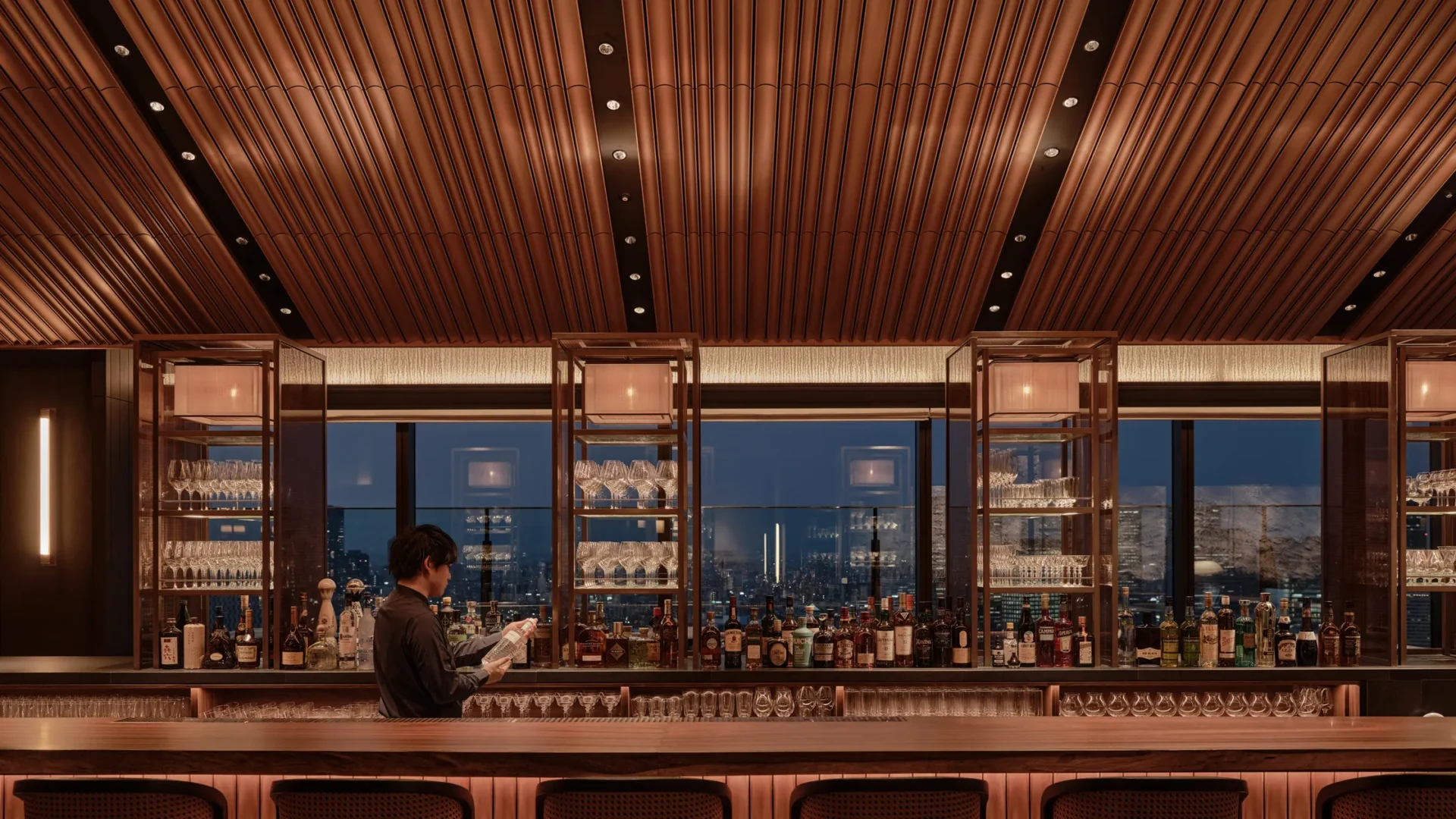
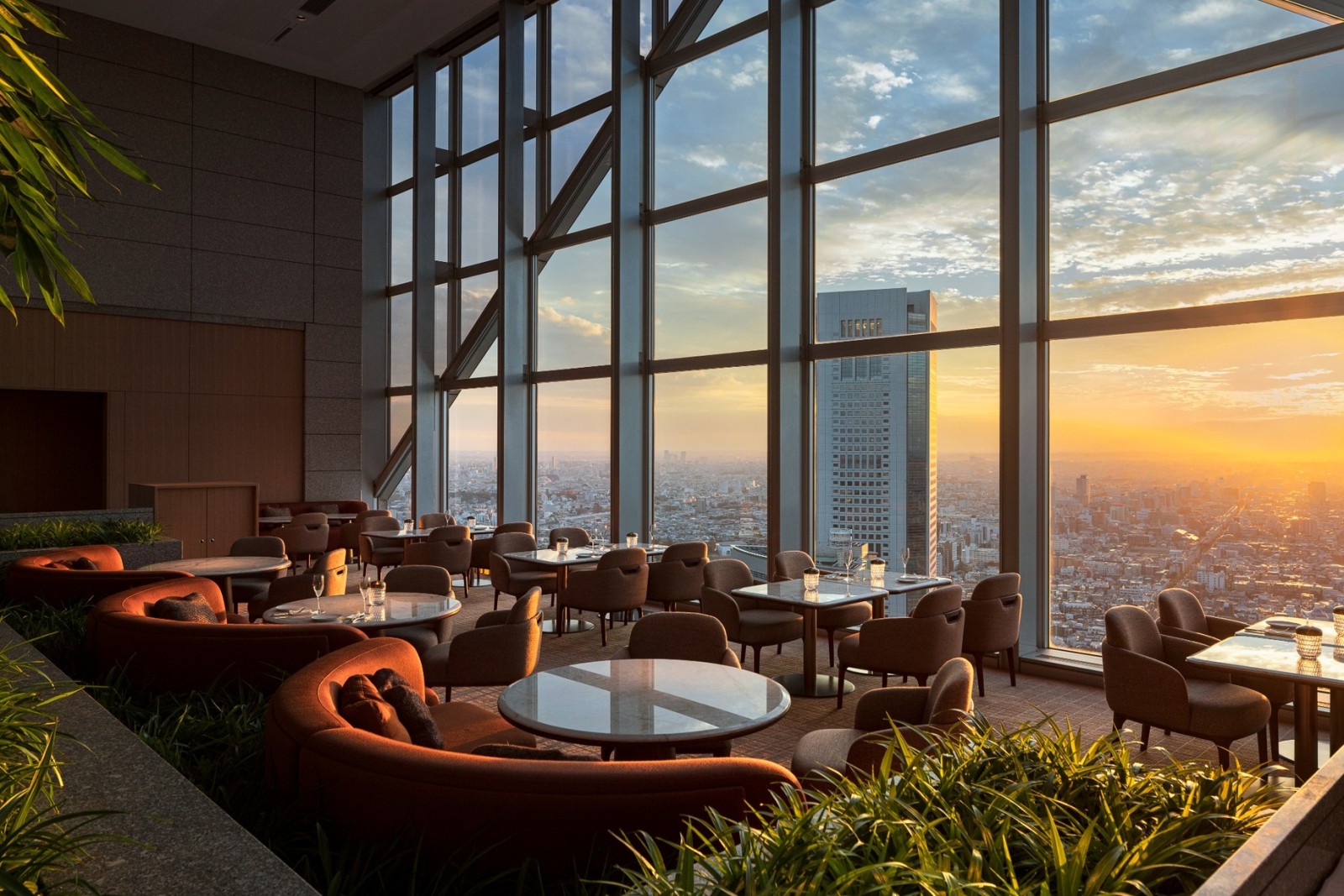
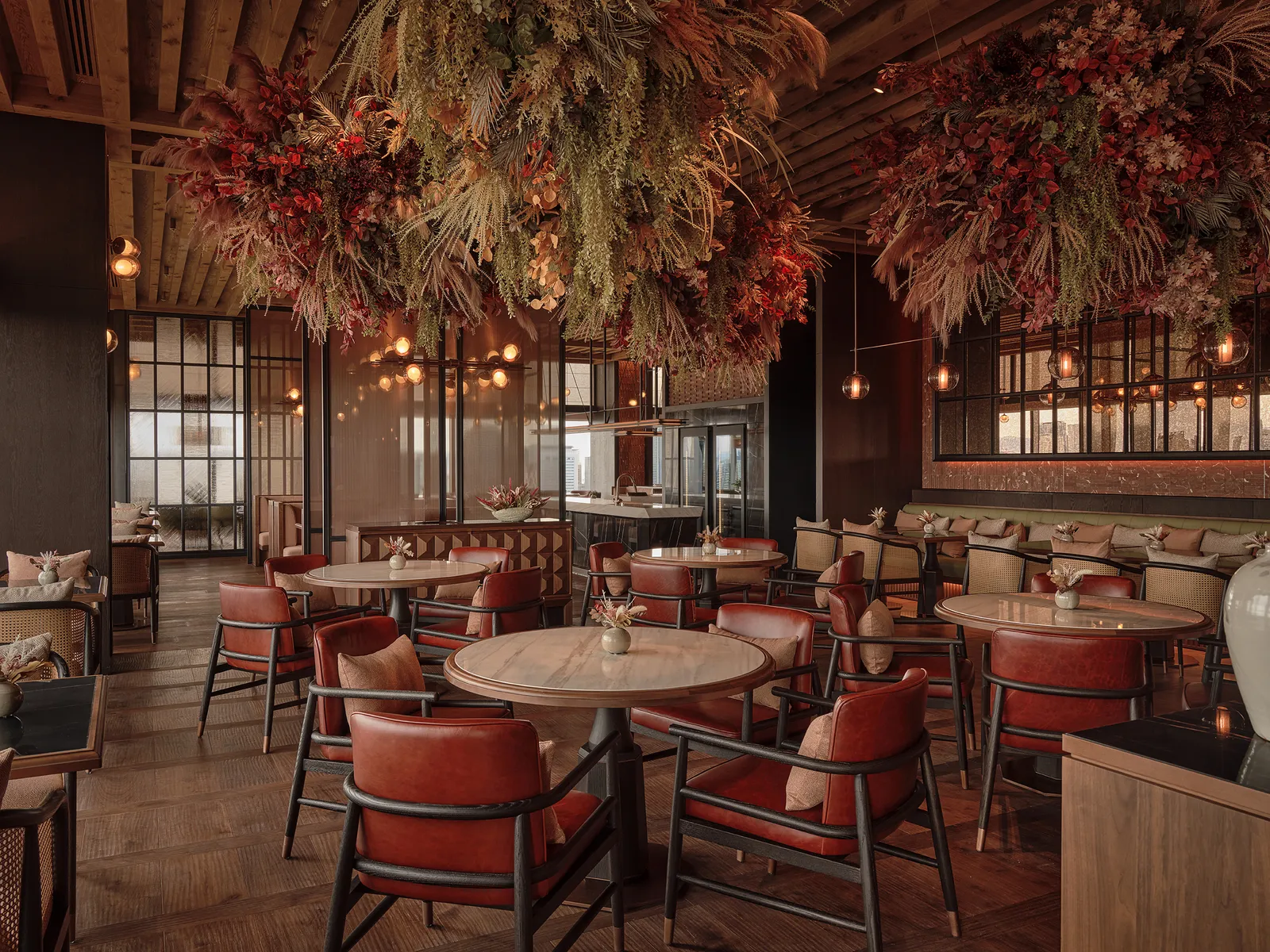
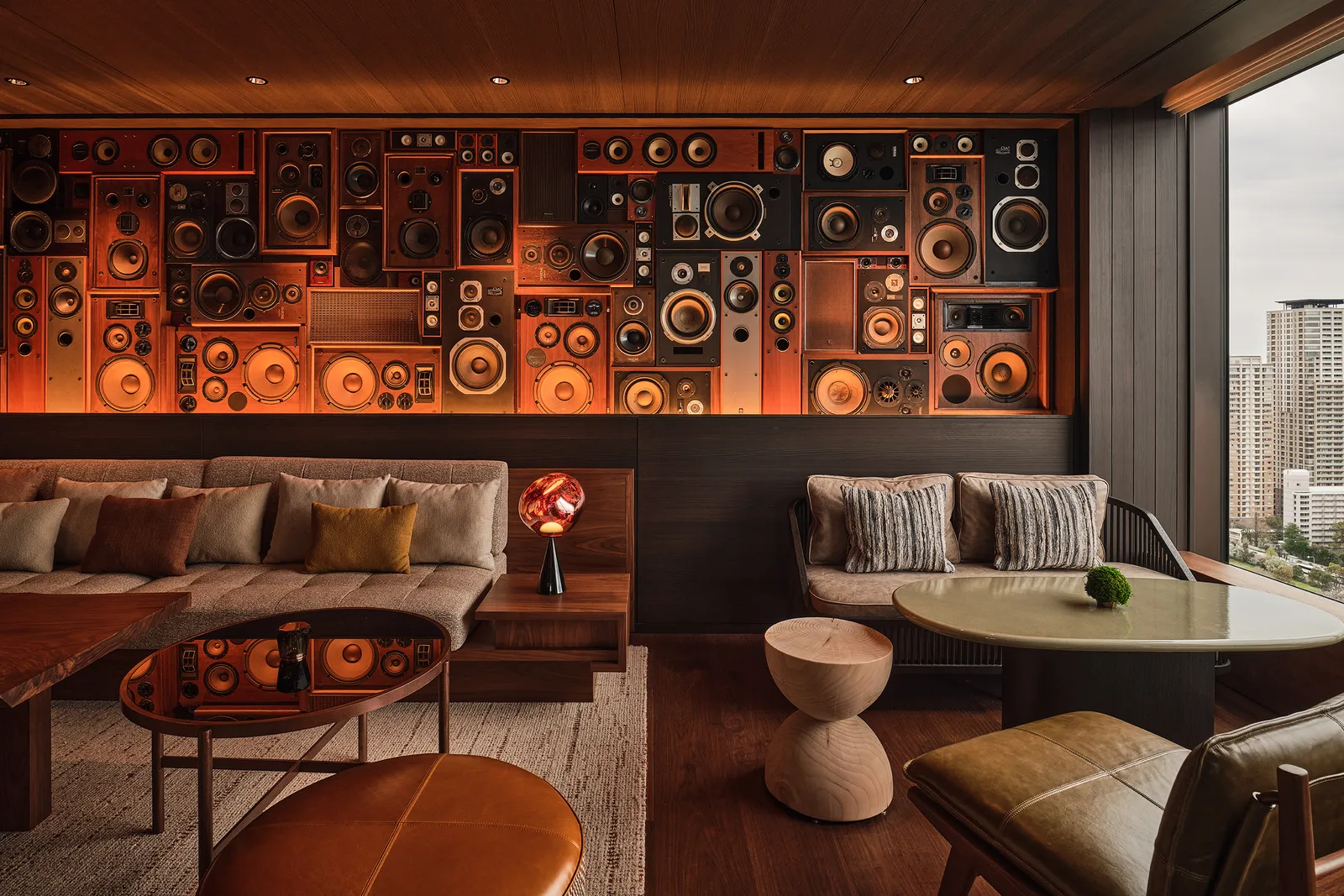
One of Patina’s more unexpected features is its fascination with analogue music. On the 20th floor, Sonata Bar & Lounge combines panoramic views of Osaka Castle with cocktails, a substantial vinyl collection and a particularly striking wall assembled from vintage Japanese loudspeakers. The adjoining listening room, developed in collaboration with sound artist Devon Turnbull’s OJAS, explores the possibilities of high-fidelity audio as a form of meditation. Jazz, soul, funk and Japanese city pop feature alongside curated listening sessions and DJ programmes. Japan has a longstanding culture of dedicated listening bars, where the quality of the sound system matters as much as the drinks. Patina borrows from that tradition, translating it into a contemporary luxury-hotel setting. It is a welcome alternative to the generic background music that accompanies so many hotel bars.
Osaka Takes Food Seriously
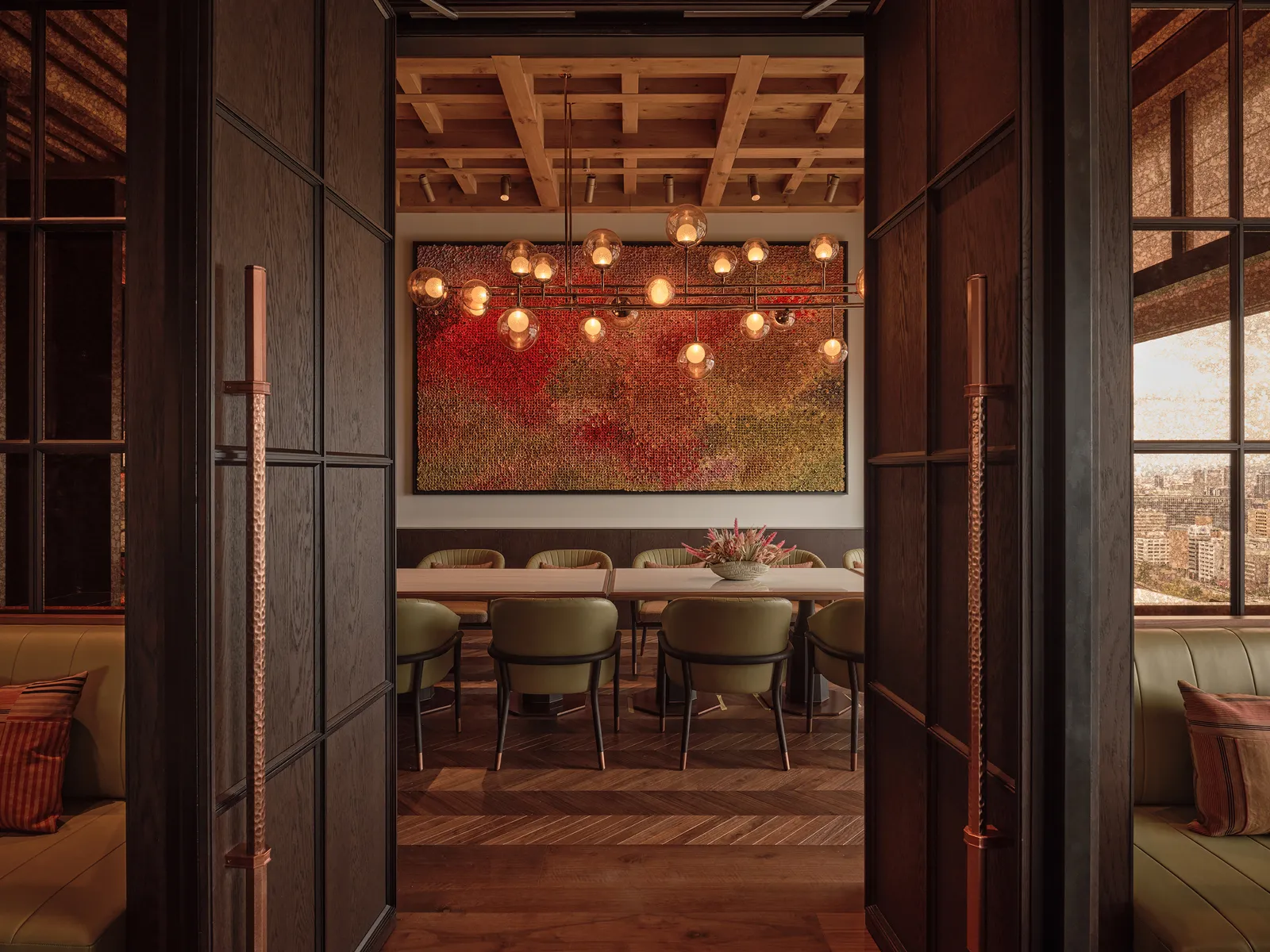
The hotel’s restaurants cover considerable culinary territory. P72, named after Japan’s traditional calendar of 72 microseasons, is perhaps the most distinctive. Under culinary director Antony Scholtmeyer, the kitchen concentrates on seasonal vegetables, herbs and regional produce, with approximately 70 per cent of the menu plant-based. An edible garden supplies ingredients directly to the restaurant, while fermentation and preservation help make use of produce that might otherwise be discarded. On the 19th floor, Iñaki takes a different direction with Basque-inspired cooking, a charcoal-fired Josper grill and expansive castle views. Barin offers teppanyaki in a more intimate setting, accompanied by a monumental gold-leaf artwork illustrating Osaka’s history. Nijiri explores Japanese tea traditions alongside contemporary afternoon tea, while Sonata provides cocktails and small plates. For a city whose culinary identity is often associated with takoyaki, okonomiyaki and lively street-food stalls, Patina offers a considerably more polished interpretation. Fortunately, Osaka’s less formal food culture is never far away.
Wellness, with a Technological Twist
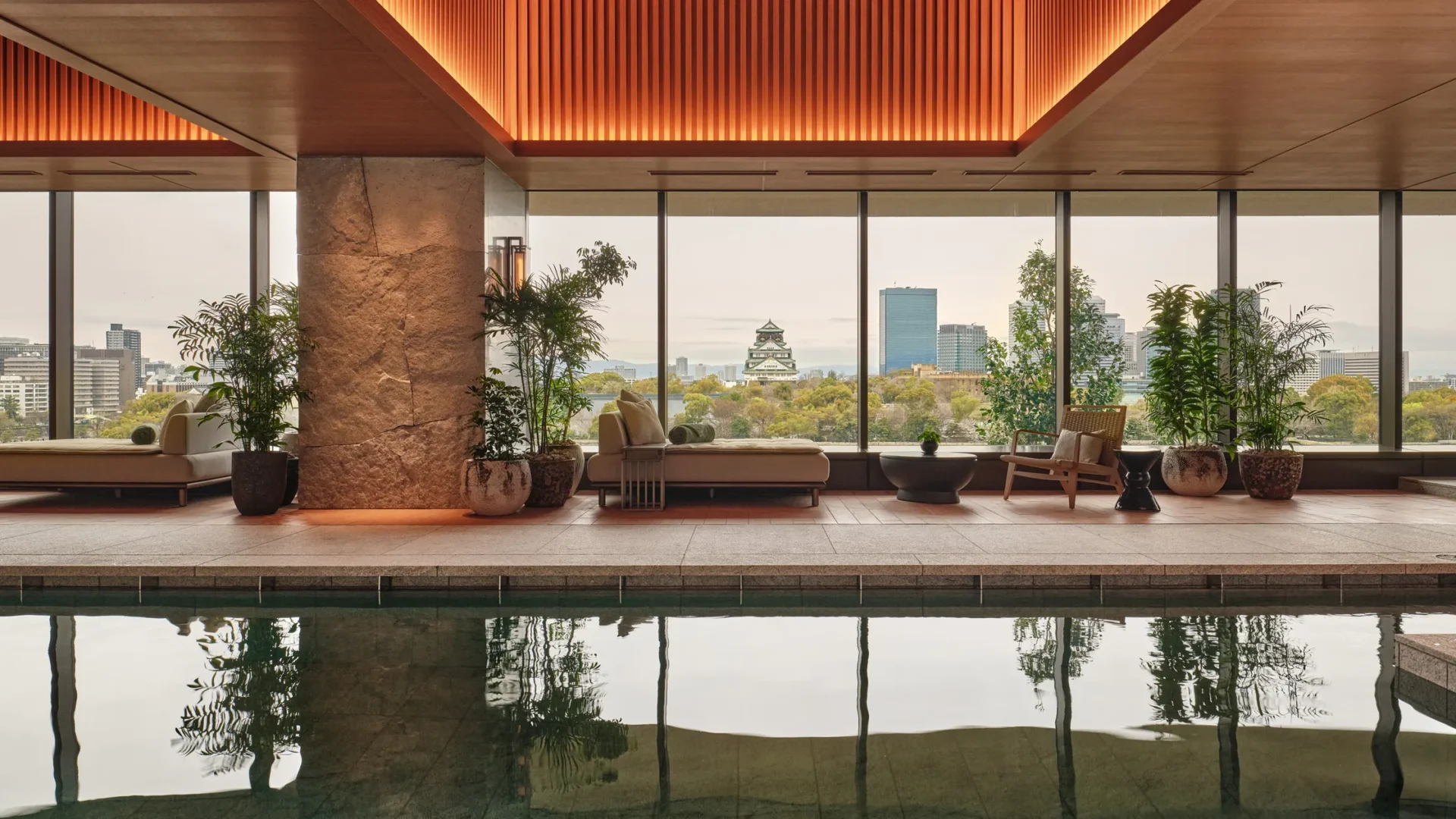
The fourth floor is devoted to a substantial wellness centre, where traditional spa treatments share space with some distinctly contemporary technology. Alongside massages, saunas and a fitness studio, guests can explore cryotherapy, infrared treatments, hyperbaric oxygen therapy and compression-based recovery programmes. The 20-metre indoor pool overlooks Osaka Castle through floor-to-ceiling windows, making it one of the hotel’s more memorable spaces. Yoga, meditation and guided movement sessions provide a less technologically intensive alternative. The extensive facilities reflect Patina’s broader interest in wellbeing, although the combination of traditional relaxation and high-tech treatments occasionally feels closer to a specialist wellness retreat than an urban hotel.
A Different Side of Osaka
Patina’s location may be its most persuasive feature. The expansive grounds of Osaka Castle and the archaeological remains of Naniwa-no-Miya provide a sense of space that is relatively unusual in central Osaka. Cherry blossoms in spring and autumn foliage later in the year make the surrounding parkland an attraction in its own right, while neighbourhoods such as Tanimachi offer smaller restaurants, bars and everyday city life away from the principal tourist districts. Dotonbori, Umeda and Osaka’s more energetic commercial areas remain within easy reach. The hotel itself is an interesting expression of contemporary Japanese hospitality, bringing together architecture, craft, art, music and an almost encyclopaedic collection of wellness concepts. Not every element needs quite so much explanation, and the overall experience is undeniably polished. But the combination of a remarkable setting, thoughtful material choices and a genuine interest in Japanese creative culture gives Patina Osaka an identity beyond the usual international luxury formula.
Hotel of the Year 2026
Information
At a glance
Architecture
Opened / Renovated
2025
Size matters
221 rooms, including 35 suites (50-127m2) (538-1,367 sq ft)
Interior design
Strickland
Bathroom Amenities
Bamford
Featured in
Don't take our word for it


Handpicked worldwide
A carefully curated collection of exceptional boutique and design hotels across the globe.
Design with soul
Architecture, atmosphere and craftsmanship come together in stays with a clear identity.
Hidden, not hyped
Independent boutique hotels you rarely find on mainstream booking platforms.
Travel guidance
Personal recommendations and thoughtful support from people who actually know the places.