


Three Creative Minds, One Hotel
A pioneering Hamburg design hotel combining Jan Störmer’s modernist architecture, Matteo Thun’s interiors and Robert Wilson’s theatrical lighting installation with contemporary dining and a rooftop lounge.

Why DNA Hotels loves it
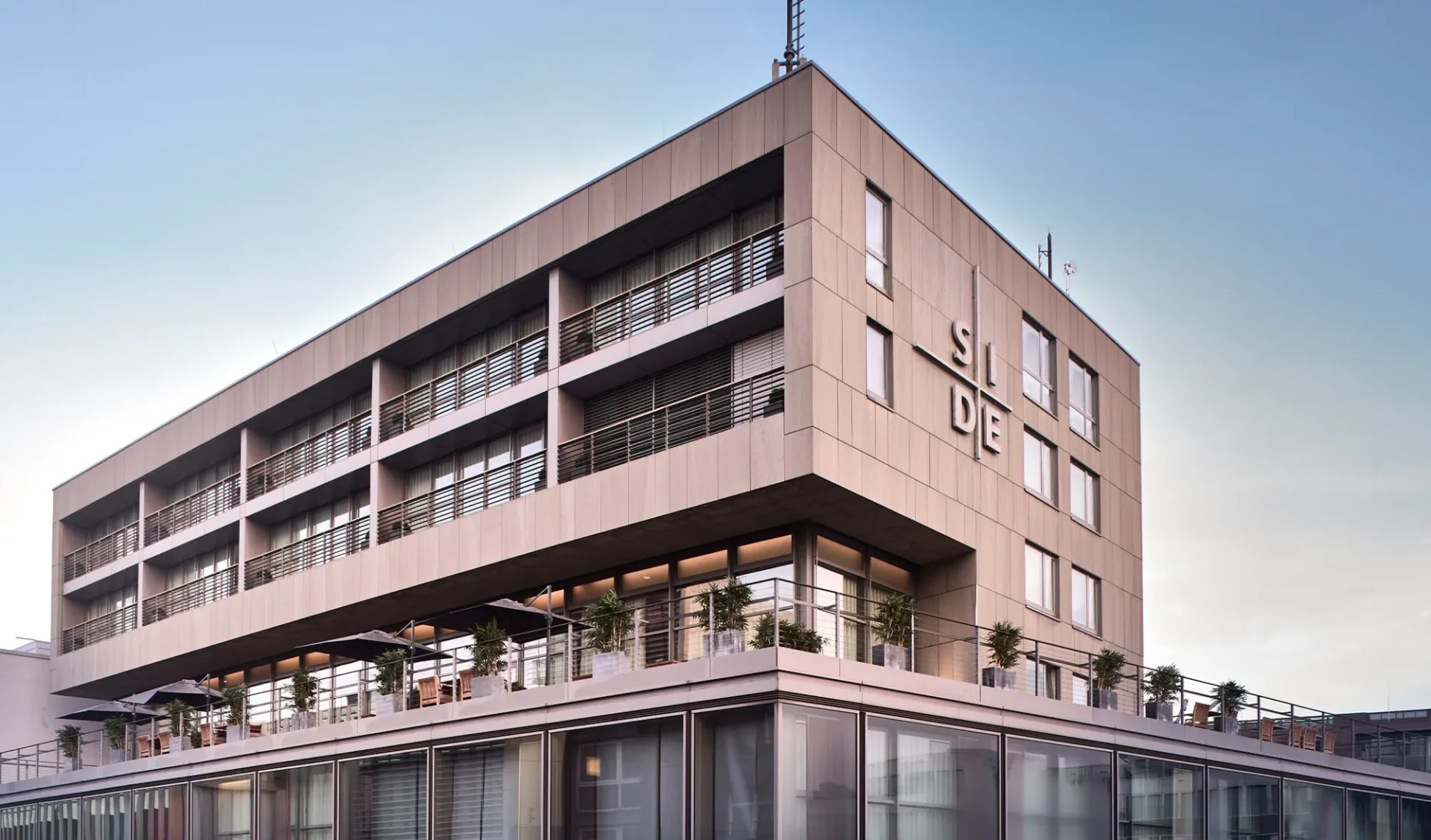
One of Europe's early design hotels, opened in 2001 in a striking glass-and-stone building by Hamburg architect Jan Störmer, with a soaring 30-metre atrium at its centre.
A collaboration between Italian designer Matteo Thun and American theatre director Robert Wilson, whose changing light installation transforms the atrium into an architectural performance.
A considered 2018 redesign that introduced warmer materials without abandoning the original concept, complemented by [m]eatery restaurant, Botanist Bar, Sky Lounge and an extensive underground spa.
The Stay
Architecture, Theatre and the Art of Reinventing a Design Hotel
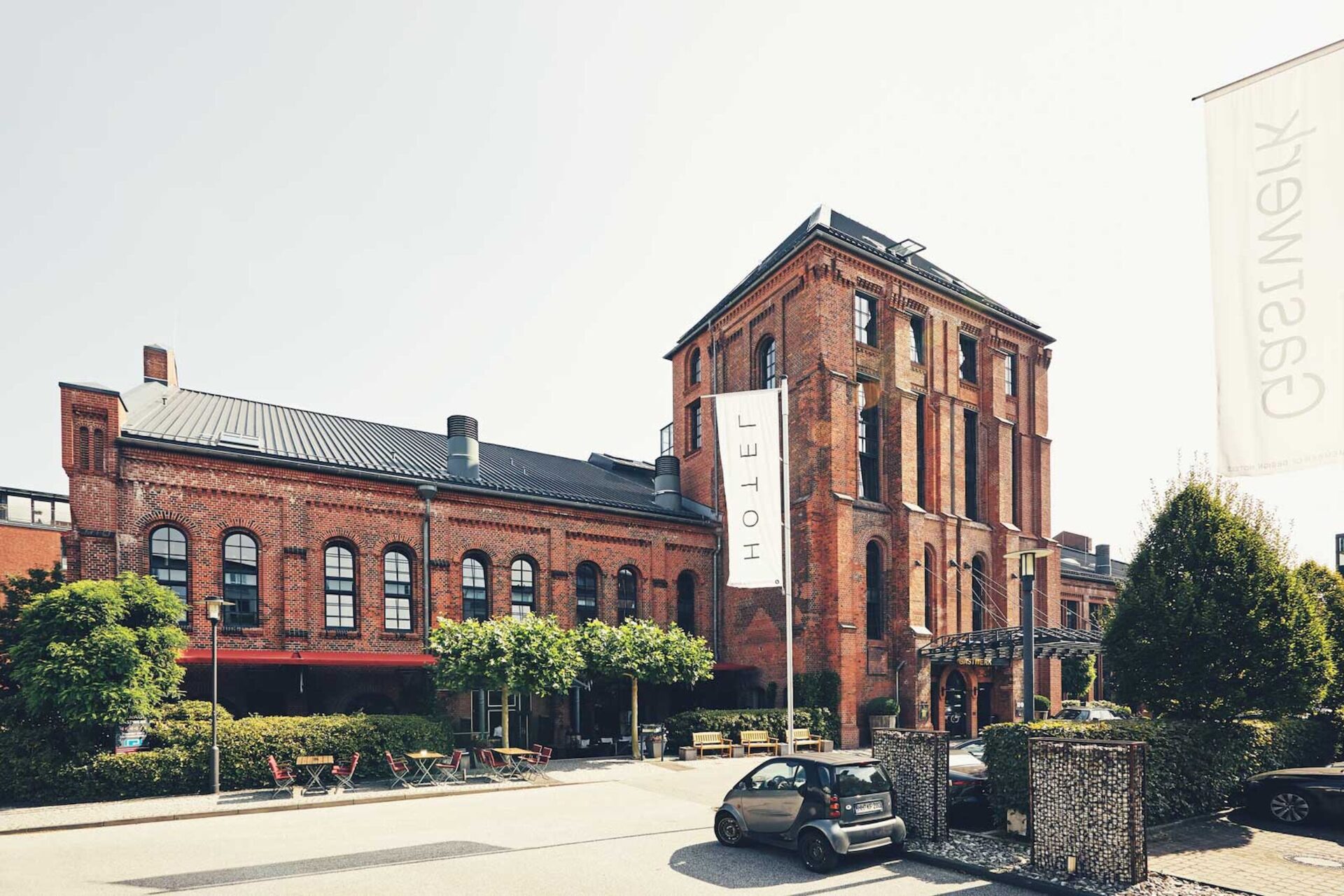
An architect, an Italian designer and an experimental theatre director walk into a hotel. It sounds like the beginning of a joke, but in Hamburg in 2001, it resulted in one of Europe’s more interesting early design hotels. SIDE Design Hotel brought together three very different creative personalities: Hamburg architect Jan Störmer, Milanese designer Matteo Thun and American theatre director Robert Wilson, best known for his extraordinary visual productions and unconventional use of light. Their collaboration produced something rather different from the conventional five-star hotel of the period. Störmer created a modernist glass-and-stone building, Thun introduced a restrained but occasionally playful interior, and Wilson turned the central atrium into a theatrical installation where light became an architectural element in its own right. The timing was significant. Just a year earlier, Gastwerk had opened in a converted industrial building in Hamburg’s Bahrenfeld district, introducing the city to a more experimental approach to hospitality. SIDE took the idea further, creating a purpose-built hotel in which architecture, interior design and performance were conceived as parts of the same experience. More than two decades later, the building remains an interesting example of that particular moment in European hotel design.
A Glass Tower with a Theatrical Heart
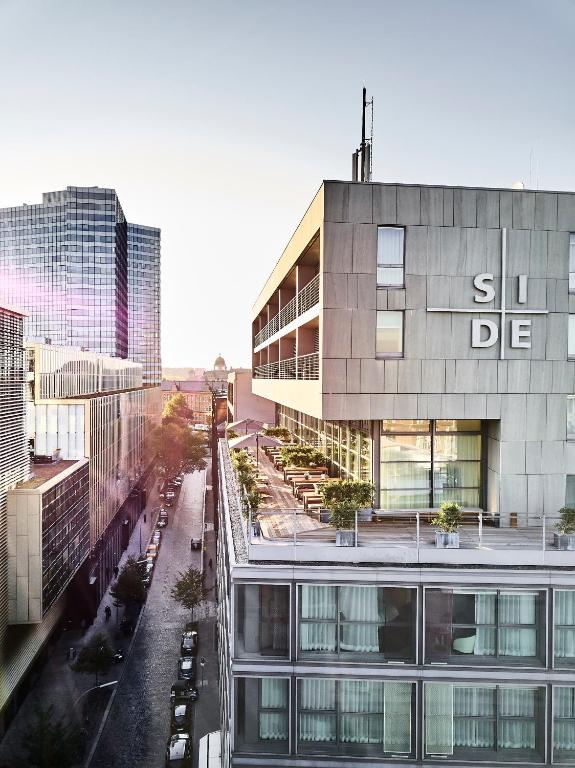
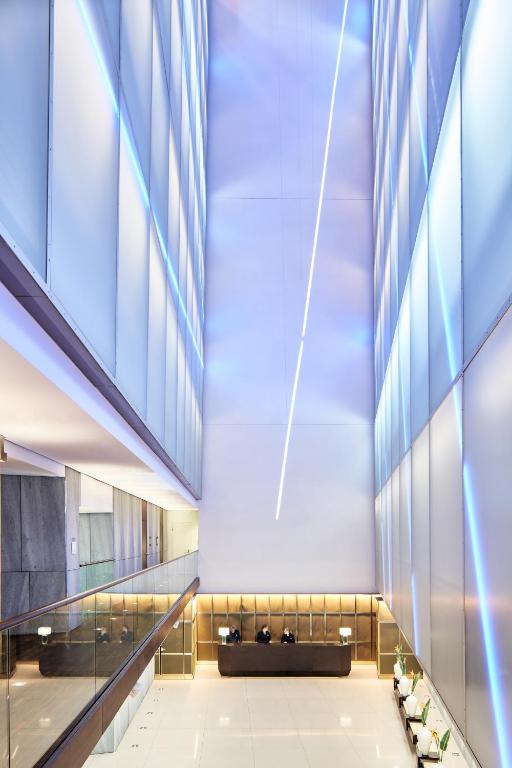
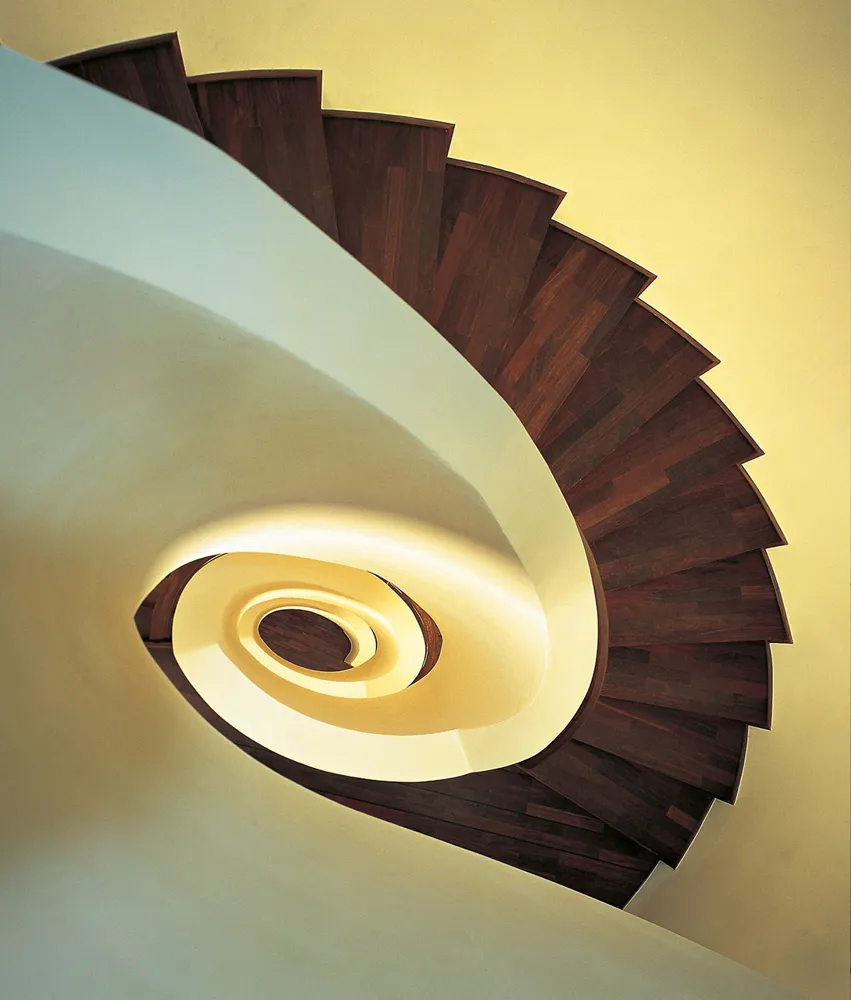
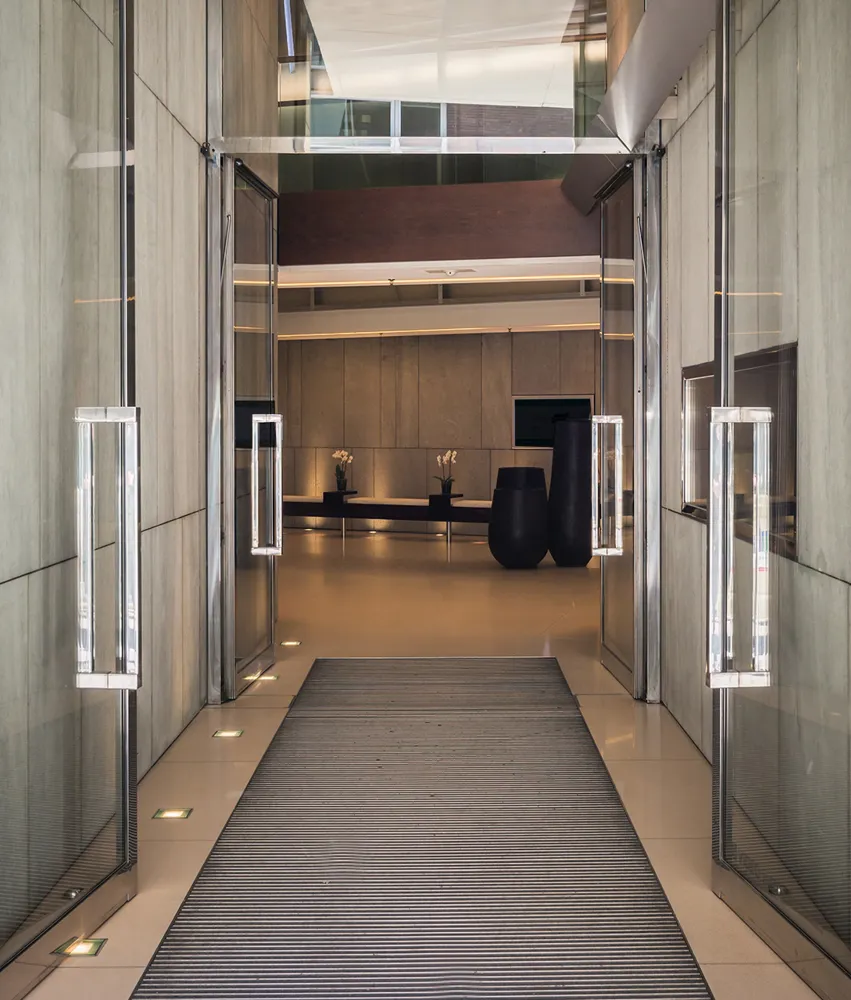
From the street, SIDE presents a relatively restrained composition of glass, steel and natural stone. The eleven-storey building consists of two interlocking volumes: a rear structure clad in green natural stone and a glazed front wing crowned by two projecting suite levels. Between them rises the hotel’s defining feature, a central atrium extending approximately 30 metres upwards. The double-skin glass façade helps regulate noise and temperature, while galleries overlooking the atrium connect the various floors. Robert Wilson approached this vast interior as a theatrical setting, creating a computer-controlled lighting installation that changes in colour, intensity and rhythm. The effects have been compared to the movement of waves, with light travelling across the tall interior surfaces. It is a particularly effective collaboration between architecture and performance. Wilson’s installation does not simply illuminate the space; it changes its character throughout the day.
Matteo Thun and the Question of Timeless Design
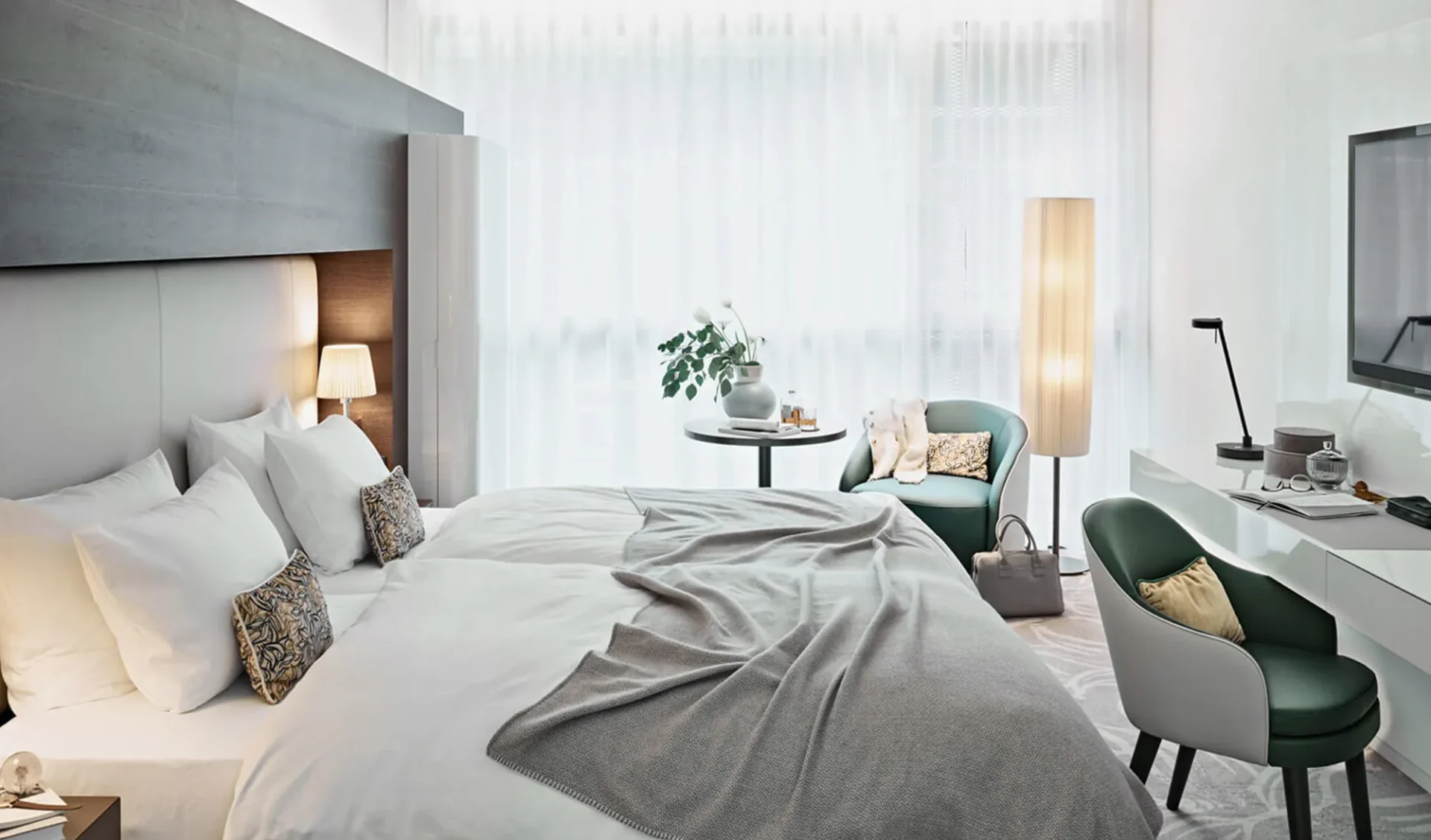
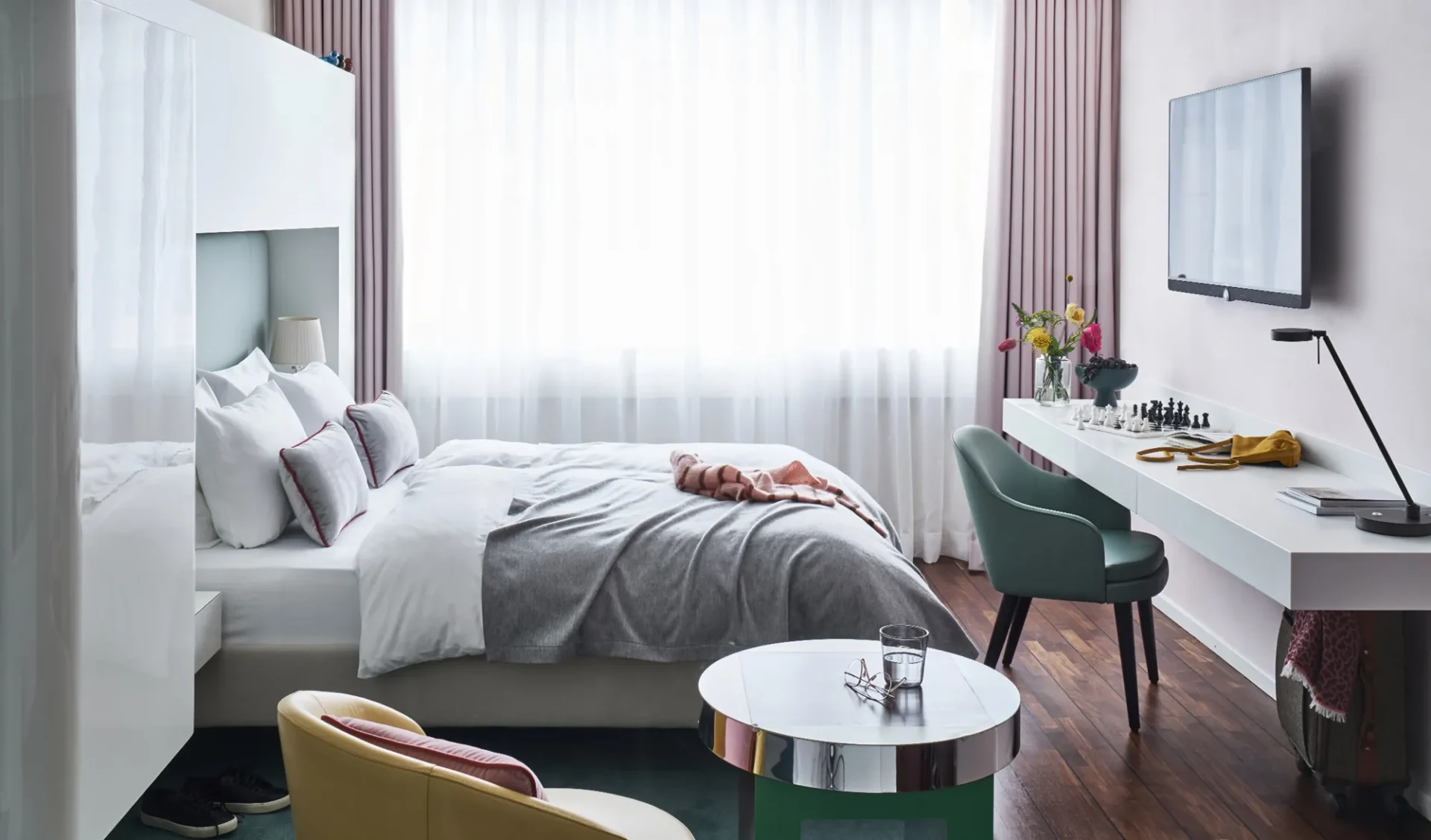
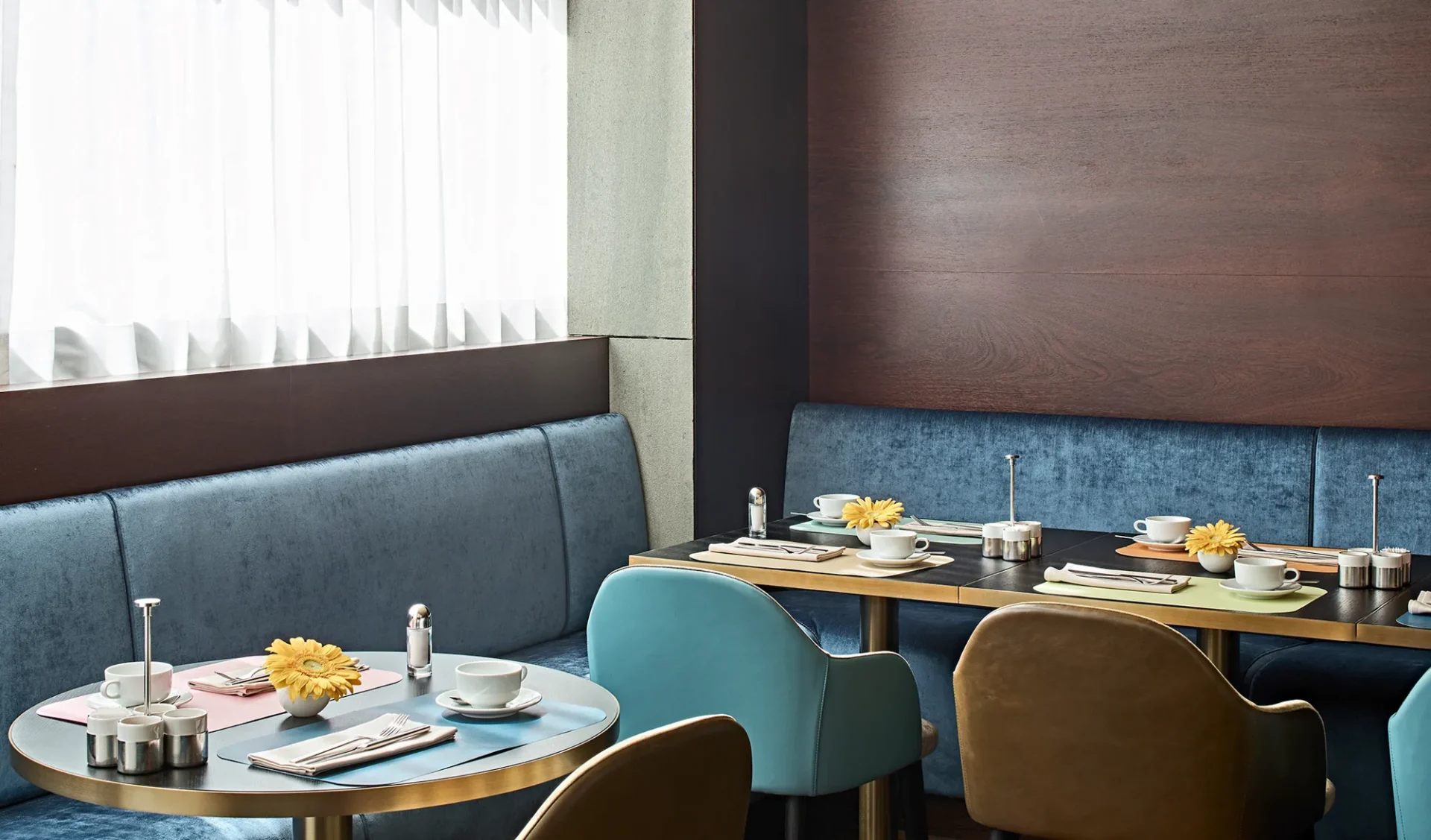
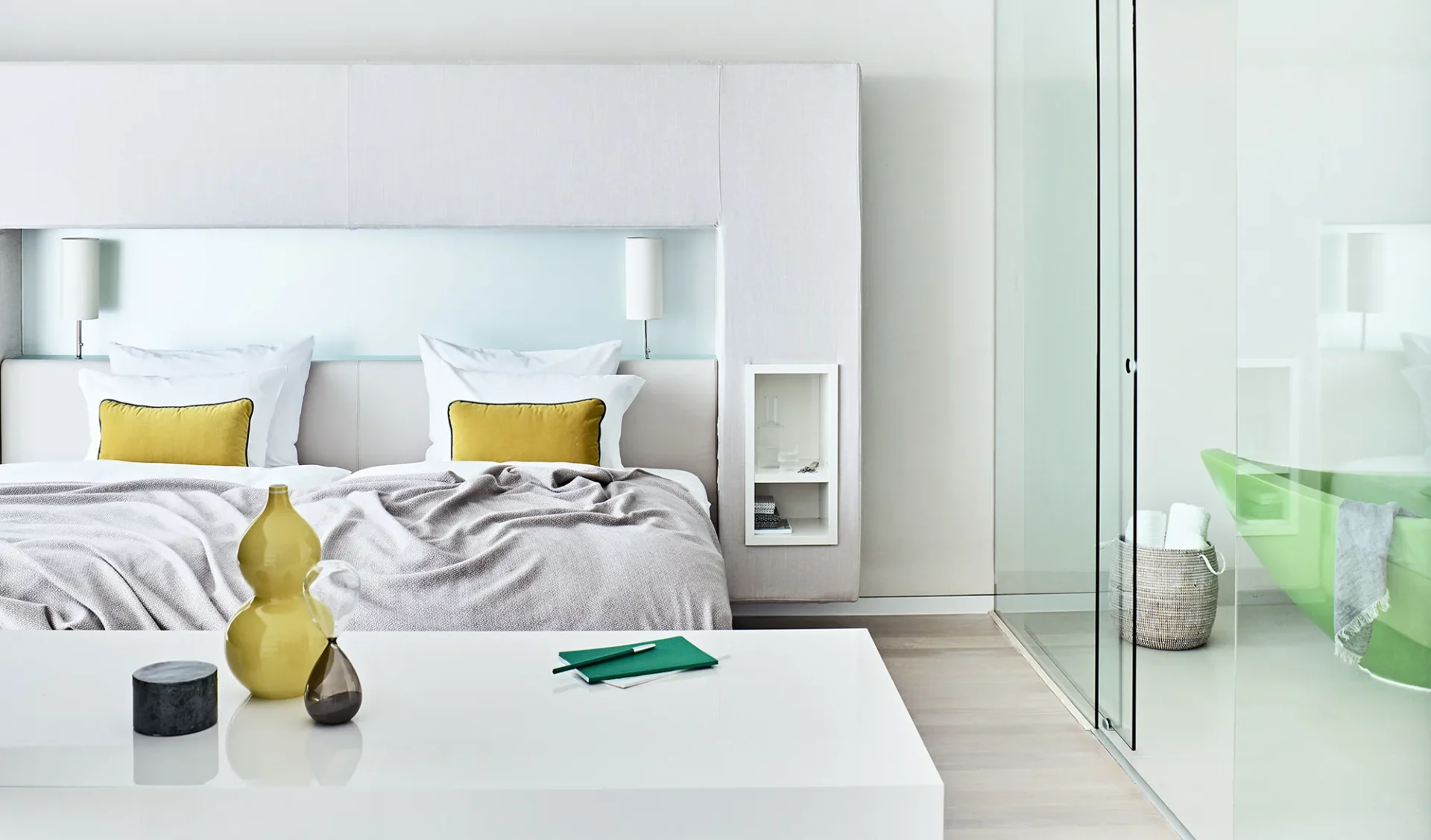
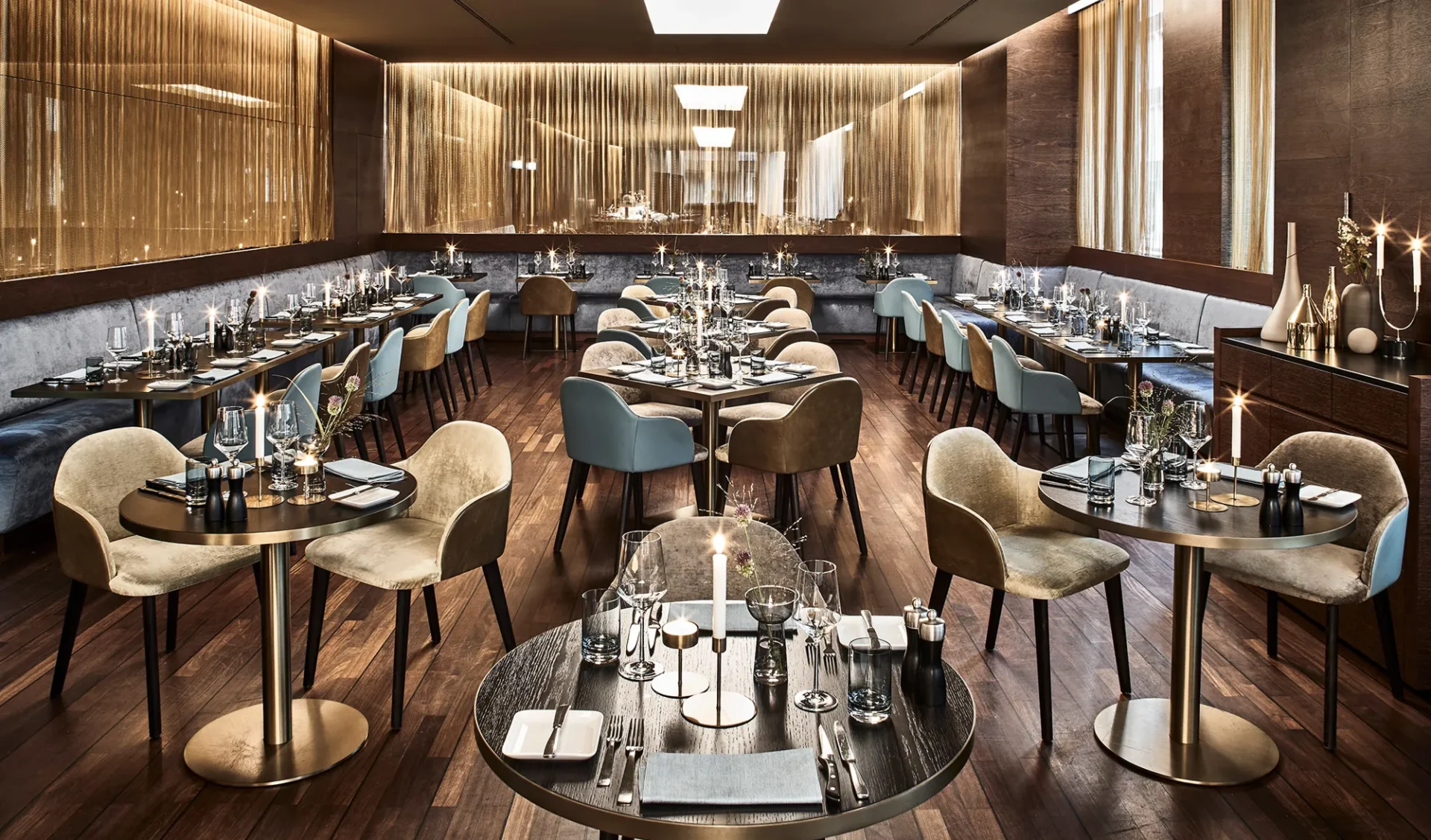
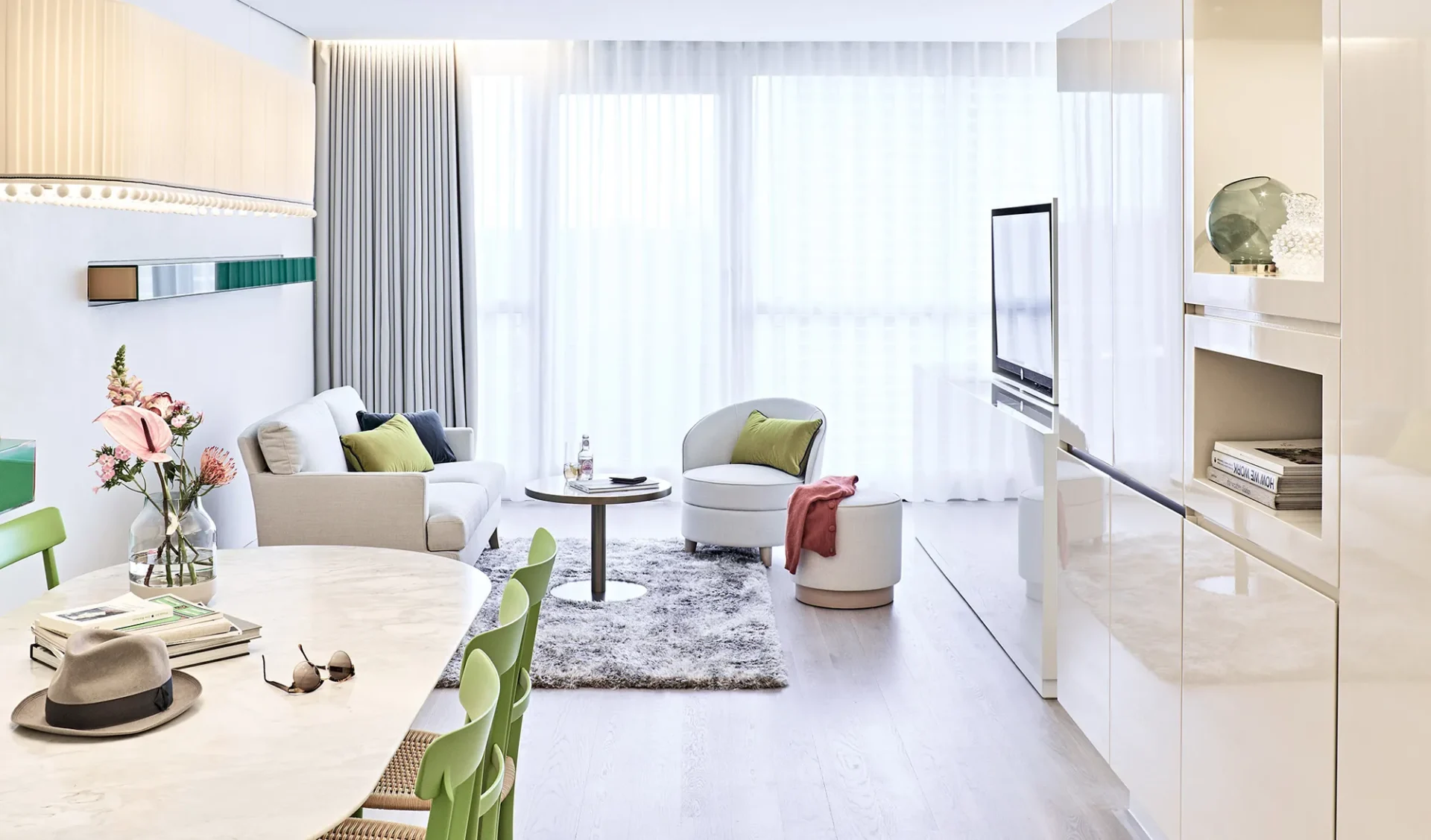
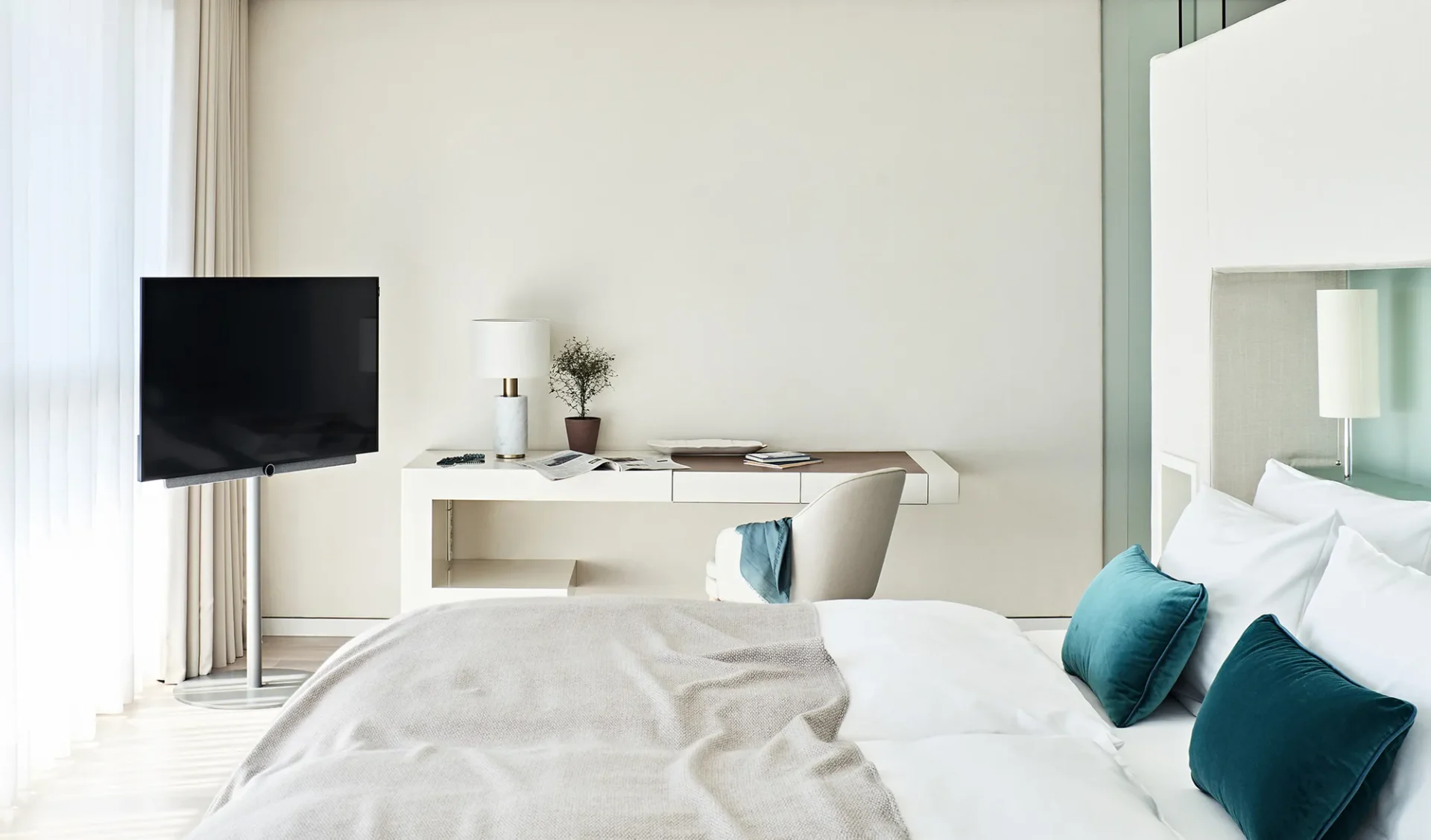
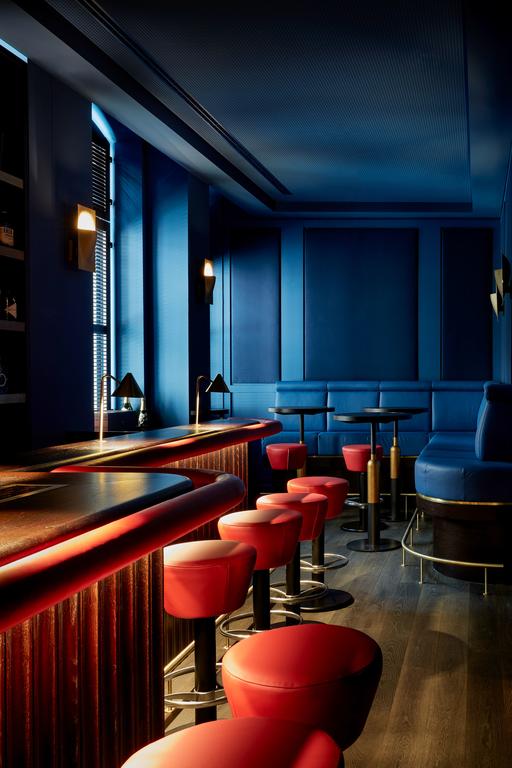
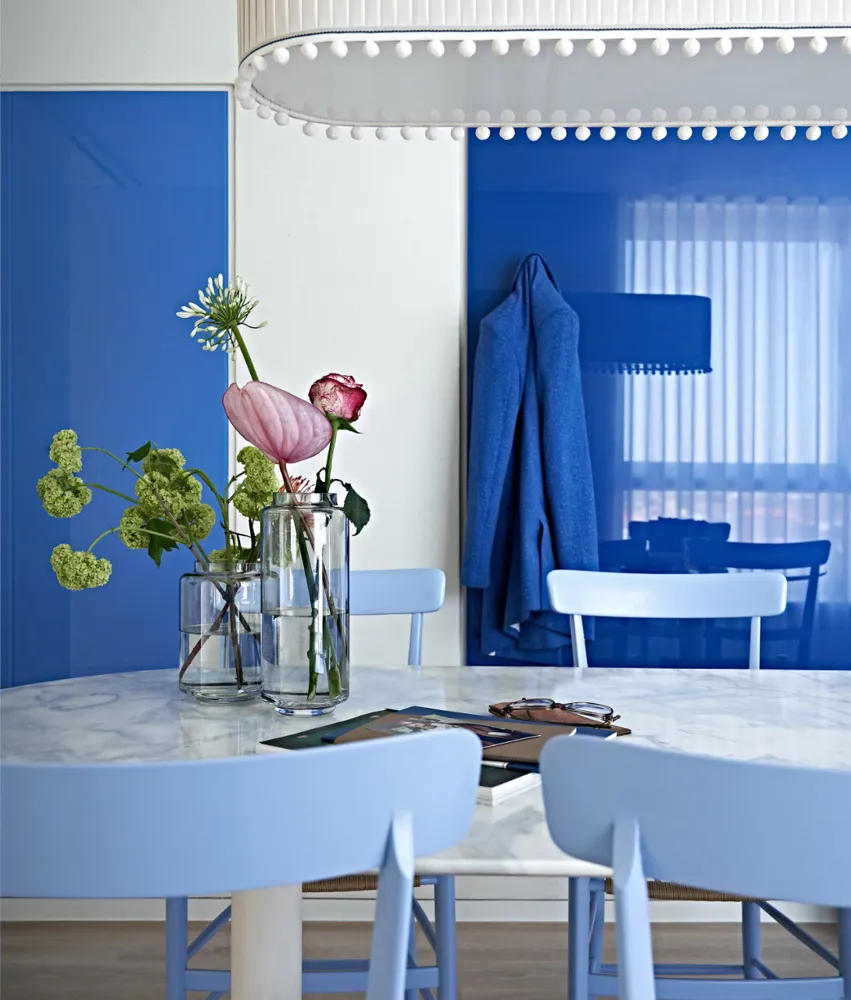
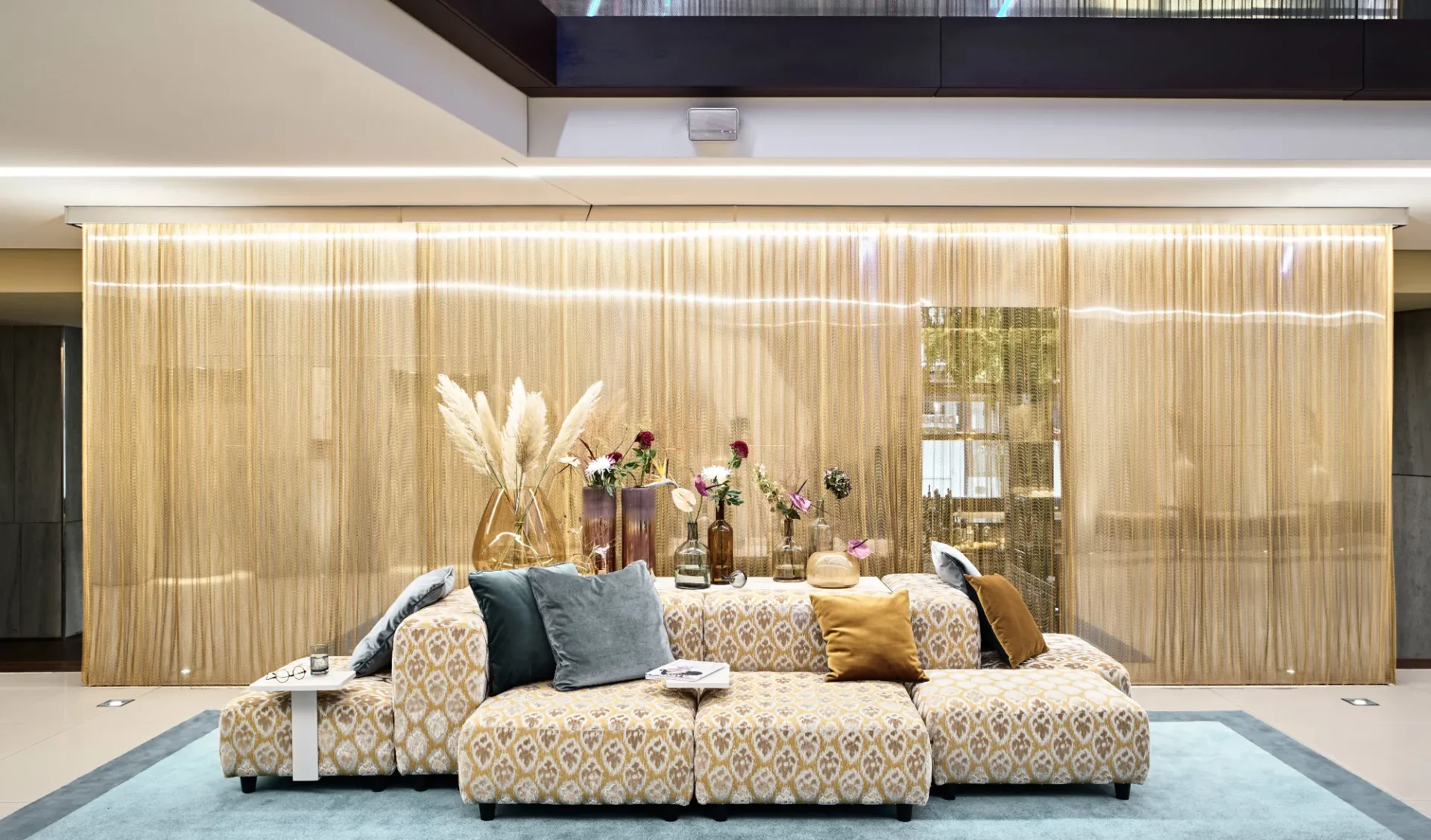
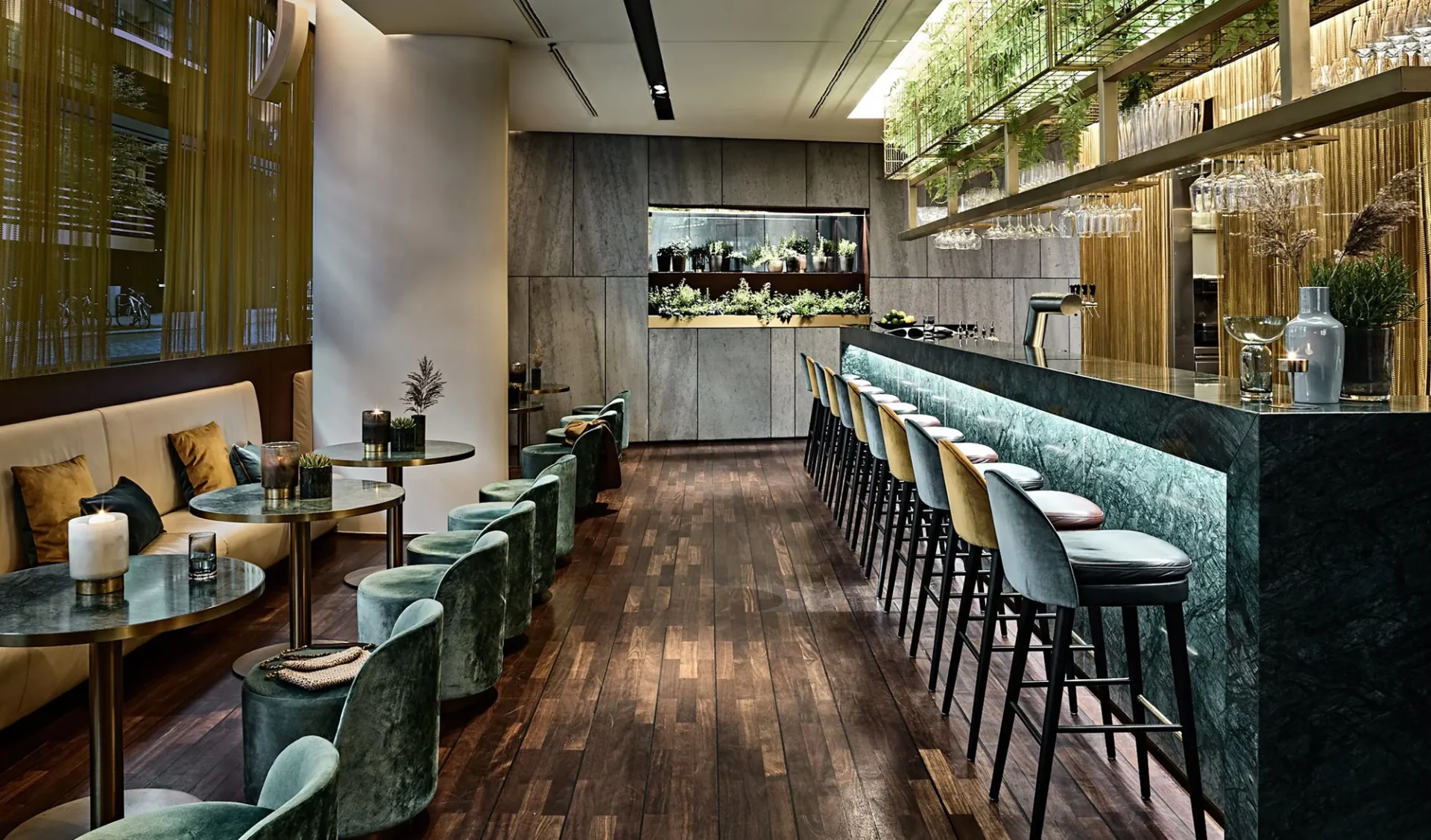
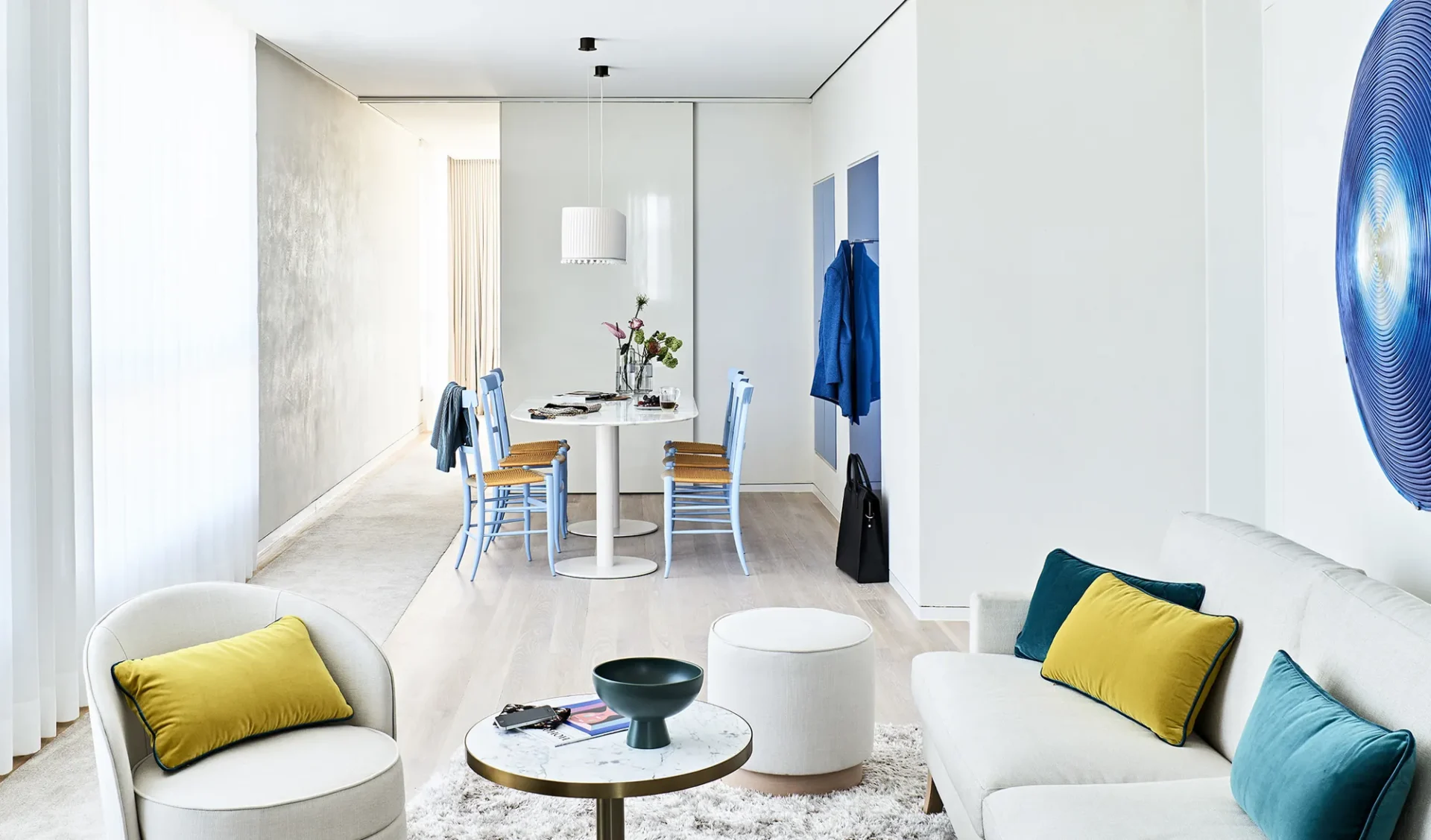
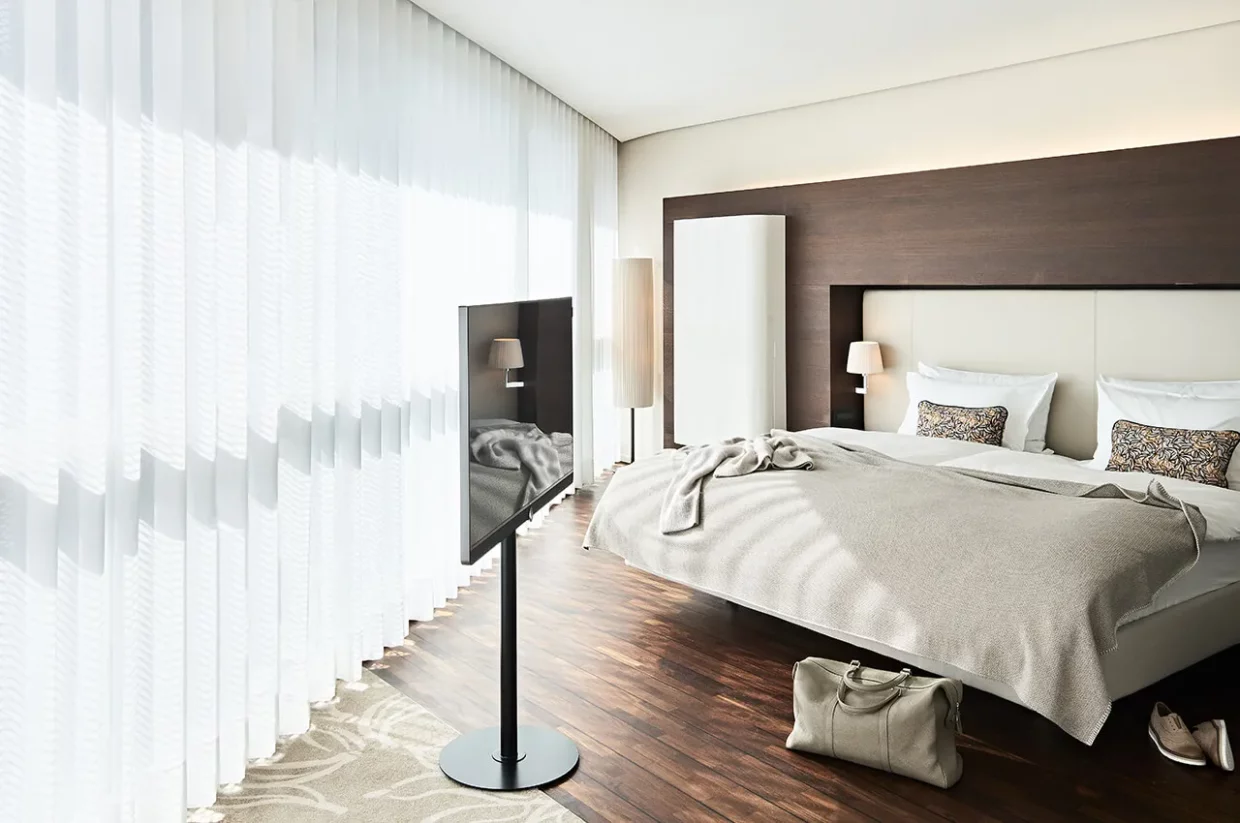
Matteo Thun’s original interiors reflected the minimalist aesthetic of the early 2000s: clean lines, pale surfaces, dark timber and carefully controlled lighting, softened by curved furniture and occasional bursts of colour. By 2018, however, the hotel faced a familiar dilemma. How do you renovate a design hotel without destroying the design that made it interesting? Thun returned to rethink the interiors, introducing warmer materials, richer colours and a more residential atmosphere. Brass detailing, a leather-covered reception desk and Venetian brocade brought a decorative dimension to the lobby, while green marble, iridescent fabrics and metal mesh curtains changed the character of the restaurant and bar. The guestrooms became softer and more comfortable, with pastel tones in some categories and natural colours in others. The renovation was less a reinvention than an adjustment to changing tastes, preserving the architectural clarity of the original hotel.
Rooms Above, Spa Below
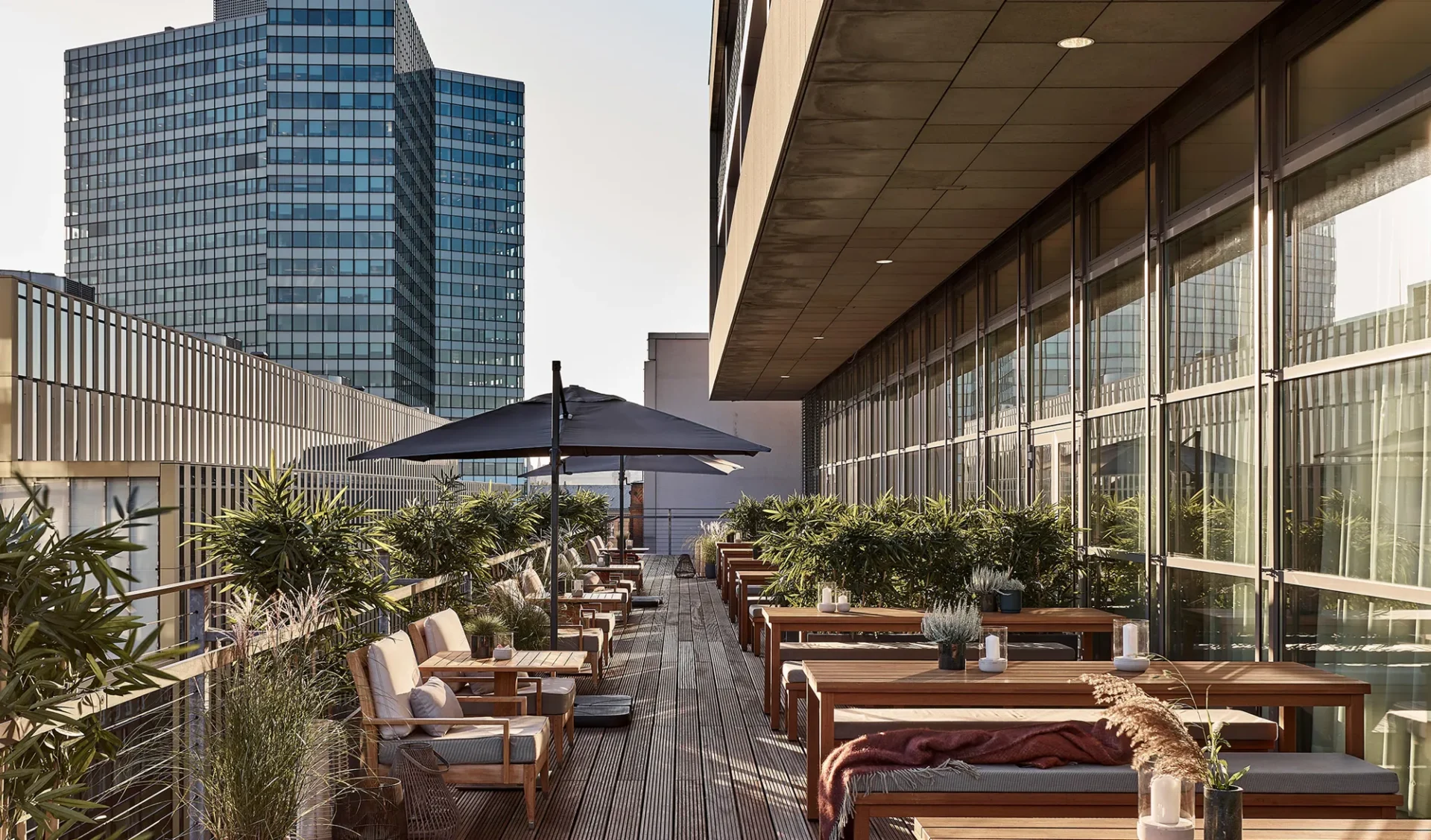
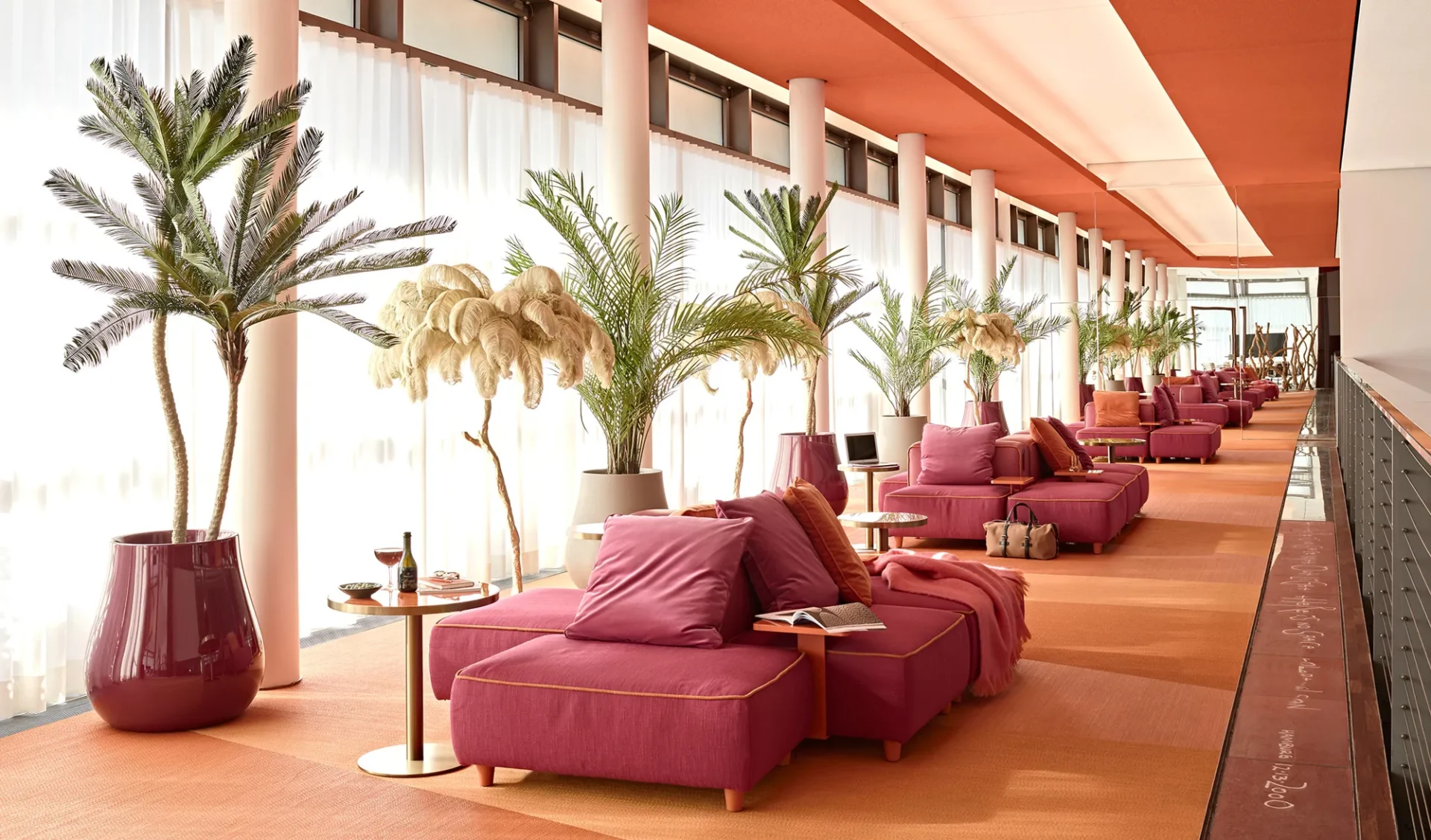
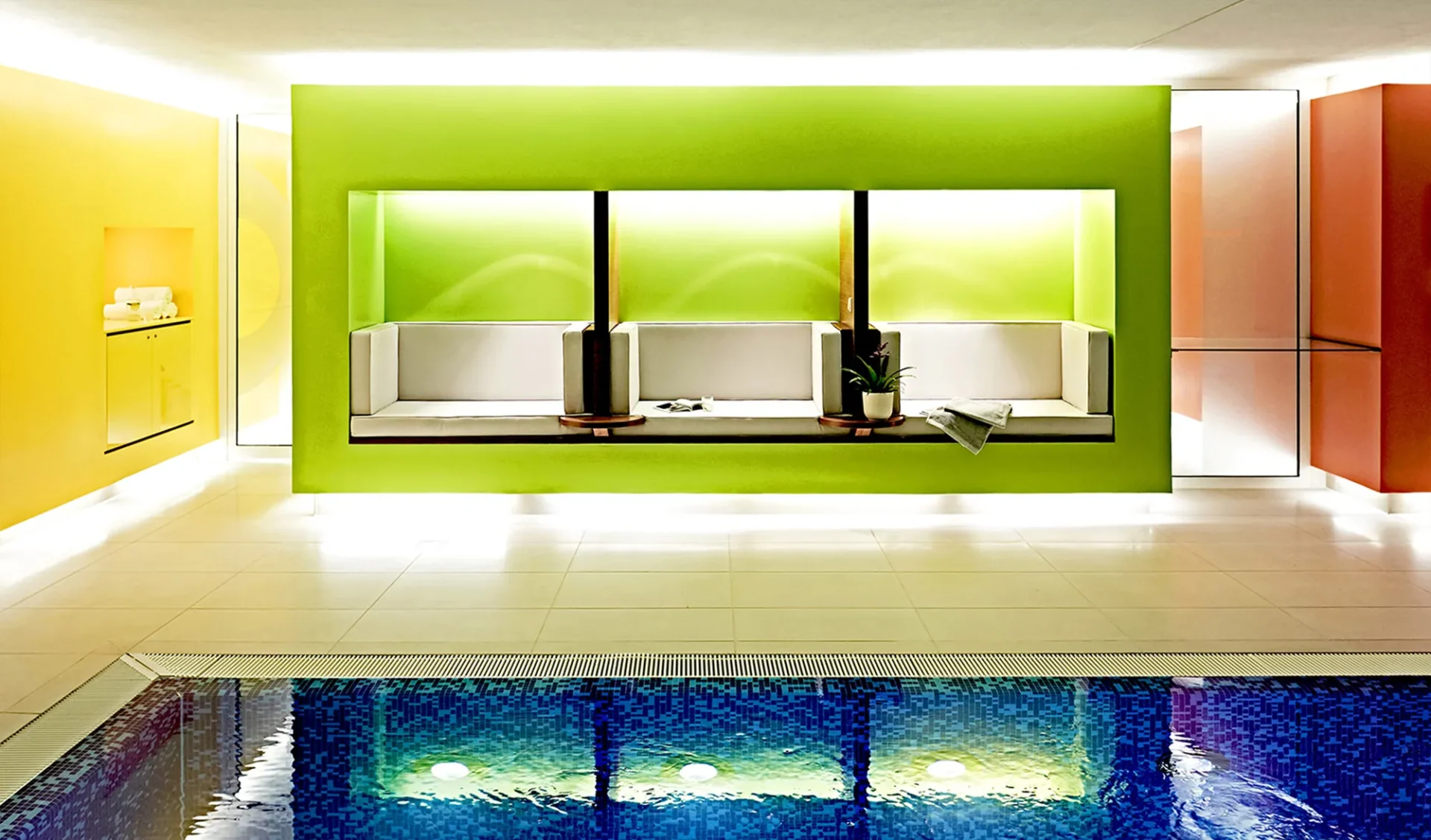
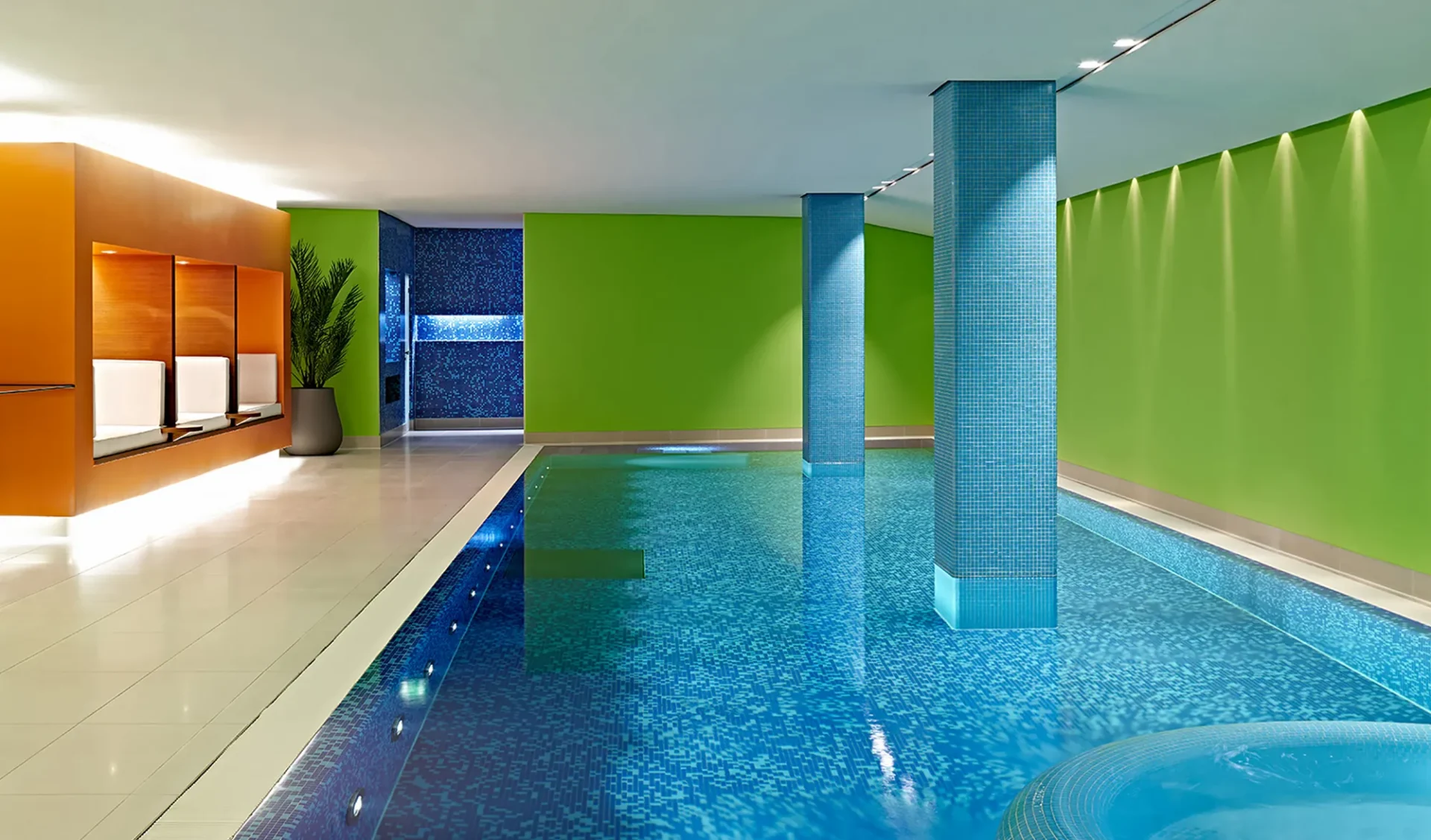
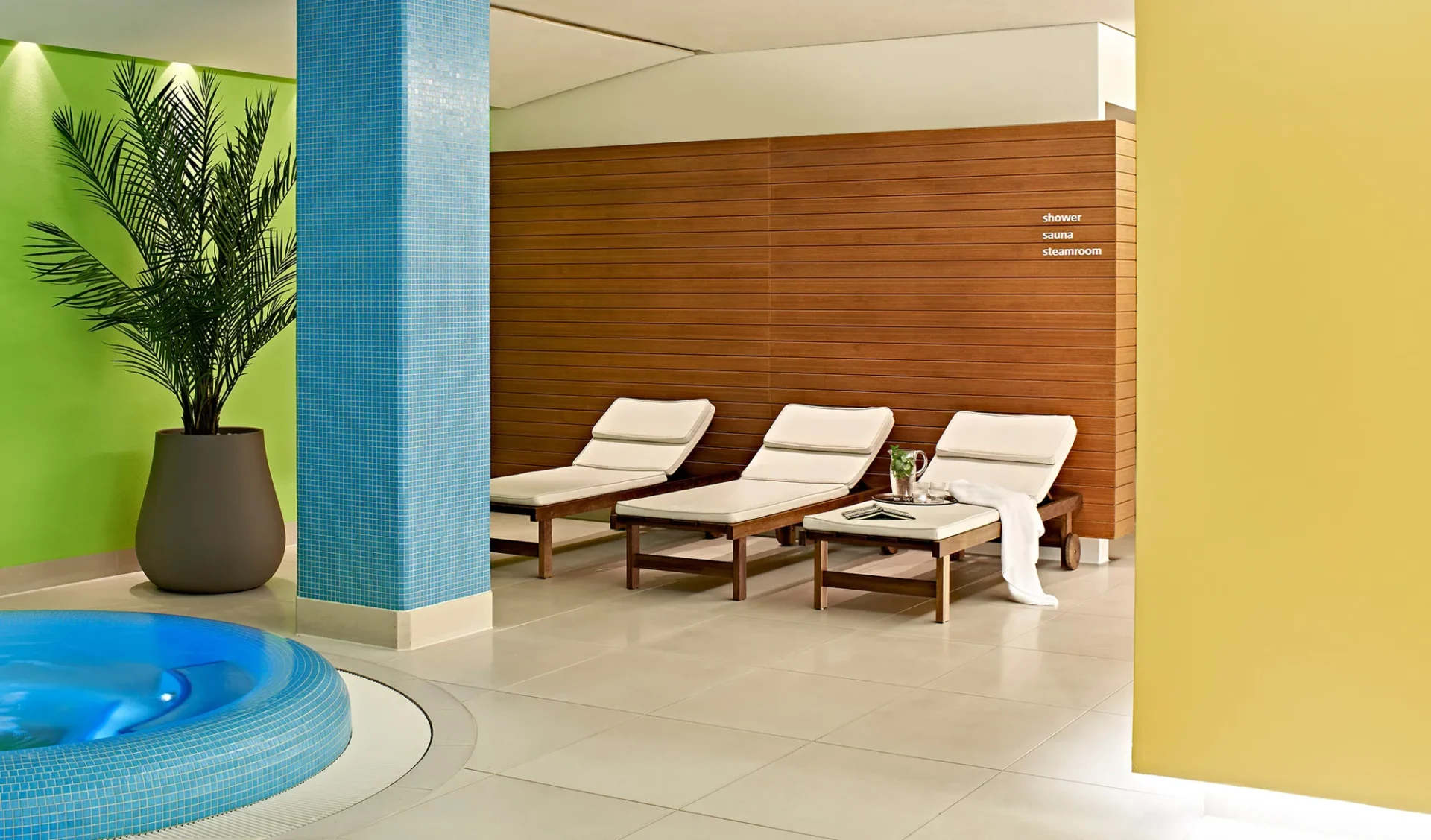
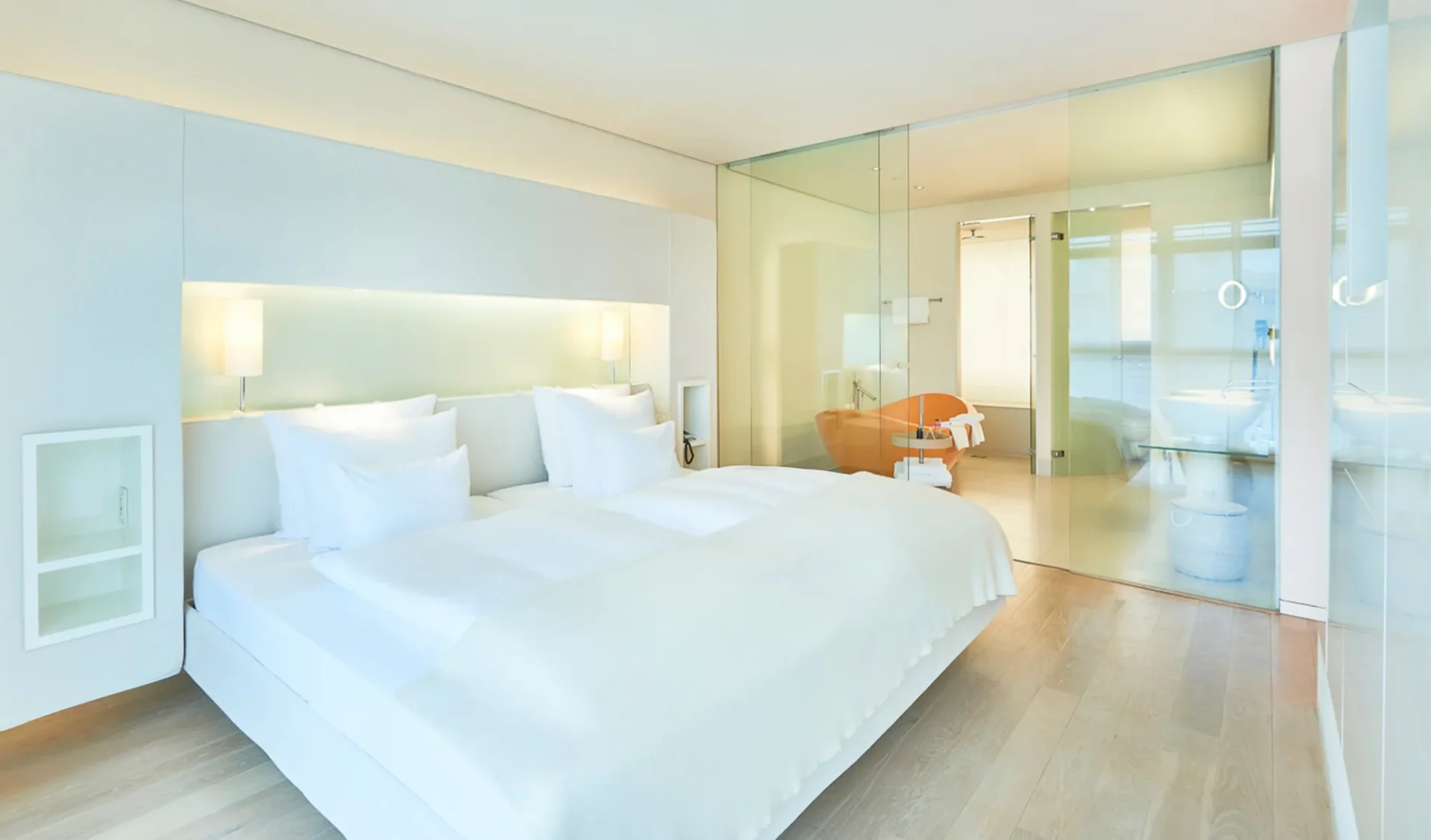
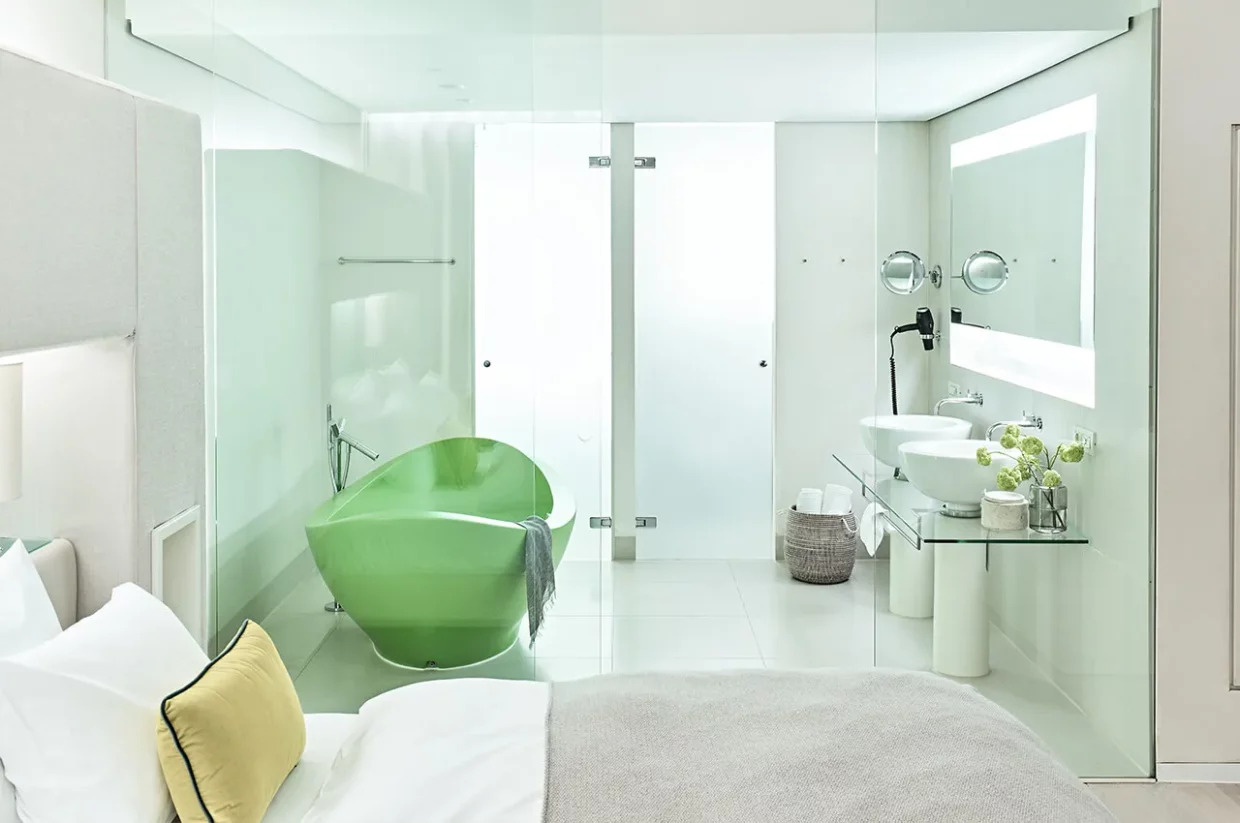
SIDE’s 178 rooms and suites occupy the upper floors, with parquet flooring, contemporary furniture and glass-fronted bathrooms continuing the hotel’s preference for uncluttered spaces. The larger suites on the top floors introduce more generous proportions, custom-designed furnishings and views across Hamburg’s rooftops. On the eighth floor, the Sky Lounge and outdoor terrace offer another perspective on the city, as well as views into the atrium below. The spa occupies part of the hotel’s extensive basement levels, with an indoor swimming pool, sauna, steam bath, fitness facilities and treatment rooms. Its stronger colours provide a deliberate contrast to the quieter guestrooms.
Steaks, Cocktails and Hamburg’s Creative Crowd
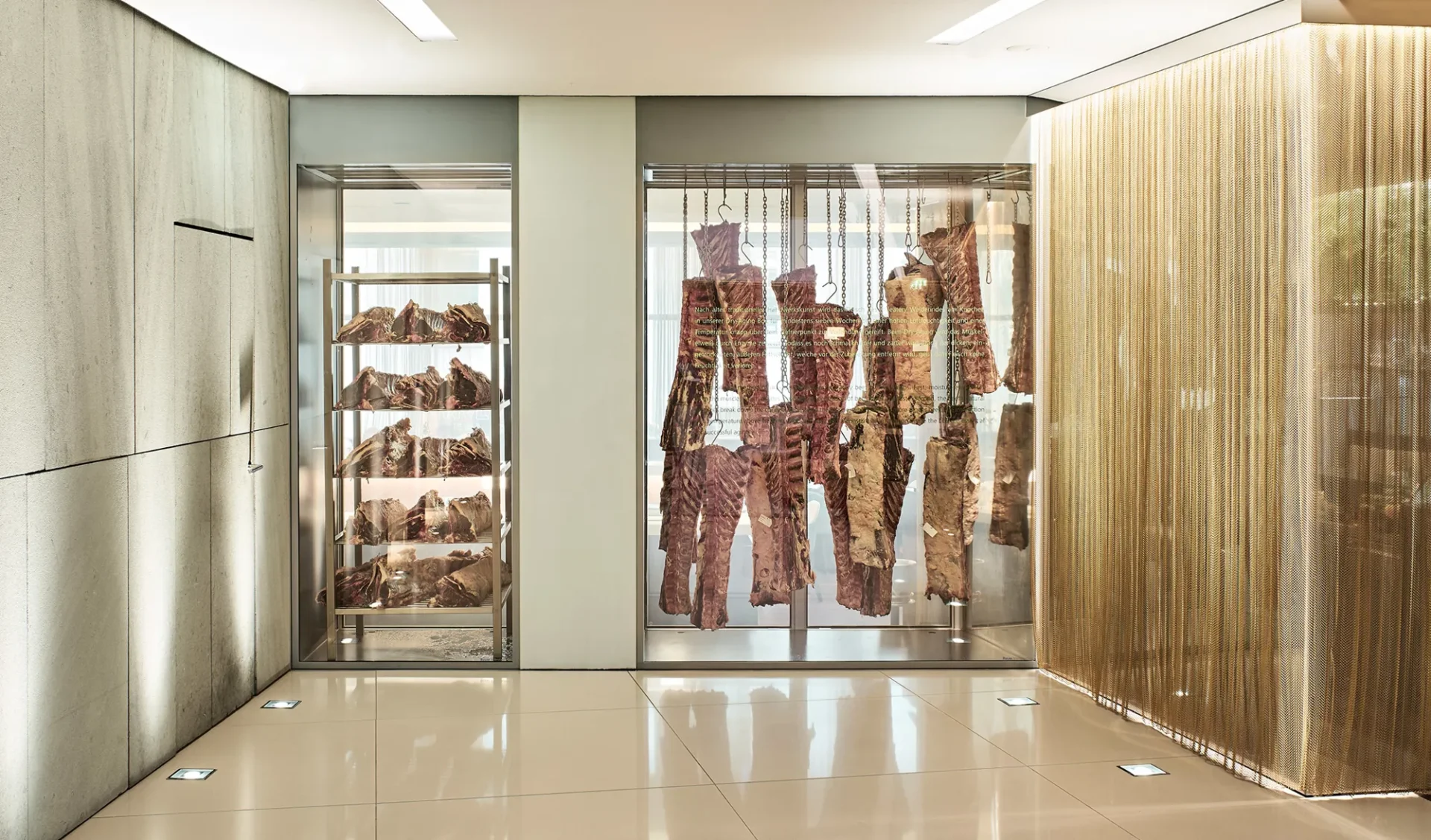
SIDE has always treated its restaurants and bars as part of the city’s social life rather than facilities exclusively for hotel guests. The main restaurant, [m]eatery, specialises in steaks, including dry-aged beef, alongside burgers, fish and other contemporary dishes. The Botanist Bar takes a different direction, with cocktails built around herbs, botanical ingredients and fresh flavours. Over the years, SIDE has attracted a clientele from Hamburg’s advertising, fashion and creative industries, establishing itself as a meeting place as much as a hotel. The Sky Lounge adds another dimension, particularly for private events and gatherings overlooking the city.
An Urban Hotel in the Heart of Hamburg
SIDE occupies a central position in Hamburg’s Neustadt district, close to the Binnenalster, Gänsemarkt and the city’s principal shopping streets. The Hamburg State Opera is just around the corner, while the historic Altstadt and the elegant shopping arcades surrounding the Alster are within walking distance. The location is convenient rather than picturesque, surrounded by the commercial and cultural activity of central Hamburg. Against this relatively ordinary urban backdrop, the illuminated atrium creates a distinct interior world.
A Design Hotel That Has Learned to Age
Hotels built around contemporary design face an interesting problem: what happens when contemporary becomes yesterday’s fashion? SIDE opened when minimalist interiors, theatrical lighting and unconventional architecture were central to the emerging design hotel identity. Some hotels from that generation have since been completely reinvented. SIDE has taken a more measured approach. The 2018 renovation acknowledged changing expectations without abandoning Jan Störmer’s architecture or Robert Wilson’s lighting concept. Matteo Thun’s continued involvement provided continuity between the original interiors and their later interpretation. Not every decorative decision will appeal equally today, and some elements remain unmistakably rooted in the early 2000s. But that is also part of the hotel’s interest. SIDE belongs to a particular moment in European hospitality design, when architects, interior designers and artists began collaborating on hotels as complete creative environments. Rather than pretending that moment never happened, it has found a way to keep the original idea alive.
Information
At a glance
Architecture
Opened / Renovated
2001, renovated 2018
Size matters
178 rooms & suites (28-80m2) (301-861 sq ft)
Interior design
Featured in
Don't take our word for it

Handpicked worldwide
A carefully curated collection of exceptional boutique and design hotels across the globe.
Design with soul
Architecture, atmosphere and craftsmanship come together in stays with a clear identity.
Hidden, not hyped
Independent boutique hotels you rarely find on mainstream booking platforms.
Travel guidance
Personal recommendations and thoughtful support from people who actually know the places.