


A Different Chapter of Roman History
Thompson Rome transforms a 1940s modernist building that once housed the Italian Communist Party headquarters into a sophisticated contemporary hotel, where an original sweeping marble staircase and rediscovered sculptural works by Gio Pomodoro meet bespoke furnishings, natural materials and an extensive collection of 20th-century Italian art, complemented by 69 residential-style rooms and suites, Fabio Fioravanti’s Mediterranean restaurant LYVE and a panoramic rooftop bar overlooking Rome’s historic skyline.

Why DNA Hotels loves it
A 1940s building with a remarkable political past, where original marble architecture and rediscovered artworks by Gio Pomodoro provide a distinctive alternative to Rome's familiar palazzo hotels.
A collection of Italian modern and contemporary art, with works associated with the Scuola Romana and Scuola di Piazza del Popolo integrated throughout the hotel's 69 rooms and public spaces.
A Mediterranean restaurant led by former Alain Ducasse chef Fabio Fioravanti, complemented by a rooftop bar overlooking Rome's extraordinary architectural landscape.
The Stay
Post-War Modernism, Rediscovered Italian Art, and a Rooftop Above the Eternal City
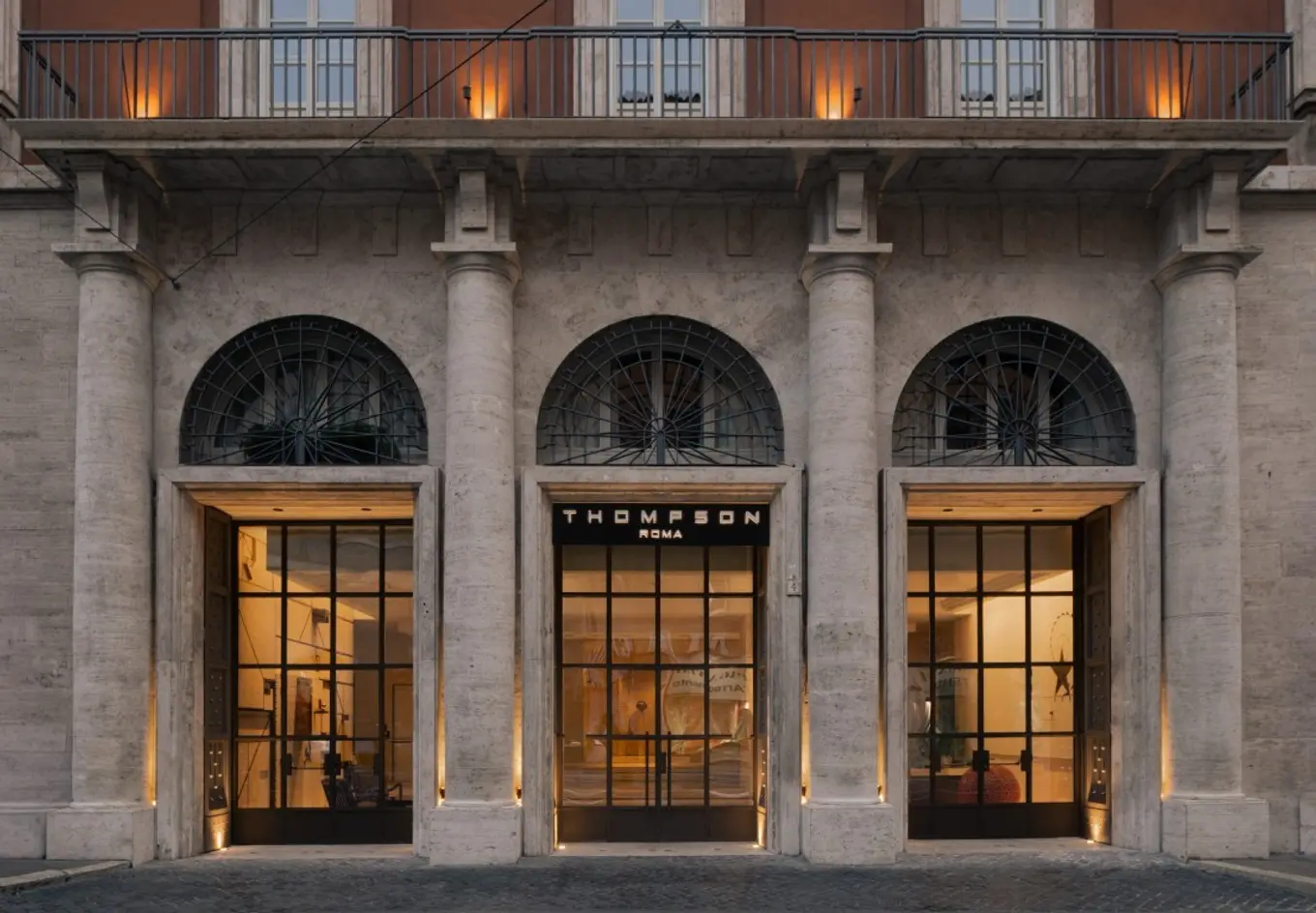
Rome’s hotel scene is understandably dominated by Renaissance palazzi, Baroque interiors and the occasional converted convent. Thompson Rome draws on a rather different period of the city’s history. Occupying a substantial 1940s building on Via delle Botteghe Oscure, close to Piazza Venezia, the hotel introduces the American lifestyle brand to Italy in a location with considerable architectural and political significance. The building once housed the headquarters of the Italian Communist Party, placing it at the centre of the country’s post-war political life. Its transformation into a 69-room hotel is an interesting example of adaptive reuse, preserving elements of its original architecture while introducing contemporary design, art and hospitality. The surrounding neighbourhood adds another historical layer: ancient Roman remains, medieval streets and monumental 20th-century architecture coexist within a remarkably compact area.
The Rediscovery of Gio Pomodoro
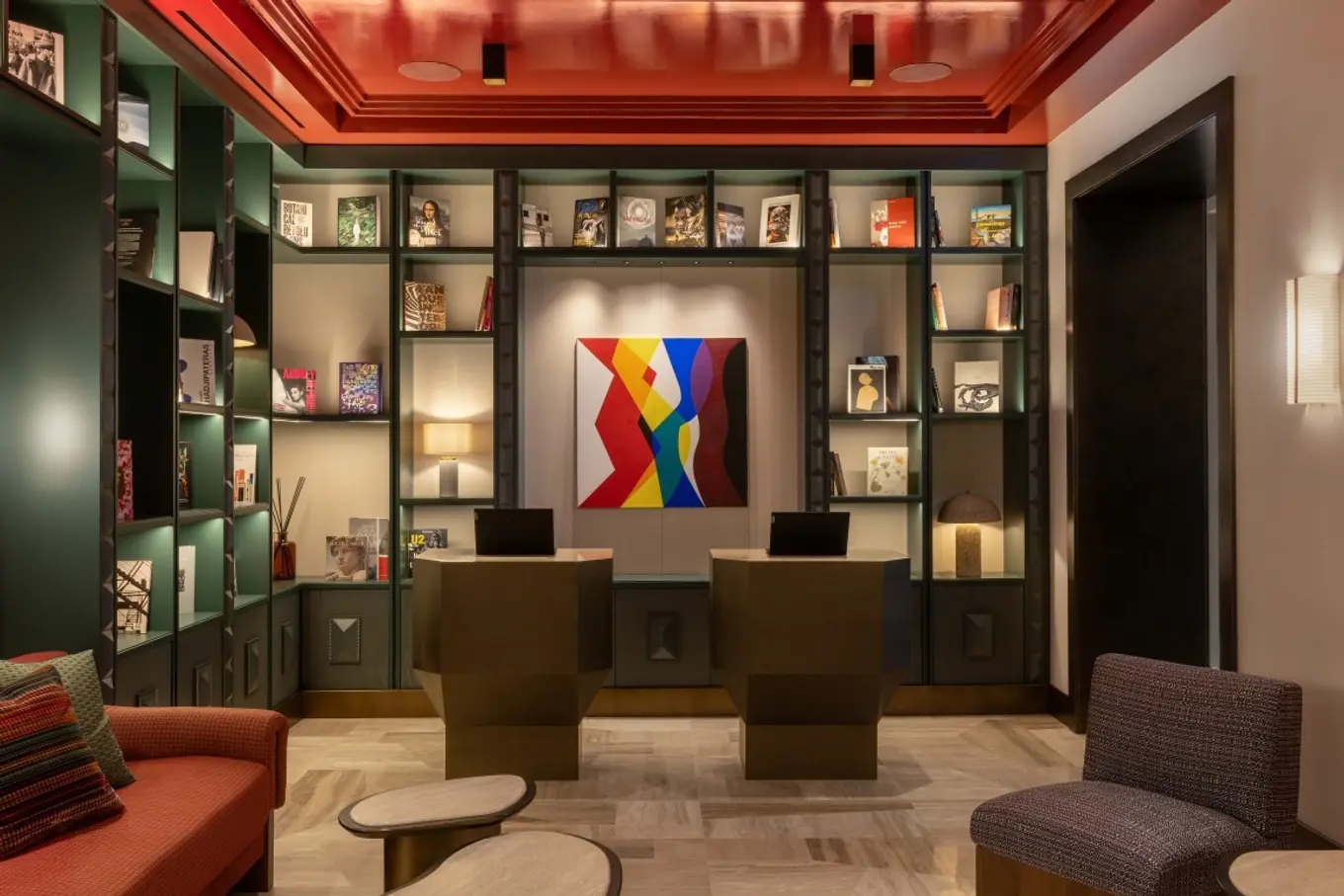
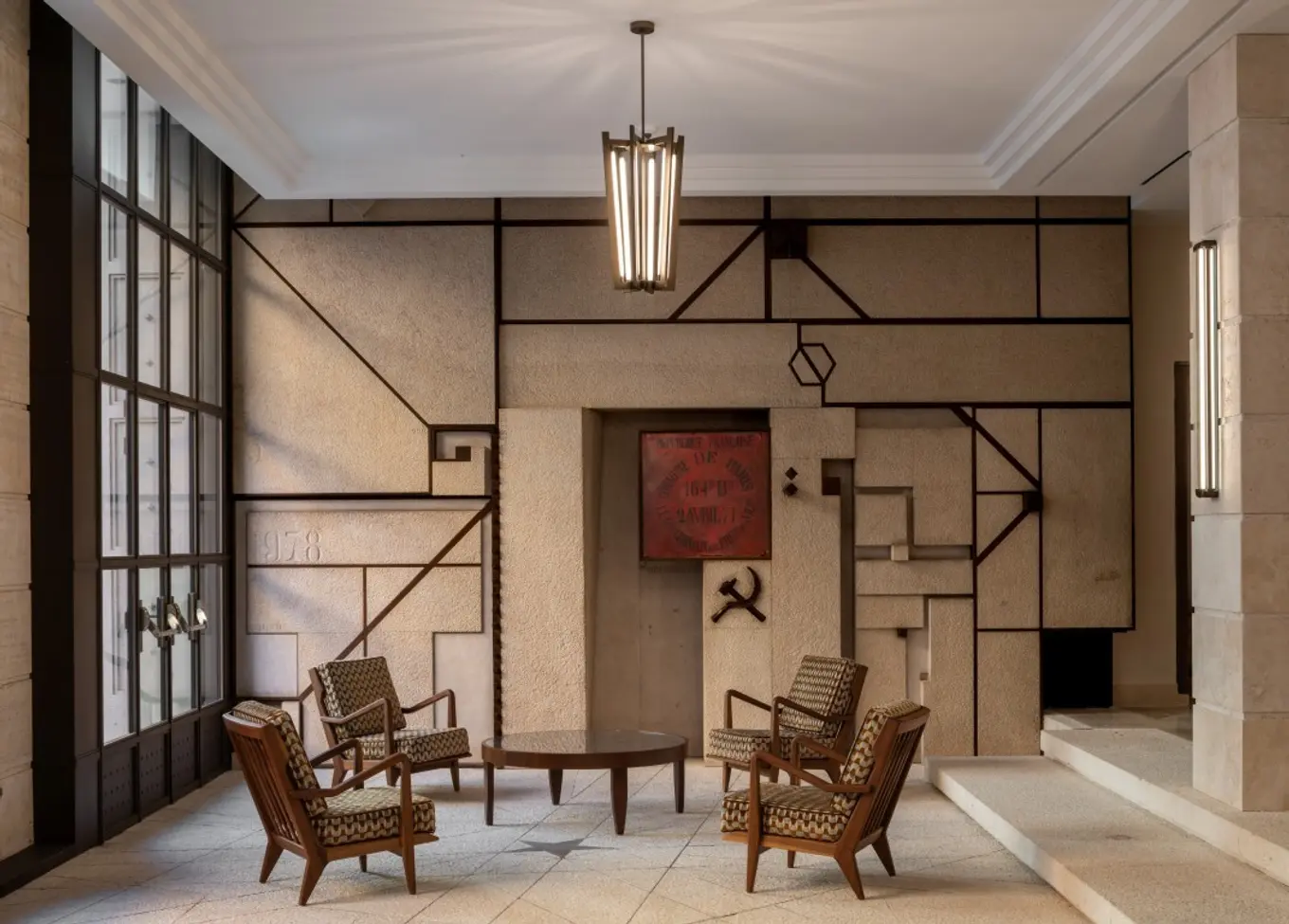
One of the building’s most interesting features emerged during the renovation. A sculptural wall and inlaid floor by Italian artist Gio Pomodoro, concealed for decades, were rediscovered and subsequently incorporated into the hotel’s interiors. Together with a sweeping original marble staircase, these works provide a direct connection to the building’s modernist heritage. Rather than attempting to recreate a traditional Roman residence, the design takes its cues from the architecture already present, combining bespoke furnishings, natural materials and carefully detailed contemporary finishes. The contrast between Pomodoro’s sculptural forms and the newer interiors gives the public spaces a character that would be difficult to achieve through decoration alone. It also places Thompson Rome within a less frequently explored chapter of Italian design history, when modern architecture and the visual arts were closely connected.
Art Beyond the Lobby
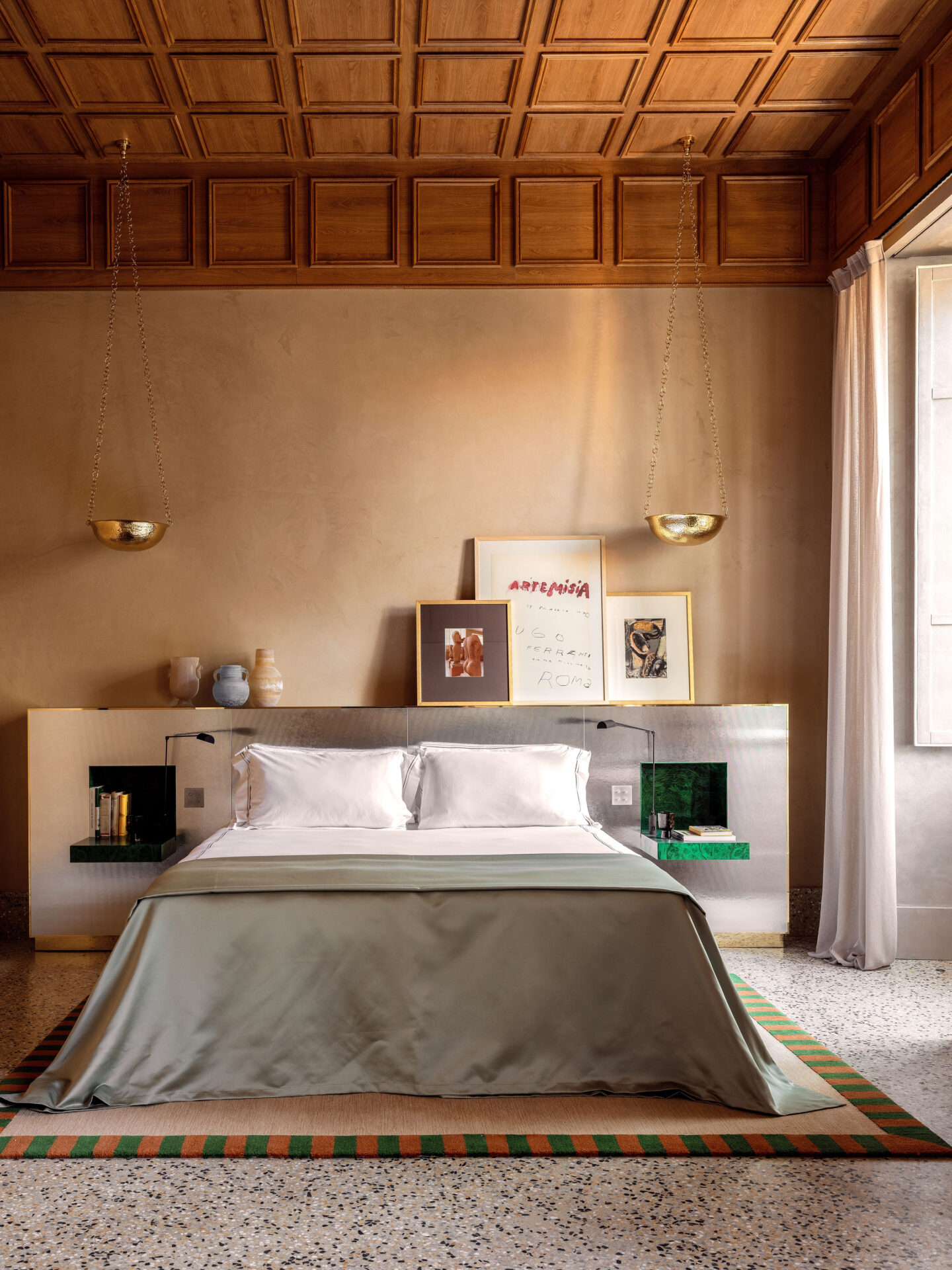
The hotel’s art collection extends this relationship between architecture and artistic expression. Works associated with the Scuola Romana and Scuola di Piazza del Popolo appear alongside pieces by artists including Francesco Del Drago, Giangaetano Patanè and Guido Strazza. These artistic movements reflect different moments in Rome’s 20th-century cultural development, from the expressive experimentation of the interwar years to the city’s increasingly international contemporary art scene. Paintings and other works are distributed throughout the public areas and guestrooms, rather than confined to a dedicated gallery. A rotating artist-in-residence programme is intended to bring additional exhibitions and cultural activities into the hotel, creating an ongoing connection with Rome’s creative community.
A Contemporary Roman Residence
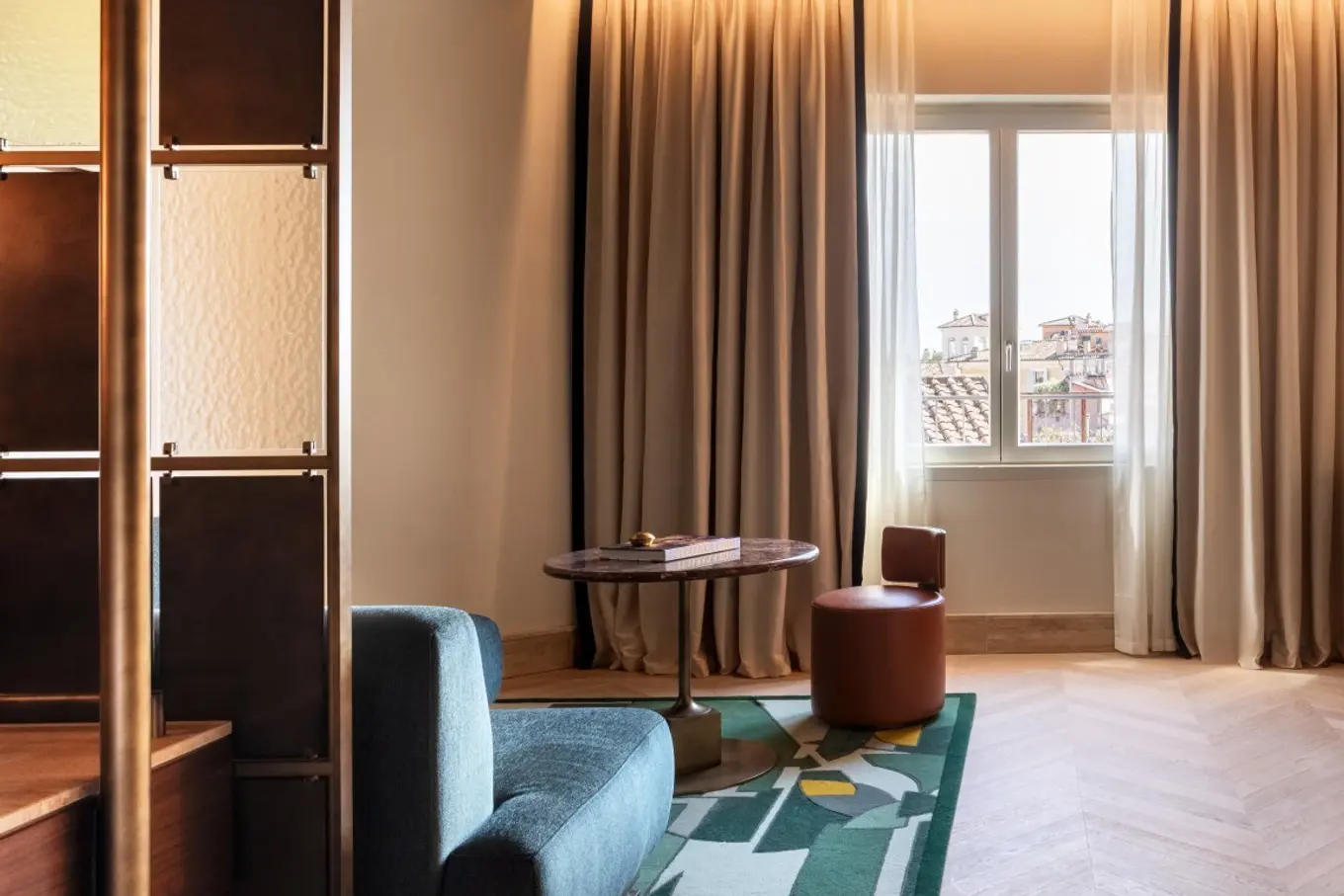
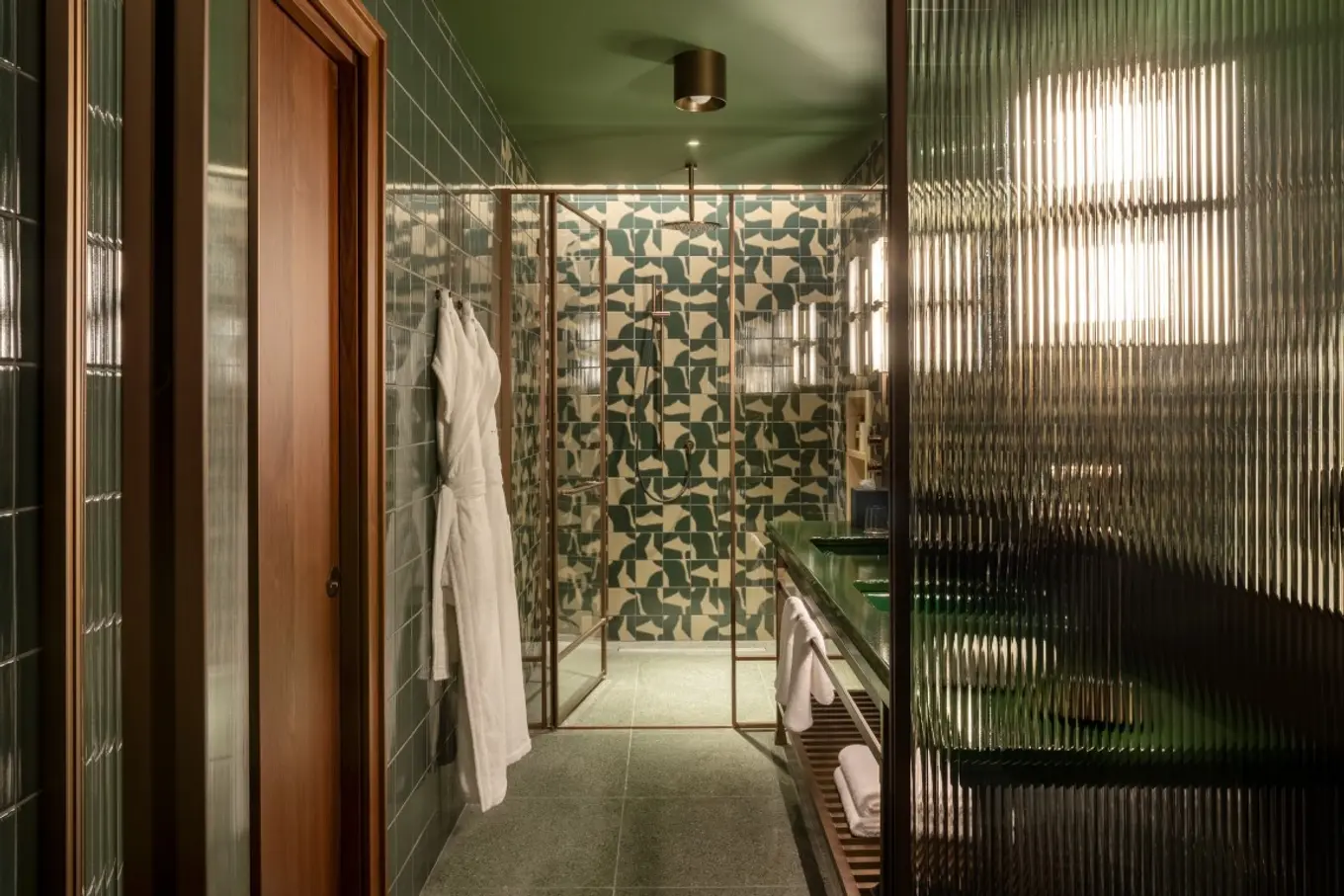
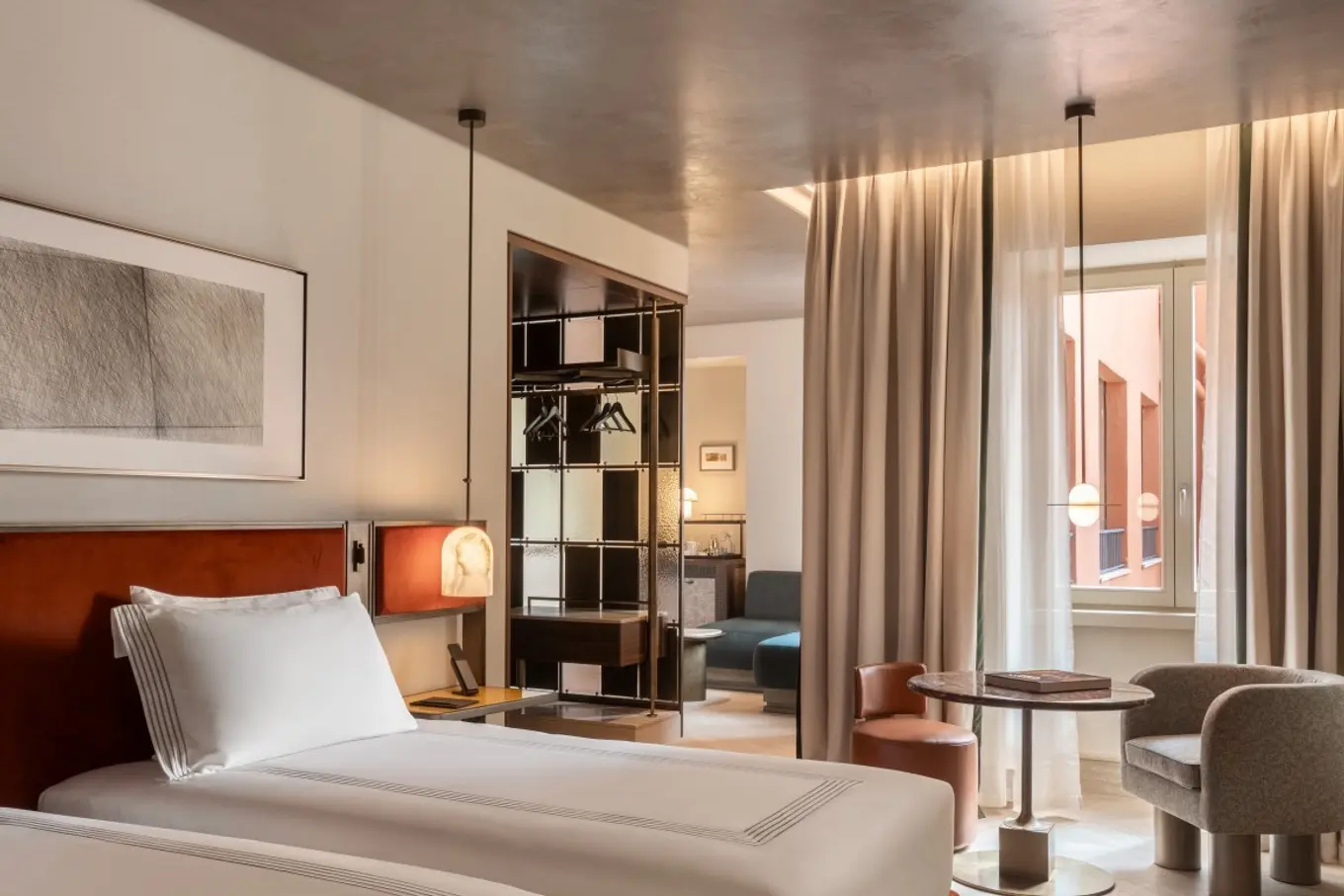
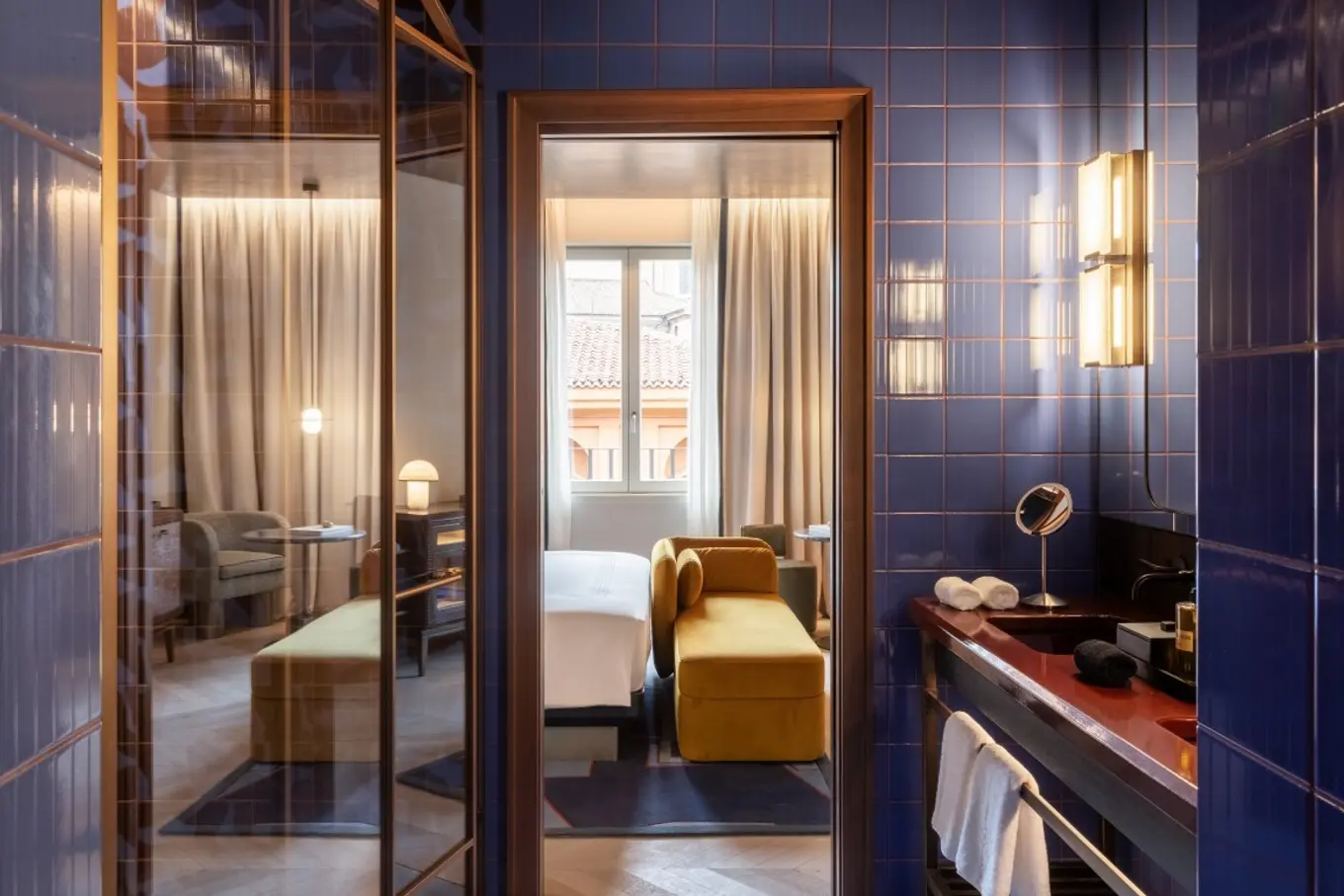
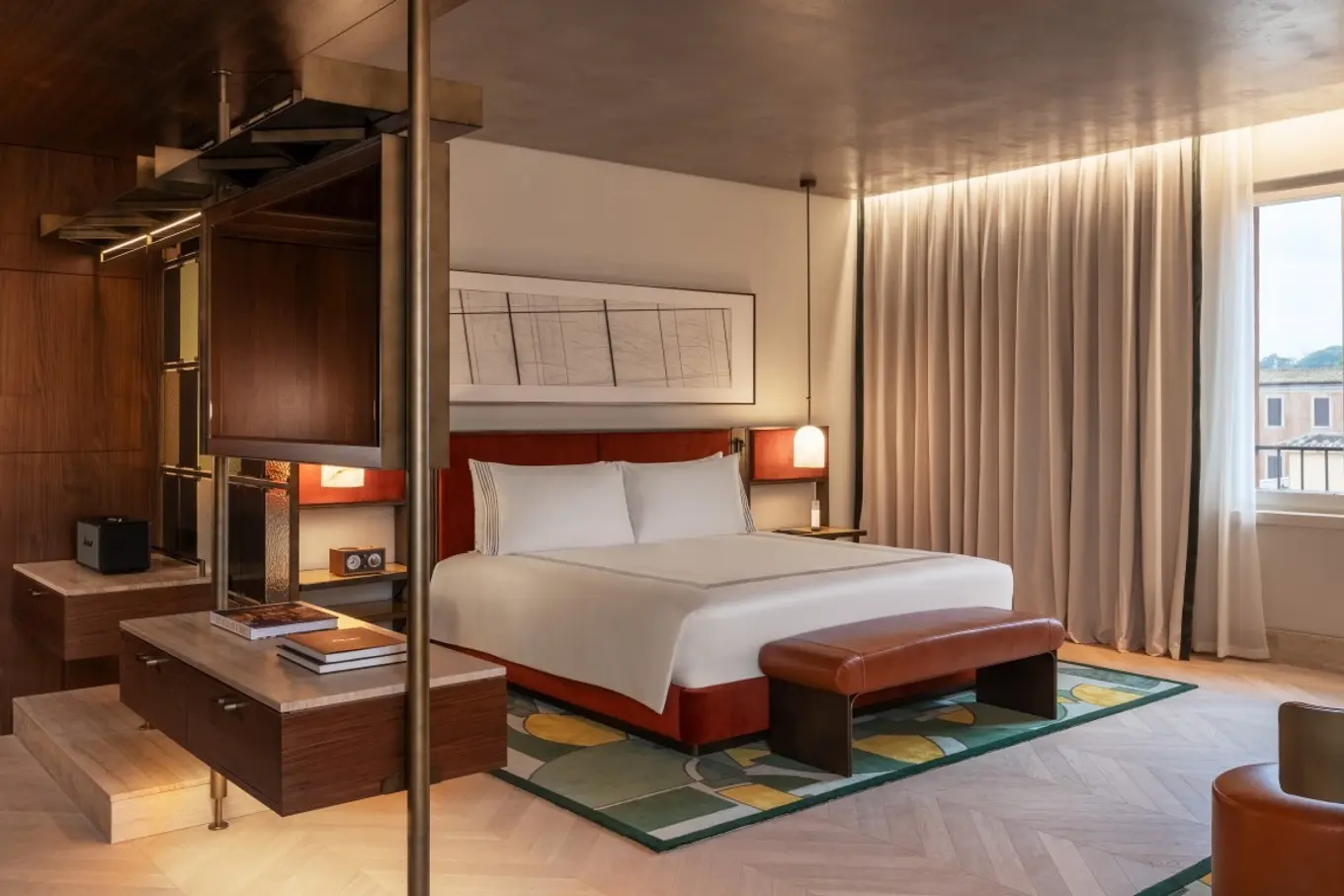
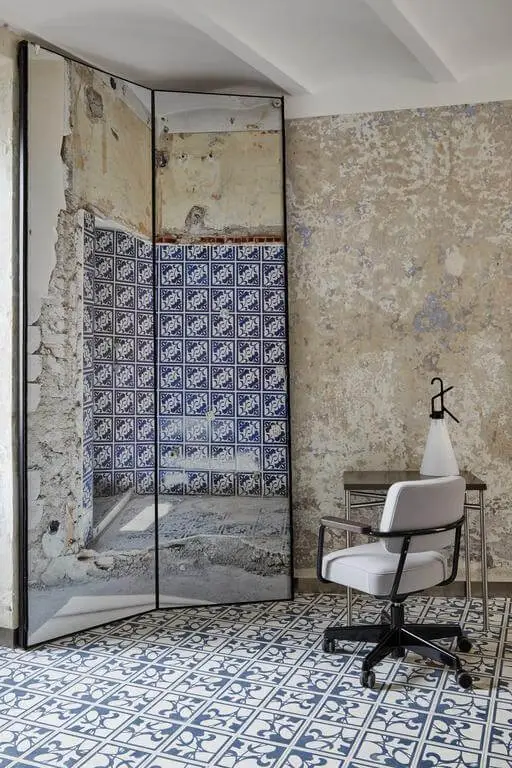
The 69 guestrooms and suites favour a residential approach, with warm natural materials, custom-designed furniture and a relatively restrained palette. There are 19 suites, an unusually substantial proportion of the accommodation, ranging from Junior Suites to larger layouts with private patios or terraces. Some rooms overlook Via delle Botteghe Oscure, while others frame views of neighbouring historic buildings and Roman rooftops. At the top of the range, the Thompson Suite occupies 104 square metres (1,119 sq ft) and includes an 80-square-metre (861 sq ft) private terrace. The interiors avoid overt historical references, allowing the building’s architectural character and the artworks to provide much of the identity. It is a more contemporary interpretation of Roman living than the heavily decorative interiors often associated with the city’s luxury hotels.
Mediterranean Cooking and Rooftop Aperitivo
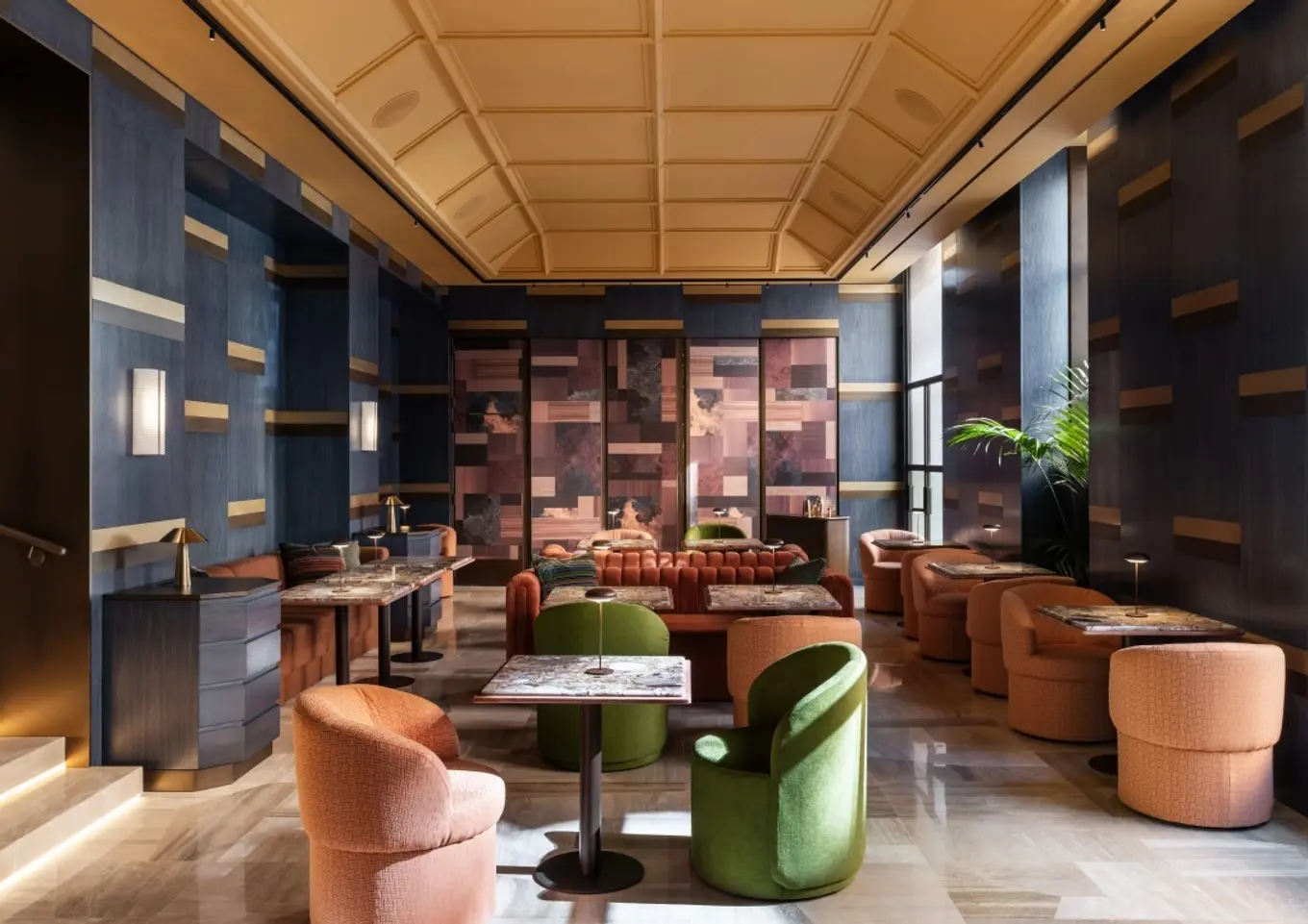
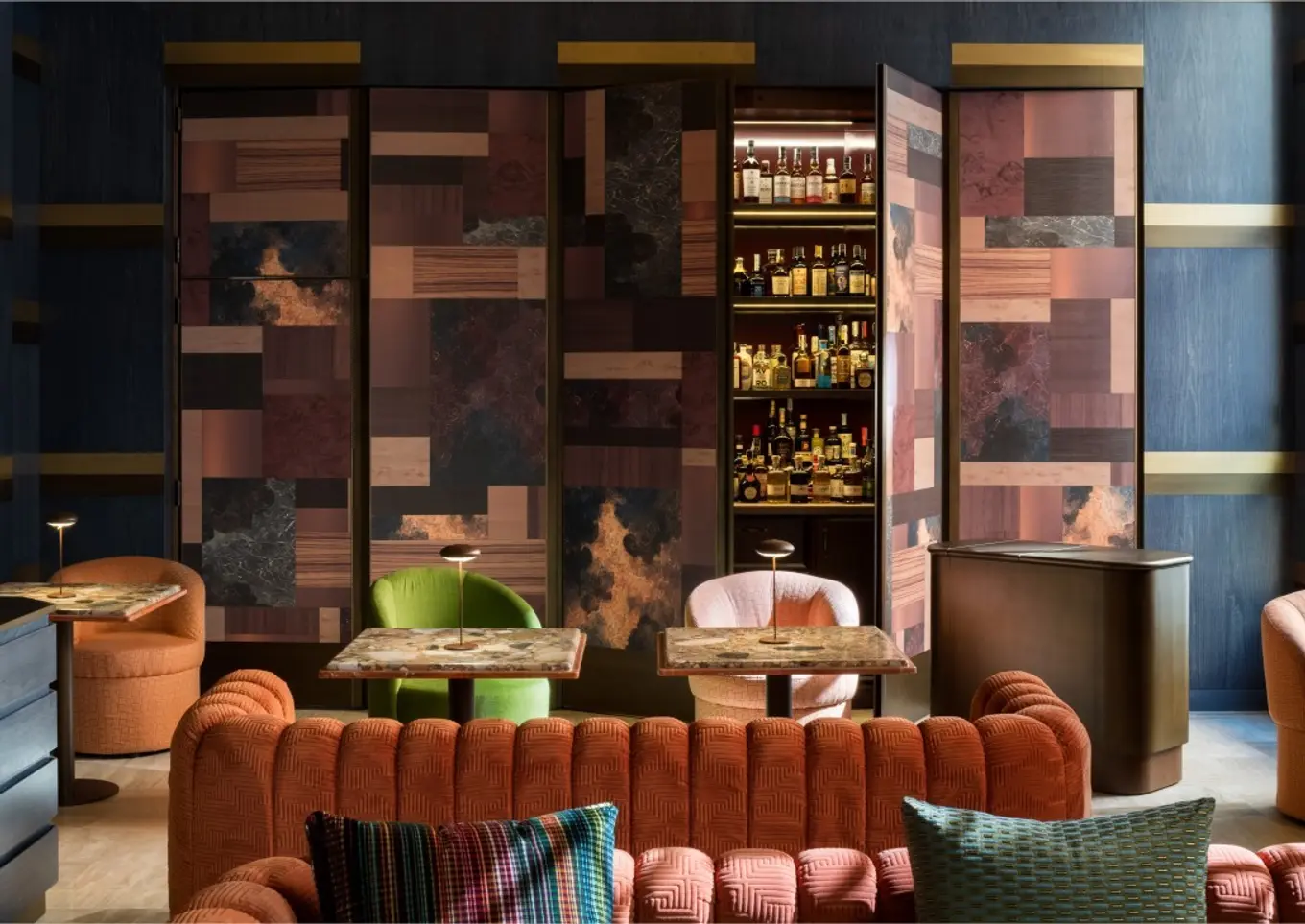
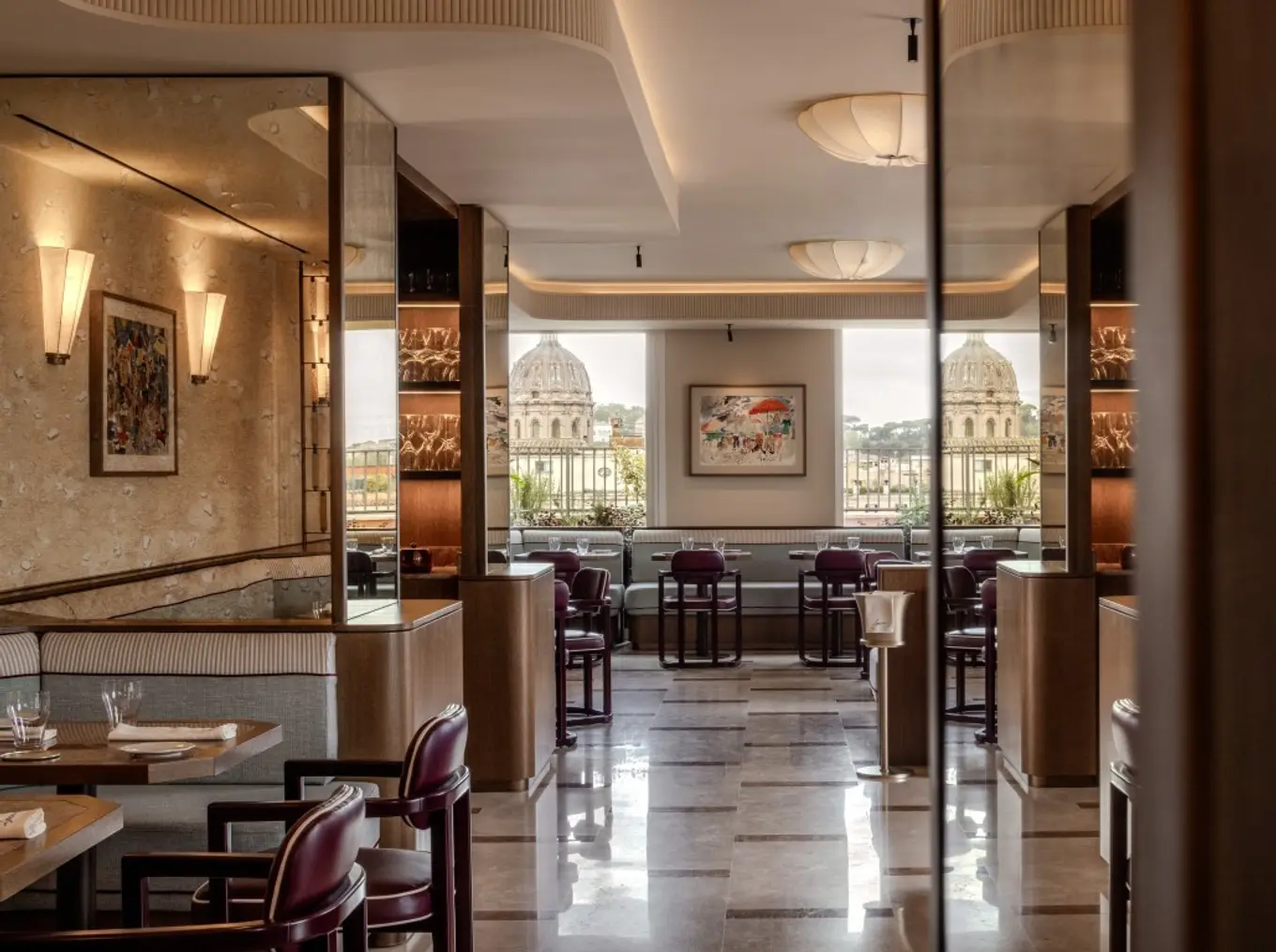
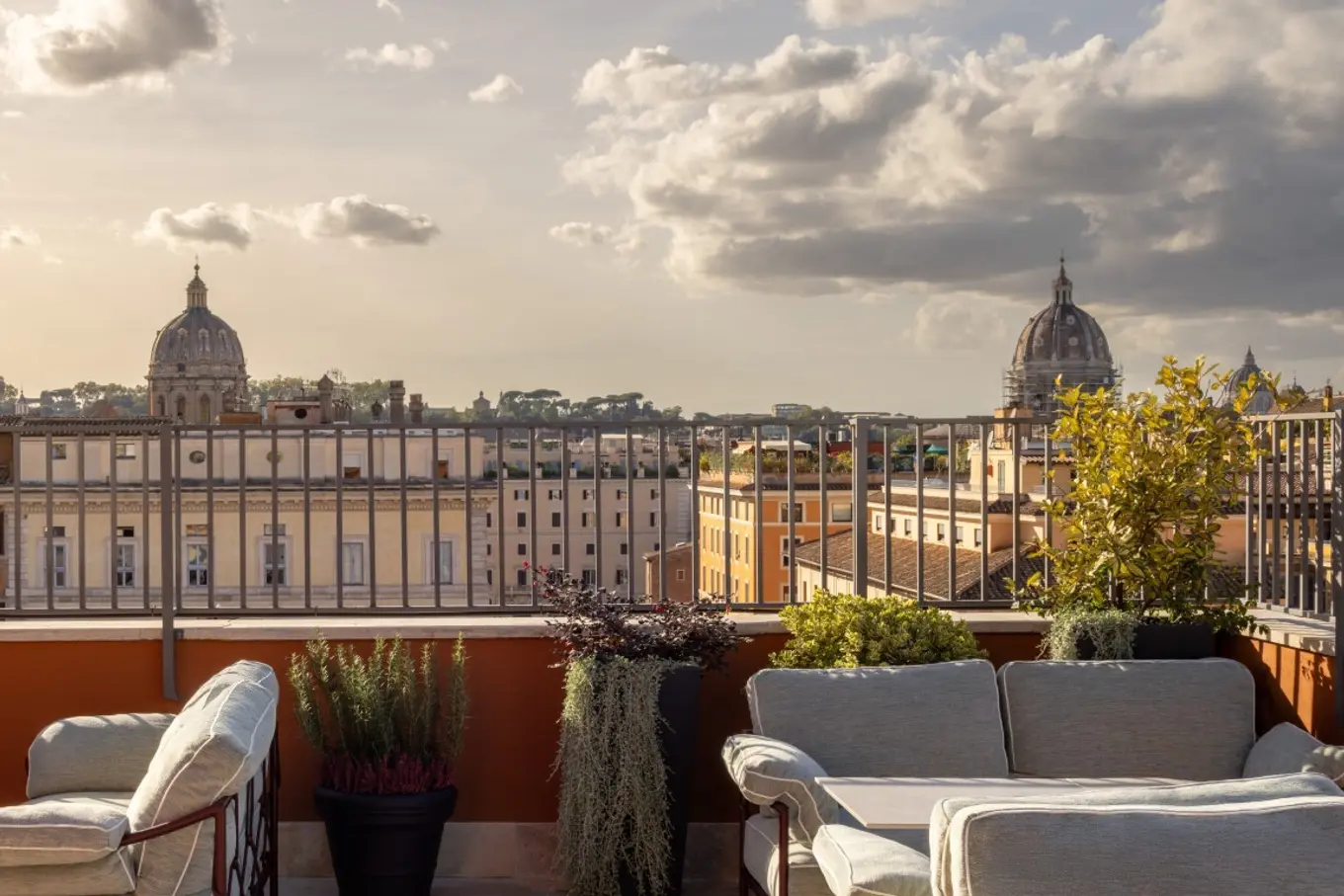
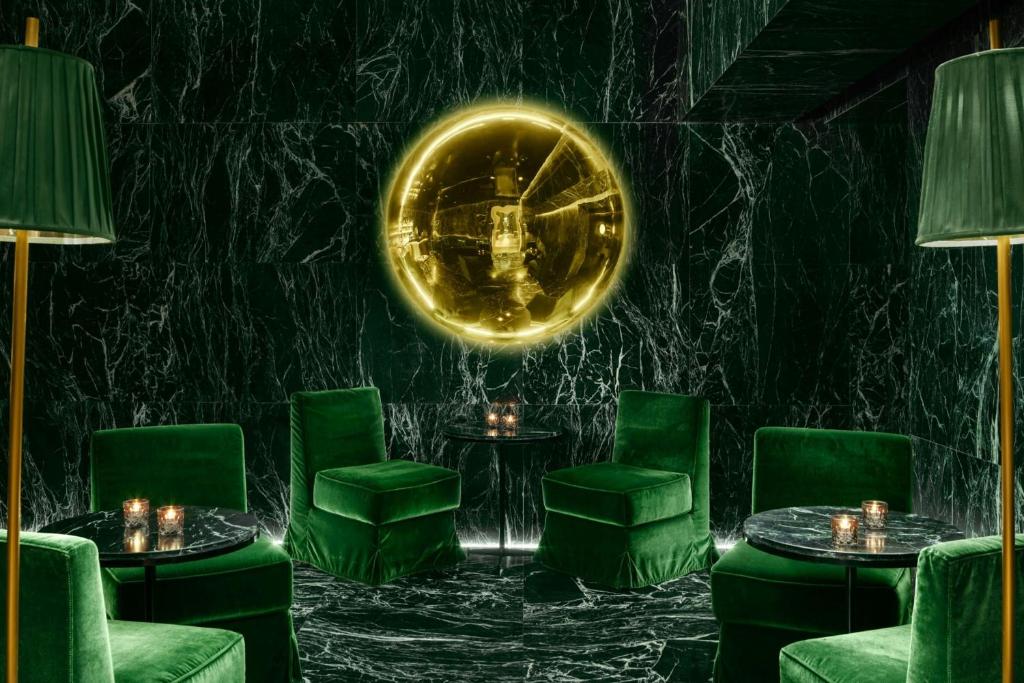
Food and drink form a significant part of Thompson Rome’s concept, with three venues serving different purposes throughout the day. At LYVE Restaurant, executive chef Fabio Fioravanti, originally from Ostia, draws on more than two decades of experience, including time with the Alain Ducasse group and at Le Louis XV in Monte Carlo. His cooking focuses on Mediterranean ingredients, particularly fish and seafood, with references to coastal traditions from Italy and beyond. Rockfish broths, shellfish, wild herbs and interpretations of dishes such as bouillabaisse reflect an approach grounded in classical technique rather than elaborate presentation for its own sake. The Lobby Lounge provides a more informal setting for coffee, light meals and drinks. Upstairs, LYVE Rooftop offers cocktails, Italian aperitivi and sharing plates against a panorama of Rome’s rooftops and monuments. In a city where the view is often part of the experience, the rooftop adds a different perspective on the surrounding historic centre.
Rome, Layer by Layer
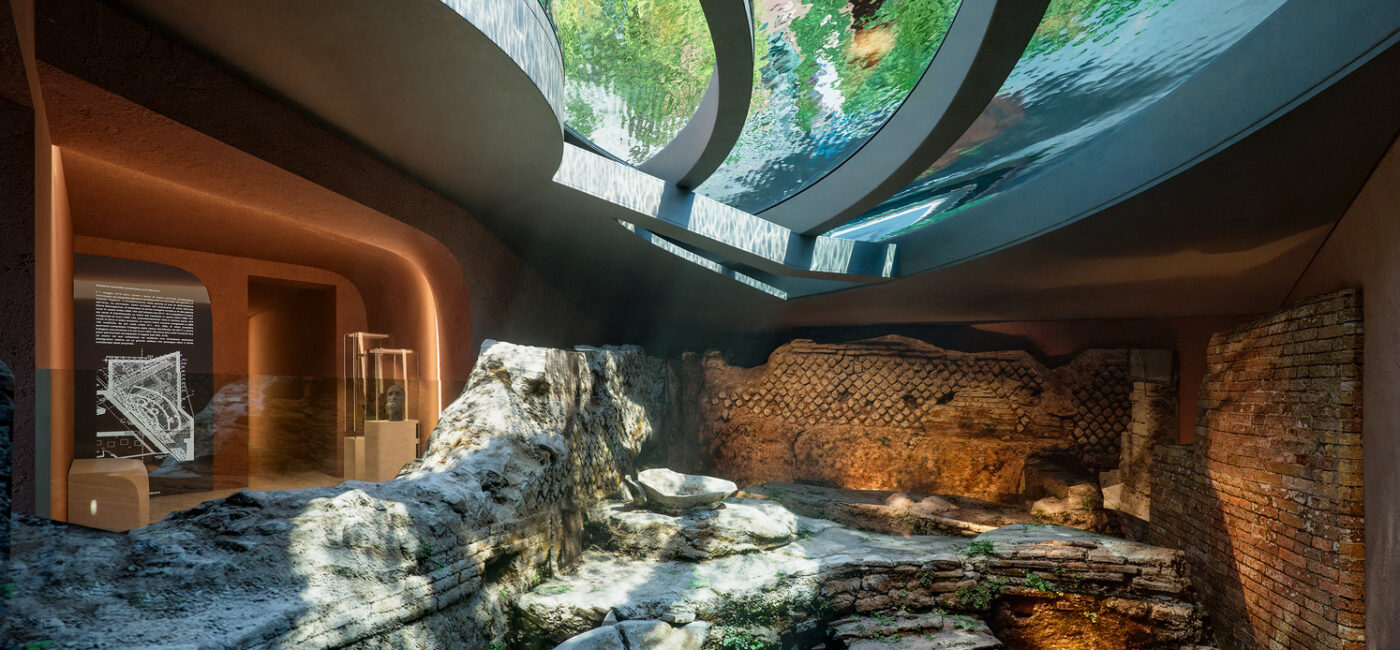
Via delle Botteghe Oscure is an appropriate address for a hotel interested in the relationship between past and present. The nearby Crypta Balbi reveals how Rome has developed through successive periods of construction and reuse, while the Pantheon, Roman Forum and Colosseum are all within walking distance. The hotel also plans cultural programming, including artist encounters, culinary workshops and Empire of Light, a photography-focused experience exploring the city from its seventh floor. Thompson Rome’s particular interest lies in its choice of building and the history embedded within it. Instead of relying on the familiar visual language of Roman luxury, it looks to post-war architecture, 20th-century Italian art and the continuing evolution of the city. The rediscovered Pomodoro works are especially telling: sometimes the most interesting part of a hotel is what was there long before the hotel arrived.
Information
At a glance
Opened / Renovated
2026
Size matters
69 rooms, including 19 suites (25-104m2) (25-1,119 sq ft)
Interior design
Handpicked worldwide
A carefully curated collection of exceptional boutique and design hotels across the globe.
Design with soul
Architecture, atmosphere and craftsmanship come together in stays with a clear identity.
Hidden, not hyped
Independent boutique hotels you rarely find on mainstream booking platforms.
Travel guidance
Personal recommendations and thoughtful support from people who actually know the places.