The Chancery Rosewood
London’s Most Ambitious Architectural Reinvention
Why DNA Hotels Loves It
● A landmark restoration that transforms Eero Saarinen’s former U.S. Embassy into one of London’s most significant new hotels.
● A rare collaboration between three design giants: Eero Saarinen, Sir David Chipperfield, and Joseph Dirand.
● A masterclass in adaptive reuse where architecture takes centre stage and luxury follows naturally.
A Modernist Icon Reborn
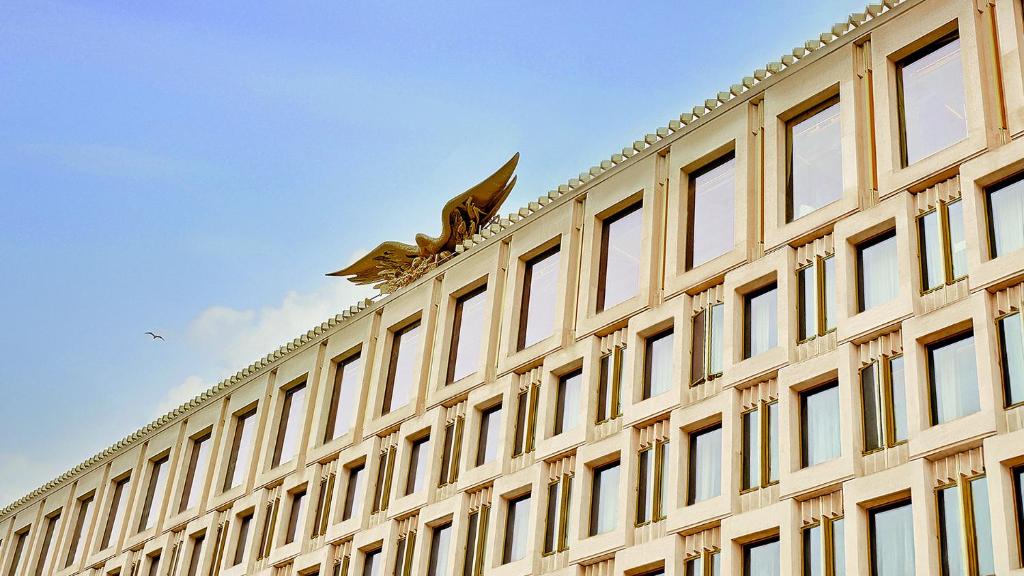
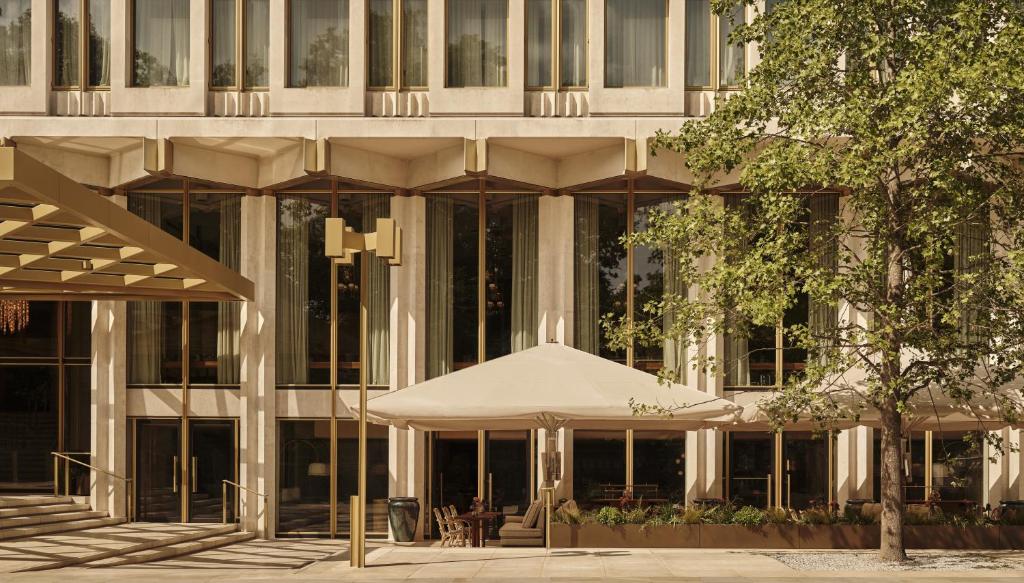
Few hotel openings in recent years have carried the architectural weight of The Chancery Rosewood. Occupying the former United States Embassy on Grosvenor Square, the building has long been one of Mayfair’s most recognisable landmarks. Completed in 1960 by Finnish-American architect Eero Saarinen, the structure represented a confident expression of post-war modernism, combining diplomatic gravitas with elegant restraint. For decades it stood as a symbol of American presence in London. Today, following one of the city’s most ambitious restoration projects, it enters a remarkable second chapter. Under the direction of Sir David Chipperfield, the former embassy has been transformed into a luxury hotel that respects its past while confidently embracing the future. The result is far more than a hotel conversion. It is an architectural event.
The Saarinen Legacy
Long before luxury travellers arrived with designer luggage, diplomats passed through these doors. Saarinen’s original building was revolutionary for its time: a clean-lined modernist composition wrapped in Portland stone, defined by rhythmic vertical façades and a commanding presence overlooking Grosvenor Square. Unlike many historic conversions, The Chancery does not attempt to disguise its origins. The building’s strength lies precisely in its former identity. Its scale. Its proportions. Its confidence. These qualities remain fully intact.
David Chipperfield’s Quiet Intervention
Few architects are better suited to a project of this sensitivity than David Chipperfield. Known for his measured approach to restoration and cultural architecture, Chipperfield has approached the embassy not as a canvas for reinvention but as a dialogue between generations. The original architecture remains visible throughout. New interventions feel almost inevitable rather than imposed. Circulation has been reimagined, spaces opened up, and natural light introduced more generously, yet the building never loses its original character. The architectural language is unmistakably Chipperfield: calm, precise, elegant, and deeply respectful. Luxury emerges through proportion and materiality rather than spectacle.
Joseph Dirand’s Refined Interiors
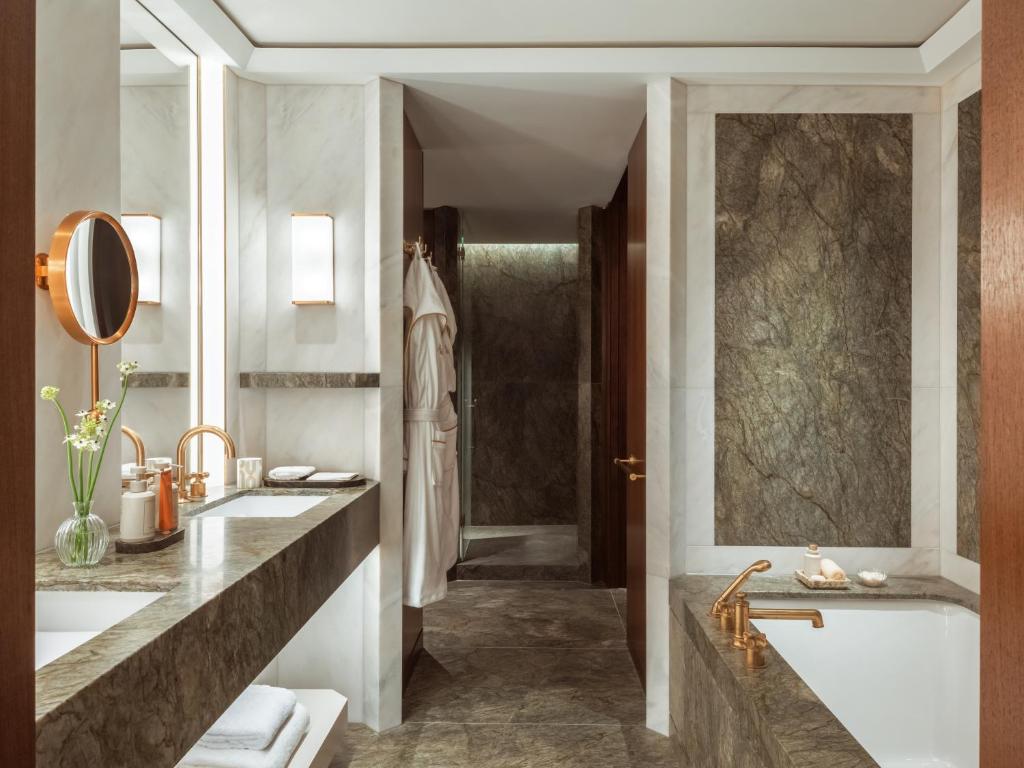
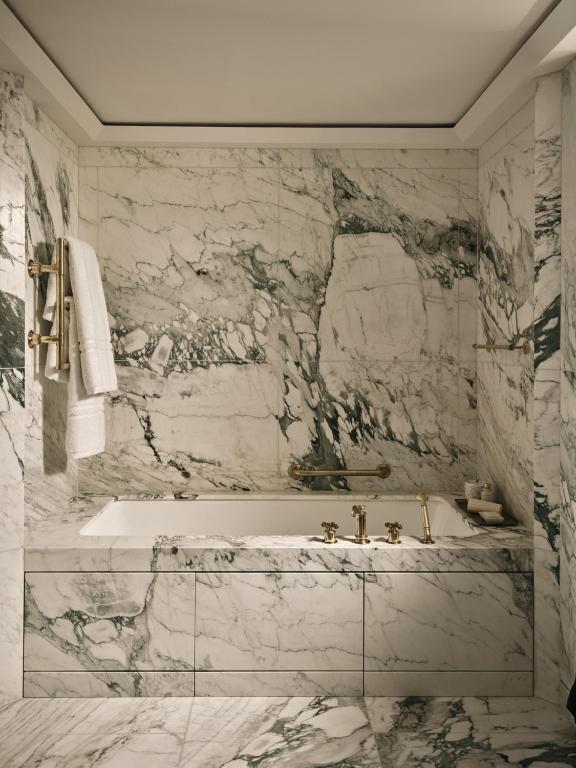
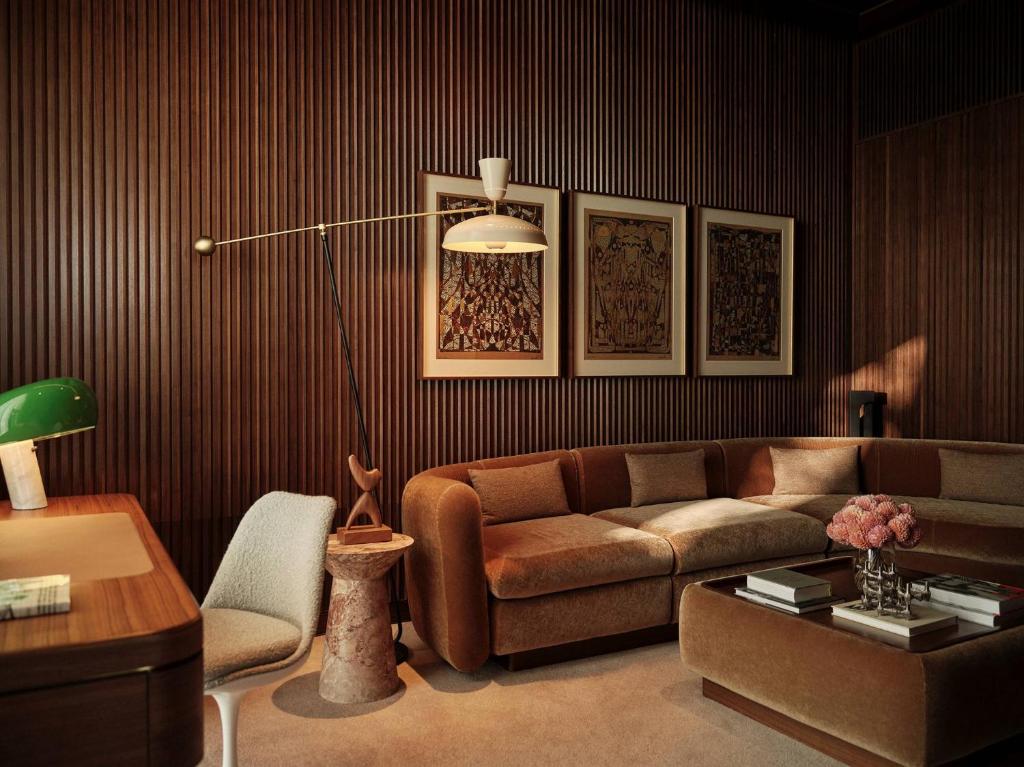
Inside, French designer Joseph Dirand introduces a layer of contemporary sophistication that complements both Saarinen and Chipperfield’s architectural visions. Travertine, bronze, oak, limestone, and rich textiles define the interiors, creating spaces that feel simultaneously monumental and intimate. The aesthetic draws inspiration from London’s grand residential architecture while maintaining a distinctly modern sensibility. Sweeping staircases, sculptural lighting installations, bespoke furniture, and meticulously crafted joinery elevate every space. Nothing feels excessive. Nothing feels decorative for decoration’s sake. Every material serves the architecture. Every detail contributes to a larger narrative.
A New Mayfair Residence
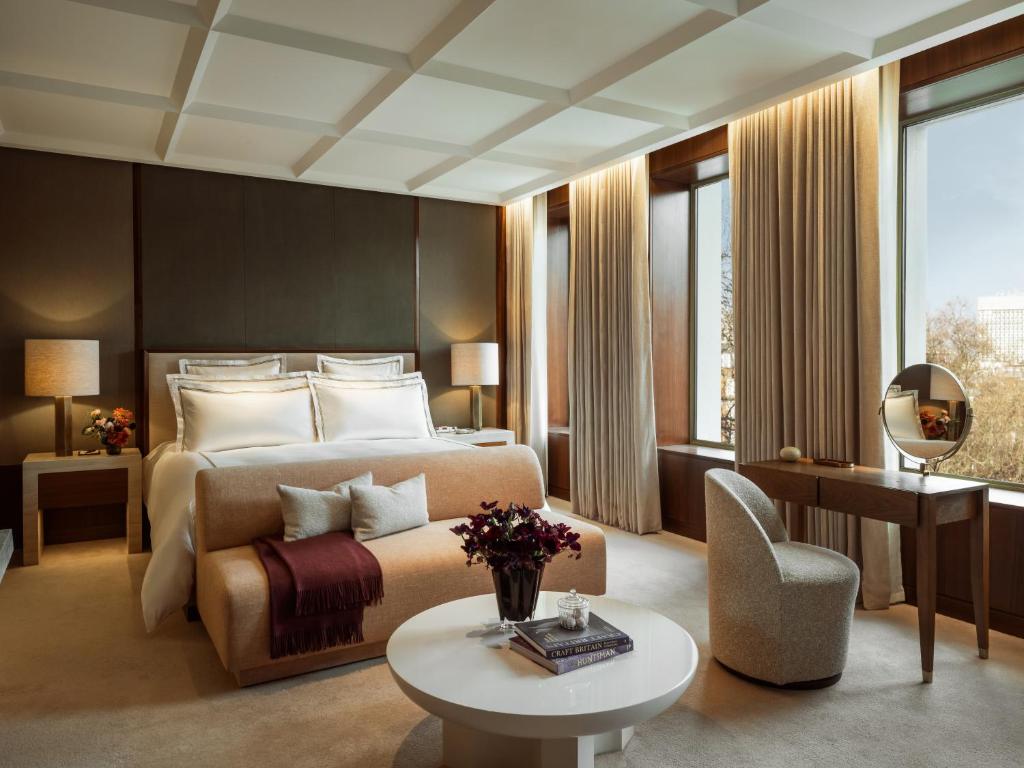
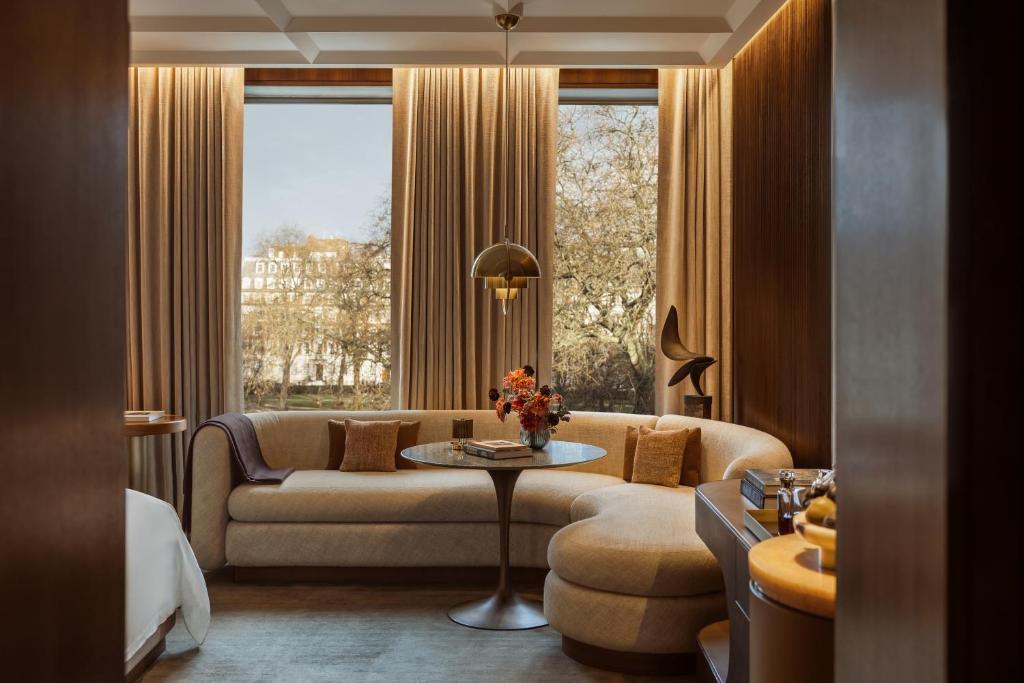
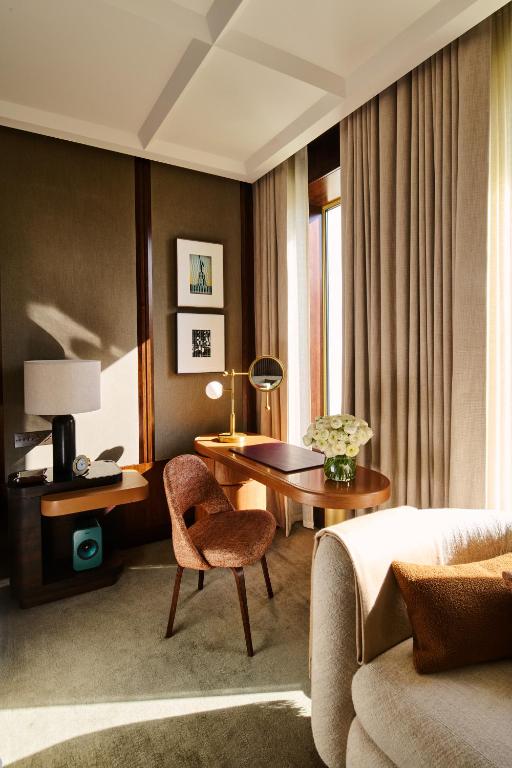
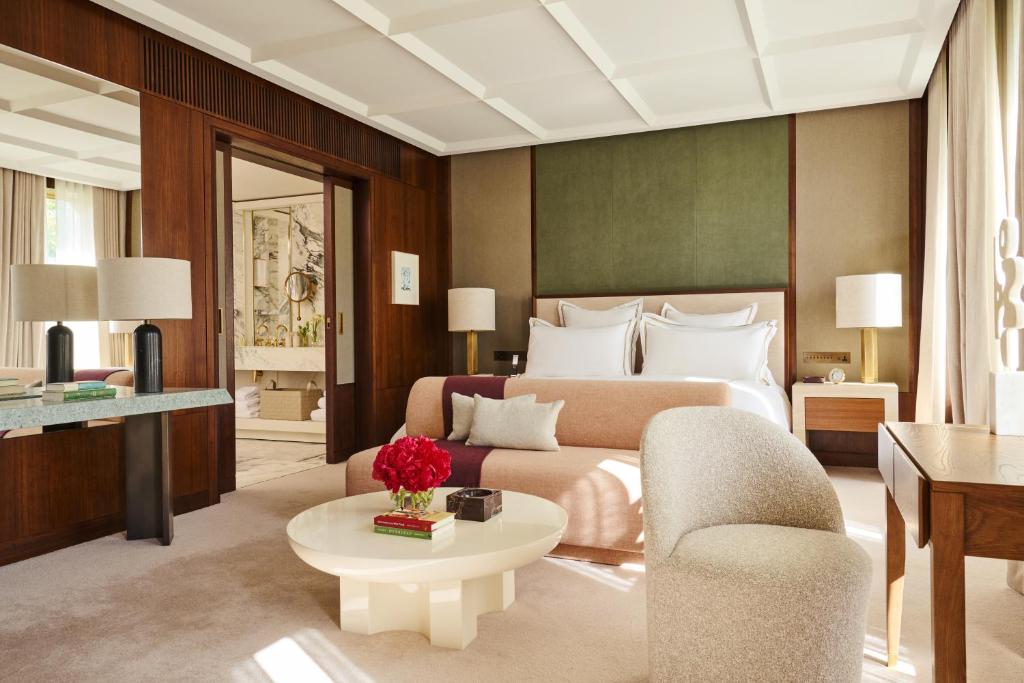
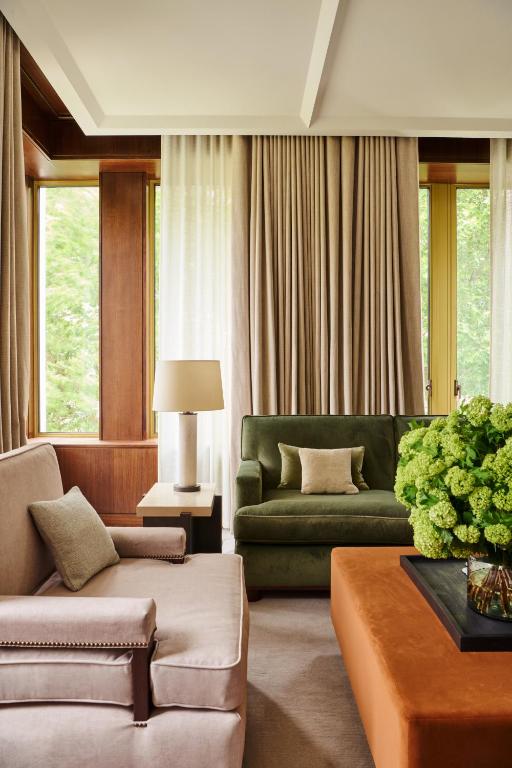
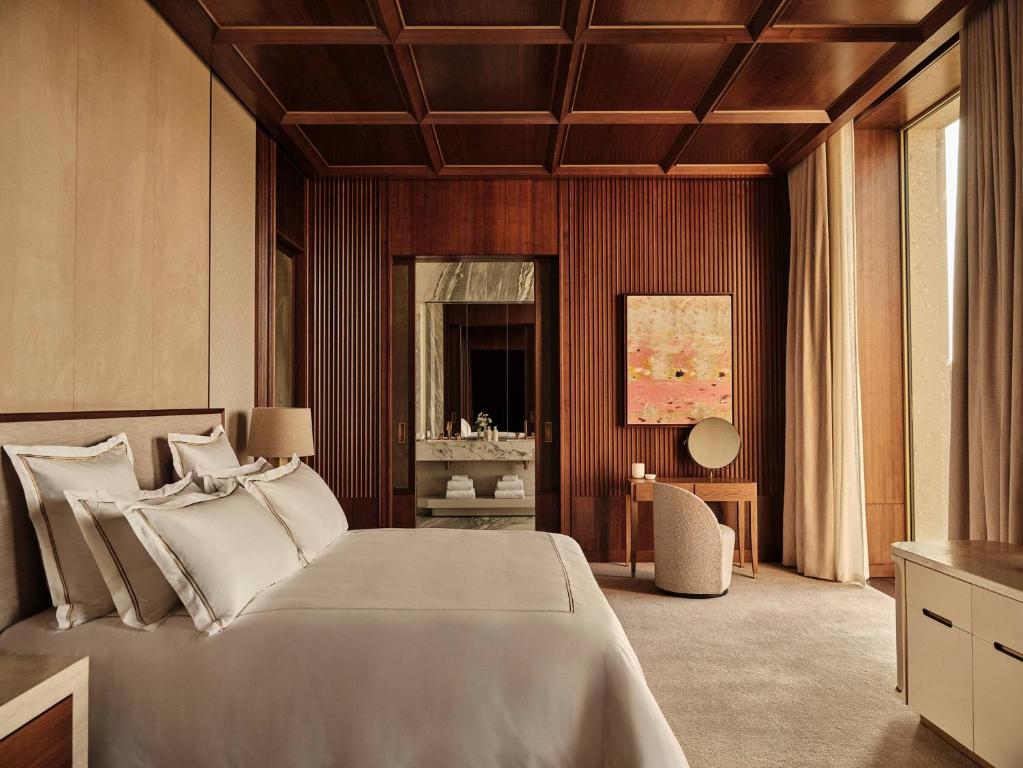
The guest rooms and suites continue this philosophy of understated luxury. Large windows frame views across Grosvenor Square and the rooftops of Mayfair, while carefully layered materials create a residential atmosphere rarely found in hotels of this scale. The palette remains restrained: warm stone, natural timber, bronze accents, and tailored upholstery. Comfort is exceptional, but never ostentatious. The emphasis remains on craftsmanship, proportion, and permanence. These are rooms designed to age gracefully rather than chase trends.
Opening the Building to the City
One of the most remarkable achievements of the project is the way it reconnects the building with London itself. What was once a highly secured diplomatic compound has become an inviting public destination. The arrival sequence unfolds gradually through landscaped courtyards and generous public spaces, creating a sense of transition from the city into the hotel. Terraces, gardens, restaurants, bars, and cultural spaces encourage engagement rather than exclusivity. The building no longer looks outward from behind security barriers. It participates in the life of Mayfair.
Wellness Beneath the Surface
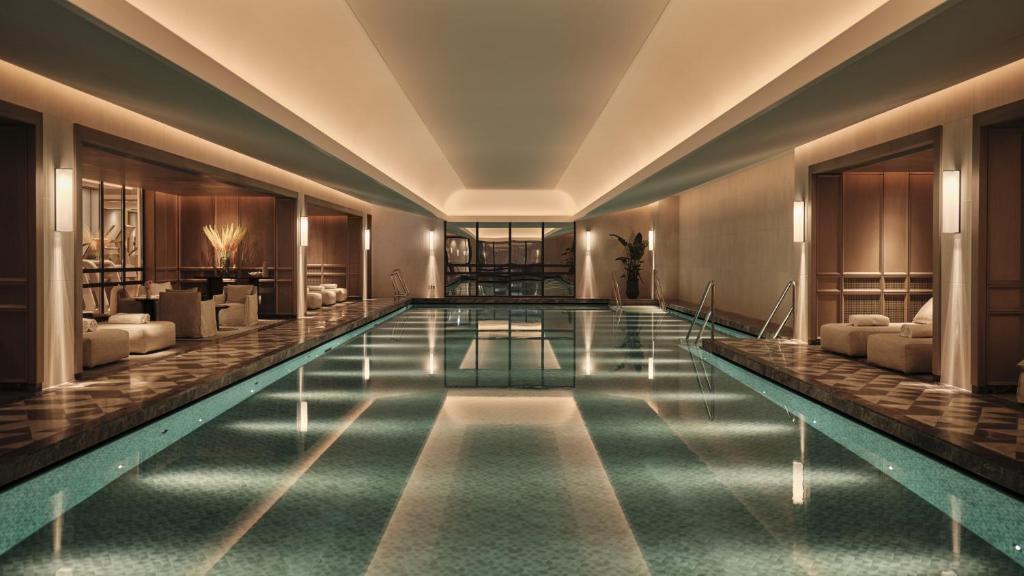
Beneath the monumental architecture above lies a remarkably tranquil wellness sanctuary. Here, Chipperfield’s architectural discipline continues through calm, light-filled spaces where stone, water, and natural materials create an almost monastic atmosphere. Filtered daylight, carefully proportioned rooms, and a sense of quiet permanence offer a welcome contrast to the energy of central London. Like the rest of the project, wellness here feels architectural rather than decorative.
A New London Landmark
Many luxury hotels impress through service. Others through design. The Chancery Rosewood succeeds because it understands the power of architecture. This is a building with genuine cultural significance, thoughtfully adapted for a new generation without sacrificing its identity. The collaboration between Saarinen’s modernist vision, Chipperfield’s architectural restraint, and Dirand’s sophisticated interiors has produced something exceptionally rare: a hotel that feels important beyond hospitality itself. For lovers of architecture, design, and cities, The Chancery Rosewood is more than a place to stay. It is one of London’s most compelling new destinations—and perhaps the finest example of adaptive reuse the city has seen in decades.