


A 1915 mansion in Roma Norte where historic grandeur meets the creative energy of contemporary Mexico City
Book now
Why DNA Hotels loves it
Owner Carlos Zaragoza spent three years restoring this former presidential residence, preserving its Art Nouveau and Neoclassical character while surrounding it with contemporary Mexican art, craft and design.
With only 15 individually designed rooms and suites, El Cortés has the intimacy and personality we want from a true independent boutique hotel—layered, romantic and exceptionally detailed without becoming theatrical.
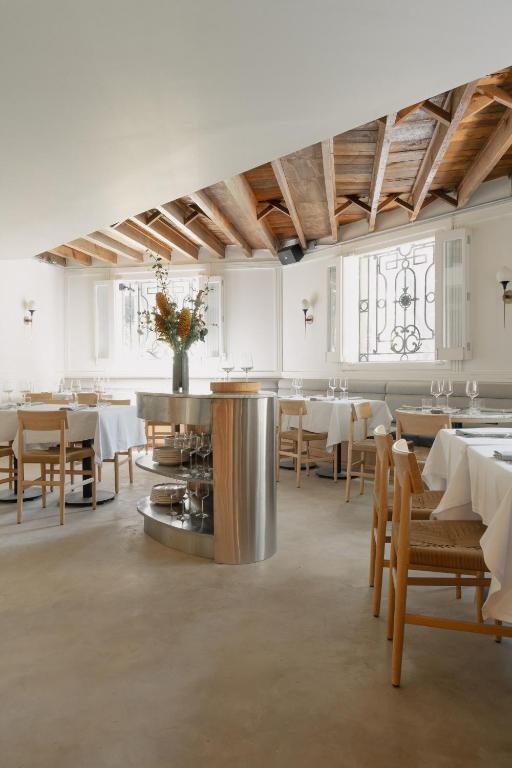
Lotti makes the hotel as interesting for dinner as it is for design, with Swiss-born chef Luc Liebster combining European culinary traditions with Mexican ingredients and flavours.
The Stay
El Cortés - Mexico City
A Mansion Reborn in Roma Norte
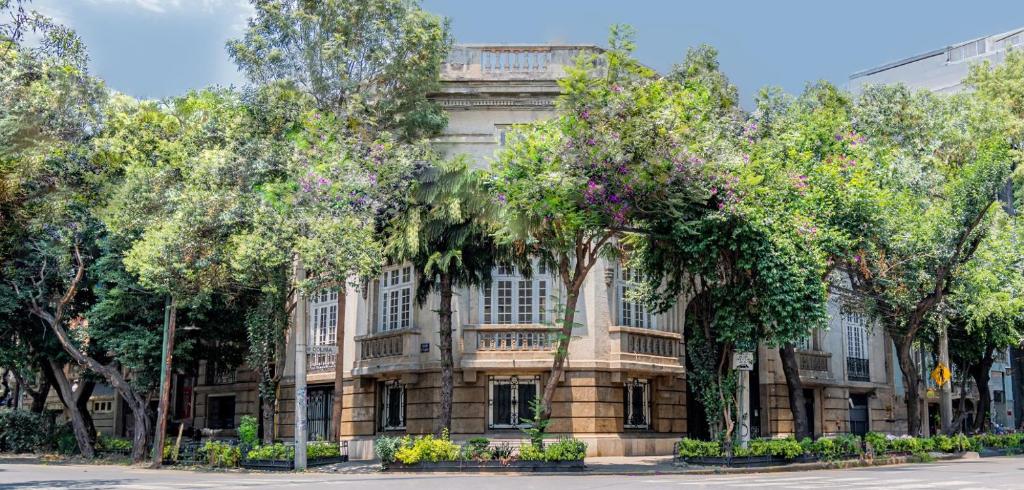
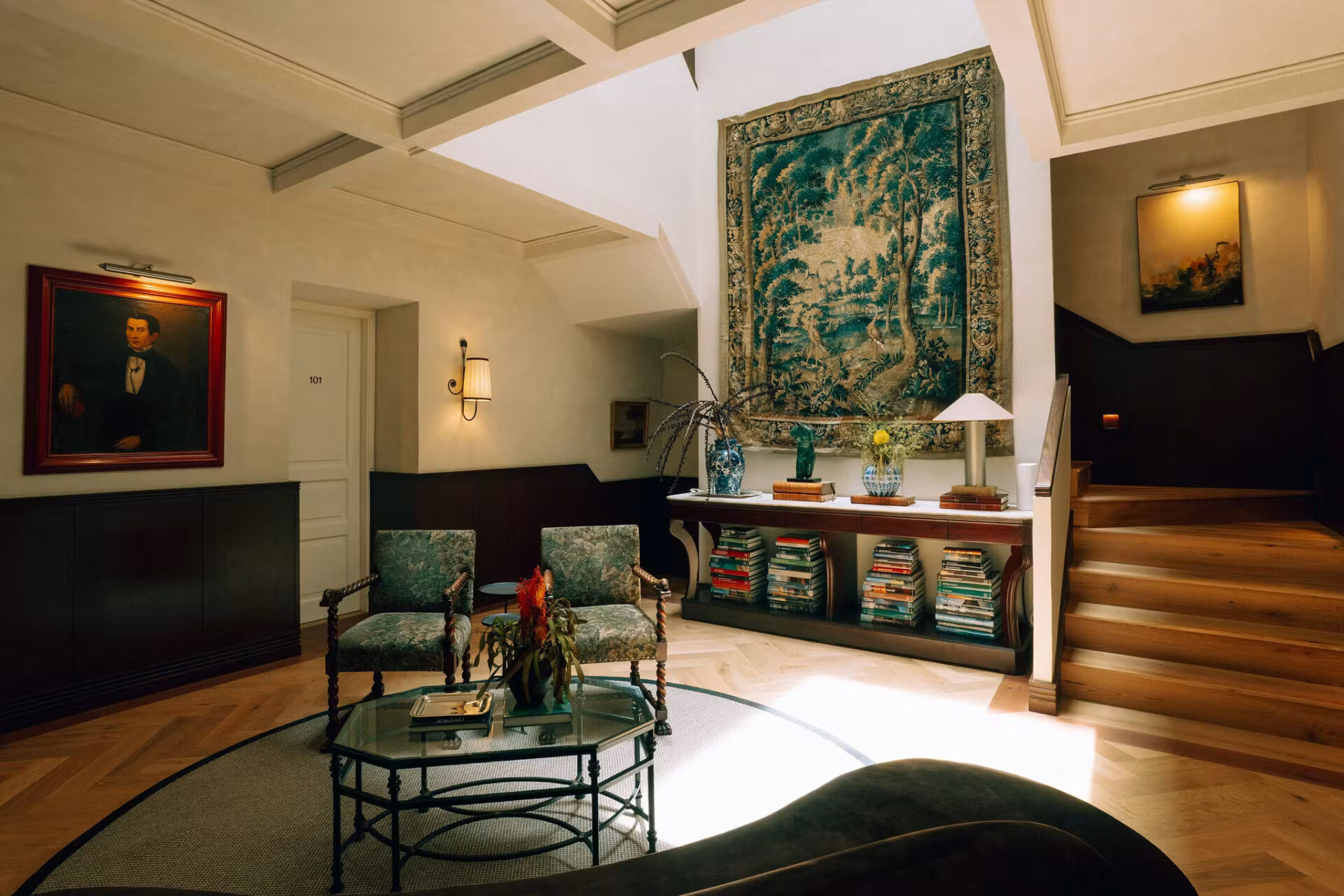
Behind an ornate balustraded façade on Calle Colima stands one of Mexico City’s most compelling new small hotels. El Cortés occupies a French-inspired mansion dating from 1915, a building that once served as a presidential residence and still carries the architectural confidence of Roma Norte’s Porfirian-era origins. When Mexican owner Carlos Zaragoza acquired it, he resisted the temptation to turn its history into decorative nostalgia. Instead, he spent three years researching old photographs, restoring original details and working with craftspeople skilled in traditional techniques. His intention was to recover the soul of the house while allowing it to belong naturally to the creative Roma Norte of today. The result feels neither like a period hotel nor a contemporary design project inserted into an old shell. Old and new have simply learned to live together.
Layers, Textiles and Tiny Obsessions
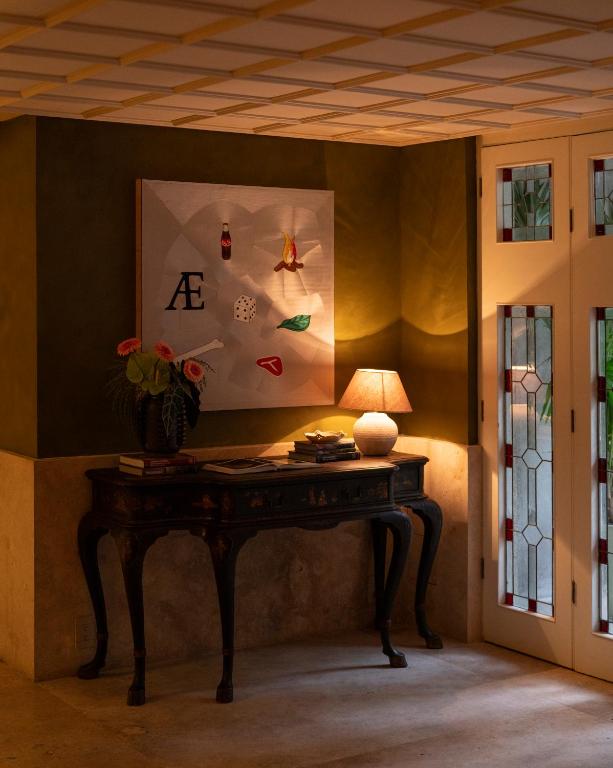
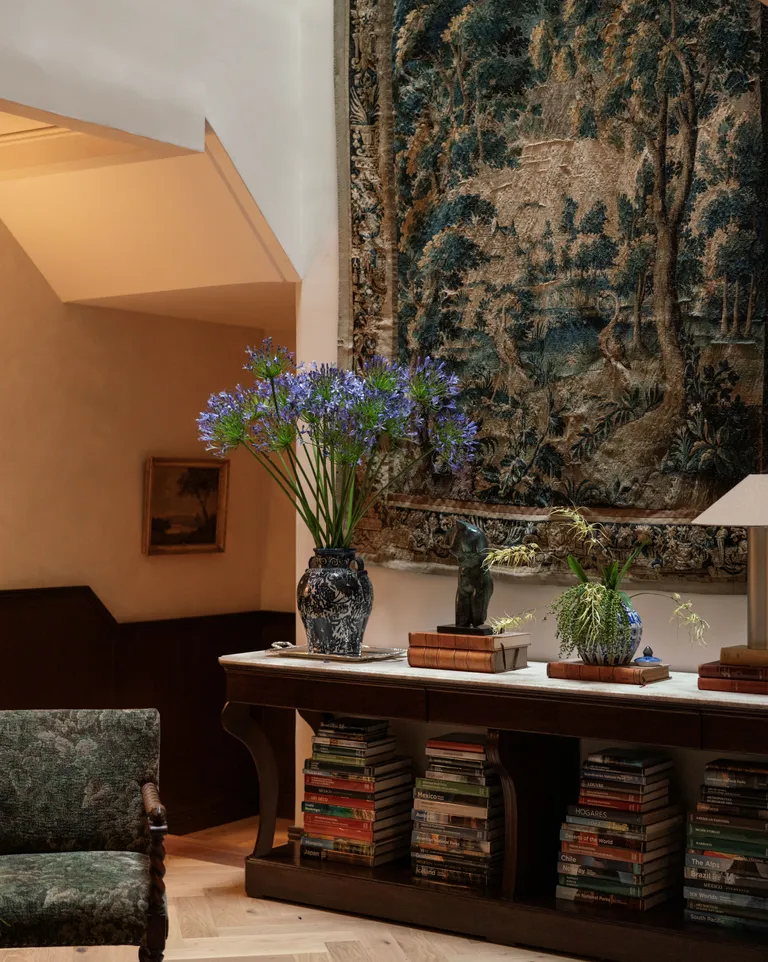
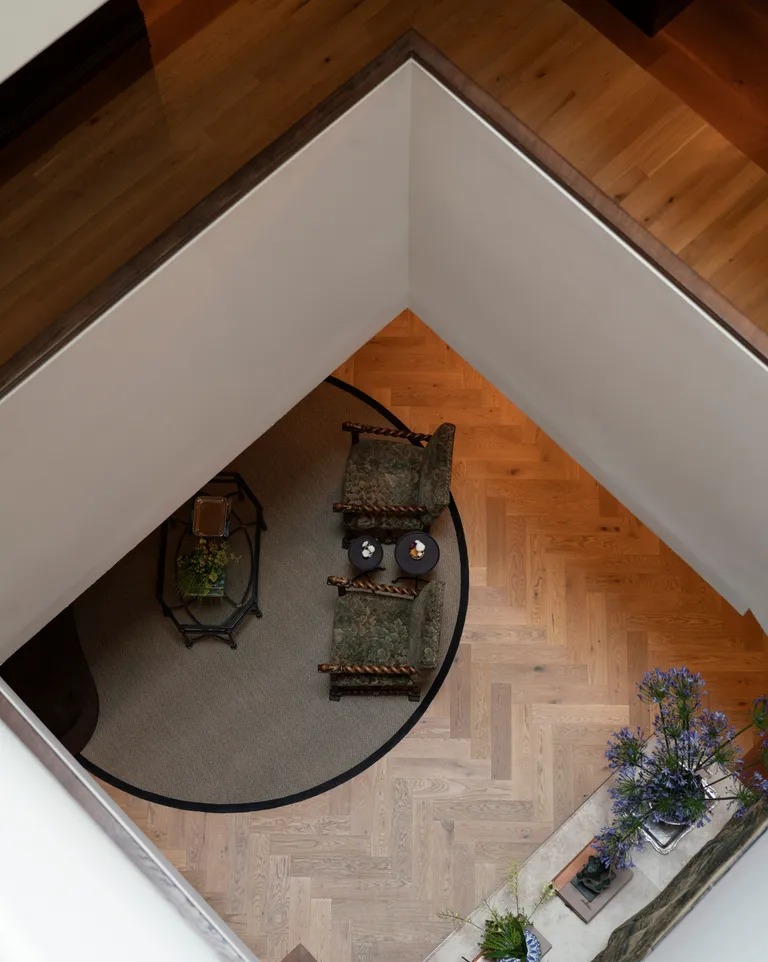
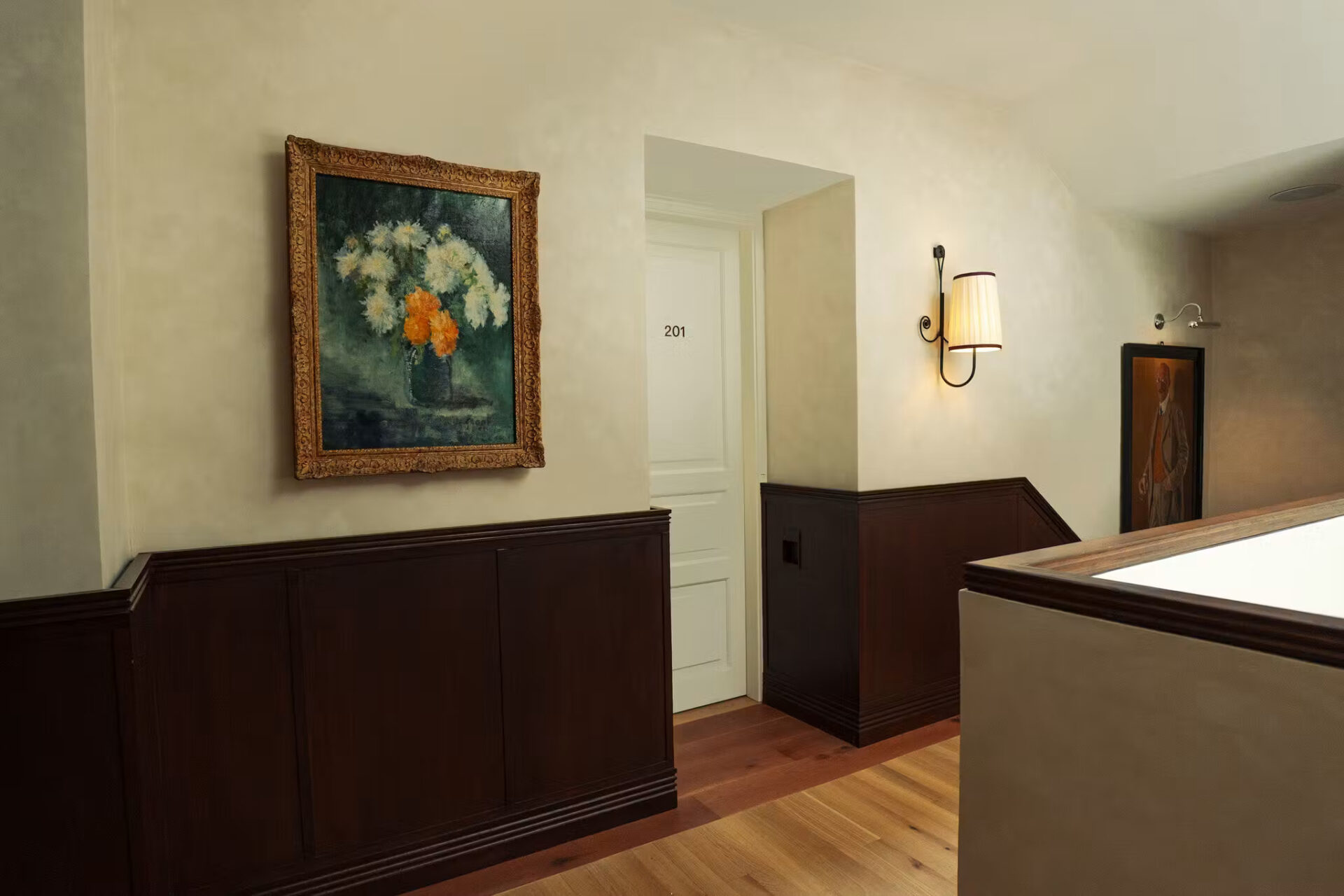
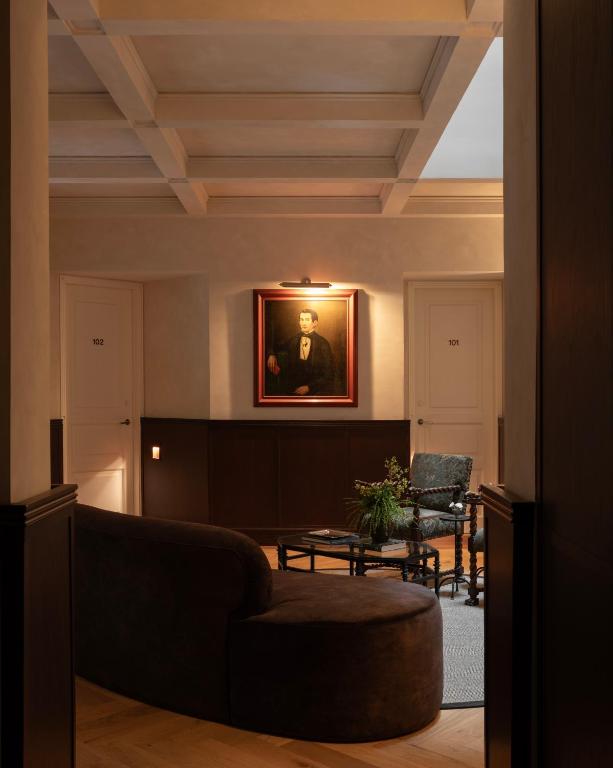
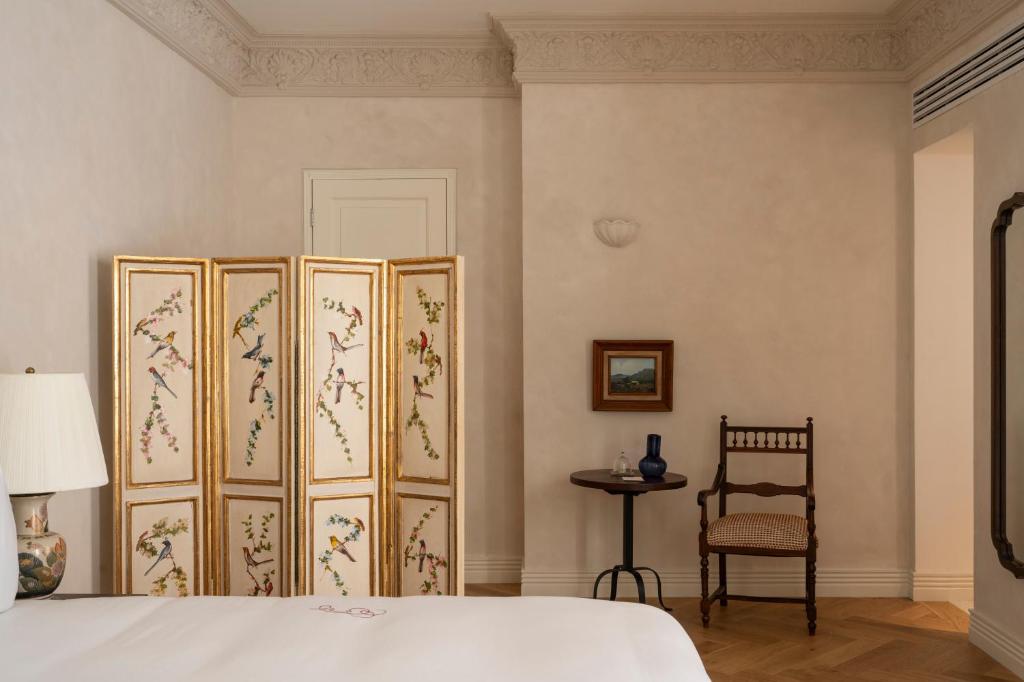
El Cortés rewards looking closely. Original beams, elaborate mouldings, marble, lime-washed walls and historic architectural details are layered with velvet, hand-loomed rugs, antique furniture, contemporary pieces and Zaragoza’s personal collection of art. The mood is rich but controlled. In the intimate lobby, storm-grey velvet curtains meet a dandelion-yellow fringed loveseat and an enormous etched Art Deco mirror. Elsewhere, tiny artworks, vintage pieces and Talavera ceramics appear almost incidentally. Those small details are what make the hotel convincing. Bespoke Talavera tissue boxes, silken tassels, handmade objects and flowers arranged in traditional vessels give the interiors a tactile, distinctly Mexican identity without resorting to cliché. It feels collected rather than decorated.
Fifteen Rooms, Each With Its Own Story
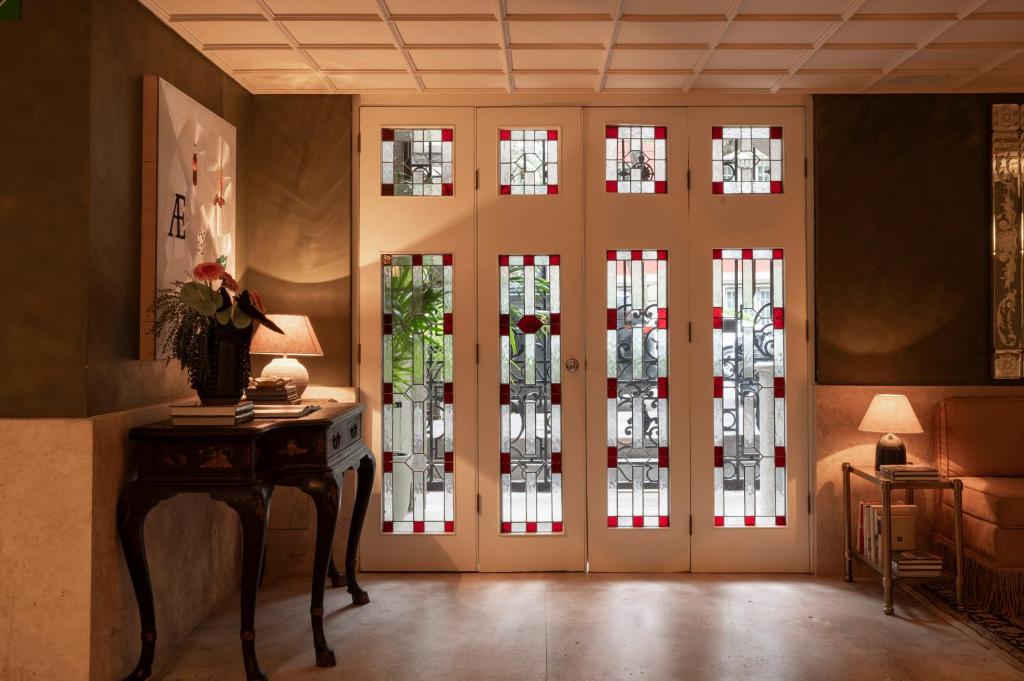
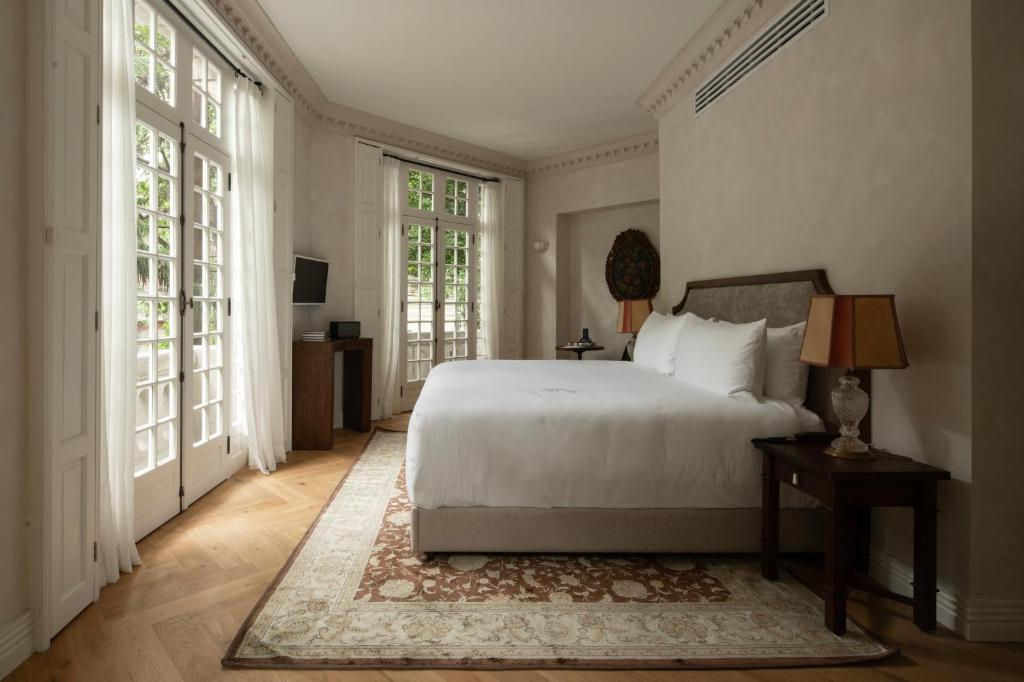
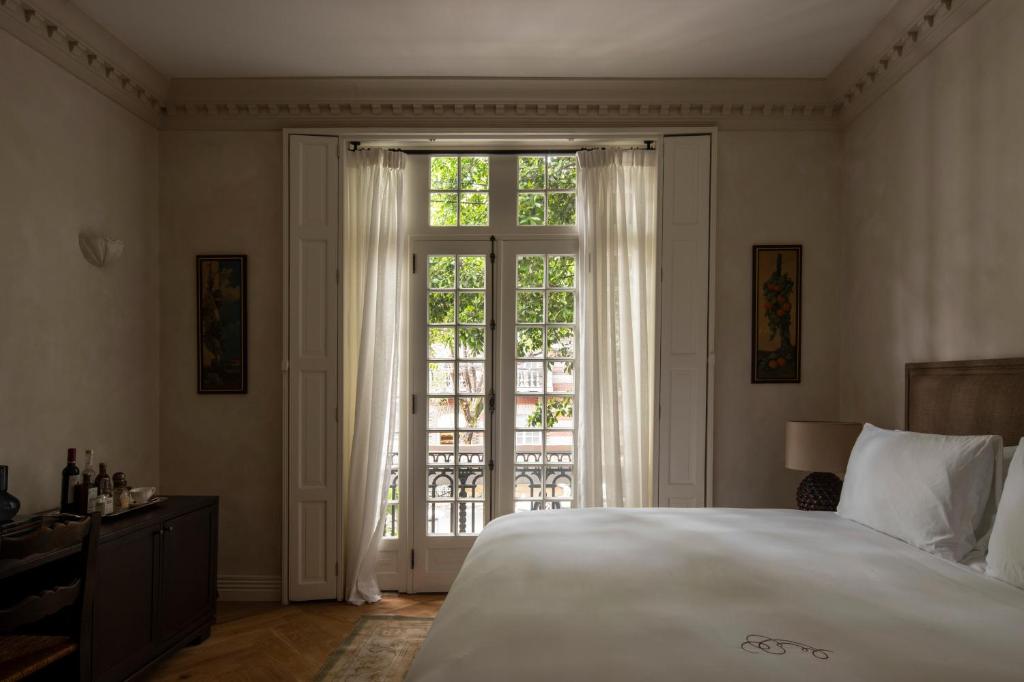
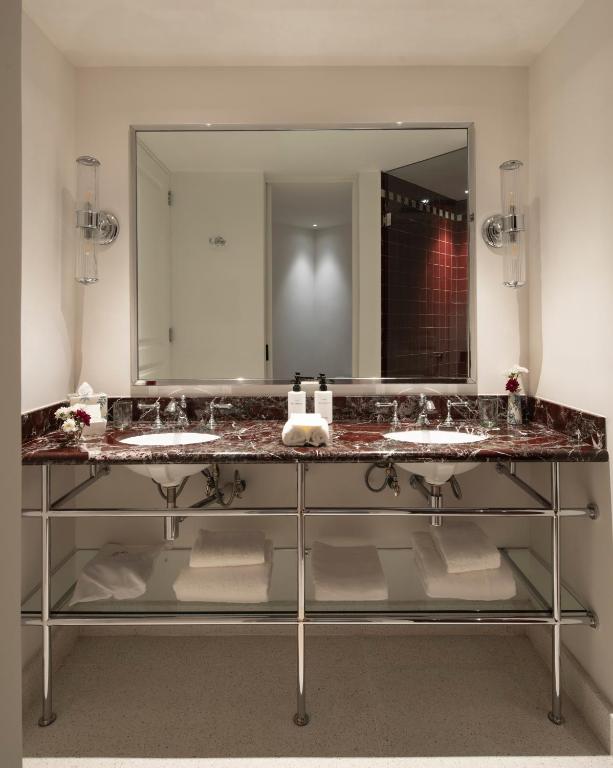
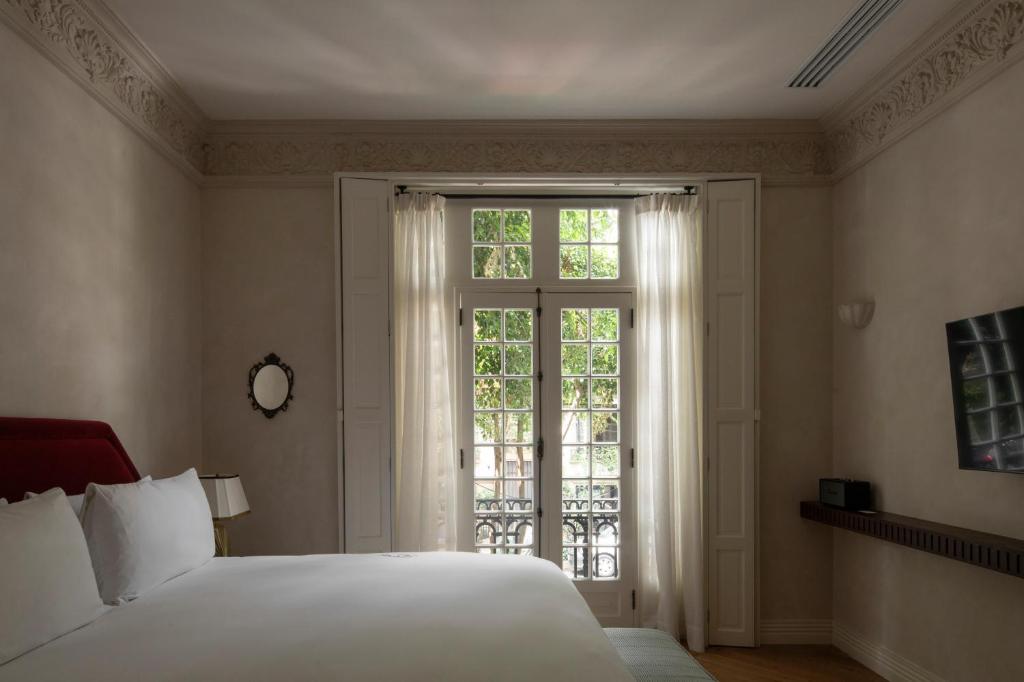
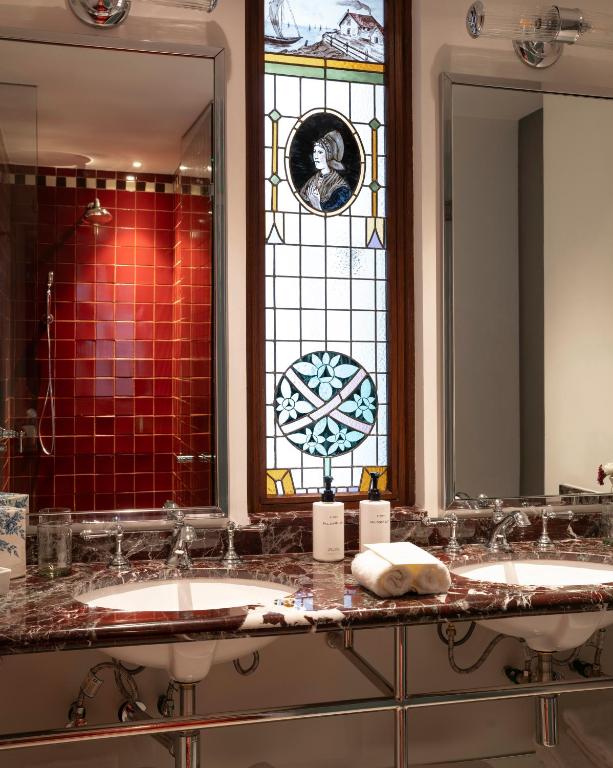
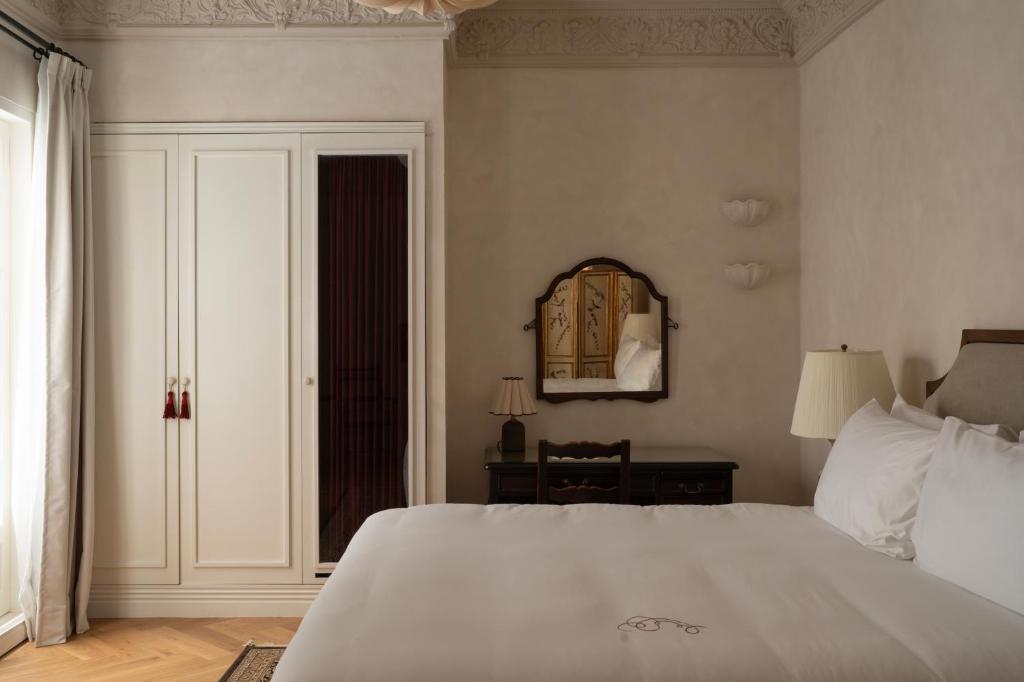
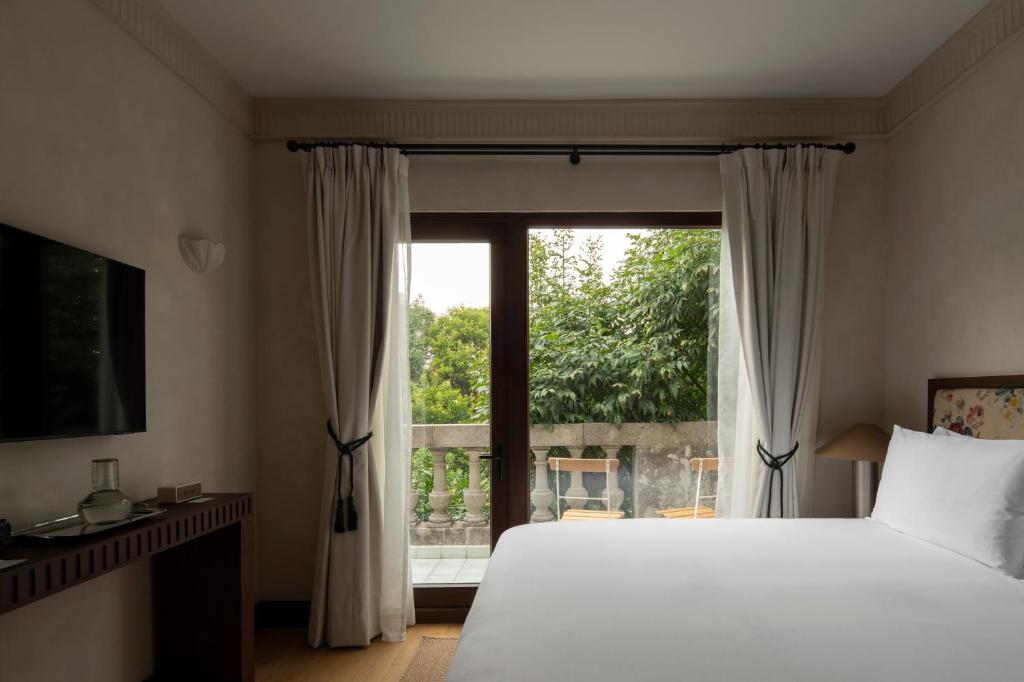
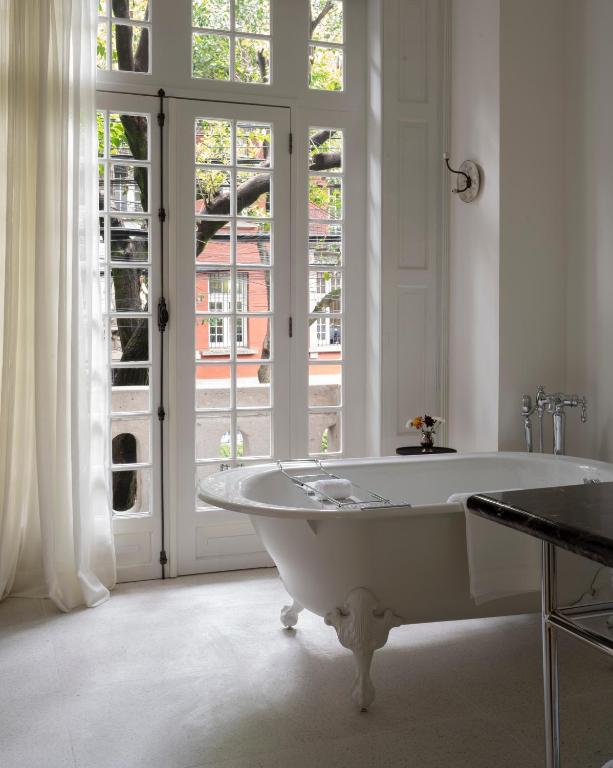
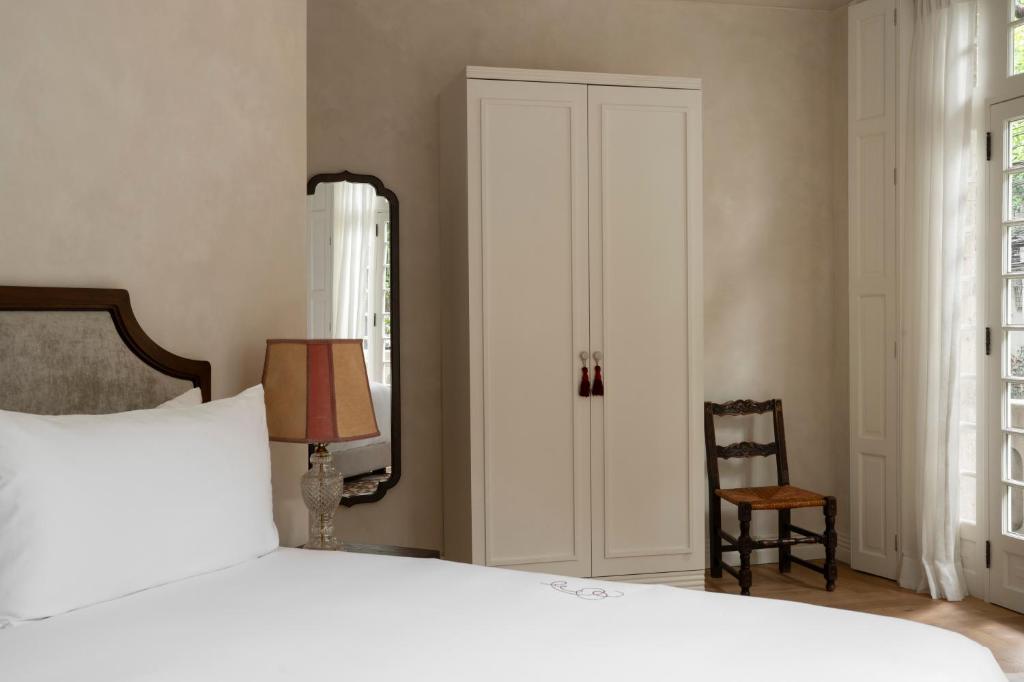
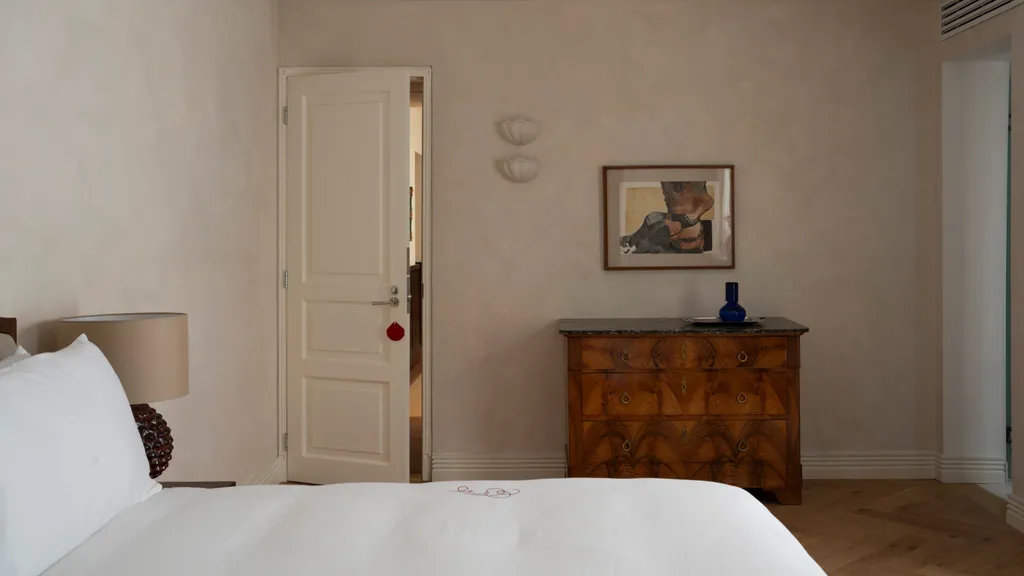
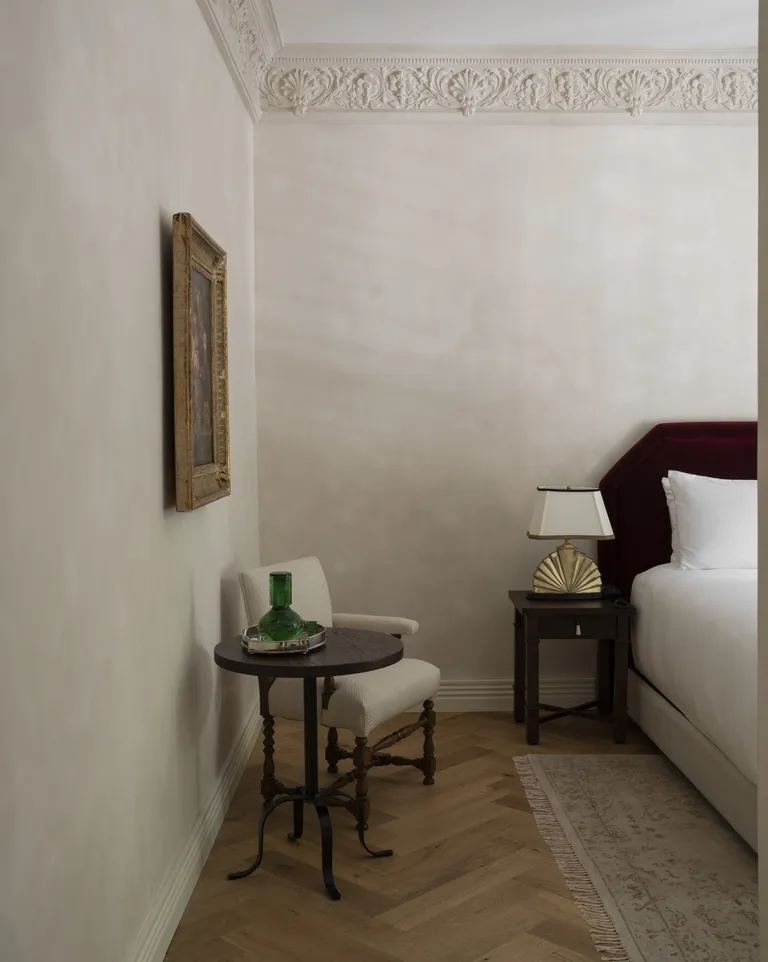
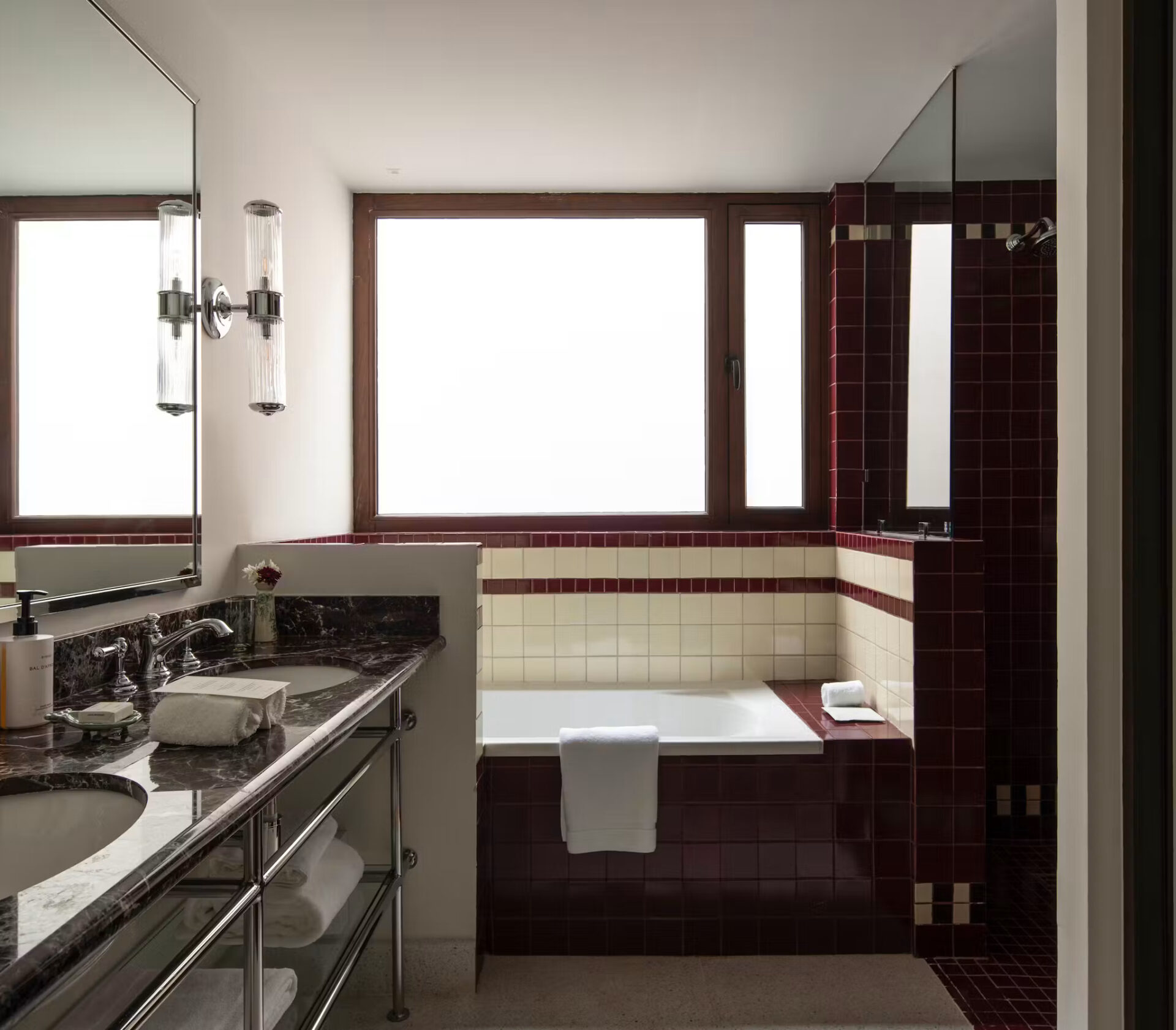
There are just 15 rooms and suites, individually designed but connected by the same romantic restraint. High ceilings and intricate coving sit above pale oak herringbone floors and handwoven rugs. Still-life paintings hang in worn gilded frames, oxblood velvet headboards crown generous beds and sculptural plaster sconces throw soft light across creamy walls. Bathrooms are equally considered. Rosso Levanto marble, glossy oxblood tiles, polished nickel fittings and Byredo Bal d’Afrique amenities add a more sensual layer, while some rooms feature freestanding claw-foot bathtubs. The two Patio Suites include restored stained glass by Ramón Sierra, whose restoration work has also included Mexico City’s Castillo de Chapultepec. For perhaps the most romantic expression of the house, Signature Suite 103 opens through tall doors onto a Juliet balcony beside a mature urapán tree—a small moment that perfectly captures El Cortés’ ability to make a large city feel unexpectedly intimate.
Lotti – Europe Through a Mexican Lens
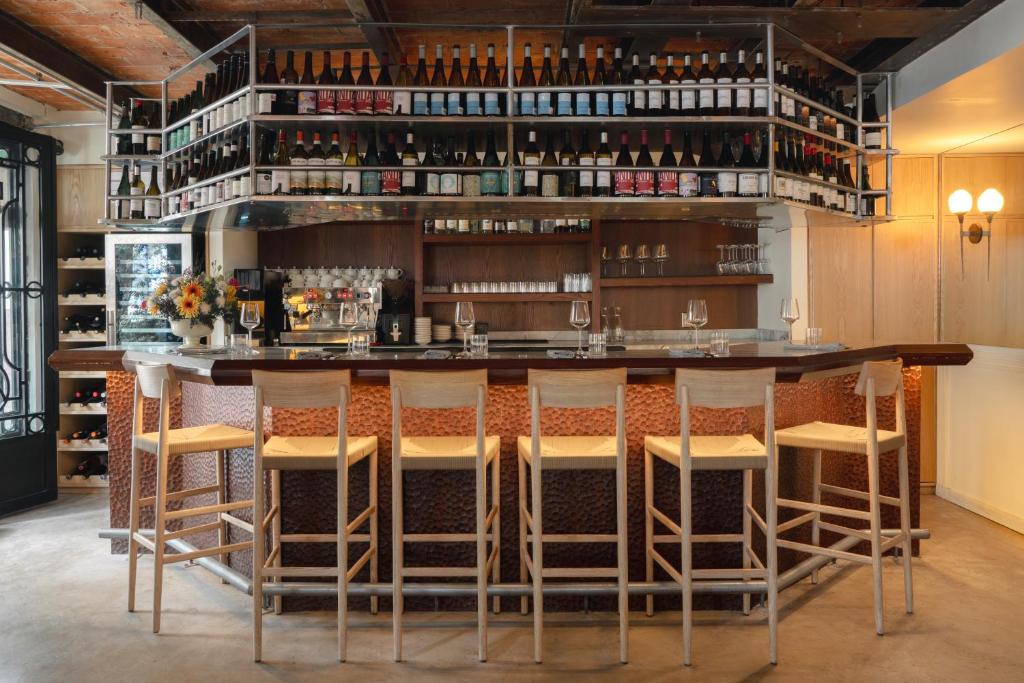
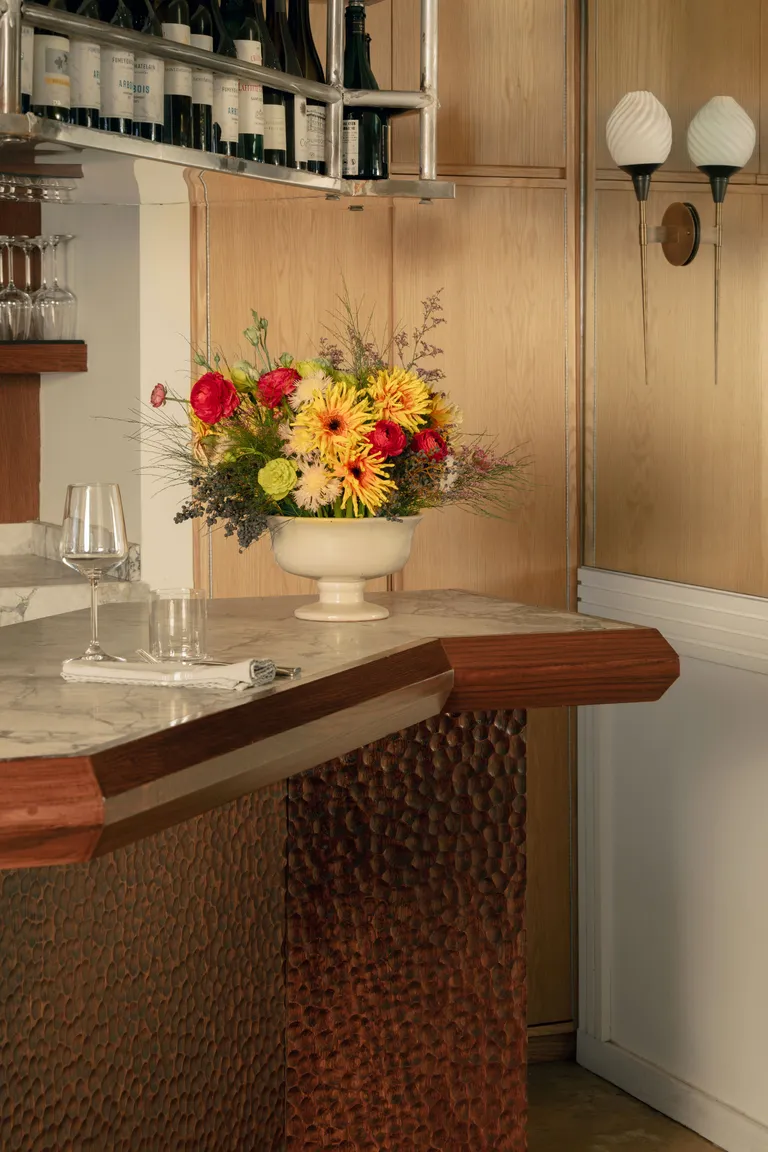
The ground-floor Lotti restaurant gives guests a very good reason not to immediately disappear into Mexico City’s formidable dining scene. Named after chef Luc Liebster’s grandmother, the restaurant takes European classics and filters them through Mexican produce, flavours and personal memory. Liebster, who was born in Switzerland, avoids the obvious idea of fusion in favour of something more instinctive: European technique rooted in what is available around him. Hasselback potatoes arrive with avocado mousse and trout roe; a shrimp tostada brings together pico de gallo, kaffir lime and hibiscus. The cocktail list follows the same cross-cultural confidence, with mezcal naturally playing a starring role. Designer Rosela Barraza created an equally layered setting around the food. Restored beams and exposed brick meet floral Talavera tiles, slender bronze lighting and exuberant botanical arrangements made from whatever she finds at the market that week. Lotti feels like a neighbourhood restaurant rather than a hotel dining room—which, in Roma Norte, may be the highest compliment possible.
The Creative Life of Calle Colima
Location is fundamental to El Cortés. Step outside and Calle Colima immediately delivers the version of Mexico City that makes Roma Norte so seductive: Art Nouveau mansions, independent galleries, cafés, restaurants, bookstores, ateliers and street vendors all occupying the same leafy neighbourhood. The Museo del Objeto is on the same street, while some of the capital’s most interesting food, art and design addresses are within walking distance. El Cortés encourages guests to explore this world through architecture walks, gallery visits, artisan workshops, bookstore discoveries, market tours and mezcal tastings. But the real pleasure may simply be walking out of the door with nowhere particular to go.
A New Kind of Mexico City Luxury
At a moment when Mexico City is attracting increasingly large international luxury hotels, El Cortés has chosen the opposite direction. It is independent, Mexican-owned and deliberately small. Personal service matters more than scale; restoration more than spectacle; individuality more than a recognisable luxury formula. Its membership of Relais & Châteaux fits that philosophy, but El Cortés ultimately succeeds because it feels so specifically its own. This is what a great boutique hotel should be: a beautiful building given another life, deeply connected to its neighbourhood and filled with enough personality that returning to it becomes part of experiencing the city itself.
Information
At a glance
Opened / Renovated
2026
Size matters
15 rooms & suites (22-43m2) (237-463 sq ft)
Interior design
owner designed, Rosela Barraz
Bathroom Amenities
Byredo
The Small Print
crafted for guests aged 12 and above

Featured in
Don't take our word for it

Handpicked worldwide
A carefully curated collection of exceptional boutique and design hotels across the globe.
Design with soul
Architecture, atmosphere and craftsmanship come together in stays with a clear identity.
Hidden, not hyped
Independent boutique hotels you rarely find on mainstream booking platforms.
Travel guidance
Personal recommendations and thoughtful support from people who actually know the places.