La Fiermontina Ocean – Larache, Morocco
Italian elegance meets contemporary Morocco on a wild Atlantic coast, where private pool suites, village houses and social purpose become part of the same story.
Why DNA Hotels Loves It
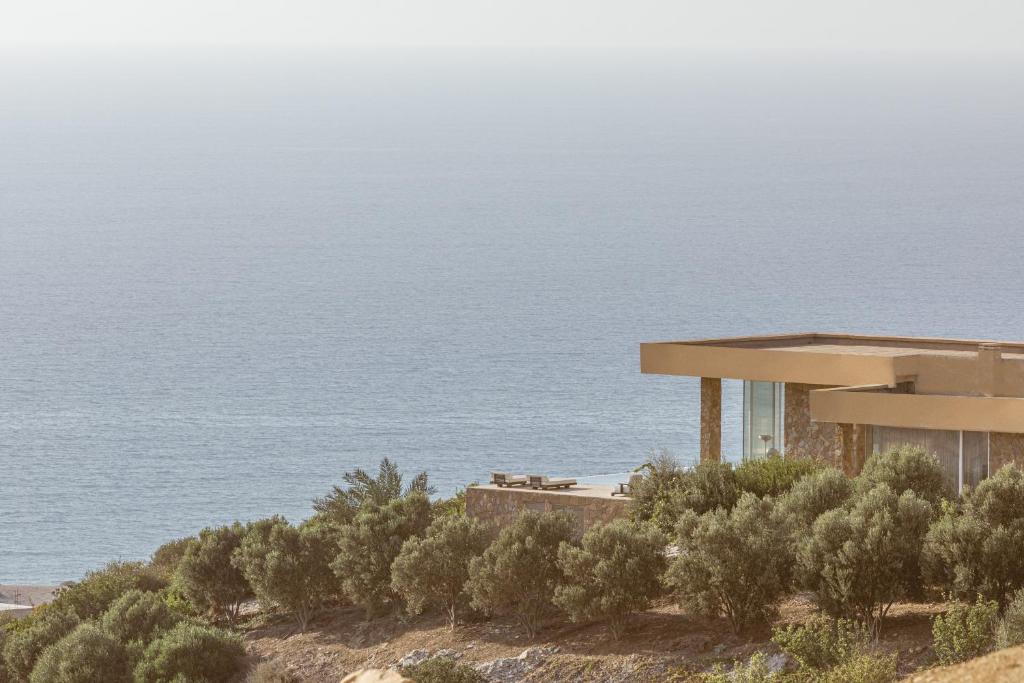
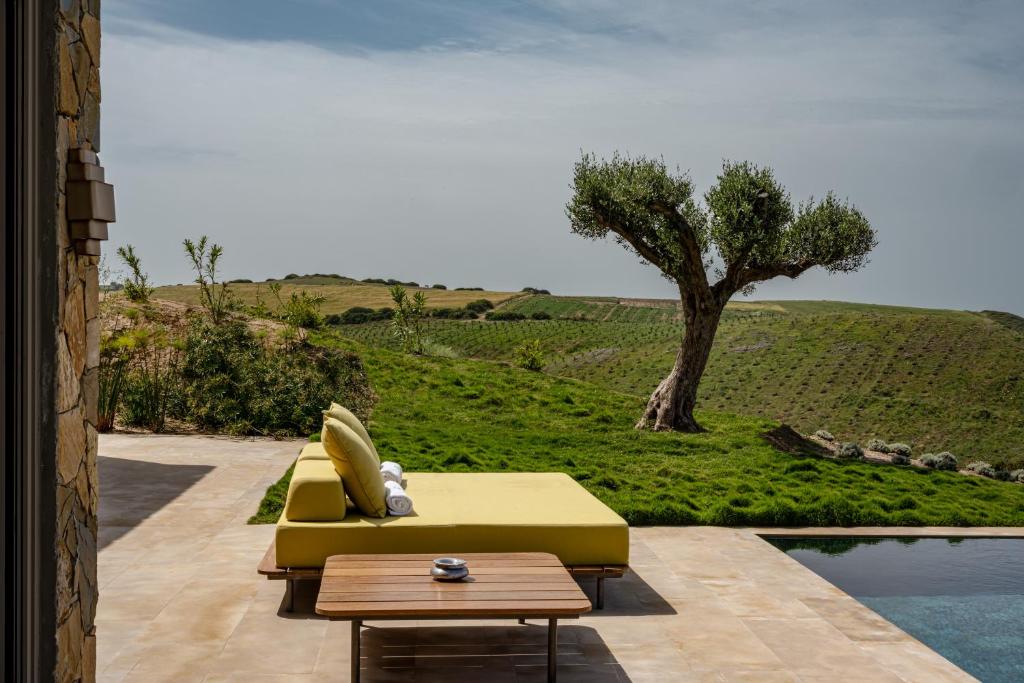
● A remarkable setting on Morocco’s largely untouched Atlantic Côte Sauvage, surrounded by protected dunes, olive groves and open countryside near Larache.
● Designed by Charles-Philippe Mommeja and Christophe Vialleton of Laboratoire Design, blending contemporary European pieces with Moroccan craftsmanship without resorting to decorative clichés.
● More than an eco-retreat: the neighbouring village of Dchier is woven into the hotel experience, creating employment, preserving local traditions and making community part of the hospitality model.
From Puglia to Morocco
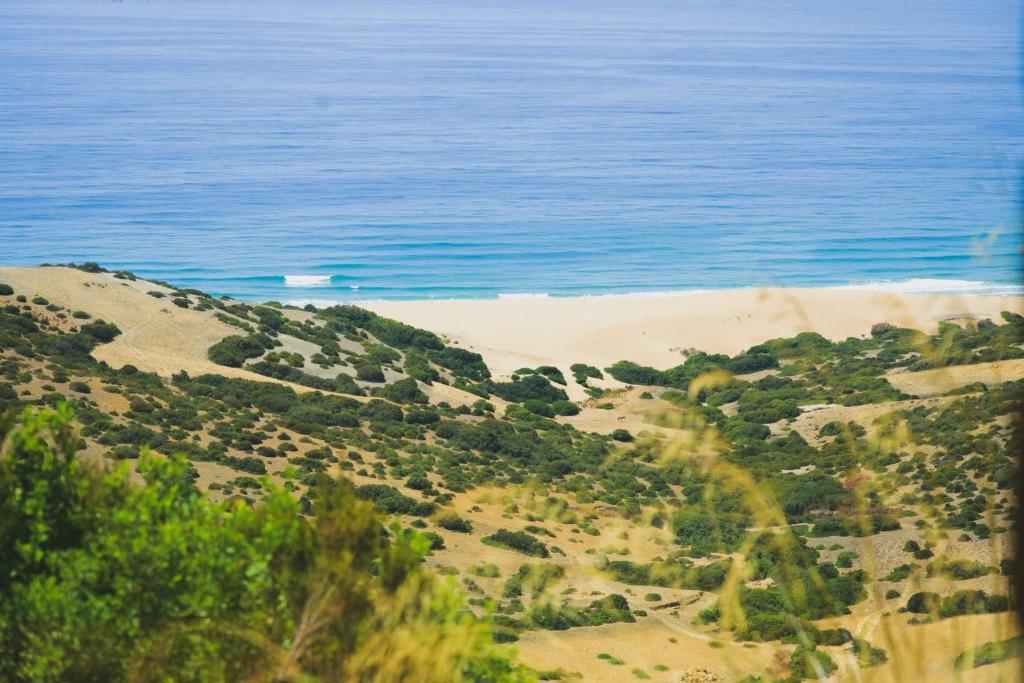
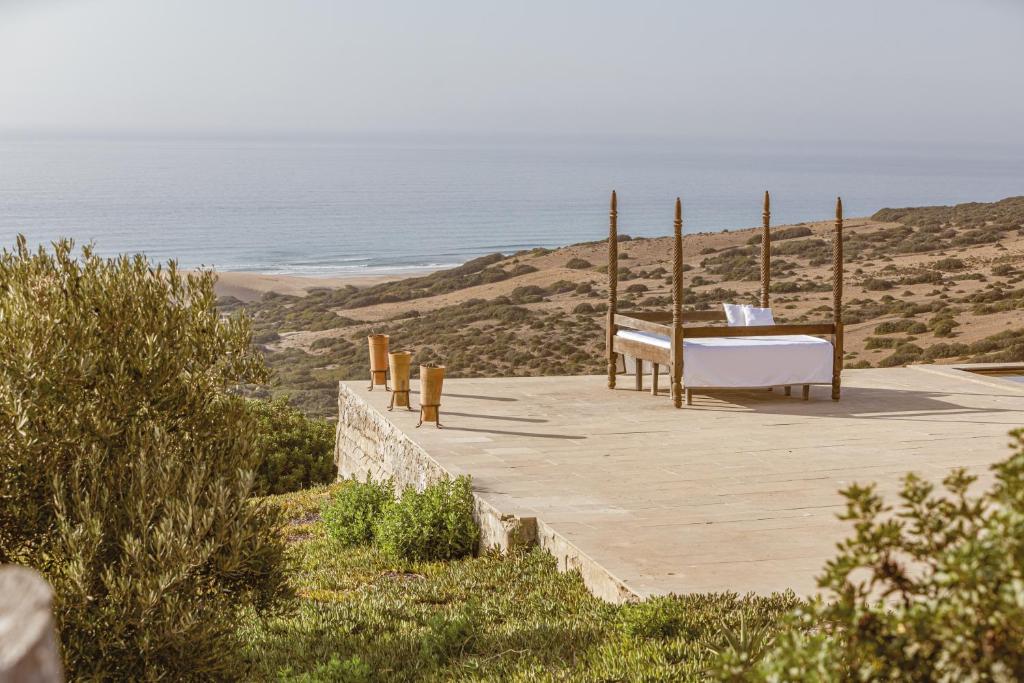
La Fiermontina has always been about more than beautiful hotels. The collection began in Lecce with a deeply personal family story built around artist and muse Antonia Fiermonte. At La Fiermontina Ocean, that story crosses the Mediterranean to another part of the family’s heritage: Morocco. Set in a protected natural landscape near Larache, roughly an hour south of Tangier, the hotel occupies rolling countryside descending towards a seemingly endless Atlantic beach. There are dunes, olive groves, cork trees and farmland — and very little of the development associated with Morocco’s better-known coastal resorts. It feels remote because it genuinely is. Yet what makes La Fiermontina Ocean particularly interesting is that the hotel has not simply landed in this landscape. It has deliberately connected itself to the people already living here.
A Contemporary Morocco
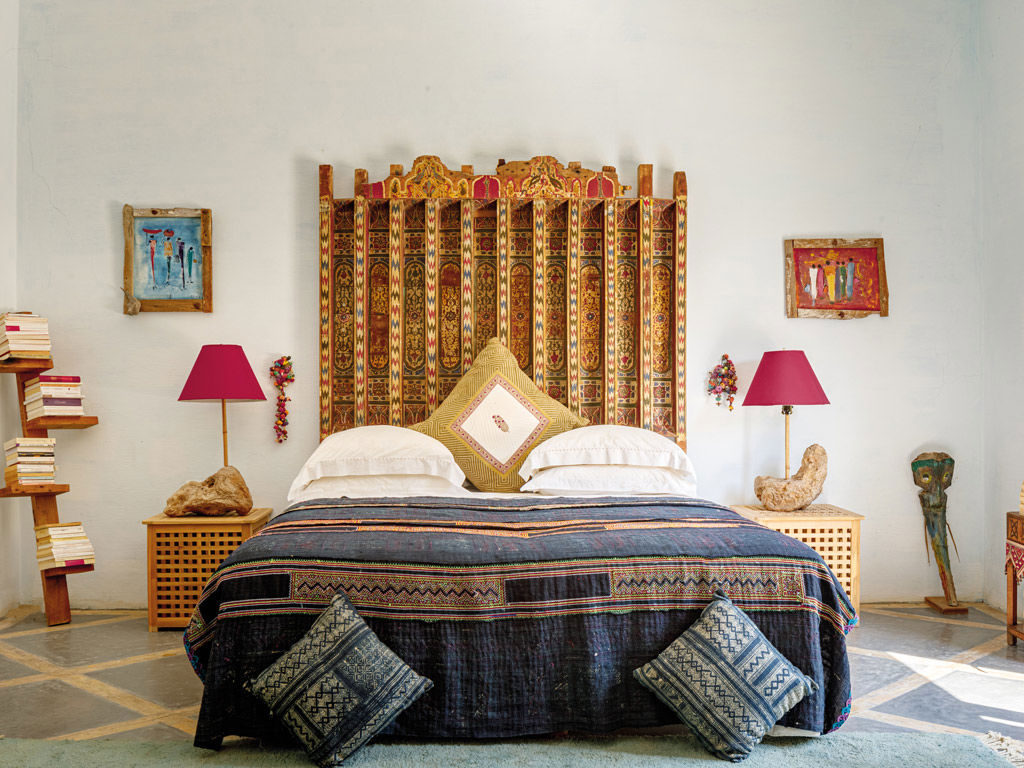
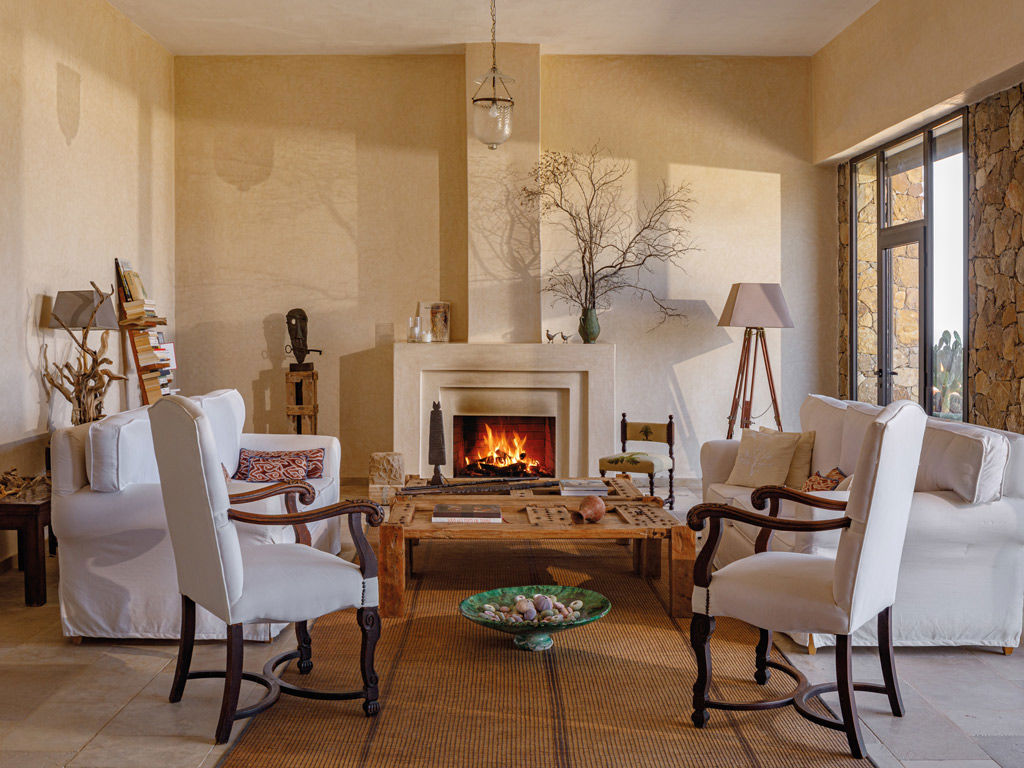
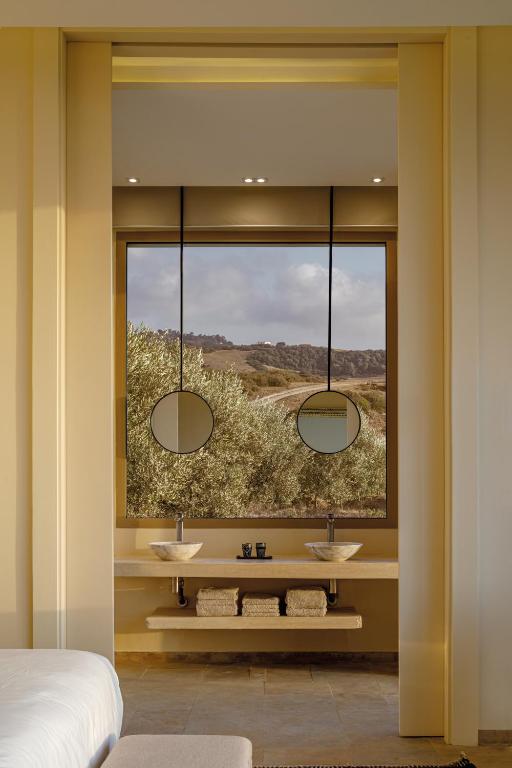
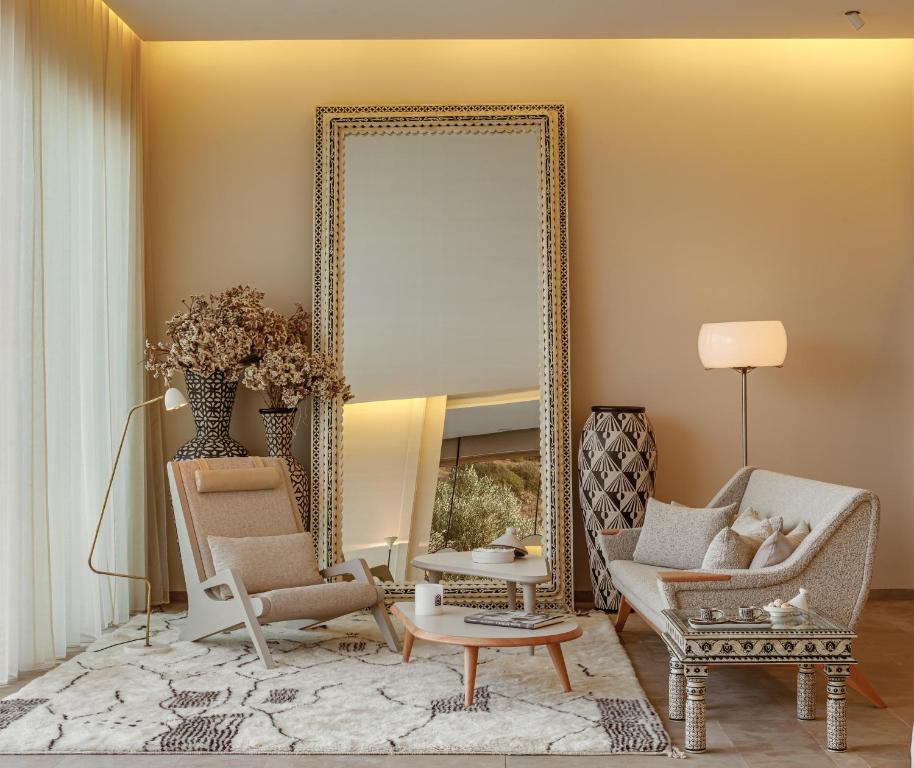
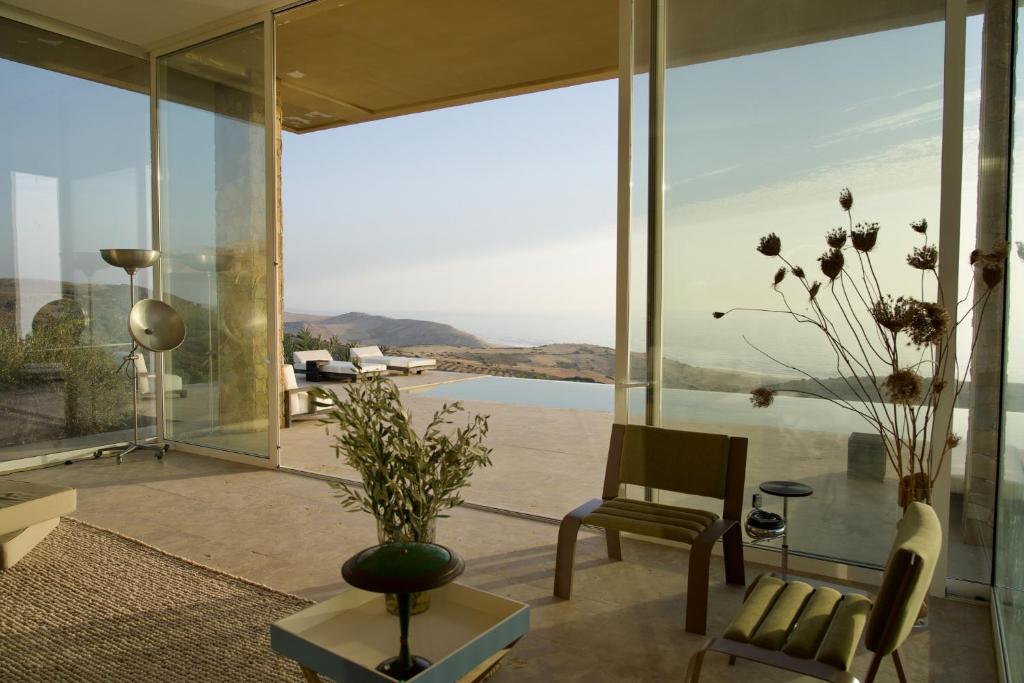
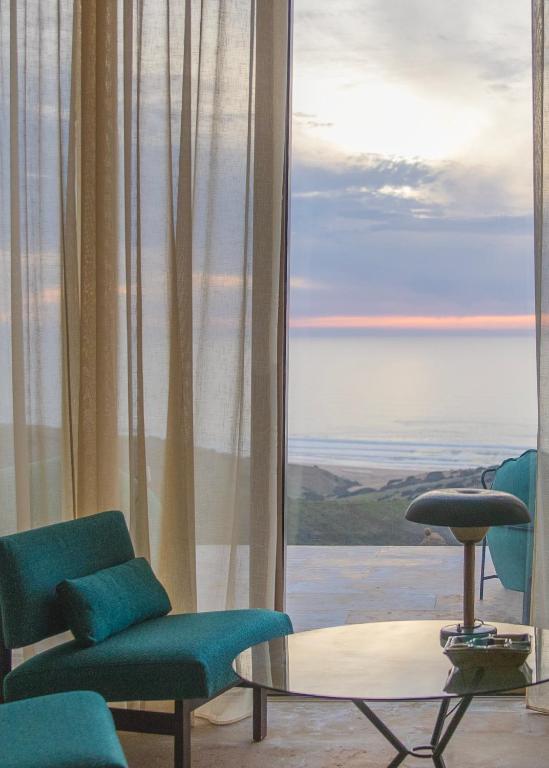
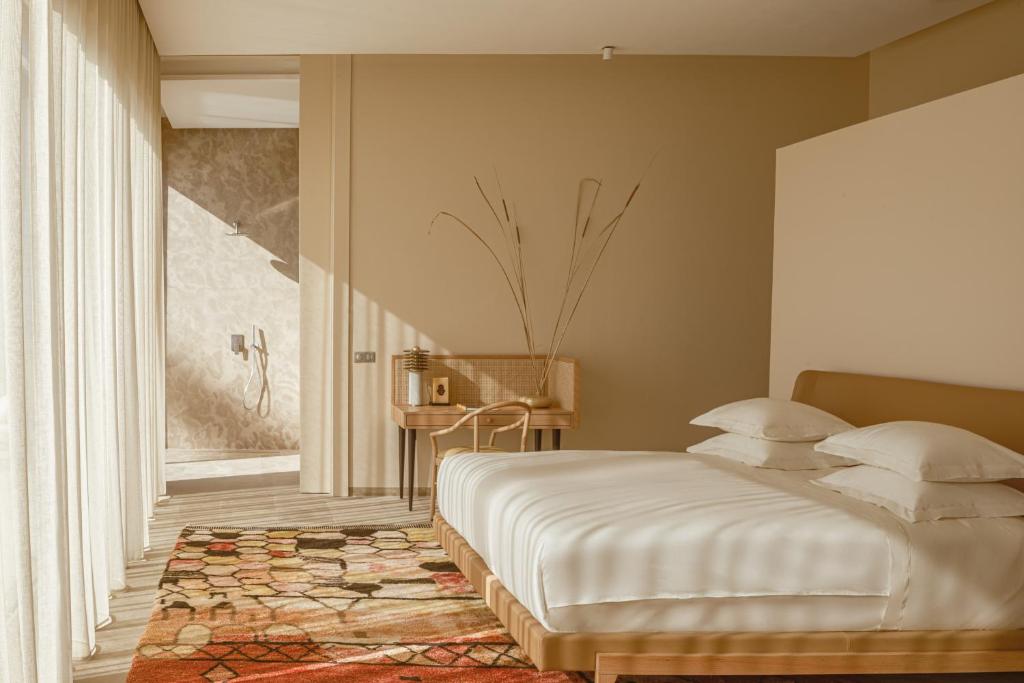
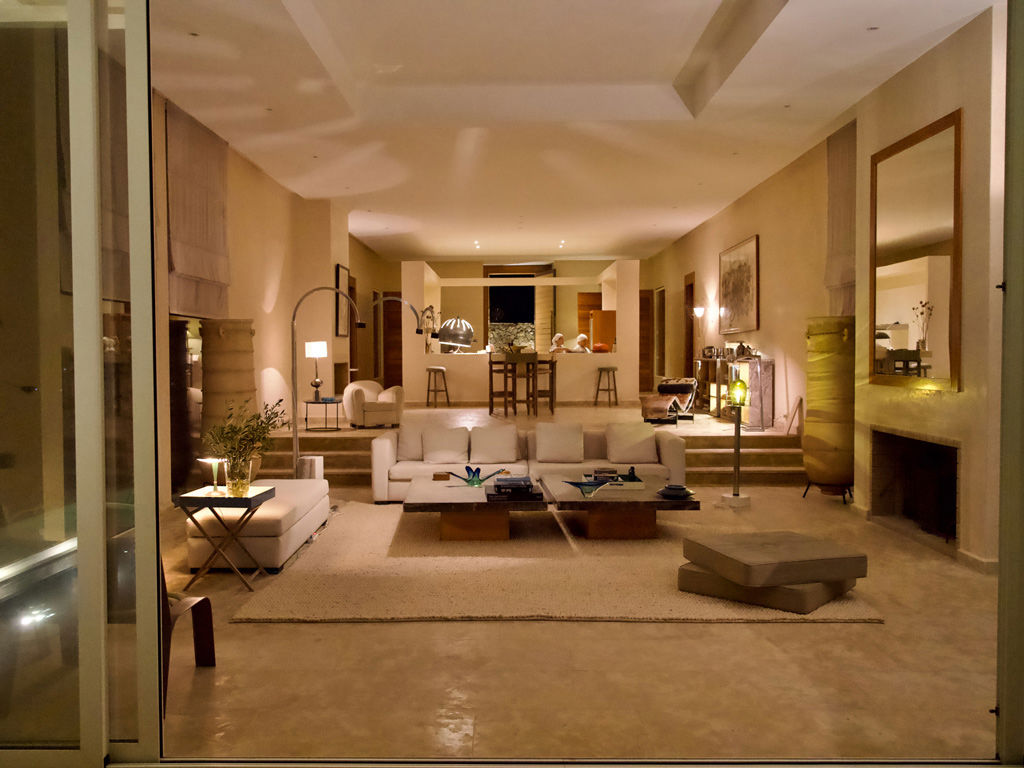
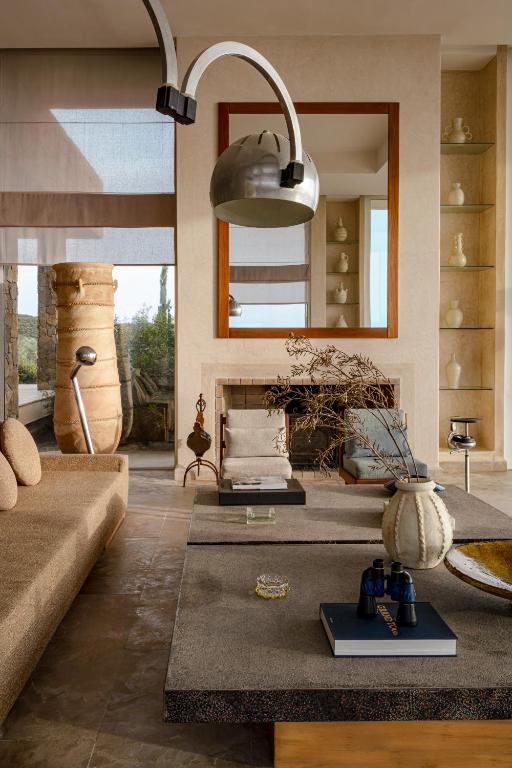
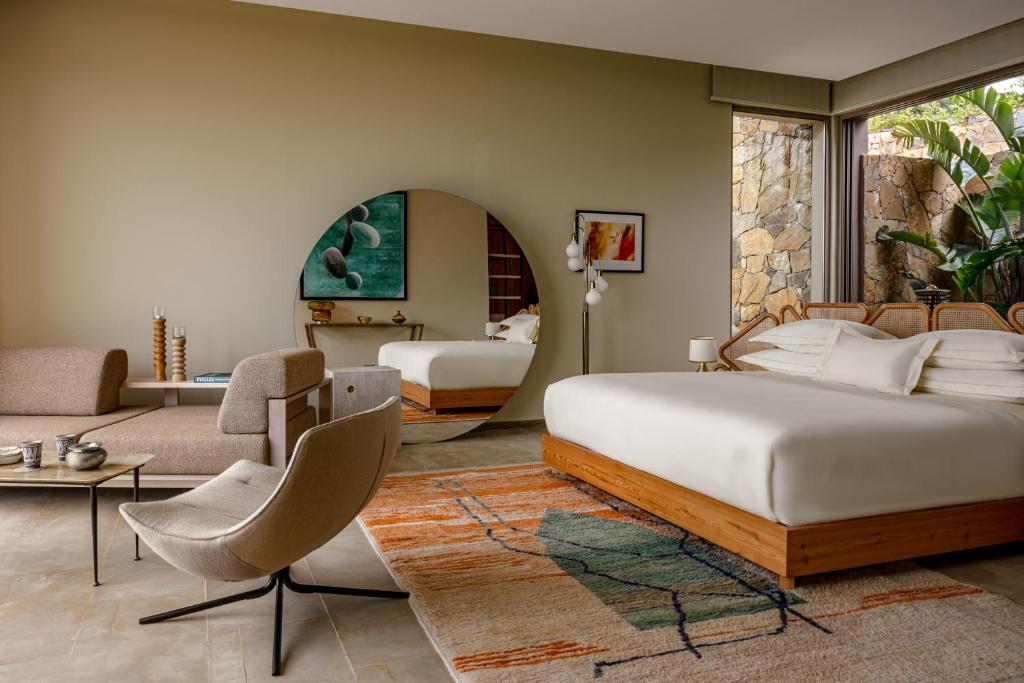
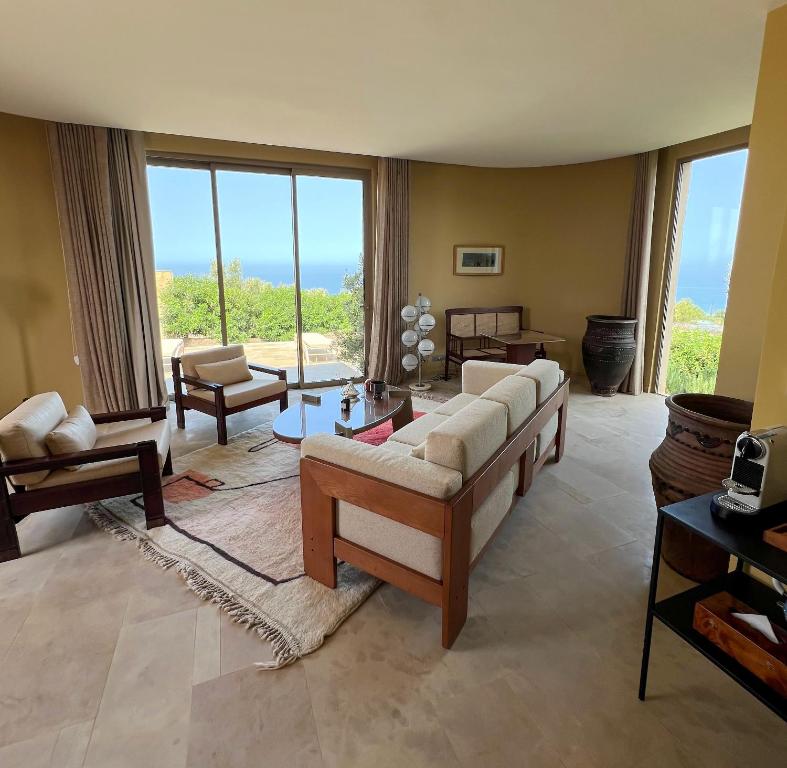
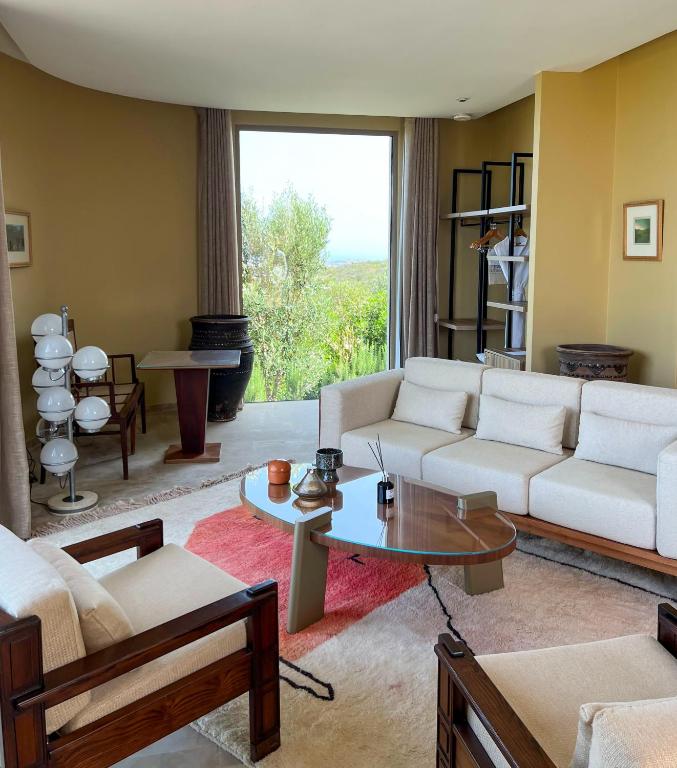
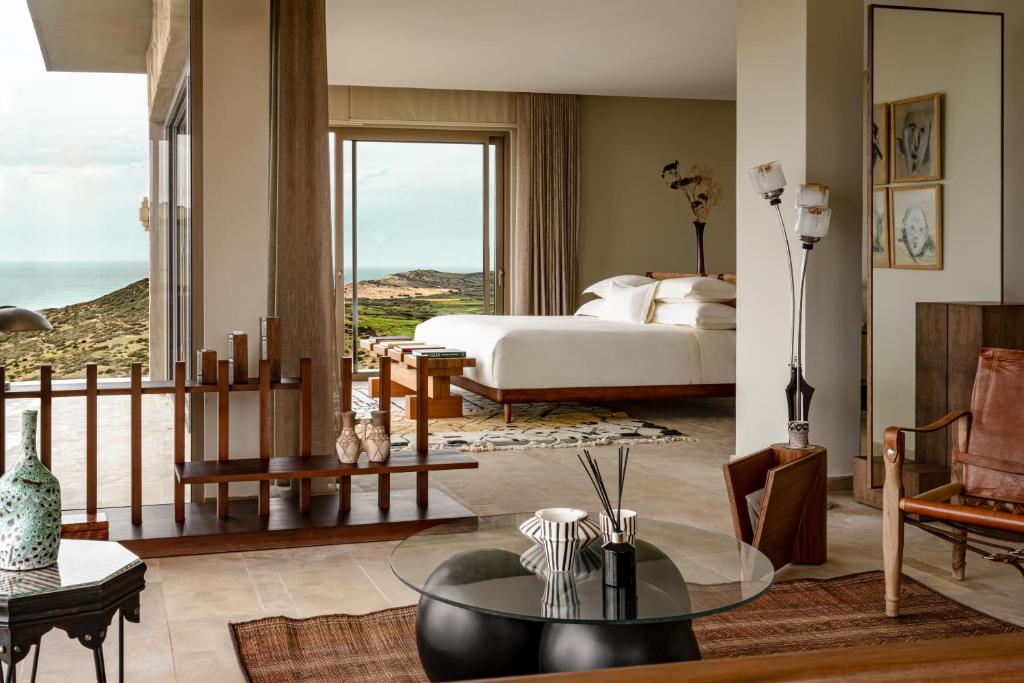
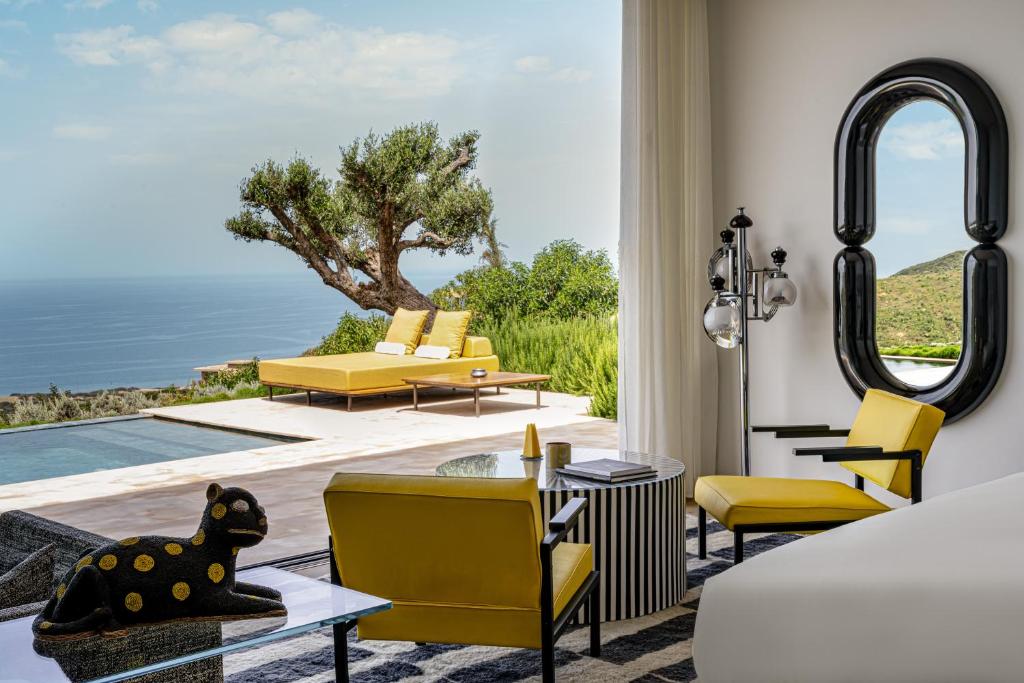
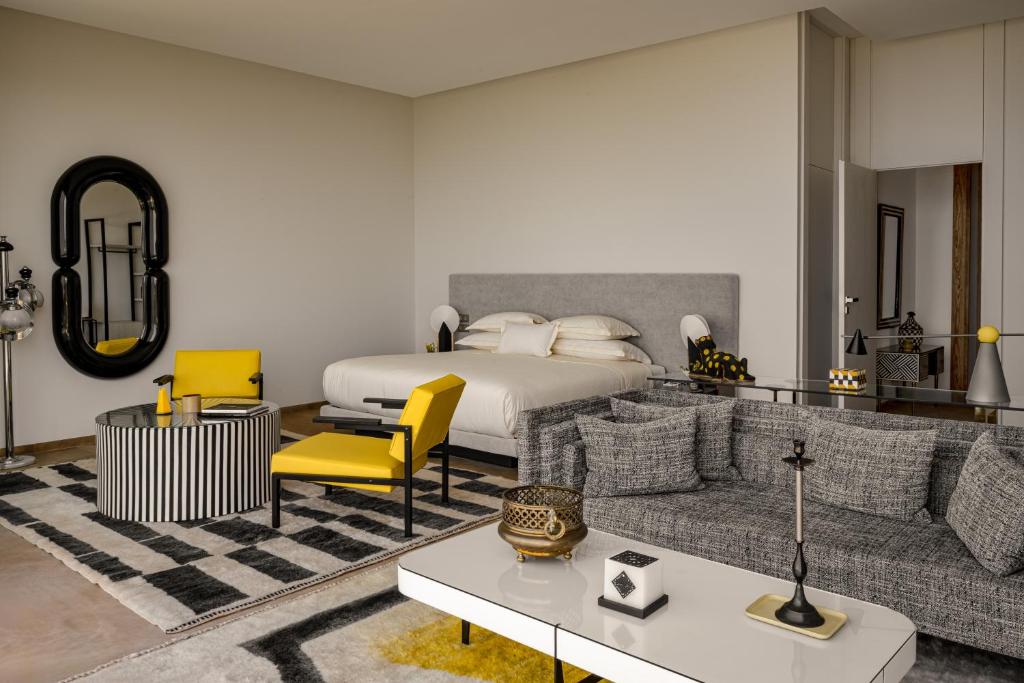
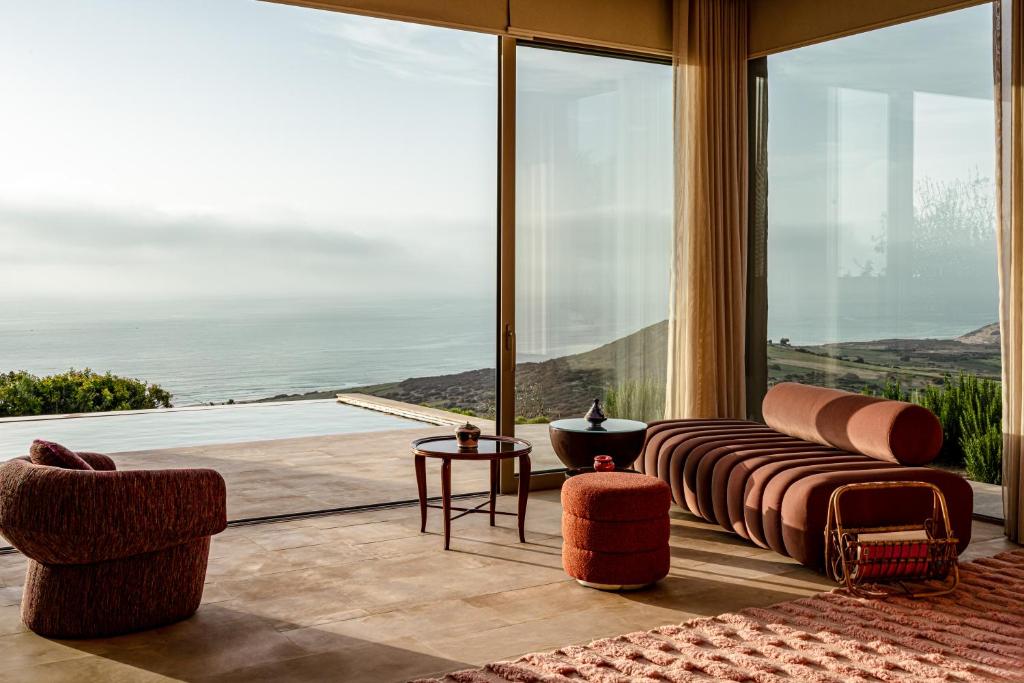
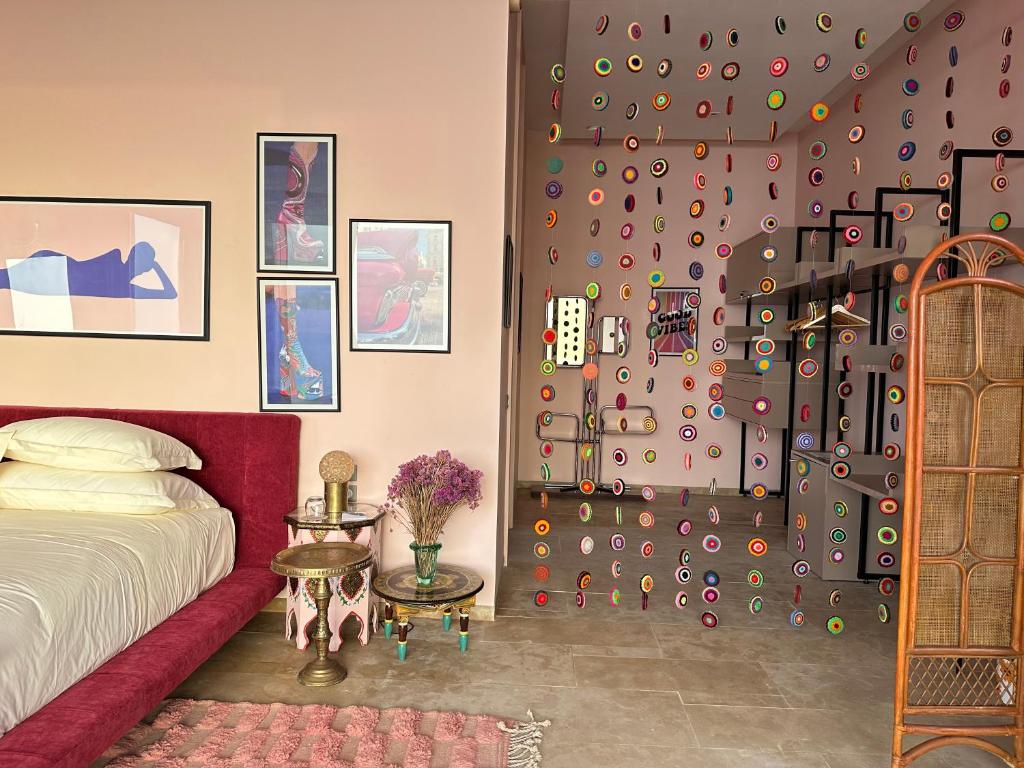
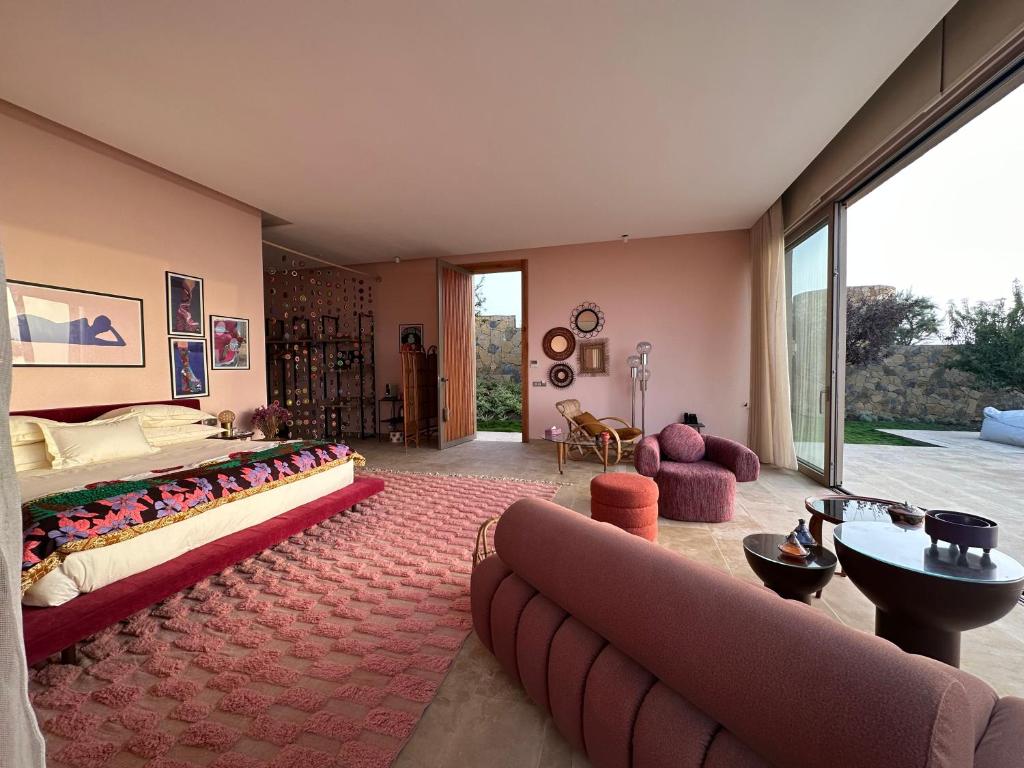
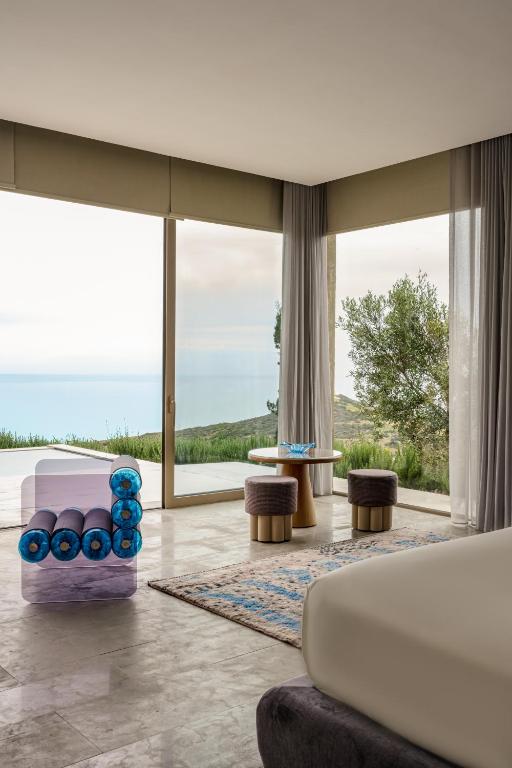
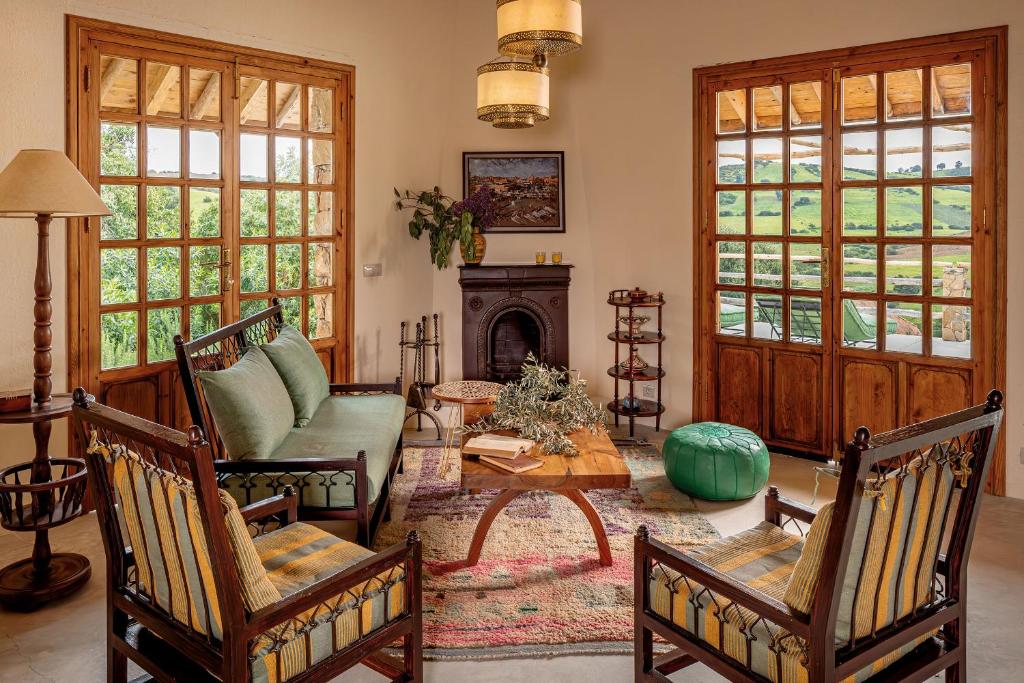
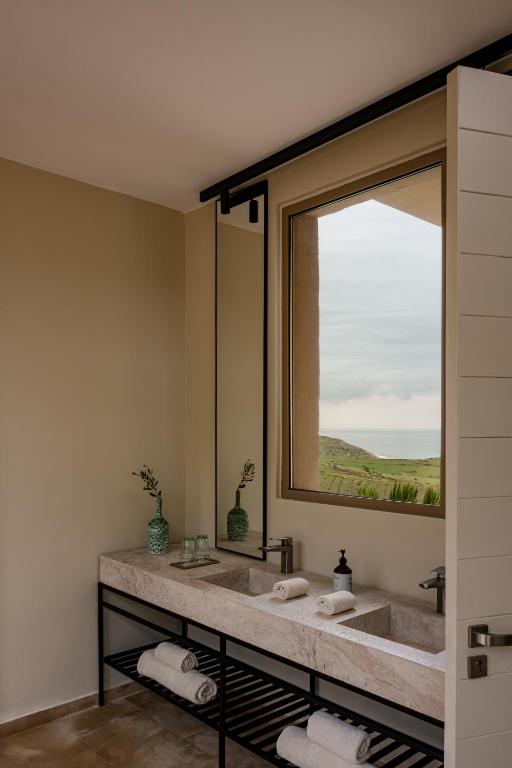
For the interiors, designers Charles-Philippe Mommeja and Christophe Vialleton of Rabat-based Laboratoire Design were given an intriguing brief: Italian charm, French elegance and Moroccan colour. Their response avoids the familiar shorthand of Moroccan hotel design. Instead of filling rooms with decorative arches and elaborate pattern, they created calm plastered spaces with sand-coloured Taza stone, natural materials and huge expanses of glass opening towards the Atlantic. Contemporary furniture is paired with Berber rugs, Atlas Mountain textiles, Moroccan ceramics and sculptural objects. Mid-century European lighting adds another unexpected layer. The Moroccan references are unmistakable, but never theatrical. This is Morocco interpreted as a living contemporary culture rather than a decorative theme.
Private Pools Facing the Atlantic
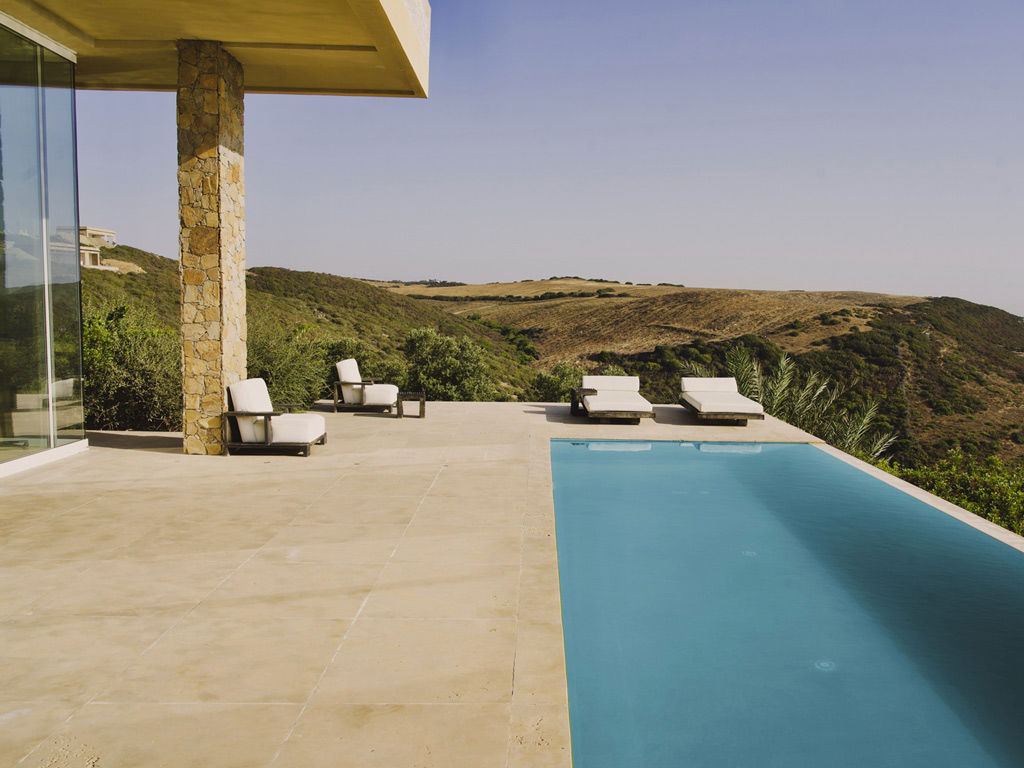
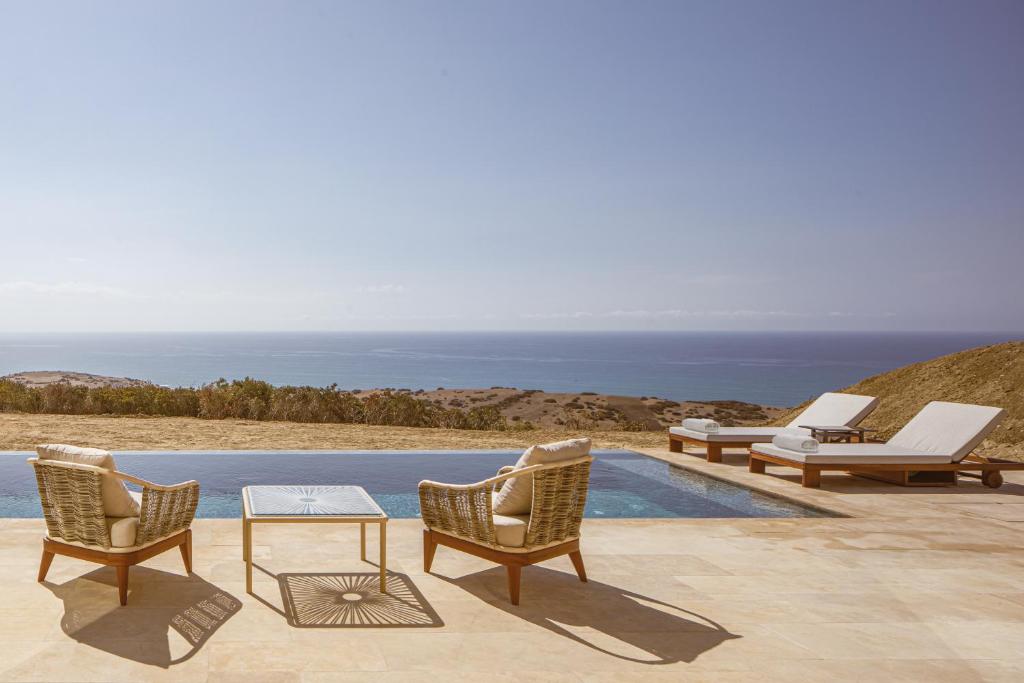
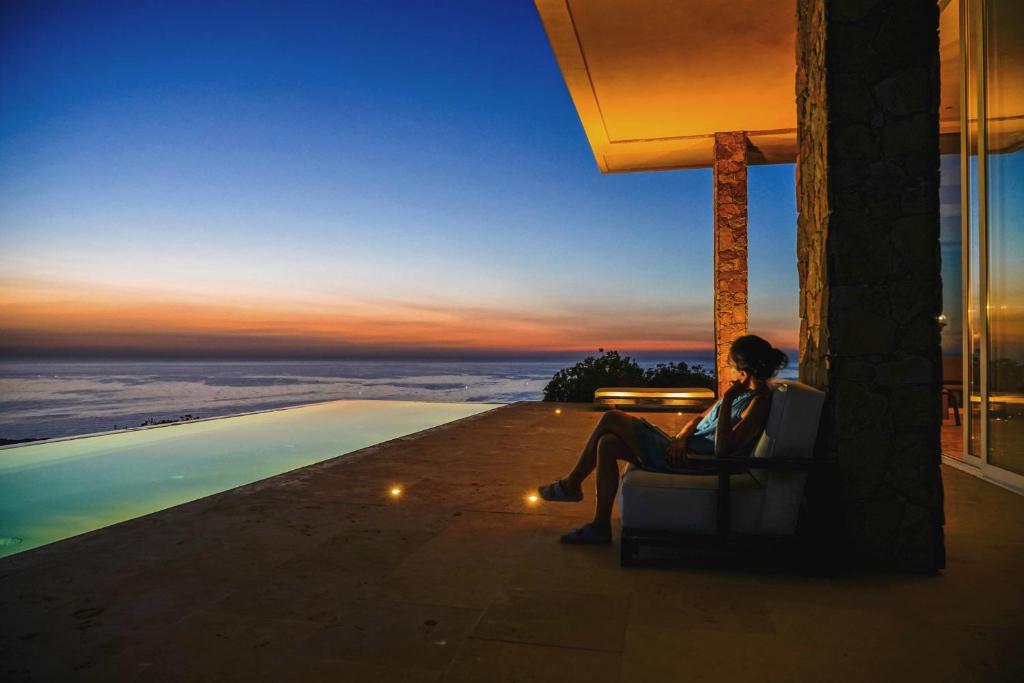
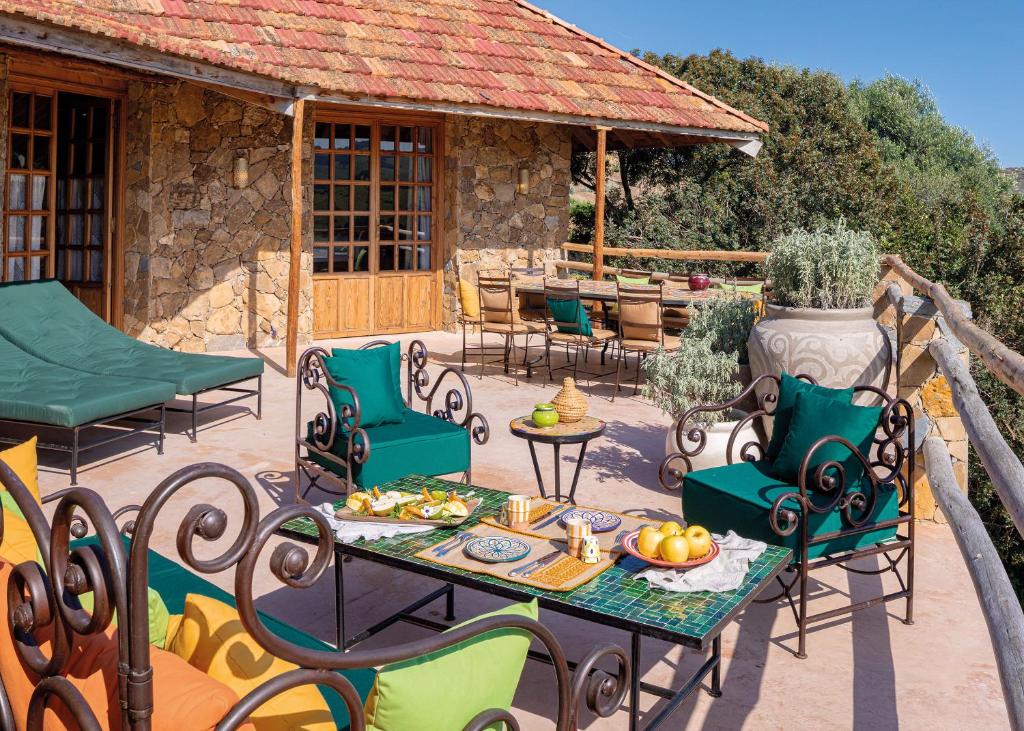
The contemporary part of the retreat is spread lightly across the hillside. Its 11 Pool Suites sit within private gardens, each positioned to preserve a feeling of seclusion while opening towards the horizon. Floor-to-ceiling glazing allows the interiors to dissolve into terraces, private pools and the surrounding landscape. Outdoor showers are screened by vegetation. Low stone walls echo the colours of the earth. Inside, the palette remains deliberately quiet so that ocean, sky and landscape provide most of the drama. For more space, there are also two Pool Villas. The greatest luxury here isn’t marble or elaborate decoration. It is distance. Space between buildings. Space between guests. And seemingly endless space between your terrace and the Atlantic.
The Other Fiermontina Is a Village
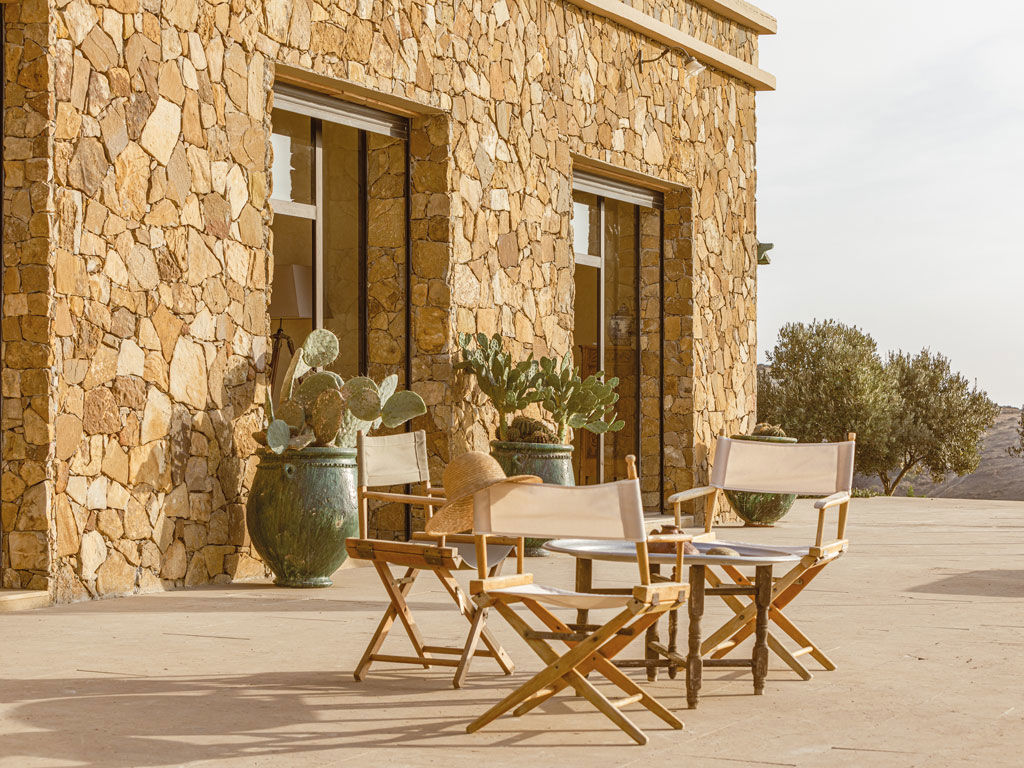
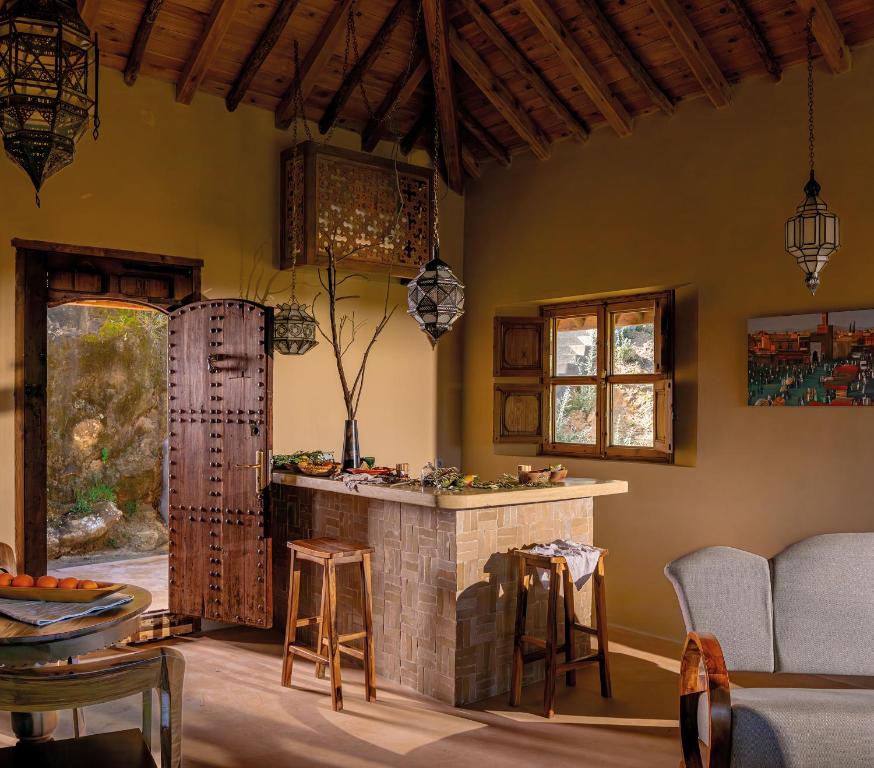
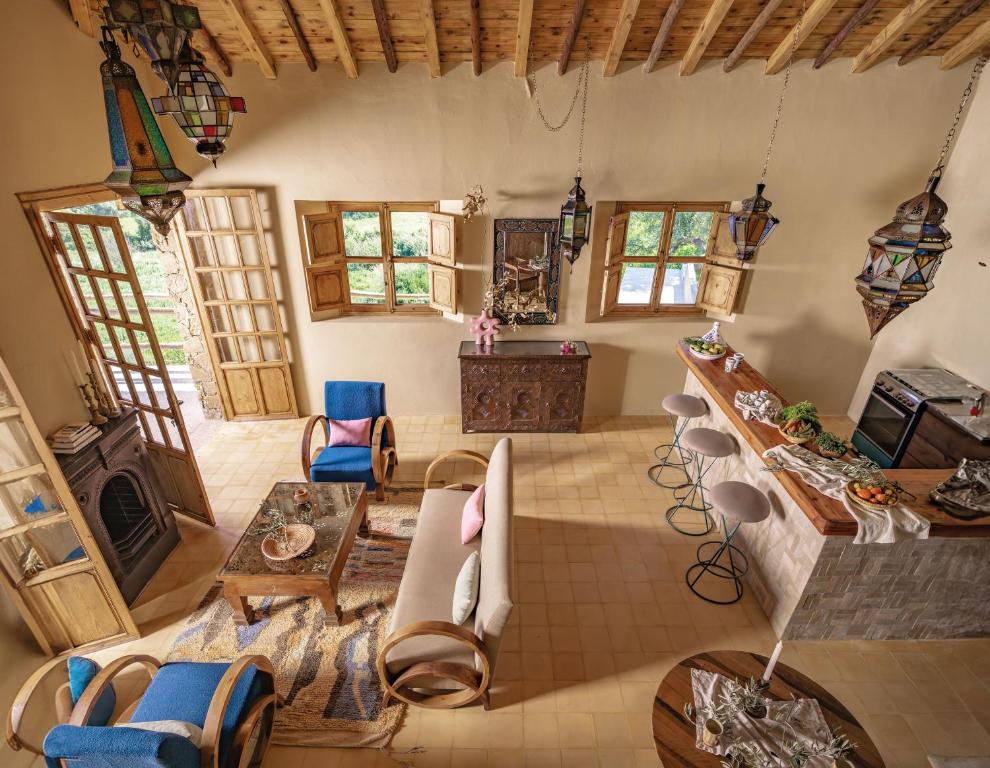
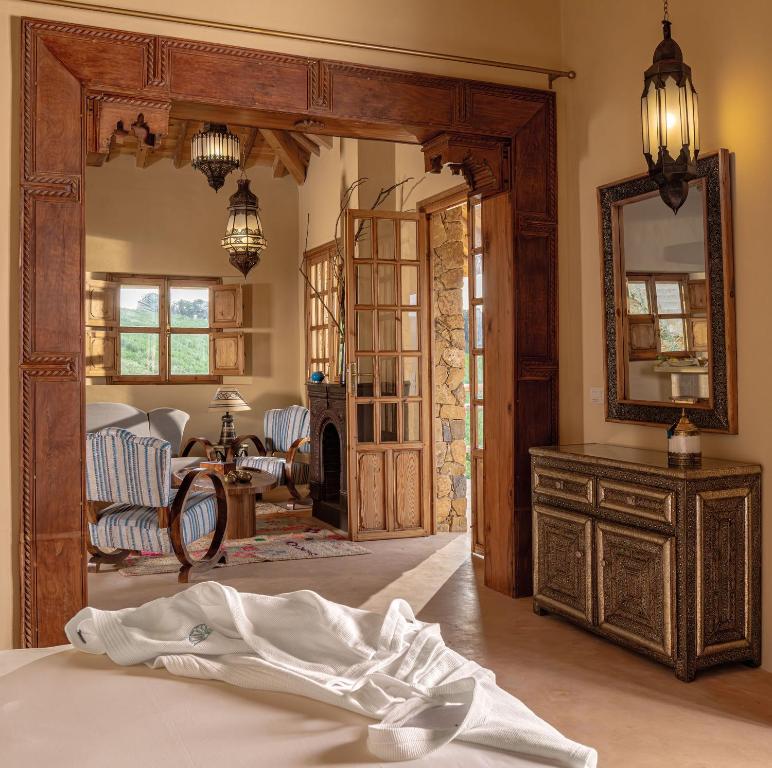
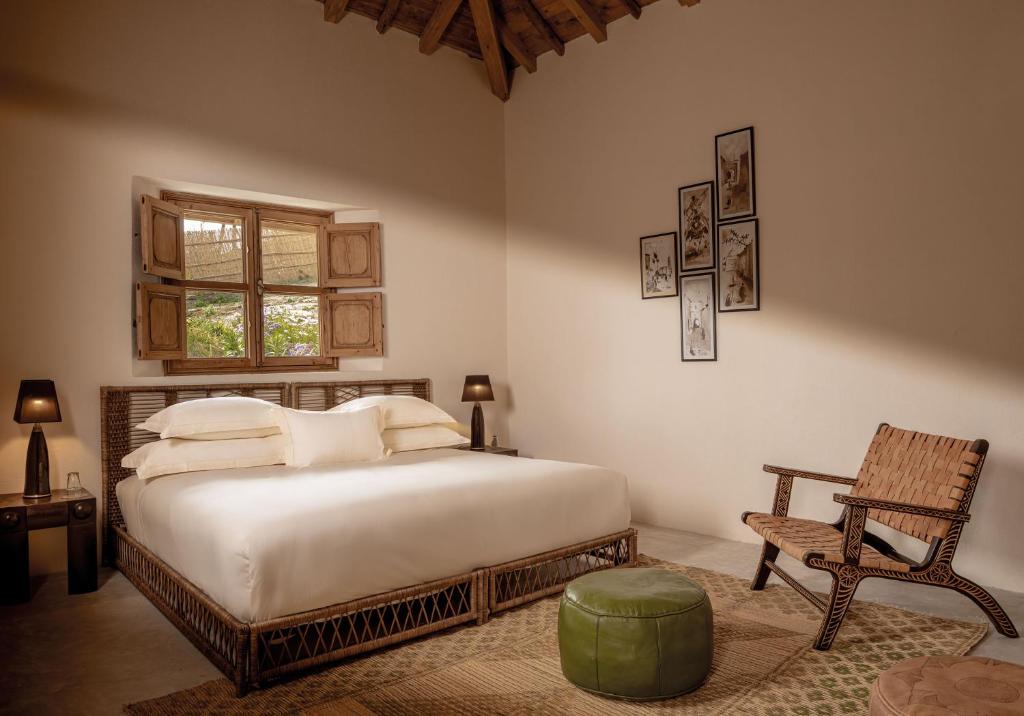
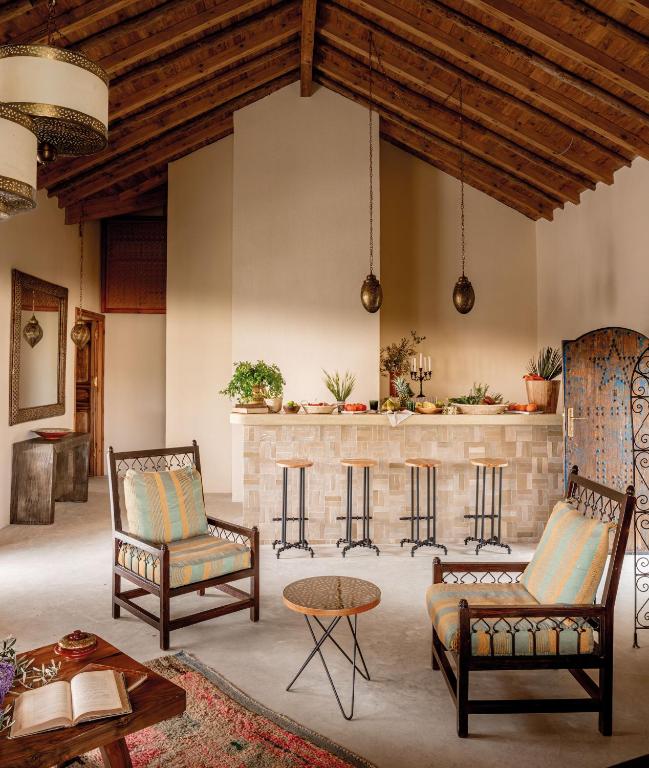
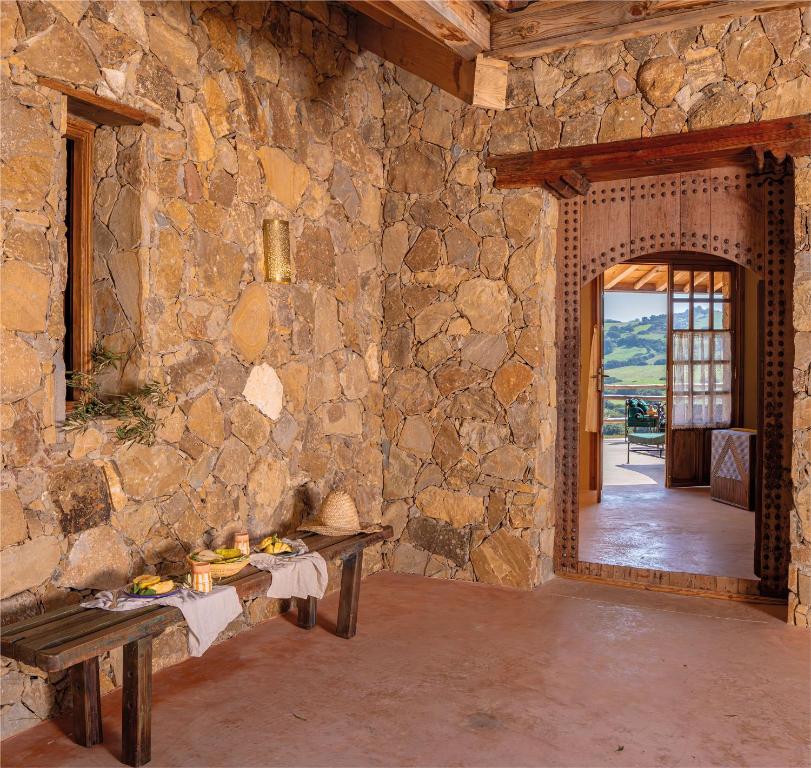
Then the hotel changes completely. Nearby Dchier isn’t a recreated resort village but an existing rural community. Here, four traditional stone houses have been restored as guest accommodation using local architectural language and craftsmanship. Vaulted ceilings, small windows, woven rugs, antique furniture and traditional textiles replace the glass walls and contemporary openness of the Pool Suites. The village is also home to the hotel’s hammam and Café Maure, where tea and traditional Moroccan breakfasts become part of a much slower rhythm of daily life. Guests might eat freshly baked bread, bissara made from fava beans, local cheese, honey and amlou in a village courtyard rather than behind the carefully controlled boundaries of a conventional resort. The contrast between the two ways of staying is one of La Fiermontina Ocean’s strongest ideas. You can experience polished contemporary architecture overlooking the Atlantic — or sleep within the cultural landscape that inspired it.
Design with a Social Purpose
The relationship with Dchier goes considerably deeper than guest experiences. Working with Fondation Orient-Occident, the Fiermontina family has used the hotel as part of a wider social-development project intended to create employment and opportunities in an area affected by migration towards Morocco’s cities and Europe. Staff are recruited and trained locally. Infrastructure has been supported in surrounding communities, while local agriculture, crafts and knowledge become part of the hotel’s economy. That gives the much-used phrase sustainable tourism unusually tangible meaning here. Sustainability isn’t simply about what happens inside the hotel. It is about whether tourism can help make staying in this landscape economically possible for the people who already call it home.
Tagine Meets Puglia
The cultural conversation continues at the table. The restaurant moves confidently between Morocco and southern Italy, rather than forcing the two cuisines into artificial fusion. Moroccan tagines can sit alongside fresh pasta; Atlantic fish might be prepared with local spices one evening and given a distinctly Italian treatment the next. Much of the produce comes from farmers in the surrounding countryside, while breakfasts embrace Moroccan traditions: flatbreads, crêpes, homemade jams, honey, fava bean purée and mint tea. It makes sense. La Fiermontina Ocean isn’t pretending its Italian heritage disappeared when the family crossed the Mediterranean. It celebrates both sides.
Down to the Wild Atlantic
Eventually, everything leads towards the ocean. A journey through the reserve brings guests down to the hotel’s beach club, discreetly positioned among the dunes. Bamboo, timber, fishing-creel lamps and billowing white fabric keep the architecture intentionally lightweight. Beyond it lies the real attraction. Beach. Not manicured resort beach, but an enormous sweep of Atlantic sand where dunes, water and sky dominate the horizon. It is difficult to manufacture that kind of luxury.
Why It Works
La Fiermontina Ocean could easily have become another beautiful remote resort with private pools and spectacular views. Its ambition is much more interesting. The hotel connects Italian family history, contemporary Moroccan design, protected landscape and the future of a rural community into one hospitality project. The modern Pool Suites and traditional houses of Dchier aren’t competing ideas; together they explain what this place is trying to achieve. That approach was recognised with the Michelin Local Gateway Award 2025, celebrating hotels that create an exceptional connection between guests and their destination. And that may be the best description of La Fiermontina Ocean. The Atlantic provides the spectacle. The design provides the calm. But Dchier gives the hotel its soul.