La Minerva, Rome
The Legendary Orient Express Hotel Arrives in Rome
Why DNA Hotels Loves It
● The spectacular debut of the Orient Express hotel brand, transforming a seventeenth-century Roman palazzo into one of Europe’s most anticipated luxury hotels.
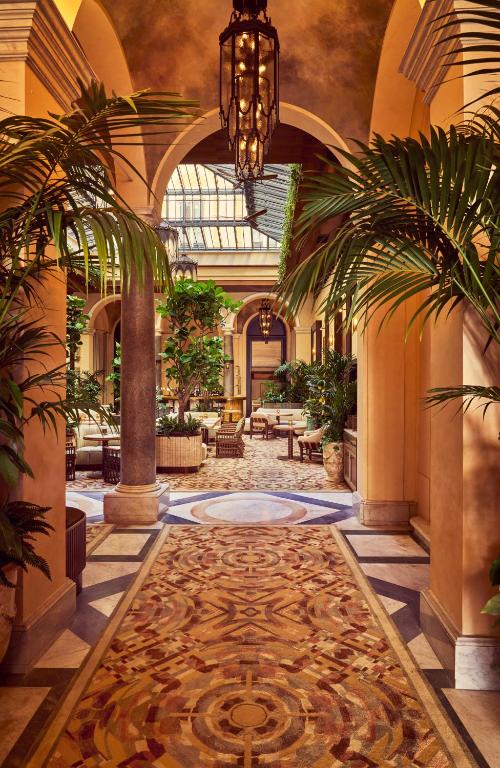
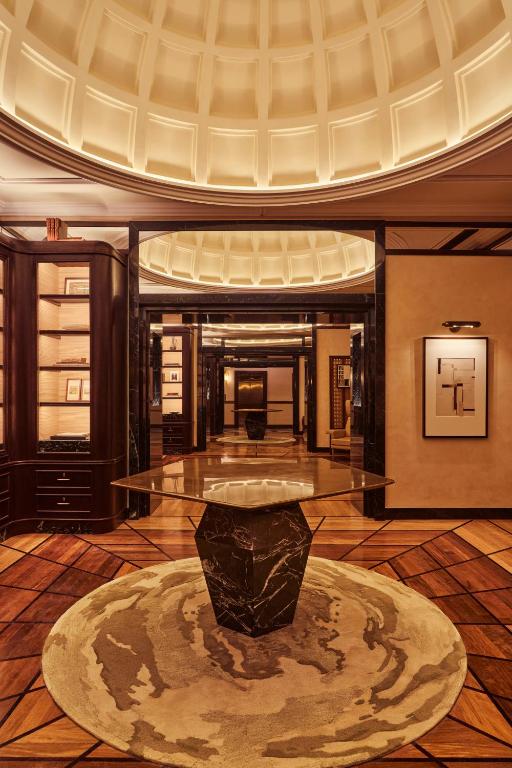
● Magnificent interiors by Hugo Toro, where Roman classicism, Art Deco glamour, contemporary craftsmanship, and bespoke artistry create an atmosphere of timeless sophistication.
● A beautifully layered hospitality experience that celebrates the romance of travel, exceptional design, and one of Rome’s most extraordinary historic settings beside the Pantheon.
A Roman Legend Reawakened
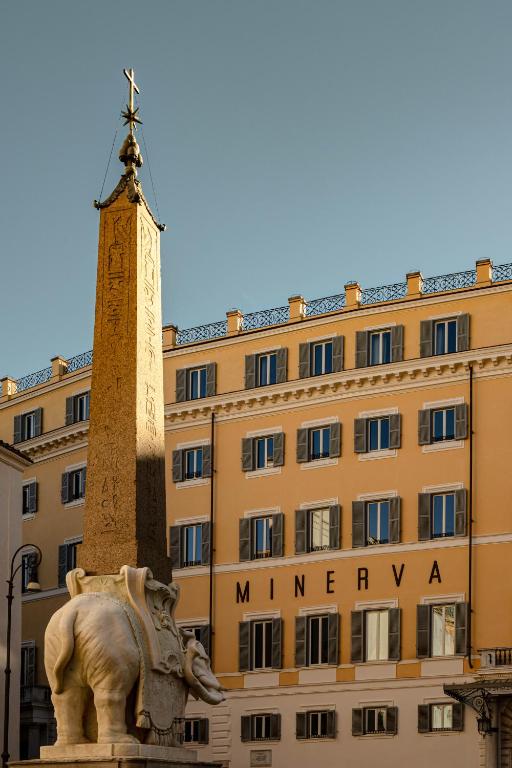
Just a few steps from the Pantheon, La Minerva marks the beginning of an entirely new chapter in luxury hospitality. Occupying the historic Palazzo Fonseca, a landmark whose story stretches back to the seventeenth century, the hotel also carries the distinction of becoming the very first property under the legendary Orient Express Hotels banner. Rather than simply restoring the building, the project reimagines it for a new generation of travellers. Its historic architecture remains proudly intact, while every intervention has been carefully conceived to honour both the grandeur of Rome and the timeless elegance associated with one of the world’s most iconic names in travel. The result is neither a museum nor a nostalgic recreation, but a living expression of contemporary Roman luxury.
Where Classical Rome Meets Art Deco Elegance
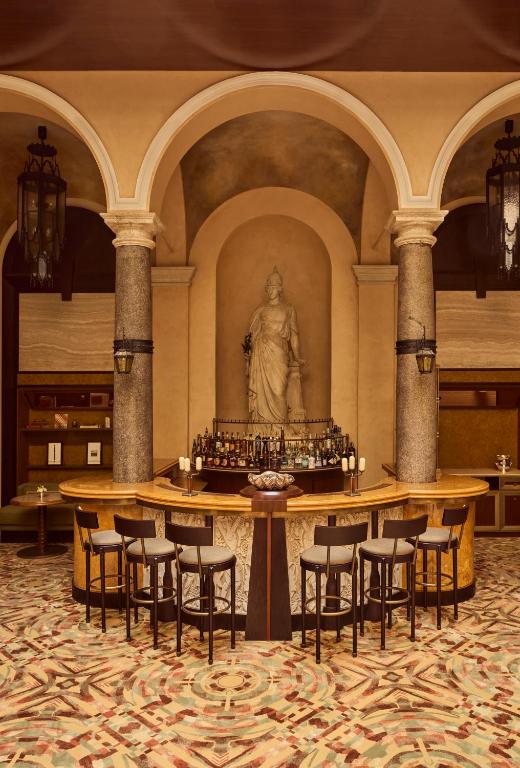
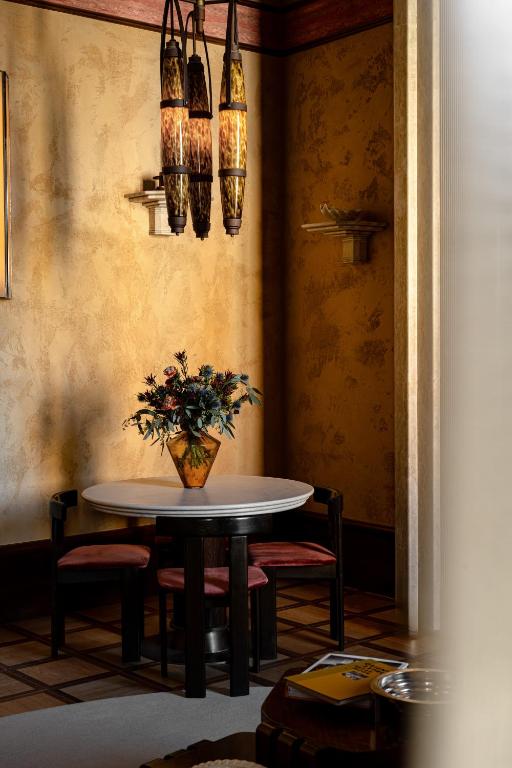
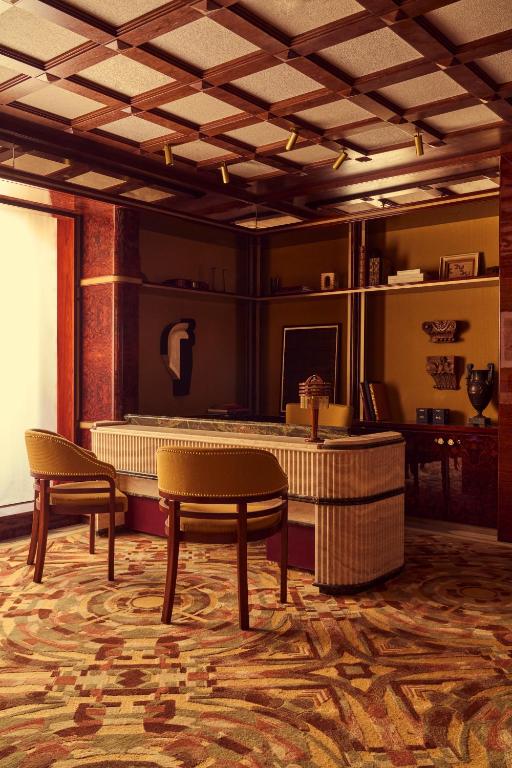
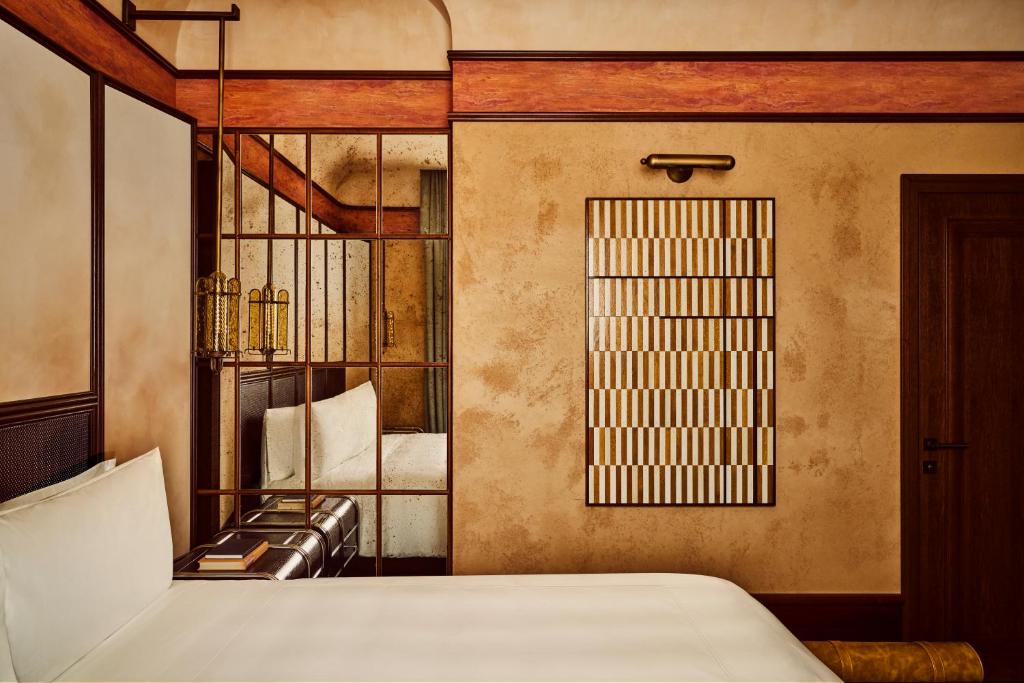
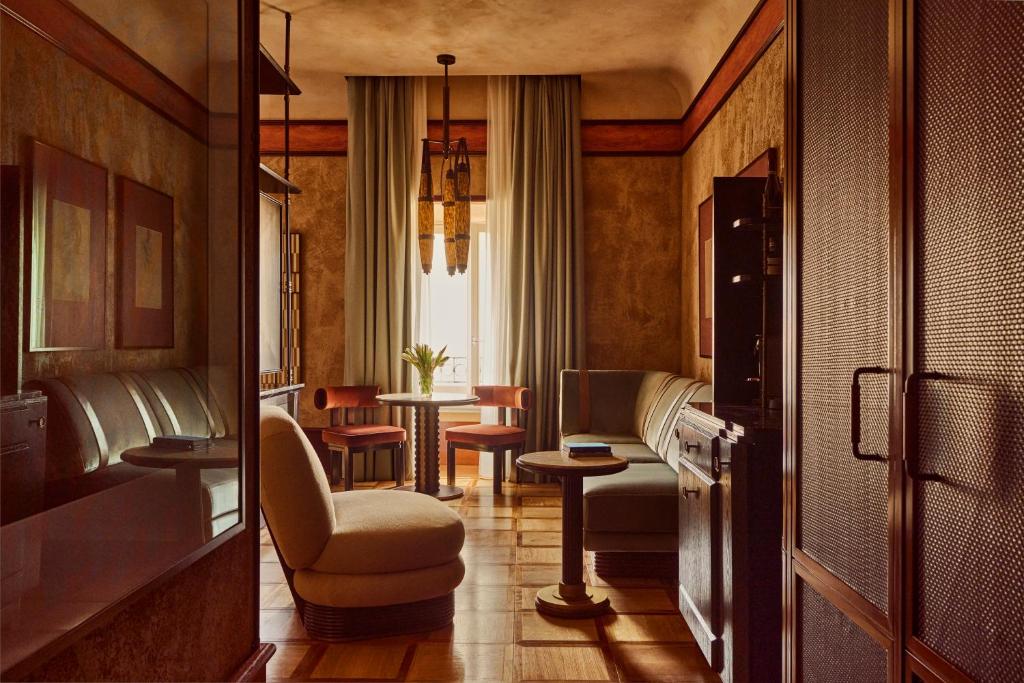
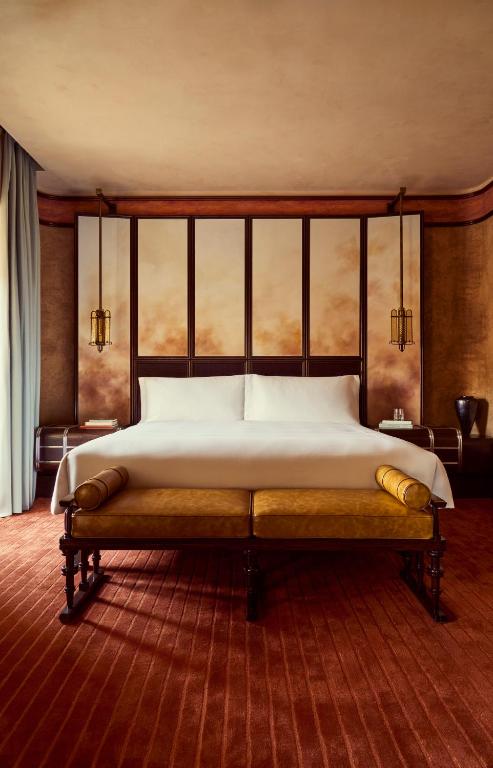
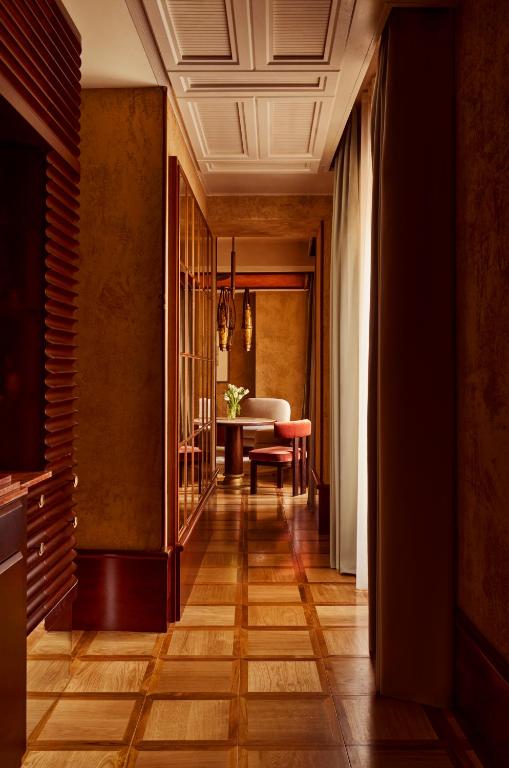
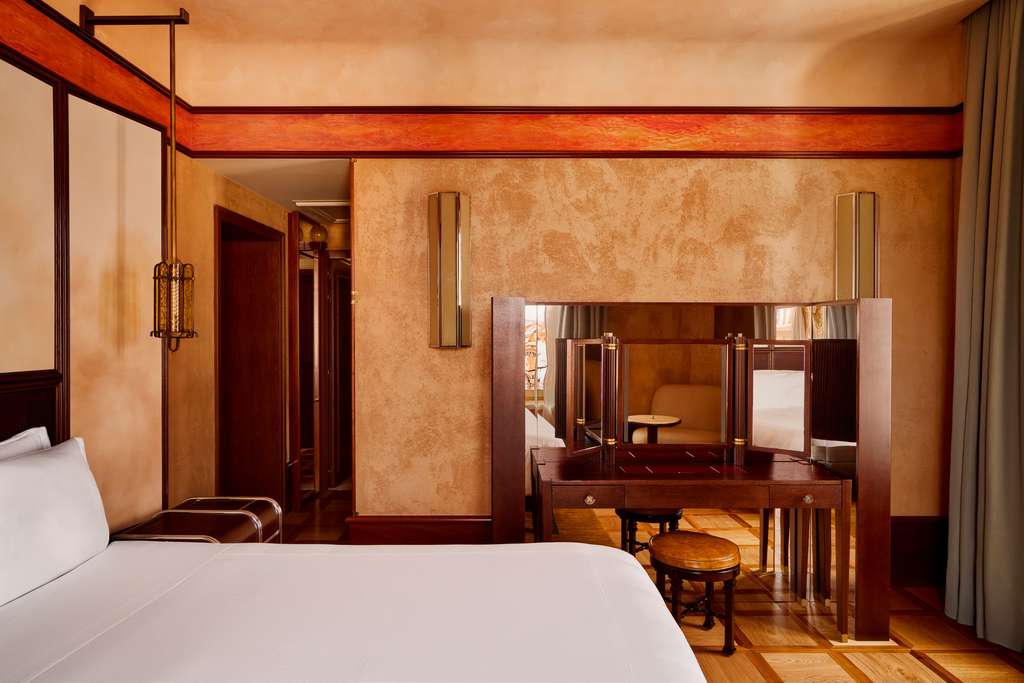
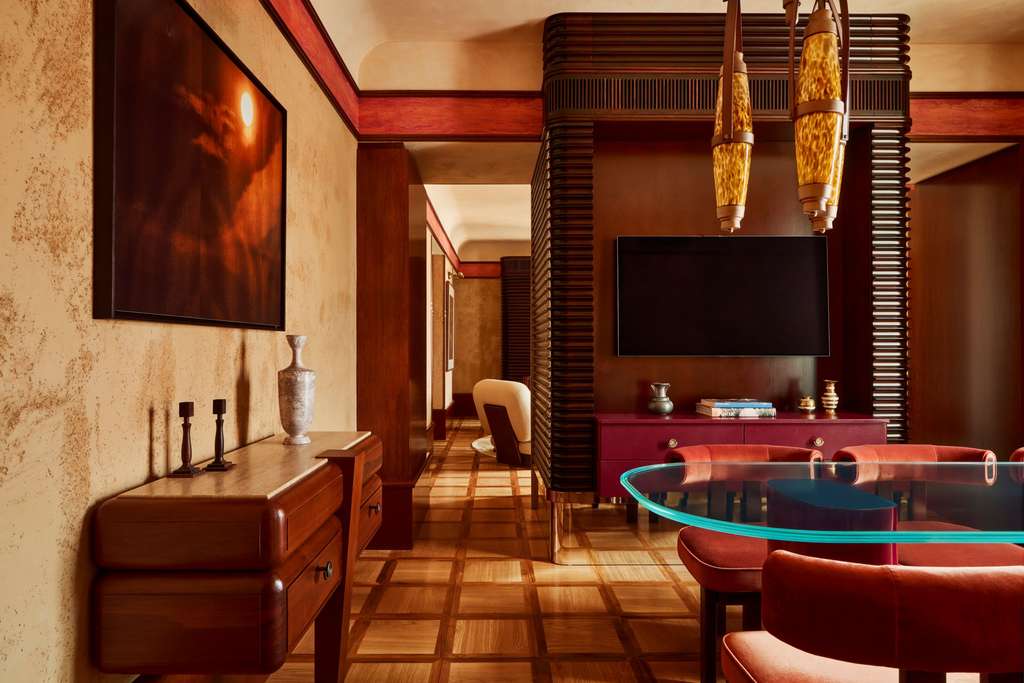
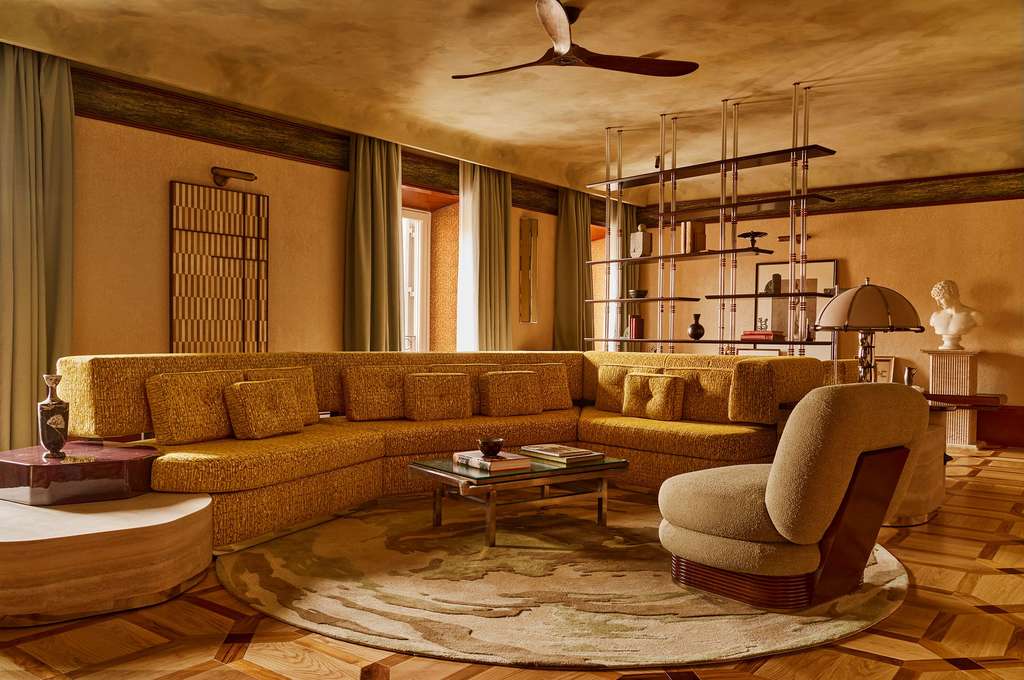
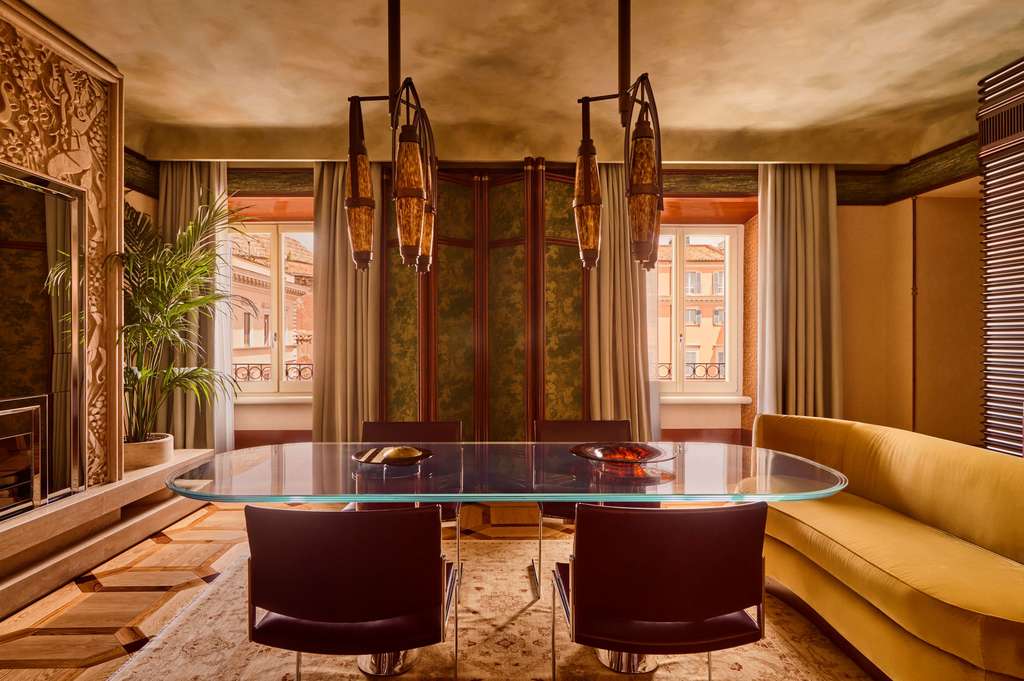
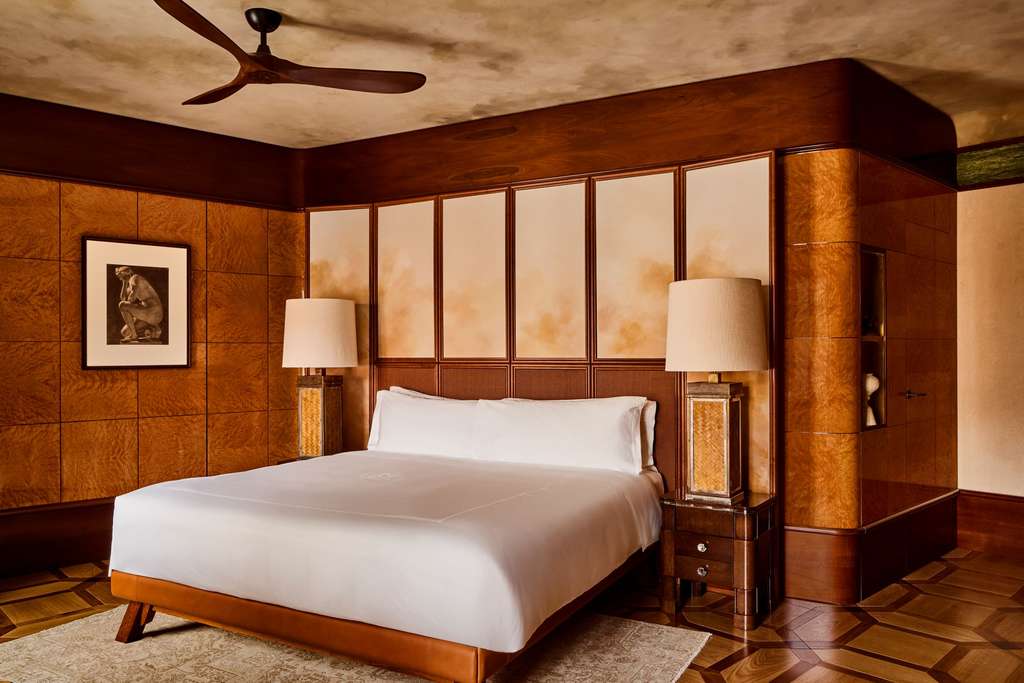
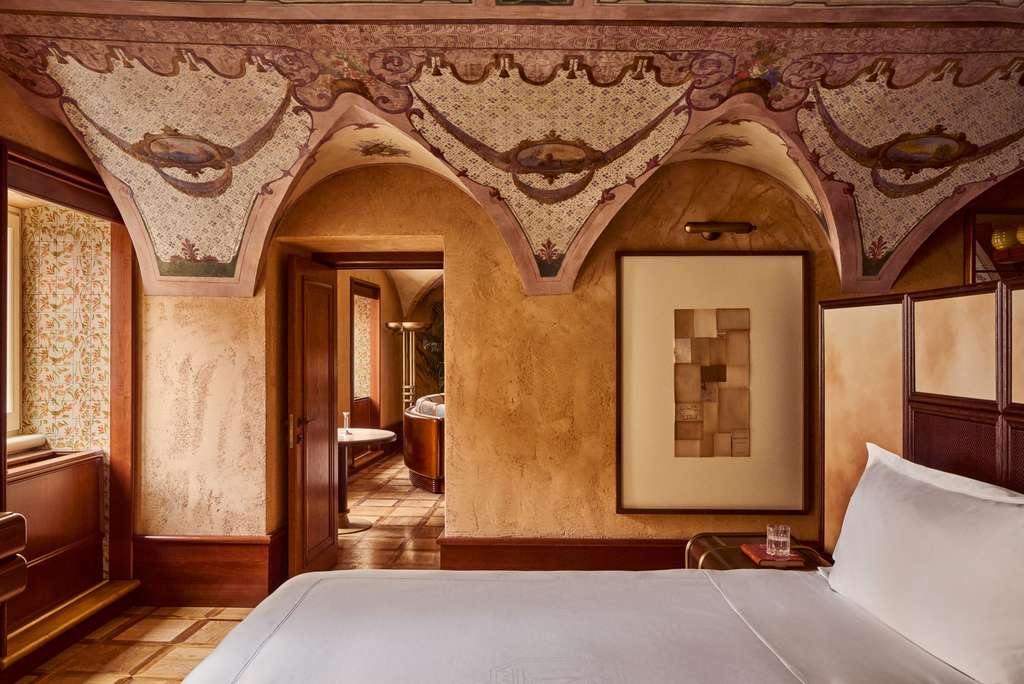
French architect and designer Hugo Toro approaches the interiors with remarkable sensitivity, allowing centuries of history to coexist naturally with bold contemporary interventions. Frescoed ceilings, marble floors, classical proportions, and monumental architectural details remain the foundation, enriched by sculptural furnishings, richly textured fabrics, polished brass, and refined Art Deco influences that quietly reference the golden age of rail travel. Throughout the hotel, ancient Roman motifs converse effortlessly with modern craftsmanship. Curved forms soften formal spaces, bespoke furniture introduces intimacy, while carefully commissioned artworks and decorative objects create interiors that feel both theatrical and deeply personal. Among the most remarkable pieces are original sculptures by Rinaldo Rinaldi, the celebrated pupil of Antonio Canova, reinforcing the hotel’s authentic connection to Rome’s extraordinary artistic heritage.
Rooms Designed for the Art of Living
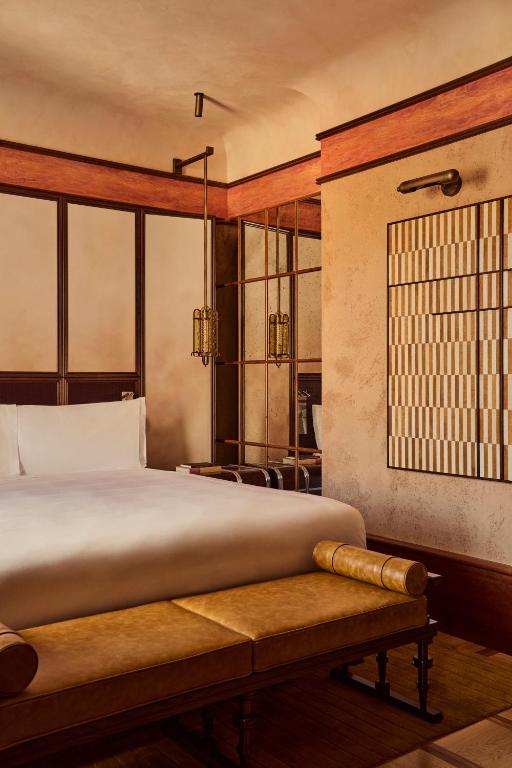
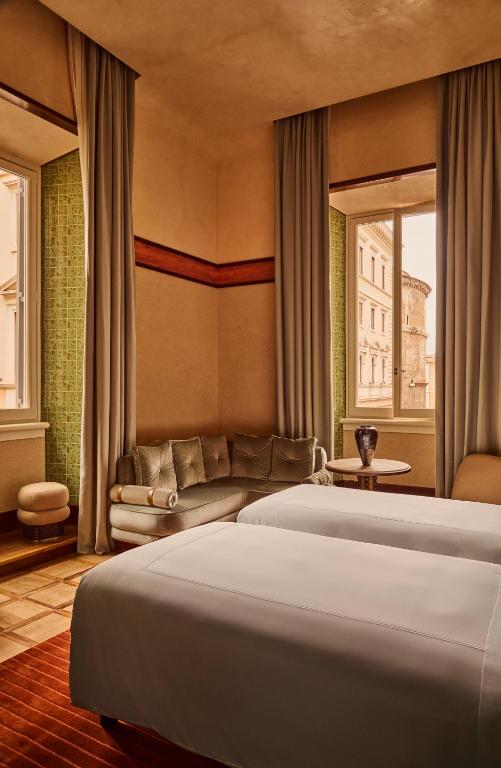
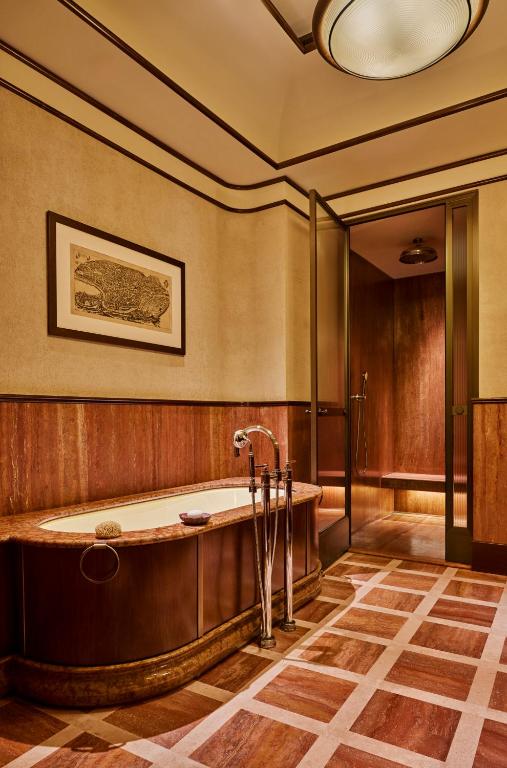
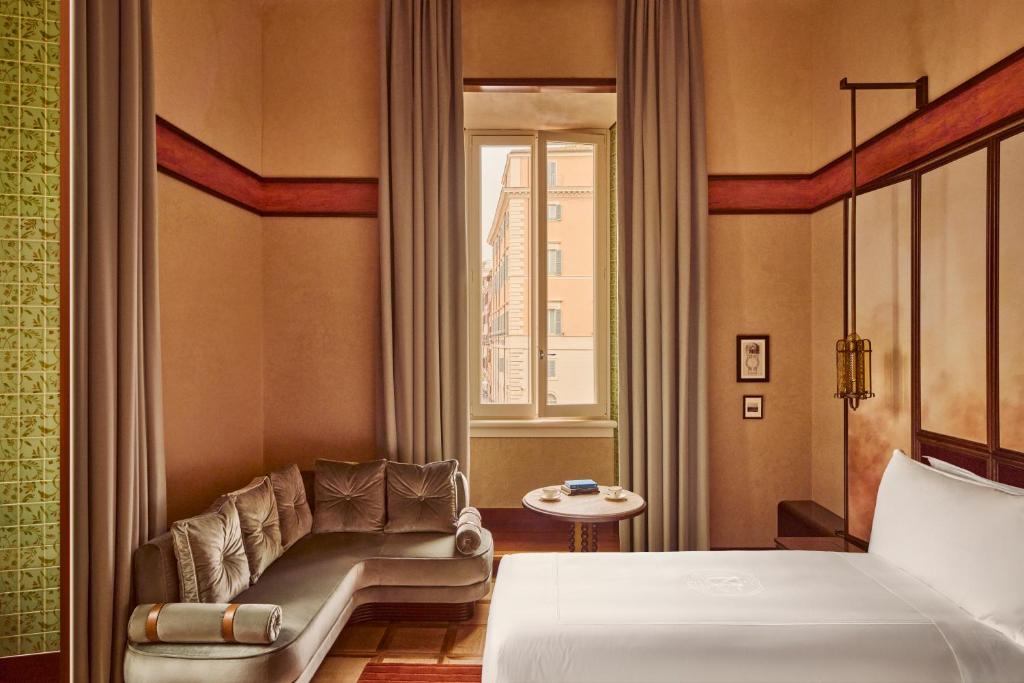
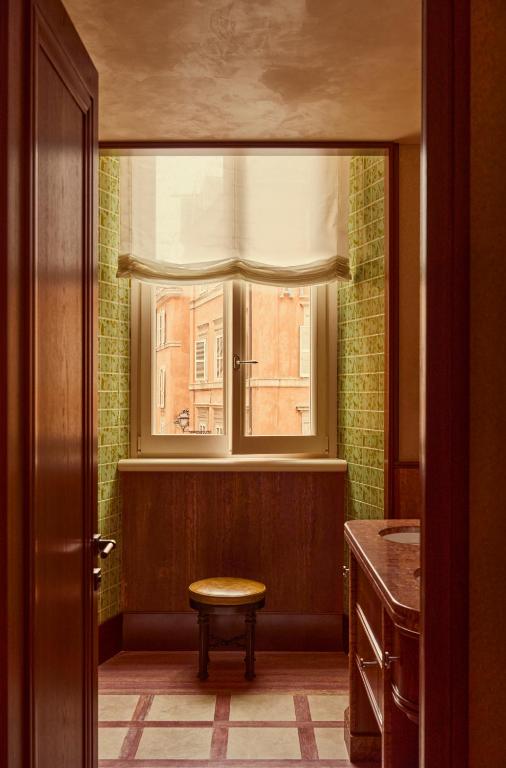
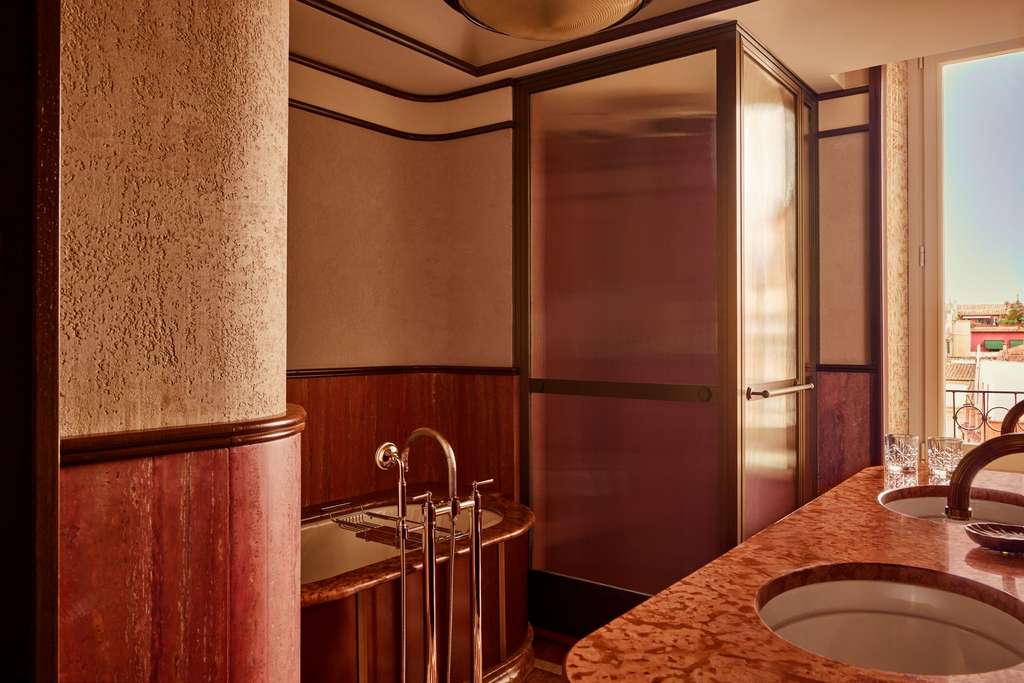
With just ninety-three guestrooms and suites, La Minerva succeeds in feeling intimate despite the grandeur of its surroundings. Each room has been conceived as a private Roman salon, where custom-designed furnishings, carefully layered textiles, handcrafted finishes, and curated artworks create an atmosphere of understated elegance. Historic architectural details—including lofty ceilings, decorative mouldings, and traces of original frescoes—blend seamlessly with generous marble bathrooms and discreet contemporary comforts. Large windows frame rooftops, church domes, and narrow Roman streets, constantly reminding guests that the Eternal City itself forms part of the experience. Luxury here is expressed not through excess, but through craftsmanship, proportion, and an exceptional sense of place.
A Stage Above the Eternal City
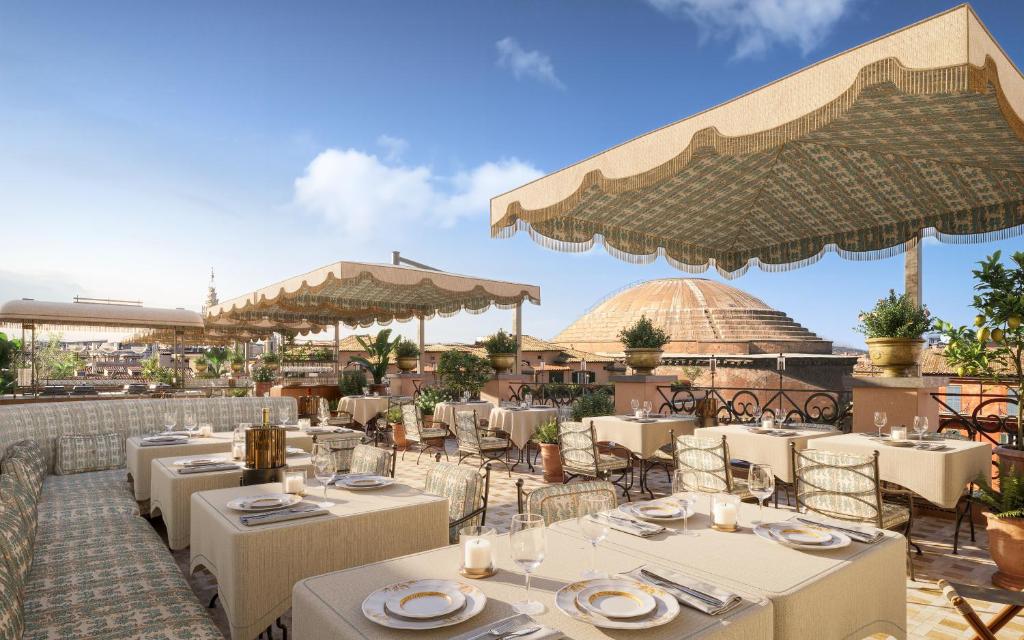
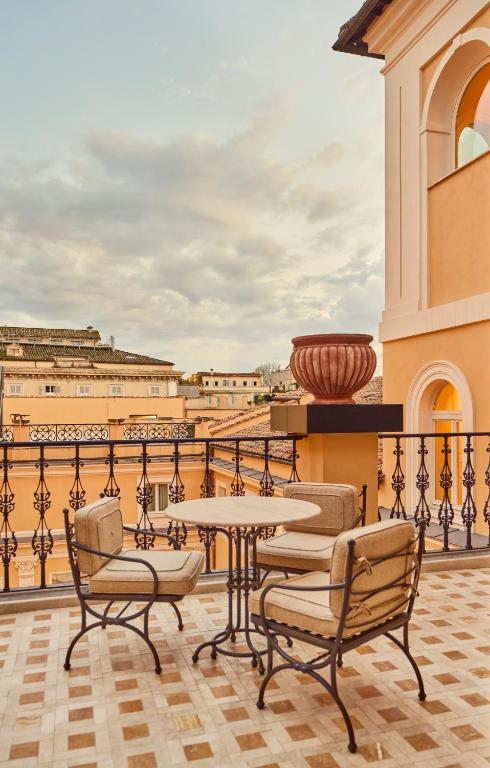
High above Rome, the rooftop restaurant and terrace provide one of the hotel’s defining moments. Overlooking the domes and rooftops surrounding the Pantheon, the space evolves effortlessly throughout the day—from peaceful breakfasts above the awakening city to elegant aperitivi at sunset and refined dinners beneath the Roman sky. The culinary philosophy mirrors the hotel’s broader identity, respecting Italian tradition while introducing contemporary refinement. Every detail, from the presentation of the dishes to the atmosphere of the bar, reinforces the quiet glamour that defines the entire property. It is less a restaurant than another beautifully choreographed chapter within the larger story of La Minerva.
The Romance of Slow Travel
The influence of Orient Express extends far beyond aesthetics. Throughout the hotel, the spirit of slow, meaningful travel quietly shapes the guest experience. Wellness facilities inspired by Roman bathing culture and Ottoman rituals provide moments of calm after exploring the city, while attentive, highly personalised service recalls an era when travel itself was considered a luxury rather than simply a means of arrival. Every space encourages guests to pause, observe, and fully immerse themselves in Rome rather than merely passing through it.
Why It Works
La Minerva succeeds because it captures the true essence of the Orient Express legacy: elegance, craftsmanship, culture, and the romance of discovery. Hugo Toro’s remarkable interiors allow a seventeenth-century Roman palazzo to embrace contemporary luxury without sacrificing its soul, creating one of the city’s most compelling new design hotels. Rich in history yet entirely forward-looking, La Minerva offers an experience that feels less like checking into a hotel and more like stepping into a new golden age of travel.