Hotel Marcel, Tapestry Collection by Hilton | New Haven, Connecticut | USA
A Marcel Breuer masterpiece transformed into the nation’s first net-zero hotel, where Brutalist architecture meets the future of hospitality.
Why DNA Hotels Loves It
● One of the most important Brutalist restorations in America, preserving a Marcel Breuer landmark for a new generation.
● The first net-zero-energy hotel in the United States, proving sustainability and great design can strengthen one another.
● A rare combination of Bauhaus heritage, architectural significance, and genuinely groundbreaking environmental innovation.
A Brutalist Landmark Reborn
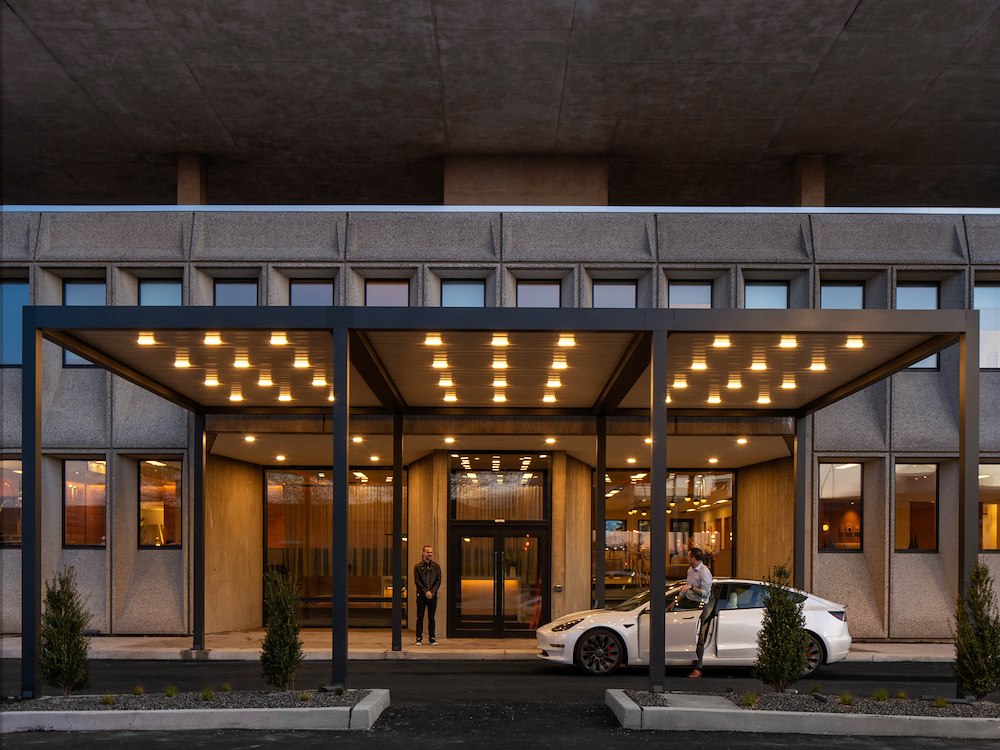
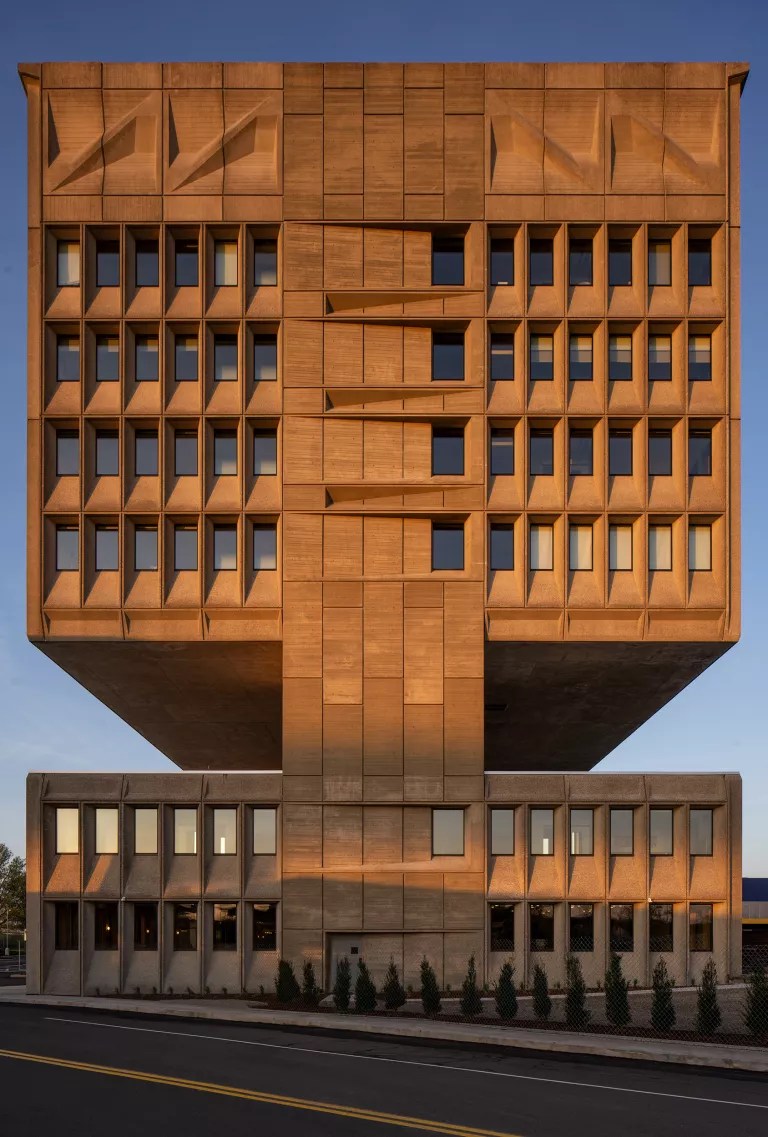
Rising beside Interstate 95 in New Haven, Hotel Marcel was never designed to blend in. Completed in 1970 as the headquarters of the Armstrong Rubber Company, the building was one of the final major works by Marcel Breuer, the Bauhaus master responsible for some of the twentieth century’s most influential modernist architecture. Its dramatic concrete form, floating office block, and powerful geometric composition made it an instant landmark. For decades, however, the future of the building remained uncertain. Various redevelopment schemes threatened demolition, and the former Pirelli Building seemed destined to become another lost piece of architectural history. Instead, it became one of the most remarkable hotel transformations in America. Today, Hotel Marcel stands not only as a beautifully restored Breuer masterpiece, but as the first net-zero-energy hotel in the United States.
Breuer’s Vision, Preserved
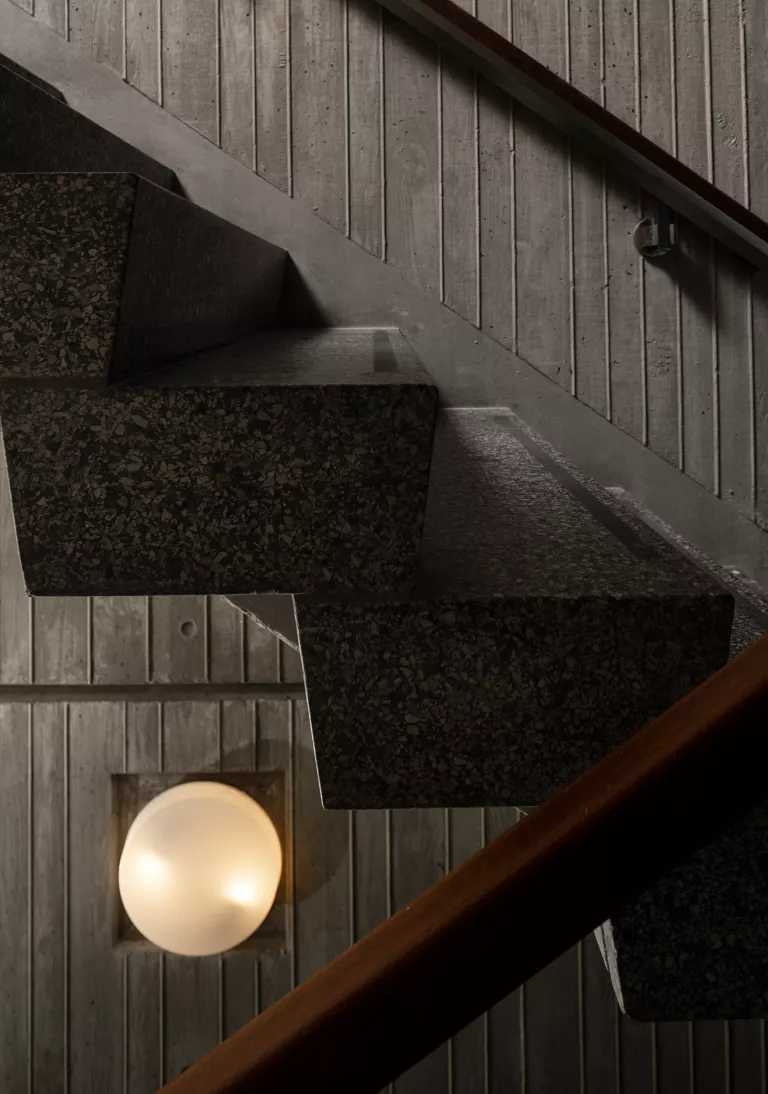
The restoration wisely avoids turning the building into a museum. Its unmistakable Brutalist silhouette remains entirely intact. The dramatic separation between the base and the office block above still creates the illusion that the structure floats above the landscape. Deep concrete overhangs, rhythmic windows, and Breuer’s characteristic emphasis on form and function remain central to the experience. Listed on both the State and National Registers of Historic Places, the building retains the architectural confidence that made it an icon in the first place. Yet inside, the atmosphere is far warmer than many might expect.
Bauhaus Meets Hospitality
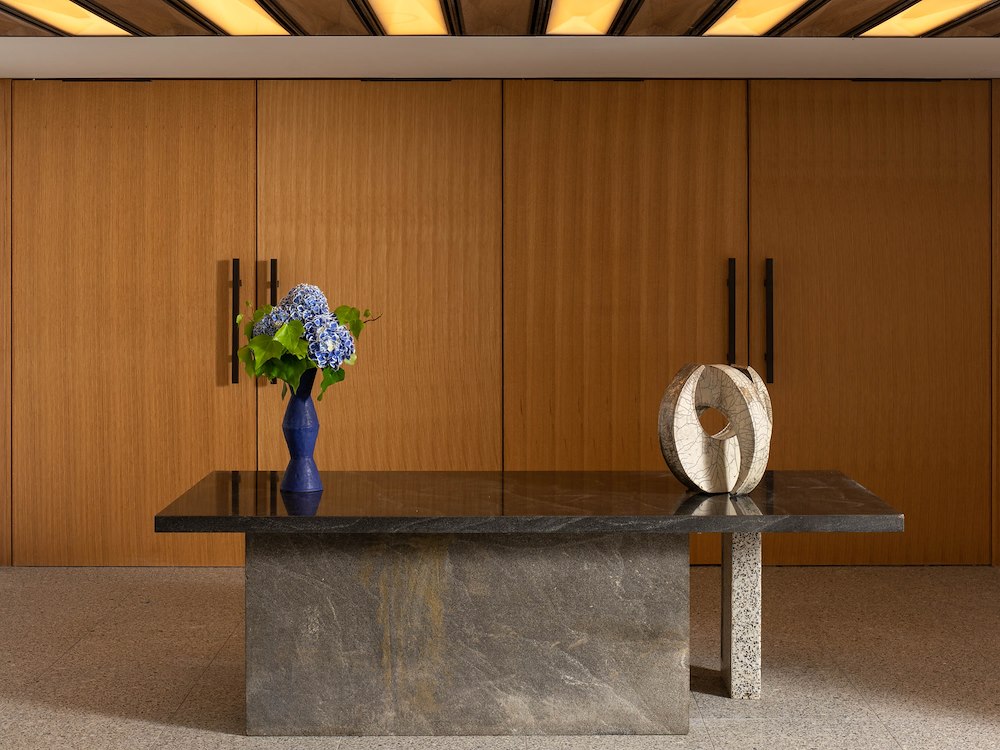
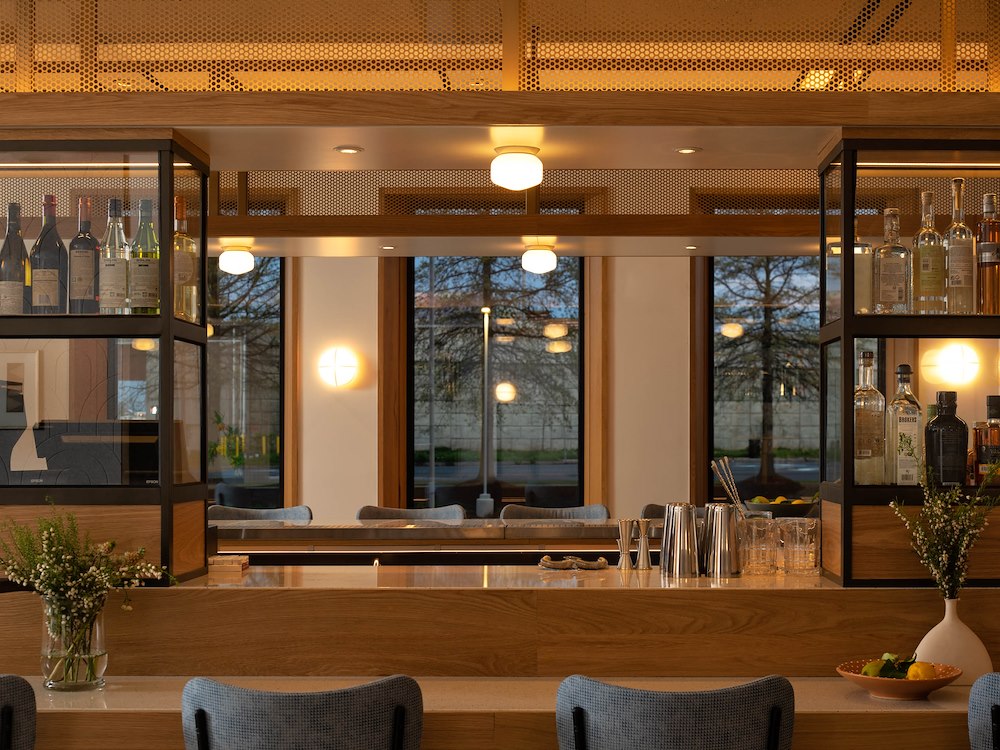
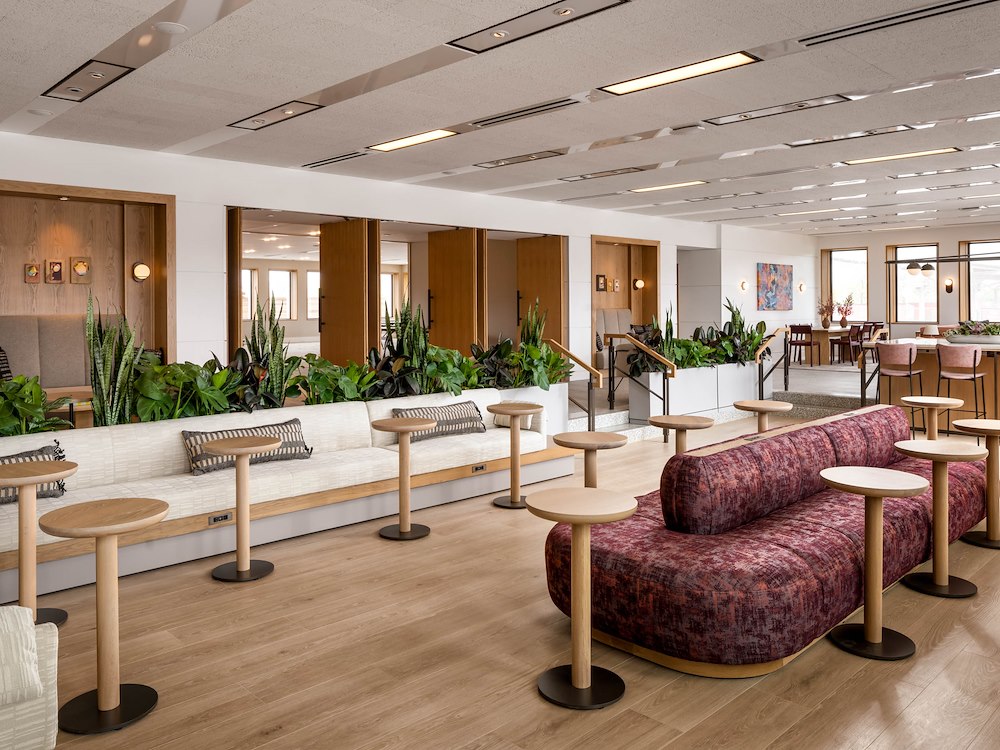
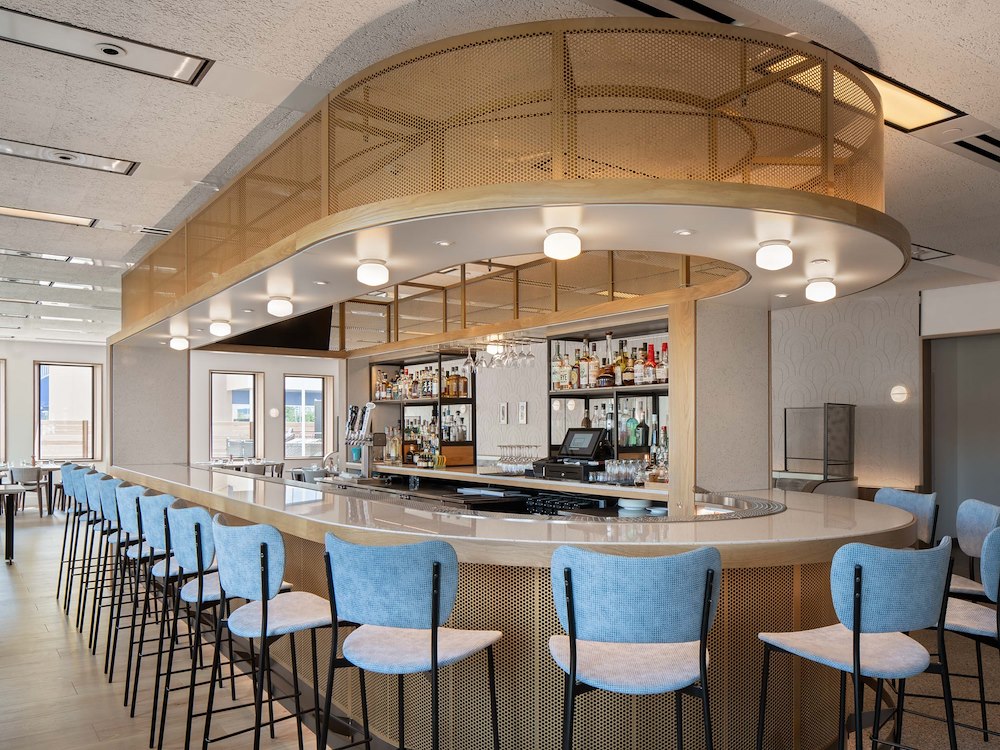
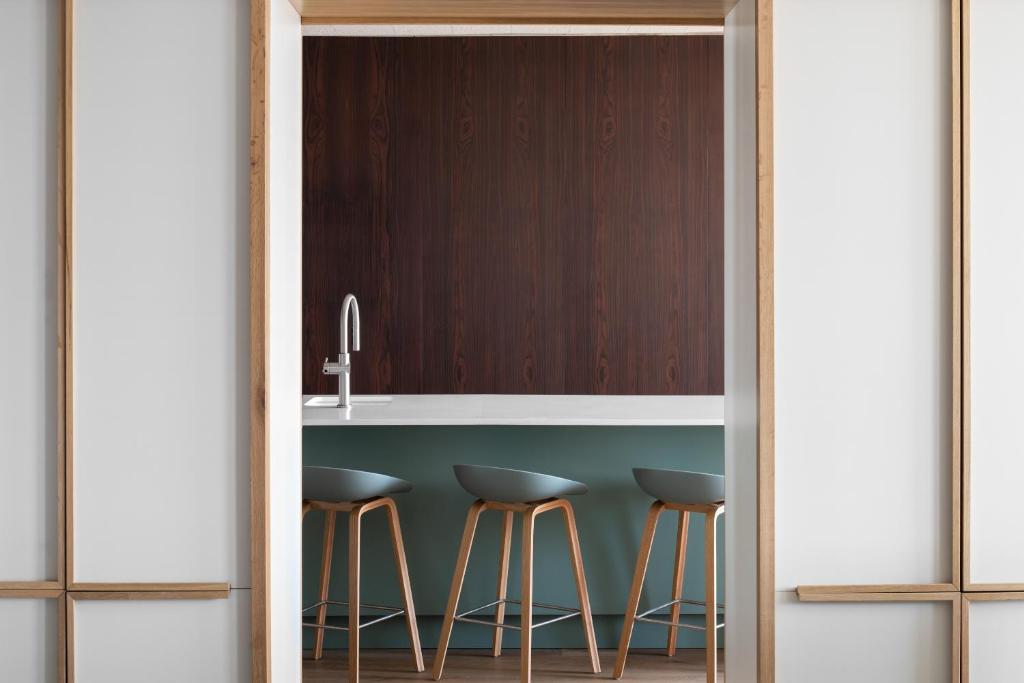
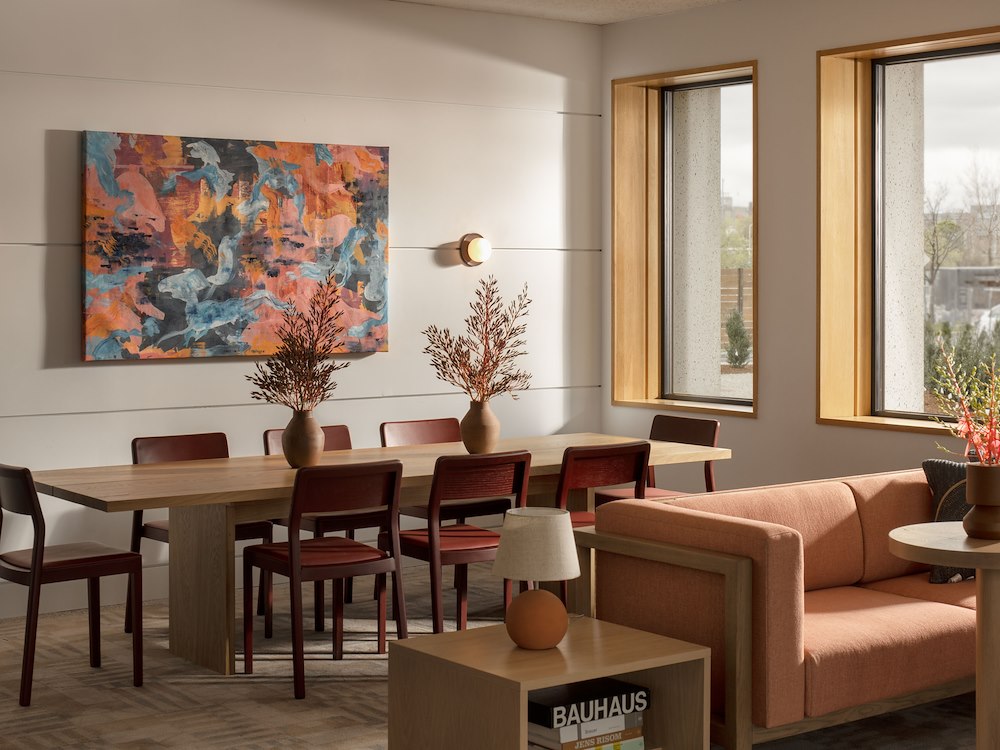
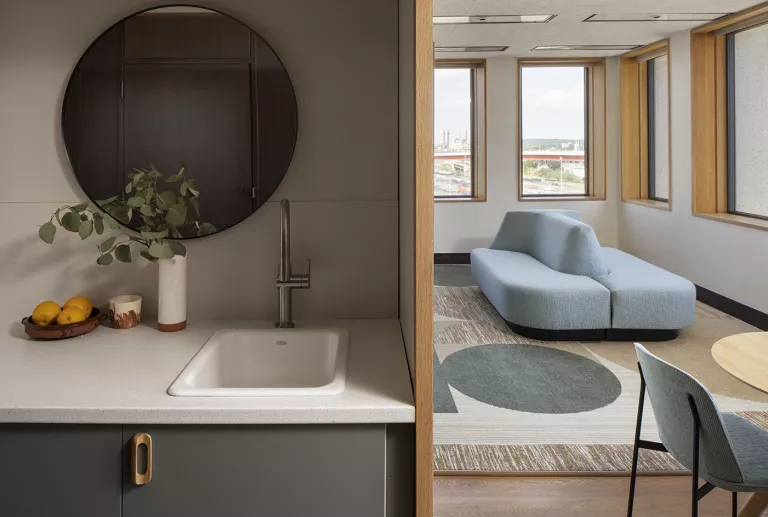
The interiors, created by Brooklyn-based Dutch East Design, carefully balance Breuer’s modernist legacy with the comforts expected from a contemporary hotel. The design takes inspiration from both Brutalism and the Bauhaus movement, introducing warmth, texture, and human scale without compromising the building’s architectural integrity. Natural materials, rich fabrics, warm lighting, and carefully selected furnishings soften the concrete framework. Public spaces feel refined rather than austere, creating environments that invite guests to linger rather than simply admire. Art plays an important role throughout. Works inspired by Bauhaus pioneers—including Anni Albers, Gunta Stölzl, and Benita Koch-Otte—appear throughout the hotel, creating subtle connections to the movement that shaped Breuer’s career. The result feels respectful rather than nostalgic. A continuation of Breuer’s story rather than a recreation of it.
Minimalist Rooms, Maximum Comfort
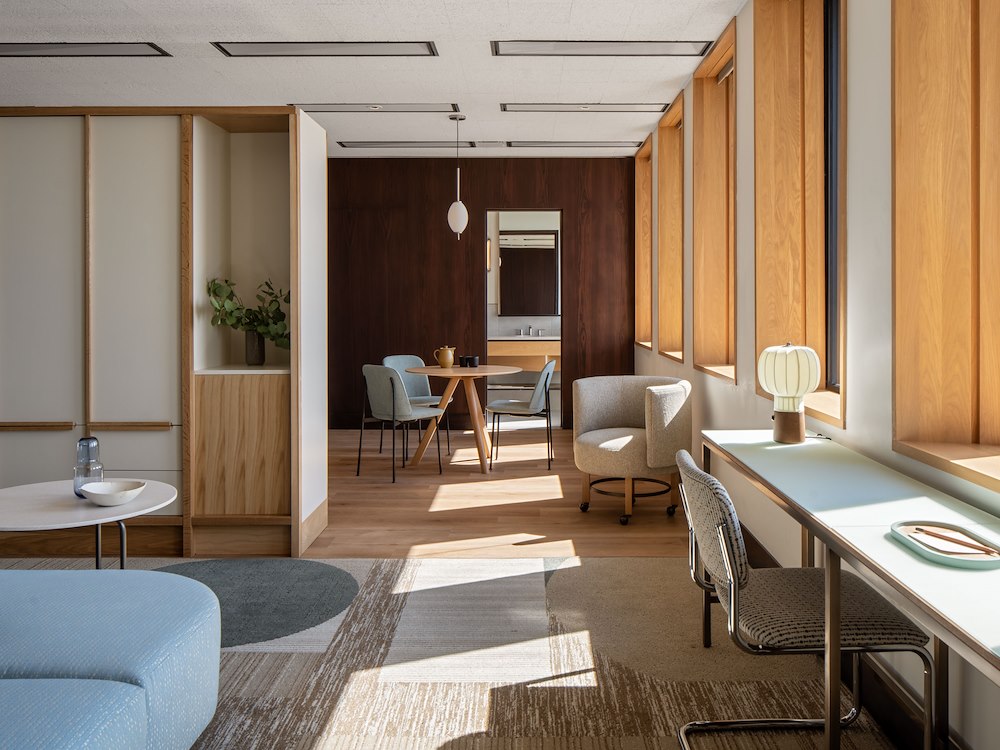
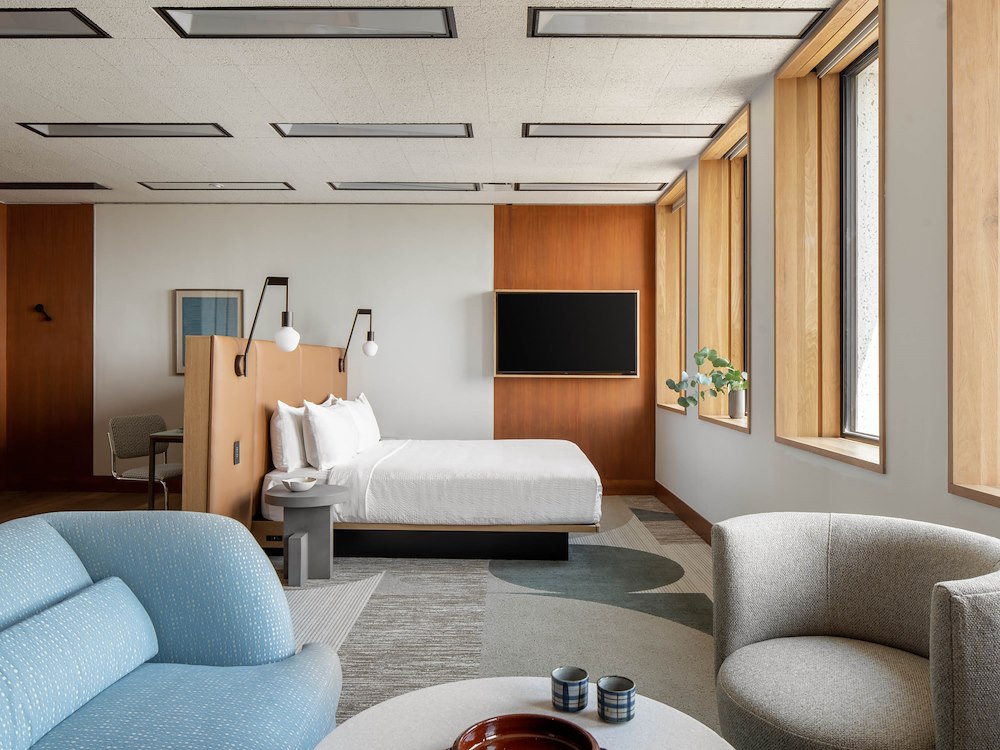
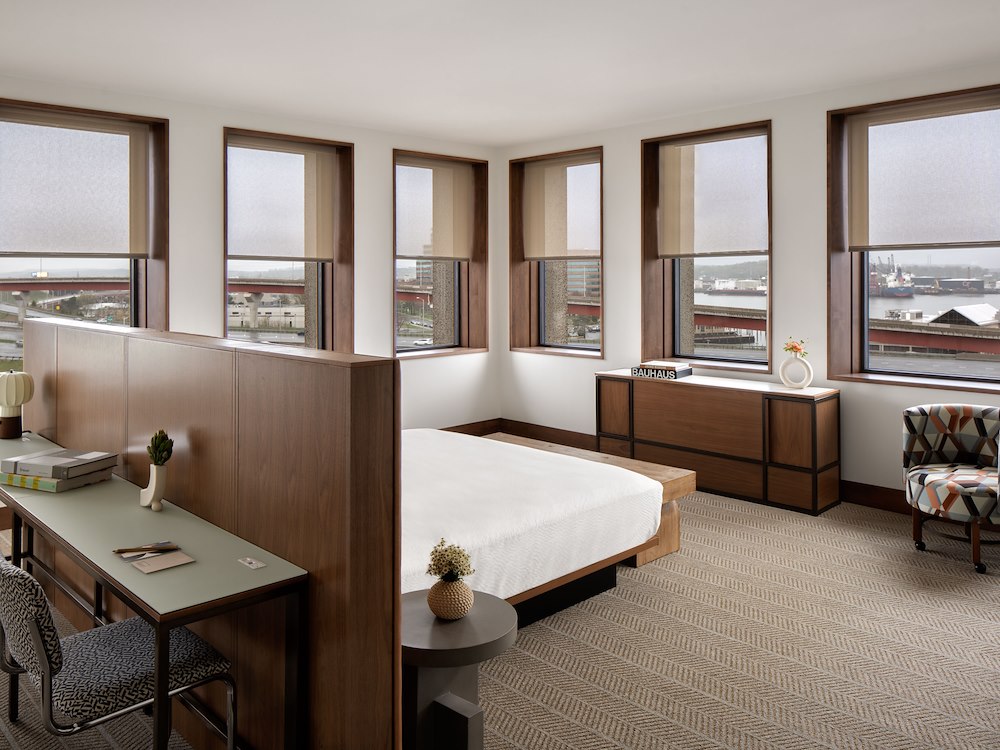
The 165 guestrooms and suites embrace the same philosophy. Large windows flood the spaces with natural light, while clean lines, warm wood accents, and restrained color palettes create a sense of calm that feels perfectly aligned with the building itself. The design is deliberately understated. Rather than competing with Breuer’s architecture, the rooms allow the structure to remain the star. Comfort, however, is never sacrificed. Thoughtfully integrated technology, premium bedding, generous workspaces, and contemporary bathrooms ensure the experience remains firmly rooted in the present. For architecture enthusiasts, few hotels offer the opportunity to actually live inside a genuine modernist landmark of this significance.
The Future Runs on Sunshine
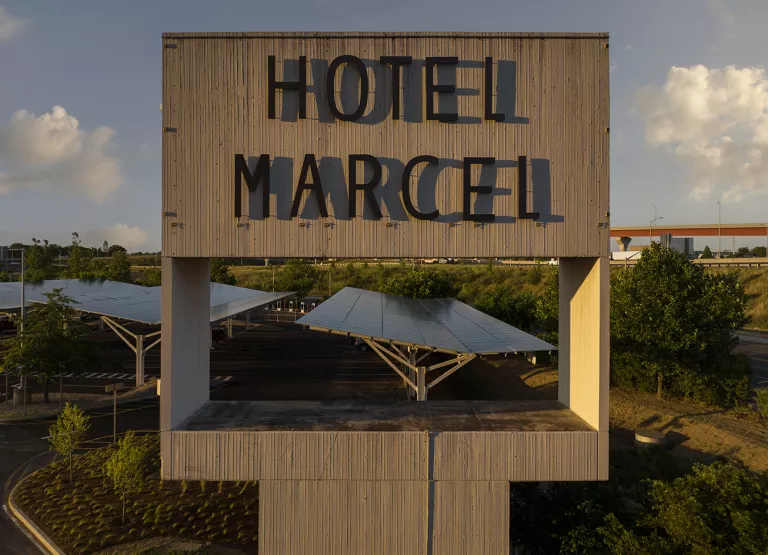
What truly separates Hotel Marcel from almost every other design hotel is what guests don’t immediately see. The hotel operates entirely without fossil fuels. A vast solar array installed on the roof and across solar parking canopies generates 100 percent of the property’s electricity. Heating, cooling, hot water, kitchen operations, and guest services all run on renewable energy. The building has achieved LEED Platinum certification and continues pursuing Passive House standards, setting new benchmarks for sustainable hospitality in North America. Unlike many environmentally focused hotels, sustainability here never feels like a compromise. Guests experience comfort, luxury, and design first. The environmental achievement simply happens in the background. Exactly as it should.
More Than a Hotel
Hotel Marcel functions as something larger than a place to stay. For architecture lovers, it offers direct access to one of Marcel Breuer’s most significant late-career works. For sustainability advocates, it demonstrates what truly carbon-neutral hospitality can look like at scale. For travelers simply seeking something different, it provides an experience that feels genuinely unique in a world increasingly dominated by interchangeable hotel design. There is nothing else quite like it in New Haven. And very little like it anywhere else.
A Blueprint for the Future
Hotel Marcel succeeds because it refuses to choose between preservation and progress. Instead, it proves that architectural heritage and environmental responsibility can strengthen one another. Breuer’s vision remains visible in every concrete line and cantilevered form, while the building’s transformation points directly toward the future of hospitality. For travelers who believe great hotels should stand for something beyond comfort alone, Hotel Marcel offers a compelling answer. A modernist icon. A sustainability pioneer. And one of America’s most important hotel reinventions.