


A 1970s Building, Reimagined
Mondrian Ibiza transforms a 1970s seaside building into a sophisticated design retreat where Cuarto Interior combines sculptural cave-inspired architecture, indigo-blue accents, contemporary art and Balearic craftsmanship overlooking Cala Llonga.

Why DNA Hotels loves it
Cuarto Interior takes inspiration from Ibiza’s caves, coastline, and traditional craftsmanship without falling back on predictable bohemian island styling.
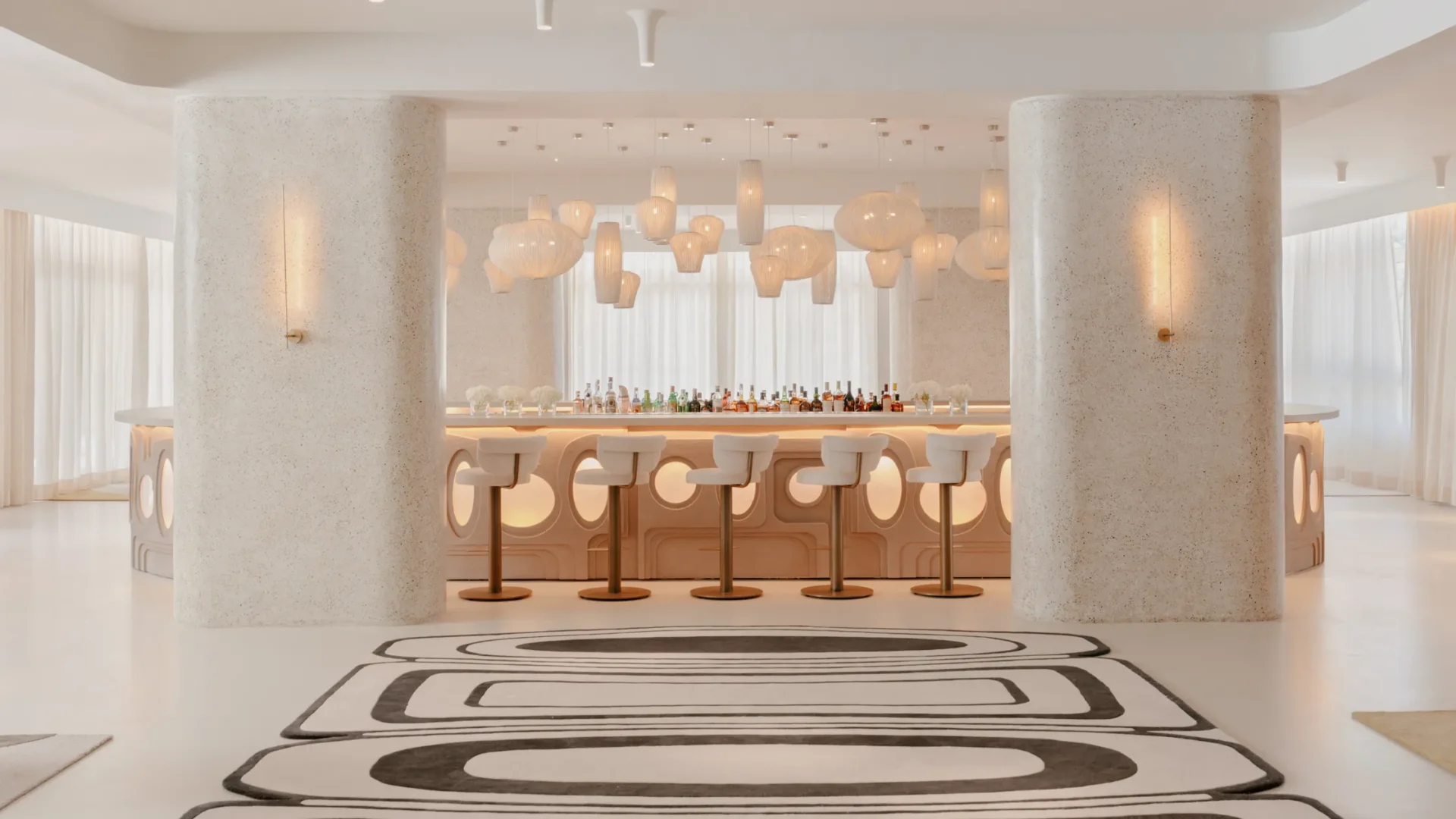
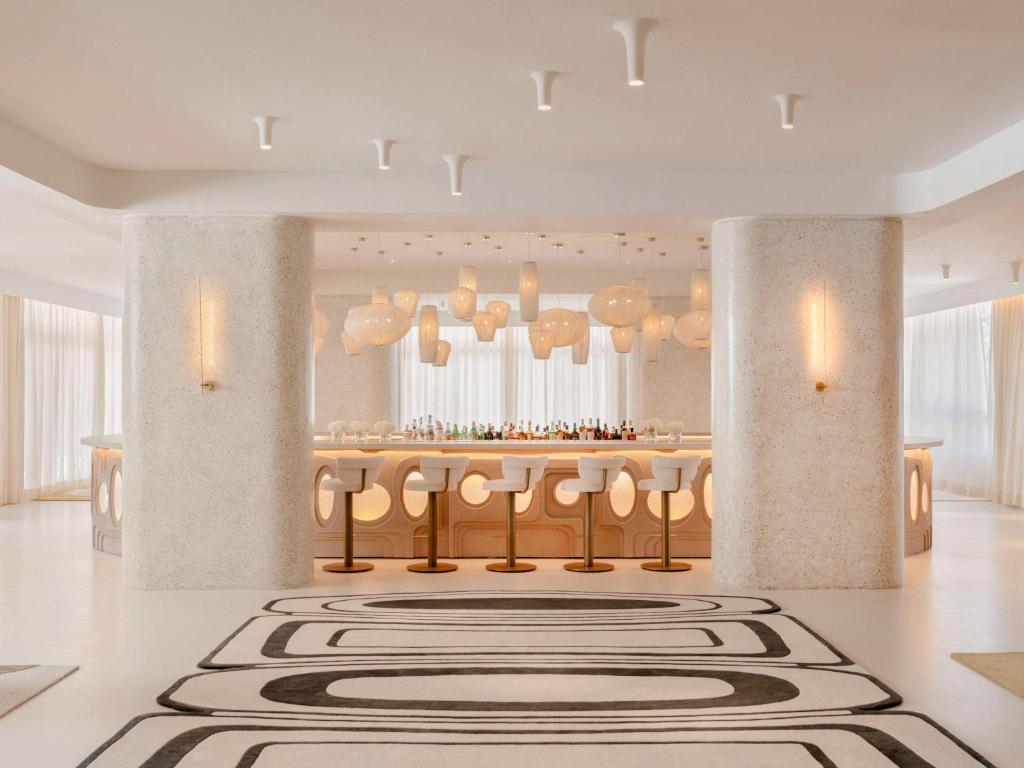
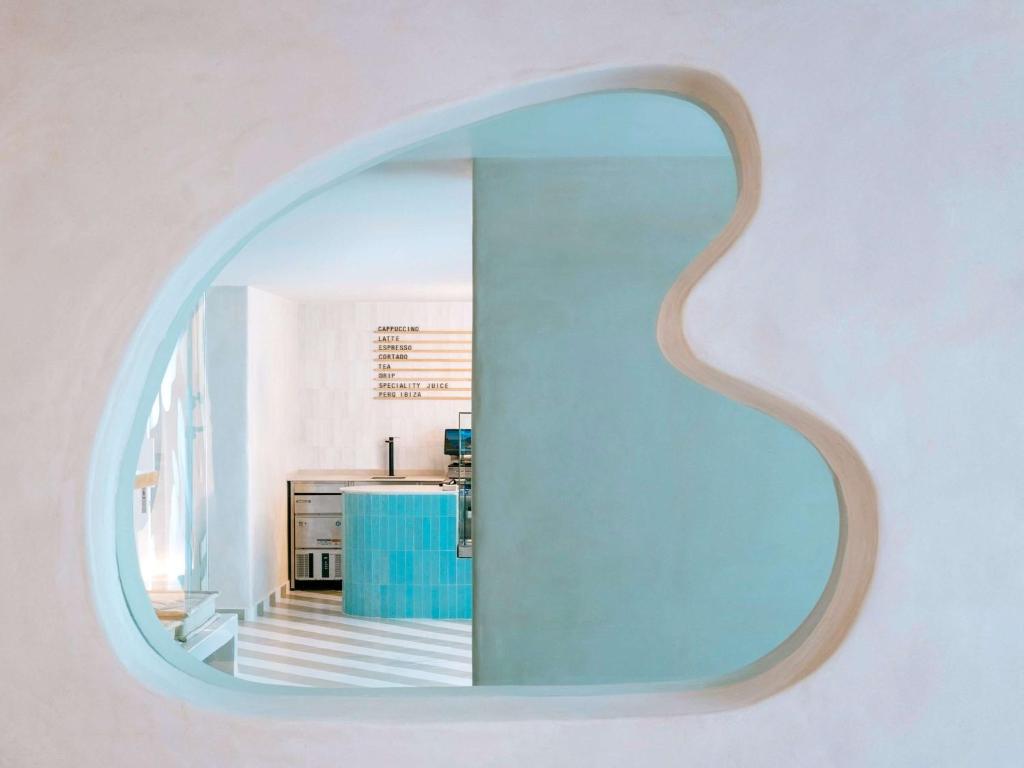
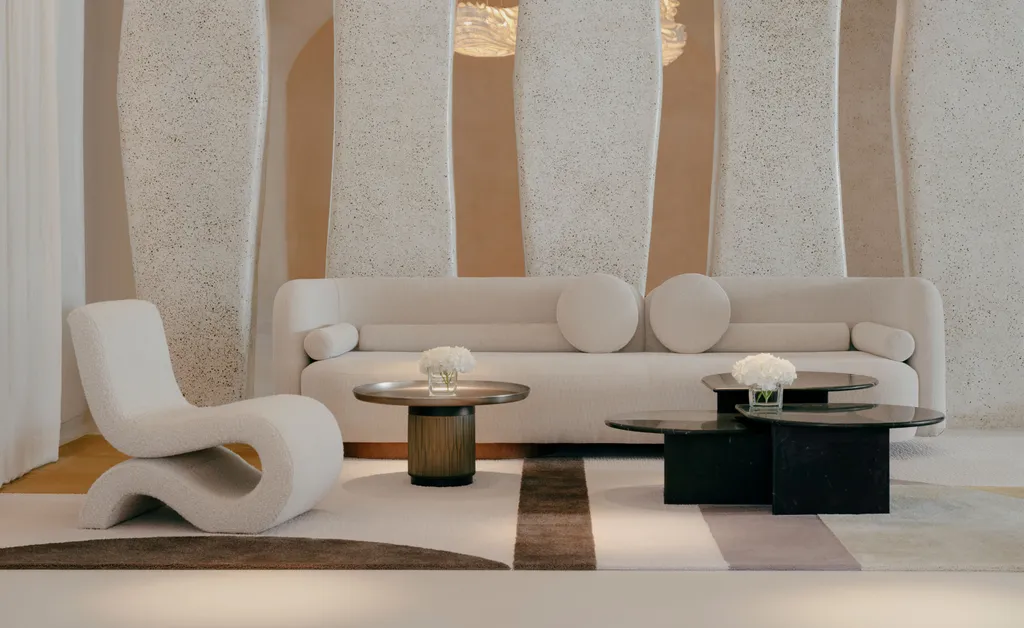
The lobby is the design moment: sinuous white walls, an extraordinary indigo-blue sculptural cavity, bespoke furniture, ceramics, and contemporary art curated by Gone Rogue.
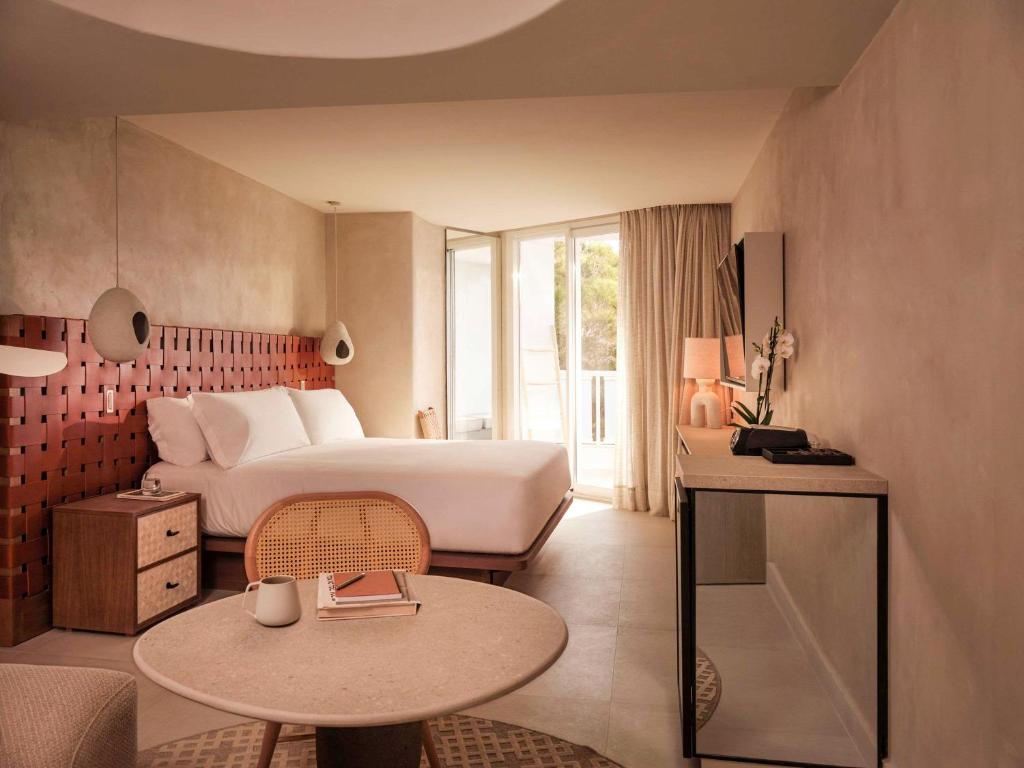
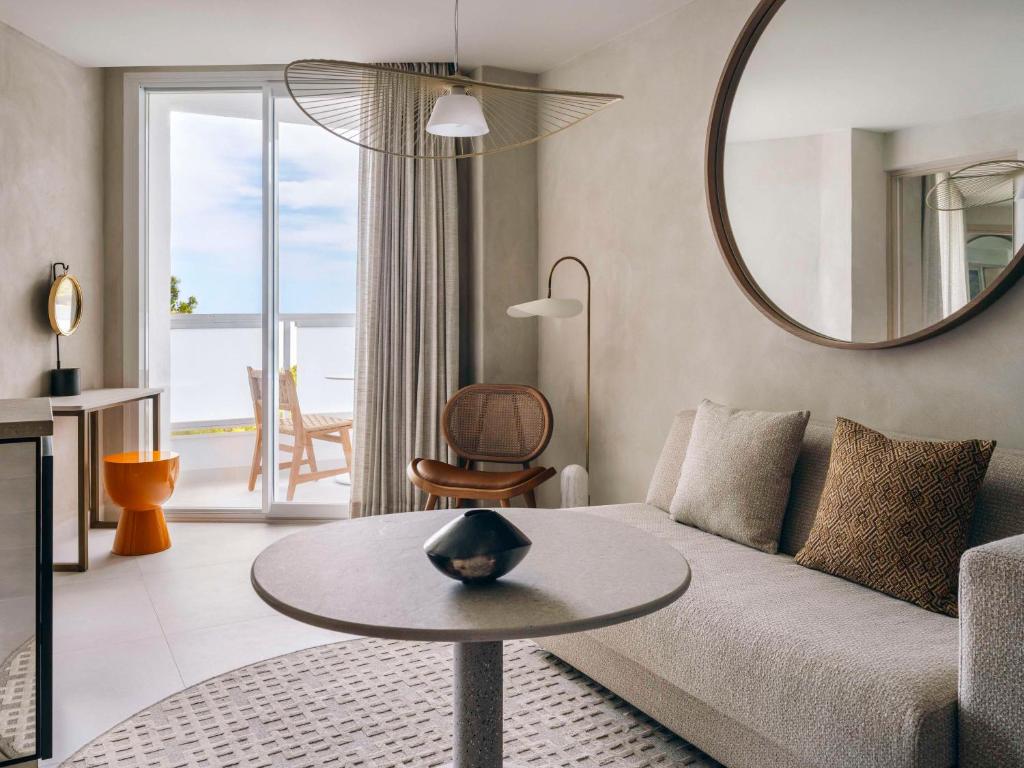
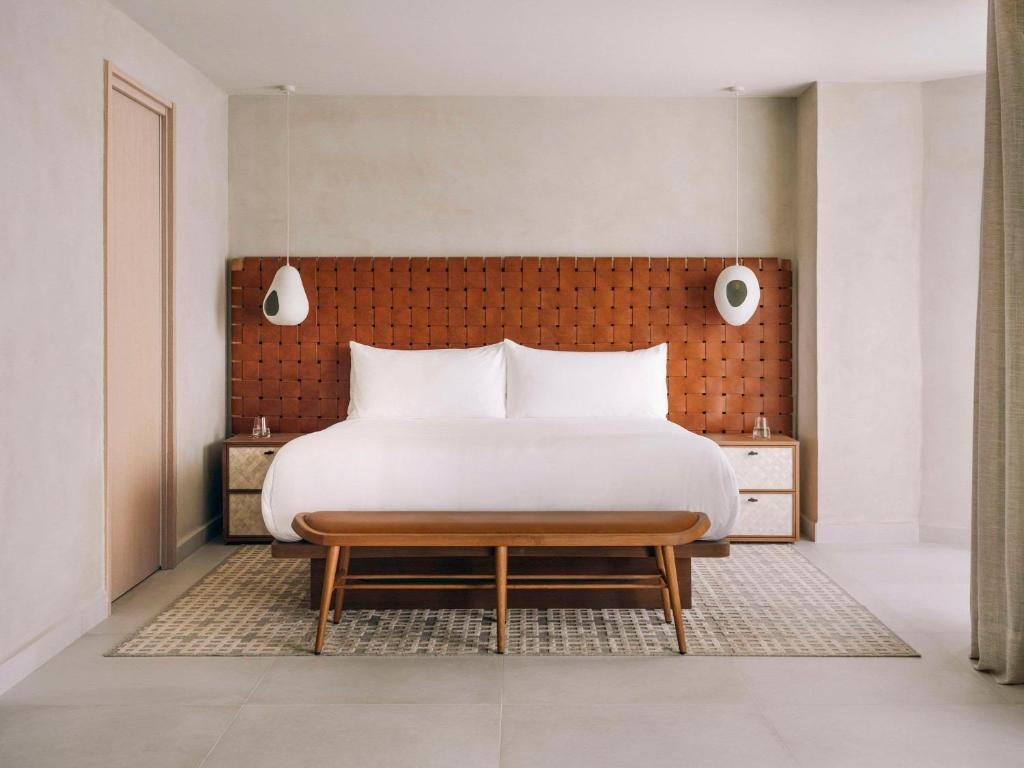
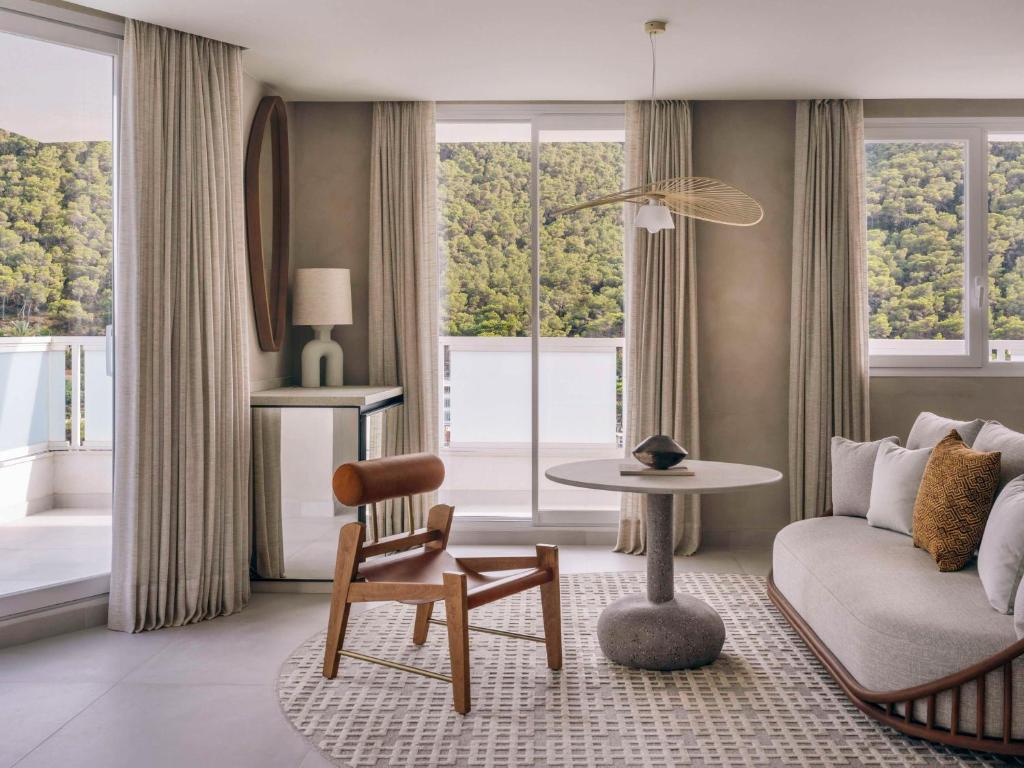
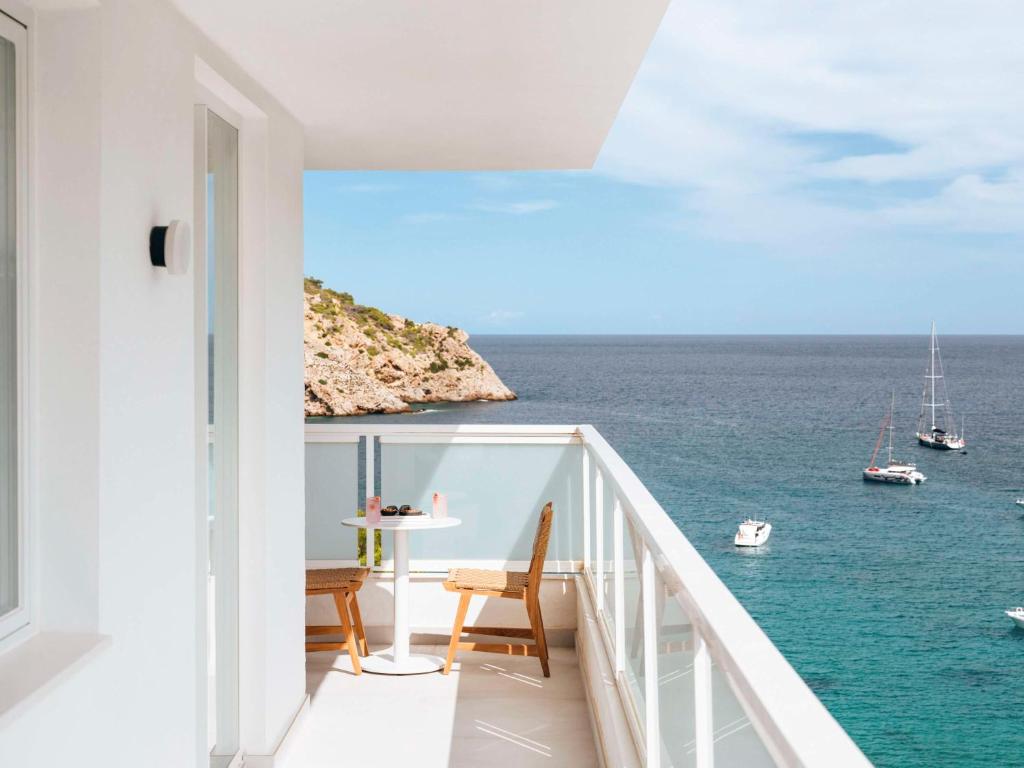
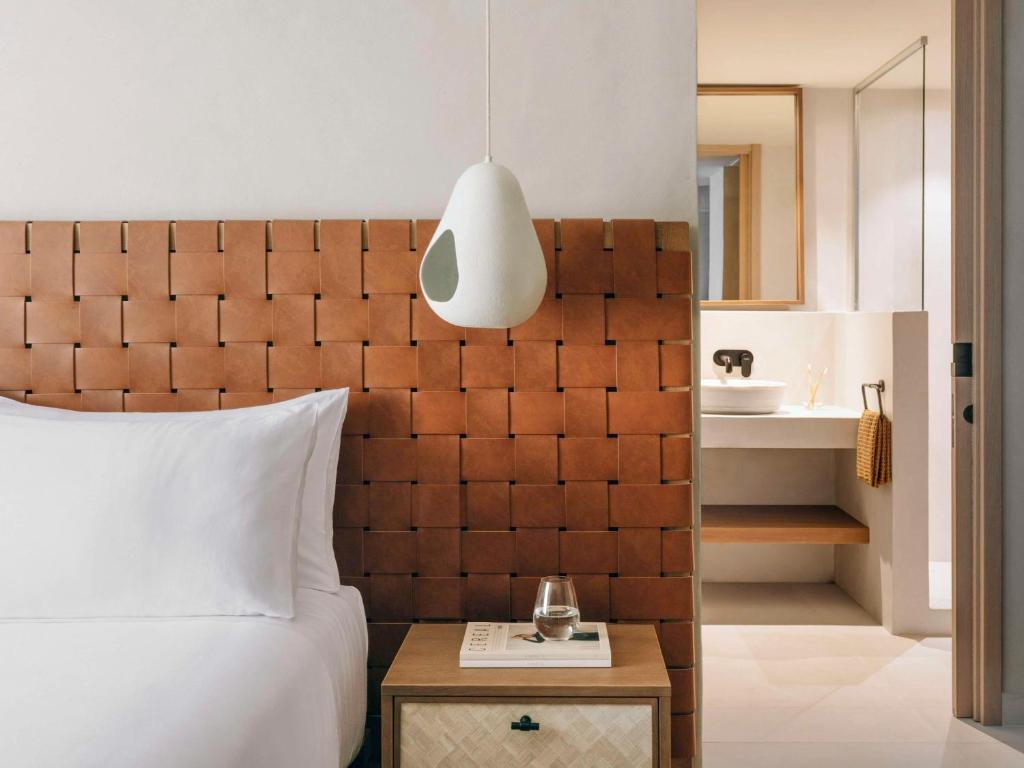
All 154 rooms and suites have outdoor space, combining woven leather, warm timber, and subtle references to the island’s fishermen’s shelters with exceptional Cala Llonga views.
The Stay
A 1970s seaside structure transformed into a sculptural retreat of cave-like forms, contemporary art, and Balearic craft
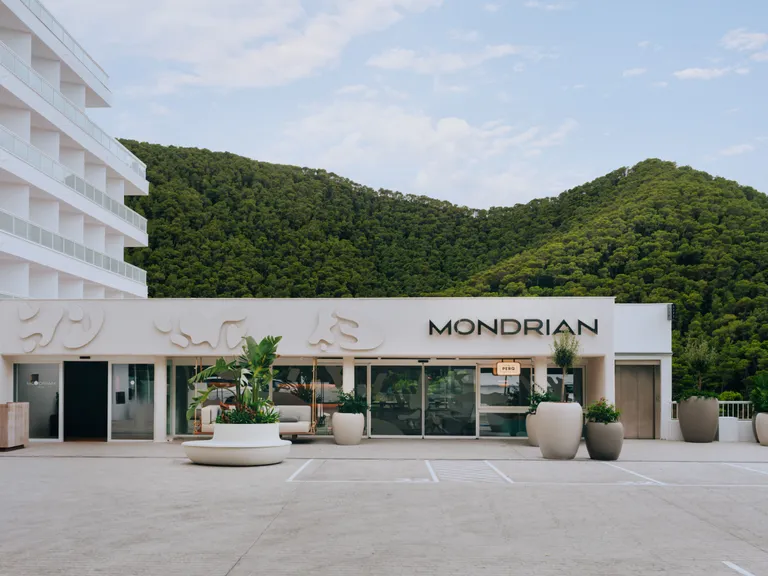
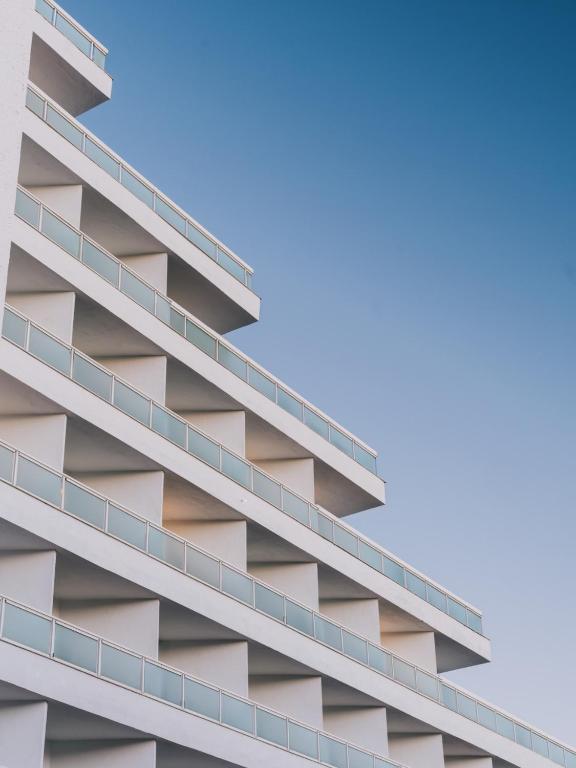
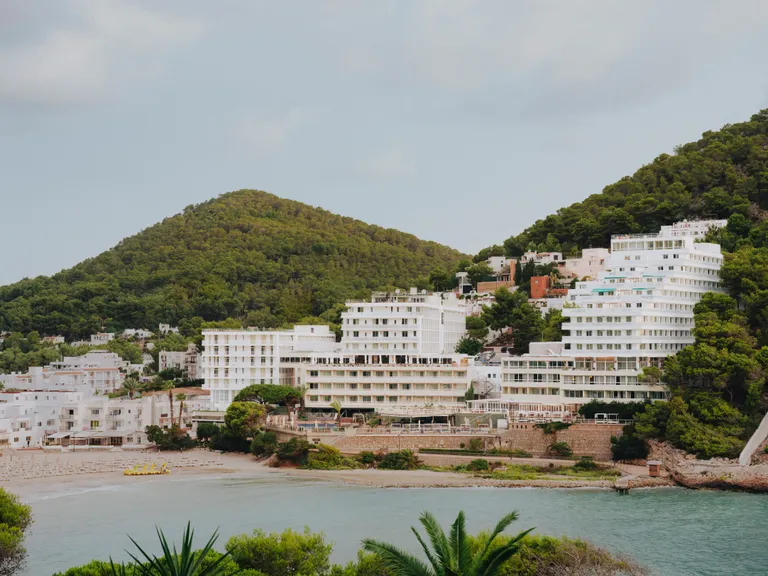
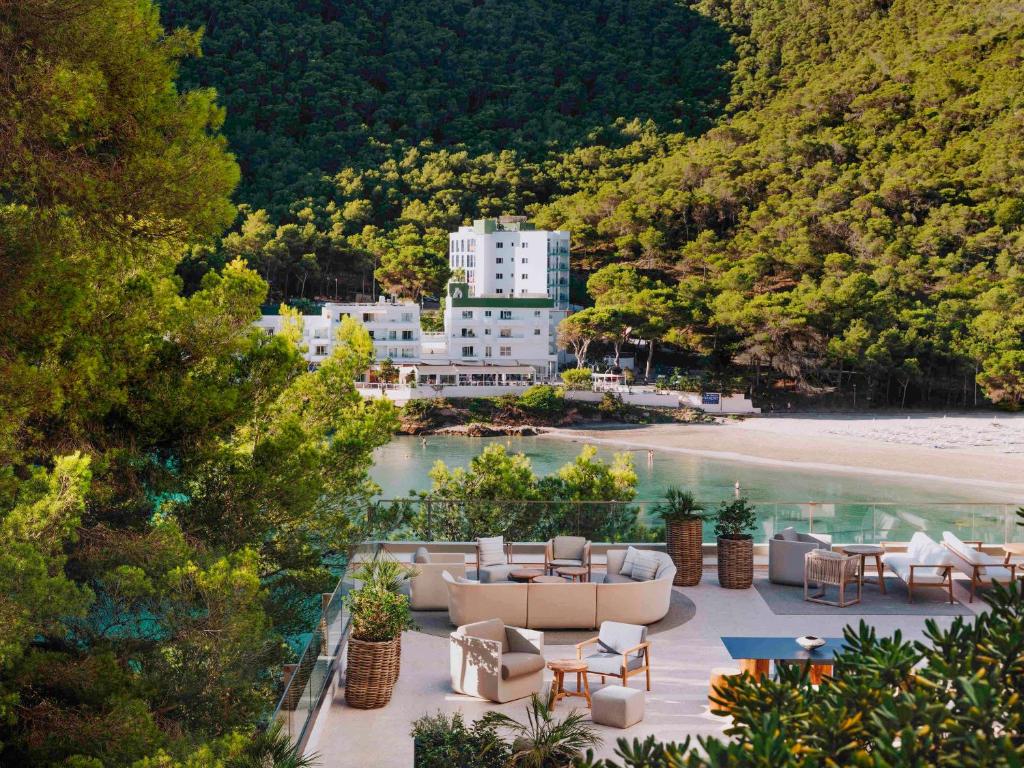
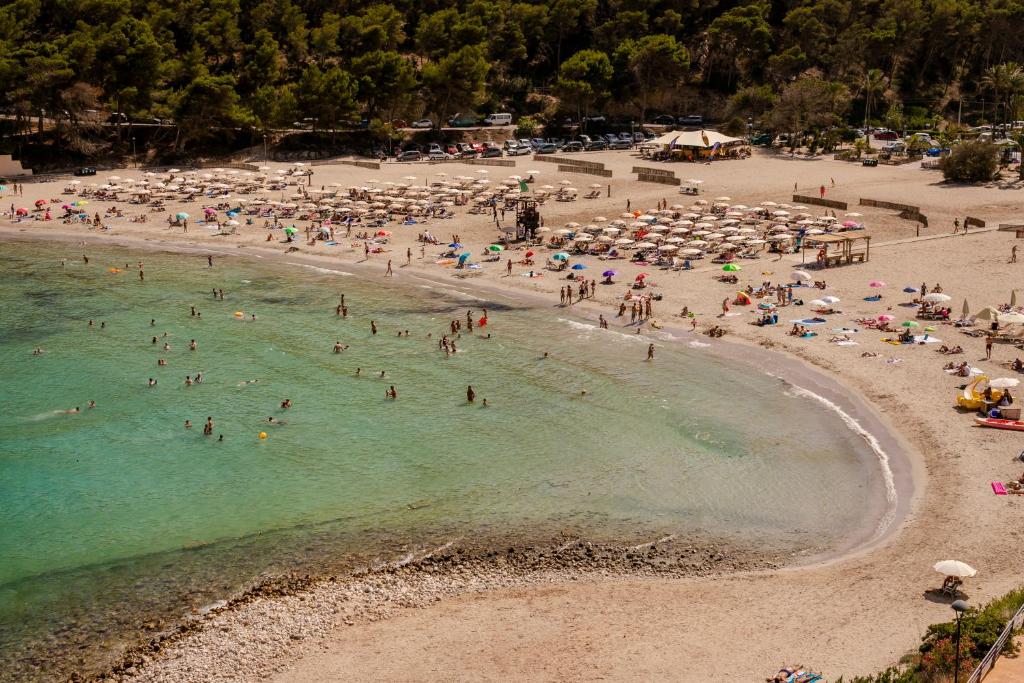
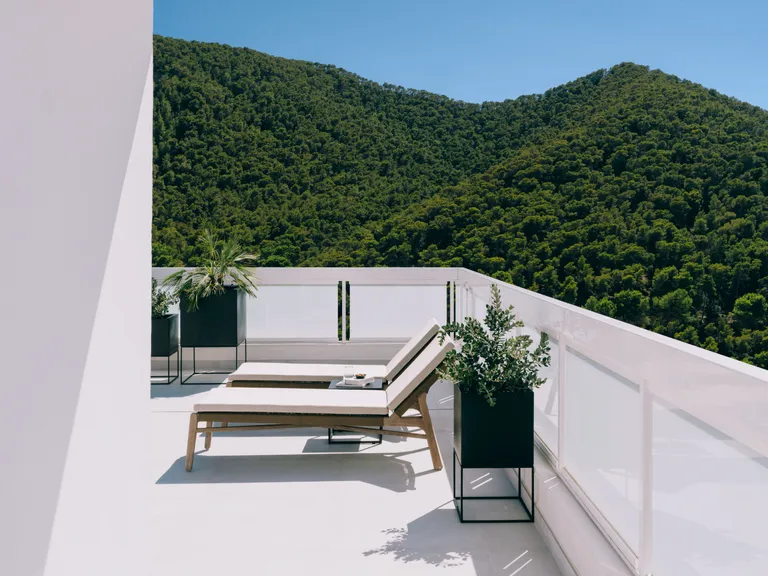
Mondrian Ibiza did not begin with a blank sheet of paper. The hotel occupies a 1970s structure rising above Cala Llonga, a sheltered bay on Ibiza’s quieter eastern coast. Rather than disguise those substantial bones, the transformation by Beades Architects and Madrid-based Cuarto Interior uses them as the framework for something much softer and more organic. White terraces step towards the water. Pine-covered hills surround the bay. And almost everywhere, the Mediterranean becomes part of the architecture.
Inside an Ibizan Cave
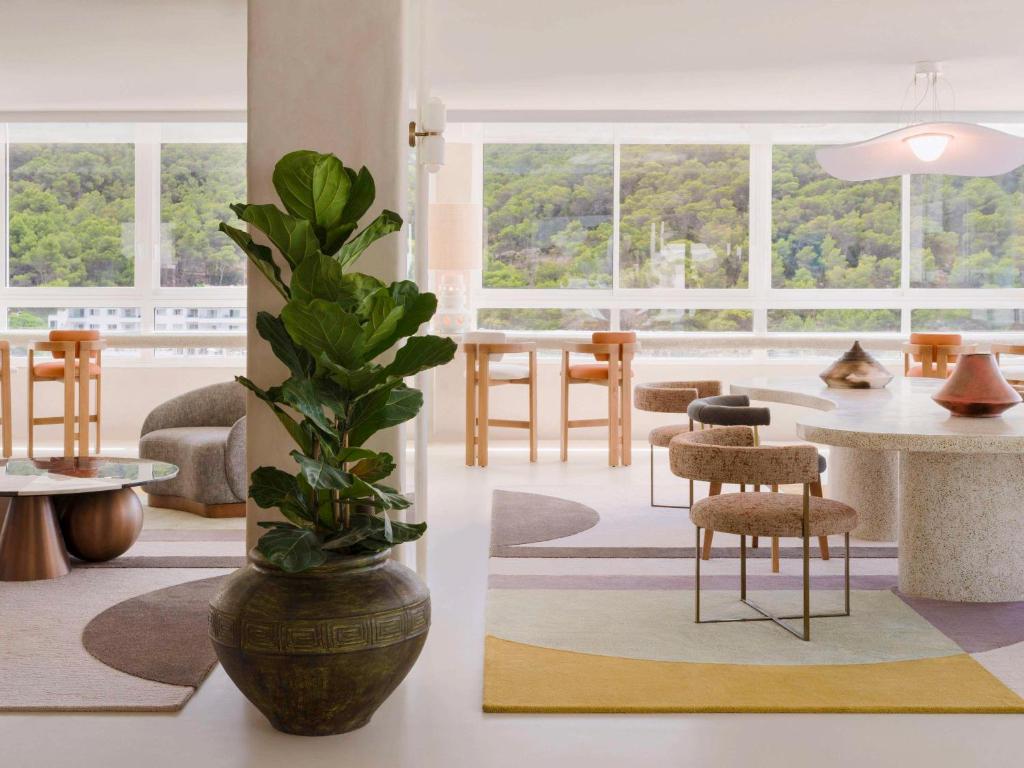
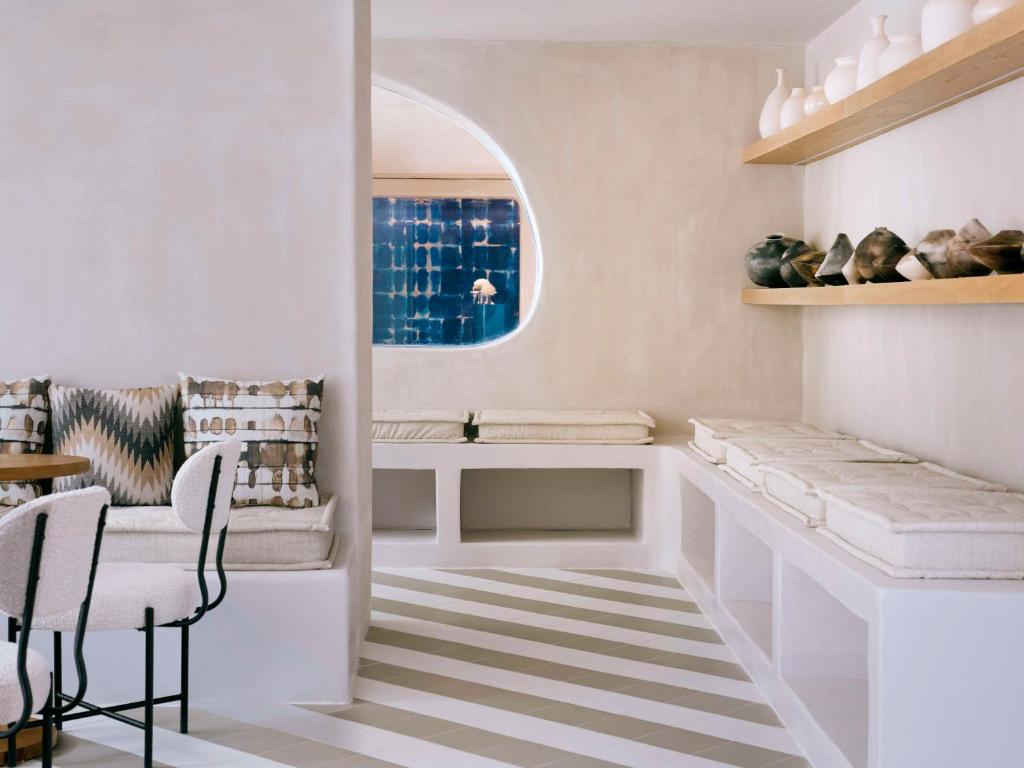
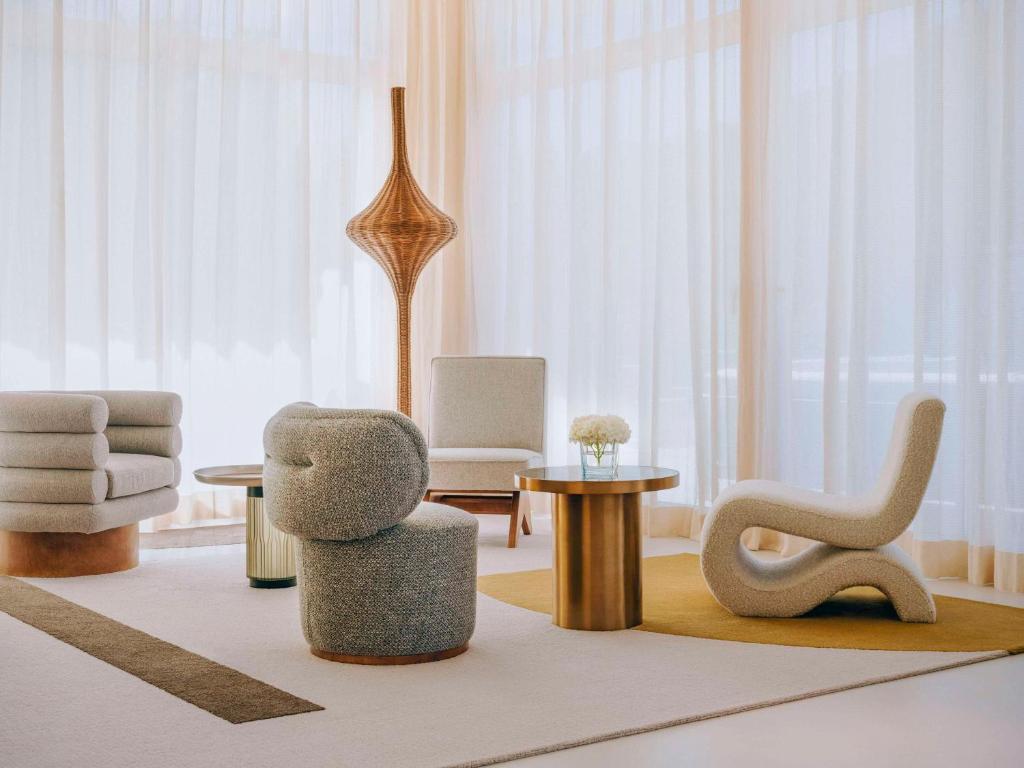
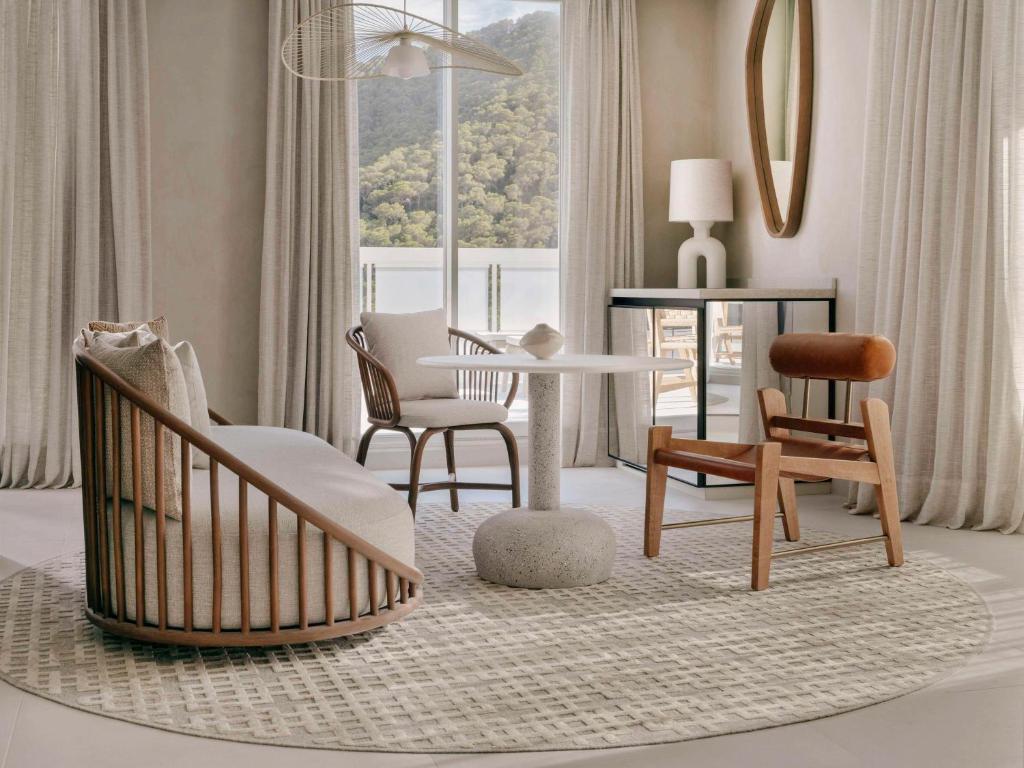
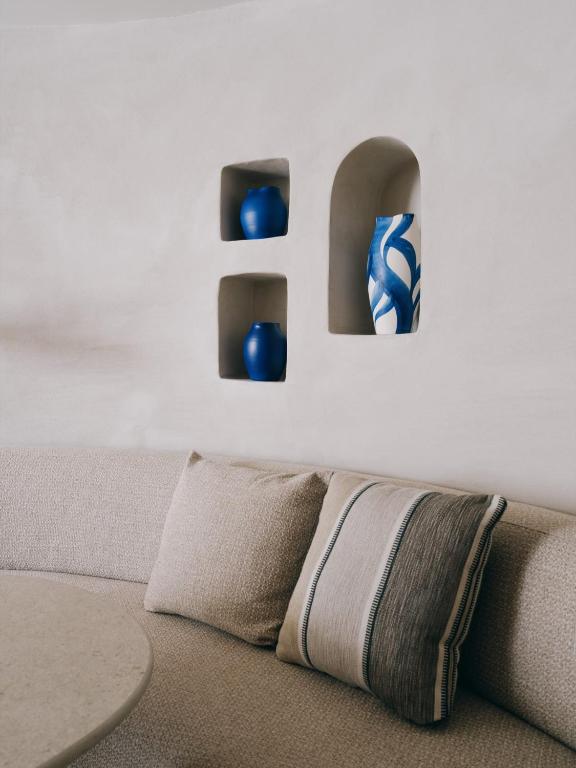
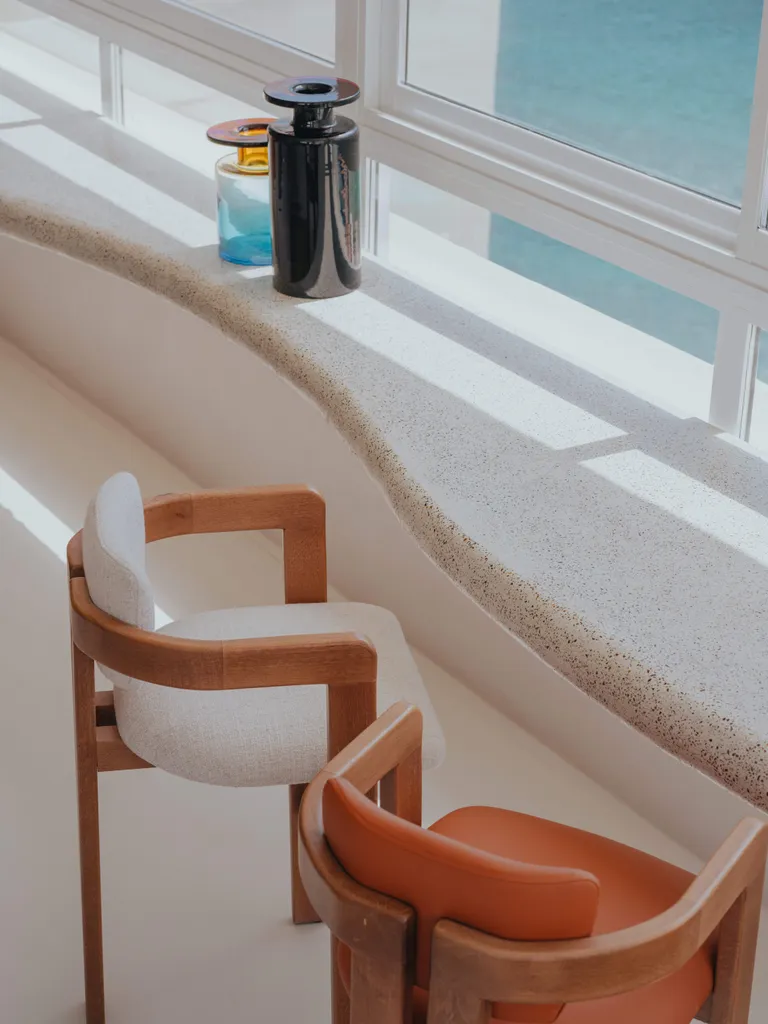
The lobby is where Cuarto Interior makes its strongest statement. Huge expanses of glass flood the interior with daylight, illuminating curving whitewashed surfaces inspired by Ibiza’s natural caves. Then comes the blue. A deep indigo sculptural cavity cuts dramatically into the otherwise pale interior, evoking the almost impossible depth of colour in the Mediterranean outside. It is theatrical. But it works. Around it, bespoke mid-century-inspired furniture, handmade rugs, linen, ceramics, and sculptural objects introduce a quieter, tactile layer.
Art, Not Decoration
Mondrian has always used art as part of its identity, and Ibiza is no exception. London collective Gone Rogue curated contemporary works throughout the hotel, including pieces by Corine van Voorbergen and Hannah Nijsten. Rather than filling every available wall, the collection is given space. Ceramics and sculptural pieces sit alongside the architecture. Furniture becomes part of the composition. Art, craft, and interior design are allowed to overlap. It feels appropriate on an island whose creative identity stretches far beyond its club scene.
154 Rooms of Crafted Calm
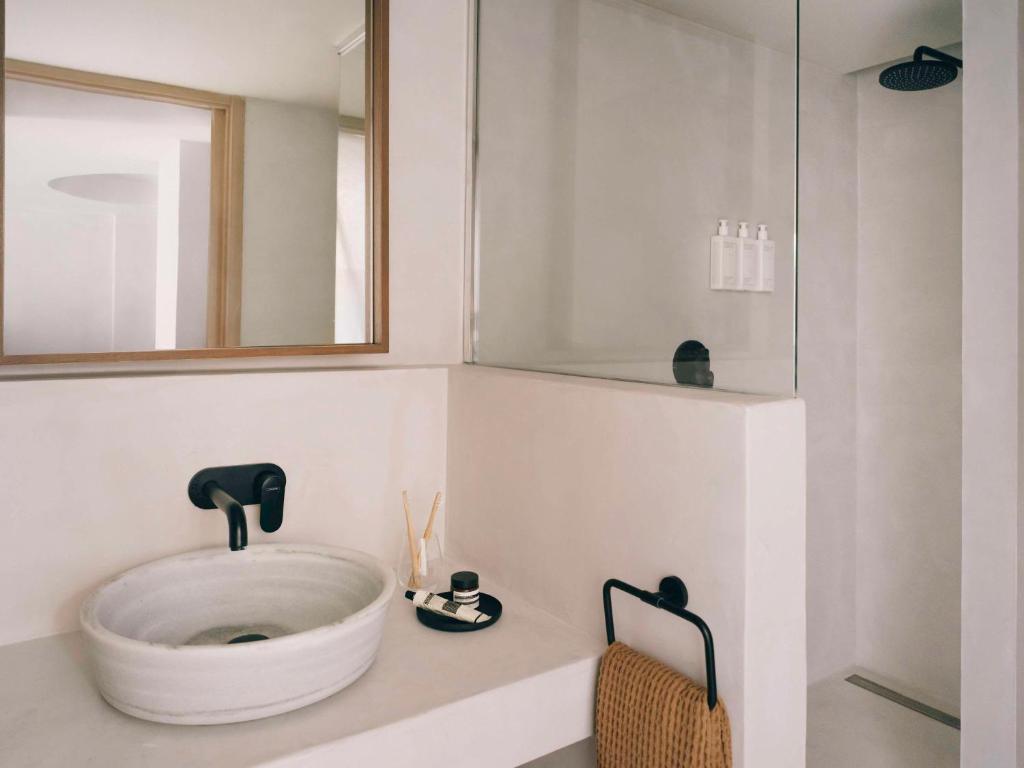
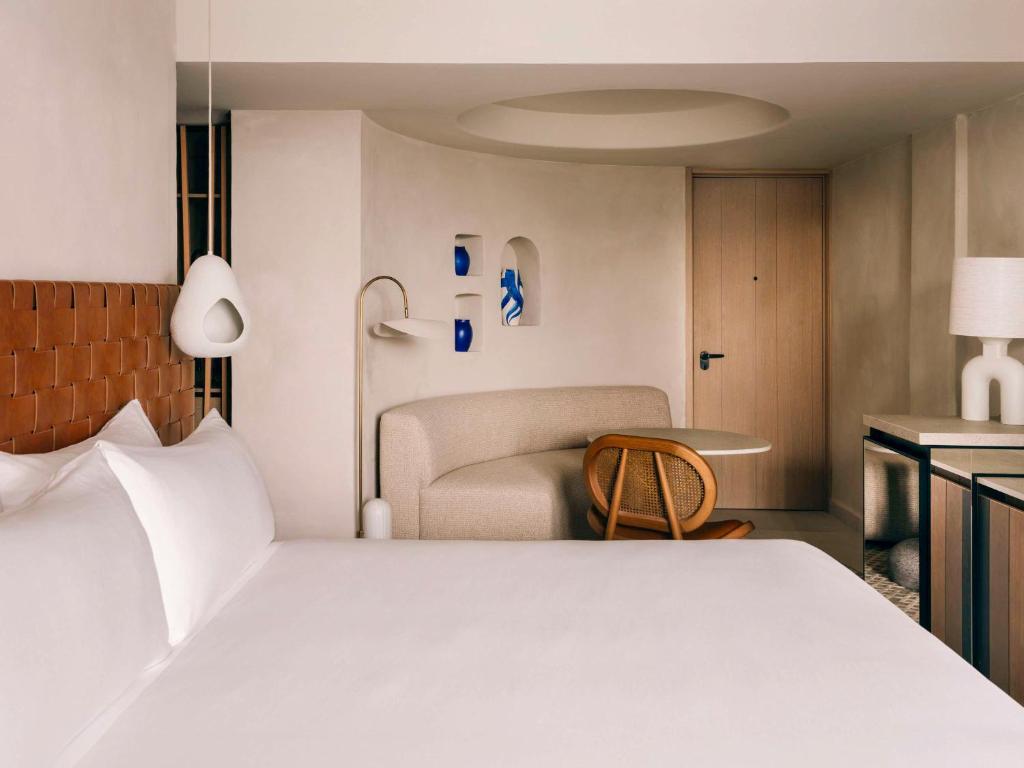
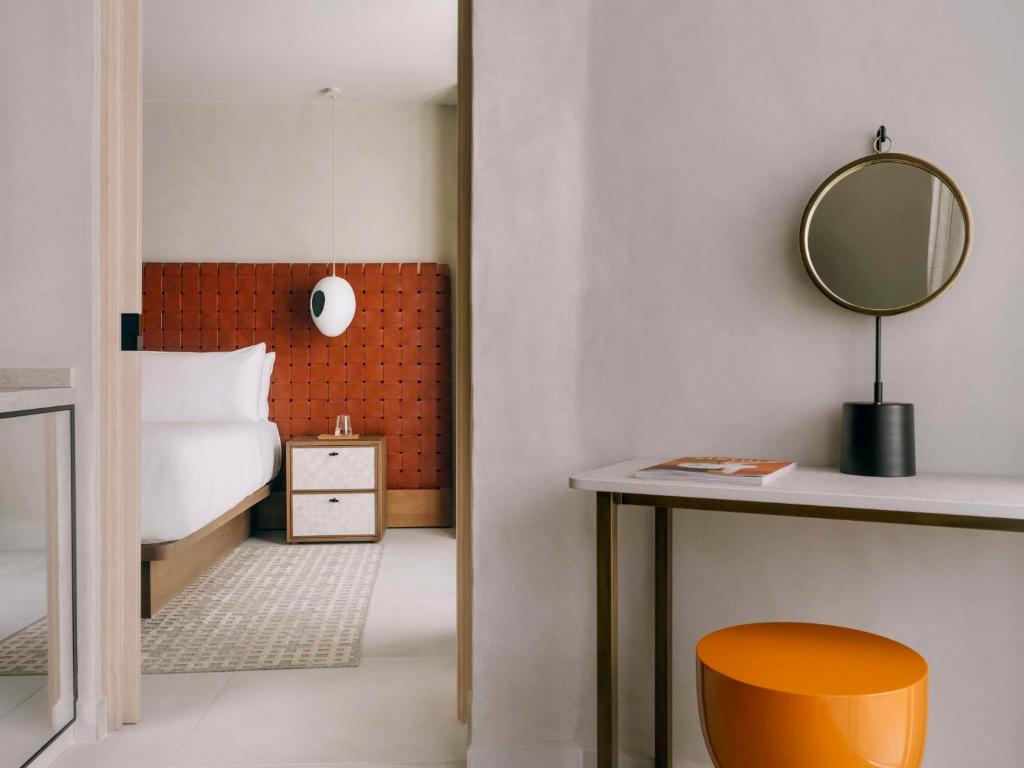
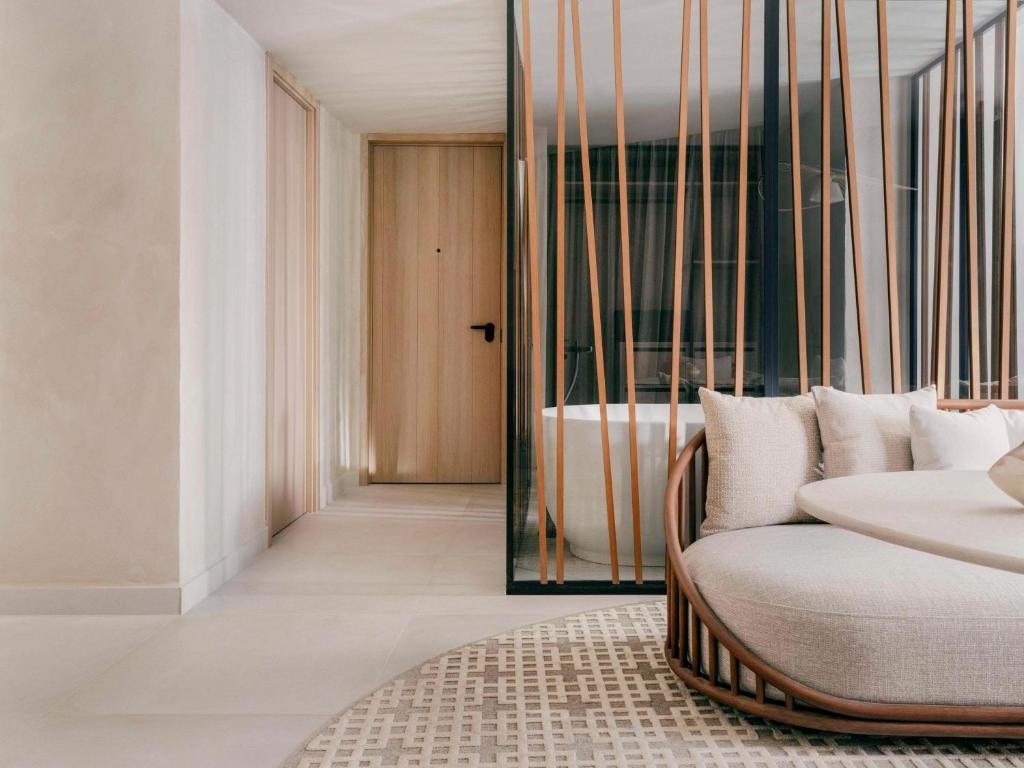
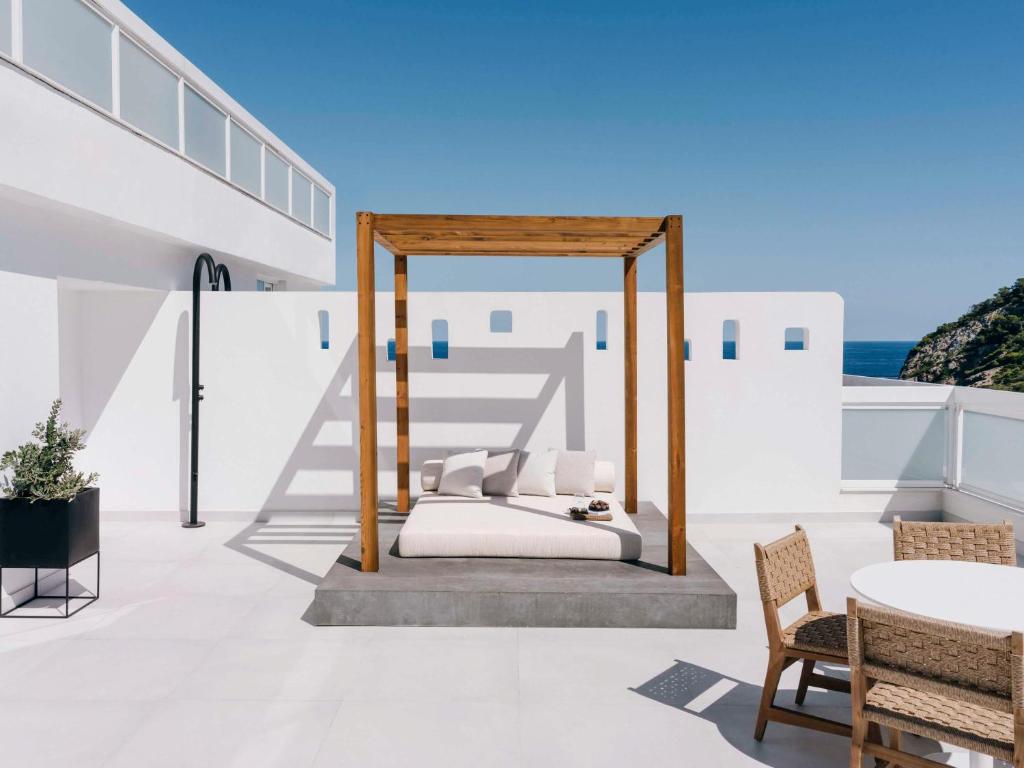
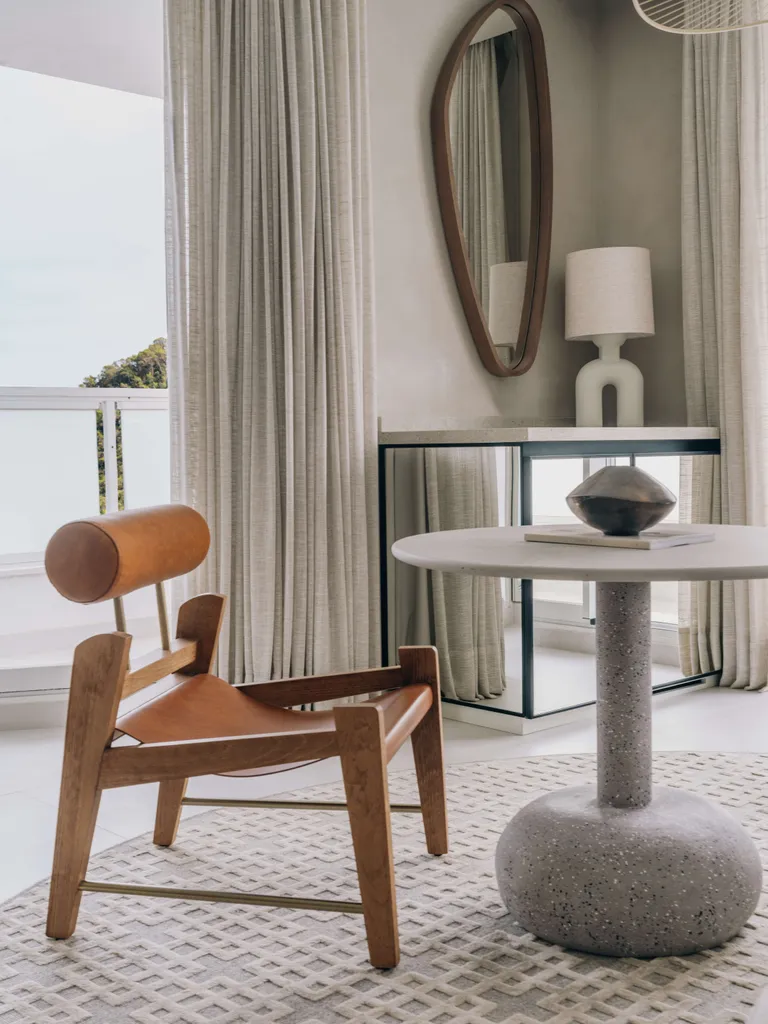
The 154 rooms and suites deliberately retreat from the drama downstairs. Oatmeal shades and warm oak establish the base. Curved furniture softens the geometry. Woven leather headboards reference traditional Balearic craft, while slatted timber cabinetry takes inspiration from the simple fishermen’s shelters and dry docks found around the island. Every room has a balcony or terrace. And here, the view becomes the most important piece of design. The higher categories open towards spectacular panoramas across Cala Llonga, while the Mondrian Grande Suite adds an enormous terrace with daybeds, private cabana, and outdoor dining.
The Bay Takes Over
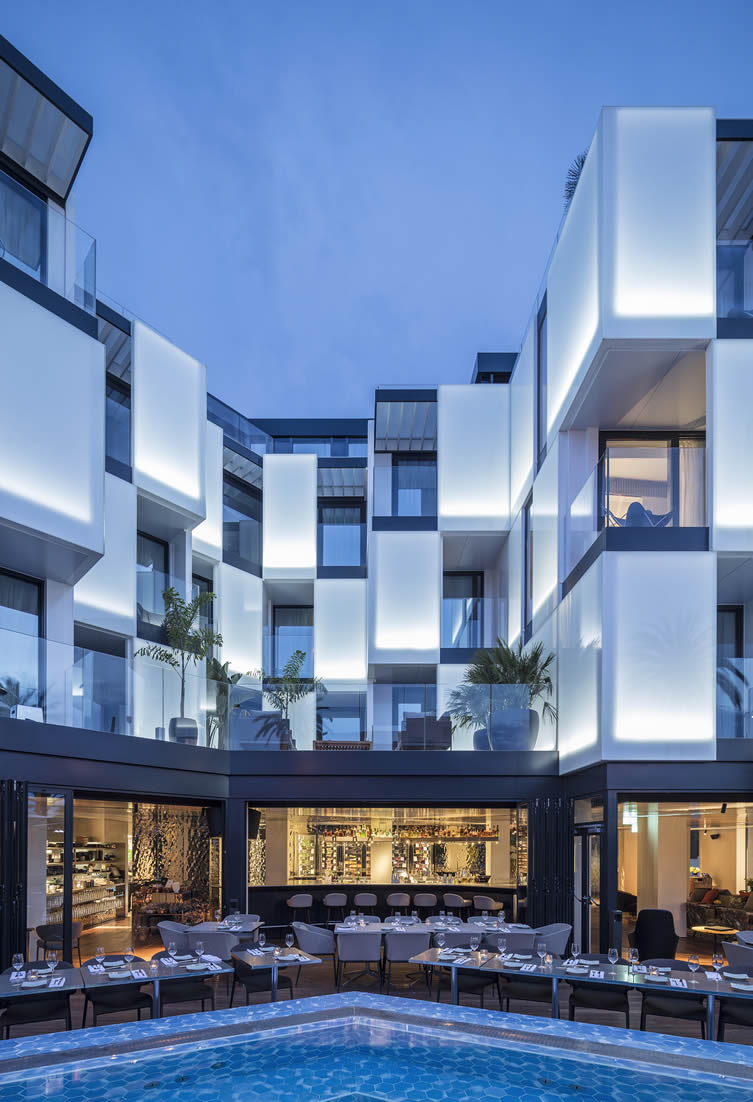
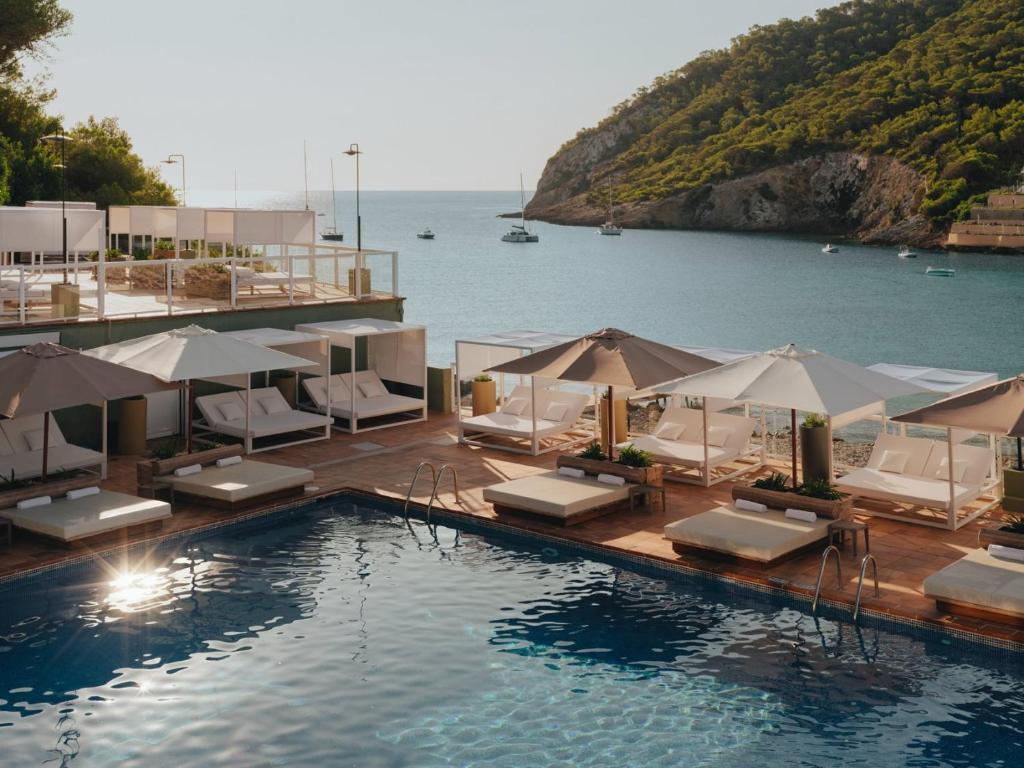
Outside, the relationship with Cala Llonga becomes even stronger. Pools are positioned across the waterfront terraces, offering different levels of activity and seclusion. Beyond them lies direct access to the beach. A nearby boat dock makes it possible to leave by sea and explore quieter stretches of Ibiza’s coastline. This is an important part of Mondrian’s appeal. Ibiza Town is close enough when you want it. But the hotel gives you remarkably few reasons to go there.
Niko After Dark
Food and drink are spread across Mondrian and neighbouring sister hotel Hyde Ibiza. Sun & Moon is Mondrian’s all-day social space, moving from light daytime meals into cocktails as the light changes over the bay. Niko brings a more polished mood. The Japanese restaurant combines sashimi, sushi, tempura, and grilled dishes with a striking sushi bar created by Spanish artist Esther Rosa. Its open-air incarnation becomes particularly atmospheric after sunset. For something much more relaxed, Sonrojo sits beside the beach, serving Spanish dishes, grilled fish, and rice against the water. Cuyo adds Mexican flavours on the Hyde side of the resort.
Two Hotels, Two Personalities
Sharing the site with Hyde could easily have blurred the distinction between the two hotels. Instead, the contrast is useful. Hyde is louder, younger, and more overtly social. Mondrian feels more composed. Its architecture, art, and interiors carry more of the experience, while guests can still cross over when they want the energy of Hyde’s pools and restaurants. It gives the combined resort an unusual flexibility.
Why It Works
Mondrian Ibiza is at its best when it resists the obvious Ibiza references. There is no need to manufacture island soul with endless macramé and distressed timber. Cuarto Interior finds something more interesting in the landscape itself: cave walls, deep Mediterranean blue, fishermen’s shelters, natural fibres, ceramics, and sunlight. Against the substantial bones of a 1970s building, those references become contemporary rather than nostalgic. Add thoughtful art, beautifully restrained rooms, and Cala Llonga filling virtually every window, and Mondrian becomes the more sophisticated half of this two-hotel experiment — an Ibiza resort where the design is bold enough to compete with the view, but smart enough not to try too hard.
Information
At a glance
Architecture
Beades Architects
Opened / Renovated
2023
Size matters
154 rooms & suites (27-75m2) (291-807 sq ft)
Interior design
The Small Print
seasonal hotel: open June to mid-October





Handpicked worldwide
A carefully curated collection of exceptional boutique and design hotels across the globe.
Design with soul
Architecture, atmosphere and craftsmanship come together in stays with a clear identity.
Hidden, not hyped
Independent boutique hotels you rarely find on mainstream booking platforms.
Travel guidance
Personal recommendations and thoughtful support from people who actually know the places.