The Ned Doha, Qatar
Where Brutalist Heritage Meets Contemporary Luxury
Why DNA Hotels Loves It
● One of the Middle East’s most significant adaptive reuse projects, transforming a landmark 1970s government building into a design-led destination.
● A masterful collaboration between David Chipperfield Architects and Soho House Design that balances architectural integrity with warmth and character.
● A rare example of Brutalist architecture reimagined for modern hospitality without losing its original identity.
A Brutalist Icon Reborn
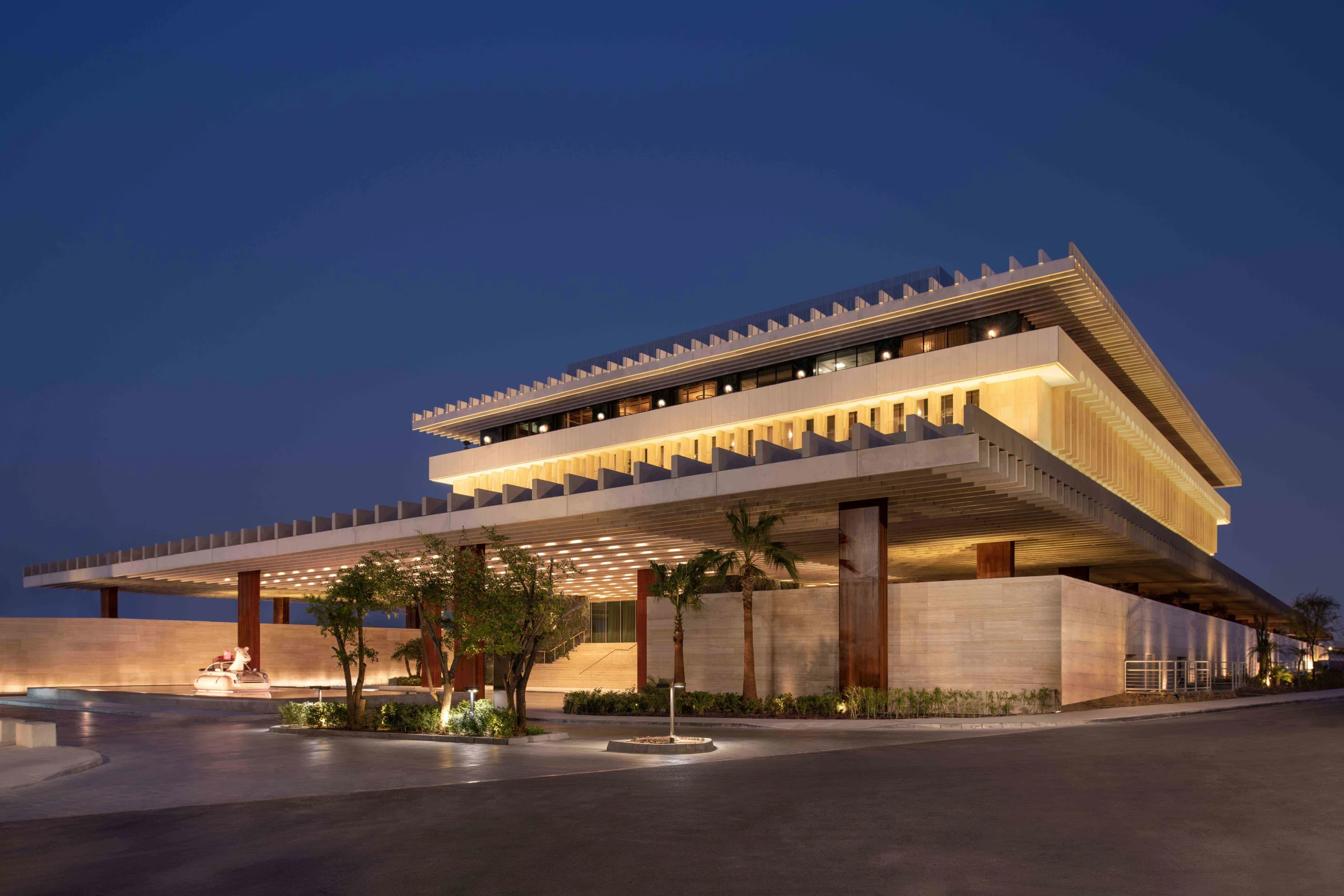
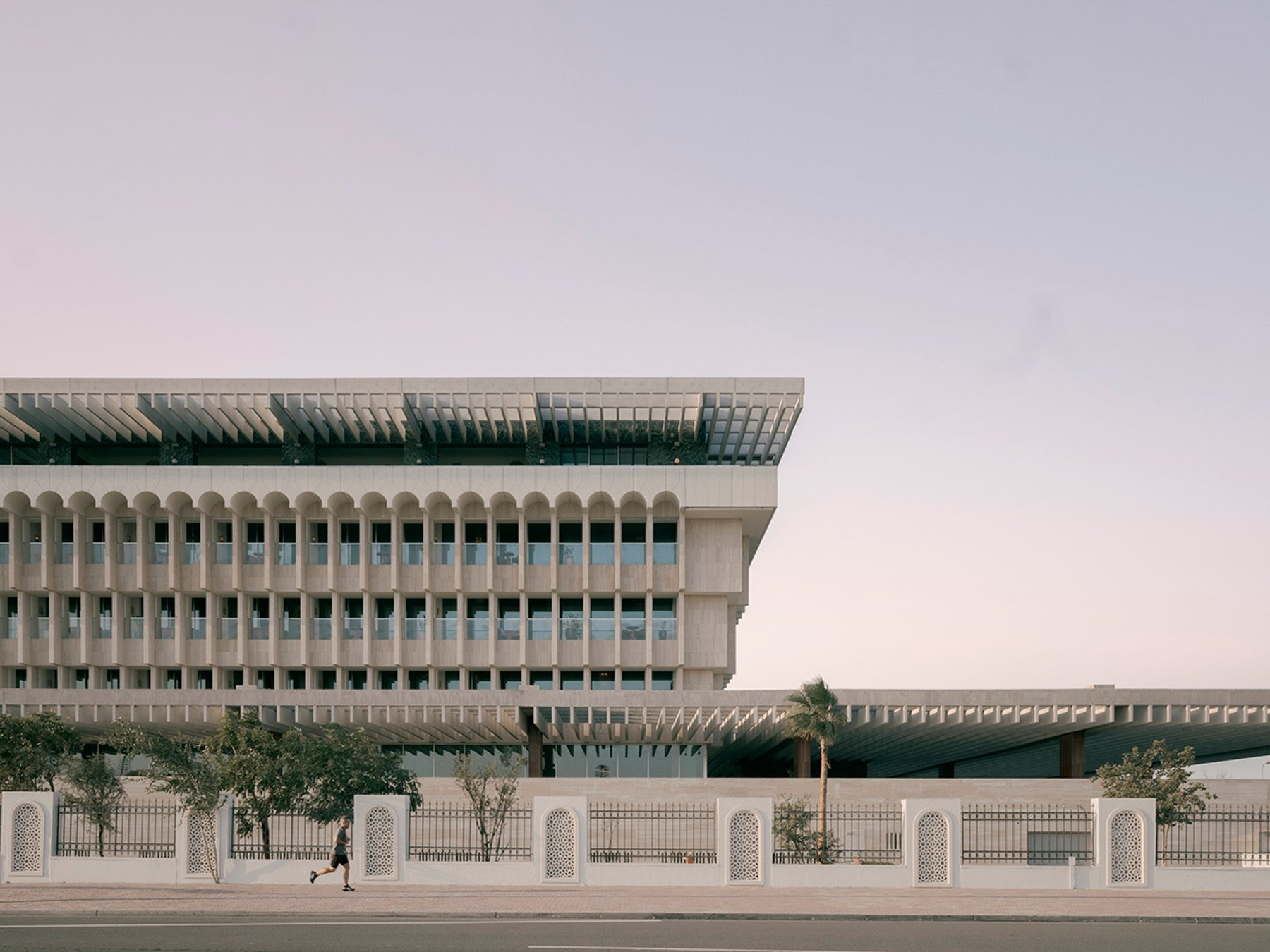
In a city defined by ever-rising glass towers, The Ned Doha offers something far rarer: a connection to the city’s architectural past. Originally designed in the 1970s by Lebanese architect William Sednaoui as Qatar’s Ministry of Interior, the building is one of Doha’s most important modernist landmarks. Rather than replacing it, the owners chose to preserve and reinvent it. The result is a thoughtful transformation led by David Chipperfield Architects Berlin, who approached the project with remarkable restraint and respect. Today, the former government headquarters has been reborn as The Ned Doha, combining heritage, design, hospitality, and culture within one of the Gulf’s most distinctive architectural settings.
Where Concrete Meets Craft
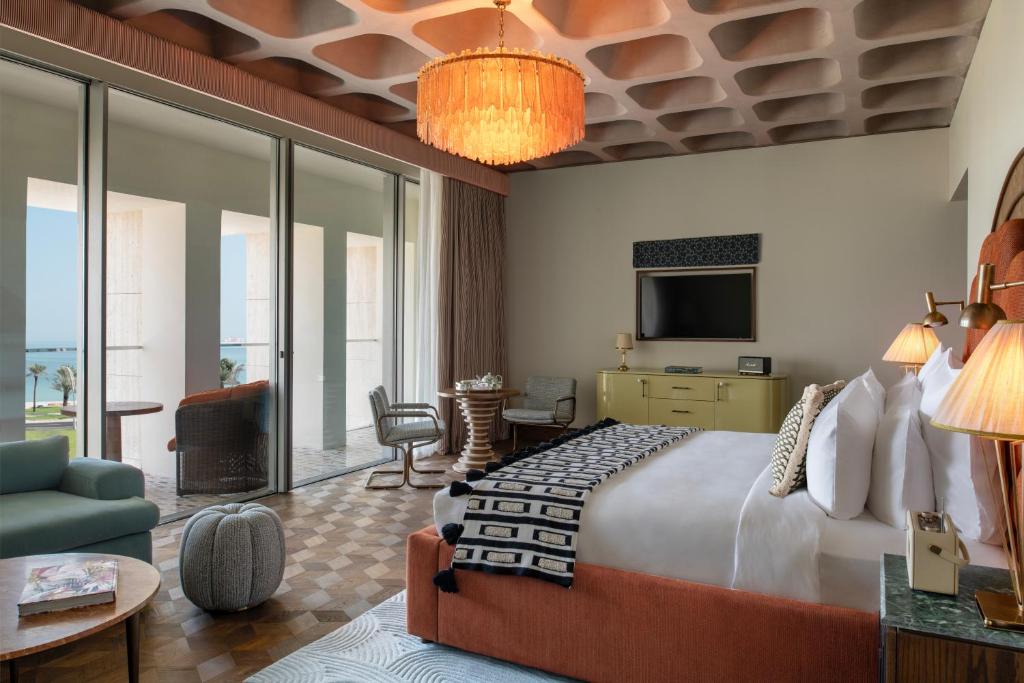
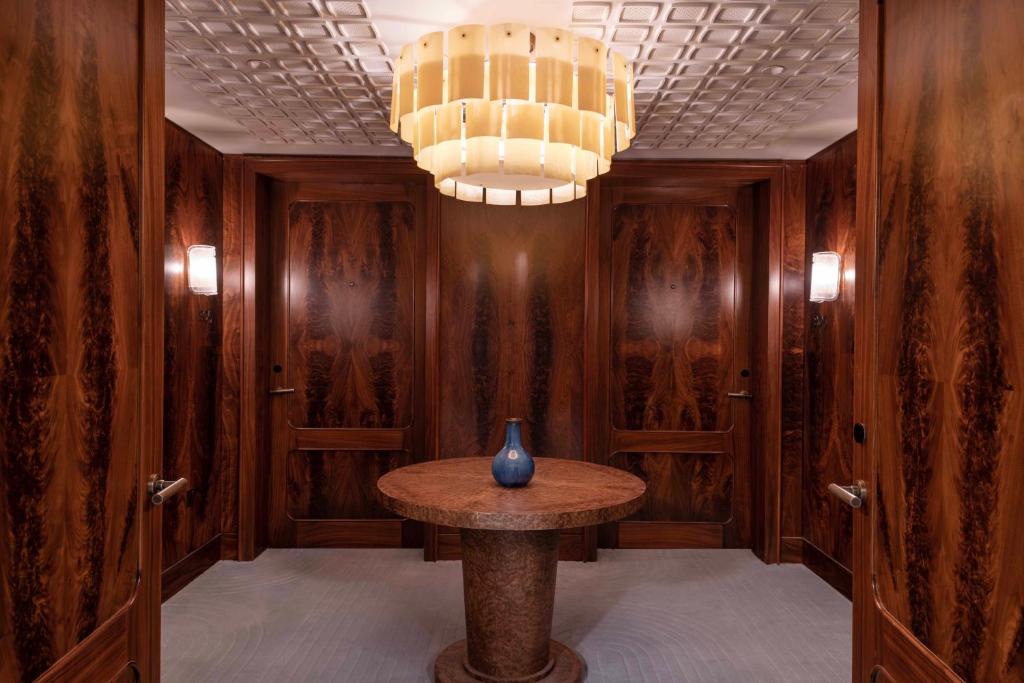
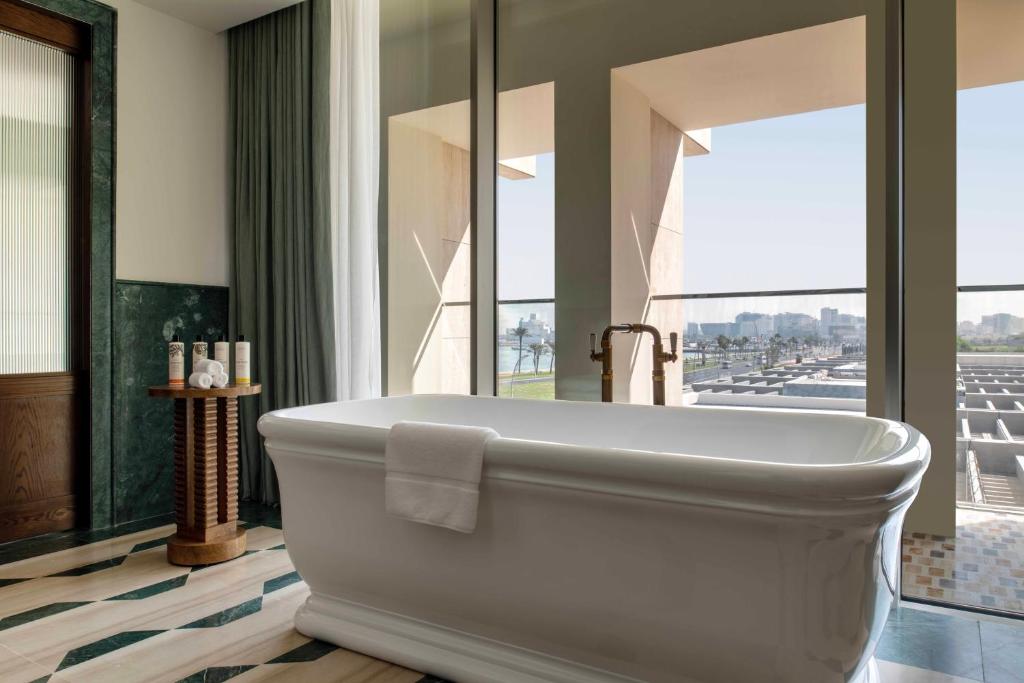
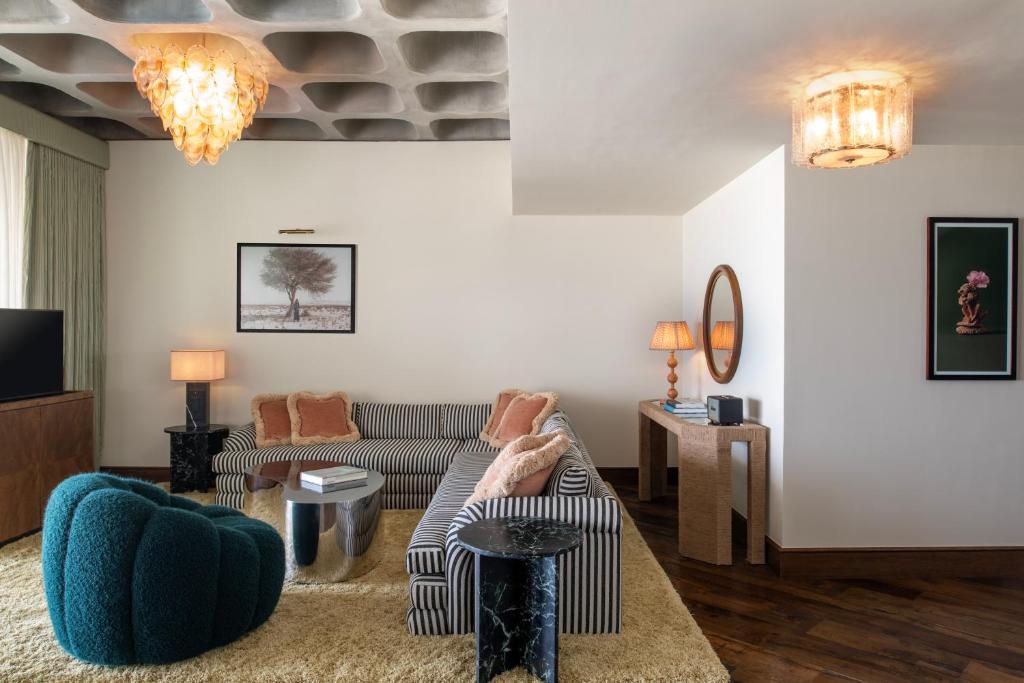
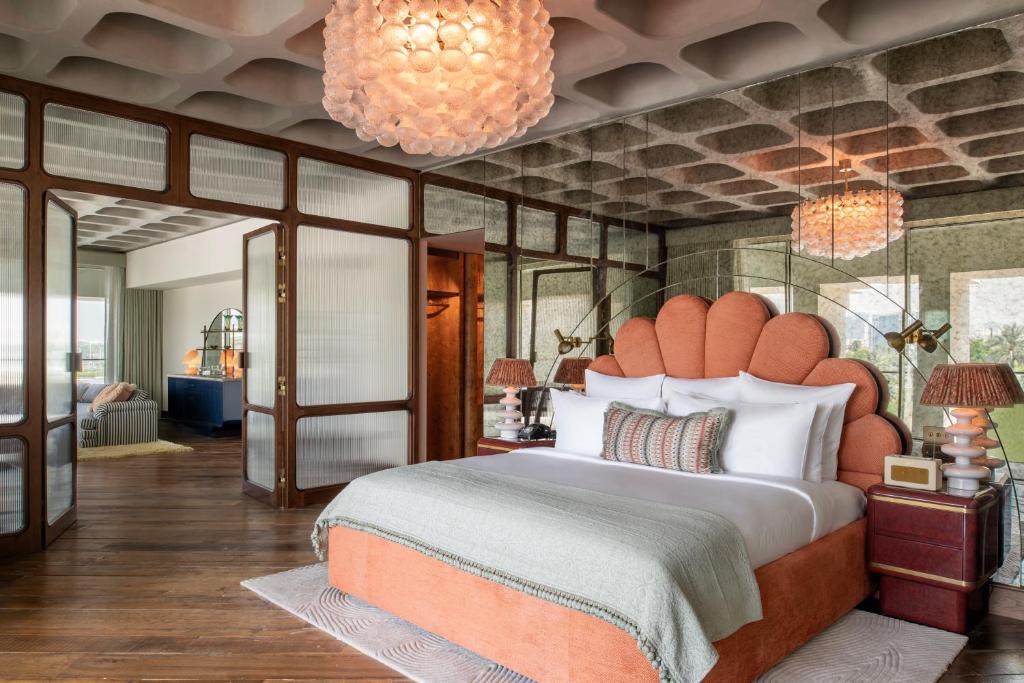
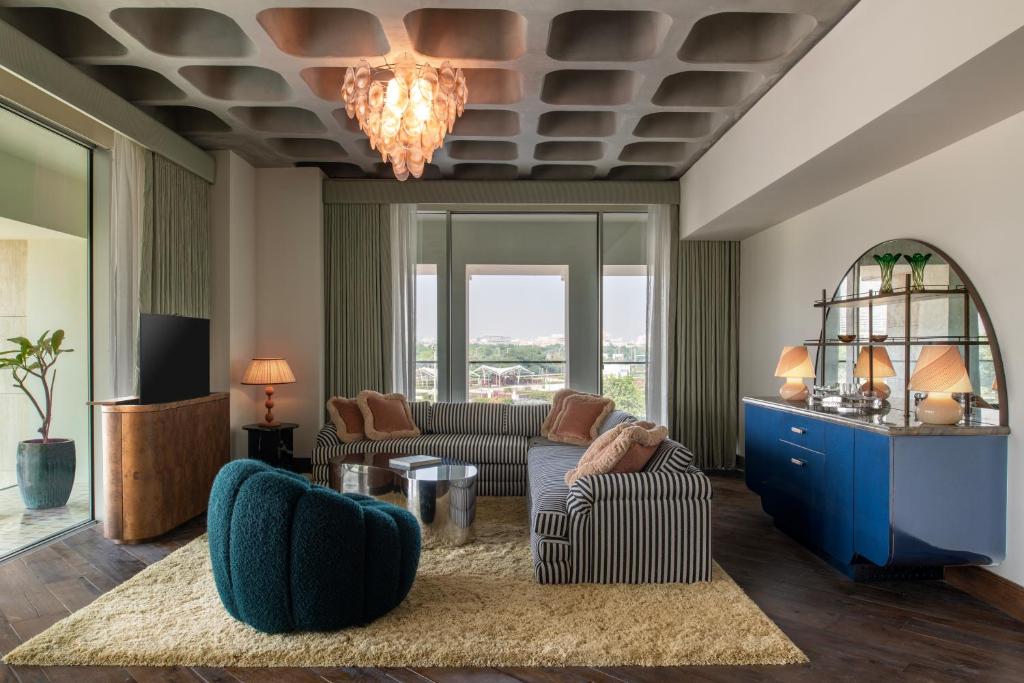
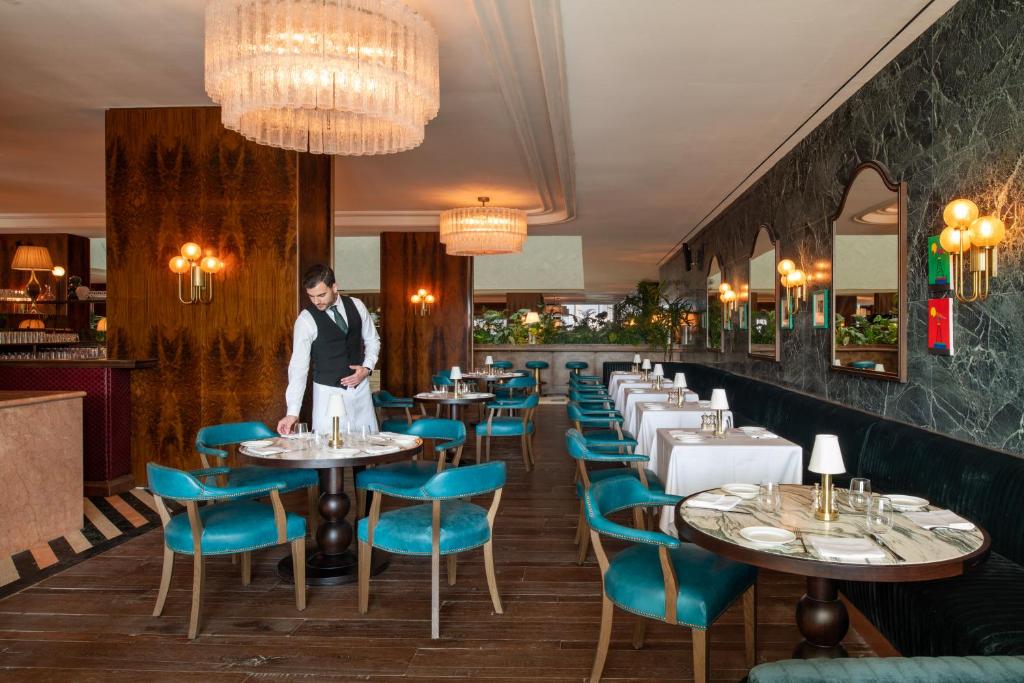
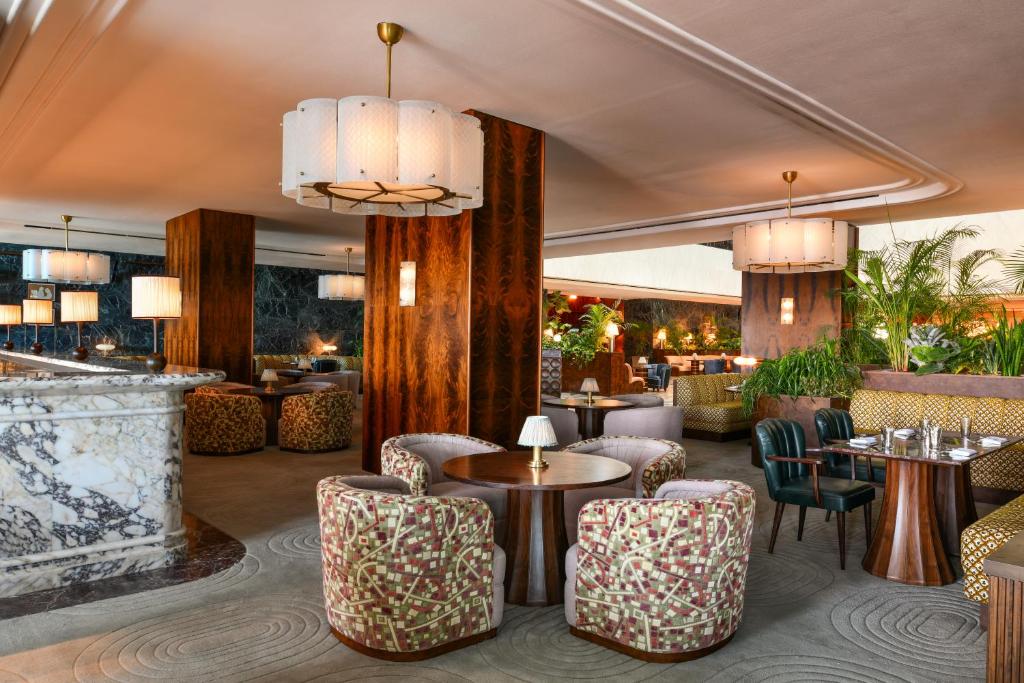
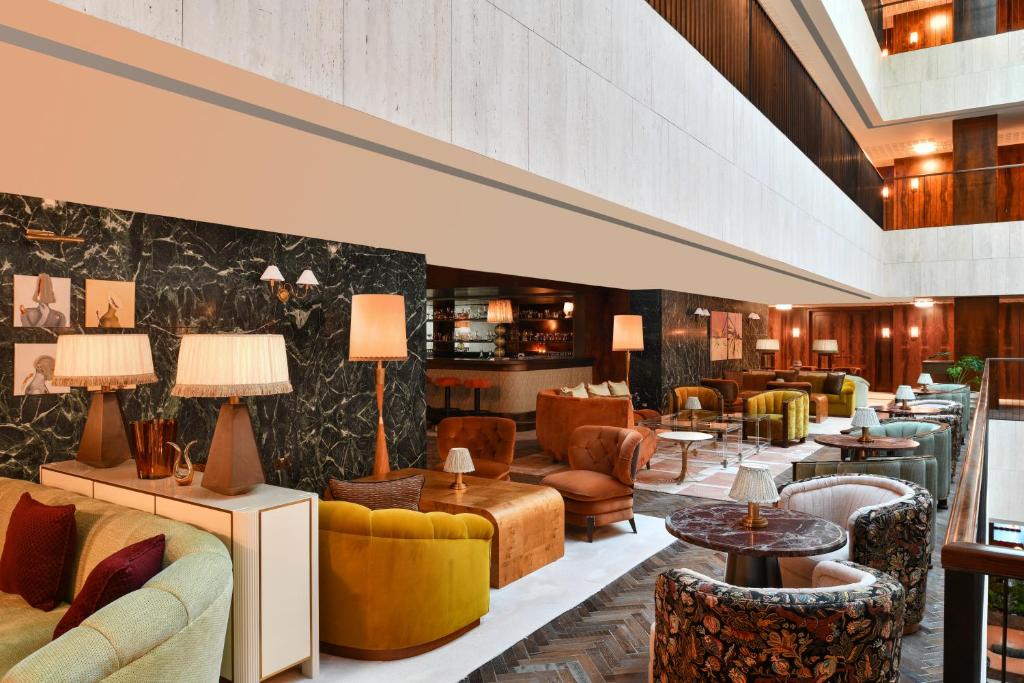
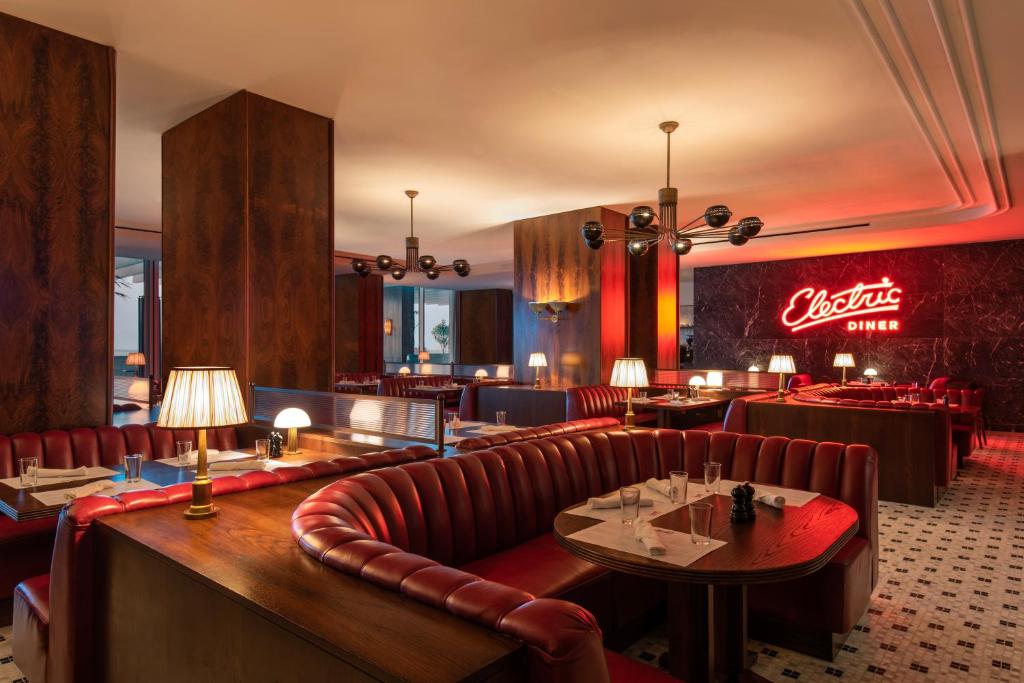
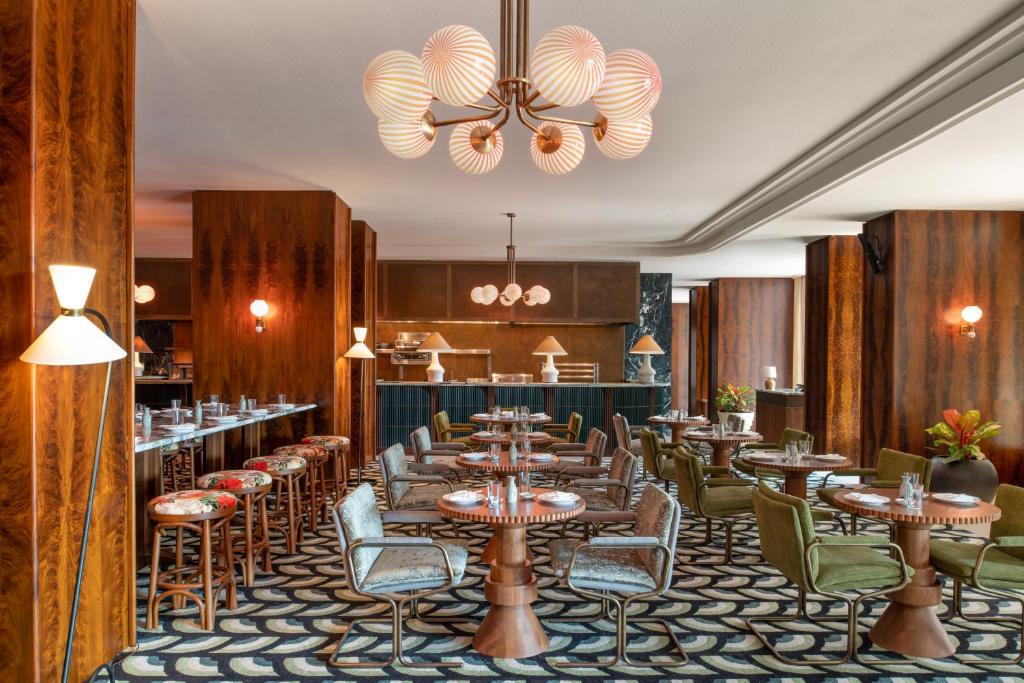
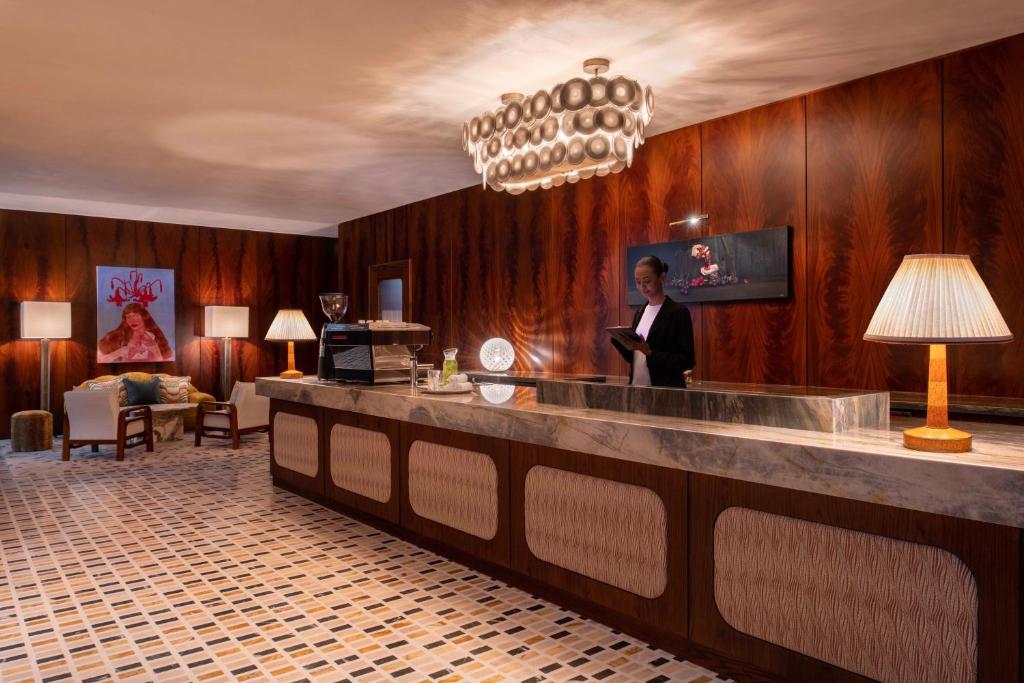
The genius of the project lies in what was left untouched. The building’s geometric façade remains intact, while original concrete waffle ceilings continue to define many of the interiors. Chipperfield’s intervention celebrates the structure’s Brutalist character rather than disguising it, allowing the architecture to tell its own story. Soho House Design introduced a softer layer throughout the property. Rich textiles, vintage furnishings, natural stone, dark timber, curated artworks, and subtle references to Qatari culture bring warmth and humanity to the robust concrete framework. The balance feels effortless: monumental yet welcoming, luxurious yet grounded. The result is neither a preservation project nor a complete reinvention, but a sophisticated dialogue between past and present.
An Urban Oasis Above the Corniche
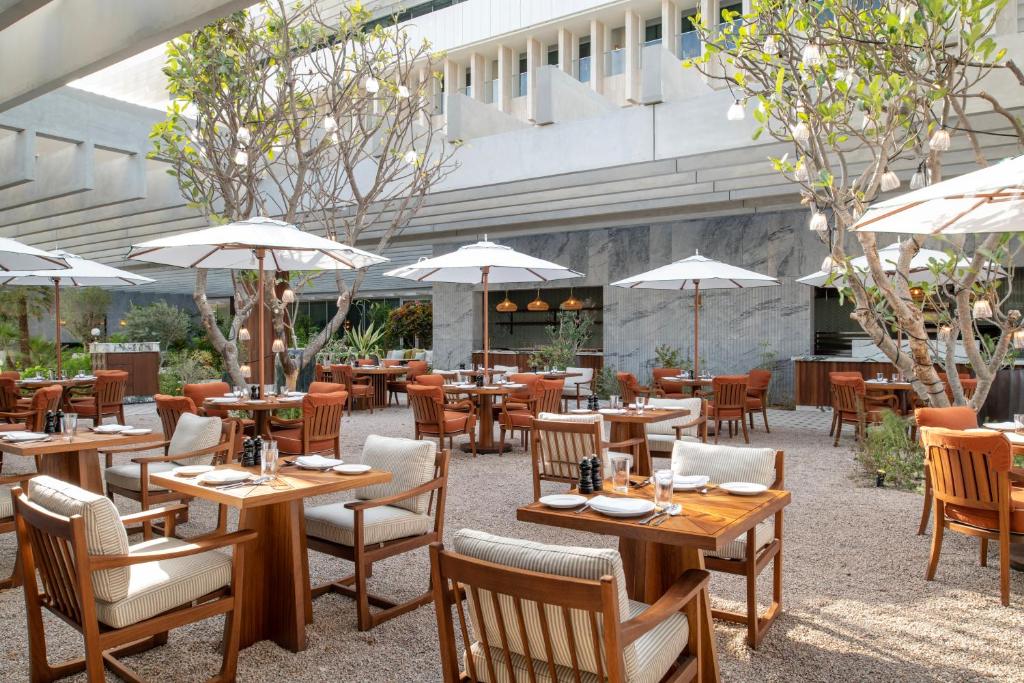
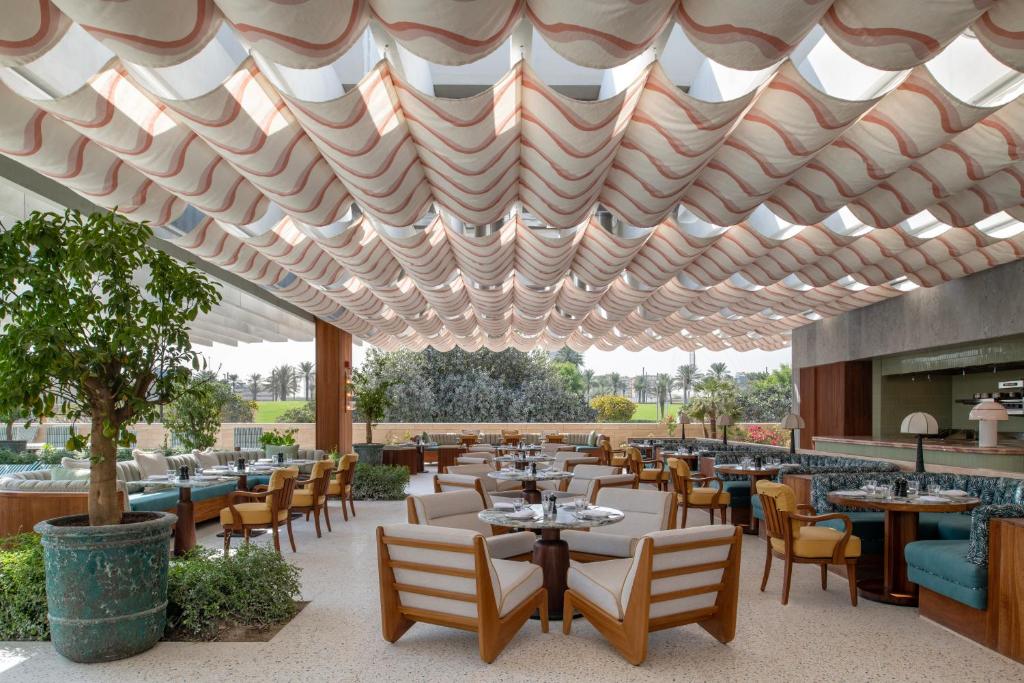
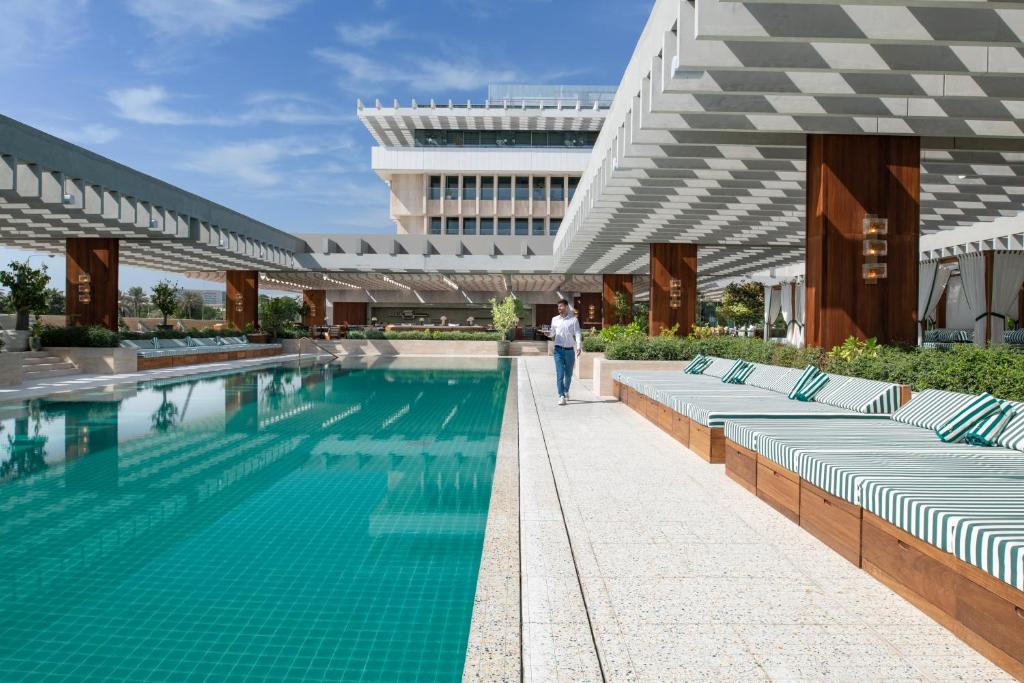
One of the most transformative additions is the newly reimagined podium surrounding the building. Courtyards, gardens, pools, and pavilions soften the original institutional setting, creating a series of outdoor spaces that feel calm and contemplative despite their location in the heart of the city. Palm trees, water features, and shaded terraces encourage guests to slow down and experience a different side of Doha. Above, rooftop spaces offer sweeping views across the Arabian Gulf and the city skyline. From sunrise to sunset, the contrast between the historic building and Doha’s futuristic skyline serves as a reminder of how quickly the city continues to evolve.
The Ned Way of Hospitality
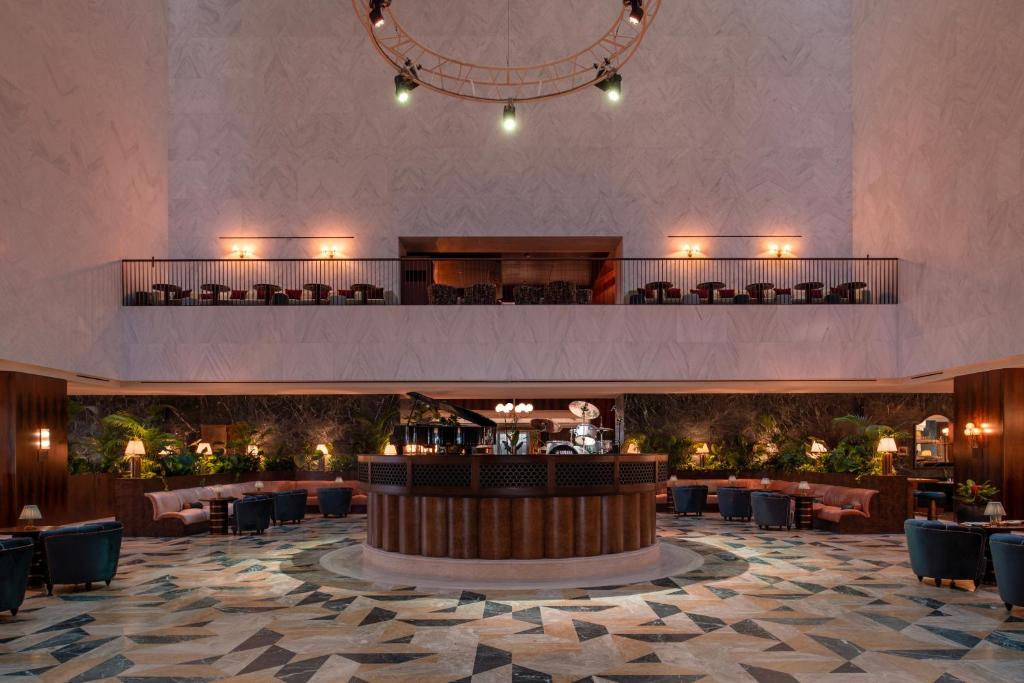
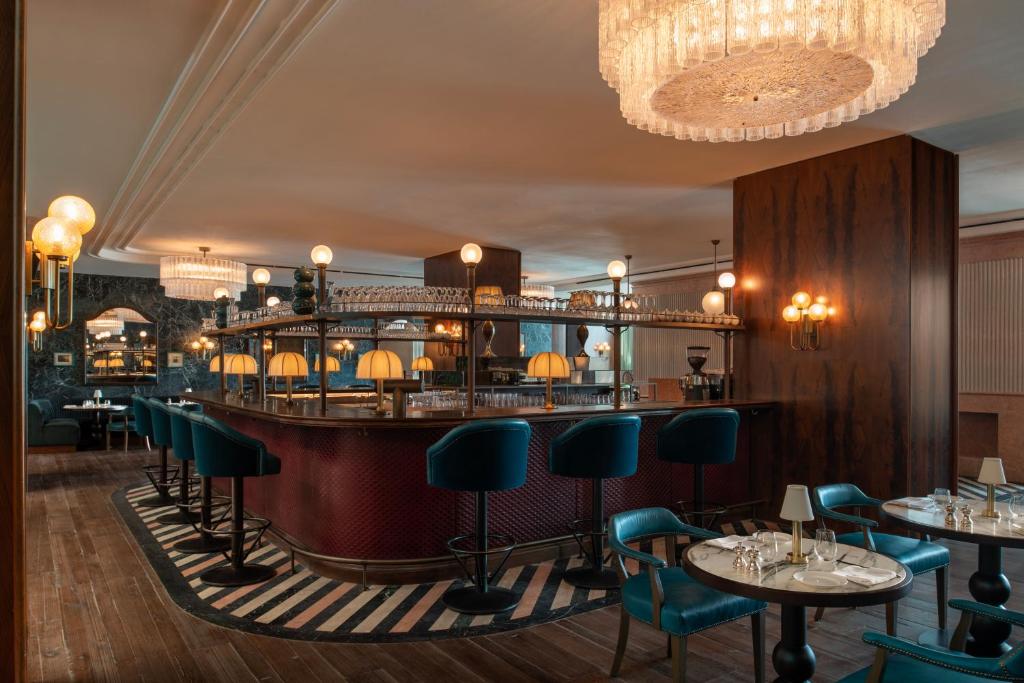
Like its sister properties in London and New York, The Ned Doha combines hotel, social club, dining destination, and cultural hub. Multiple restaurants and bars animate the building throughout the day, including signature concepts such as Cecconi’s and Malibu Kitchen. Live music fills the central atrium in the evenings, while the courtyard pool remains one of the city’s most sought-after places to spend an afternoon. The atmosphere feels distinctly different from many luxury hotels in the Gulf. There is a sense of character, energy, and individuality that reflects both the building’s history and The Ned’s social spirit.
A New Chapter for Doha’s Architectural Heritage
The Ned Doha demonstrates that preservation can be just as powerful as new construction. By transforming one of Qatar’s most important modernist buildings into a contemporary hospitality destination, the project has created a bridge between the city’s past and future. For travellers drawn to architecture, design, and meaningful places, The Ned Doha offers something increasingly rare: luxury with substance. It is a hotel that celebrates history rather than replacing it, proving that great buildings can continue to evolve while remaining true to themselves.