nhow Berlin, Germany
A Music Hotel Where Karim Rashid’s Futurism Meets the Creative Energy of the Spree
Why DNA Hotels Loves It
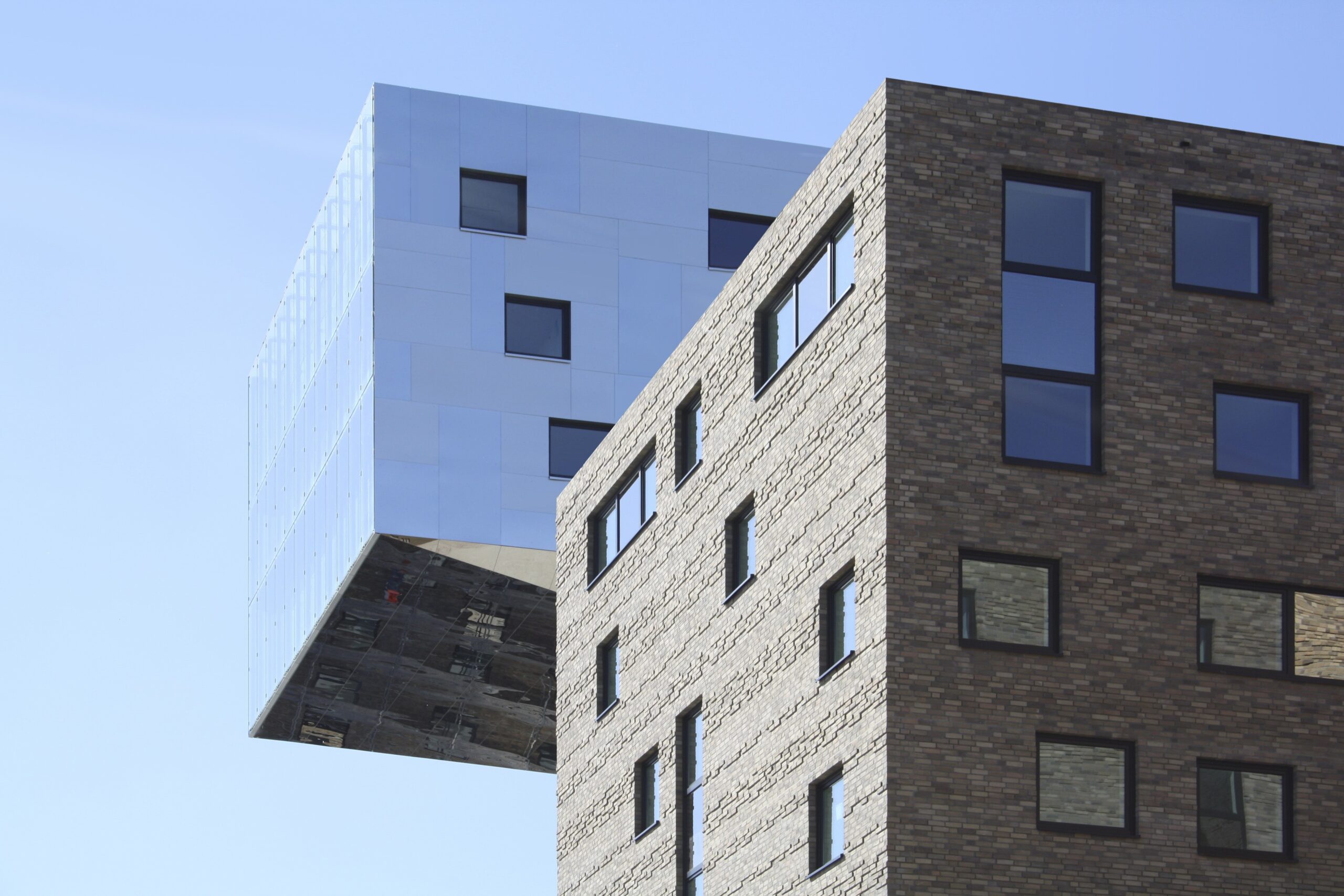
● Sergei Tchoban’s cantilevered riverside architecture gives the hotel one of Berlin’s most distinctive contemporary silhouettes.
● Karim Rashid’s immersive interiors replace conventional hotel restraint with colour, curves, and unapologetic visual energy.
● Two professional recording studios and instruments delivered to guestrooms make music part of the experience rather than simply a theme.
Architecture Above the River
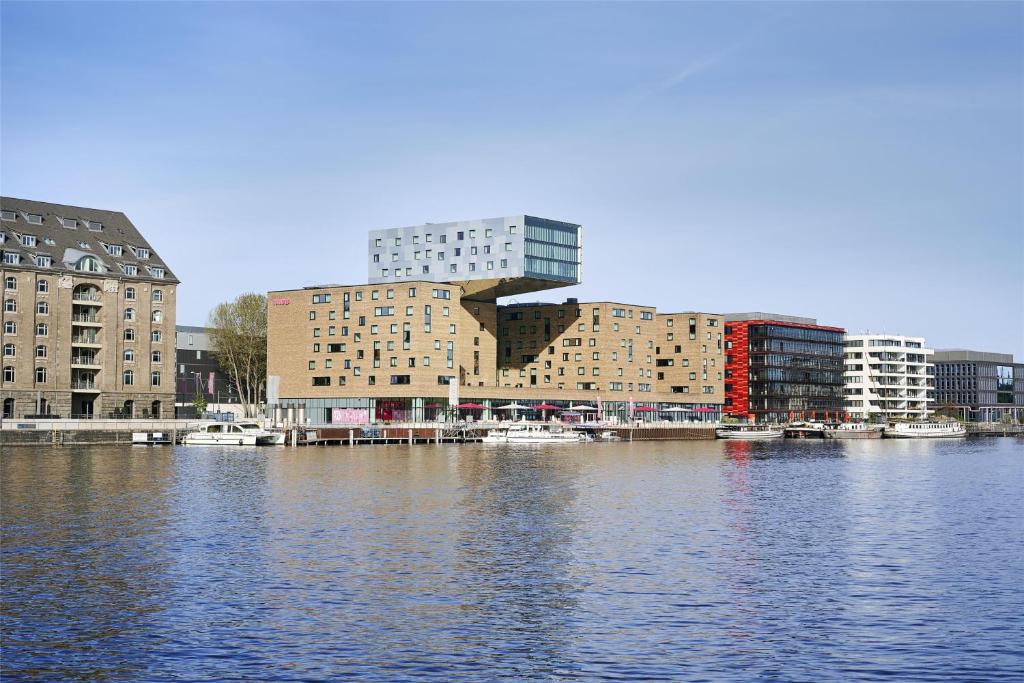
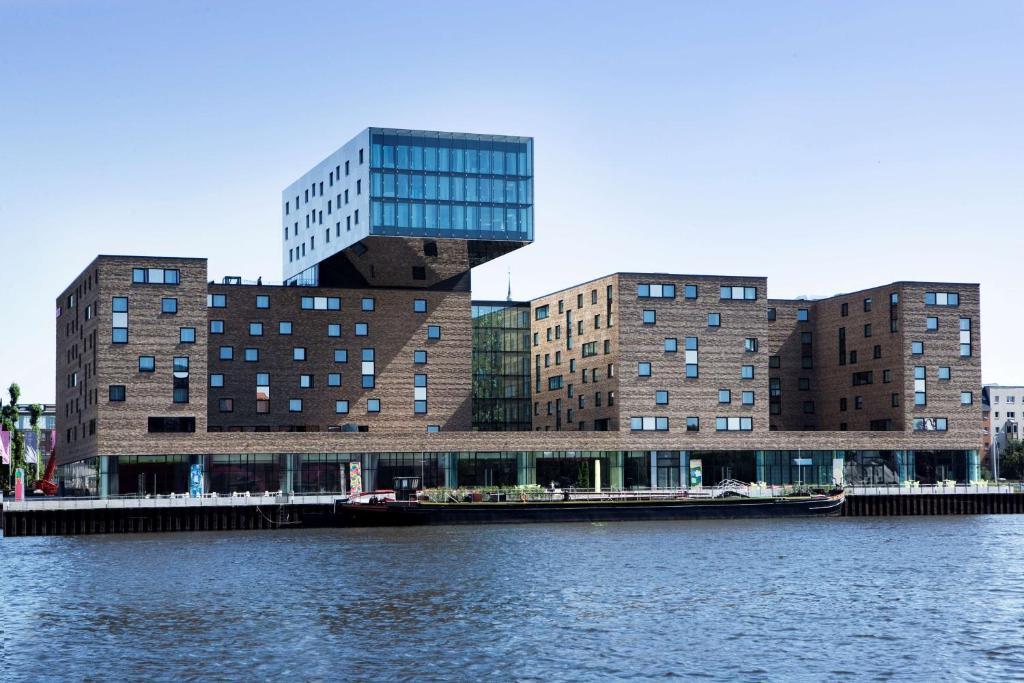
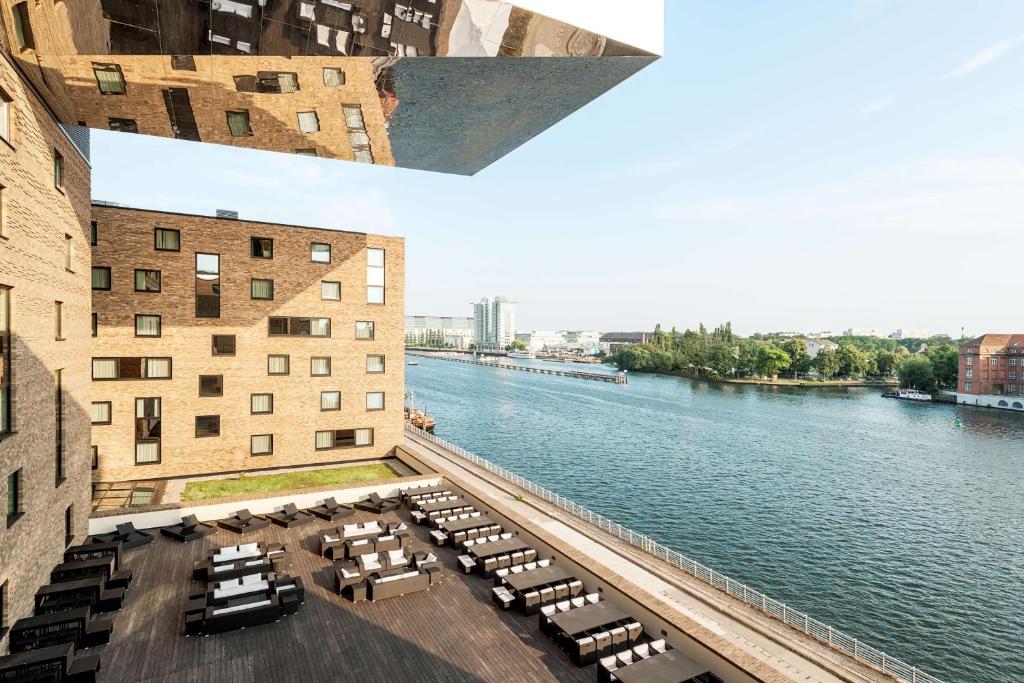
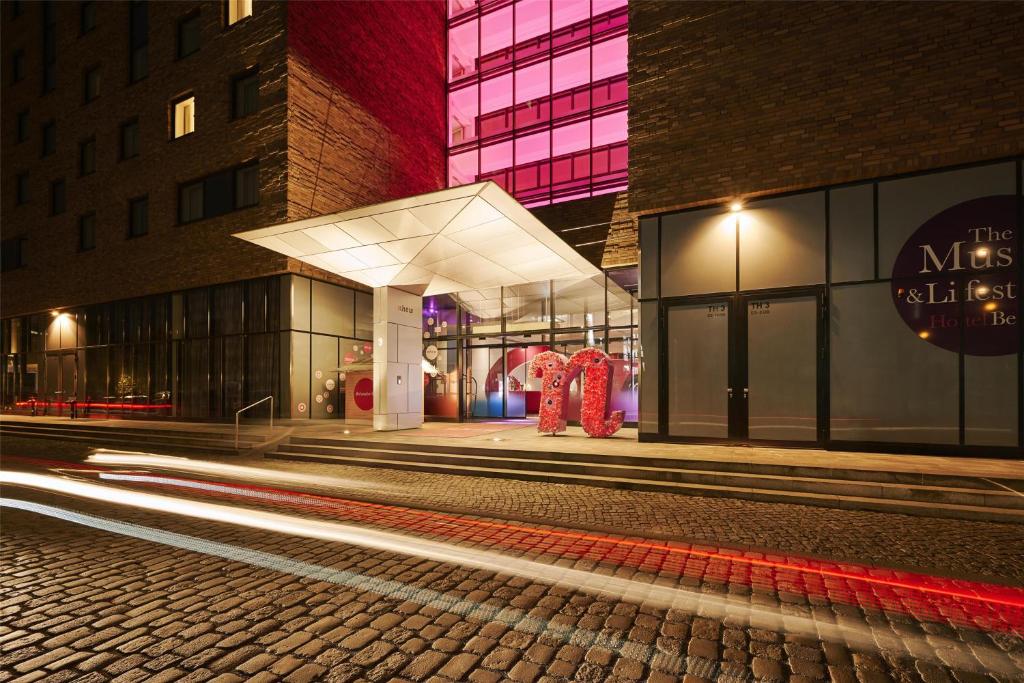
nhow Berlin occupies a commanding position on the former Osthafen. Designed by architect Sergei Tchoban, the building responds to the area’s industrial harbour history through brick façades, warehouse-like volumes, and a dramatic metallic structure that cantilevers above the Spree like a crane cabin. Its upper levels appear to hover over the water, transforming the hotel into a recognisable part of the riverfront skyline. The architecture references industry. Then turns it into theatre.
Karim Rashid at Full Volume
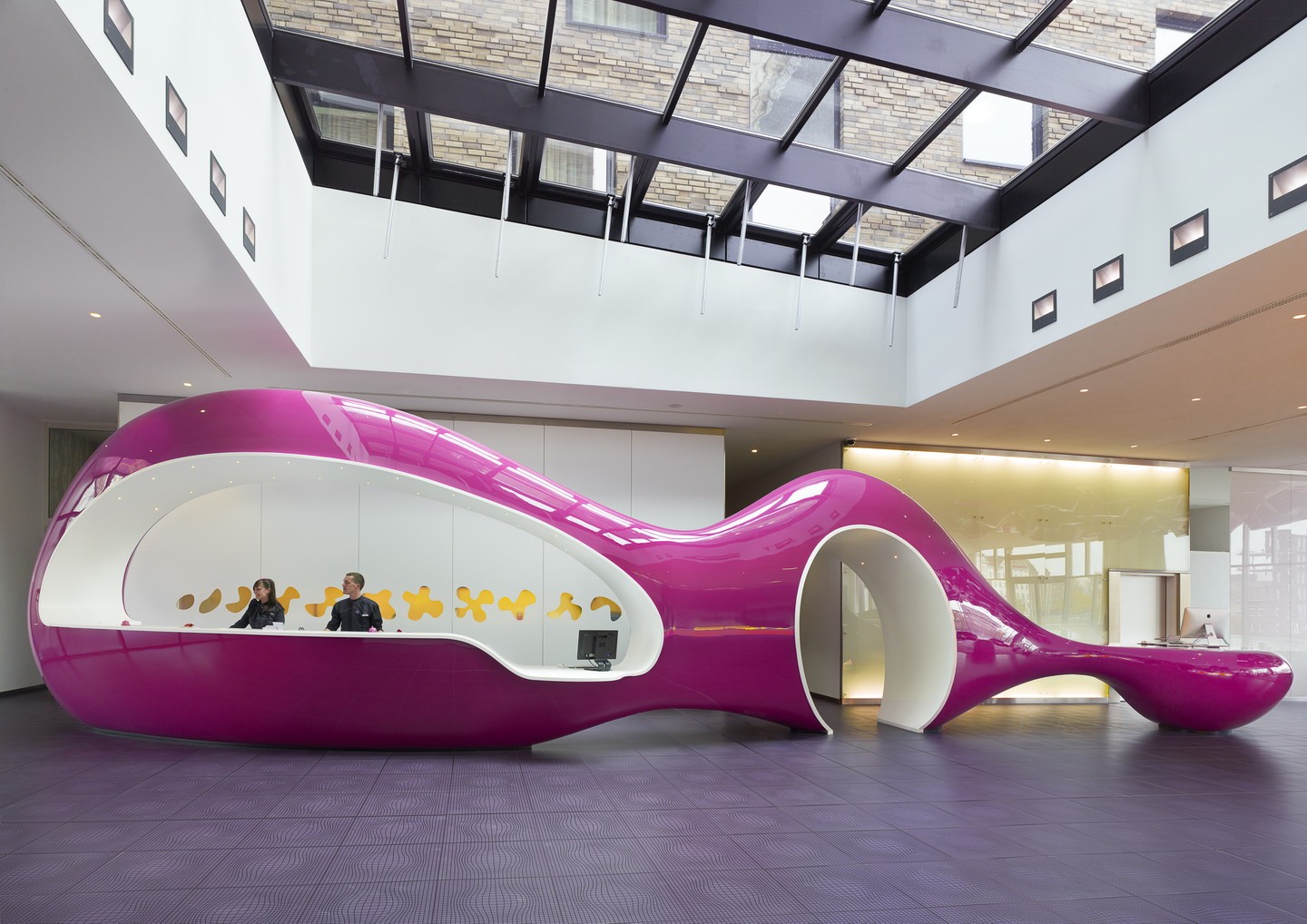
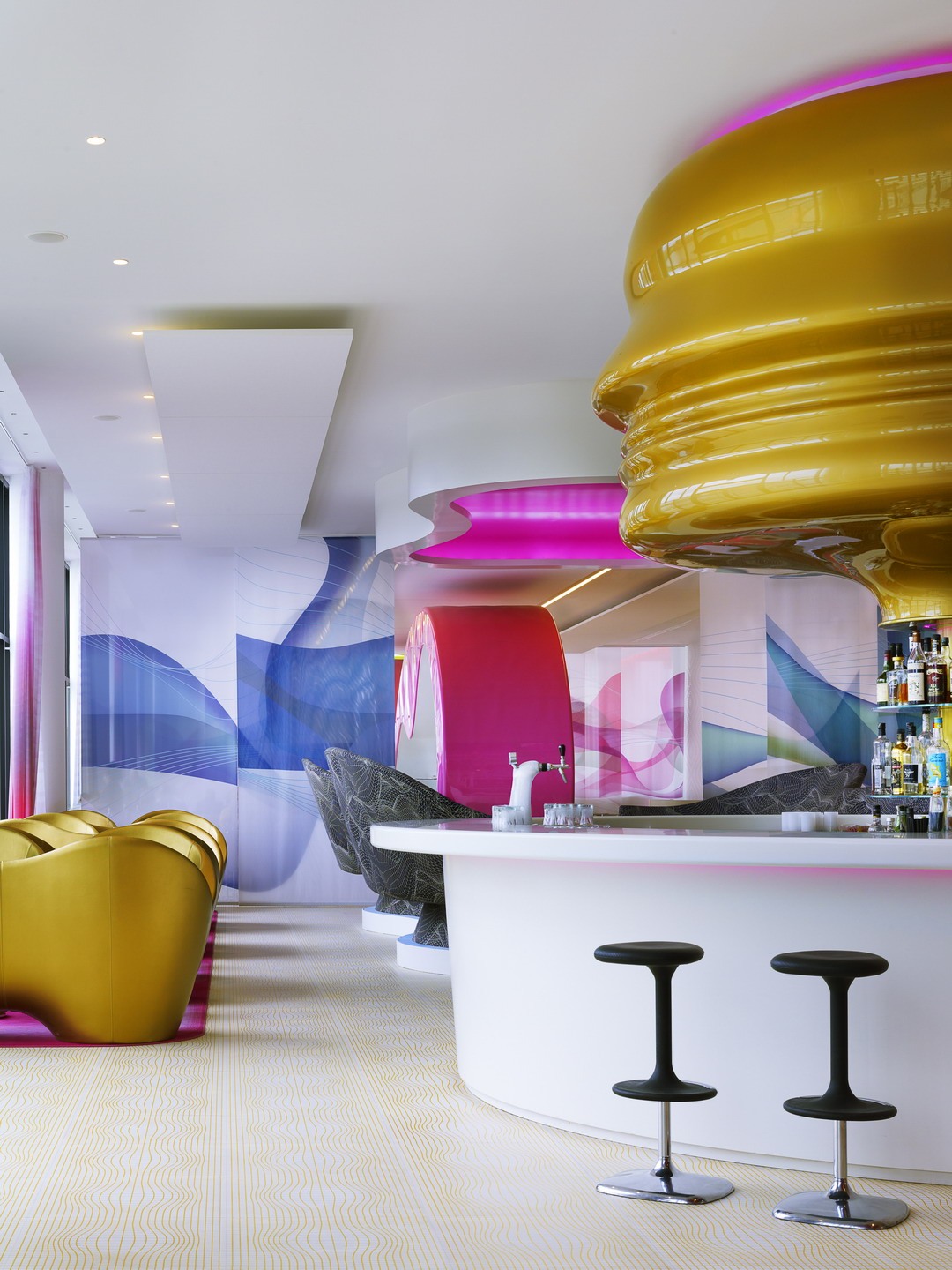
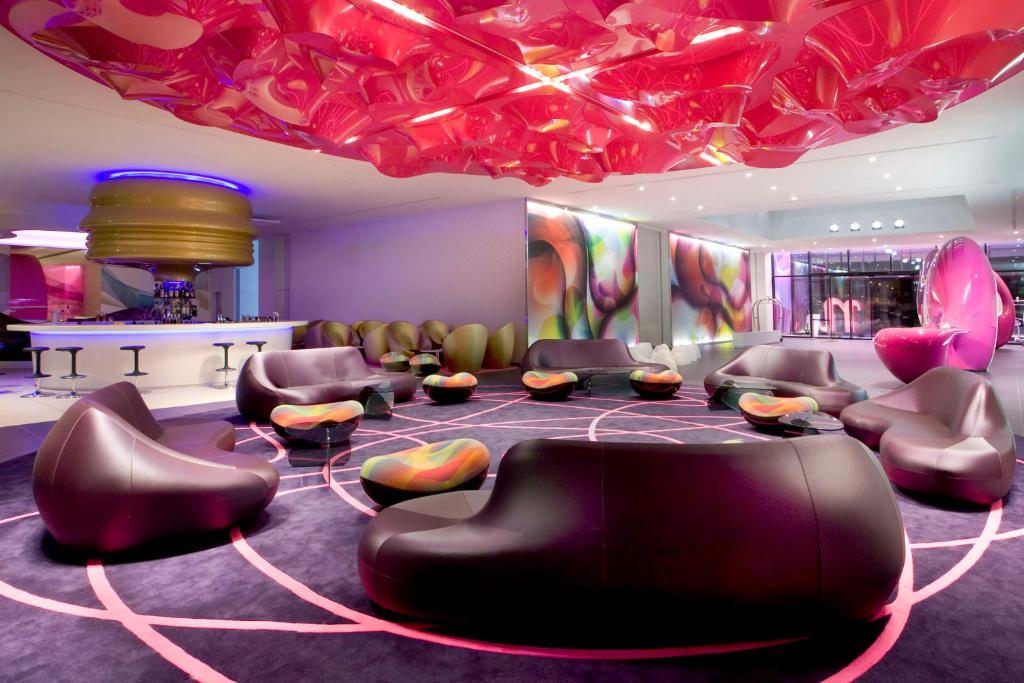
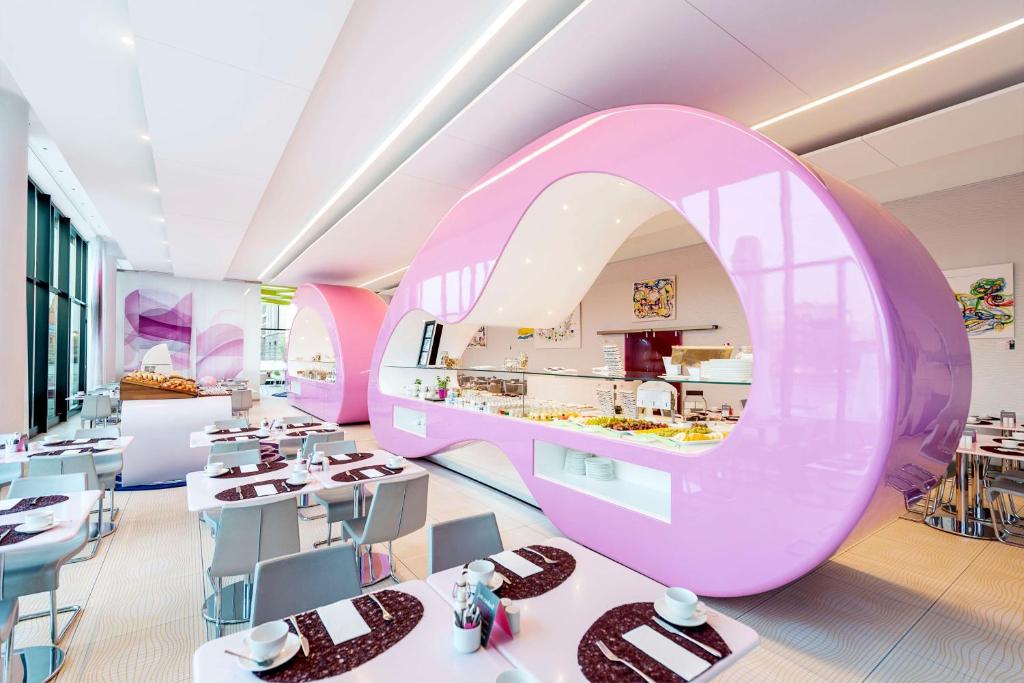
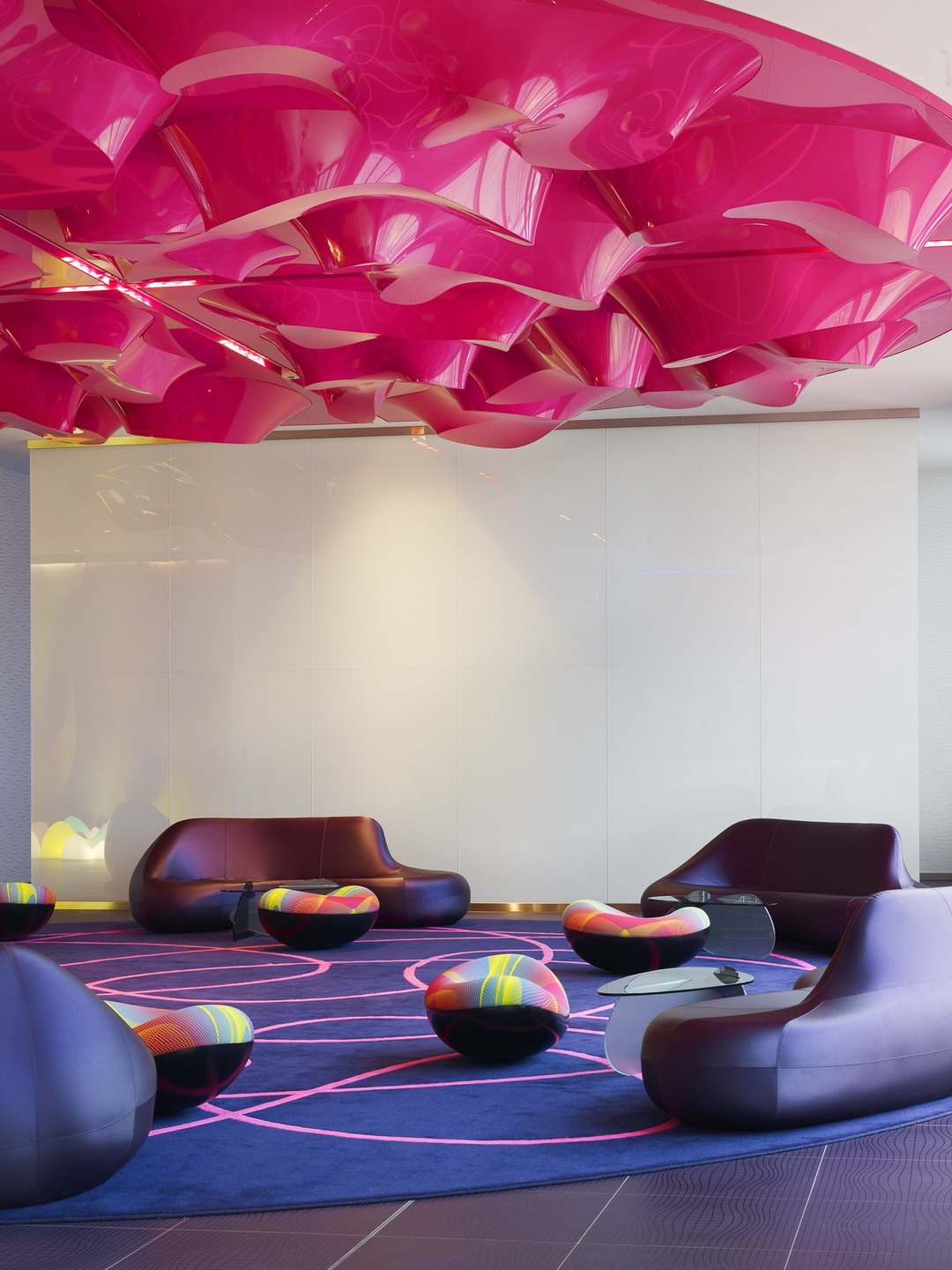
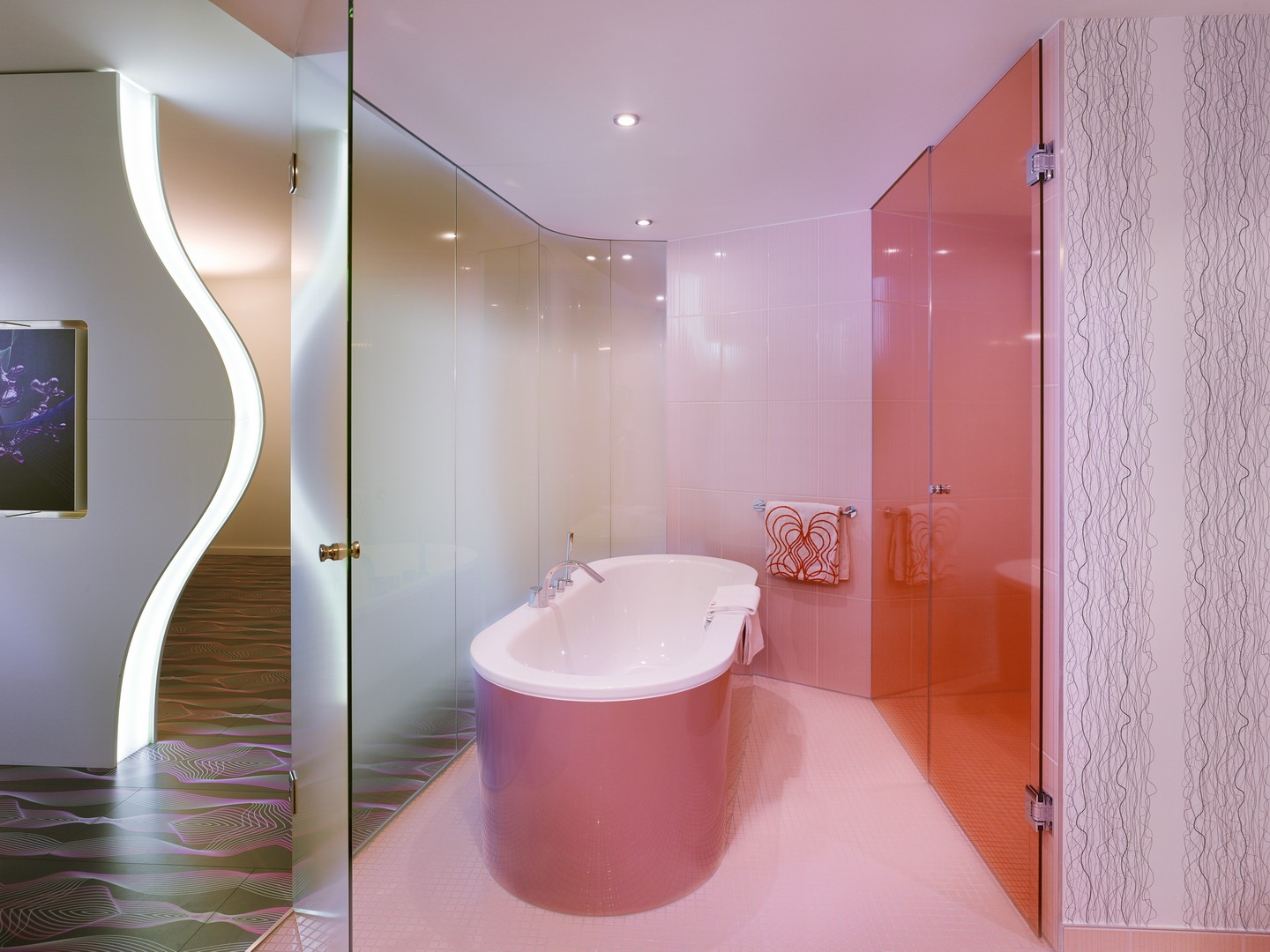
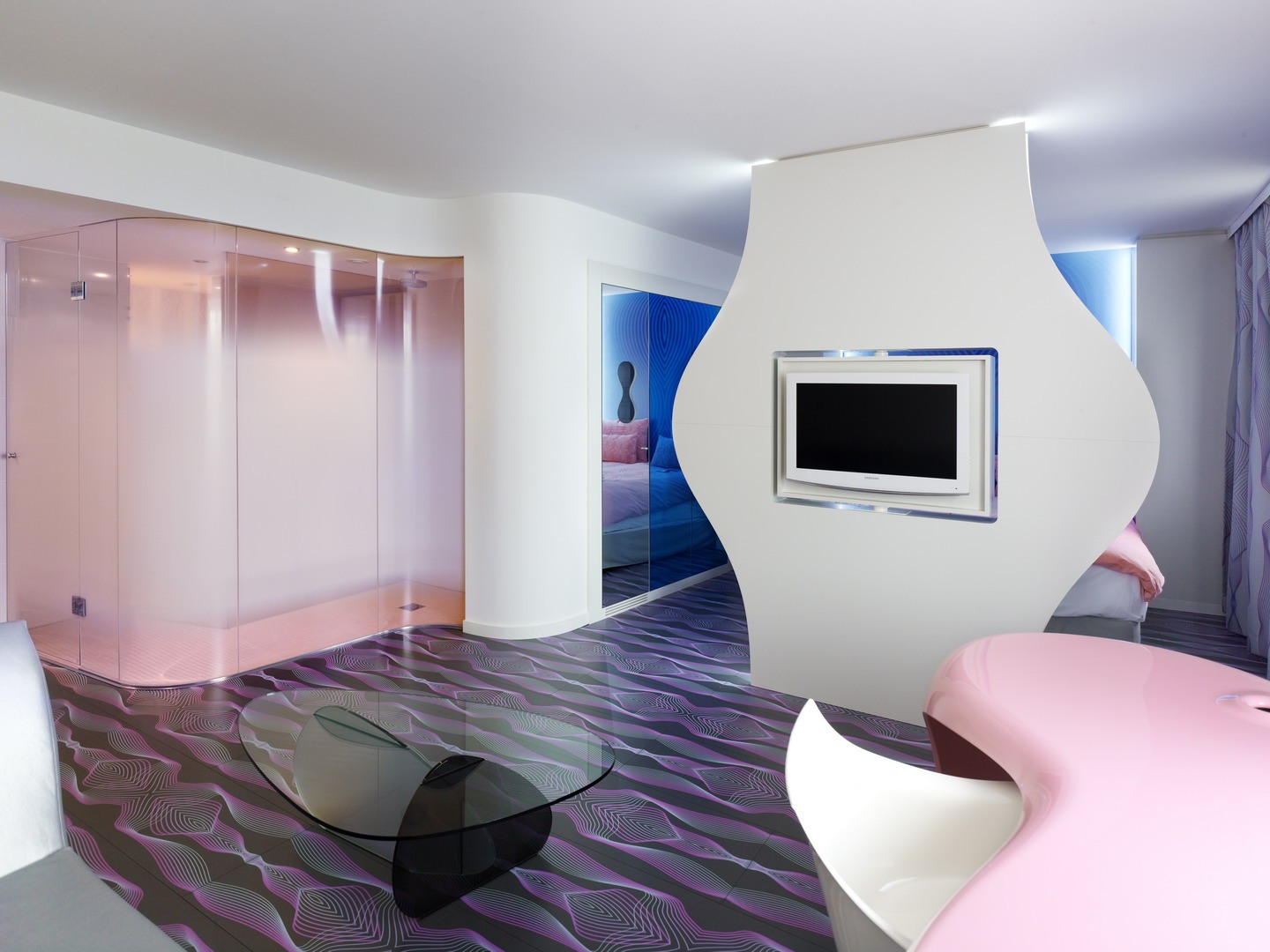
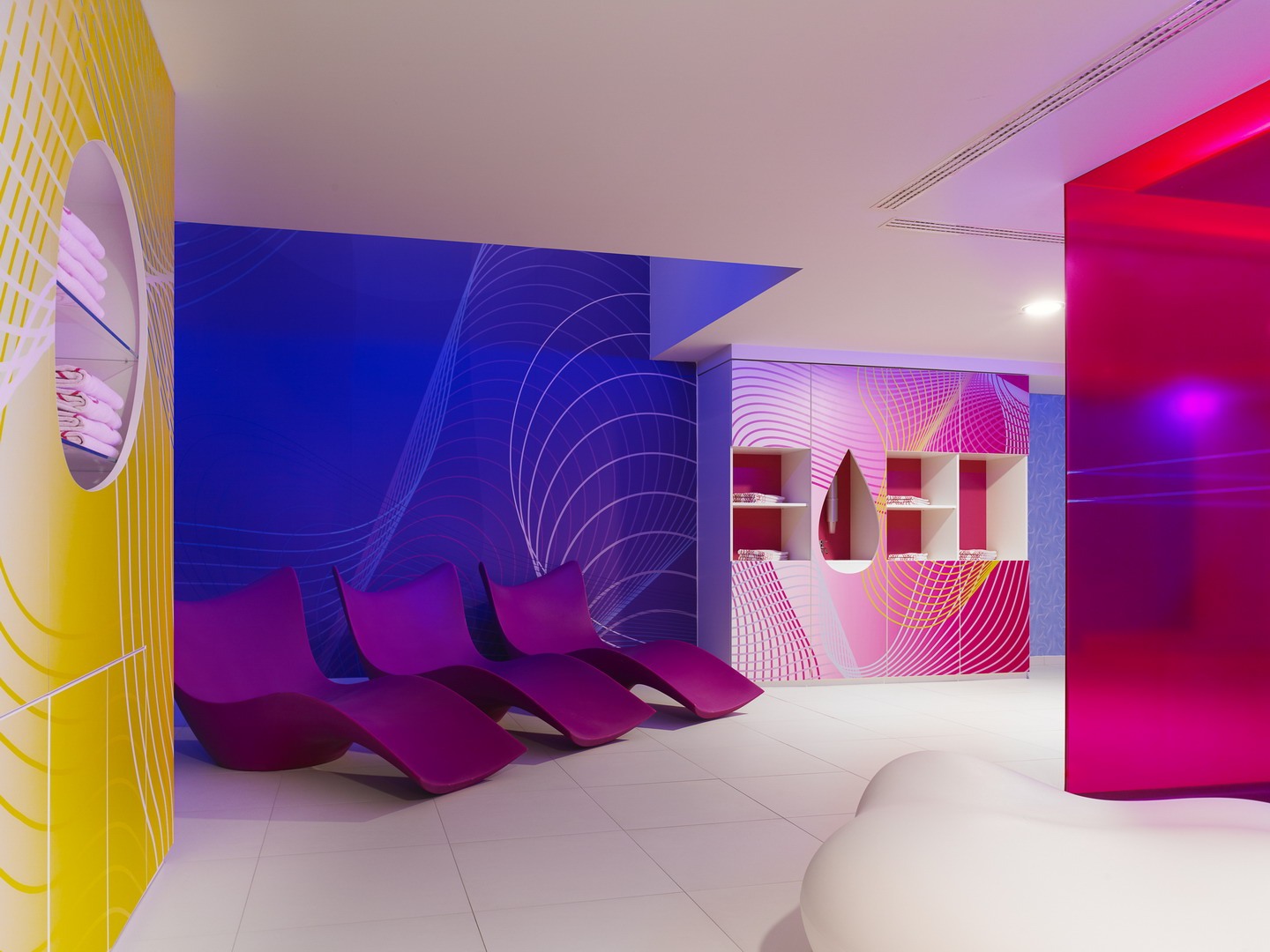
Inside, restraint gives way to Karim Rashid’s unmistakable design language. Hot pink, electric blue, chrome, patterned surfaces, and fluid furniture fill the lobby, bar, restaurant, and corridors. Rounded forms contrast with the building’s harder exterior geometry, creating an interior world that feels futuristic, playful, and deliberately artificial. In 2025, Rashid returned to redesign the bar with new patterned flooring, murals, acoustic ceilings, and custom elements. The concept stays loud. It never stands still.
Rooms Designed Around Rhythm
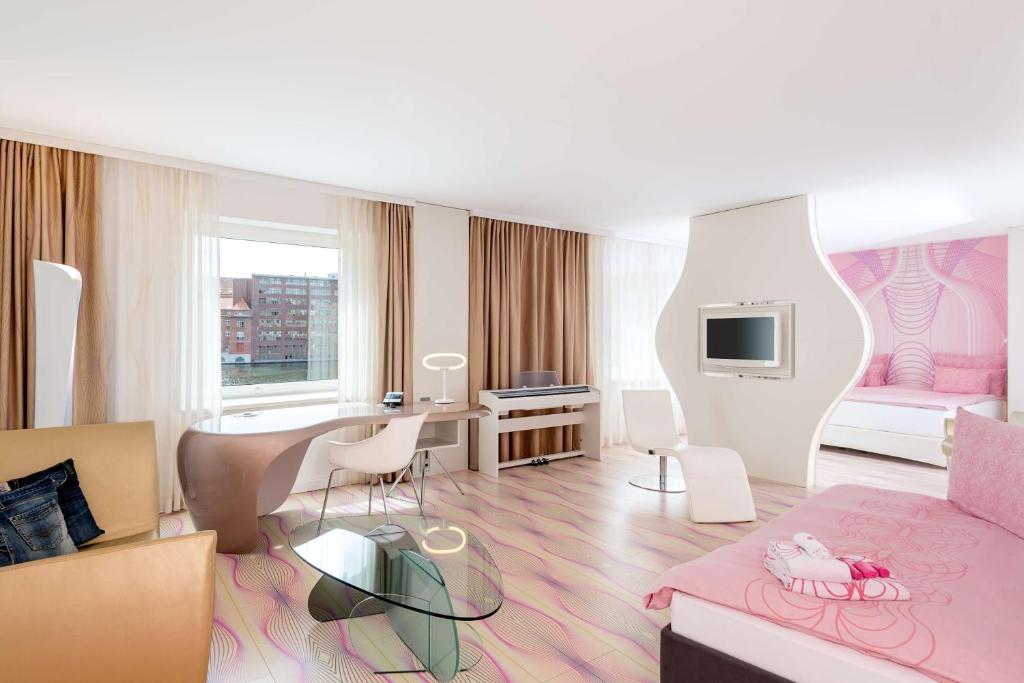
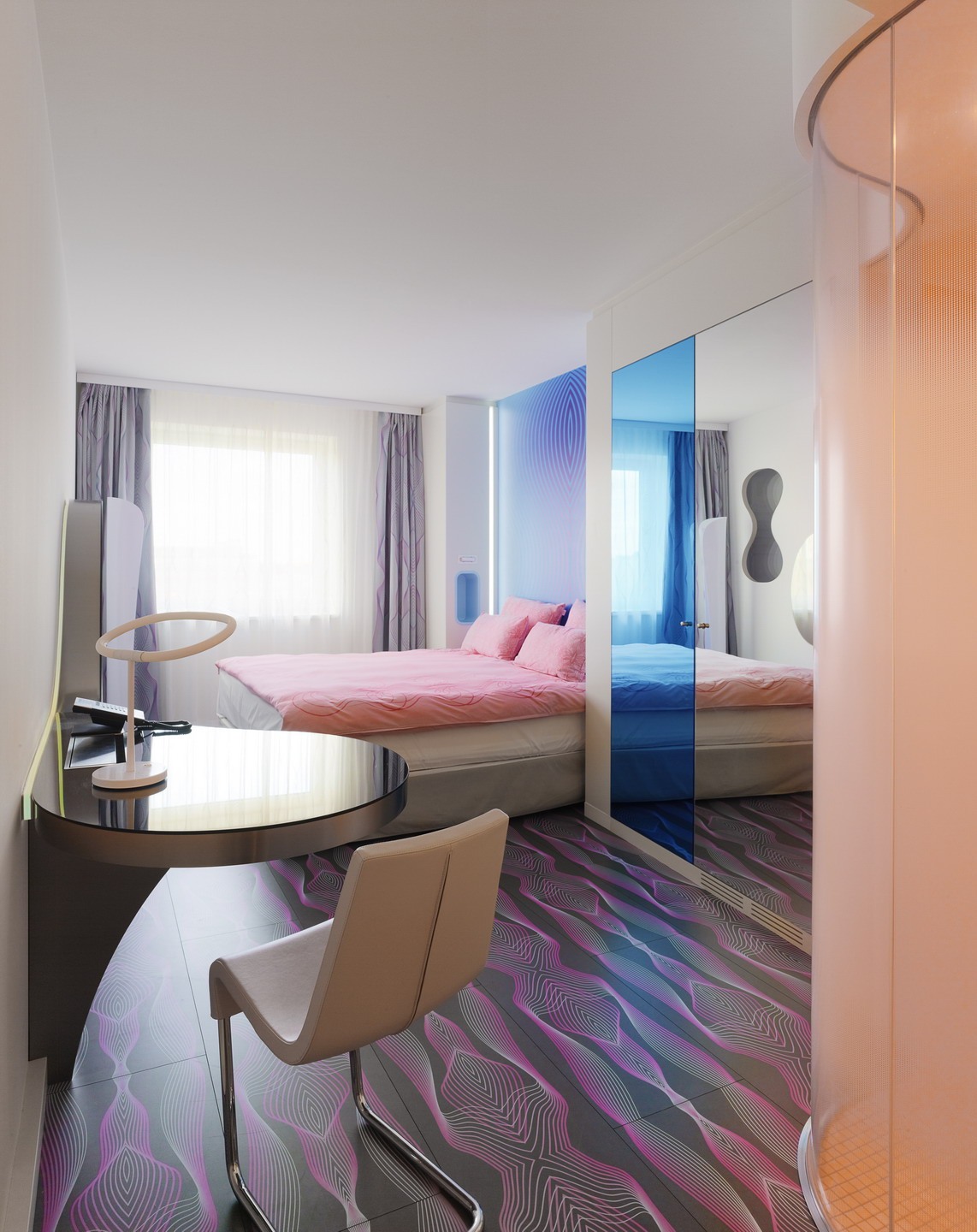
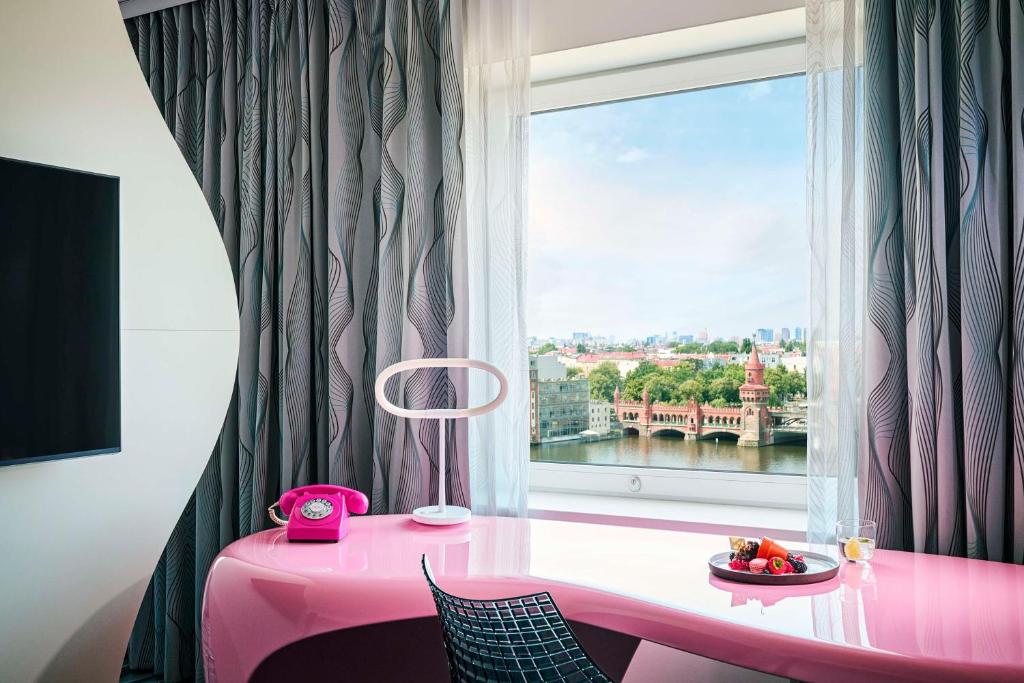
The hotel’s 310 guestrooms carry the same expressive identity upstairs. Curved desks, integrated lighting, mirrored technology, saturated colour palettes, and generous windows create spaces that feel more like futuristic studios than conventional hotel rooms. Views stretch across the Spree, the Oberbaum Bridge, or the city beyond, while strong soundproofing keeps the atmosphere controlled. Guitars, keyboards, and Bluetooth speakers can be delivered to the room. Music becomes personal.
A Working Creative Hub
The musical concept is not merely decorative. Two professional recording studios allow artists to rehearse, record, and produce within the hotel itself, while live performances, DJ sets, exhibitions, and cultural events regularly animate the public spaces. The result is a genuine meeting place for visiting musicians, local creatives, and curious travellers. The hotel does not imitate a music scene. It participates in one.
Berlin’s Creative Riverfront
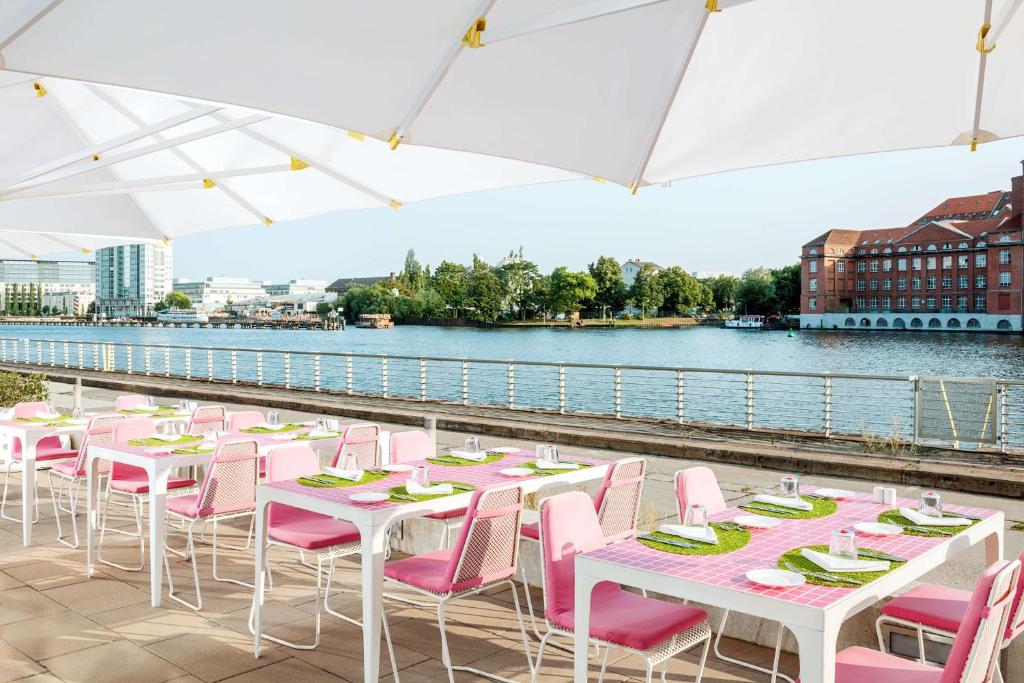
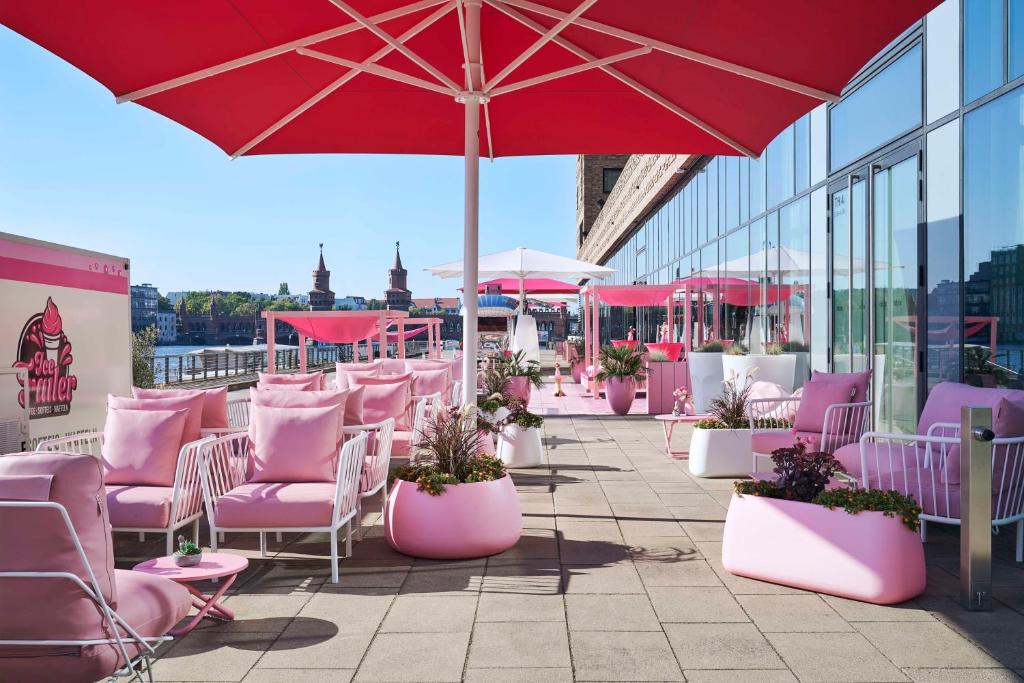
The location places the hotel between Friedrichshain and Kreuzberg, close to the East Side Gallery and Oberbaumbrücke. Former warehouses, media companies, clubs, bars, and cultural spaces define this stretch of the Spree, giving the hotel a setting that feels inseparable from contemporary Berlin. Fabrics Restaurant and the riverside terrace make the most of the water, while the bar extends the neighbourhood’s energy indoors. The city surrounds the hotel. The river gives it space.
Why It Works
nhow Berlin succeeds because its concept is supported by both architecture and function. Sergei Tchoban’s dramatic building, Karim Rashid’s expressive interiors, and the working recording studios come together as one coherent idea rather than a collection of musical motifs. It is bold, unconventional, and entirely committed to its identity—a hotel that understands Berlin’s creative culture is not something to observe quietly.