Hotel Oderberger, Berlin, Germany
A Monumental Public Bathhouse Reborn as One of Prenzlauer Berg’s Most Characterful Hotels
Why DNA Hotels Loves It
● Ludwig Hoffmann’s historic Stadtbad Oderberger has been sensitively transformed without erasing the architecture that made it remarkable.
● Original bathhouse doors, ceramic tiles, staircases, brickwork, and industrial details remain visible throughout the hotel.
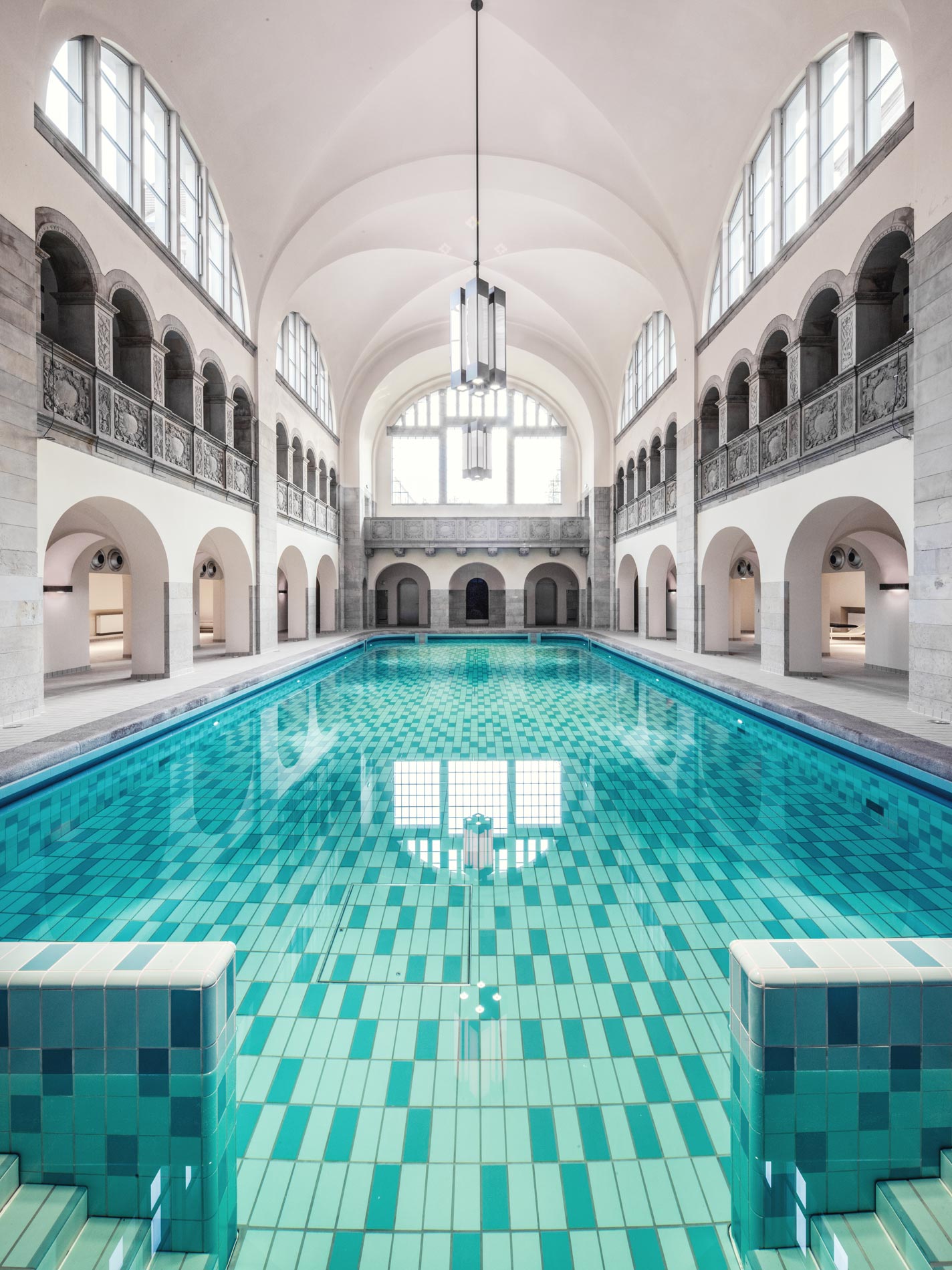
● The restored 20-metre swimming hall turns a simple swim into one of Berlin’s most atmospheric architectural experiences.
A Bathhouse for the City
Hotel Oderberger occupies one of Prenzlauer Berg’s great civic buildings. Designed by municipal architect Ludwig Hoffmann and opened in 1902, Stadtbad Oderberger was created to provide bathing and leisure facilities for Berlin’s working population. The building survived war, division, and decades of uncertainty before a citizens’ initiative helped secure its future. In 2016, it reopened as a hotel. Its public spirit remains.
History Preserved, Not Recreated
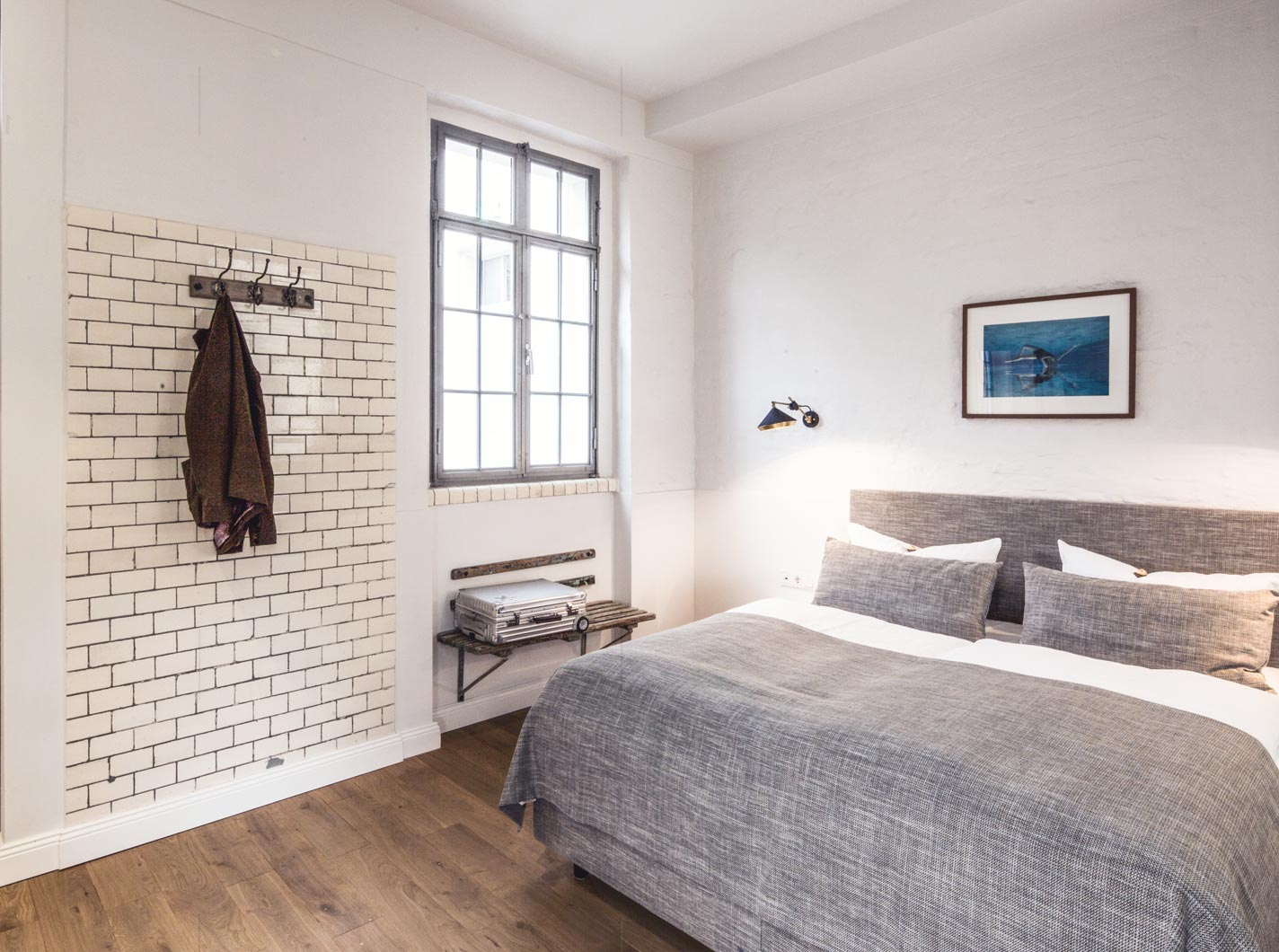
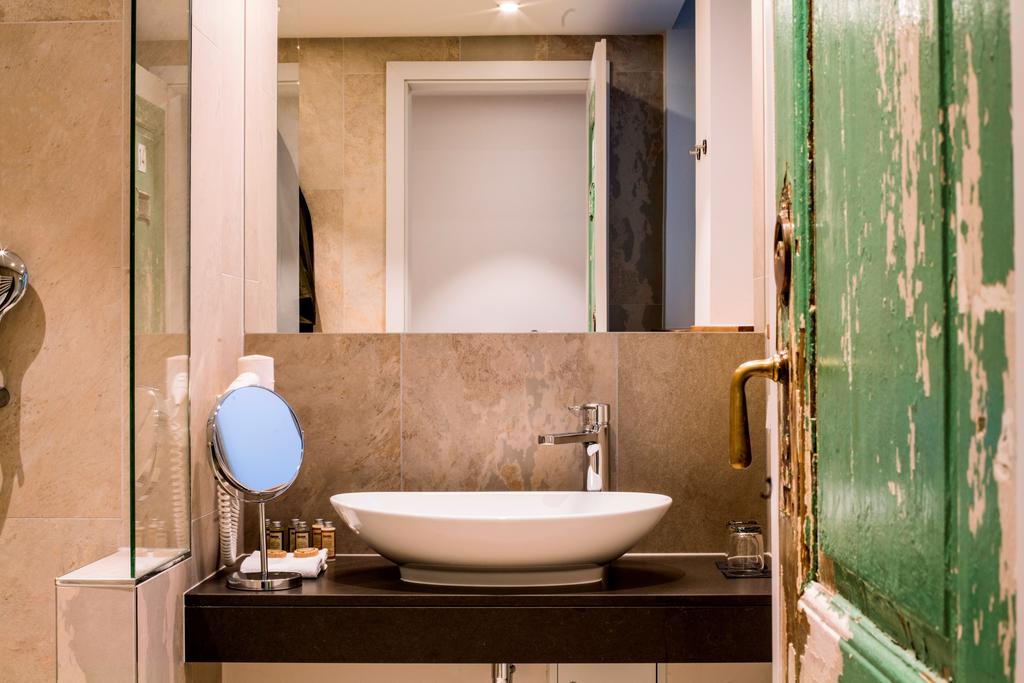
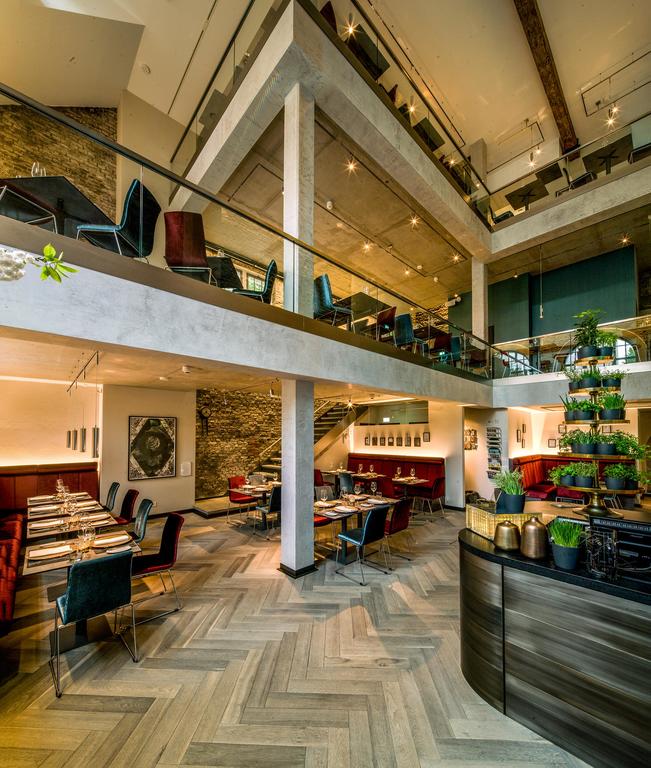
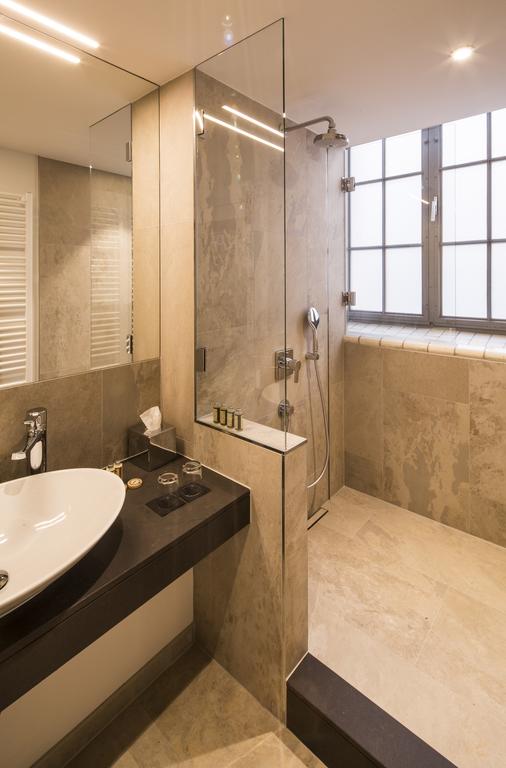
The transformation respects the building’s original fabric. Historic staircases, ticket kiosks, ceramic wall tiles, exposed brickwork, old thermometers, and numbered wooden doors from the bathing cabins have all been carefully retained. Some are protected behind glass; others continue to function within the new interiors. Contemporary furniture, natural timber, photography, and artwork sit quietly alongside them. Old and new never compete.
Rooms Shaped by the Building
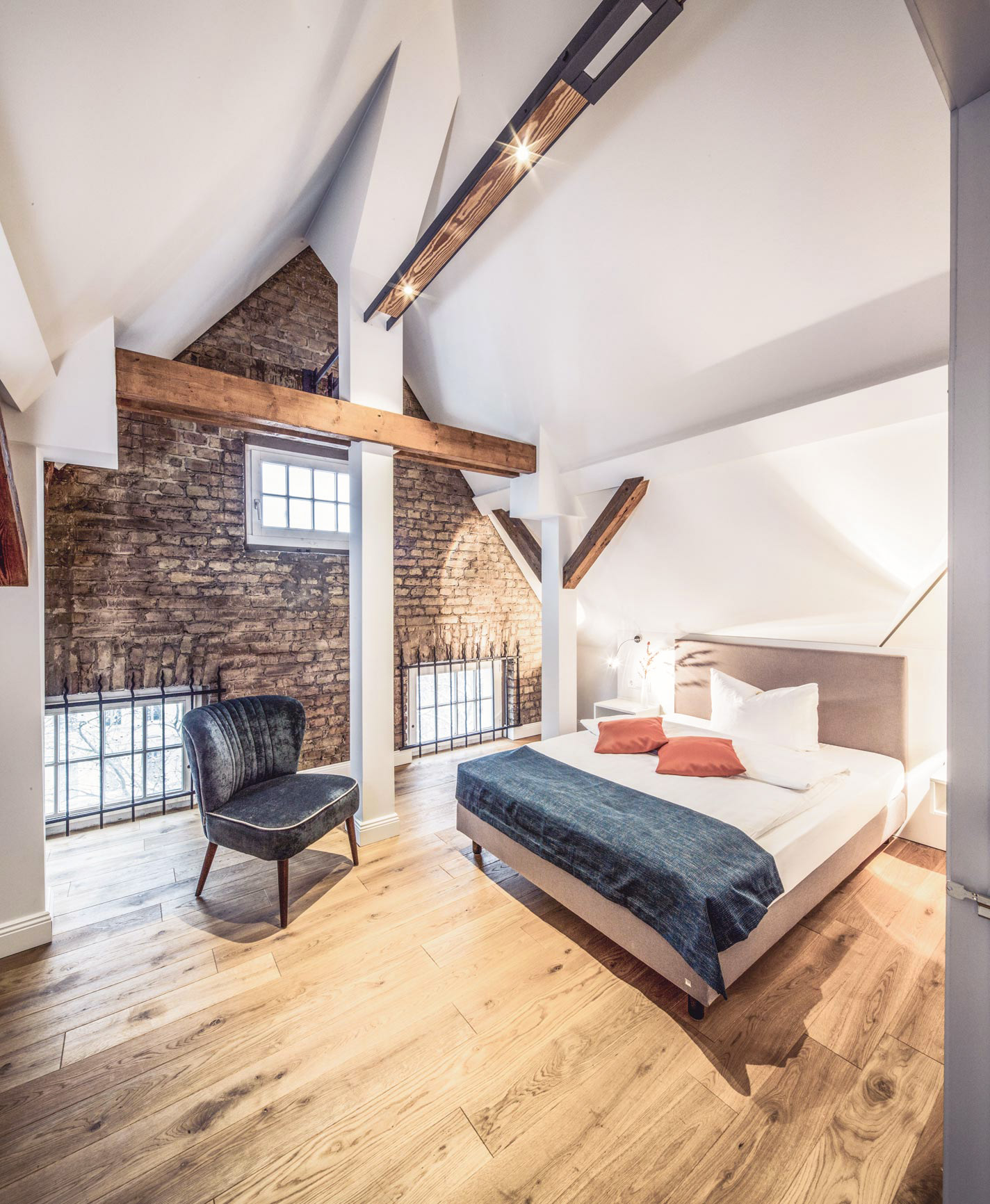
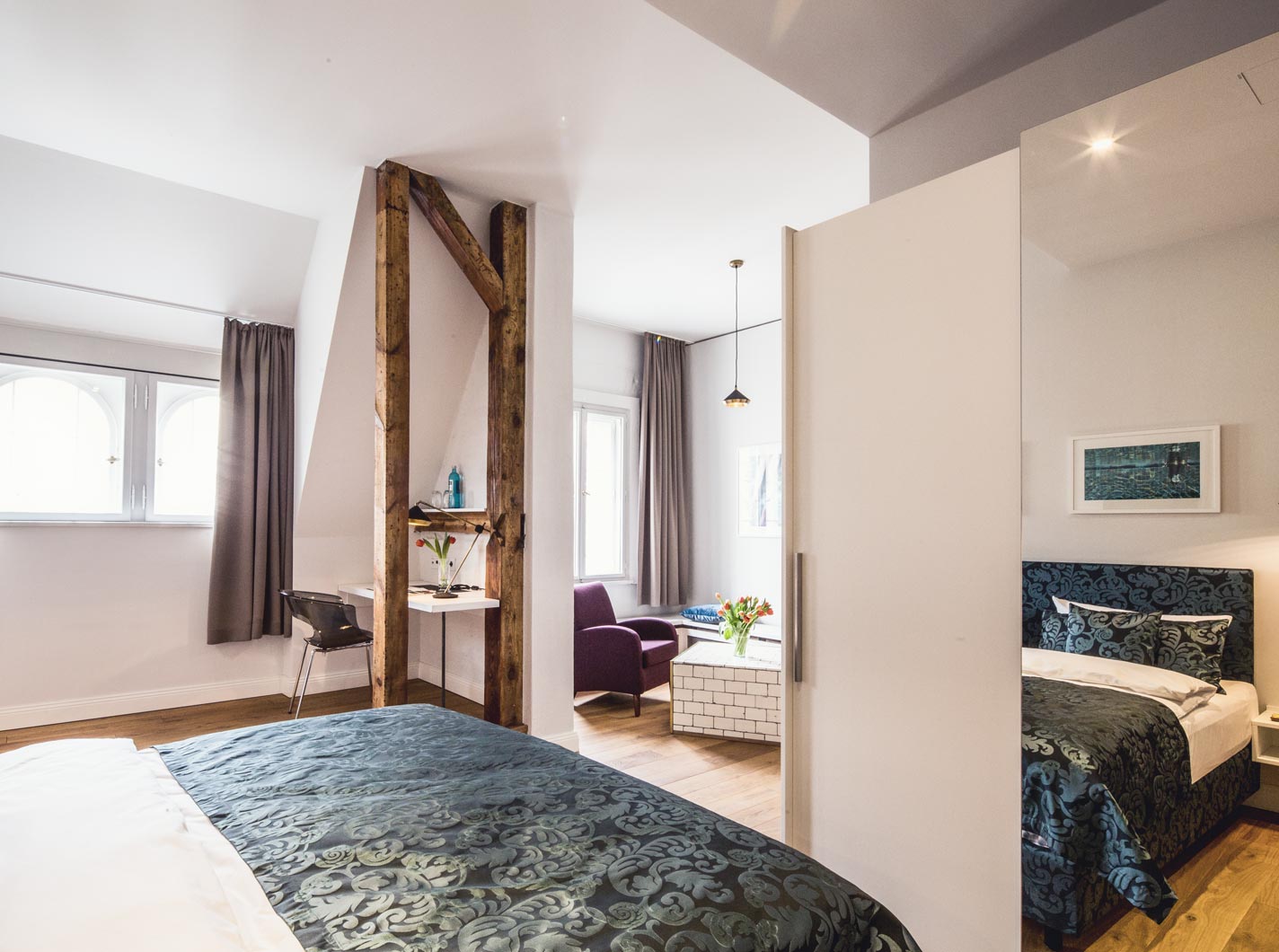
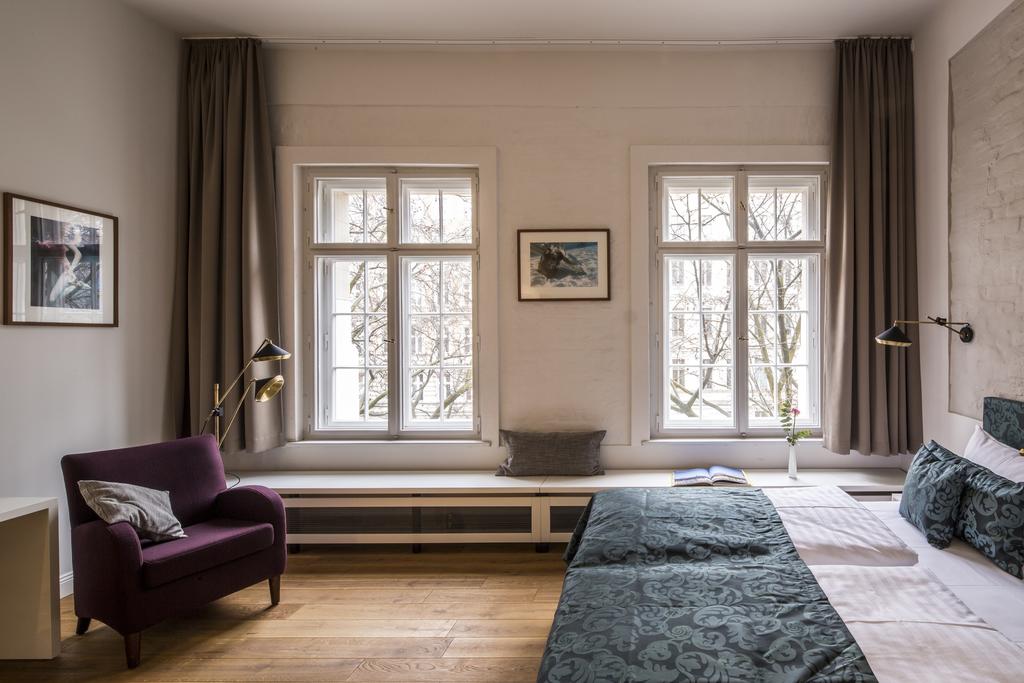
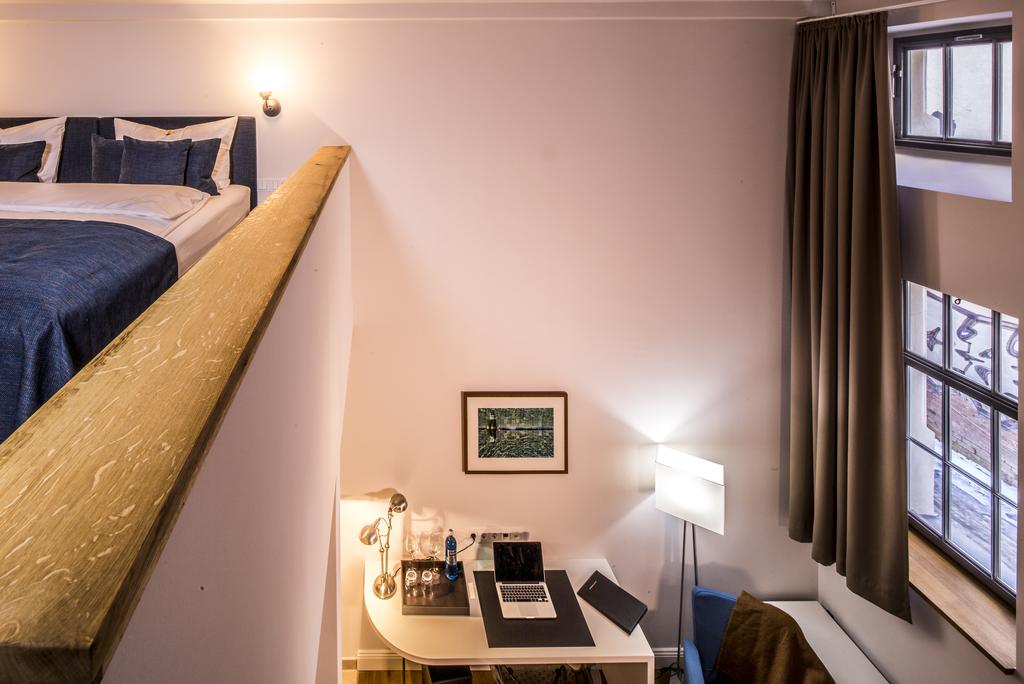
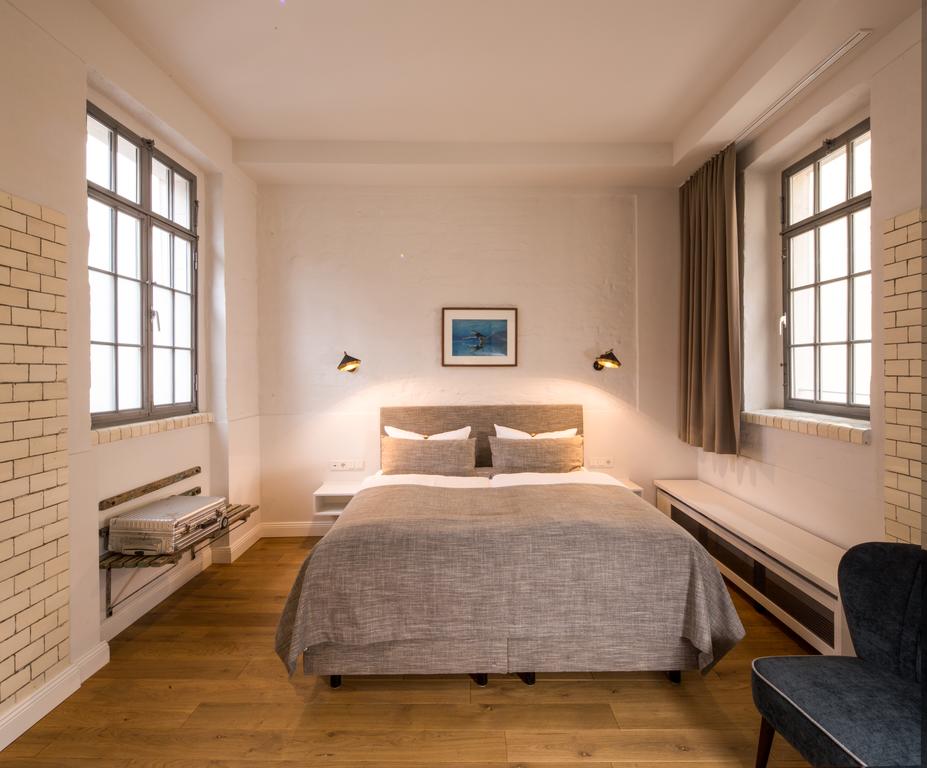
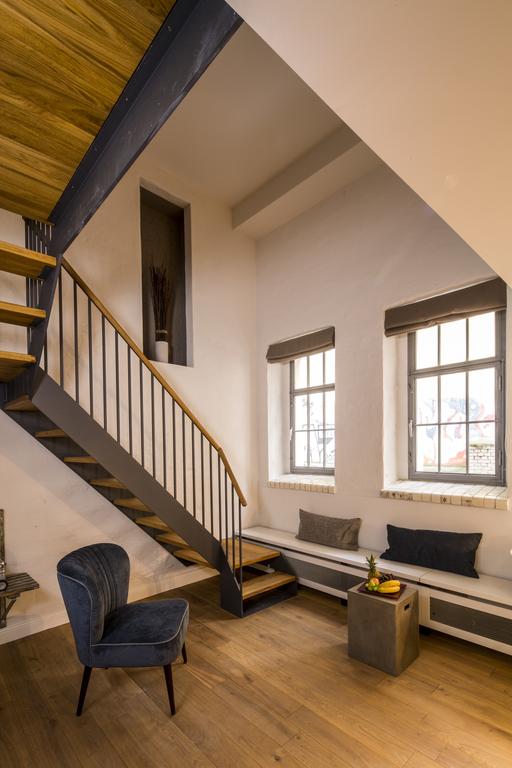
The hotel contains 70 rooms and two attic apartments, each influenced by the irregular architecture of the former bathhouse. Oak floors, historic tiles, copper-toned lighting, contemporary photography, and restrained furnishings create interiors that feel warm without distracting from the structure. Some rooms feature vaulted ceilings or original doors preserved within glass partitions, while the split-level Maisonettes make dramatic use of the building’s height. The architecture determines the experience. Repetition gives way to character.
Swimming Through History
The restored swimming hall is the hotel’s defining space. A 20-metre pool sits beneath a soaring vaulted ceiling, framed by monumental arches, stone surfaces, and tall windows that fill the room with soft daylight. Still open to the public, it preserves the building’s original function rather than reducing it to scenery. Few hotel pools carry this much memory. A morning swim feels almost ceremonial.
Prenzlauer Berg at the Door
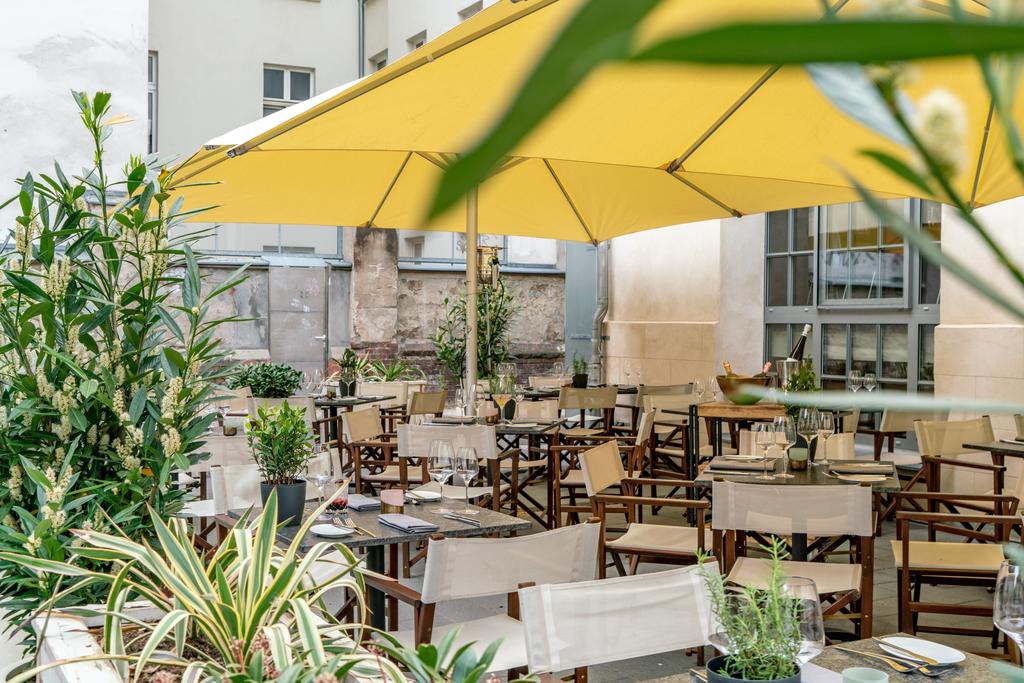
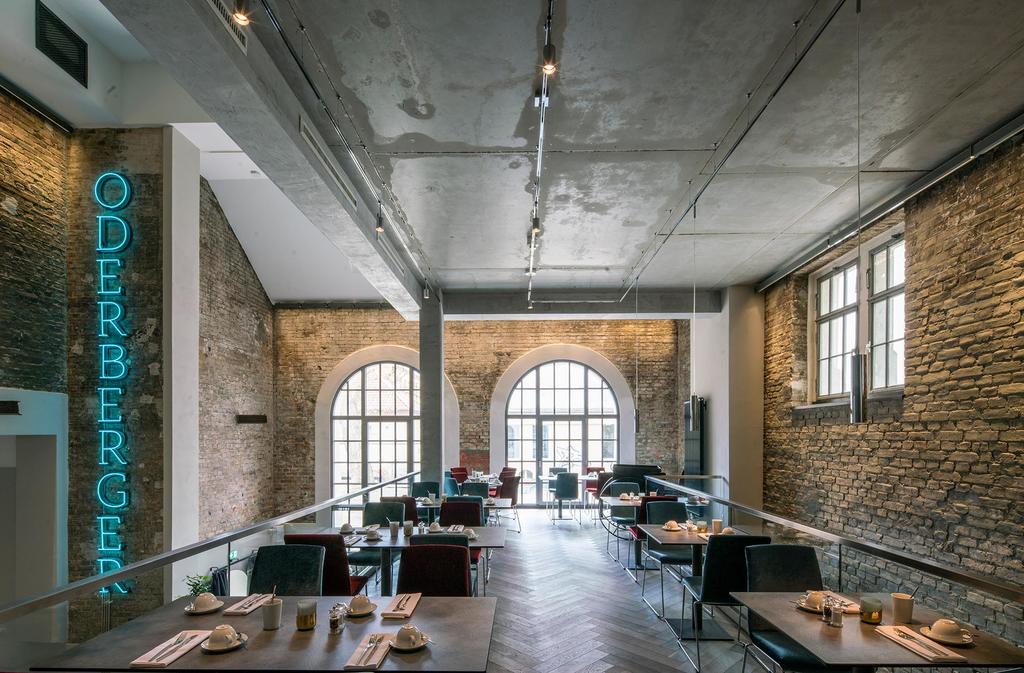
Outside, Oderberger Strasse captures the relaxed confidence of contemporary Prenzlauer Berg. Independent cafés, bars, restaurants, shops, and the nearby Kulturbrauerei animate the neighbourhood, while Mauerpark lies at the end of the street. Inside, the former energy centre now hosts breakfast beneath exposed brick and industrial remnants, while the Kaminbar offers local drinks beside a real fireplace. The hotel belongs to the neighbourhood. It does not simply occupy it.
Why It Works
Hotel Oderberger succeeds because its history has been treated as living architecture rather than decorative nostalgia. The original bathhouse remains legible in every staircase, doorway, tile, and vaulted space, while the contemporary additions allow the building to function naturally as a hotel. It is a thoughtful example of adaptive reuse, preserving both a remarkable Berlin landmark and the civic purpose that first gave it meaning.