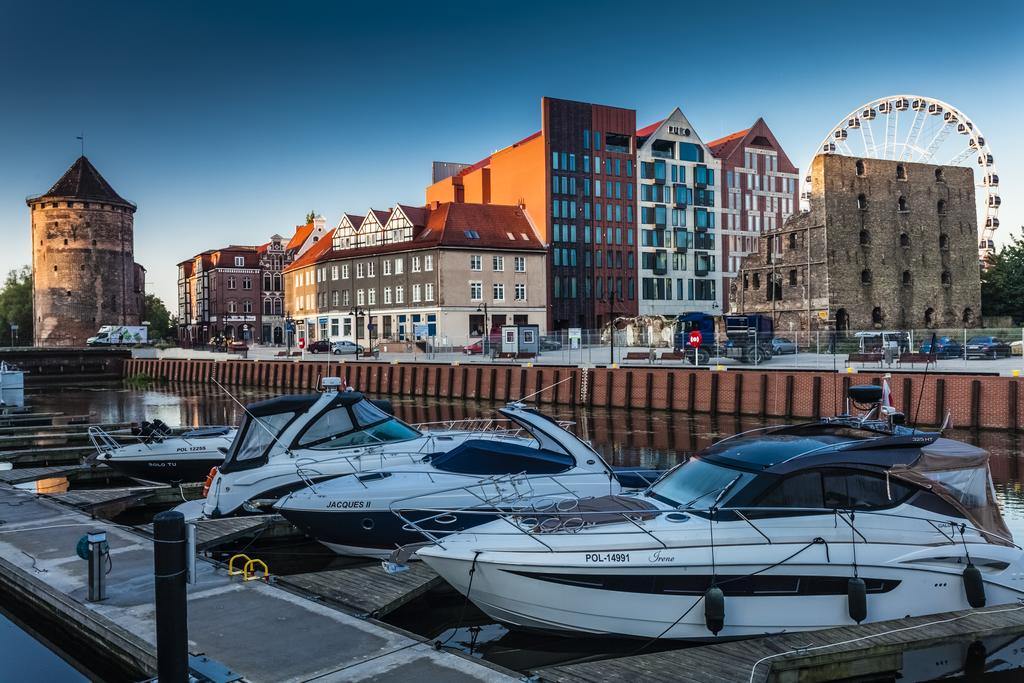
PURO Gdańsk Stare Miasto, Poland
A contemporary Granary Island hotel where shipyard references, warehouse textures, and Baltic light shape a distinctly local design language
Why DNA Hotels Loves It
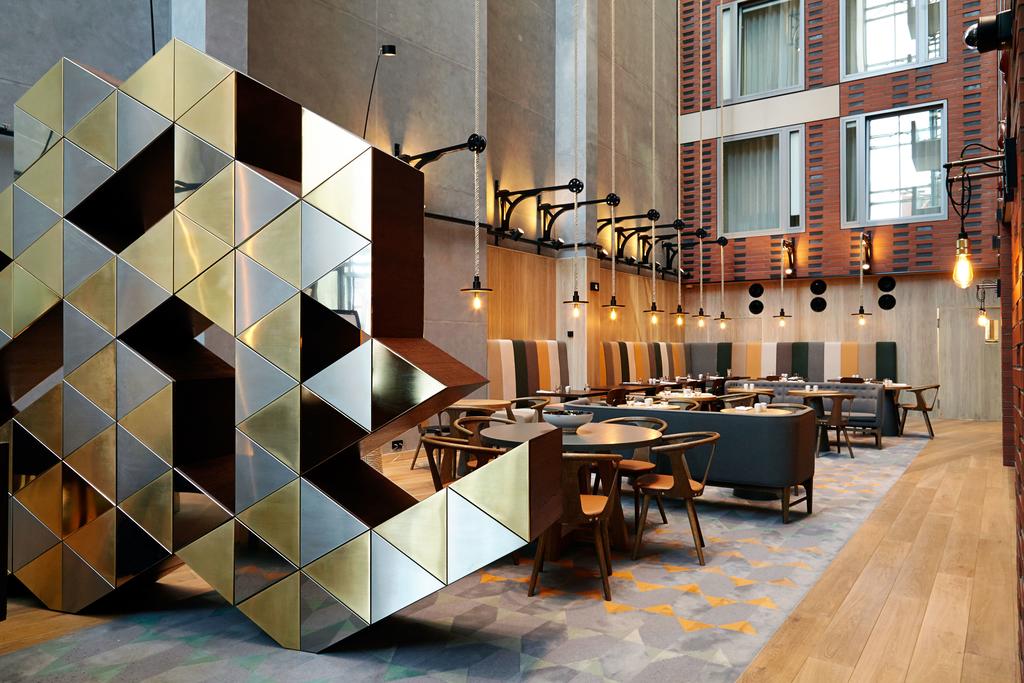
● DeSallesFlint translates Gdańsk’s maritime and industrial heritage into materials rather than motifs, using blackened steel, rope, glass, oxidised tones, and textile references to grain sacks.
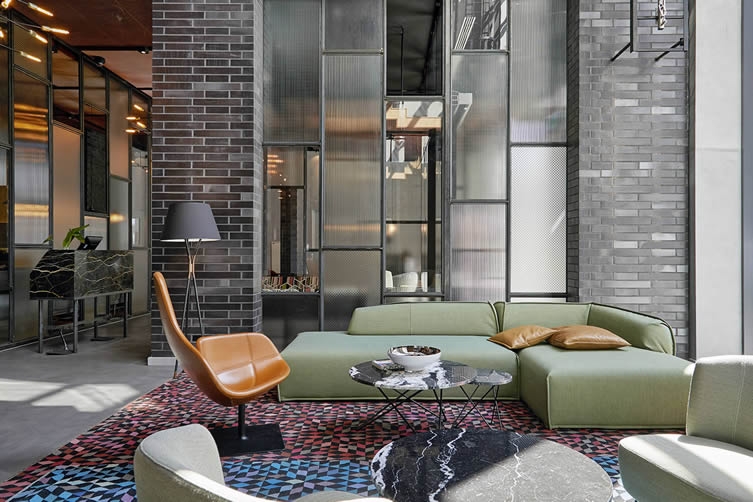
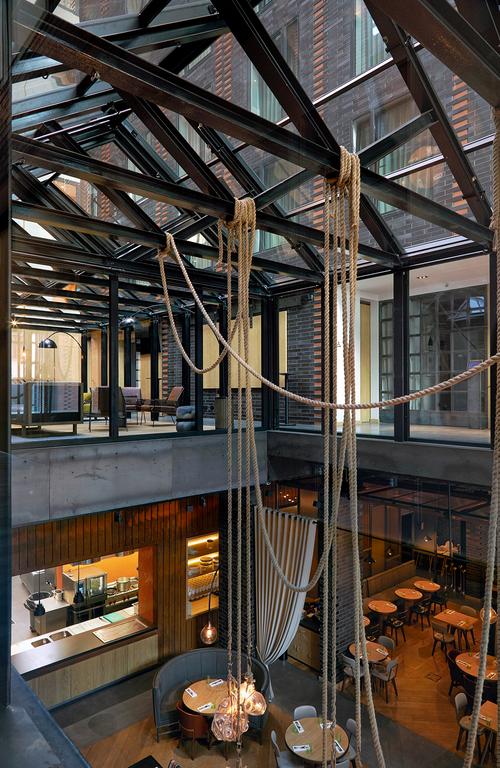
● The dramatic multi-storey atrium gives the hotel real architectural presence, while furniture by Vitra, Moroso, GUBI, Kettal, and others keeps the interiors playful rather than austere.
● Contemporary Polish art and the rooftop bar connect the hotel equally to Gdańsk’s creative present and its extraordinary port-city setting.
A New Building on Granary Island
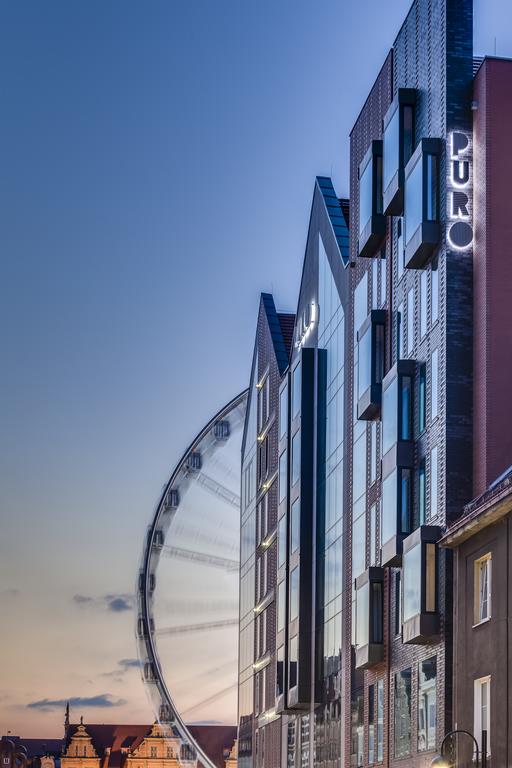
PURO Gdańsk Stare Miasto sits in one of the city’s most symbolically charged districts. Granary Island was once dense with warehouses serving Gdańsk’s trading economy, then devastated during the Second World War and left partially dormant for decades. Its redevelopment has introduced a new architectural layer to the city. PURO belongs firmly to that new chapter. Designed by local practice KD Kozikowski Design, the hotel is contemporary in form but deeply aware of the industrial and maritime history around it.
DeSallesFlint Looks to the Port
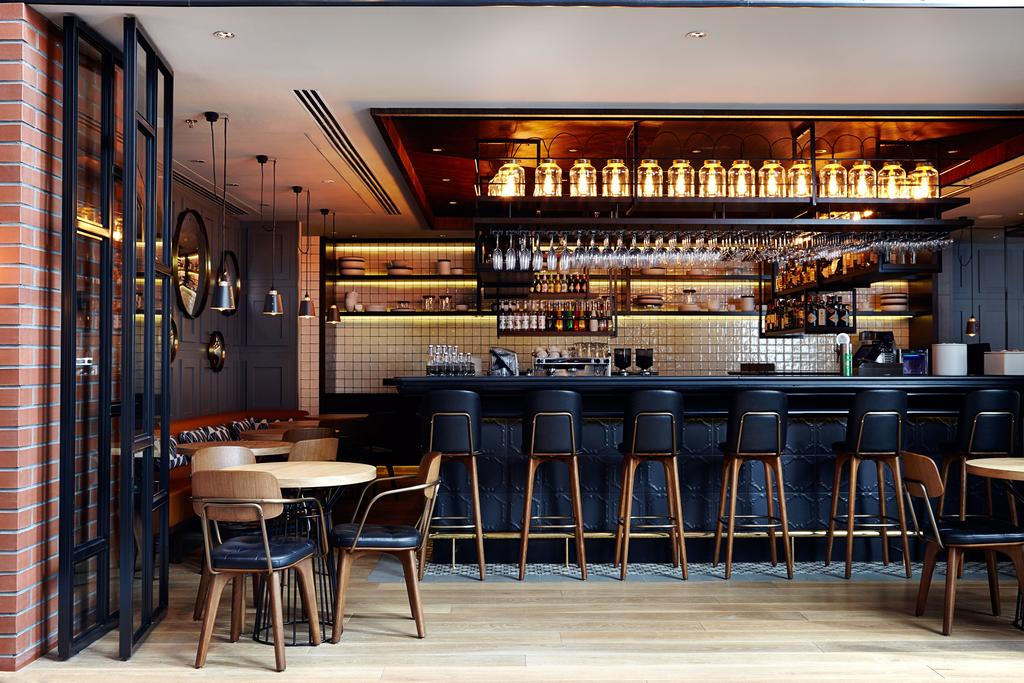
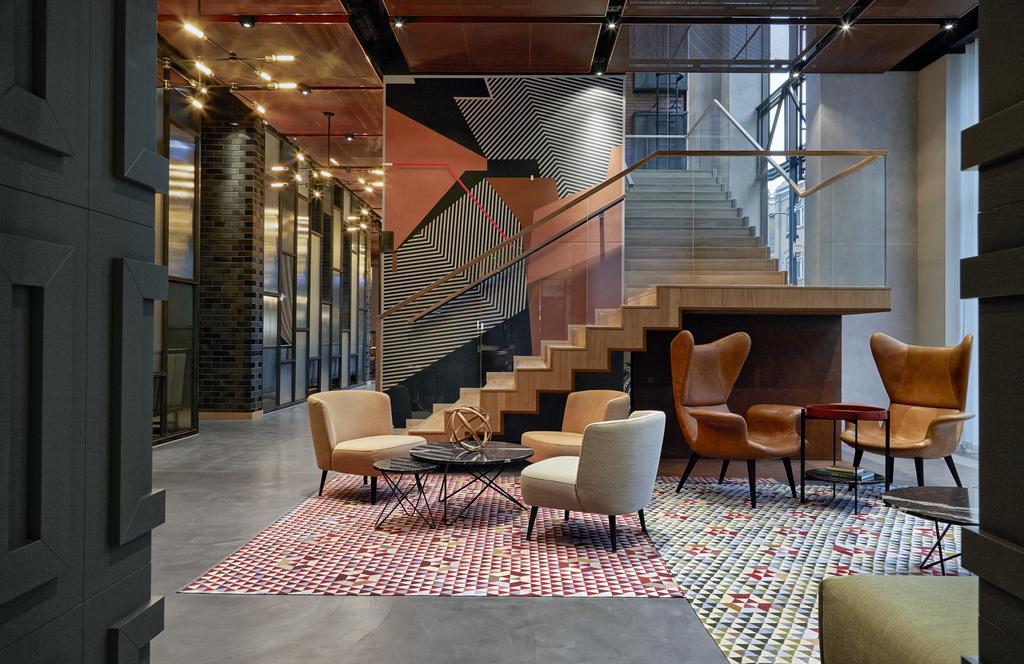
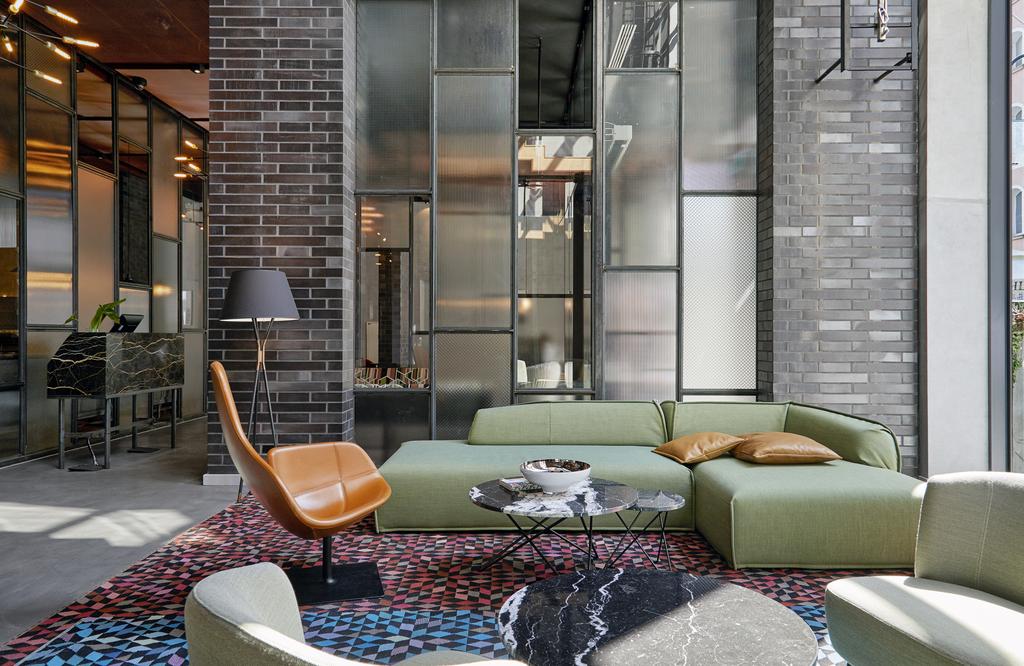
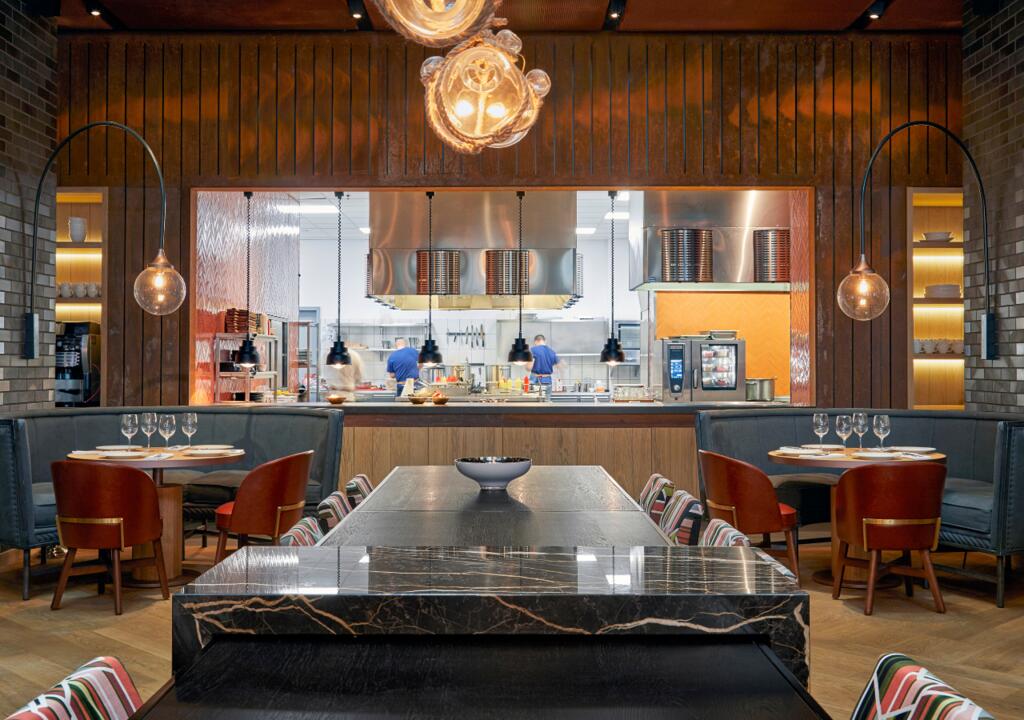
Inside, London studio DeSallesFlint avoided the obvious. There are no decorative anchors or theatrical nautical themes. Instead, the references are embedded in material and detail. Blackened steel recalls industrial infrastructure. Heavy rope suspends globe lighting. Pulley-like fittings reference shipyard mechanics. Natural cotton and linen evoke grain sacks once stacked inside the island’s warehouses. Copper tones suggest oxidised metal exposed to Baltic weather. History appears abstractly. That makes it feel more convincing.
An Atrium with Scale
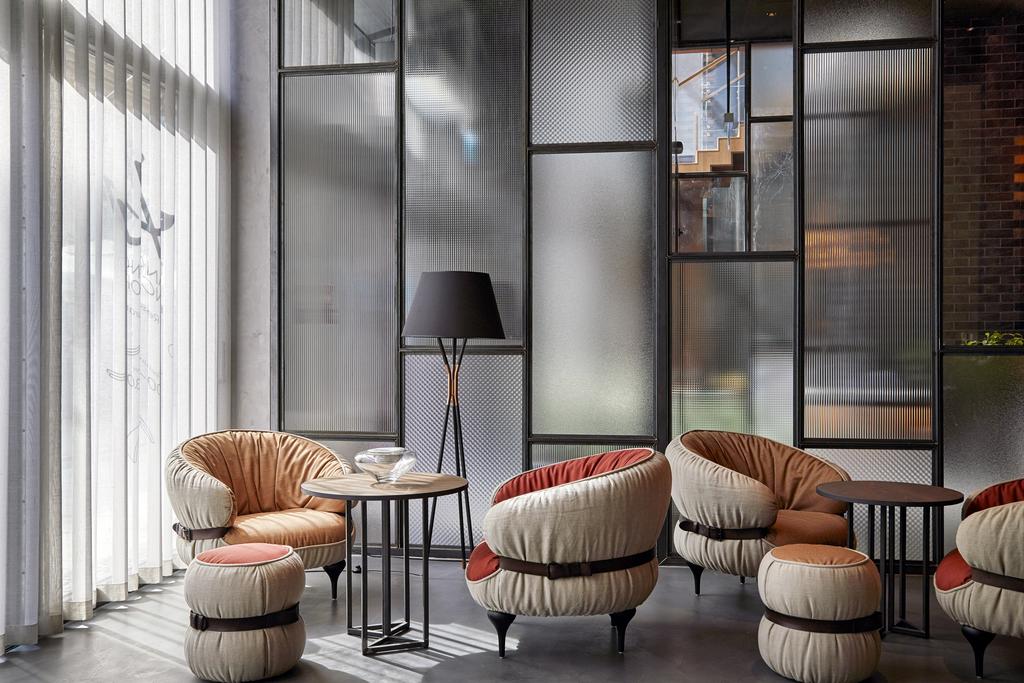
The multi-storey atrium gives the hotel its strongest architectural moment. It opens the interior vertically and lets light travel deep into the building, creating a sense of volume unusual for a city hotel. Around it, pale greens, slate greys, timber, glass, and metallic surfaces soften the industrial references. The result is neither warehouse conversion nor polished corporate lobby. It sits somewhere in between. Urban. Bright. Slightly theatrical.
Furniture Against the Industrial Backdrop
The furnishings add another layer. Pieces by Moroso, Vitra, GUBI, Kettal, and other European makers bring softness and colour into the harder architectural framework. Patricia Urquiola’s chairs introduce playful shapes. Custom seating references the rounded volume of grain sacks. Elsewhere, pastel tones prevent the steel and concrete language from becoming overly masculine. The interiors feel curated but not precious. They are designed to be used.
Rooms in a Quieter Register
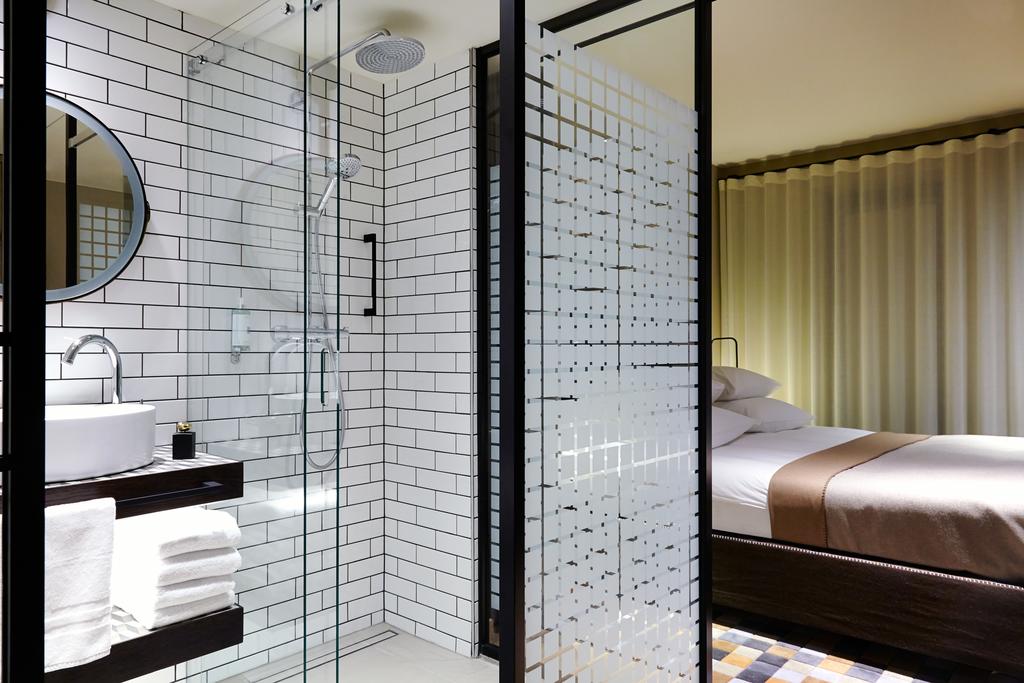
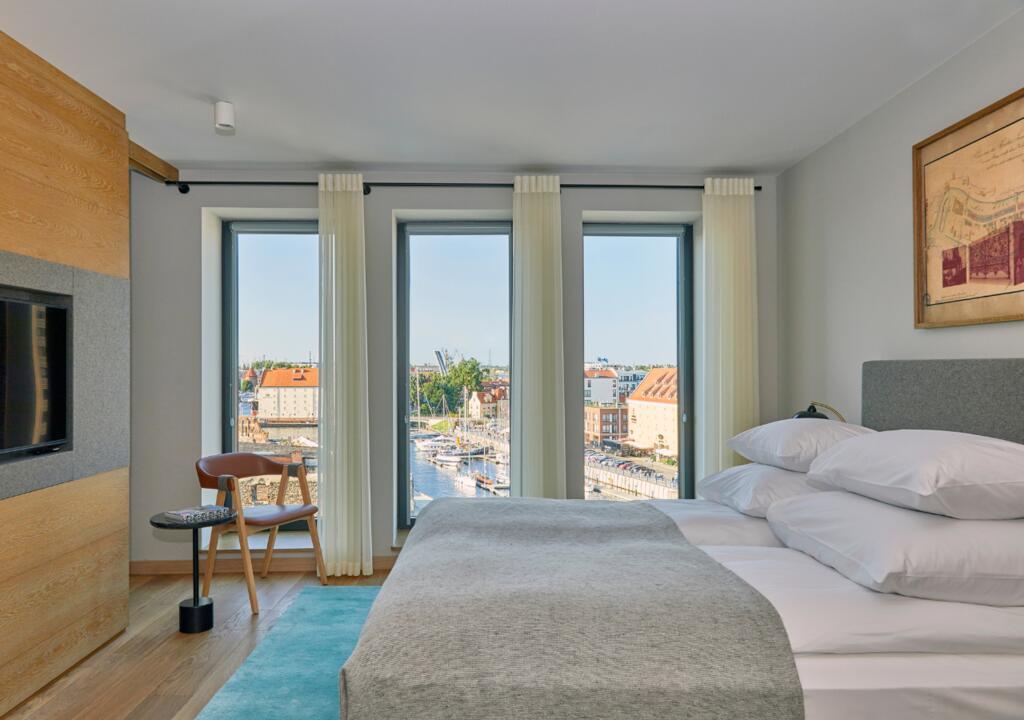
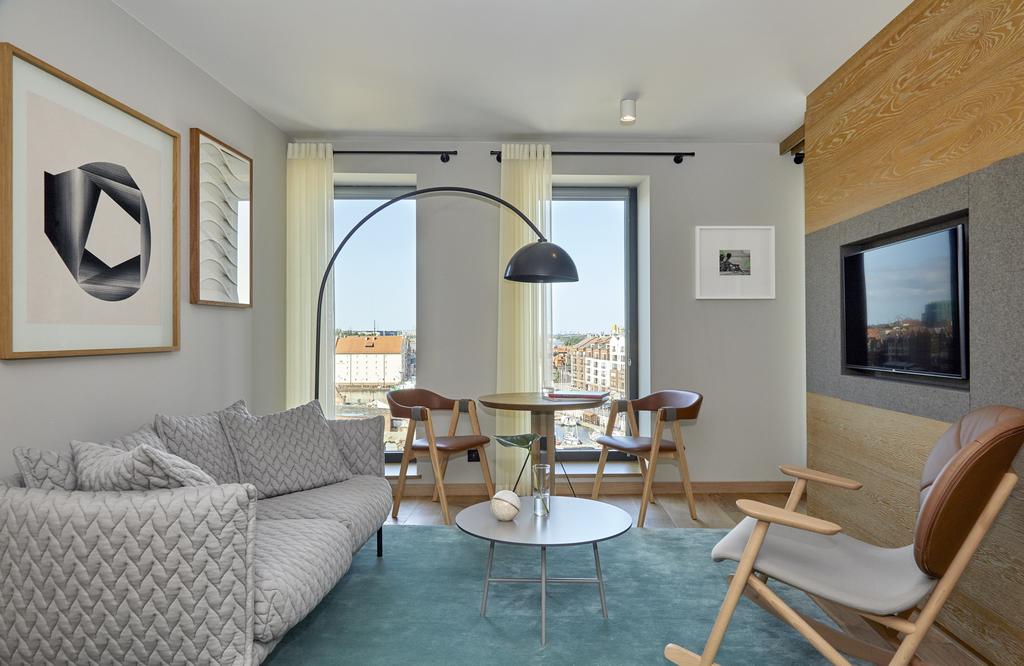
The guestrooms reduce the visual noise. Natural textiles, restrained colours, contemporary furniture, and clean lines create a calmer atmosphere above the more expressive public areas. Large windows keep the city present. Depending on orientation, views extend toward Granary Island, the Old Town, and the surrounding waterfront. The rooms function as a pause between Gdańsk outside and the social energy downstairs.
Polish Art, Not Decorative Filler
Art curators Double Decker helped shape a collection that includes contemporary Polish artists and site-specific commissions. That decision strengthens the hotel considerably. The artwork is not there simply to fill walls. It adds another reading of place. Local history informs the architecture. Local artists interpret the present. The two coexist.
From Dancing Anchor to Magari
The hotel’s dining identity has evolved over time. Earlier, Dancing Anchor played directly into the maritime story, combining industrial detailing with contemporary Polish cooking. Today, Magari takes a more Mediterranean direction, with modern Italian dishes and seasonal specials served from an open kitchen. The shift is interesting. The architecture stays rooted in Gdańsk. The food is allowed to travel.
INK Above
Upstairs, INK Above brings the city back into focus. The rooftop bar and terrace overlook the marina, rooftops, and historic core, giving the hotel a direct visual connection to the landscape that inspired the interiors below. It is intimate rather than oversized. That suits the hotel better. Cocktail. Baltic air. Church spires and water beyond. Enough said.
Why It Works
PURO Gdańsk Stare Miasto works because DeSallesFlint treats the city’s industrial and maritime heritage as a design vocabulary rather than a theme. Rope, blackened steel, glass, textiles, oxidised colour, and warehouse references build a subtle connection to Granary Island and the shipyards, while contemporary furniture and Polish art keep the experience firmly in the present. It is a new hotel in a rebuilt district, but it does not ignore what stood here before. That balance gives PURO Gdańsk its character.