Soori Penang – George Town, Penang, Malaysia
Architect Soo K. Chan transforms the shophouses of his childhood into a deeply personal retreat within George Town’s historic Khoo Kongsi compound.
Why DNA Hotels Loves It
● Architect Soo K. Chan, founder of SCDA Architects, grew up within this very clan community and has returned decades later to transform its historic shophouses into a 15-suite hotel.
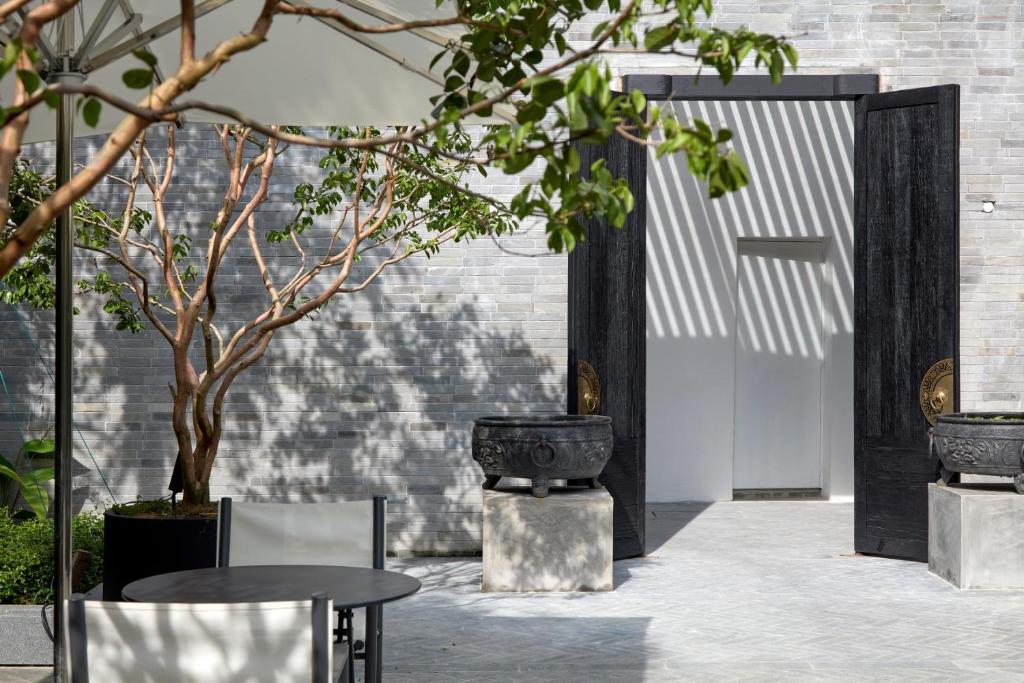
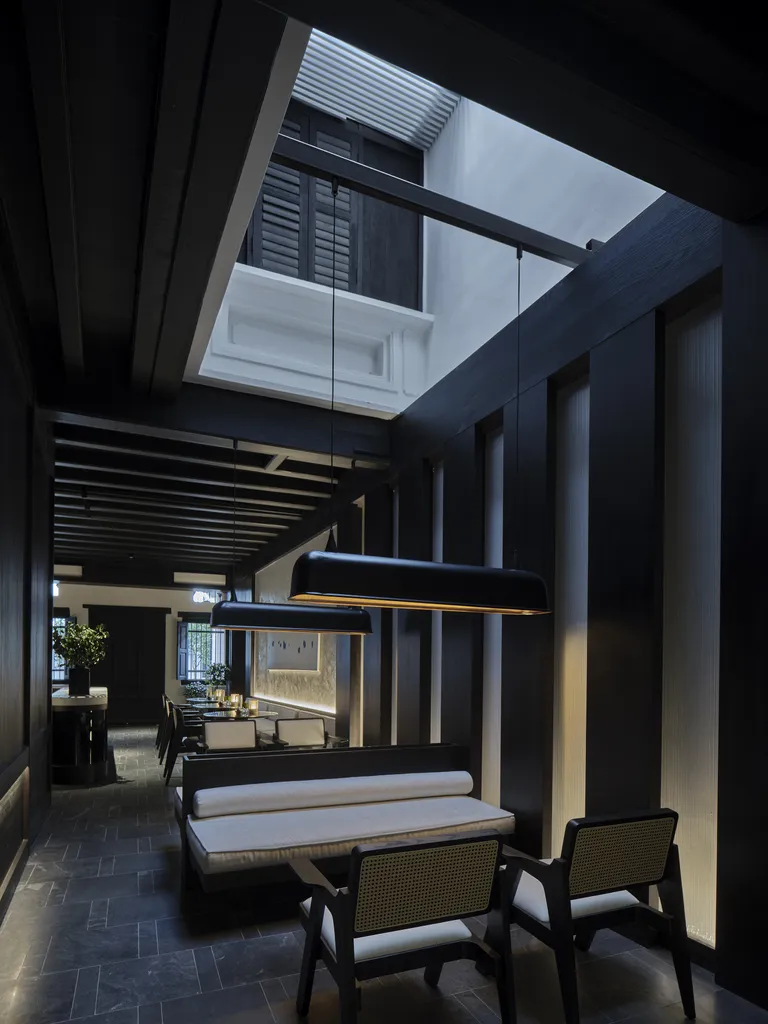
● Rather than resorting to decorative heritage nostalgia, the design abstracts memories of Penang through air wells, reflecting pools, granite, timber screens, filtered light and references to traditional Chinese craftsmanship.
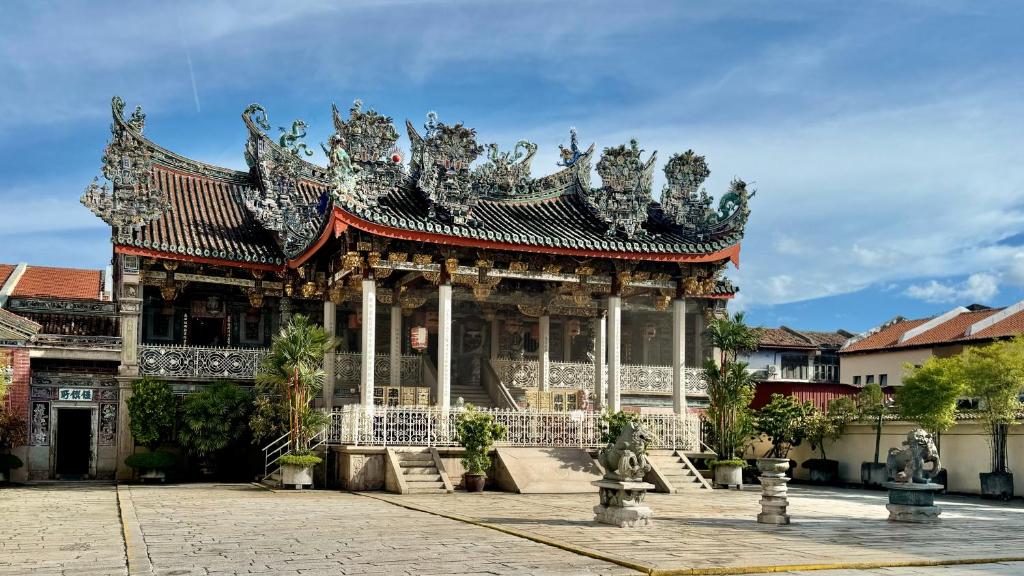
● Its extraordinary setting inside the 19th-century Khoo Kongsi compound puts guests within one of George Town’s most important architectural ensembles — with the city’s food, temples and street life immediately outside.
An Architect Comes Home
Some hotel restorations begin with an old building. Soori Penang begins with a childhood. Architect Soo K. Chan spent his earliest years within George Town’s Khoo Kongsi community, growing up among the shophouses, courtyards and air wells of this remarkable Chinese clan enclave. After building an international career through Singapore-based SCDA Architects, Chan returned to the place where his own architectural memories began. The result is Soori Penang: 15 historic shophouses transformed into 15 suites, not simply as a conservation project, but as a highly personal interpretation of home, memory and Penang.
Inside the Khoo Kongsi
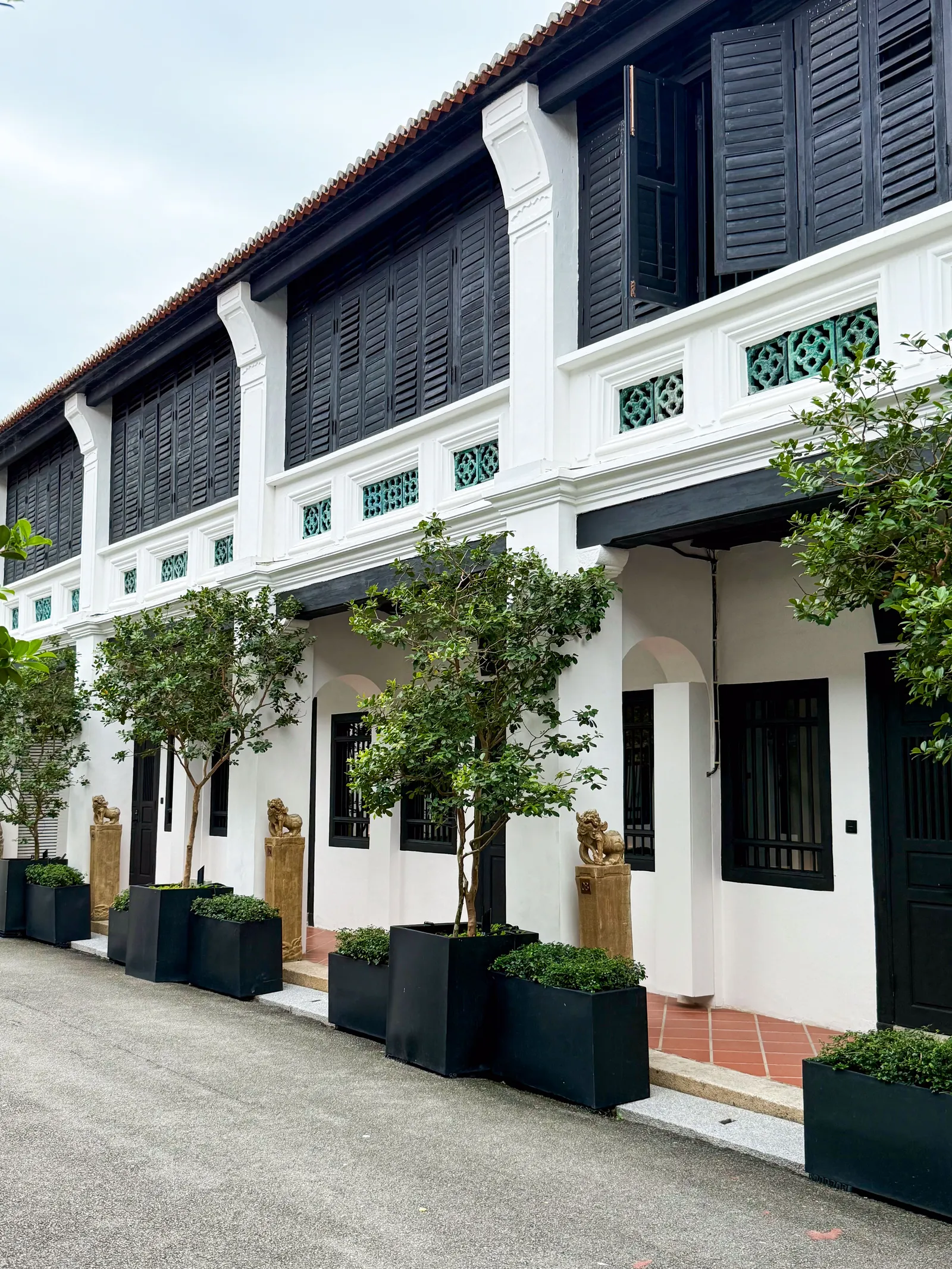
To understand the hotel, you first have to understand its setting. A kongsi was far more than an ancestral temple. These clan compounds functioned almost as small cities within the city, bringing together religious, social and residential life behind a protective arrangement of temples, courtyards and shophouses. Khoo Kongsi is among George Town’s most spectacular surviving examples. Its richly ornamented ancestral temple remains the theatrical heart of the compound. Soori Penang deliberately doesn’t compete with it. Instead, the hotel occupies two rows of comparatively restrained black-and-white shophouses nearby, creating a fascinating dialogue between ornament and minimalism, public ceremony and private retreat.
Memory as Architecture
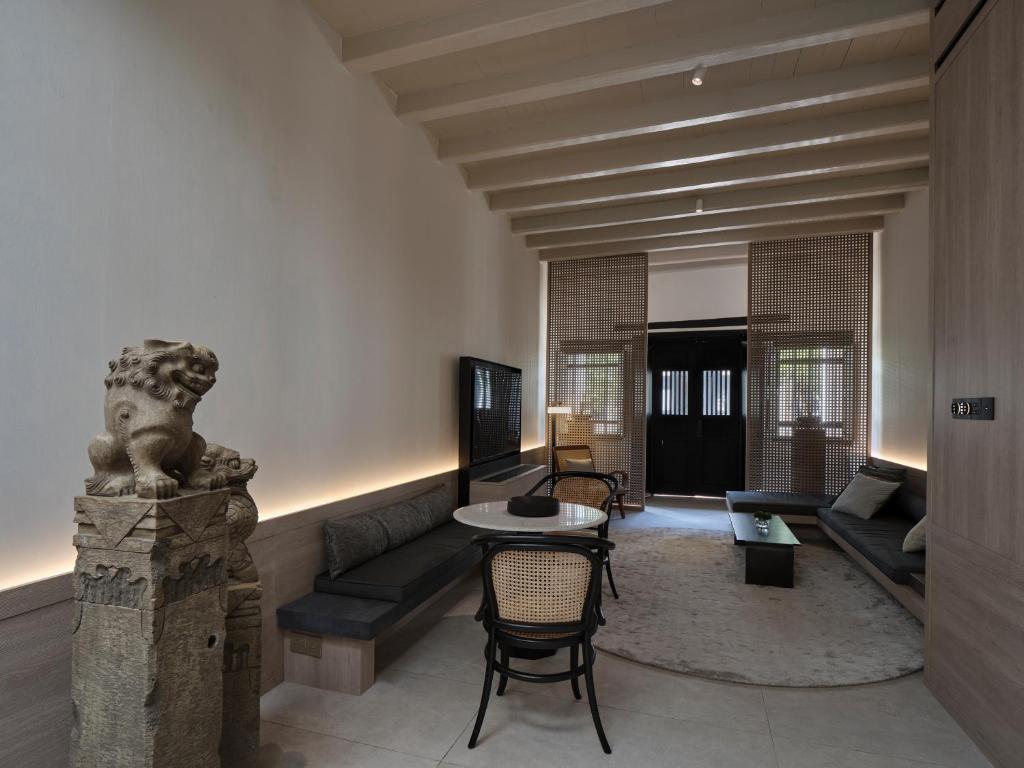
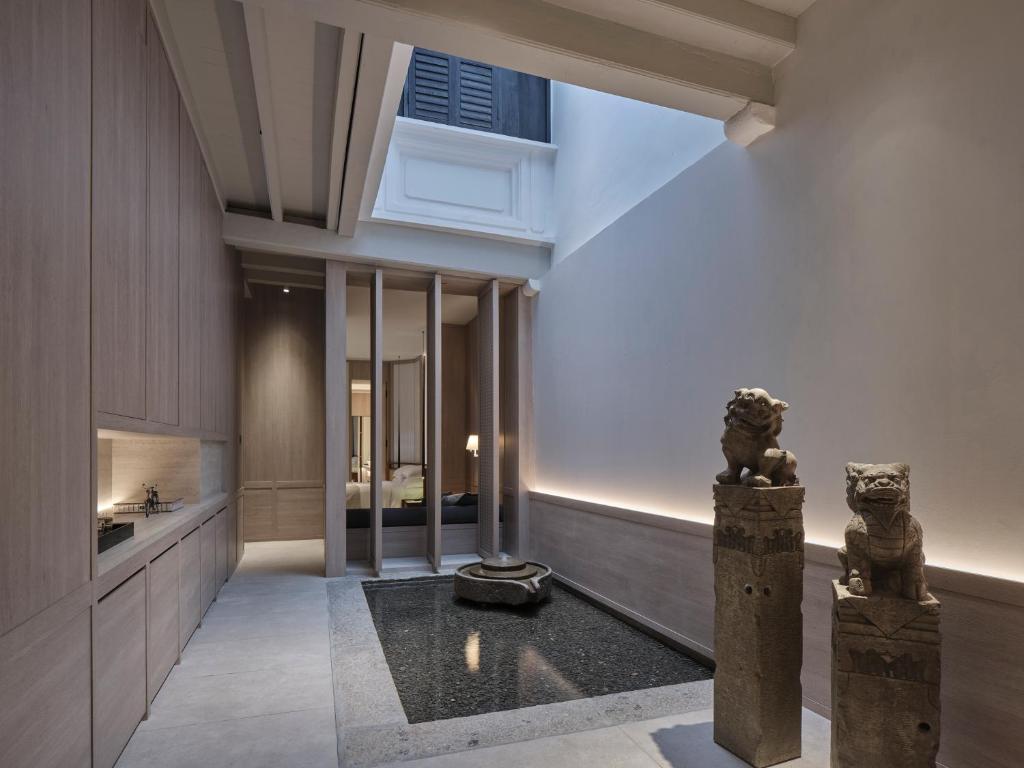
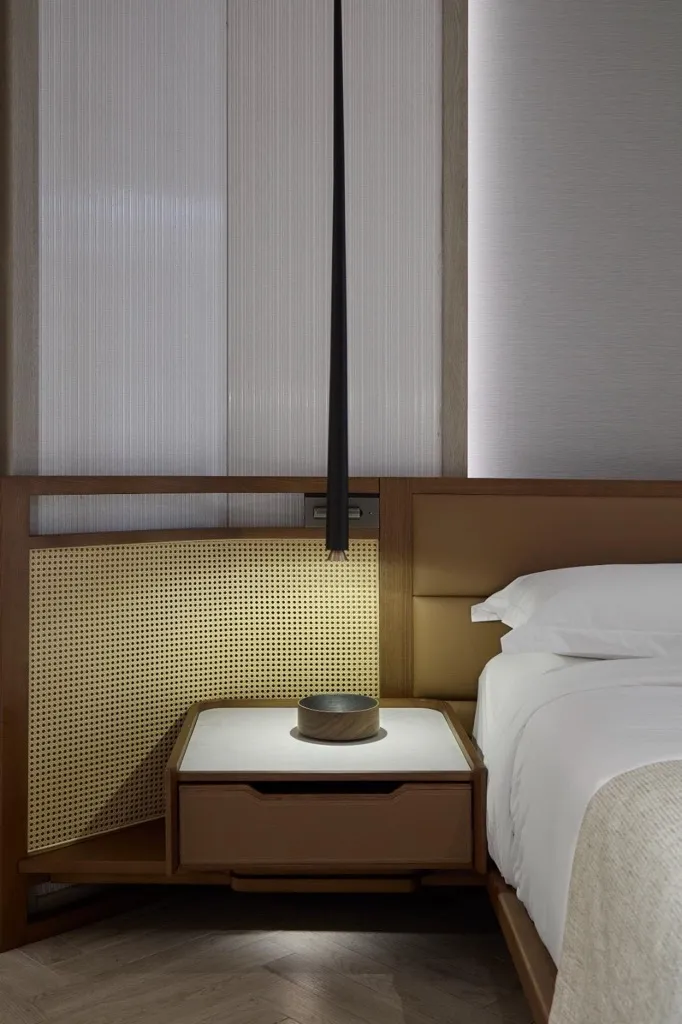
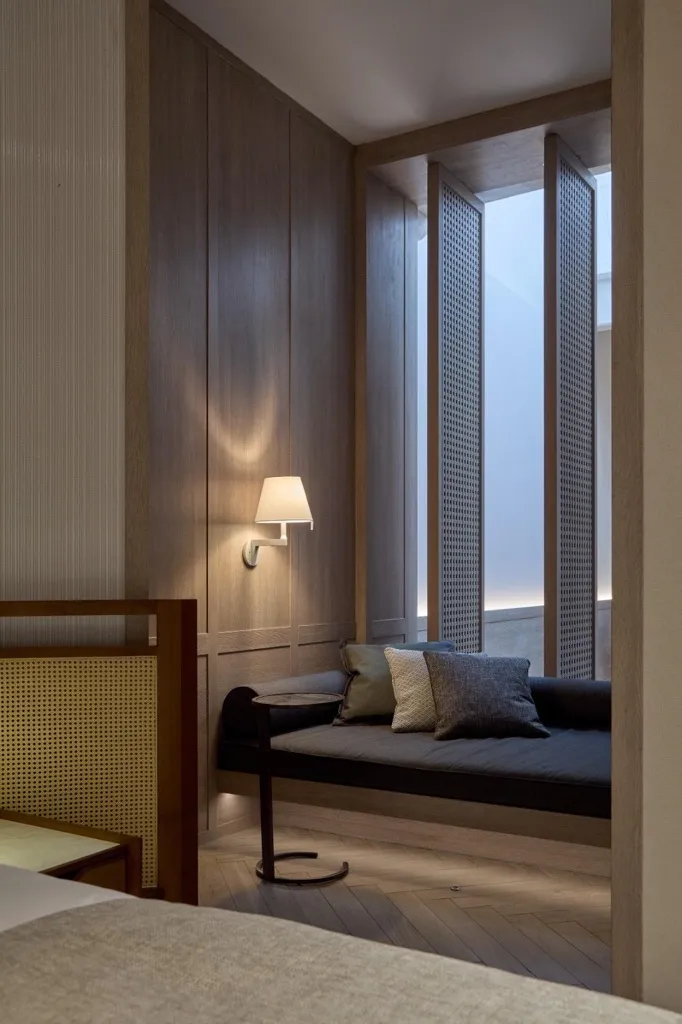
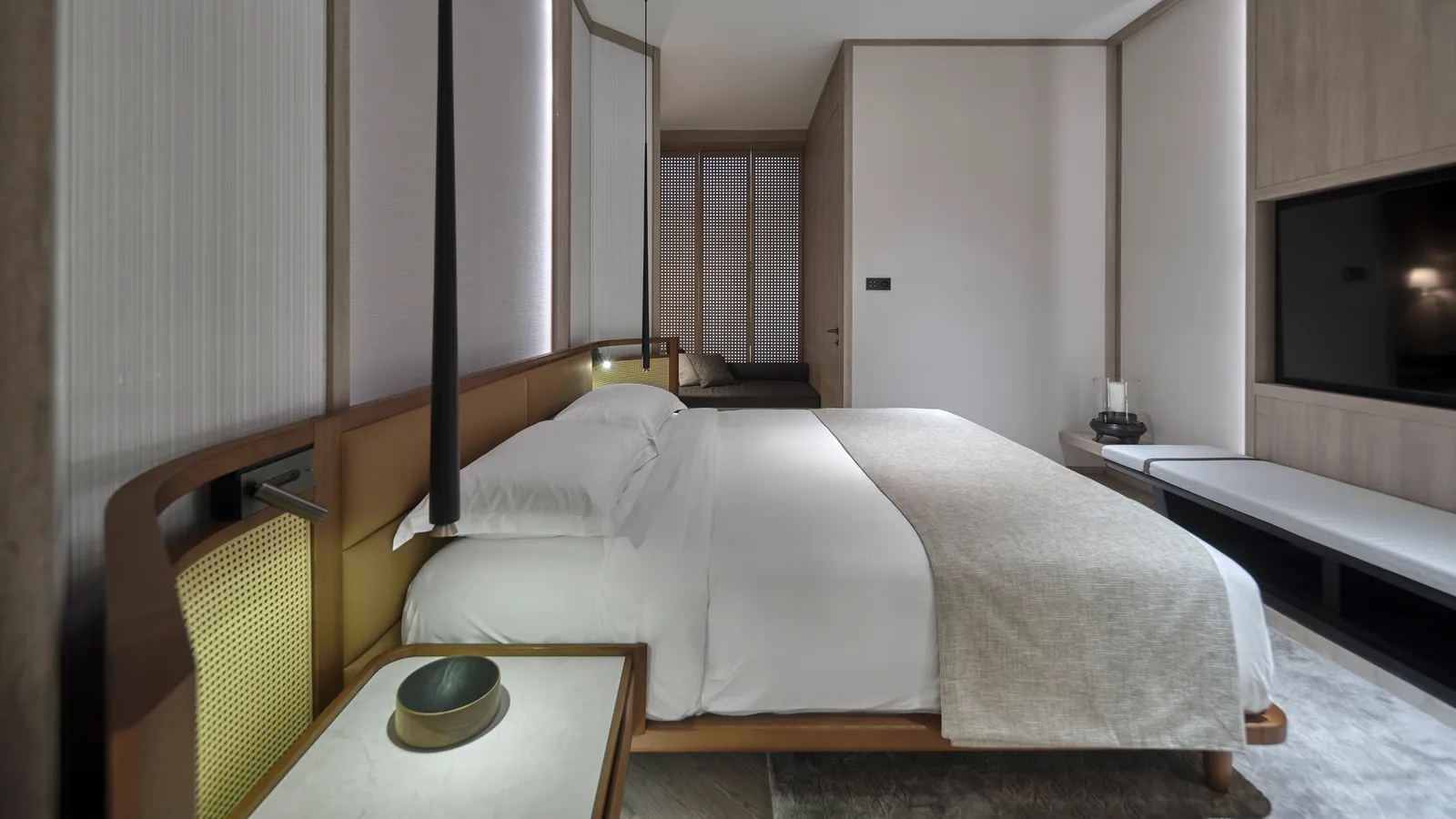
Strict heritage regulations determined what could be altered, but Chan has used those restrictions to rediscover the logic of traditional shophouse living. The original air wells are particularly important. Once practical devices bringing daylight, ventilation and rainwater into these long, narrow houses, they have been transformed into tranquil internal courtyards with shallow reflecting pools. Water becomes a recurring element. A circular granite fountain inspired by a traditional stone rice grinder marks the transition between living and sleeping spaces. Timber screens filter views and light. Stone, onyx, porcelain, pale timber, herringbone floors and dark textiles create an interior that feels almost monastic compared with the exuberance outside. The references to Penang are everywhere, but rarely literal. This isn’t heritage recreated. It’s heritage remembered.
15 Private Houses
Calling them hotel rooms almost undersells the idea. Each suite occupies the elongated proportions of a historic shophouse, unfolding as a sequence of spaces rather than a conventional bedroom. Living areas and daybeds give way to internal pools and courtyards; screens reveal bedrooms beyond; walk-in wardrobes and bathrooms continue the progression deeper into the building. Contemporary comforts are equally considered, from Toto fittings and Dyson appliances to Byredo amenities, high-quality linens and carefully integrated technology. But the most memorable luxury is spatial. Even though you’re staying in the middle of one of George Town’s most fascinating neighbourhoods, the architecture creates an extraordinary sense of stillness.
Penang Without the Heritage Theatre
George Town has no shortage of heritage hotels. Many celebrate that history through carved furniture, antiques, patterned tiles and decorative references to Peranakan and colonial interiors. Soori Penang takes the opposite route. Chan reduces those cultural references to proportion, texture, shadow and material. A carved motif becomes geometry. A courtyard becomes water and light. Memories of tropical rain entering an air well become part of the experience of walking through a suite. It’s a far more architectural interpretation of Penang — and arguably a more interesting one.
A Hotel That Knows Where It Is
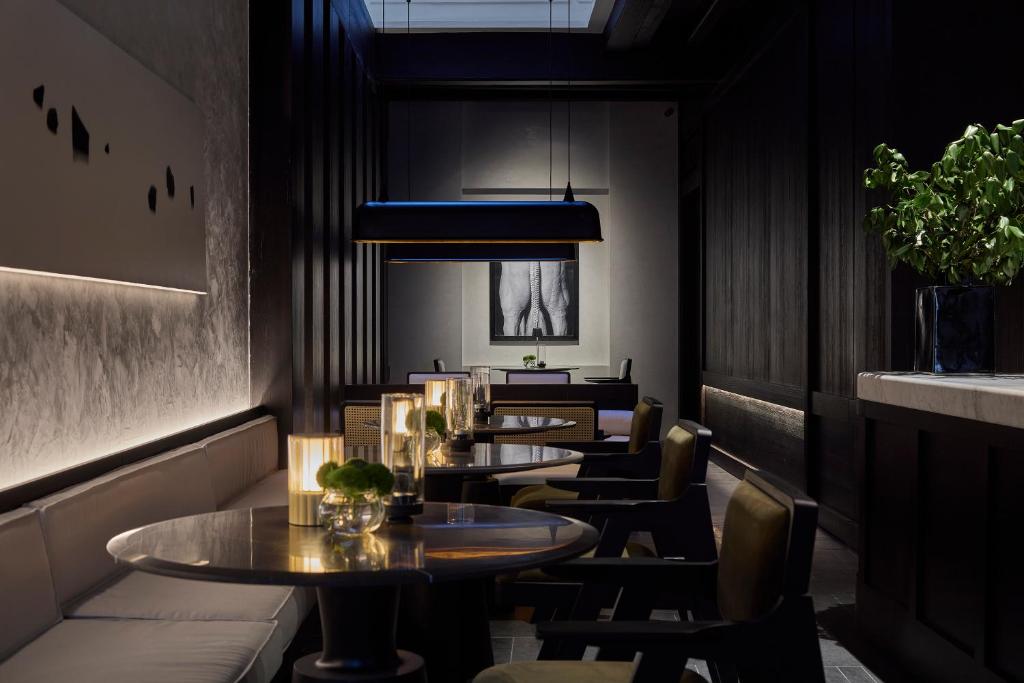
Opening a restaurant in one of Asia’s great food cities requires some humility. Soori Penang keeps its own offering deliberately intimate. Executive chef Mathijs Nanne brings Mediterranean influences together with local produce in a concise menu, while breakfast remains relaxed and contemporary. More interesting is the hotel’s intention to connect guests with Penang’s existing food culture rather than reproduce it behind hotel walls. Local dishes can be brought into the experience through trusted neighbourhood specialists, while a dedicated tea room introduces another ritual closely connected to the region. Because outside, of course, is George Town. And competing with George Town would be rather pointless.
The City Through a Local Lens
Step through the door and you’re immediately among Cannon Street and Armenian Street, temples, clan houses, kopitiams, markets, murals and the wonderfully chaotic mixture of cultures that defines historic George Town. Little India and the waterfront jetties are within walking distance. Soori Penang can arrange cultural walks, trishaw rides, temple visits and other encounters, but one experience feels particularly special: access to Khoo Kongsi before the daytime crowds arrive. For once, staying inside a historic monument doesn’t mean observing it from behind a velvet rope. You’re temporarily living within its fabric.
Coming Full Circle
There is something unusually satisfying about the story of Soori Penang. A child grows up in the shophouses of an old Penang clan compound, becomes an internationally recognised architect, and eventually returns to reinterpret those same spaces through everything he has learned in between. That biography gives the hotel something architecture alone cannot manufacture. Soori Penang isn’t simply inspired by George Town. It comes from it. And in a city already rich in heritage hotels, that makes this one particularly difficult to replicate.