Sunyata Ren’ai Hall – Chongqing, China
Where Heritage, Craft, and Contemplation Converge
Why DNA Hotels Loves It
● One of China’s finest examples of adaptive reuse, transforming a 120-year-old charitable institution into a deeply atmospheric design hotel.
● Architecture and interiors that celebrate material honesty, craftsmanship, and the beauty of imperfection.
● A rare sanctuary of calm in one of the world’s most dynamic and fast-moving cities.
A Historic Landmark Reimagined
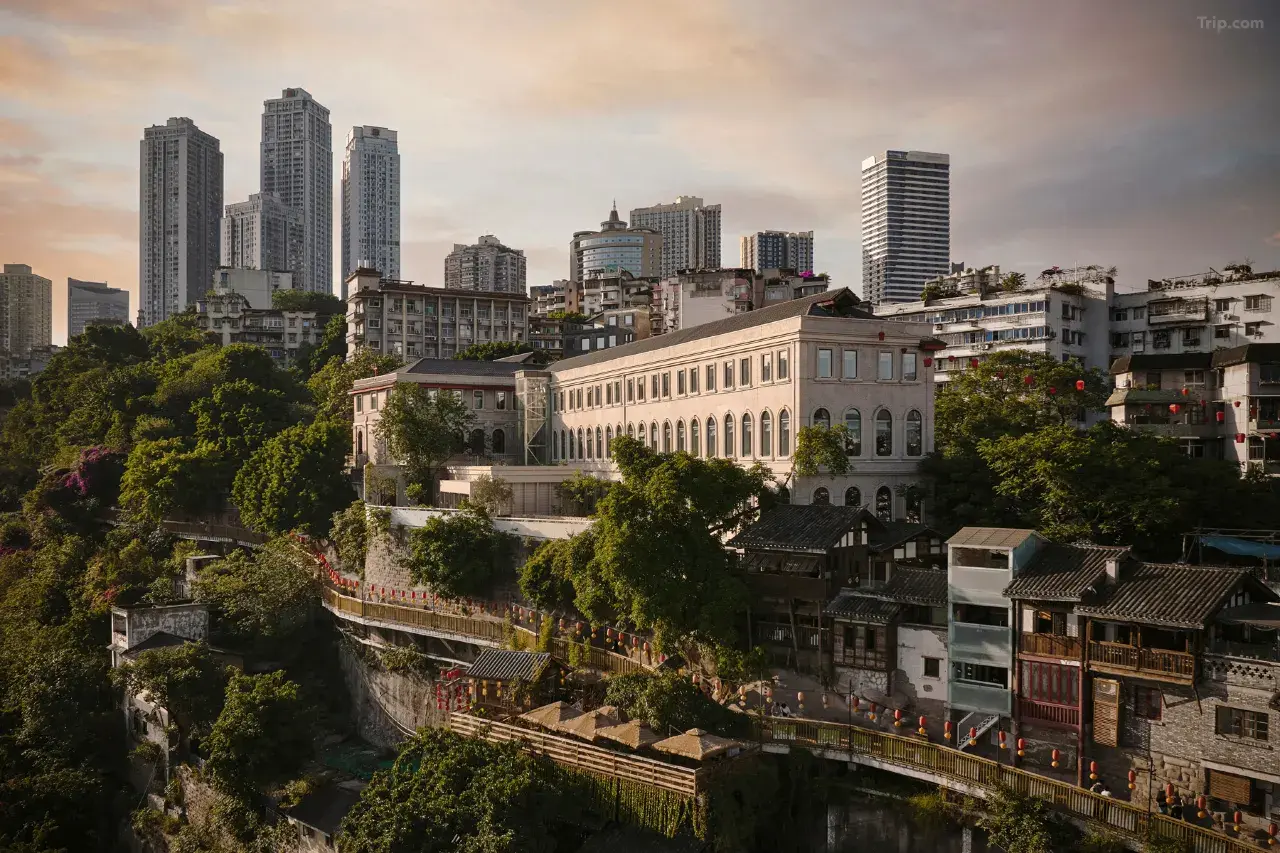
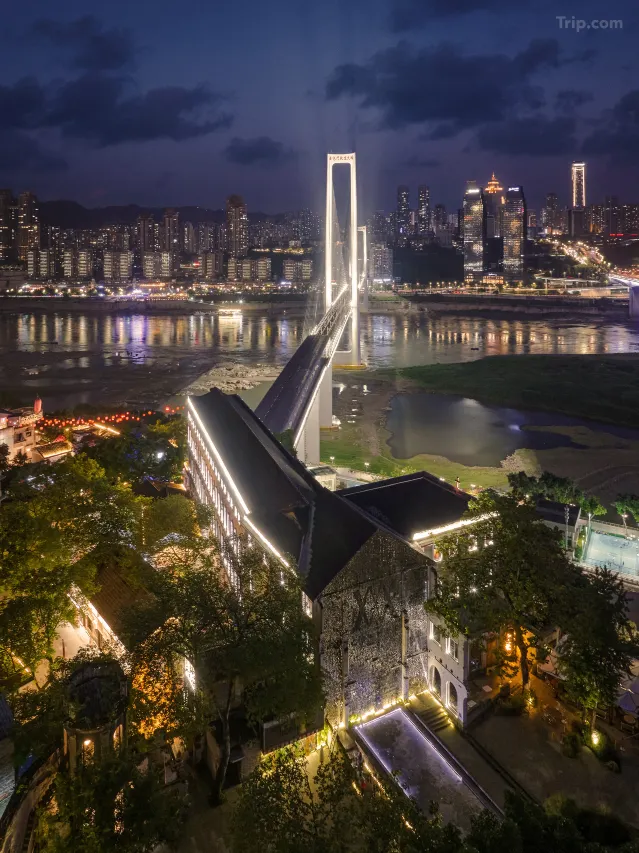
In a city famous for its vertiginous skyline, futuristic towers, and relentless energy, Sunyata Ren’ai Hall offers something entirely different. Perched on the steep hillsides of Chongqing’s historic Yuzhong District, the hotel occupies the former Ren’ai Tang, a remarkable building whose history spans more than a century. Originally established as a French charitable institution, the complex served variously as a church, hospital, and girls’ school, becoming deeply woven into the city’s social and cultural fabric. Rather than erasing that history, Sunyata embraces it. The project transforms the building into a contemporary retreat while allowing its past to remain visible in every stone wall, vaulted ceiling, and weathered staircase. This is not restoration as nostalgia.It is restoration as conversation.
Architecture That Respects Time
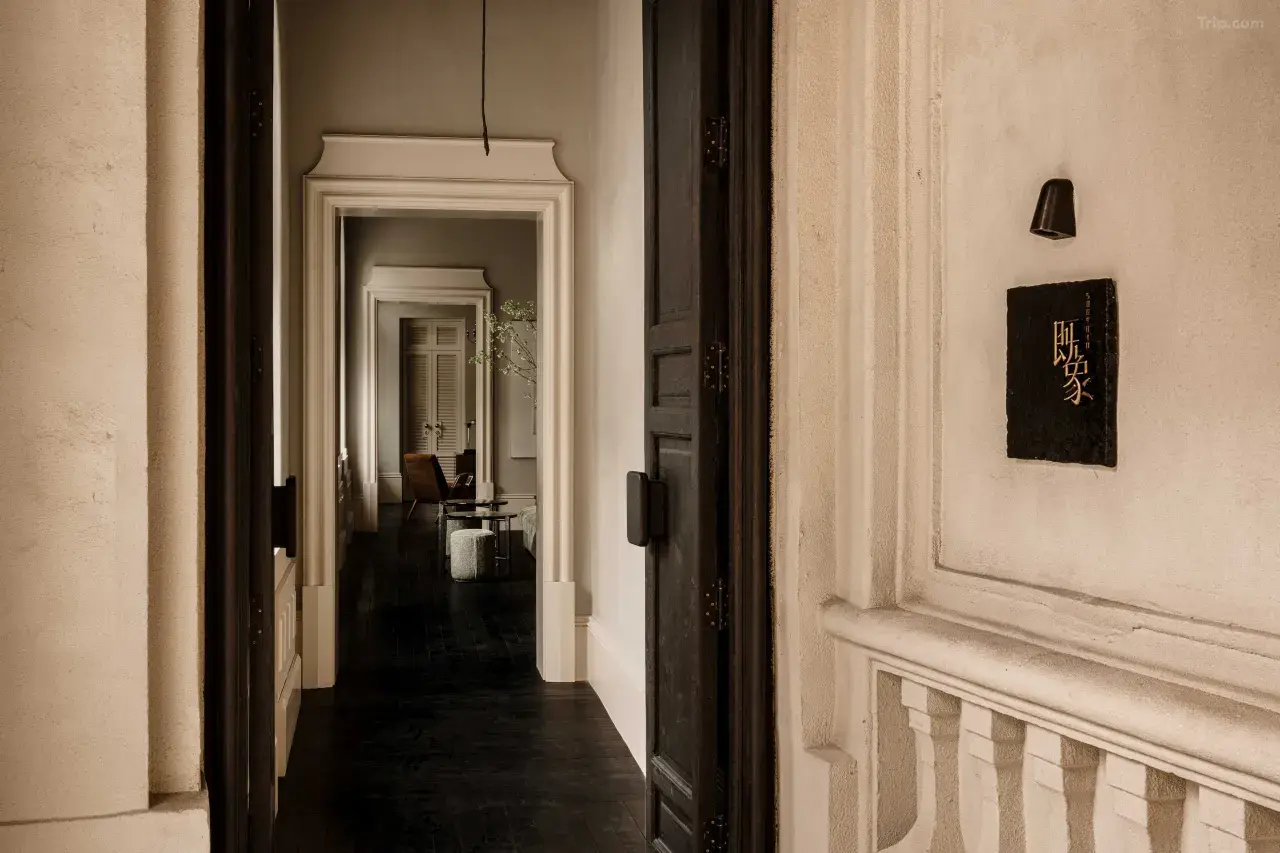
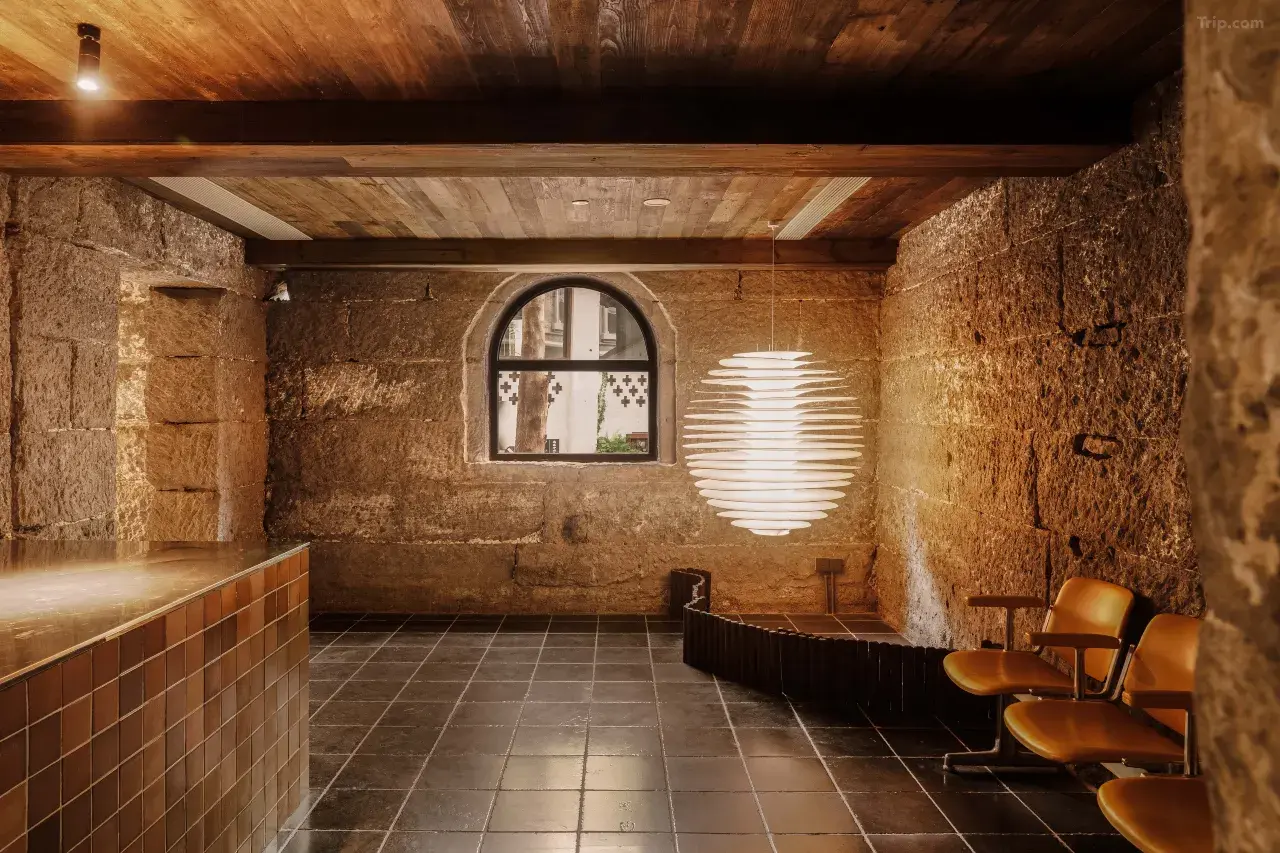
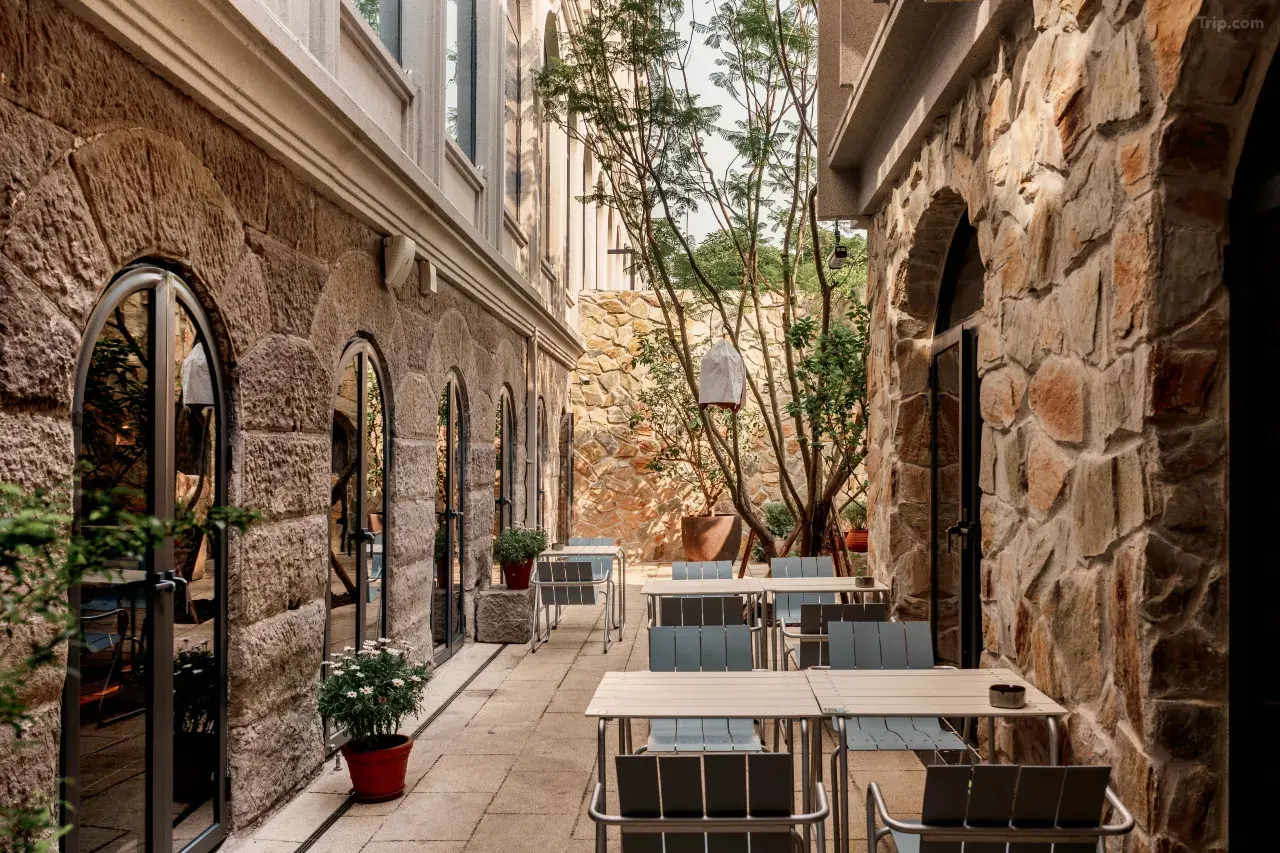
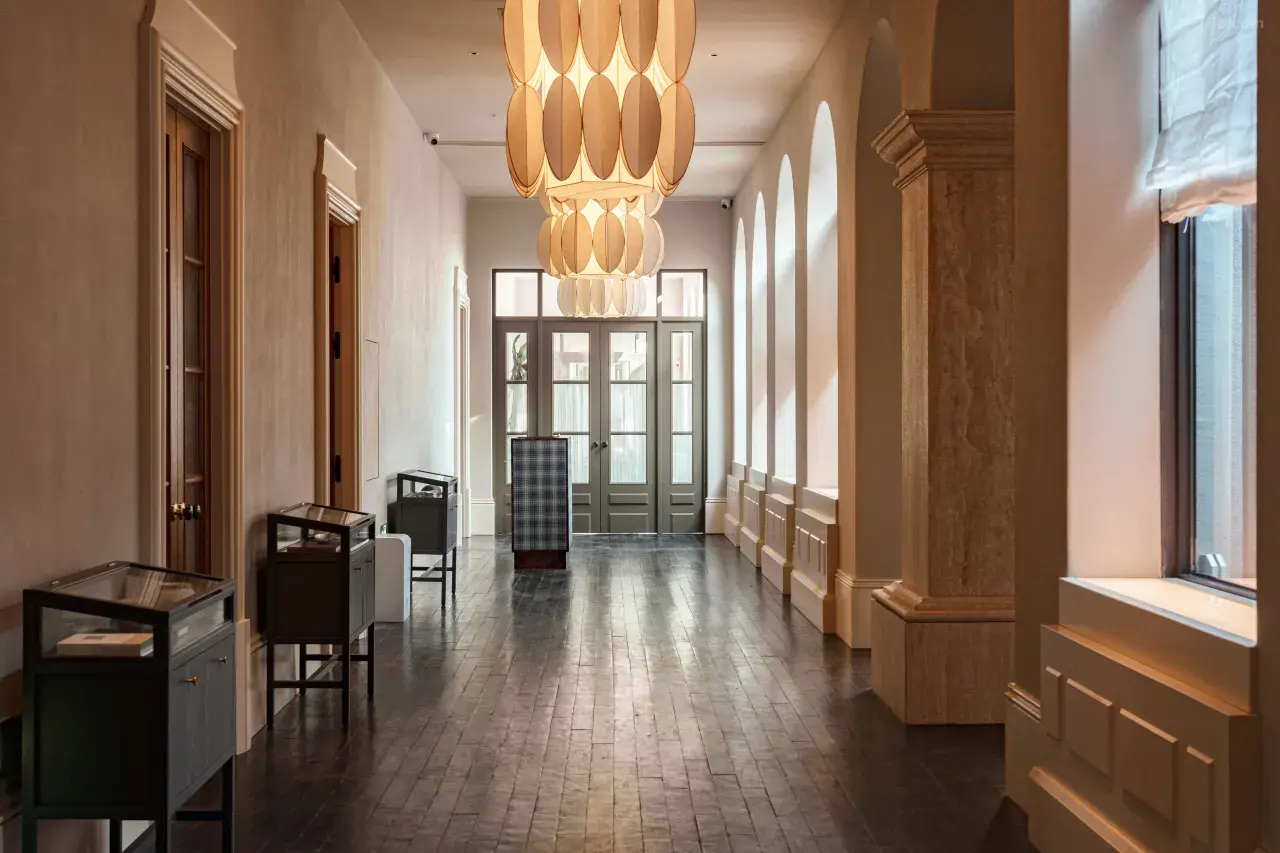
The success of Ren’ai Hall lies in its restraint. Where many heritage conversions seek dramatic transformation, this project achieves its impact through careful preservation and thoughtful intervention. Original brick vaults, timber beams, stone walls, and arched corridors remain central to the experience, revealing the building’s history rather than concealing it. The former bell tower still anchors the composition. Historic courtyards have been transformed into peaceful gardens. Staircases polished by generations of footsteps continue to connect the various levels. Every architectural decision feels guided by respect rather than reinvention. The building remains unmistakably itself.
The Poetry of Materials
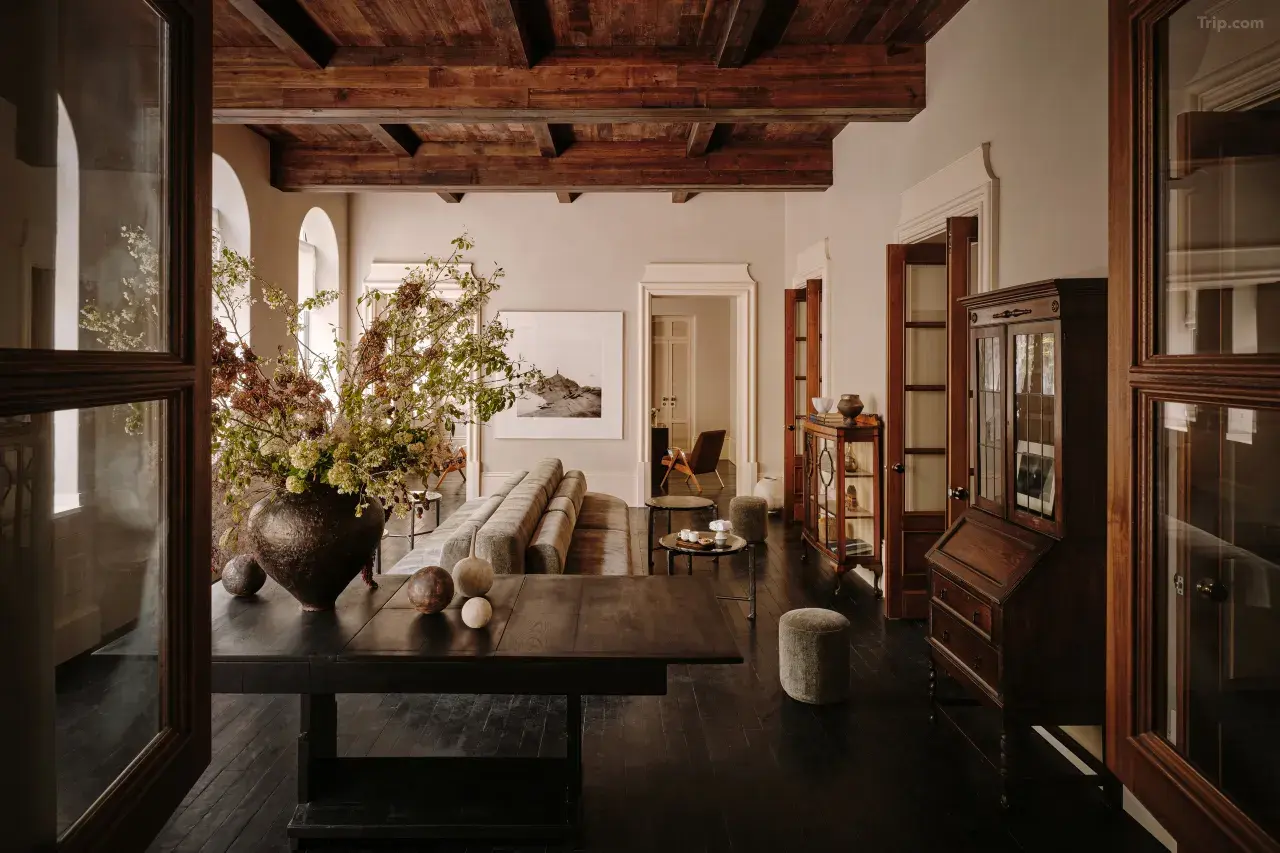
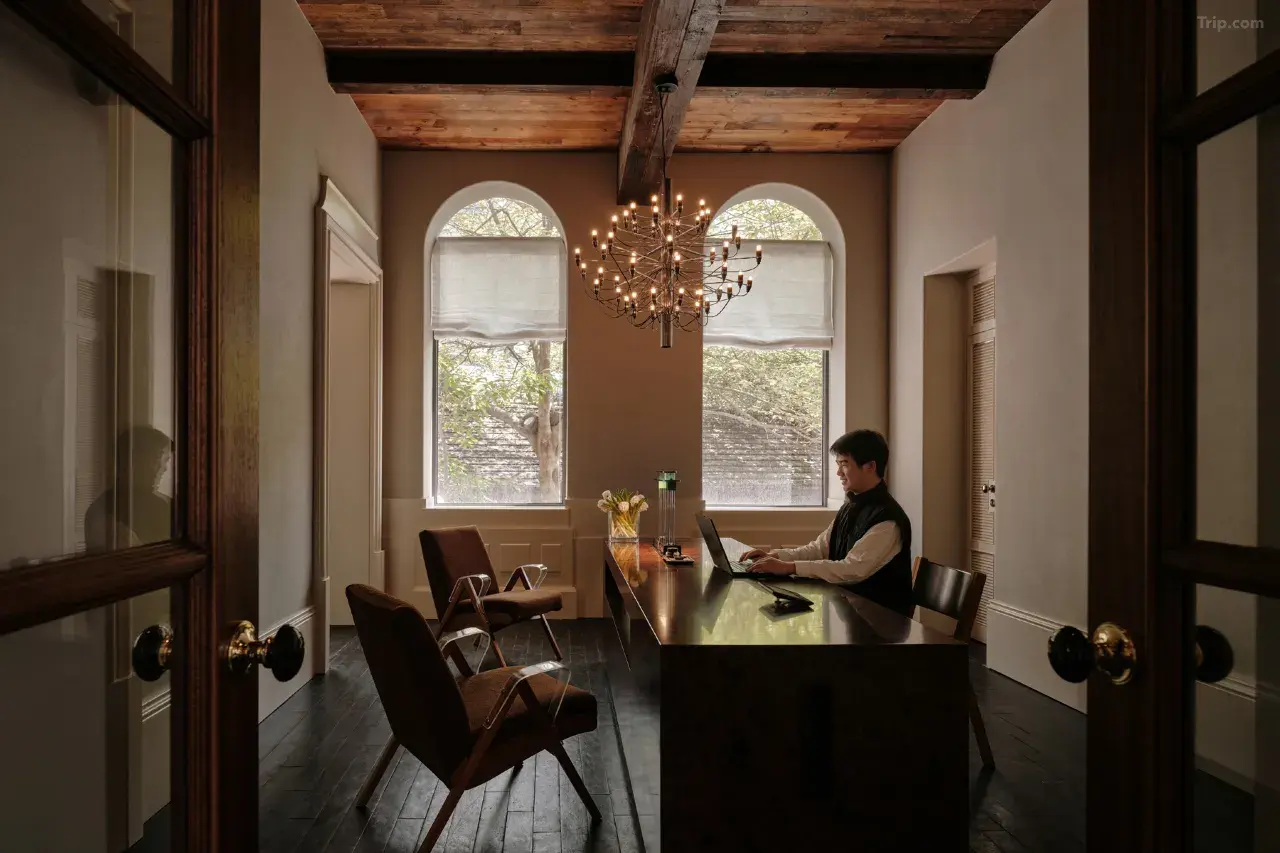
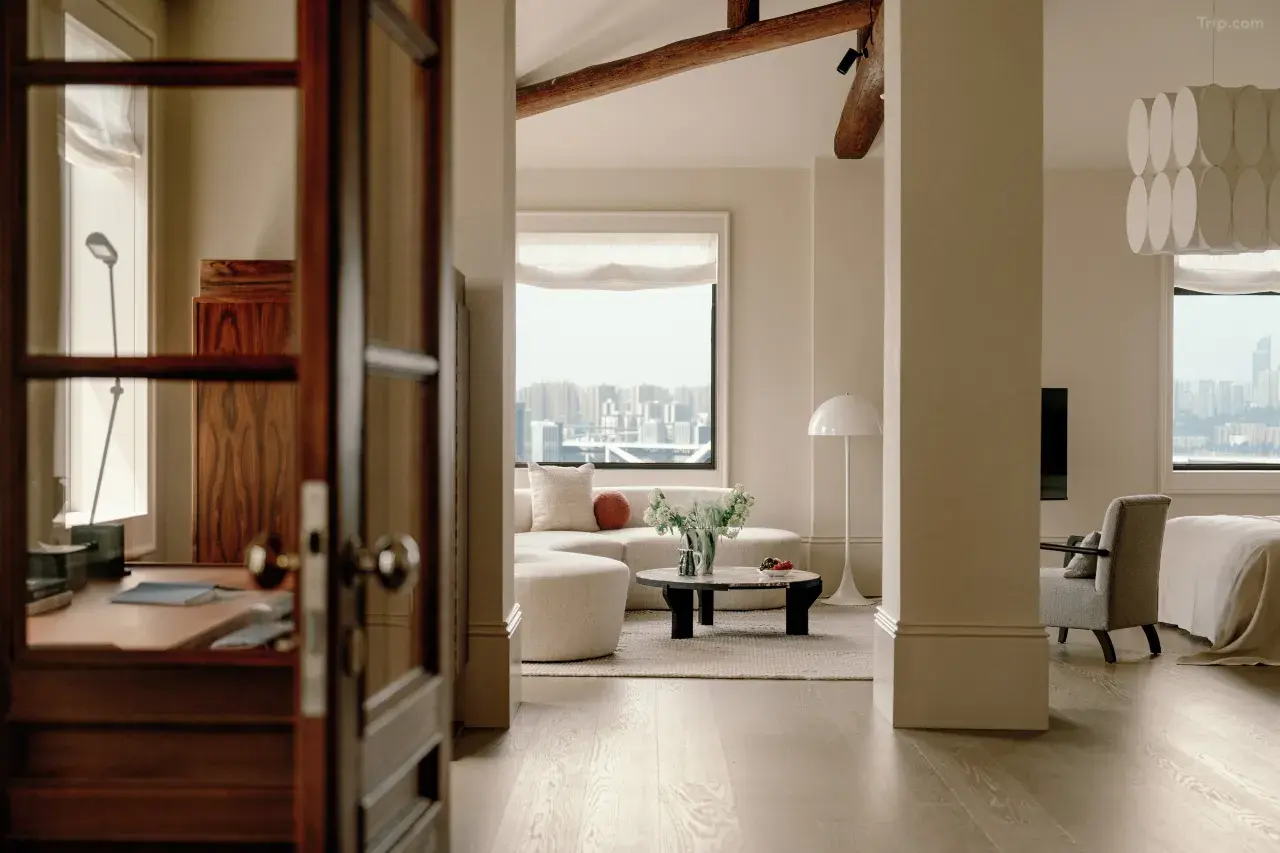
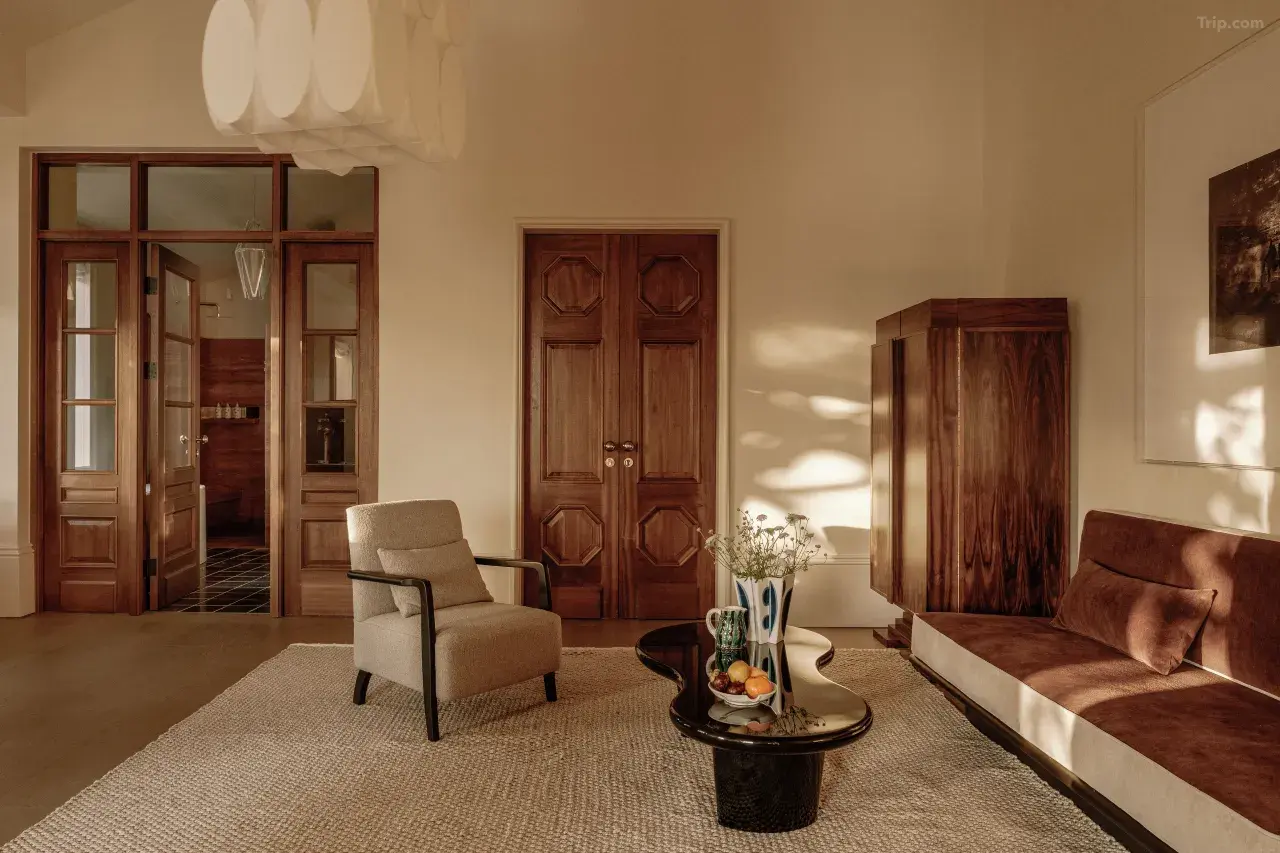
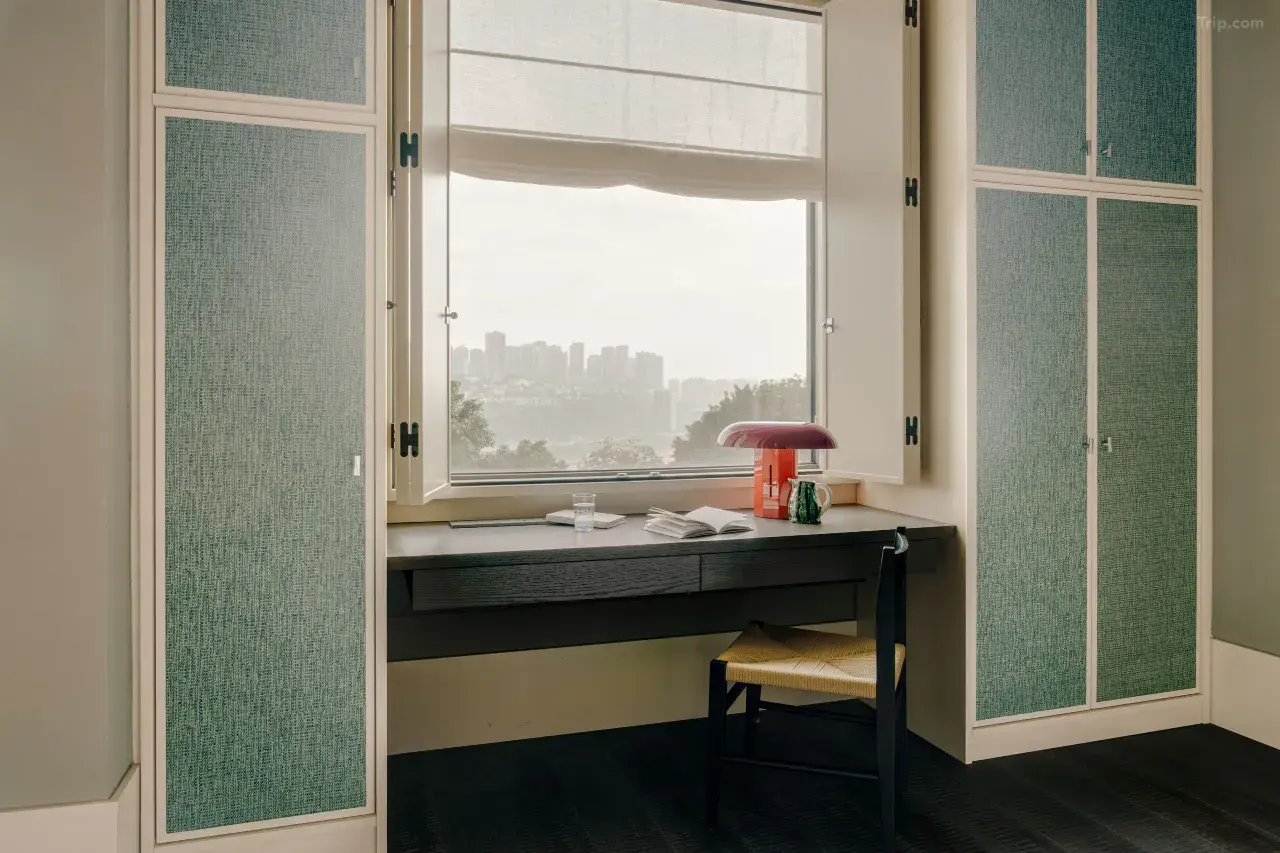
The interiors, created by designer Xie Bin and his team at Wuji Decoration, embody a philosophy of quiet luxury rooted in craftsmanship and material authenticity. Original architectural elements are left exposed wherever possible. New additions arrive gently: custom oak joinery, woven textiles, hand-finished plaster, natural stone, bamboo screens, and carefully crafted furniture. Nothing feels excessive. Nothing feels decorative for its own sake. Instead, the design celebrates texture, age, imperfection, and the tactile qualities of materials that improve with time. The atmosphere feels deeply connected to traditional Chinese notions of balance and harmony while remaining entirely contemporary.
Rooms Designed for Reflection
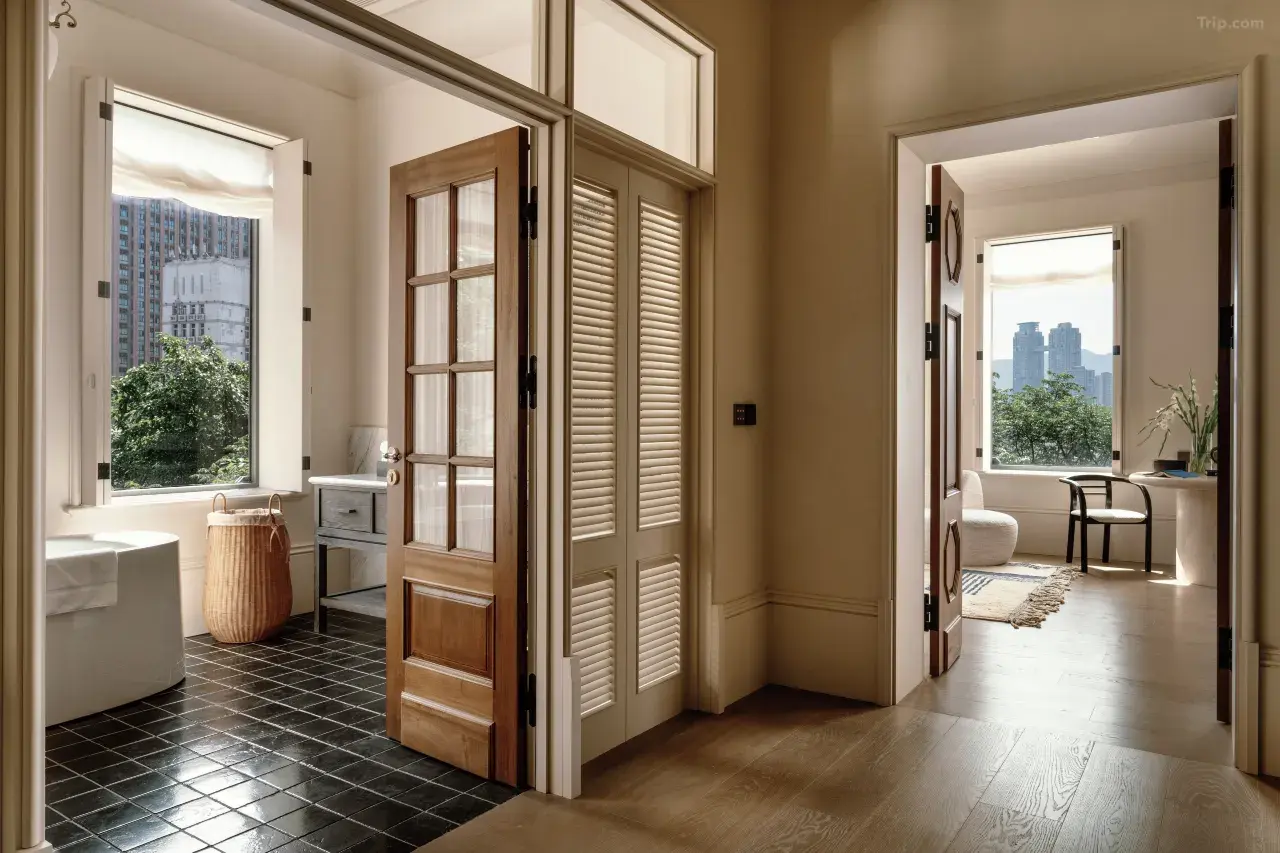
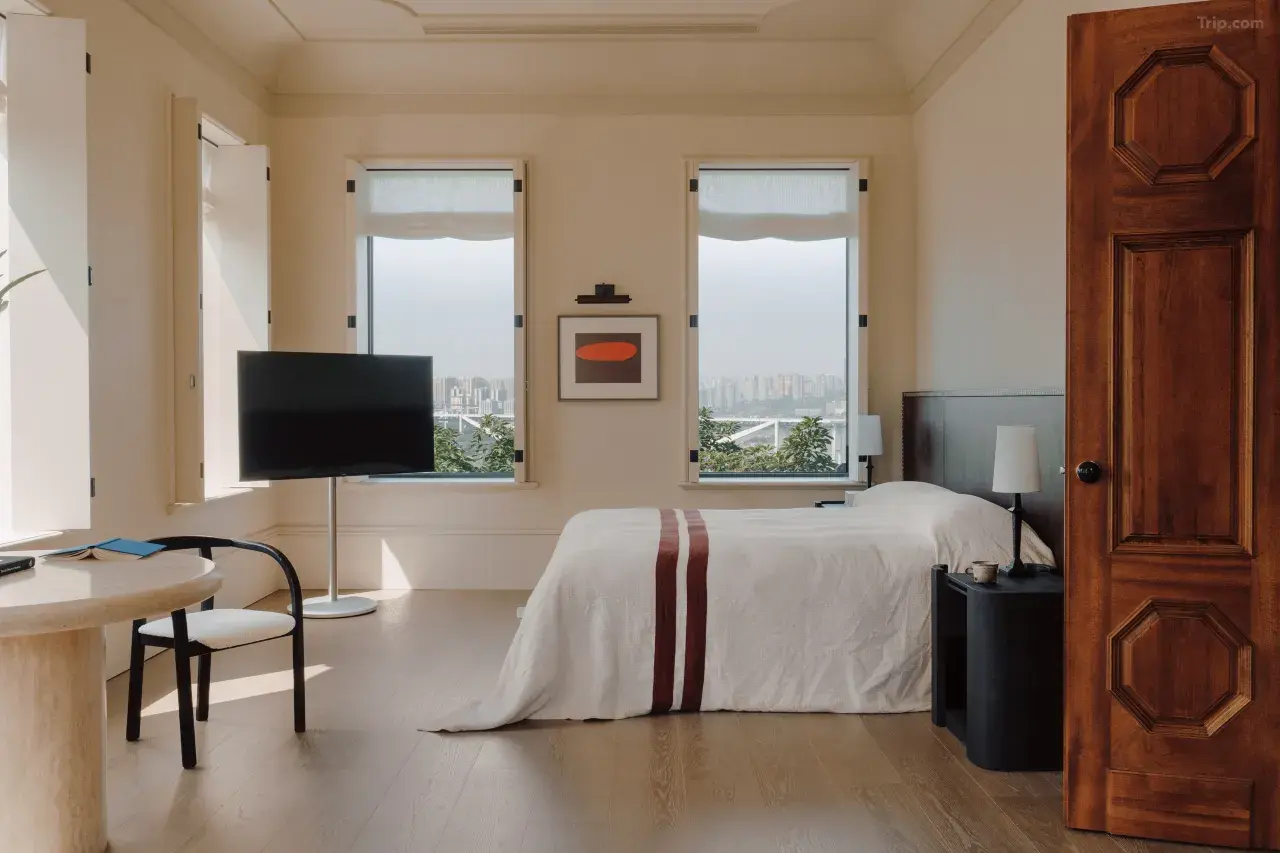
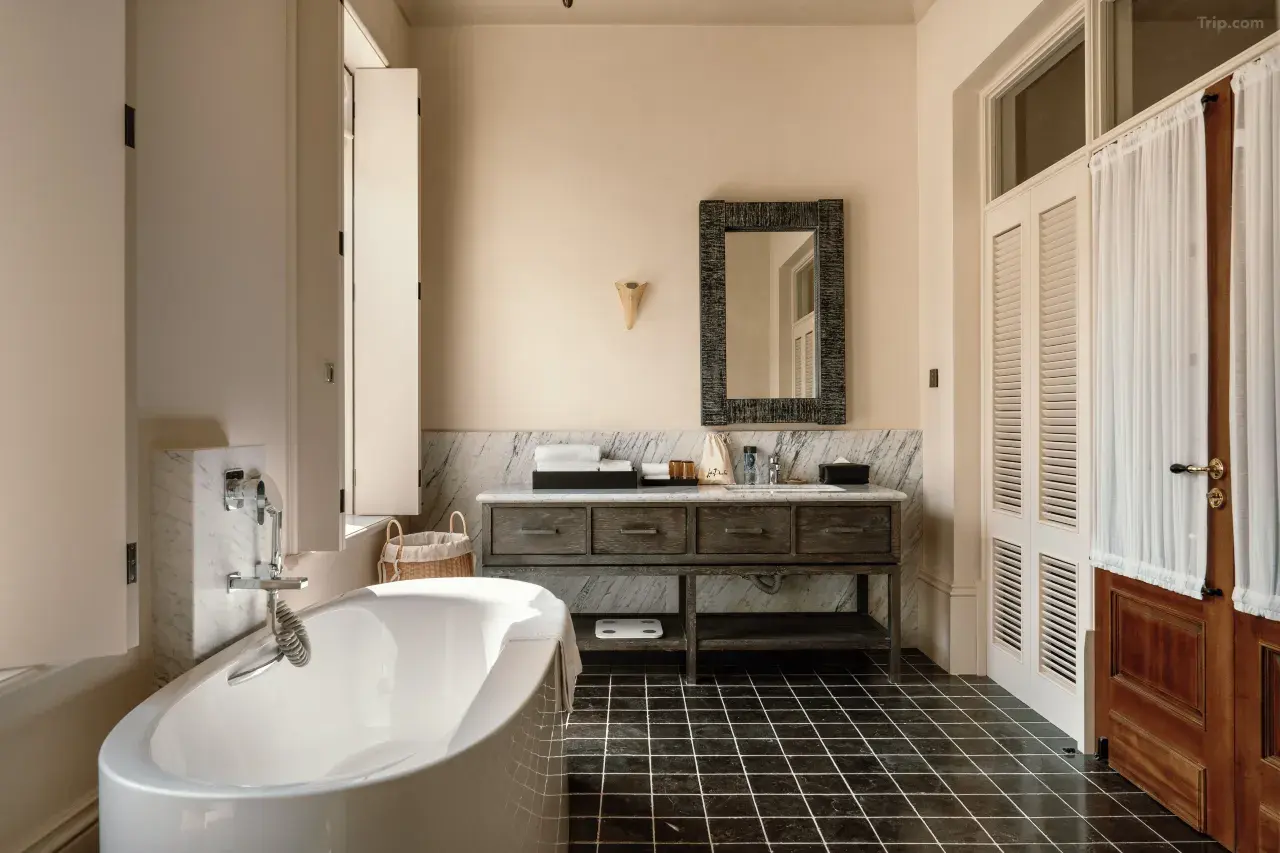
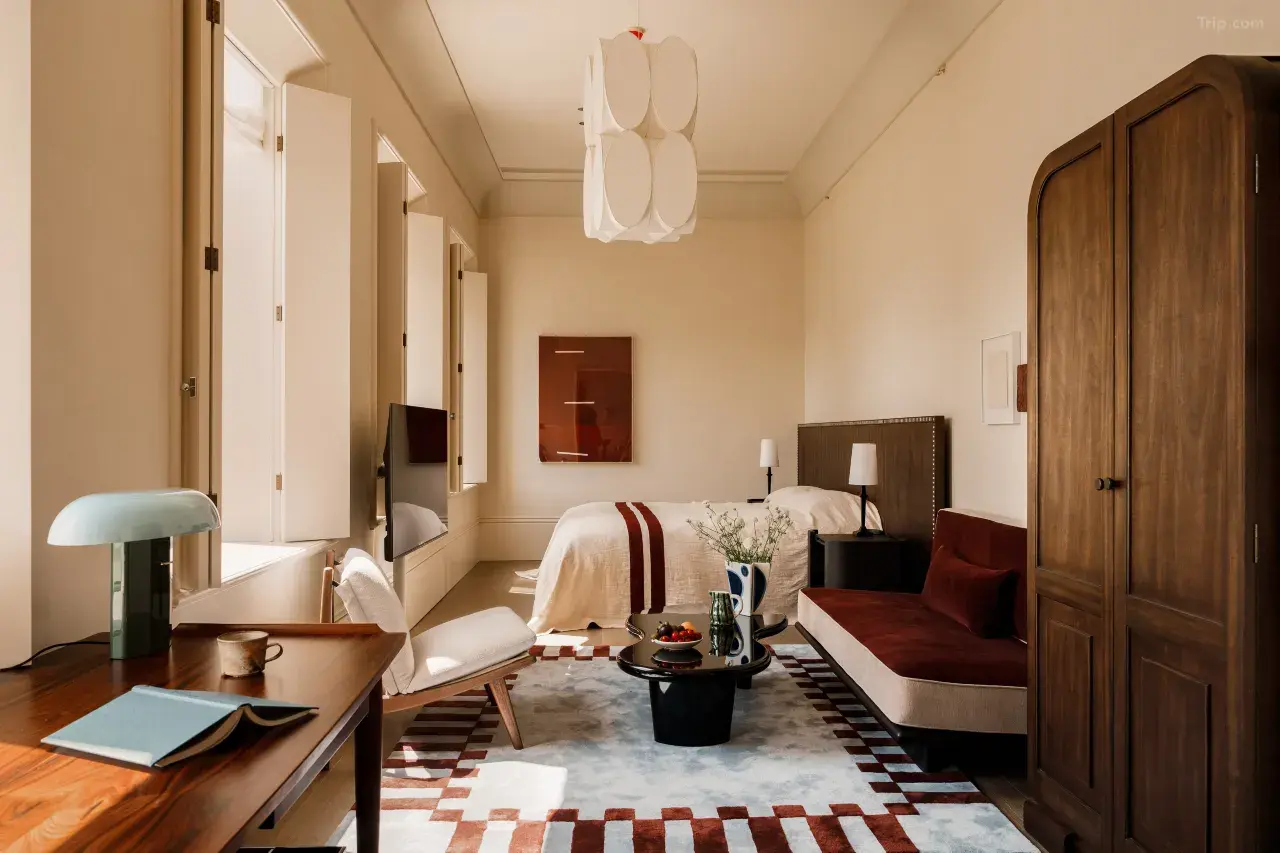
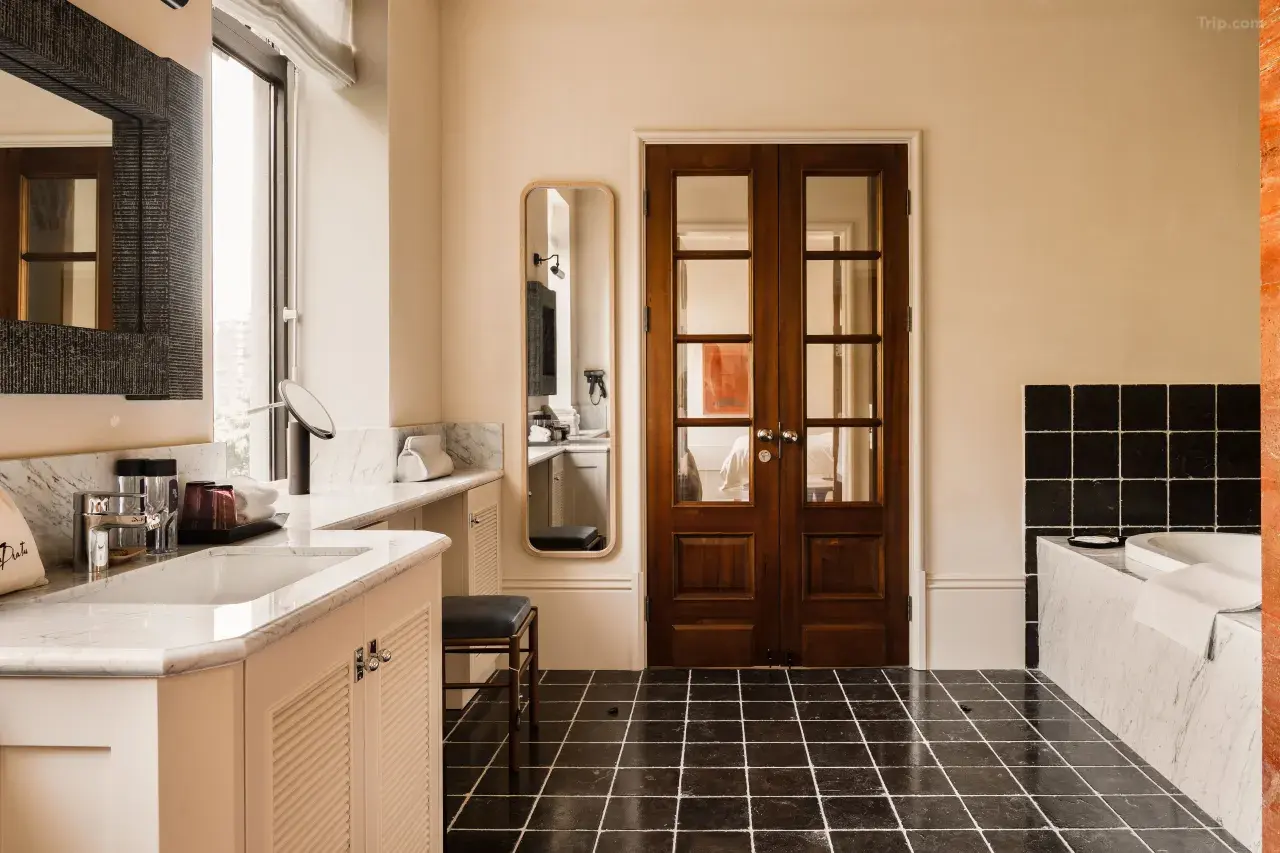
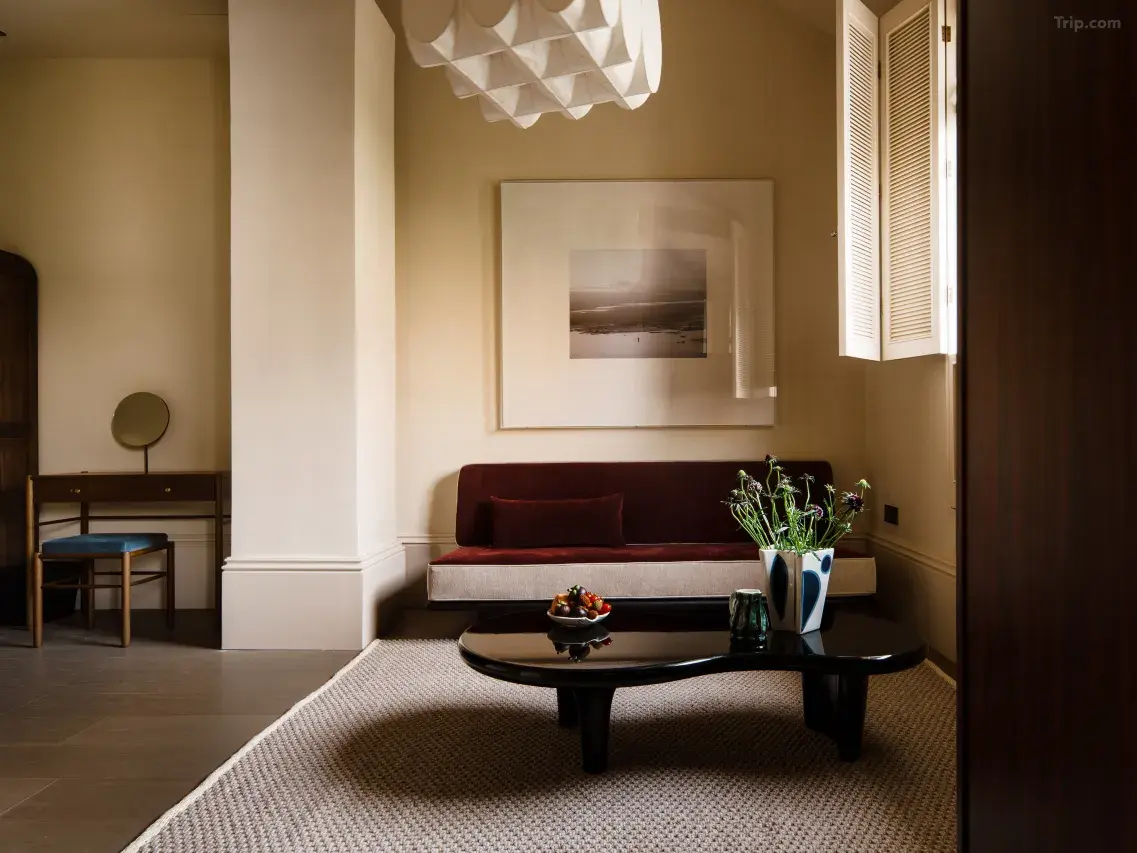
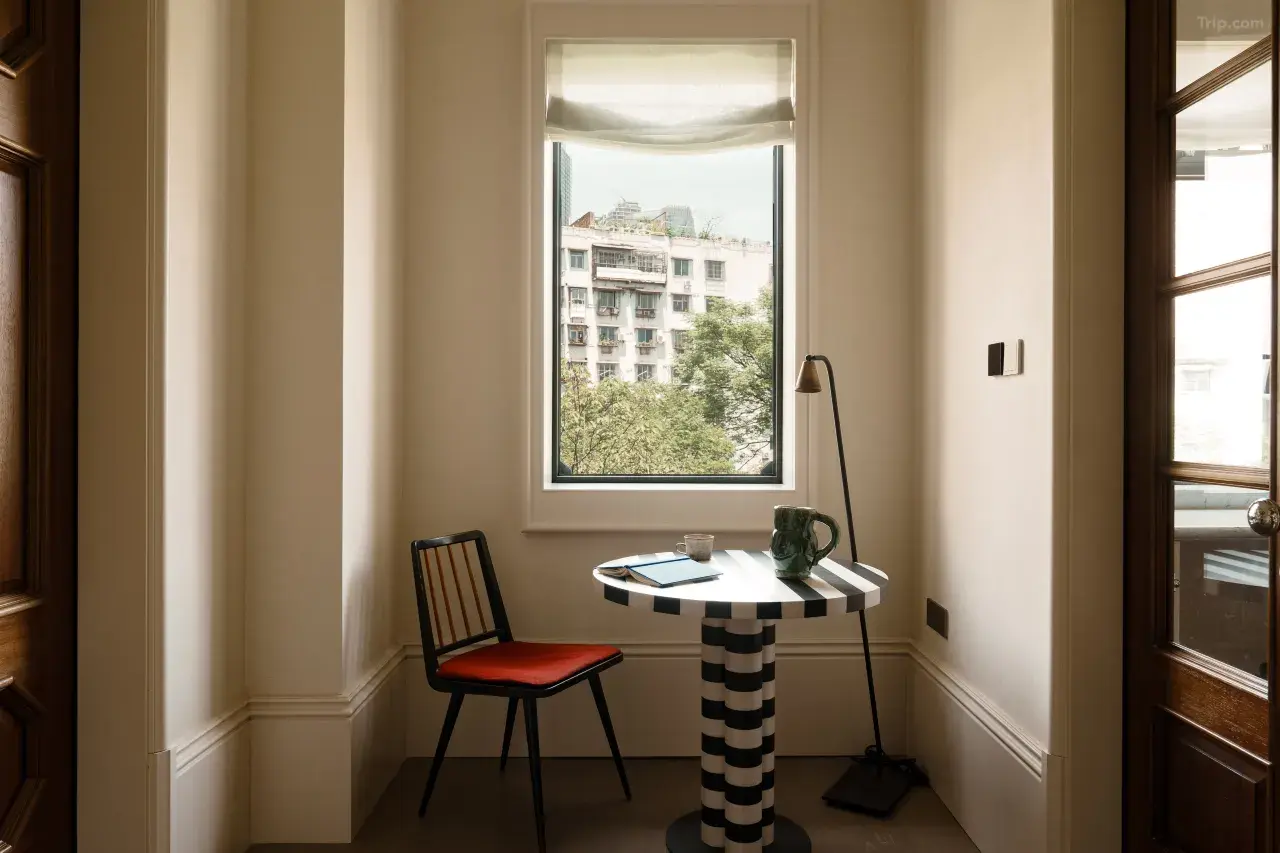
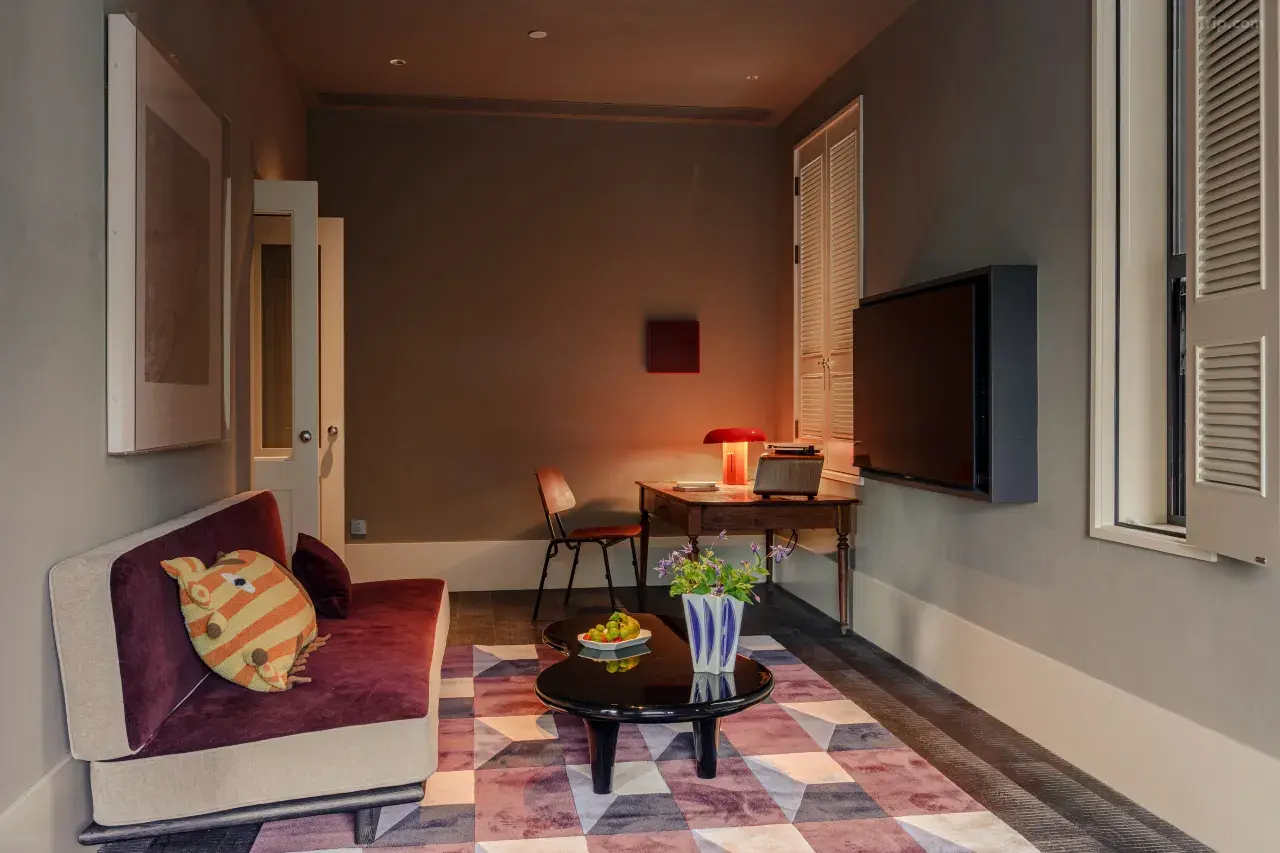
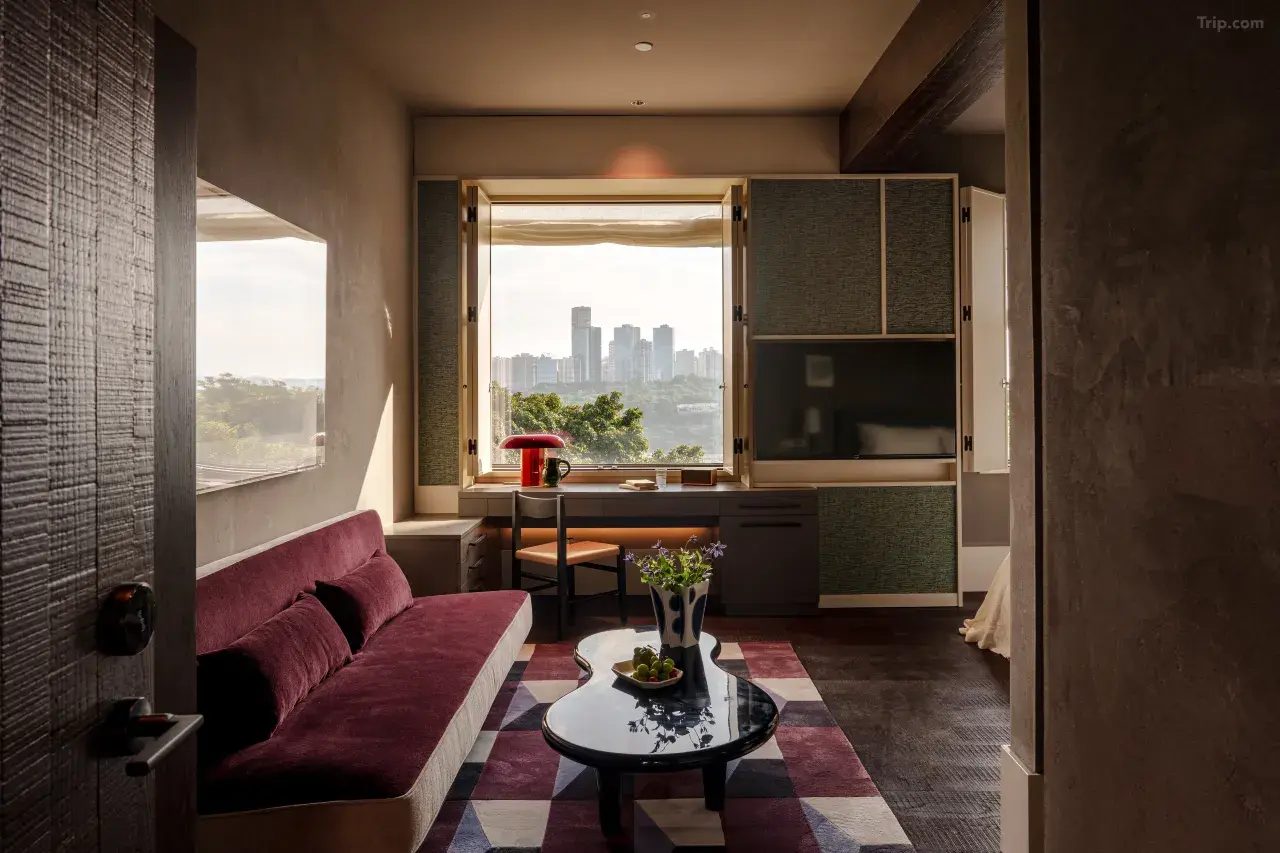
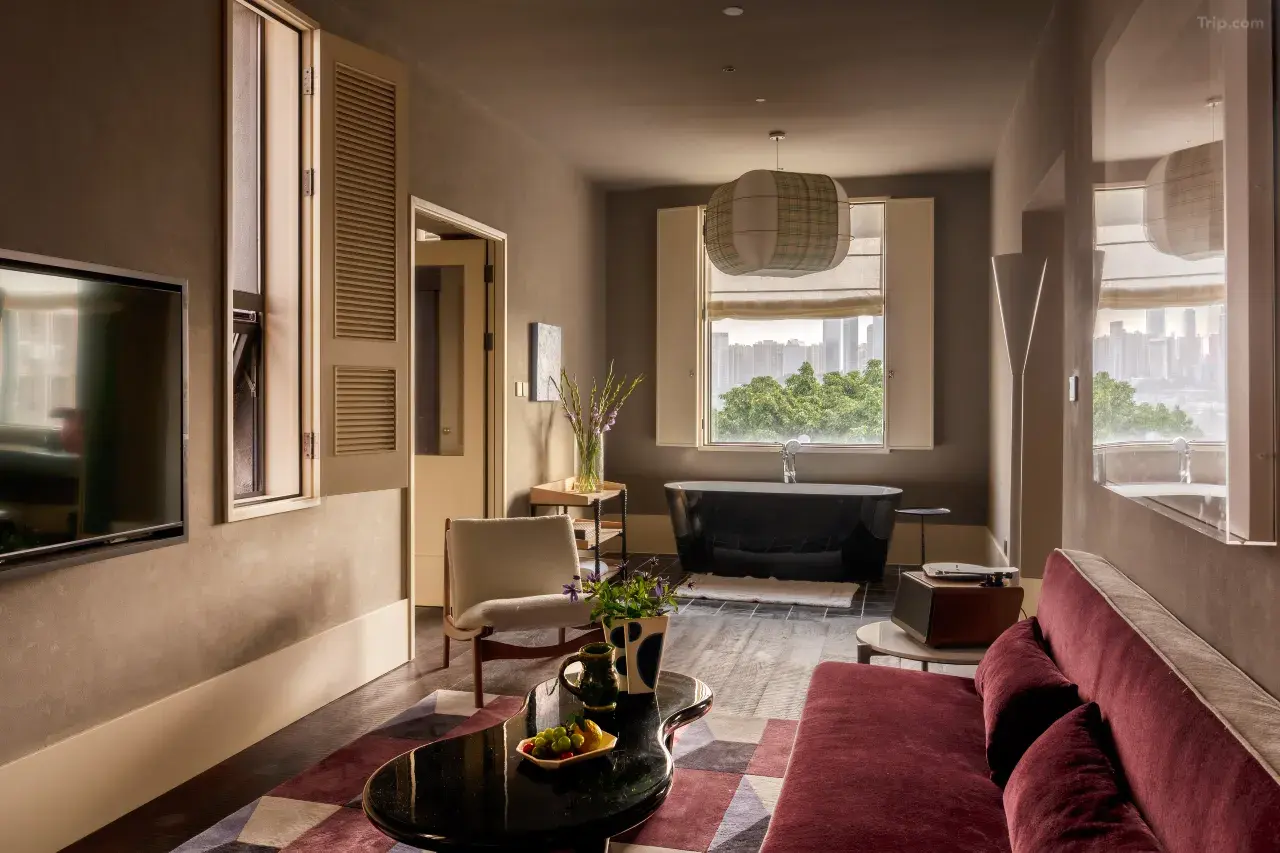
The hotel’s 25 guestrooms and suites continue this architectural language of calm restraint. Soft earth tones, warm timber, natural stone, handcrafted furnishings, and subtle layers of texture create spaces that feel contemplative rather than performative. The palette remains deliberately muted, allowing architecture and light to take centre stage. Large windows frame views of the Yangtze River, the surrounding hillsides, or Chongqing’s dramatic urban landscape beyond. Bathrooms are particularly impressive, clad in travertine and stone with deep soaking tubs positioned to maximise the connection with the setting. Every detail feels carefully considered. Every object feels purposeful. Luxury here is expressed through atmosphere rather than abundance.
A Journey Through Light and Space
Moving through Ren’ai Hall is an experience in itself. Long corridors reveal hidden courtyards. Terraces appear unexpectedly between historic walls. Pocket lounges invite moments of pause and reflection. Throughout the day, natural light transforms the building, filtering through screens, archways, and windows to create shifting patterns across stone and plaster surfaces. The architecture encourages slower movement. You do not rush through this hotel. You experience it gradually.
Dining with a Sense of Place
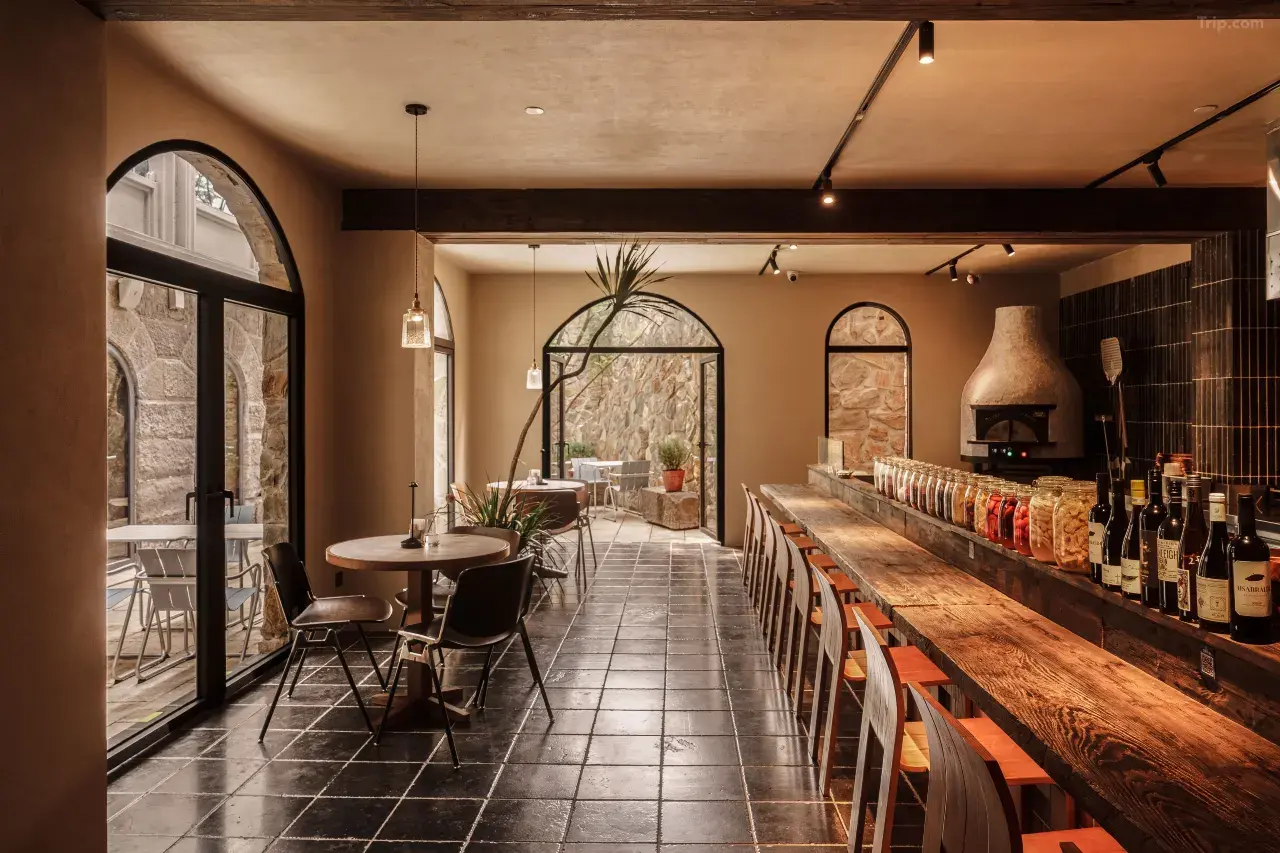
The hotel’s culinary spaces feel like natural extensions of the architecture. White Cliff presents contemporary interpretations of regional ingredients within beautifully composed interiors that balance heritage and modernity. The atmosphere is refined yet understated, allowing the focus to remain on ingredients, craftsmanship, and setting. At rooftop Mossland Bar, guests enjoy panoramic views across Chongqing’s extraordinary skyline, where historic neighbourhoods meet one of China’s most futuristic urban landscapes. Tea rooms and more intimate social spaces complete the experience, offering places for conversation, reflection, and quiet observation. Each venue feels connected to the building’s identity rather than functioning as a separate hotel amenity.
A Different Vision of Luxury
What makes Sunyata Ren’ai Hall particularly compelling is its rejection of conventional luxury formulas. There are no grand gestures. No imported glamour. No attempt to imitate international luxury trends. Instead, the hotel focuses on craftsmanship, atmosphere, history, and a genuine connection to place. Even practical elements — from natural ventilation strategies to carefully selected materials suited to Chongqing’s humid climate — reinforce this commitment to authenticity. The result feels deeply local and remarkably timeless.
Architecture with Soul
Sunyata Ren’ai Hall succeeds because it understands that great hospitality begins with meaning. The building’s history remains visible. The craftsmanship remains tangible. The architecture remains honest. Every corridor, courtyard, and room contributes to a larger narrative about memory, preservation, and contemporary life. This is not a hotel designed to impress for a moment. It is a hotel designed to stay with you long after departure.
A Rare Urban Sanctuary
Sunyata Ren’ai Hall stands among the most thoughtful heritage hotel projects in contemporary China. Through extraordinary restraint, intelligent design, and profound respect for its architectural legacy, it transforms a historic institution into a place of reflection, beauty, and quiet luxury. For travellers drawn to architecture, craftsmanship, cultural depth, and meaningful design, few hotels in China offer such a rewarding experience. Not simply a place to stay in Chongqing. A place to arrive.