THE KRANE, Copenhagen
Industrial Minimalism Suspended Above the Sea
Industrial Origins Reborn
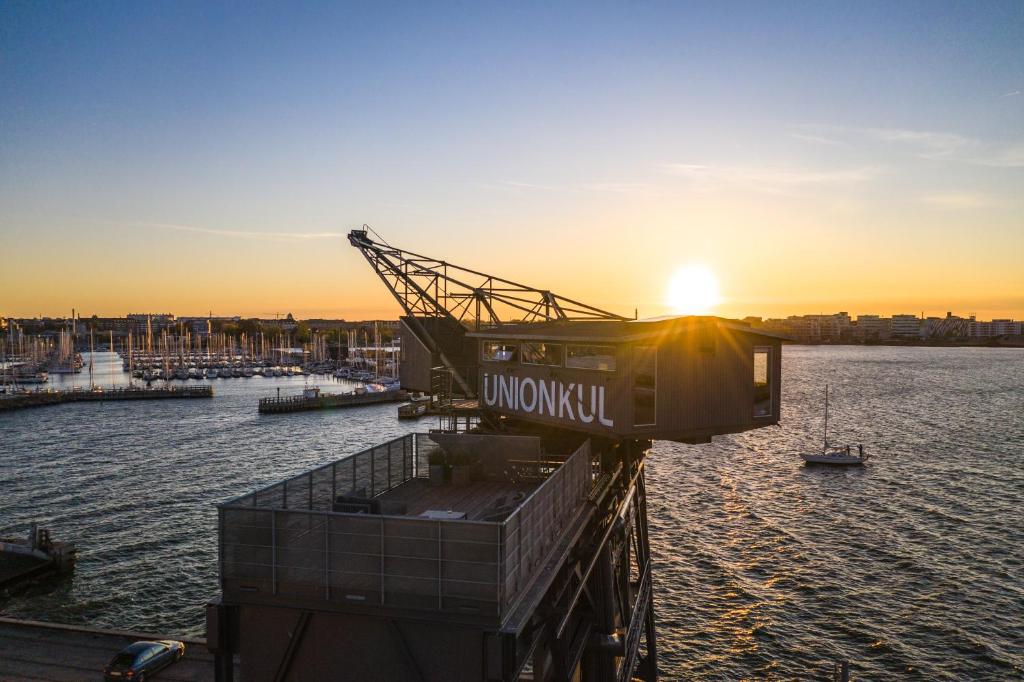
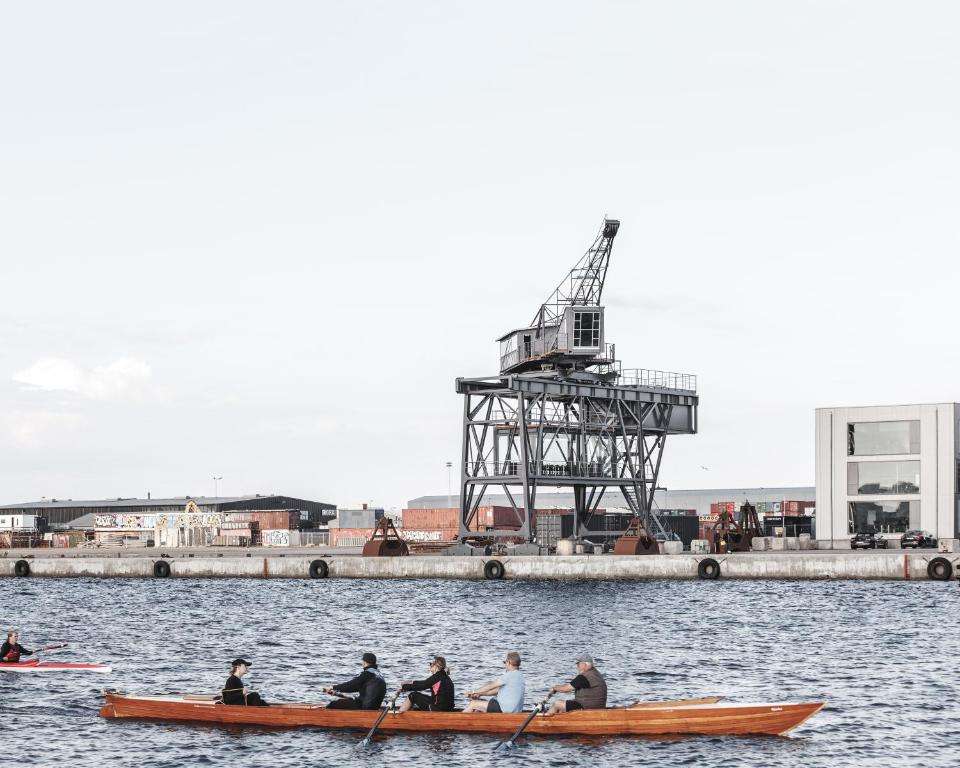
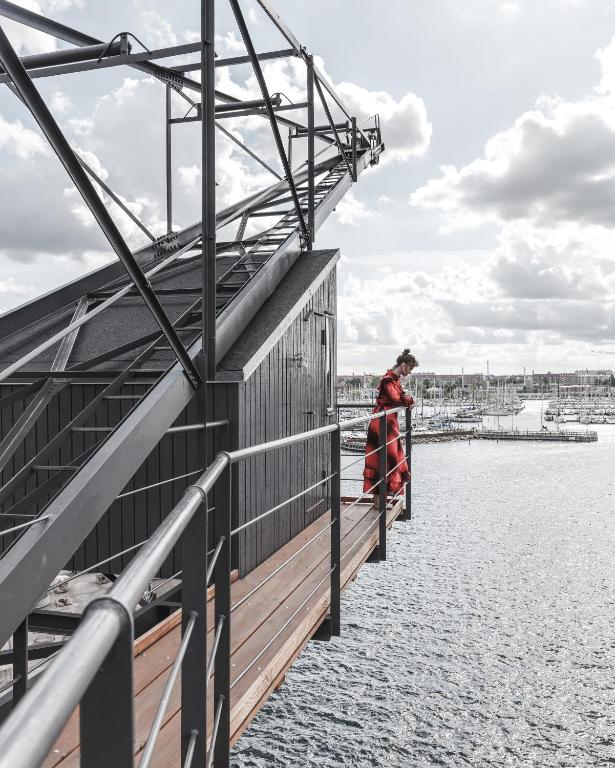
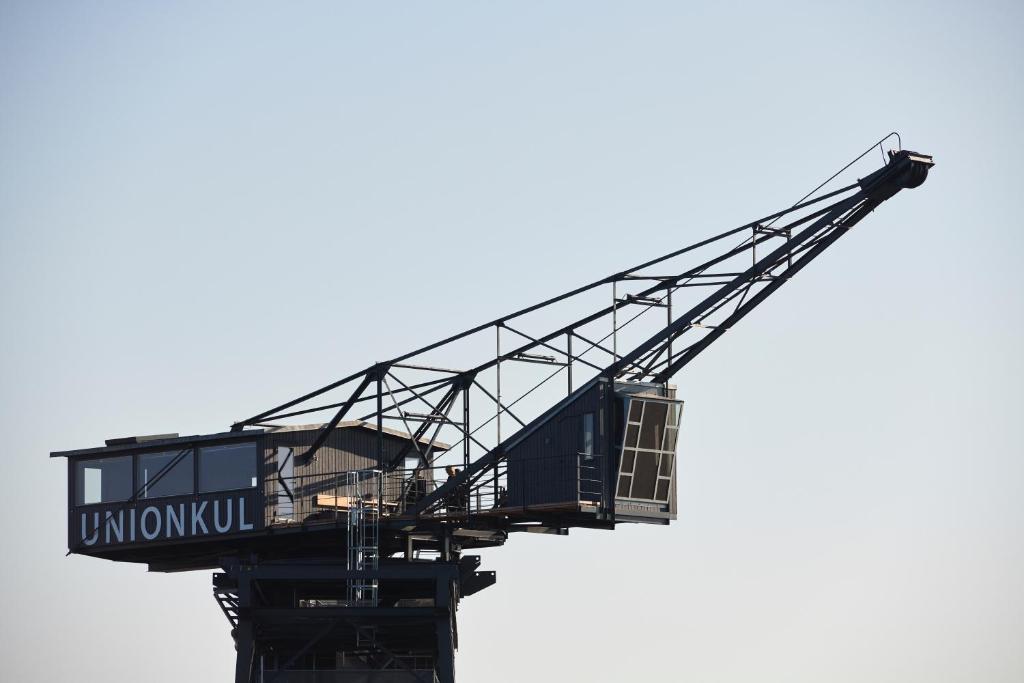
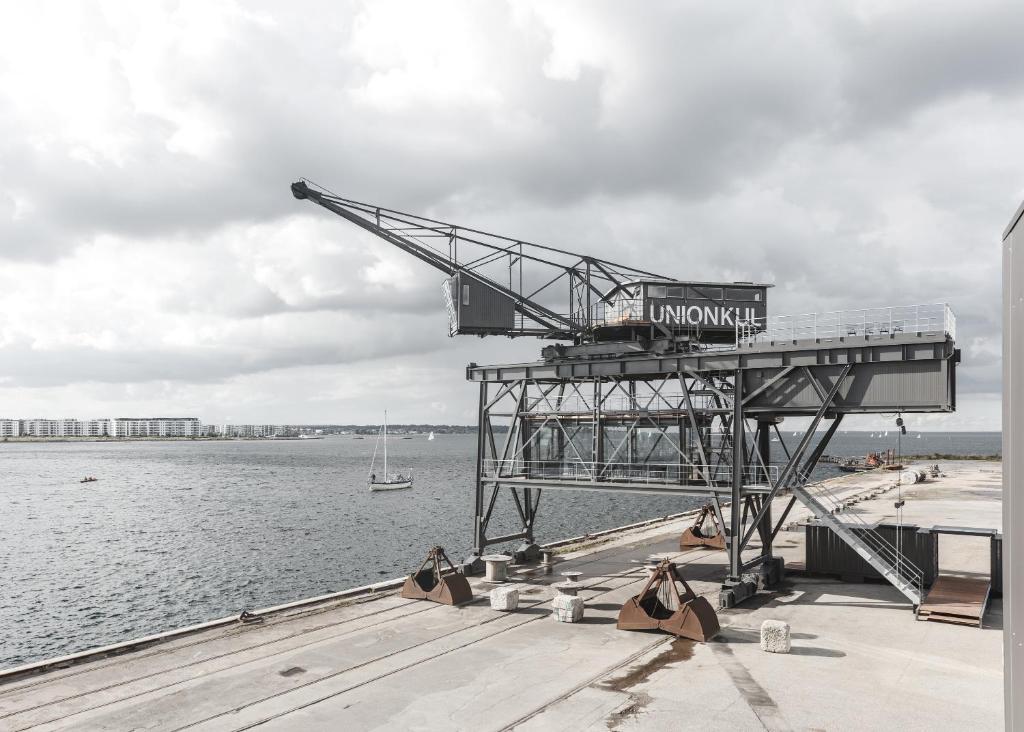
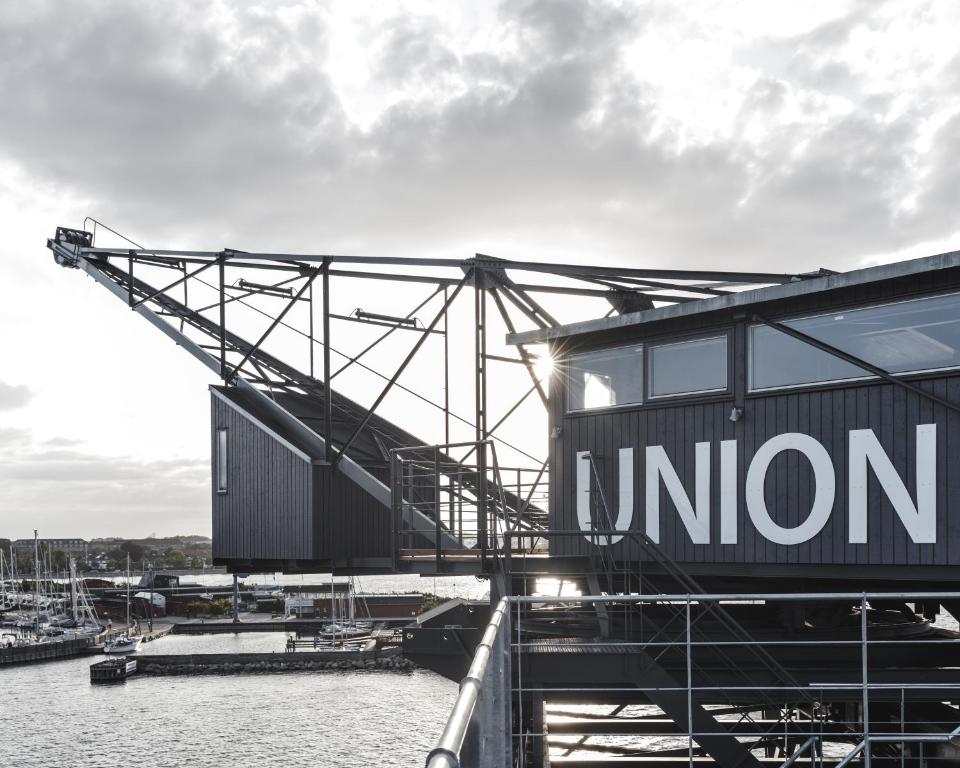
What was once a functional coal-loading crane in Copenhagen’s Nordhavn has been reborn as one of Denmark’s most visionary one-room hotels. Behind this radical transformation stand property developer Klaus Kastbjerg and architect Mads Møller of Arcgency—two creative forces who saw beauty and potential where others saw rust and machinery. Their ambition was to preserve the structure’s industrial past while reinterpreting it through the lens of contemporary Scandinavian luxury. The result is a retreat for two that rises above the harbour, merging raw history with a serene, sensory minimalism that feels worlds away from its gritty origins.
A Vertical Hotel in Four Levels
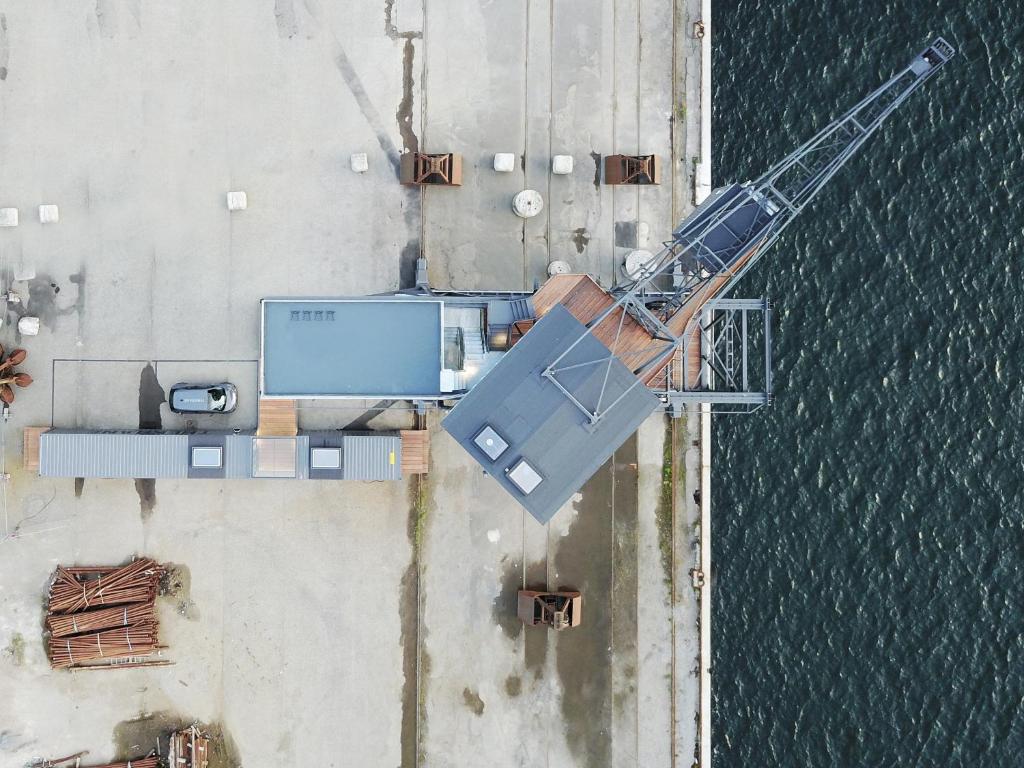
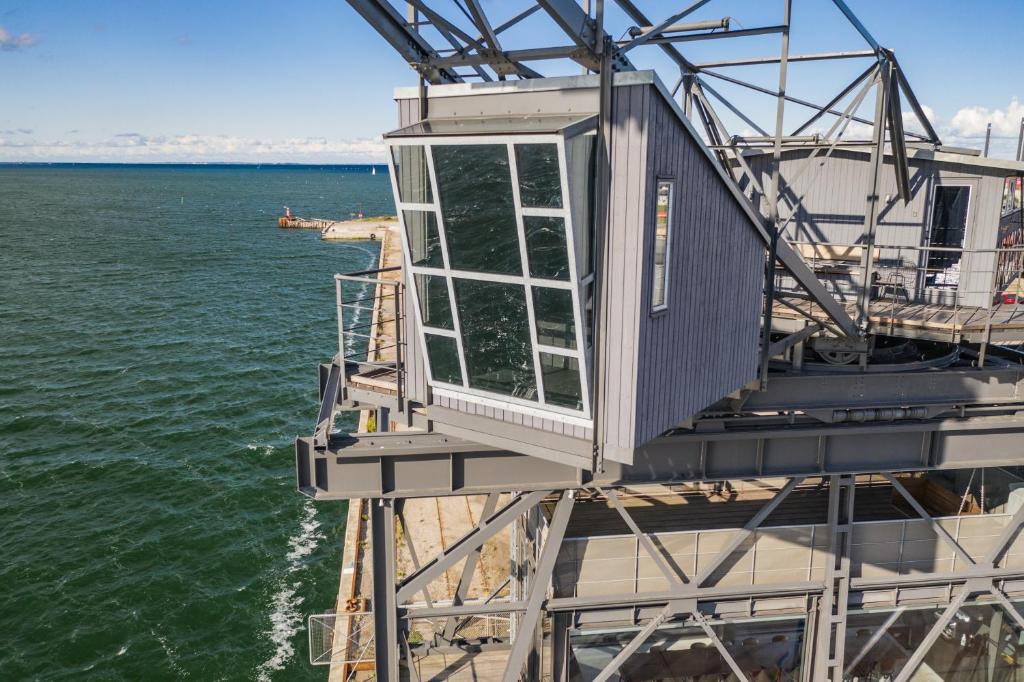
Set across four distinct storeys, THE KRANE functions as a vertical micro-universe. The ground floor serves as reception, complete with concierge service and even a complimentary BMW i3 for exploring the city. Above it, the first floor houses the Glass Box meeting room—a transparent, light-filled space suspended above the water. One level higher sits the spa, designed as an intimate sanctuary where harbour views are as integral as the treatments themselves. Finally, perched at the top of the structure, the KRANE ROOM unfolds as a 50m2 (538 sq ft) private penthouse overlooking the industrial harbour and the Øresund Strait. Moving up through the levels feels like ascending through different worlds, each with its own atmosphere, function and view.
The All-Black Penthouse Retreat
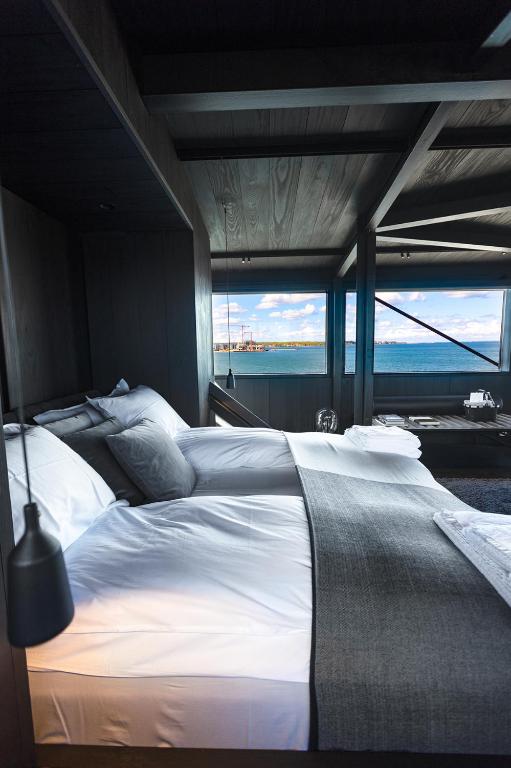
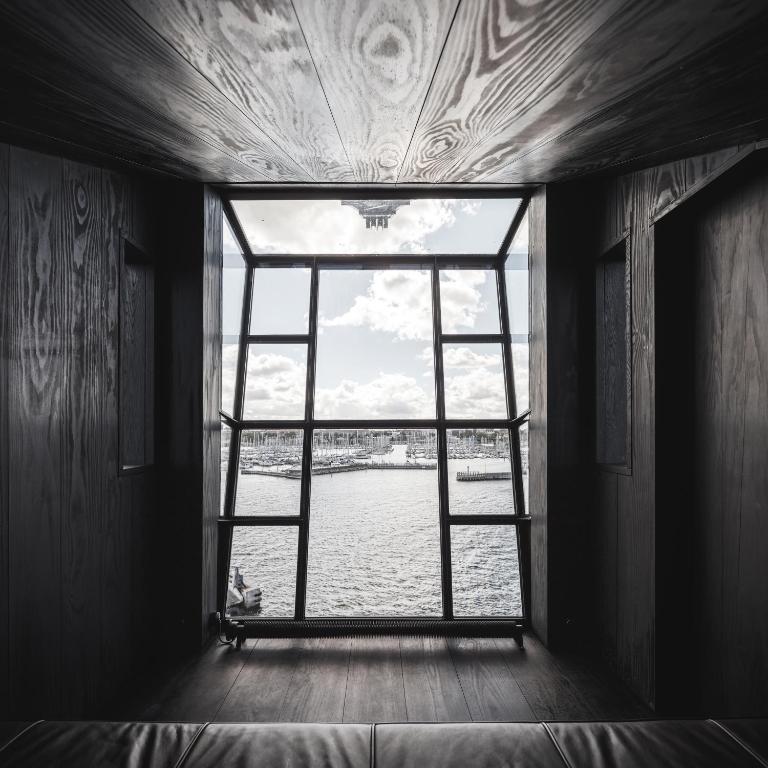
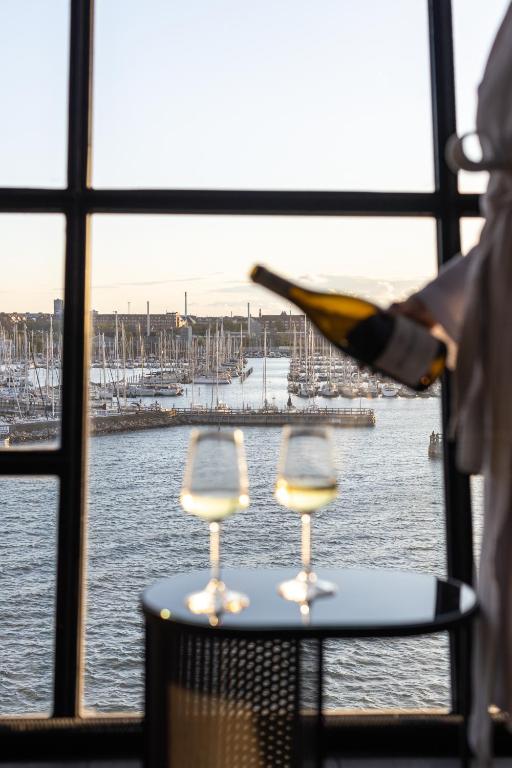
The top-floor KRANE ROOM is an immersive study in monochrome. Entirely rendered in black—from coal-inspired walls to charcoal-toned furnishings—the interior pays homage to the crane’s past while heightening the present. Jonas Bjerre-Poulsen of Norm Architects curated the space with restraint and precision, allowing the all-black palette to create a calming, meditative quiet. The darkness is not oppressive; instead, it transforms the massive windows into living artworks, framing the sea and sky in vivid clarity. As light shifts throughout the day, hundreds of shades of black unfold, revealing textures, gradients and a hypnotic sense of depth. At night, the interior becomes cocoon-like—private, intimate, deeply atmospheric.
Textures, Craft, and Hidden Details
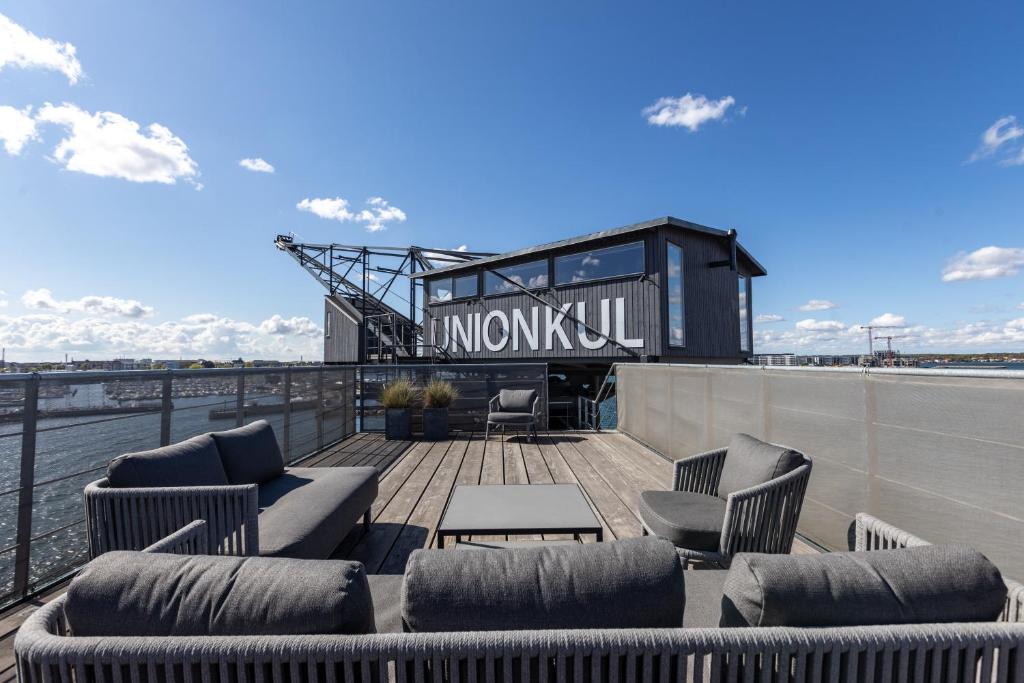
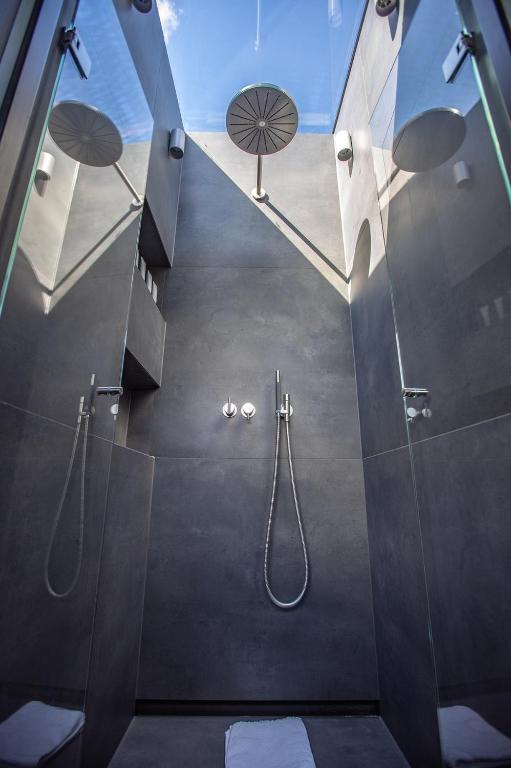
With colour intentionally stripped away, texture takes centre stage. Leather, wood, stone and steel form a tactile symphony that elevates minimalism into something sensual and warm. Every furnishing is bespoke, crafted by Danish artisans and integrated seamlessly into the architecture. Beds, seating and storage are embedded into wall panels; the kitchenette, shower and bathroom disappear into a concealed black box. The design’s radical simplicity hides a surprising complexity, and that element of quiet surprise continues in the crane’s former cockpit—a separate viewing room accessible from the terrace. Here, a leather-upholstered daybed invites guests to sink back and take in vertiginous views from what once was the operator’s lookout.
The Spa: Light, Stone, and Water
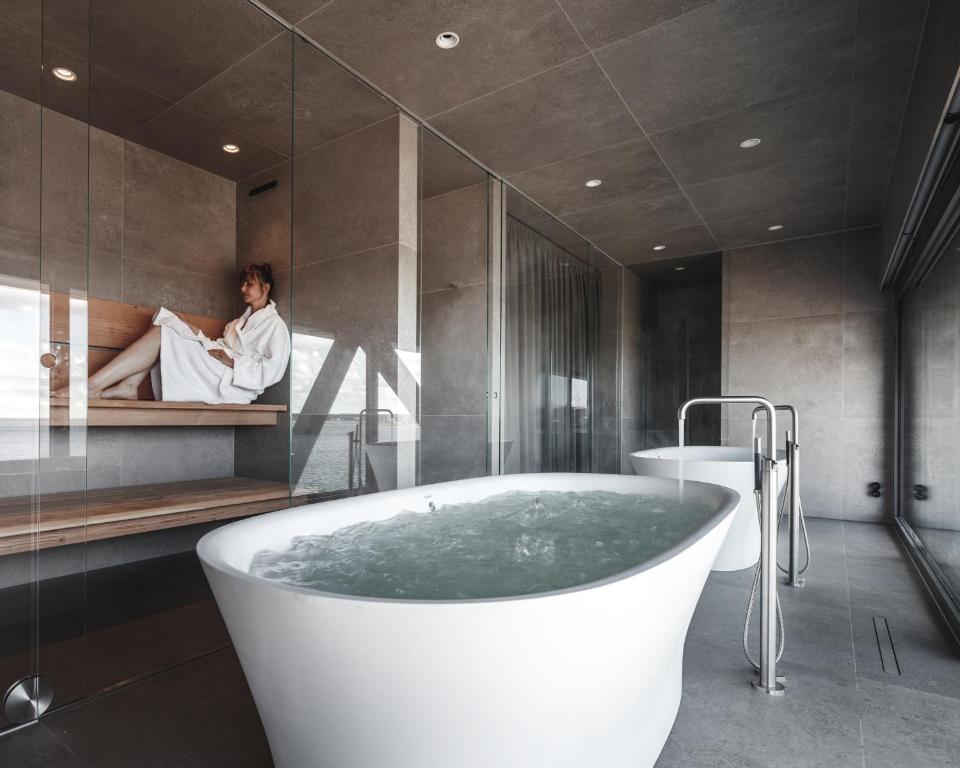
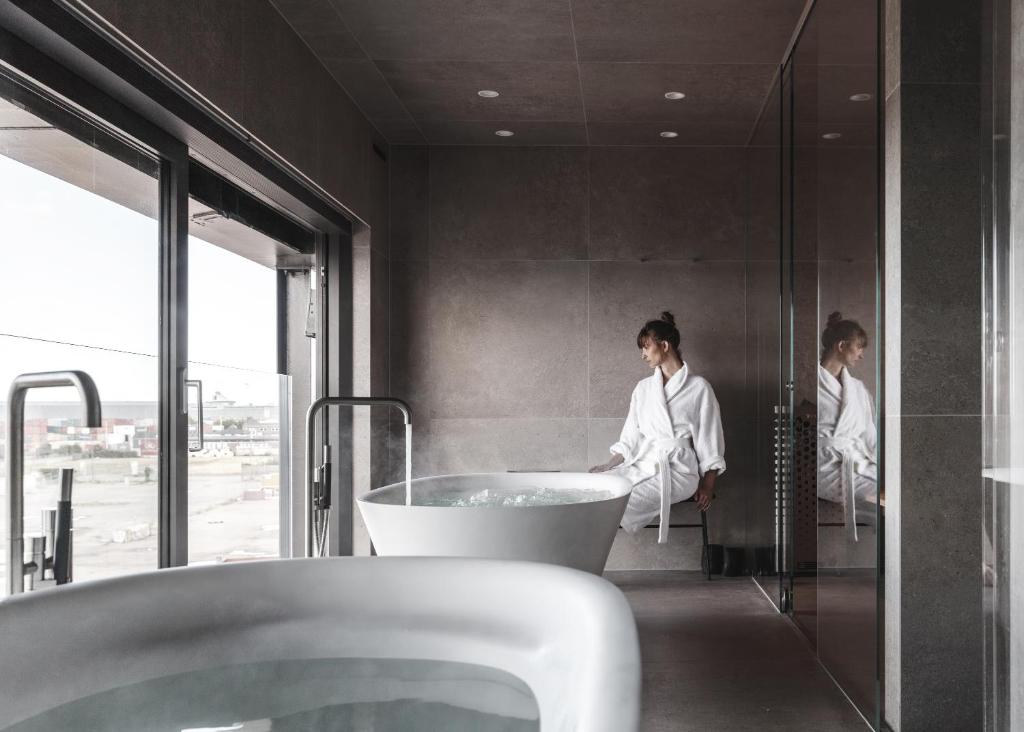
On the spa level, the design language shifts from black to soft grey stone, but the essential philosophy remains the same: the views are everything. The floor-to-ceiling glass façade opens the harbour panorama like a widescreen film. Two freestanding bathtubs face the water, while a glass-enclosed sauna offers an elevated vantage point over the pier. The atmosphere is hushed and meditative; the architecture fades into the background so the changing light and weather become the true design elements. As Kastbjerg explains, “With the winter weather in Denmark, we couldn’t really have a spa outside. But who wants to sit inside and miss the nature?”
The Glass Box Meeting Room
Sitting one floor below the spa, the Glass Box is a meeting room unlike any other. Transparency defines the space—walls of glass, timber floors and an acoustic ceiling create a warm, quiet environment suspended above the harbour. The views have a mind-opening quality, turning even the most mundane gathering into something memorable. Møller describes it as “the furthest thing from cold or corporate,” and he’s right: it’s a space that lets ideas breathe.
Architectural Vision & Developer Backstory
THE KRANE did not materialize out of nowhere. Kastbjerg has long been a key figure in Copenhagen’s waterfront regeneration, having been involved in projects like THE SILO, the iconic 17-storey grain silo transformed into luxury residences, and HARBOR HOUSE, designed by Jørn Utzon and his sons. The story of THE KRANE began almost accidentally—when building HARBOR HOUSE in 2005, the development team used one of the onsite cranes as a temporary meeting room. The raw beauty of the structure made an impression, and it eventually became part of the completed project. The second crane, left unused further down the pier, became the foundation for this unprecedented hotel concept: a reclaimed industrial object reimagined as intimate luxury.
Arrival, Concierge, and Extras
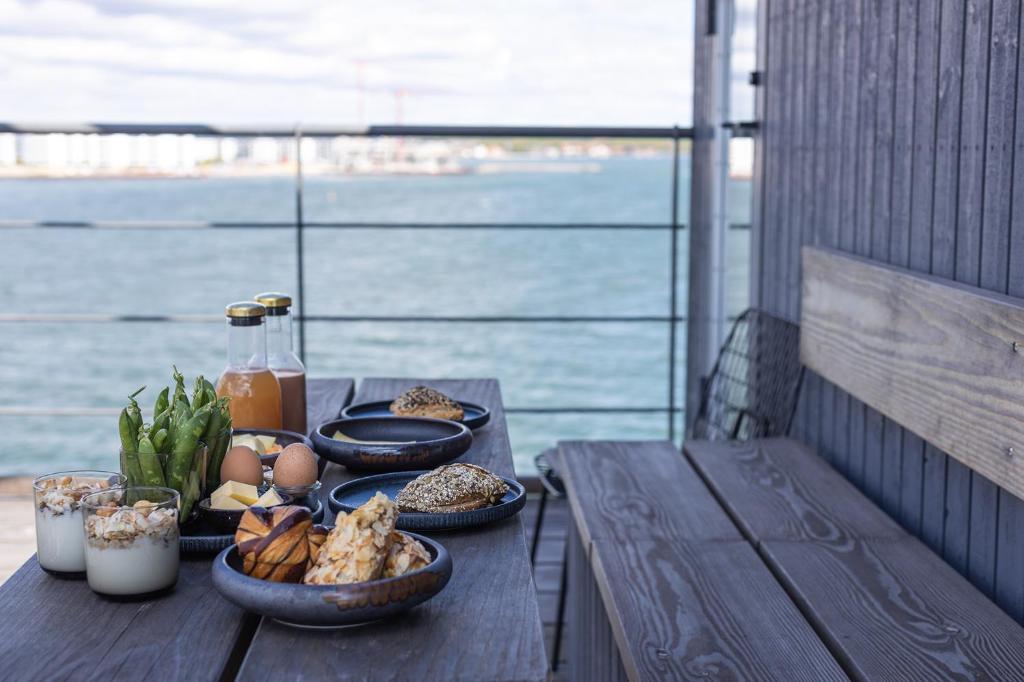
Luxury at THE KRANE extends far beyond design. Guests are greeted by a personal host who picks them up at the airport, introduces them to the space, and brings breakfast each morning. The stay also includes two bicycles and a complimentary electric car, ensuring effortless mobility around Copenhagen. Every touchpoint reinforces the boutique exclusivity of the experience—private, quiet, tailored. It is luxury that whispers, not shouts.
DNA Hotels Verdict
THE KRANE is a rare achievement: a place where industrial heritage becomes meditative, where minimalism becomes soulful, and where architecture becomes a conduit for calm. It is part sculpture, part sanctuary, and wholly unforgettable. For design purists, solitude seekers, and lovers of striking Nordic light, this is Copenhagen at its most visionary.