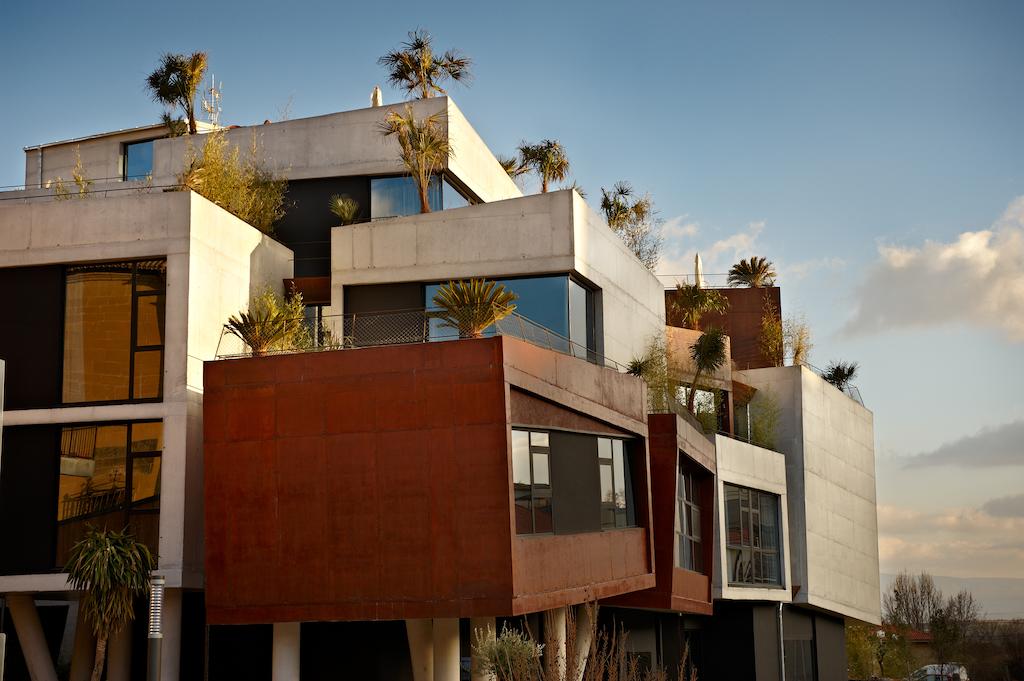
Hotel Viura | Villabuena de Álava, Spain
A cubist landmark where contemporary architecture collides with the medieval rhythms of Rioja Alavesa
Why DNA Hotels Loves It
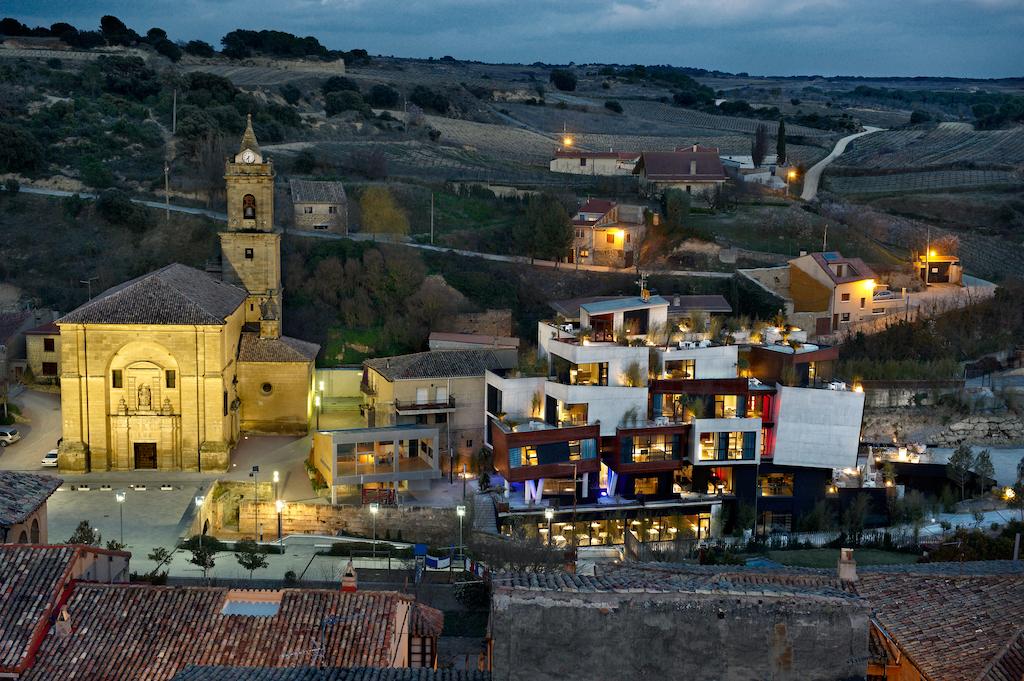
● A radical composition of concrete and rust-toned volumes that feels almost provocatively modern beside Villabuena de Álava’s traditional stone architecture.
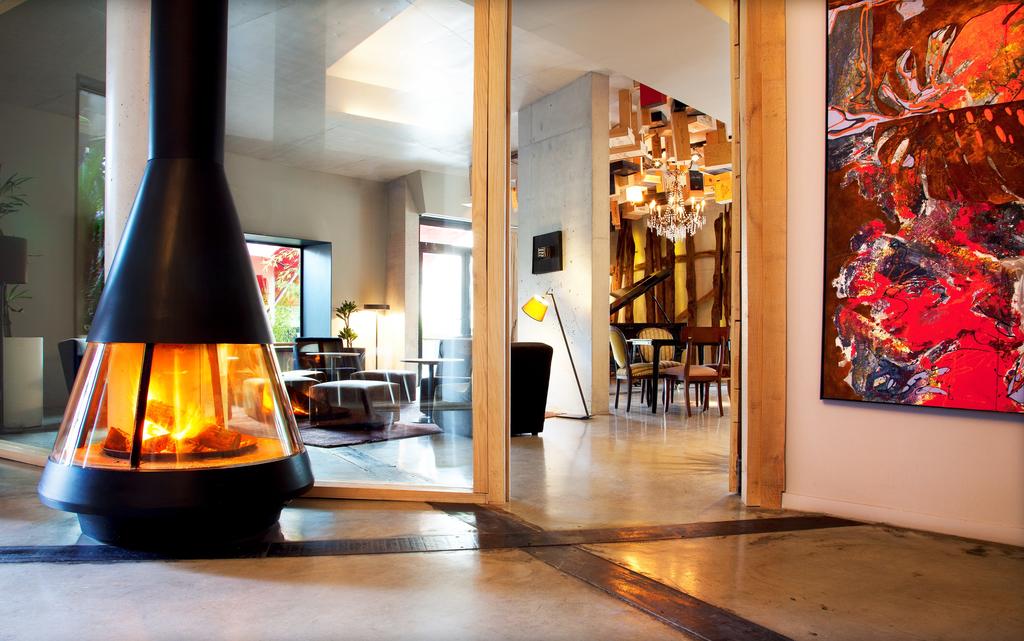
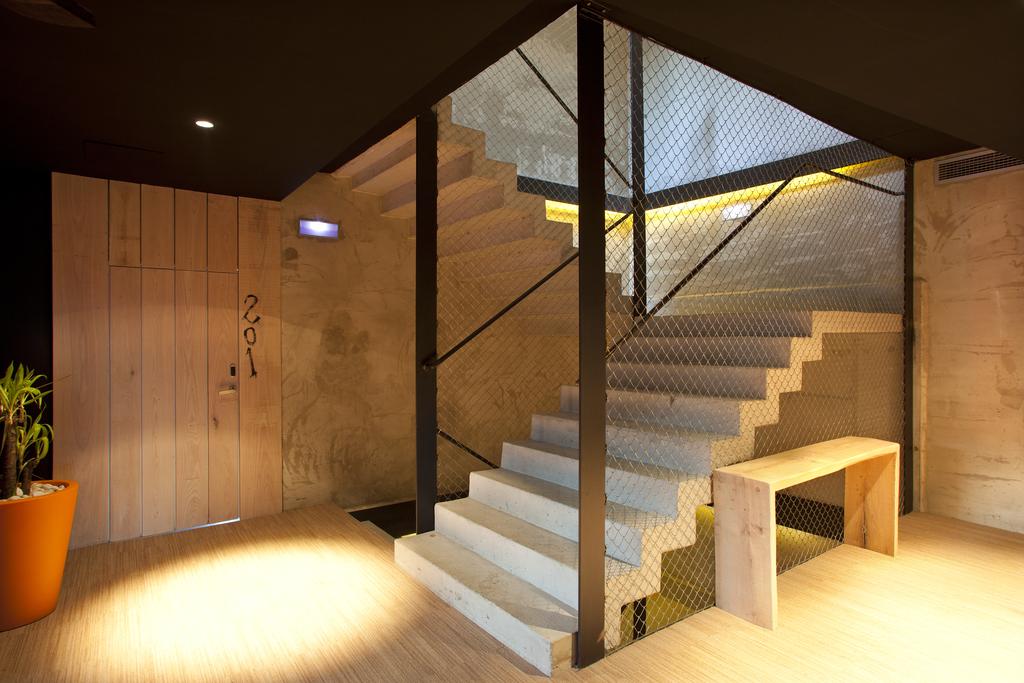
● Interiors by Xabier and Joseba Aramburu carry the architectural language inside through exposed concrete, slate, theatrical lighting, and sculptural references to winemaking.
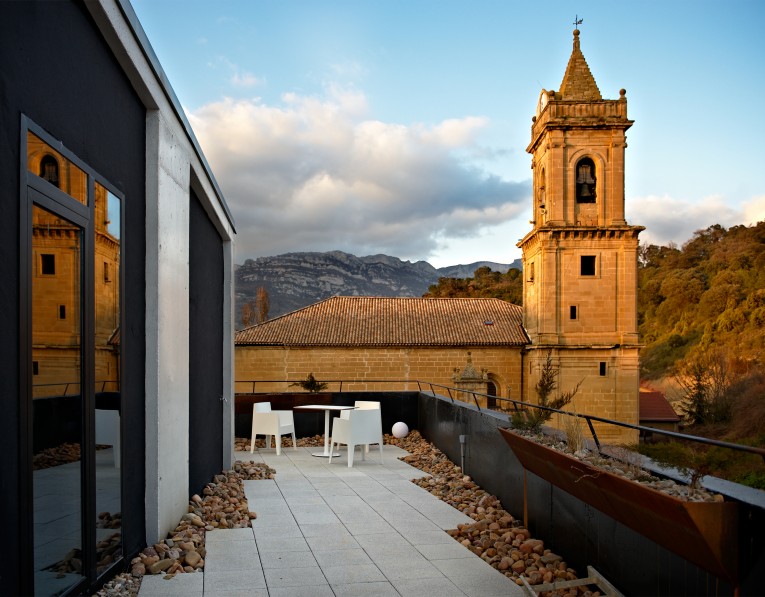
● The rooftop terrace, wine bar, and panoramic rooms turn the surrounding vineyards and Sierra de Cantabria into part of the hotel’s design rather than simply its backdrop.
A Modern Intruder in Wine Country
Villabuena de Álava is not where you expect to find one of Rioja’s boldest contemporary hotels. The village is tiny, historic, and surrounded by vineyards. Stone houses line narrow streets. A centuries-old church stands almost next door. Then Hotel Viura appears. Opened in 2010, the building looks like a collection of oversized blocks dropped onto the village edge and left at deliberately improbable angles. Concrete, weathered metal, and sharp geometry create a dramatic contrast with the rural surroundings. It should feel confrontational. Instead, it somehow works.
Architecture That Refuses to Behave
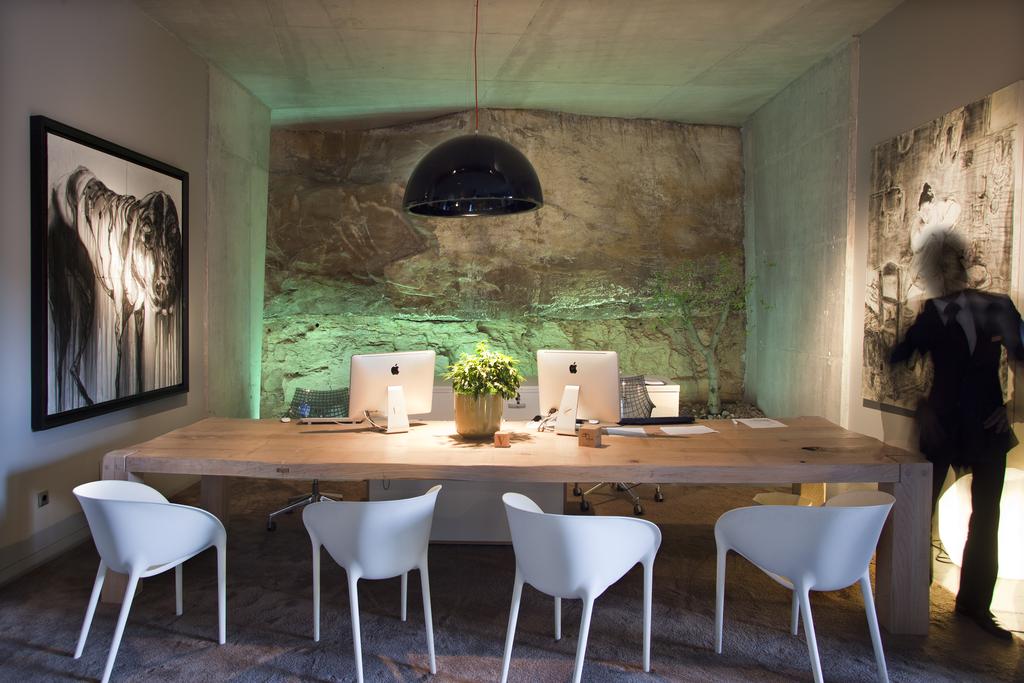
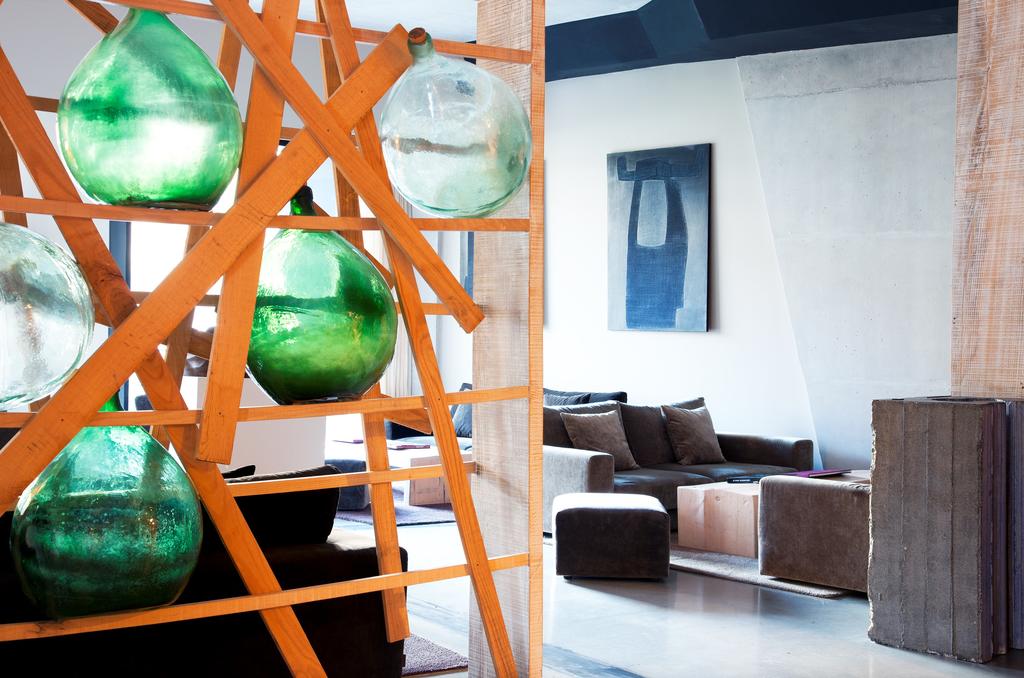
Designed by brothers Xabier and Joseba Aramburu, Viura is organised as a composition of overlapping and cantilevered volumes. The architecture constantly shifts. Walls lean. Blocks project. Voids open between masses. Dark circulation spaces give way unexpectedly to framed views of rooftops, mountains, and sky. Even the reception has an almost subterranean quality, embedded within a cave-like concrete volume. Wine culture appears throughout without slipping into decorative cliché. Barrels hang overhead. Large blown-glass vessels suggest fermentation jars. Timber and dark stone temper the harder industrial materials. Rioja remains present. Just abstracted.
Concrete Outside, Comfort Within
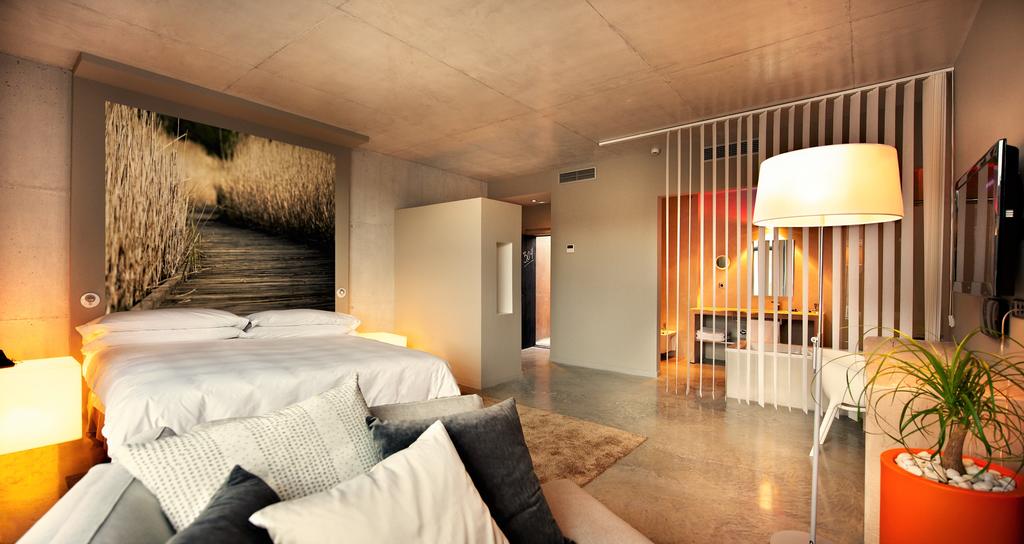
The guestrooms are deliberately calmer. Exposed concrete continues across walls and bathrooms, but warmer materials soften the effect. Timber furniture, tactile textiles, oversized beds, and underfloor heating turn what could have felt severe into something surprisingly comfortable. Details remain architectural. Glowing cube-shaped bedside tables become small light sculptures. Photomontage headboards introduce graphic energy. Thick timber bathroom counters bring another material register into the otherwise mineral palette. Most importantly, the irregular arrangement of the building creates unusually open views. From many rooms, the village sits below while the Sierra de Cantabria rises beyond it. Deluxe rooms and suites add terraces, making the surrounding landscape feel even closer.
Wine as Context, Not Theme
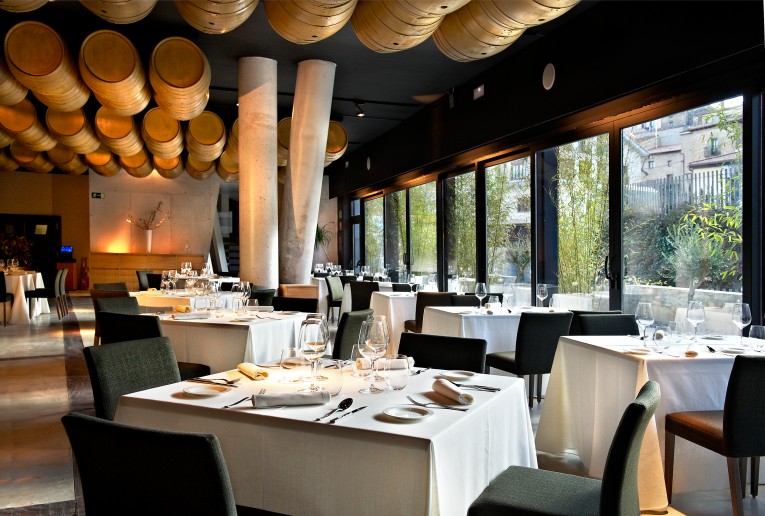
The restaurant continues the spatial drama. Wine barrels suspended from the ceiling turn a familiar regional object into an architectural installation, while contemporary lighting reinforces the slightly cinematic atmosphere. Food is rooted in Rioja Alavesa, with seasonal ingredients and modern interpretations of regional cooking.Then there is the wine. The downstairs wine bar offers an obvious introduction, but Viura’s real advantage is geographic. Some of Rioja Alavesa’s most respected wineries sit within easy reach, and the hotel can organise visits, tastings, and bicycle routes through the surrounding vineyards. The hotel does not need to manufacture a wine-country experience. It is already inside one.
Above the Village
Viura’s rooftop may be the point where the building makes most sense. From here, its uncompromising geometry gives way to the older landscape surrounding it. Church tower. Stone rooftops. Vineyards. Mountains. A small gym occupies the same upper level, alongside the lounge and terrace, while a library and wellness facilities add quieter places to retreat between tastings. In summer, guests also have access to the village swimming pool. Hospitality extends into the village rather than sealing itself off from it.
Why It Works
Hotel Viura works because it never attempts to imitate Rioja’s architectural past. Instead, it inserts something unmistakably contemporary into a historic wine village and allows the contrast to create its identity. The concrete, rusted metal, angular volumes, and theatrical interiors are bold, but the architecture continually redirects attention outward—to Villabuena de Álava, the vineyards, and the Sierra de Cantabria beyond. Add generous rooms, a strong wine focus, and one of the region’s most distinctive rooftops, and Viura becomes more than an architectural curiosity. It is a modern Rioja hotel that understands that respecting place does not always mean blending in.