


When Industrial Buildings Became Fashionable
A monumental 19th-century Hamburg gasworks reinvented as a design hotel, combining preserved industrial machinery, a dramatic brick-and-steel atrium, warm loft-style interiors and contemporary dining.

Why DNA Hotels loves it
A monumental 19th-century gasworks transformed into Hamburg's first design hotel in 2000, demonstrating the architectural potential of industrial heritage long before factory conversions became fashionable in hospitality.
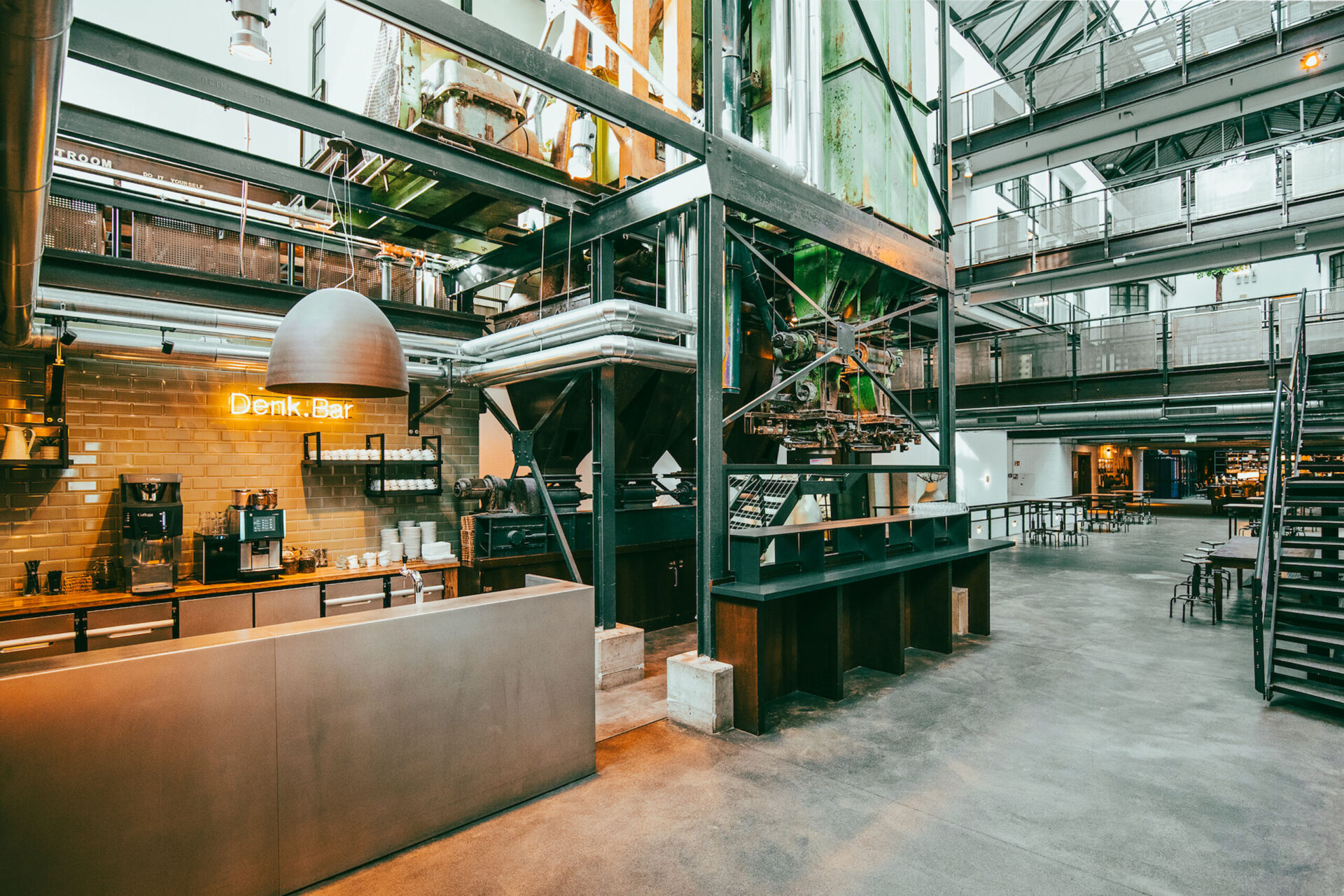
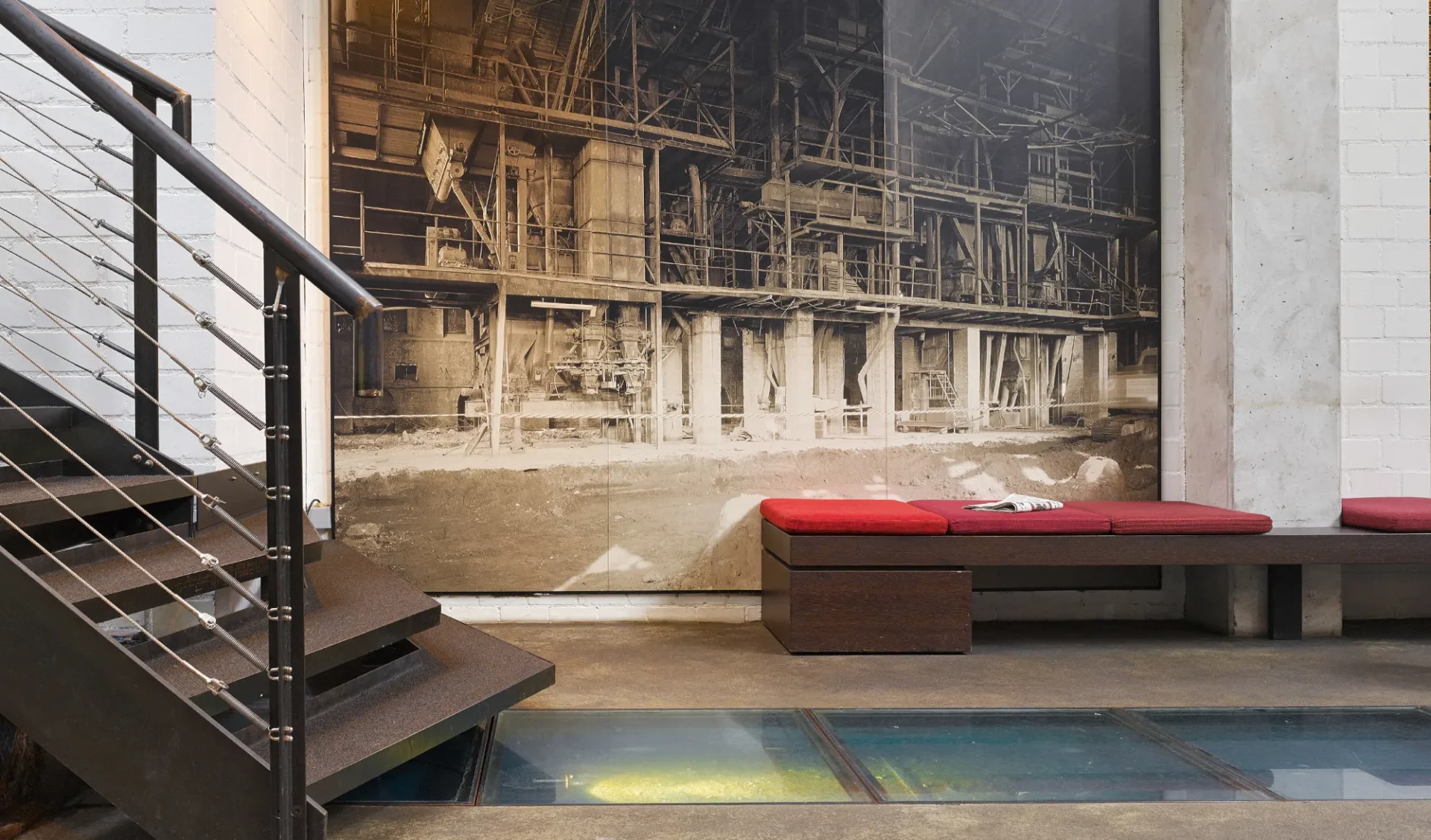
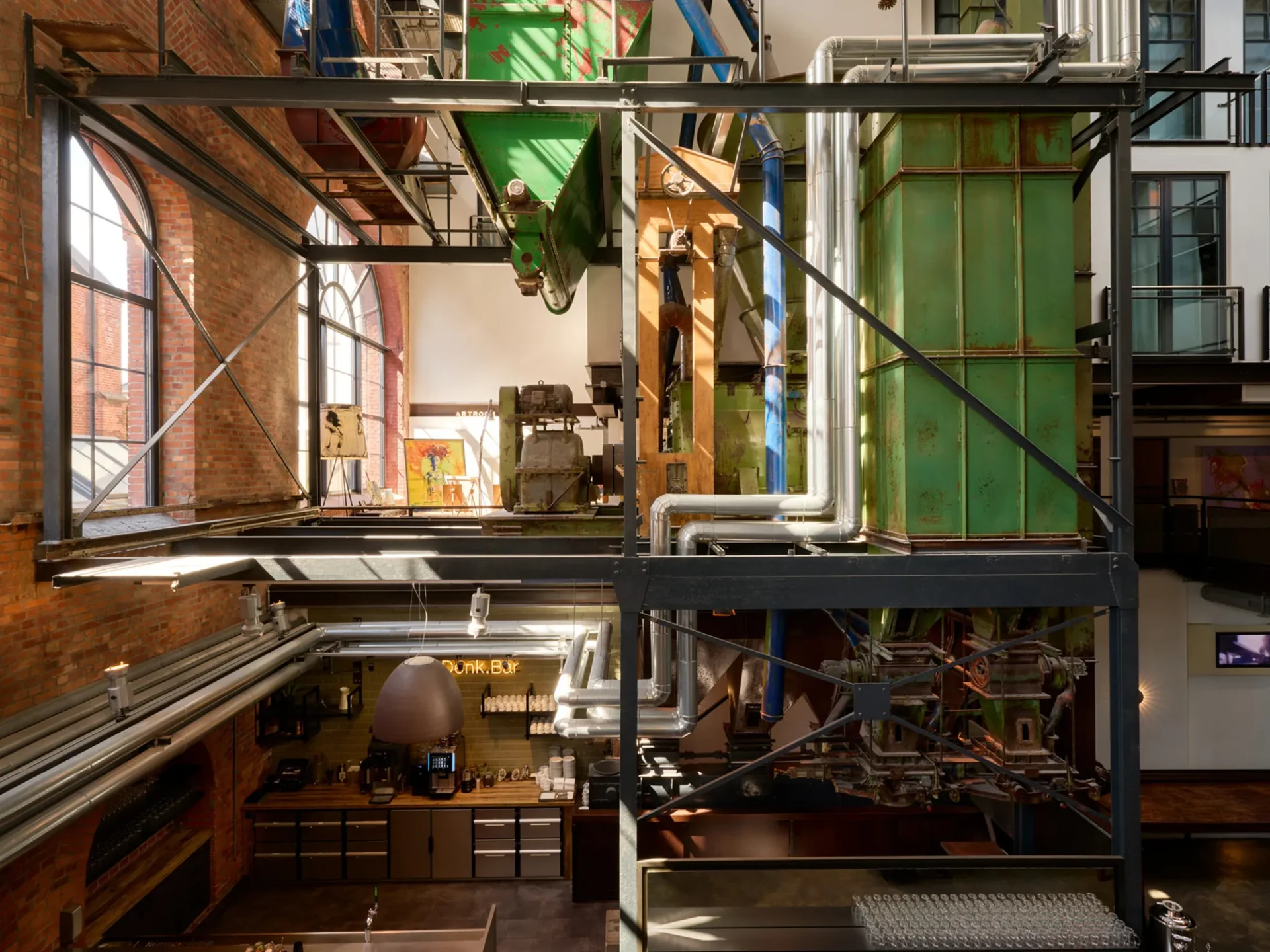
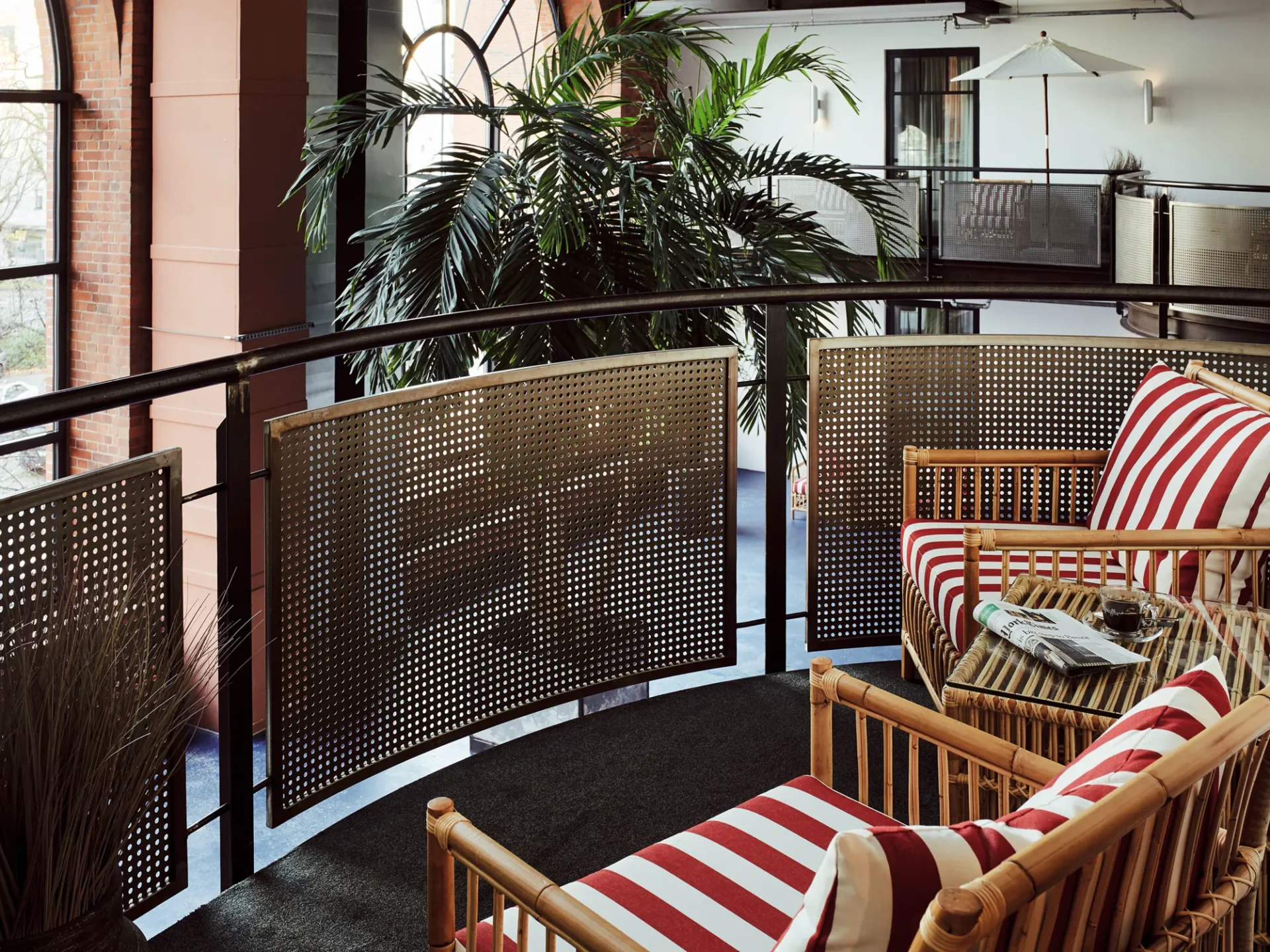
An impressive brick-and-steel atrium dominated by an enormous preserved green industrial machine, with suspended walkways, exposed concrete and loft-style guestrooms that retain the character of the original building.
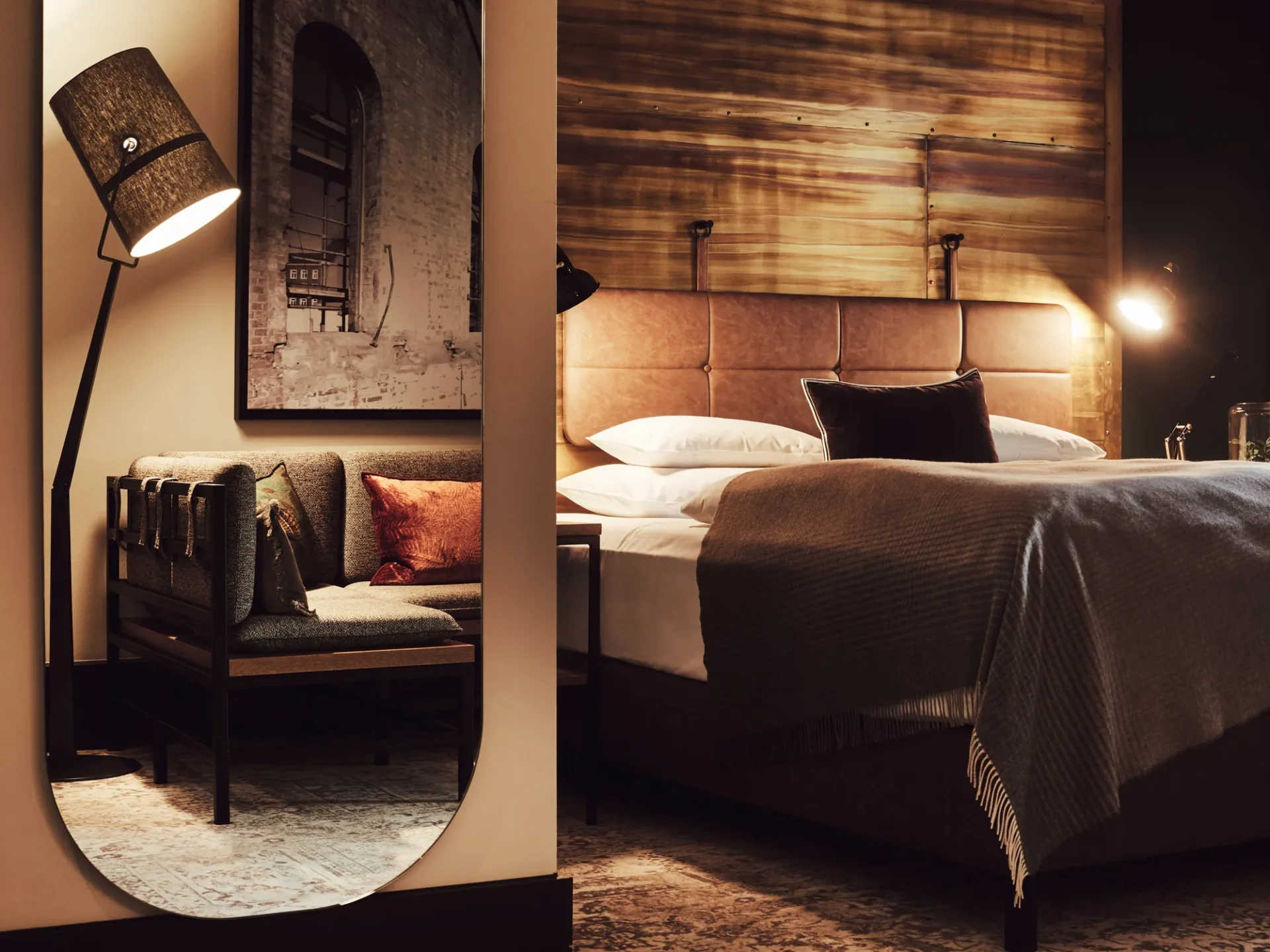
A surprisingly warm interpretation of industrial design, combining raw materials with walnut wood, soft textiles and understated furniture, alongside Mangold restaurant and the adjacent Cosy Spa.
The Stay
From Industrial Gasworks to Hamburg's First Design Hotel
In 2000, the idea of turning a former industrial building into a fashionable hotel was still relatively unusual. New York had its converted warehouses and artists’ lofts, London was experimenting with industrial spaces, but the transformation of abandoned factories into design-led accommodation had yet to become an international hospitality formula. Hamburg was already ahead of the game. In the western district of Bahrenfeld, Gastwerk Hotel opened inside a former 19th-century gasworks, becoming the city’s first design hotel and one of Germany’s early examples of industrial architecture finding an entirely new purpose. The name itself is a small linguistic joke. Gaswerk means gasworks, while Gast means guest. Add a single letter and an industrial facility becomes a place of hospitality. Fortunately, the transformation involved considerably more than changing the sign above the entrance. The building’s enormous red-brick structure, industrial proportions and surviving machinery provided the starting point for a conversion that treated the original architecture as an asset rather than an inconvenience. More than a quarter of a century later, Gastwerk remains an interesting reminder of how radical this approach once seemed.
The Machine in the Middle
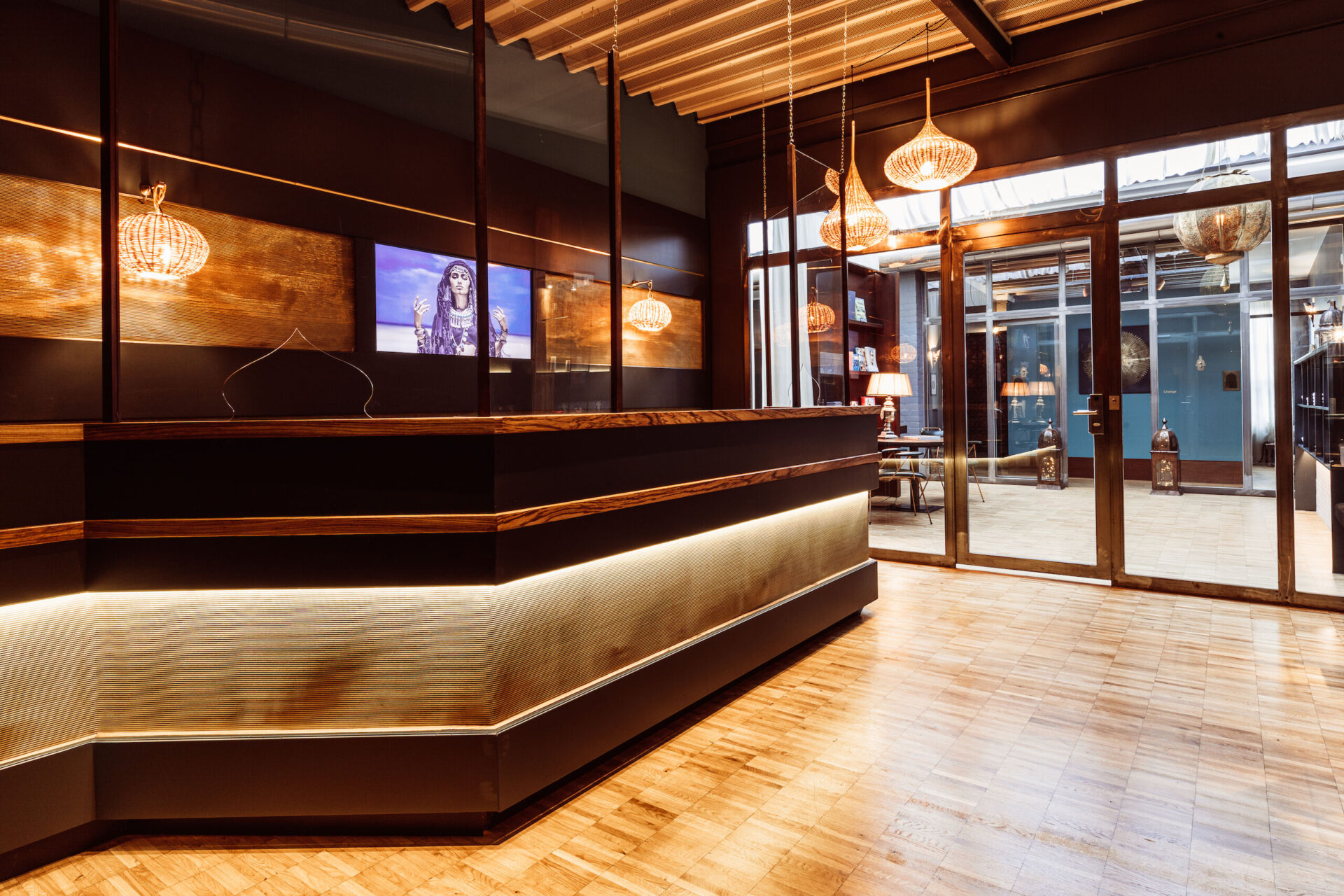
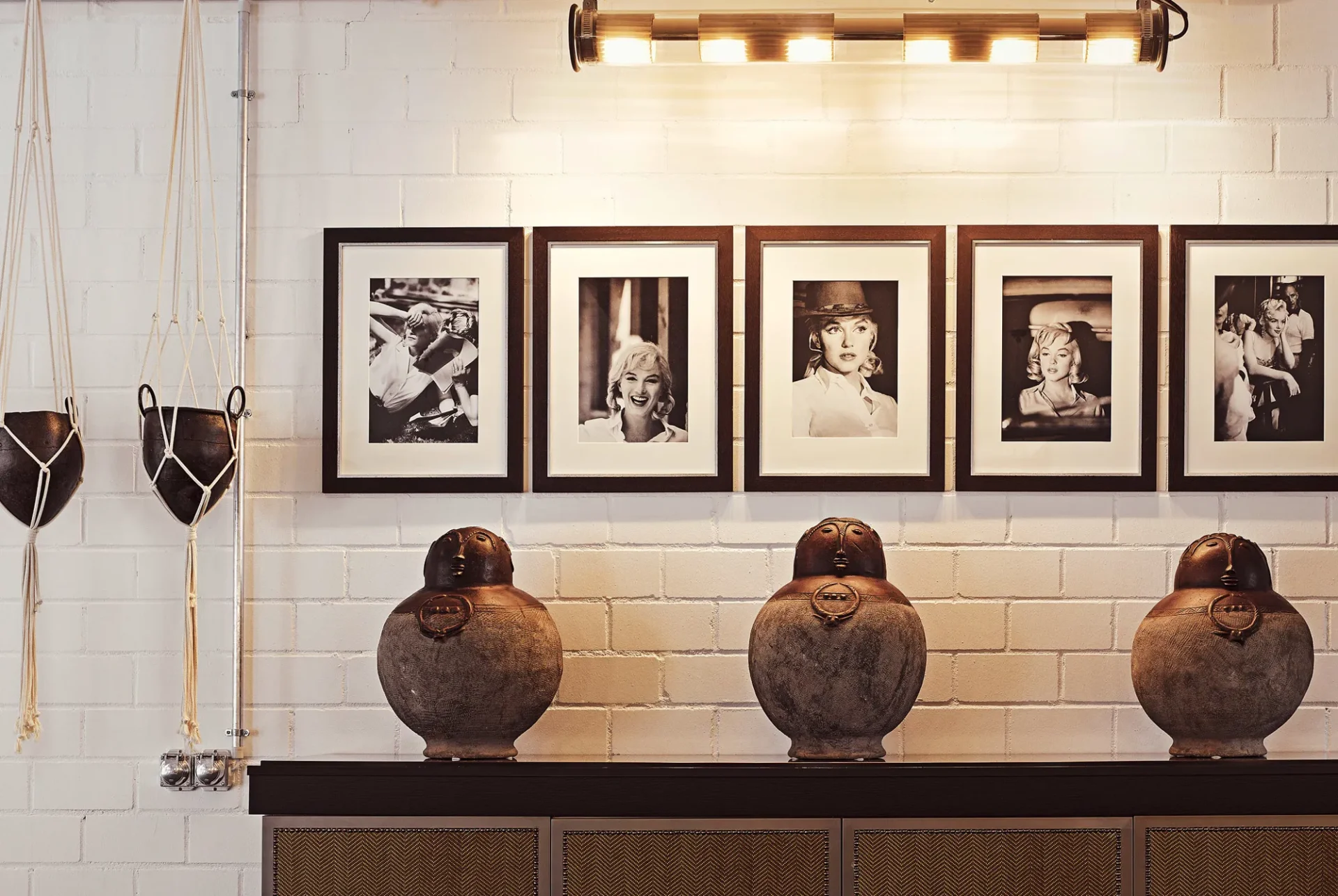
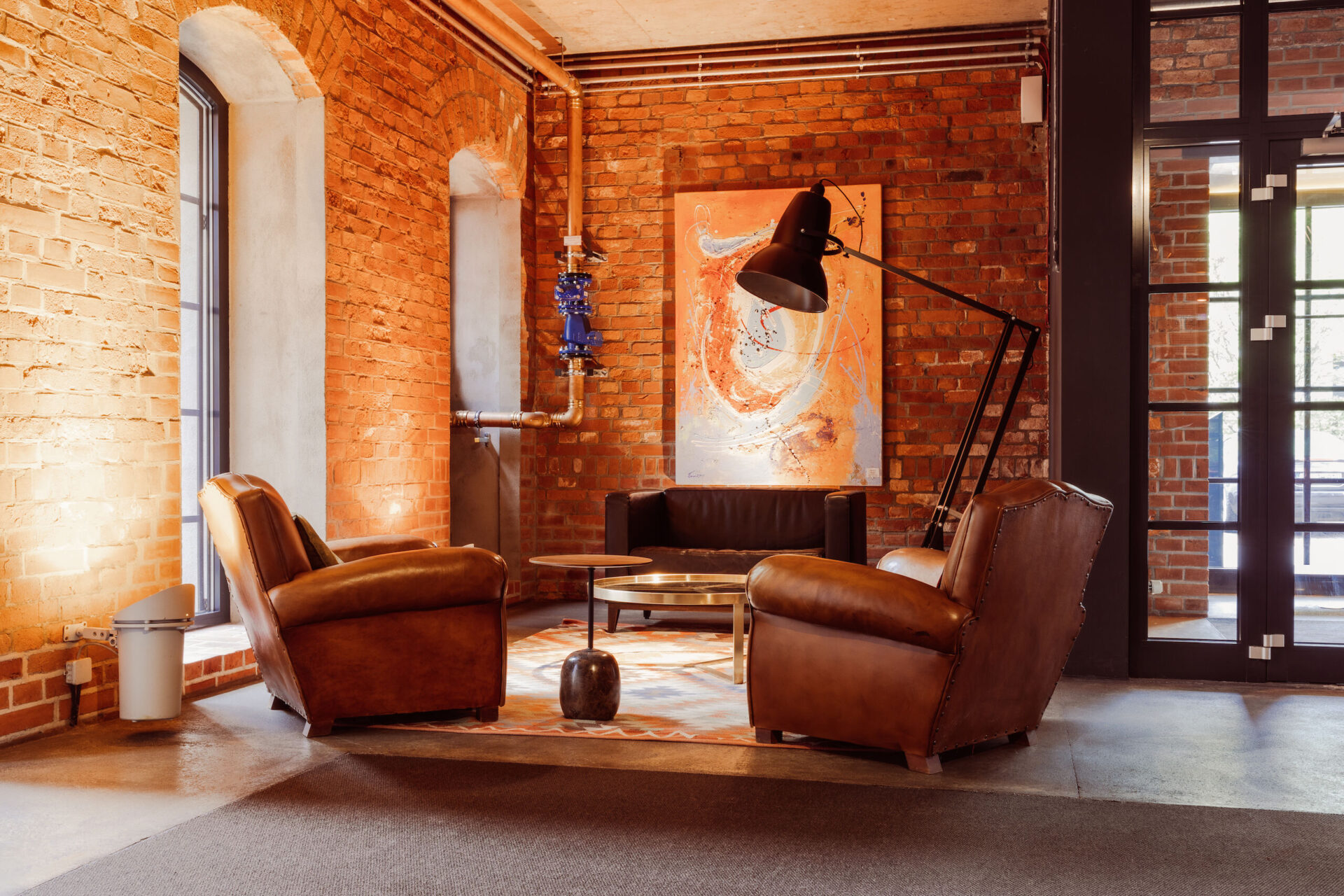
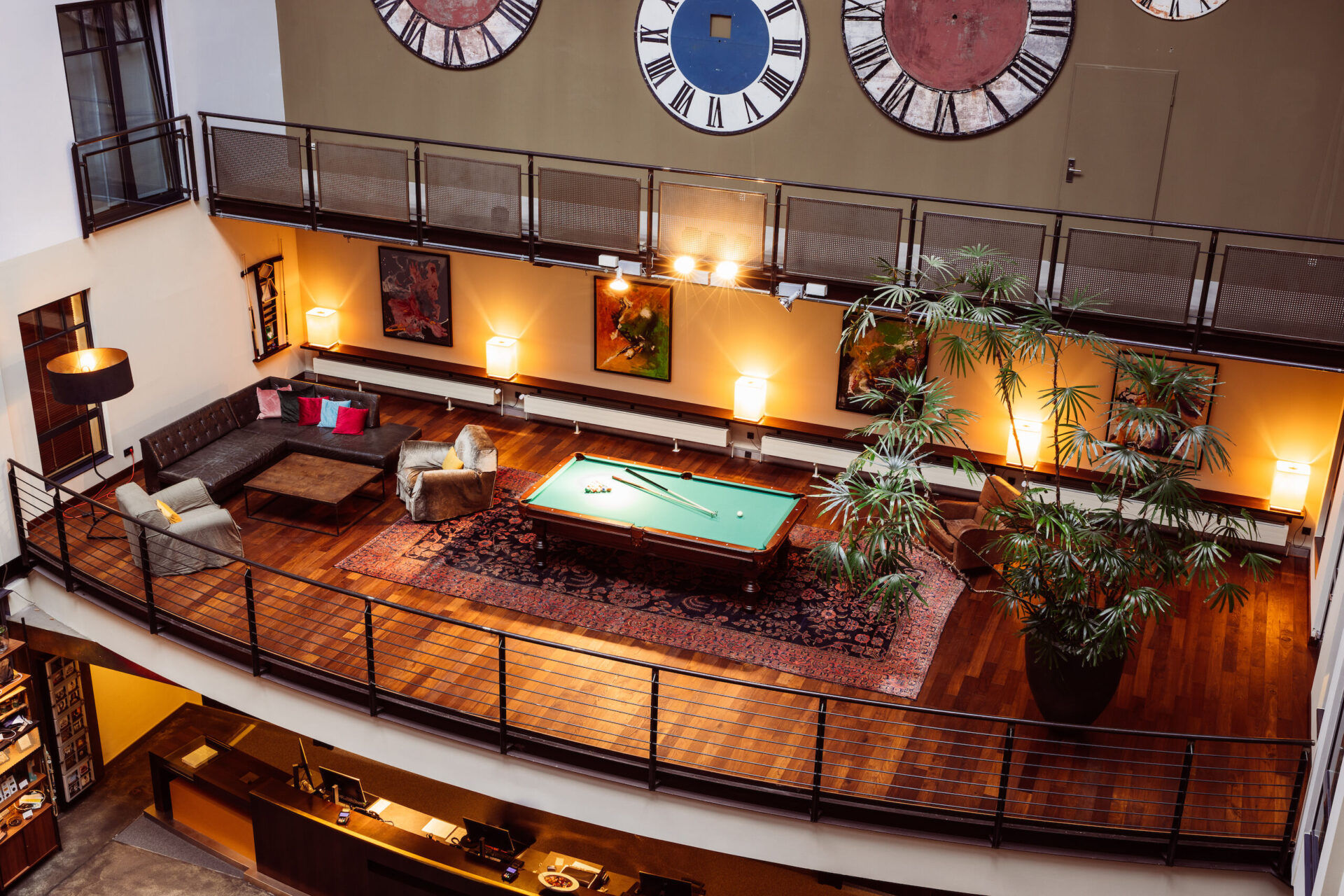
Hamburg architect Klaus Peter Lange faced a particular challenge when converting the former gasworks. Both the historic brick structure and an enormous green industrial machine were protected, making demolition or substantial alteration impossible. Rather than hiding the machinery, Lange made it the centrepiece of the hotel. The resulting atrium is Gastwerk’s defining architectural feature: a vast, naturally illuminated interior where exposed brick, steel and concrete surround the preserved industrial equipment. Suspended walkways cross the space above the lobby, connecting different parts of the building and offering unusual perspectives on the original structure. The reception desk introduces an unexpected decorative touch with gold-leaf detailing, while an old tower clock hangs above, its hands permanently stopped. It is a rather appropriate gesture in a building whose original purpose belongs to another century. The architecture has the scale and presence of a genuine industrial monument. There is no need for artificially distressed surfaces or decorative machinery imported from elsewhere. Everything important was already here.
Loft Living, Hamburg Style
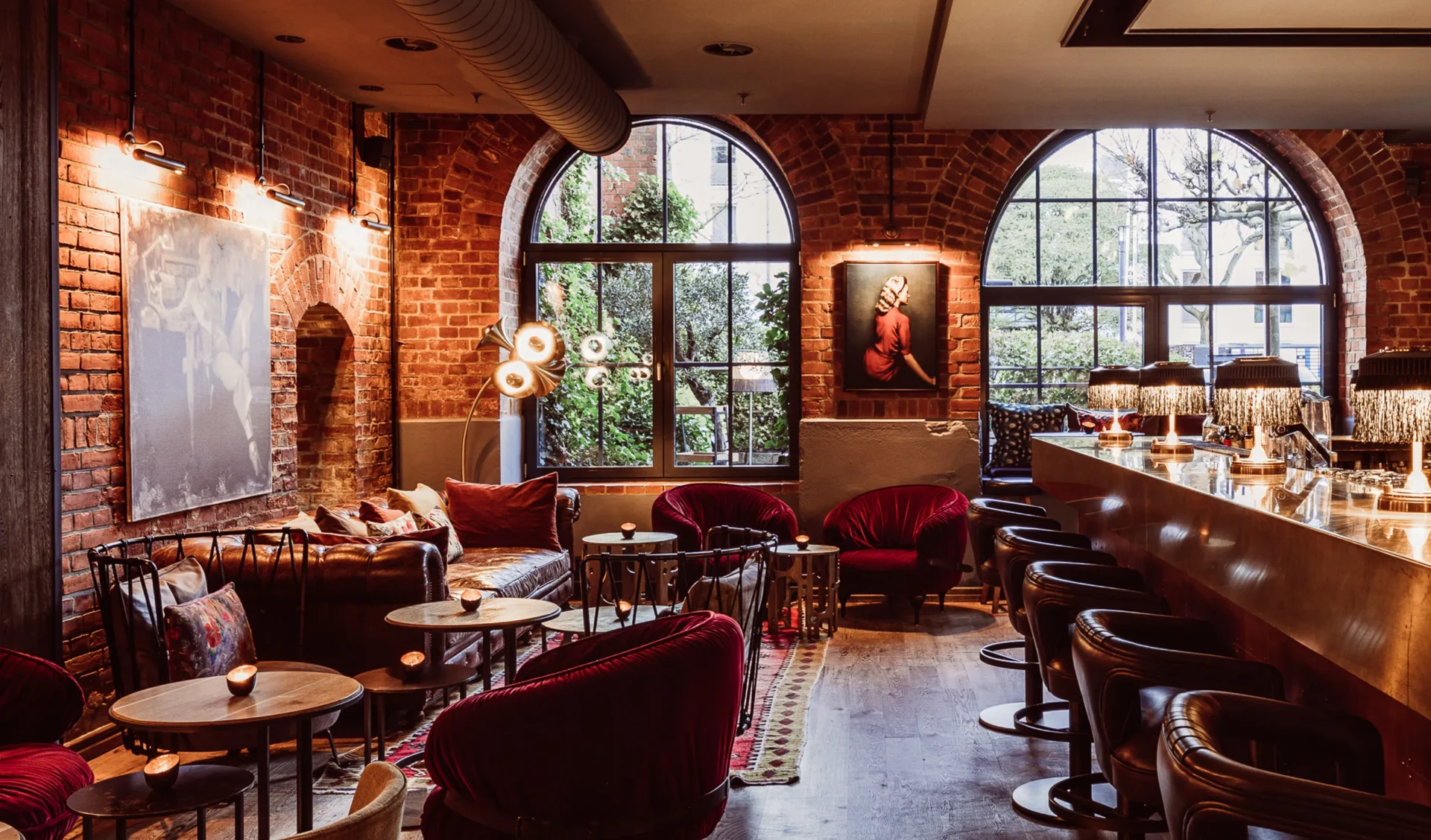
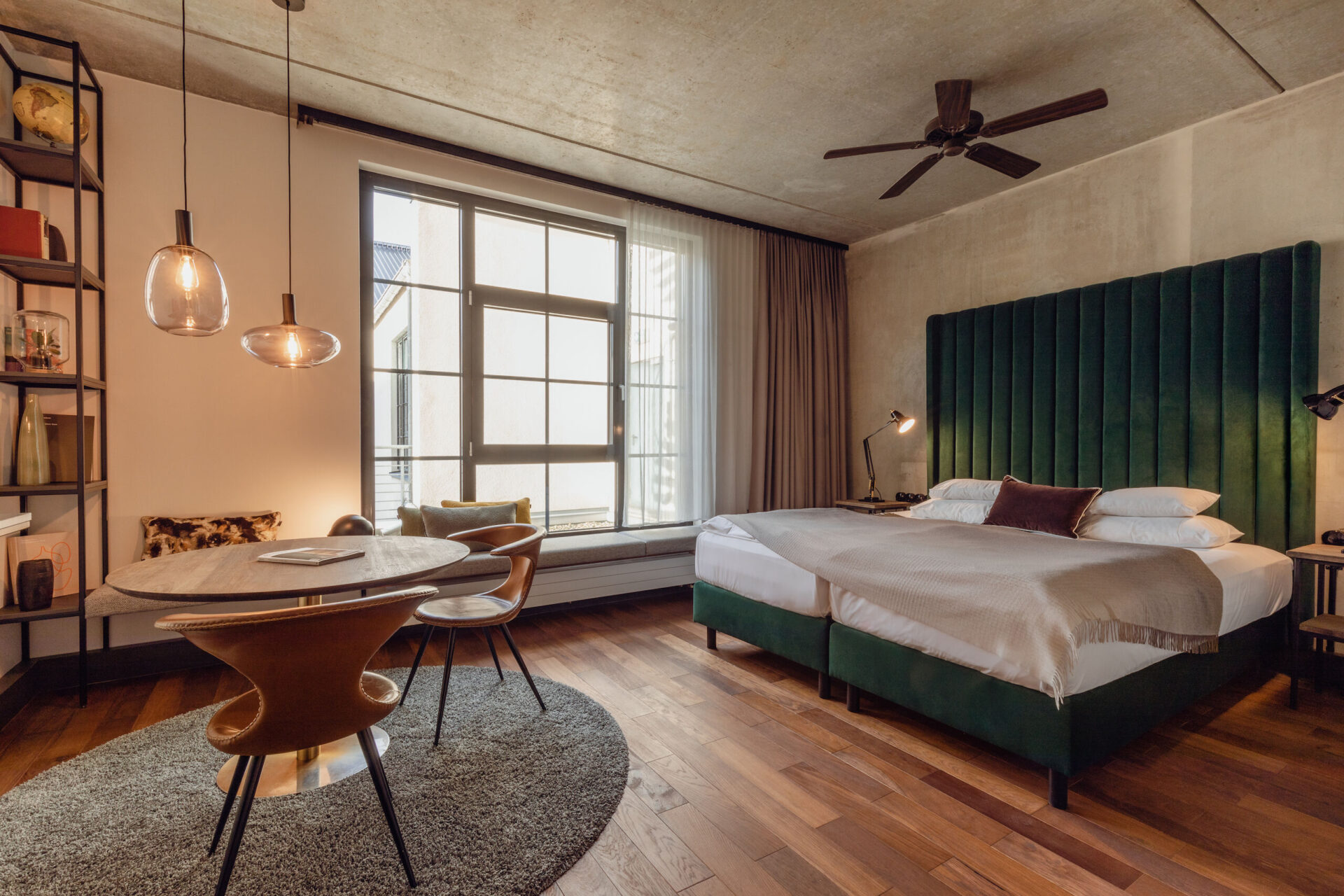
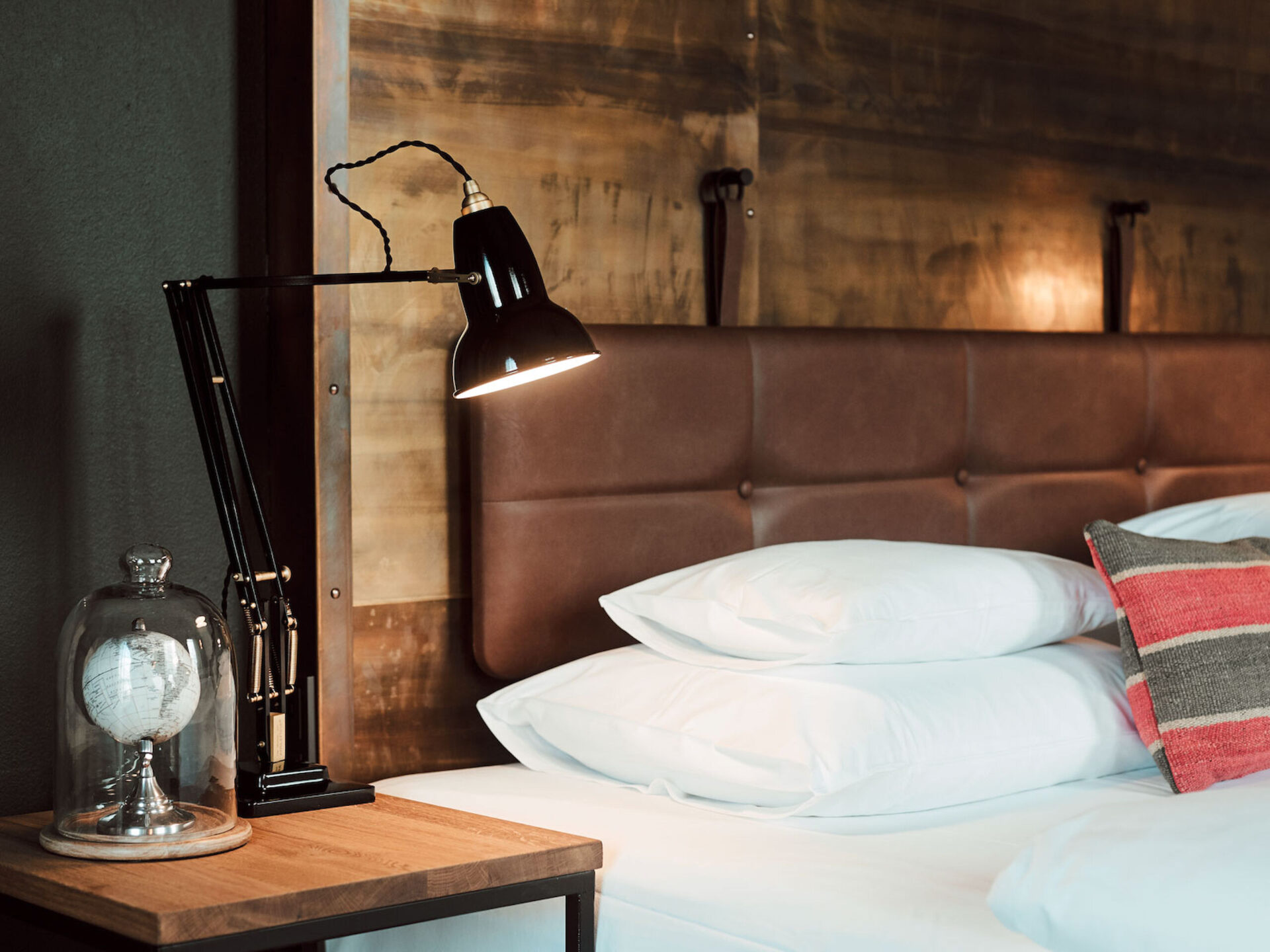
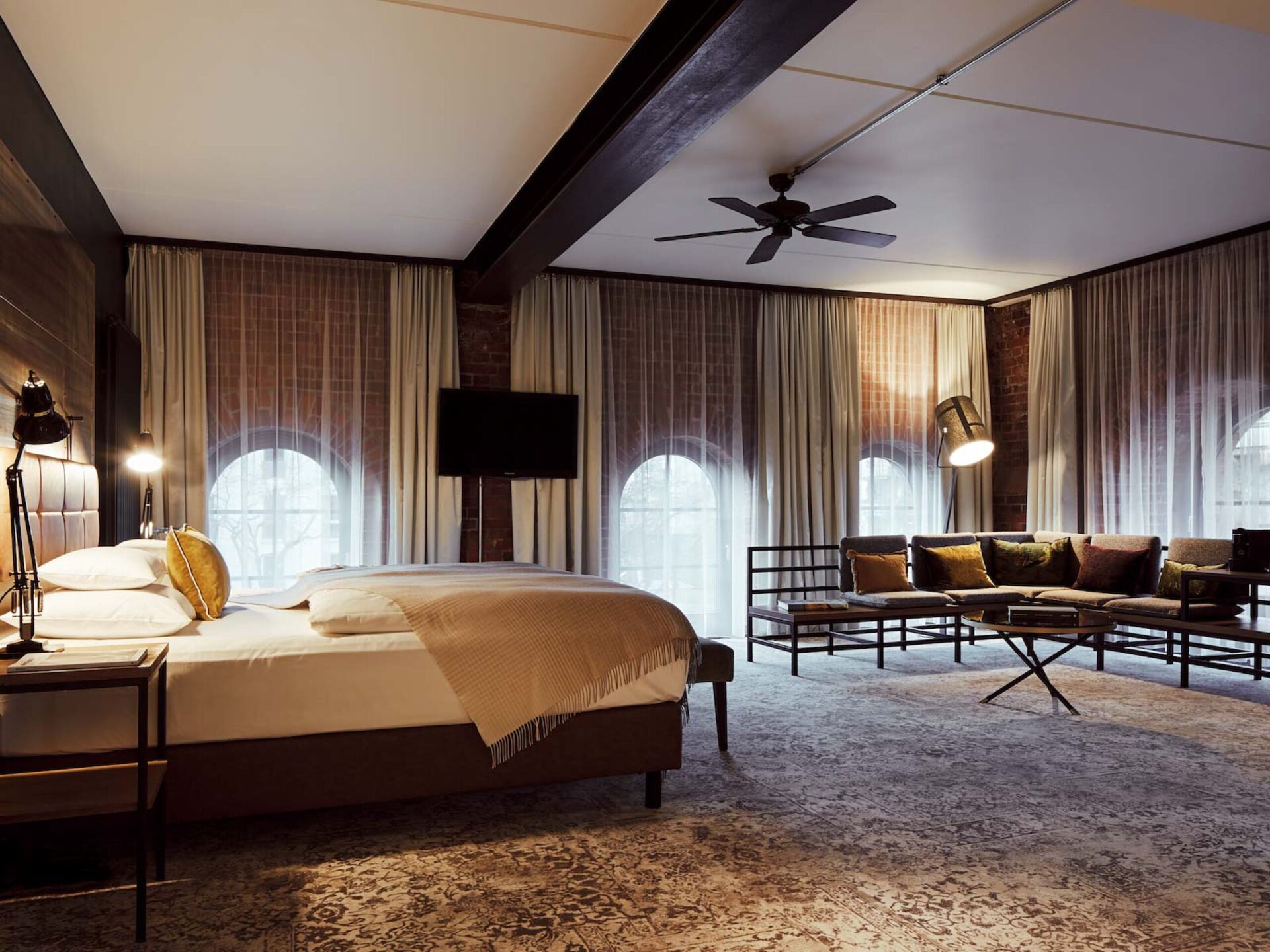
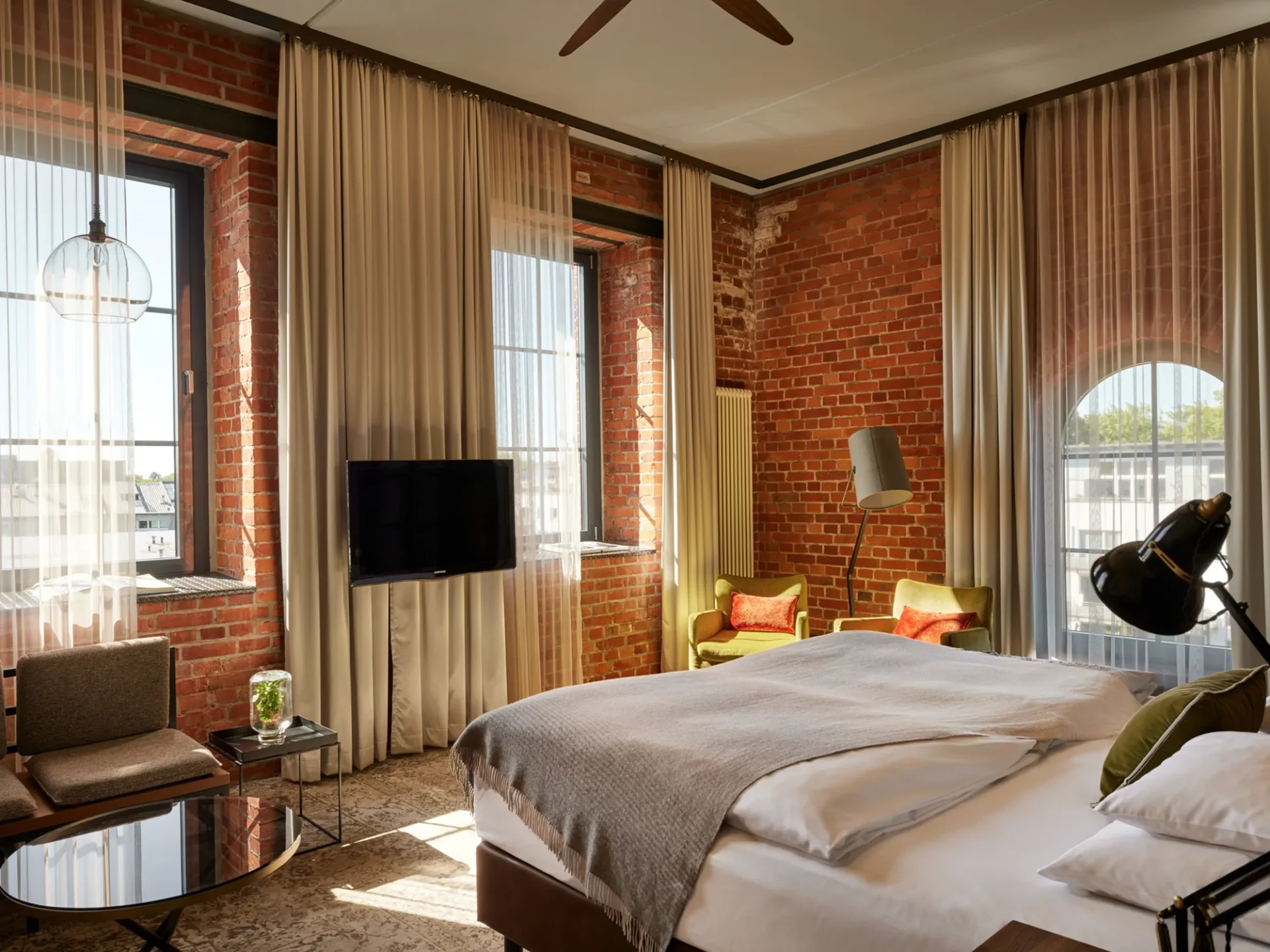
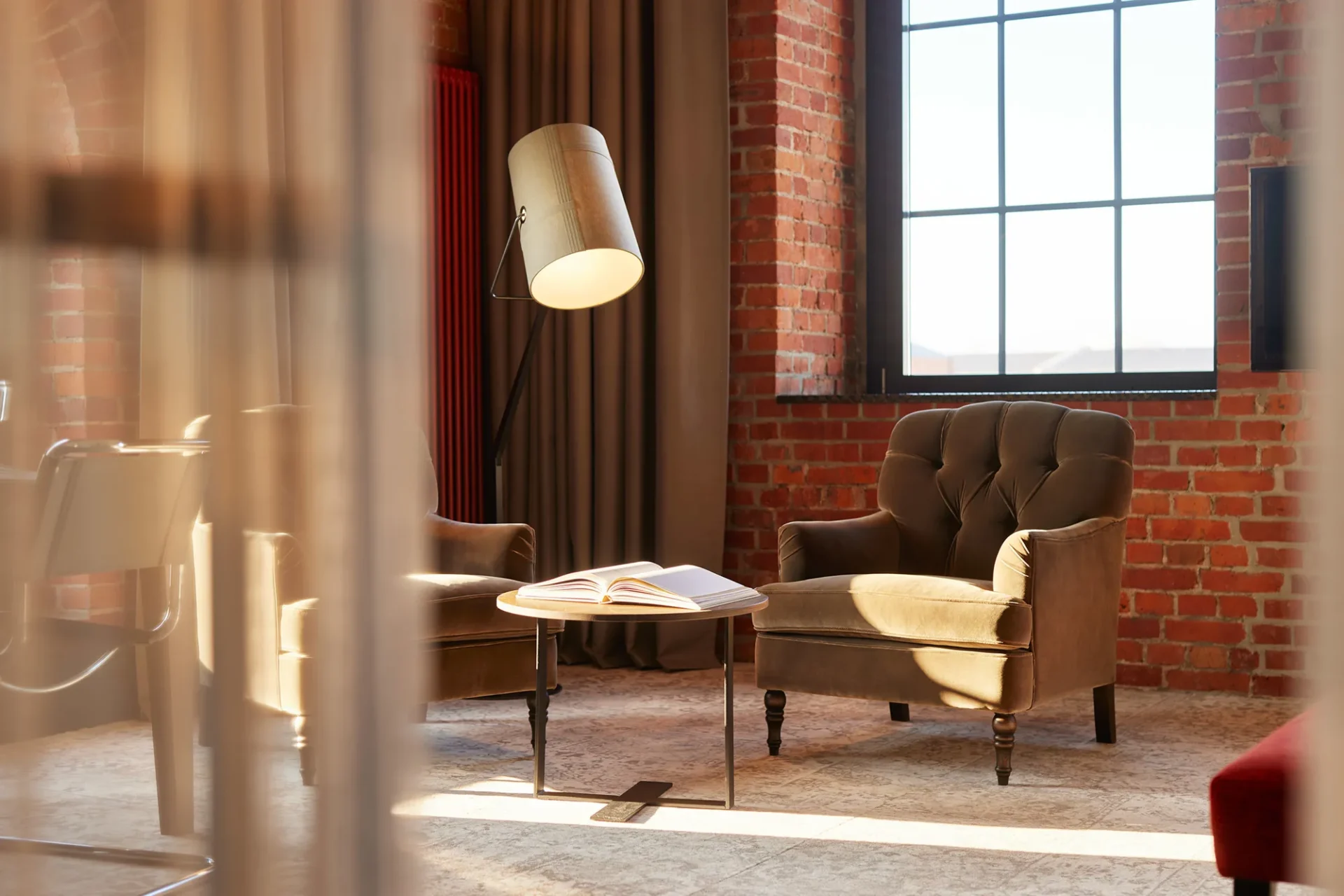
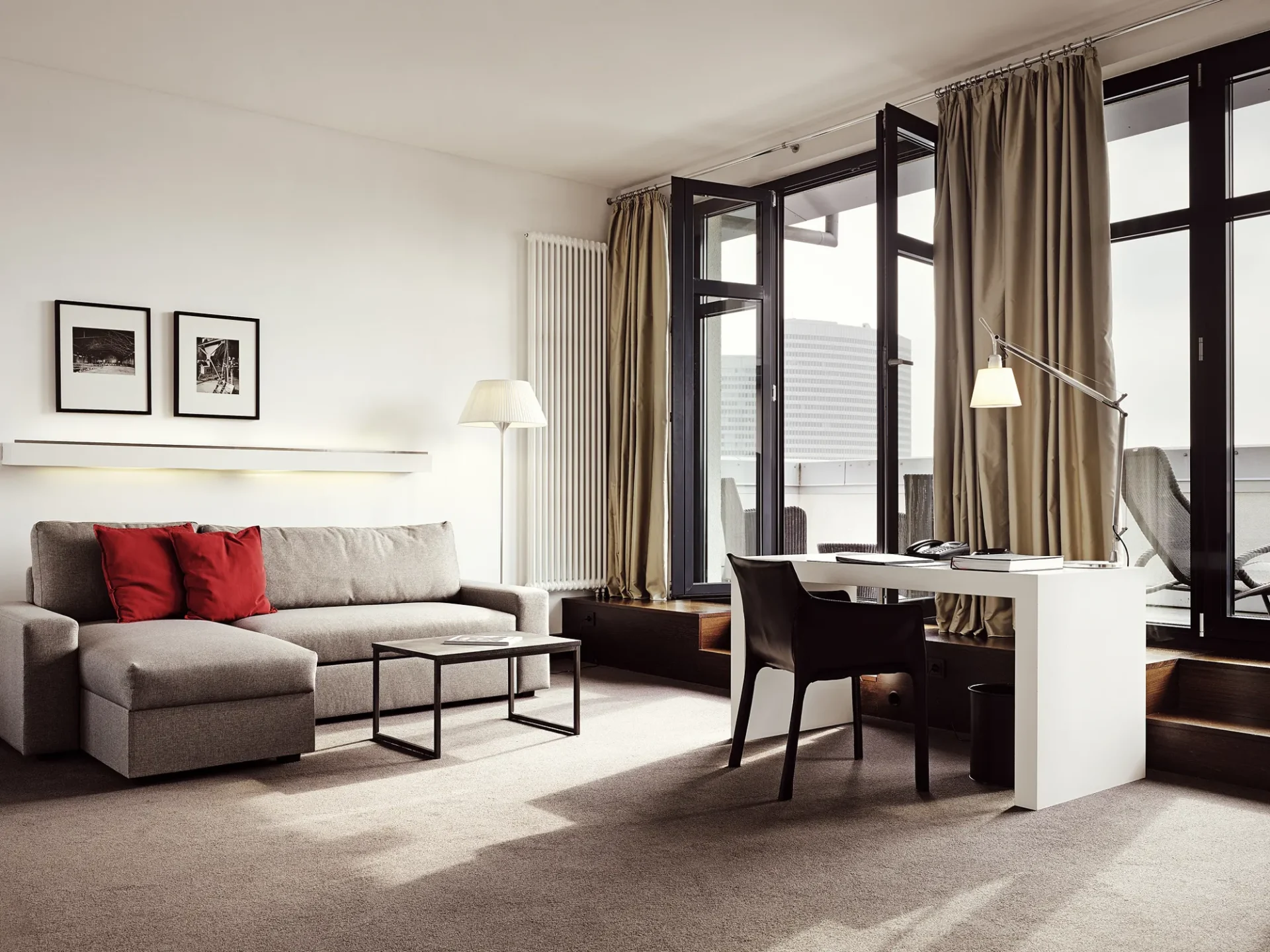
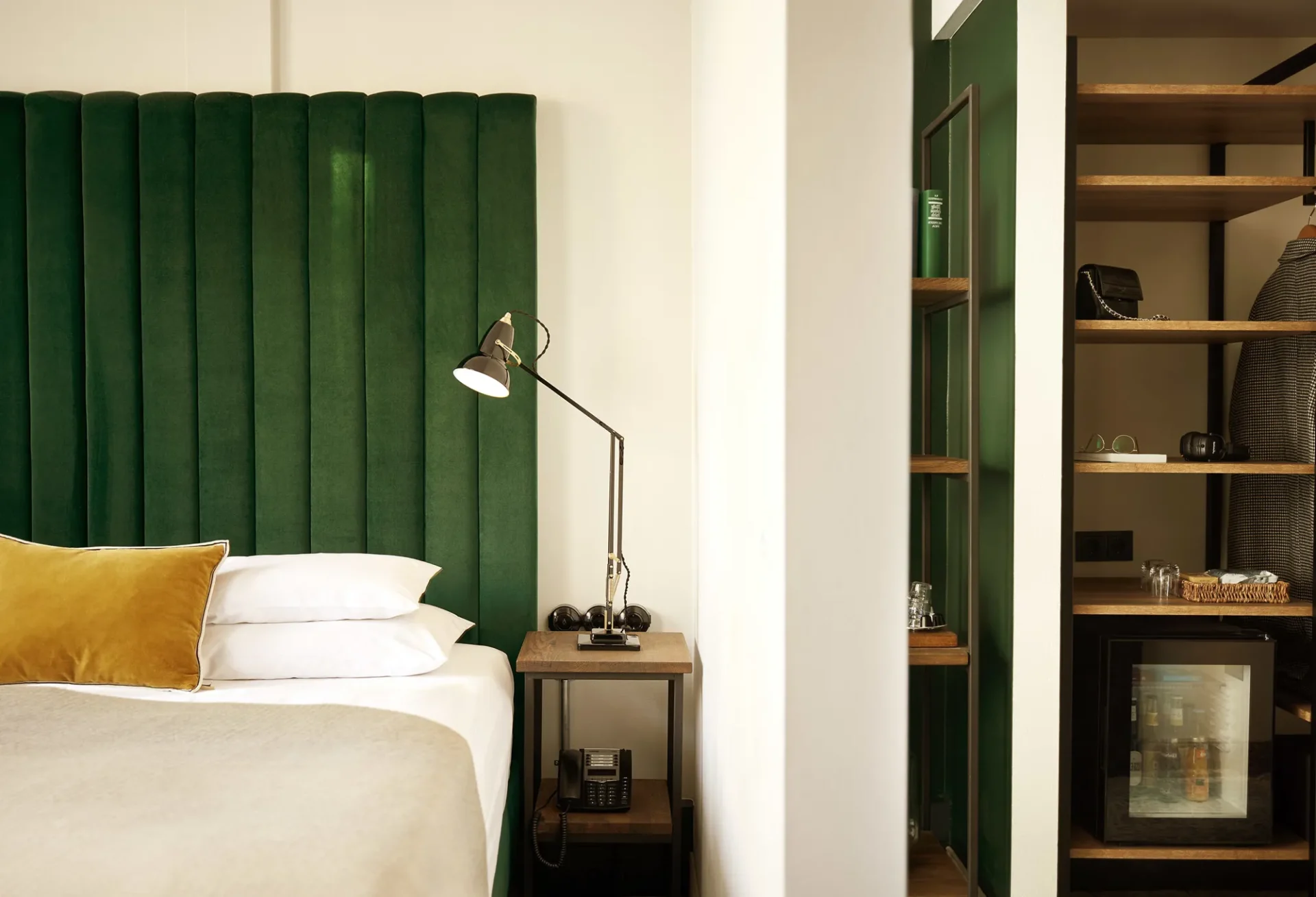
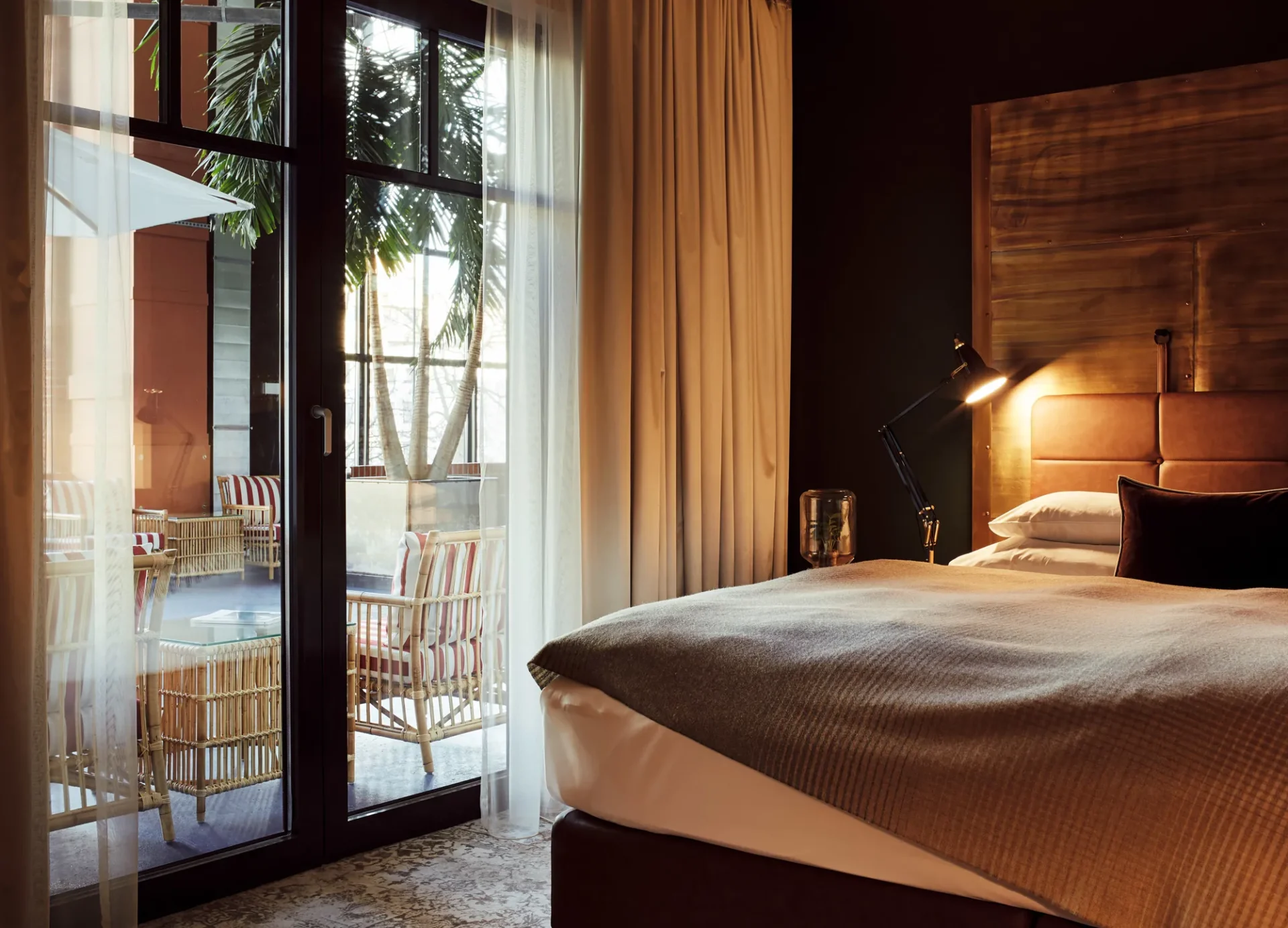
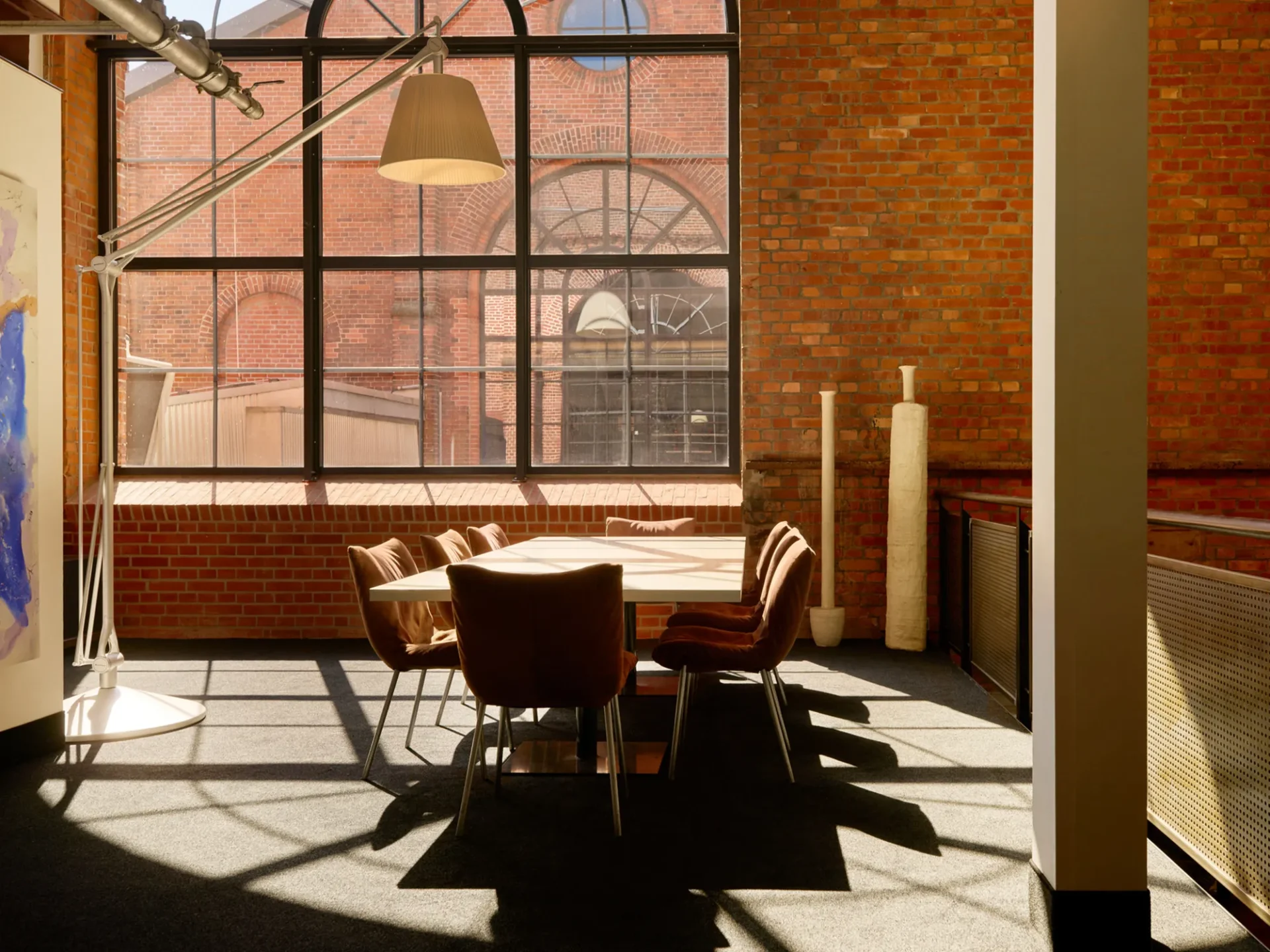
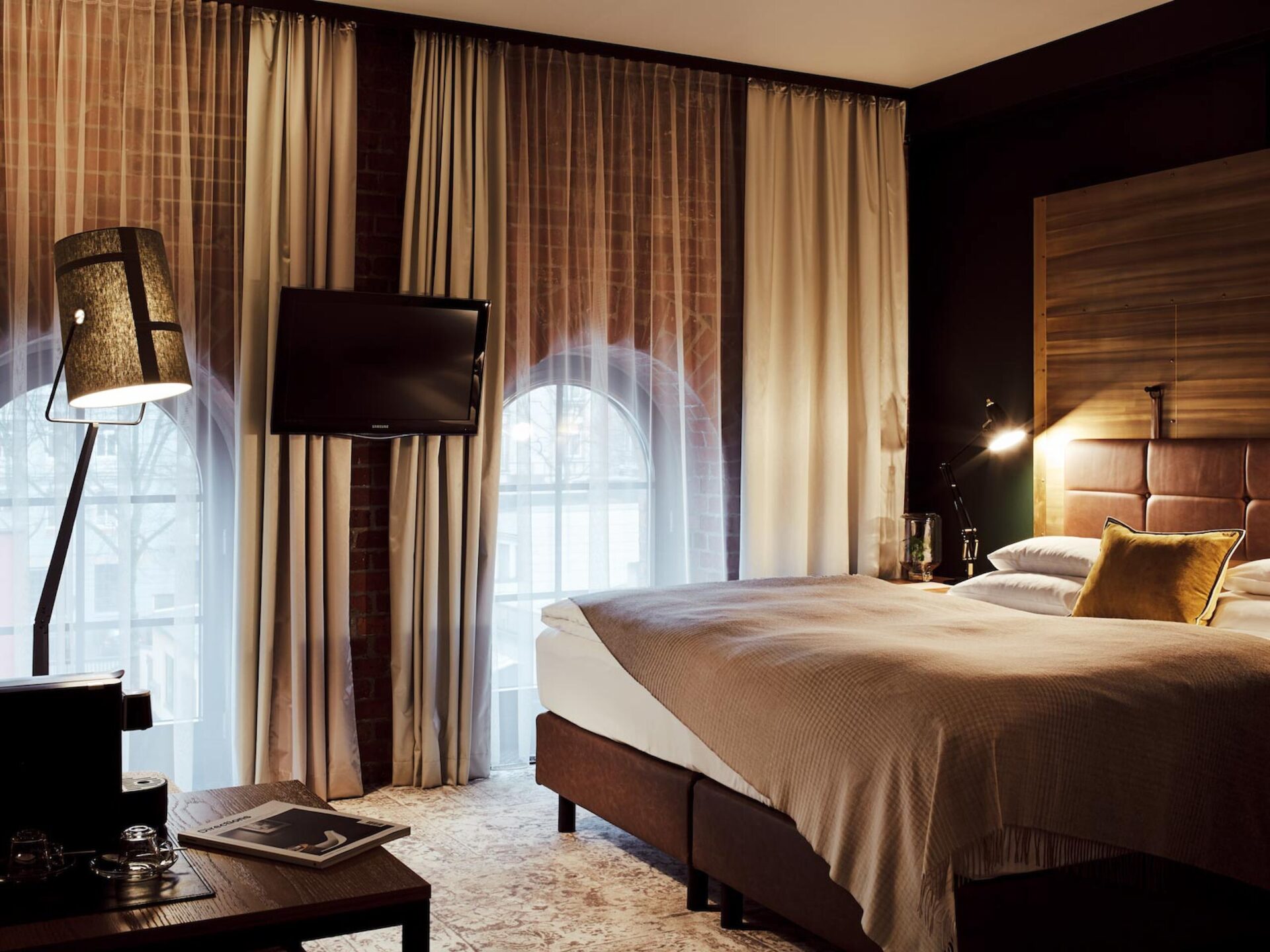
Interior designers Regine Schwethelm and Sibylle von Heyden took a deliberately softer approach to the guestrooms. The industrial character remains visible through exposed brickwork, concrete walls, tall windows and generous ceiling heights, but these elements are balanced by warm timber, muted colours, tactile fabrics and carefully selected contemporary furniture. Walnut detailing introduces a more domestic quality, while ceiling fans recall the mechanical equipment that once occupied the building. The rooms and suites have the open proportions associated with loft living, although the overall effect is considerably more comfortable than the improvised industrial apartments that originally inspired the aesthetic. That distinction is important. Gastwerk was never intended to be an architectural experiment at the expense of its guests. The designers understood that exposed brick and concrete are attractive features, but not necessarily sufficient ingredients for a comfortable night’s sleep. The result is a relatively restrained interpretation of industrial chic, avoiding the theatrical excess that would later characterise some factory conversions.
Dinner Among the Brickwork
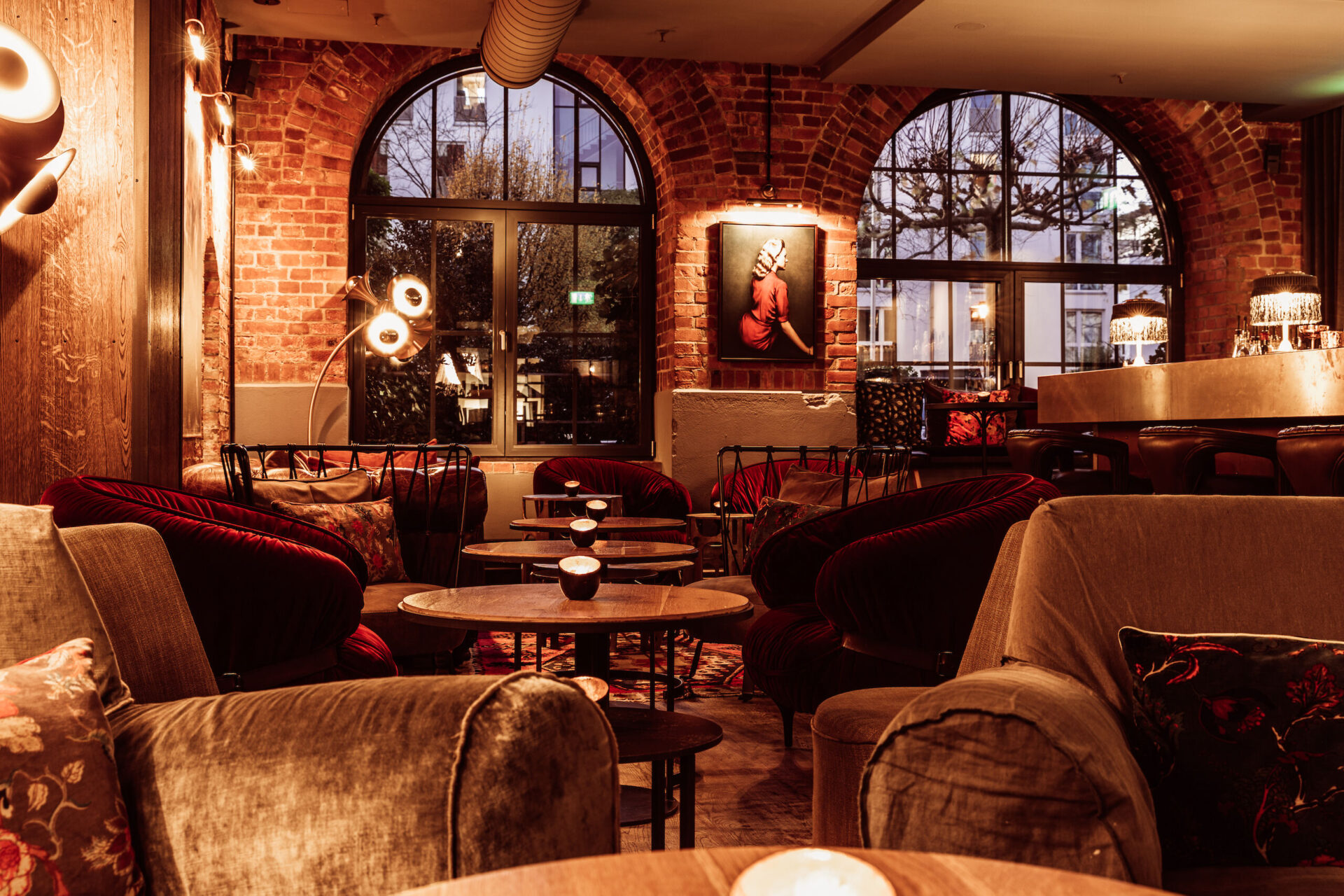
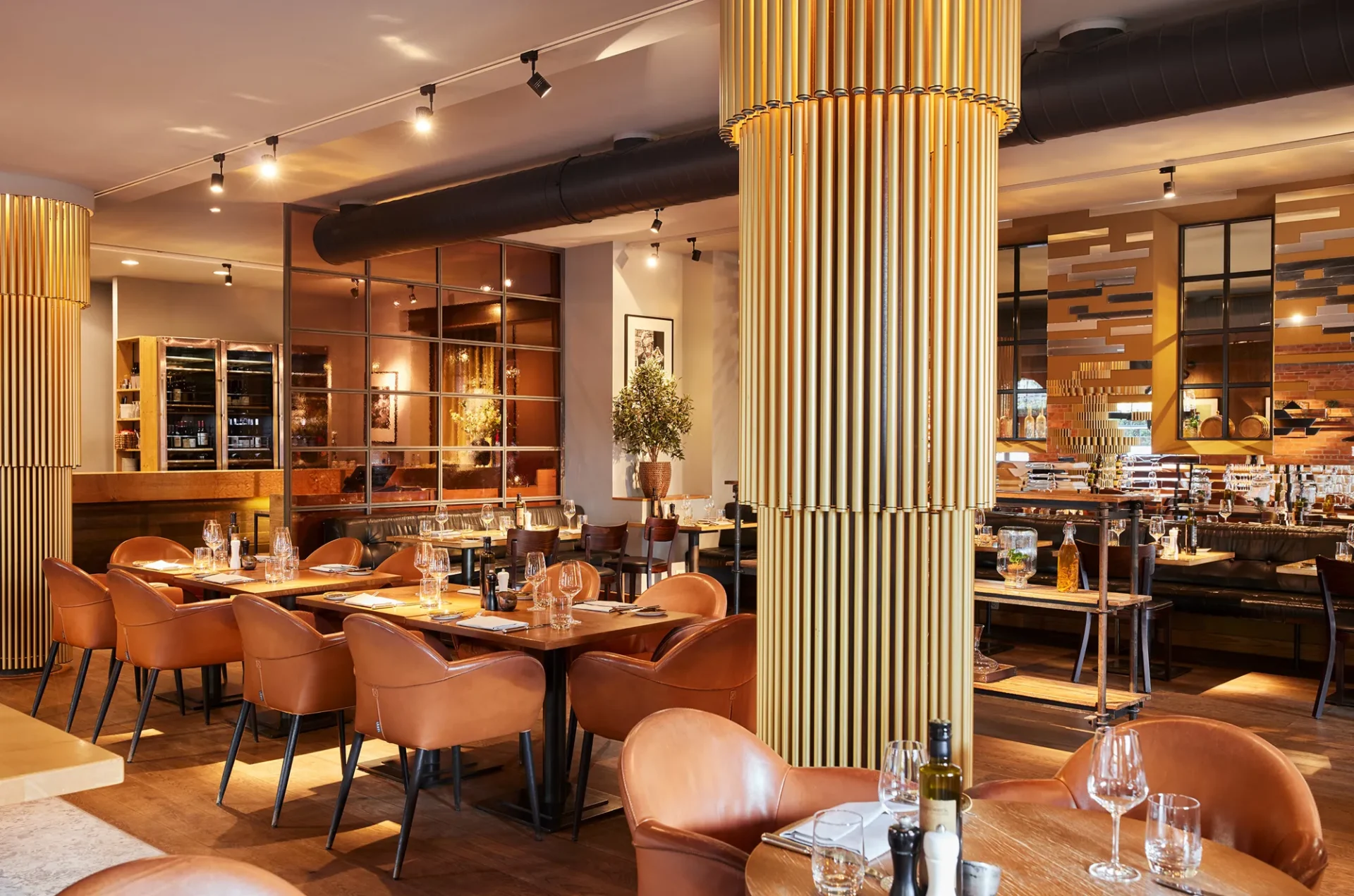
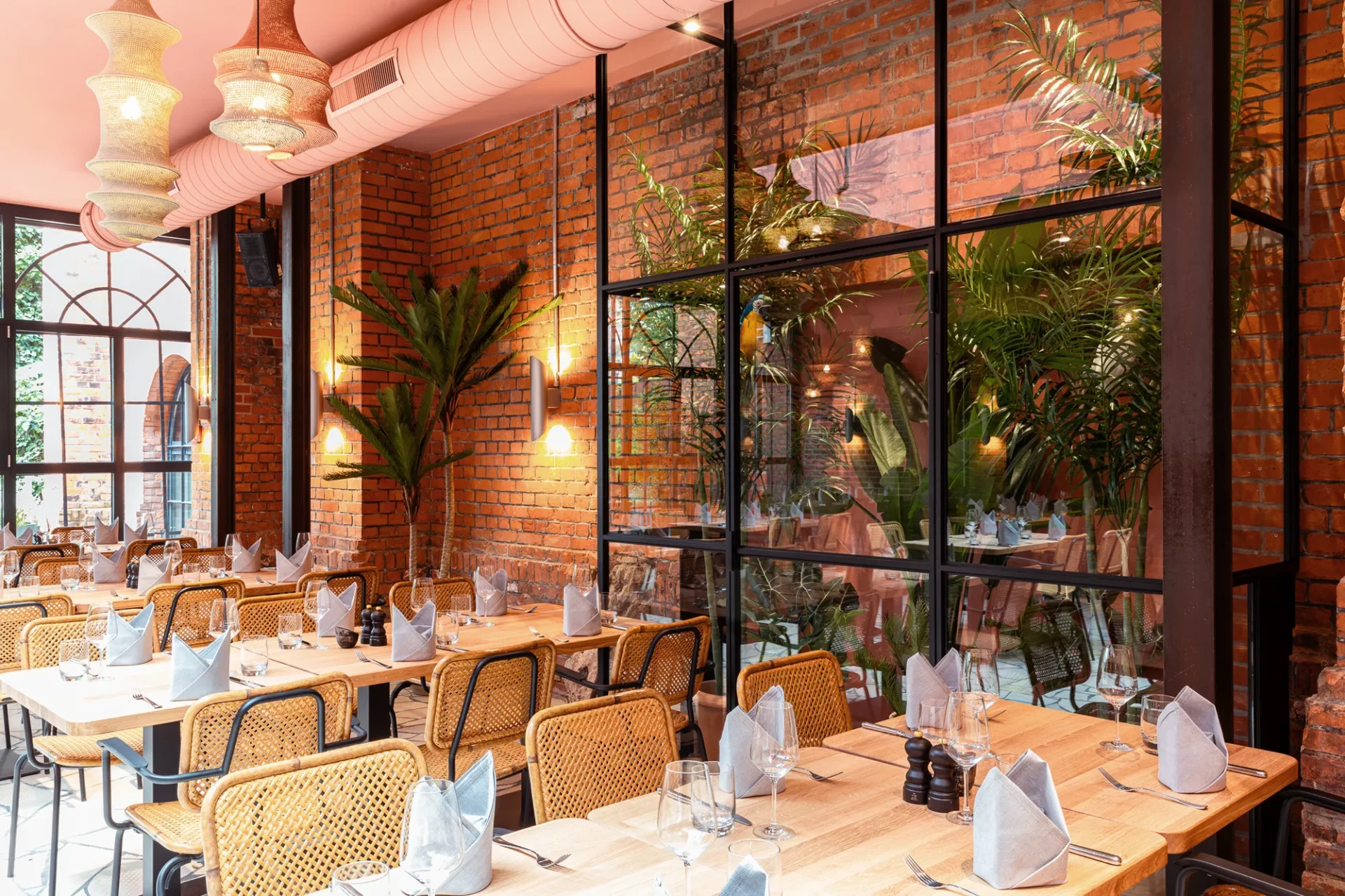
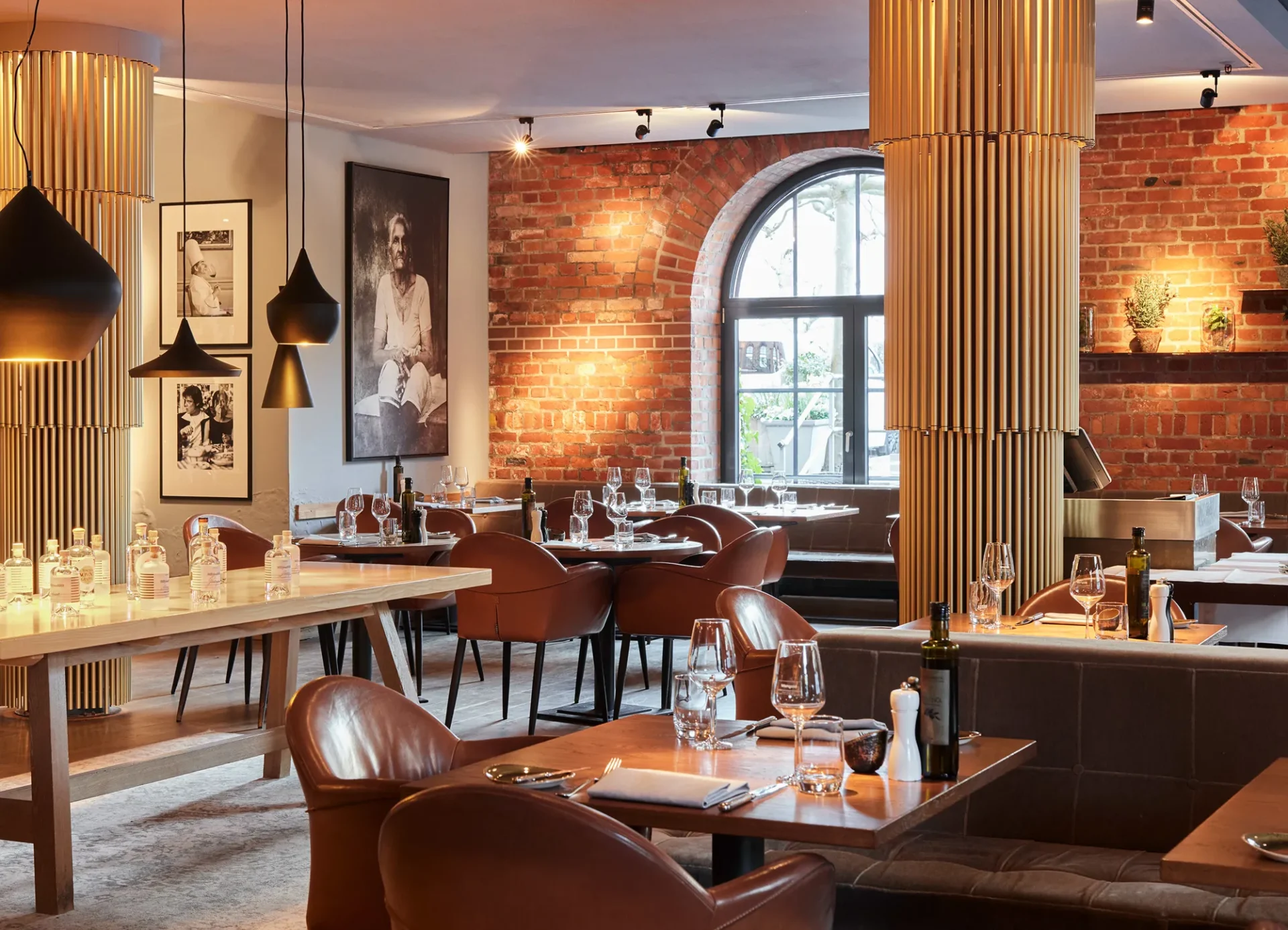
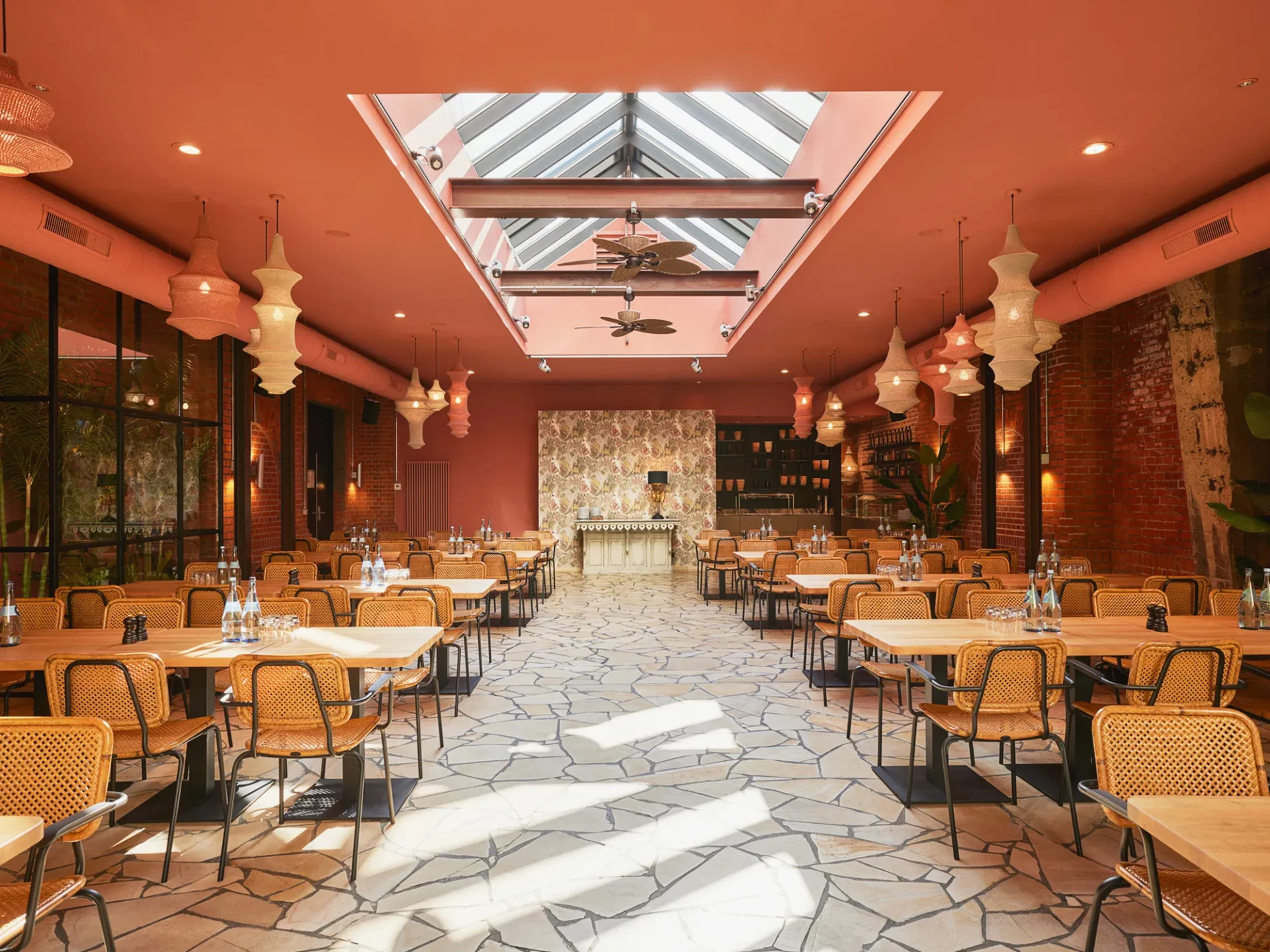
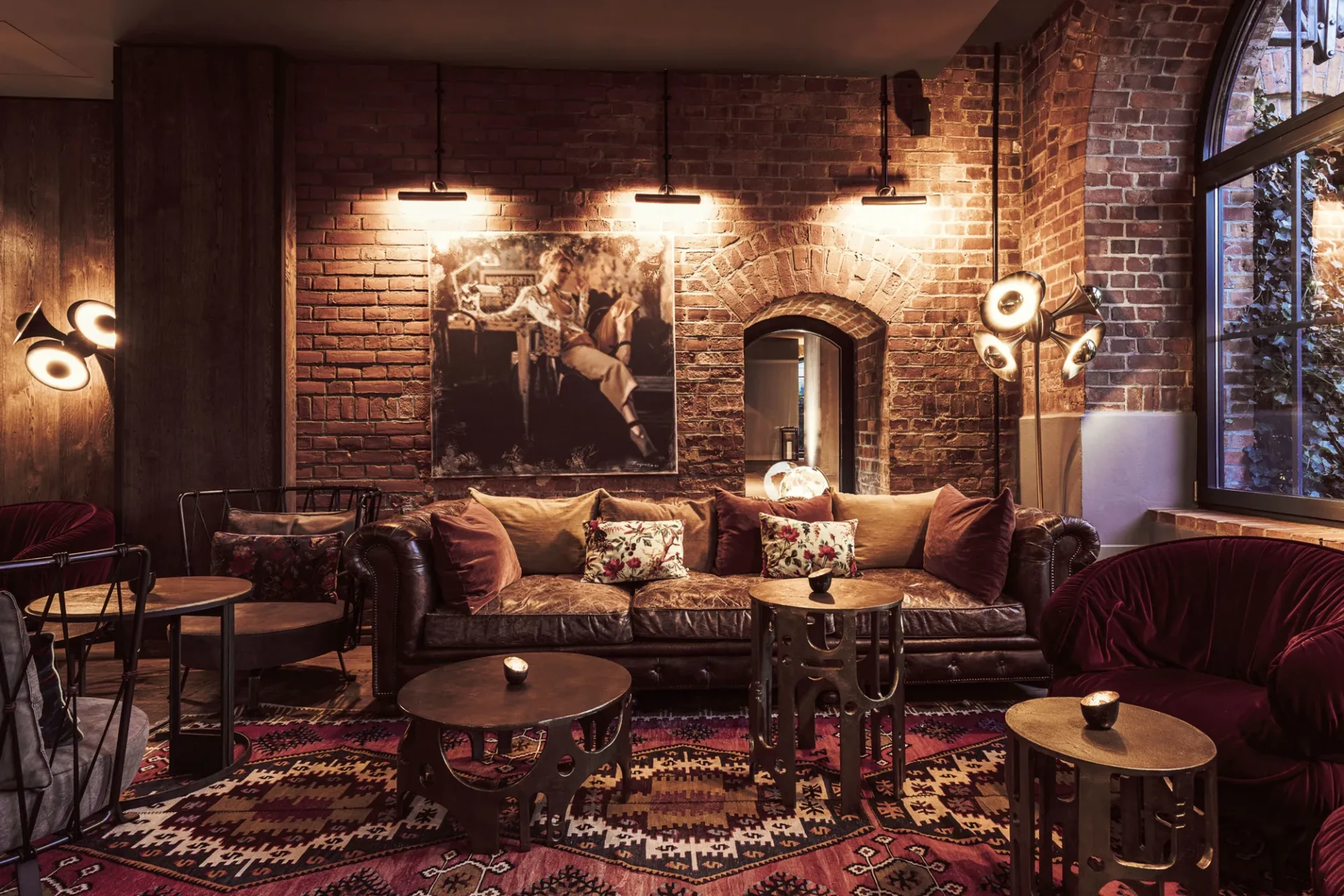
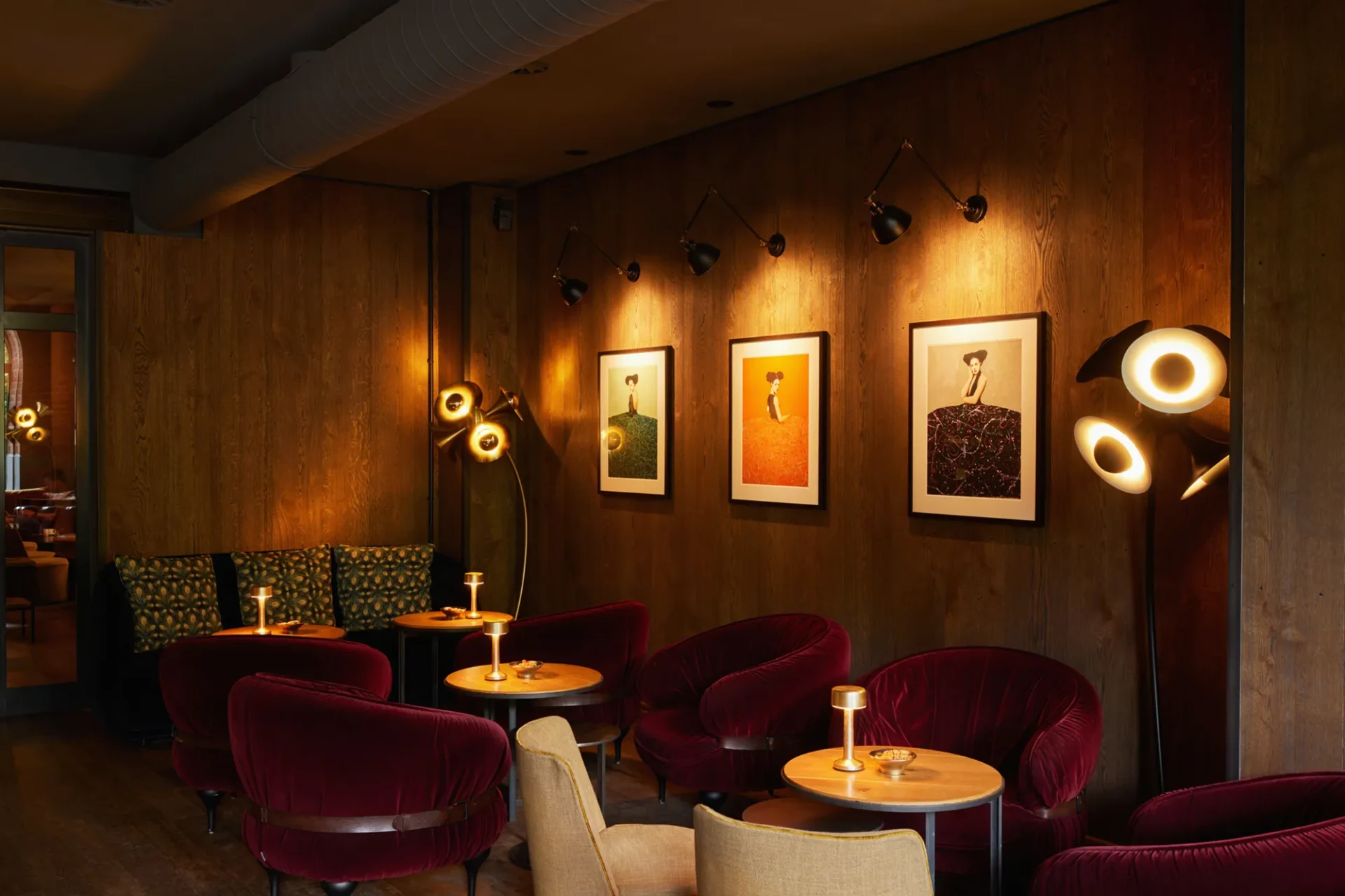
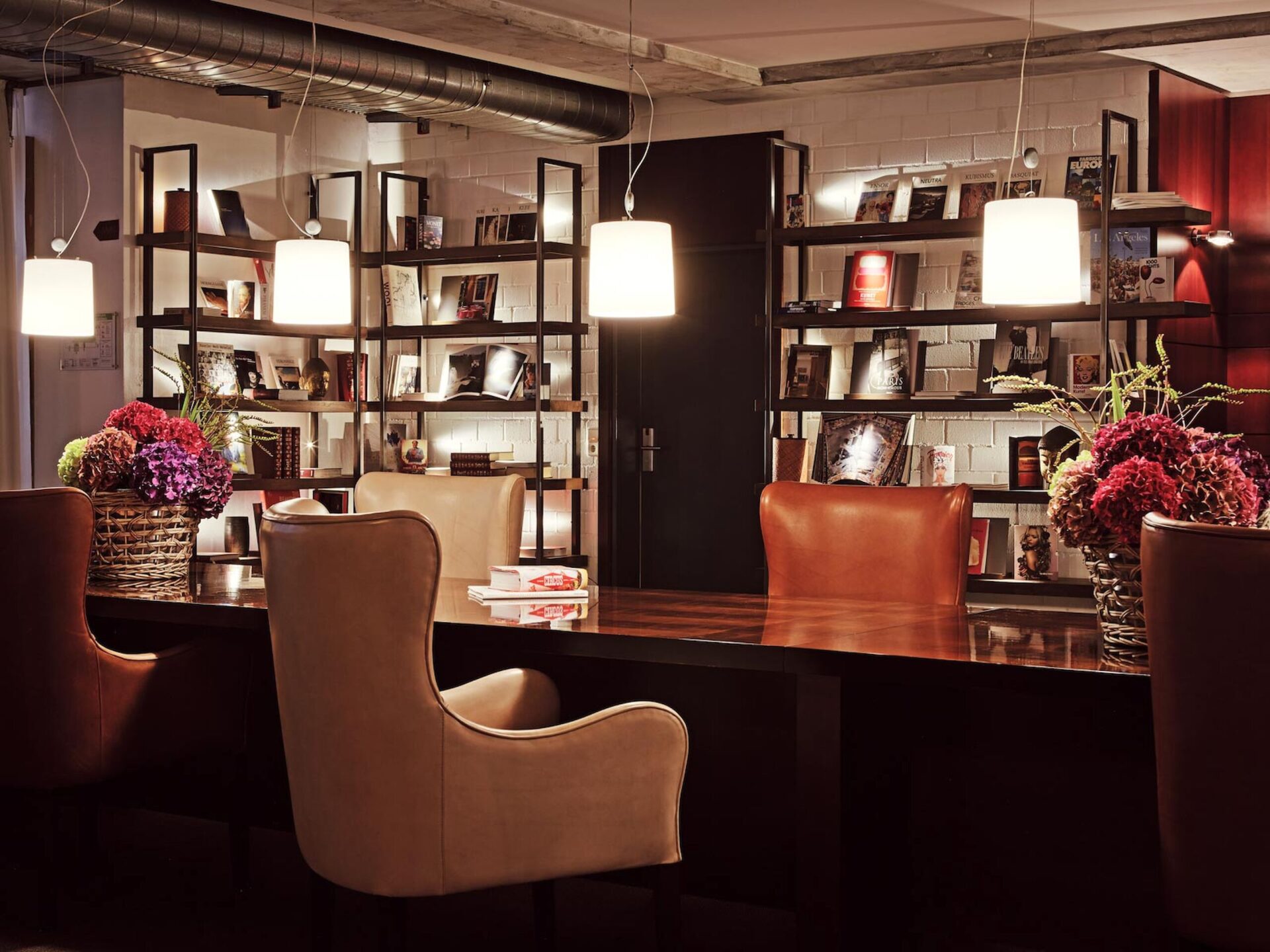
Mangold, the hotel’s restaurant, continues the architectural language of the building with exposed brick walls, an open dining area and contemporary furnishings. The kitchen takes an international approach rather than concentrating exclusively on northern German traditions, with seasonal ingredients and a menu that moves between different culinary influences. The setting is informal but considered, making the restaurant part of the hotel’s everyday social life rather than a separate fine-dining destination. For relaxation, Cosy Spa occupies an adjacent space, offering saunas, a steam bath and massage treatments.
Bahrenfeld Before It Was Cool
Gastwerk’s location in Bahrenfeld was another unconventional decision when the hotel opened. West of central Hamburg, the district was historically associated with industry, workshops and commercial activity rather than fashionable hotels. Over time, creative businesses, studios, restaurants and cultural spaces have contributed to the area’s changing character. Bahrenfeld is still considerably less polished than Hamburg’s central shopping districts or the waterfront developments around HafenCity, and that is part of its appeal. The neighbourhood offers a different perspective on the city, away from the most familiar tourist routes. Central Hamburg remains accessible by public transport or taxi, but Gastwerk is not a hotel for visitors who insist on stepping directly from the lobby into the Altstadt. It is more interesting as a destination in its own right, particularly for anyone curious about the city’s industrial past and the changing character of its western neighbourhoods.
An Early Example That Still Makes Sense
Today, industrial conversions are everywhere. Former factories, warehouses, breweries and power stations have become hotels across Europe, often following a remarkably predictable visual formula of exposed brick, black steel and oversized pendant lights. Gastwerk belongs to an earlier generation, when the idea still required some imagination. Its importance lies partly in the timing. Opening in 2000, it helped introduce Hamburg to a more architecture-conscious approach to hospitality, at a moment when the international design hotel movement was still establishing itself. But its continued relevance has more to do with the quality of the original building and the restraint of the conversion. The preserved machinery, monumental atrium and suspended walkways remain more interesting than any decorative trend introduced since. And while the interior design inevitably reflects the period in which the hotel was created, the balance between industrial character and genuine comfort has aged reasonably well. Not every former factory needs to become a hotel. This one made a convincing case for the idea before almost everyone else started doing it.
Information
At a glance
Architecture
Architekten Lange & Partner
Opened / Renovated
2000
Size matters
141 rooms & suites (20-90m2) (215-969 sq ft)
Interior design
Regine Schwethelm, Sibylle von Heyden
Featured in
Don't take our word for it
Handpicked worldwide
A carefully curated collection of exceptional boutique and design hotels across the globe.
Design with soul
Architecture, atmosphere and craftsmanship come together in stays with a clear identity.
Hidden, not hyped
Independent boutique hotels you rarely find on mainstream booking platforms.
Travel guidance
Personal recommendations and thoughtful support from people who actually know the places.