


Scandinavian restraint, Costa Rican craft and Pacific sunsets above one of the country’s best-known surf towns
Mint Santa Teresa is an adult-only boutique hotel in Costa Rica.

Why DNA Hotels loves it
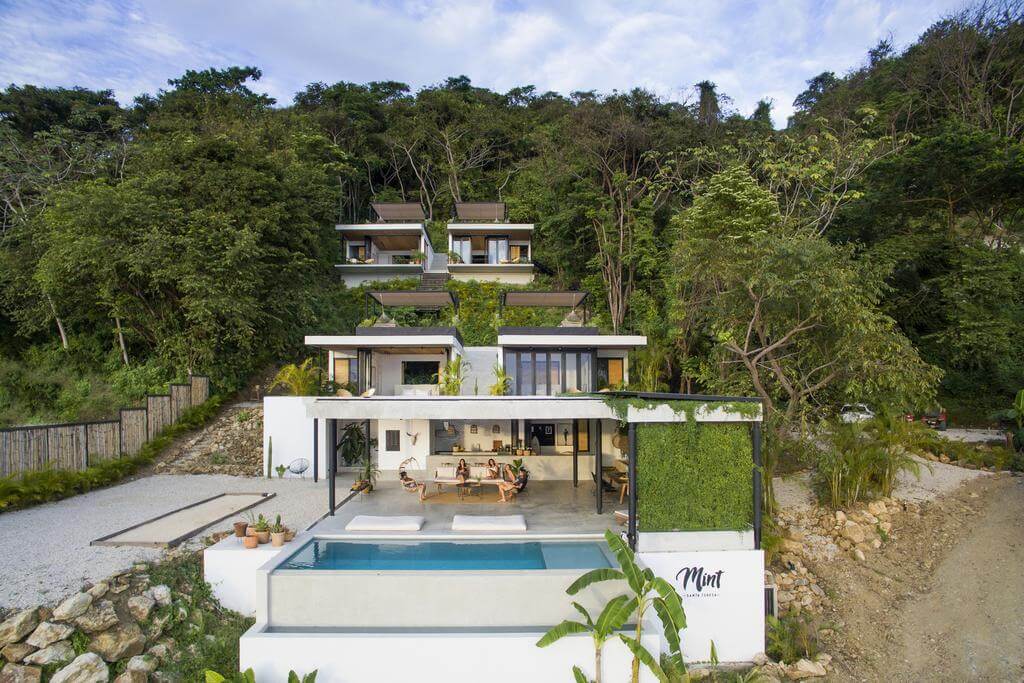
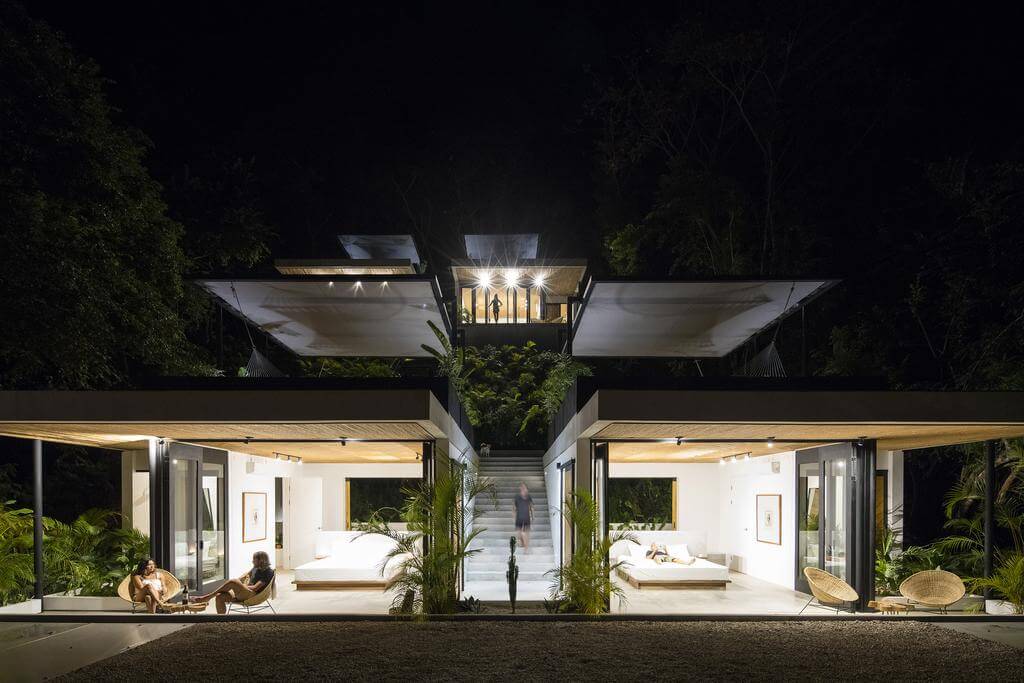
Studio Saxe stepped the hotel into the hillside rather than imposing a single building on it, allowing vegetation to grow between the individual pavilions and keeping the Pacific as the main event.
Swedish owners Jonas Thorrel and Johanna Johansson brought Scandinavian clarity to the project, while caña brava, locally sourced timber and furniture made in Sarchí keep it unmistakably Costa Rican.
With only four guest pavilions, rooftop terraces and a communal infinity pool, Mint feels less like a conventional hotel and more like a tiny architectural community.
The Stay
Mint Santa Teresa - Costa Rica
Architecture That Knows When to Stop
Santa Teresa has become one of Costa Rica’s best-known surf destinations. That makes restraint increasingly valuable. Set on a steep hillside above the Pacific, Mint Santa Teresa is a small adults-only hotel by Studio Saxe, the Costa Rican architecture practice led by Benjamin Garcia Saxe. The brief was not to create a resort object. Quite the opposite. The hotel is broken into separate white pavilions and stepped down the slope so that the terrain, vegetation and views remain dominant. As Garcia Saxe put it, hotels too often become enormous objects disconnected from their surroundings. Mint tries another way.
Four Pavilions in the Green
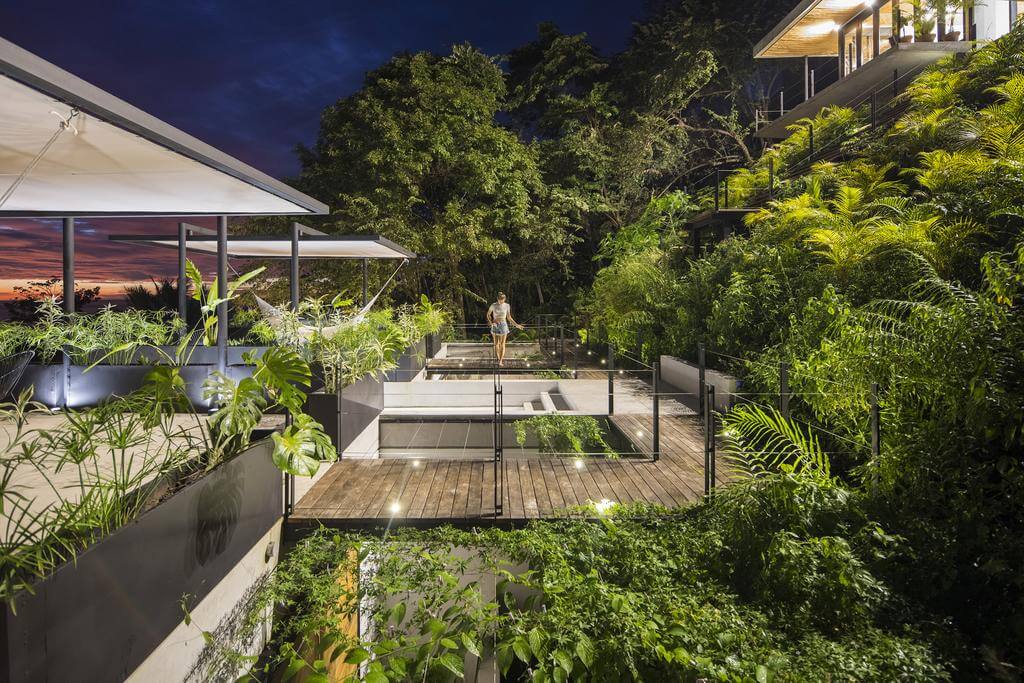
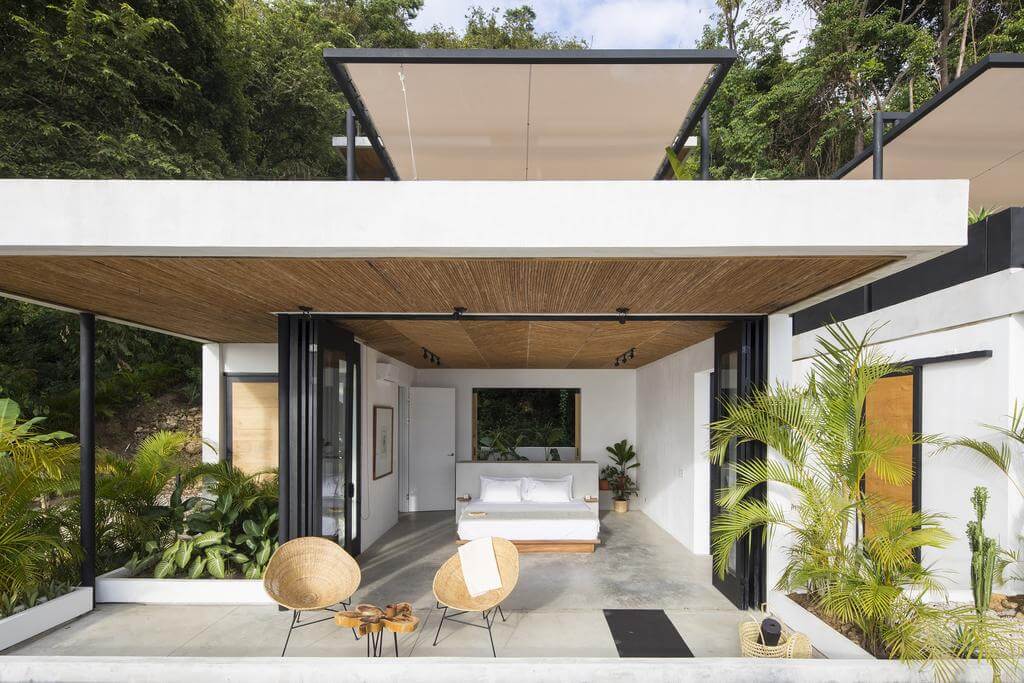
The original hotel consists of four individual guest pavilions, arranged in pairs along stone terraces. Gaps between them allow trees and tropical planting to continue through the site. That sounds simple. Architecturally, it changes everything. Instead of one building blocking the hillside, the hotel becomes a sequence of small structures suspended within it. White planes stand sharply against jungle green. Black steel adds definition. Concrete keeps the material language honest. And everywhere, the eye is pulled beyond the architecture towards the ocean.
Sweden Meets Santa Teresa
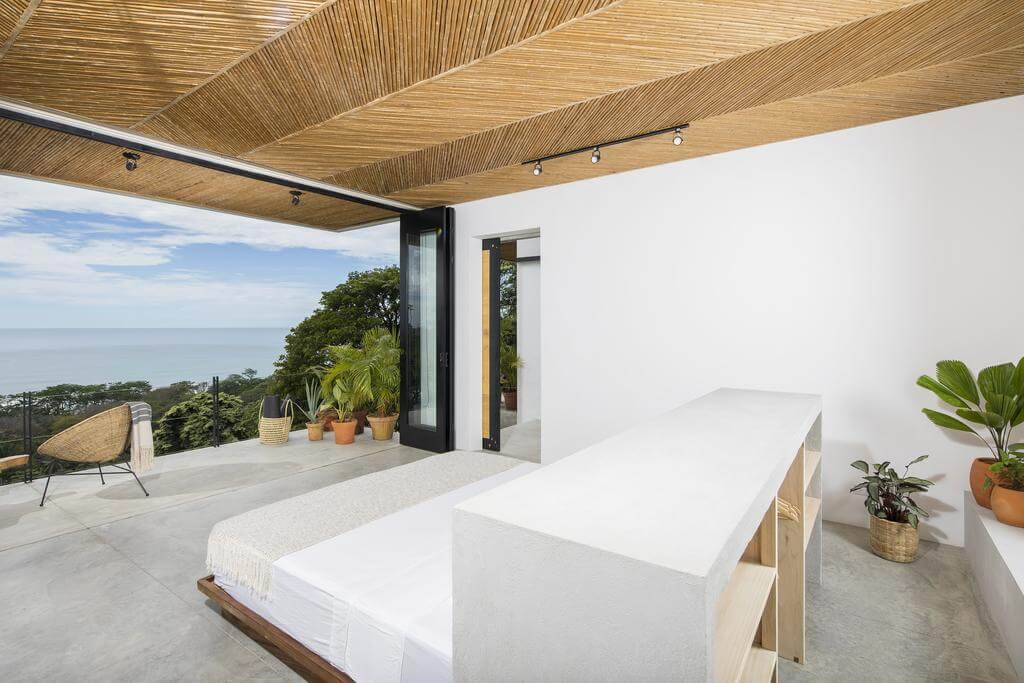
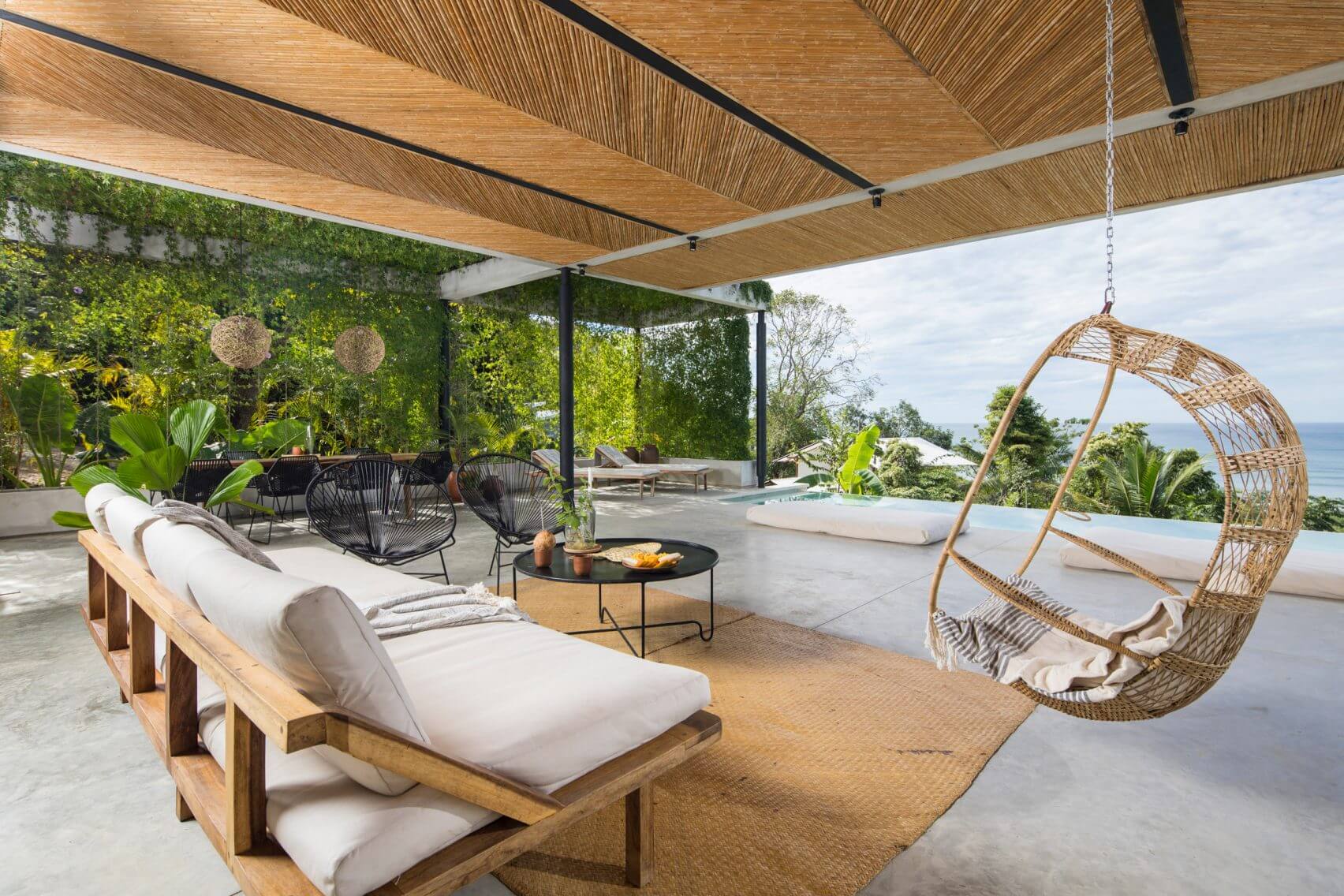
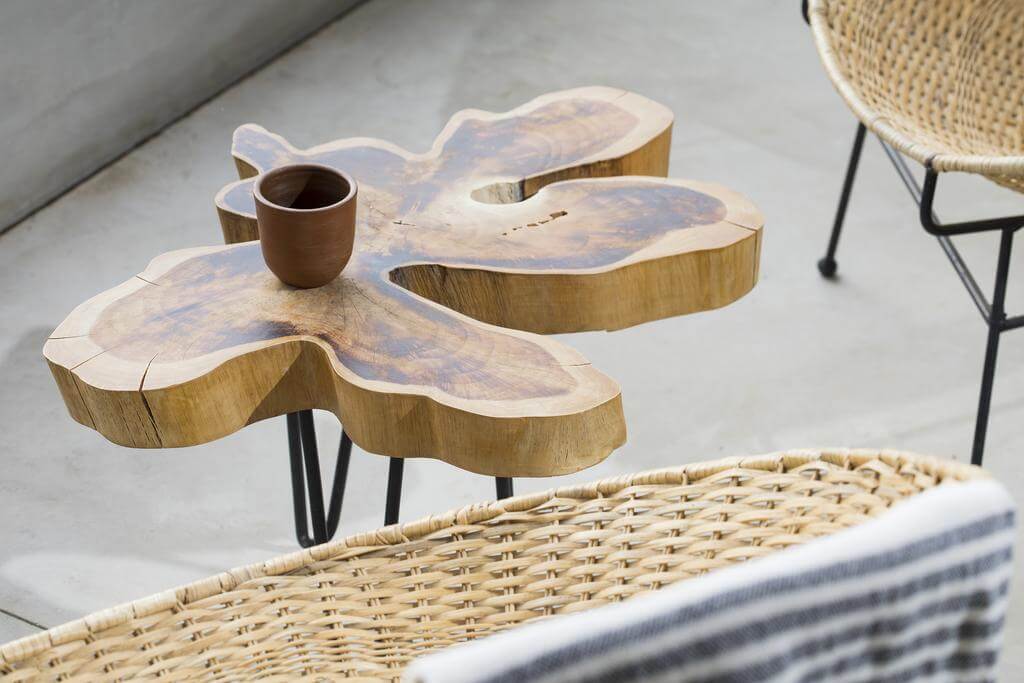
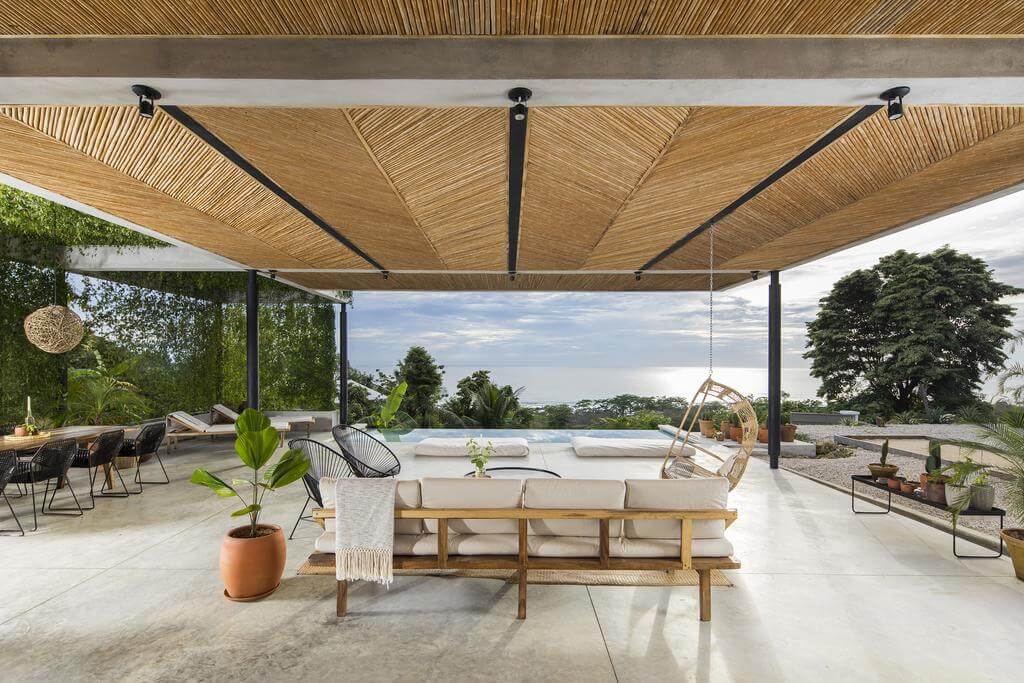
The owners are Swedish. The architect is Costa Rican. And Mint works because neither side overwhelms the other. Scandinavian minimalism appears in the clarity of the spaces, limited palette and absence of unnecessary decoration. Costa Rica enters through material and craft. The underside of pavilion roofs is lined with caña brava grass arranged in a herringbone pattern, while timber furniture was made locally. Rattan pieces on the roof terraces come from Sarchí, a Costa Rican town famous for craftsmanship. This isn’t tropical décor added to a Scandinavian box. The two traditions are built into the architecture together.
Rooms as Viewing Devices
The guestrooms are almost startlingly simple. Bedroom and bathroom follow the same basic layout, but the real architecture begins when the glass opens. Large folding doors pull back towards private terraces, giving the bed an almost uninterrupted sightline to the Pacific. At the rear, a small planted void introduces another layer of greenery. So you are effectively suspended between two landscapes. Jungle behind. Ocean ahead. Very little in between.
Then Go Upstairs
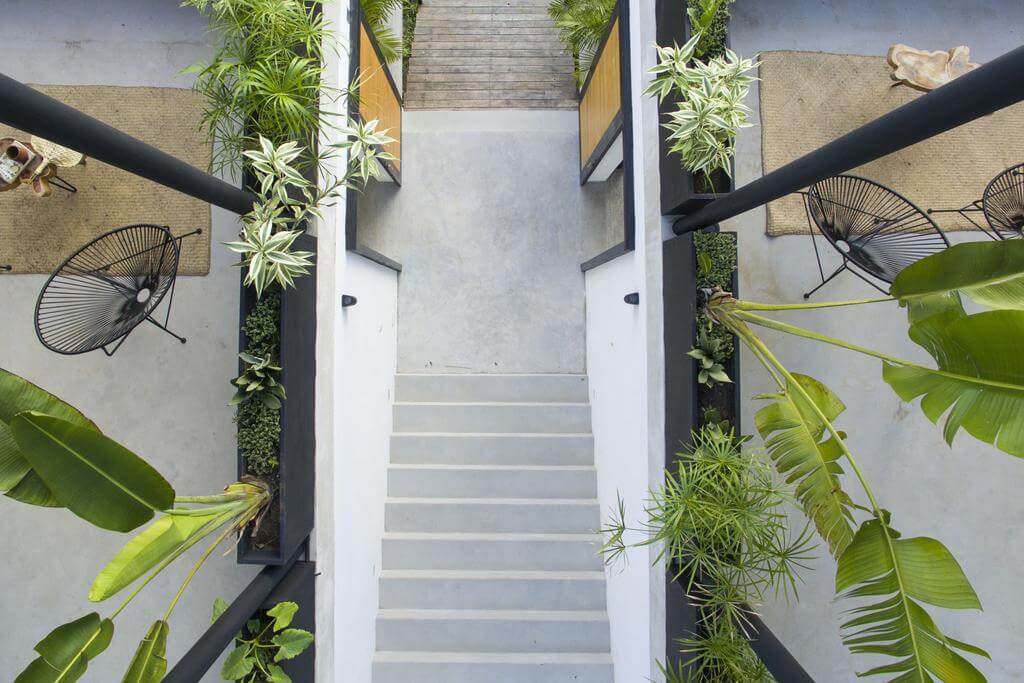
Each pavilion has its own rooftop terrace. An exterior stair leads upwards to an open-air living room framed in black steel and shaded by a stretched white sail. There are rattan chairs, a rug, a table and a hammock. Not much else. Again, that’s intentional. Morning coffee happens here. So does sunset. Then stars. In a hotel this small, having a second private outdoor room changes the entire experience.
The Social Side of Minimalism
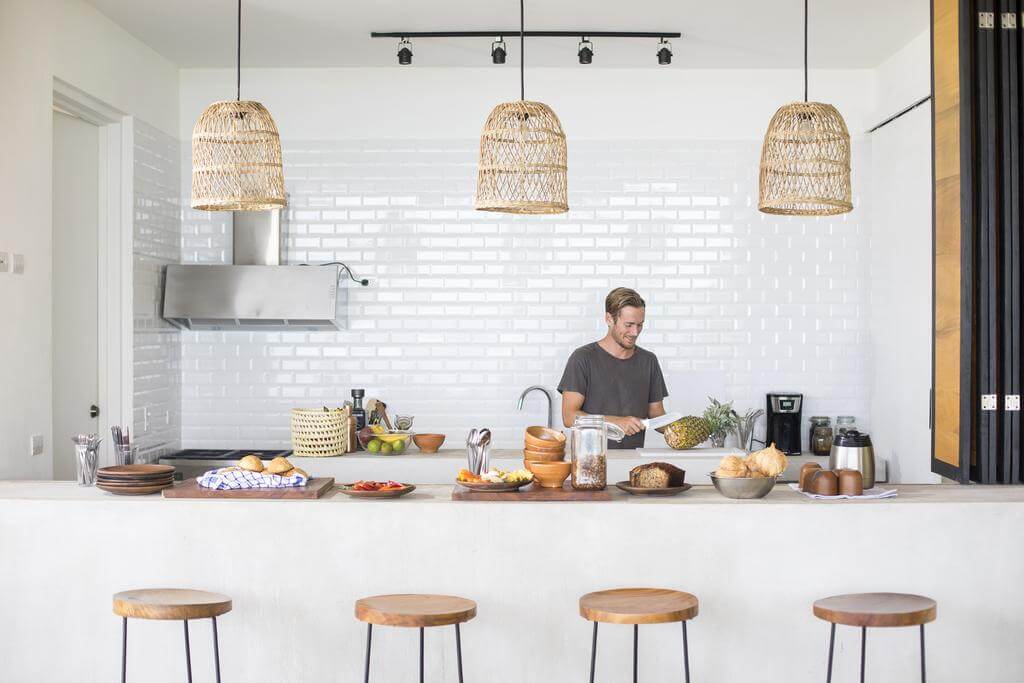
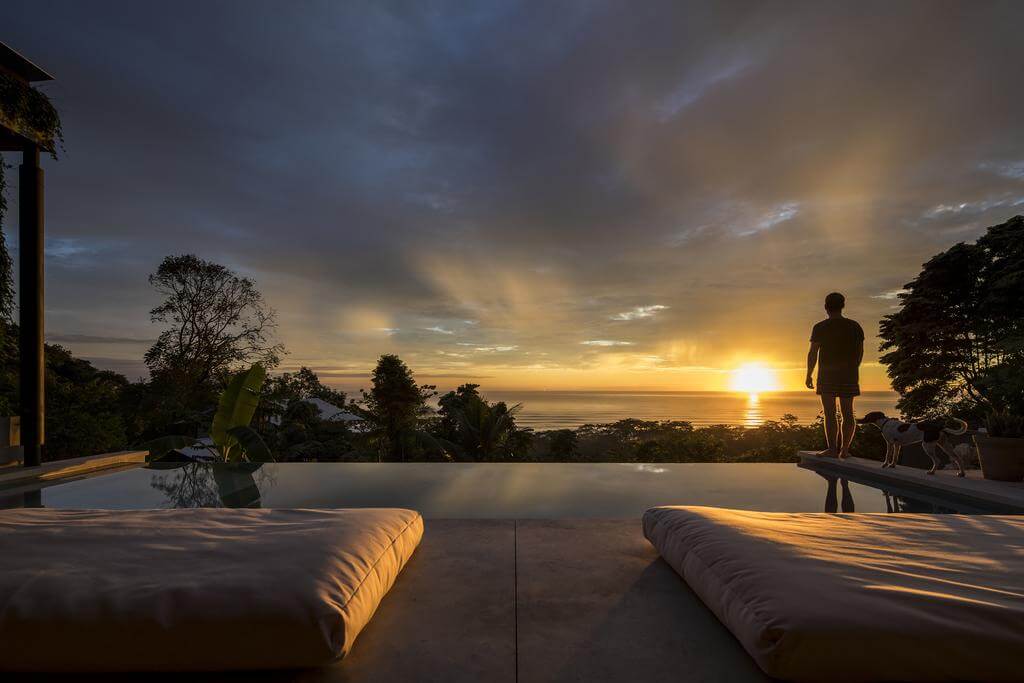
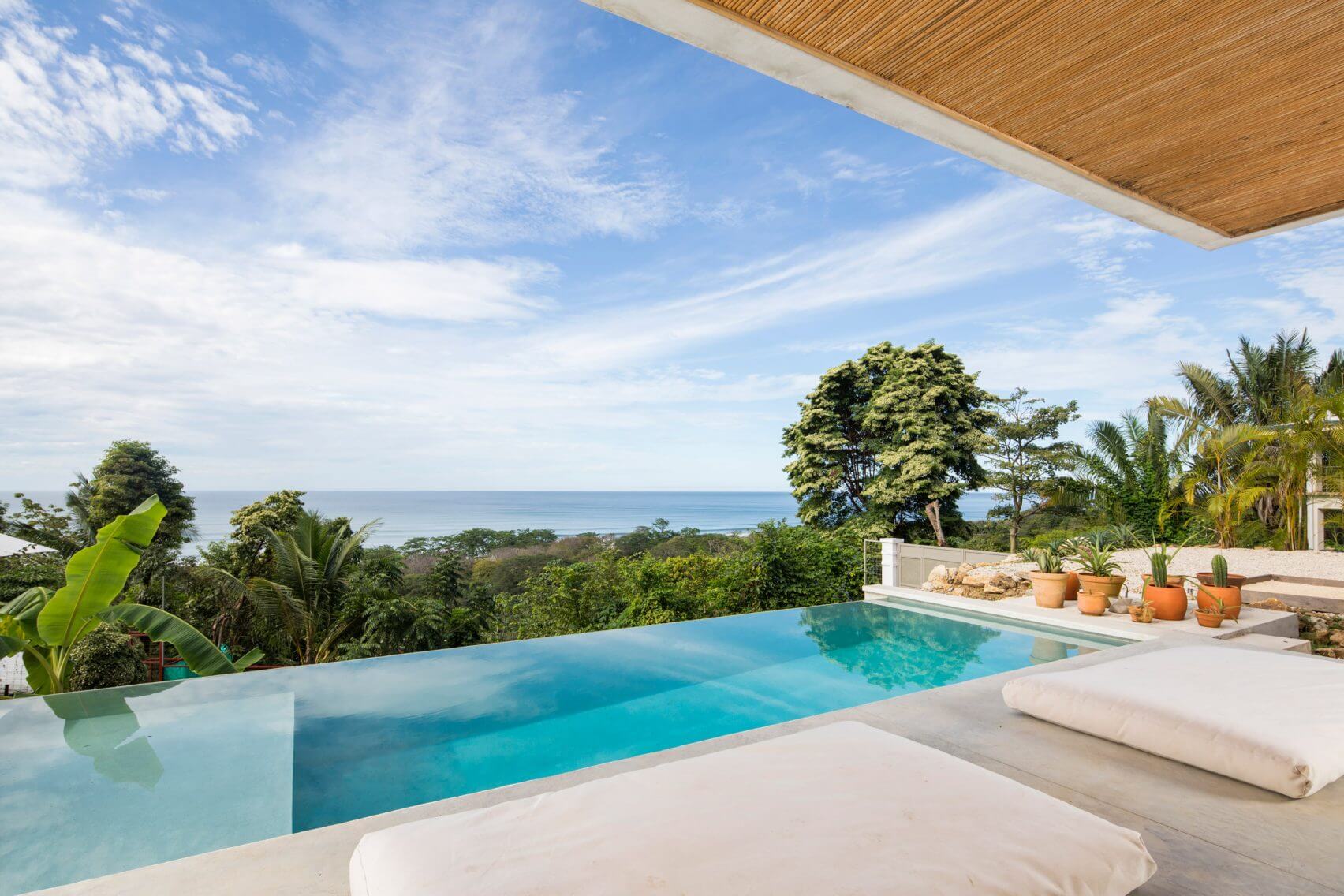
At the bottom of the slope lies the communal heart of Mint. A lightweight canopy supported by slender black columns shelters the lounge, bar and breakfast area. Plants drape along its edges. Large cushions replace formal seating. And in front is the infinity pool, disappearing visually towards the Pacific. The architecture becomes deliberately more communal here. Guests meet over breakfast. Owners and travellers cross paths. Sunset creates its own daily gathering ritual. There is space to be social without being programmed into having fun. A surprisingly difficult balance for a small hotel.
A Hotel, Not an Object
One of the most interesting things about Mint is how clearly Studio Saxe treated hospitality as more than a collection of bedrooms. The designers wanted the hotel to encourage social and cultural interaction as much as appreciation of the landscape. That philosophy is visible in the layout. Private pavilions give guests solitude. Paths and stairs bring them together. The pool and lounge provide a shared centre. Architecture choreographs encounters without forcing them. It’s a small idea with a very human result.
Santa Teresa Outside the Gate
And then, naturally, there is Santa Teresa. Surfing is the obvious attraction. So are the beaches, horse riding, jungle trails and trips towards Montezuma and Cabo Blanco. But the hotel’s hillside position provides some useful distance from the increasingly energetic town below. You can join the surf crowd when you want it. Then climb back into something much quieter. That tension between movement and stillness suits Mint perfectly.
Pura Vida, Edited
Costa Rican hospitality often celebrates immersion in nature. Scandinavian design tends towards reduction. Mint Santa Teresa brings the two together with unusual precision. No oversized lobby. No monumental pool deck. No attempt to compete with tropical spectacle. Just four white pavilions, local craft, open air, a small shared lounge and an enormous Pacific horizon. The architecture is clear enough to satisfy design obsessives and quiet enough to almost disappear once you’re there. Which may be its greatest success. Mint doesn’t try to improve the view. It simply gives you better places from which to look at it.
Information
At a glance
Interior design
Bathroom Amenities
Bluetech
The Small Print
adult-only: 18 years old and over

Featured in
Don't take our word for it


Handpicked worldwide
A carefully curated collection of exceptional boutique and design hotels across the globe.
Design with soul
Architecture, atmosphere and craftsmanship come together in stays with a clear identity.
Hidden, not hyped
Independent boutique hotels you rarely find on mainstream booking platforms.
Travel guidance
Personal recommendations and thoughtful support from people who actually know the places.