


A House on Tulum Beach
A private beach house transformed by Carlos Larios into a warm, quietly modern retreat between the Caribbean and the jungle.

Why DNA Hotels loves it
Local architect Carlos Larios transformed one of the original private residences on this stretch of Tulum Beach, preserving its domestic scale while introducing communal spaces, a bar, spa and garden-facing gym.
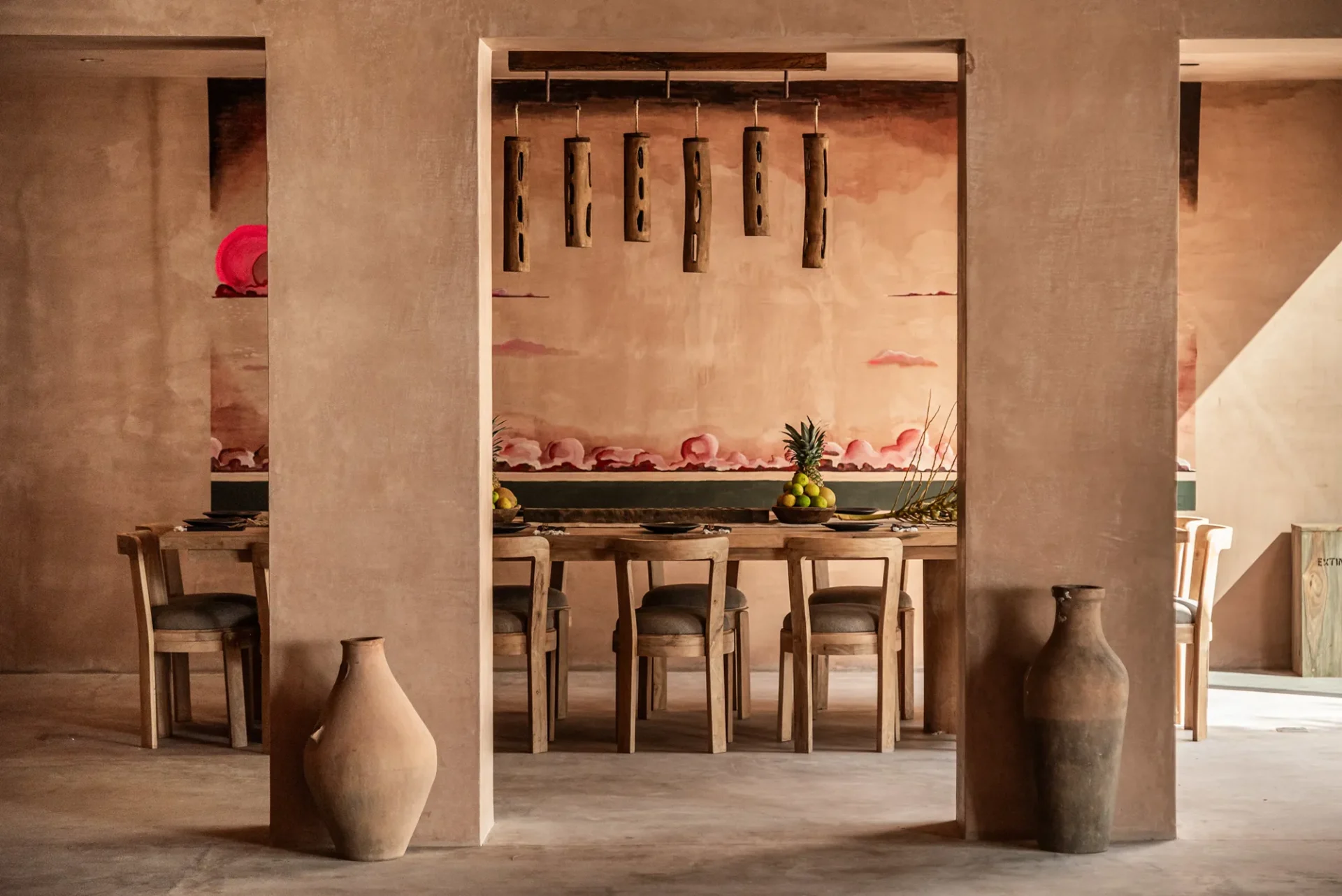
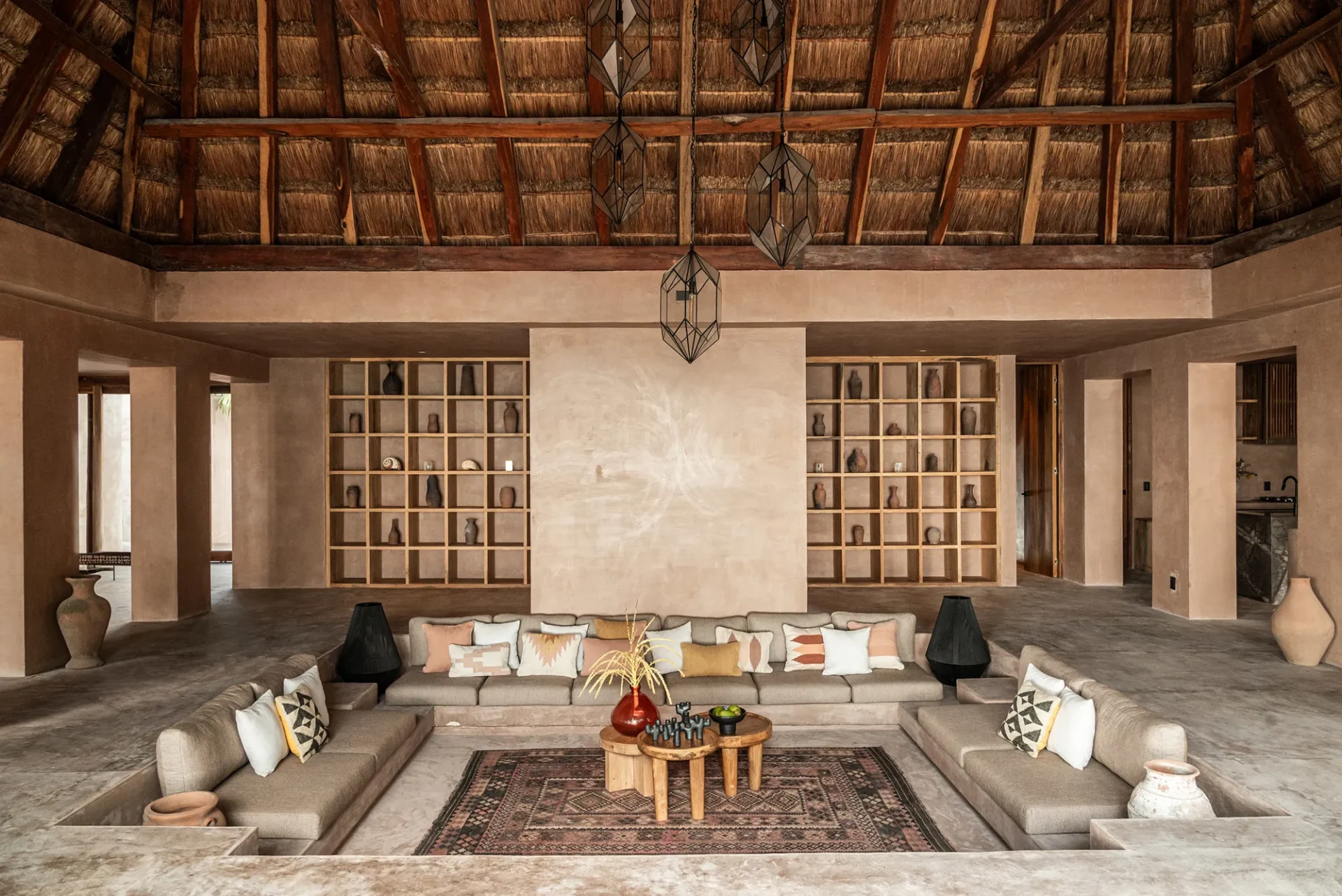
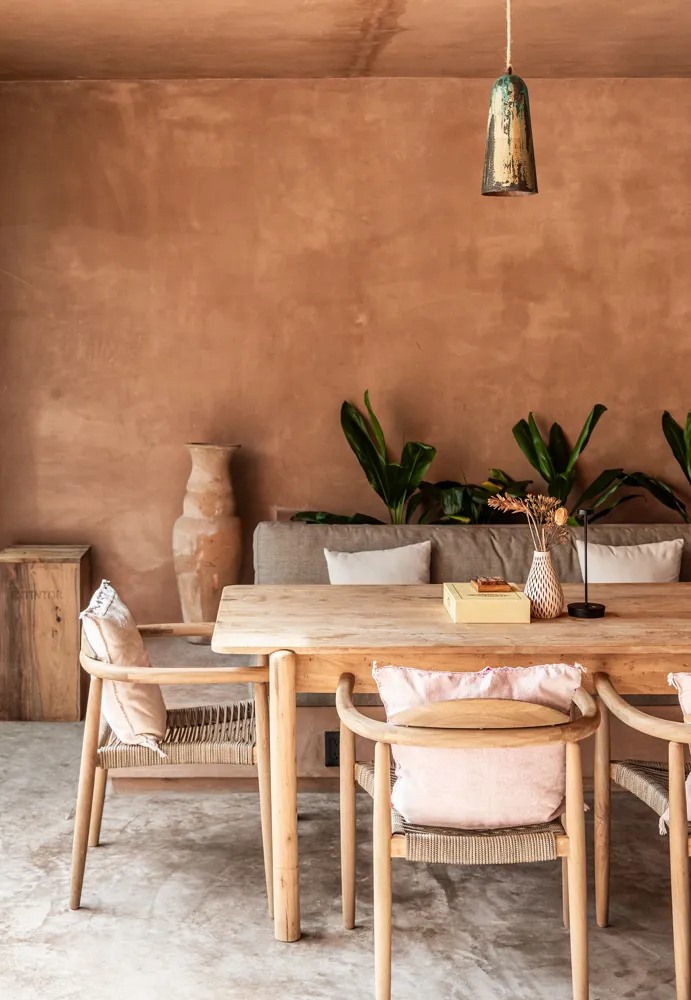
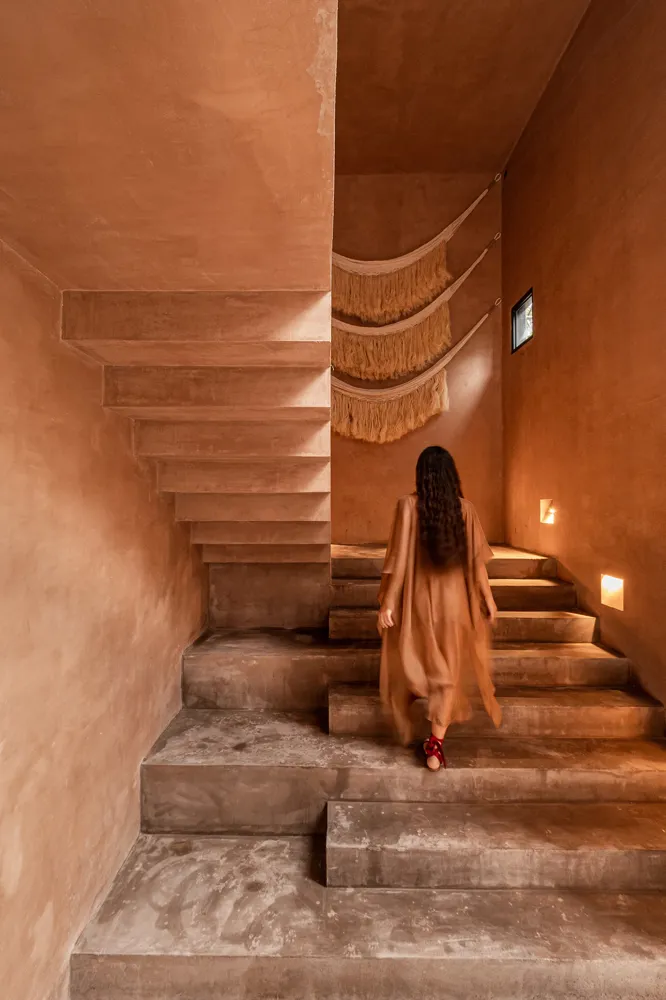
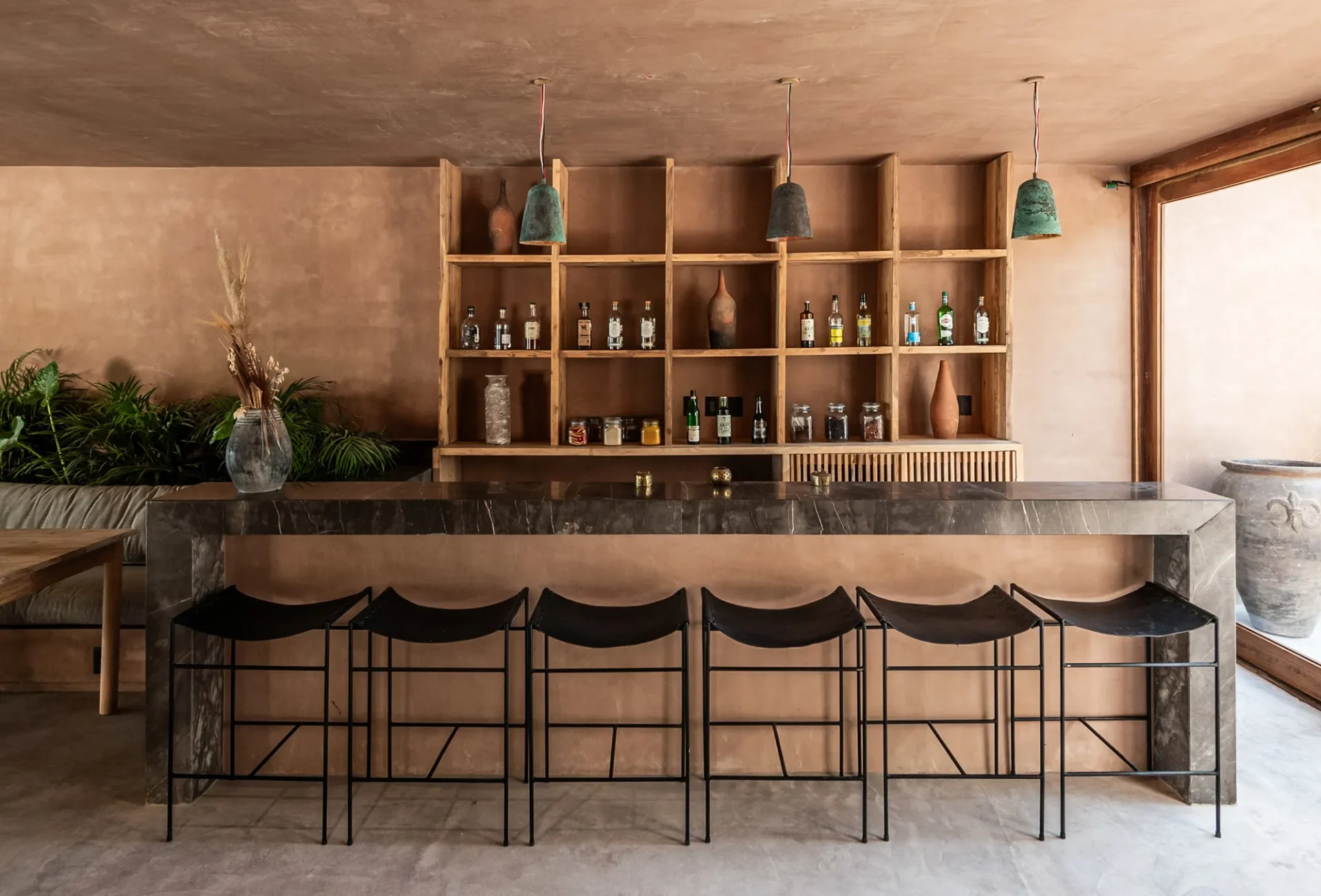
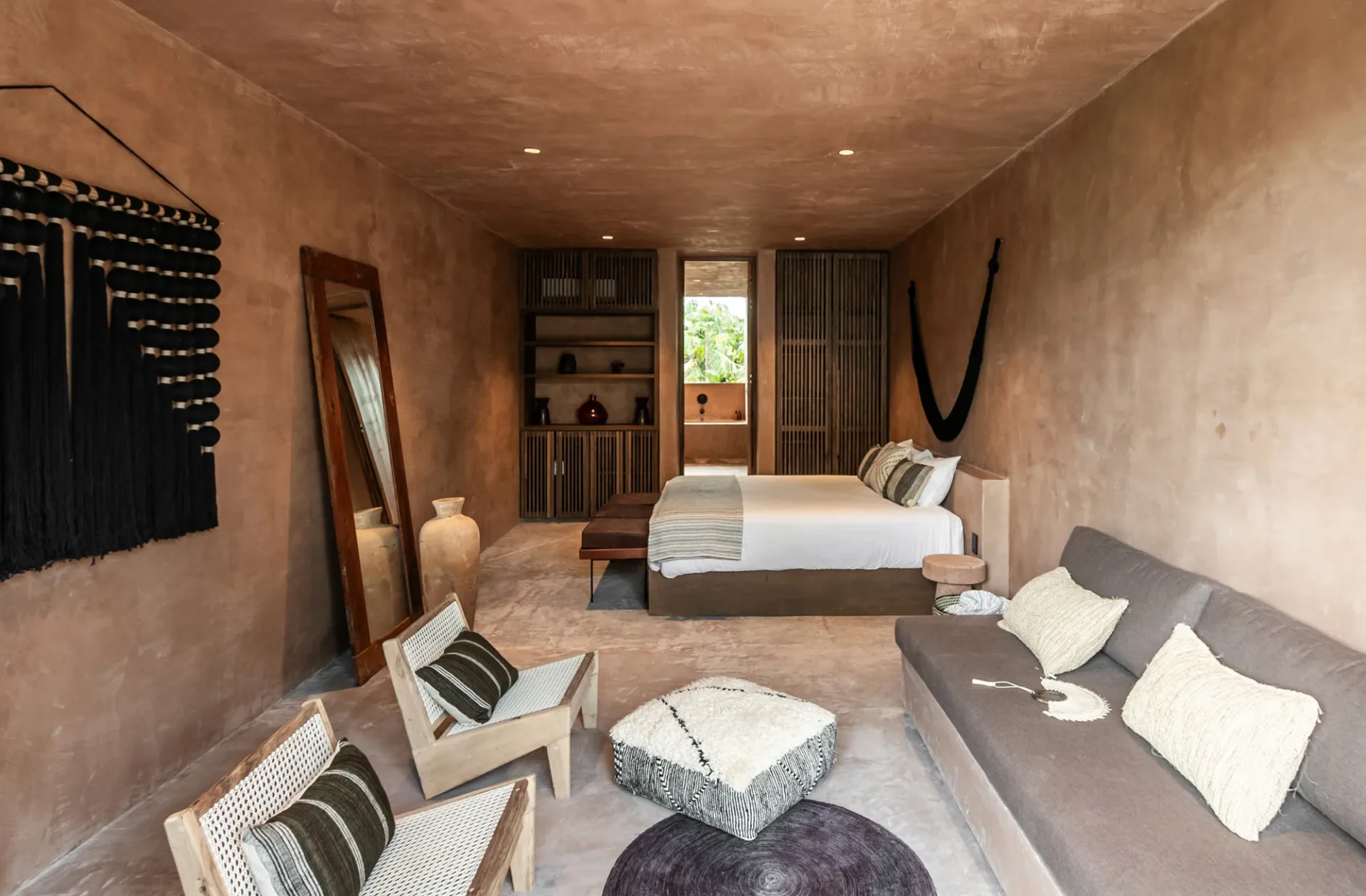
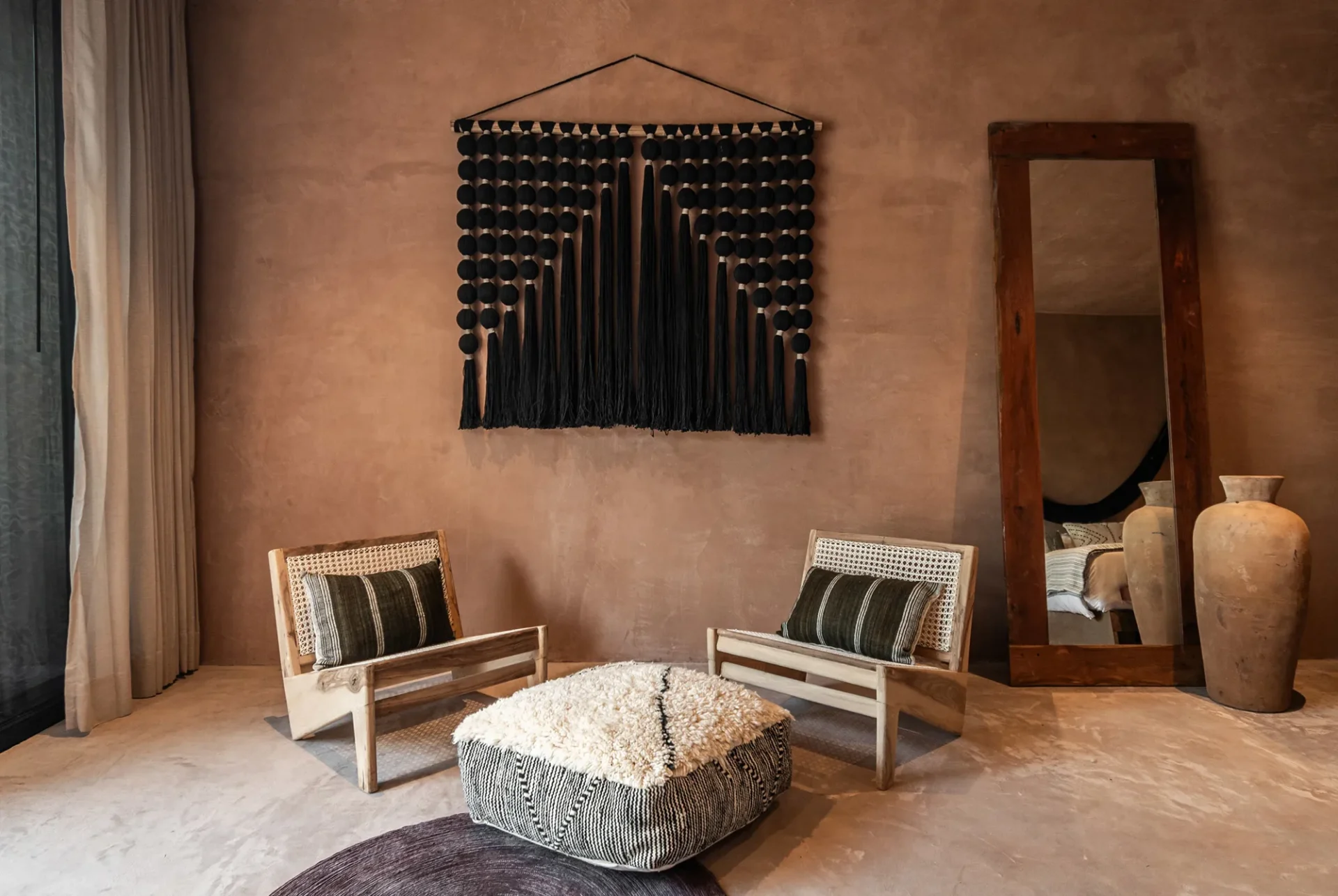
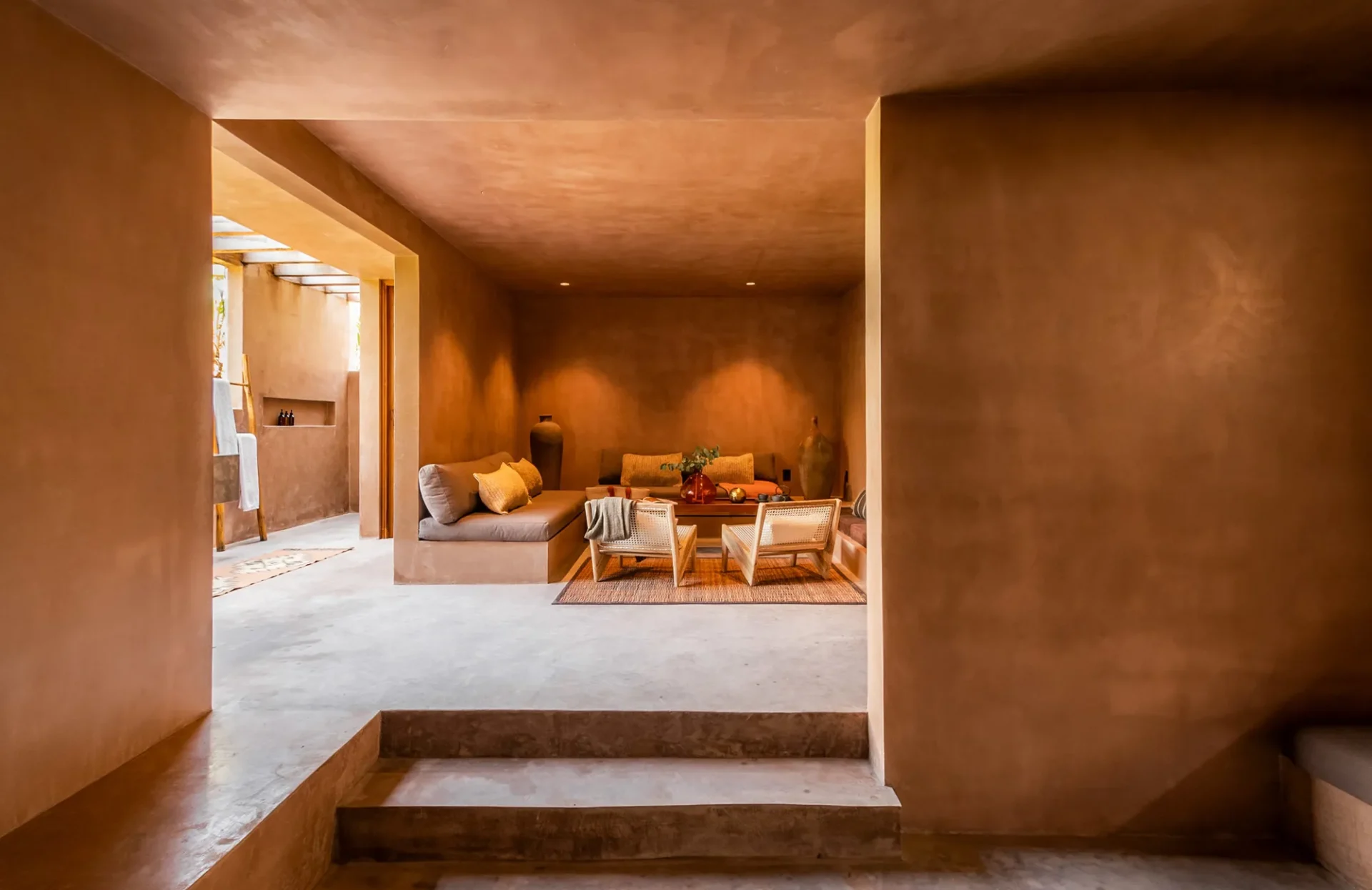
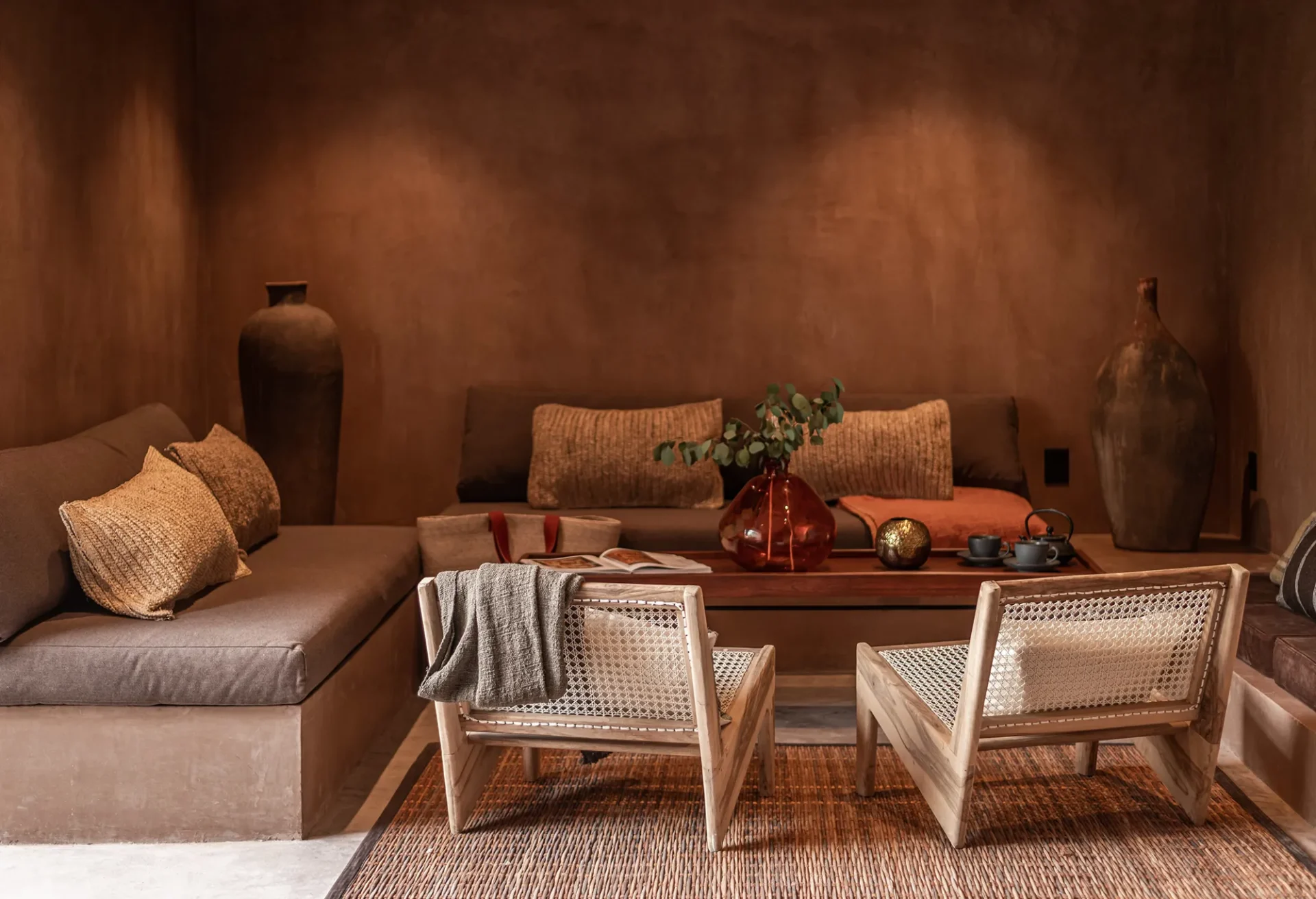
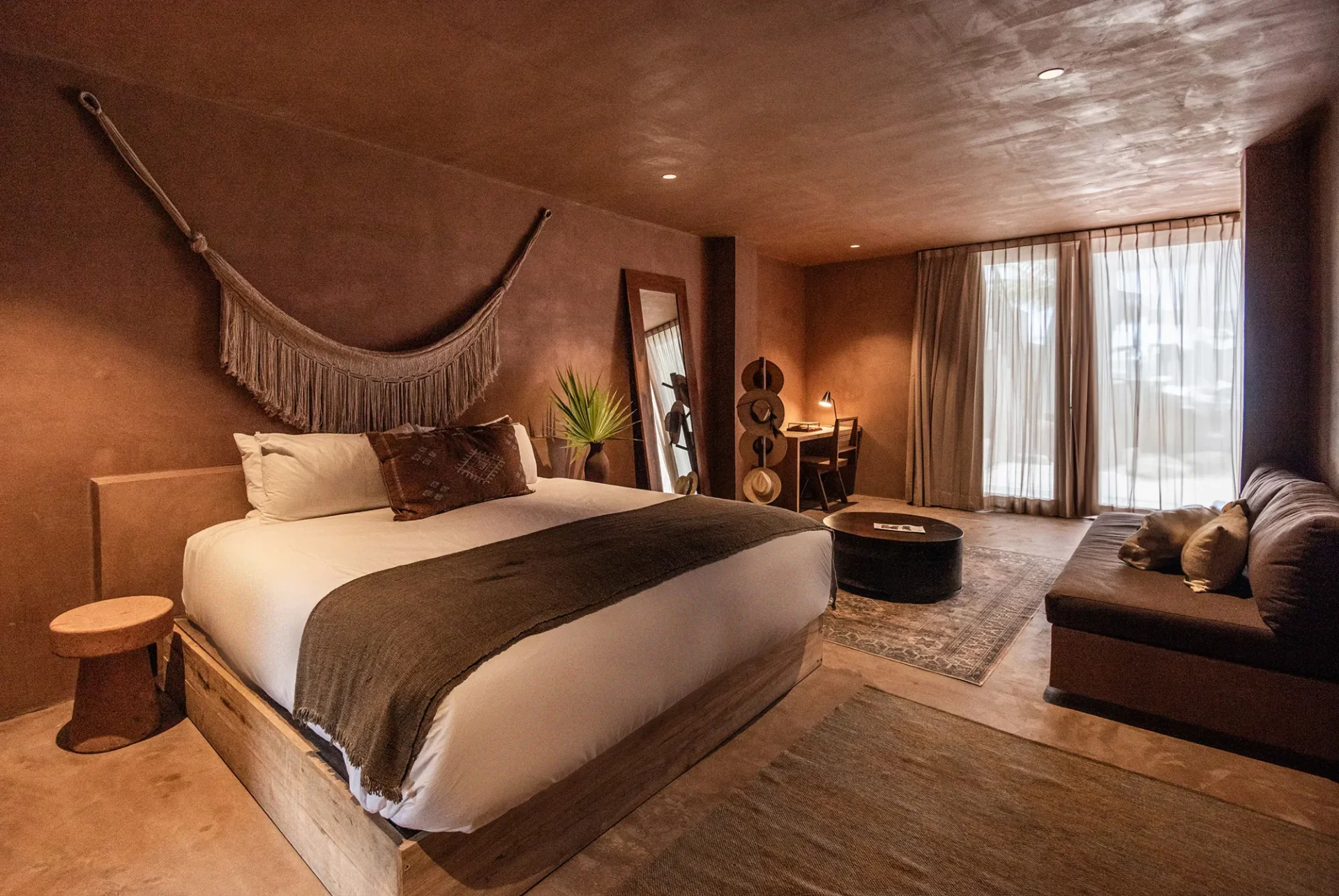
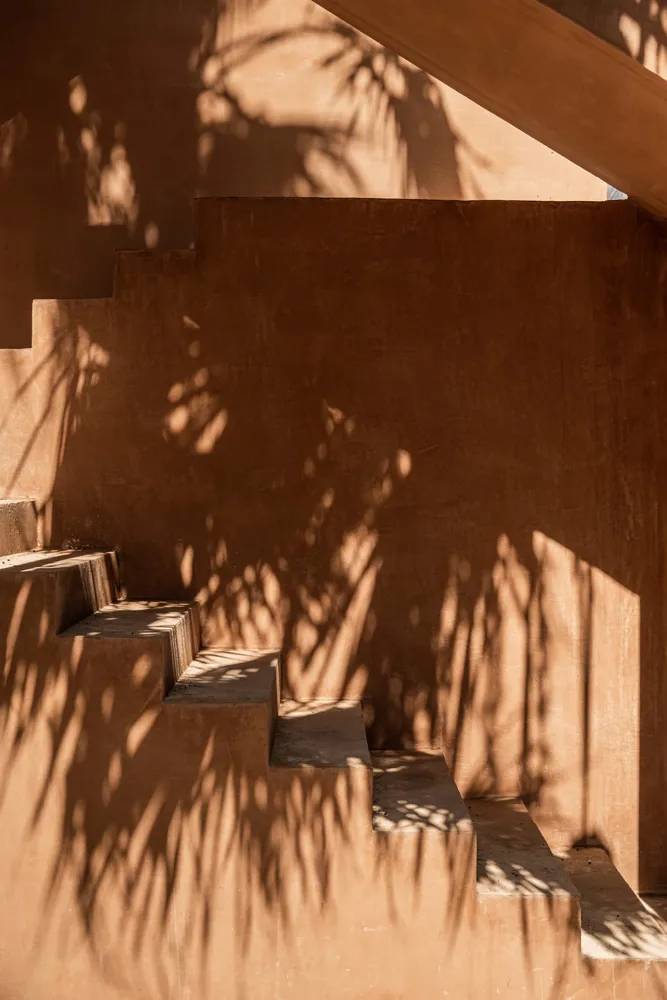
Mexican modernism meets the atmosphere of a Moroccan kasbah through chukum plaster, earthy terracottas, dark timber, woven fibres and a dramatic sunken conversation pit inspired by traditional divan rooms.
With only 12 rooms, XELA avoids the increasingly familiar Tulum resort formula, retaining the feeling of staying in a sophisticated private beach house where the Caribbean remains the focus.
The Stay
A quietly intimate Tulum beach house where Mexican Modernism, natural materials and residential design meet the Caribbean.
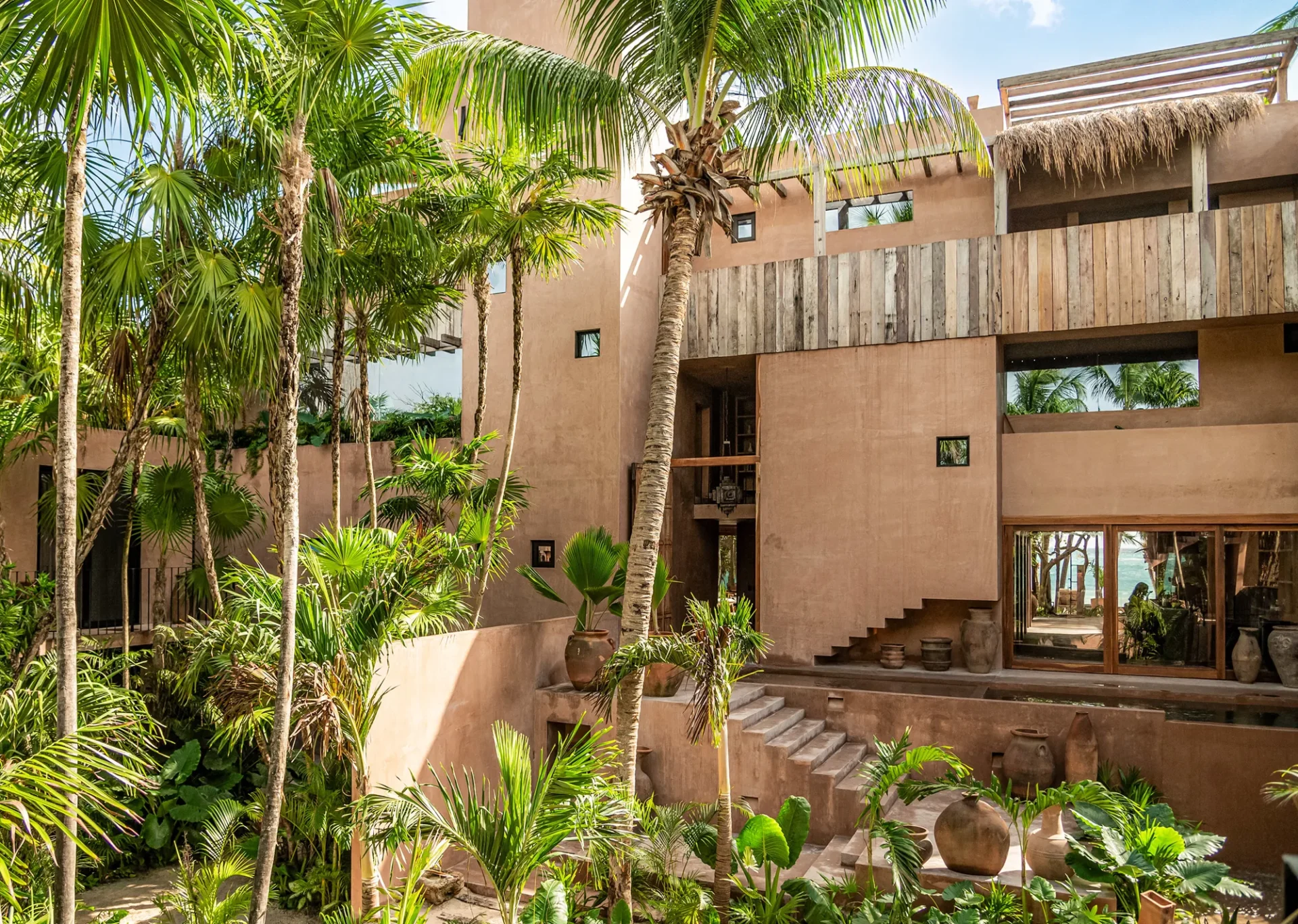
Before it became XELA Tulum, this was a private coastal home. The residence belonged to a European family and occupied one of the earlier properties along this stretch of Tulum Beach, long before the hotel zone became quite so densely populated. Namron Hospitality and local architect Carlos Larios recognised that its residential character was precisely what should survive. Rather than replace the house, Larios adapted it. Only 12 rooms sit within the property, alongside newly introduced communal spaces, a bar, spa facilities and gym. There is no grand resort arrival sequence. Paths wind through sand, cacti and terracotta pots towards a substantial hacienda-style door before the house gradually opens towards the Caribbean. The scale remains deliberately domestic.
Mexican Modernism Meets the Kasbah
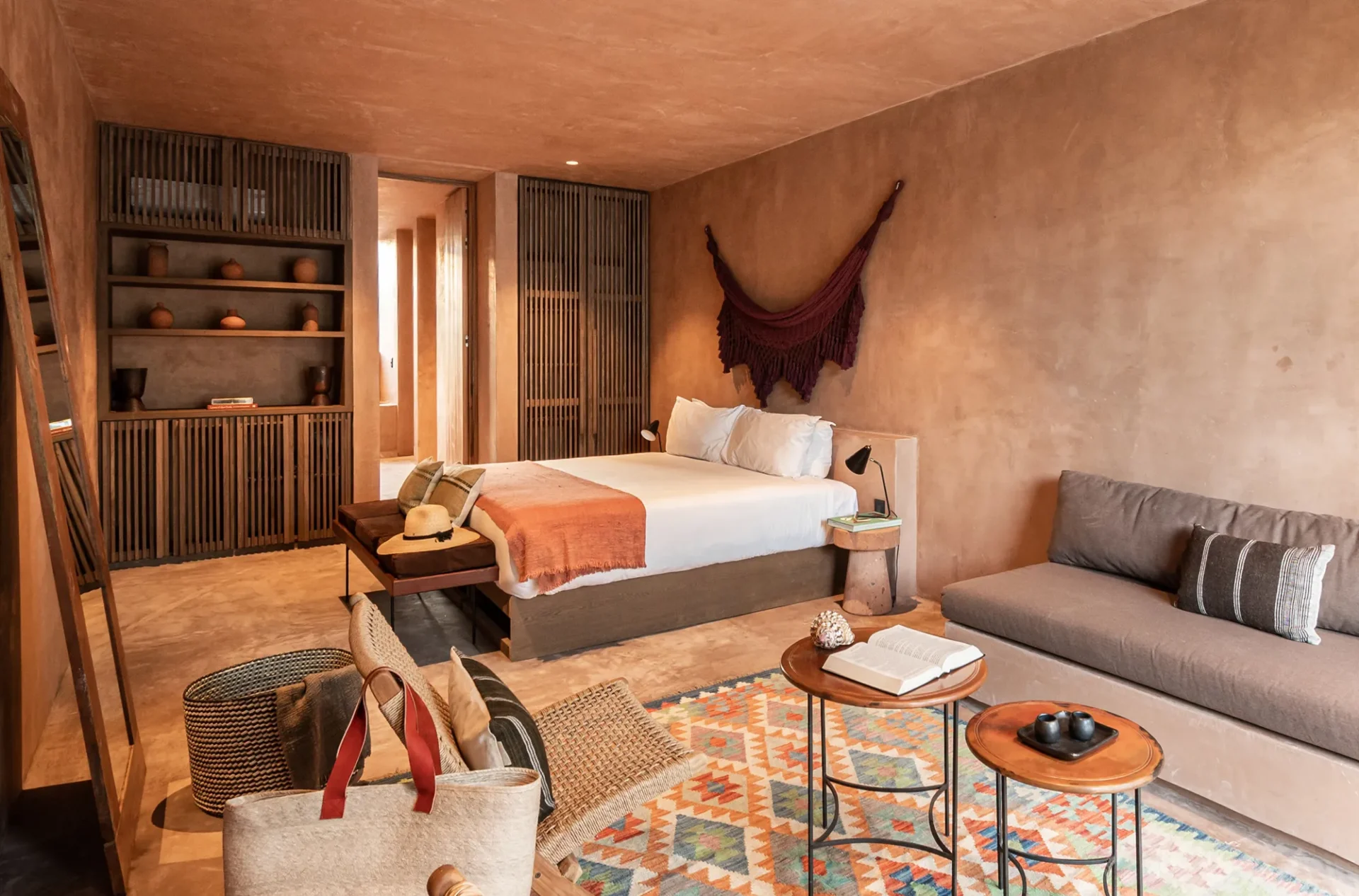
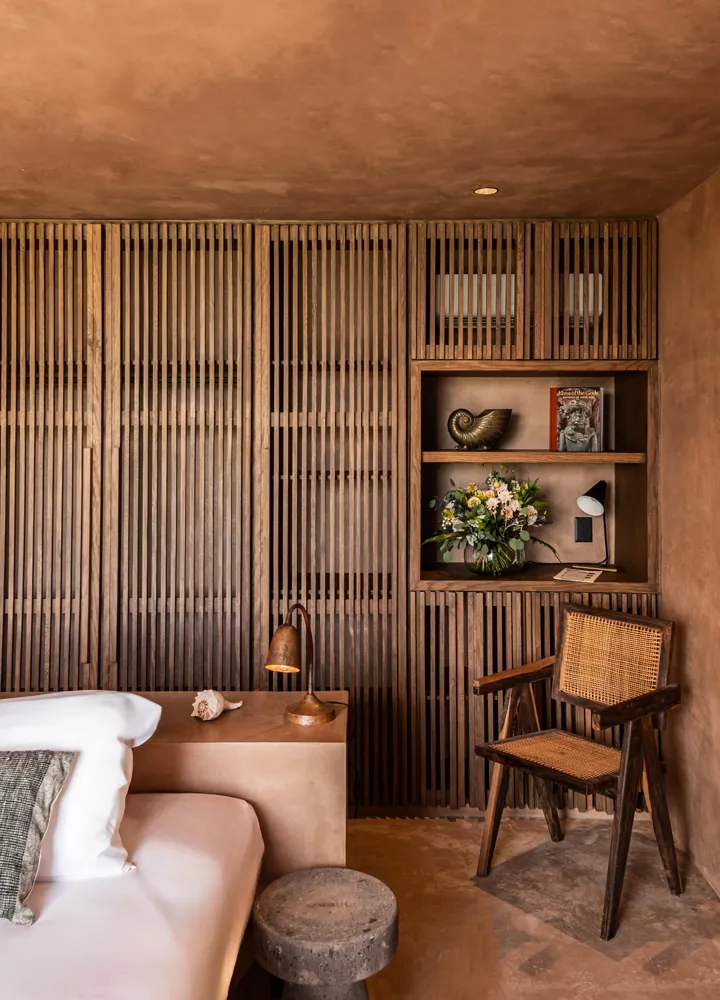
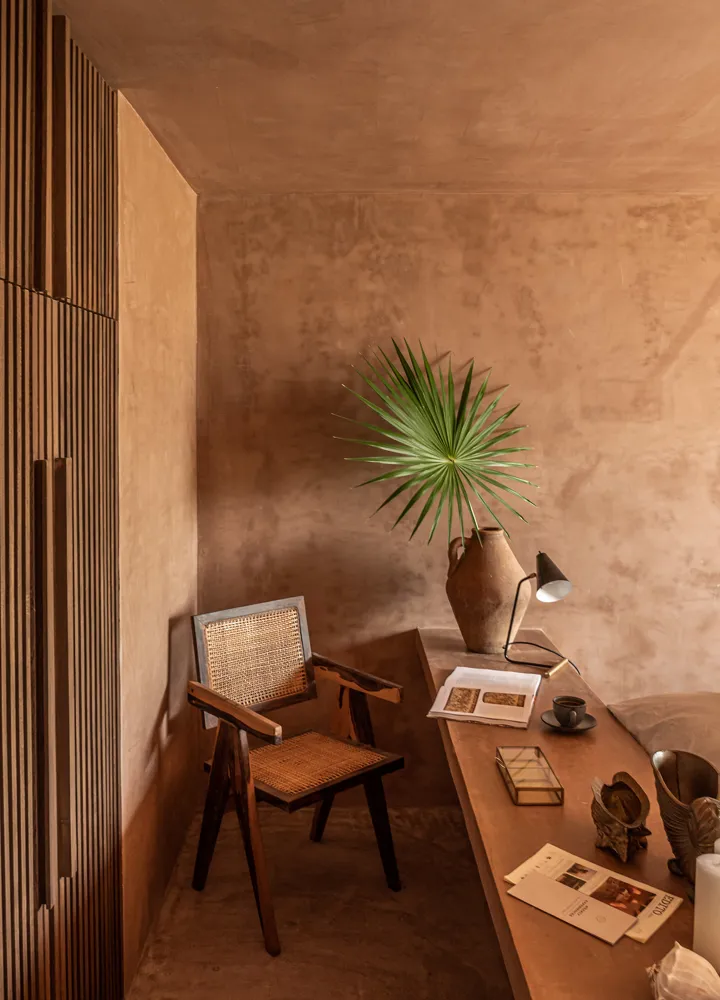
XELA doesn’t rely on the palapa-and-driftwood vocabulary that has become almost shorthand for Tulum. Instead, Larios draws from Mexican modernism and vernacular architecture, combining clean geometric planes with traditional chukum plaster, stone, organic timber, woven fibres and handmade ceramics. The palette comes directly from the landscape: sand, clay, cinnamon, coffee and warm sienna. There is another influence too. The central living space is organised around a sunken conversation pit inspired by Middle Eastern divan rooms. Set beneath a high thatched roof and facing the sea through broad expanses of glass, it creates the sort of communal room a private coastal house ought to have. Low, tactile and slightly unexpected.
Twelve Rooms Facing the Caribbean
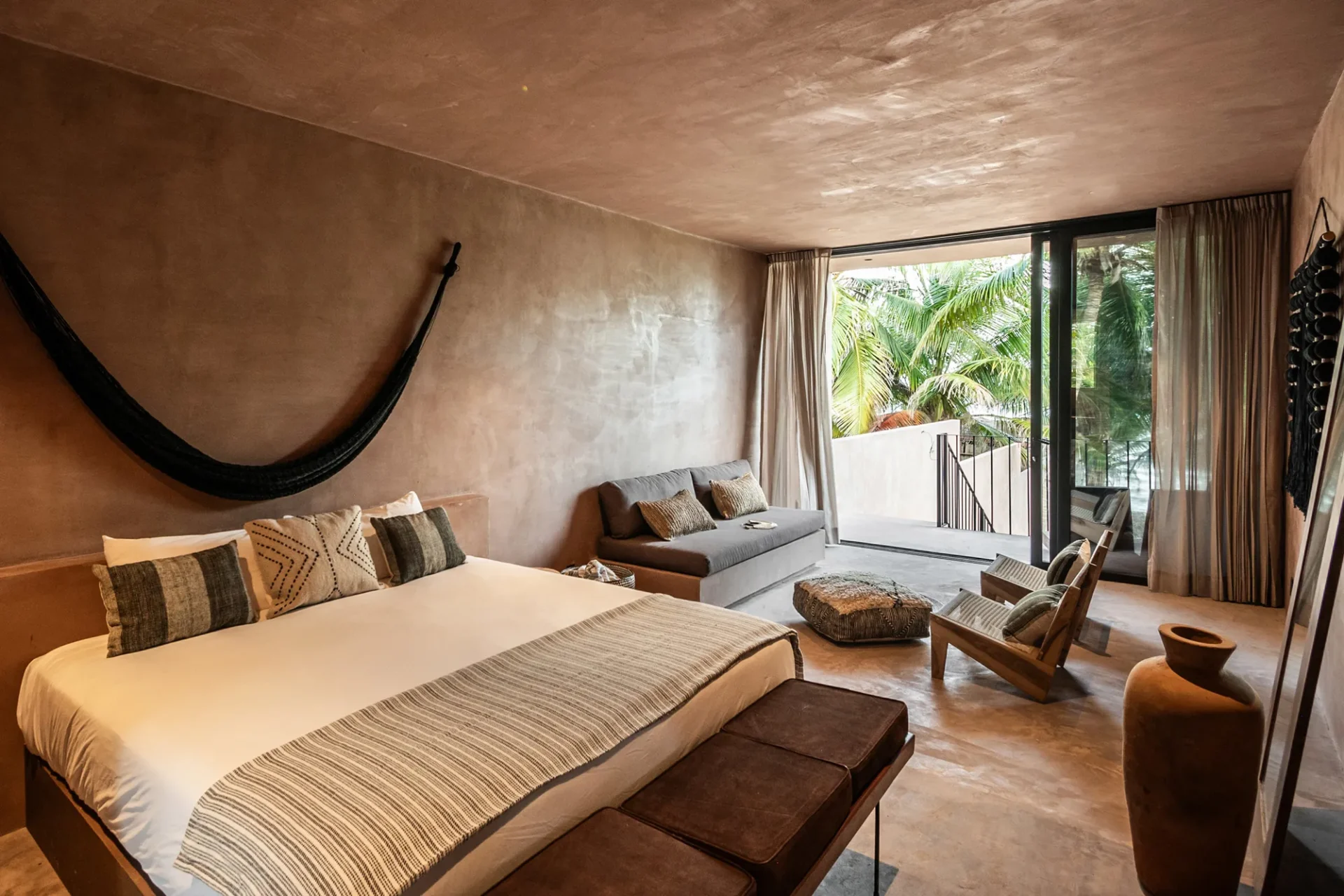
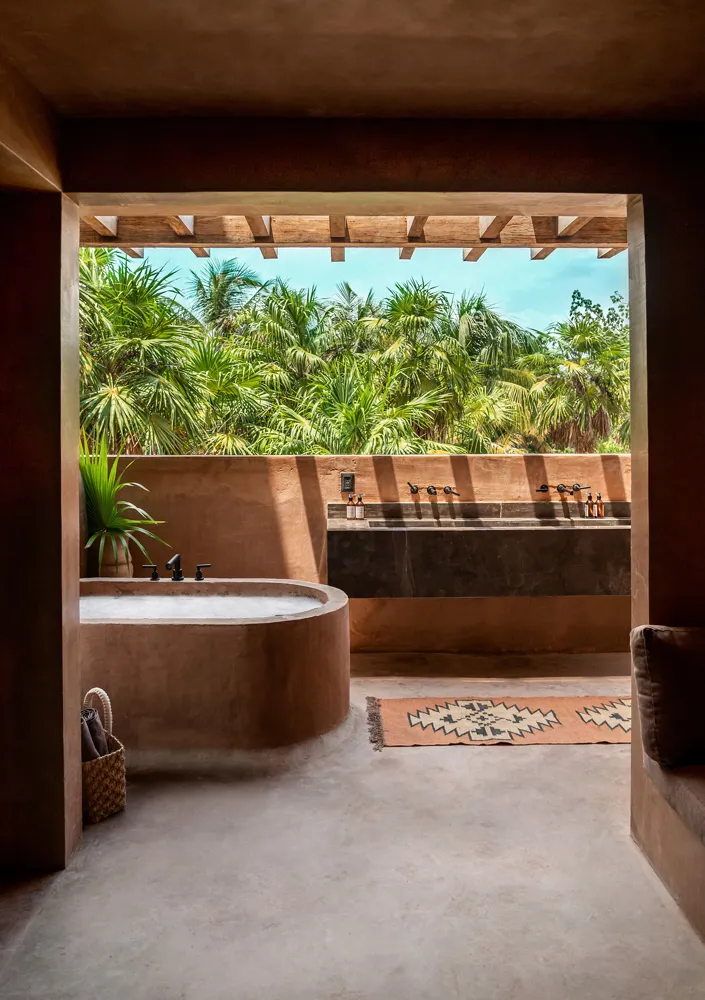
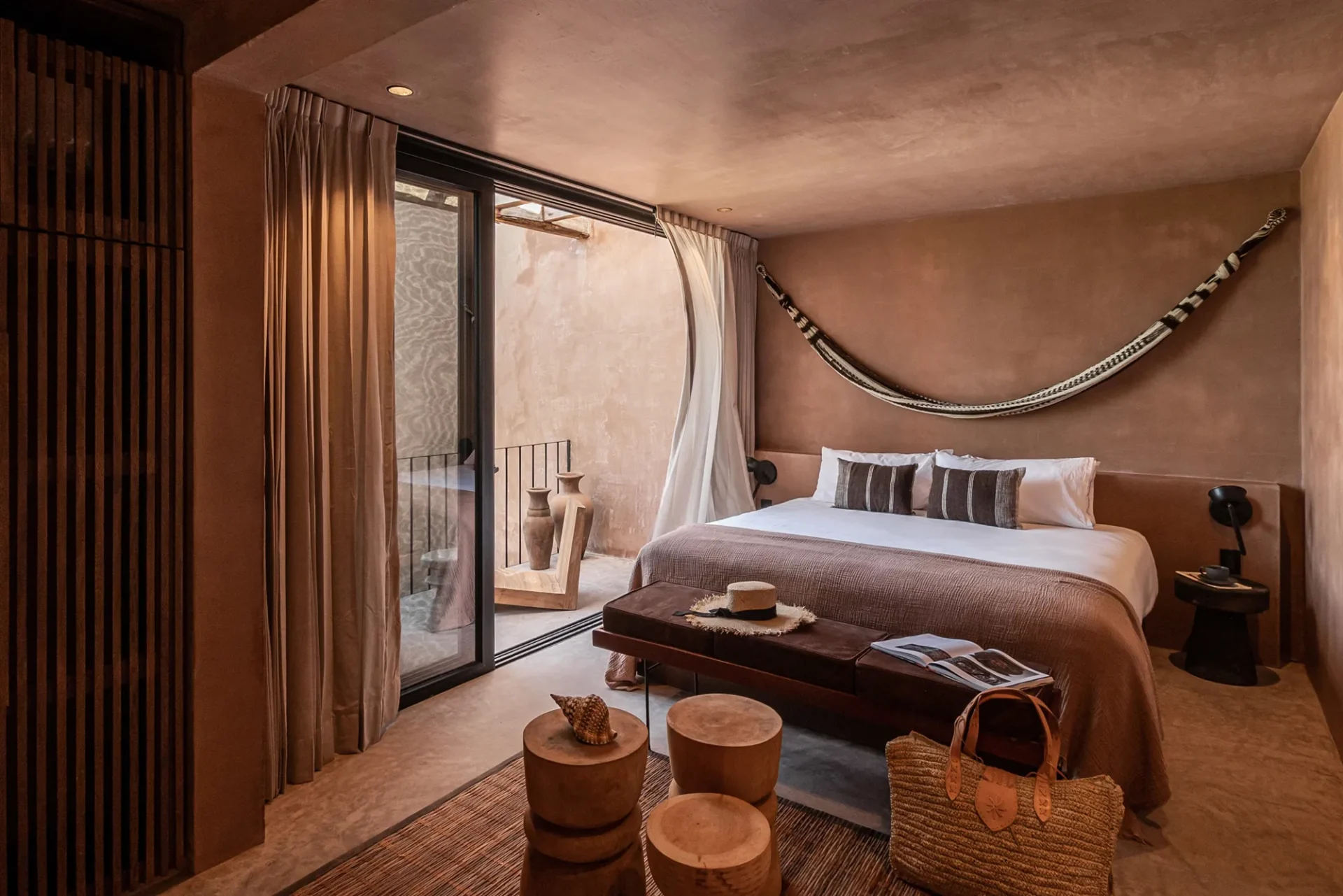
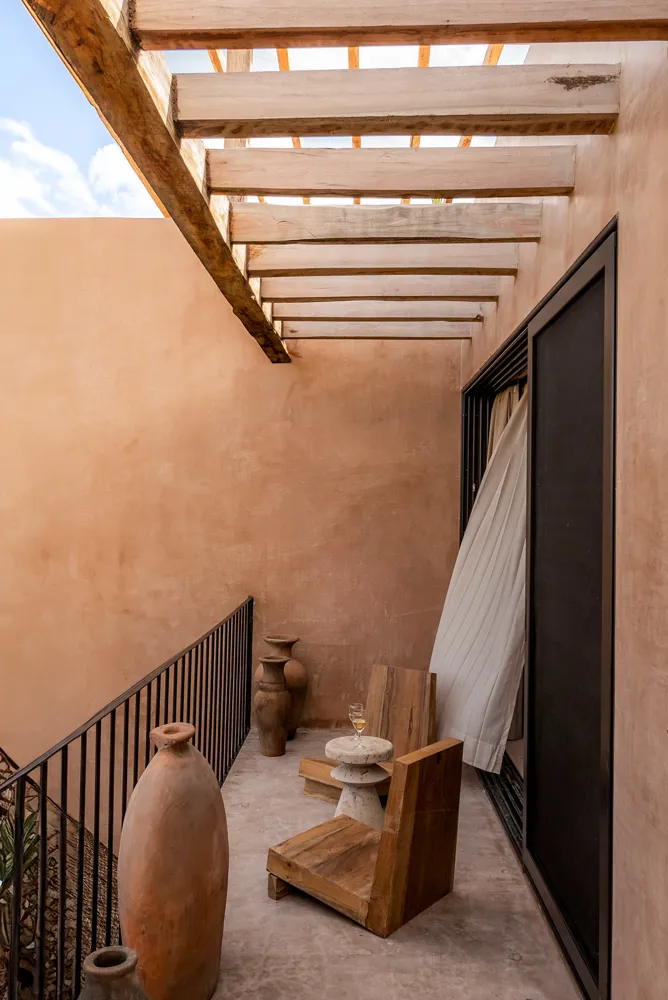
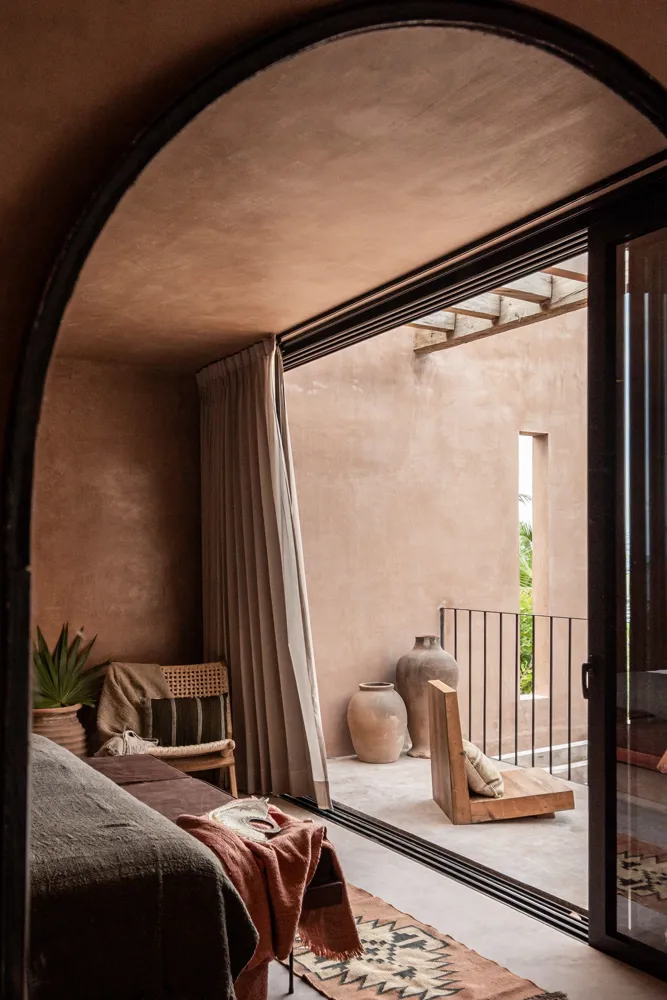
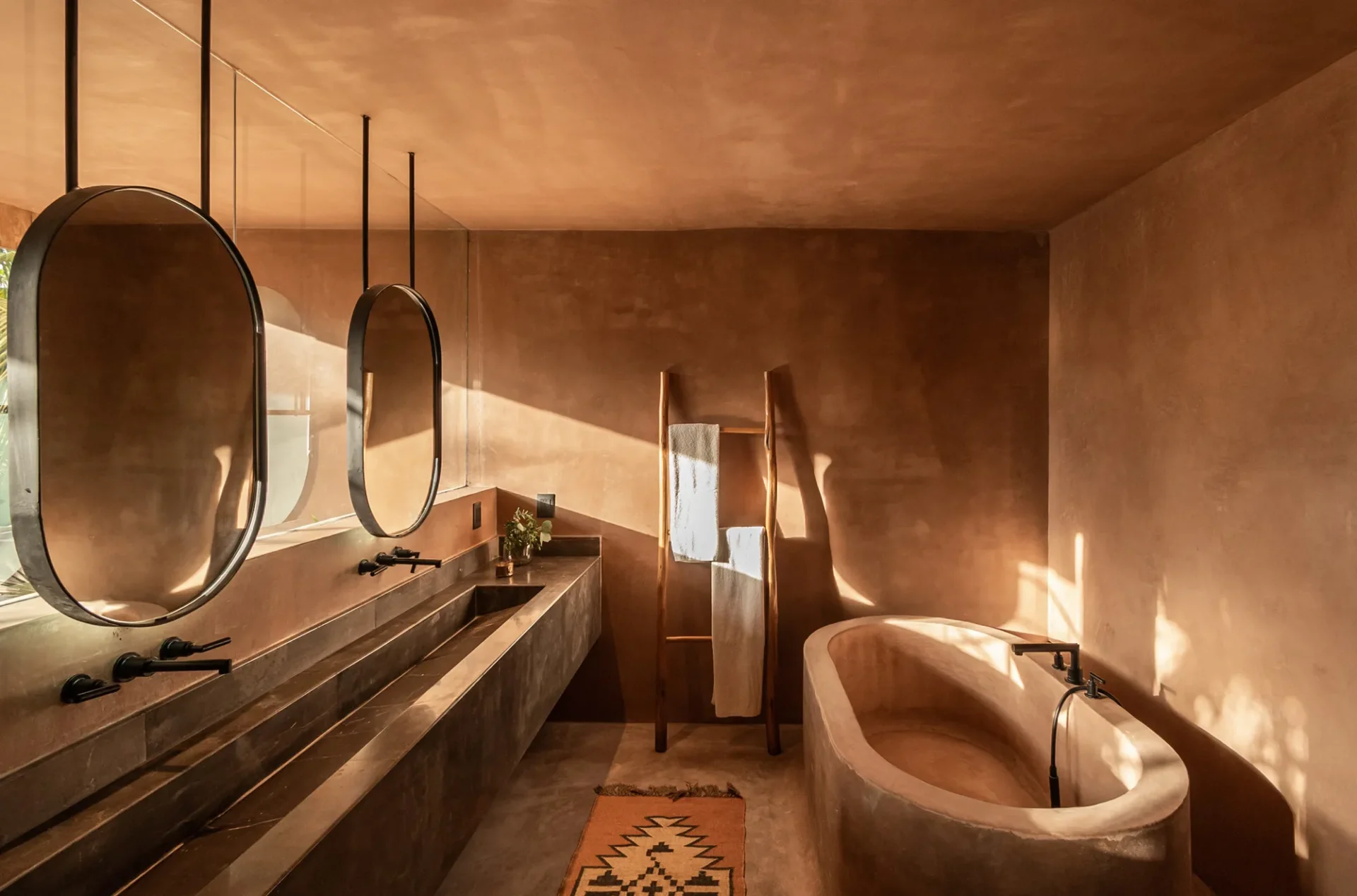
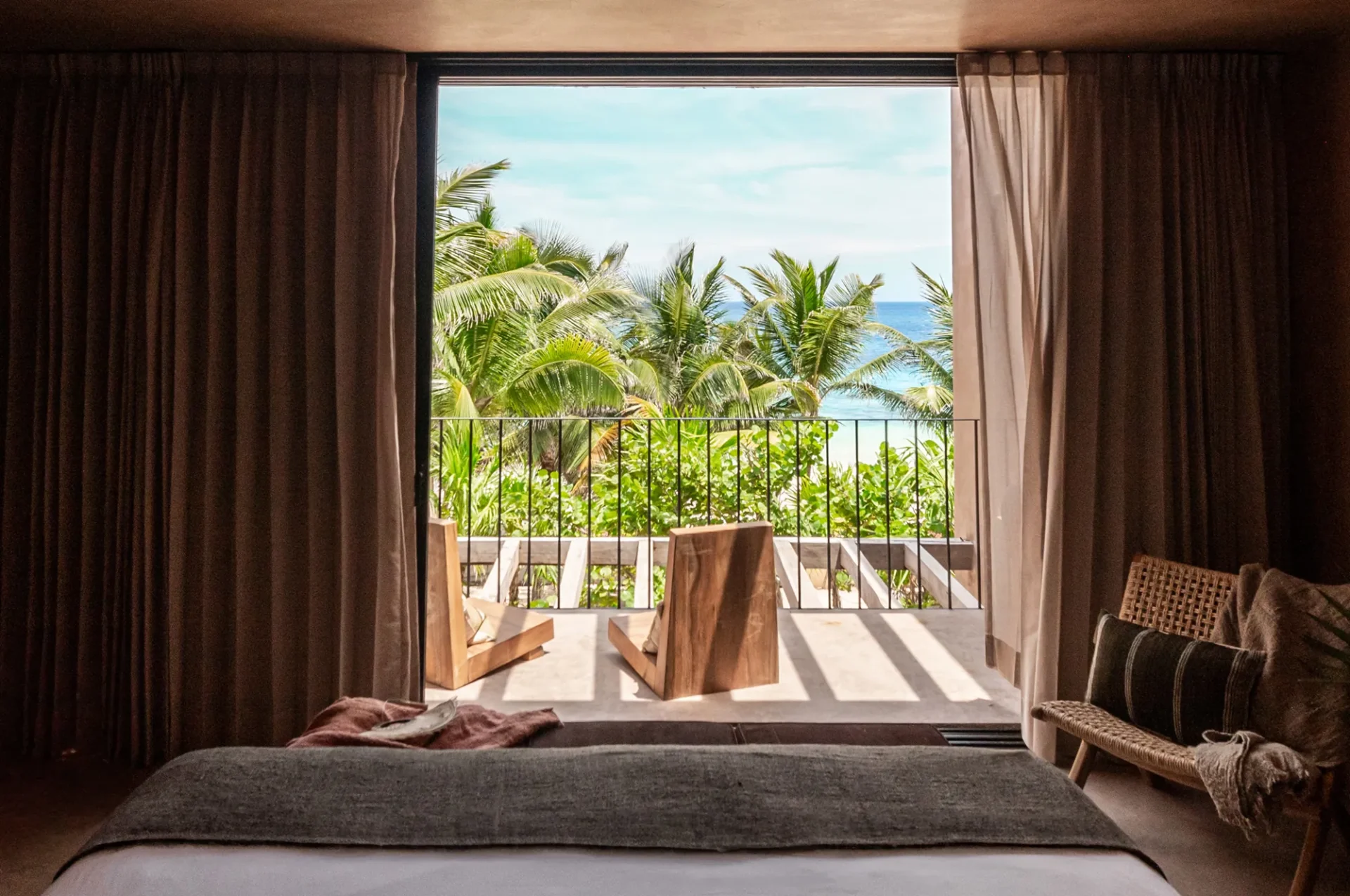
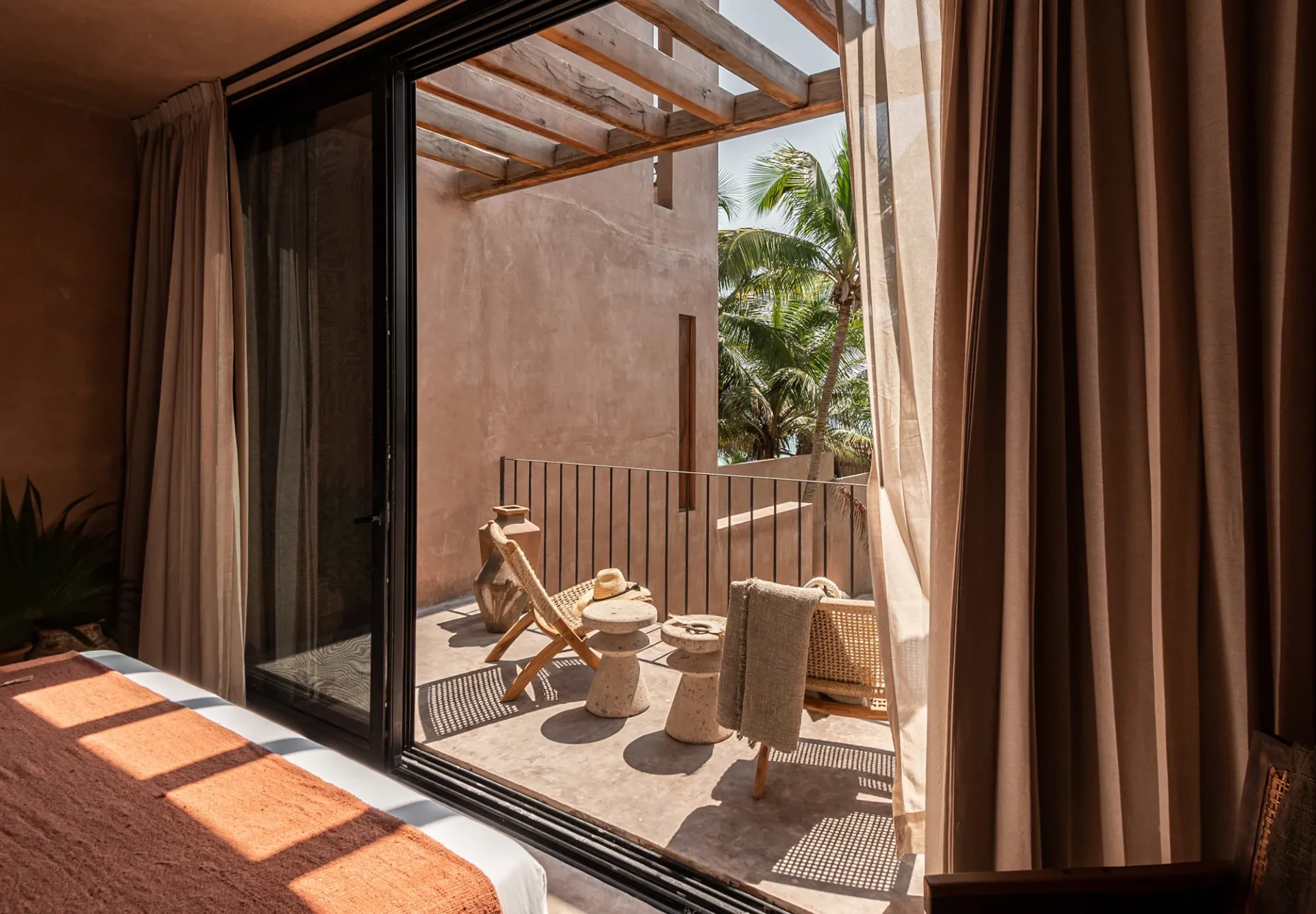
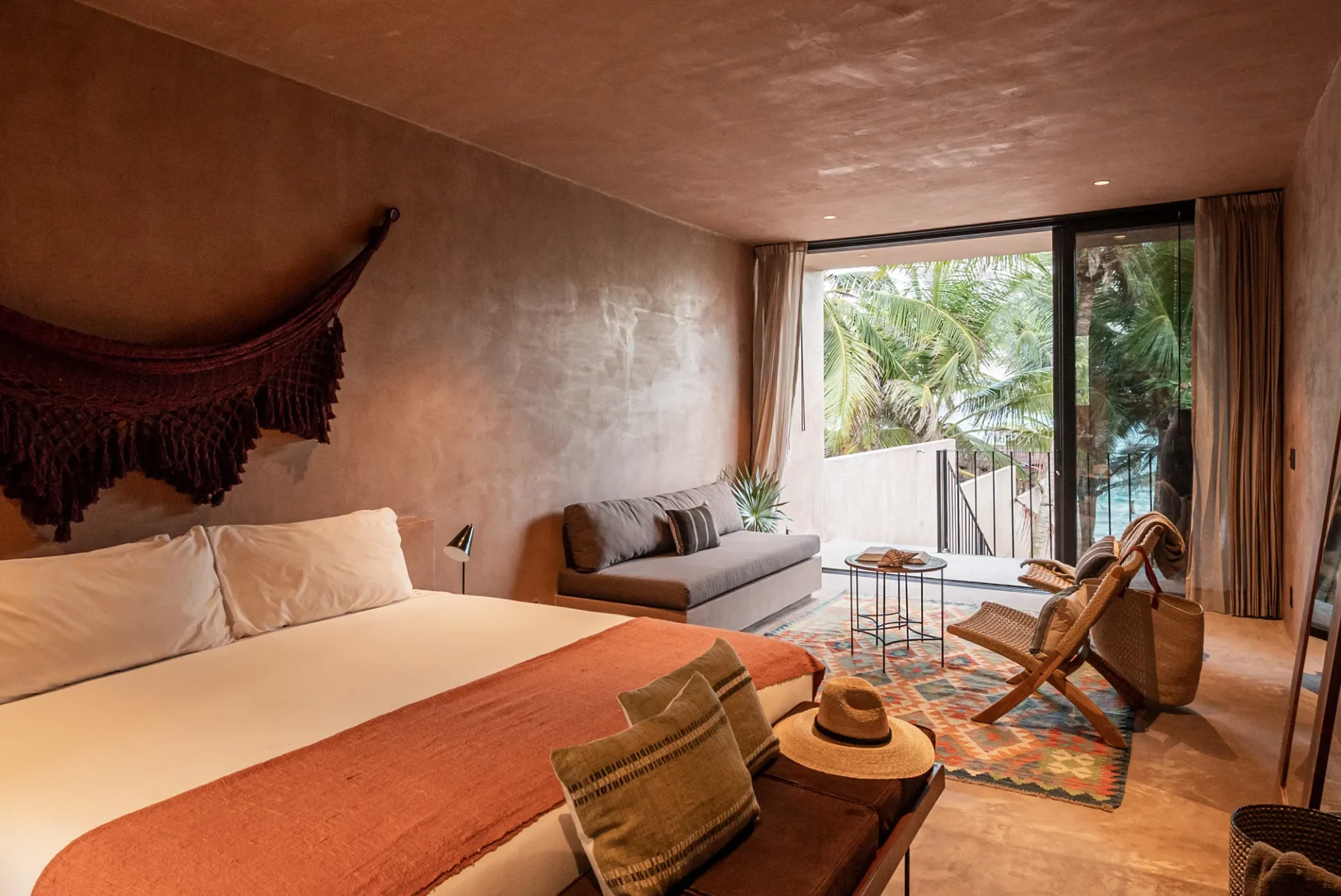
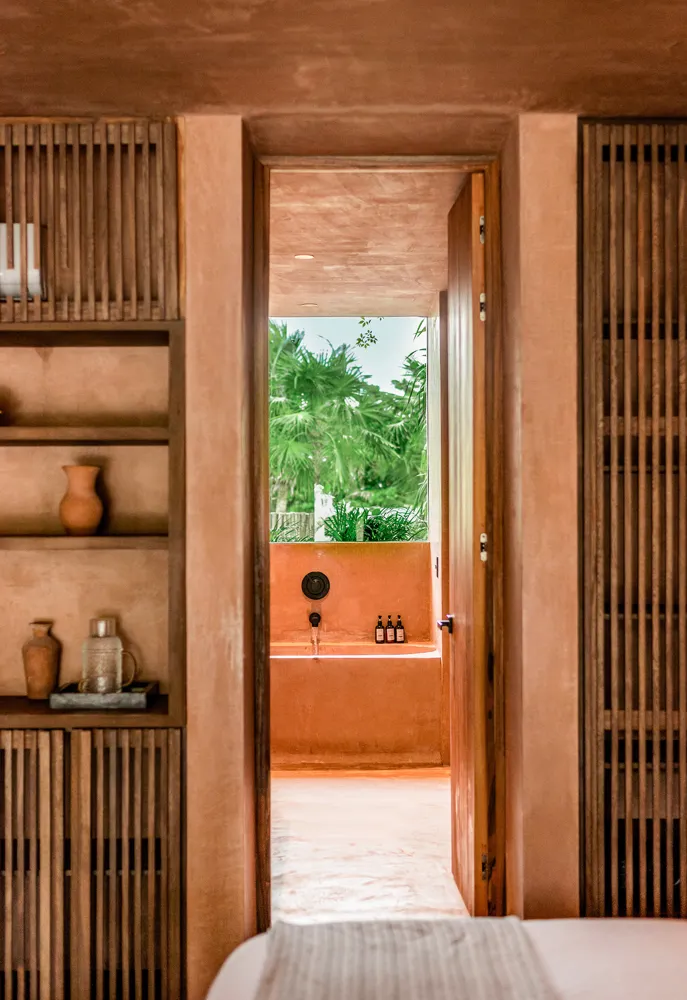
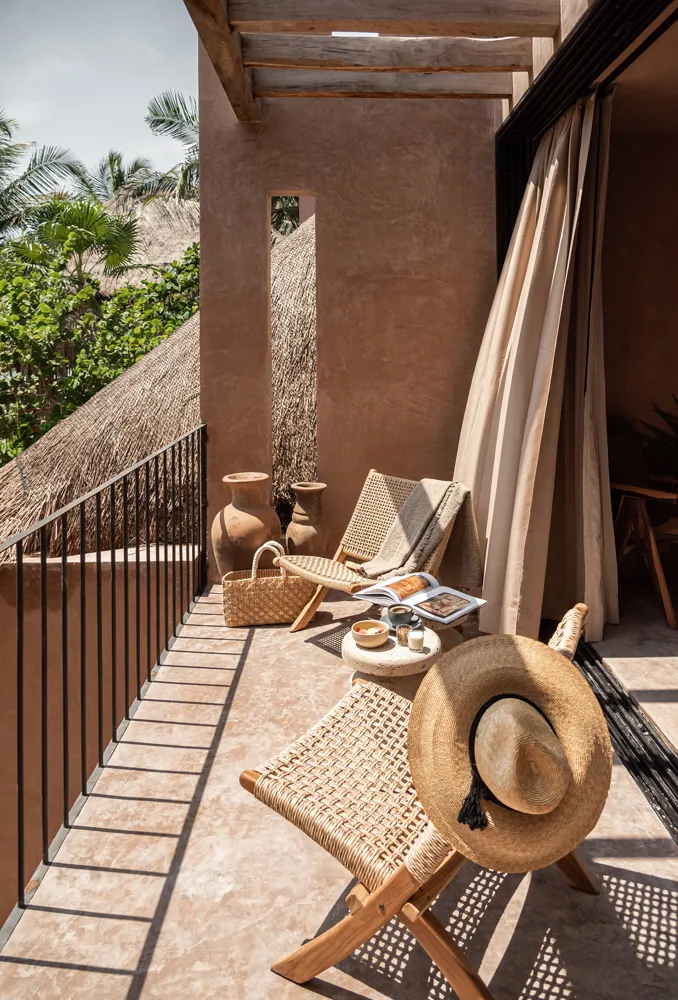
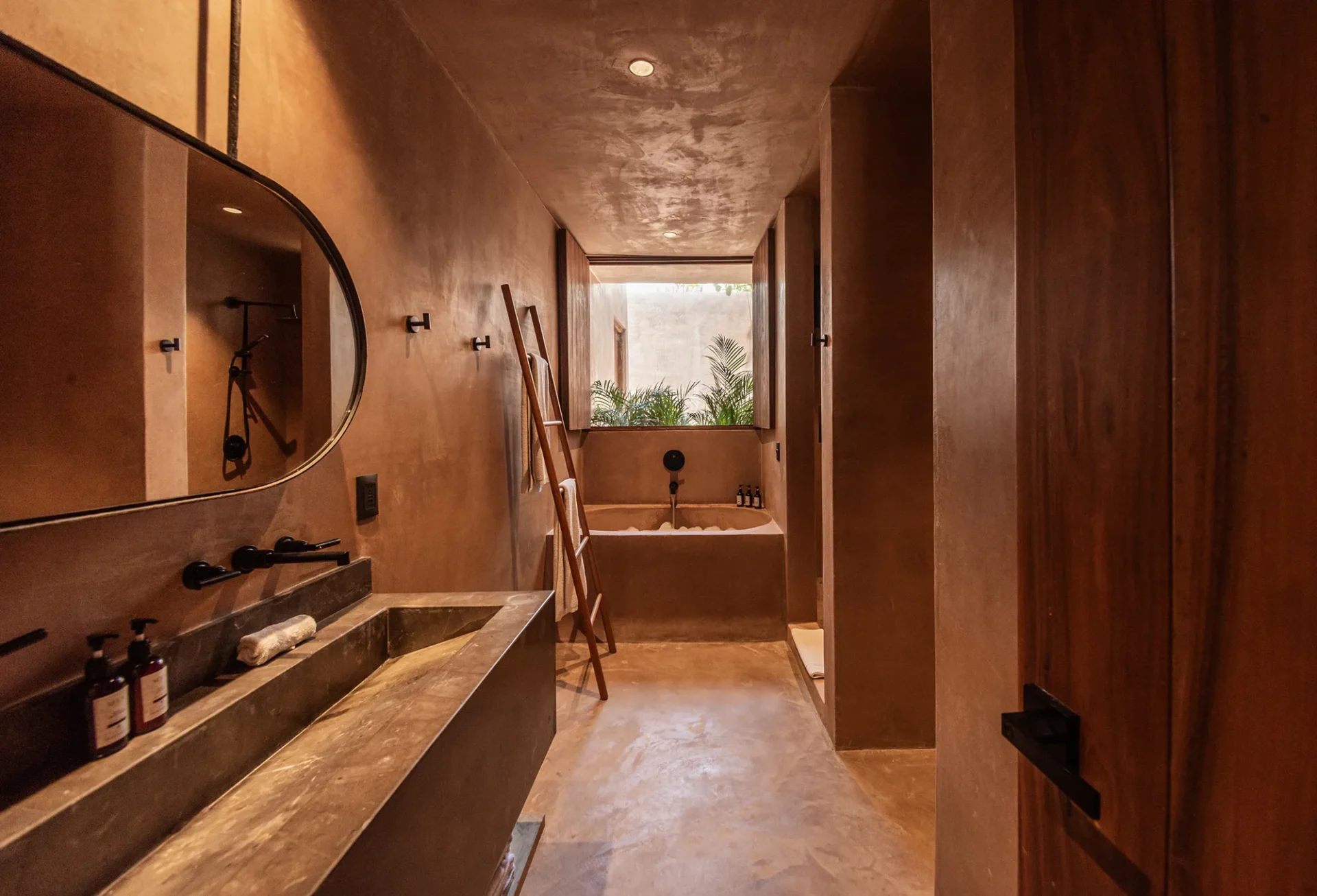
The bedrooms continue the same material restraint. Warm plaster walls, dark timber furniture, natural textiles, woven pieces and locally made ceramic objects soften the architectural geometry. There is little unnecessary decoration; texture does most of the work. All 12 rooms have terraces or balconies, while eight face the sea. Some bathrooms include deep soaking tubs, the Venus Suite adds outdoor bathing, and the XELA Master places the Caribbean directly in view from the bed. At ground level, the Caracol Suite brings the beach even closer: step outside and there is sand underfoot. The rooms don’t attempt to compete with that setting. They frame it.
Living Around the Water
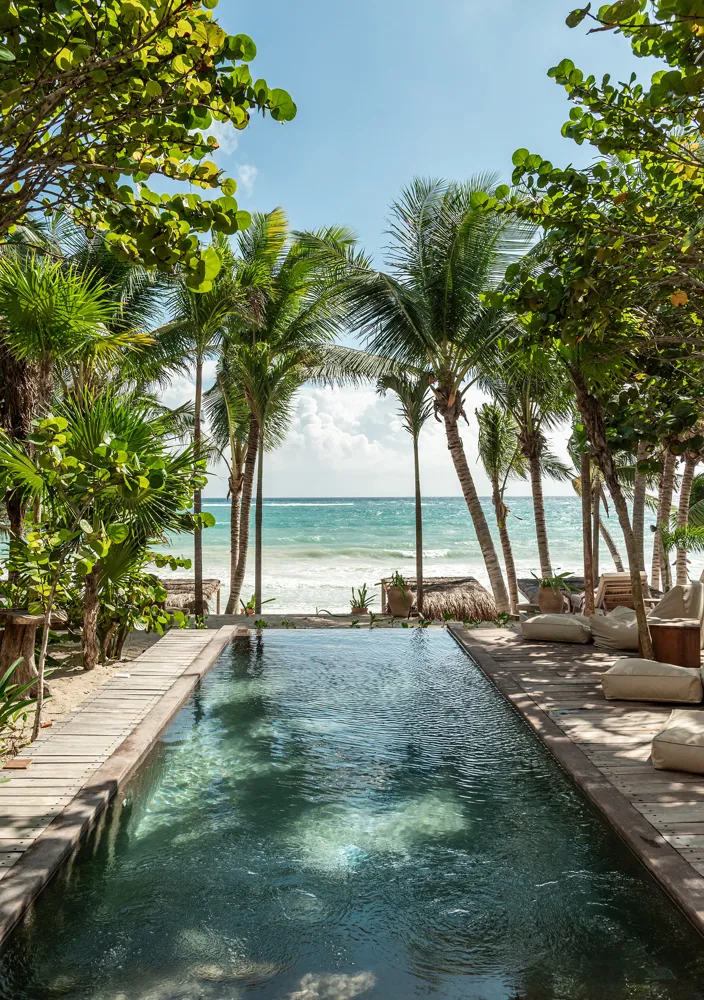
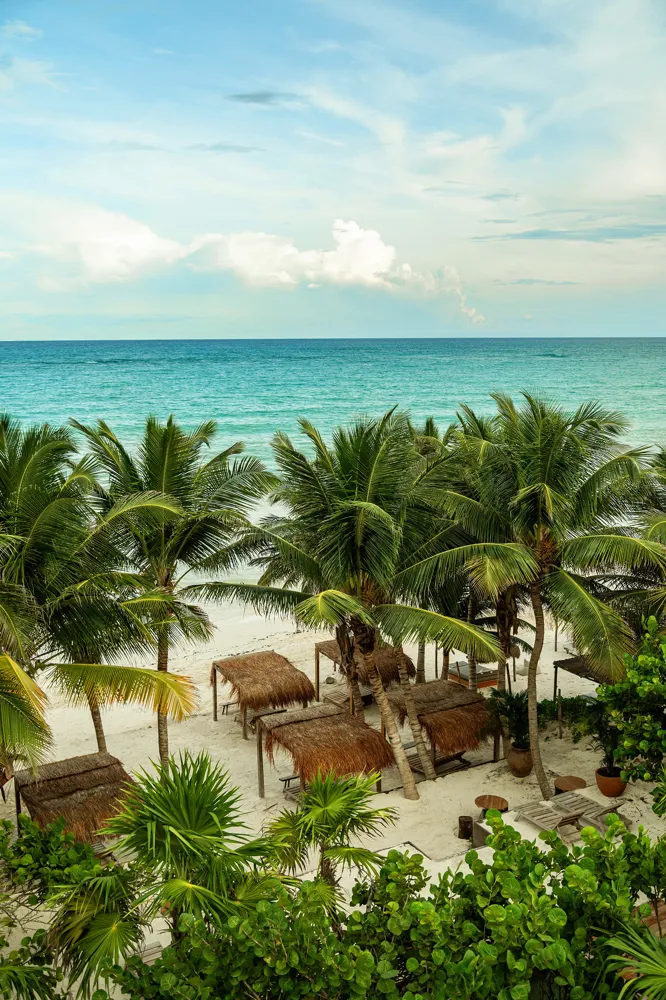
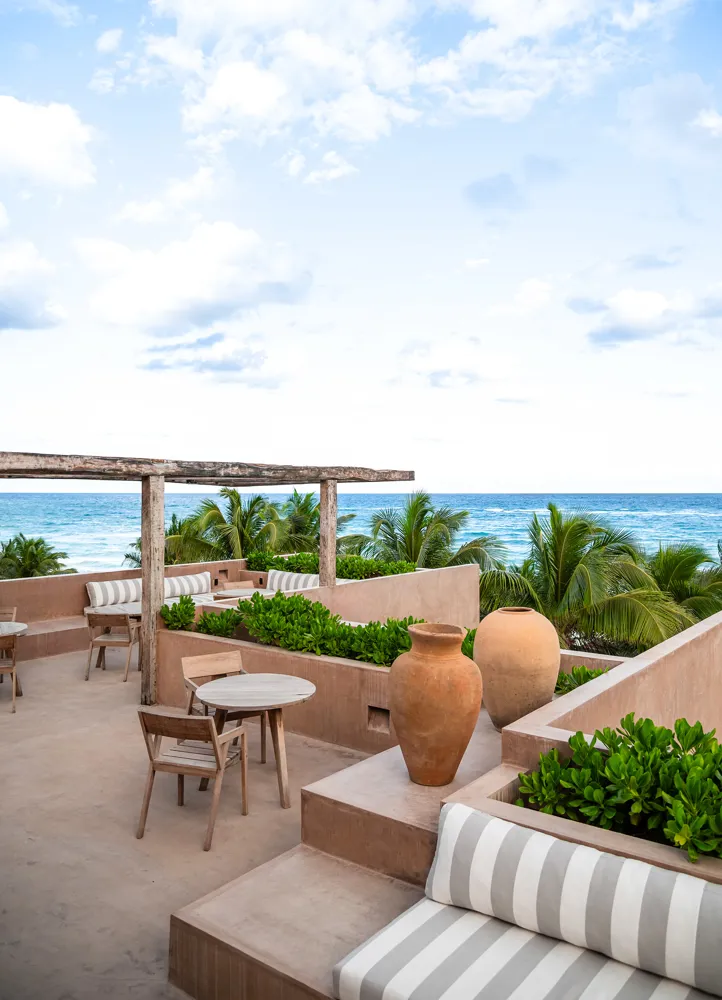
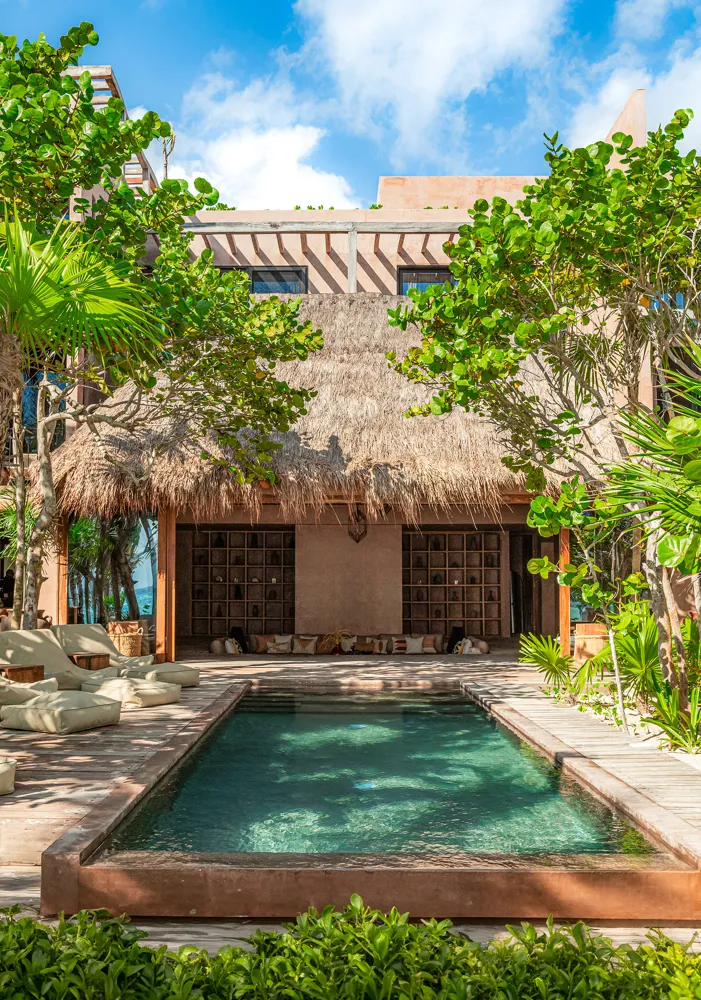
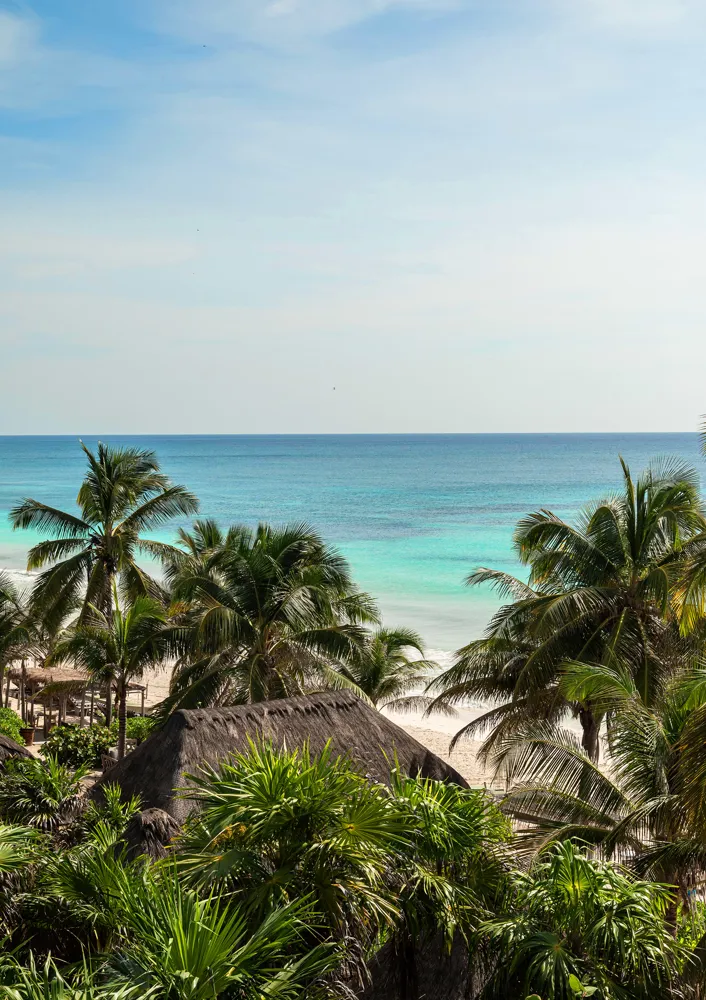
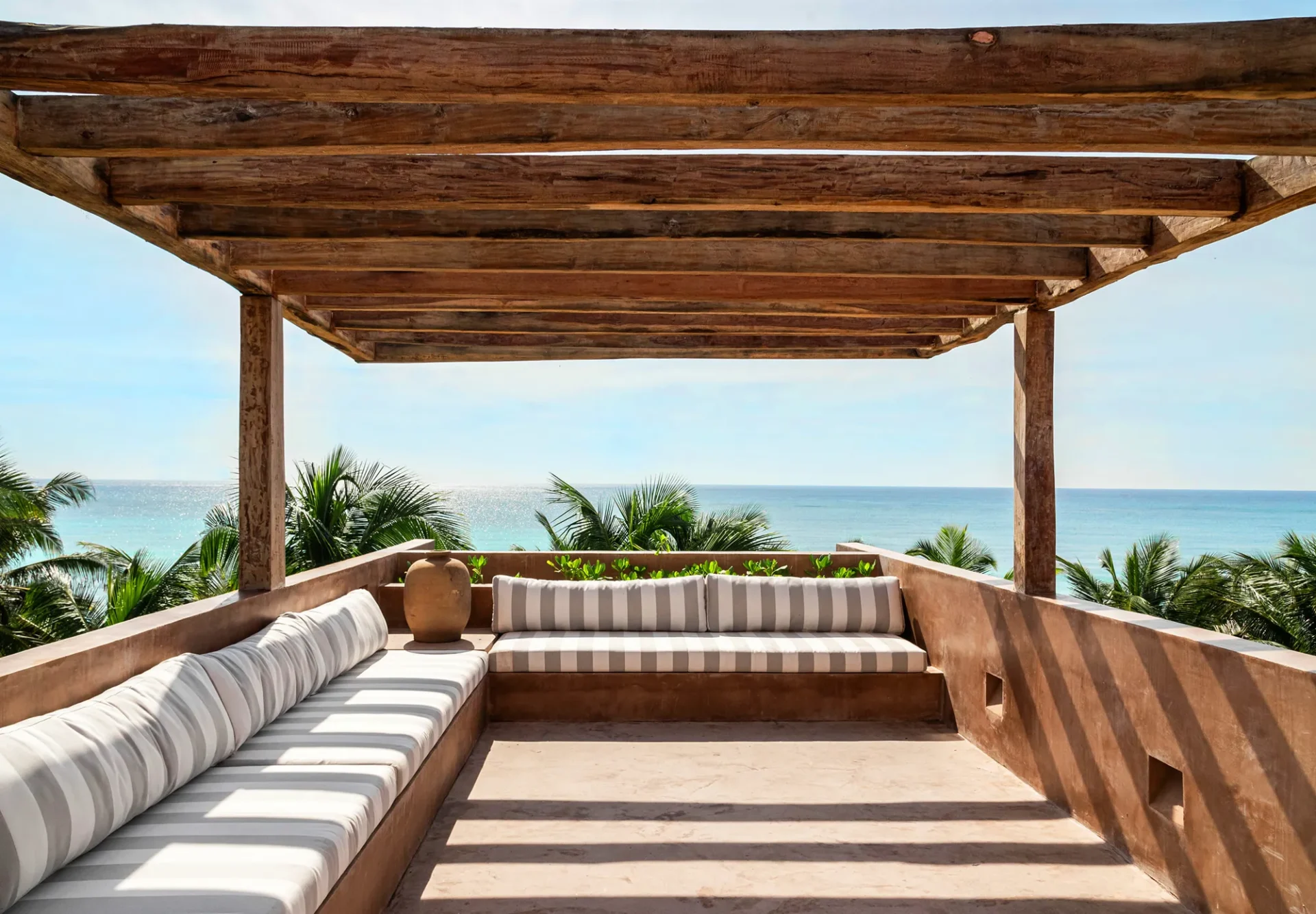
The house gradually becomes more open as it approaches the Caribbean. A compact infinity pool appears to dissolve into the sea, surrounded by palms, while oversized cushions and cabanas spread across the sand beyond. Upstairs, the rooftop looks in both directions: turquoise water on one side, jungle canopy on the other. Wellness follows the same low-key approach. XELA has its own treatment spaces and gym, while guests can also use the spa at neighbouring sister property La Valise, where treatments range from massage and sound therapy to rituals drawing on Mayan traditions. The Sian Ka’an Biosphere Reserve lies further south, reinforcing the sense that this quieter end of Tulum’s hotel zone is already beginning to transition back towards wilderness.
Food Without Leaving the Neighbourhood
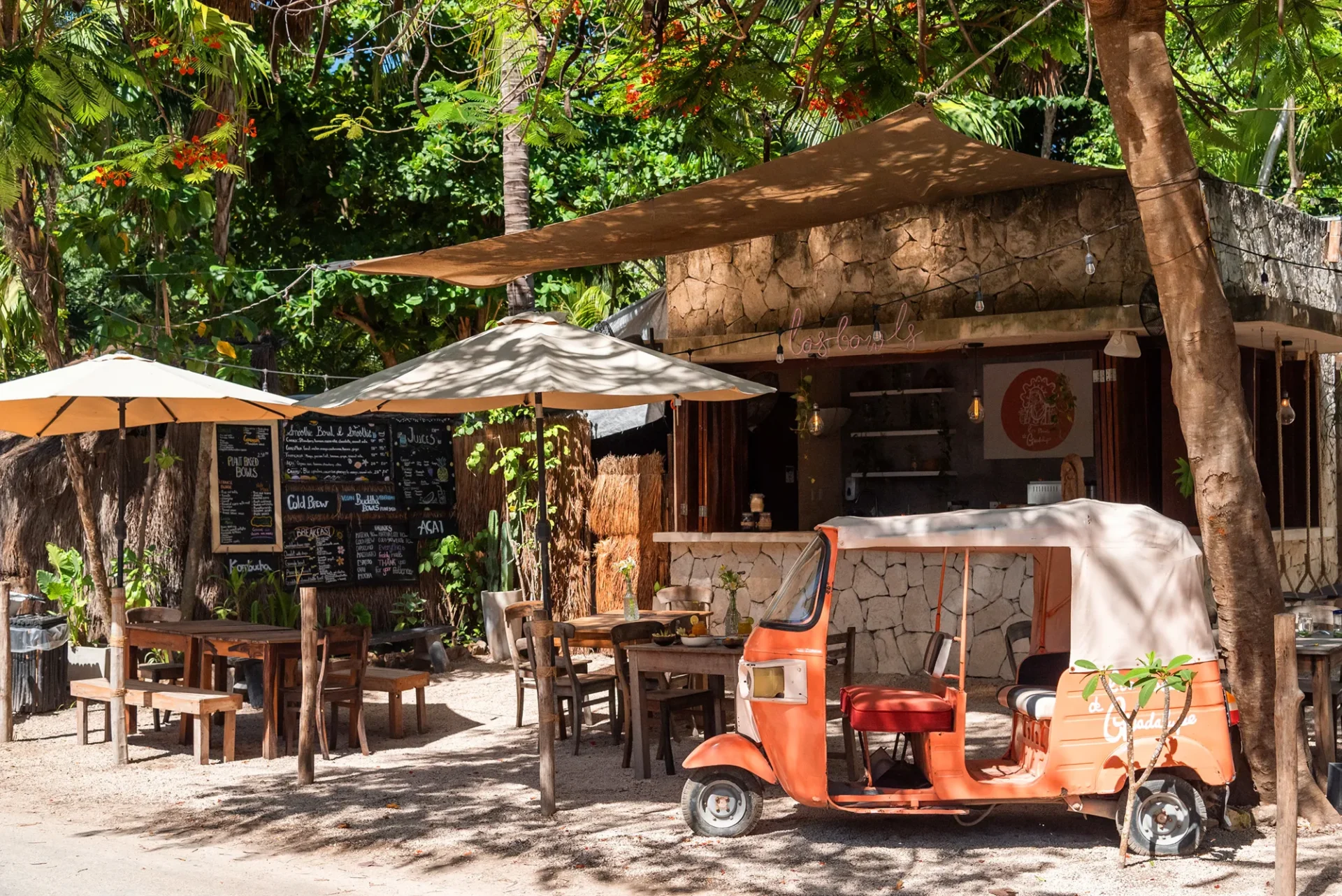
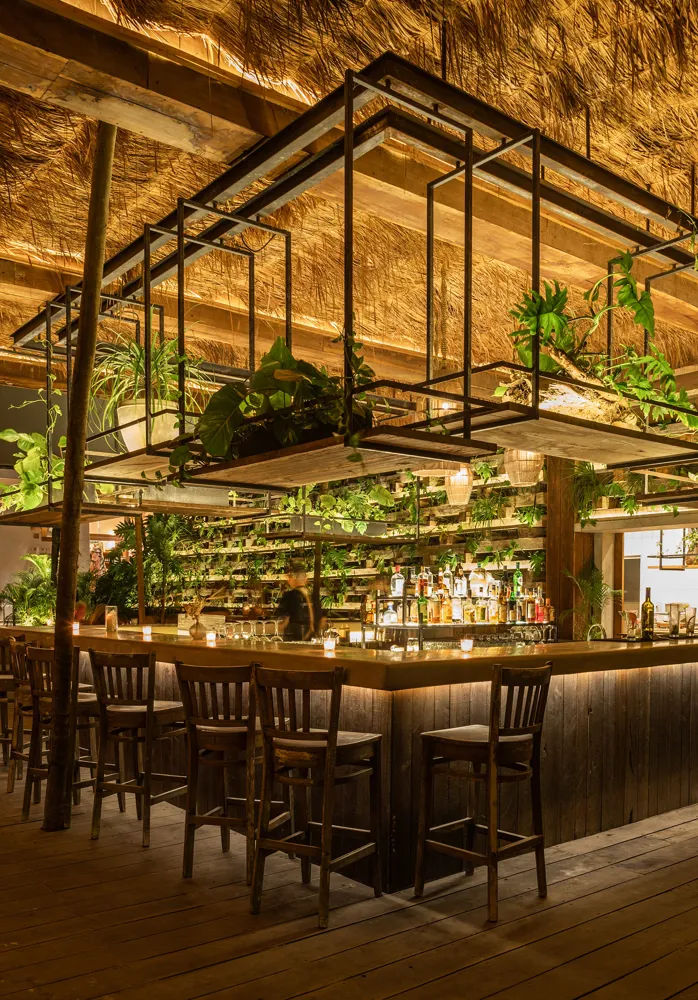
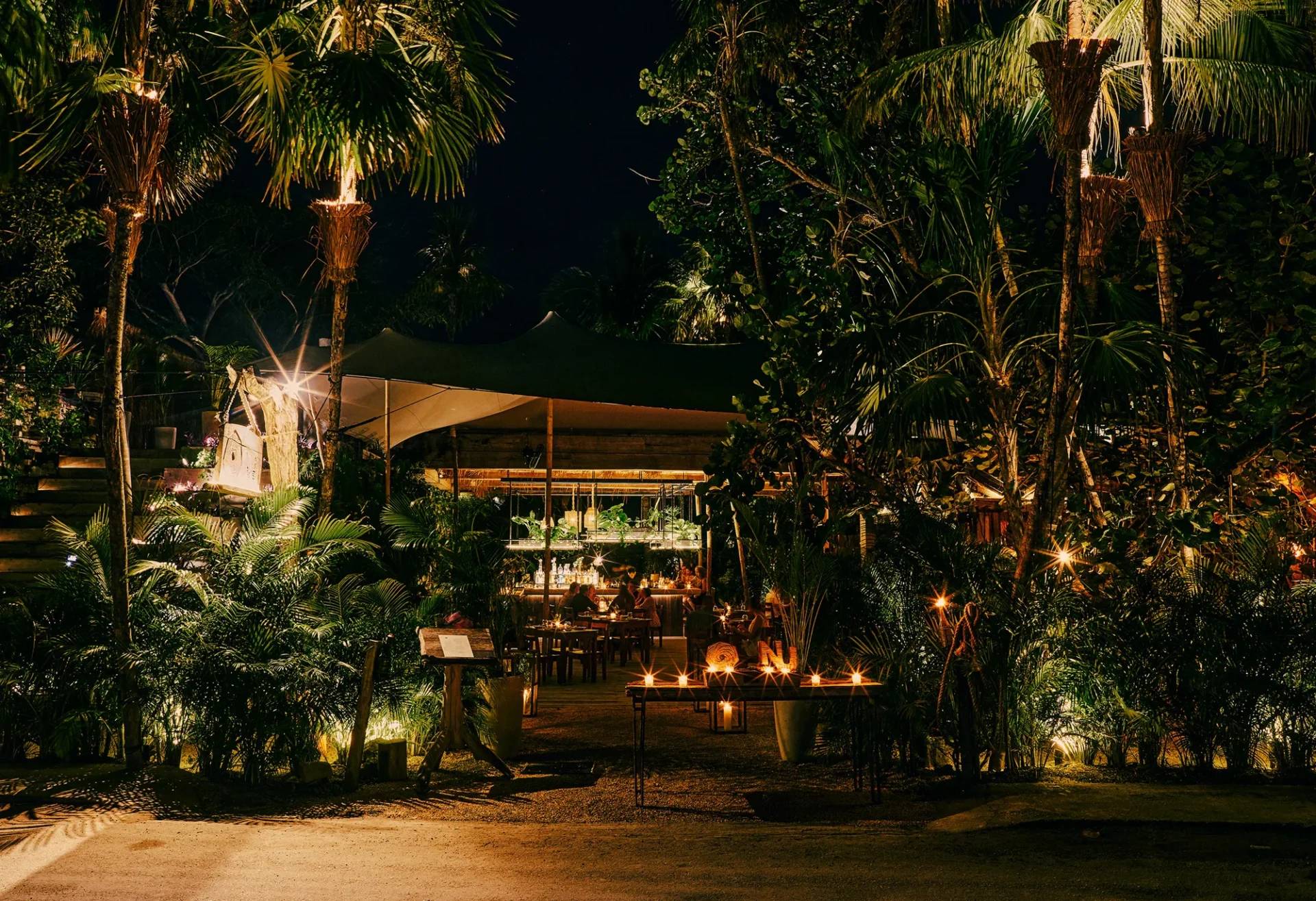
XELA’s own restaurant keeps things seasonal and informal, moving from breakfast around a communal table to ceviches, tiraditos, tacos and cocktails later in the day. But the wider idea extends beyond the property. Nearby sister addresses create a small neighbourhood of places to eat and drink. Los Bowls de Guadalupe handles smoothies, bowls and casual lunches, while NÜ Tulum takes a more ambitious approach to contemporary Mexican cooking, centred around fire, local produce and sharing dishes. It fits the house-guest philosophy: not every meal needs to happen in the same dining room simply because you’re staying in a hotel.
Tulum With the Volume Turned Down
XELA arrives at an interesting point in Tulum’s evolution. What began as a barefoot alternative to the large resorts further north has itself become one of Mexico’s most intensely developed hotel destinations. Rustic-chic can now feel as formulaic as the architecture it once reacted against. XELA takes a quieter route. Carlos Larios has kept the proportions and intimacy of the original residence while allowing Mexican materials, modernist geometry and handcrafted objects to replace the usual decorative shorthand. The sunken lounge encourages conversation. Rooms look towards the water. The pool almost disappears into the Caribbean. Most importantly, it still feels like a house. For Tulum in 2026, that may be the greater luxury.
Information
At a glance
Architecture
Carlos Larios
Opened / Renovated
2024
Size matters
12 rooms & suites (18-75m2) (194-807 sq ft)
Interior design
Alex Heyde-Ballengee
The Small Print
adult-only: 18 y.o. and over
Featured in
Don't take our word for it


Handpicked worldwide
A carefully curated collection of exceptional boutique and design hotels across the globe.
Design with soul
Architecture, atmosphere and craftsmanship come together in stays with a clear identity.
Hidden, not hyped
Independent boutique hotels you rarely find on mainstream booking platforms.
Travel guidance
Personal recommendations and thoughtful support from people who actually know the places.