


Where to Stay
An Architectural Gem
The DNA of Datong
Where Ancient China Meets Monumental Modernity
Datong is one of northern China’s great historical cities, shaped by Buddhism, imperial ambition and its strategic position close to the Great Wall. Its extraordinary Yungang Grottoes, carved into sandstone cliffs from the 5th century onwards, contain thousands of Buddhist sculptures and rank among China’s most important ancient monuments. Nearby, the Hanging Temple appears improbably attached to a sheer mountainside, while wooden temples, pagodas and sections of the Great Wall reveal further layers of Shanxi’s architectural history. The city itself offers a striking contrast. Large-scale reconstruction has recreated walls, gates and traditional streets, while contemporary cultural buildings and an ambitious urban transformation give Datong an almost surreal mixture of ancient China, historical reinvention and monumental modernity.
Food is unmistakably northern Chinese. Shanxi is famous for wheat rather than rice, particularly its extraordinary variety of hand-cut, shaved, pulled and sliced noodles. Datong adds lamb, dumplings, hearty soups and dishes shaped by the colder climate and the region’s proximity to Inner Mongolia. Shanxi’s celebrated aged vinegar appears everywhere, adding depth and acidity to otherwise robust flavours. Restaurants tend to be more traditional than fashionable, making Datong an excellent place to explore a regional food culture that remains far less internationally familiar than Cantonese or Sichuan cooking.
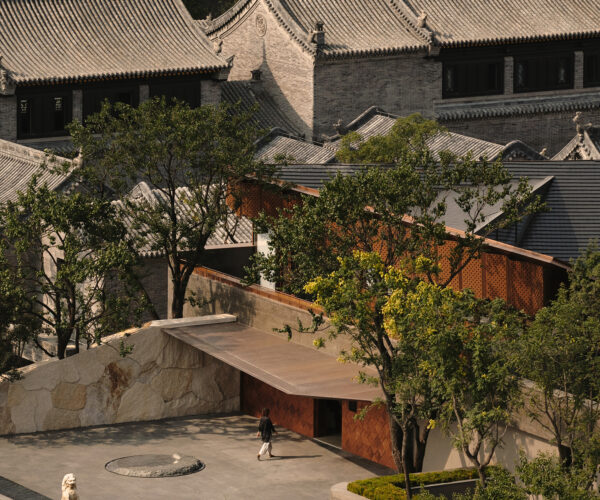
Datong is not yet defined by a large design-hotel scene, which makes its more distinctive stays particularly interesting. Contemporary hotels, converted historic buildings and properties drawing on Shanxi’s courtyards and architectural traditions provide a base for exploring a region where the monuments remain the real stars. At DNA Hotels, we curate the places that connect guests with that extraordinary cultural landscape—because in Datong, even the most ambitious hotel has some fairly serious competition from a 1,500-year-old Buddha carved directly into a mountain.