


A 1970s Landmark Above Oslo
A 1970s Oslo landmark with a largely restrained contemporary interior — and one spectacular Snøhetta-designed bar floating above the city.

Why DNA Hotels loves it
Opened in 1975, the 22-storey former Hotel Scandinavia remains one of Oslo’s most recognisable high-rise hotels and an important survivor of the city’s late-modern hospitality era.
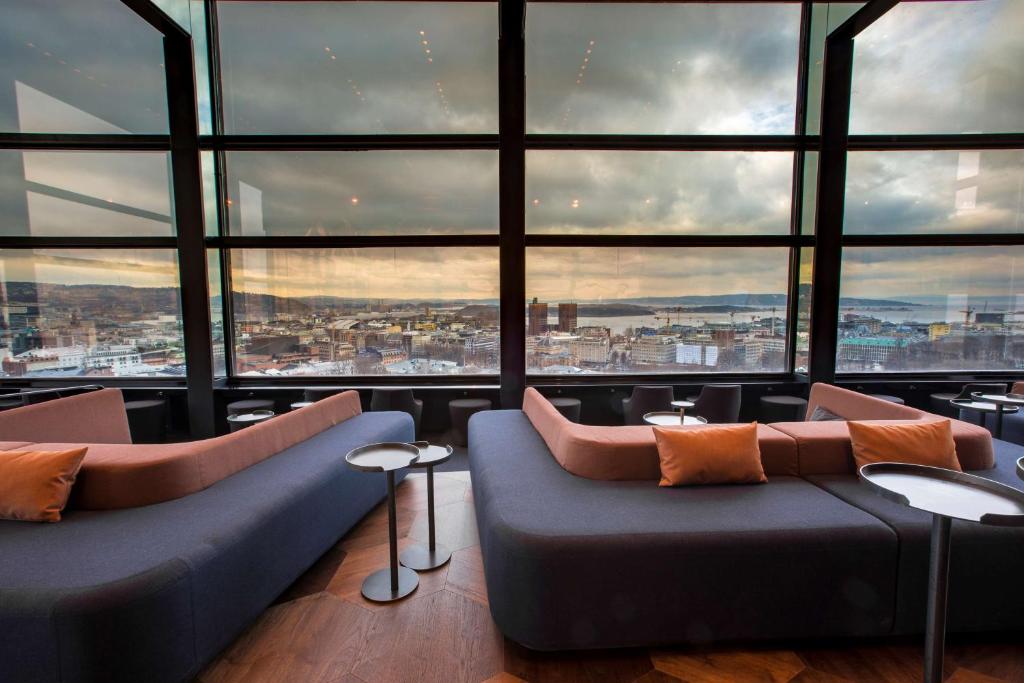
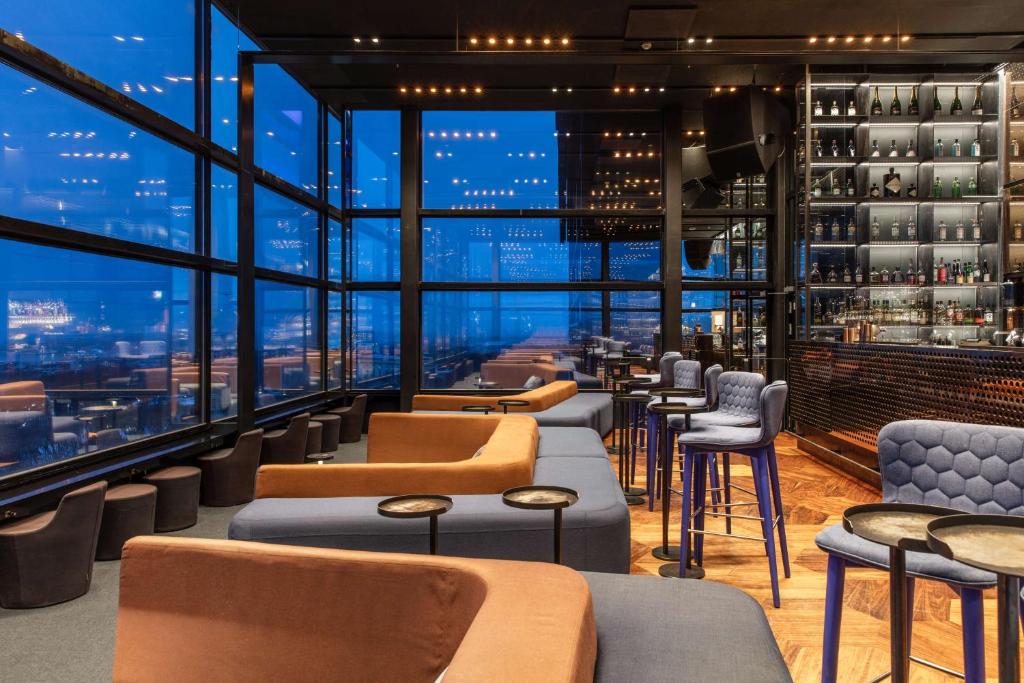
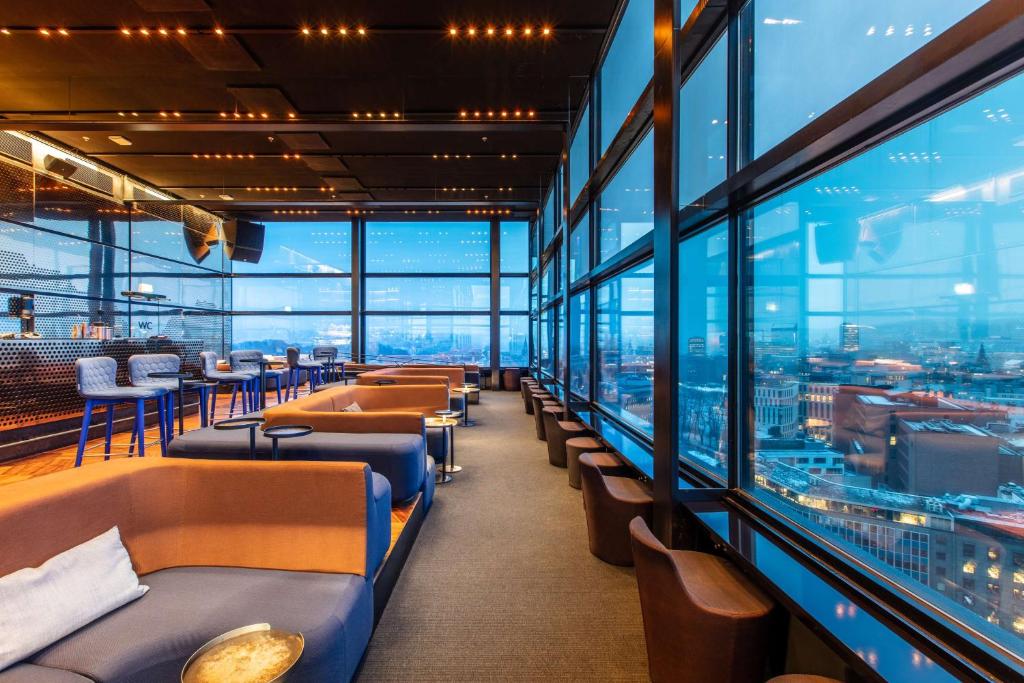
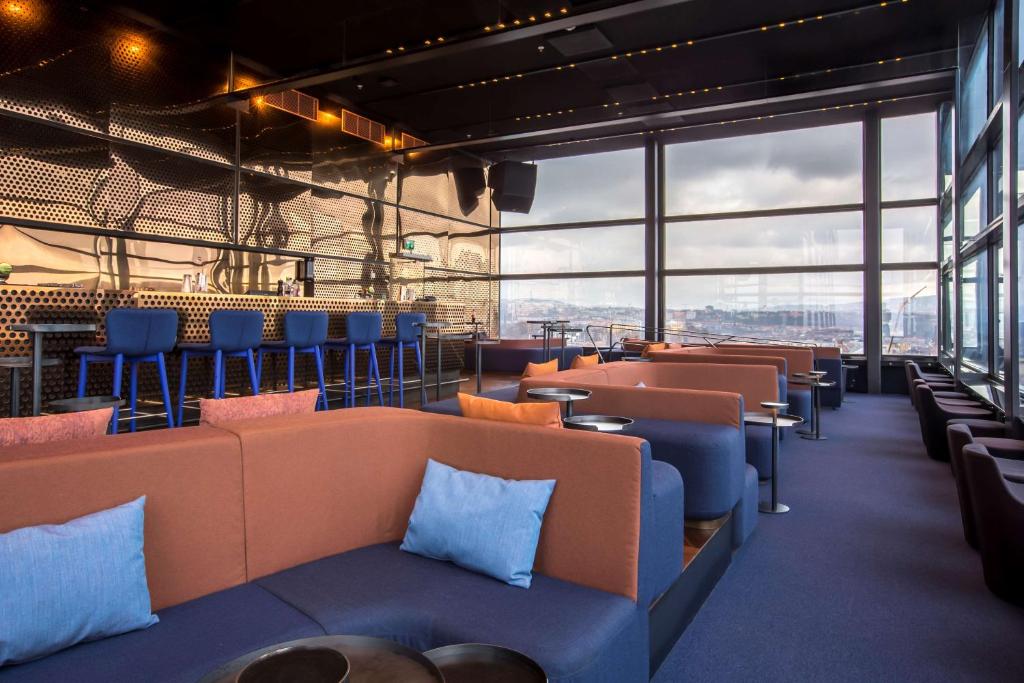
The hotel-wide renovation is competent rather than radical, but the Summit Bar on the 21st floor is the real architectural reason to come, redesigned by Snøhetta as a dramatic lookout over the Norwegian capital.
Its contrast is part of the appeal: a big, functional international hotel below, then a far more refined piece of contemporary Norwegian design at the top.
The Stay
Radisson Blu Scandinavia blends 1970s Oslo high-rise heritage with contemporary Nordic comfort and a spectacular Snøhetta-designed bar above the city.
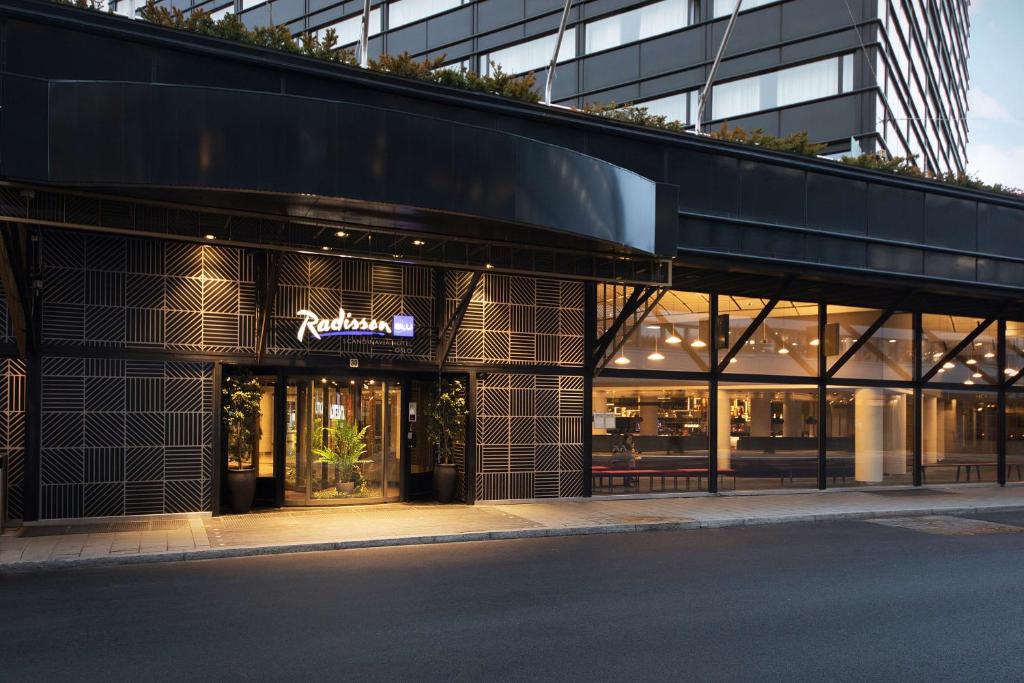
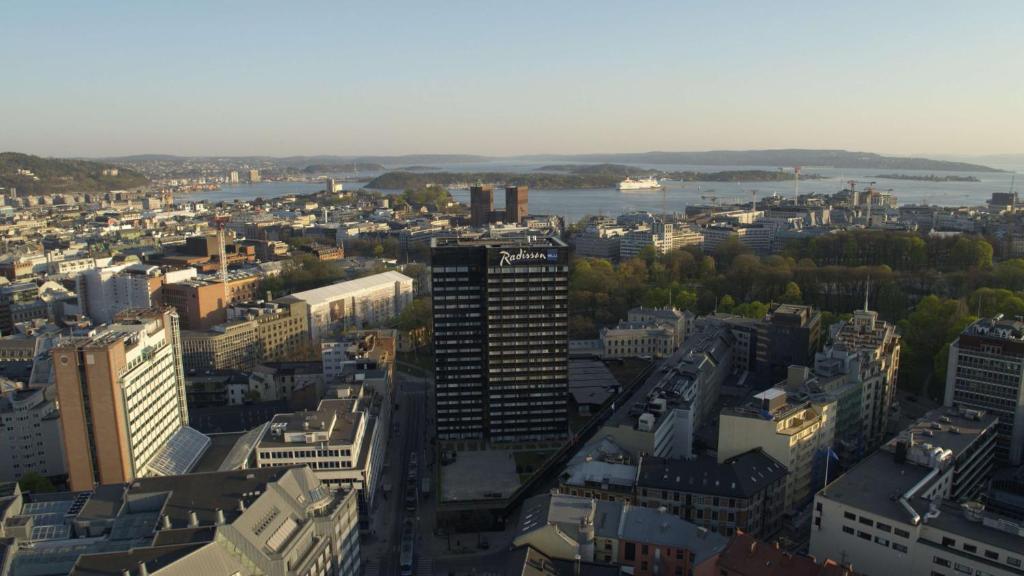
Radisson Blu Scandinavia Hotel rises just east of the Palace Park, a 22-storey slab that has been part of Oslo’s skyline since 1975. Originally opened as Hotel Scandinavia, it was developed by the SAS hotel division during the great era of Scandinavian airline hotels, when modern architecture, international travel and national identity were often packaged together in a single building. At 67 metres high, it remains one of the taller buildings in central Oslo. The architecture is not delicate. It is a large, unapologetically urban hotel tower: repetitive windows, strong vertical scale and the kind of rational efficiency associated with major business hotels of the period.
From SAS to Radisson
The hotel’s identity changed several times as the ownership and operating structure evolved. It opened under Western International Hotels, later became SAS Hotel Scandinavia, then SAS Scandinavia Hotel, and eventually Radisson SAS Scandinavia Hotel before taking its present Radisson Blu name. That history is visible less in decorative details than in the building type itself. This was conceived as a true metropolitan hotel: hundreds of rooms, conference facilities, restaurants, bars and everything required for business and leisure travel under one roof. It still behaves that way.
A Big Renovation, Not a Design Reinvention
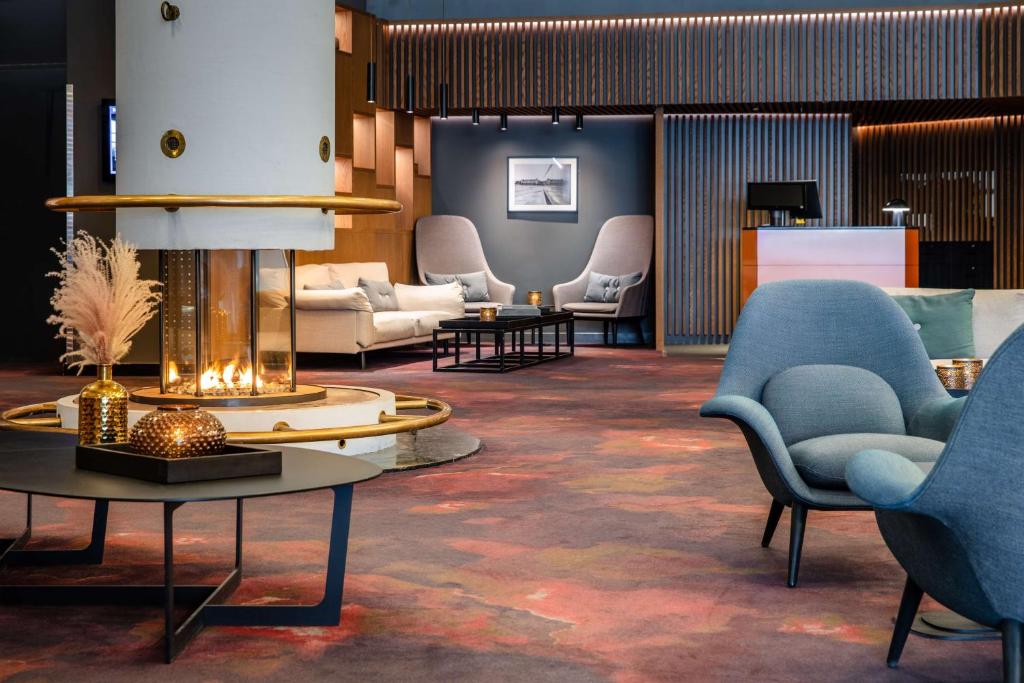
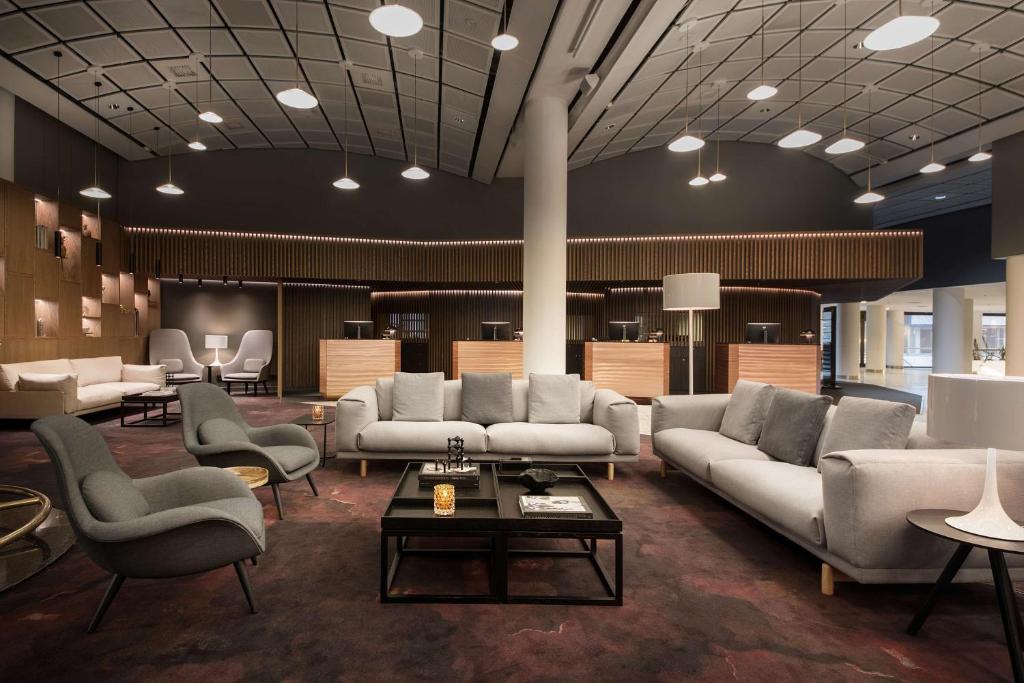
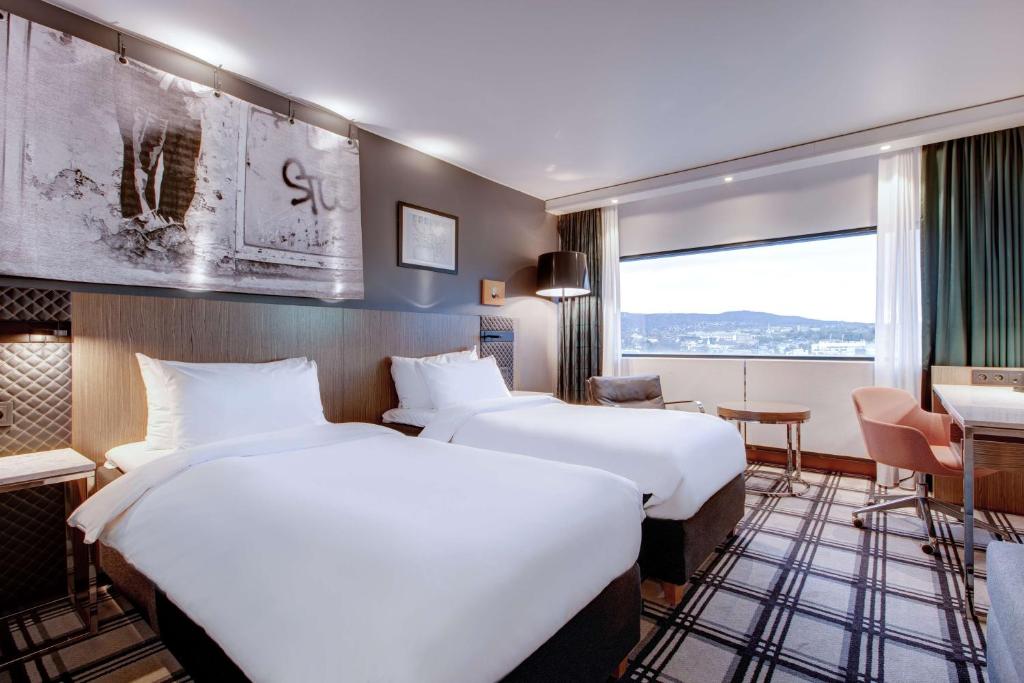
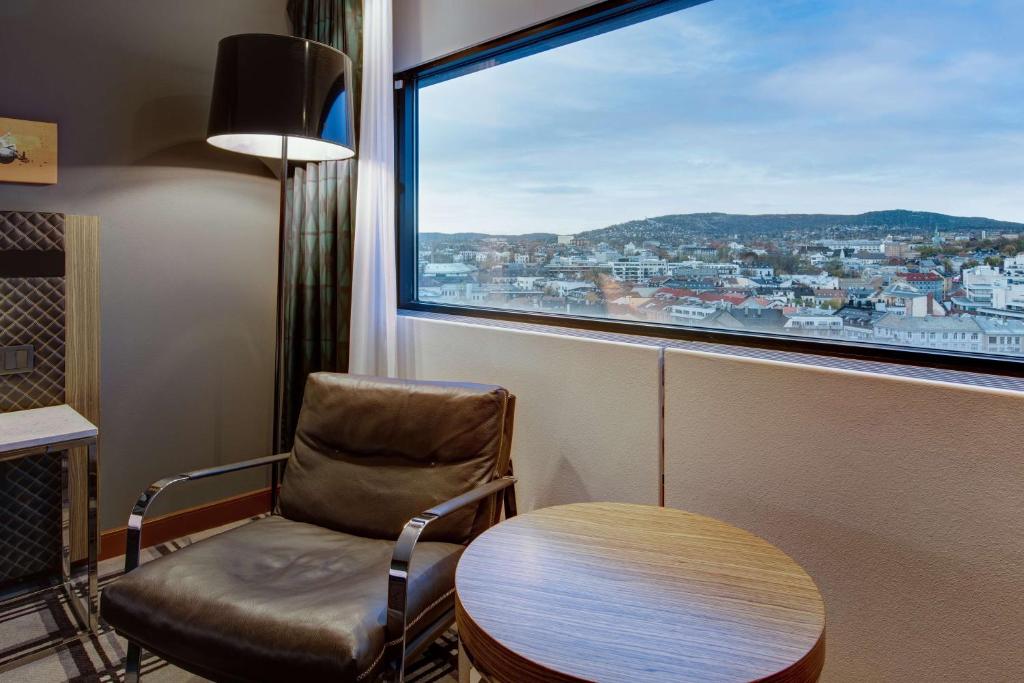
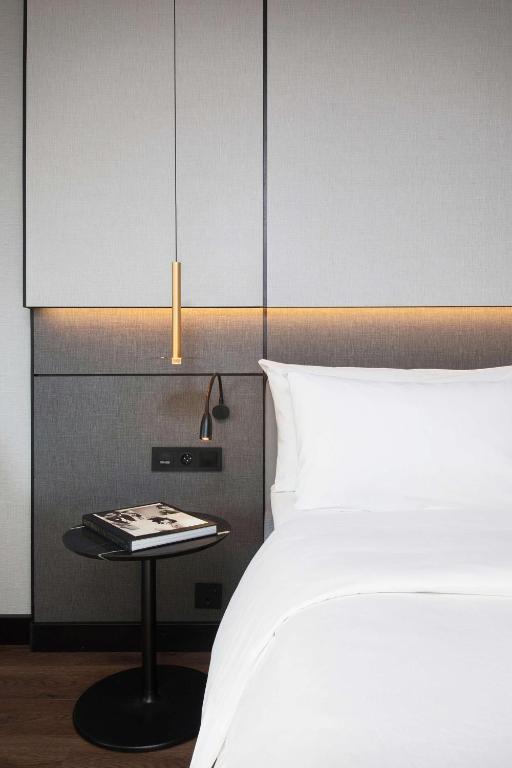
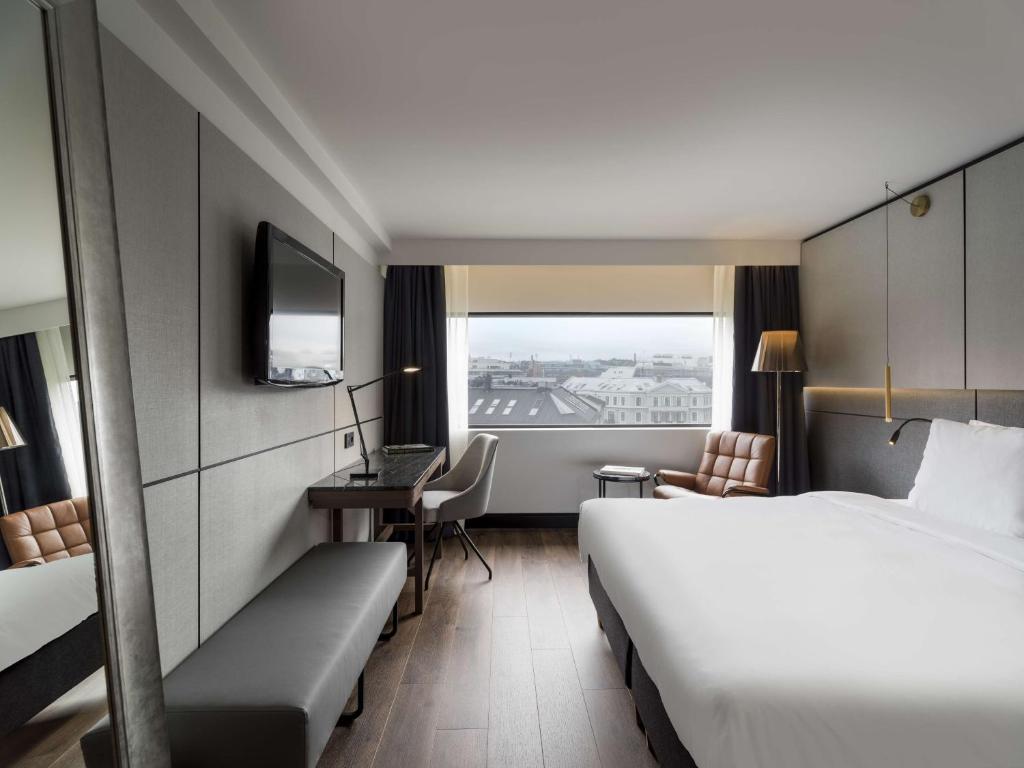
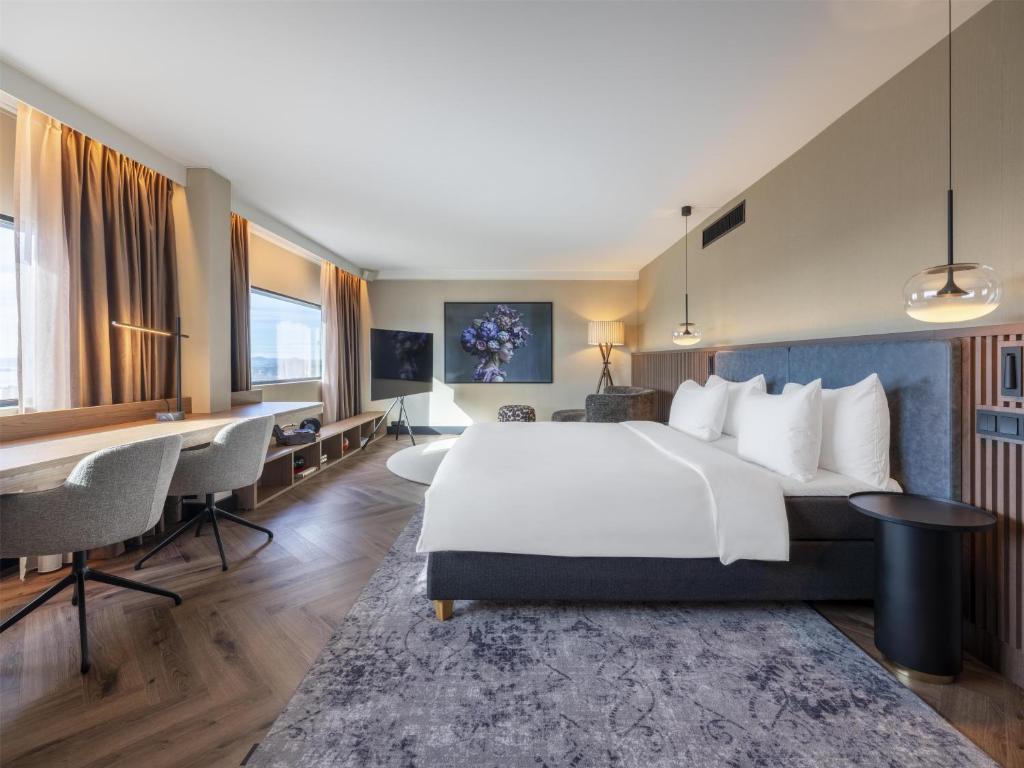
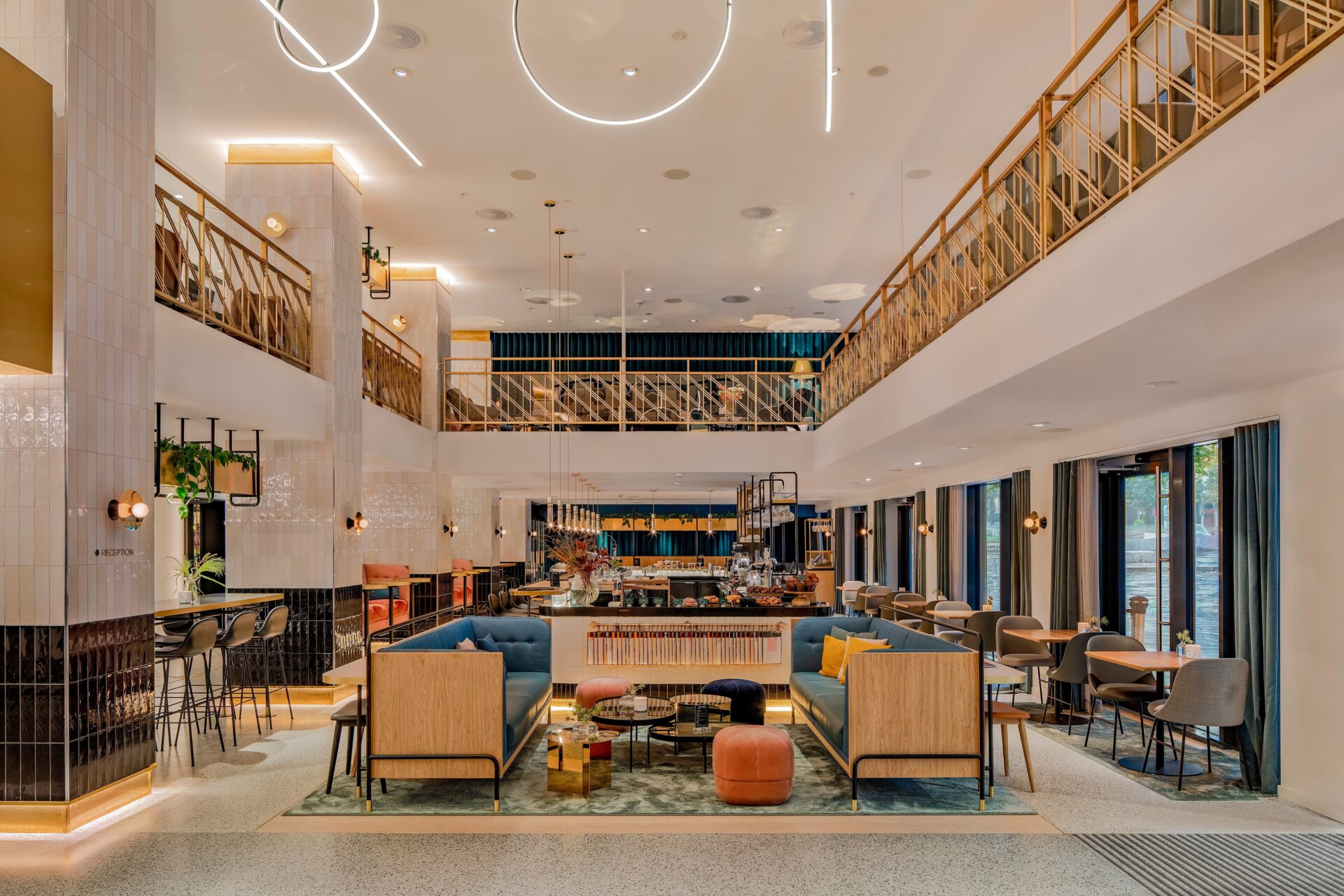
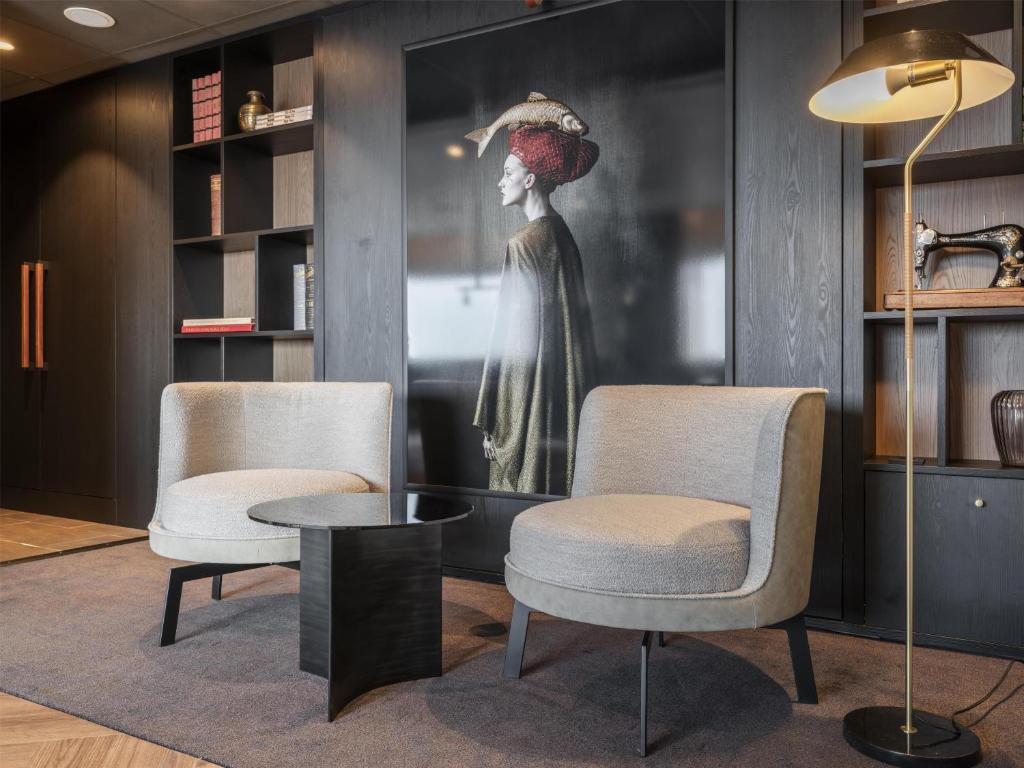
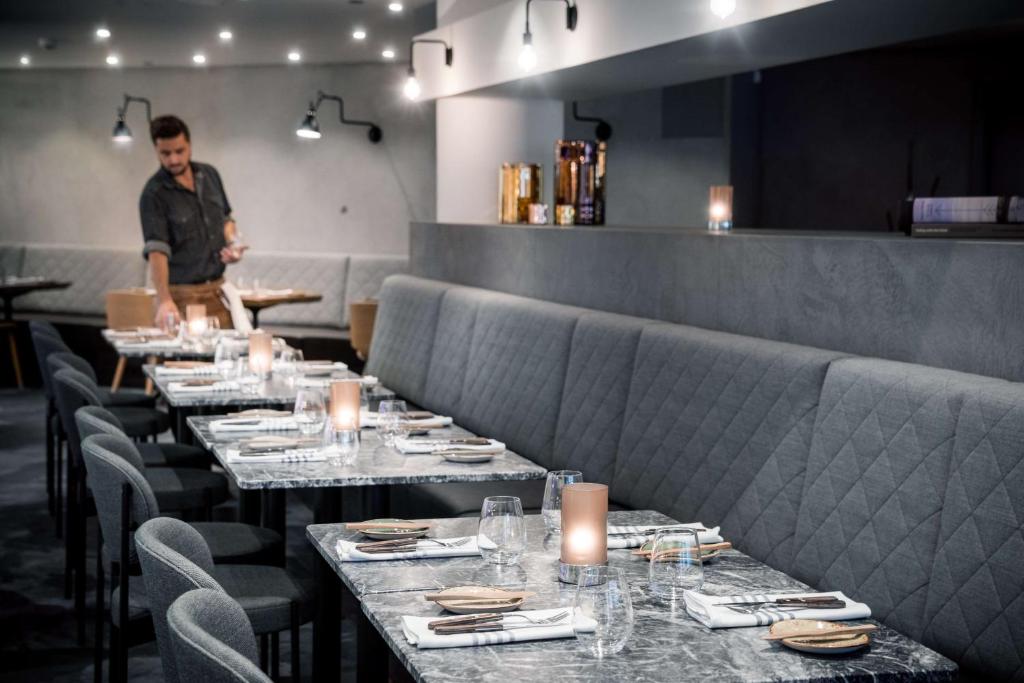
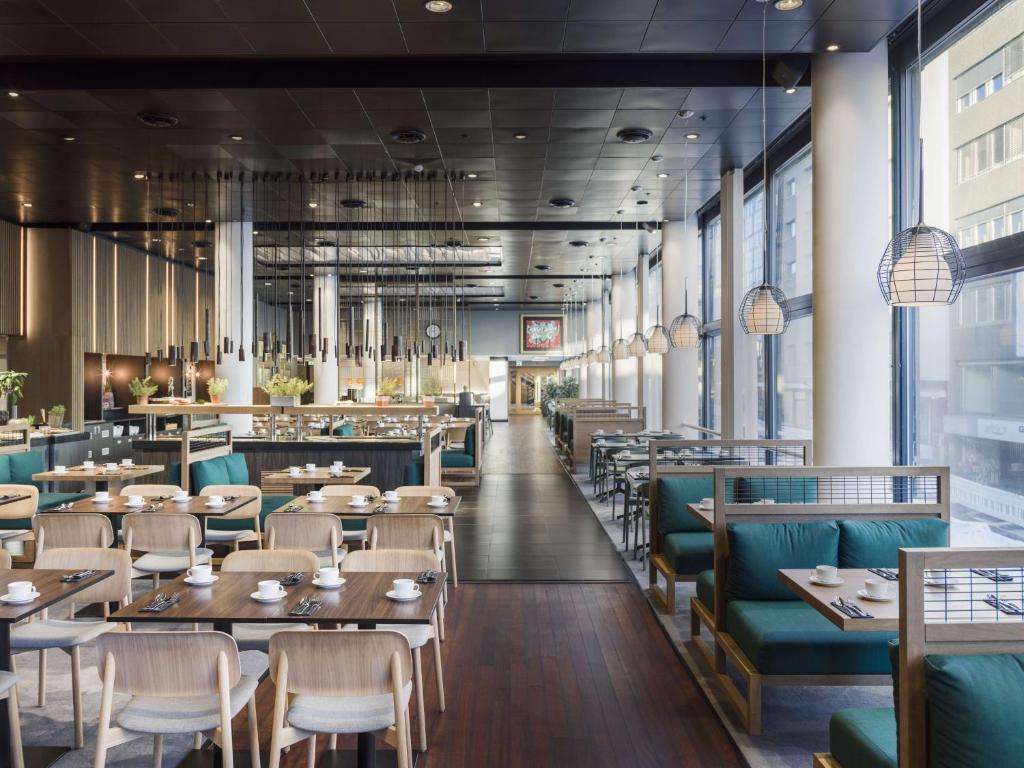
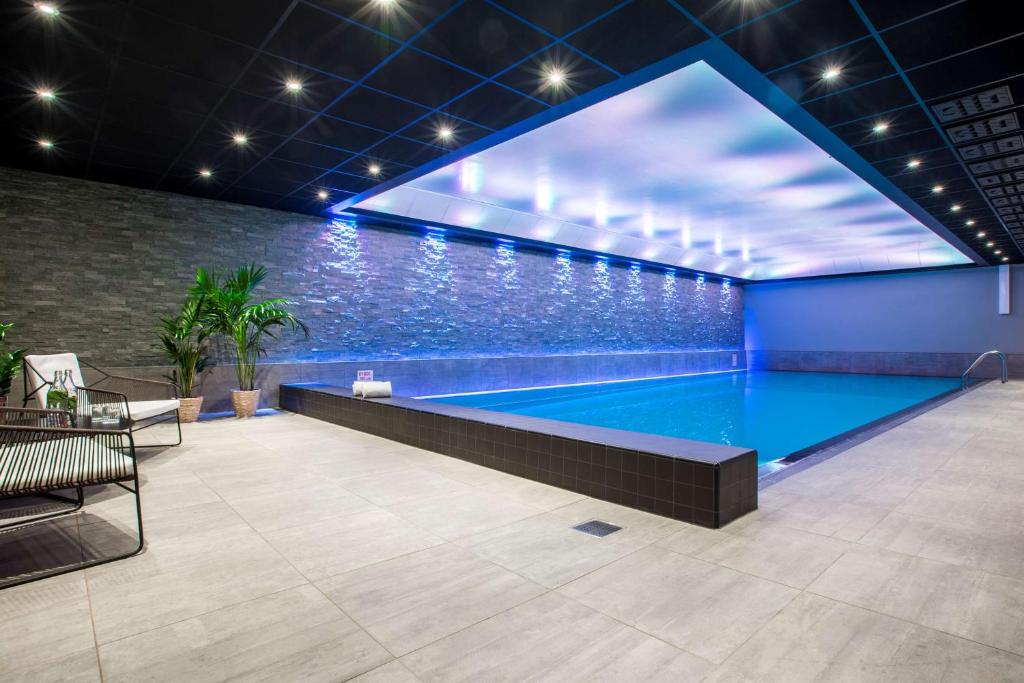
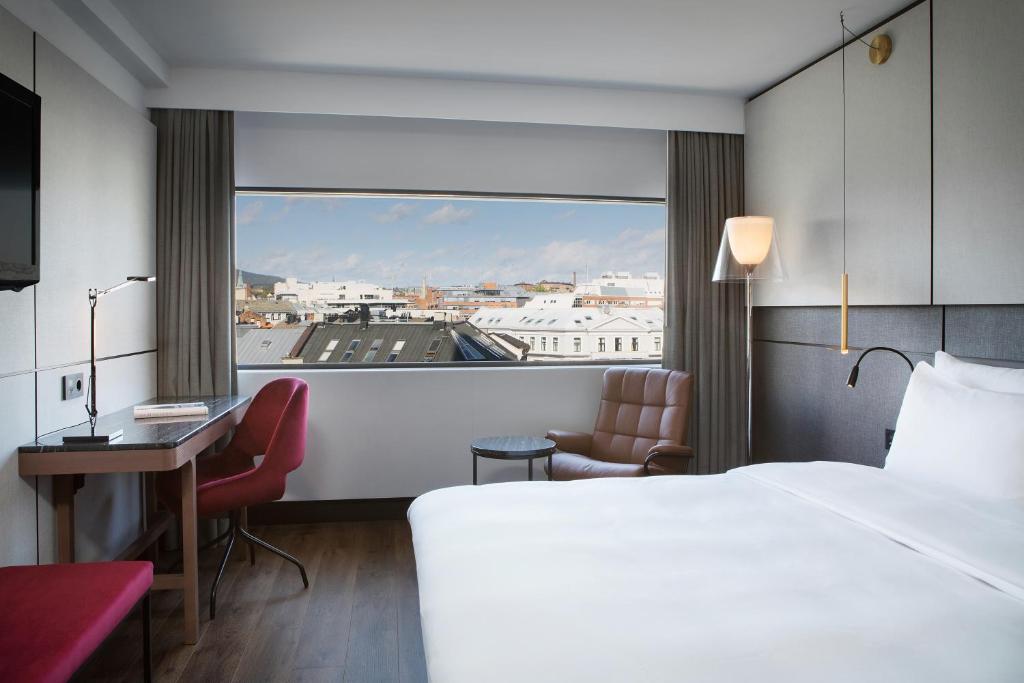
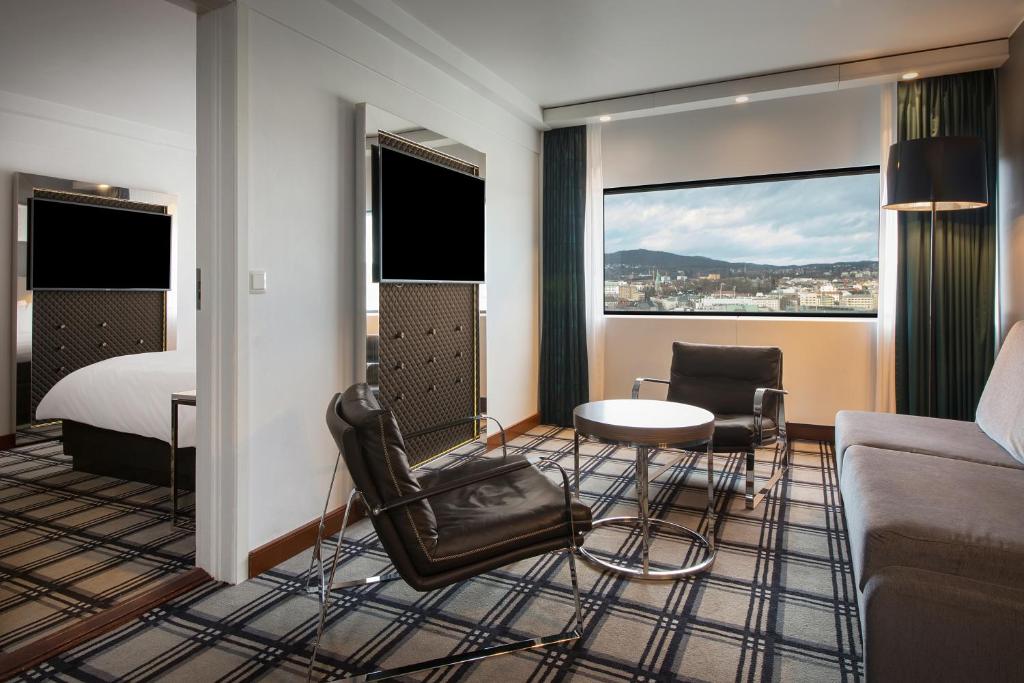
Radisson later carried out the hotel’s most extensive renovation to date, updating guestrooms, the lobby, restaurant, meeting spaces and social areas. The overall result is polished, comfortable and distinctly contemporary, but it does not try to turn the entire hotel into a design destination. That may actually be sensible. The interiors rely on the familiar language of modern Nordic hospitality: neutral tones, warm timber, clean furniture, soft lighting and enough texture to prevent the scale from feeling corporate. It looks good. It is just not especially radical.
Then You Reach the 21st Floor
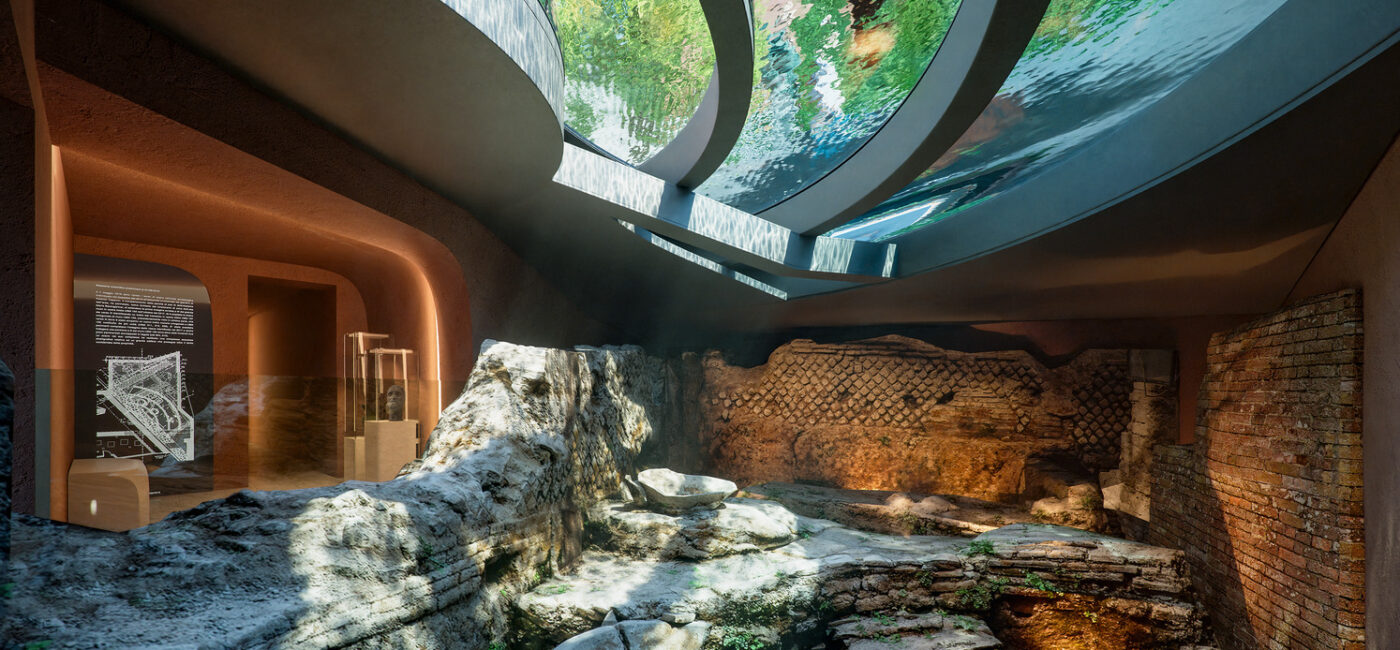
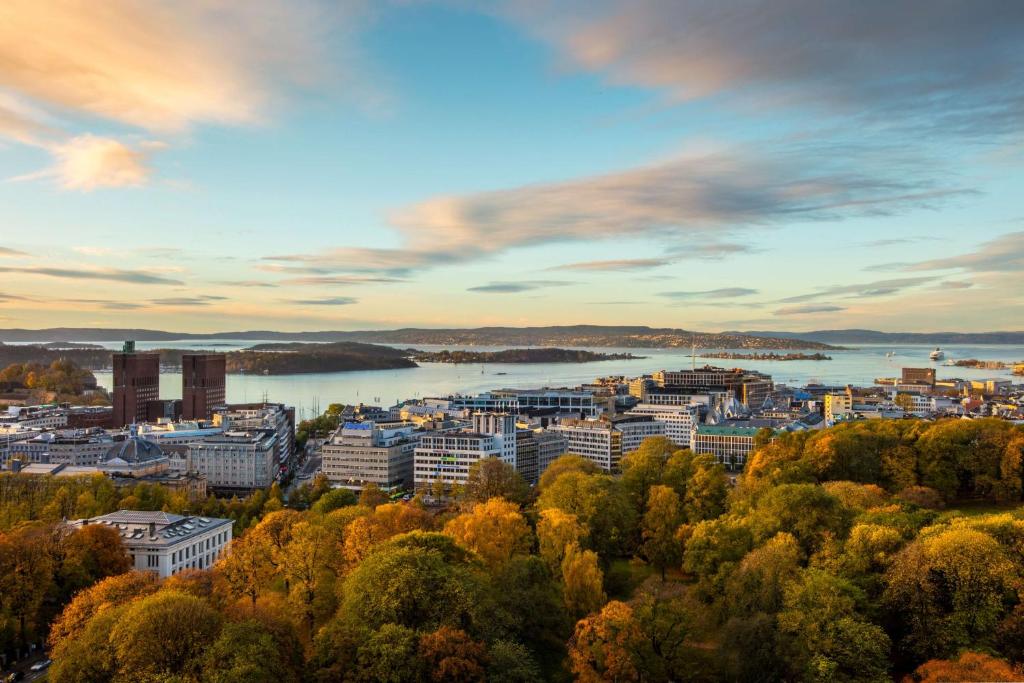
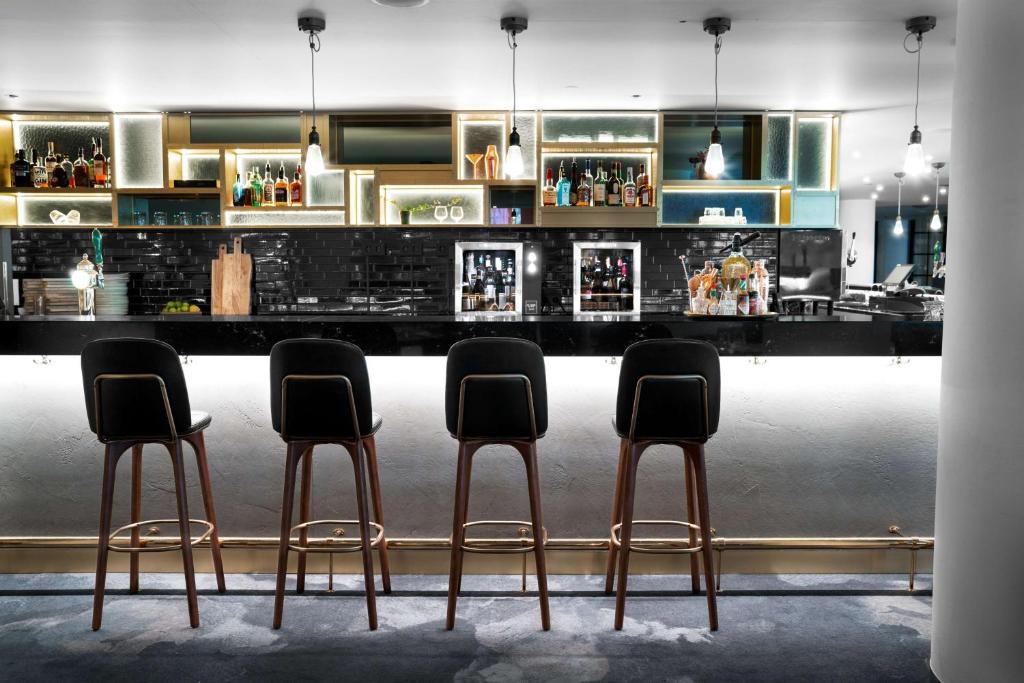
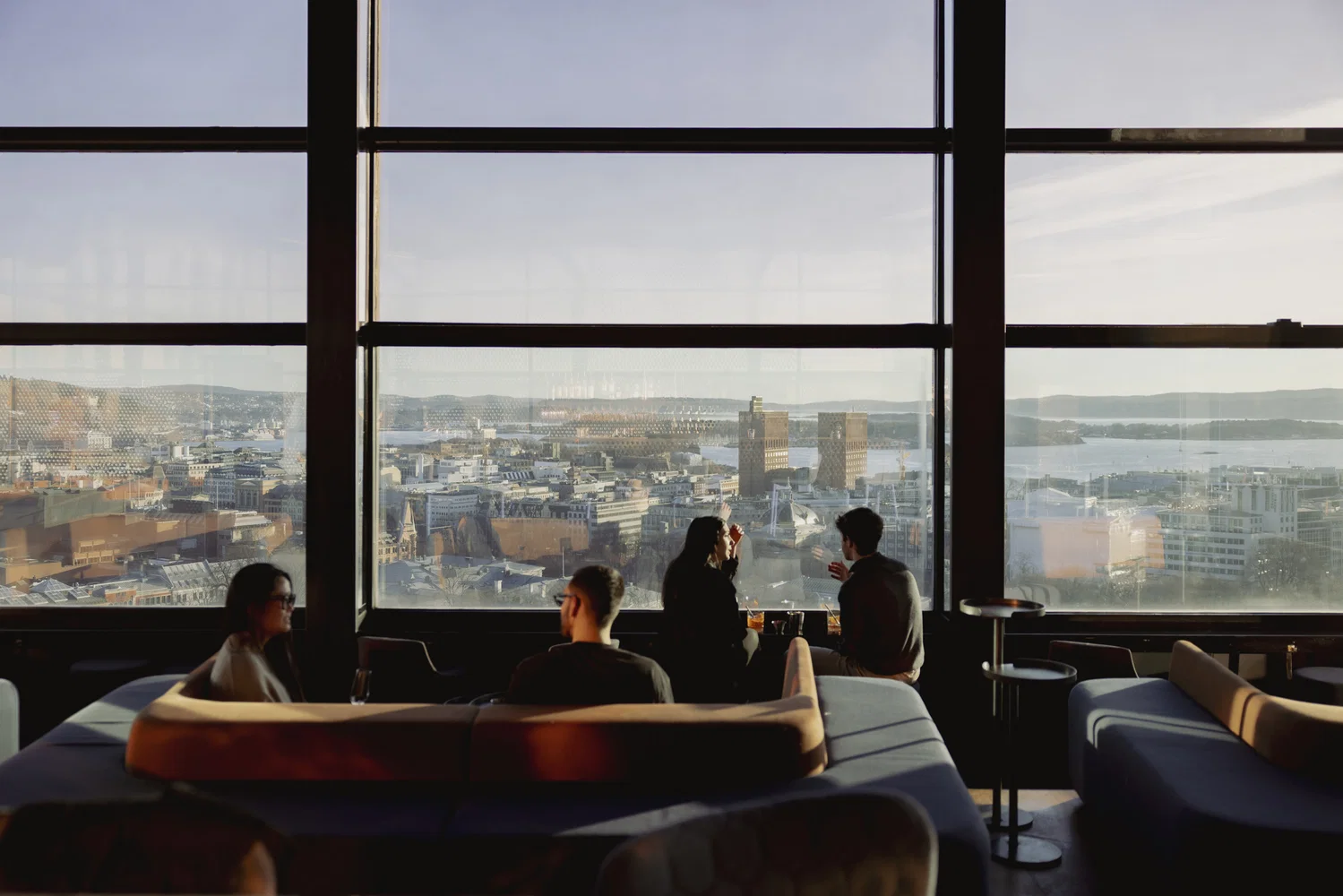
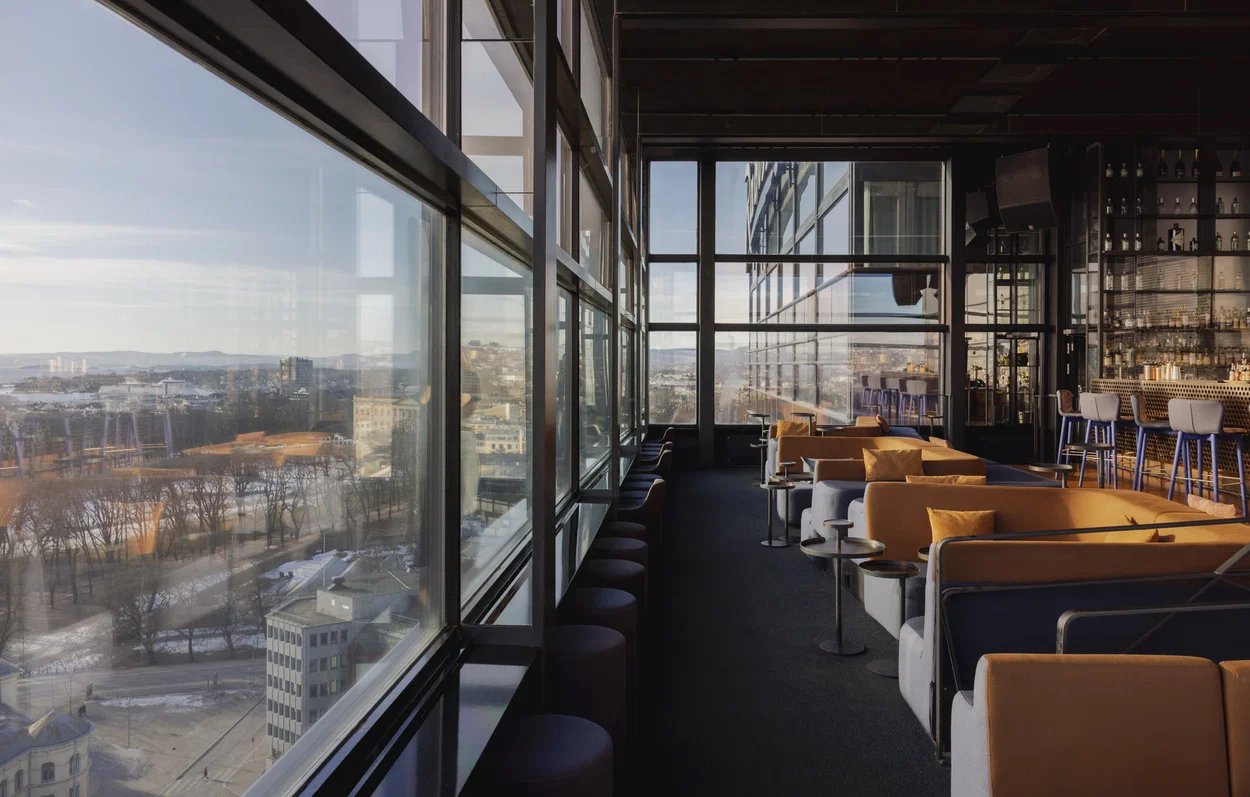
The exception is Summit Bar. Snøhetta redesigned the 21st-floor bar, and suddenly the hotel becomes much more interesting. The bar takes full advantage of its greatest asset: height. Rather than filling the space with visual noise, the design is organised around the panorama of Oslo, allowing the city itself to become the dominant decorative element. The effect is closer to a contemporary observation room than a conventional hotel bar. By day, the attraction is geography: rooftops, fjord, hills and the changing Norwegian sky. By night, the city becomes the lighting scheme.
The View Is the Interior
This is what makes Summit Bar work so well. At many high-rise hotels, the rooftop or sky bar feels added almost as an afterthought — a commercial space lucky enough to have a good view. Here, the design understands that the view is the project. Snøhetta’s intervention is sophisticated without being theatrical, creating a place that feels unmistakably more considered than the rest of the hotel below. It is also one of those rare cases where a single room can justify renewed interest in an otherwise fairly conventional large hotel.
26 North and the Social Spaces
Back at ground level, 26 North Restaurant & Social Club provides the hotel’s main food and social hub, with a contemporary Nordic menu and a more relaxed atmosphere than the building’s corporate scale might suggest. The lobby and communal areas follow the same direction. Nothing is overdesigned. The aim is accessibility rather than spectacle — somewhere equally usable by conference guests, weekend visitors and locals meeting for a drink. That dual personality is important to understanding the hotel. Radisson Blu Scandinavia is not trying to be Oslo’s coolest boutique address. It is still a major city hotel.
Why It Works
Radisson Blu Scandinavia works best when you stop expecting every part of it to be extraordinary. The hotel itself is a significant piece of Oslo’s 1970s hospitality history: large, functional, urban and still visually present in the skyline. Its contemporary renovation makes it more comfortable than architectural. Then Summit Bar changes the equation. Up there, Snøhetta has created something genuinely memorable — a calm, elevated room where Oslo does most of the decorating. For DNA Hotels, that is enough to make the building worth looking at again.
Information
At a glance
Architecture
Lundig Arkitektkontor
Opened / Renovated
1975, renovated 2019
Size matters
497 rooms & suites (15-120m2) (161-1,292 sq ft)
Interior design
Bathroom Amenities
custom
Handpicked worldwide
A carefully curated collection of exceptional boutique and design hotels across the globe.
Design with soul
Architecture, atmosphere and craftsmanship come together in stays with a clear identity.
Hidden, not hyped
Independent boutique hotels you rarely find on mainstream booking platforms.
Travel guidance
Personal recommendations and thoughtful support from people who actually know the places.