48° Nord Landscape Hotel, Breitenbach, France
Fourteen timber hyttes scattered across an Alsatian hillside, bringing Scandinavian architecture and radical eco-thinking to the Vosges
Why DNA Hotels Loves It
● Reiulf Ramstad Arkitekter reinterprets the traditional Norwegian hytte as 14 sculptural timber cabins that appear almost to float above the landscape.
● The architecture is genuinely shaped by its Natura 2000 setting: local timber, minimal contact with the terrain, Passivhaus principles and only four trees felled during construction.
● French-Danish owner Emil Leroy-Jönsson turns the meeting of Alsace and Scandinavia into more than an architectural idea, extending it into food, materials and a slower way of experiencing the landscape.
Norway, Transplanted to Alsace
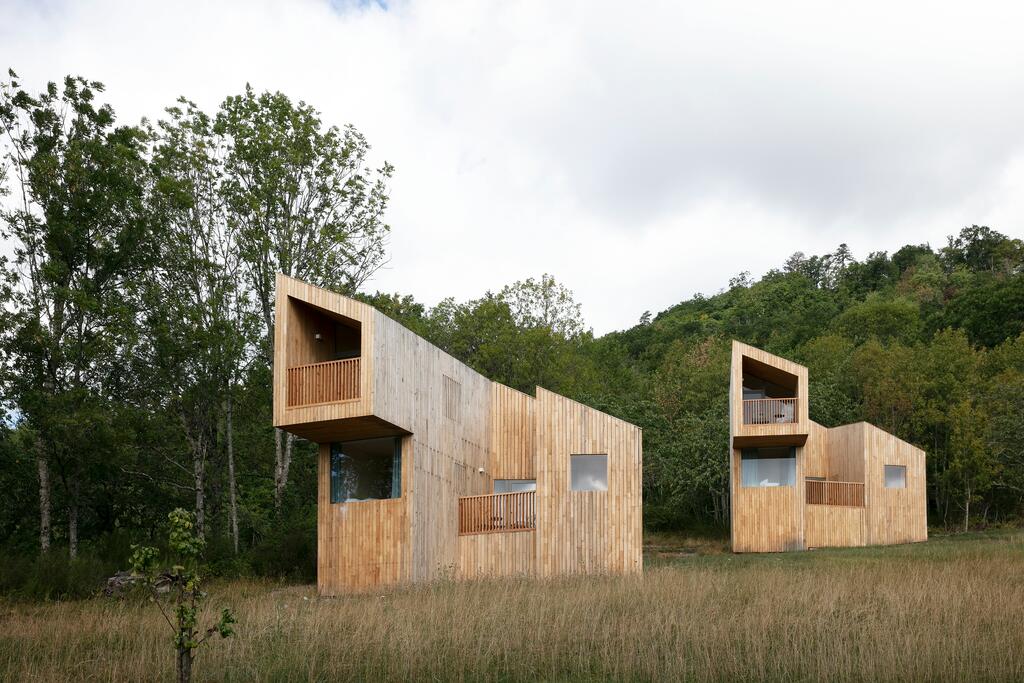
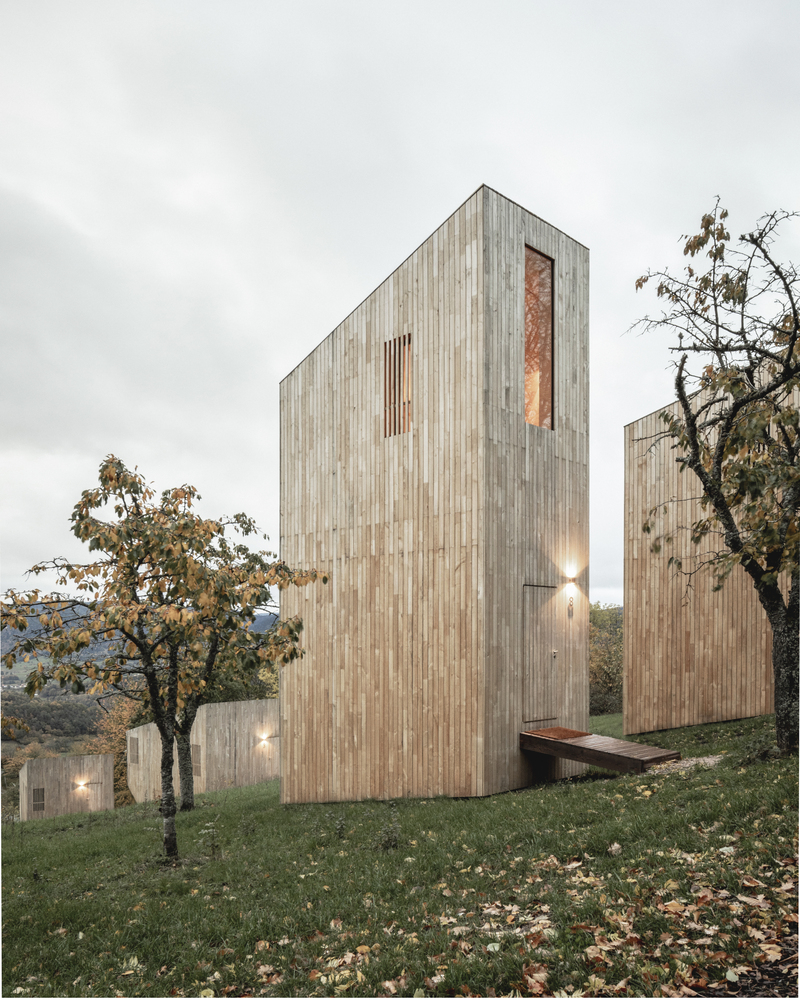
48° Nord looks wonderfully unexpected in the hills above the Alsatian village of Breitenbach. The project took eight years to realise, with Norwegian practice Reiulf Ramstad Arkitekter working alongside French firm ASP Architecture and hotelier and landscape architect Emil Leroy-Jönsson. French-Danish himself, Leroy-Jönsson wanted to explore the connections between Scandinavian culture and this ecologically progressive corner of Alsace. The answer wasn’t a conventional hotel. Instead, 14 timber cabins are scattered across a two-hectare hillside of wild grasses, hedges and trees, positioned like dark wooden boulders in the landscape. Architecture becomes part of the terrain.
Four Ways to Live in a Hytte
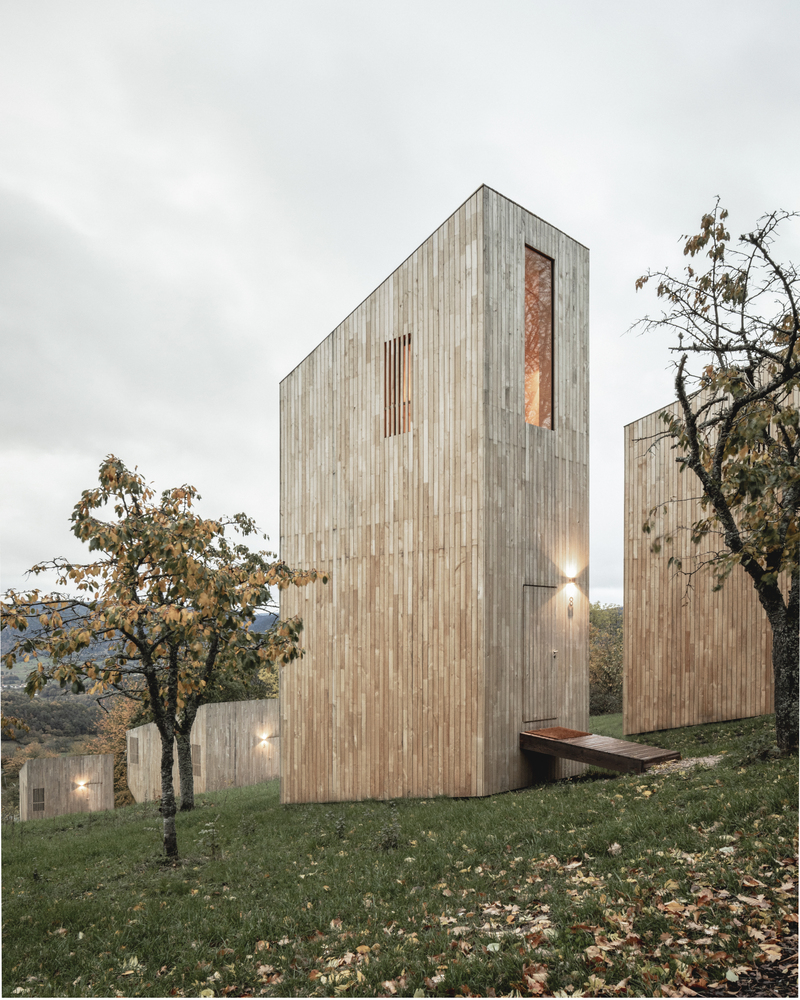
The traditional Scandinavian hytte — a simple countryside retreat for reconnecting with nature — provides the architectural starting point. Reiulf Ramstad developed four distinct versions. The single-level Gress, or “grass”, cabins sit closest to the main lodge and offer compact open-plan living. Eføy, meaning “ivy”, places the bed beneath a mezzanine living space. Tall, slender Tre — “tree” — cabins climb vertically through three levels, culminating in expansive views towards the Vosges. At the top of the hill, the pitched-roof Fjell — “mountain” — cabins provide more space for families and protected outdoor areas. Their different forms give the hillside its peculiar architectural rhythm. No two perspectives feel quite the same.
Architecture That Barely Touches the Ground
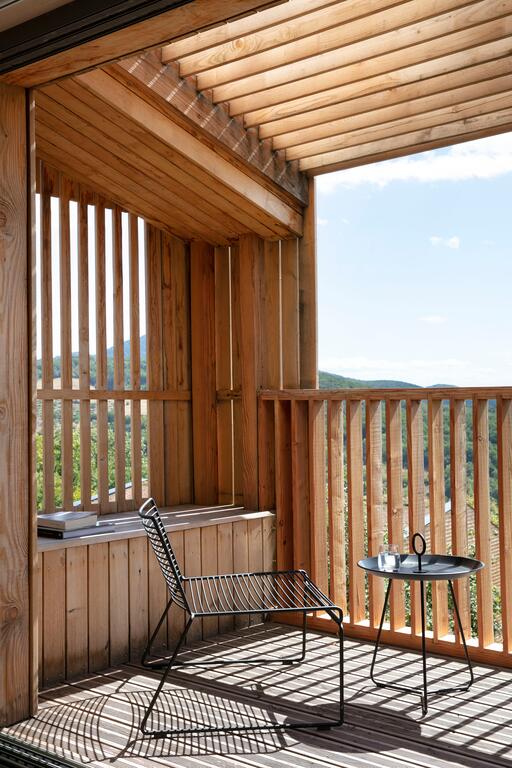
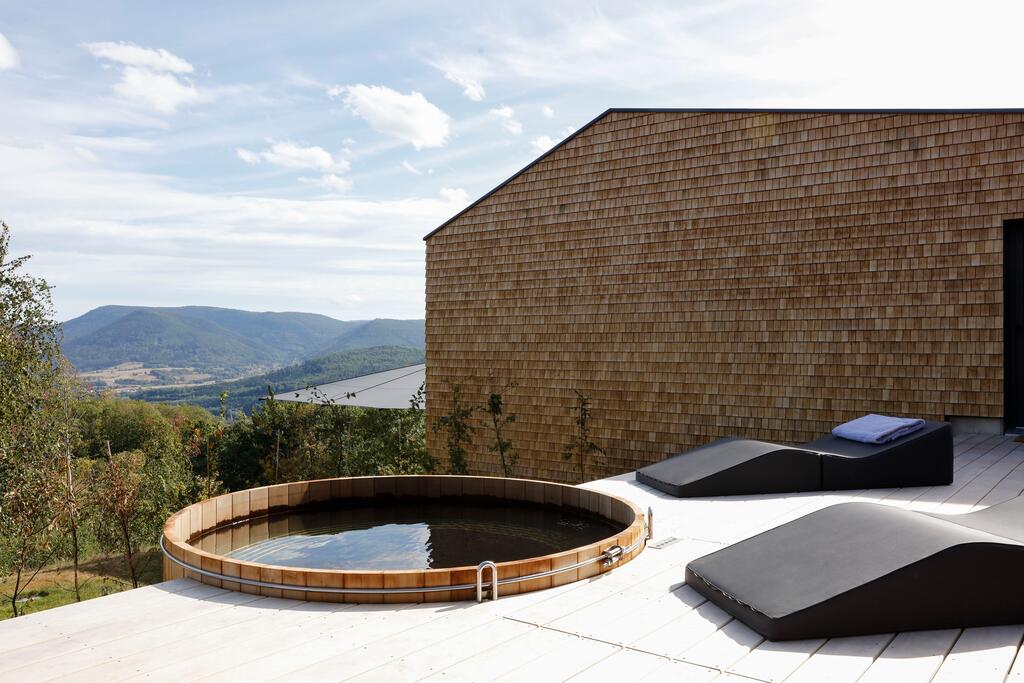
The most important design decision may be what the architects chose not to do. Rather than flattening the hillside, the cabins sit lightly on stilts, minimising their footprint and allowing the existing topography to remain largely undisturbed. Only four trees were felled during construction; around 1,000 shrubs were subsequently planted. Untreated Alsatian chestnut wraps the buildings and is designed to weather naturally. Timber comes from the surrounding forests, while large areas of glazing turn the Vosges landscape into the dominant decorative element. From a distance, the cabins seem almost temporary. They could disappear and the hillside would remain.
Nordic Warmth Inside
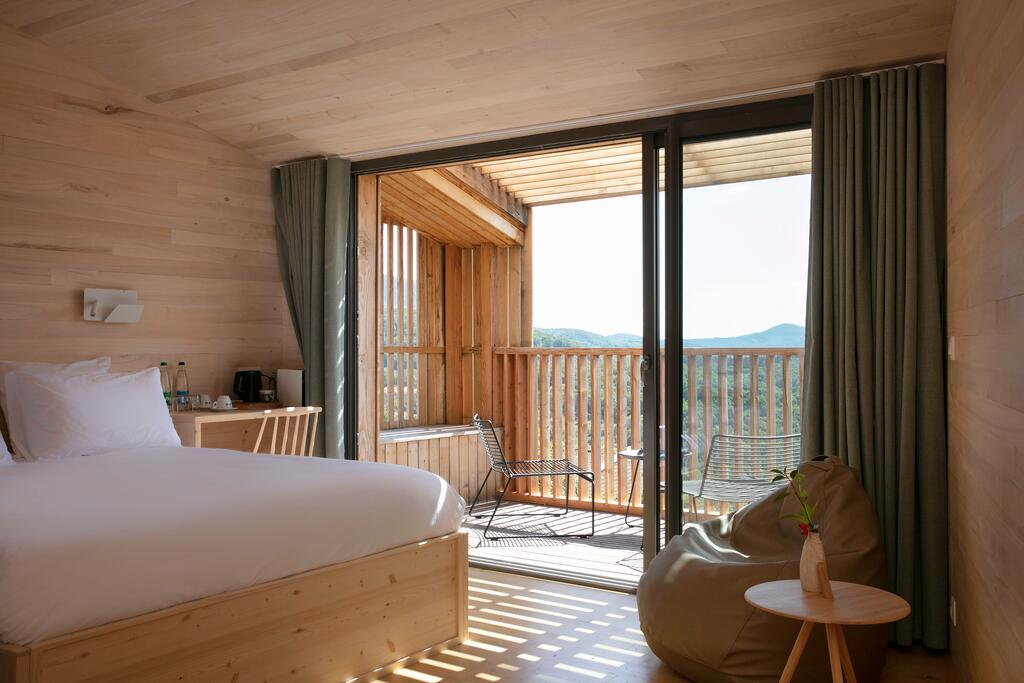
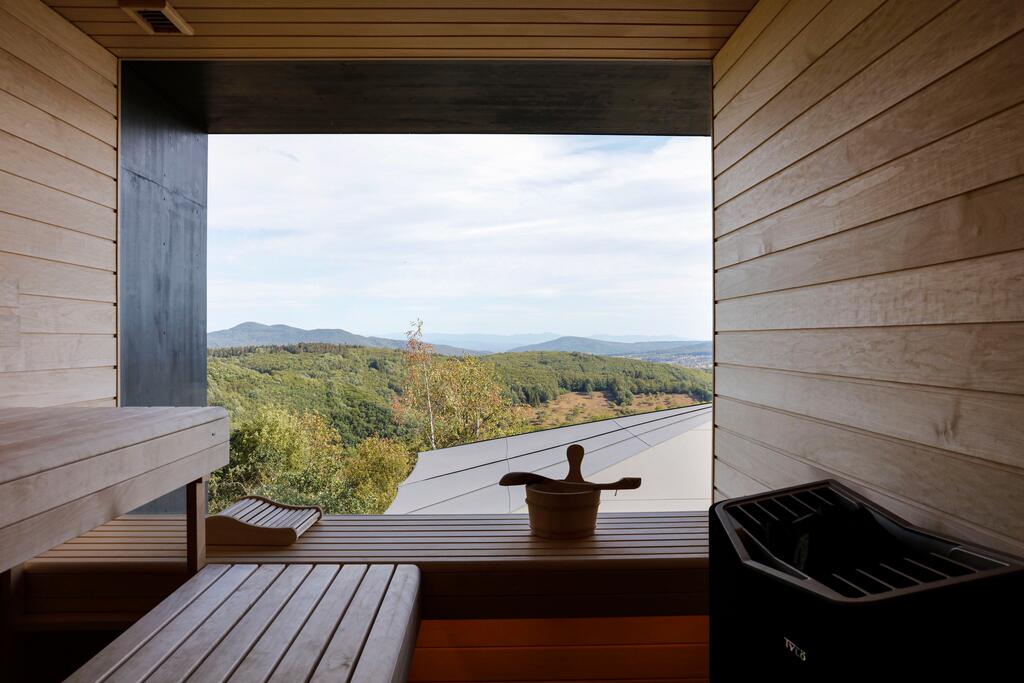
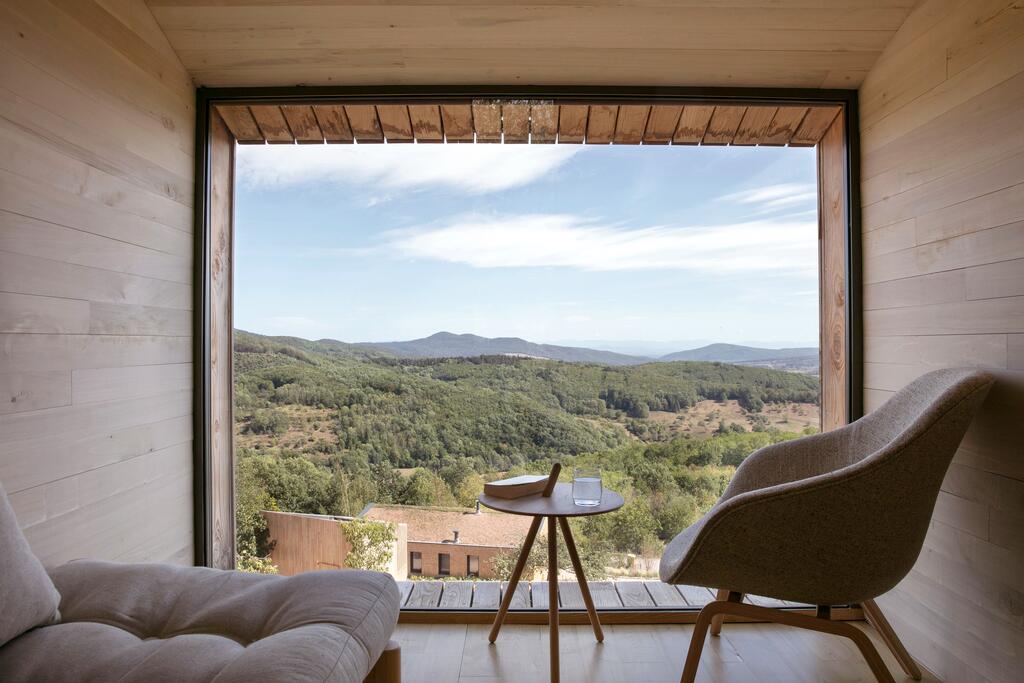
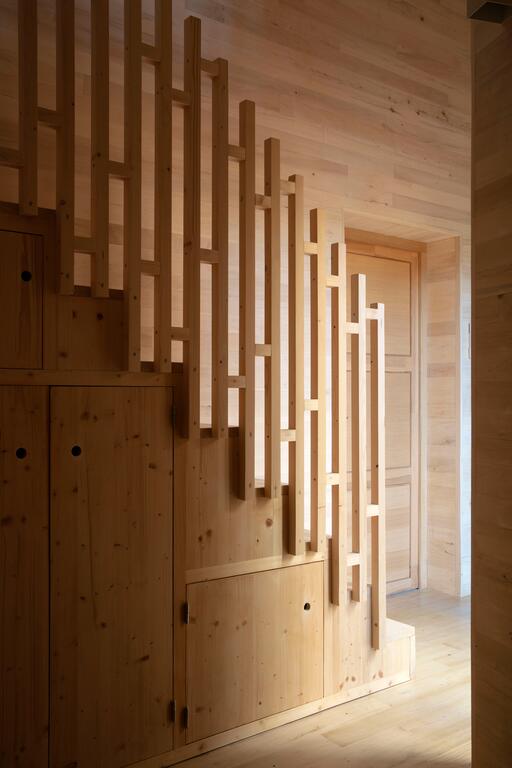
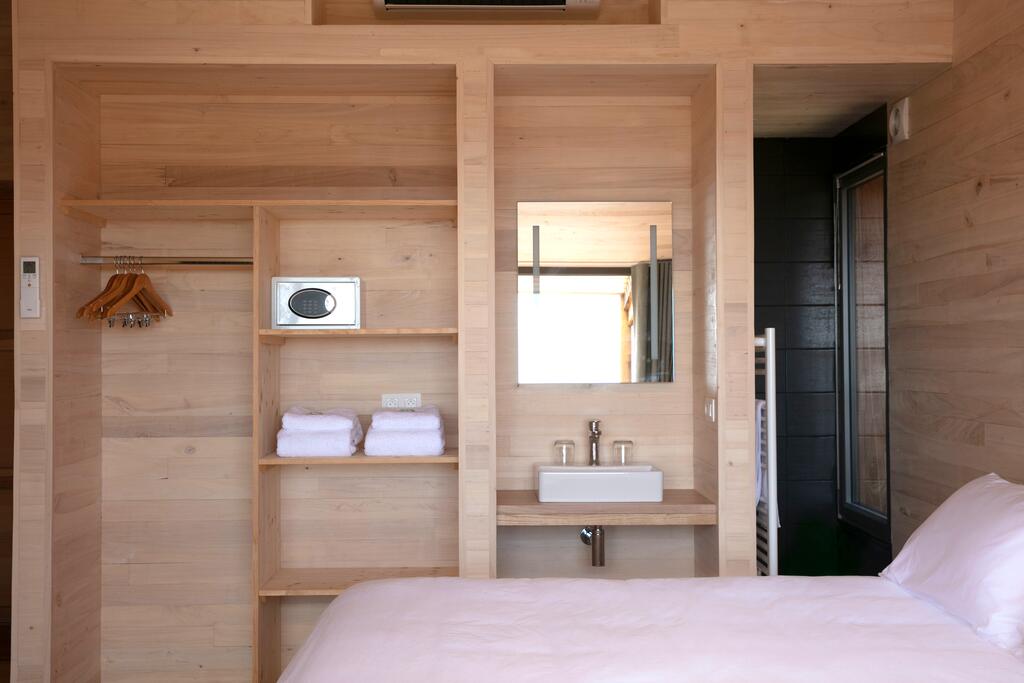
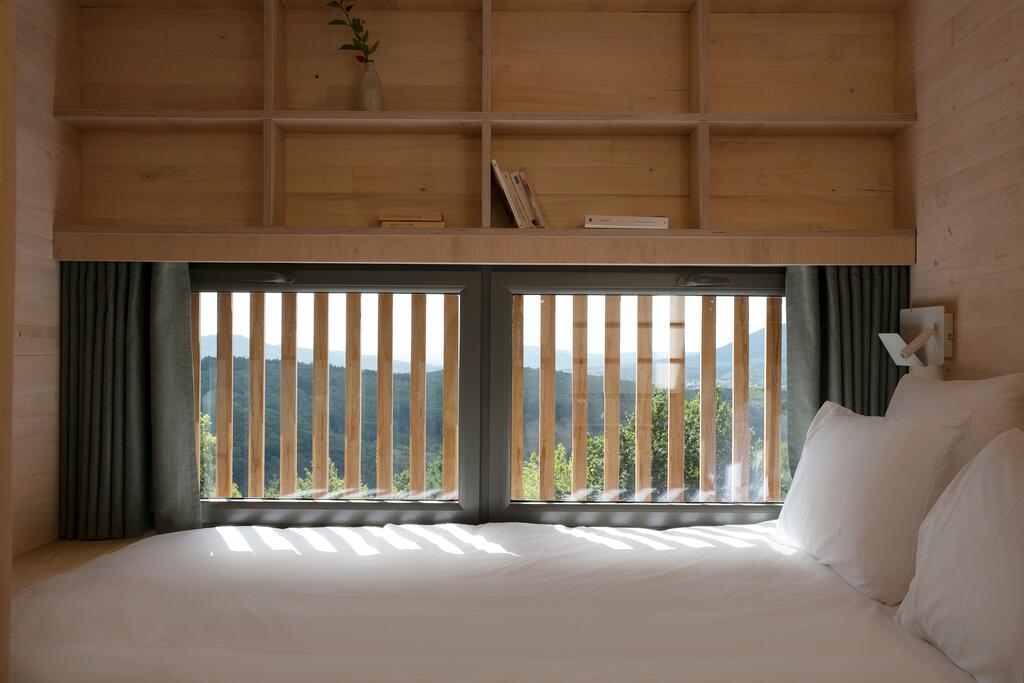
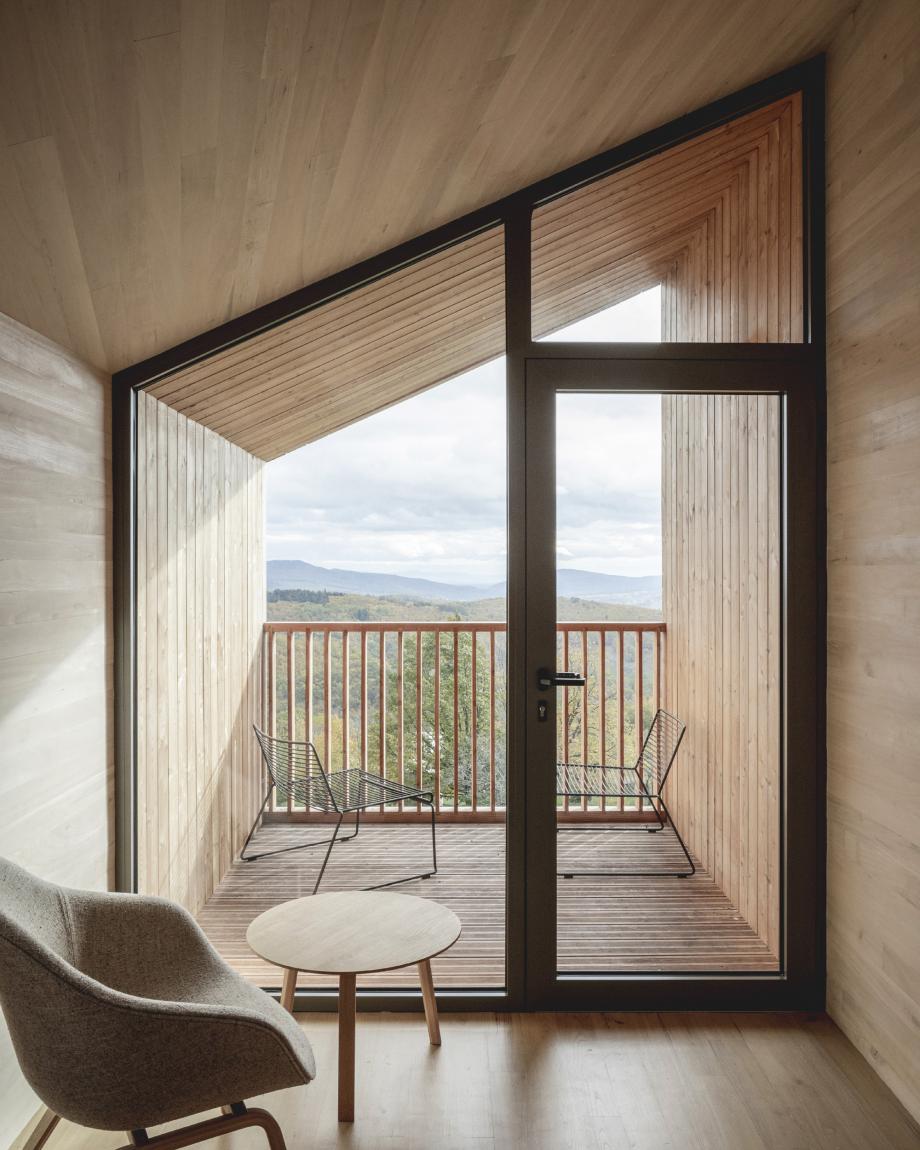
The interiors are deliberately quieter than the architecture. Folded timber surfaces, pale woods, built-in furniture and softly muted tones create the warmth associated with Scandinavian hygge without resorting to Nordic styling clichés. Windows are positioned as much for experience as for light. Forest, meadow and mountains repeatedly appear between walls and rooflines, making the changing landscape part of the room. Some cabins add private wellness elements such as a sauna or outdoor hot tub, but there is little conventional luxury clutter. The luxury is space, silence and perspective.
Felles Hytte
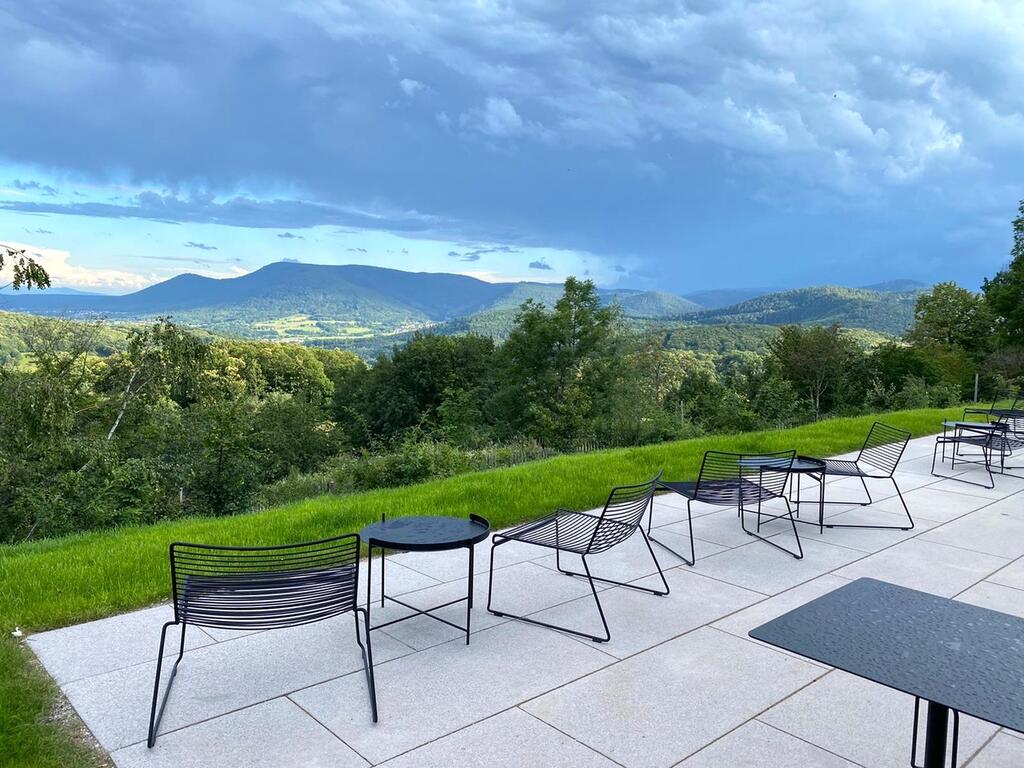
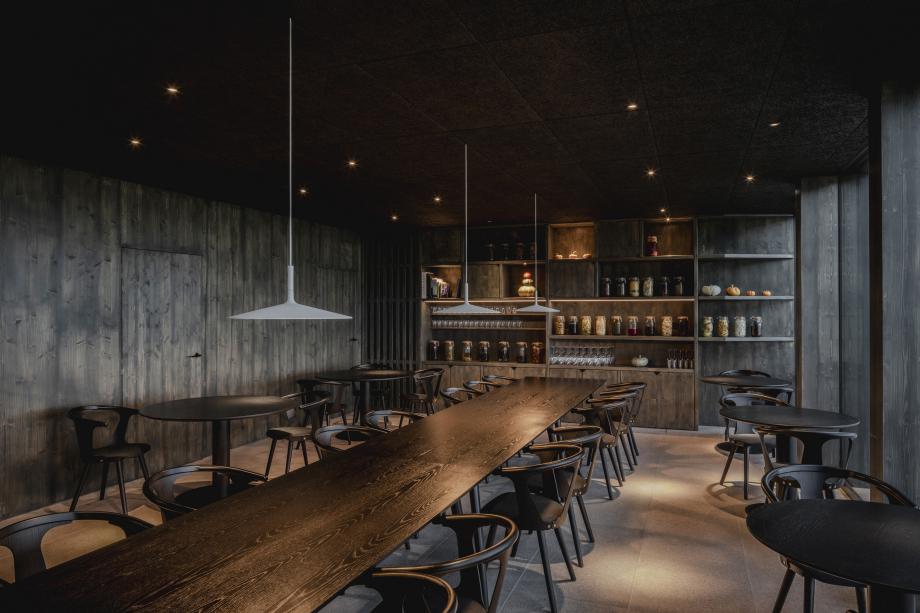
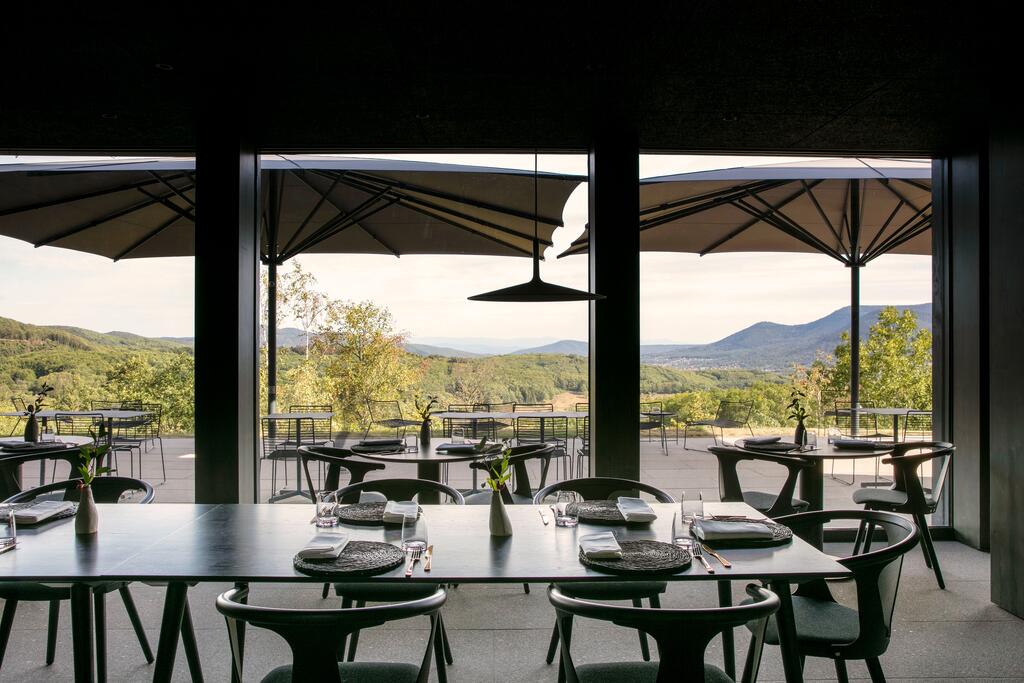
At the bottom of the slope, the communal Felles Hytte acts as the hotel’s social centre, containing reception, restaurant and spa. The same material logic continues inside: timber, stone and natural finishes rather than decorative excess. Parking is deliberately kept away from the accommodation, leaving the hillside itself free from cars and much of the visual infrastructure of a conventional hotel. The restaurant connects the Nordic concept back to Alsace. Ingredients come from the hotel’s own vegetable garden and nearby organic producers, turning local agriculture into an essential part of the experience rather than a sustainability footnote. Breakfast and dinner arrive with views across the surrounding hills.
Sustainability as Architecture
48° Nord’s environmental credentials aren’t applied after the design is finished. They determine the design. The main building follows Passivhaus principles. Cabins use bio-based materials sourced from the surrounding region. Rainwater is collected and treated through reed-bed filtration, while high levels of insulation reduce energy demand. Even the chestnut cladding was produced locally, including through a social reintegration workshop in nearby Saverne. It matters that all this happens within a protected Natura 2000 landscape. The ambition isn’t simply to build a sustainable hotel in nature, but to demonstrate how hospitality can occupy a sensitive landscape without overwhelming it.
Why It Works
48° Nord succeeds because nature isn’t scenery added to the hotel experience — it is the experience. Reiulf Ramstad’s strange, vertical hyttes give the project an unmistakable architectural identity, yet their greatest achievement is how lightly they occupy the hillside. Add local timber, Passivhaus thinking, food grown and sourced nearby and a deliberate absence of resort-style entertainment, and the result feels unusually coherent. This isn’t Scandinavia recreated in France. It’s something more interesting: Scandinavian ideas about simplicity, retreat and closeness to nature translated into the landscape and culture of Alsace.