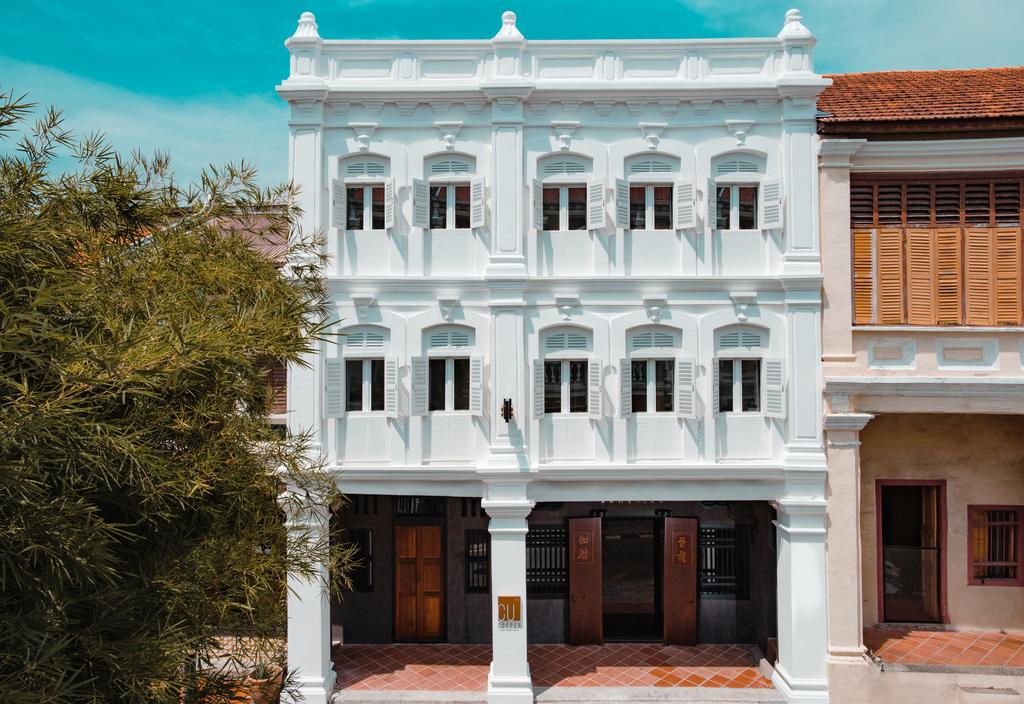
88 Armenian – George Town, Penang, Malaysia
A six-suite Straits-Eclectic mansion where charred timber, copper and contemporary minimalism tell the story of George Town.
Why DNA Hotels Loves It
● Just six suites inside a restored 19th-century Straits-Eclectic shophouse on Armenian Street, at the heart of UNESCO-listed George Town.
● Singapore-based FARM resisted nostalgic colonial decoration, using granite, timber, brick and copper to create a distinctly contemporary interpretation of Penang’s architectural heritage.
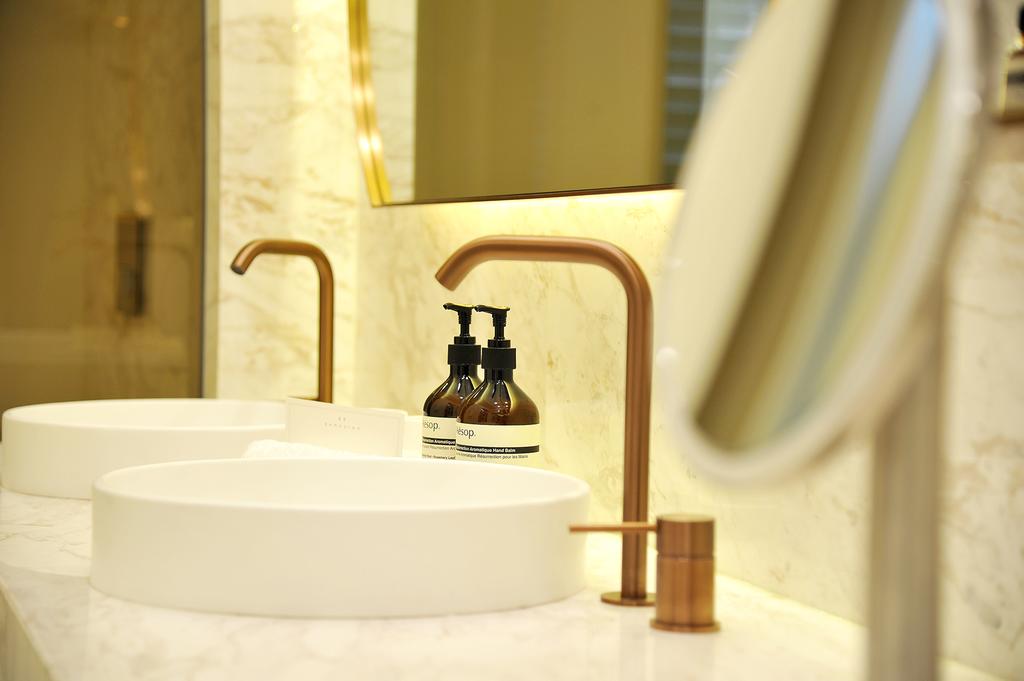
● Beautiful details carry the building’s history forward: charred shou-sugi-ban timber recalls a devastating fire, while copper references Armenian Street’s former identity as Coppersmith Street.
Six Rooms on Armenian Street
There are hotels that happen to occupy historic buildings, and there are hotels where the building becomes the reason to stay. 88 Armenian belongs firmly to the latter. Its address places you directly in the historic fabric of George Town, among temples, clan houses, shophouses, street art and the layers of Malay, Chinese, Indian and European culture that made Penang such an extraordinary trading port. Yet behind its narrow façade lies something unexpectedly quiet. Rather than recreate a romanticised version of colonial Penang, 88 Armenian strips the experience back to architecture, materials and light.
A Shophouse with Scars
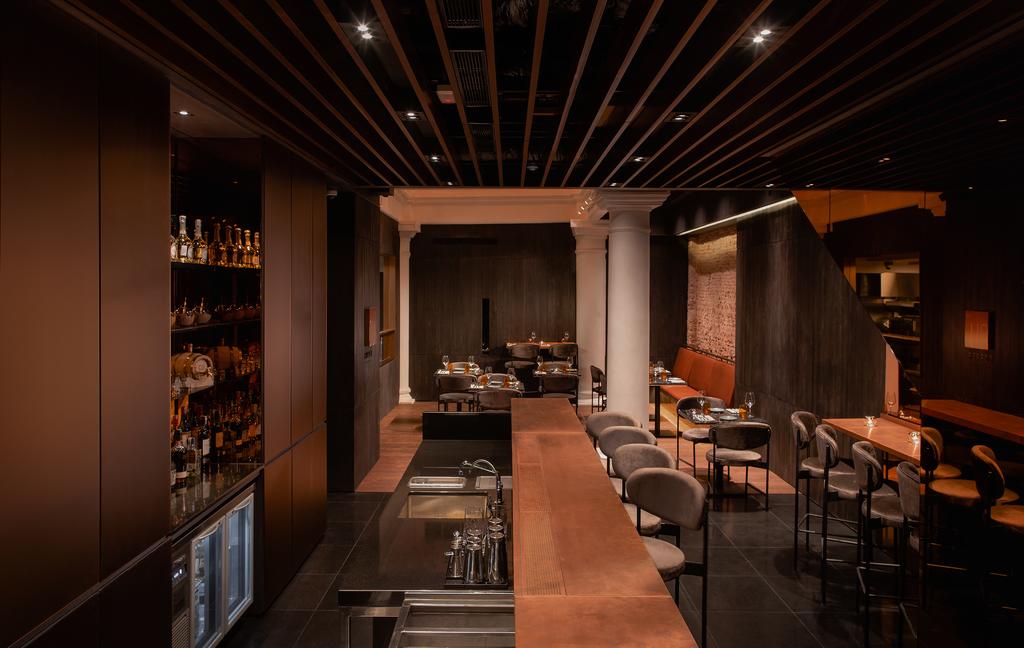
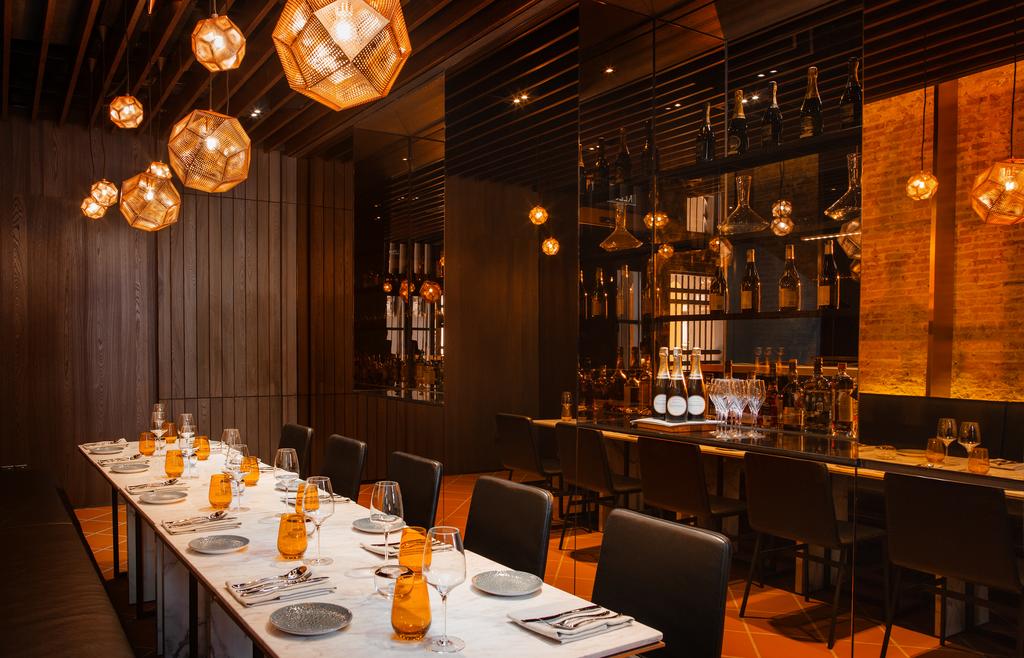
The building’s history reaches into the 19th century, when Armenian merchants were among the communities passing through this part of George Town. Fire would later destroy an earlier shophouse on the site, and that event became part of the vocabulary used by FARM when transforming the surviving building into a hotel. In the dining space, timber is treated using the Japanese shou-sugi-ban charring technique — a subtle reference to that destructive episode rather than an attempt to erase it. Copper appears throughout the interiors too, recalling the street’s historical association with coppersmiths. These gestures are what make the restoration interesting. History isn’t reproduced. It is translated.
Finding Light in a Shophouse
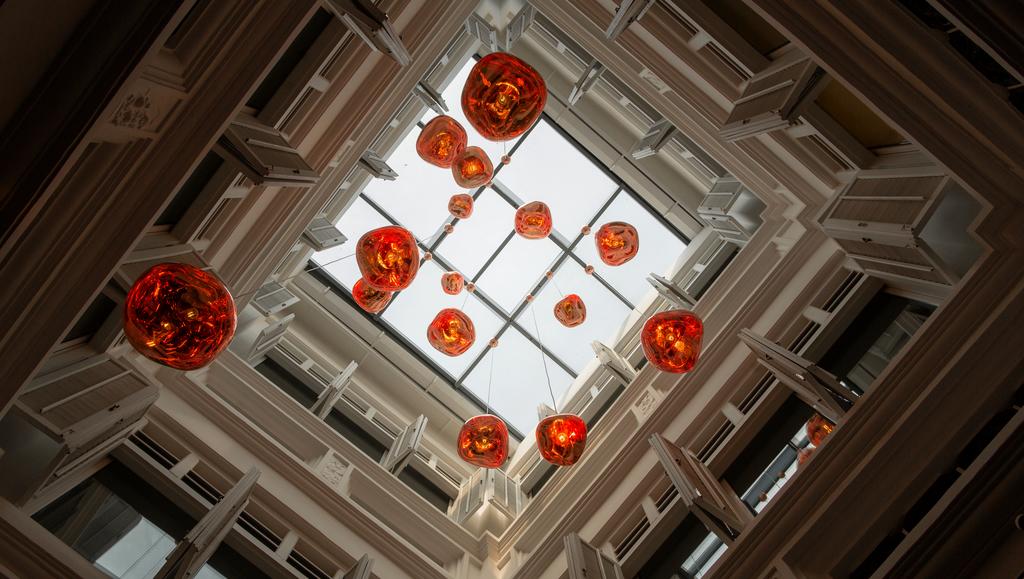
Traditional George Town shophouses present an architectural challenge. They’re typically narrow and deep, with limited opportunities for natural light. FARM turned that constraint into the defining feature of 88 Armenian. At its centre is an airwell, drawing daylight deep into the building. A sculptural chandelier descends through the vertical space while the six suites unfold on the floors around it. Granite, exposed brick, timber and restrained concrete-like tones amplify the contrast between shadow and light. There isn’t even a conventional hotel lobby. Instead, the ground floor flows directly into Tong, the hotel’s intimate restaurant and bar, making the building feel closer to a private urban house than a conventional boutique hotel.
No Colonial Nostalgia Required
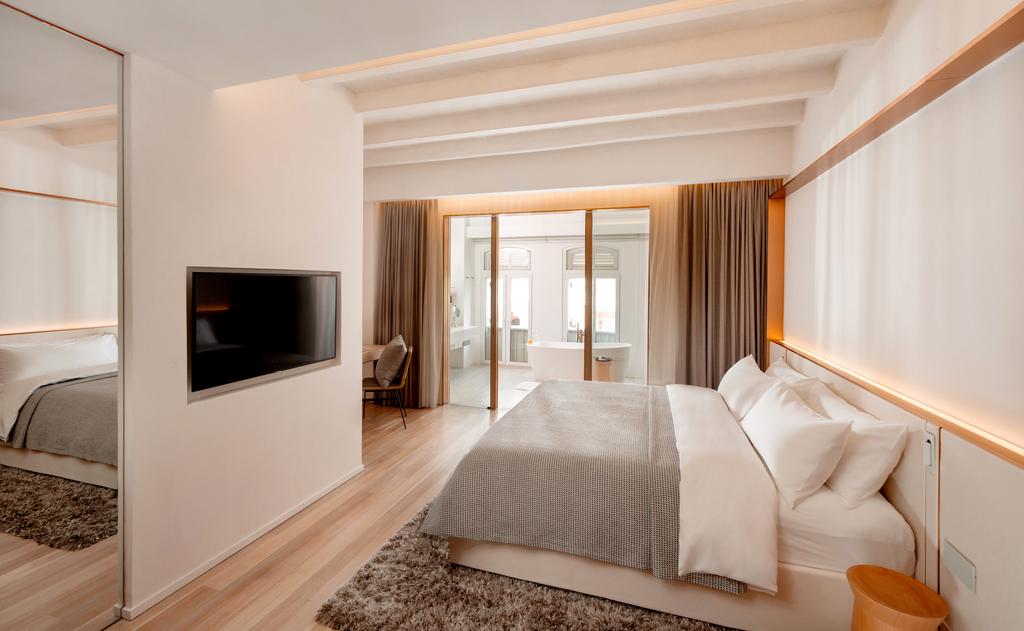
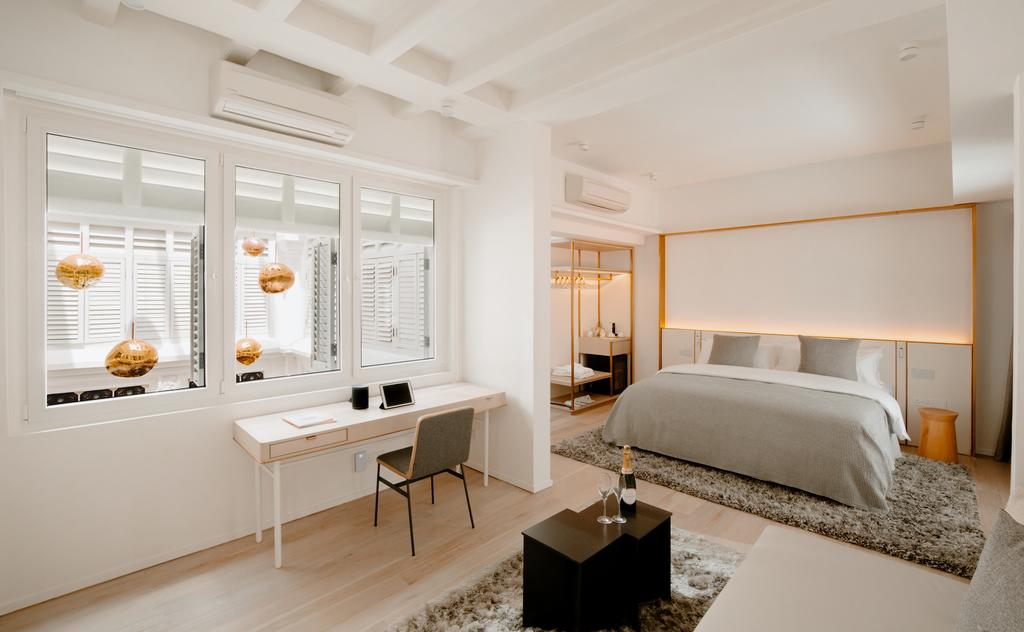
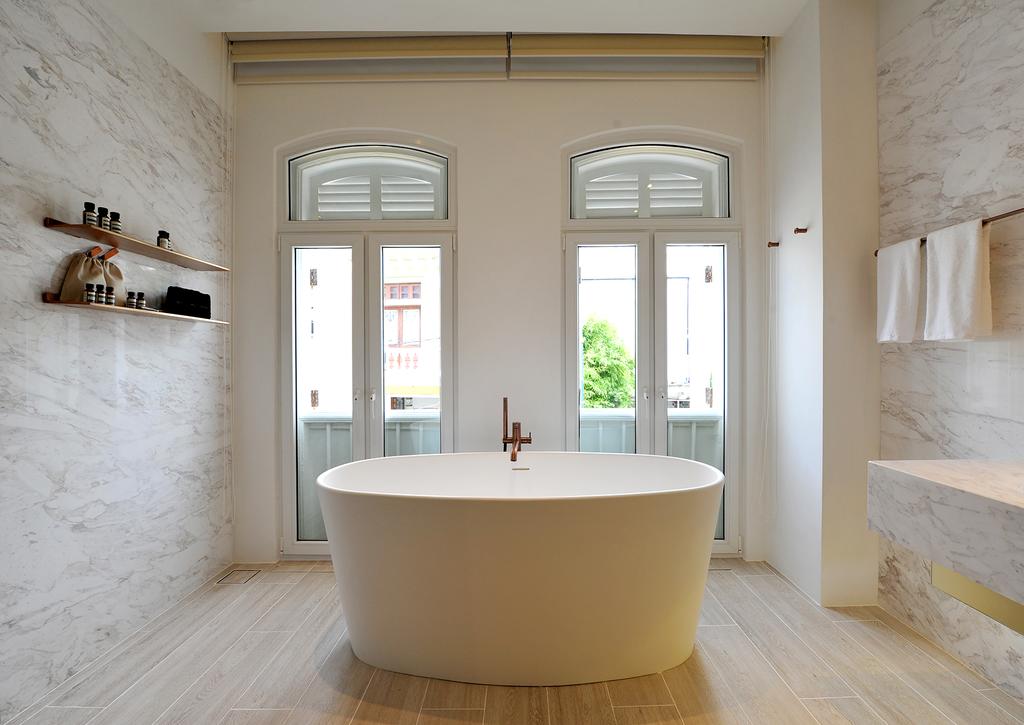
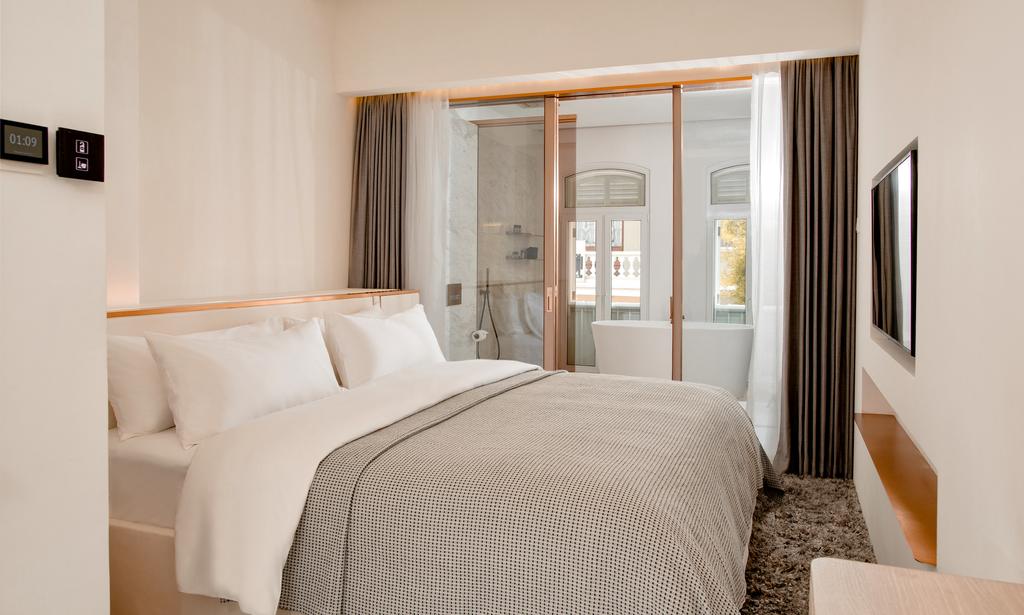
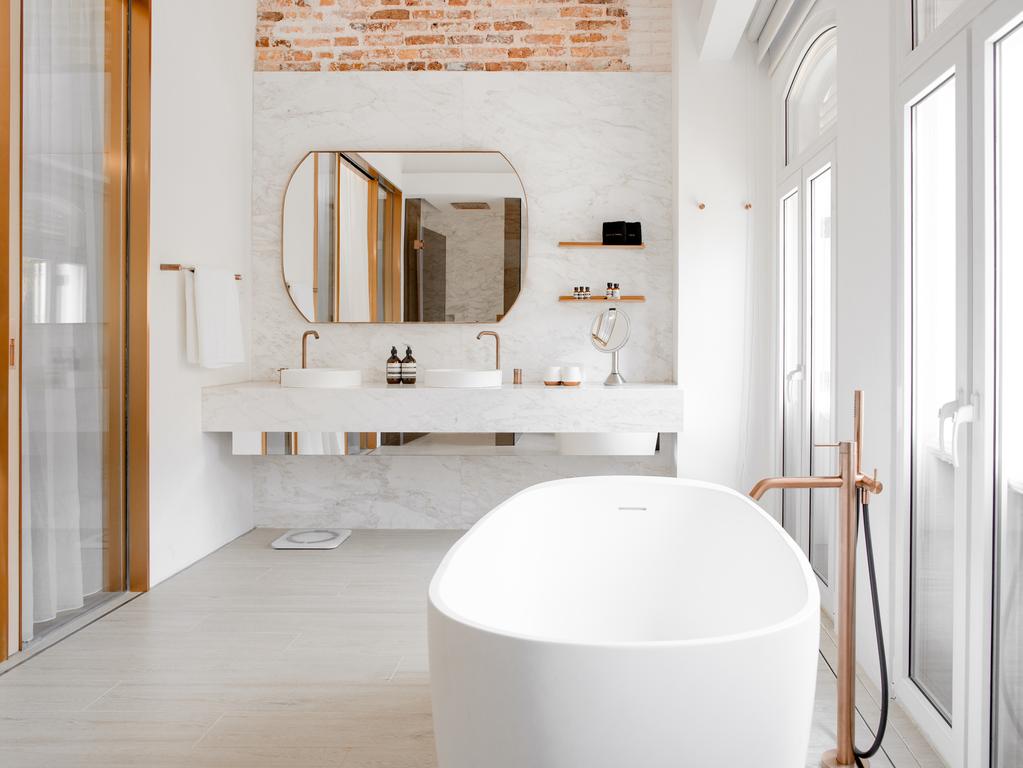
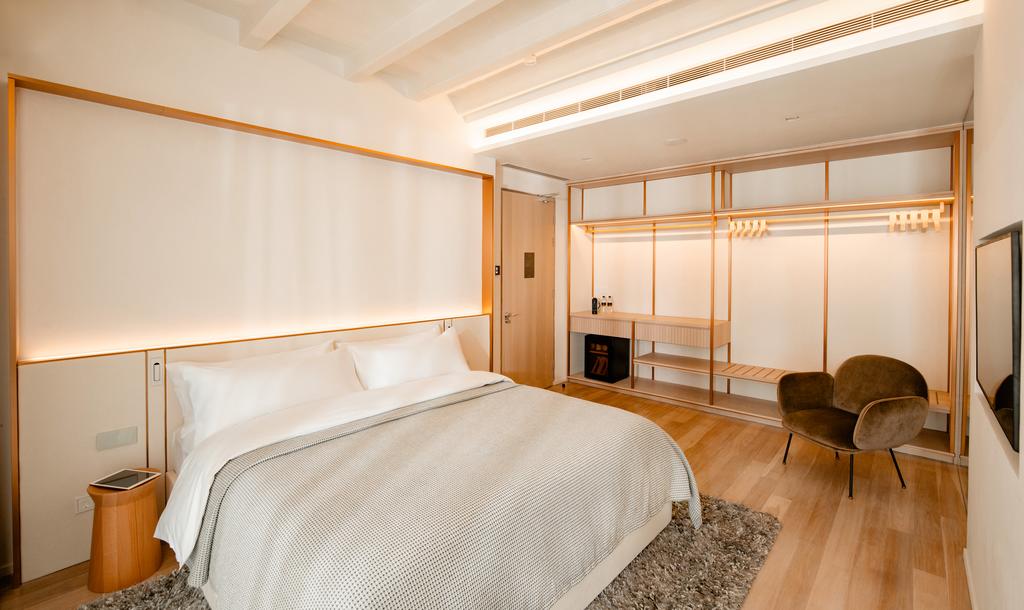
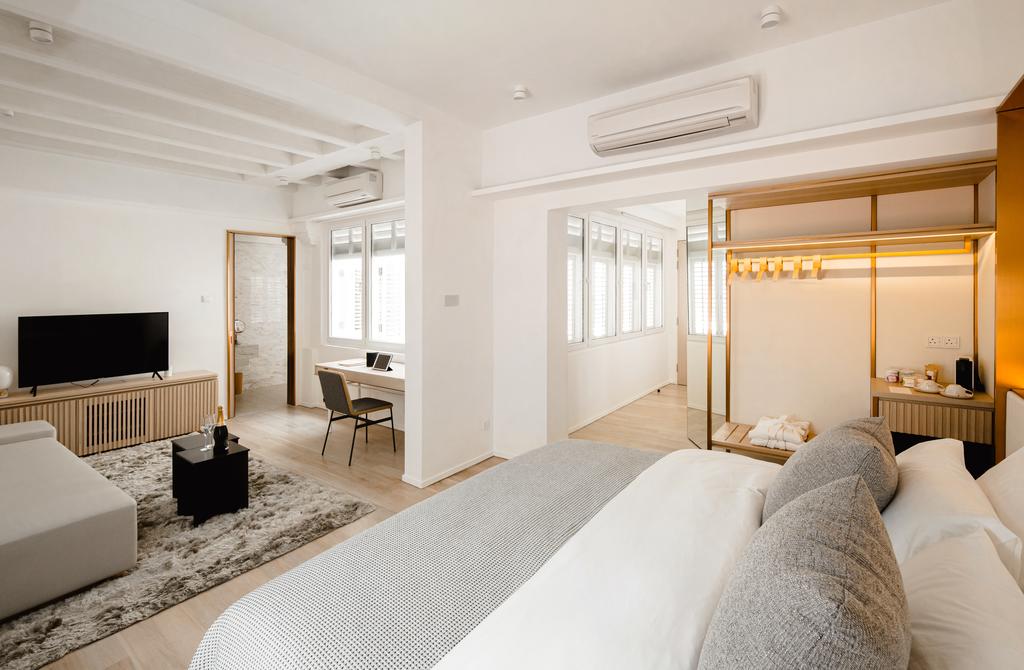
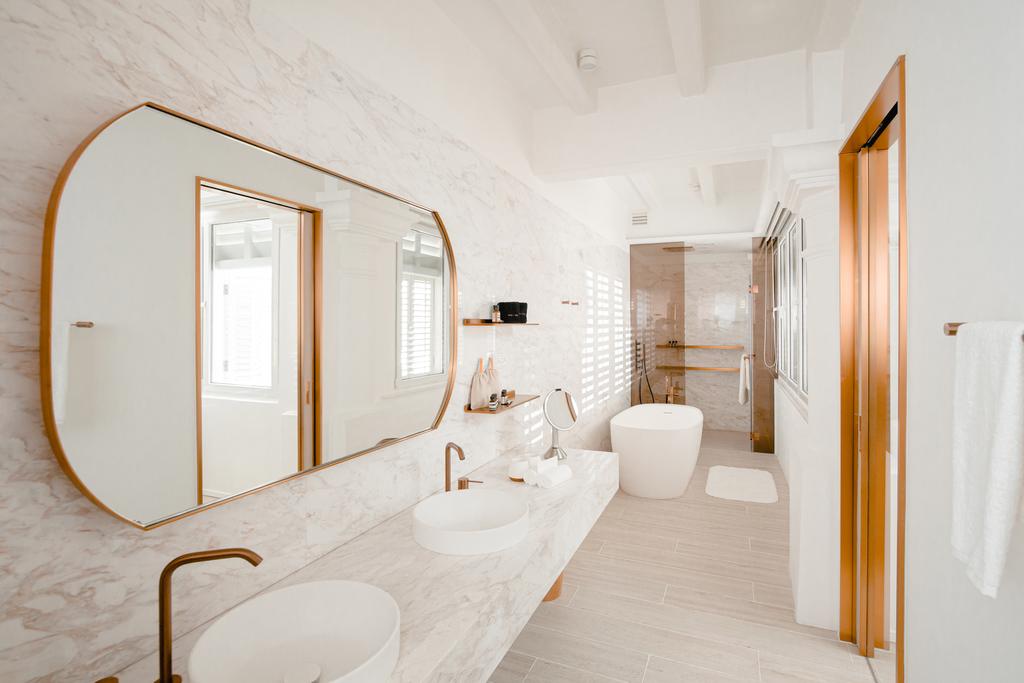
The six suites continue the restraint. Each is named after a sculptor, but the interiors themselves avoid unnecessary artistic gestures. Pale walls, muted greys, timber shutters and crisp contemporary furniture create spaces that feel deliberately calm after the sensory overload of George Town outside. Original architectural elements provide the texture. Technology provides the comfort. Bang & Olufsen speakers, smart lighting, iPads and sensor mirrors are integrated without turning the rooms into technological showcases, while the larger suites add generous bathrooms with freestanding tubs and double vanities. Open the timber shutters and Armenian Street reappears outside. Close them and the city seems remarkably far away.
Penang on the Plate
With one of Southeast Asia’s great food cities immediately outside the door, a hotel restaurant in George Town has to know its place. Tong doesn’t attempt to compete with Penang’s extraordinary street-food culture. Instead, it interprets familiar Malaysian flavours within the hotel’s more contemporary setting. Breakfast might move from Western dishes to pandan buns, dim sum or laksa, while evenings bring cocktails, small plates and dishes drawing on local flavours. The scale remains intimate, reflecting the hotel itself rather than trying to become a destination restaurant detached from it.
George Town Outside the Door
Location is arguably 88 Armenian’s greatest luxury. The hotel sits on Armenian Street, within walking distance of some of George Town’s defining landmarks, including the elaborate Khoo Kongsi clan house and Little India. But wandering without an itinerary may be the better approach. George Town rewards curiosity: Chinese clan temples appear beside mosques, street-food stalls sit beneath elaborate shophouse façades, contemporary galleries occupy old commercial buildings and fragments of the city’s trading history survive almost everywhere. At 88 Armenian, that relationship with the city doesn’t stop when you return to the hotel. The same history continues inside its walls.
Small Enough to Make It Personal
With only six suites, hospitality can operate on a different scale. Communication is direct, details can be personalised and touches such as handwritten turndown notes and individually selected snacks reinforce the feeling that you’re staying in a house rather than passing anonymously through a hotel. There’s even a bath butler, who can prepare the tub with salts, petals and tea. It could easily feel theatrical. Here, somehow, it doesn’t.
The New George Town
88 Armenian demonstrates one of the most interesting possibilities for heritage hotels. Preservation doesn’t have to mean turning an old building into a museum, nor does respecting history require filling rooms with reproduction antiques. FARM has allowed the architecture to carry its age while introducing an entirely different contemporary layer. Old brick. Burnt timber. Copper. Granite. Six quiet rooms. And one of George Town’s most fascinating streets waiting outside. Sometimes the best way to preserve the past is to let it keep evolving.