Hotel Ayllón – Ayllón, Segovia, Spain
Two medieval village houses transformed into an 18-room retreat where Castilian craftsmanship meets quiet contemporary design.
Why DNA Hotels Loves It
● Madrid-based Lucas y Hernández-Gil Arquitectos handled everything from the architectural restoration and interiors to bespoke furniture, photography and graphic identity, giving this tiny hotel an unusual coherence.
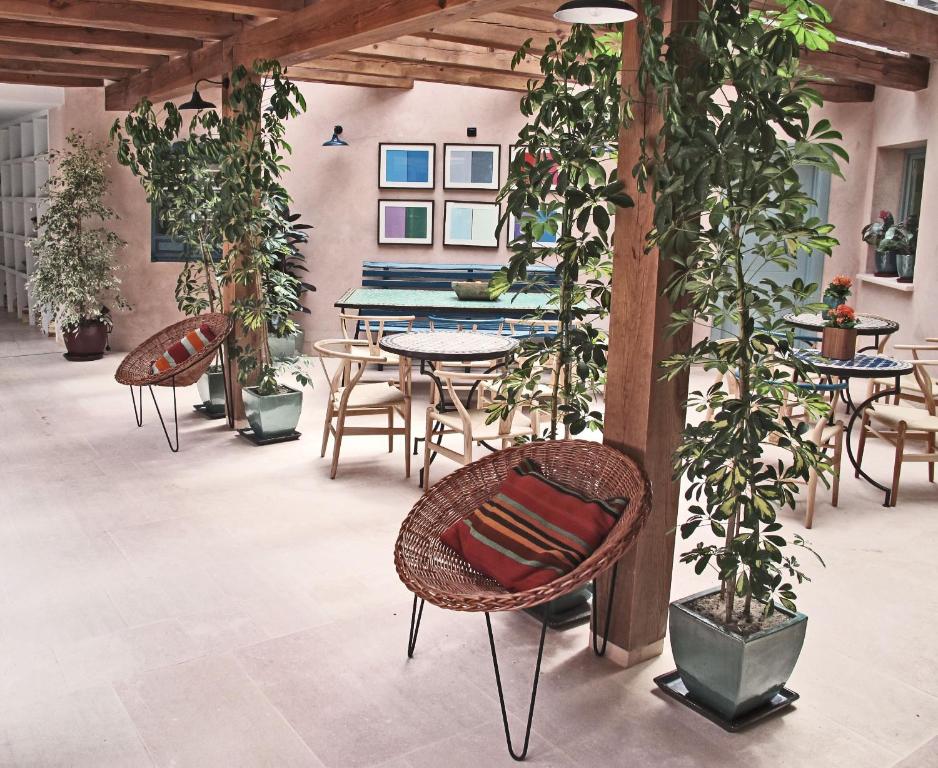
● Two historic houses are joined by a new courtyard, creating an intriguing sequence of passages, rooms and gathering spaces that preserves the irregularity of Ayllón’s medieval fabric.
● Local stone, wood and lime — worked with the help of local craftspeople — root the contemporary intervention firmly in Castilla, while flashes of colour reference the poppies scattered through its wheat fields.
Two Houses, One Hotel
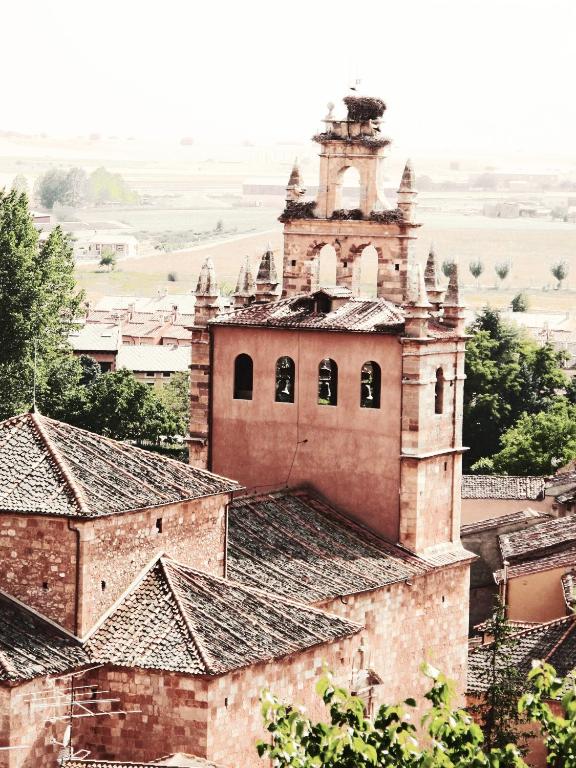
In the middle of Ayllón, a remarkably preserved medieval village in Segovia province, contemporary architecture has been inserted with unusual restraint. Hotel Ayllón occupies two old houses directly on the Plaza Mayor. Rather than smoothing away their differences, Lucas y Hernández-Gil Arquitectos treated the existing buildings as the starting point for everything that followed. Their challenge was deceptively simple: turn two separate houses into one hotel without losing the domestic scale and irregular character that made them interesting in the first place. The answer was a courtyard. It links the two buildings physically and visually, while becoming the quiet heart around which the hotel unfolds.
Getting Lost Is Part of the Design
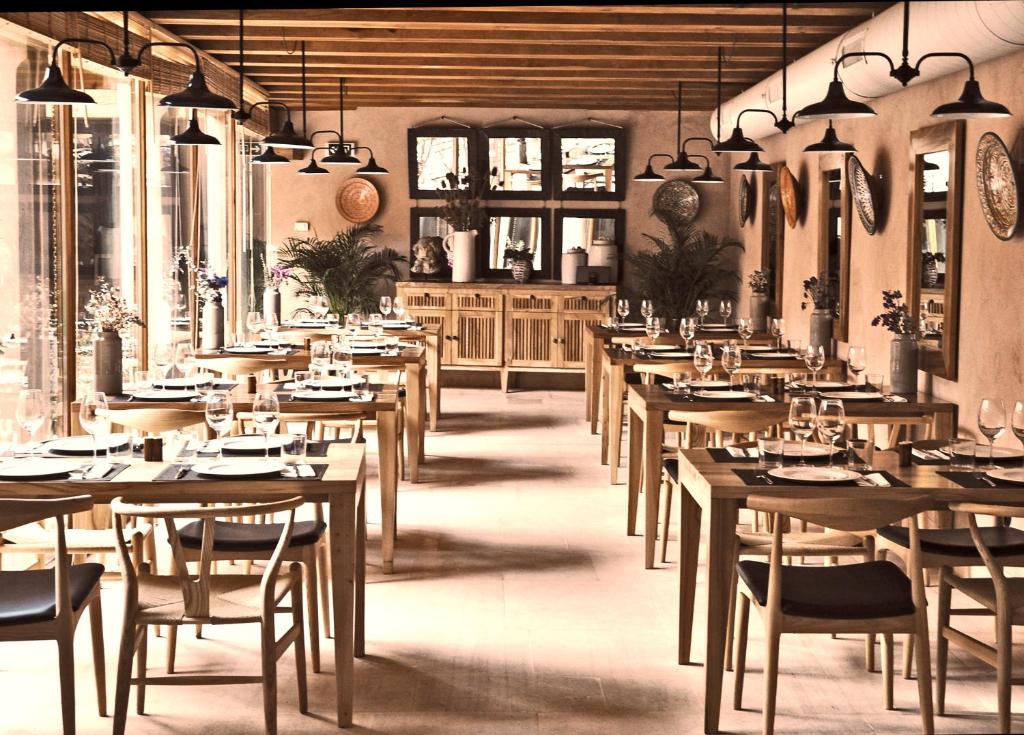
Hotel Ayllón doesn’t behave like a conventional hotel. There is no long corridor with identical doors marching towards a fire exit. Instead, the architecture inherits the complexity of the medieval buildings around it. Routes twist and change direction. Rooms connect through unexpected passages. The courtyard appears and disappears. Three linked dining rooms unfold one after another. The architects deliberately embraced this slightly intricate journey through the building, turning circulation itself into part of the experience. With only 18 guestrooms, all different, the result feels closer to wandering through a collection of old village houses than staying in a purpose-built hotel.
Castilla, Edited
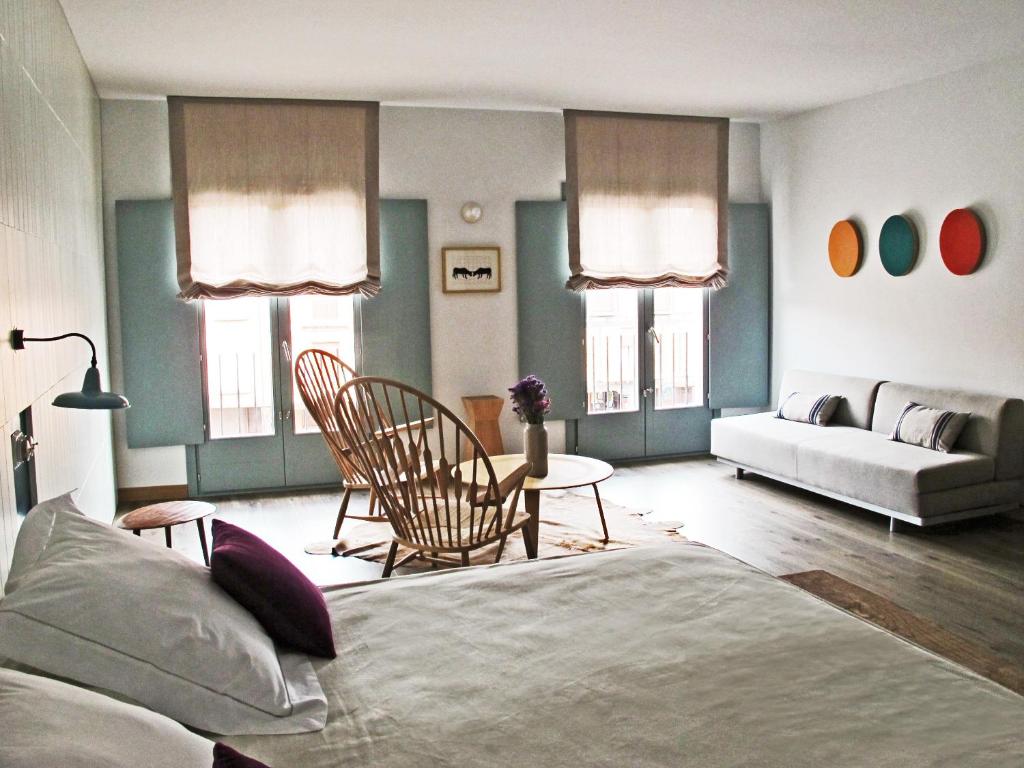
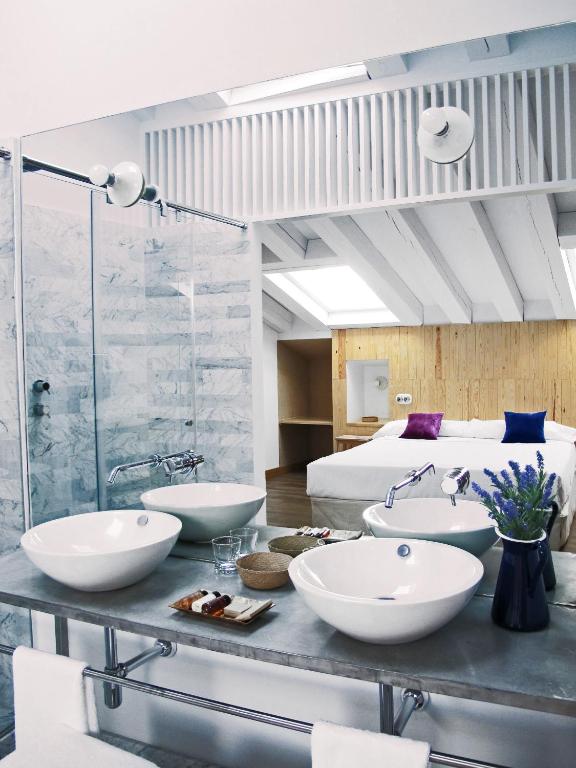
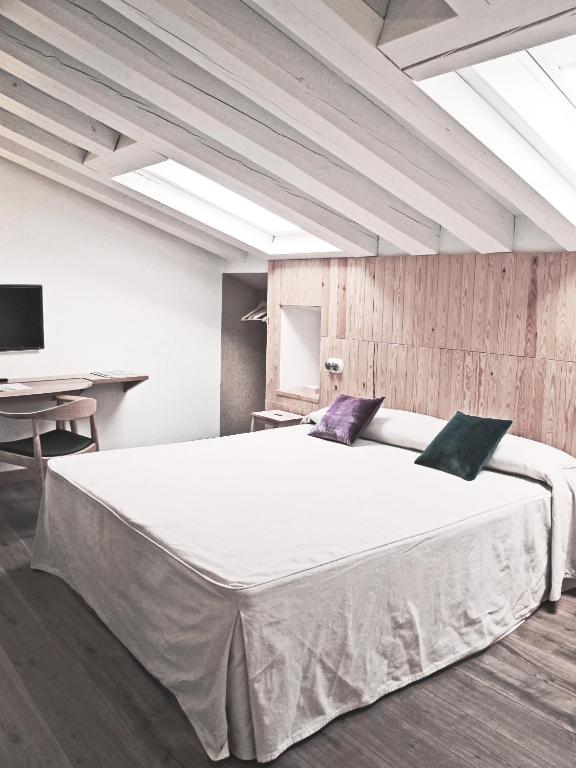
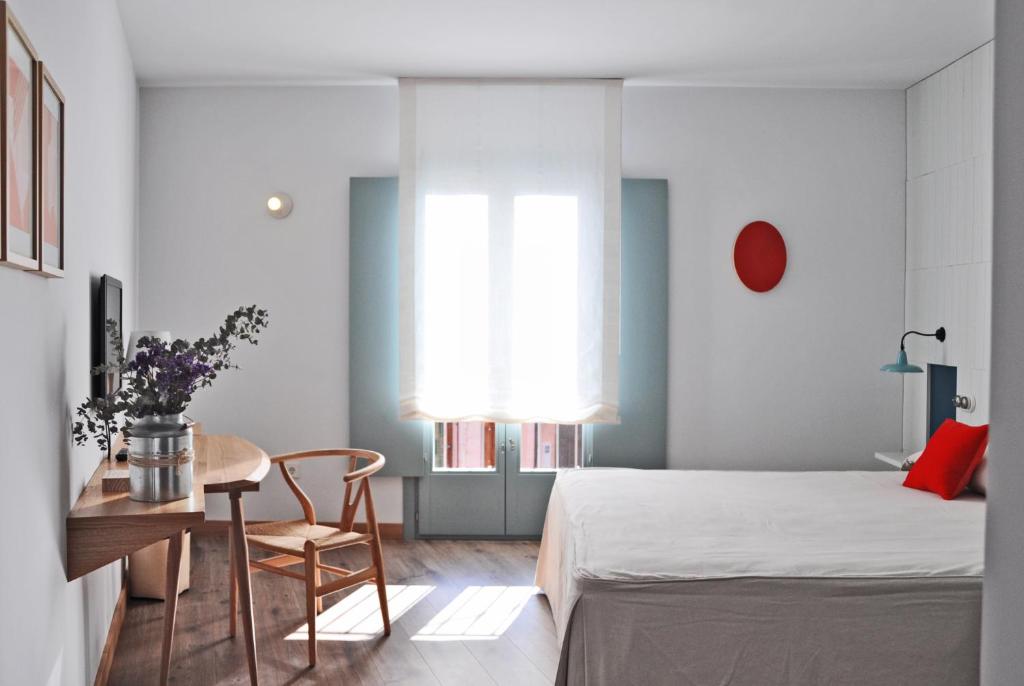
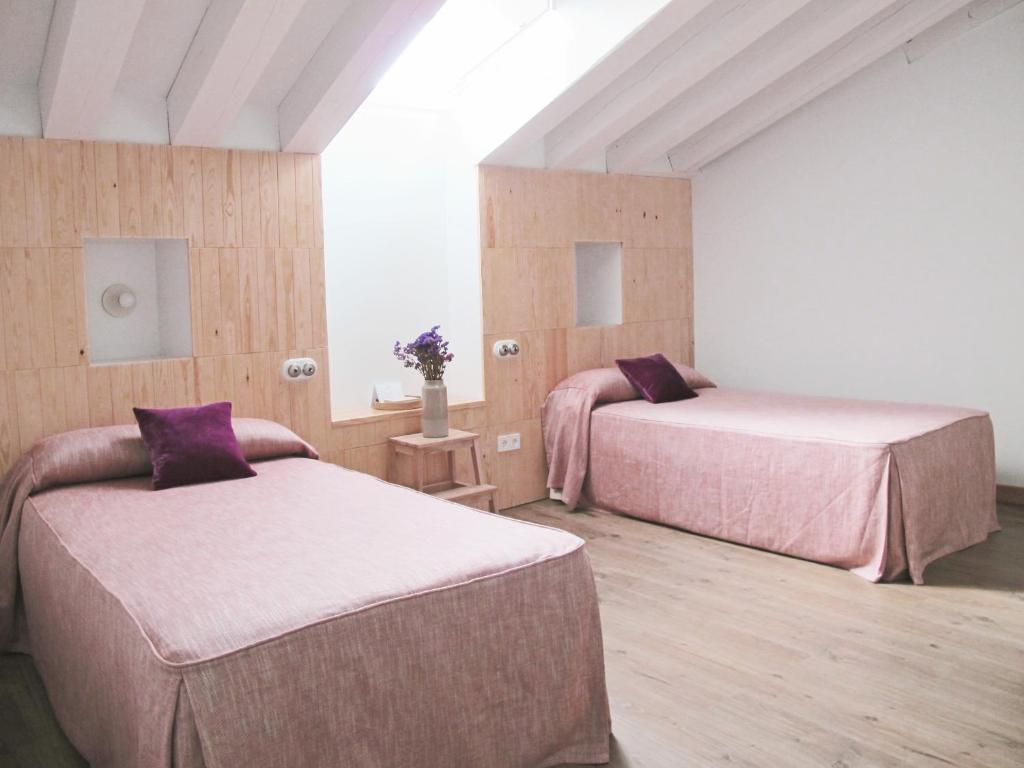
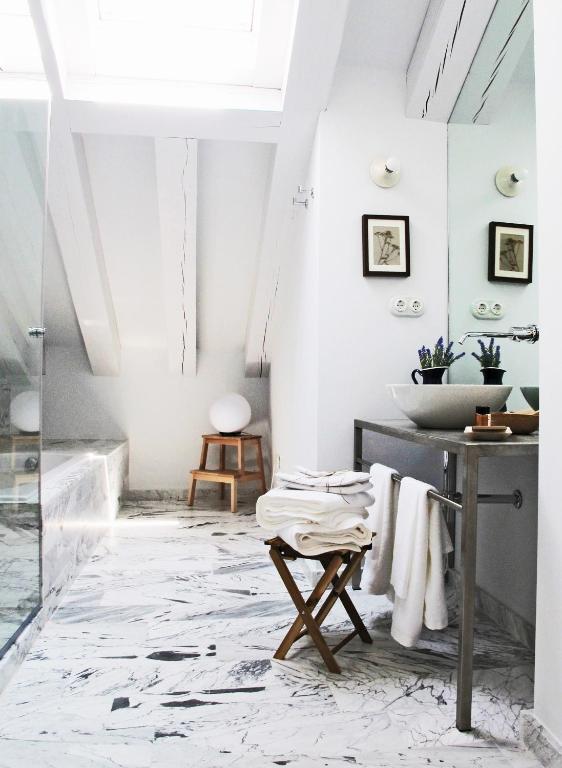
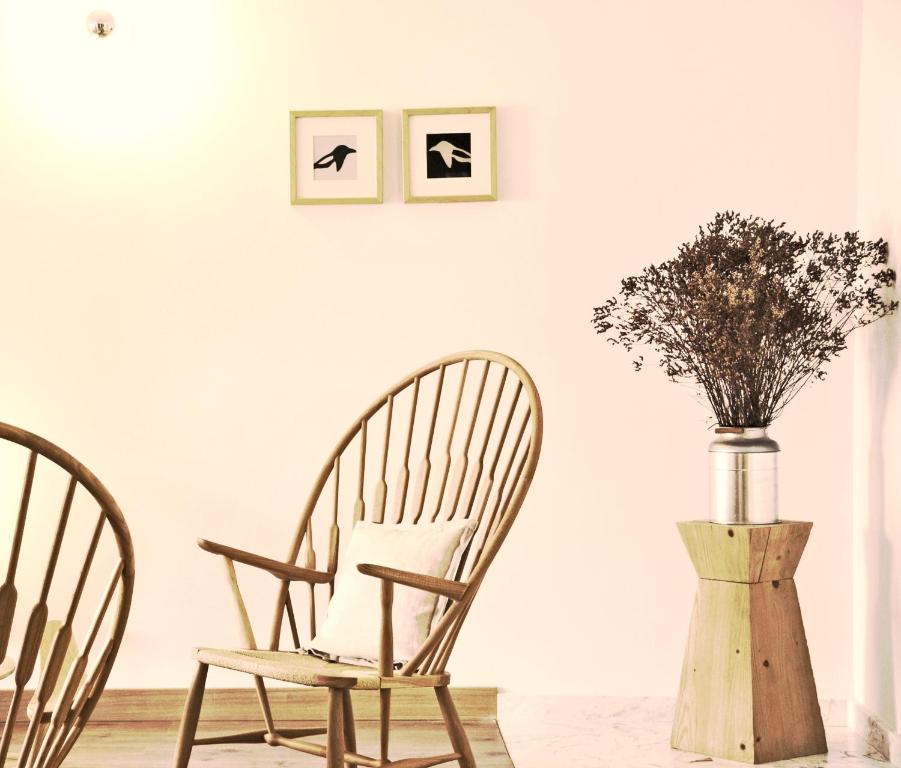
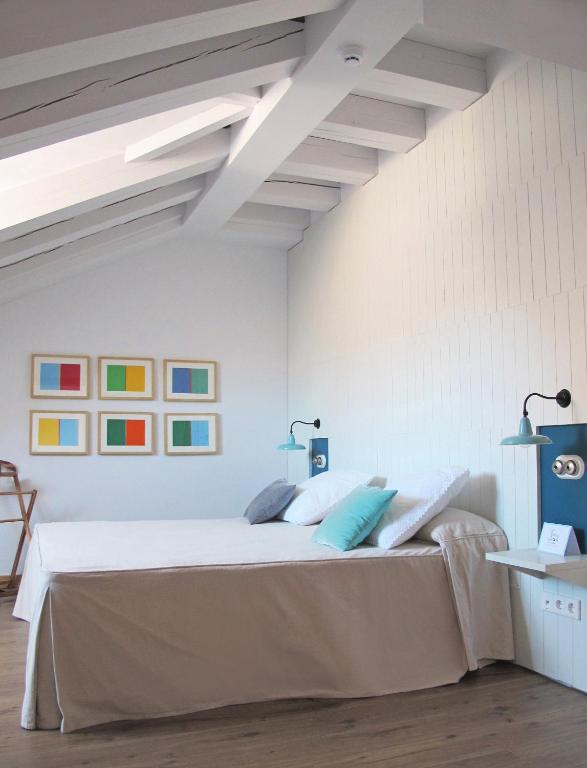
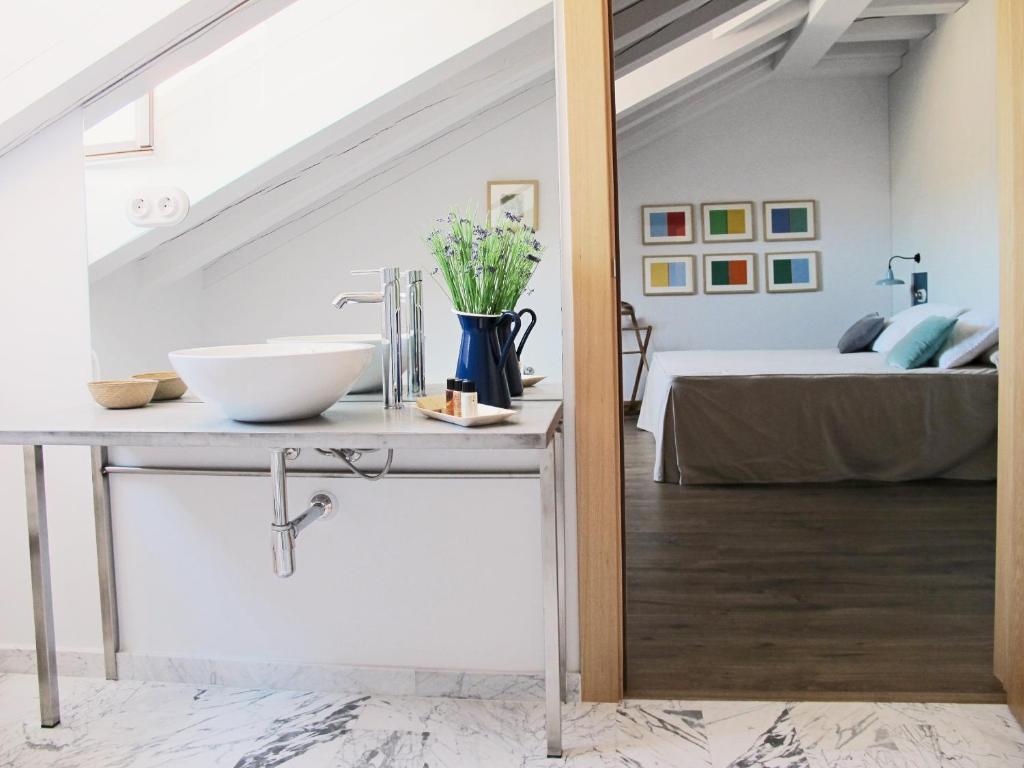
The interiors are striking precisely because so little is trying to attract attention. White surfaces amplify natural light. Timber beams and floors introduce warmth. Stone gives the spaces weight and permanence. Furniture is simple, almost archetypal in form. It can initially read as Scandinavian minimalism. Look again and it is unmistakably Castilian. Lucas y Hernández-Gil described their intervention as simple and austere, yet warm and comfortable — a contemporary reconstruction of rustic architecture rather than an attempt to reproduce the past. That distinction matters. There are no artificial heritage effects here. Old and new are allowed to coexist.
Stone, Wood, Lime
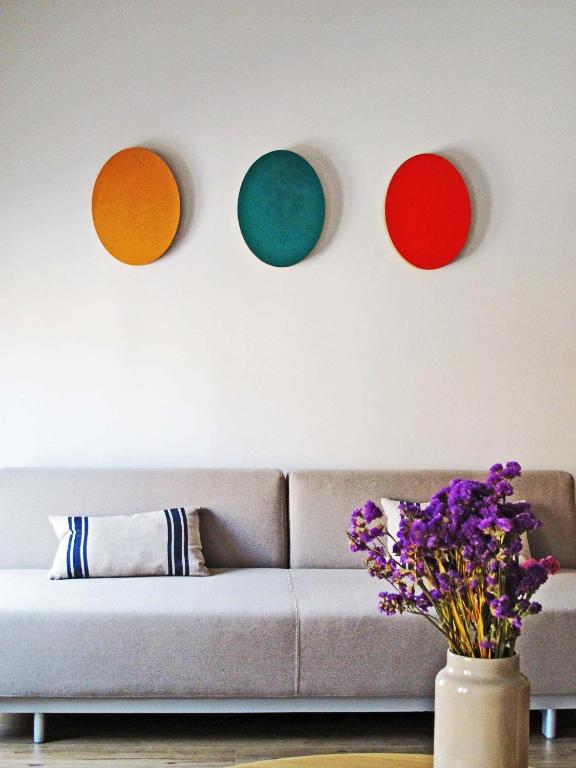
Respect for local building culture guided the restoration. Local craftspeople worked with stone, timber and lime, materials that already belong naturally to the architecture of Ayllón. The architects designed the interiors and furniture themselves, allowing contemporary elements to sit comfortably within the historic shell rather than feeling imported into it. Colour is used with similar discipline. Most spaces remain quiet and neutral, interrupted by brighter accents inspired by red poppies growing among Castilla’s wheat fields. It’s a tiny gesture, but an effective one: suddenly the landscape outside has entered the room.
A Medieval Village Outside the Door
Then there is Ayllón itself. Step outside and you’re immediately on the village’s arcaded Plaza Mayor, surrounded by stone façades, timber balconies and streets that retain the intimate scale of medieval Castilla. That setting makes the hotel’s architectural restraint particularly successful. A louder design intervention would have turned Hotel Ayllón into the destination. Instead, it acts as an extension of the village — contemporary enough to feel fresh, but quiet enough to let Ayllón remain the protagonist. The hotel isn’t trying to transport you somewhere else. It makes you notice where you already are.
Why It Works
Hotel Ayllón demonstrates that preserving historic architecture doesn’t mean freezing it in time. Lucas y Hernández-Gil understood that the irregular rooms, local materials, changing levels and complicated circulation weren’t problems requiring correction. They were the building’s personality. So they kept them. Then they added light, simplicity, carefully designed furniture and just enough colour to make the old houses feel contemporary again. Eighteen different rooms, two old houses and one courtyard — proof that sometimes the most intelligent design intervention is knowing what not to change.