Barceló Torre de Madrid | Spain
Jaime Hayón turns a 1950s Madrid landmark into a colourful celebration of contemporary Spanish design
Why DNA Hotels Loves It
● Barceló occupies the first nine floors of the Torre de Madrid, the 1957 concrete landmark by brothers Julián and José María Otamendi Machimbarrena that once ranked among Europe’s tallest buildings.
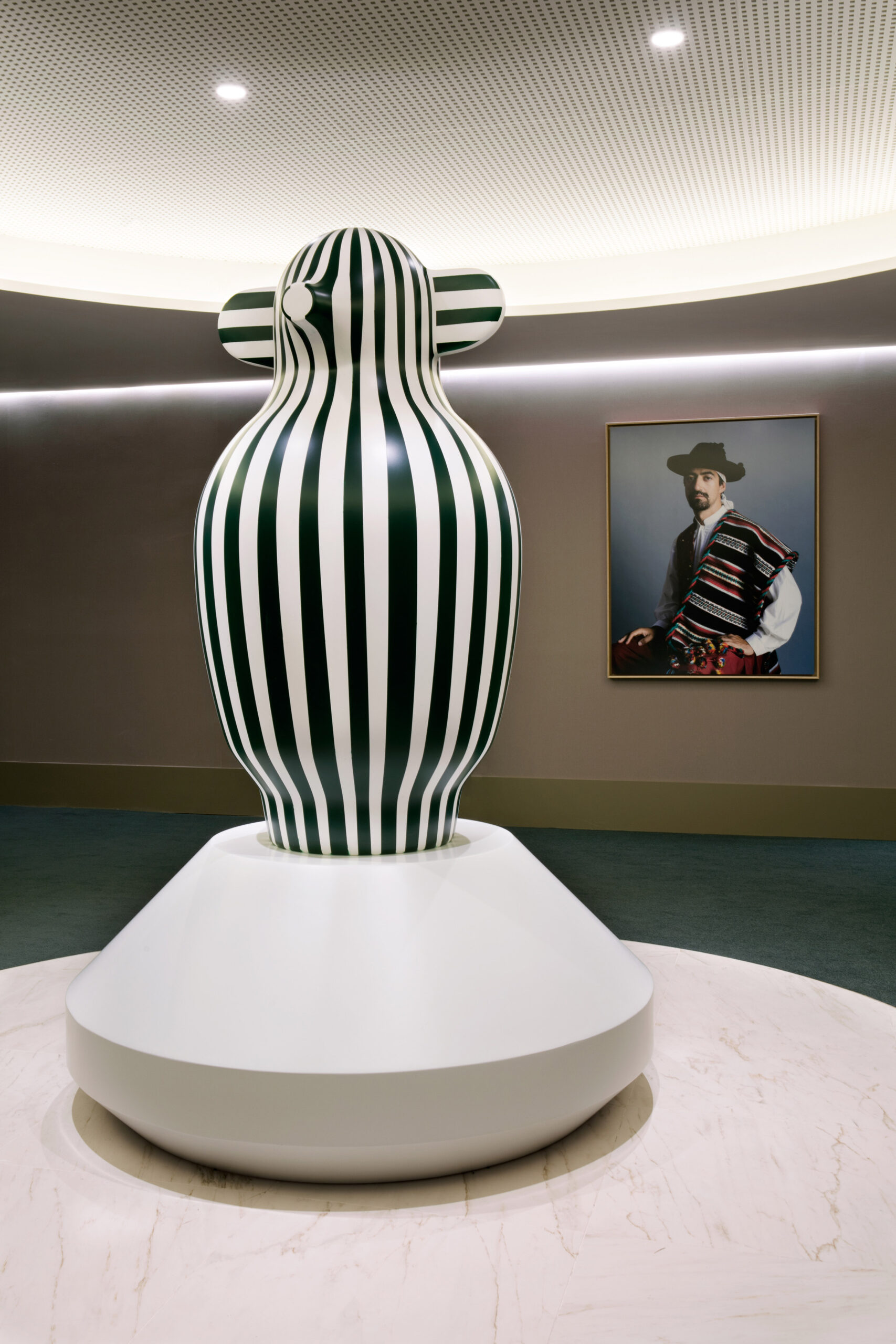
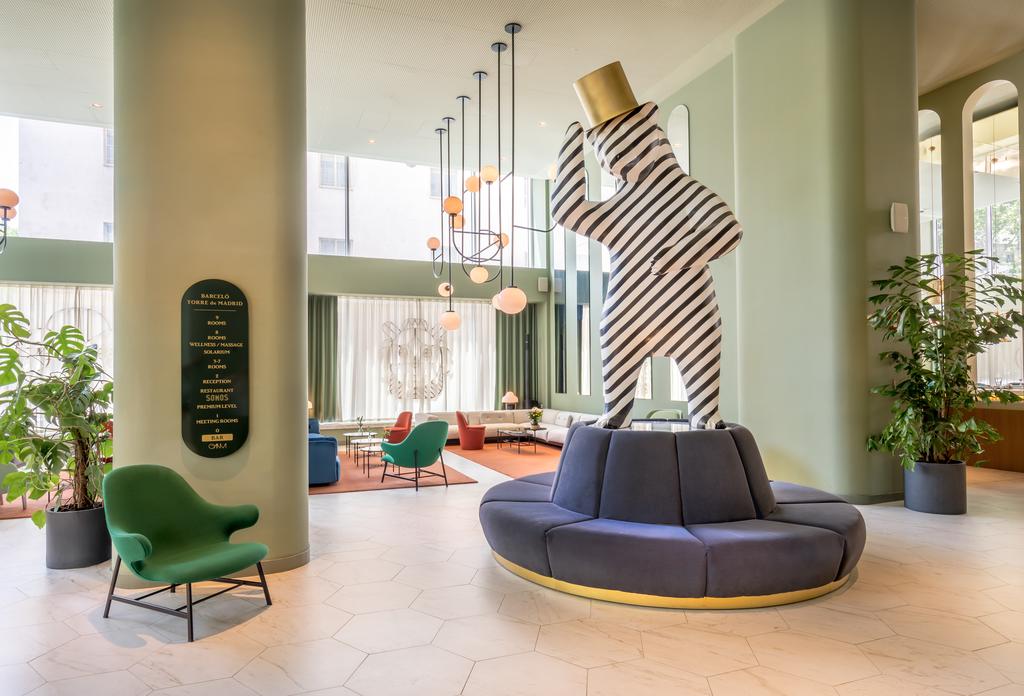
● Madrid-born Jaime Hayón rejects predictable Spanish references in favour of colour, surrealism, sculptural furniture and humour — including a zebra-striped bear in a top hat welcoming guests in the lobby.
● Hayón’s own furniture sits alongside marble, brass, orb lighting, Art Deco references and specially commissioned artworks, creating a hotel that functions almost as a showcase for contemporary Spanish creativity.
Madrid Goes Vertical
Plaza de España changed dramatically when the Torre de Madrid appeared on its skyline in 1957. Designed by architect brothers Julián and José María Otamendi Machimbarrena, the 36-storey tower was an extraordinary feat of concrete engineering for its time. For a period it was the tallest building in Western Europe and remains one of the defining landmarks of post-war Madrid. Barceló Torre de Madrid occupies its first nine floors, placing a contemporary hotel inside a building that already represented an unusually optimistic moment in Spanish modernism. Then Barceló handed the interiors to Jaime Hayón. Subtlety was never going to be the entire plan.
A New Vision of Spain
Hayón was born in Madrid, making this much more than an international designer parachuting into a Spanish landmark. His stated ambition was to create a new vision of Spain, deliberately distancing the hotel from conventional interpretations of Spanish style. There are cultural references everywhere, but almost all have been distorted, enlarged or given a surreal twist. Flamenco, bullfighting, traditional costume and Spanish craft become starting points rather than decorative themes. Masks turn into graphic artworks. Gold piping traces cartoon-like figures across walls. Moorish geometry finds its way into lighting. And then there is the bear. Madrid’s heraldic symbol reappears in the lobby as a monumental zebra-striped creature wearing a gilded top hat. It is ridiculous, beautifully made and almost impossible not to photograph. Which is rather the point.
Hayón, Everywhere
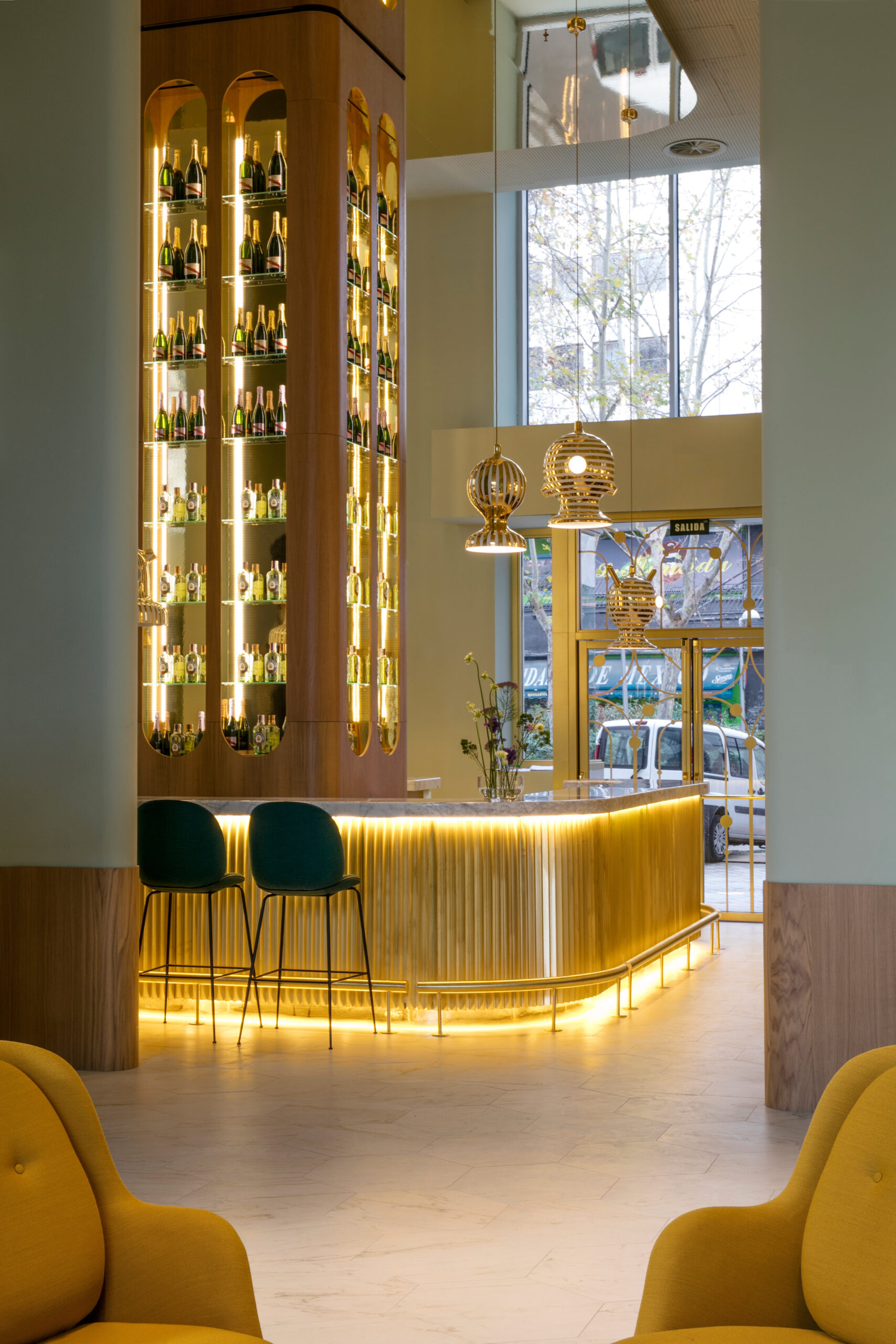
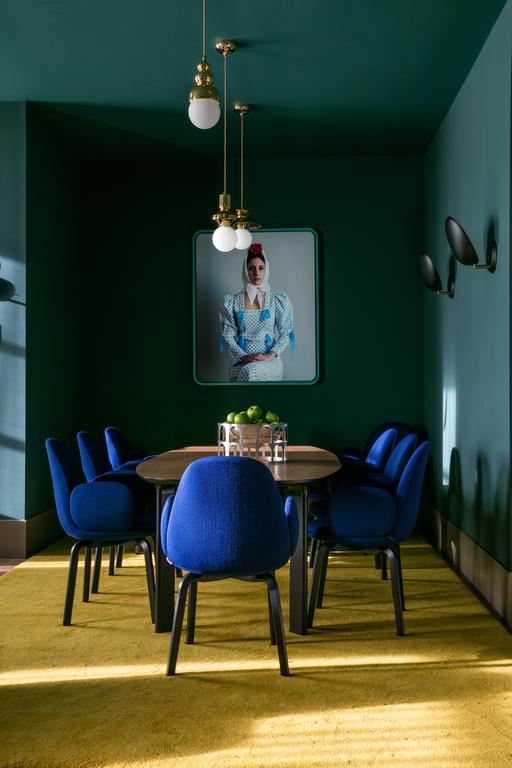
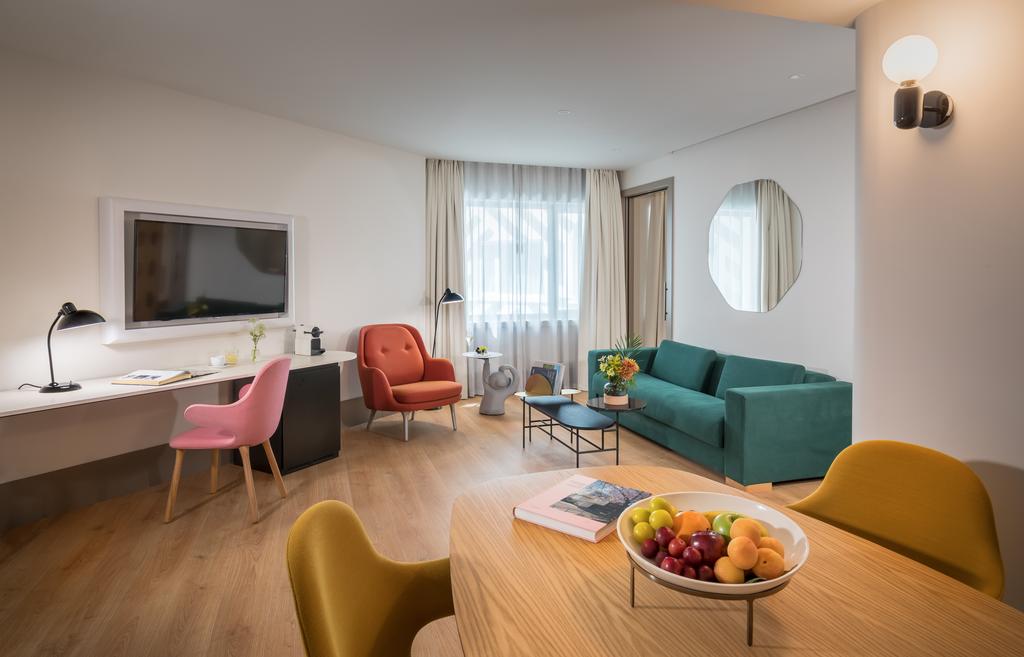
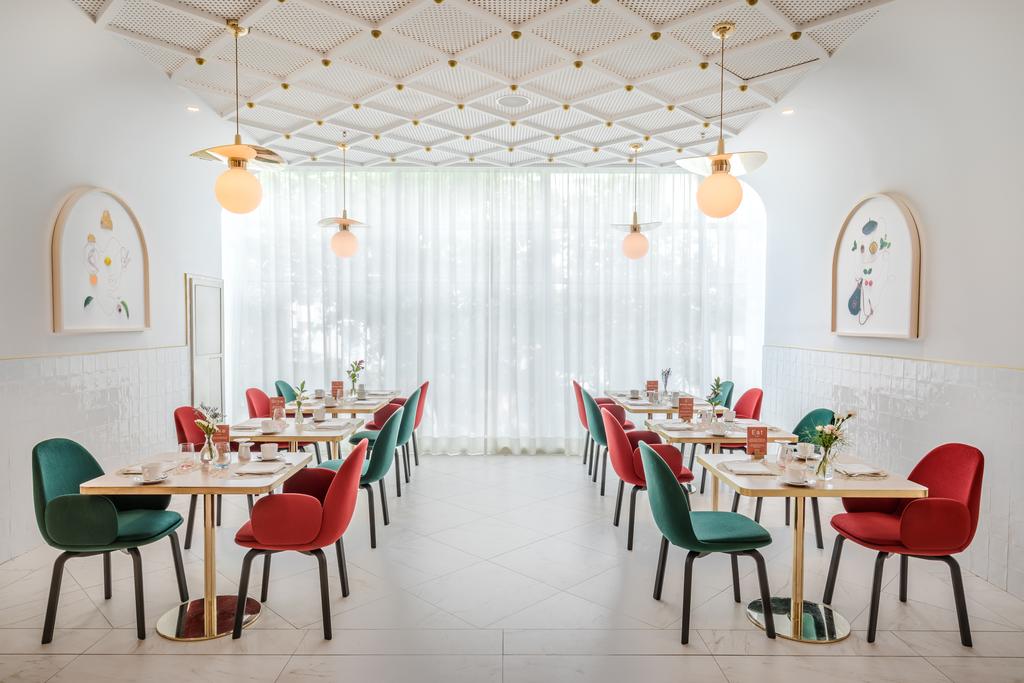
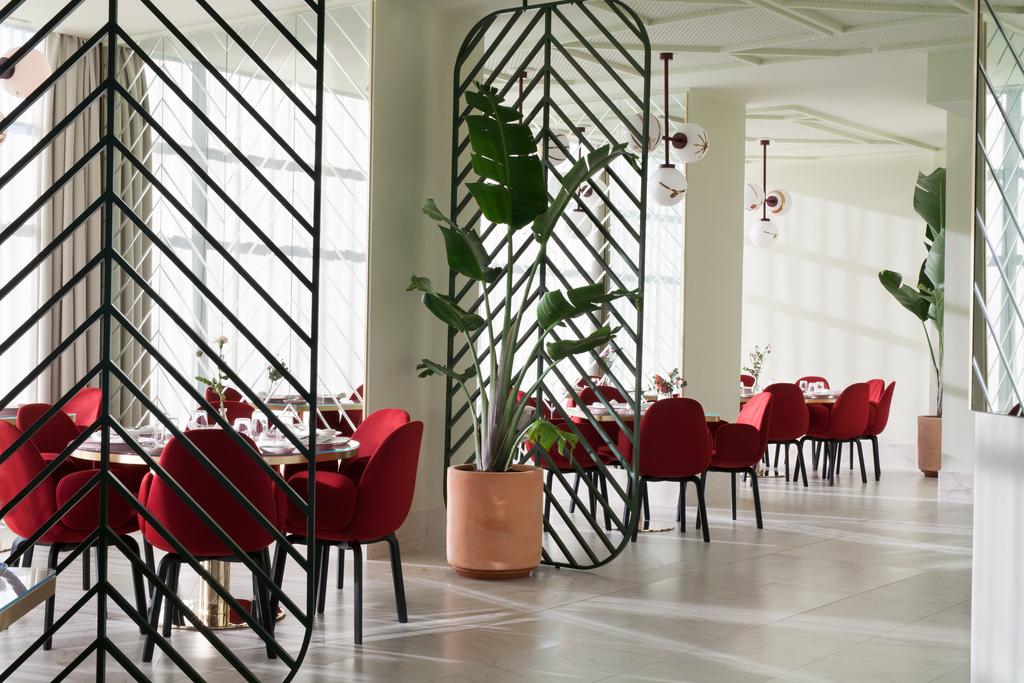
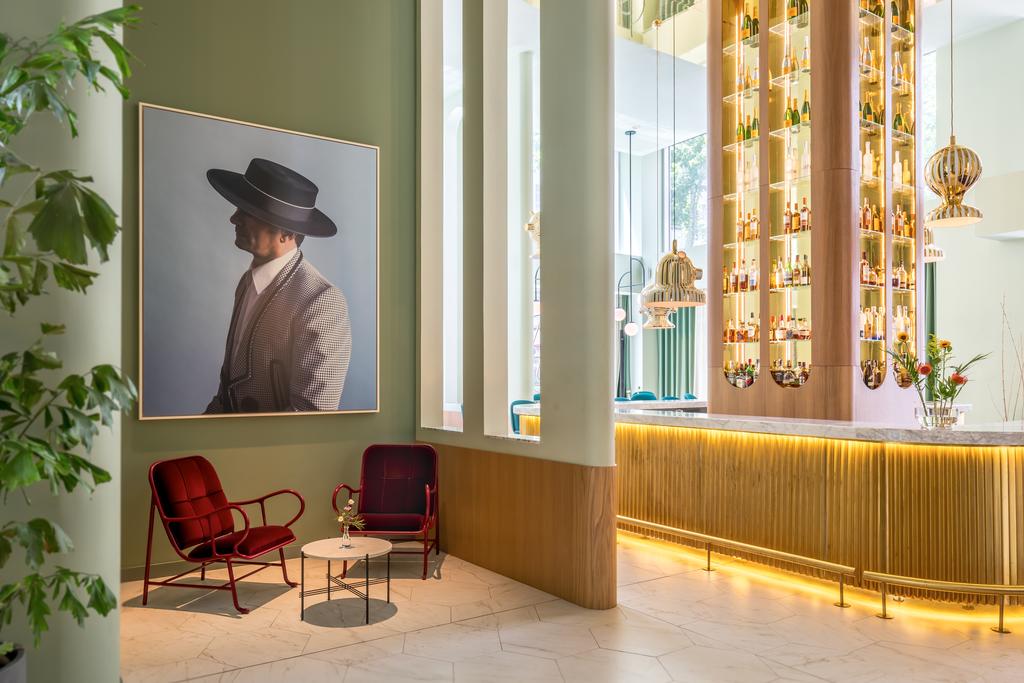
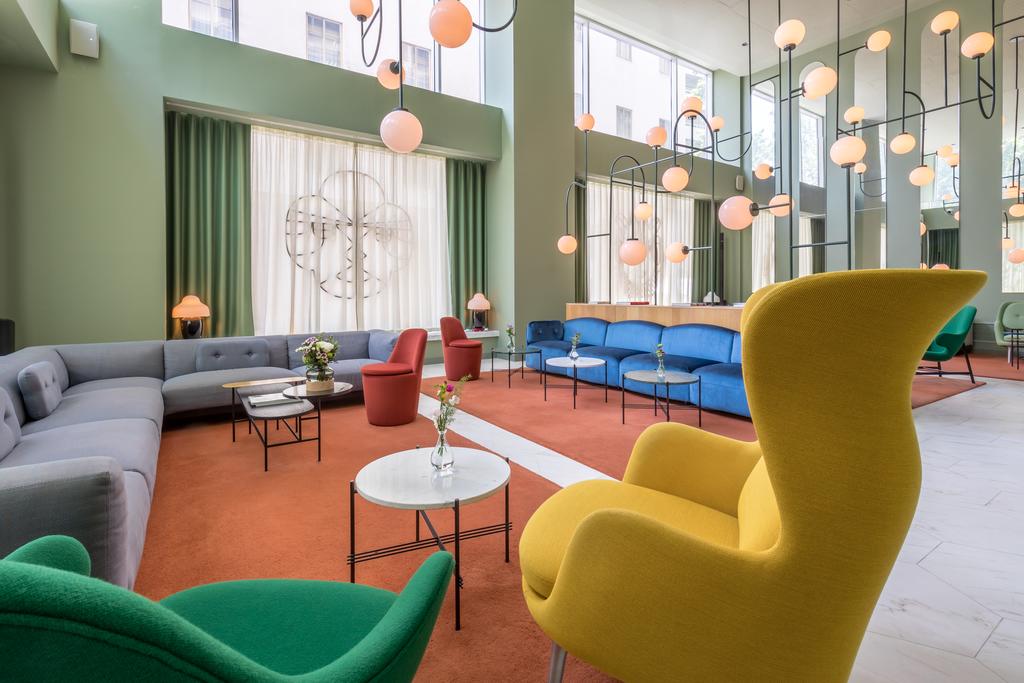
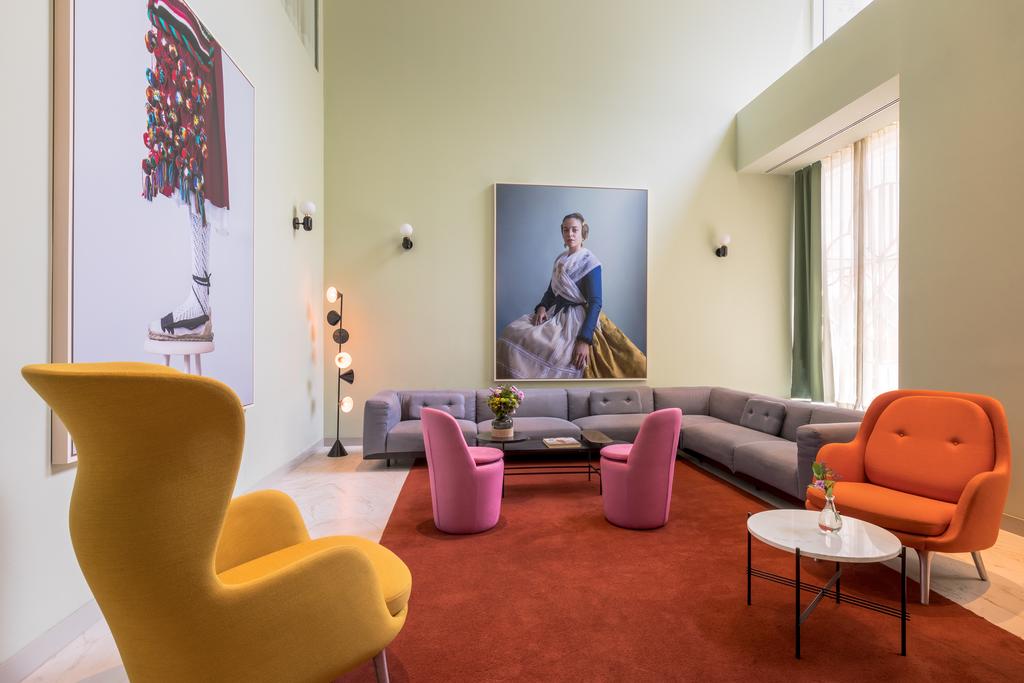
The interiors are unmistakably Hayón. Avocado and forest greens meet deep navy, berry tones and occasional jolts of brighter colour. Marble and brass provide polish, while oversized mirrors, globe lighting and curved furniture introduce something closer to a glamorous mid-century salon. Many pieces come from Hayón’s own design vocabulary, including his furniture for Fritz Hansen. Other elements were created specifically for the hotel. The double-height Garra Bar is particularly theatrical, with pale green walls, marble, gold details and an enormous drinks cabinet climbing through the space. Artists Nienke Klunder and Wiglius de Bie of KlunderBie were also commissioned to create works referencing the cultural identity of the surrounding neighbourhood. It is not minimalism. It isn’t trying to be.
Rooms With the Volume Turned Down
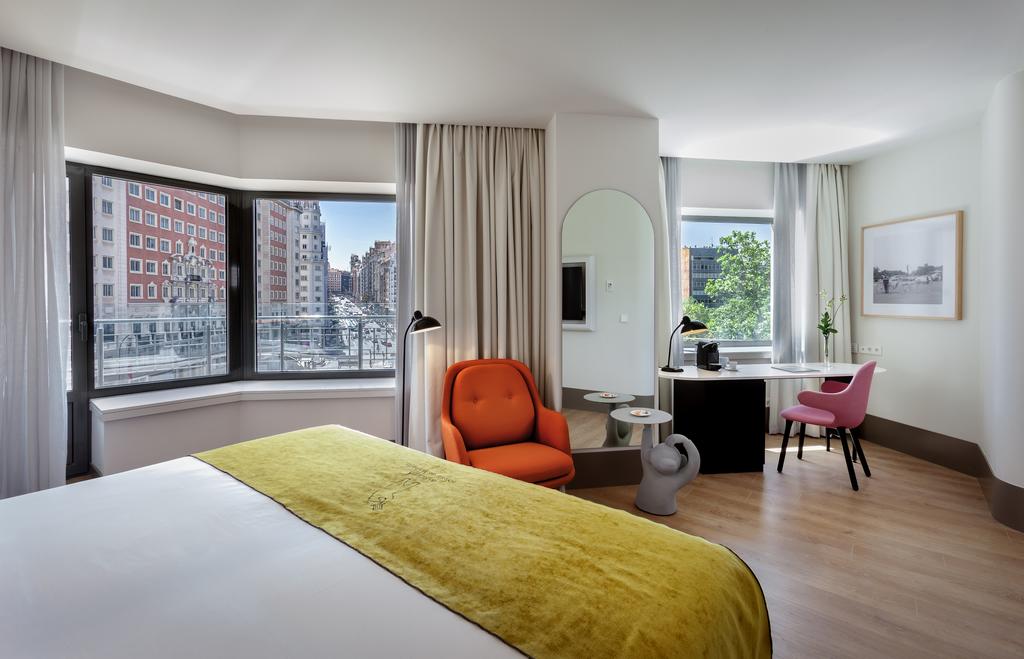
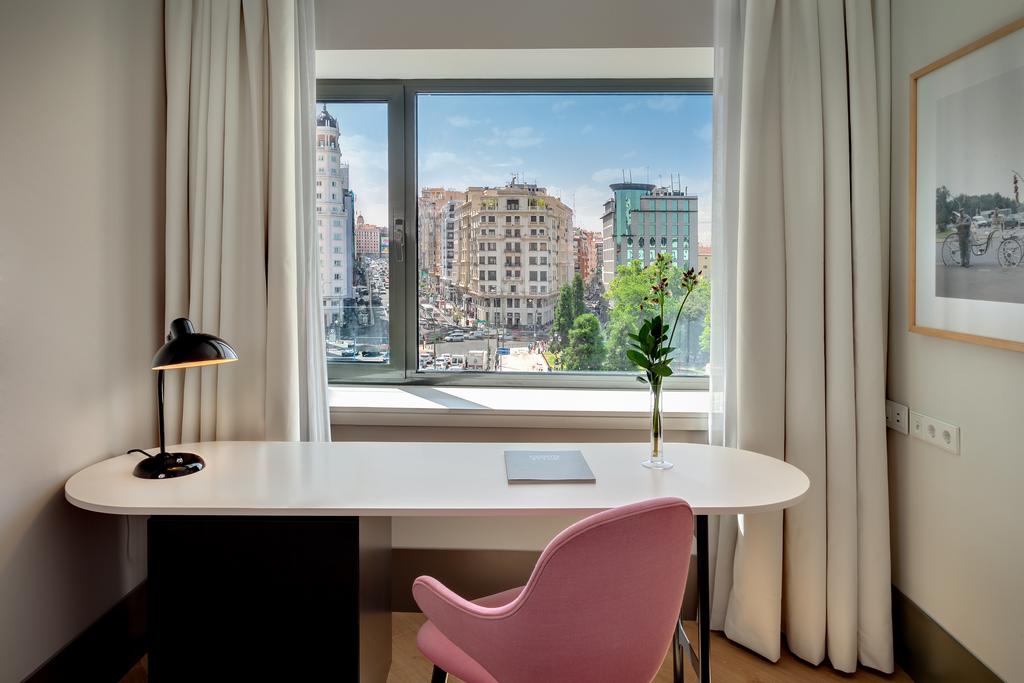
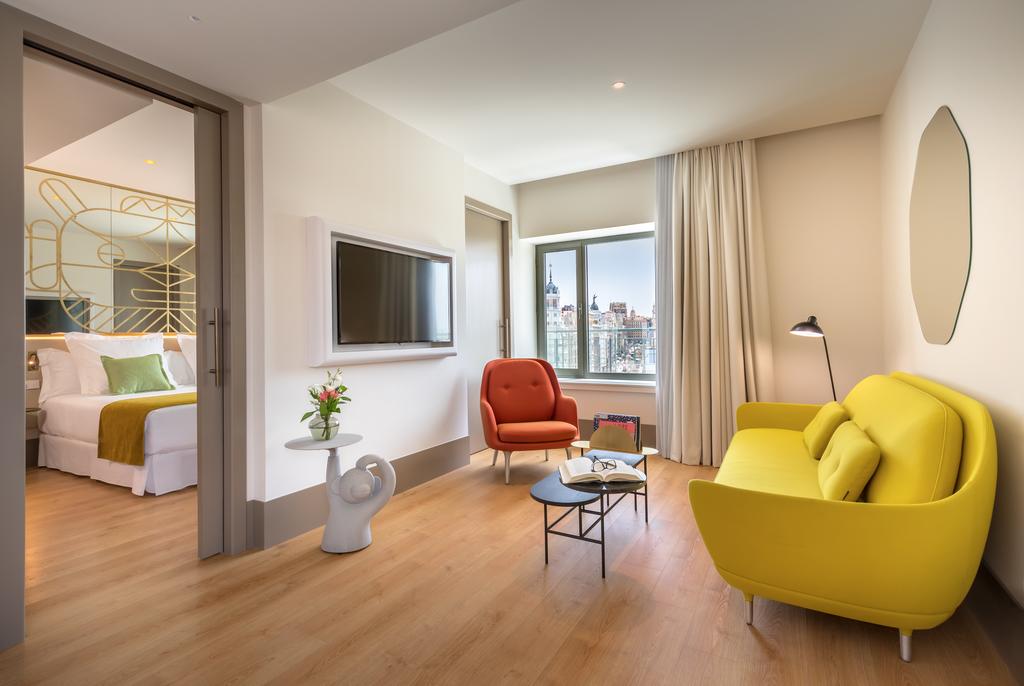
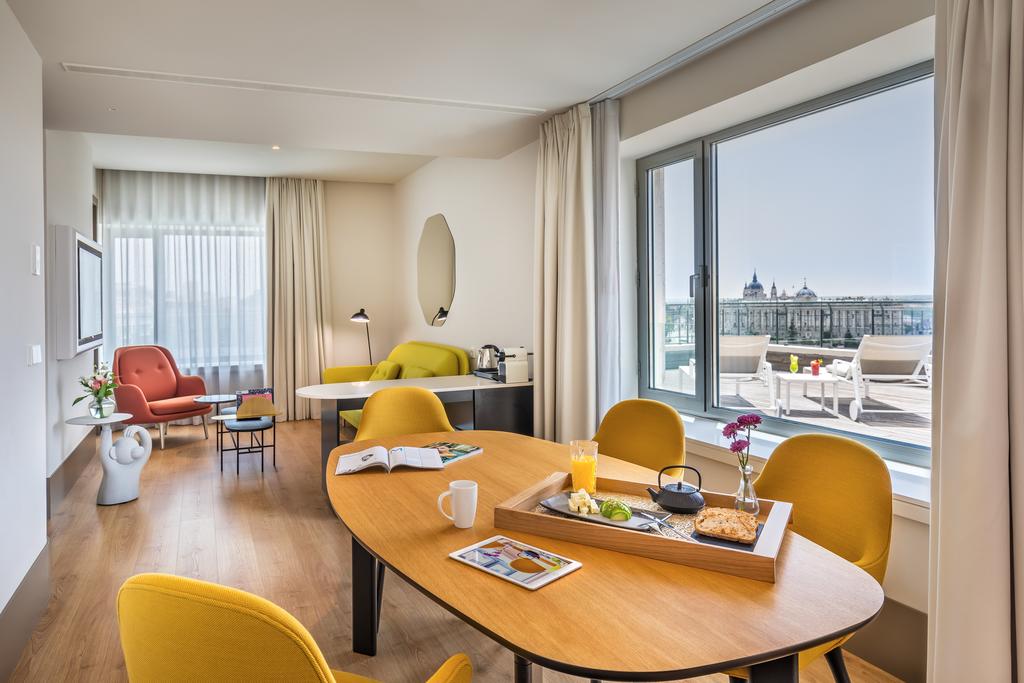
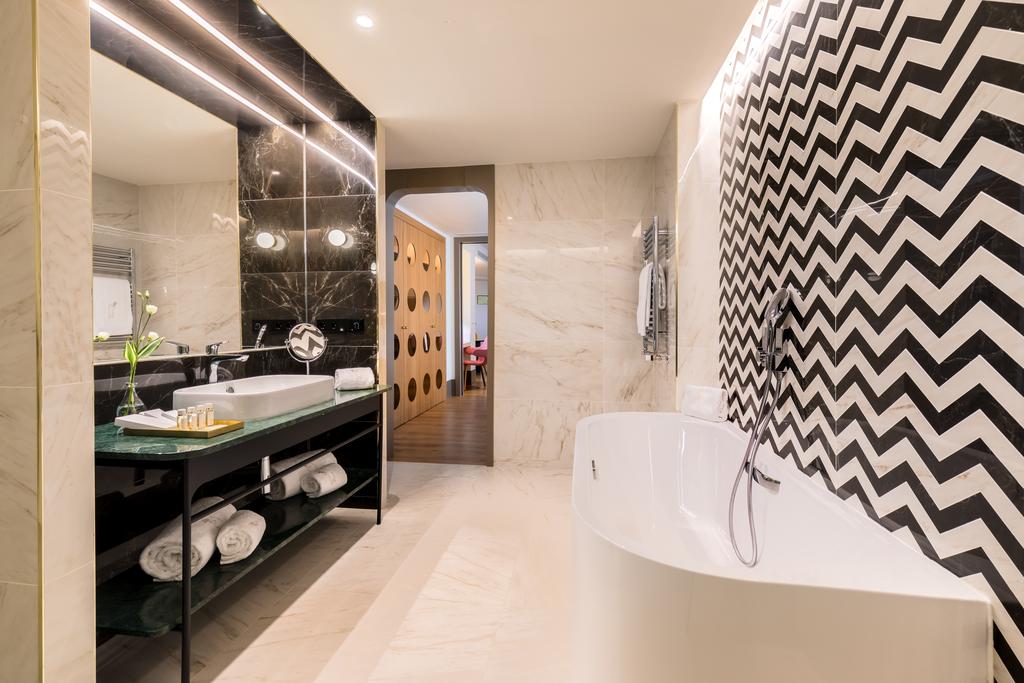
The 258 rooms and suites are calmer than the public spaces, allowing Hayón’s more theatrical instincts to retreat without disappearing completely. Wooden floors, large windows and custom furniture establish a cleaner mid-century foundation. Colour becomes more controlled, while Hayón-designed chairs, lighting and graphic details maintain the connection with downstairs. Bathrooms use herringbone tiling and contemporary fittings, while some rooms and suites open onto balconies overlooking the city. The height matters. Madrid is usually experienced horizontally — plazas, boulevards, terraces and long evenings at street level. From the Torre, the perspective changes completely.
Madrid With a Cocktail
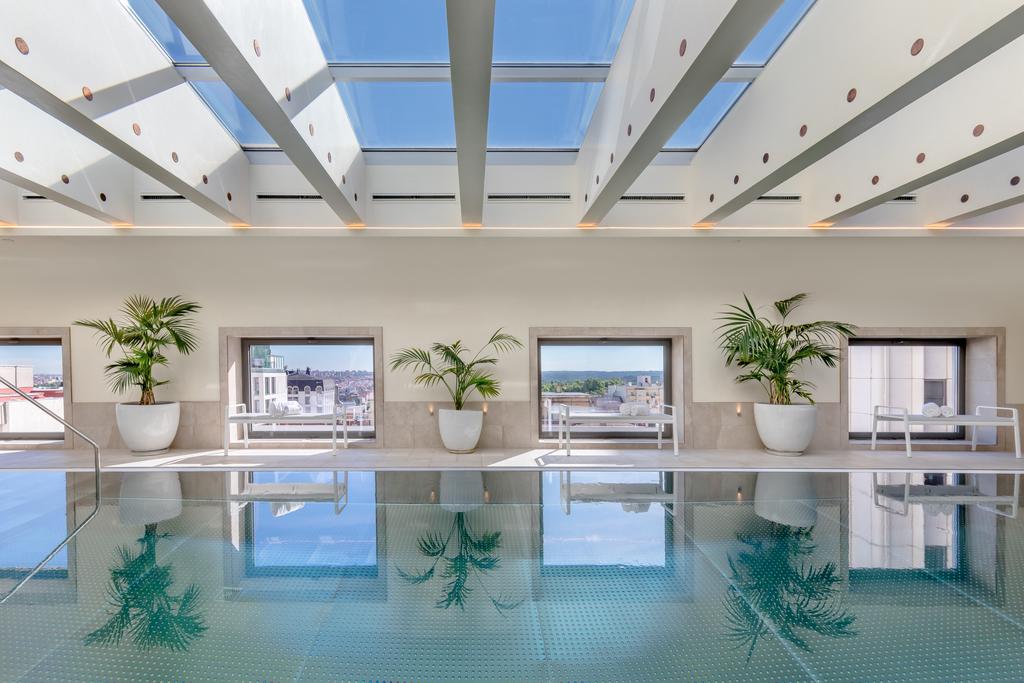
The social spaces return to colour and drama. Garra Bar combines sage green, gold and marble with floor-to-ceiling windows overlooking the city, while Somos restaurant shifts from Spanish market-inspired dishes during the day towards a more internationally influenced menu in the evening. The eighth floor adds another unexpected space: an indoor swimming pool overlooking Madrid, alongside the hotel’s wellness facilities. It is perhaps the clearest reminder that you’re staying inside a tower rather than another converted palace or townhouse. Madrid spreads out beneath you.
Spain, Without the Souvenirs
What makes Barceló Torre de Madrid work is Hayón’s refusal to treat Spanish identity as something that needs to be preserved behind glass. He plays with it instead. Traditional symbols become strange sculptures. Historical references are translated through contemporary furniture and graphics. Spanish exuberance appears through colour rather than pastiche. That approach also suits the Torre de Madrid itself. The building represented a radically modern Madrid when it opened in 1957; filling it with nostalgic interiors would have missed the point. Nearly seventy years later, Jaime Hayón gives it another version of the same idea: Spain looking forward, with considerably more colour and a zebra-striped bear.