BnA Art Hotel Koenji | Tokyo, Japan
Two artist-designed rooms, a neighbourhood bar, and a radical idea that turns every hotel stay into direct support for Tokyo’s creative community
Why DNA Hotels Loves It
● Just two rooms, each conceived as a complete artwork by a local artist rather than an interior designer.
● A pioneering model in which participating artists receive a share of room revenue, turning hospitality into an ongoing form of cultural patronage.
● Located in Koenji, Tokyo’s wonderfully alternative neighbourhood of vintage shops, tiny bars, live-music venues, artists, and underground culture.
Two Rooms and a Big Idea
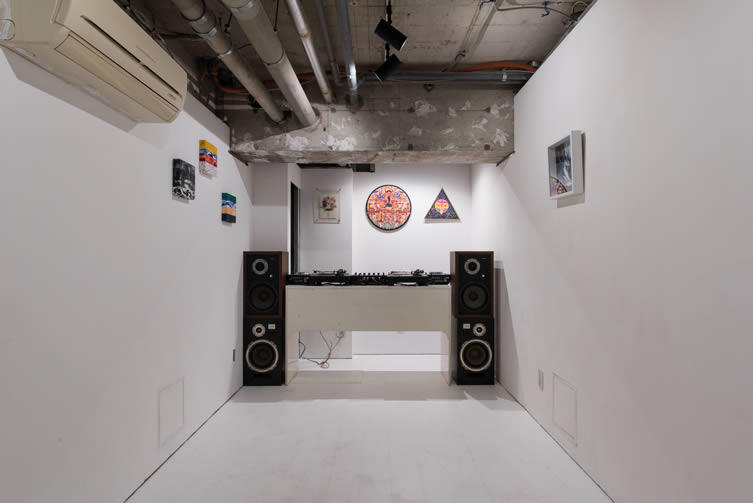
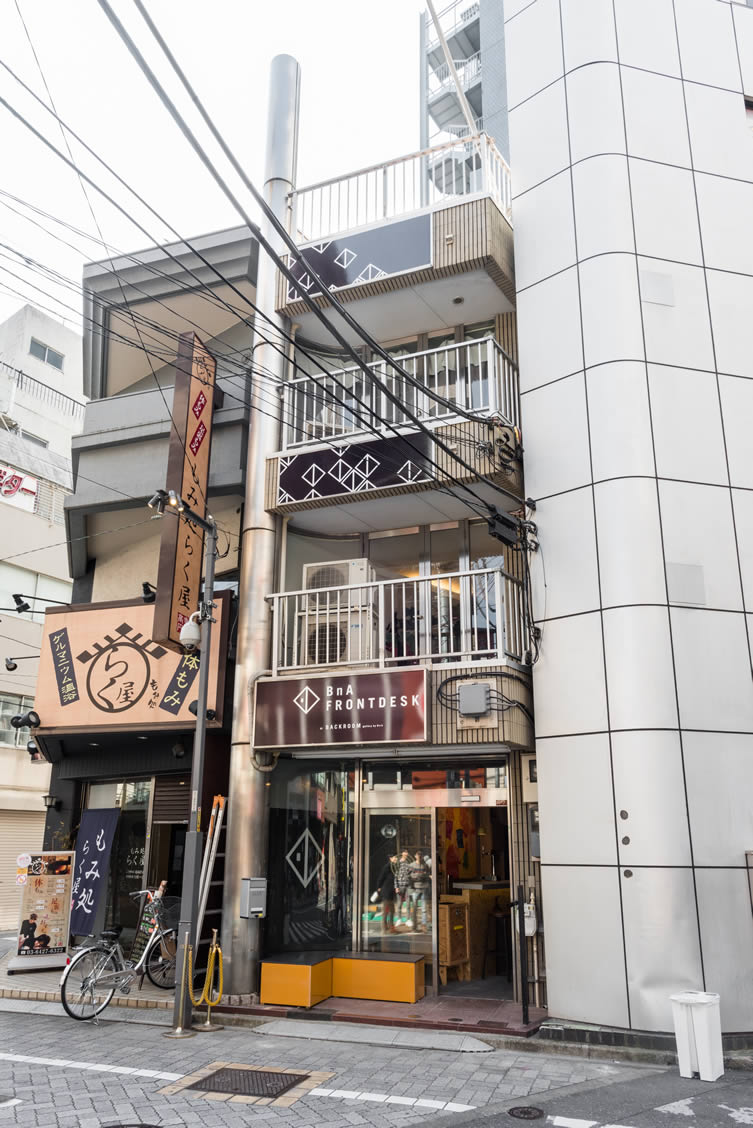
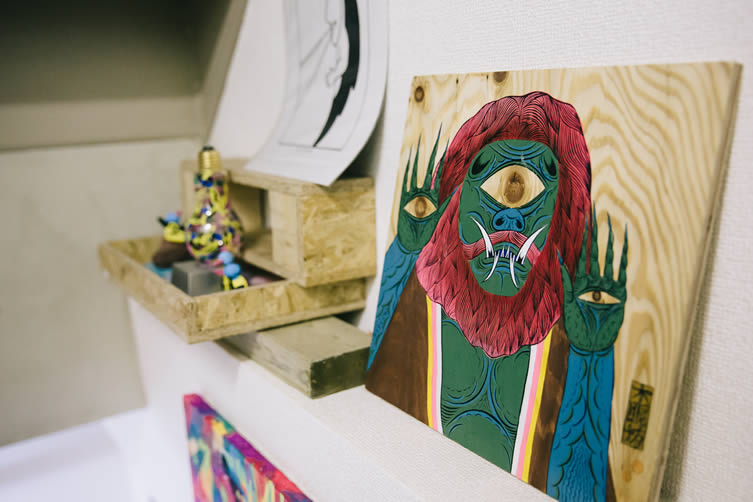
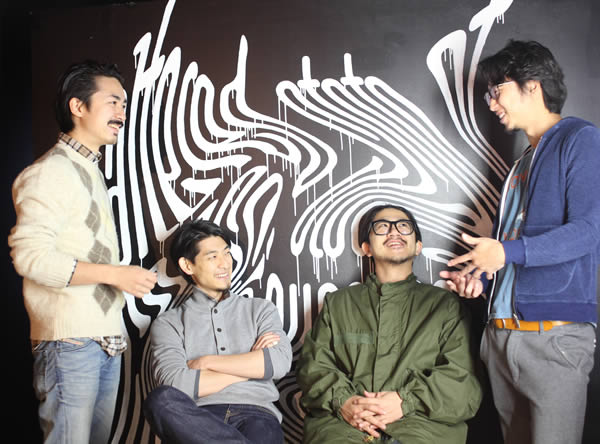
BnA Art Hotel Koenji is tiny. Almost absurdly so. There are just two guestrooms, a reception desk that doubles as a coffee shop and late-night bar, and a small basement used for exhibitions, events, and parties. But scale was never the ambition. BnA—short for Bed and Art—was conceived by a group of Koenji-based creatives as an experiment in how hospitality could financially support the artists whose work gives a hotel its identity. Instead of buying art and hanging it on the walls, they handed artists the rooms themselves. The hotel became the canvas.
Sleep Inside the Artwork
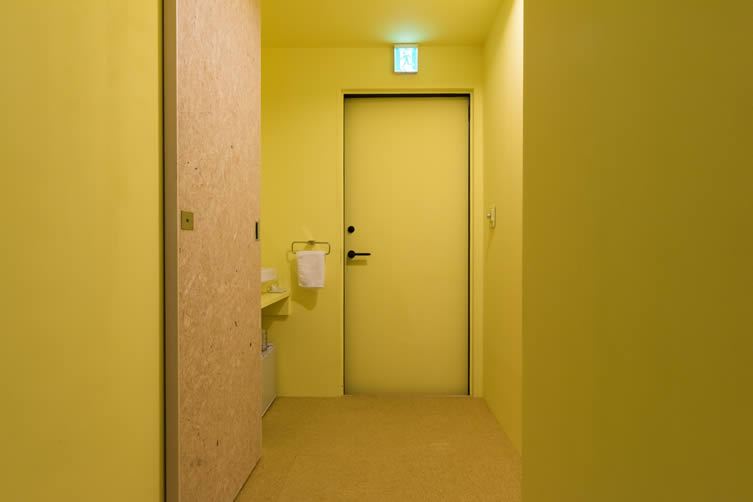
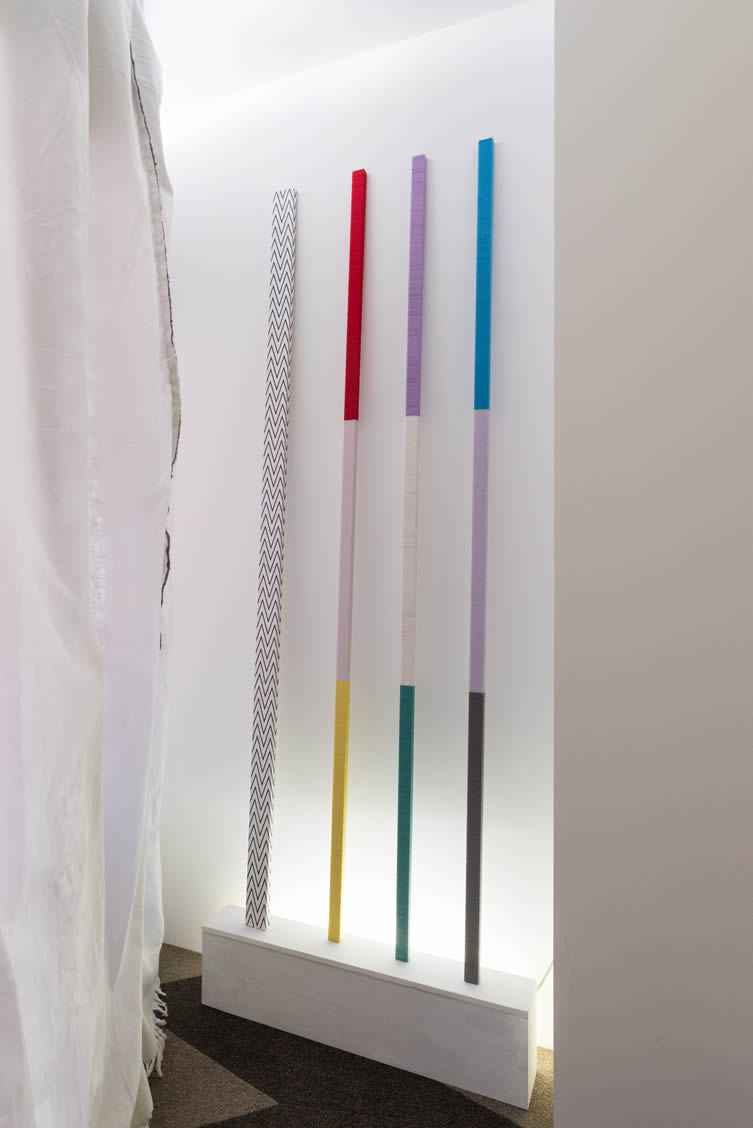
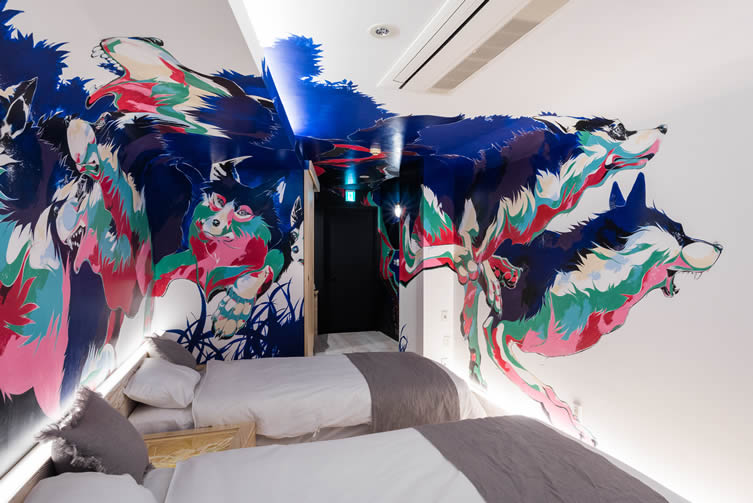
There is an important distinction between an art hotel and what happens here. These rooms haven’t been decorated with art. They are artworks. Room One was created by Yohei Takahashi, while Room Two by Ryuichi Ogino immerses guests in geometric patterns, concentric forms, illuminated characters, and a graphic black, white, and yellow palette. Walls, ceilings, lighting, furniture, and objects all become part of a single composition. You don’t observe the artwork from a polite distance. You sleep inside it.
A Stay Becomes Patronage
The smartest part of BnA isn’t visual at all. It’s economic. Rather than paying the artists a conventional one-off fee and then profiting indefinitely from their creativity, BnA developed a revenue-sharing model in which artists receive money when their room is booked. Suddenly choosing a hotel room becomes a small act of patronage. It’s a deceptively simple idea, but one that fundamentally changes the relationship between artist, hotel, and guest. The art creates value. The artist participates in that value.
The Bar Is the Lobby
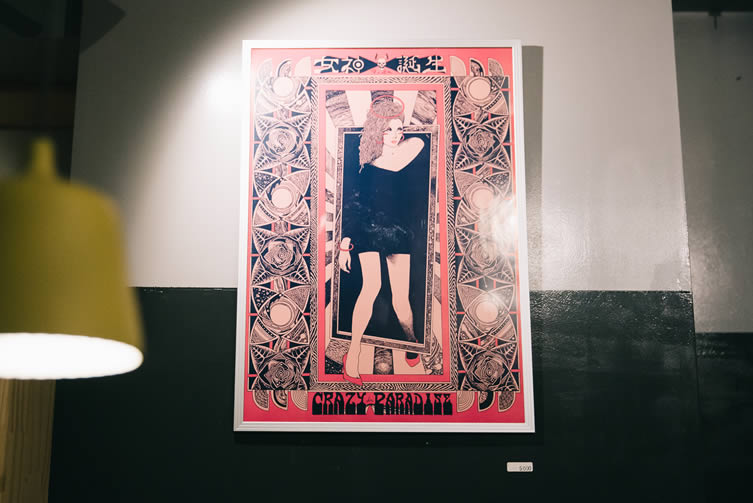
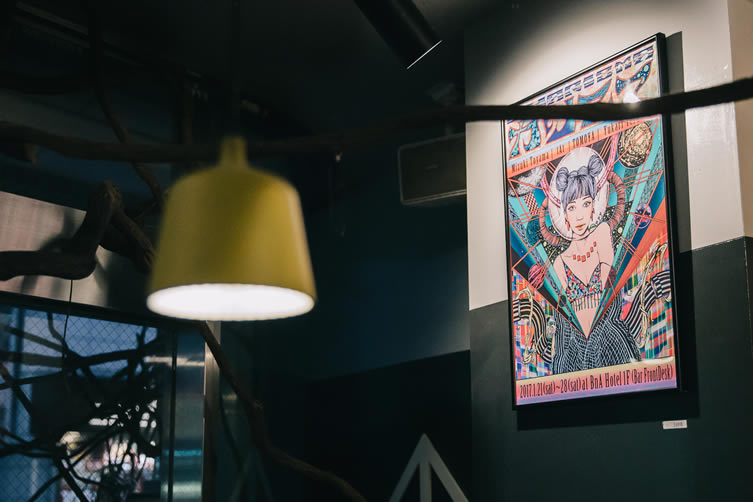
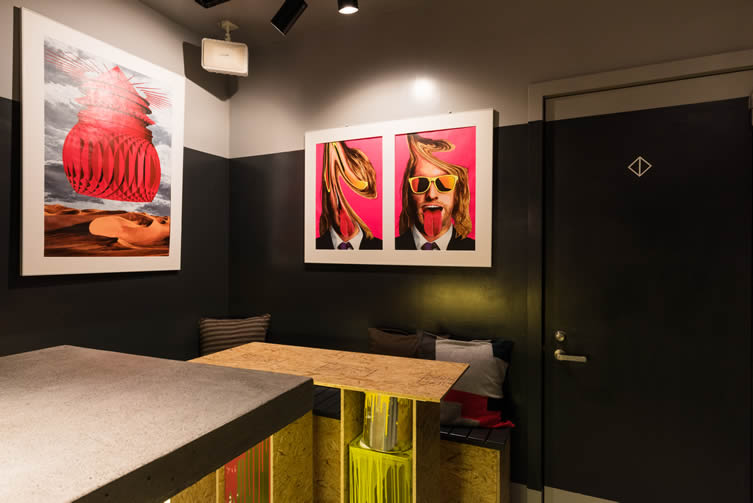
Downstairs, things remain equally unconventional. The narrow reception area is also a café and bar, filled with artwork and frequented by people from the neighbourhood. Below that, a basement space hosts exhibitions, launches, events, and parties. There’s little separation between guest and local, hospitality and culture. That matters because BnA isn’t trying to package Tokyo’s creative scene for tourists. It grew out of it.
Why Koenji Matters
This concept could hardly have started anywhere else. Koenji has long existed slightly outside mainstream Tokyo: a neighbourhood associated with musicians, artists, Japanese punk, vintage stores, record shops, izakayas, live houses, and wonderfully idiosyncratic little bars. Compared with the sensory overload of Shibuya or Shinjuku, its streets can feel almost village-like. Stay at BnA and that neighbourhood becomes the real amenity. The hotel doesn’t offer a polished interpretation of Tokyo culture. It gives you an address inside it.
Art Beyond the Hotel
BnA’s ambitions were never limited to its two rooms. The project became a platform for collaborations, exhibitions, events, and public art, including murals created around Koenji itself. That broader engagement makes the original hotel particularly interesting. It wasn’t simply designed around a clever art concept. It was conceived as proof that tourism could contribute directly to a creative neighbourhood rather than merely consume its atmosphere.
Why It Works
BnA Art Hotel Koenji may have only two rooms, but its idea is bigger than many hotels with two hundred. By allowing local artists to author the guestrooms—and share financially in their success—it turns hospitality into genuine cultural patronage. Add a bar, basement gallery, and one of Tokyo’s most fiercely independent neighbourhoods, and the result feels less like an art-themed hotel than temporary membership of Koenji’s creative community. Raw, intimate, and wonderfully unconventional, BnA proves that sometimes the most interesting hotel in town barely needs to be a hotel at all.