Bootshaus – Amberg, Germany
Five historic houses, one riverside inn and a beautifully restrained new chapter for old Bavaria
Why DNA Hotels Loves It
● A collection of five historic buildings — some dating back to the 14th century — restored with unusual sensitivity rather than polished into generic boutique-hotel perfection.
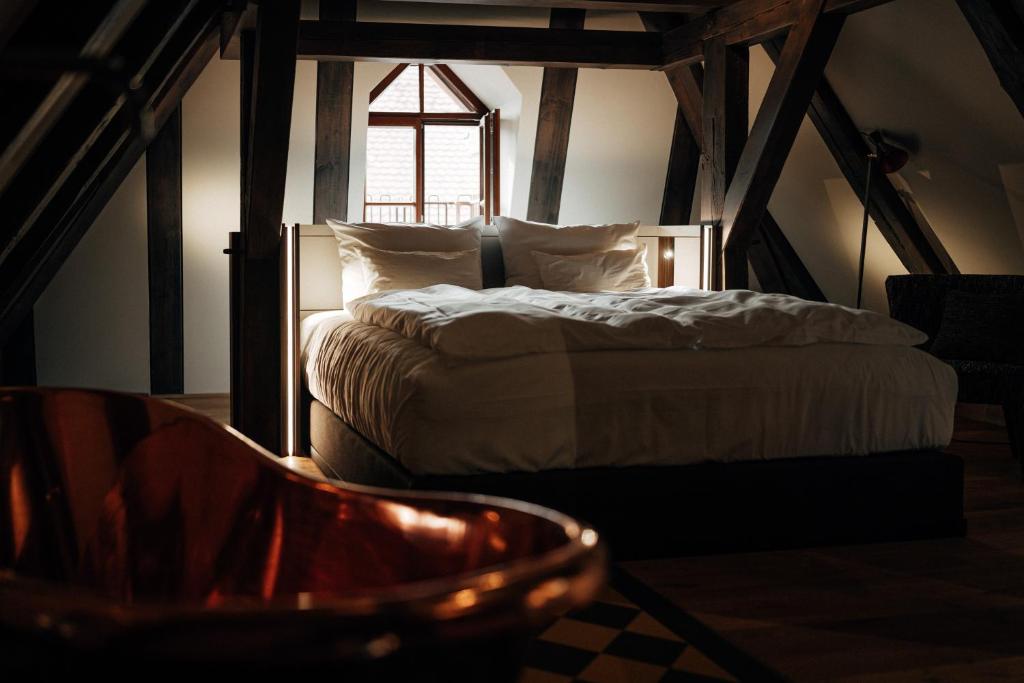
● The rooms embrace the buildings’ quirks instead of correcting them: leaning walls, exposed beams, sloping roofs, copper bathtubs and bespoke carpentry all remain part of the experience.
● The restaurant is the real heart of the house, with regional produce, local beer, a thoughtful wine list and a riverside terrace that keeps Bootshaus connected to everyday life in Amberg.
A Hotel Built from Five Old Houses
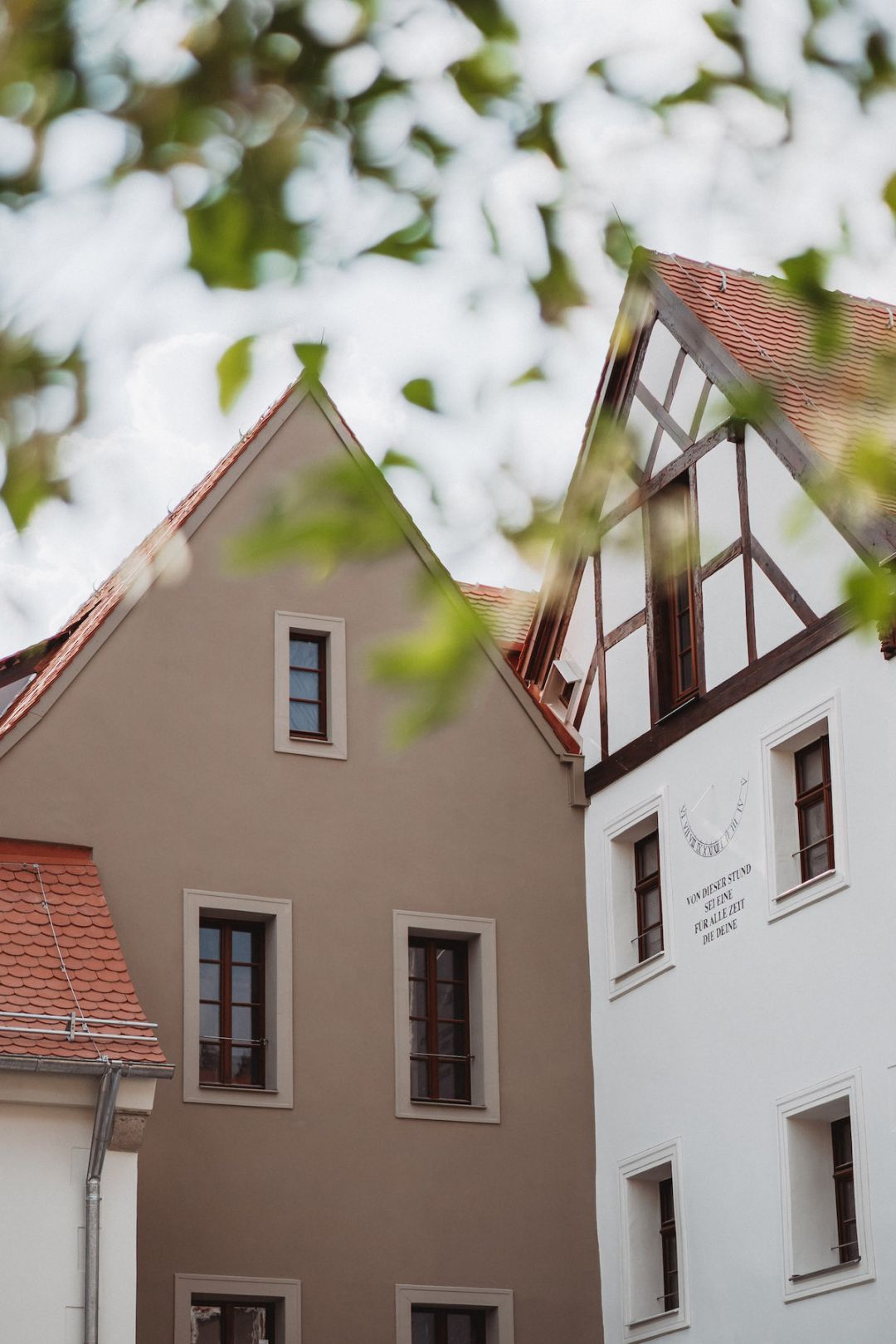
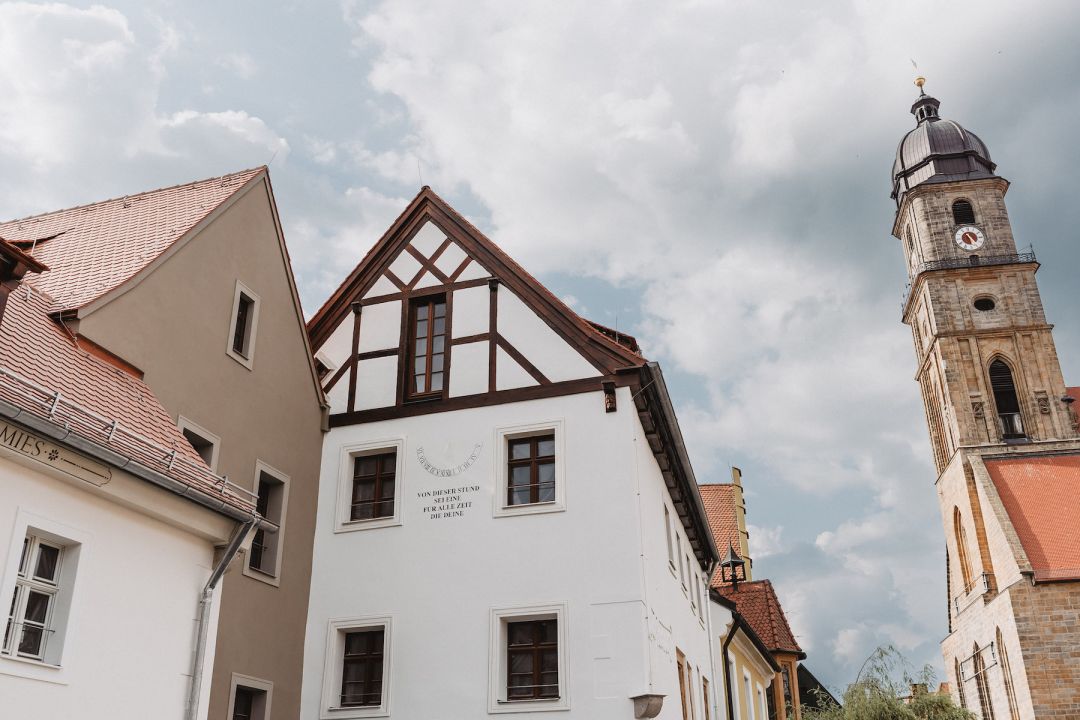
Bootshaus doesn’t feel like one building. It feels like a small piece of Amberg gathered together. Set directly on the River Vils in the historic centre of town, the hotel occupies a sequence of five heritage houses, some of them dating back as far as the 14th century. Over the centuries, these buildings have been part of the castle complex, connected to river transport and used by traders and boat crews moving through the city. Rather than erase that layered history, owners Klaus Herdegen and his daughter Eva chose to make it the foundation of the hotel. The restoration took years. That was probably the only sensible way to do it.
Crooked Walls Welcome
Historic buildings rarely behave themselves. Walls lean. Floors wander. Beams sit exactly where contemporary architects would rather they didn’t. At Bootshaus, those imperfections were not treated as problems to be corrected. Architect Georg Zunner worked with the existing structures, preserving half-timbered walls, roof trusses, arches and stone wherever possible while inserting the practical requirements of a modern hotel around them. That decision gives the place its character. You notice the age of the buildings because it remains visible. New carpentry sits beside ancient timber. Contemporary lighting follows irregular walls. Clean-lined bathrooms occupy spaces that were never designed to contain them. The restoration succeeds because the old houses are still allowed to look old.
Bavarian, Without the Costume
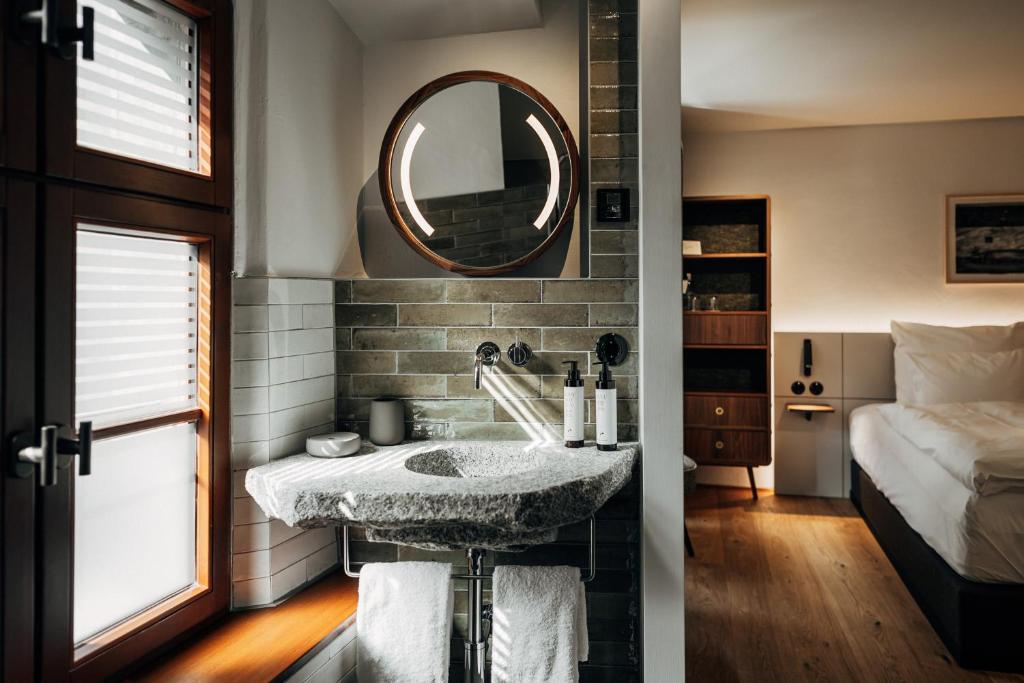
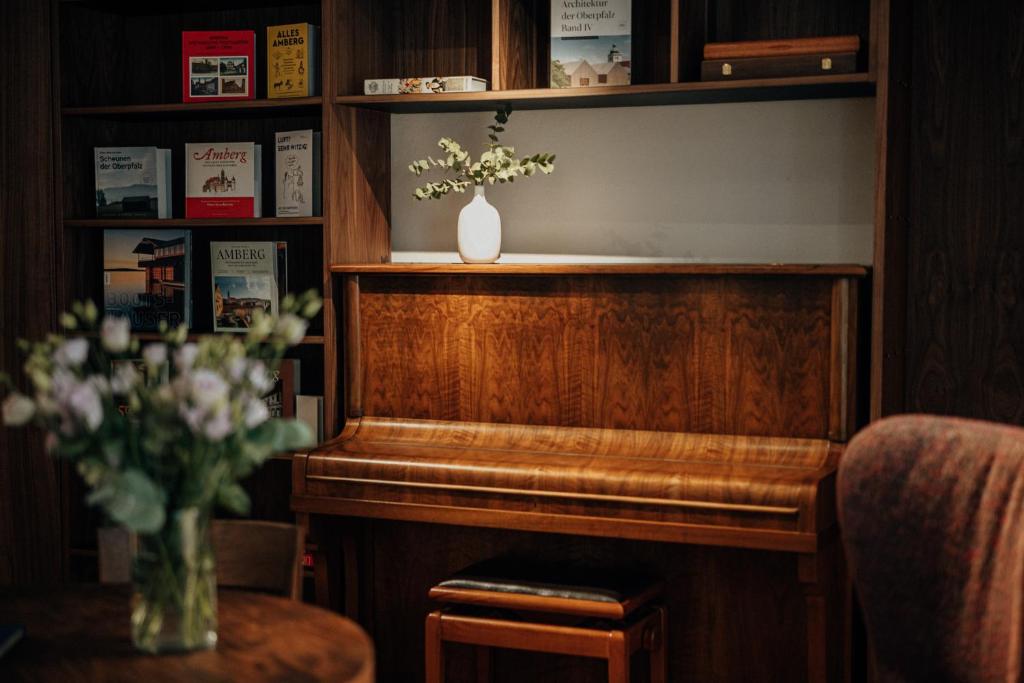
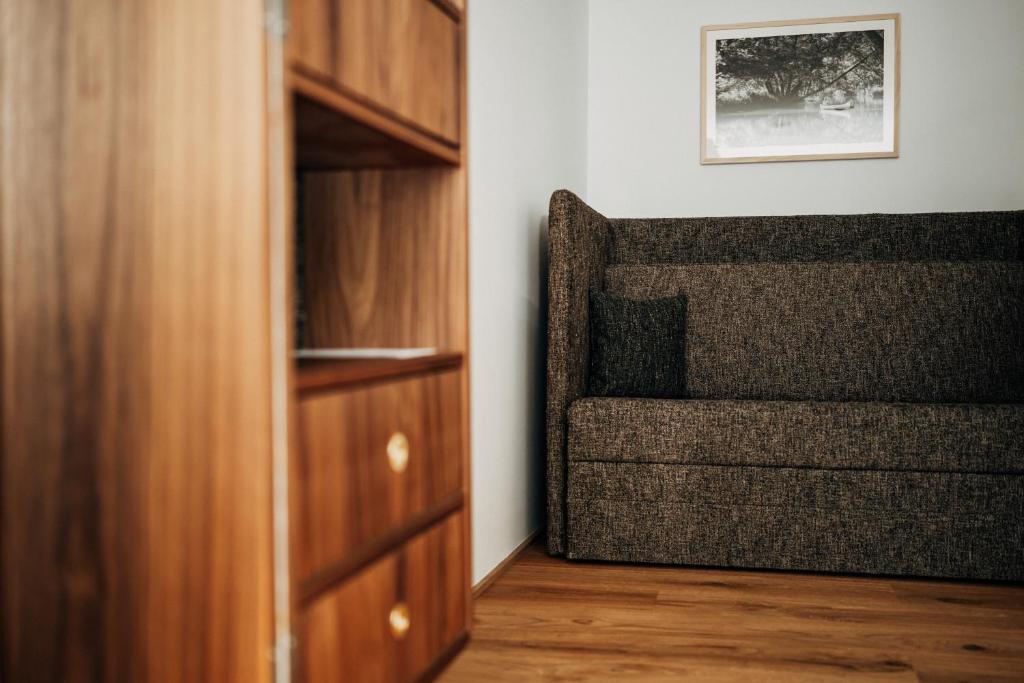
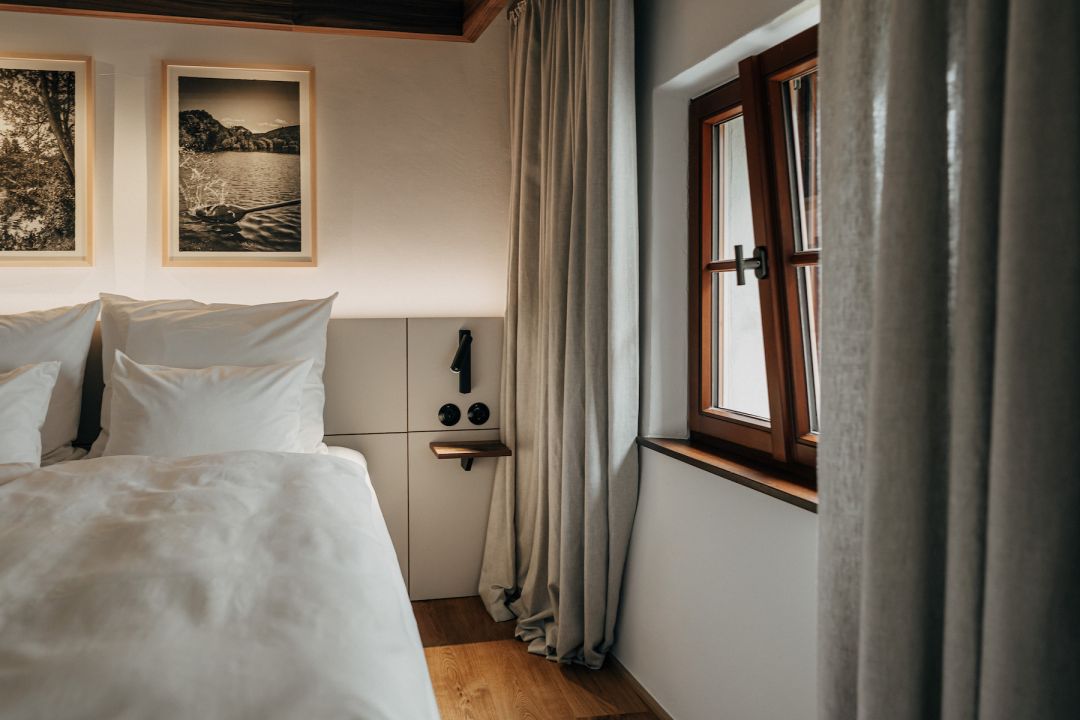
The interiors avoid the usual rural Bavarian shorthand. There are no unnecessary antlers or aggressively rustic gestures. Instead, the palette is quietly sophisticated: chalky whites, soft greys, warm timber, glazed ceramics and occasional copper. Bespoke joinery makes intelligent use of awkward corners while natural materials keep the contemporary additions grounded in the buildings around them. The overall effect is pared back but never minimal for minimalism’s sake. Heritage provides enough decoration already.
19 Rooms, None Quite Alike
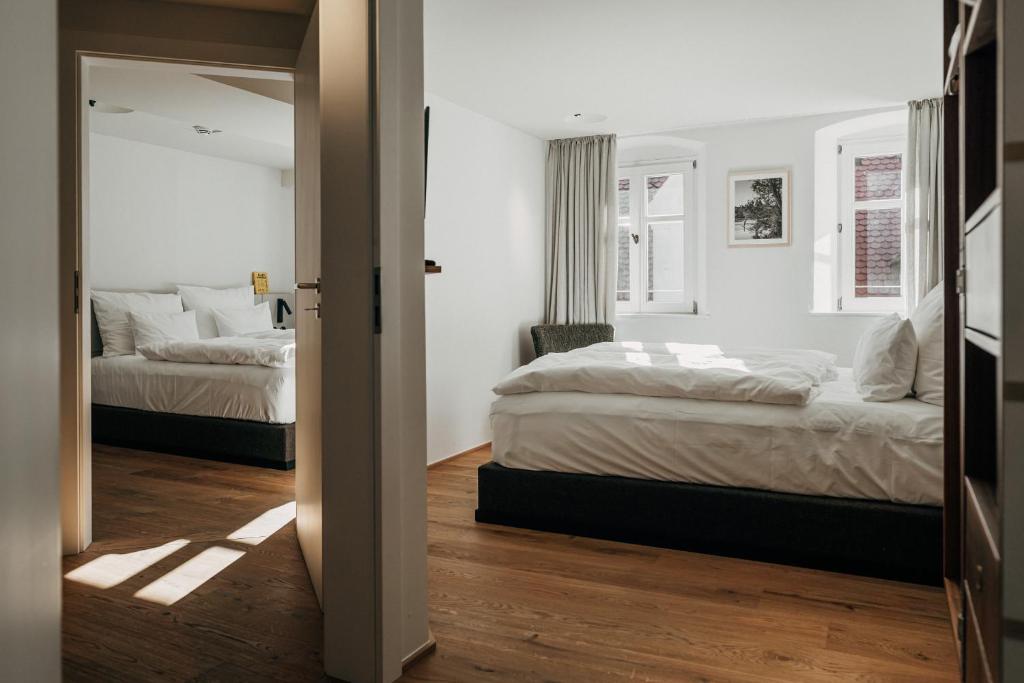
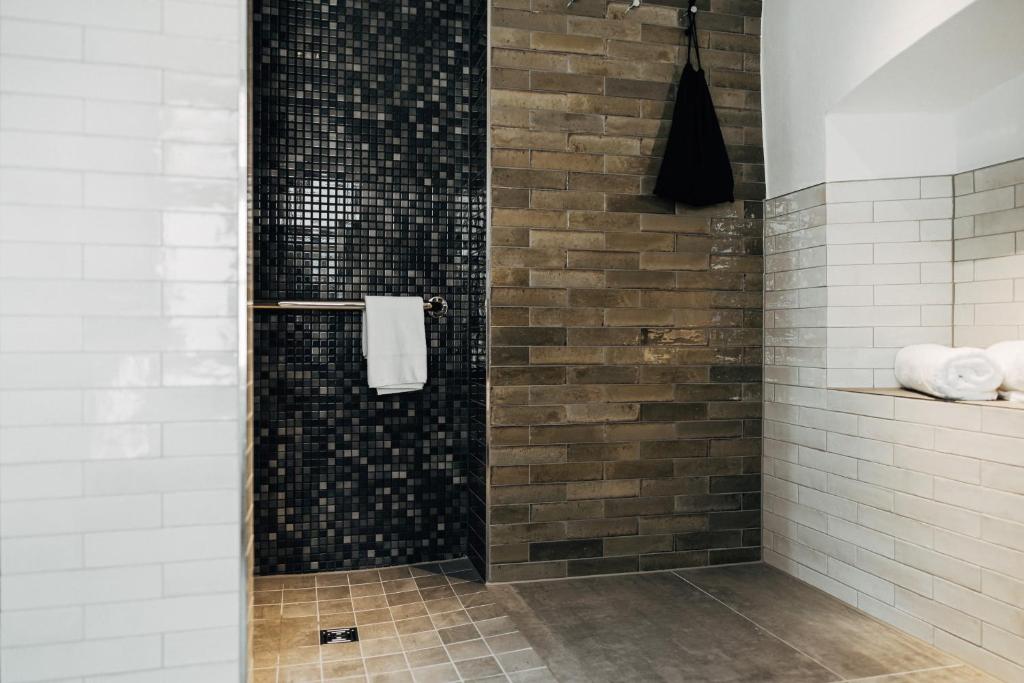
Bootshaus has 15 rooms and four suites, spread across three of the historic houses. Because of the architecture, uniformity was never really an option. The smallest Petit rooms are compact at around 13–15 m², while the largest suite reaches roughly 34 m². In between are rooms tucked beneath pitched roofs, spaces with low beams, river views, bunk beds and unexpected corners that would terrify a standardized hotel brand. Comfort is reassuringly consistent. Beds are by Treca, bathrooms feature glazed tiles, granite basins and rainfall showers, while some of the attic suites add freestanding copper bathtubs. The Grande Suite is the indulgent one, with exposed roof structure, a huge copper tub, river views and its own hidden rooftop terrace with a hammock. Not bad for a former riverside workhorse.
The Restaurant Comes First
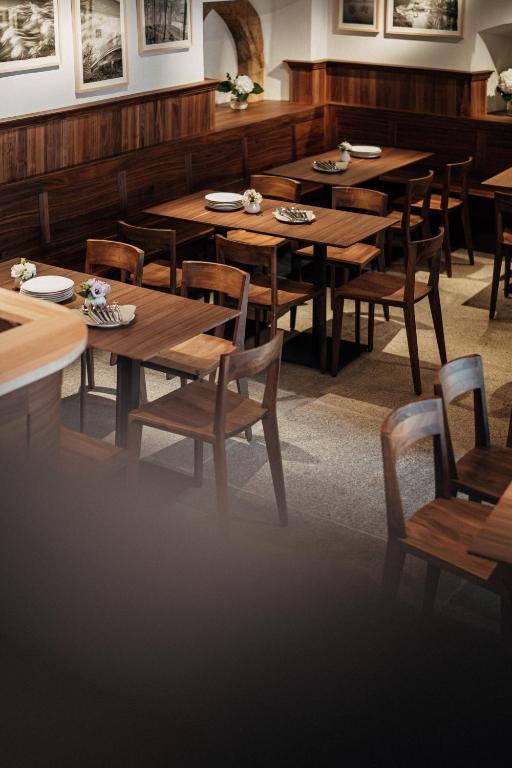
Like many of the best small European hotels, Bootshaus makes most sense once you realise that the restaurant is the centre of gravity. There are two dining rooms, one on the ground floor and another upstairs where breakfast is served. The cooking stays close to the Upper Palatinate, working with seasonal ingredients and nearby producers. The menu is deliberately concise and might move between beetroot, carp, pumpkin, dumplings, radicchio and spelt rather than trying to offer something for everyone. Vegetarian dishes are treated with the same care as meat and fish. During the day, there are cakes and simple cheese plates. At breakfast, there is no giant buffet. Instead, small dishes arrive at the table: sourdough, salami, local cheeses, fruit compotes and properly made coffee. A much nicer way to start the day.
Beer Town, Wine List
Amberg takes beer seriously. There are multiple independent breweries in and around the city, and Bootshaus makes sure local bottles and brews remain part of the experience. Order a Winkler Zoigl and you’re drinking something that genuinely belongs to the place. But this is not a one-beverage operation. Eva’s sister Anna curates the wine selection, with German bottles sitting alongside a wider European list. That mix suits the hotel perfectly. Bootshaus is rooted in Bavaria, but not trapped by it.
The River Is Part of the Stay
The Vils isn’t just something you look at from the terrace. The hotel keeps kayaks for guests, meaning you can actually leave the property by water and paddle through the greenery surrounding the city. There are bikes too. From the hotel, Amberg’s medieval streets are immediately accessible on foot, while the river pulls you quickly into quieter landscapes populated by kingfishers, storks and forest edges. This relationship with the water is one of the things that gives Bootshaus its identity. It’s not a hotel near the river. It’s a hotel shaped by the river.
A Family Project, Not a Brand Exercise
The strongest personality comes from the people behind it. Klaus had long wanted to run his own inn. Eva grew up around hospitality and later worked in places including 1477 Reichhalter in South Tyrol, bringing back ideas about how small-scale hotels can feel contemporary without losing their local character. Together, they created something that still behaves like a proper inn. Klaus may be outside grilling sausages on a Saturday. Eva is as likely to be involved in the restaurant as behind a desk. Reception isn’t staffed around the clock, but someone from the restaurant will help when needed. That informality suits the place. Bootshaus doesn’t need hotel choreography. It has hosts.
Amberg Is Part of the Appeal
Amberg is not Munich. That is rather the point. This compact Upper Palatinate town has preserved medieval walls, a Gothic town hall, river bridges and the famous Stadtbrille, where reflections beneath the arches create the appearance of spectacles in the water. It has history, beer, handsome streets and almost none of the pressure of Germany’s major tourist cities. Bootshaus fits naturally into that rhythm. Come for a weekend. Stay for dinner. Paddle the Vils. Walk the old town. Drink something brewed a few streets away. Bootshaus proves that the most convincing heritage hotels don’t need to turn history into theatre. Sometimes all they need to do is preserve the crooked walls, cook well and keep the door open to the town outside.