Hôtel Borsari | Martigny, Switzerland
Where History Meets Design in the Heart of the Alps
Why DNA Hotels Loves It
● A bold reinvention of a former wine storage facility into one of Switzerland’s most distinctive new boutique hotels.
● Richly layered interiors that blend industrial heritage, mid-century design, Roman influences, and contemporary art.
● An unapologetically analogue approach to hospitality that celebrates craftsmanship, atmosphere, and slow living.
A New Chapter for Martigny
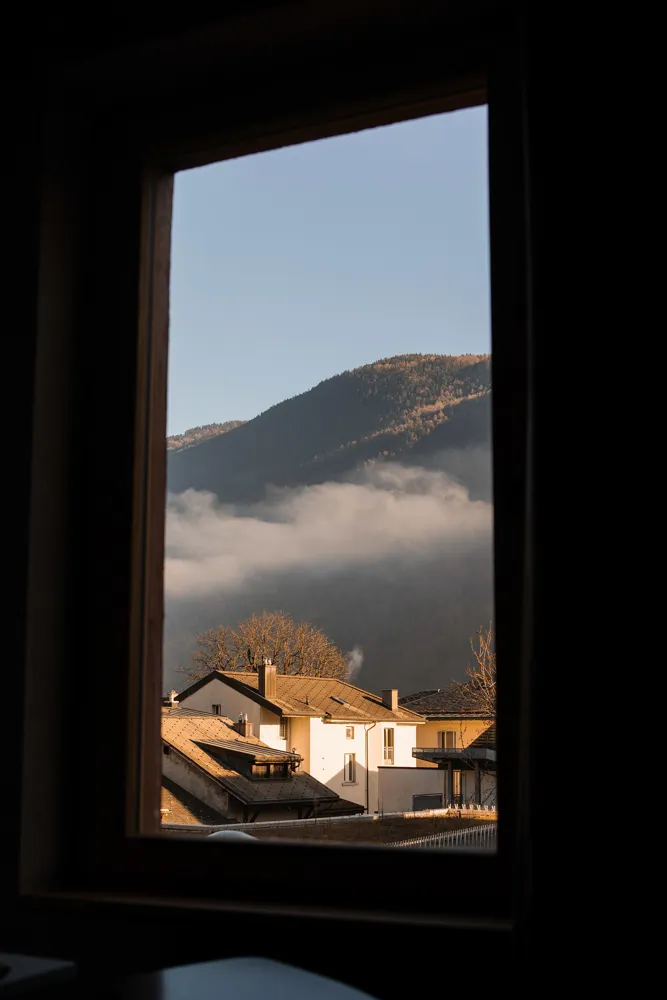
Martigny has always occupied a fascinating position. Nestled between France, Italy, and Switzerland, the town has served as a crossroads since Roman times. Today it remains a gateway to the Alps, with destinations such as Zermatt, Chamonix, and Montreux all within easy reach. Yet Hôtel Borsari makes a compelling case for staying exactly where you are. Opened in 2025 as part of the new Quartier LôDzè development, the hotel represents a remarkable transformation of a former agro-industrial site into one of Switzerland’s most ambitious design-led hospitality projects. Created by first-time hotelier John Cretton together with creative collaborator Shaun Evans, Hôtel Borsari feels deeply connected to Martigny’s past while embracing a contemporary identity all its own.
Inspired by Wine, Built on History
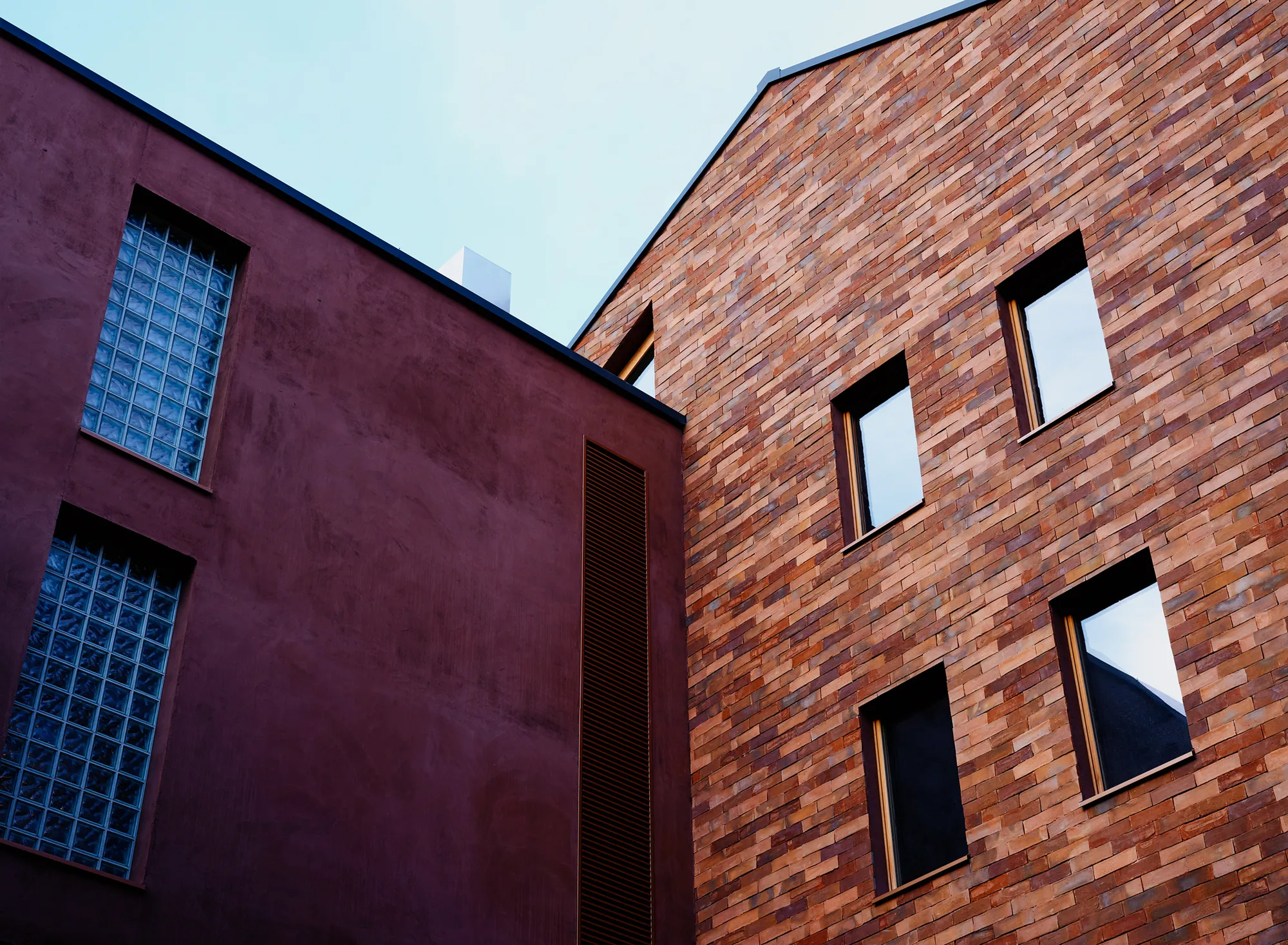
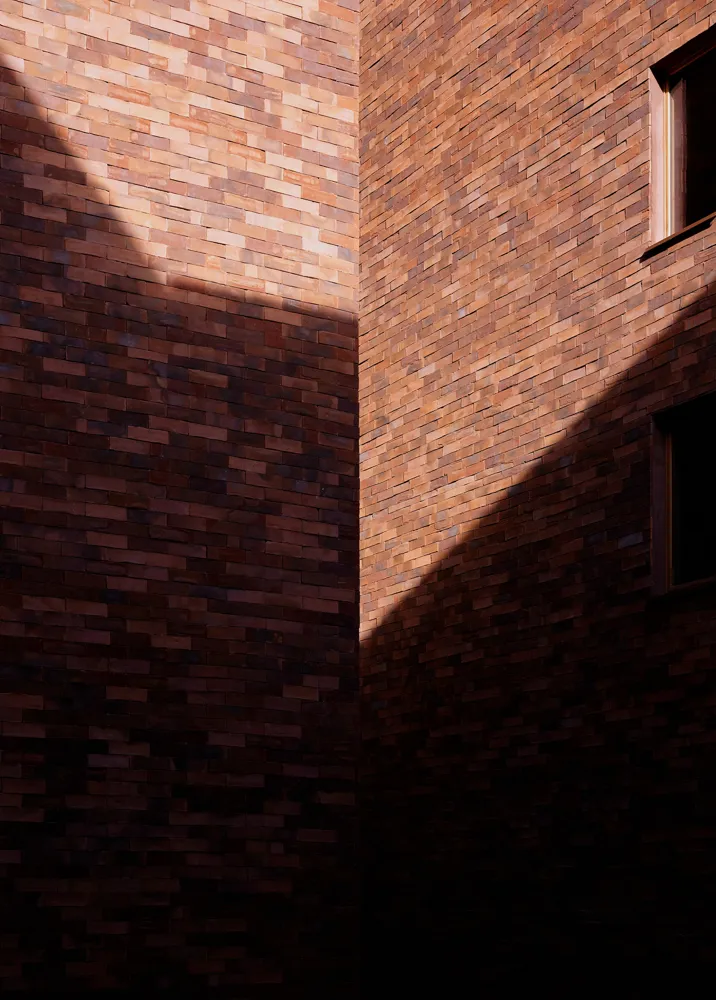
The hotel takes its name from the historic wine tanks that once occupied the site. Known locally as borsaris, these enormous storage vessels formed the backbone of Martigny’s wine industry during the nineteenth century. Today, their legacy runs throughout the hotel. The rusty-red façade references the wine caves hidden beneath the building, almost as if stained by decades of stored vintages. Traditional Roman brick-making techniques were used during construction, further strengthening the dialogue between past and present. From the moment you arrive, the building feels rooted in place. Not recreated history. History reimagined.
Industrial Design with Character
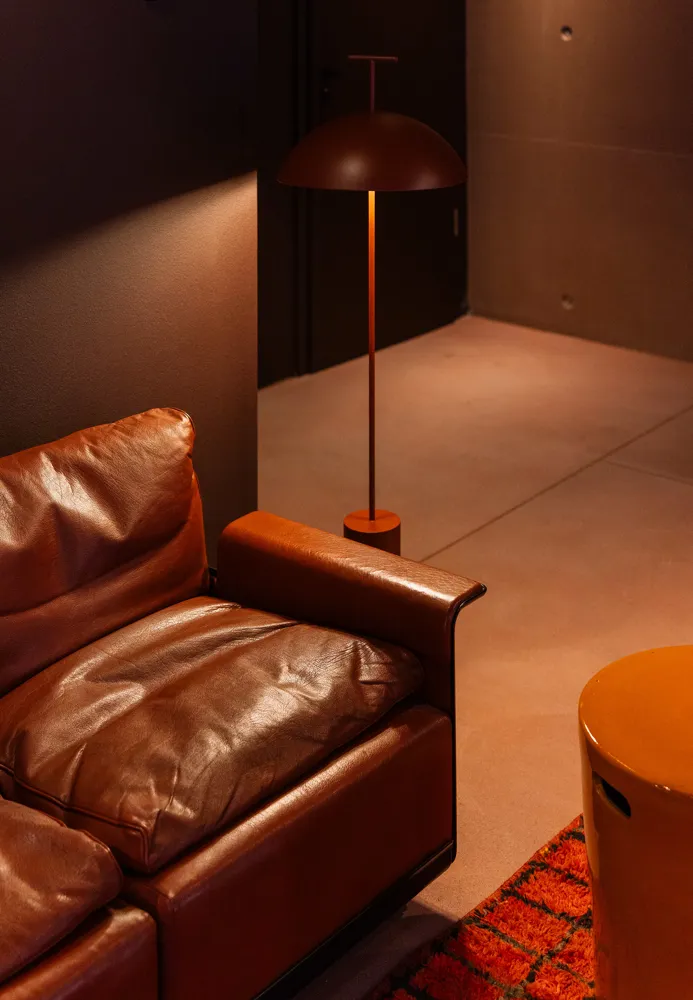
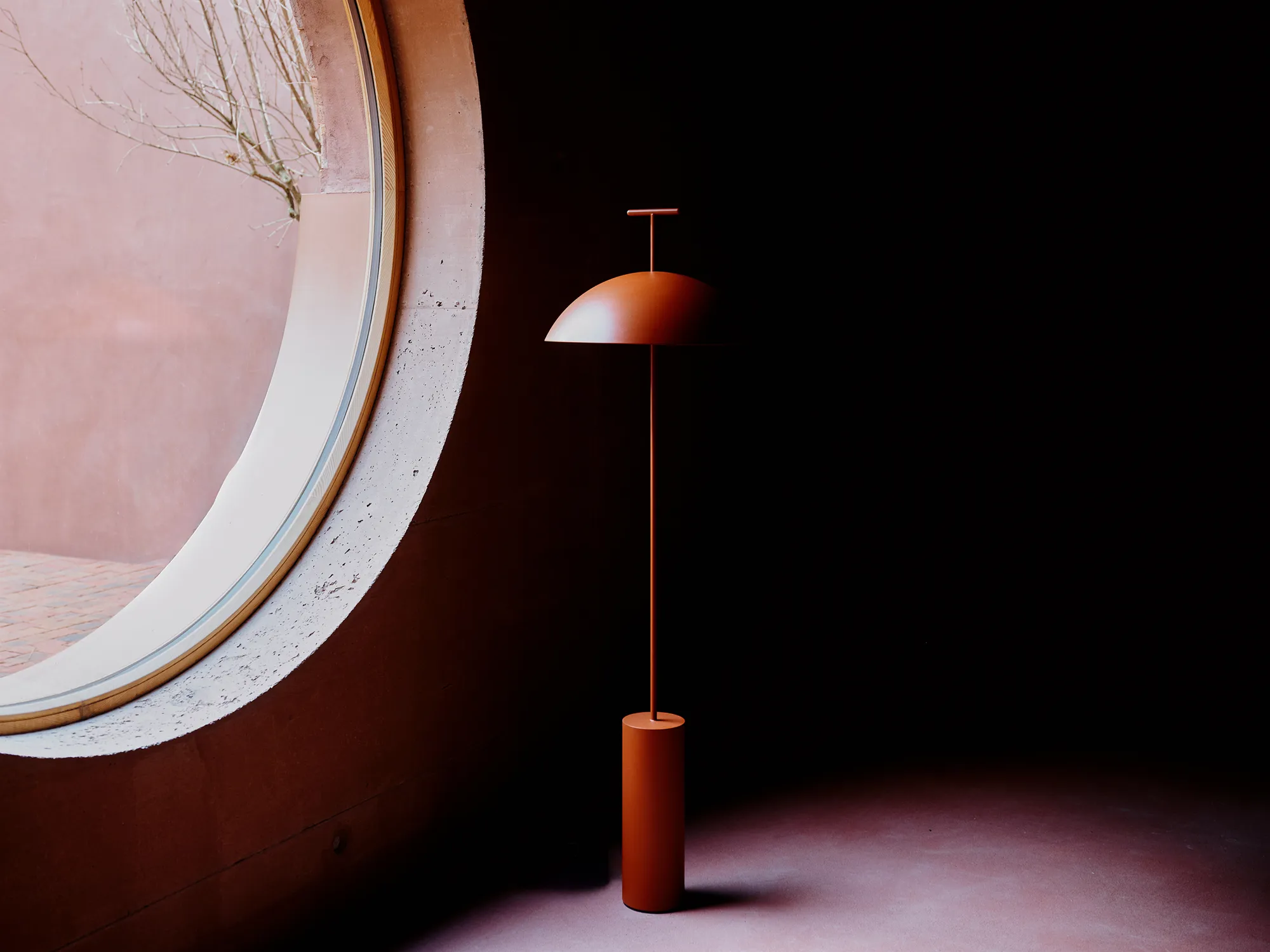
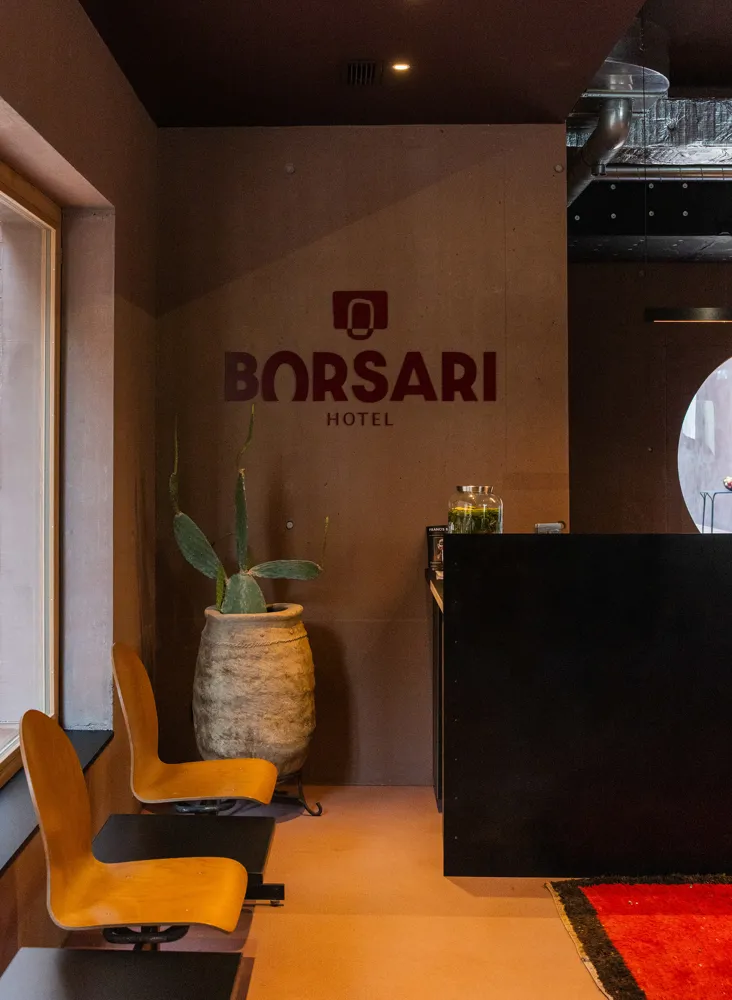
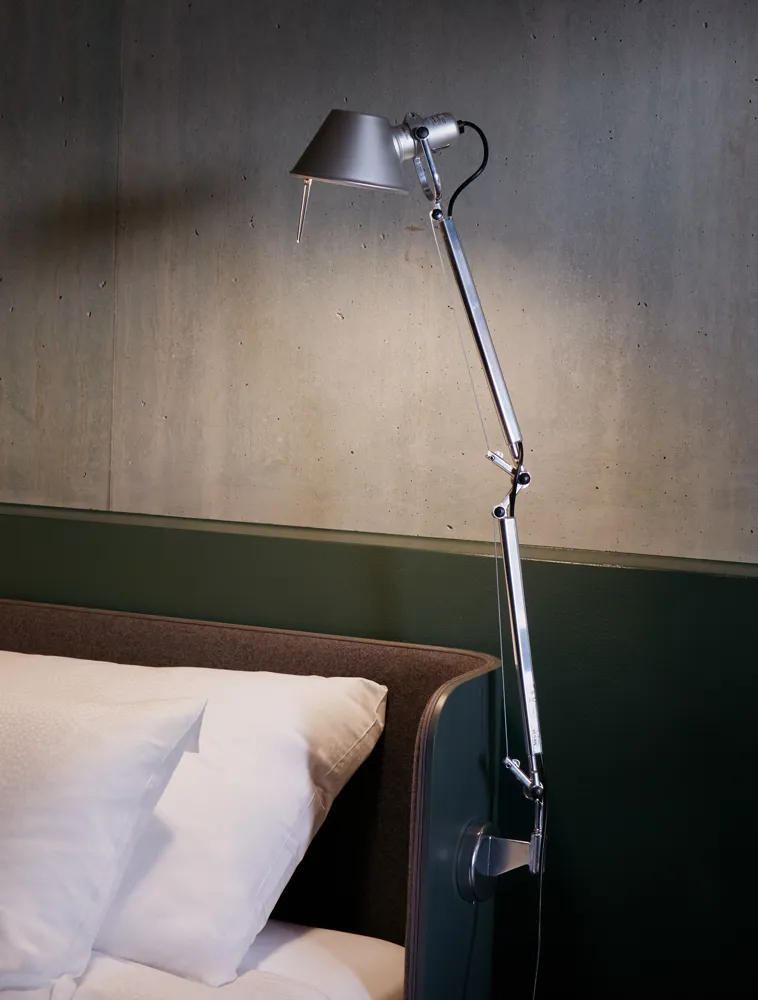
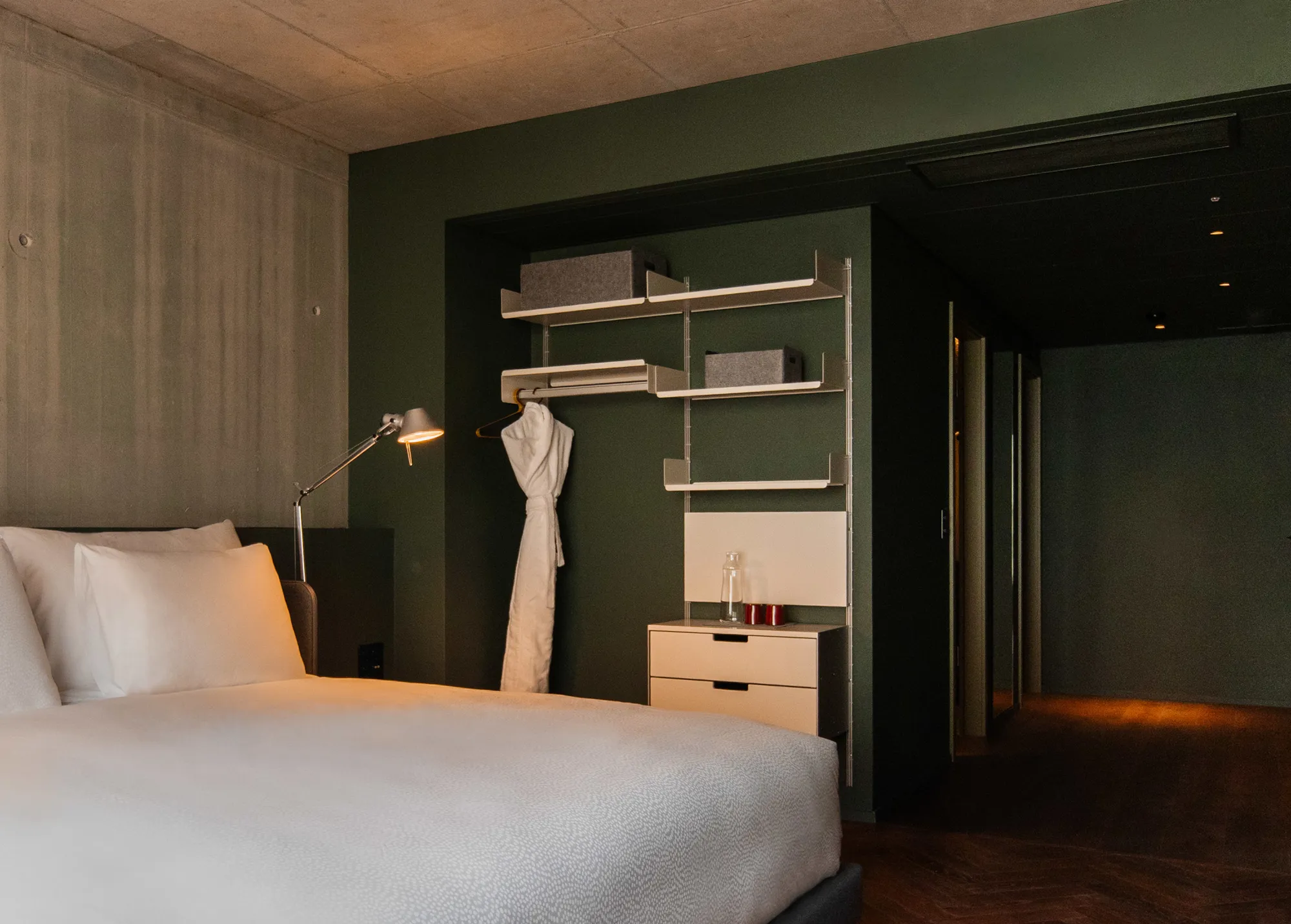
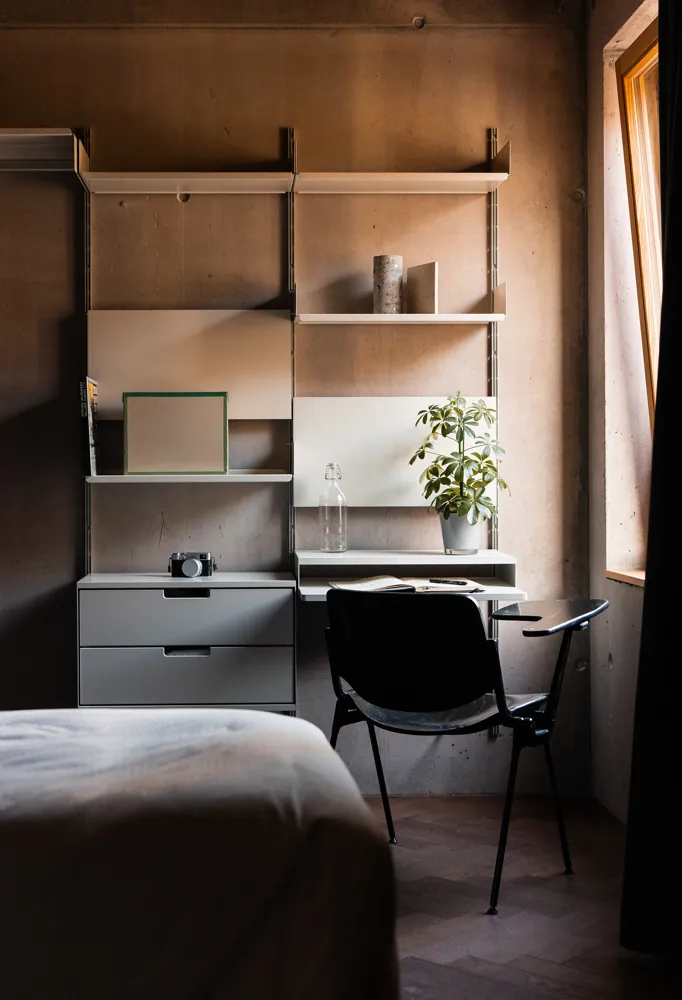
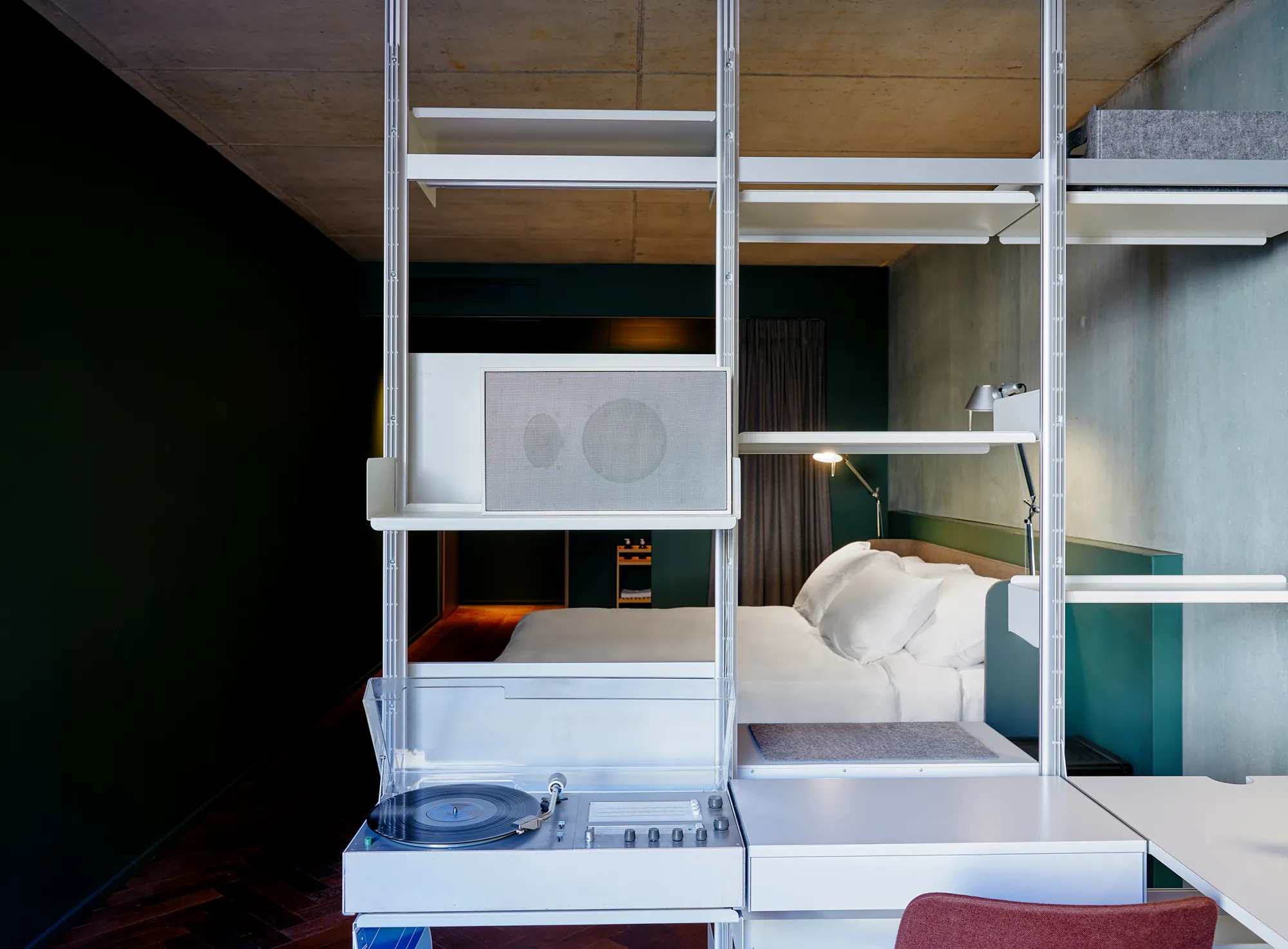
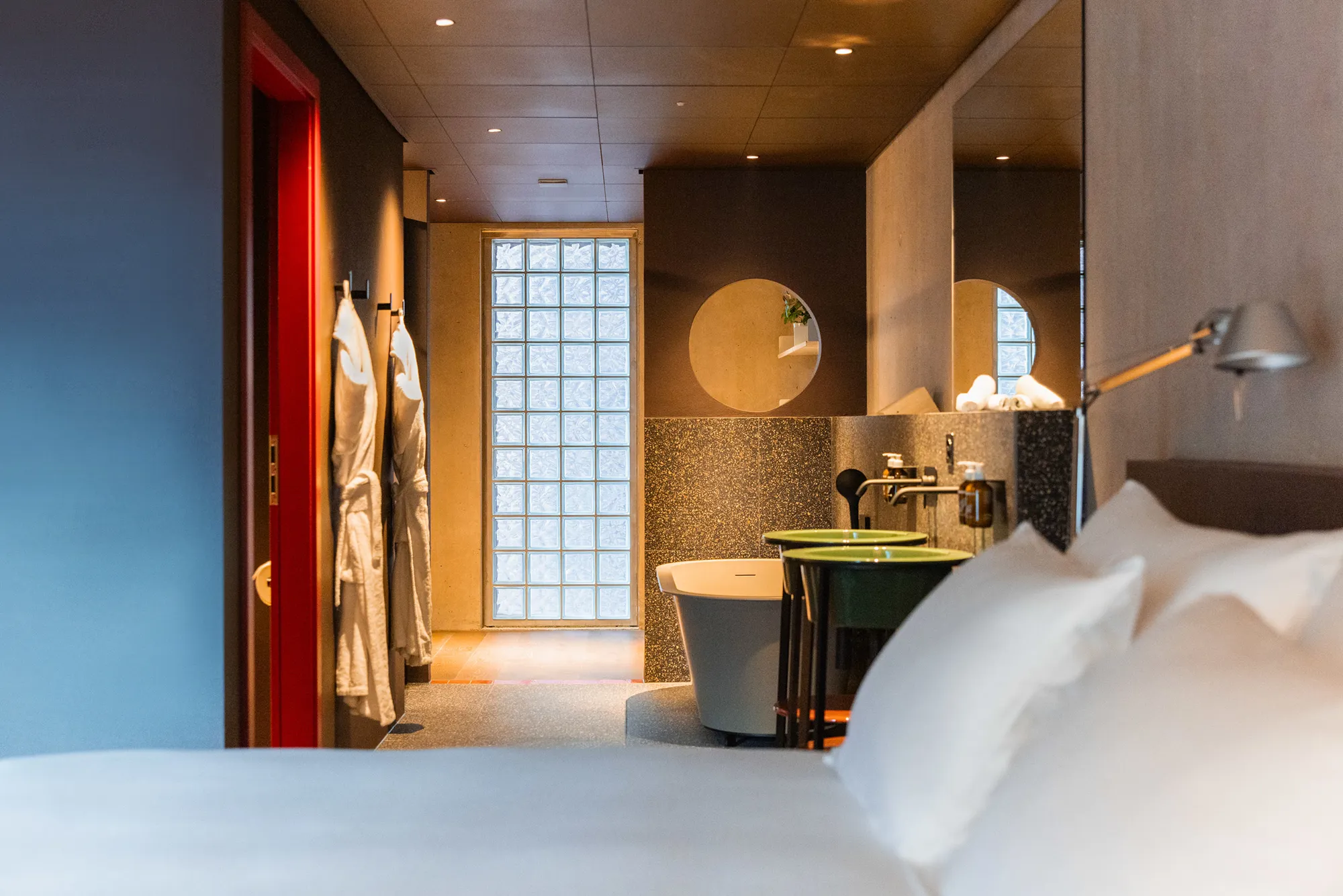
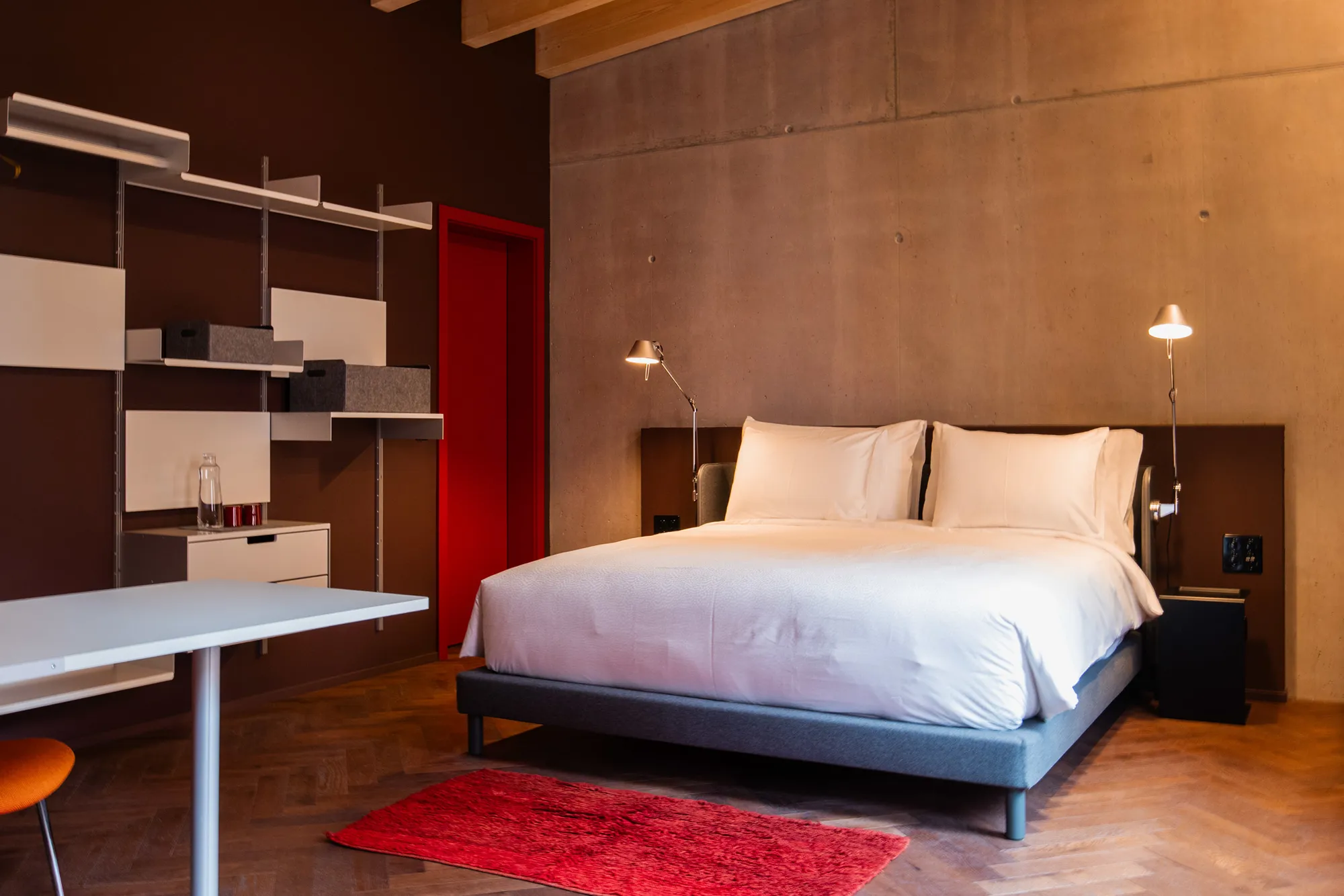
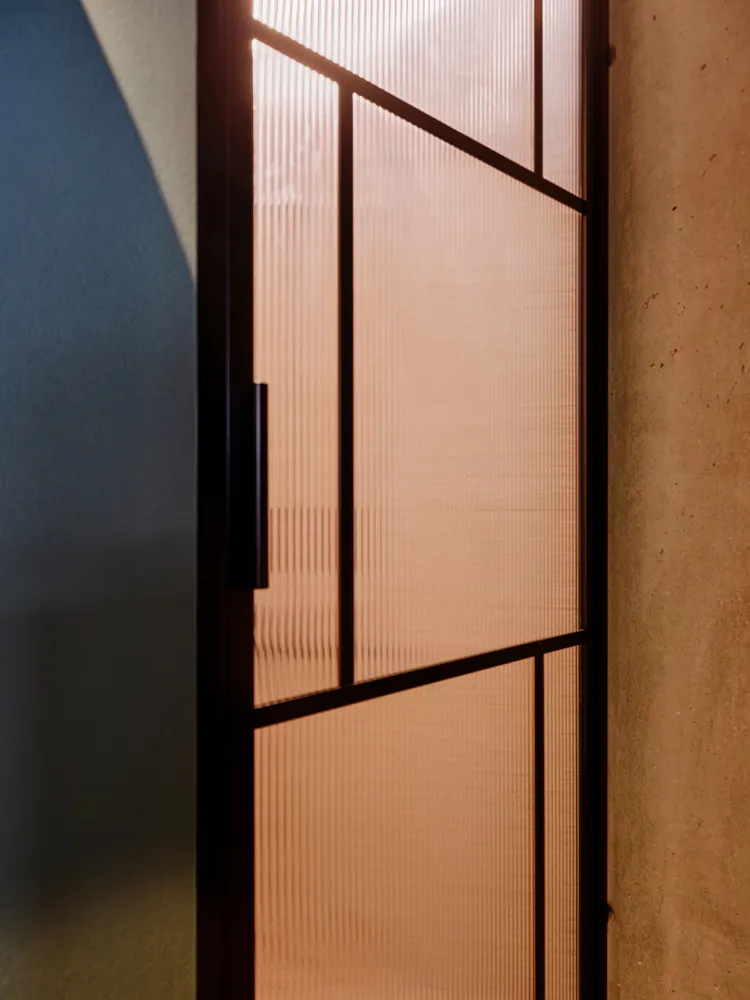
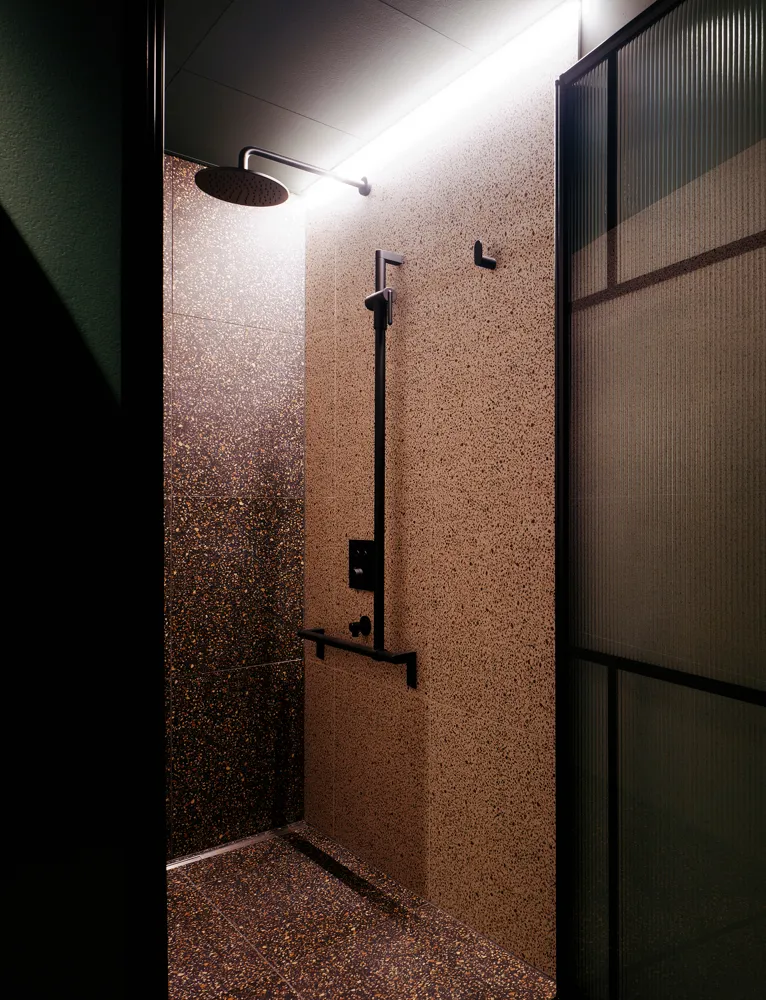
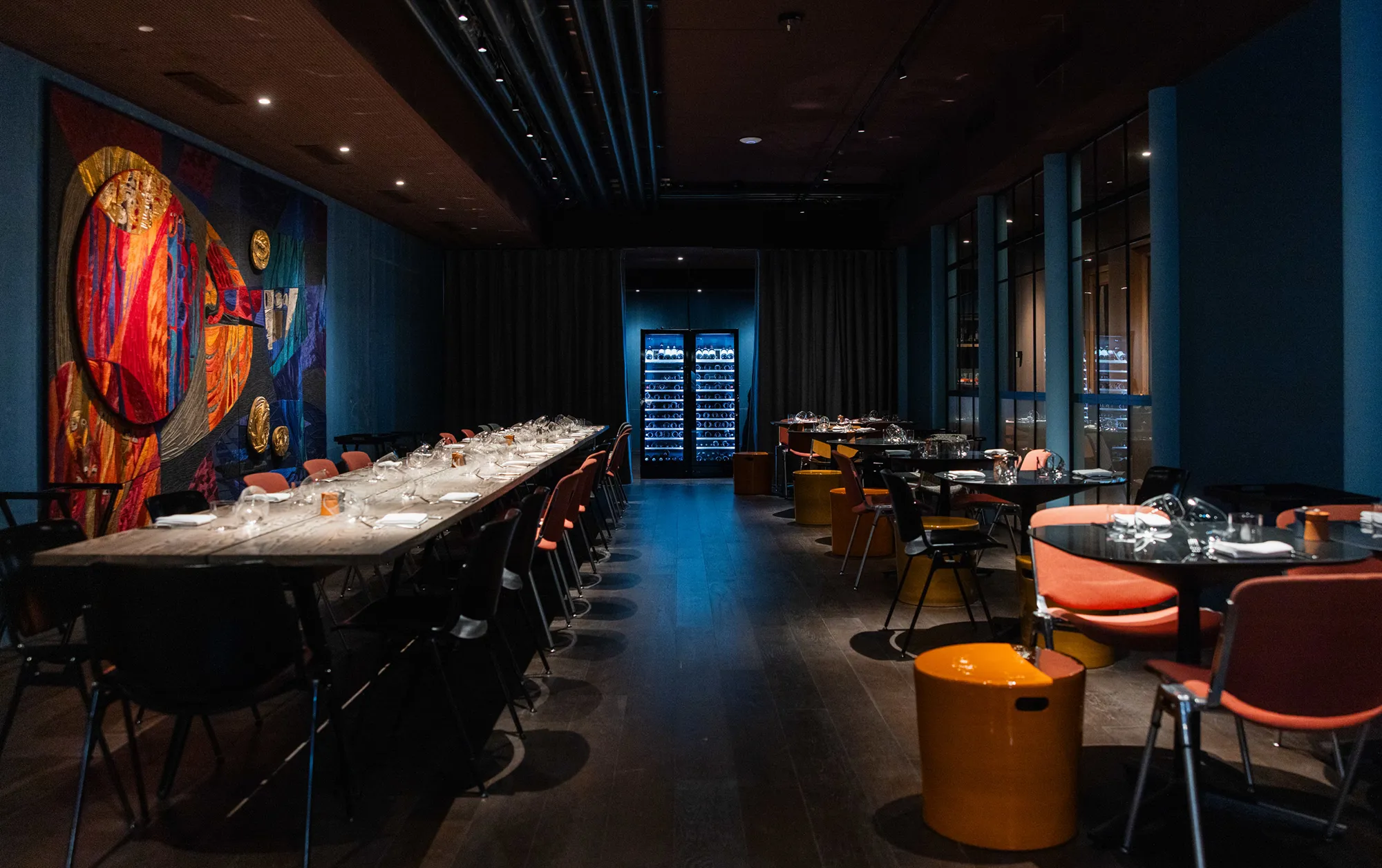
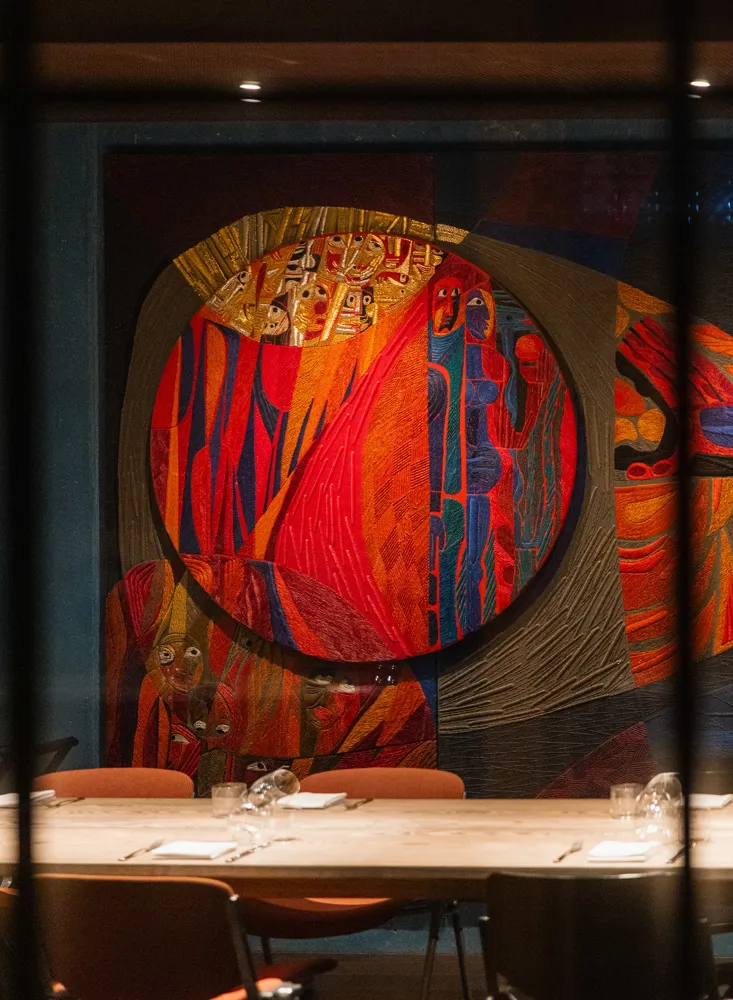
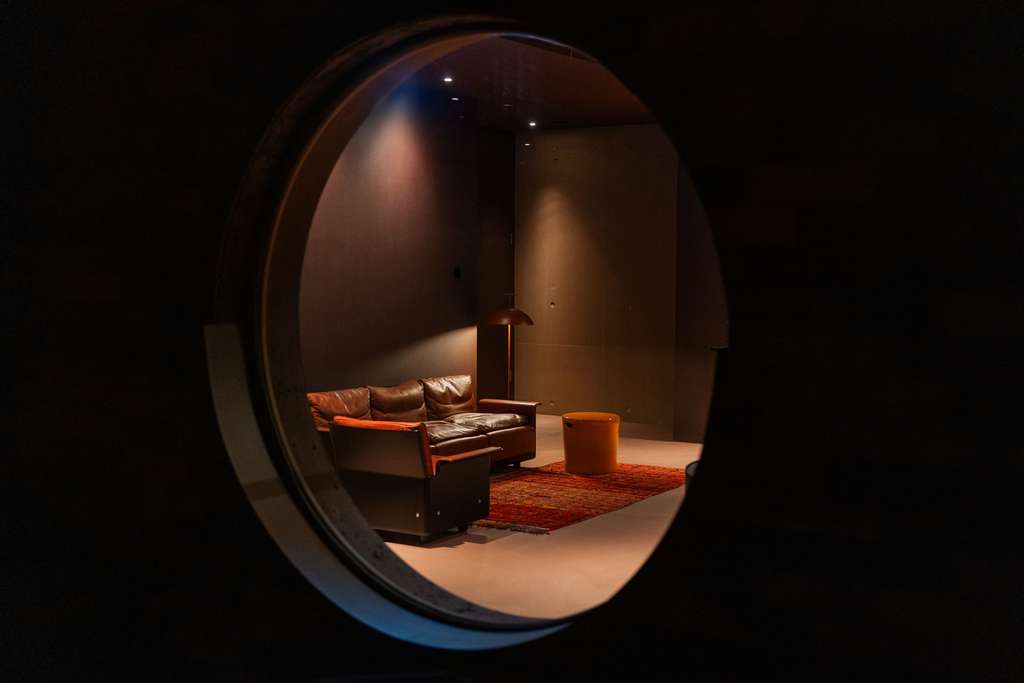
The interiors strike an impressive balance between boldness and warmth. Raw concrete, granite, terrazzo, rendered lime, oak, brick, and larch form the architectural foundation, while carefully curated furniture and vintage objects introduce personality and soul. There are references to Dieter Rams, mid-century Swiss and German modernism, Roman architecture, and industrial heritage throughout the property. Olivetti typewriters sit alongside contemporary artworks. Vintage newspapers, industrial artefacts, and design classics create a sense of discovery in every space. Each floor adopts its own colour palette inspired by the surrounding landscape: deep green for foliage, rich red for grapes, basalt black for minerals, and blue for spring water. Together they create interiors that feel immersive, tactile, and distinctly individual.
Rooms Designed for the Analogue Age
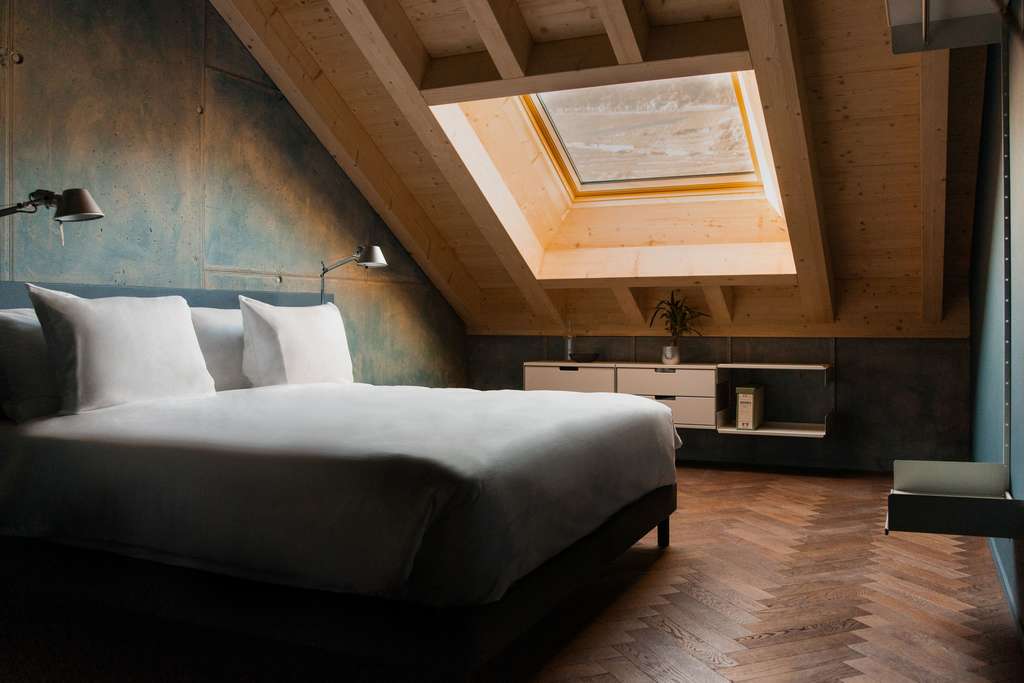
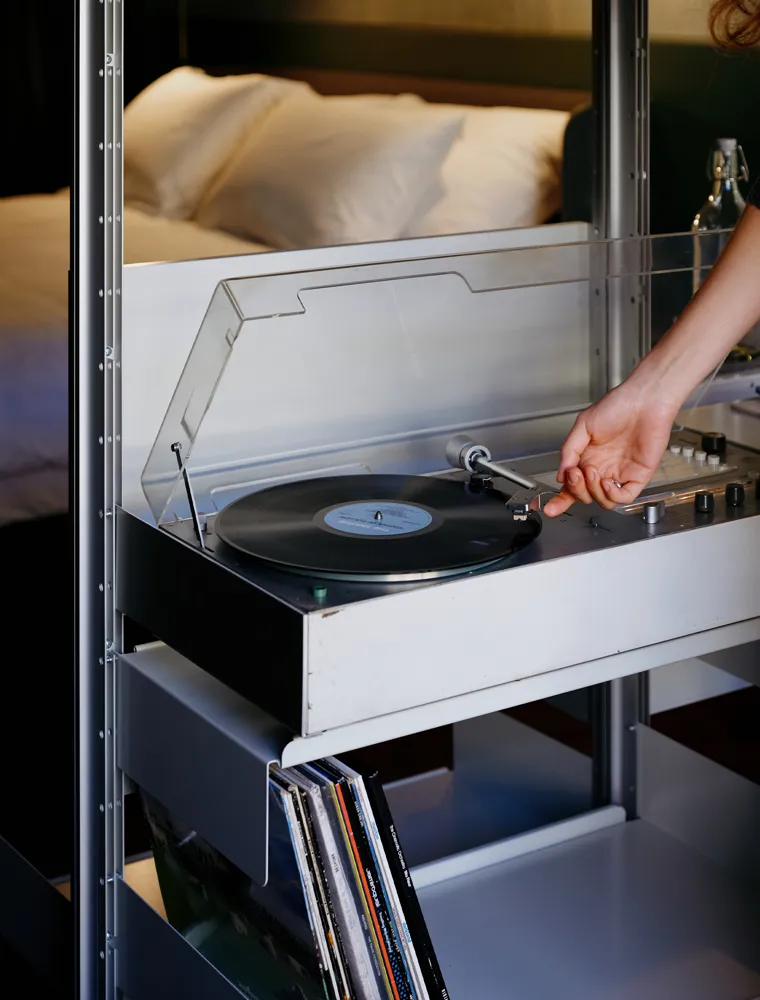
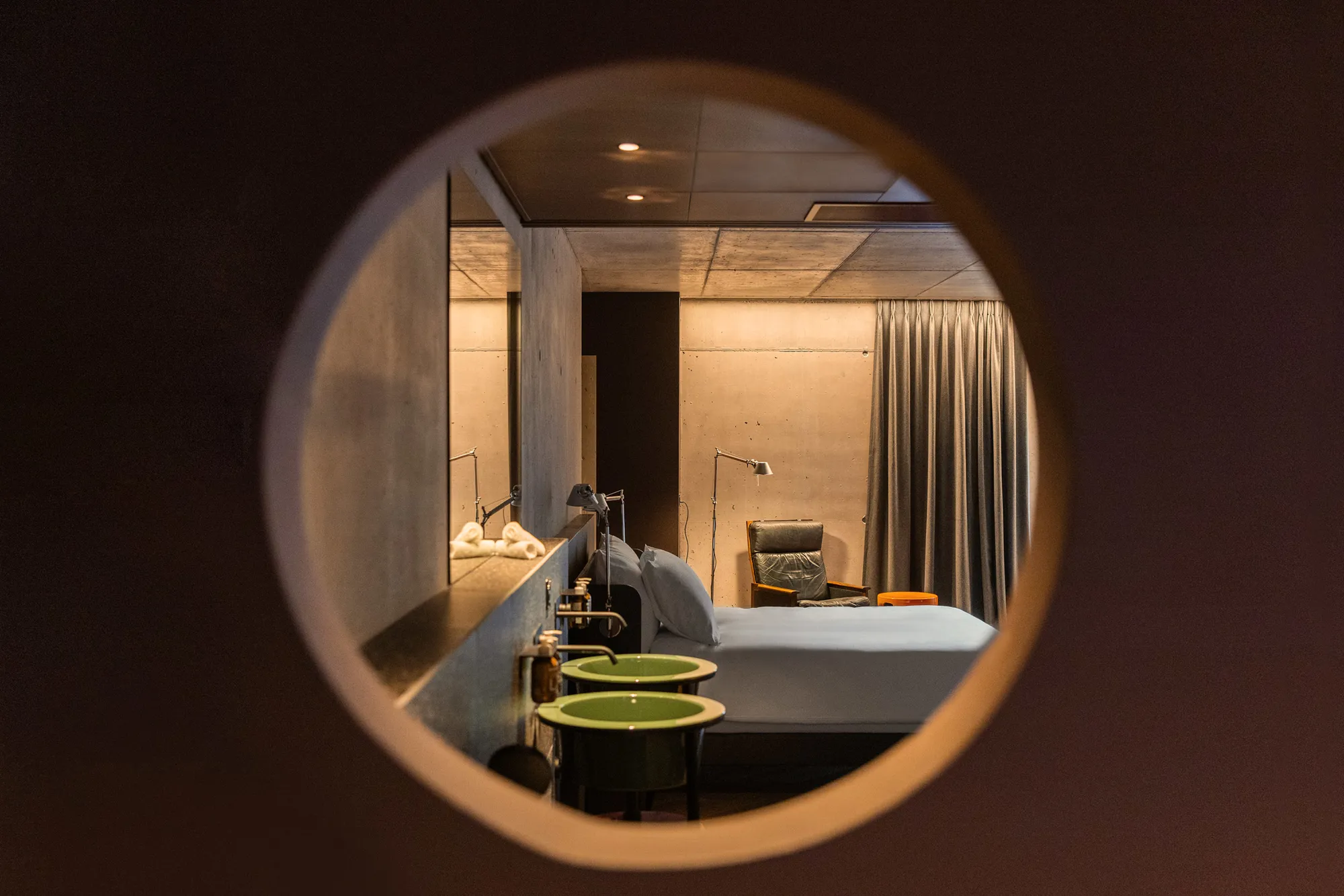
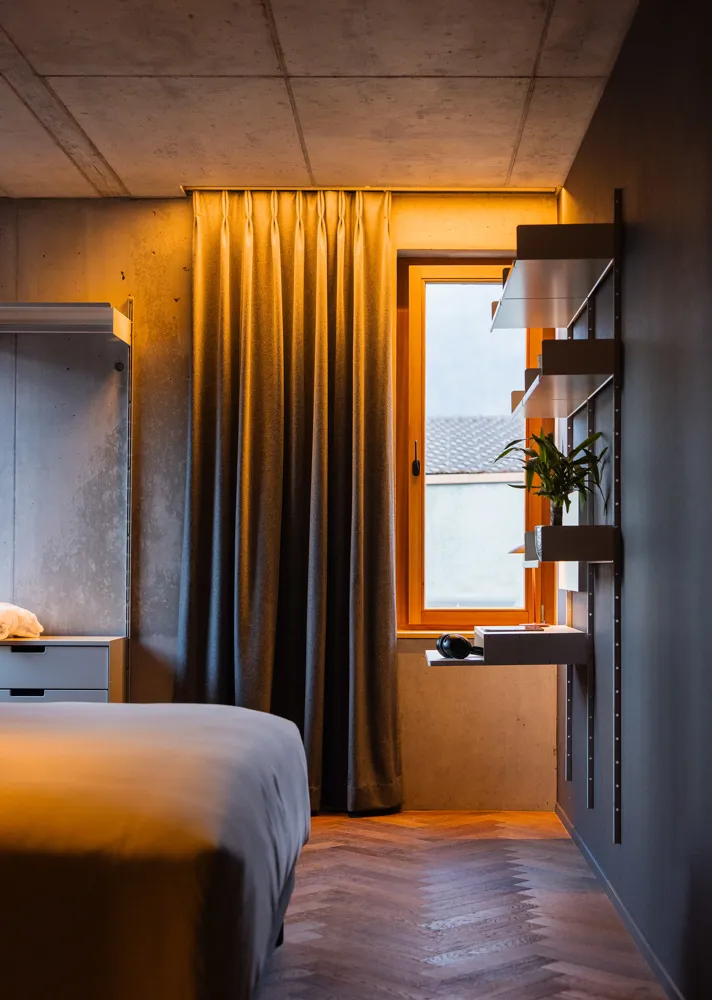
The hotel’s fifty guestrooms and suites continue the same design philosophy. Named after the historic wine tanks that once occupied the site, the rooms embrace a refreshingly low-tech approach to luxury. There are no televisions. No plastic keycards. No unnecessary distractions. Instead, guests find oak parquet floors, flannel curtains, carefully selected furniture, tactile materials, vintage-inspired audio systems, and beautifully crafted detailing throughout. The atmosphere encourages guests to slow down, disconnect, and engage more fully with their surroundings. Luxury here is measured through texture, atmosphere, and thoughtful design rather than technology.
The Roman Baths Below
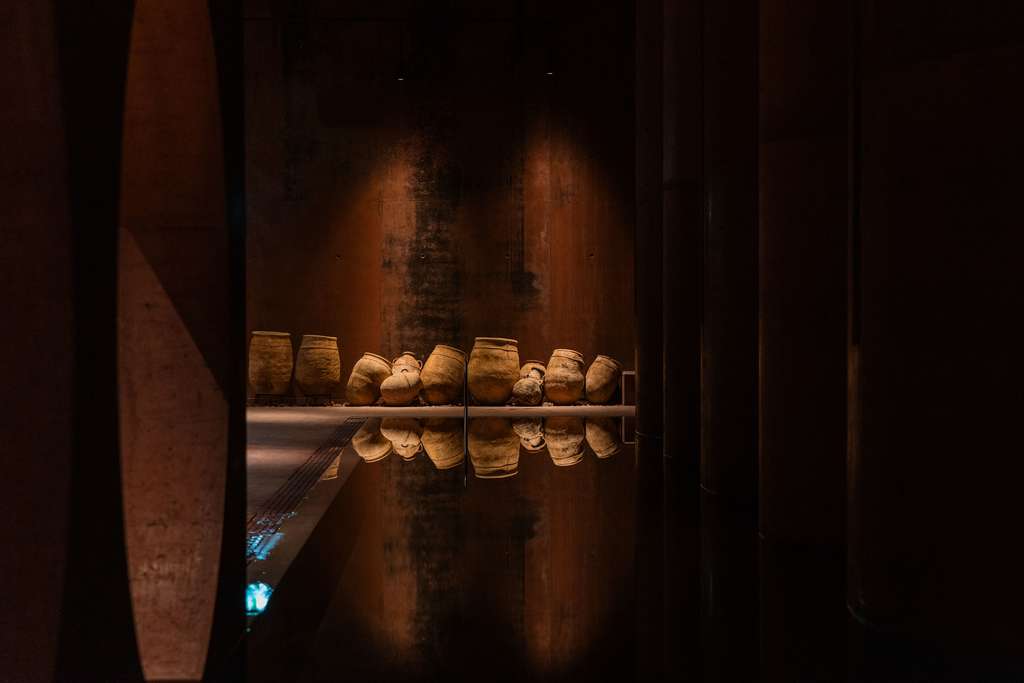
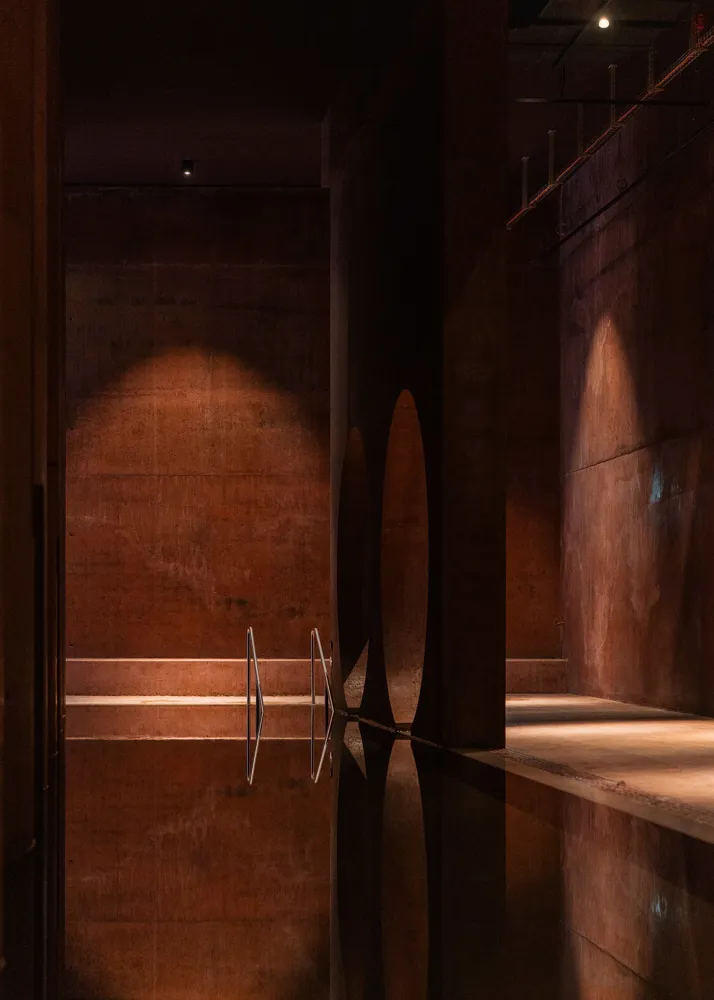
One of Hôtel Borsari’s most remarkable features lies underground. The former wine tanks have been transformed into an atmospheric thermal bathing complex inspired by ancient Roman bath culture. Hidden beneath the hotel, a series of pools and thermal experiences occupy the spaces where wine once matured. Stone, water, soft lighting, and carefully controlled temperatures create an environment that feels both ancient and contemporary. The experience is immersive, restorative, and entirely unique. A direct link between the building’s industrial past and its new life as a destination for wellbeing.
A Cultural Hub for Martigny
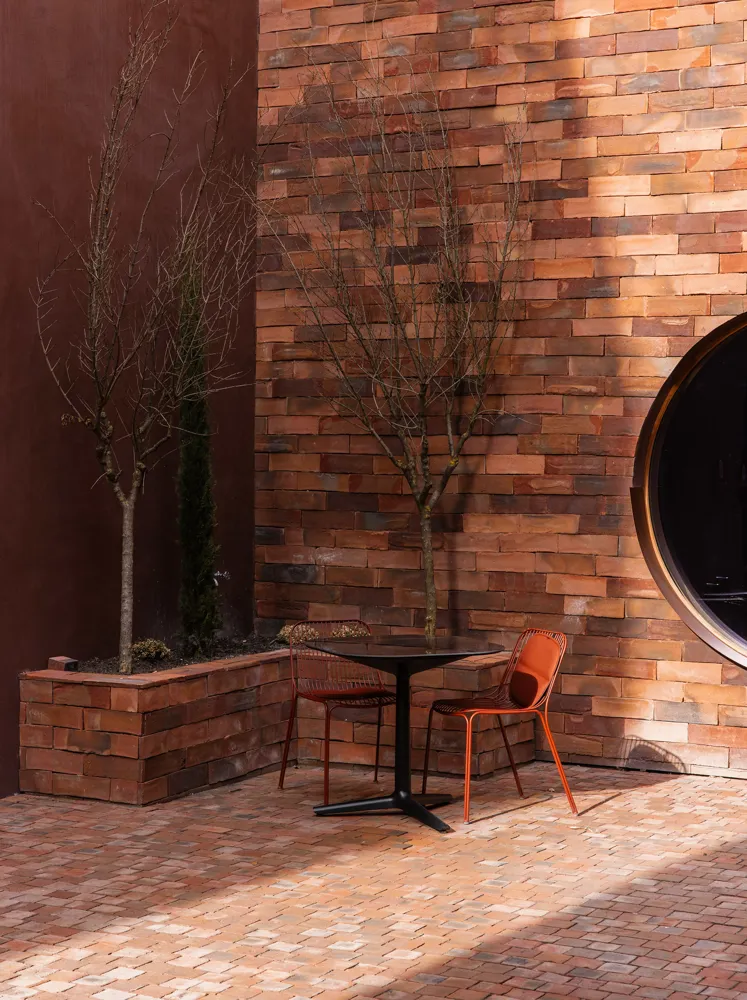
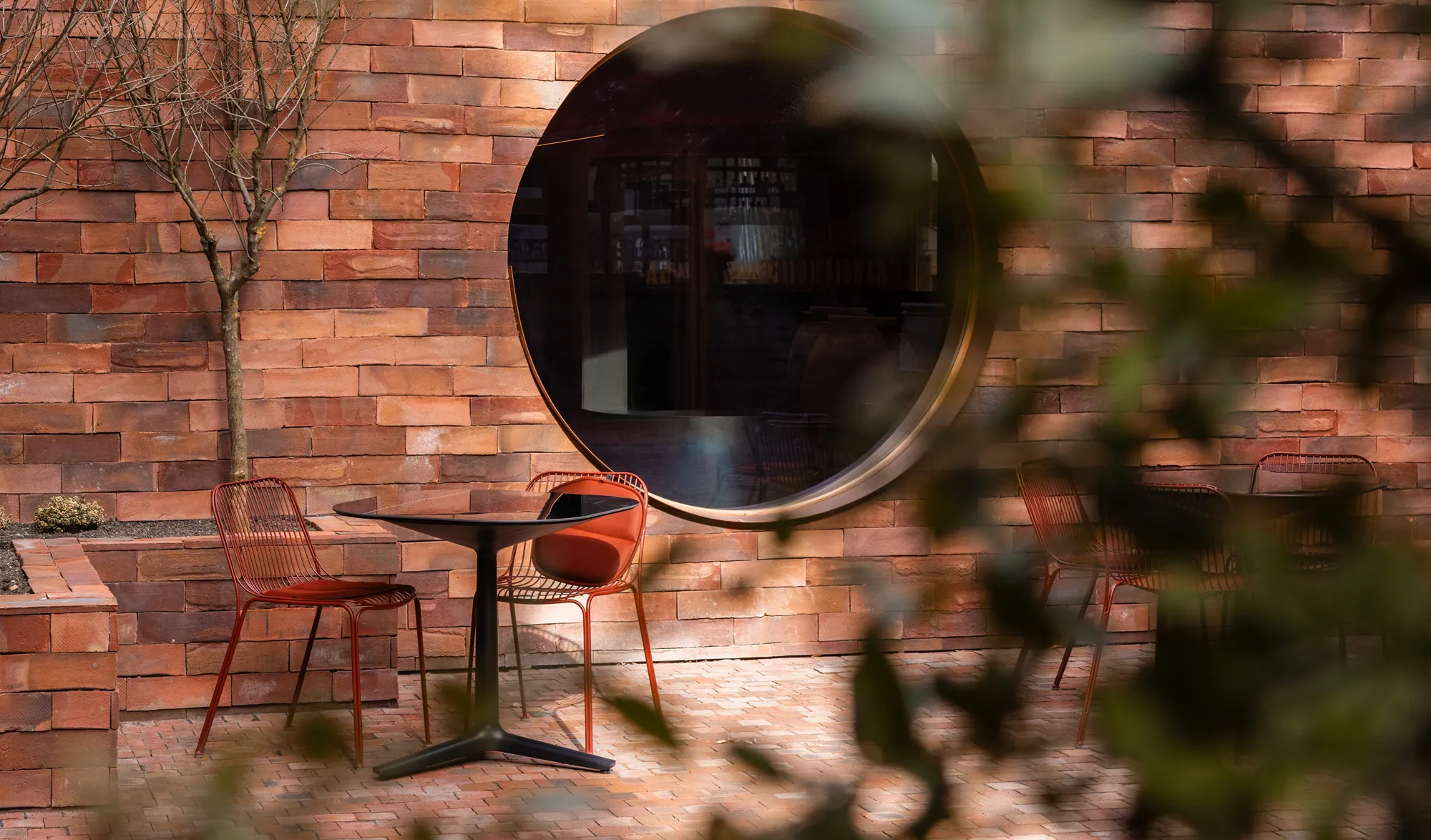
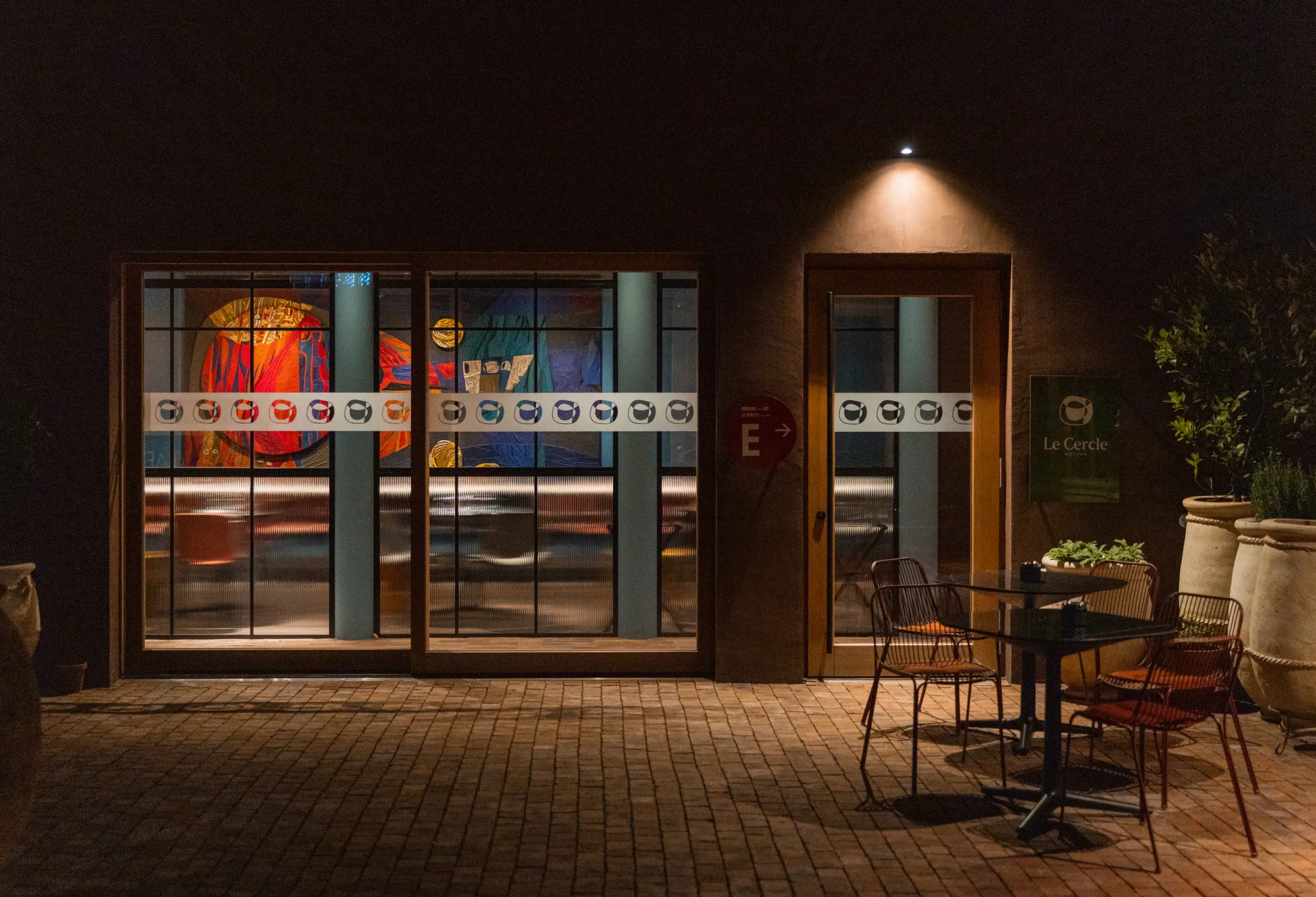
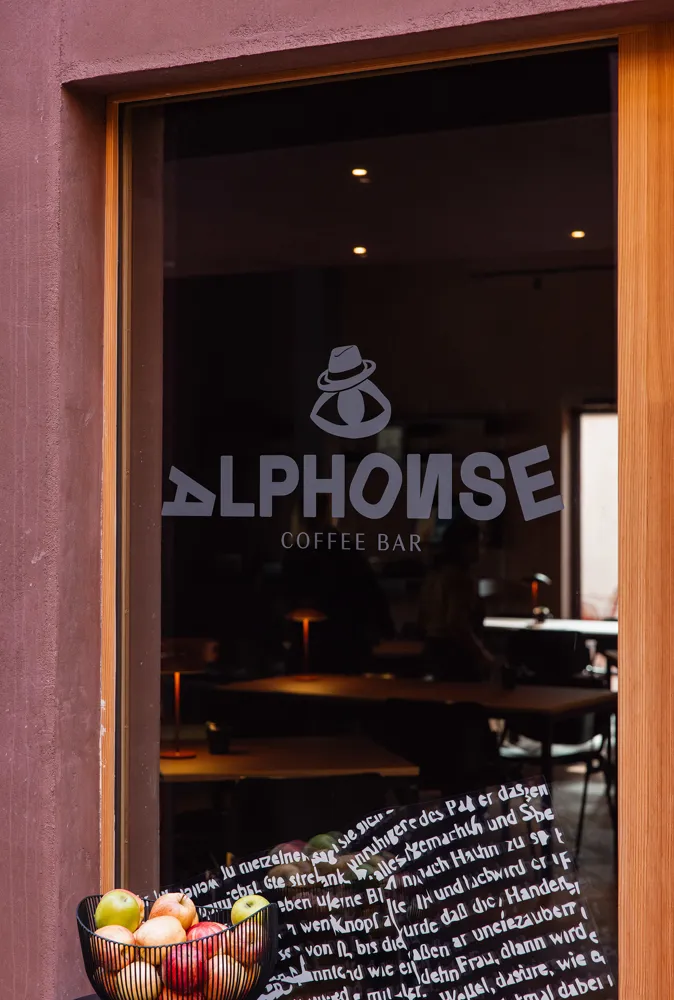
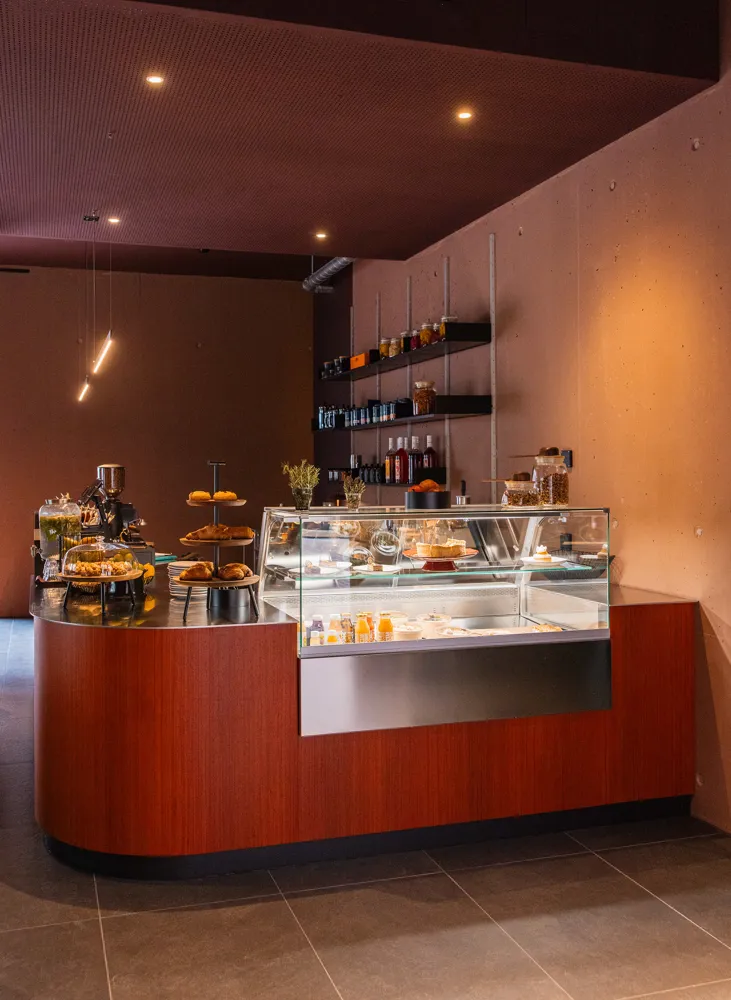
Rather than functioning solely as a hotel, Borsari acts as a social and cultural centre for the surrounding neighbourhood. At the heart of the property lies a cobblestoned courtyard inspired by Roman public spaces, creating a natural gathering point for guests and locals alike. Le Cercle serves seasonal cuisine rooted in regional ingredients and designed around sharing. Rich materials, intimate lighting, and a warm atmosphere encourage lingering lunches and long dinners. La Saucithèque celebrates the site’s winemaking heritage through regional wines, craft beers, and carefully selected charcuterie. Meanwhile, Alphonse offers lighter fare, healthy dishes, excellent coffee, and garden views from morning until evening. Together, these venues create a vibrant social energy that extends far beyond traditional hotel dining.
An Alpine Town Worth Discovering
The hotel also serves as an ideal base for exploring the wider region. Roman ruins, archaeological treasures, vineyards, orchards, museums, contemporary art exhibitions, hiking trails, cycling routes, climbing areas, and ski resorts all surround Martigny. Yet despite its strategic location, the town retains a relaxed, human scale that feels increasingly rare. Hôtel Borsari reflects that same balance. Sophisticated but never pretentious. Cultural but never exclusive. Contemporary yet deeply rooted in local identity.
A New Kind of Swiss Luxury
Hôtel Borsari stands apart from the polished perfection often associated with Swiss hospitality. It embraces imperfection, texture, history, and atmosphere. It celebrates analogue pleasures, thoughtful design, and meaningful connections to place. For travellers seeking something more soulful than conventional luxury, Borsari offers one of the most compelling new hotel experiences in the Alps — a destination where industrial heritage, Roman history, contemporary design, and slow living come together with remarkable confidence.