Bus Palladium | Paris, France
A legendary rock club reborn as a design hotel where music, nightlife, and Pigalle’s rebellious spirit never miss a beat.
Why DNA Hotels Loves It
● One of Paris’s most iconic nightlife addresses transformed into a hotel without losing its soul.
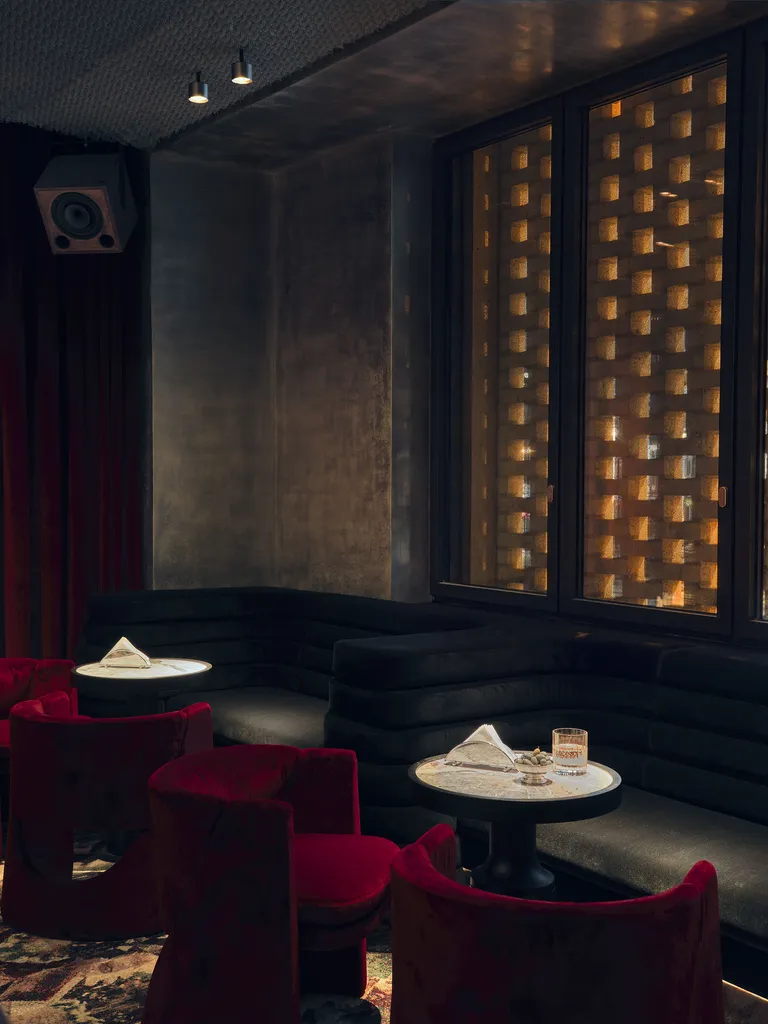
● Studio KO creates interiors that feel equal parts recording studio, private members’ club, and cinematic after-hours hideaway.
● A rare hotel where music isn’t decoration—it remains the building’s heartbeat.
From Rock-and-Roll Legend to Design Hotel
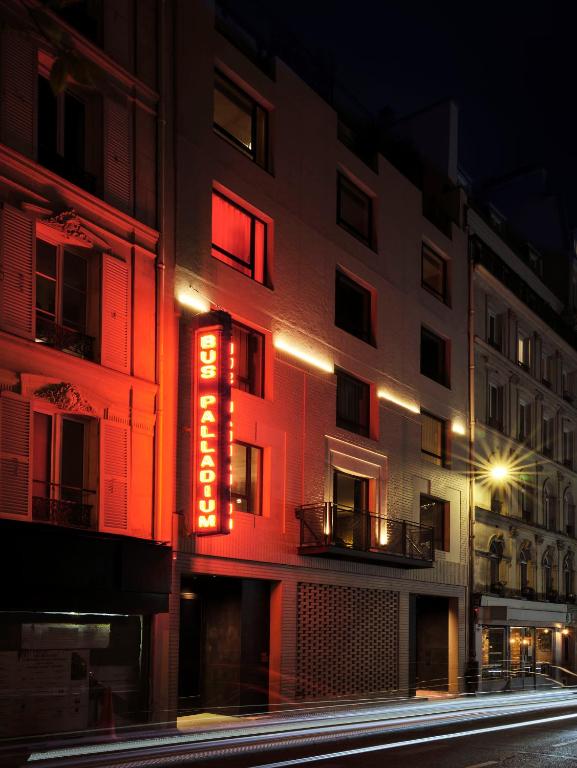
Some hotels inherit history. Bus Palladium practically invented it. Since opening in 1965, the Bus Palladium has been one of Paris’s most legendary nightlife institutions. For decades, musicians, artists, models, writers, rebels, and night owls crossed paths beneath its lights. The Beatles came. Mick Jagger came. Jane Birkin, Salvador Dalí, and generations of French rock stars all became part of its mythology. Rather than preserving that history behind glass, Chapitre Six Hotels has given the address a new life. The original club remains, but now sits beneath a five-star hotel complete with restaurant, bar, rooftop spaces, and 35 individually designed rooms. The result feels less like a hotel conversion and more like the next chapter in an ongoing story.
Studio KO Knows the Assignment
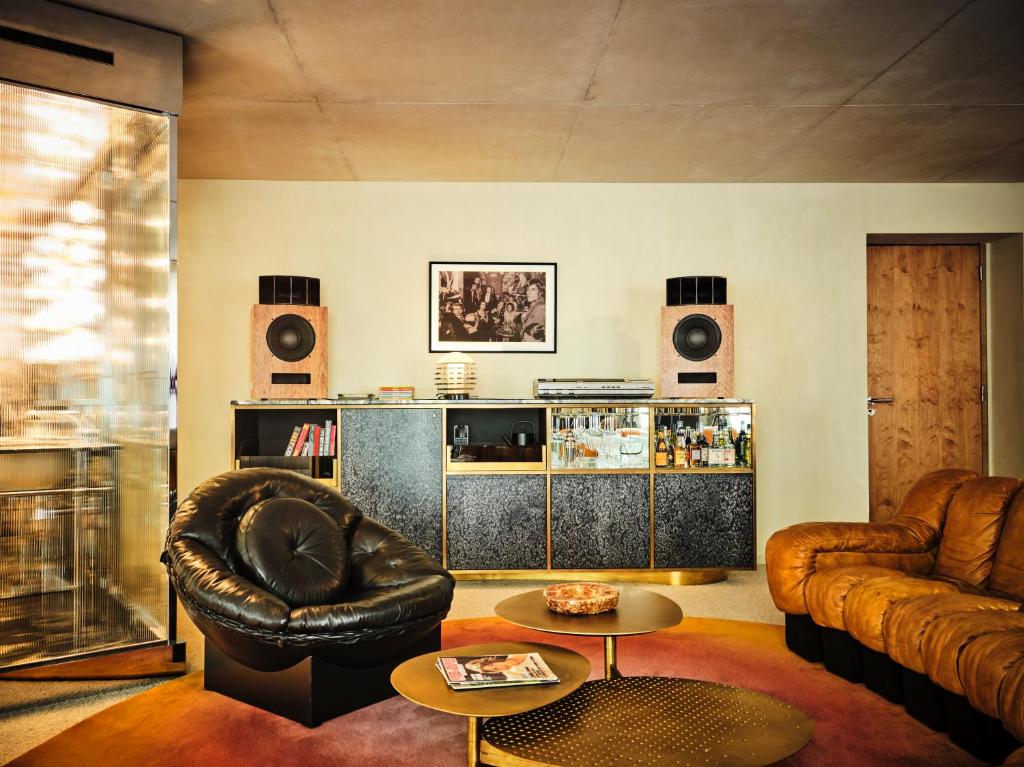
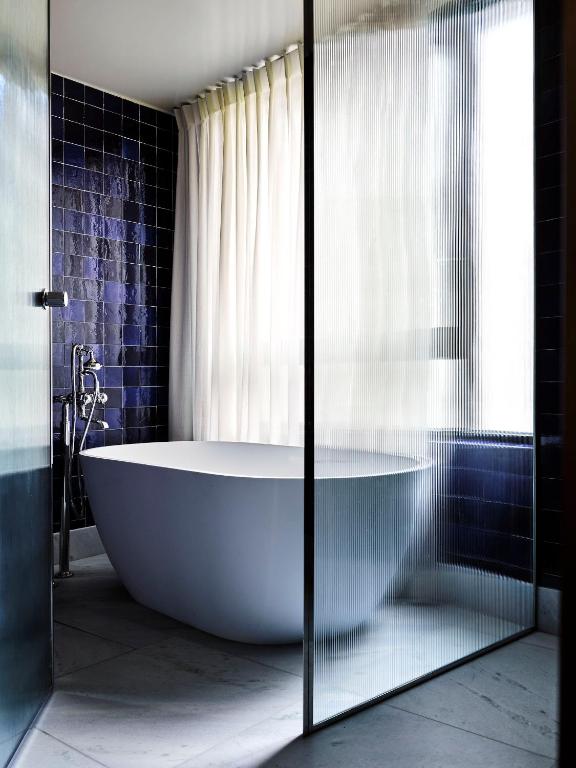
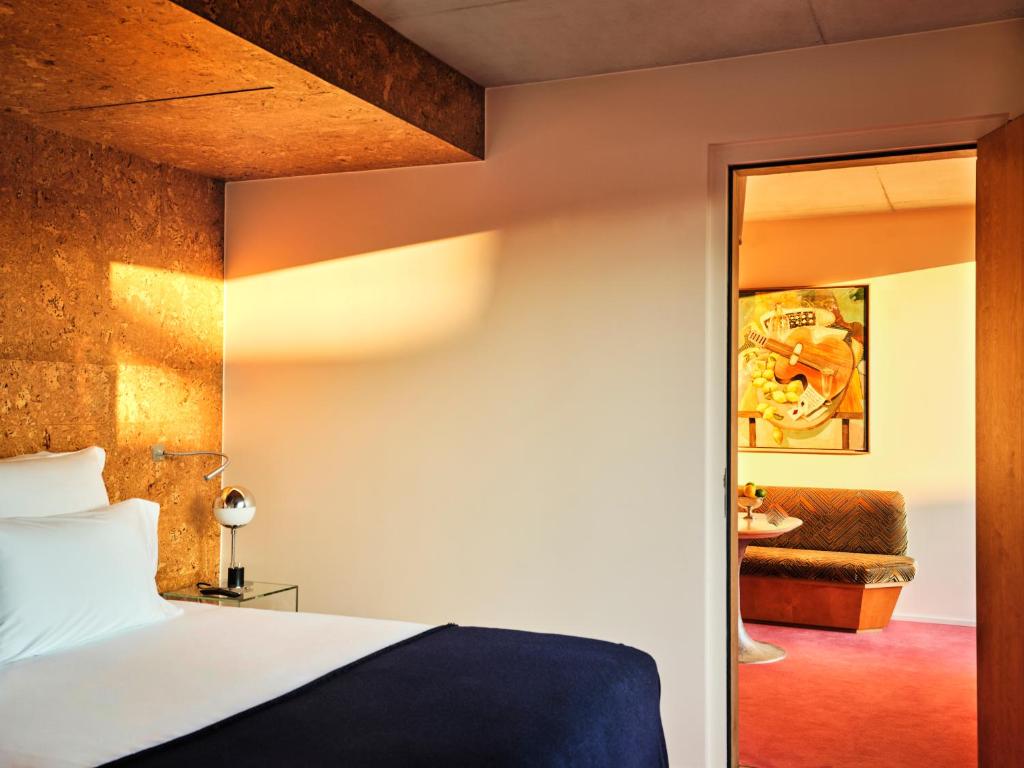
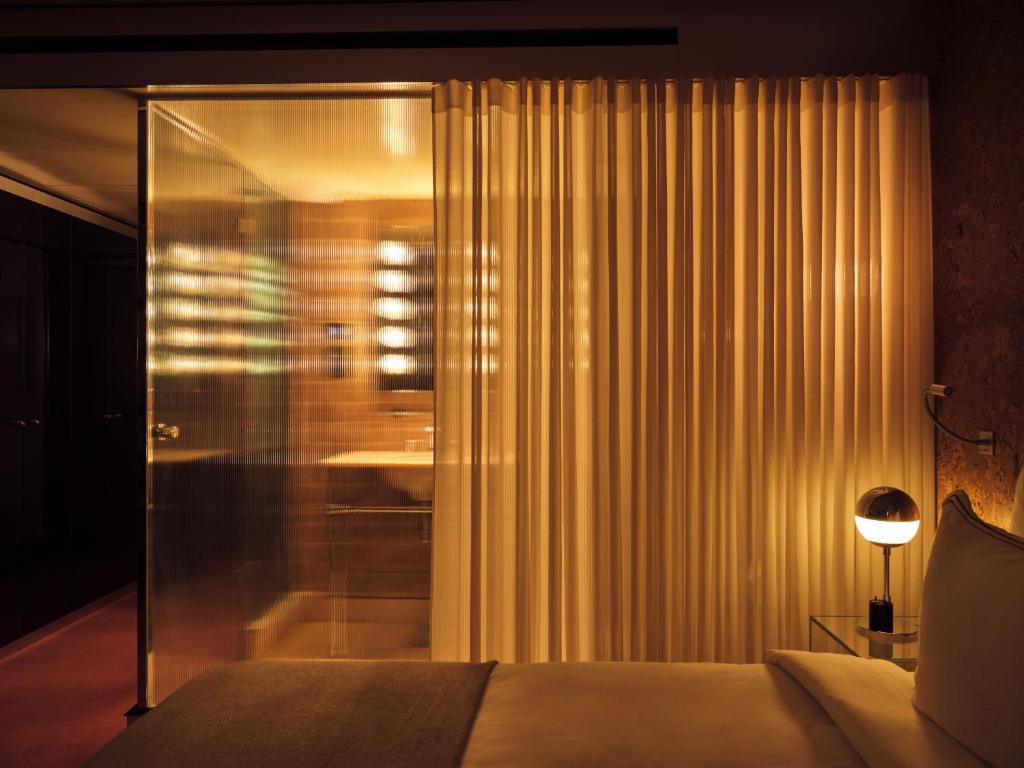
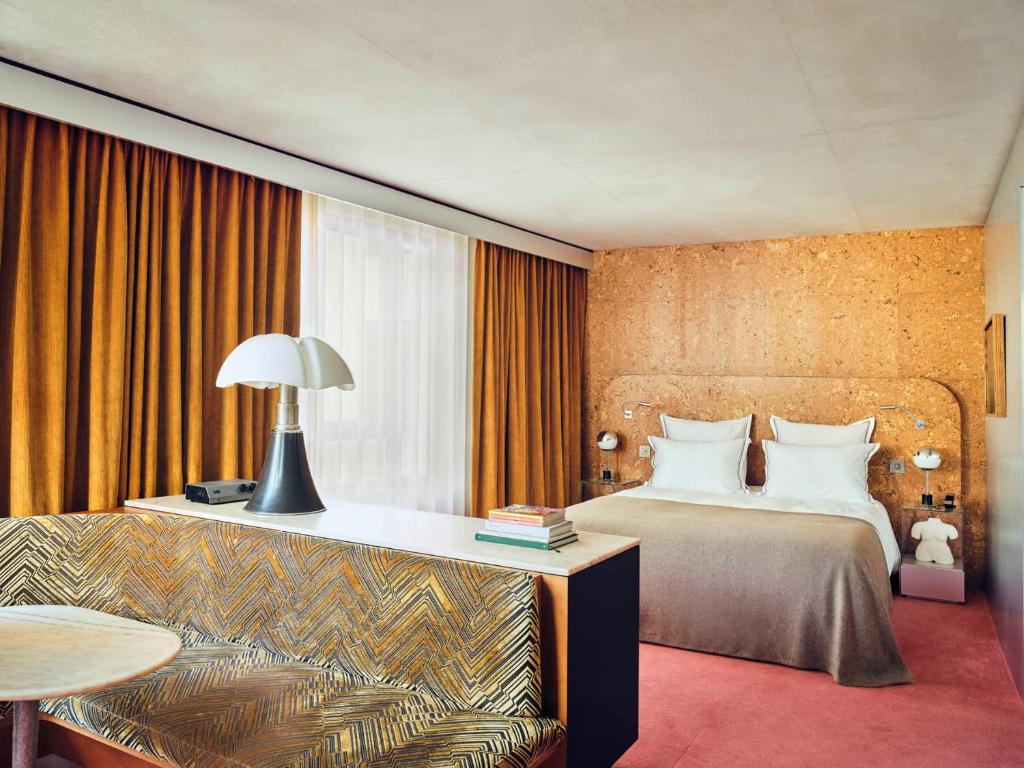
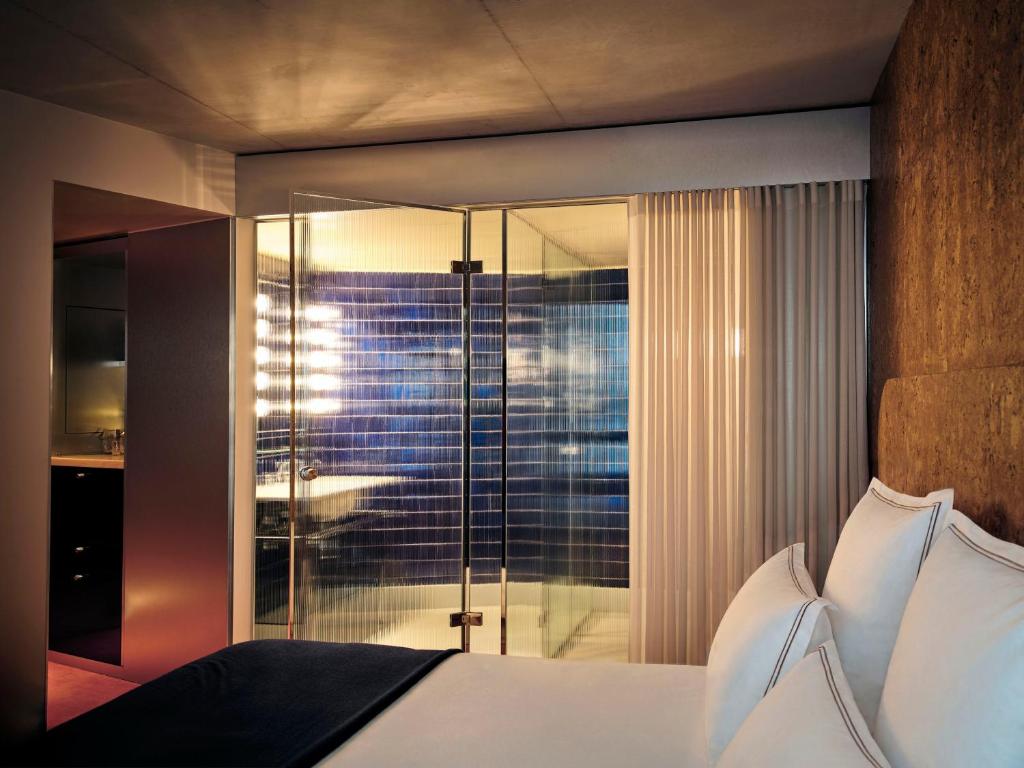
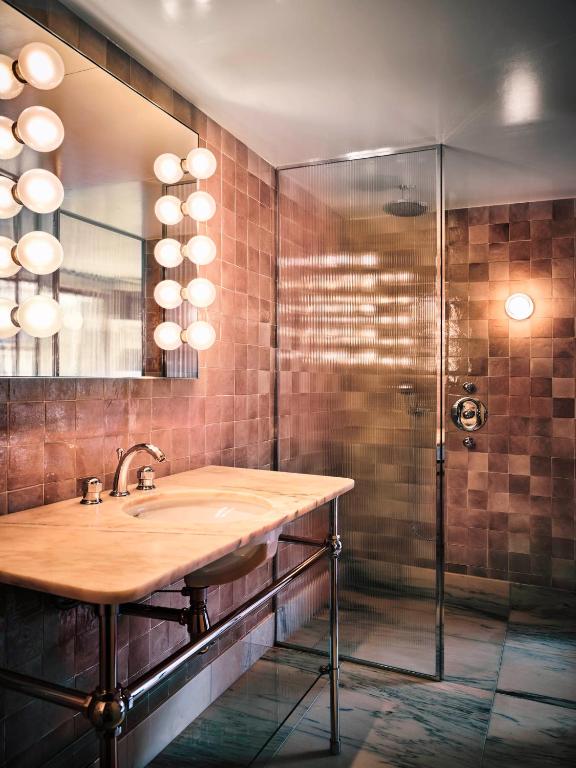
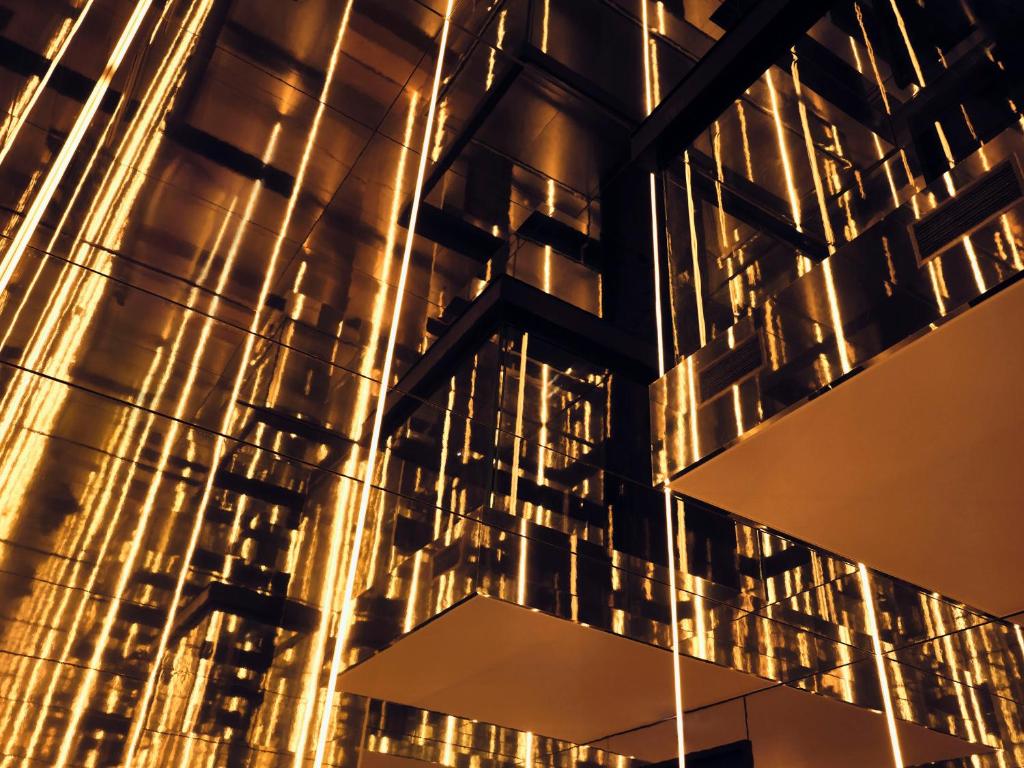
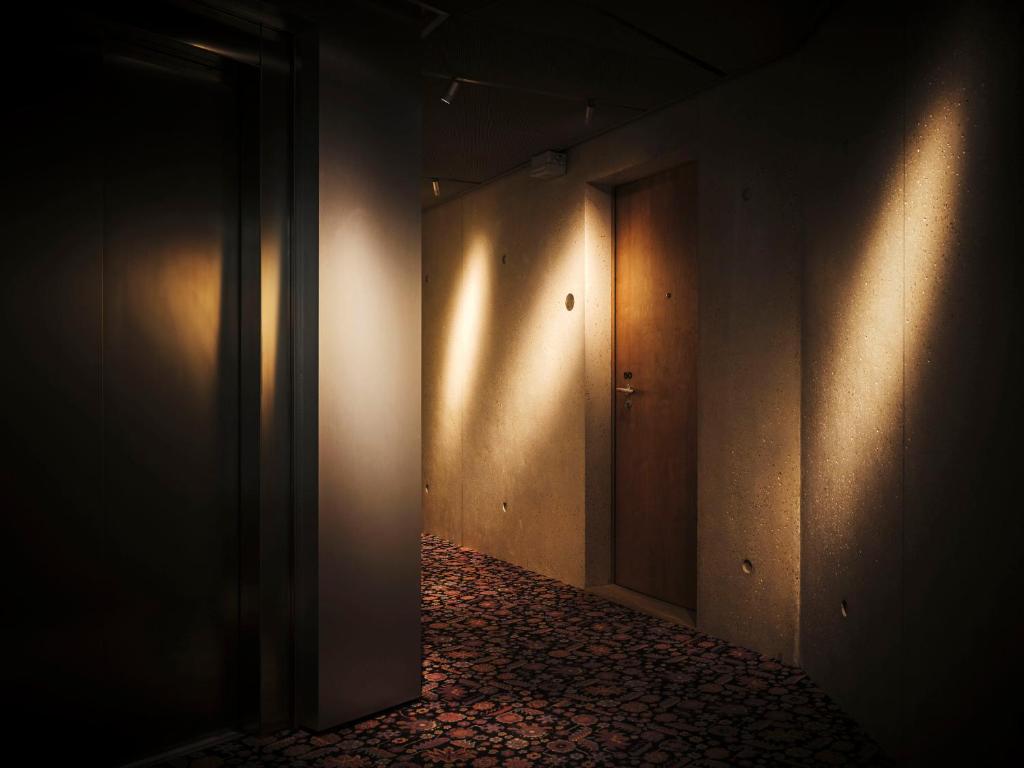
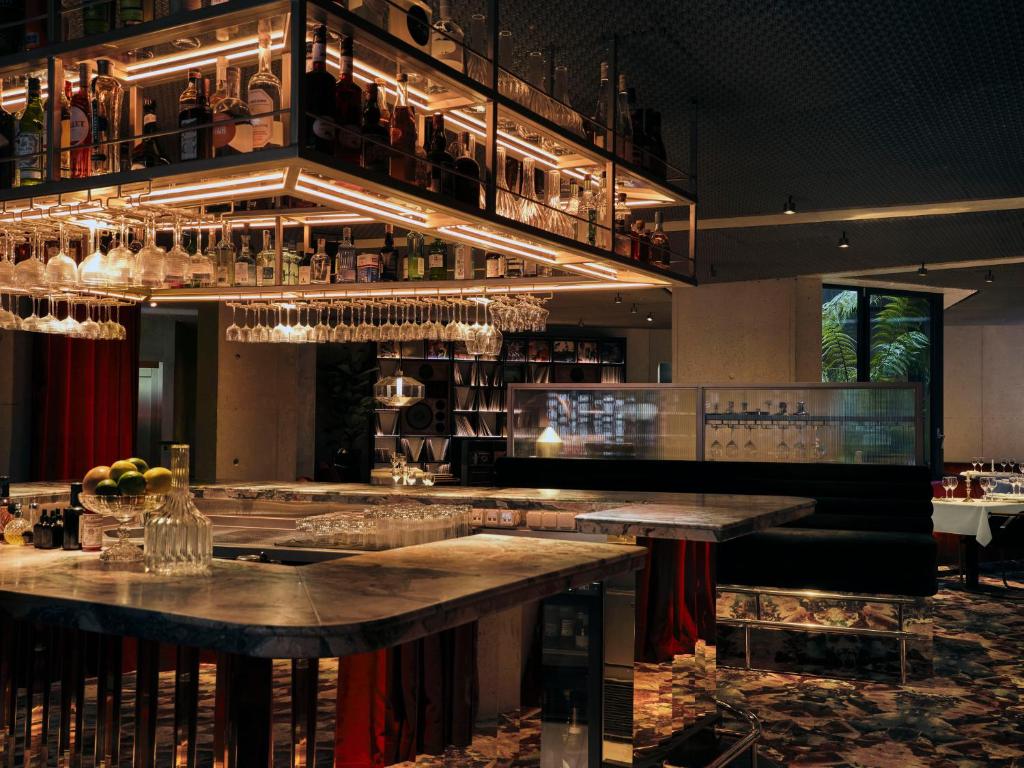
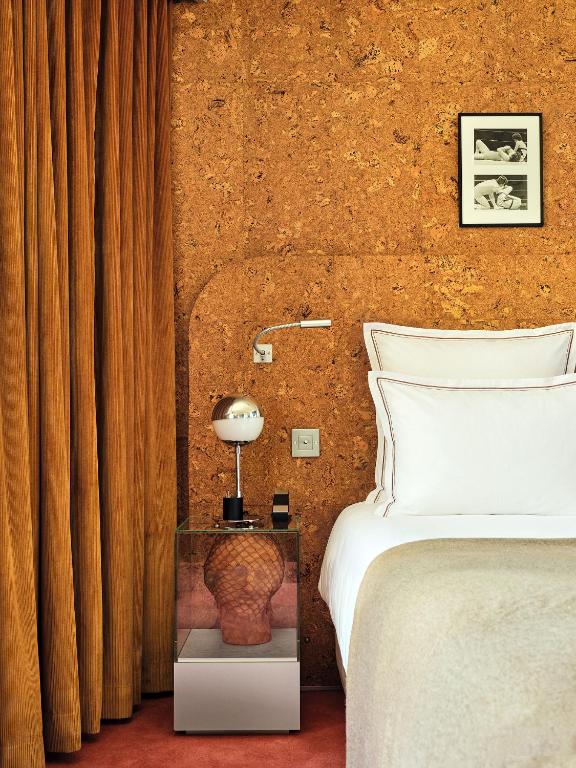
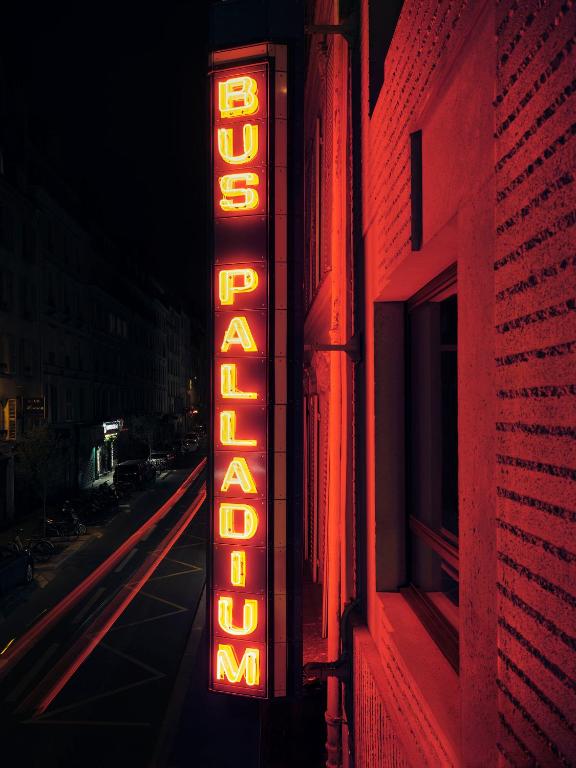
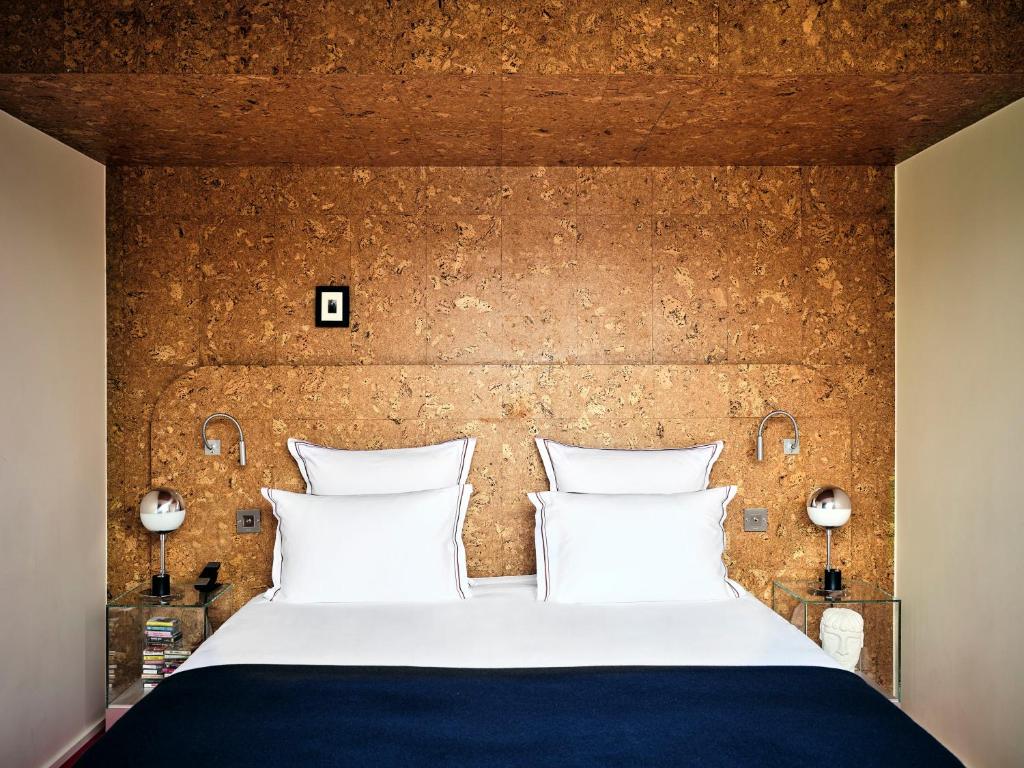
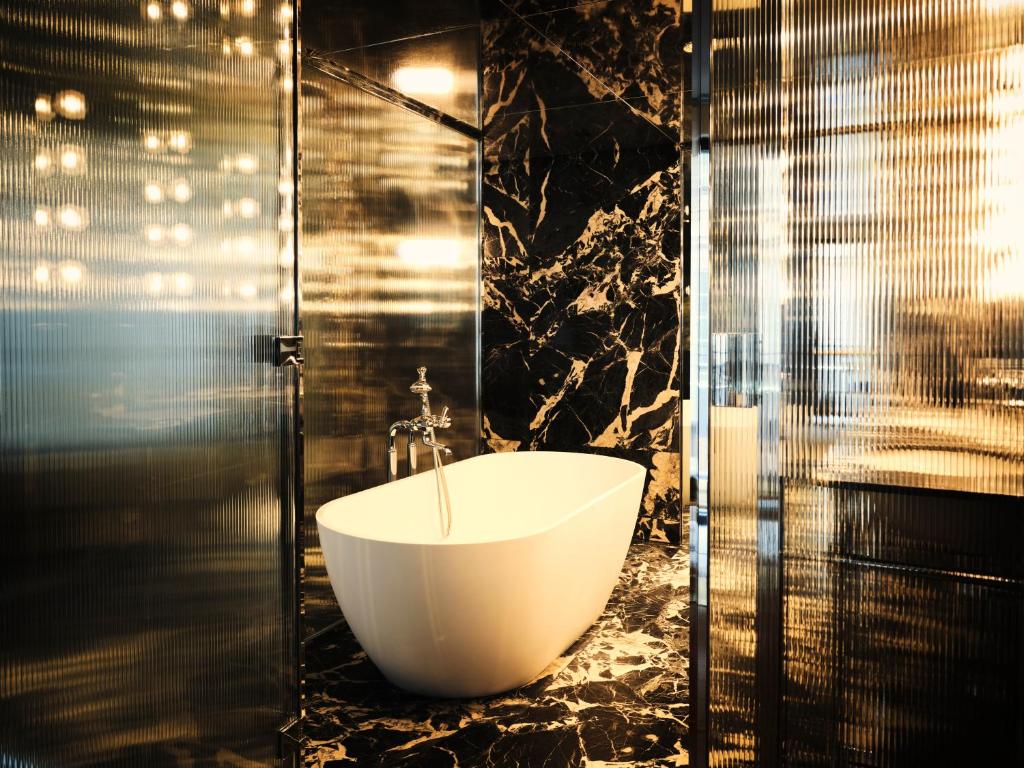
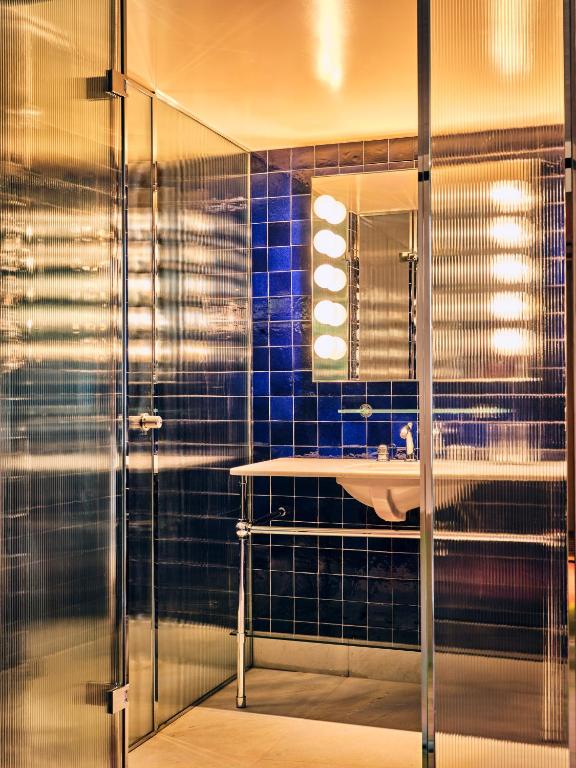
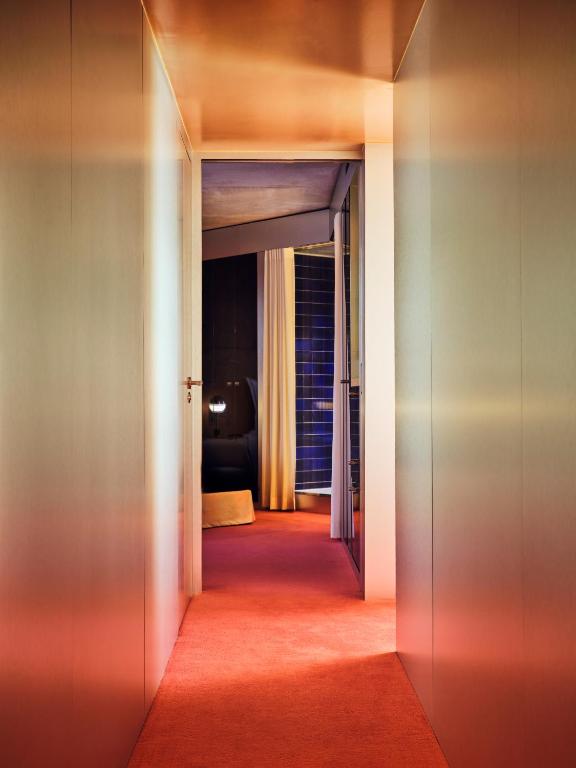
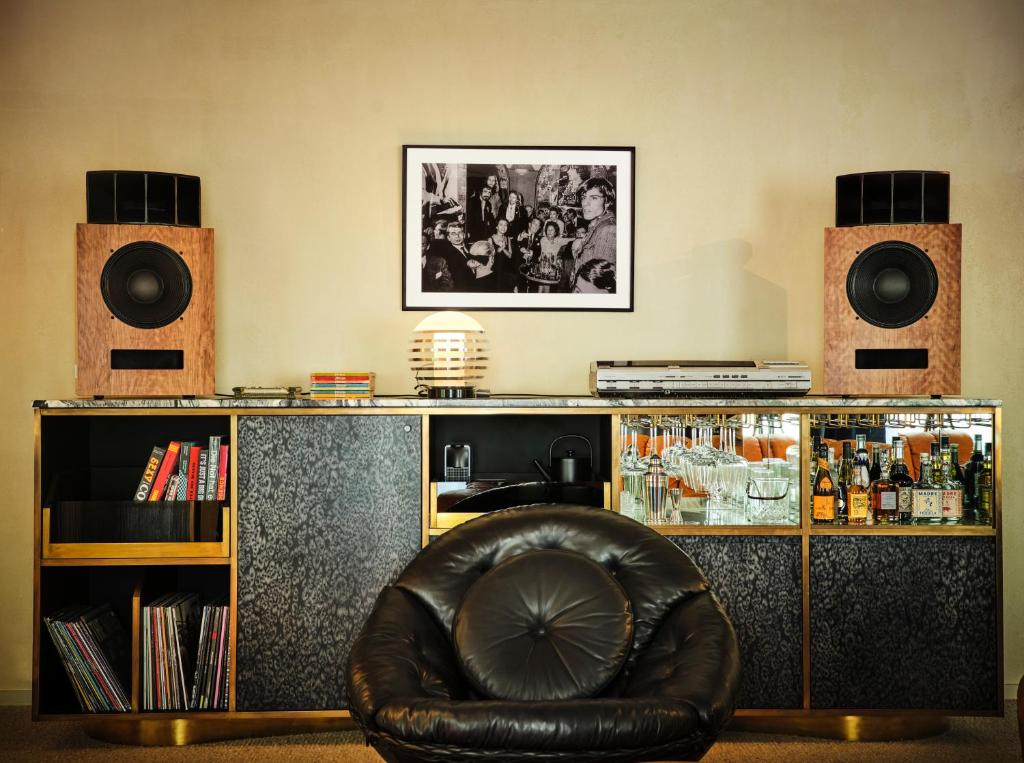
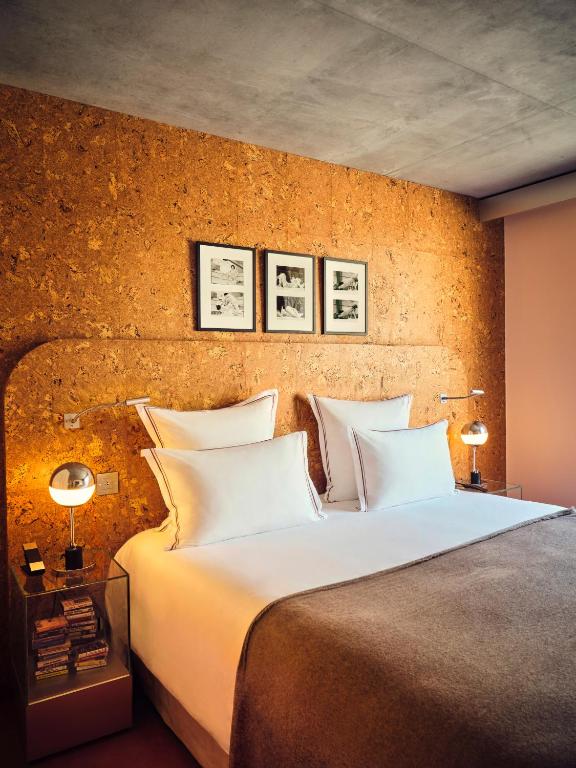
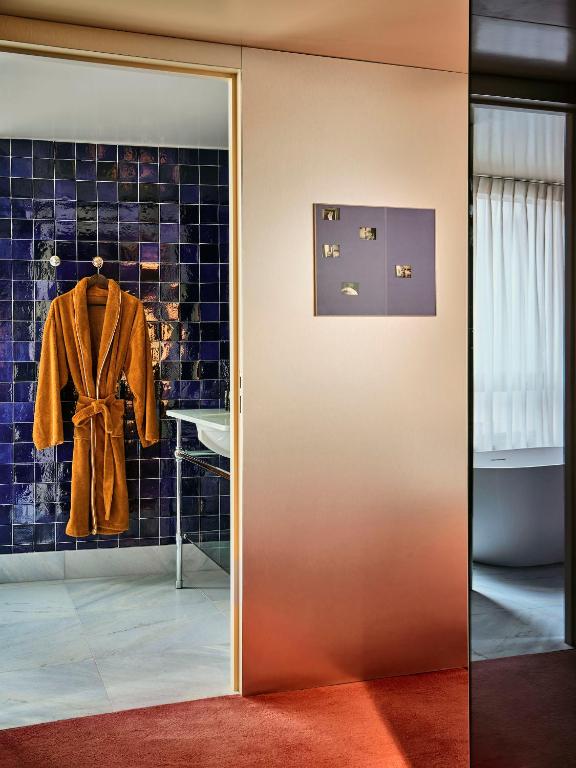
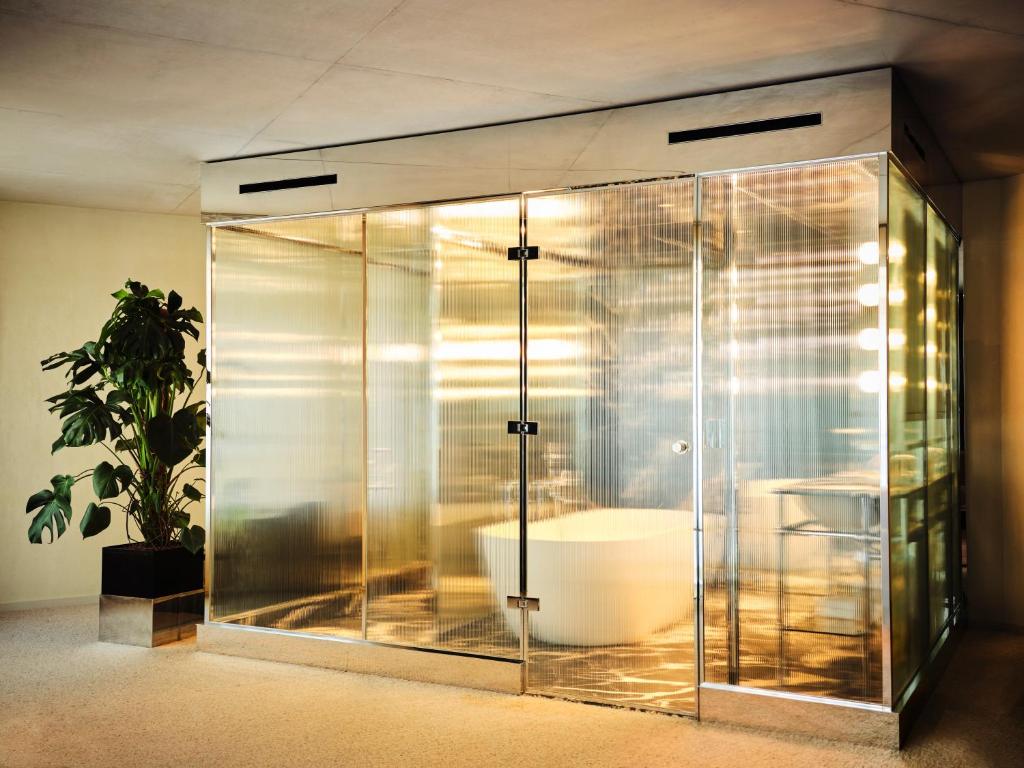
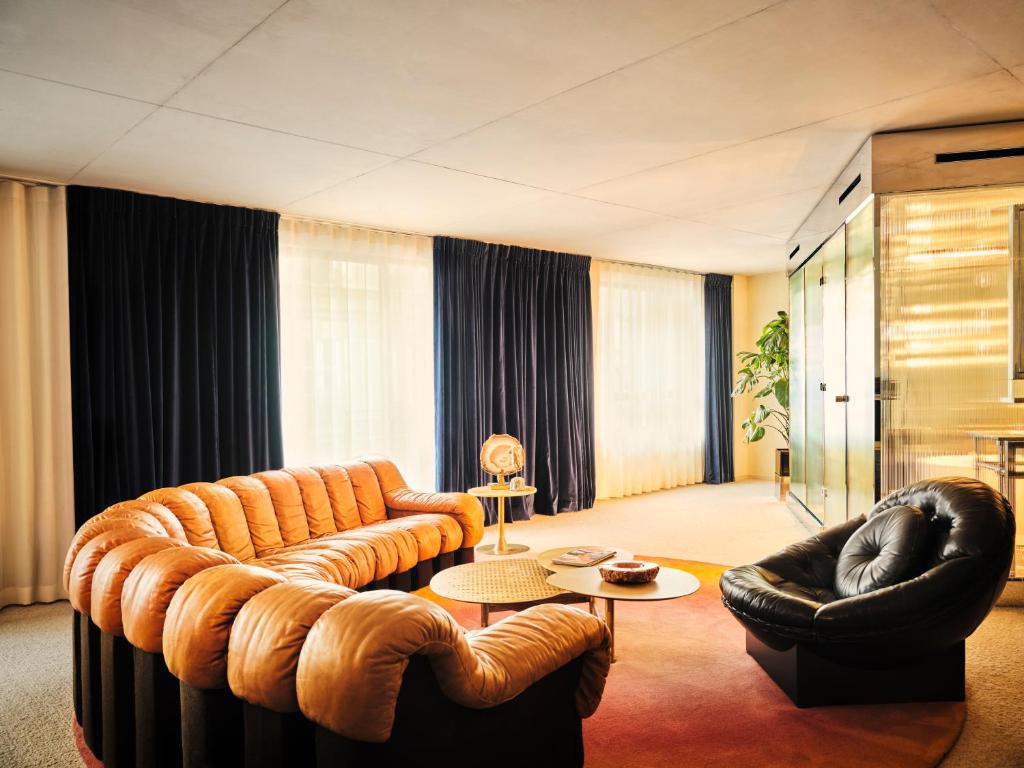
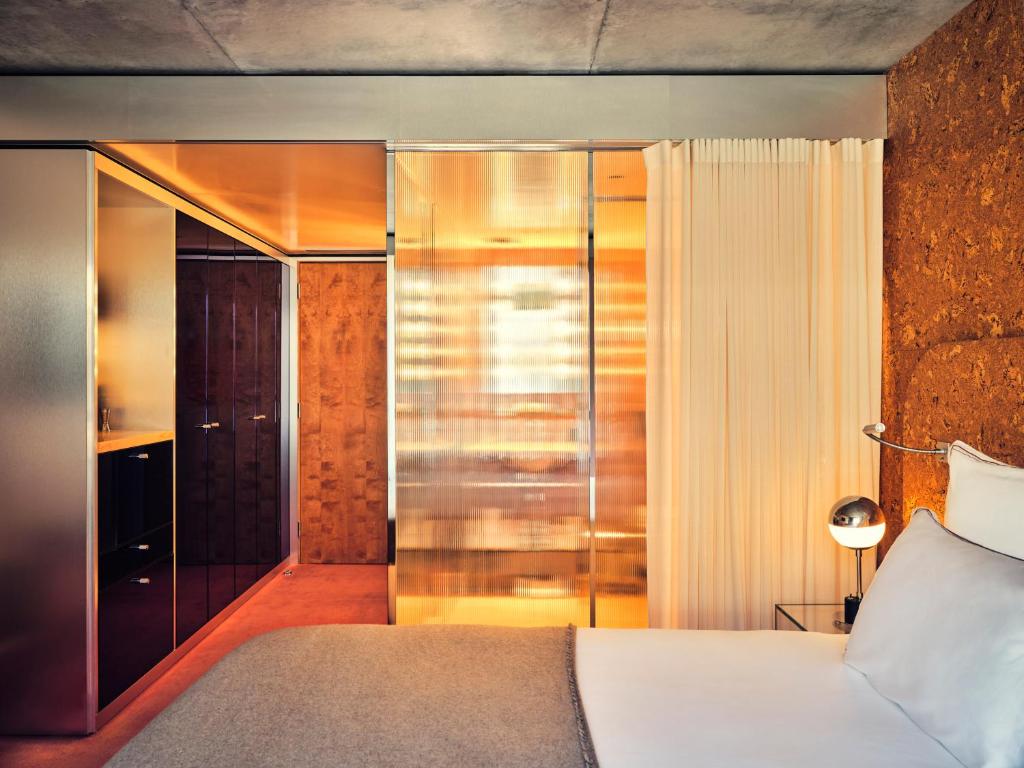
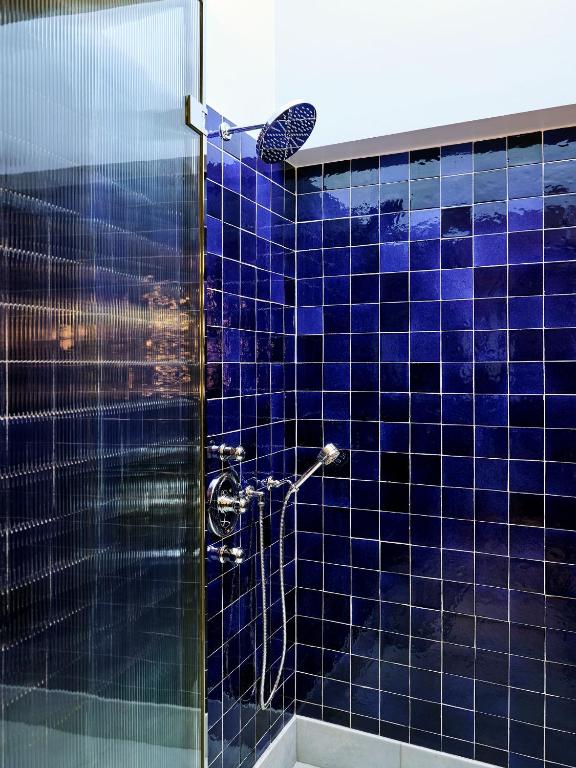
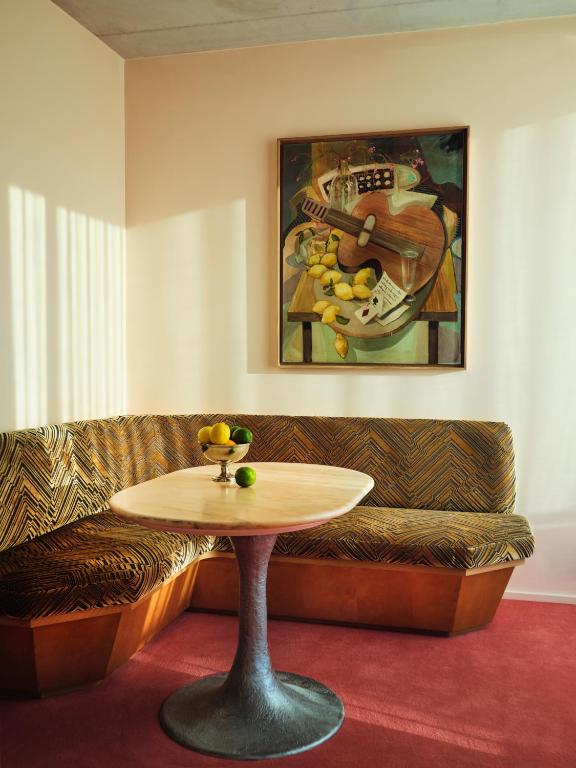
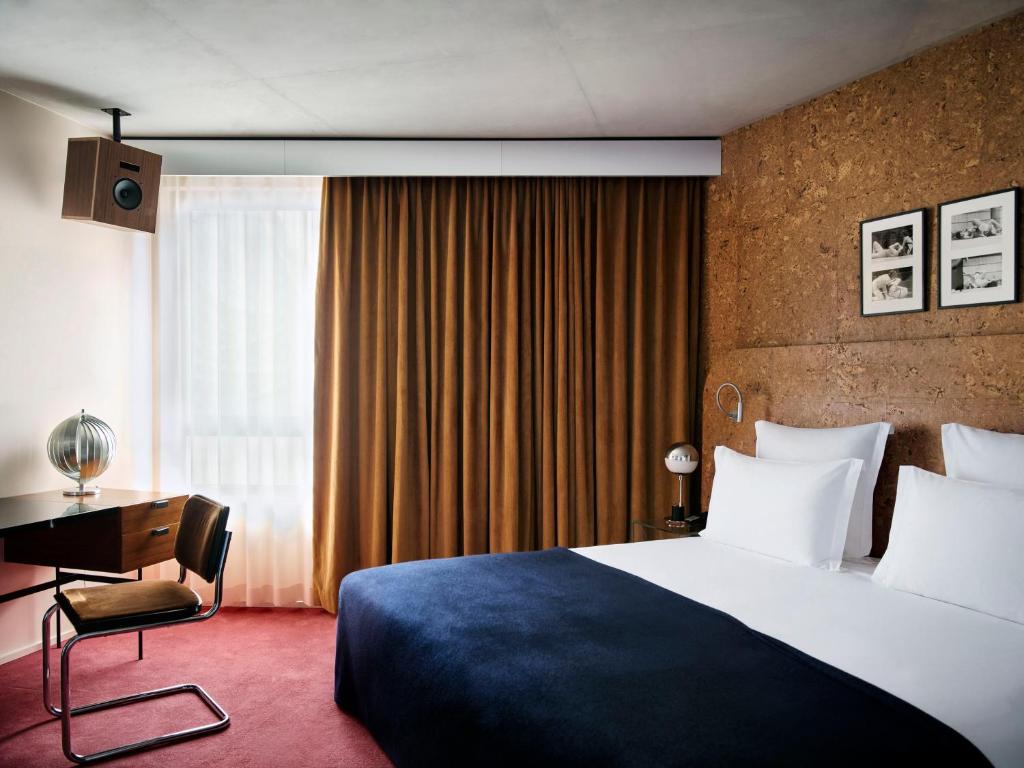
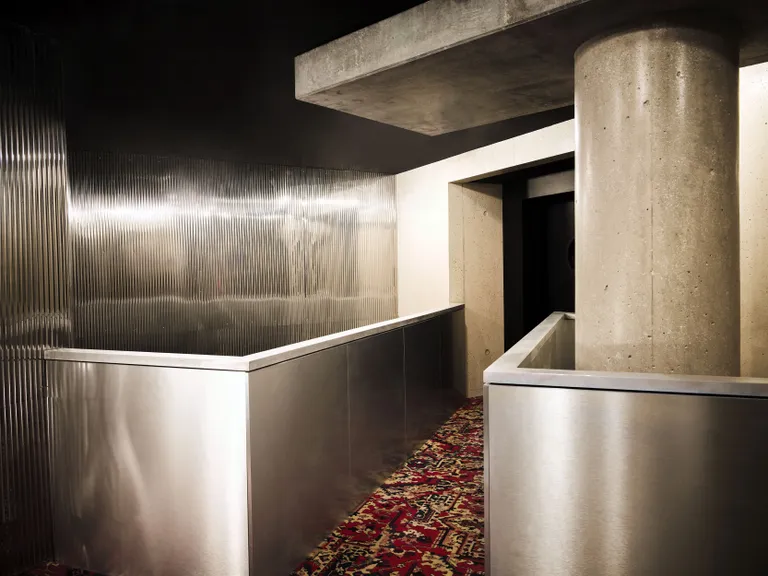
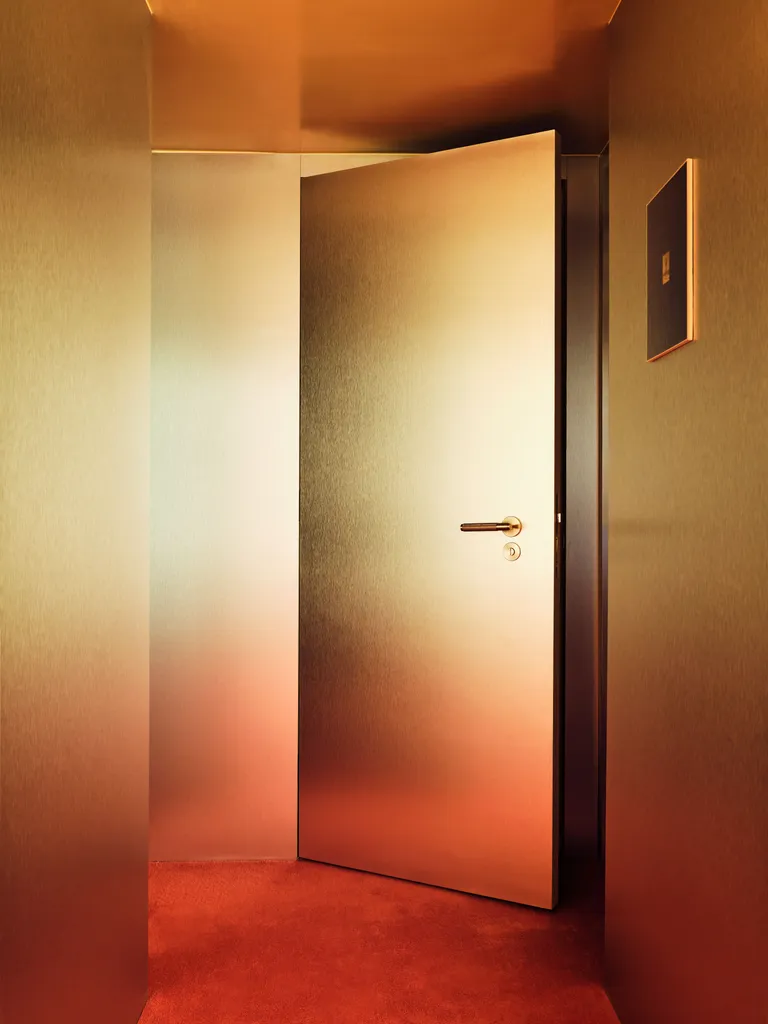
Designing a hotel inside one of Paris’s most famous music venues could easily have descended into nostalgia. Studio KO wisely chose another route. The original red neon Bus Palladium sign still dominates the façade, but inside the atmosphere is entirely contemporary. Raw concrete ceilings meet cork-clad walls. Velvet curtains soften brutalist architecture. Ribbed glass, powder-pink carpets, deep blue tiles, leather details, and warm lighting create spaces that feel sensual, tactile, and unmistakably Parisian. There are playful references throughout: microphone-inspired door handles, vintage-style “On Air” room indicators, and subtle nods to the building’s musical heritage. Yet nothing feels forced or thematic. Creative direction by Caroline de Maigret extends the experience further, influencing everything from the scent and playlists to staff uniforms. The hotel operates within its own carefully tuned frequency.
Rooms with Personality and Volume
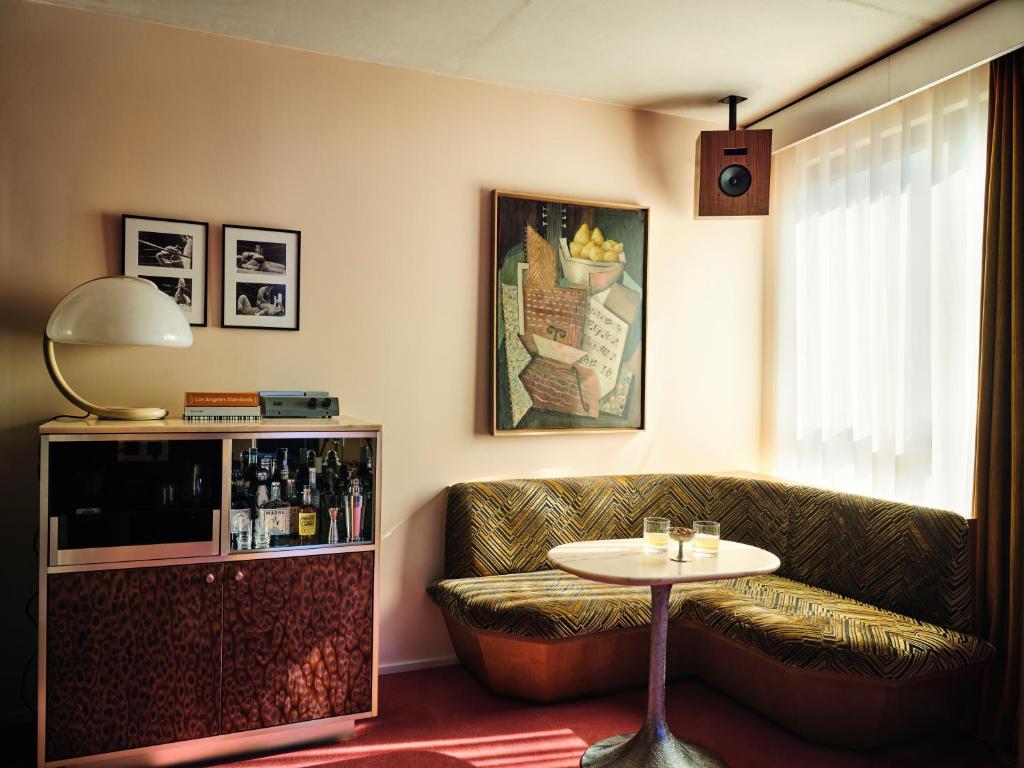
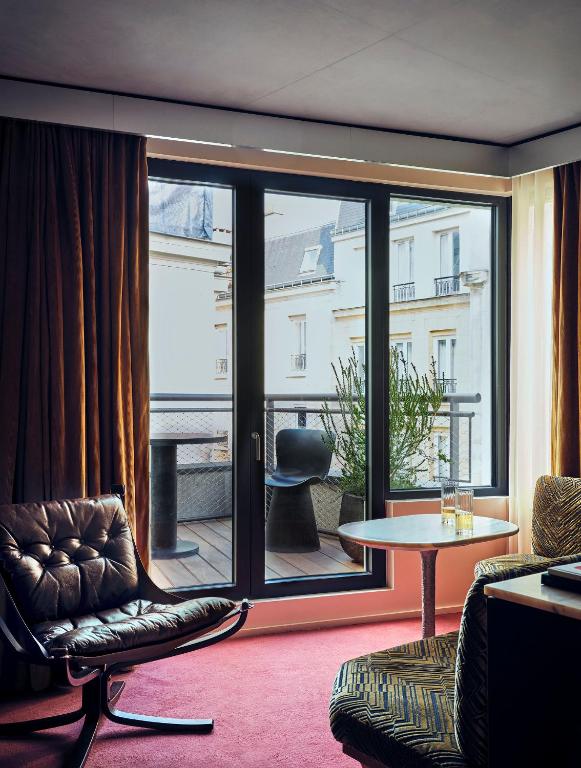
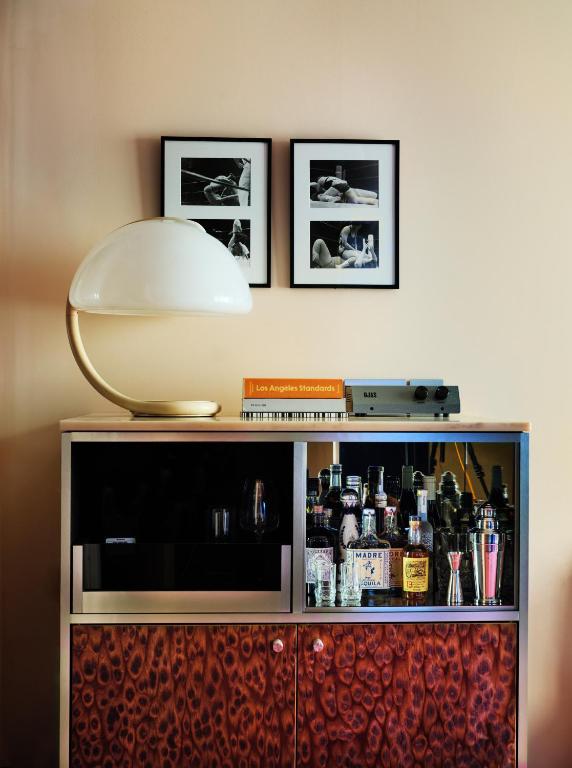
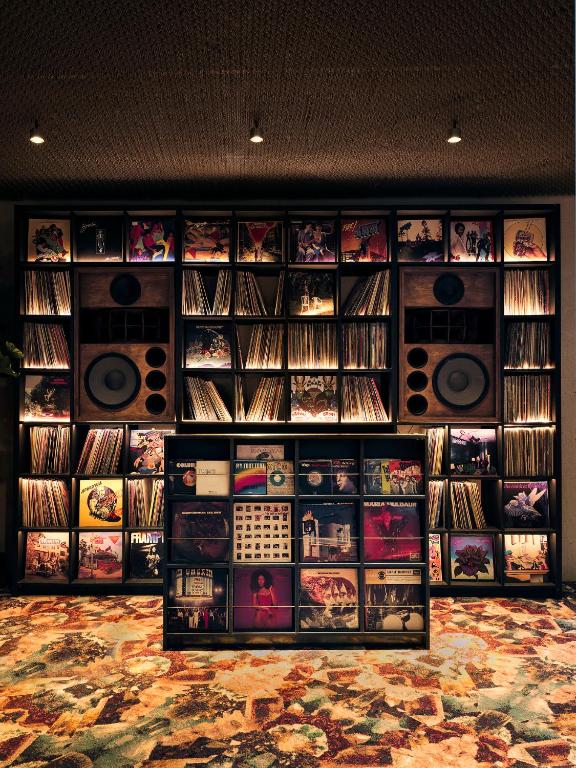
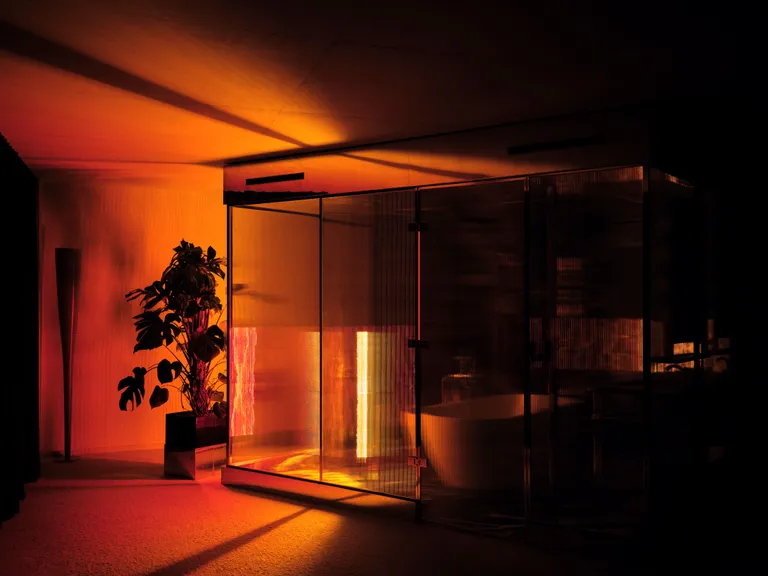
The 35 guestrooms continue the story upstairs. No two rooms are exactly alike, but all share the same design language: concrete, cork, velvet, leather, warm woods, and carefully controlled lighting. Some rooms feel intimate and cocooning, while others lean into theatricality with colorful tilework, built-in bars, and dramatic sightlines. Throughout, vintage pieces mingle with contemporary furniture and curated artworks. Dressing-room mirrors, integrated sound systems, textured materials, and collected objects make the rooms feel lived-in rather than staged. Music remains central to the experience. Ojas speakers appear throughout the hotel, turning listening into part of the stay rather than an afterthought. This is not a hotel where silence is the luxury. Atmosphere is.
The Dalí Suite Steals the Show
Every great hotel needs a signature suite. At Bus Palladium, it is the Dalí Suite. Overlooking the building’s famous red neon sign, the 70-square-meter suite feels like a backstage dressing room designed by a film director with impeccable taste. Mirrored walls, modular vintage furniture, an upholstered alcove, books, cassettes, curiosities, and a private balcony create a world somewhere between retro-futurism and rock-star fantasy. At night, the red glow from the iconic sign spills into the room, reflecting endlessly through mirrors and polished surfaces. The atmosphere is part Paris, part cinema, part dream sequence.
Dinner Before the Music Starts
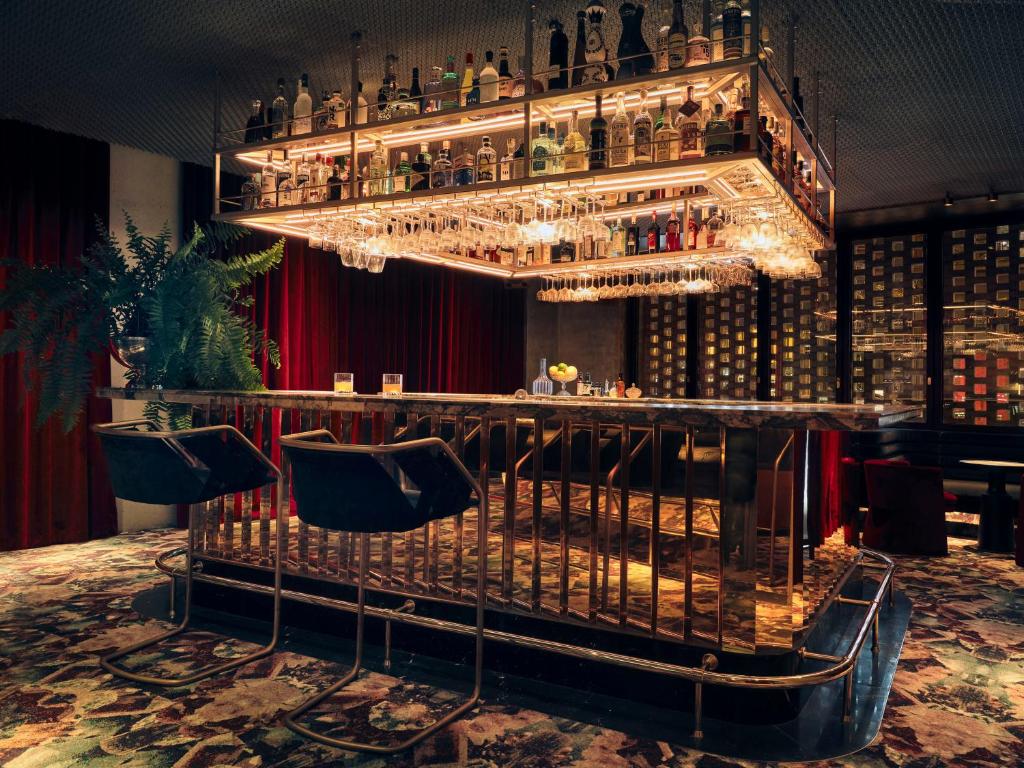
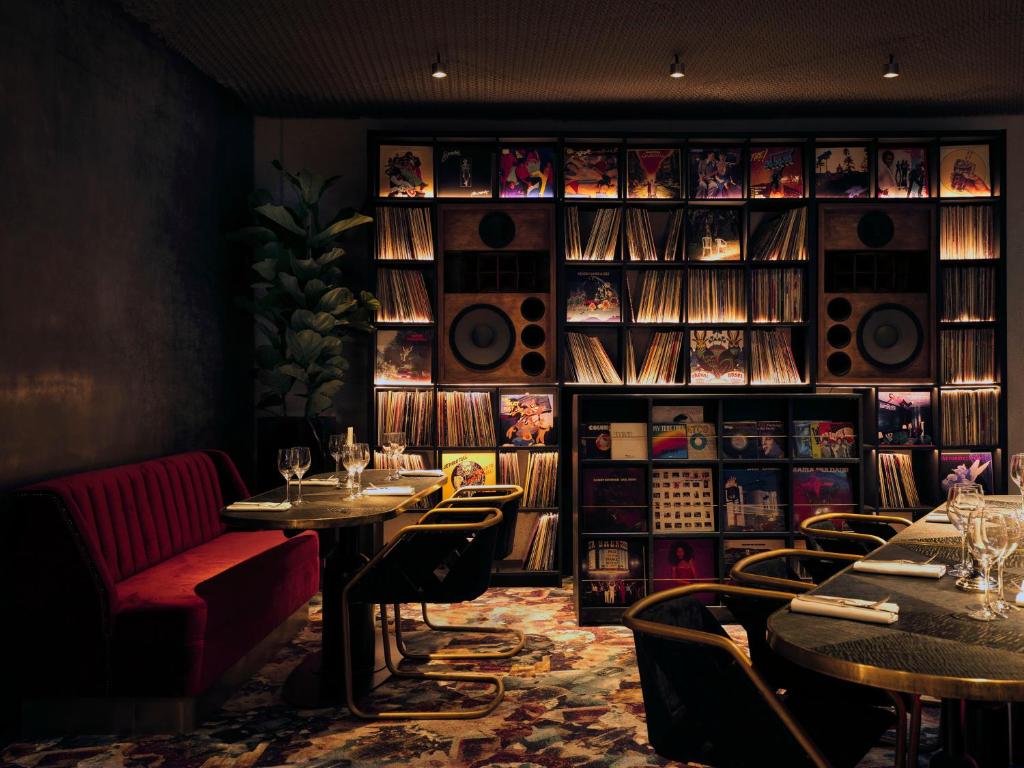
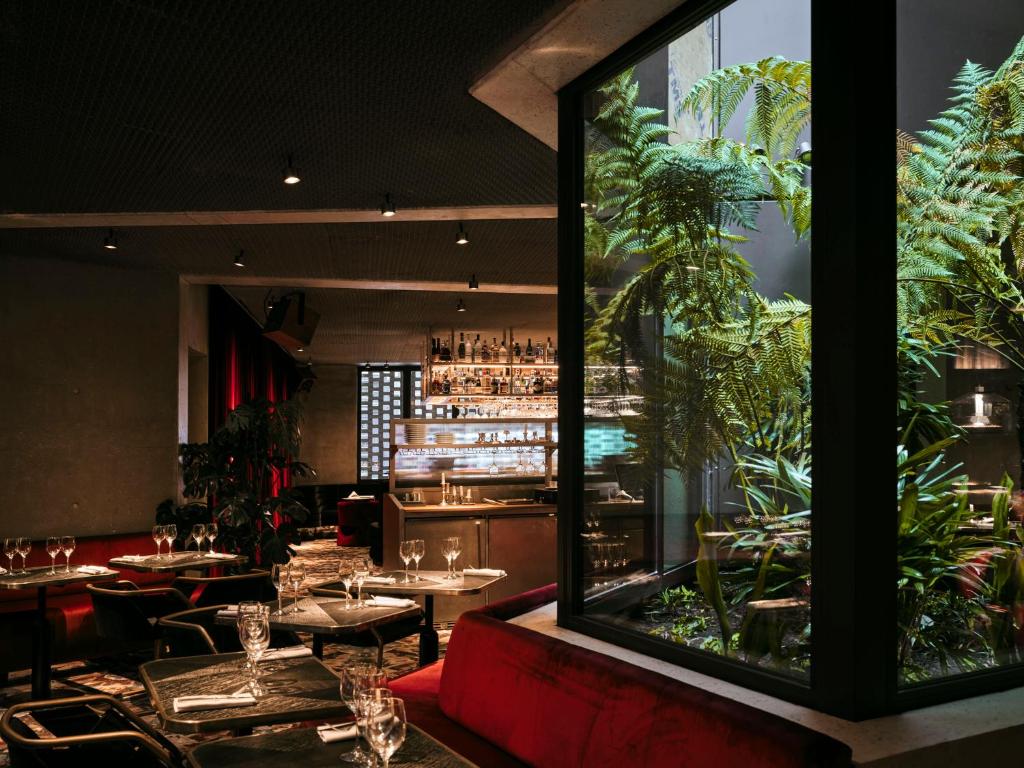
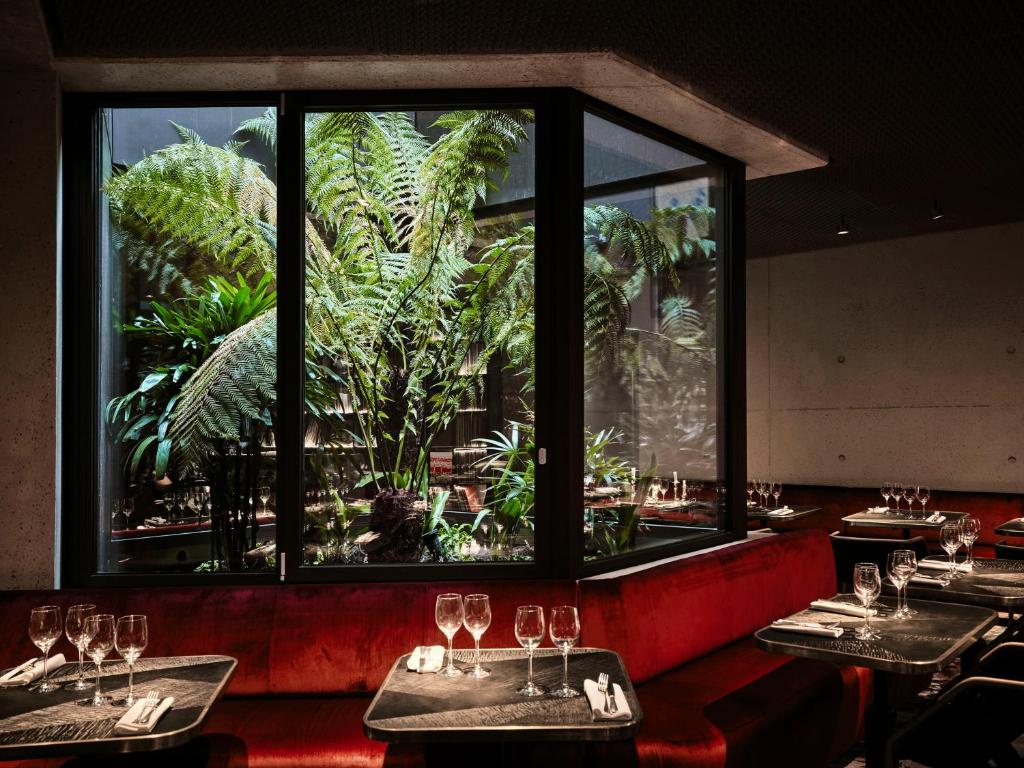
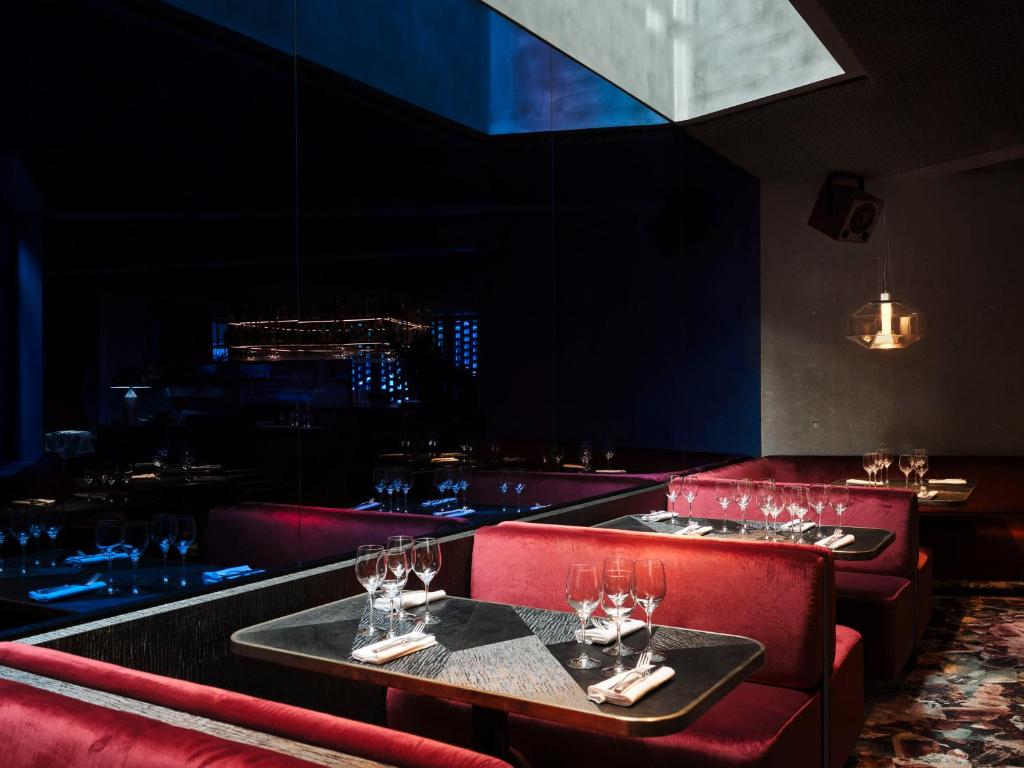
The restaurant and bar continue the hotel’s after-hours energy. Chef Valentin Raffali’s menu focuses on seasonal ingredients and confident, uncomplicated cooking. The atmosphere remains relaxed rather than formal, encouraging guests to settle in for the evening rather than simply pass through. The restaurant revolves around a vinyl bar, warm lighting, rich textures, and an excellent soundtrack. Dinner naturally evolves into cocktails, conversations, and late nights without anyone feeling the need to leave. Music isn’t an accessory here. It’s one of the building’s primary materials.
The Club Lives On
The real magic happens downstairs. Unlike many former nightclub hotels, Bus Palladium never abandoned its original purpose. The club remains active, hosting live music, DJ sets, performances, screenings, and cultural events that continue to attract both locals and visitors. This connection to the city matters. Pigalle has changed dramatically over the years, evolving from notorious red-light district into one of Paris’s most fashionable neighborhoods. Yet traces of its old unpredictability remain, and Bus Palladium captures that spirit perfectly. There is still a sense that something interesting might happen after midnight. And often does.
Pigalle’s Most Entertaining Address
Bus Palladium succeeds because it understands that great hotels are ultimately about atmosphere. It isn’t trying to recreate the past. It isn’t pretending to be a rock-and-roll museum. Instead, it channels the energy, creativity, and spontaneity that made the original venue legendary and translates it into contemporary hospitality. The result feels glamorous, social, creative, and slightly mischievous. Exactly as Pigalle should.
A Hotel That Knows How to Stay Up Late
Bus Palladium is one of the most characterful new openings in Paris: a hotel where design, music, culture, and nightlife genuinely coexist rather than merely share the same address. For travelers who want Paris polished but not predictable, elegant but not overly serious, this is a hotel that understands the city after dark better than almost anyone. Some hotels help you sleep. Bus Palladium gives you a reason to stay awake.