Can Ferrereta | Santanyí, Mallorca | Spain
A 17th-century townhouse extended with contemporary restraint, where Mallorcan stone, serious art, and a hidden garden create one of the island’s most composed retreats
Why DNA Hotels Loves It
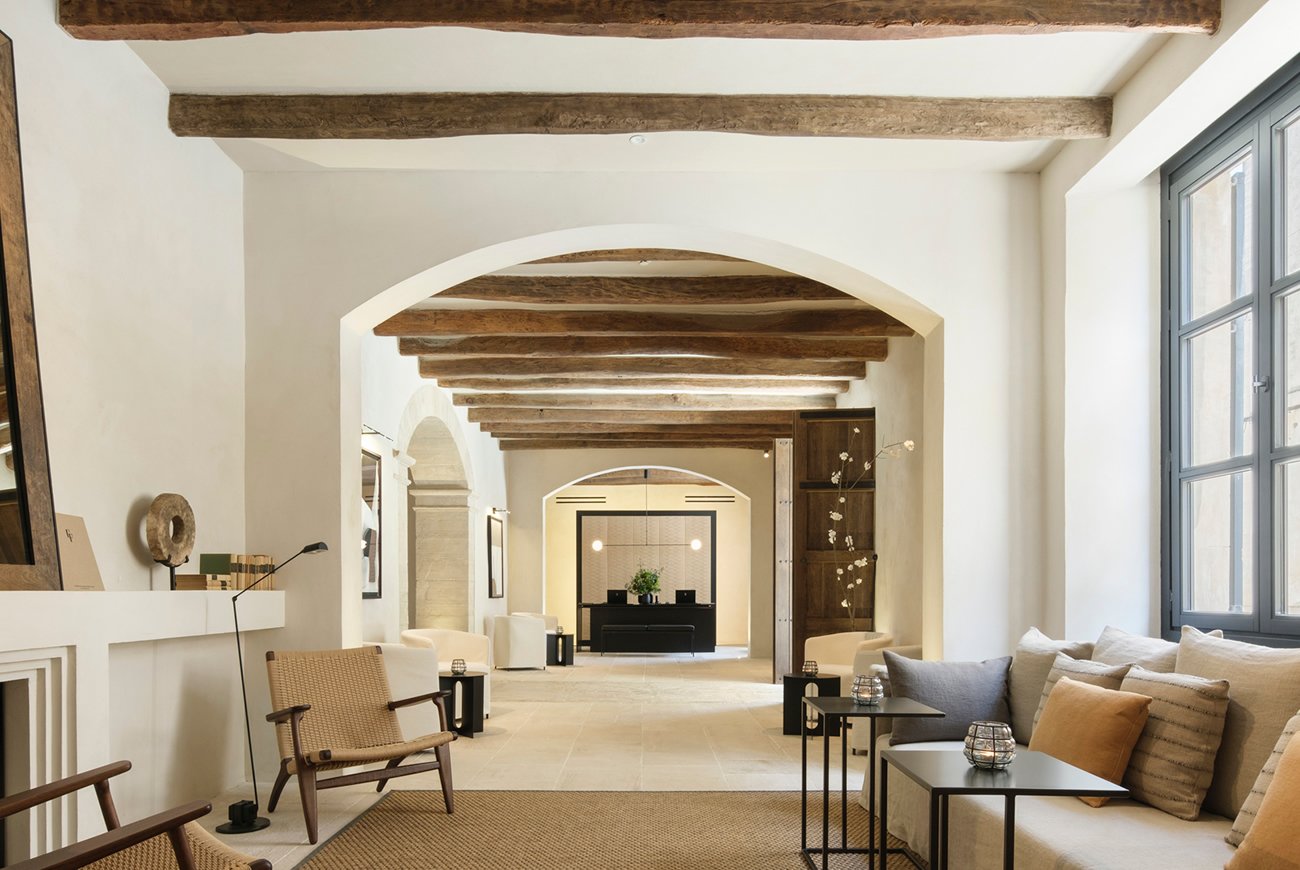
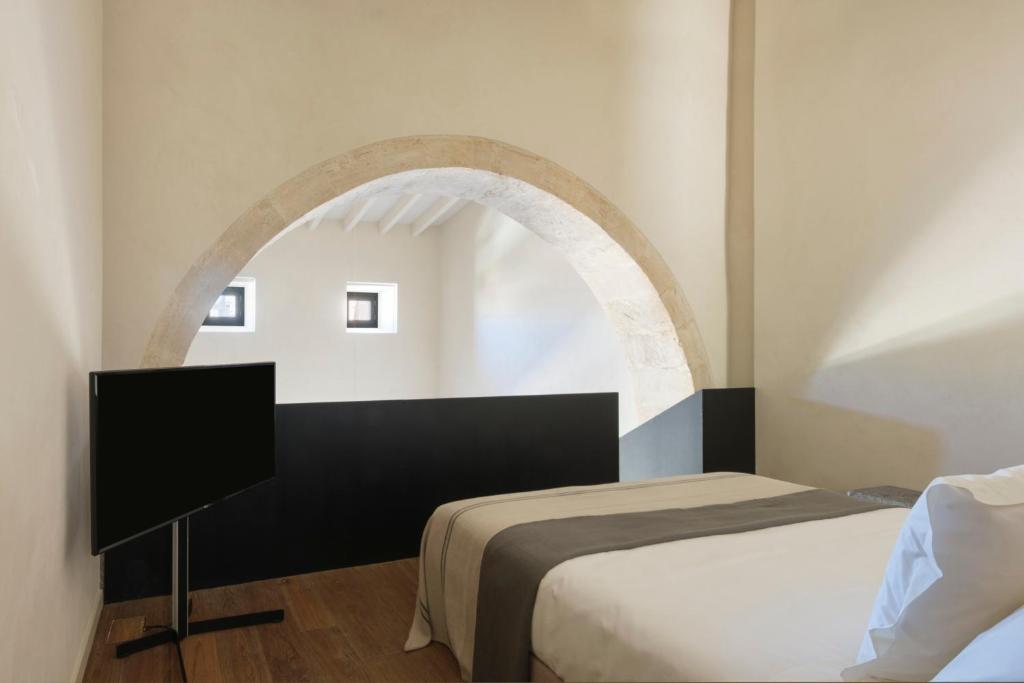
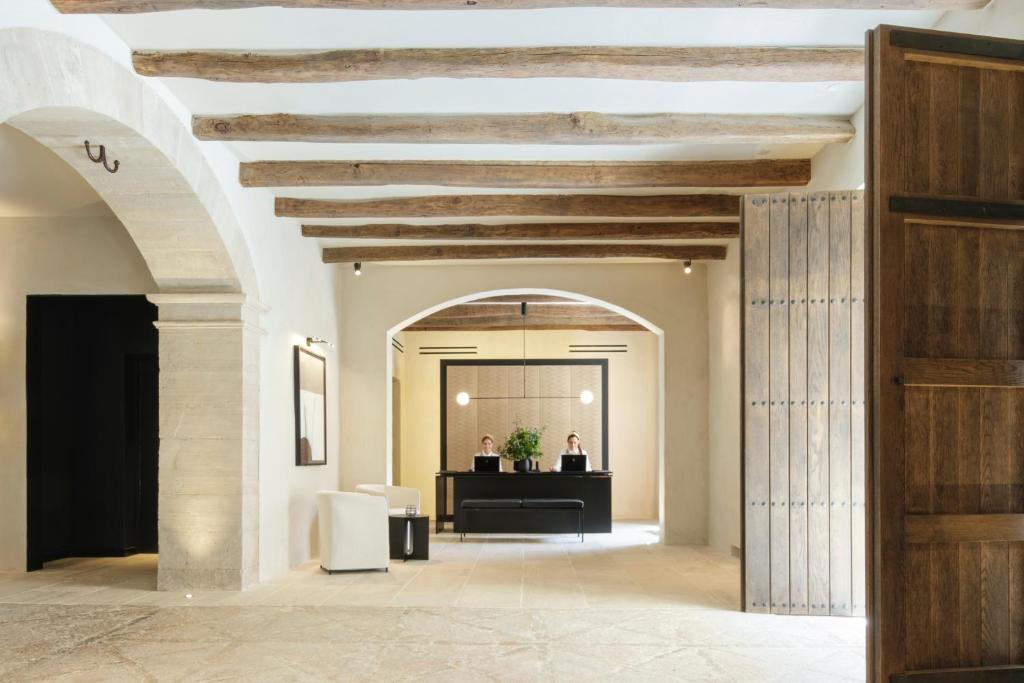
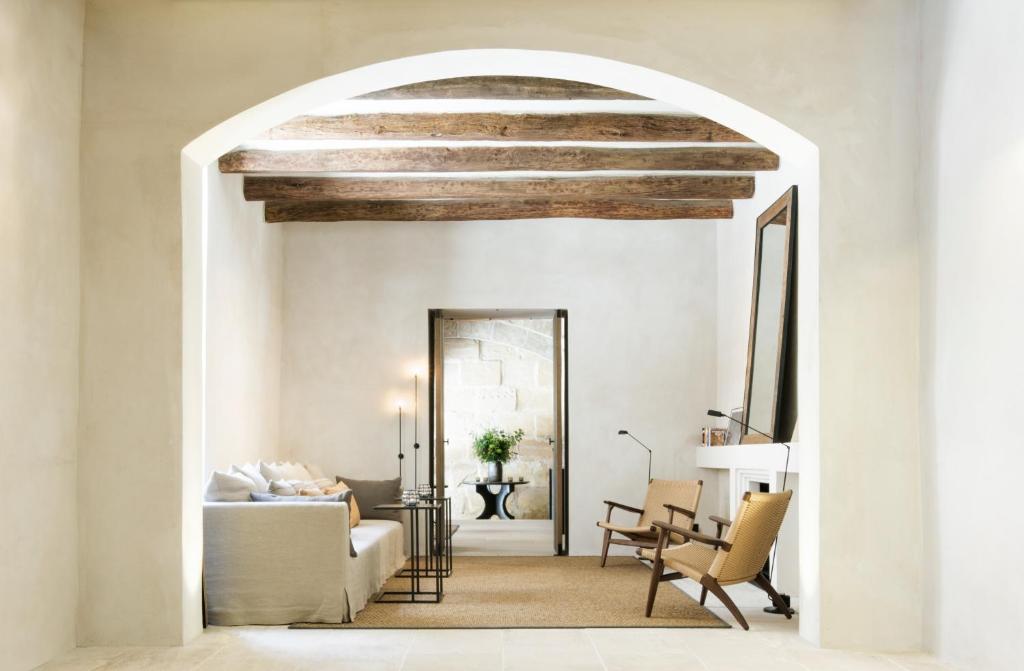
● Architect Sergi Bastidas preserves the historic Santanyí house while adding two new buildings that sit comfortably beside its honey-coloured stone, arches, and timbered interiors.
● The hotel treats contemporary art as part of the architecture, with works by Jaume Plensa, Jordi Alcaraz, Guillem Nadal, Riera i Aragó, Dominica Sánchez, and photographer Bárbara Vidal woven throughout the property.
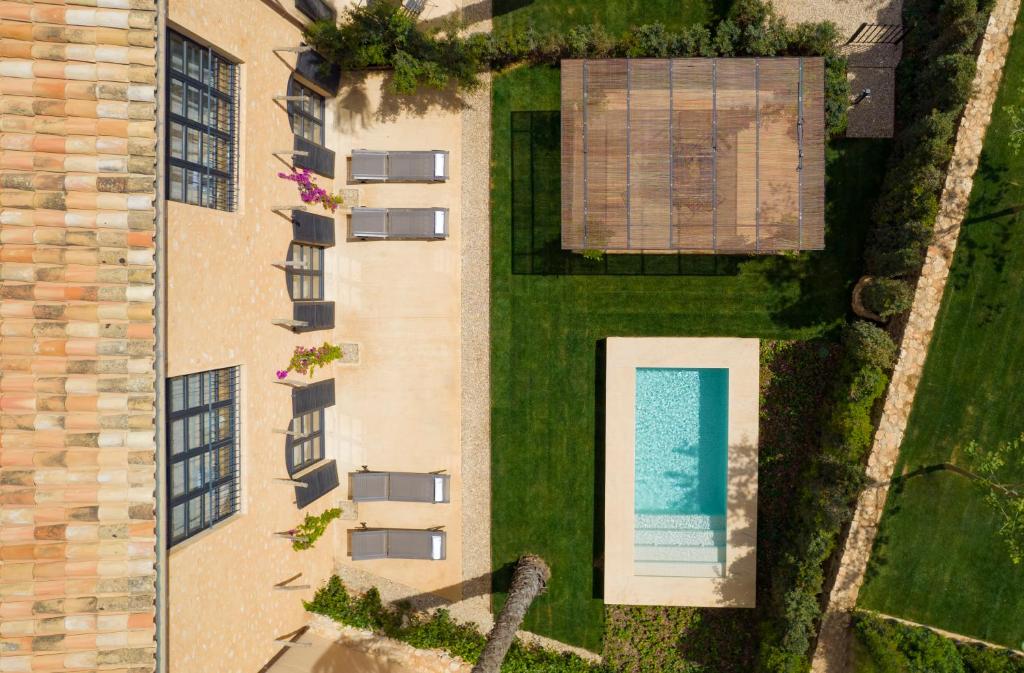
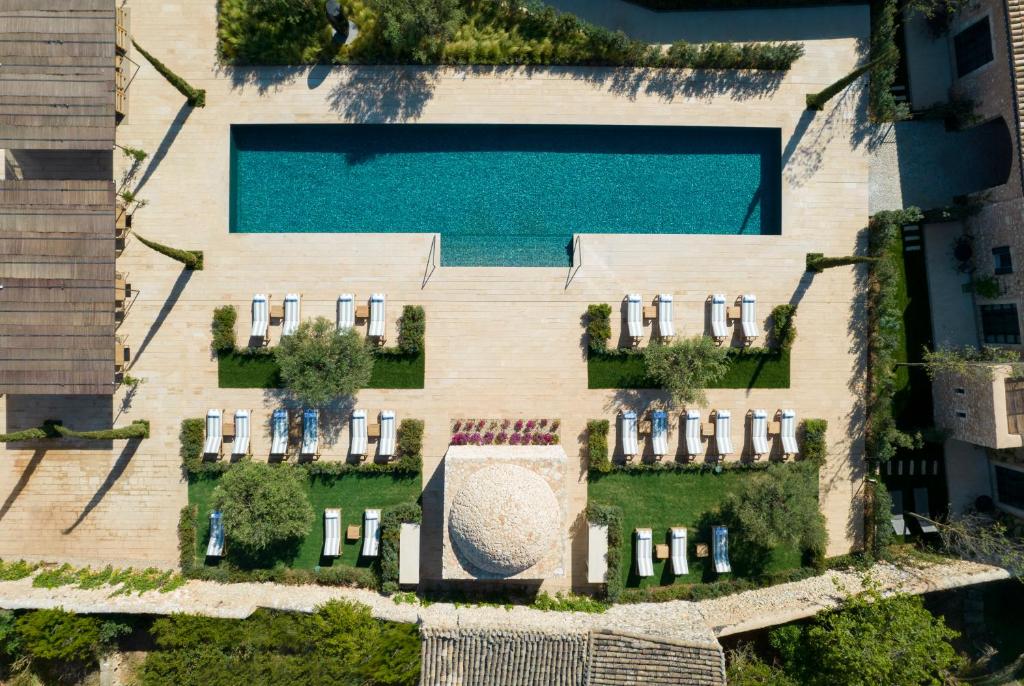
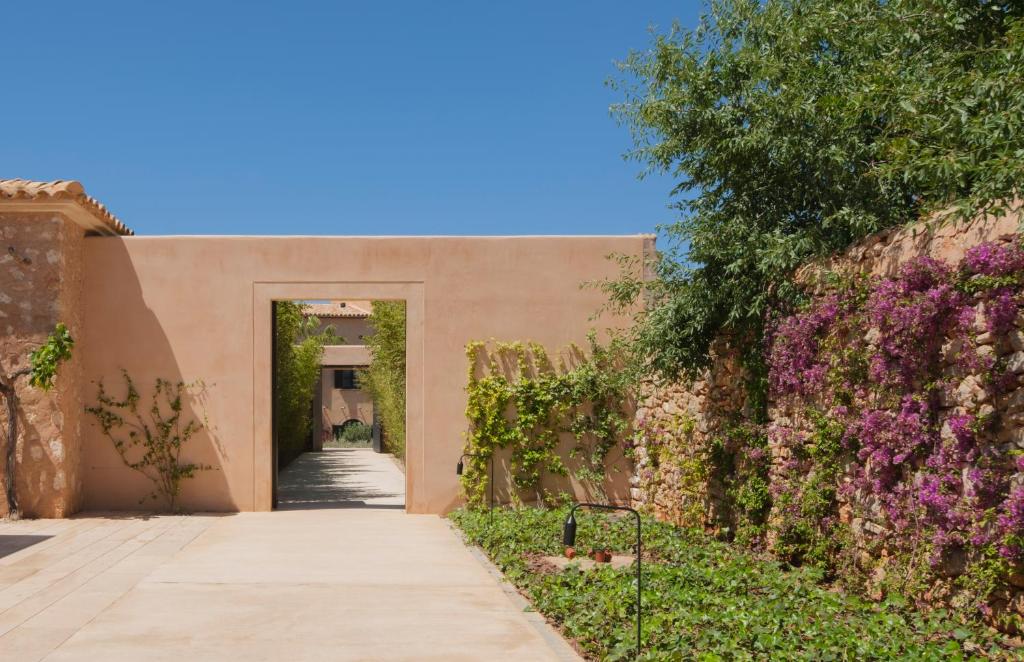
● Behind an almost anonymous village entrance lies an unexpectedly generous world of courtyards, mature gardens, a 25-metre pool, spa, and 32 individually detailed rooms and suites.
A Townhouse That Opens Slowly
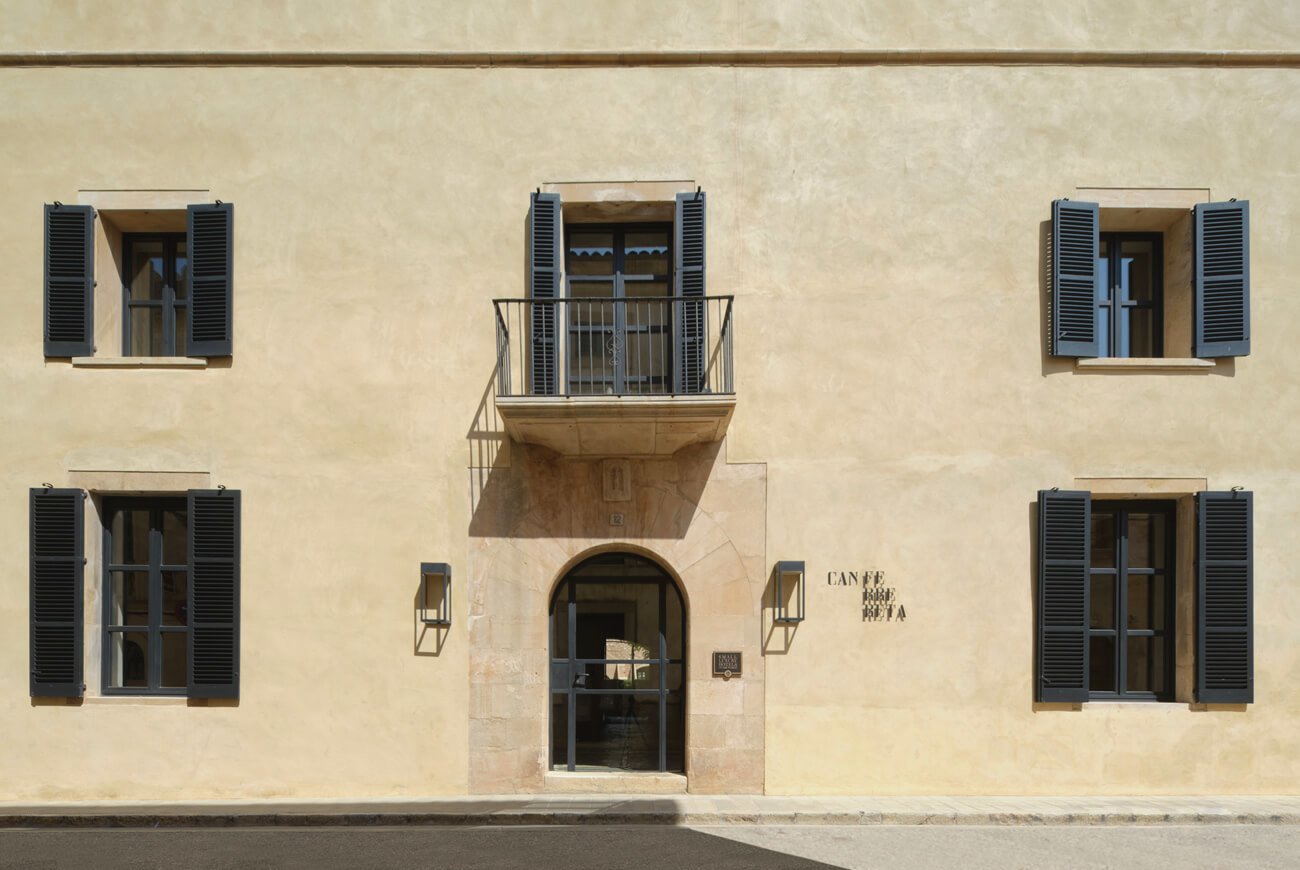
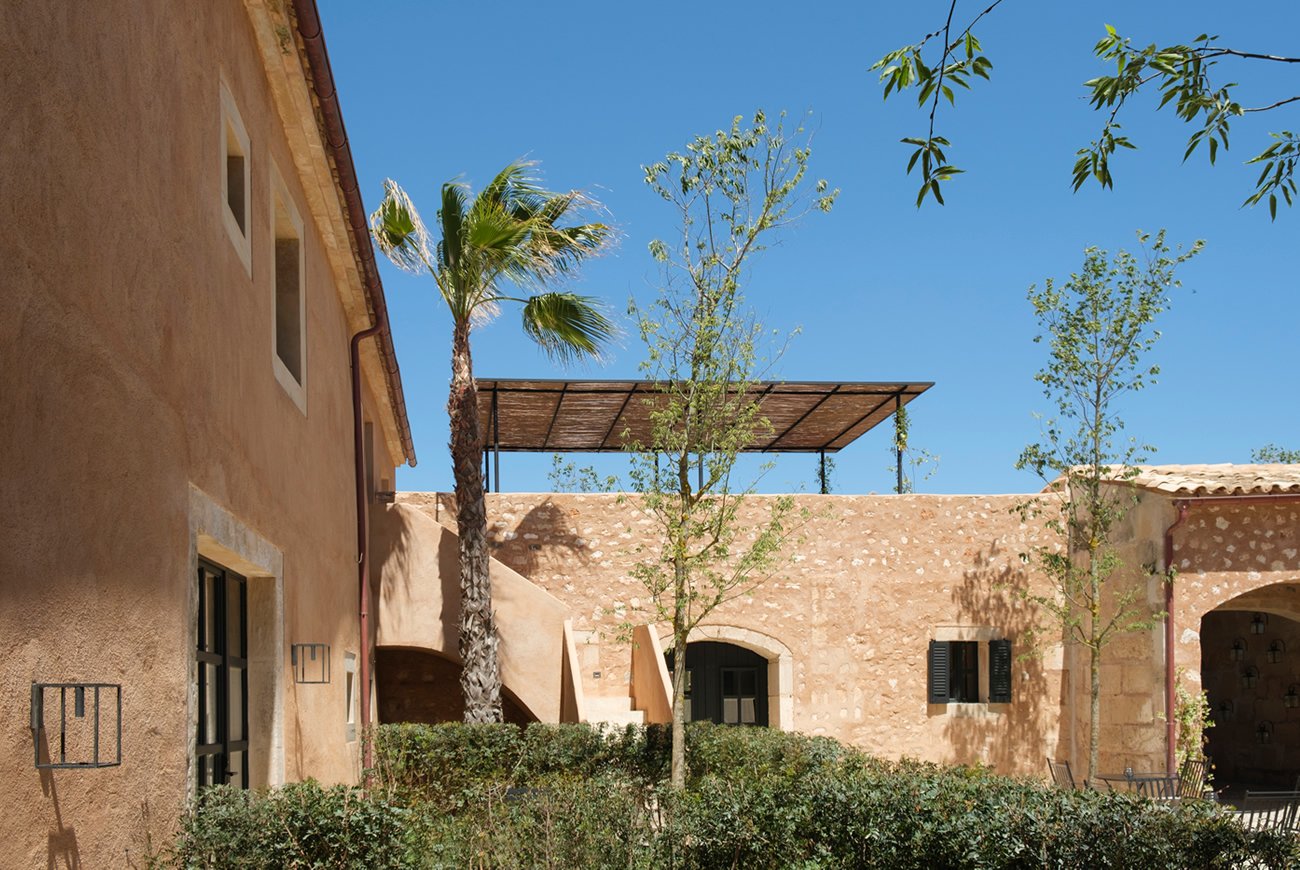
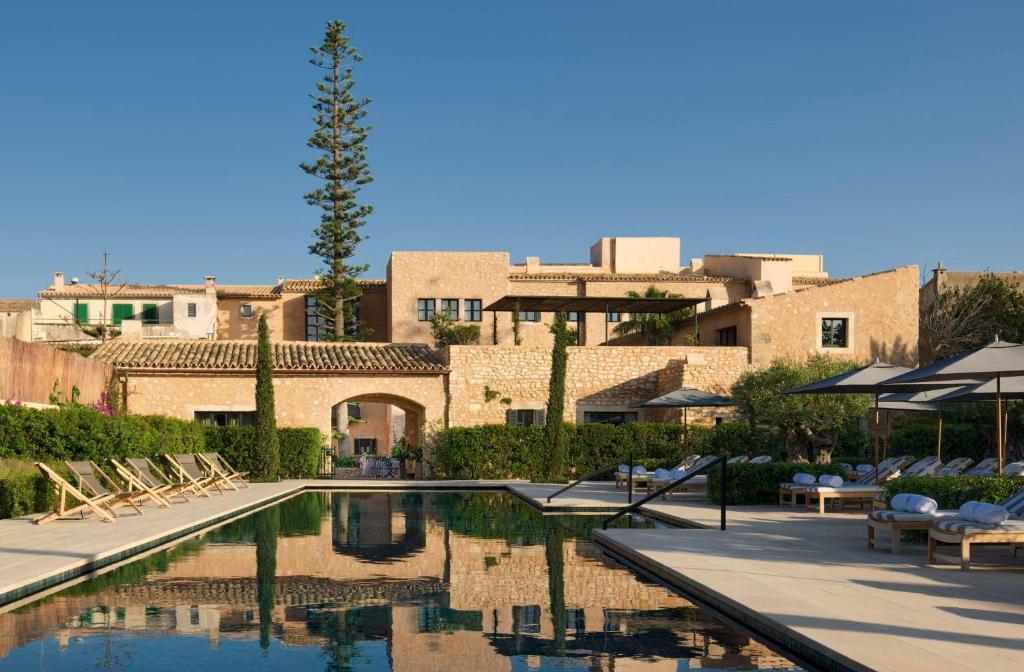
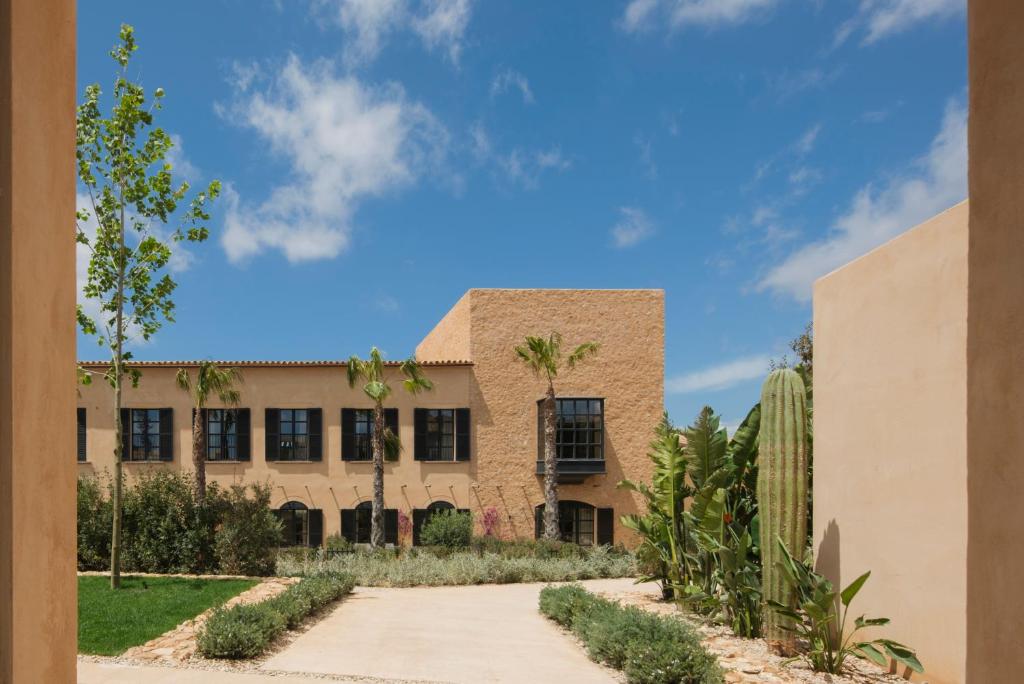
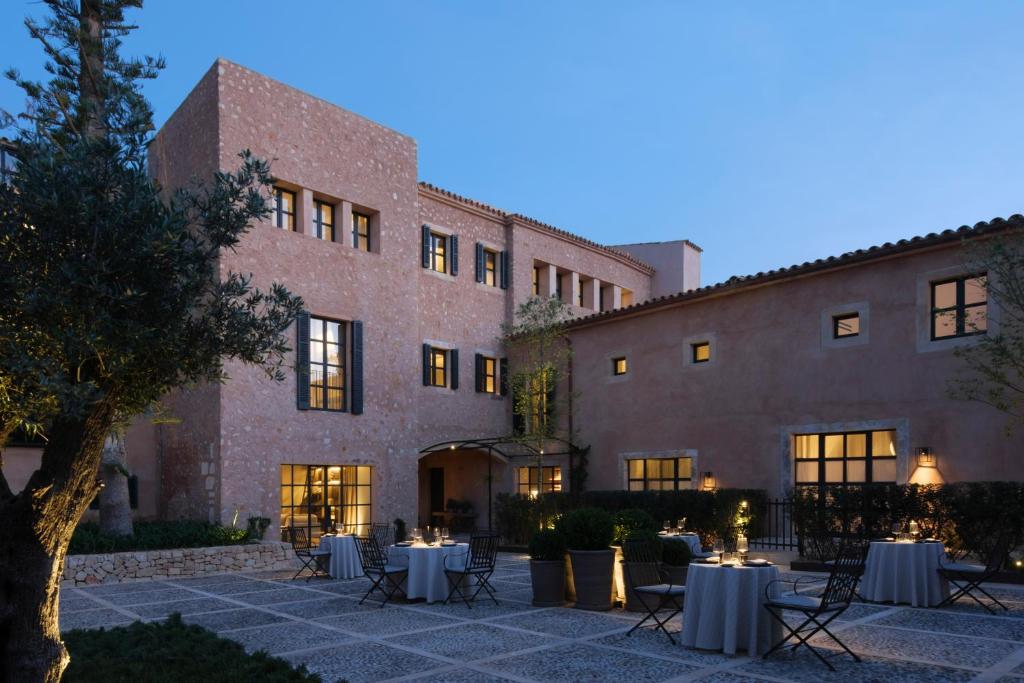
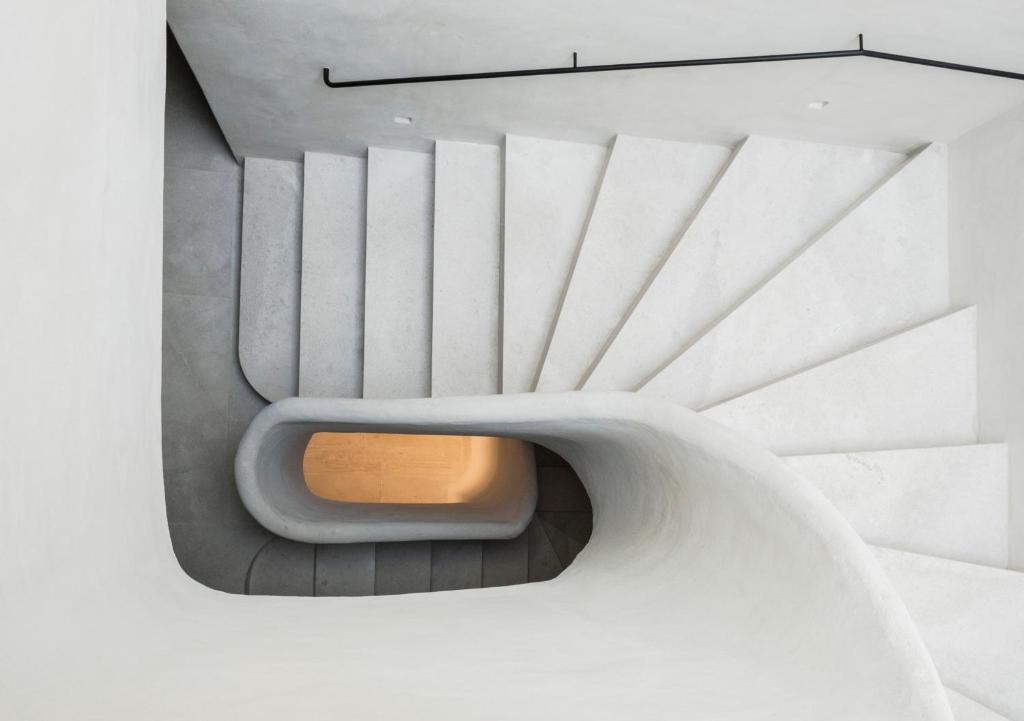
Can Ferrereta gives very little away from the street. Set within the ochre-stone lanes of Santanyí, the 17th-century house retains the privacy and weight of a traditional Mallorcan residence. Step inside and the scale changes. Historic arches lead towards courtyards. Old timber ceilings open into lighter contemporary spaces. Gardens appear where the dense village fabric suggests there should be none. The Soldevila-Ferrer family, also behind Sant Francesc Hotel Singular in Palma, entrusted architect Sergi Bastidas with expanding the original property without allowing the additions to overpower it. Two new buildings were introduced. They complement rather than compete. That decision gives the hotel its sense of continuity.
Stone, Timber, Linen, Art
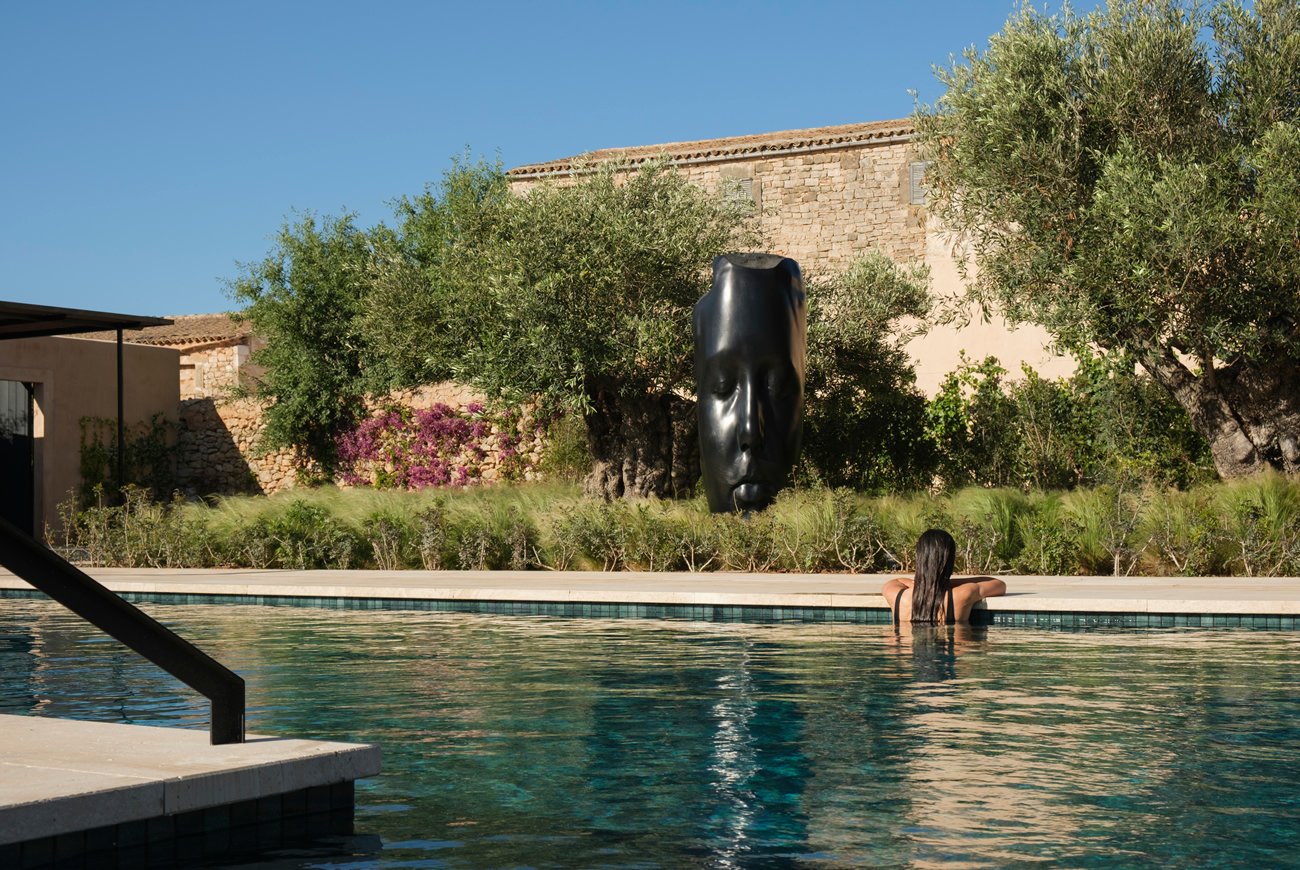
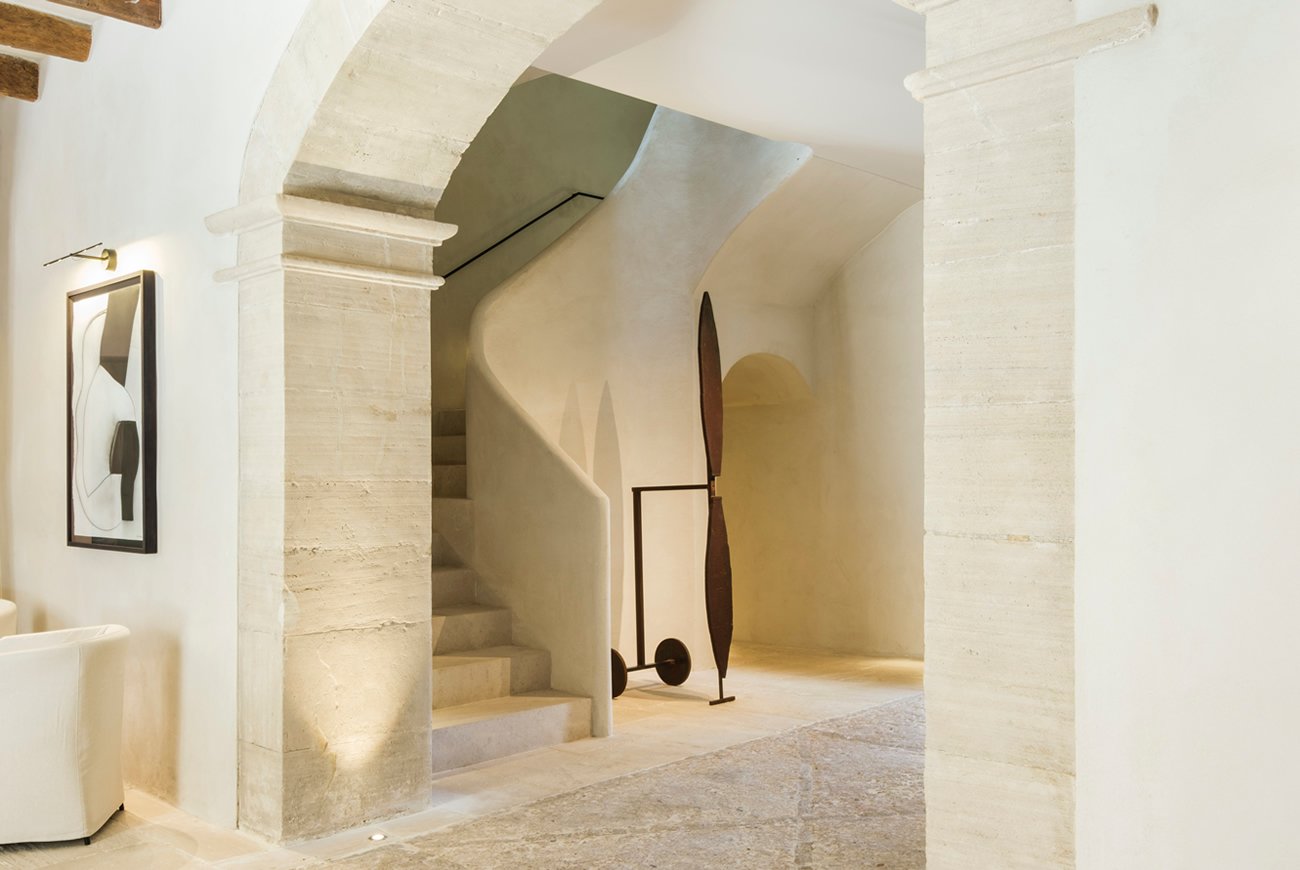
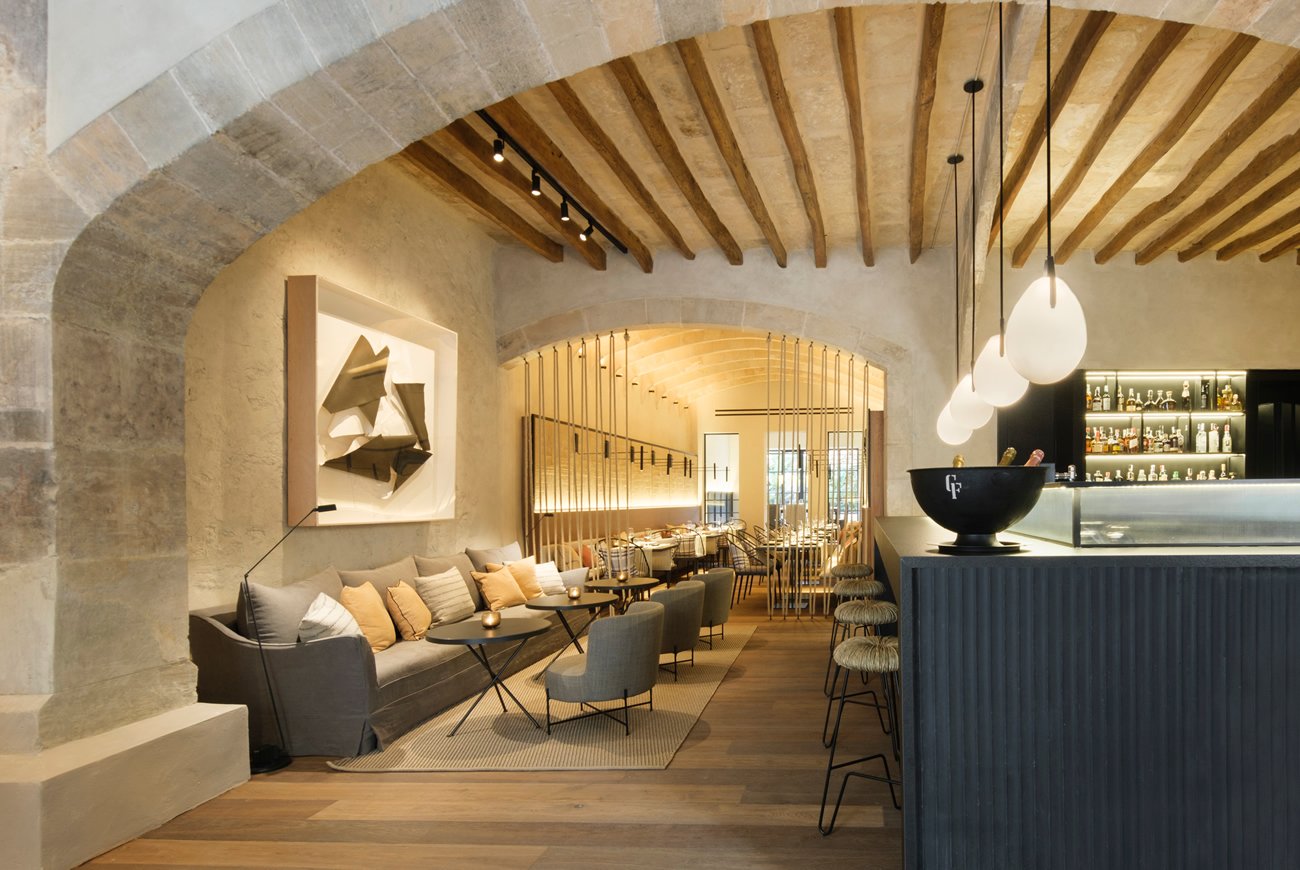
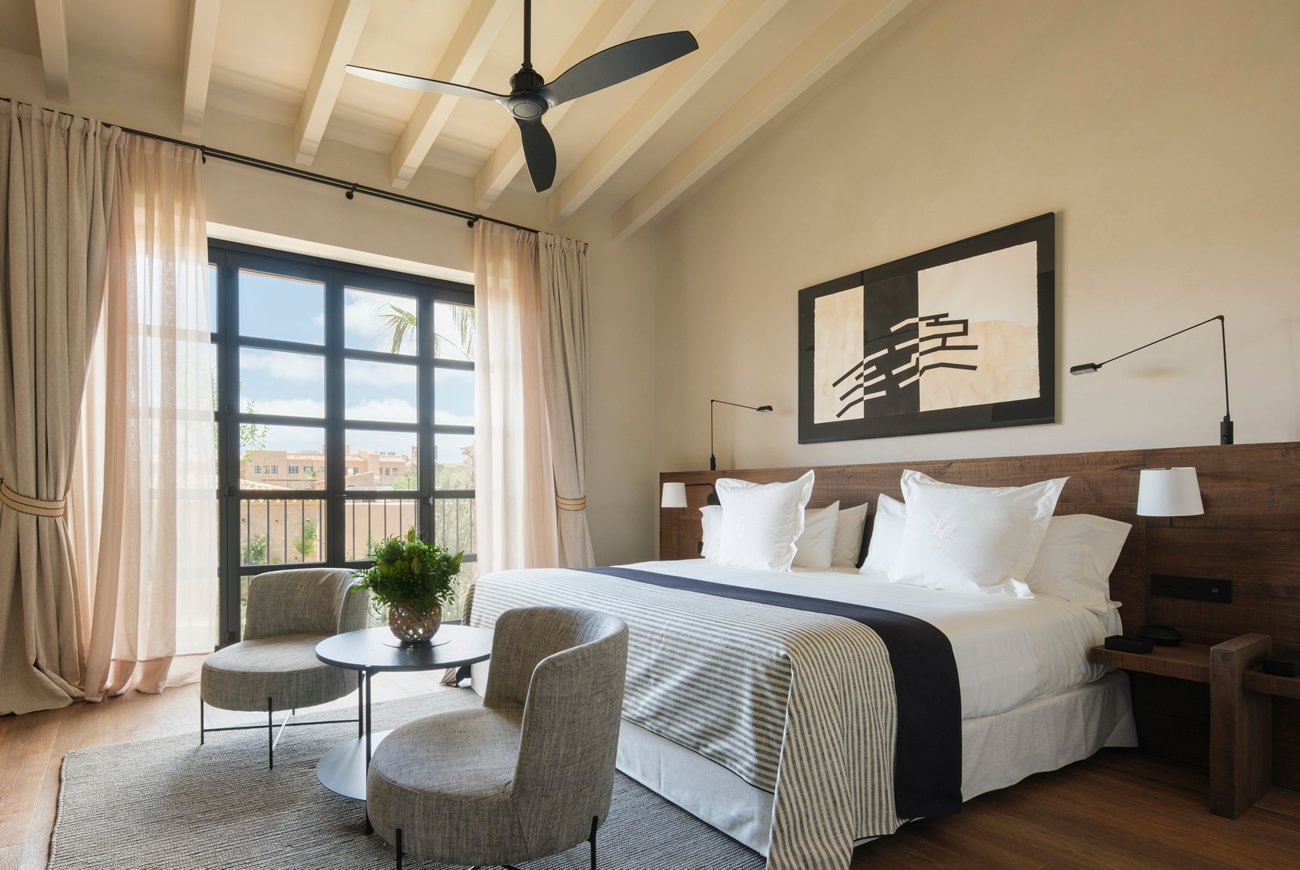
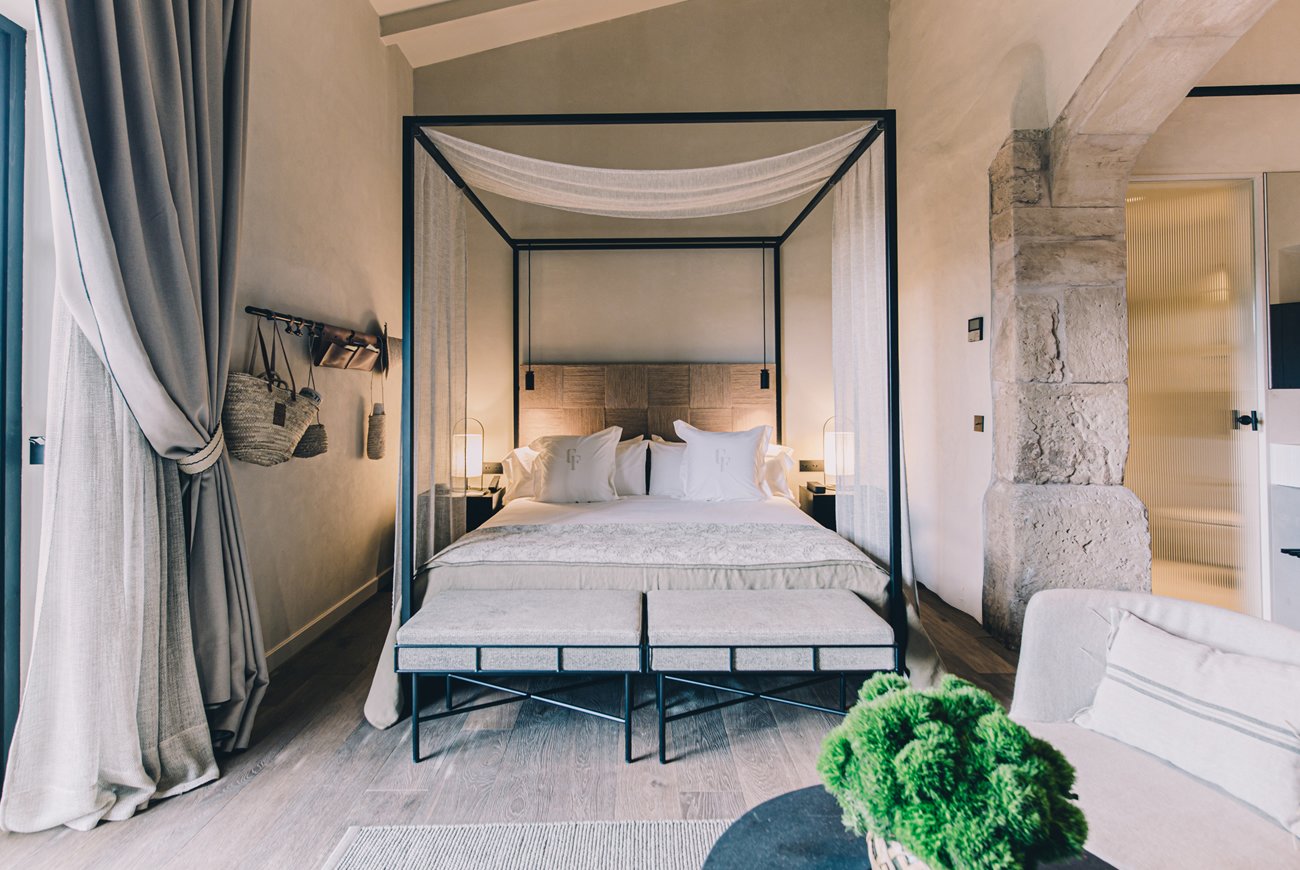
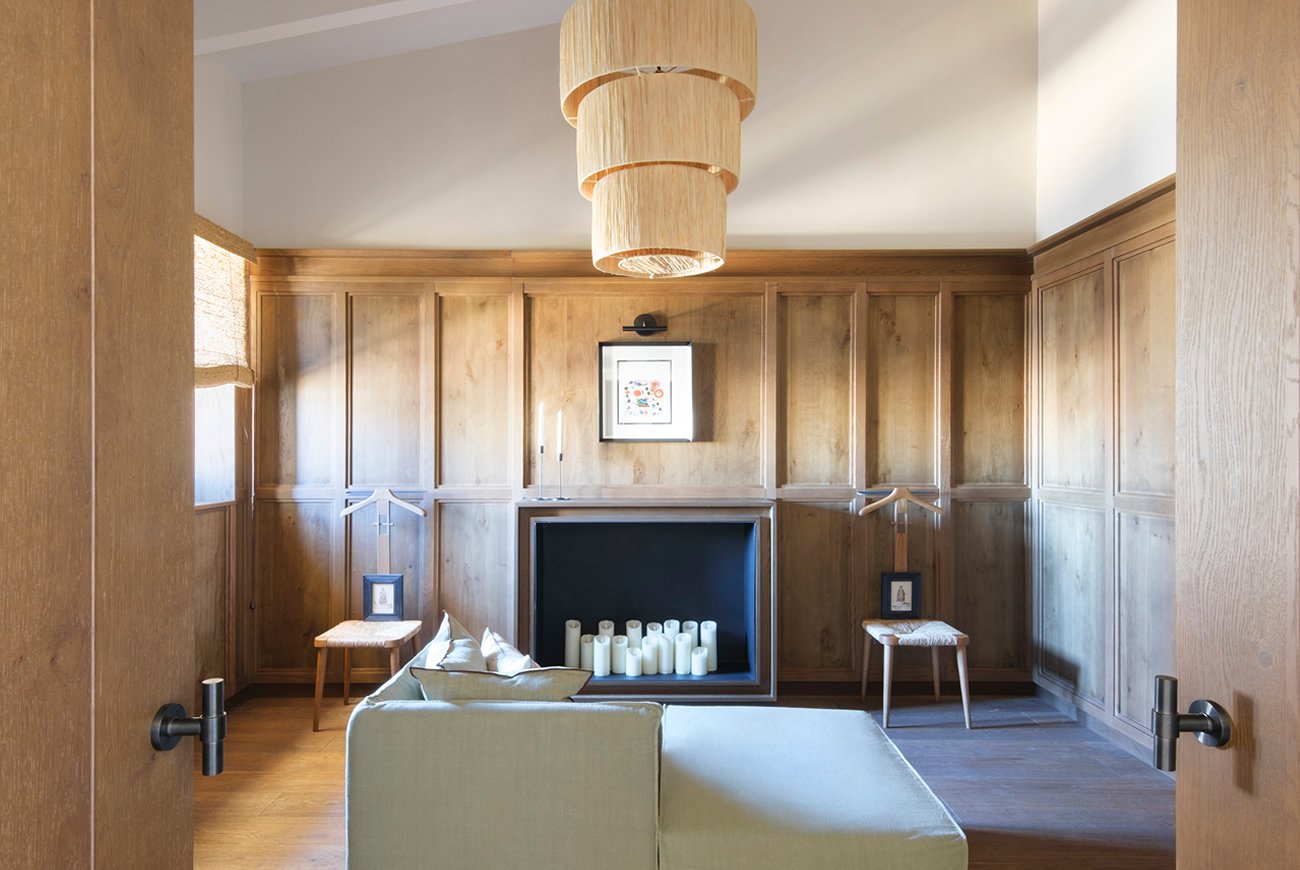
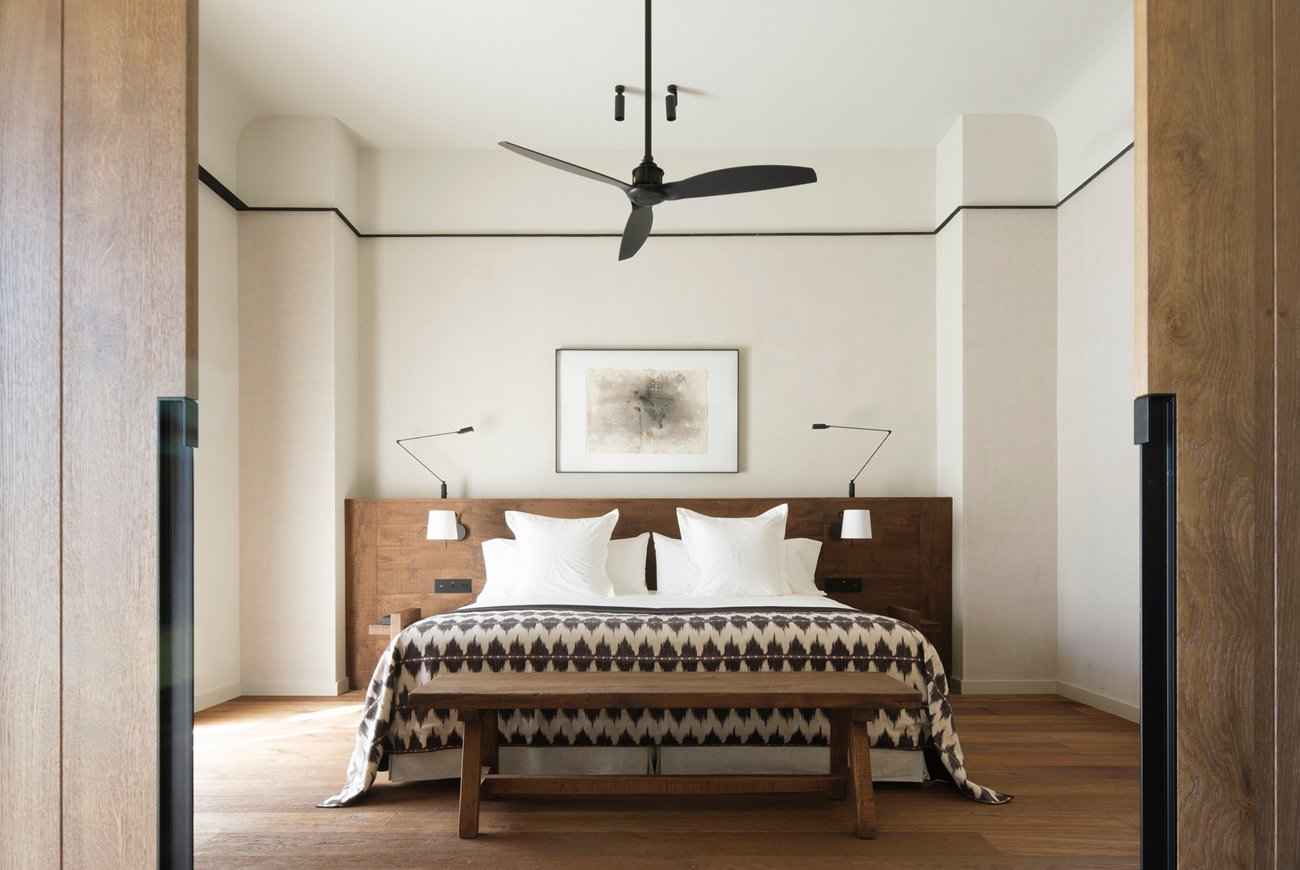
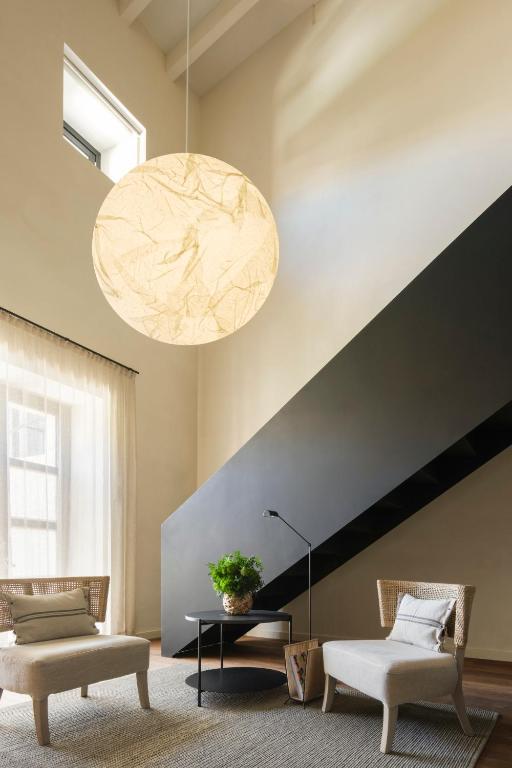
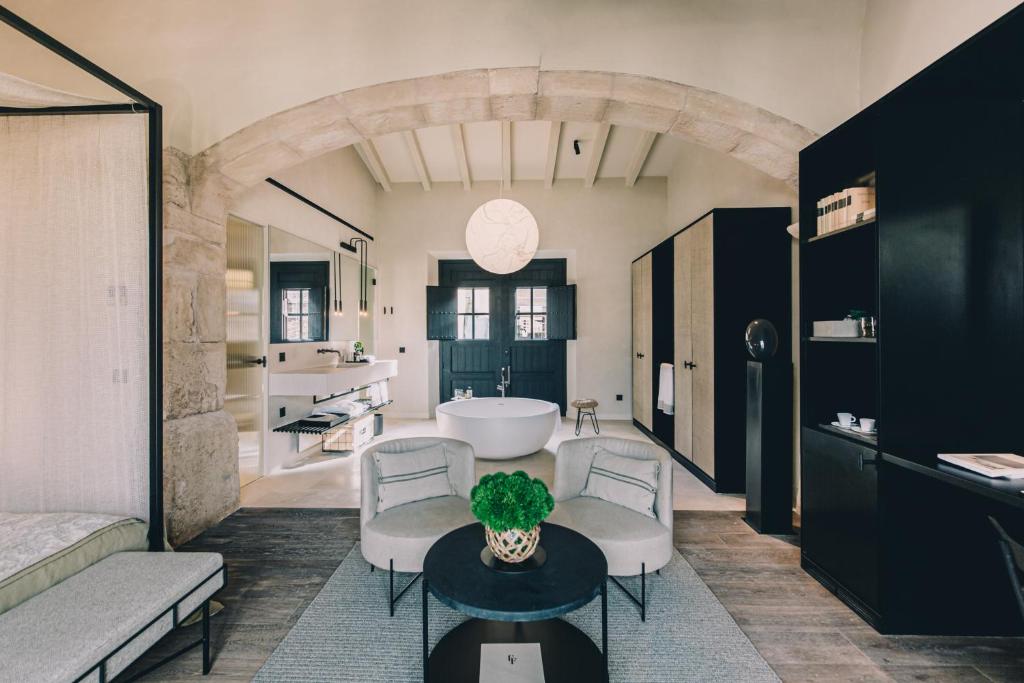
The architecture supplies much of the decoration. Honey-coloured stone. High ceilings. Heavy beams. Cobbled patios. Simple plaster walls. Against this historic materiality, the contemporary layer is quiet: linen textiles in pale neutrals, locally crafted furniture, restrained lighting, and carefully selected objects. Then comes the art. Jaume Plensa’s monumental Duna’s Dream stands in the garden with an almost ghostly presence. Elsewhere are works by Mallorcan and Spanish artists including Guillem Nadal, Jordi Alcaraz, Riera i Aragó, and Dominica Sánchez, while Bárbara Vidal’s photography records the landscape connected to the property. Nothing feels like lobby decoration. Art has room around it. Architecture becomes the gallery.
Thirty-Two Rooms, No Formula
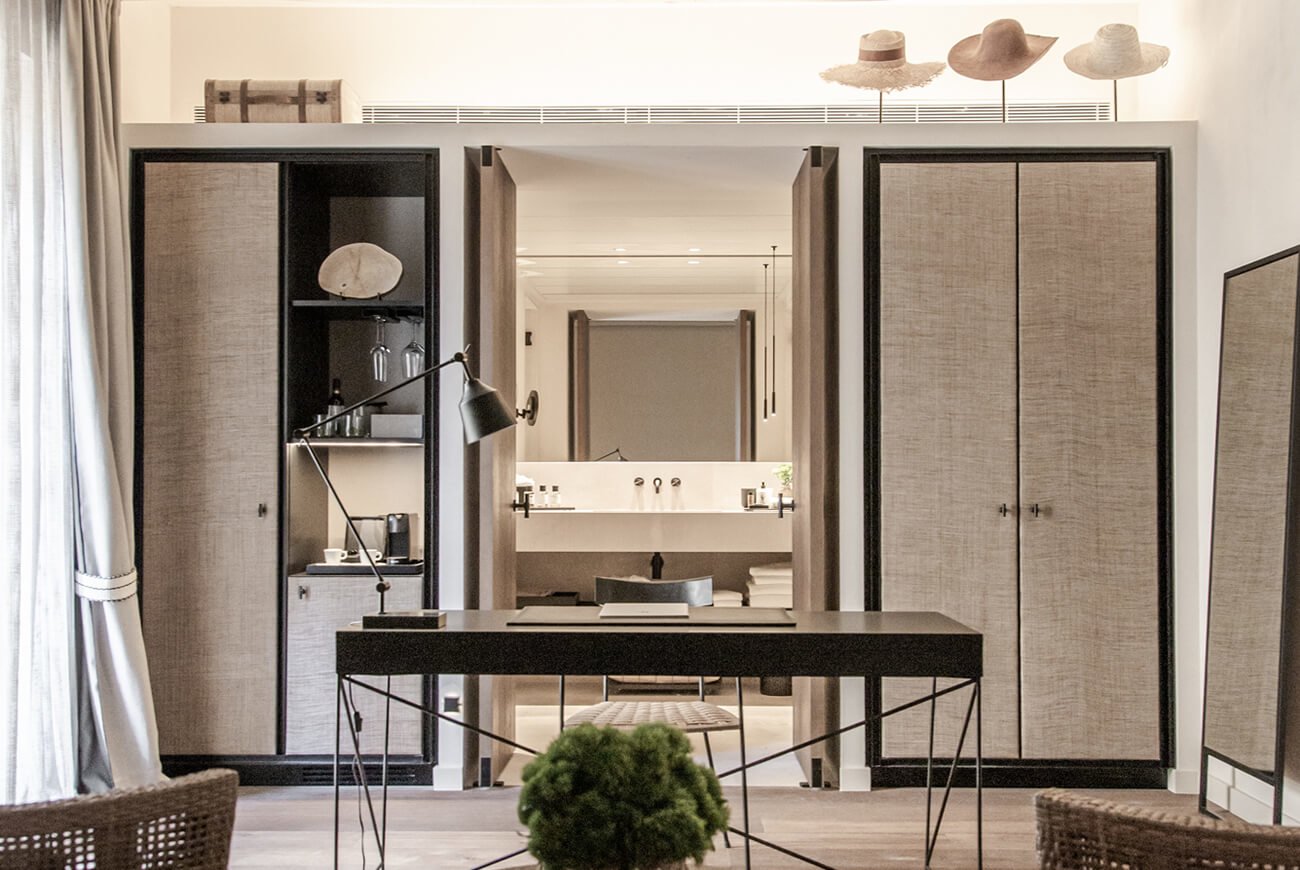
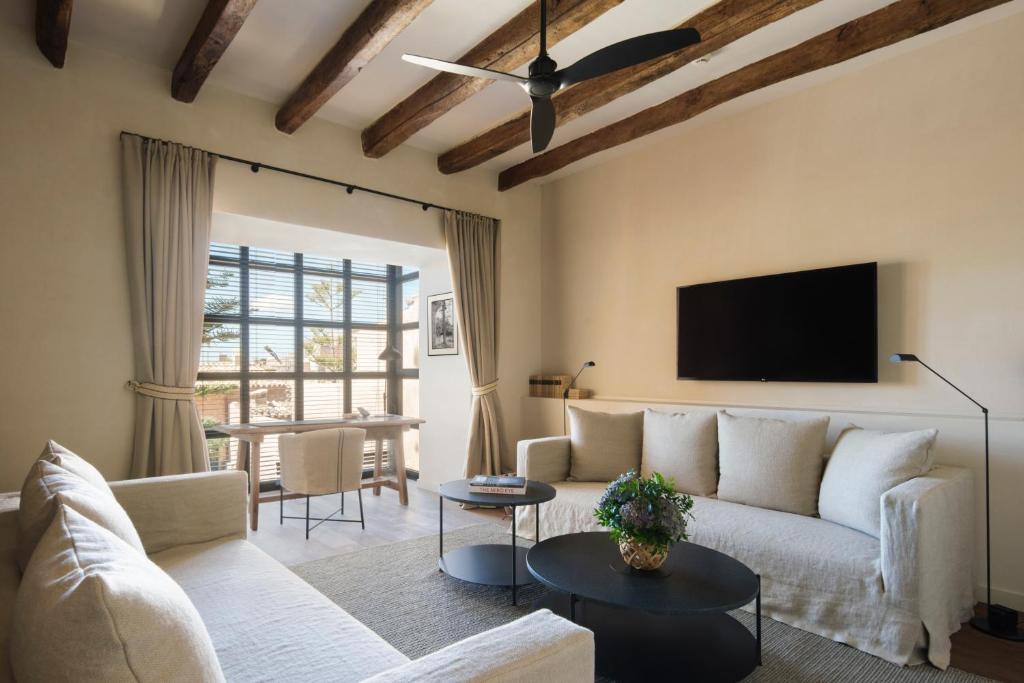
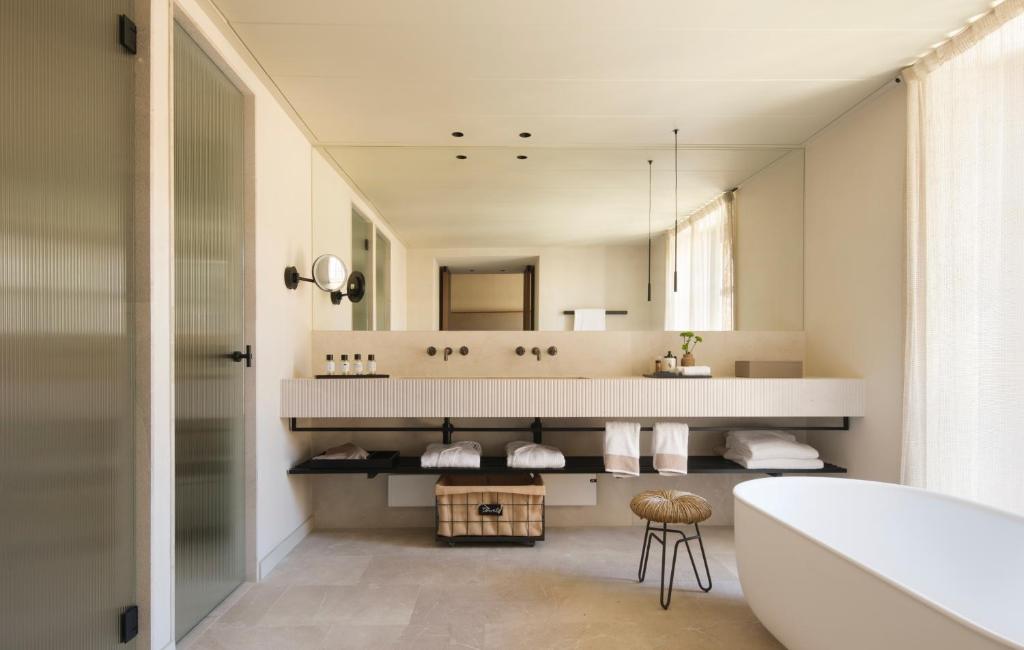
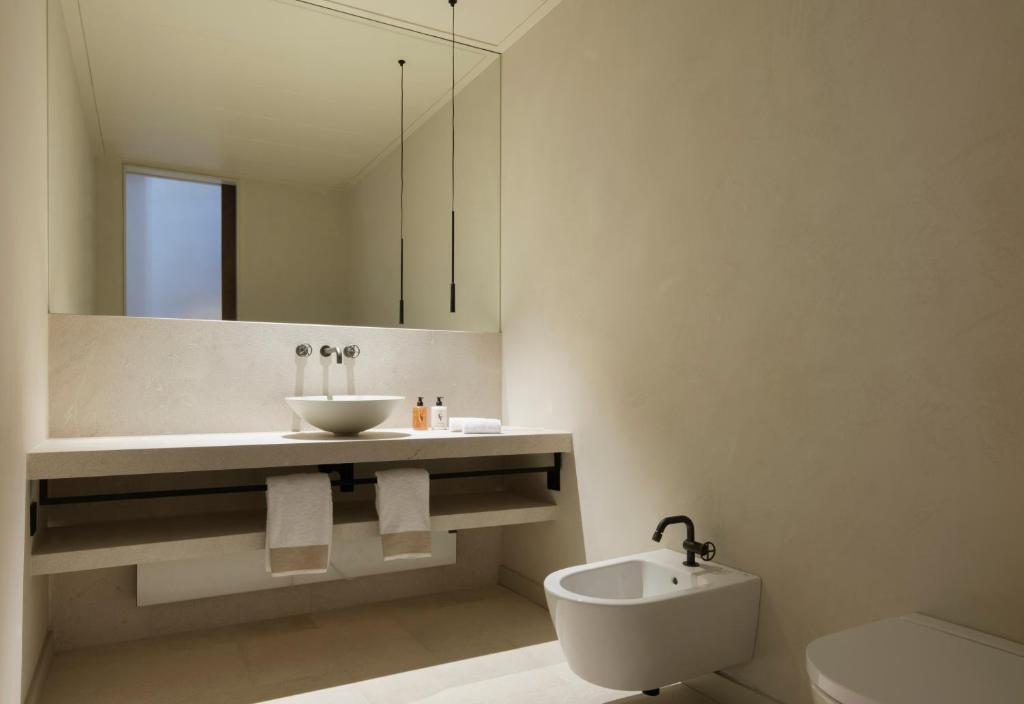
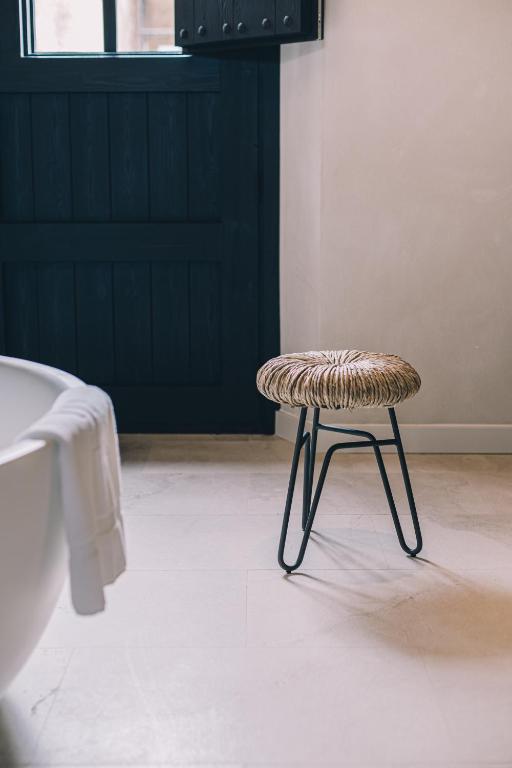
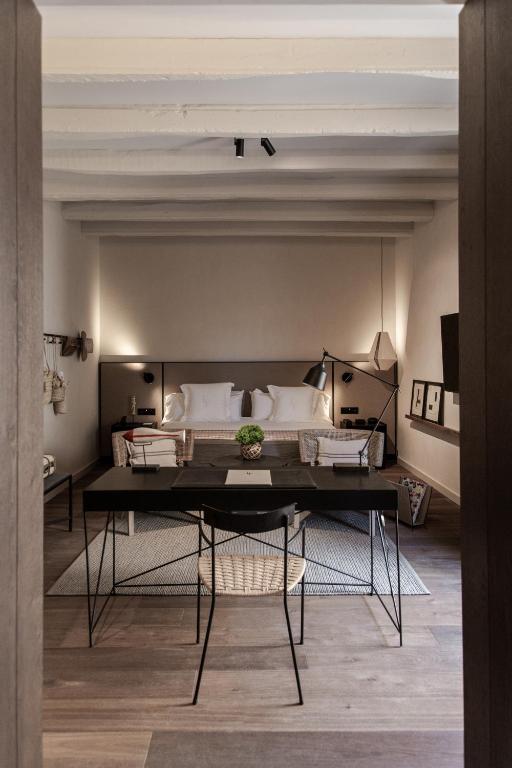
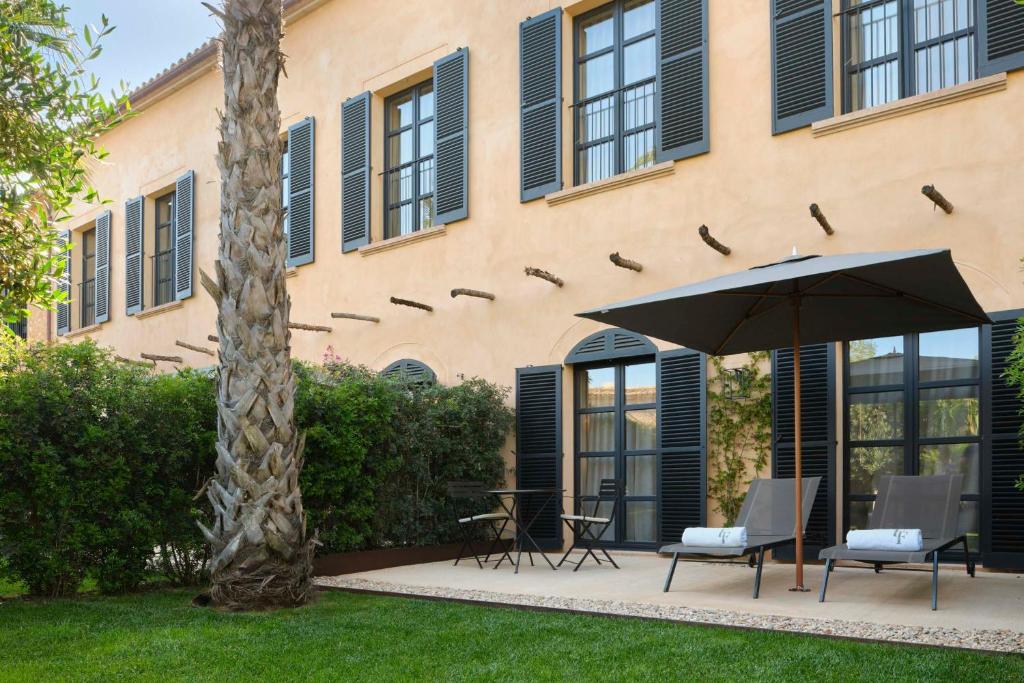
There are just 32 rooms, 19 of them suites. Historic rooms retain their individual proportions and architectural irregularities, while those within the newer wings have a more controlled contemporary geometry. Across both, the language remains consistent. Stone. Linen. Wood. Earthy taupes and creams. Generous beds. Large bathrooms. Many rooms extend outside through a terrace, balcony, or private patio. The Can Ferrereta Suite introduces more residential space, with its own salon, garden-facing desk, and substantial bathroom with freestanding bath and walk-in shower. Luxury feels measured rather than displayed. Even technology is treated as something to integrate quietly into the room.
A Garden Hidden Inside Santanyí
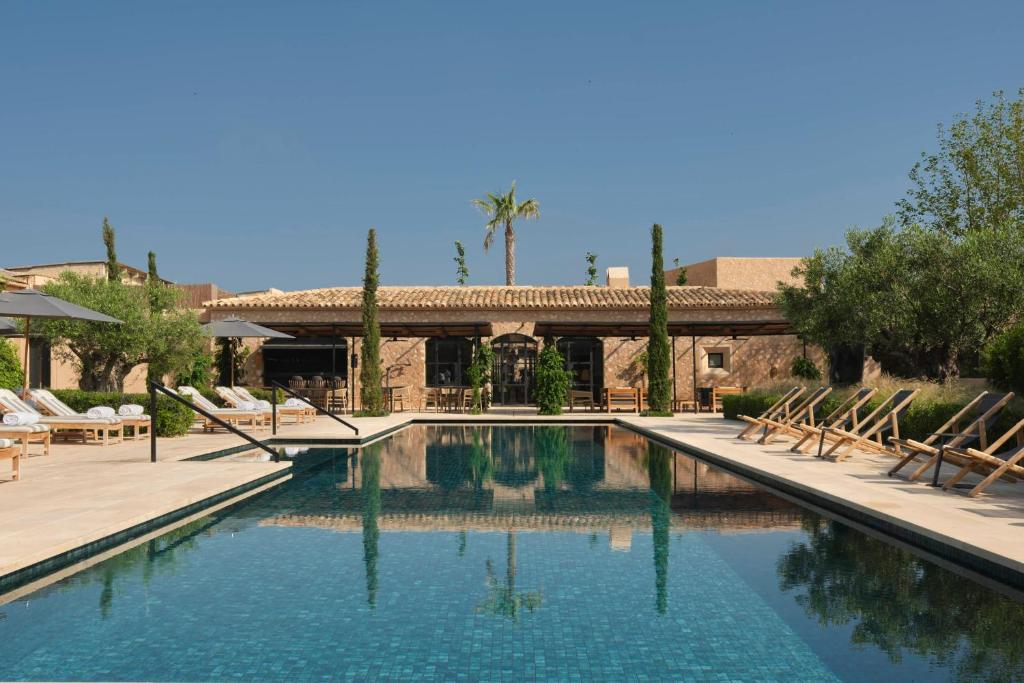
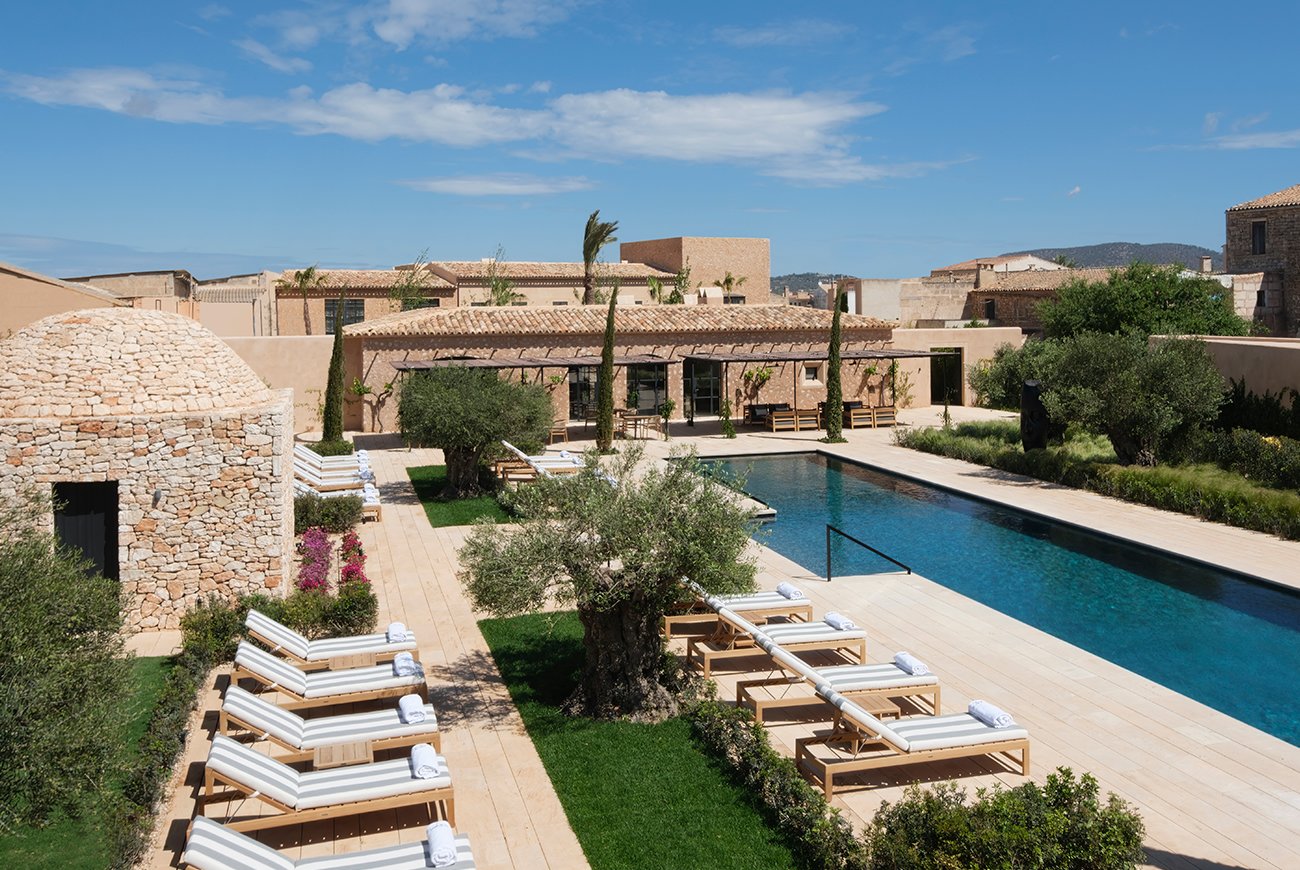
The most surprising part of Can Ferrereta is what lies behind the townhouse. The gardens unfold far beyond what the street façade suggests. Mature vegetation wraps around terraces and old stone walls. At their centre, the 25-metre outdoor pool stretches through the landscape, bordered by blue-and-white loungers and enough open space for the hotel to feel closer to a rural finca than a townhouse. Plensa’s sculpture appears between the planting. La Fresca serves light food beside the pool. The village effectively disappears. Yet Santanyí’s market square, cafés, workshops, and sandstone streets remain only minutes away on foot. That tension is one of the hotel’s great strengths. Urban outside. Retreat within.
Sa Calma Below the Surface
The spa occupies a purpose-built structure within the garden but follows the same visual restraint as the rest of the hotel. Sa Calma includes a heated hydromassage pool, hammam, sauna, treatment rooms, and a 24-hour gym. Treatments draw on ingredients connected to Mallorca: Es Trenc salt, almond and olive oils, citrus, lavender, rosemary, seaweed, and marine mud. Yoga and meditation take place outside when conditions allow. There is no attempt to manufacture a separate wellness universe. The spa simply extends the quiet already established by the architecture and garden.
Ocre in the Old Wine Cellar
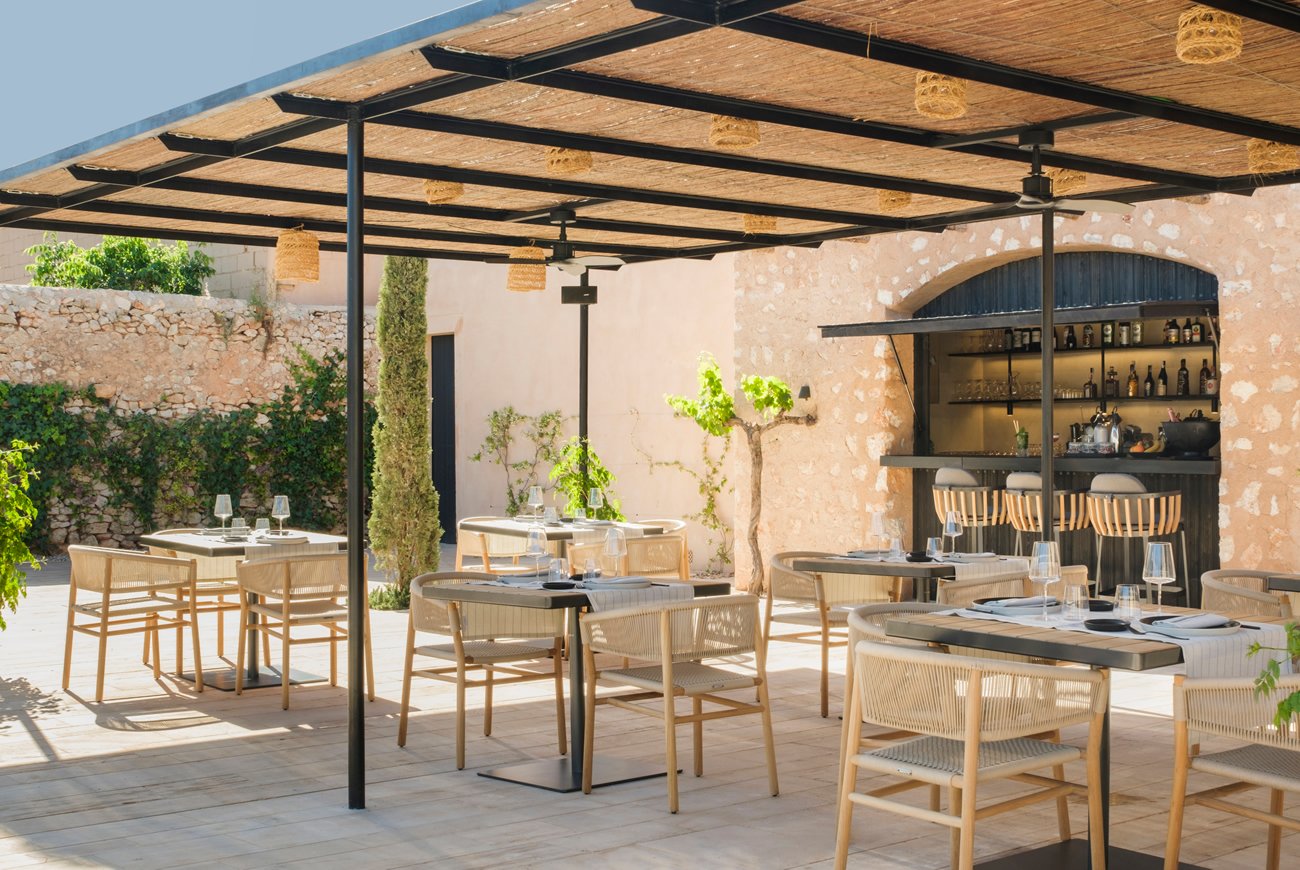
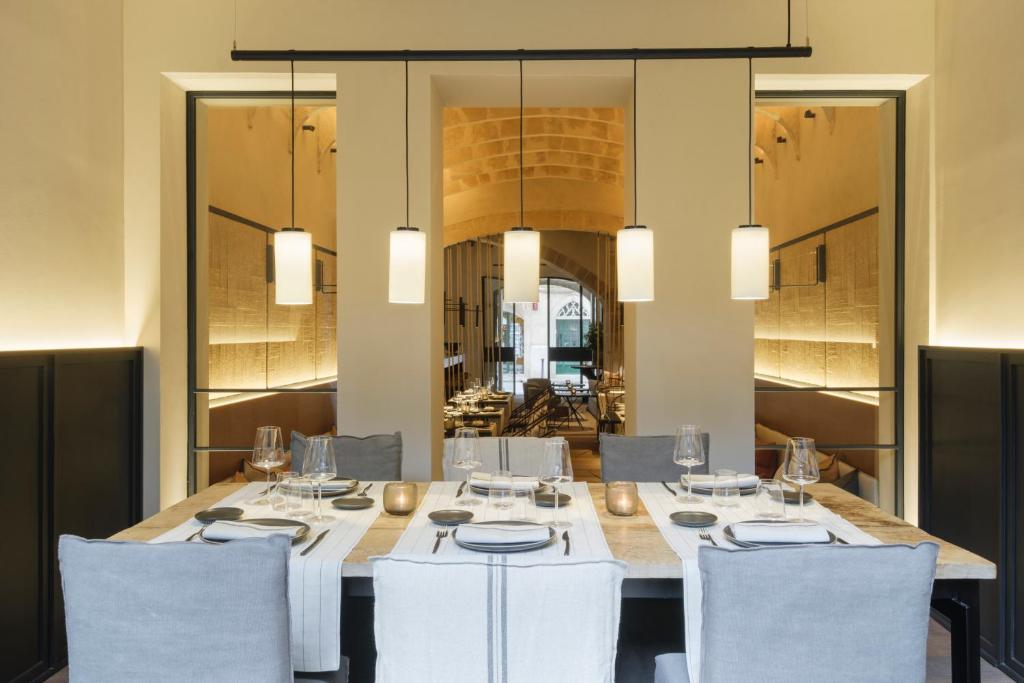
Food returns the hotel to its agricultural context. Ocre occupies the former wine cellar, retaining the weight and intimacy appropriate to the historic space. Chef Alvar Albadejo works with seasonal Mediterranean ingredients and Mallorcan produce, allowing vegetables, seafood, rice, and local flavours to remain recognisable rather than overworked. A candlelit courtyard extends dining outside. Poolside, La Fresca operates in a lighter register with salads, sandwiches, and simple dishes. The two settings suit the hotel. Ocre belongs to the old house. La Fresca belongs to the garden.
Why It Works
Can Ferrereta succeeds because its luxury comes from proportion, material, and editing rather than spectacle. Sergi Bastidas keeps the 17th-century house legible, lets the new architecture remain quiet, and creates enough space around the original structure for gardens, art, and contemporary life to coexist naturally. The art collection gives the property cultural weight without turning it into a gallery hotel; the spa disappears into the landscape; and Ocre brings new purpose to the former wine cellar. From the street, Can Ferrereta barely announces itself. Inside, it unfolds into an entire world — one shaped by Mallorcan stone, light, craft, and remarkable restraint.