Casa Cook El Gouna – Egypt
Desert minimalism, Red Sea horizons and a resort designed around the simple pleasure of being together.
Why DNA Hotels Loves It
● South African studio Common Architecture translated Casa Cook’s relaxed aesthetic through an Egyptian lens, using simple forms, local references and humble materials rather than resort clichés.
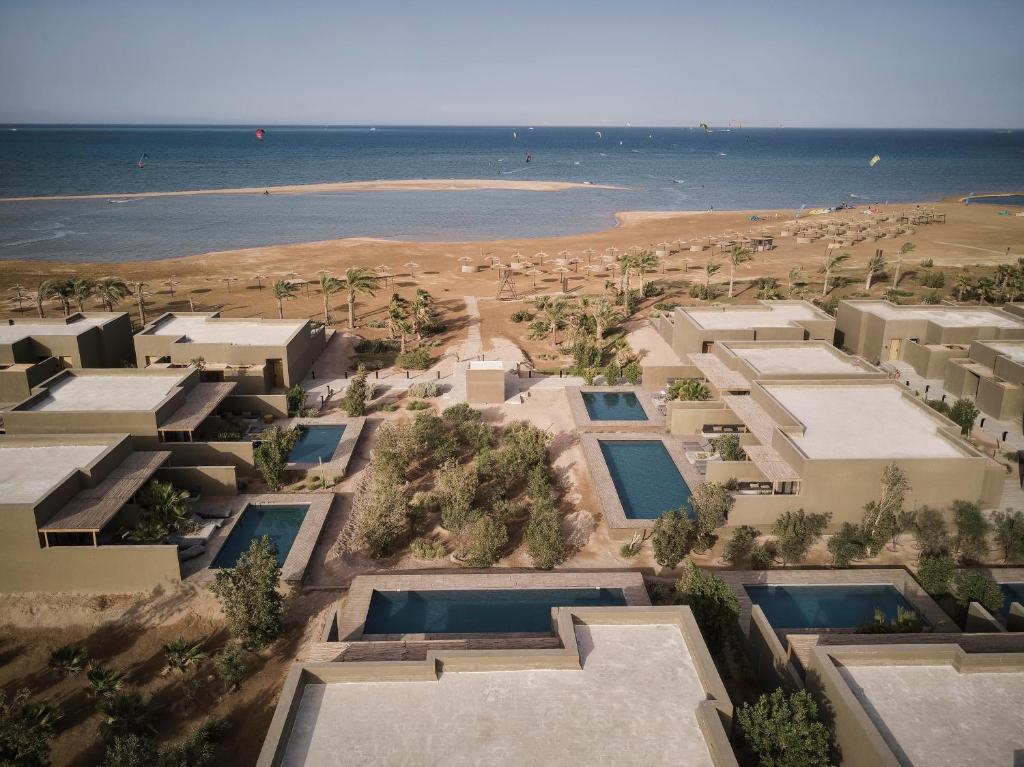
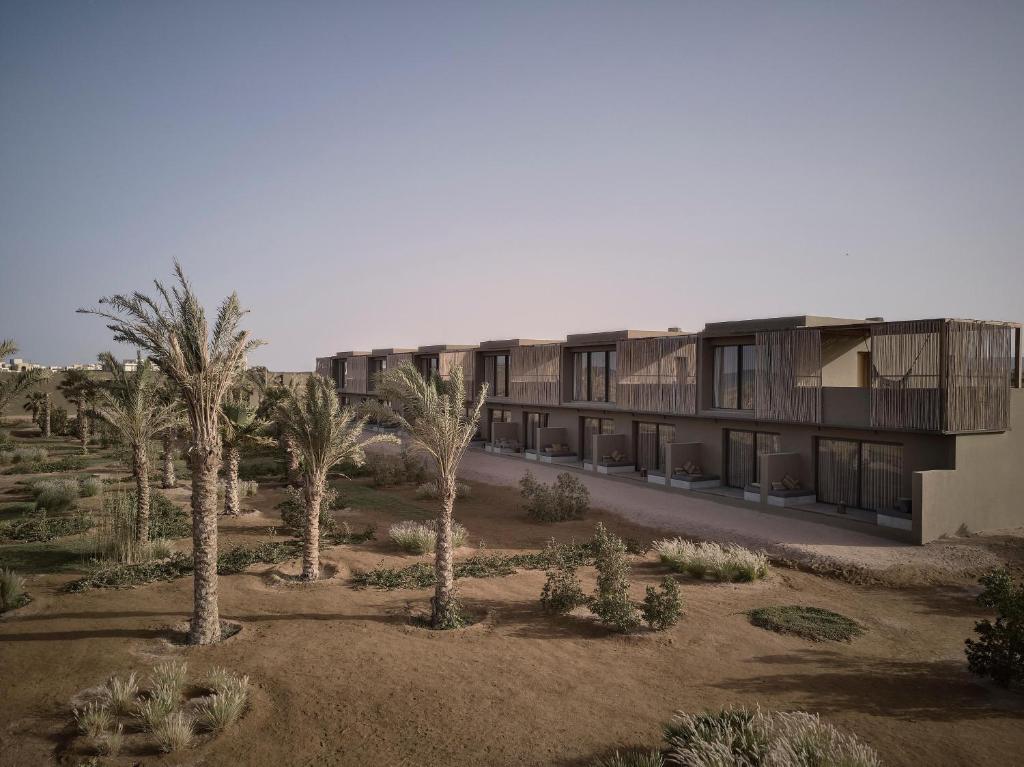
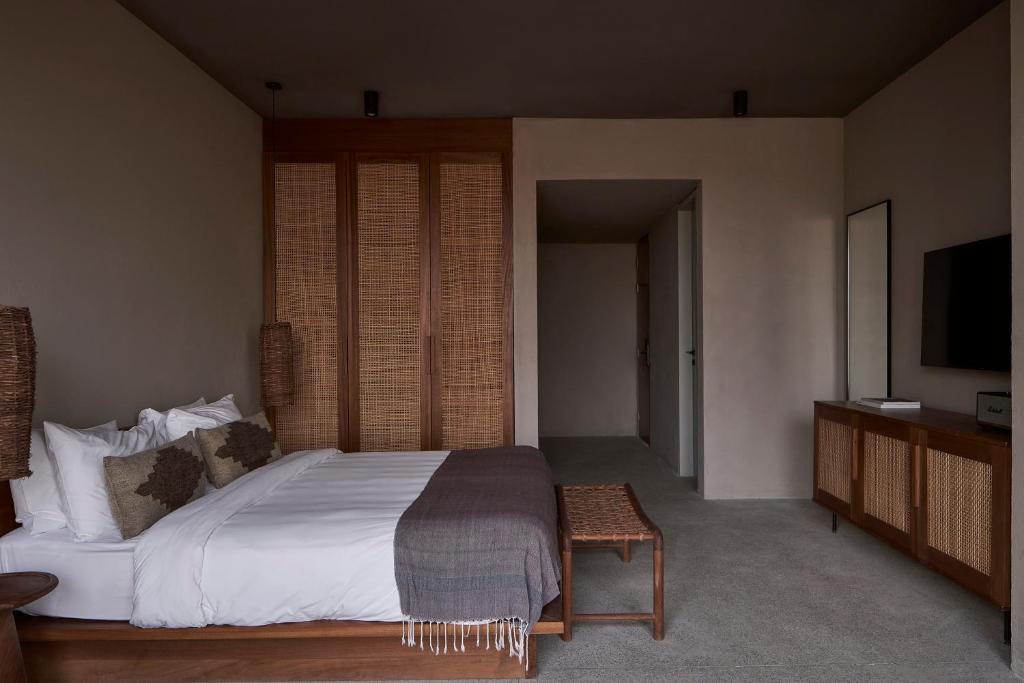
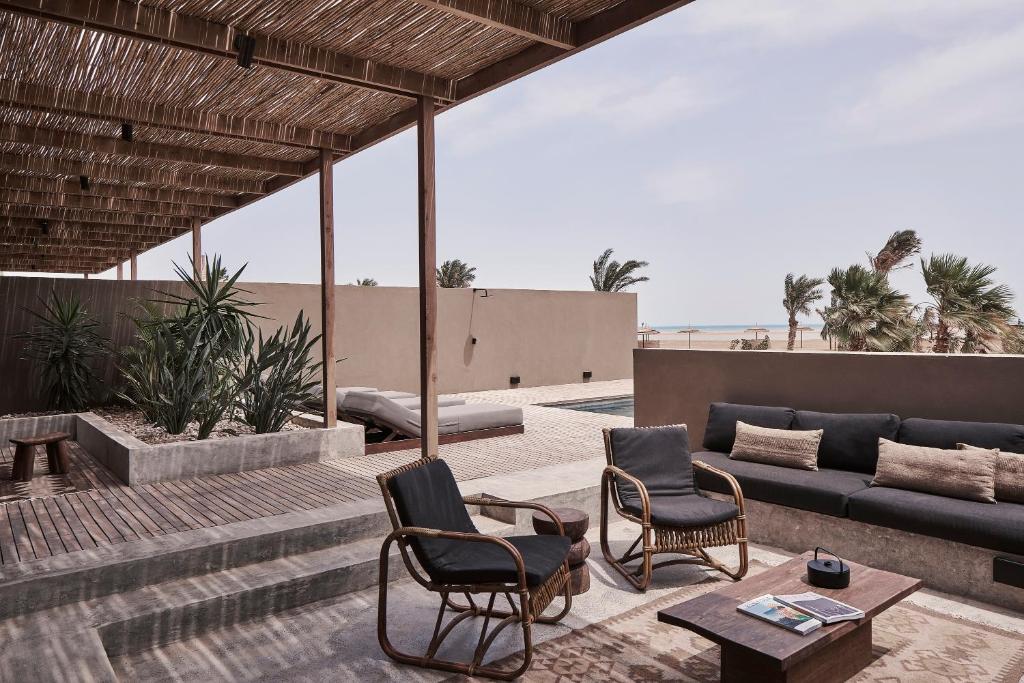
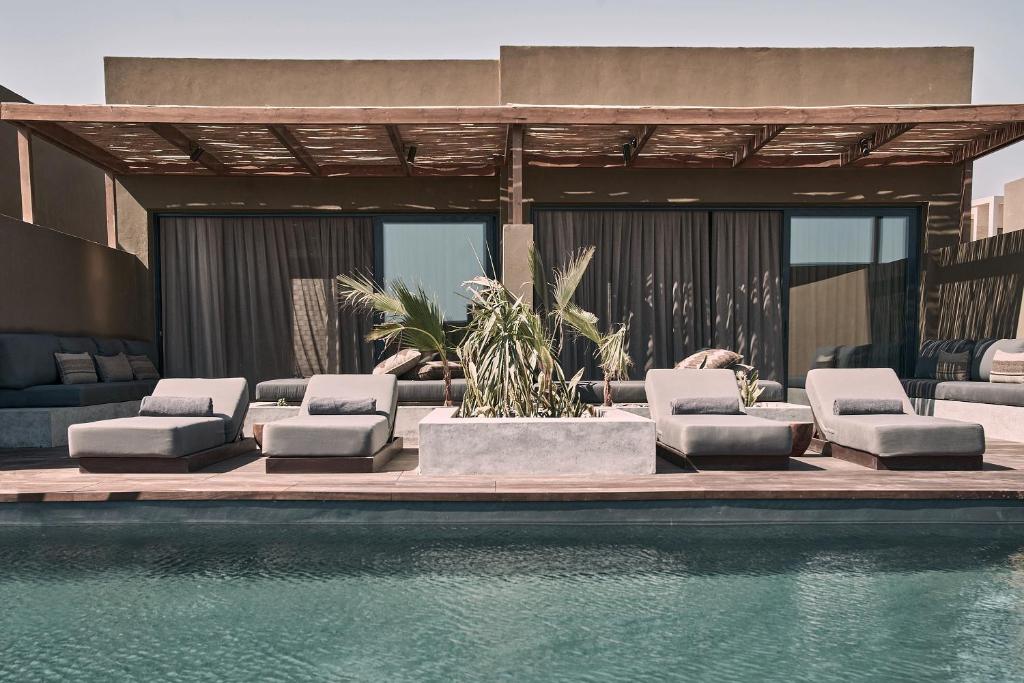
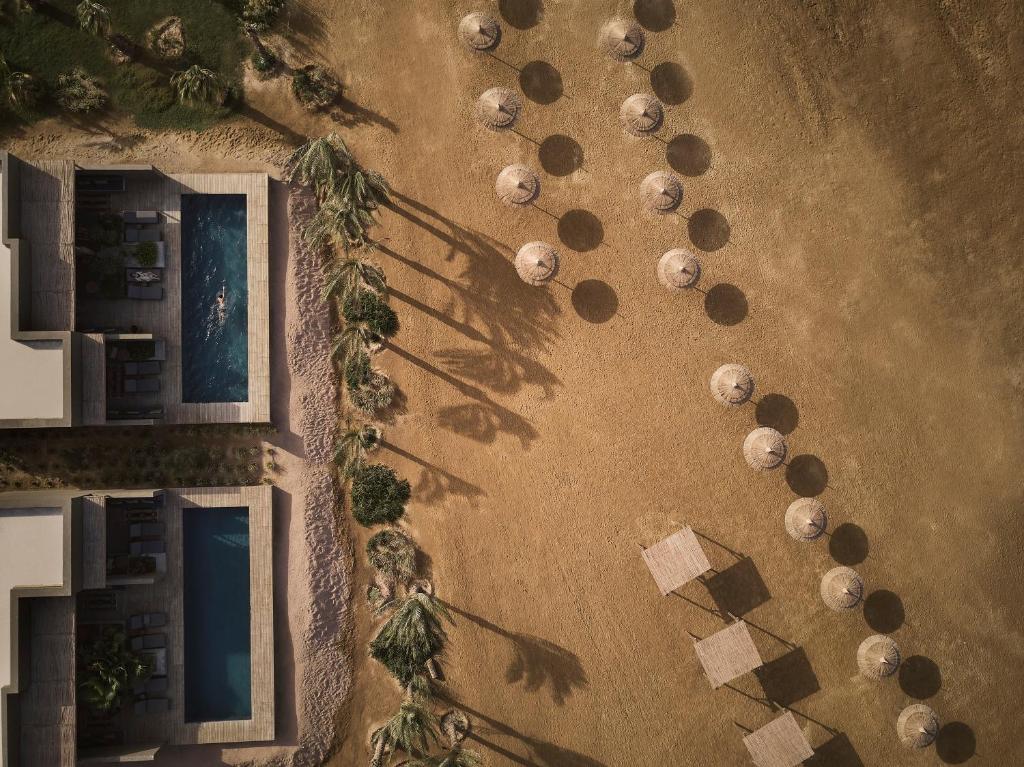
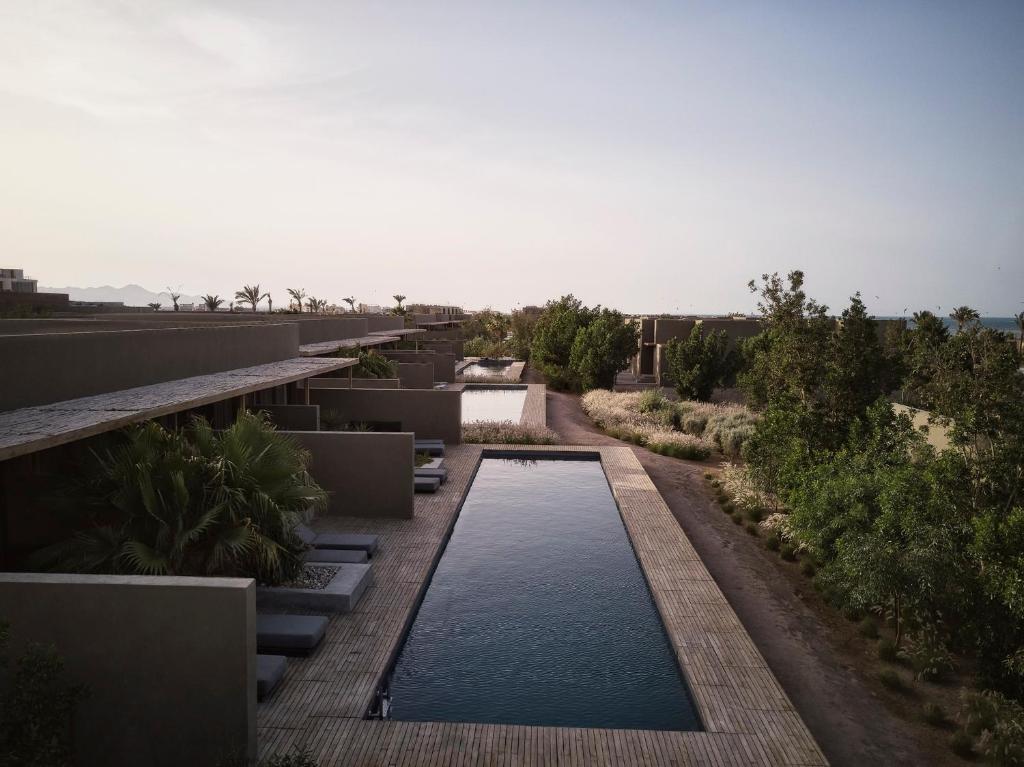
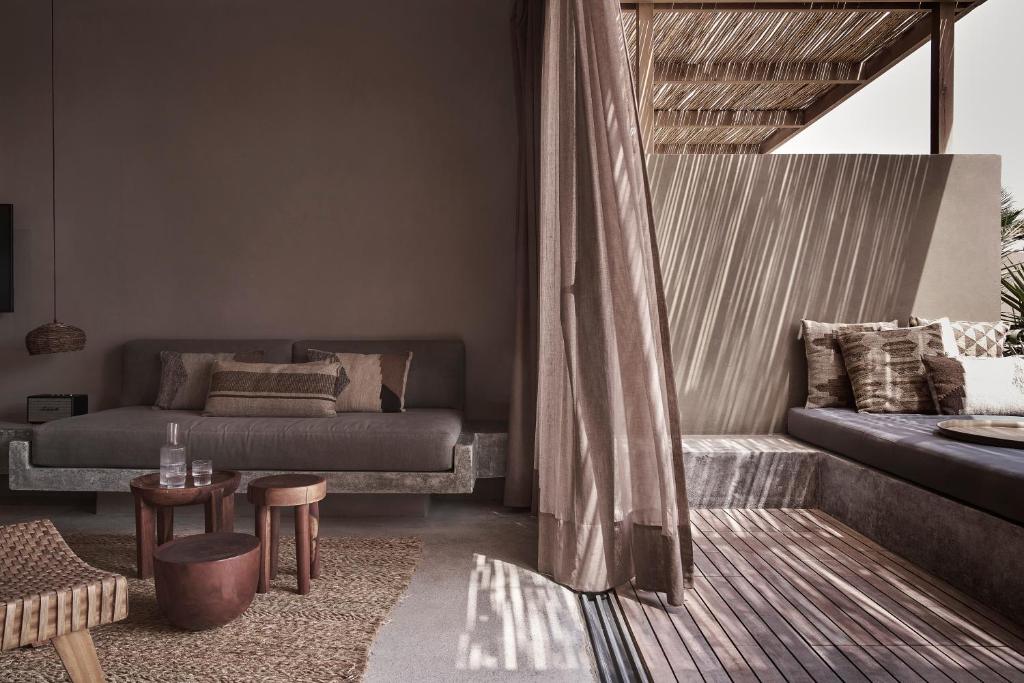
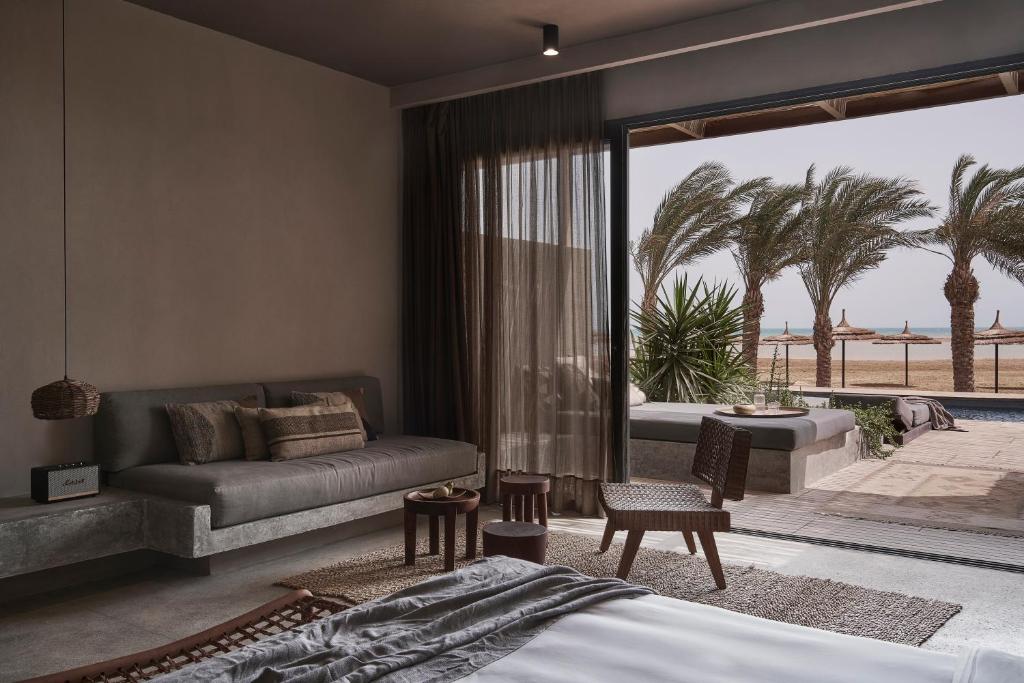
● The architecture is deliberately quiet: 100 rooms, suites and villas dissolve into dunes, lagoons and gardens through textured plaster, rough timber, rattan, linen and a palette borrowed directly from the desert.
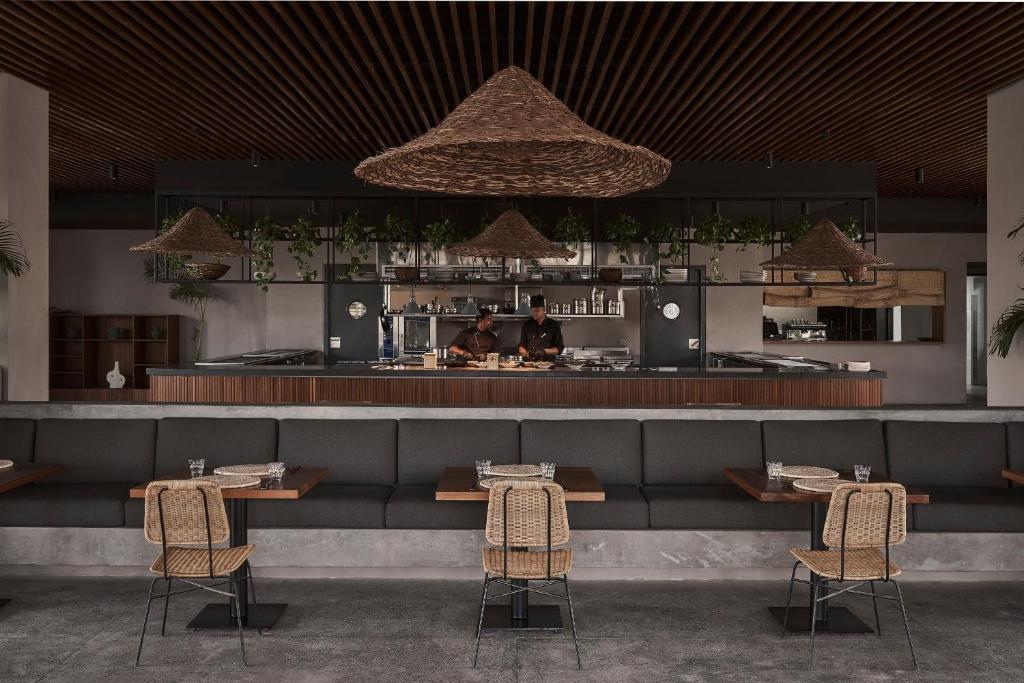
● Built around the Greek idea of parea — coming together and sharing experiences — communal dining, pools, terraces and a lagoon-side beach club make sociability part of the architecture rather than another hotel amenity.
A Different Kind of Red Sea Resort
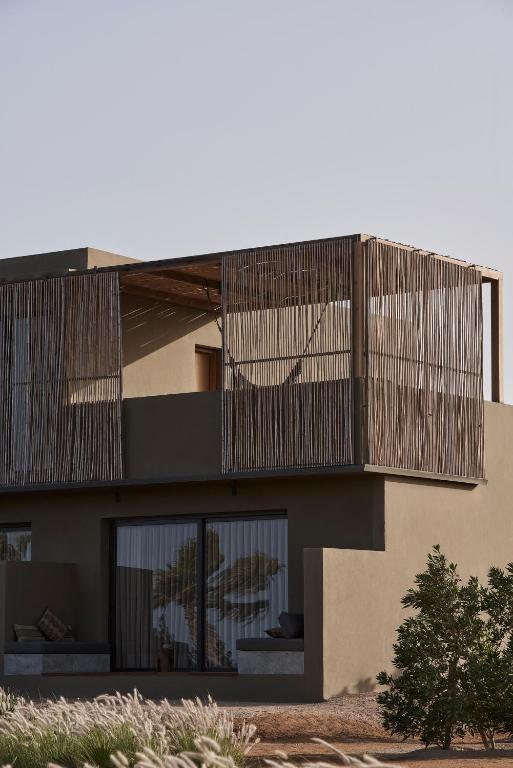
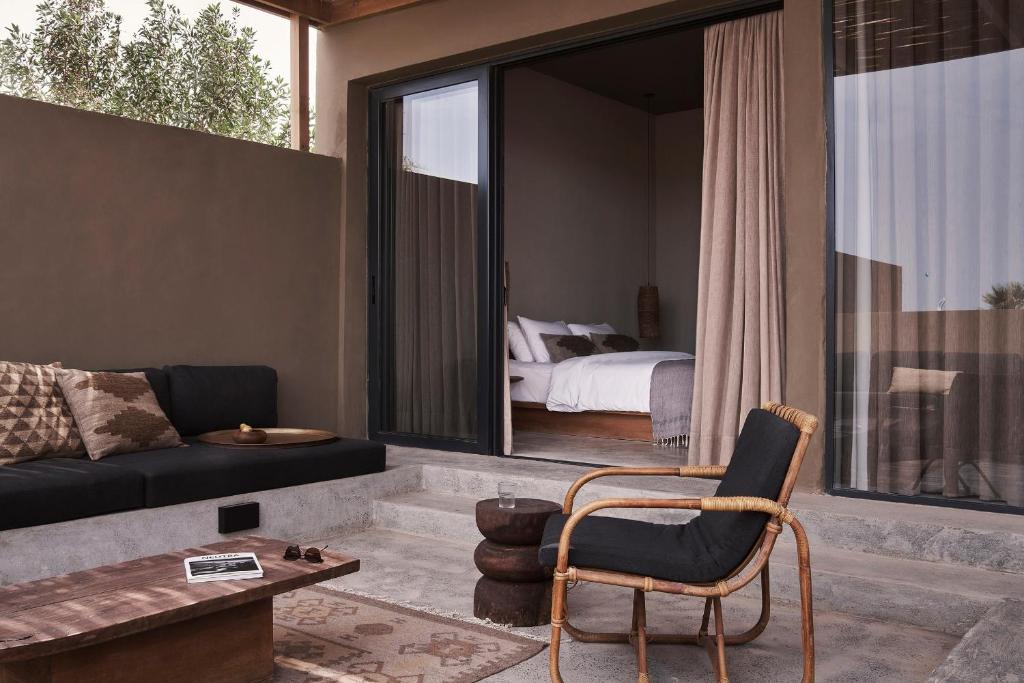
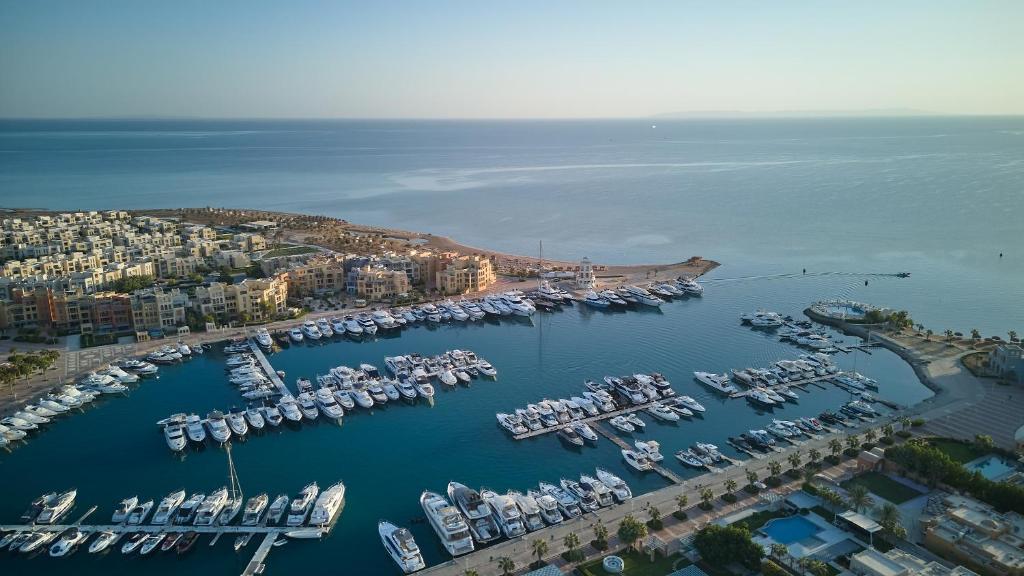
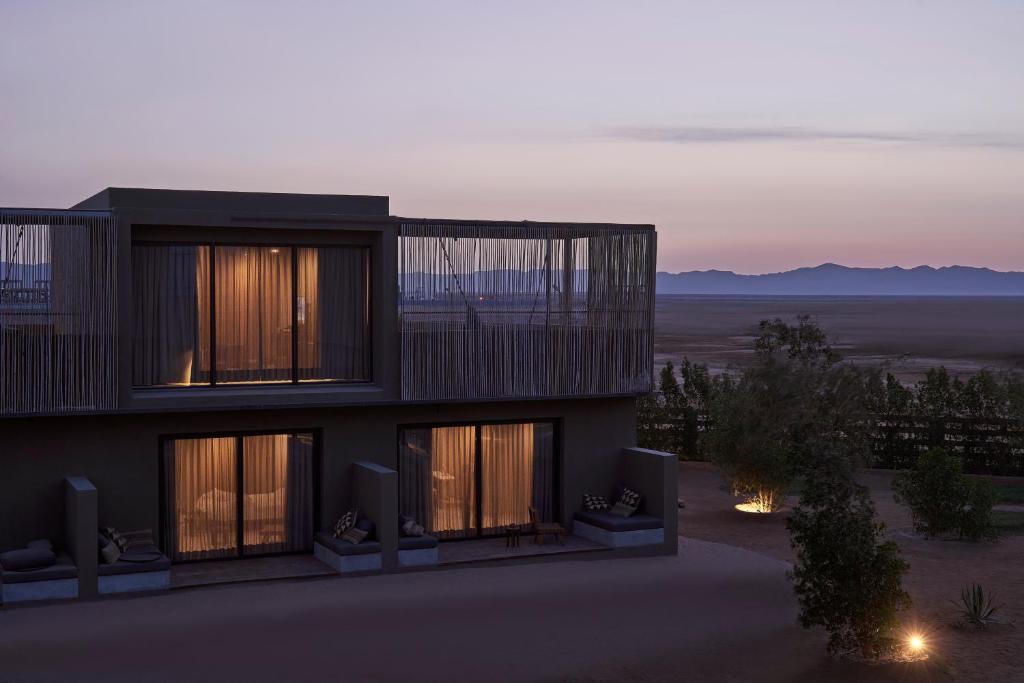
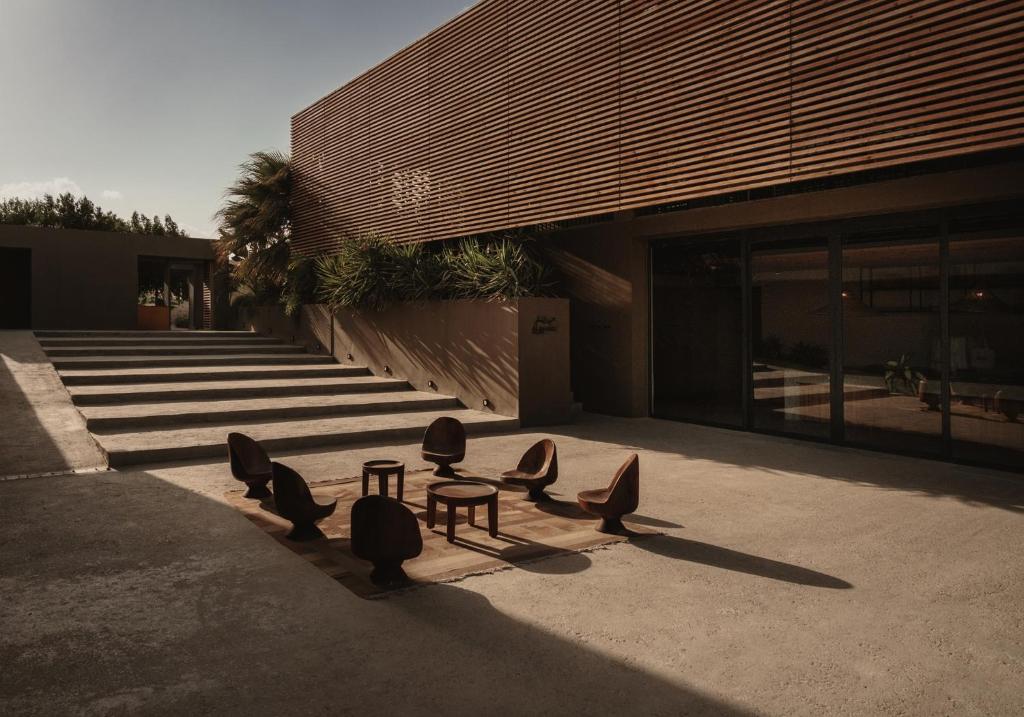
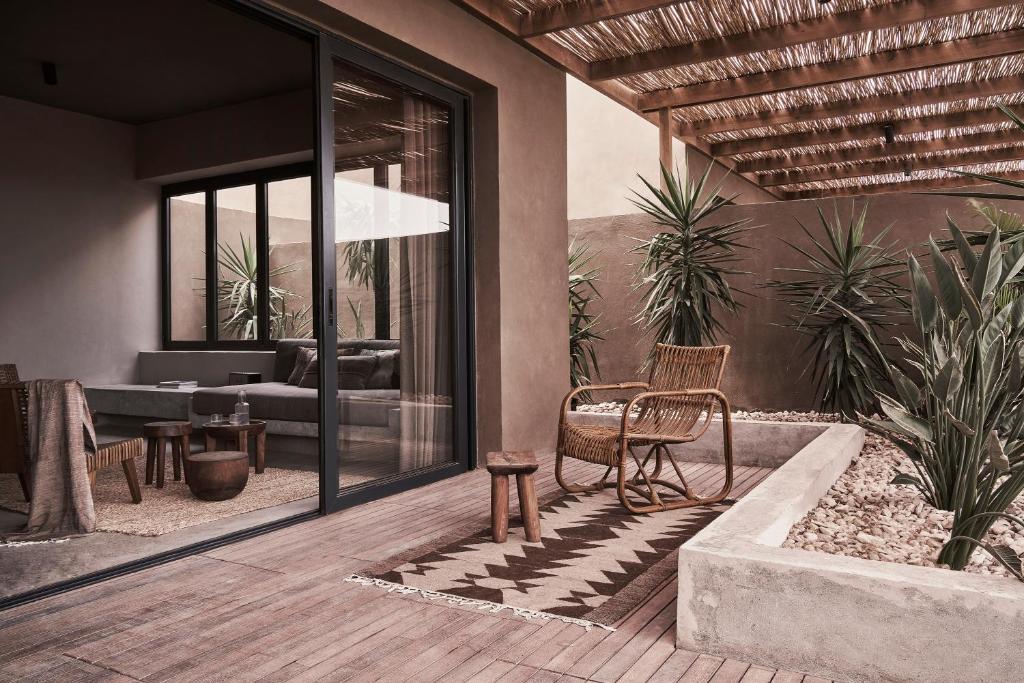
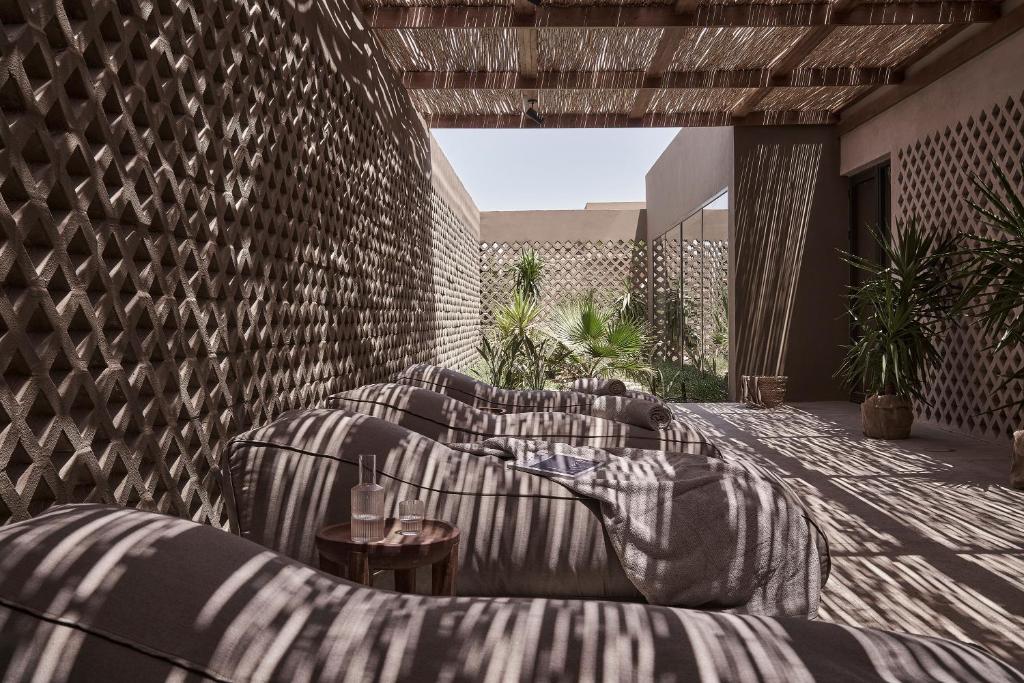
The Red Sea has no shortage of resorts. Casa Cook El Gouna feels as though somebody turned down the volume. Set on the outskirts of El Gouna, where desert dunes meet blue lagoons and the Red Sea, the hotel avoids the polished marble, monumental lobbies and decorative excess associated with many resorts along this coastline. Instead, Common Architecture, working within the creative direction of the Casa Cook brand, designed buildings intended to become background rather than spectacle. Simple geometric volumes sit low against the landscape. Timber screens filter the fierce Egyptian sun. Cacti become sculpture. Sandy browns, taupes and muted greys give way to startling blue water and sky. The architecture doesn’t compete with Egypt. It frames it.
Desert Modernism
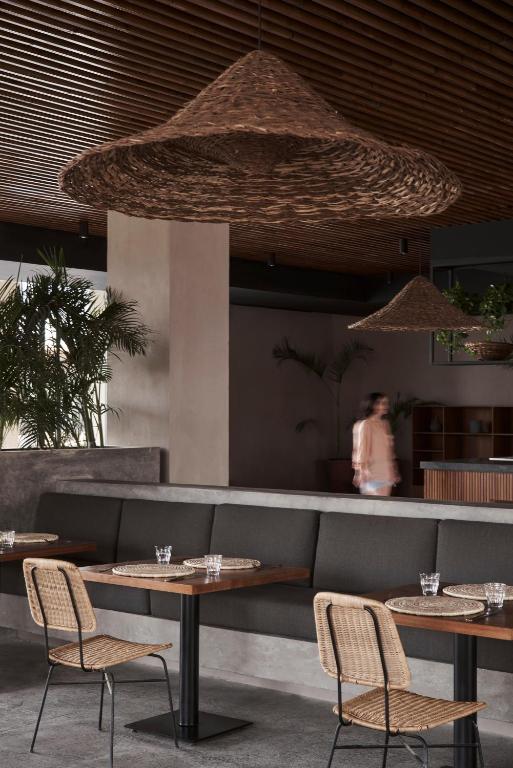
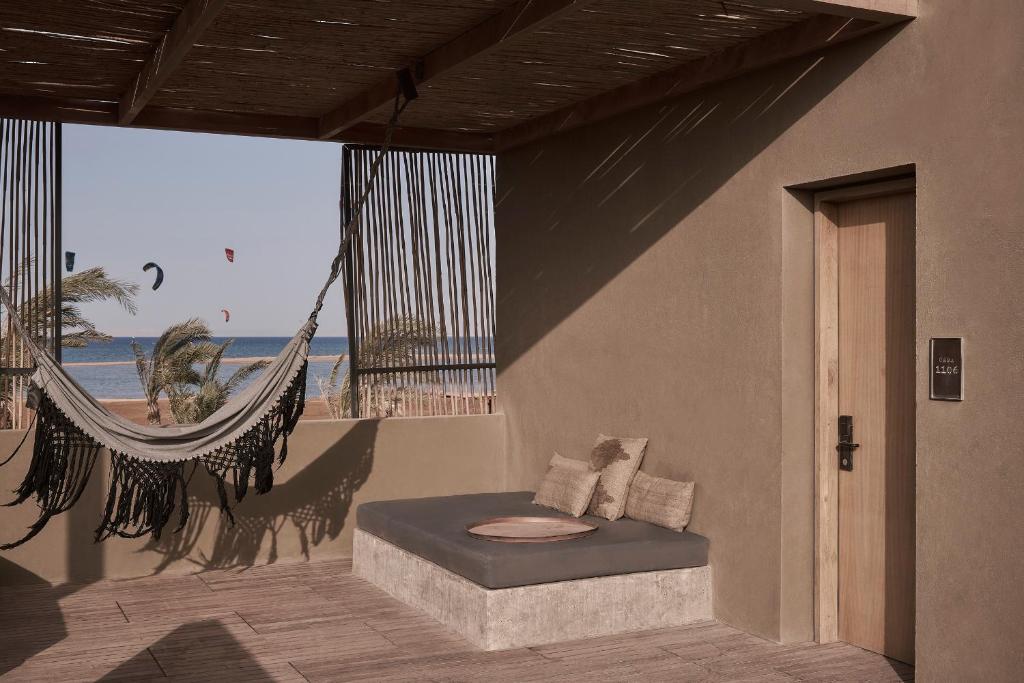
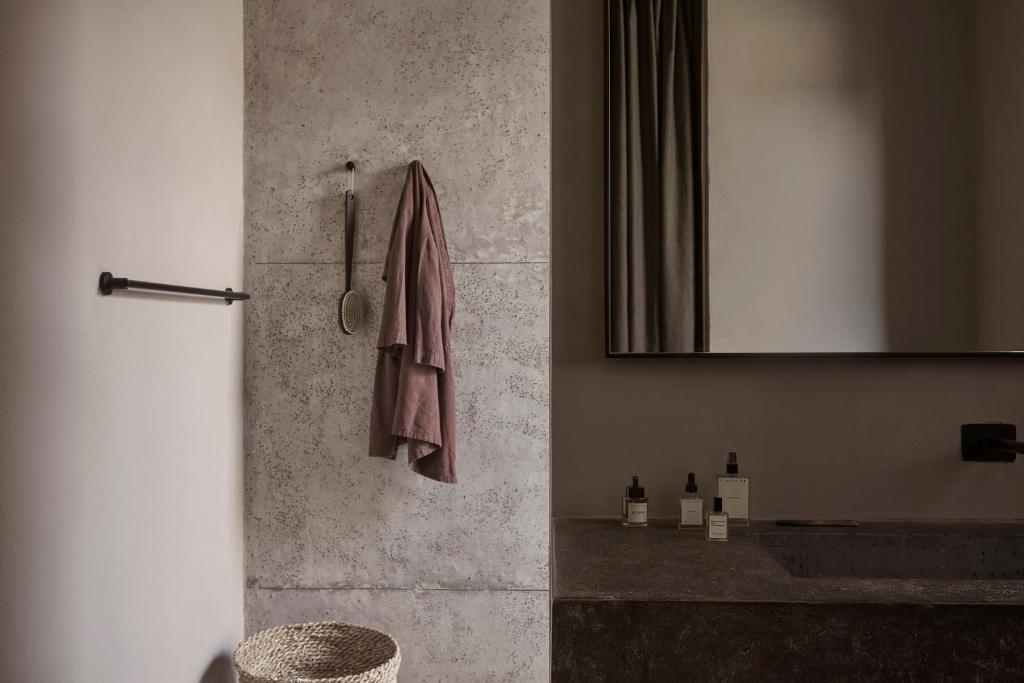
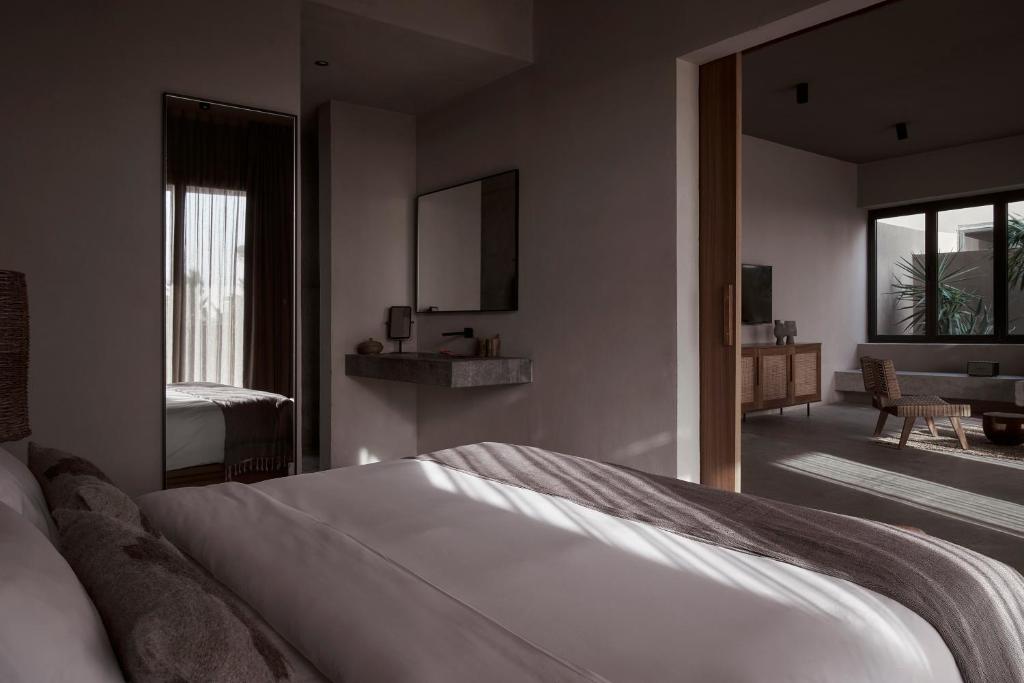
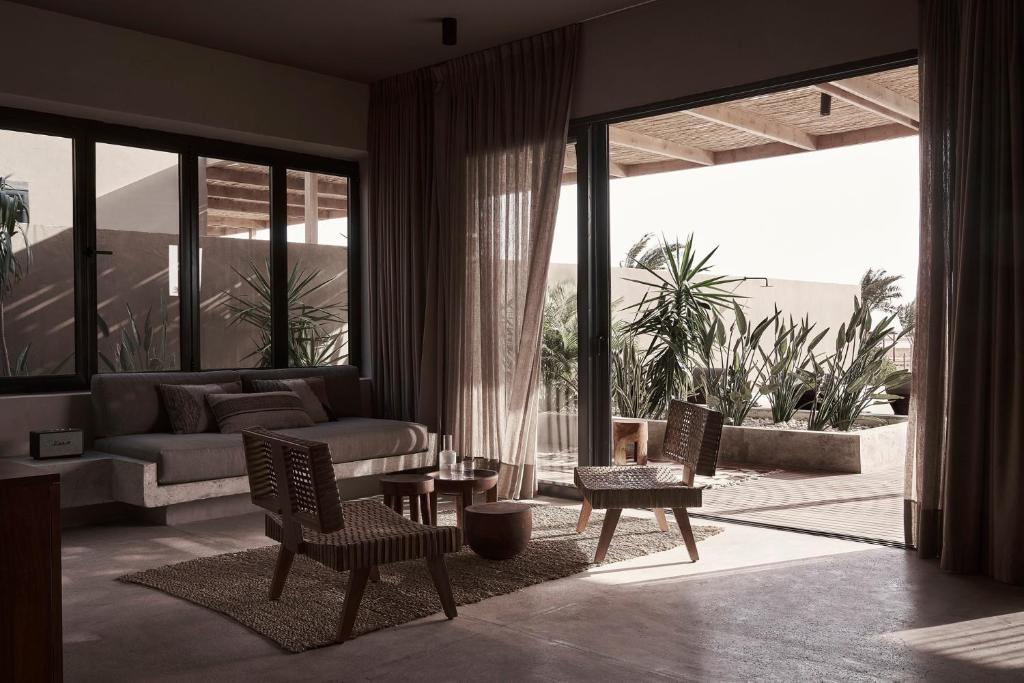
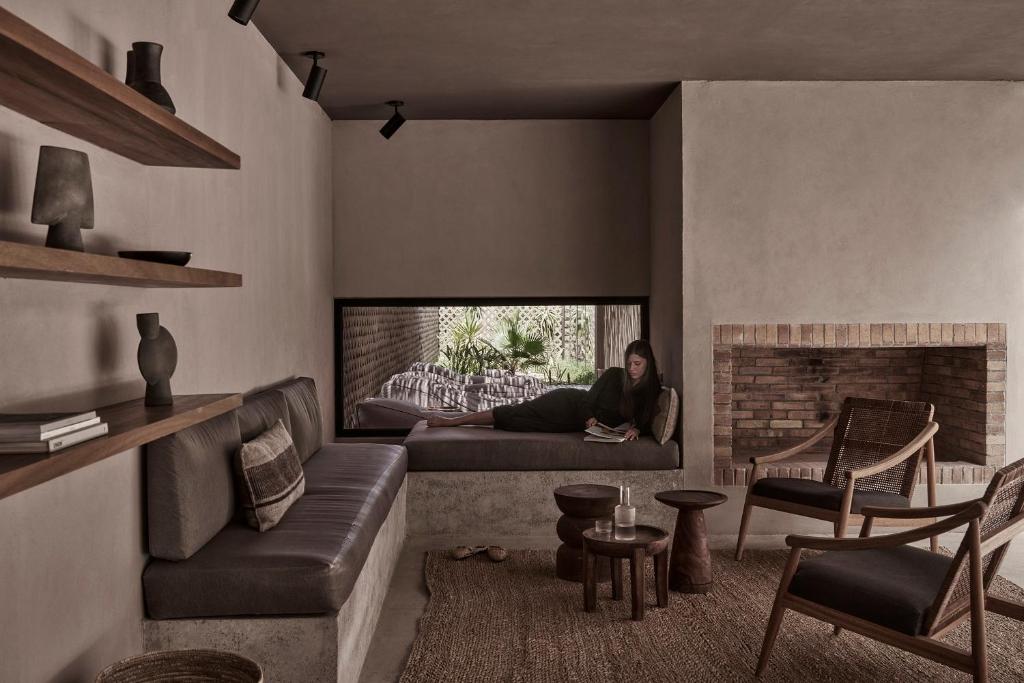
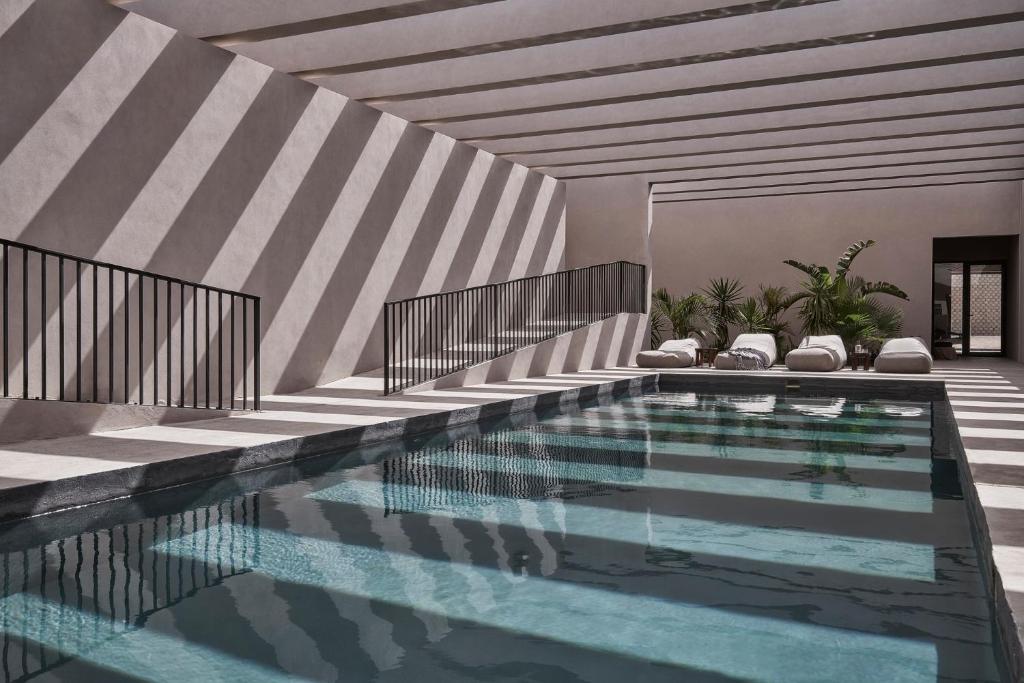
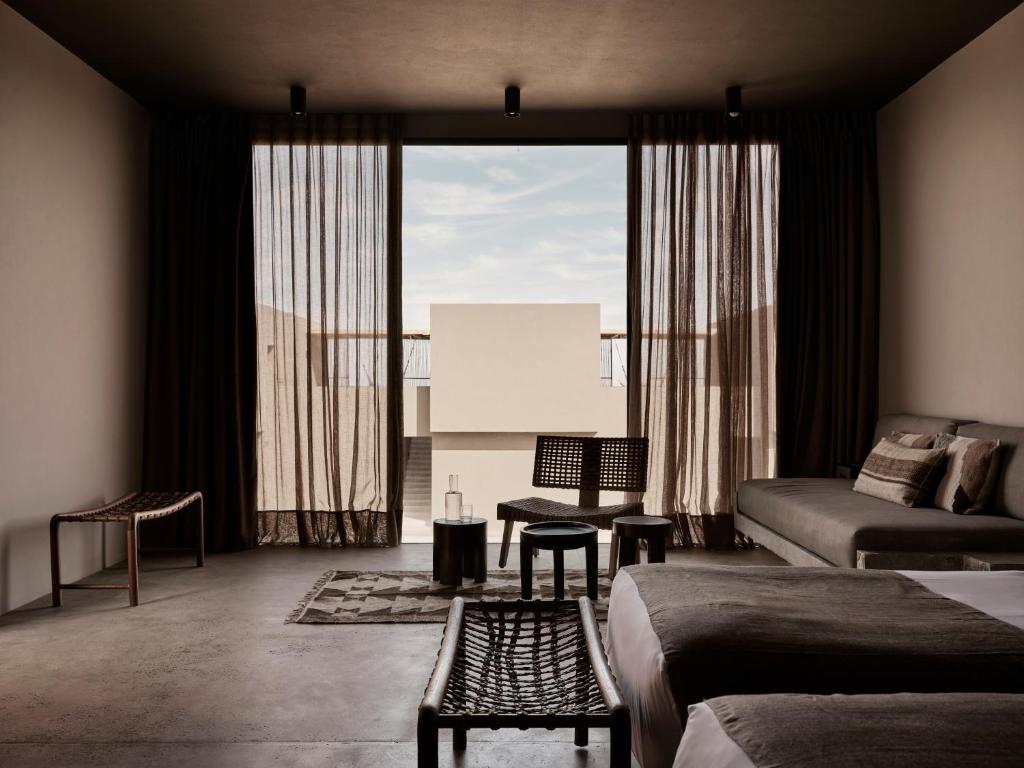
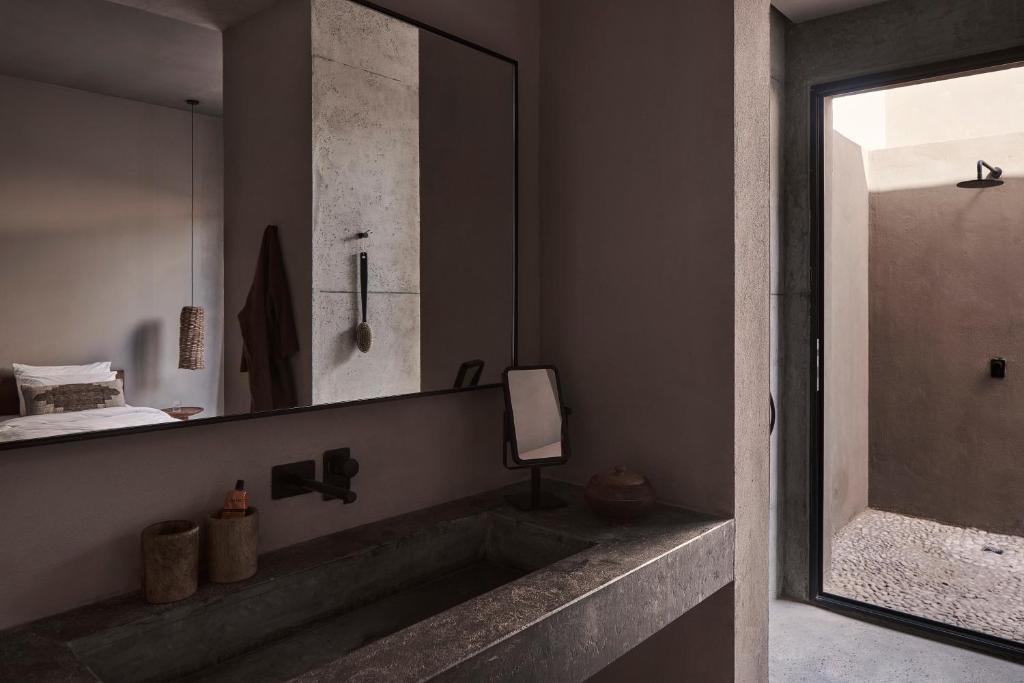
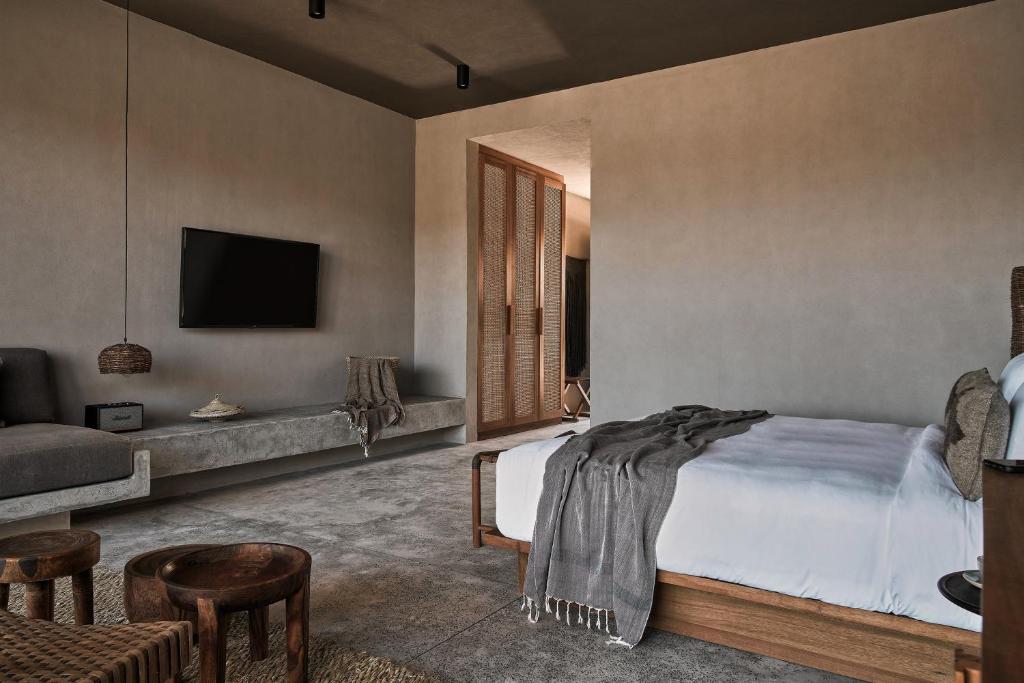
Look closely and the apparent simplicity becomes considerably more sophisticated. Rough plaster sits alongside raw timber. Tarnished brass meets woven rattan, natural linen and handmade ceramics. Stone floors and sculptural furniture introduce weight, while warmer oranges and earthy reds punctuate cooler greens and blues. Common Architecture deliberately worked with light and shadow as architectural materials. Deep openings, screens, courtyards and covered terraces change character as the sun moves overhead, producing sharp geometric shadows in the morning and softer, elongated forms towards evening. There is something almost primitive about it — but very little is accidental. It is modernism softened by handcraft and heat.
100 Rooms, No Shouting
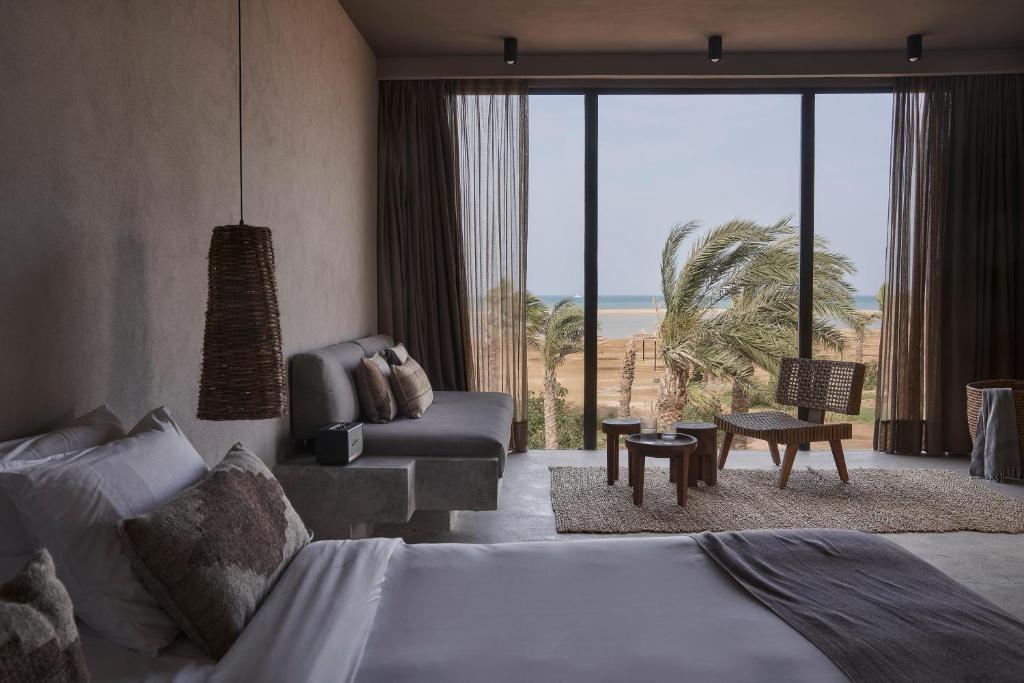
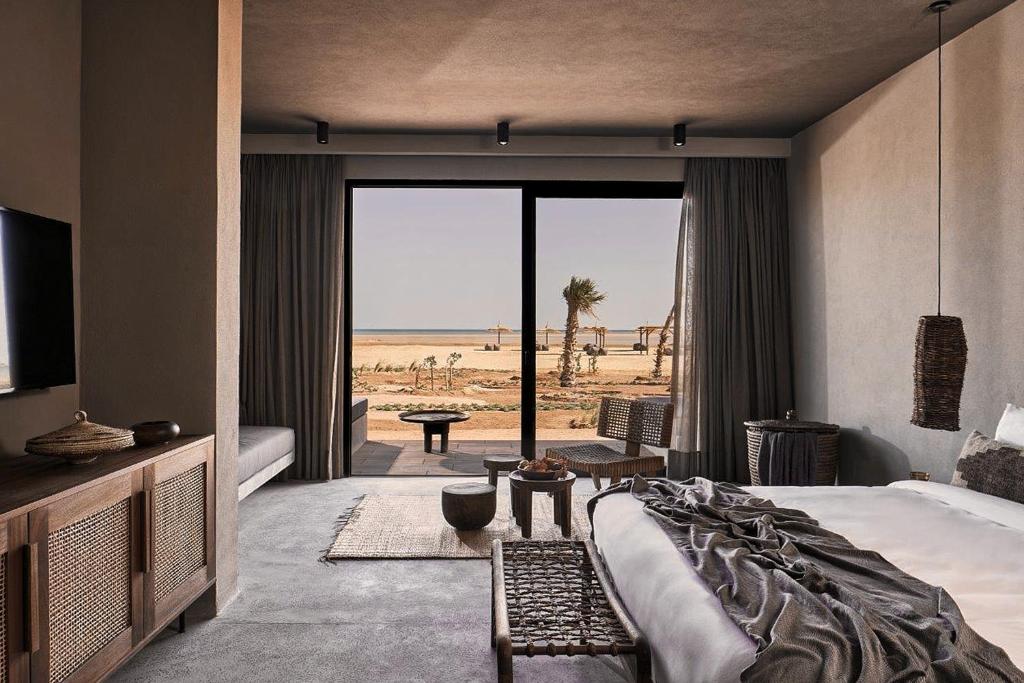
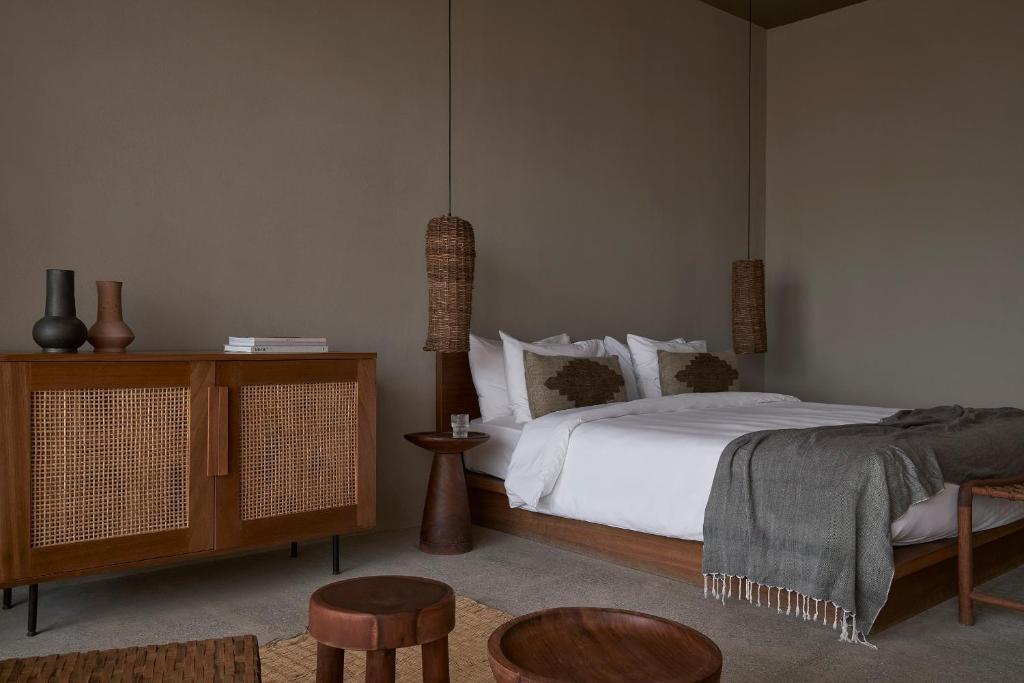
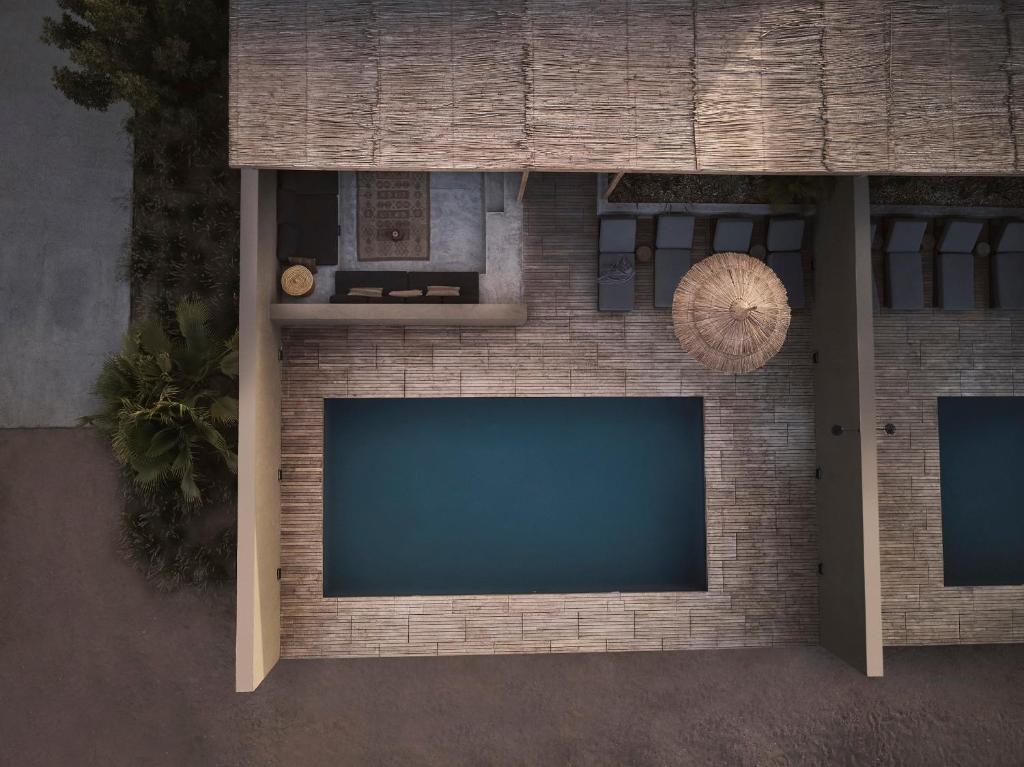
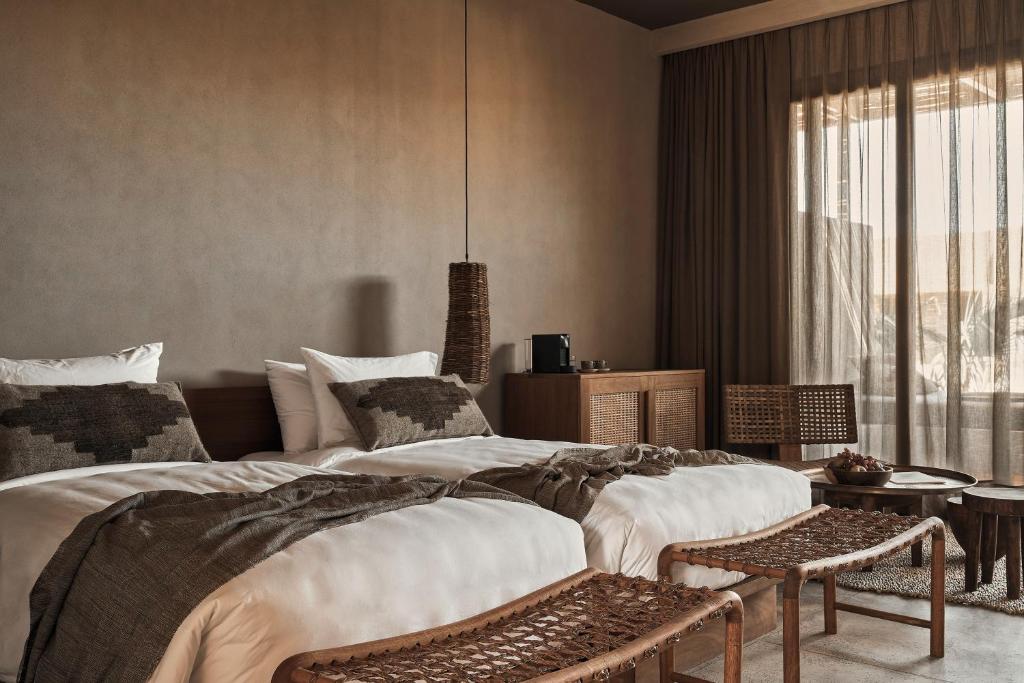
The same restraint continues through the hotel’s 100 guestrooms. Natural linen, hand-carved timber tables, woven lighting, patterned cushions and earthy ceramics create layers without clutter. Crisp white bedding provides contrast while terraces pull the rooms towards gardens, pools and water. And outdoor living matters here. Rooms connect visually with the landscape, while some categories add outdoor showers, shared pools or generous roof terraces. Two-bedroom villas come with their own private pools, creating small desert compounds for families or friends. Nothing is designed to shout for attention. Casa Cook’s luxury is primarily about space, texture and atmosphere.
Parea: Designing for Togetherness
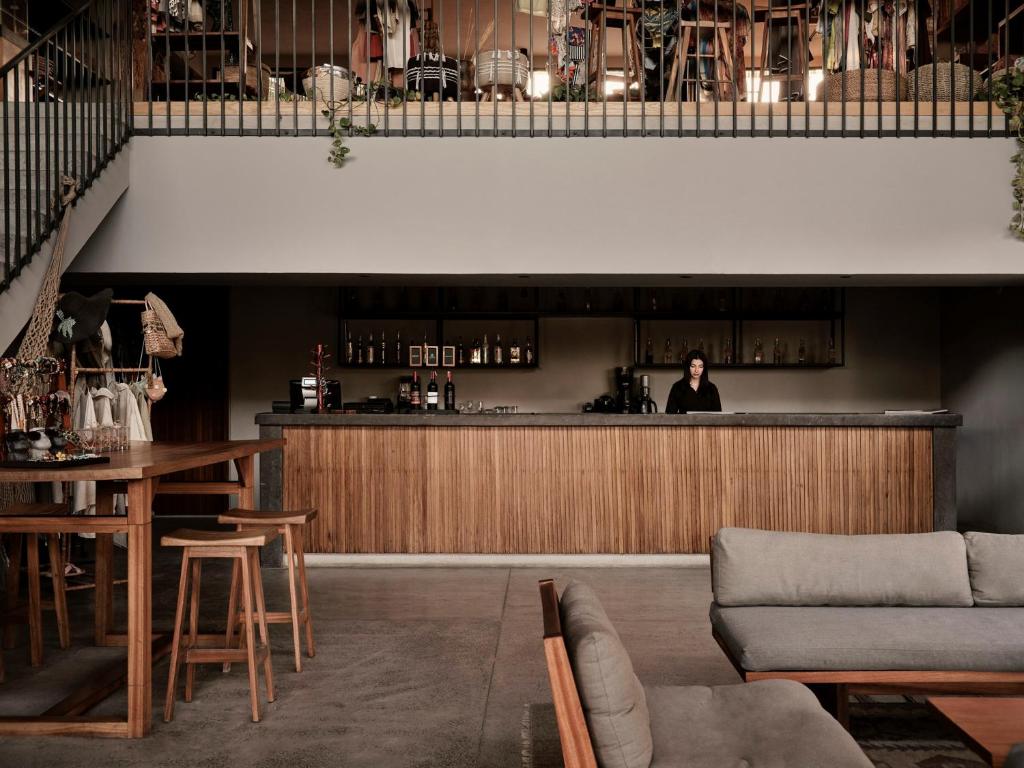
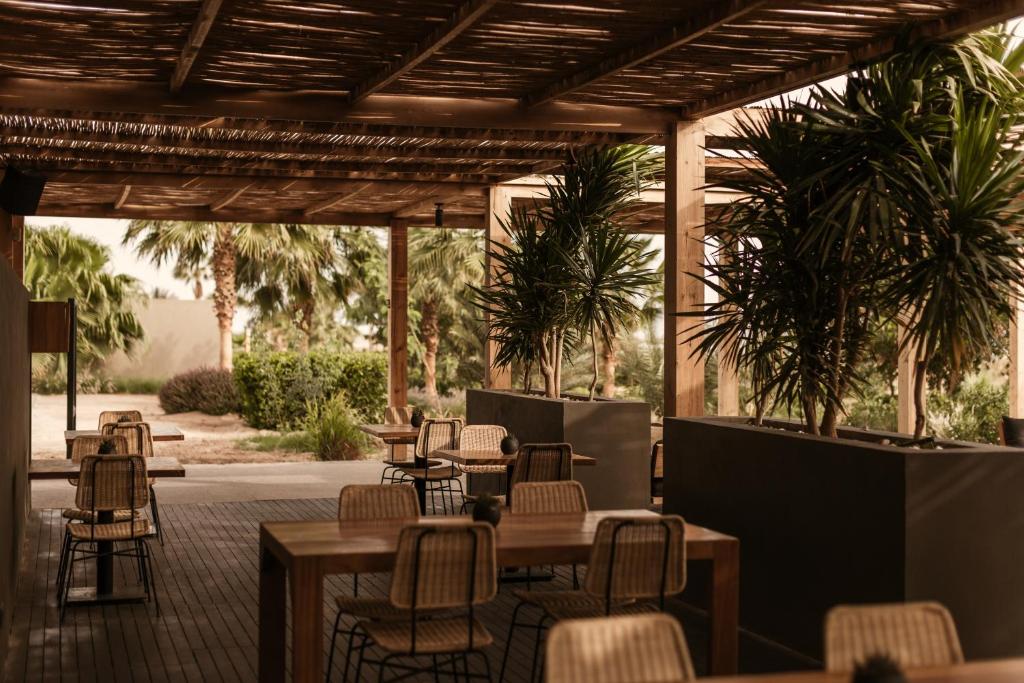
There is another idea running underneath all that good-looking plasterwork. Parea. The Greek word loosely describes the pleasure of spending time together — friends sharing food, conversation and experiences without much concern for the clock. It has become central to Casa Cook’s philosophy, and in El Gouna it influences how the resort is organised. Terraces overlook communal areas. Secluded corners remain visually connected to gardens and pools. Long tables encourage strangers to share space. Routes through the property repeatedly lead guests back towards places where something might be happening. Privacy exists. But isolation isn’t the point.
An Egyptian Soul Kitchen
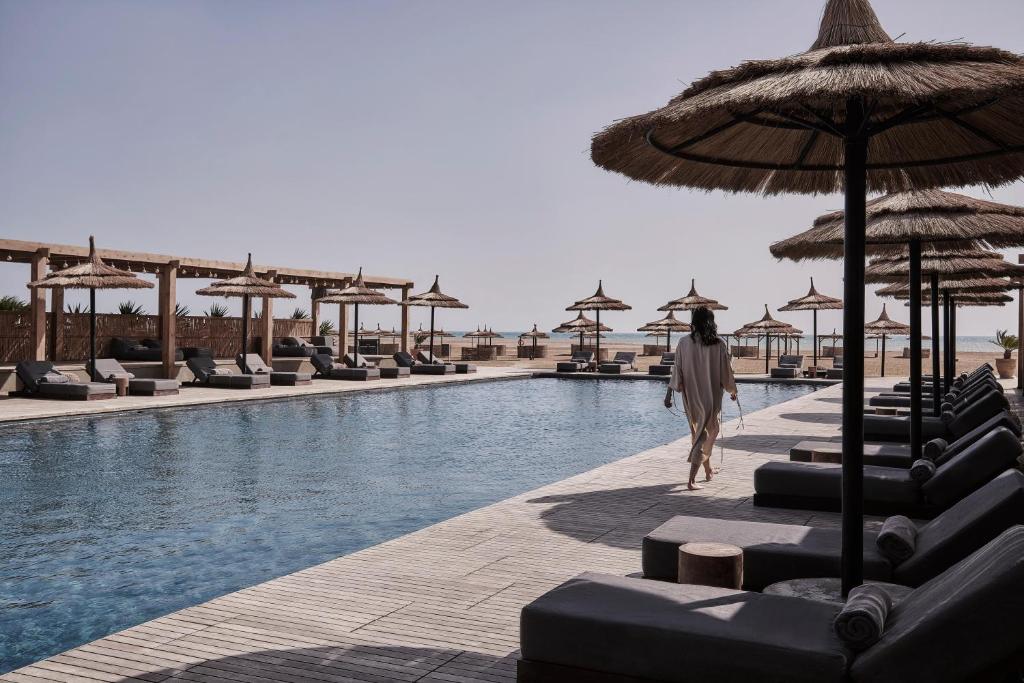
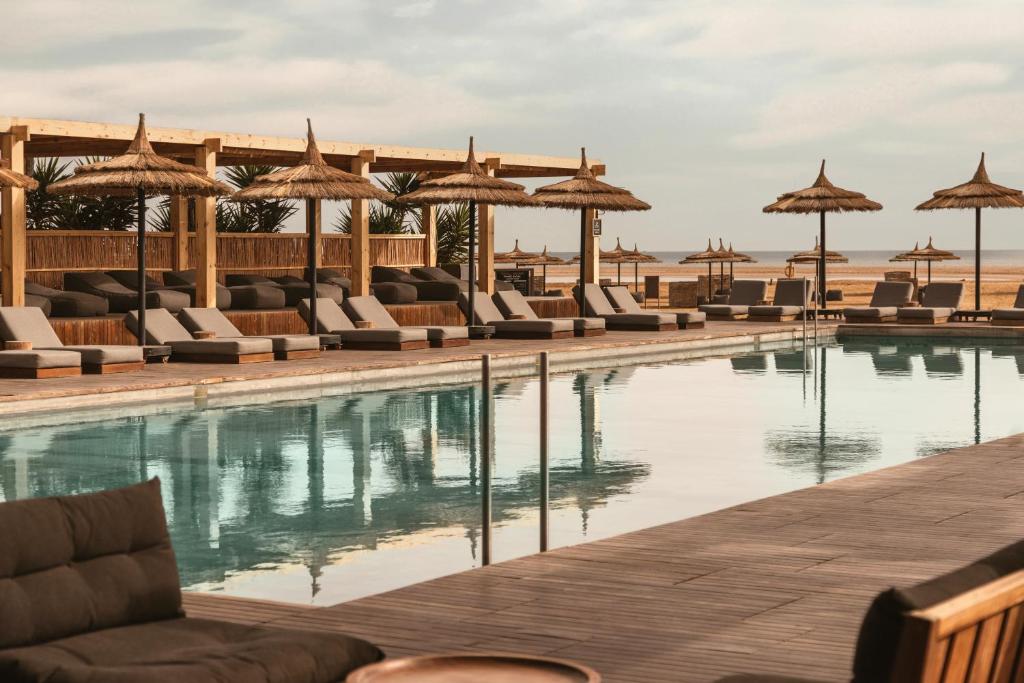
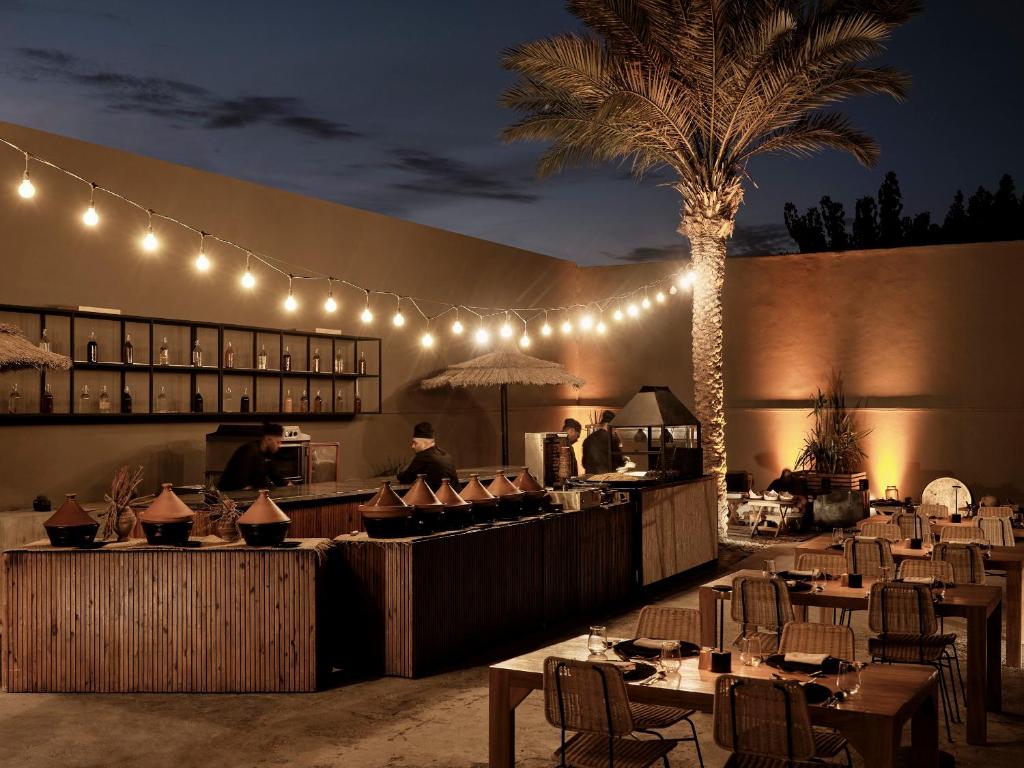
The Kitchen Club is where parea becomes edible. Built around a courtyard with long communal tables, it mixes Arabic flavours with a broader international kitchen rather than attempting formal resort dining. It feels deliberately relaxed: somewhere breakfast can drift into coffee and dinner can continue long after the plates have disappeared. Closer to the water, the beach and pool become another social centre, with cocktails, casual food and views of kite surfers racing across the Red Sea. Here again, architecture is doing some of the work. There isn’t a hard division between restaurant, bar, pool and landscape. One slips into another.
Wellness Without the White Robe Formality
Casa Cook’s version of wellness follows much the same philosophy. The spa combines a pool, two saunas, steam room, plunge pool and hammam, with treatments influenced by Oriental traditions. Its muted surfaces, natural materials and controlled light make the architecture itself part of the decompression. Yoga fits naturally into the equation. So does doing absolutely nothing. This is not wellness measured in treatment menus and medical terminology. It is the simpler proposition of heat, water, movement, sleep and slowing down.
Beyond the Lagoon
Eventually, though, the landscape beyond those beautifully plastered walls becomes difficult to ignore. Horse riding follows the lagoons. Catamarans head onto the Red Sea. Kite surfers exploit the wind. Jeep and quad-bike journeys push inland into a desert that makes the hotel’s earthy colour palette suddenly make perfect sense. And that contrast is perhaps Casa Cook El Gouna’s greatest asset. One moment you’re surrounded by linen, rattan and chilled music. The next there is virtually nothing. Rock. Sand. Sky.
Why It Works
Casa Cook El Gouna demonstrates how little a resort actually needs to say. Common Architecture created what lead architect Mark Bellingan calls “background buildings” — architecture that provides the setting for an experience rather than demanding to become the experience itself. That restraint is precisely what makes the hotel memorable. The rattan, rough plaster, handmade ceramics and perfectly rumpled linen are beautiful, certainly. But remove the styling and the fundamental idea remains strong: buildings positioned around landscape, shade, water, human connection and the movement of the sun. The Red Sea supplies the blue. The desert supplies everything else.