DDD Hotel, Tokyo, Japan
Japanese minimalism, contemporary art, and creative culture transform a former business hotel in East Tokyo
Why DNA Hotels Loves It
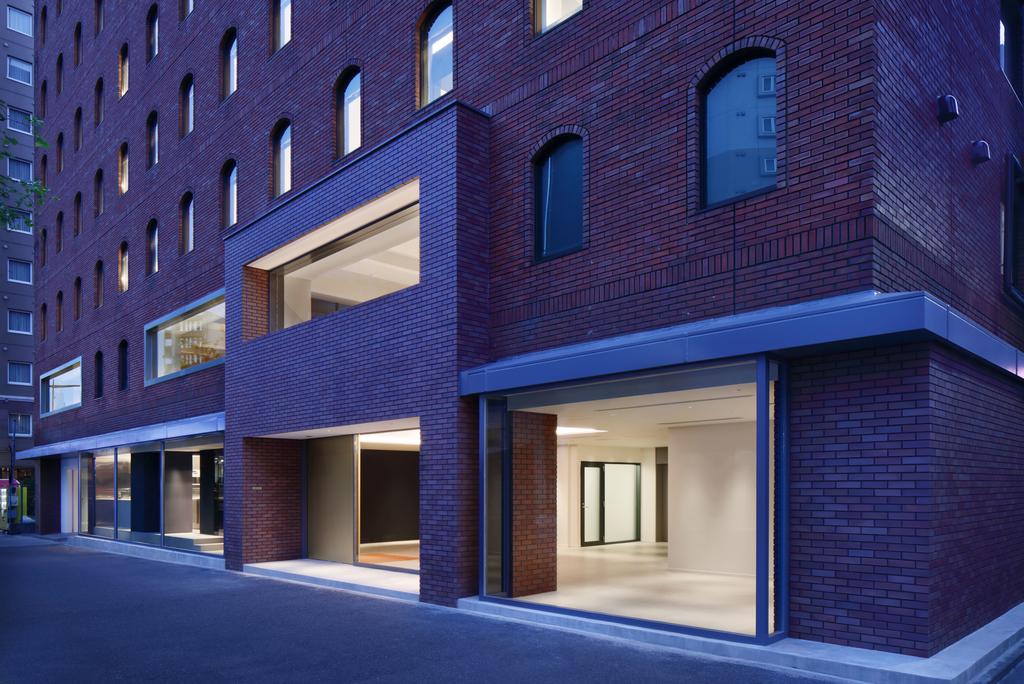
● A 37-year-old family-run business hotel radically reinvented by Yuta Takeda as a 122-room creative hub for both travelers and Tokyo locals.
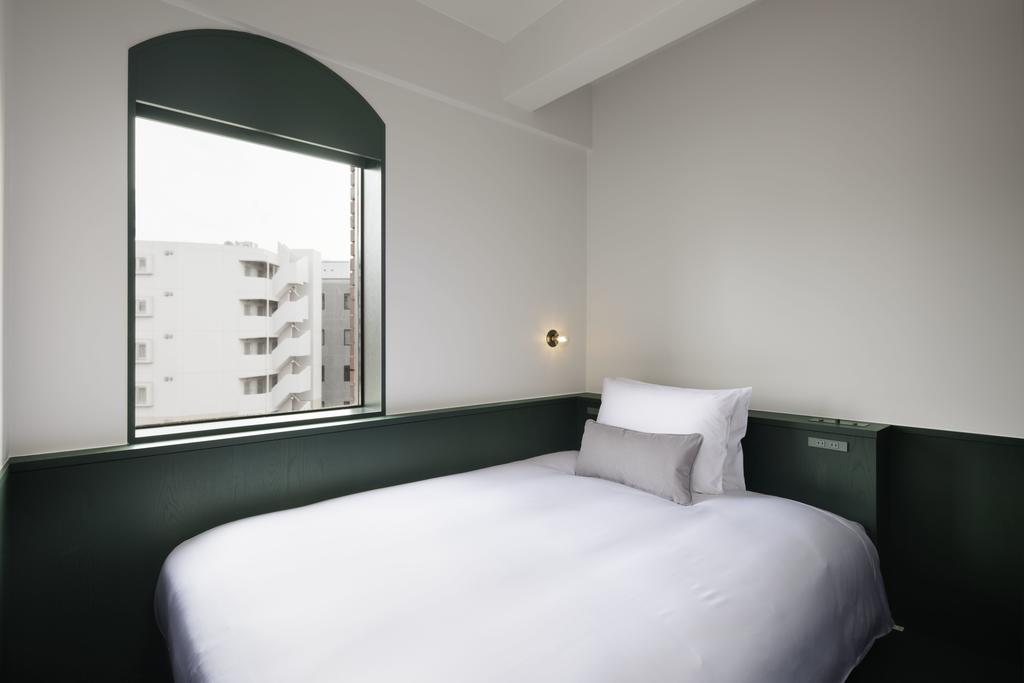
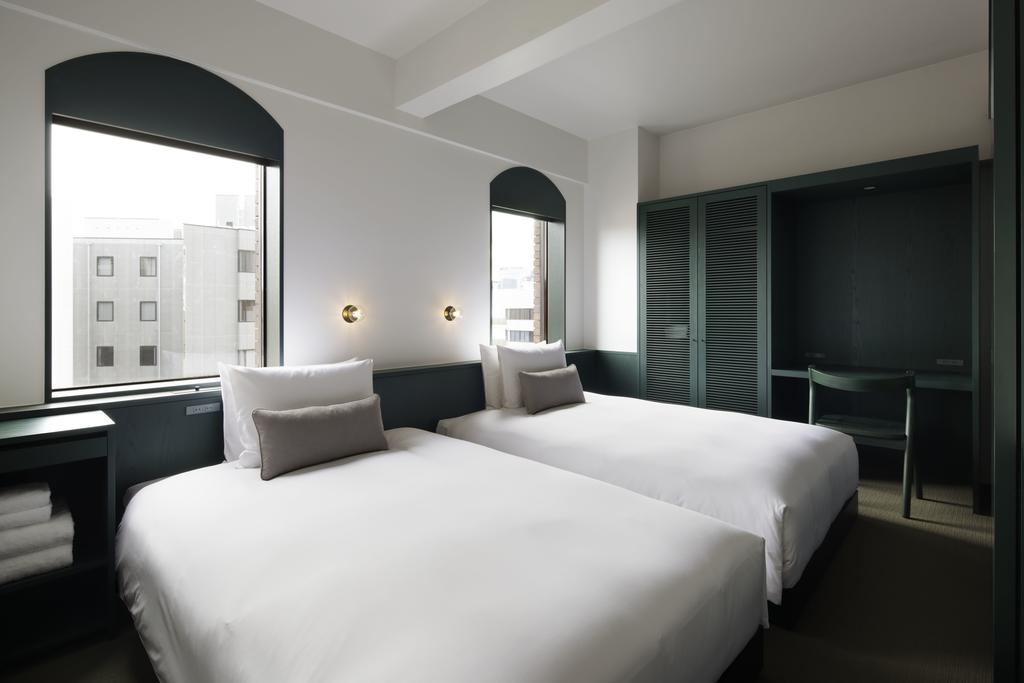
● Koichi Futatsumata’s beautifully controlled interiors use moss-green timber, midnight-blue textiles, filtered light, and industrial details to create minimalism with real atmosphere.
● Abno lounge, Parcel gallery, and the experimental Nôl kitchen turn the property into something far more interesting than accommodation alone.
Rethinking the Business Hotel
Tokyo has perfected the functional business hotel. DDD Hotel asks what happens when you keep the efficiency but replace the anonymity. The story began when Yuta Takeda proposed transforming his family’s 37-year-old hotel in Bakurocho, East Tokyo’s traditional apparel wholesale district, into something more culturally ambitious. The name explains the idea: Design, Development, Destination. Rather than simply modernizing an ageing property, Takeda wanted to rethink what an urban hotel could contribute to its neighbourhood. The result is 122 rooms surrounded by art, food, design, and spaces deliberately created for locals as much as overnight guests.
Minimalism in Moss Green
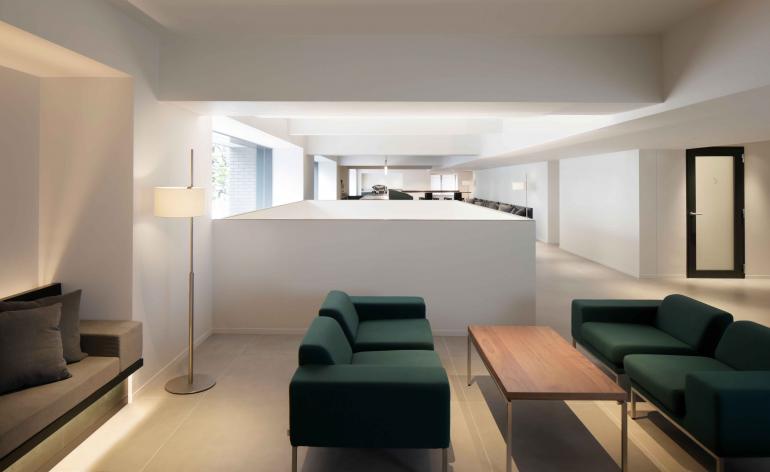
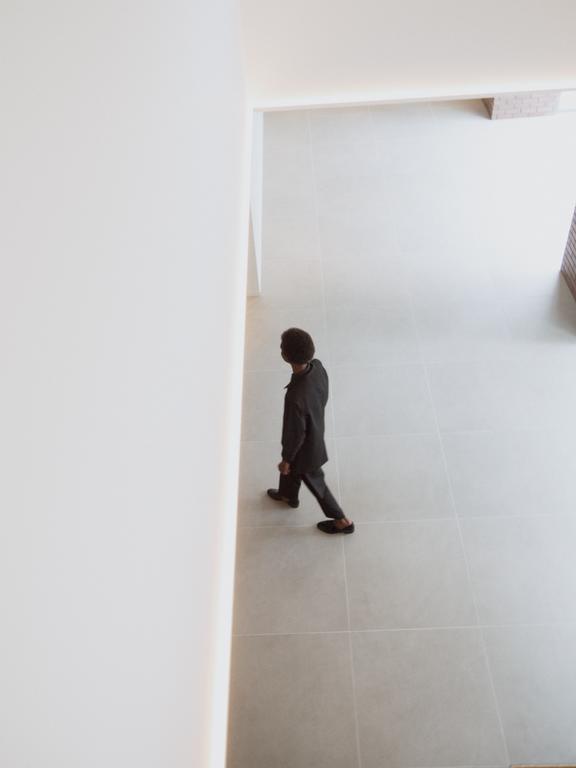
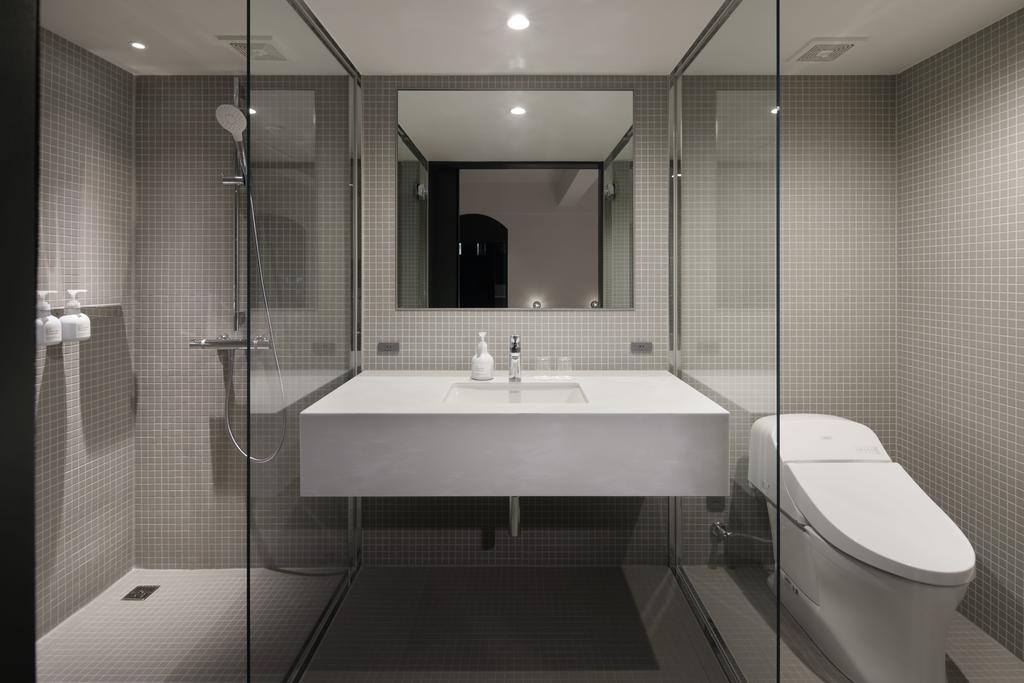
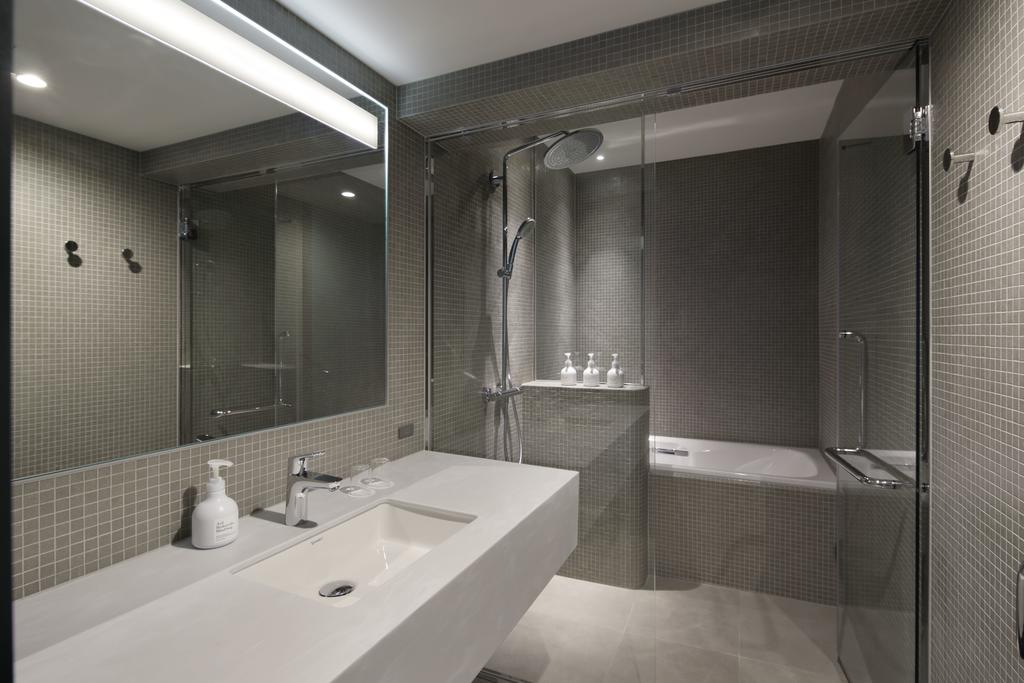
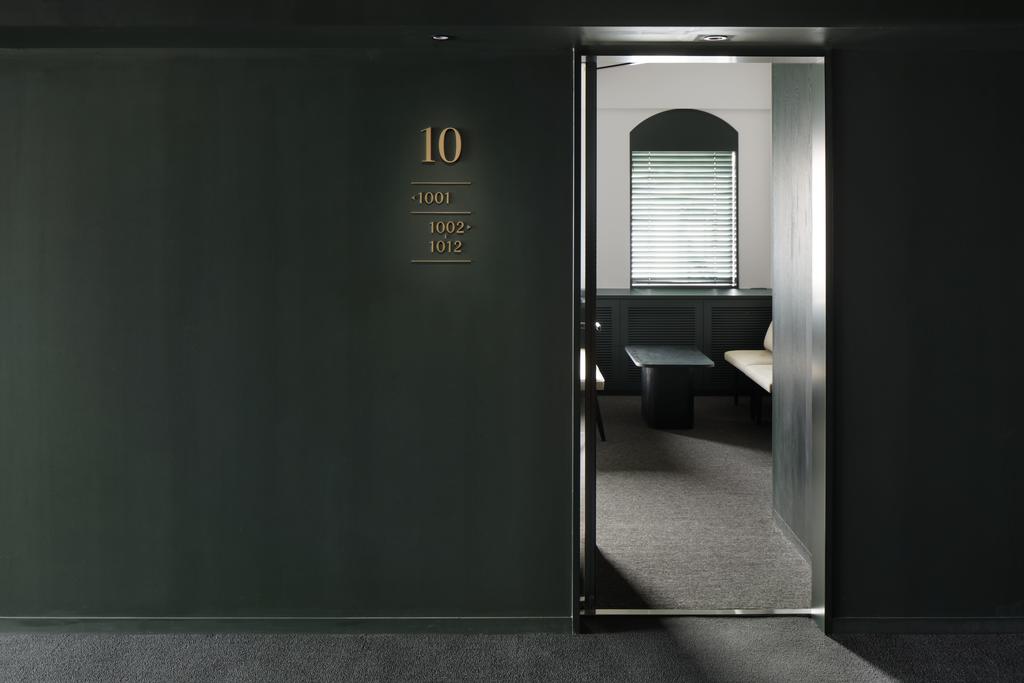
Designer Koichi Futatsumata gives DDD its remarkably coherent visual identity. Moss-green stained timber panels, wooden blinds, jalousie doors, deep blue carpeting, and carefully controlled lighting run through the interiors, creating spaces that feel minimal without becoming clinical. There’s richness in the restraint. Futatsumata uses relatively few materials, but pays obsessive attention to how they meet, how light falls across them, and how color changes the atmosphere. It’s Japanese minimalism with depth rather than emptiness.
122 Rooms, Stripped Back
The guestrooms are deliberately compact and uncomplicated. Furniture is integrated into the architecture. Storage is discreet. Colors remain subdued. Lighting is soft and precise. Nothing unnecessary competes for space. Rather than attempting to disguise the dimensions of a Tokyo hotel room, Futatsumata uses proportion and materiality to make compactness feel intentional. The result is calm, functional, and beautifully resolved—the business hotel reduced to its essentials and then rebuilt with considerably better taste.
Abno: The Hotel Living Room
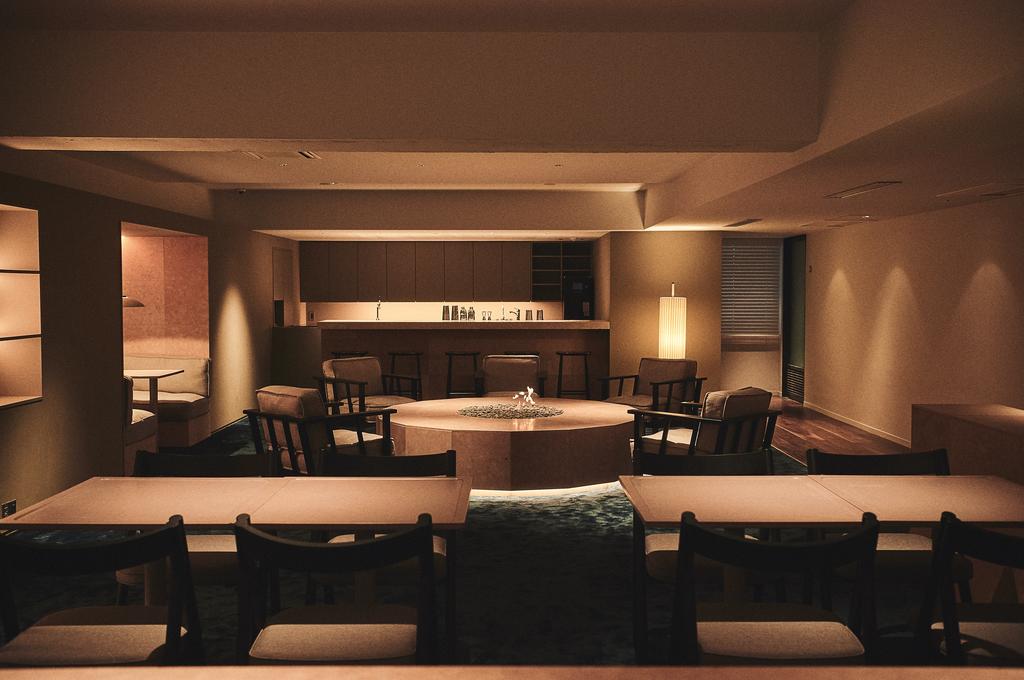
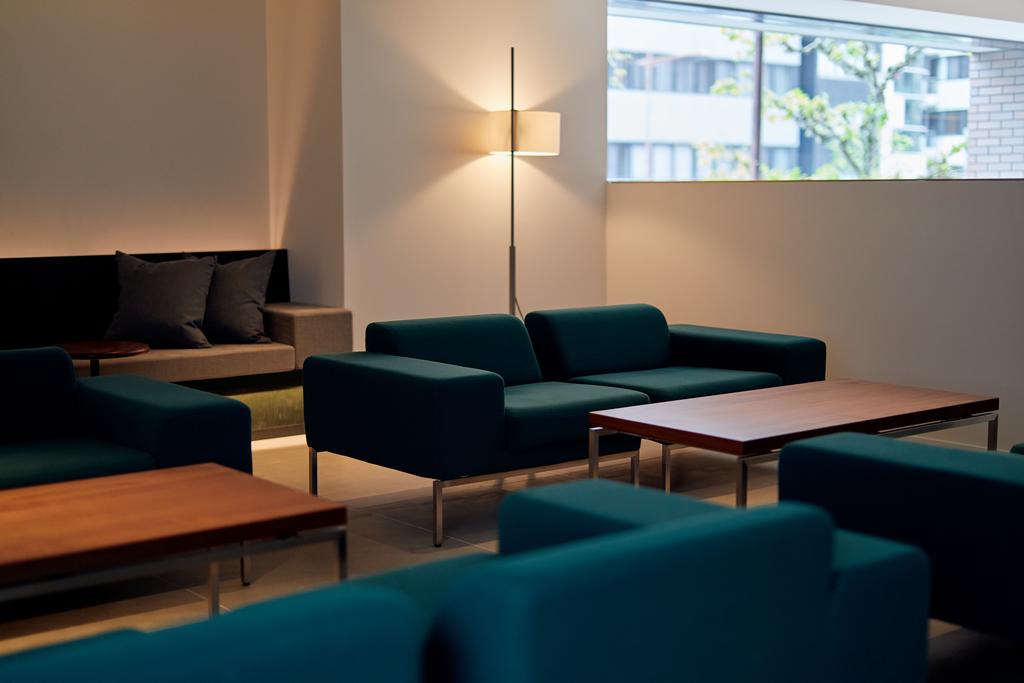
The social heart of DDD is Abno. Part café, part bar, part lounge, and part workspace, it functions as the kind of public living room that many lifestyle hotels promise but few manage to make convincing. A bespoke gas fireplace, midnight-blue carpeting, timber, and comfortable seating soften the architecture and encourage people to stay. Coffee and laptops define one part of the day. Drinks and conversation take over later. Crucially, the room isn’t populated exclusively by hotel guests. Locals use it too, allowing DDD to participate in the neighbourhood rather than simply observe it.
Art in the Building
Parcel adds another dimension. The contemporary gallery occupies part of the hotel complex and brings experimental art directly into DDD’s cultural ecosystem. Exhibitions introduce guests to artists they may never encounter through Tokyo’s larger institutional museums. It reinforces the original idea behind the project. Culture isn’t an amenity added to make the hotel more fashionable. It is part of what the building is for.
Eight Seats at Nôl
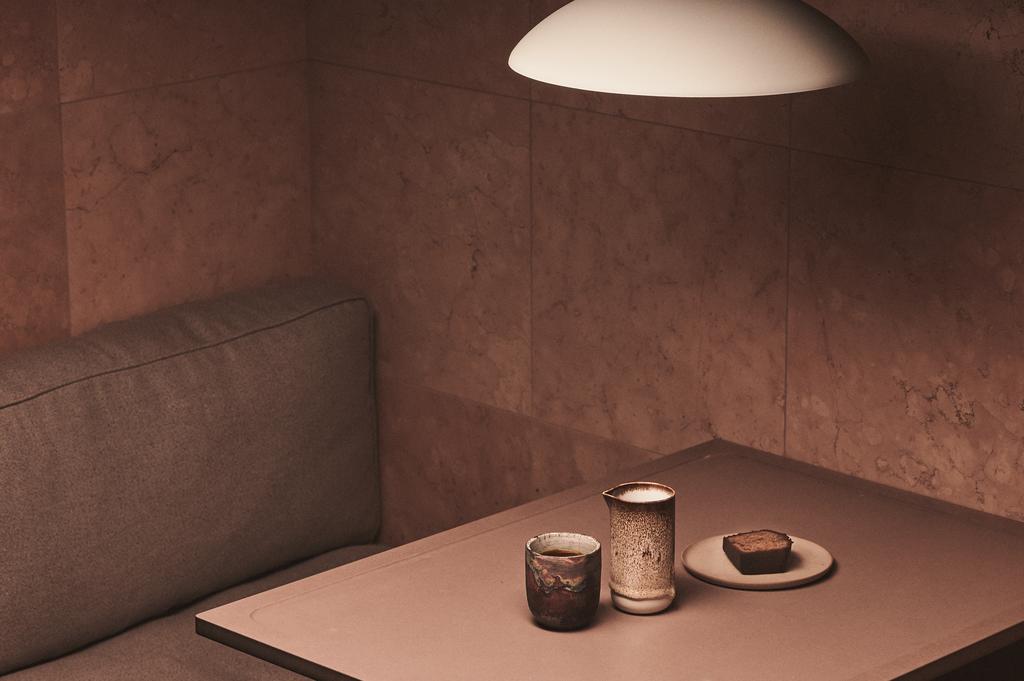
Then things become even more experimental. Nôl was conceived as a tiny eight-seat kitchen, laboratory, and restaurant rather than a conventional hotel dining room. Its architecture deliberately changes register. Warm green timber gives way to rough black powder-coated surfaces, dark ceilings, and industrial lighting. The atmosphere becomes harder, darker, and more intense. The contrast is striking. Food becomes another creative discipline within the hotel rather than a predictable hospitality requirement.
East Tokyo, Not Shibuya
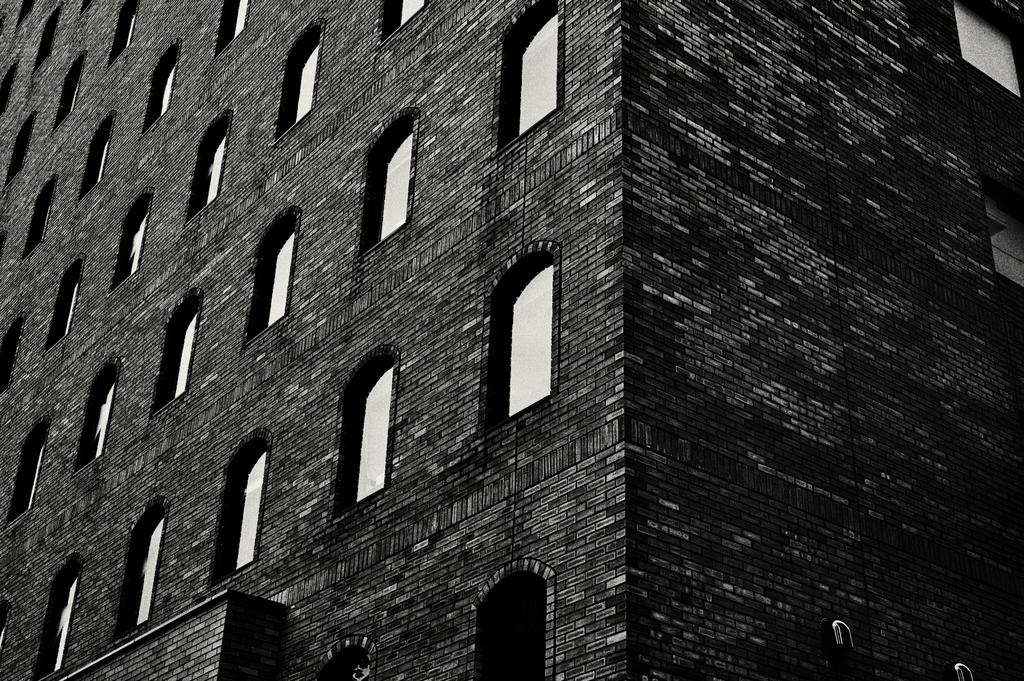
Bakurocho is important to DDD’s identity. This historically commercial district of wholesalers and textile businesses offers a very different Tokyo from the familiar intensity of Shibuya or Shinjuku. In recent years, old commercial buildings and warehouses across East Tokyo have increasingly attracted galleries, cafés, studios, and independent creative businesses. DDD feels part of that transition. It doesn’t merely offer access to the neighbourhood. Its reinvention reflects what is happening around it.
Why It Works
DDD Hotel demonstrates how much can happen when a conventional hotel is reconsidered rather than simply renovated. Koichi Futatsumata’s precise interiors provide the visual discipline, while Abno, Parcel, and Nôl bring art, food, work, and local life into the equation. What began as an ageing family business hotel has become a convincing piece of contemporary East Tokyo—proof that good urban hospitality doesn’t need more luxury, but a better reason to exist.