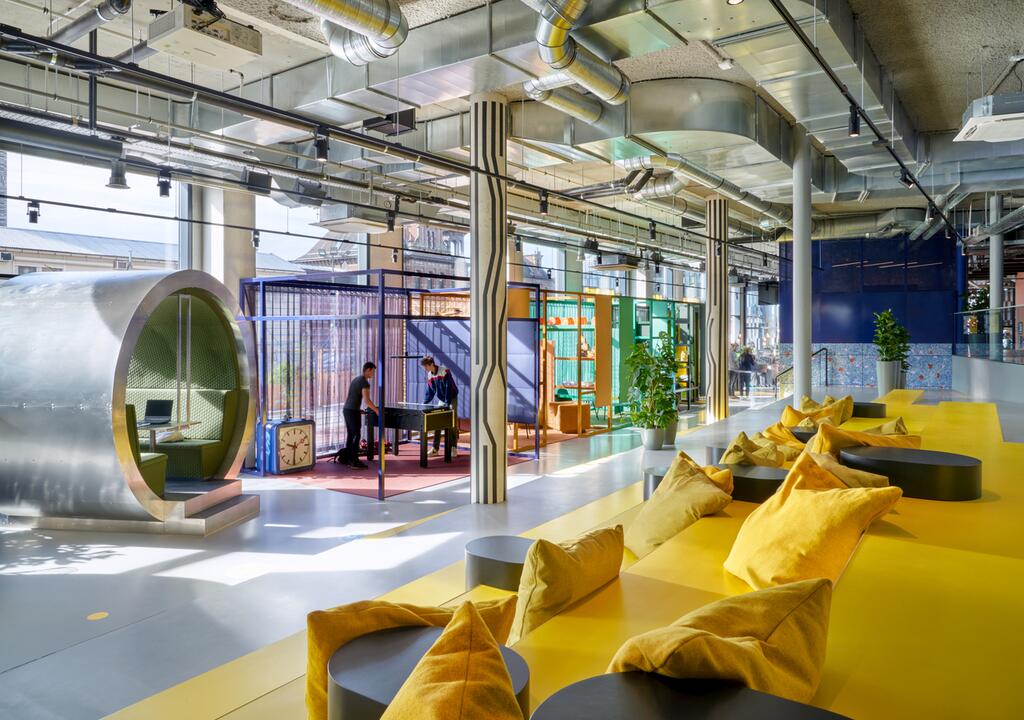
The Social Hub Delft – The Netherlands
Where student life, design and innovation collide in one very social experiment.
Why DNA Hotels Loves It
● A hybrid hotel, student residence and co-working hub that challenges the traditional idea of what a hotel should be.
● Interiors take their cues from Delft’s engineering and technology culture, turning grids, data, aerodynamics and experimentation into a playful design language.
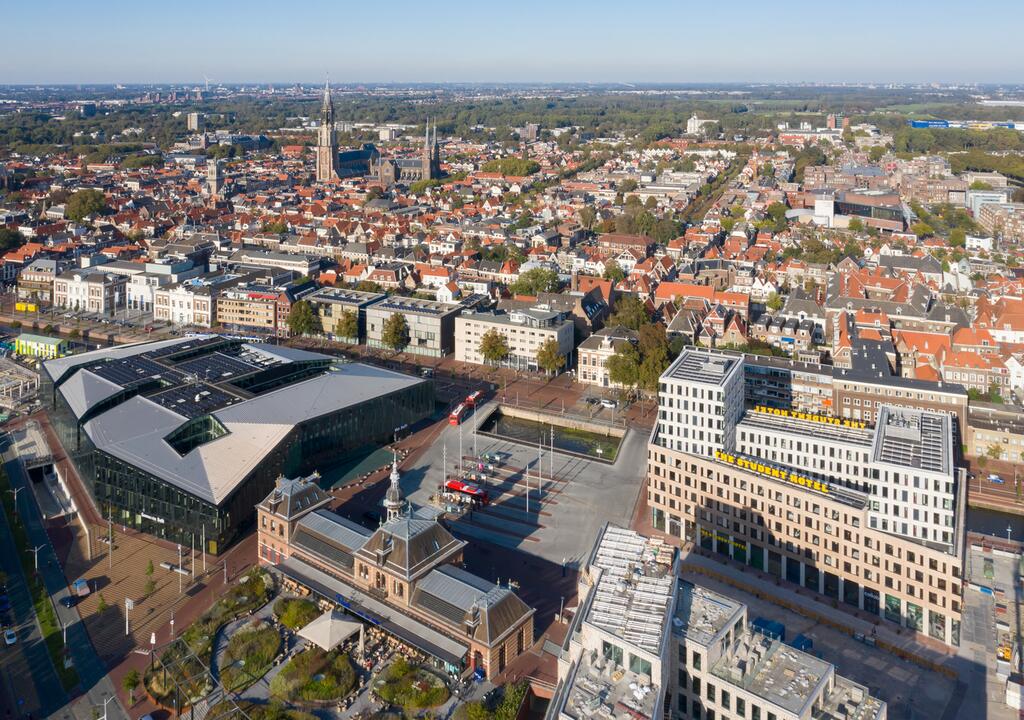
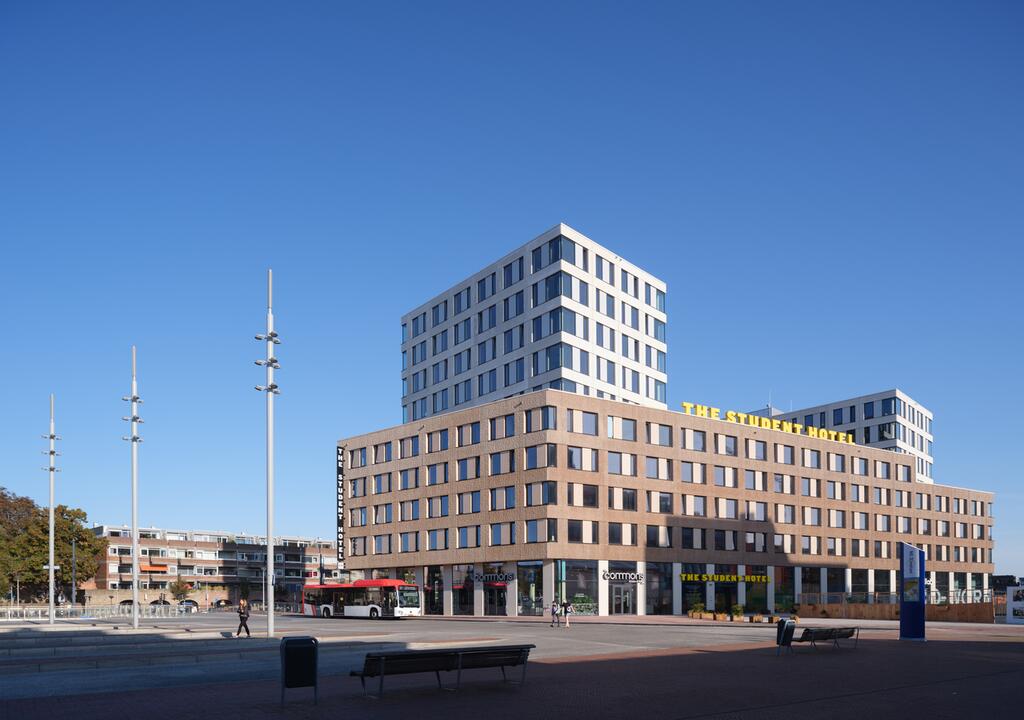
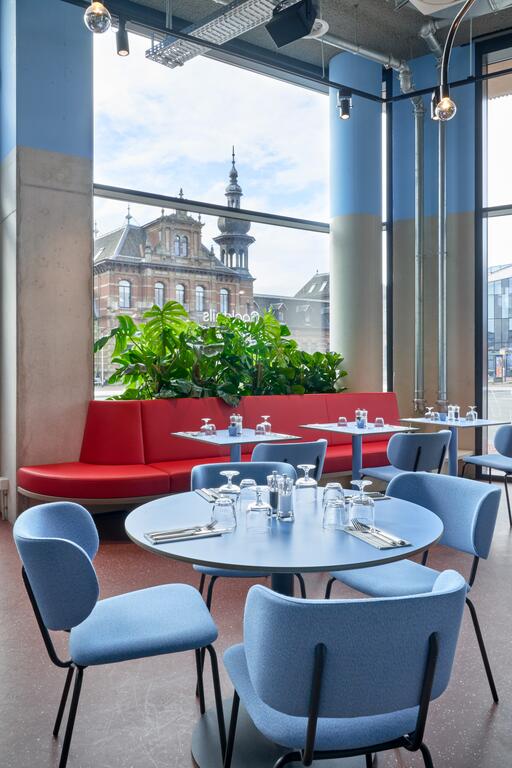
● Directly beside Delft station and minutes from the historic centre, it connects two sides of the city: centuries-old Delft and the innovation culture surrounding TU Delft.
Not Quite a Hotel
Hotel? Student residence? Office? Members’ club? The answer is essentially: all of them. The Social Hub Delft belongs to a new generation of hospitality where sleeping is only one part of the equation. Hotel guests share the building with students staying for months, entrepreneurs working from laptops, people attending events and locals dropping in for coffee, drinks or conversation. That mix is deliberate. Rather than separating visitors from the city around them, The Social Hub tries to create a community under one roof. And Delft is an unusually appropriate place to test the idea.
Old Delft, New Delft
Few Dutch cities combine past and future quite like Delft. On one side are canals, narrow merchant houses, church towers and the blue-and-white ceramics that made the city’s name famous around the world. On the other is TU Delft, one of Europe’s leading universities of technology, surrounded by laboratories, architects, engineers, start-ups and people attempting to invent whatever comes next. The Social Hub sits almost symbolically between the two, immediately beside Delft’s railway station and within walking distance of the historic centre. Its design chooses the future.
Engineering Becomes Interior Design
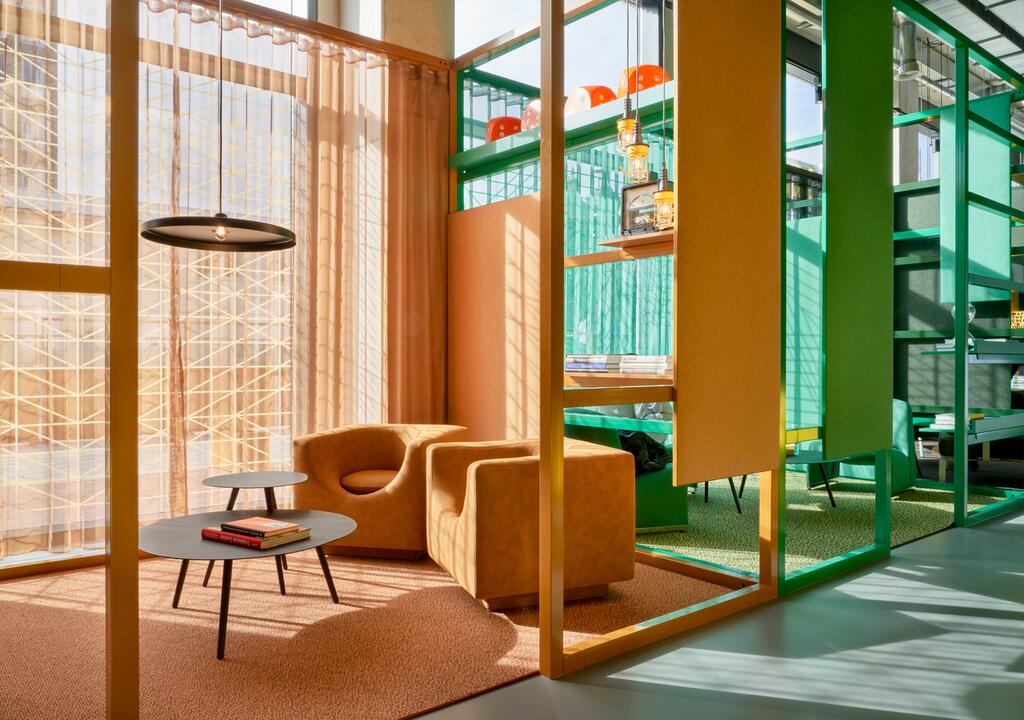
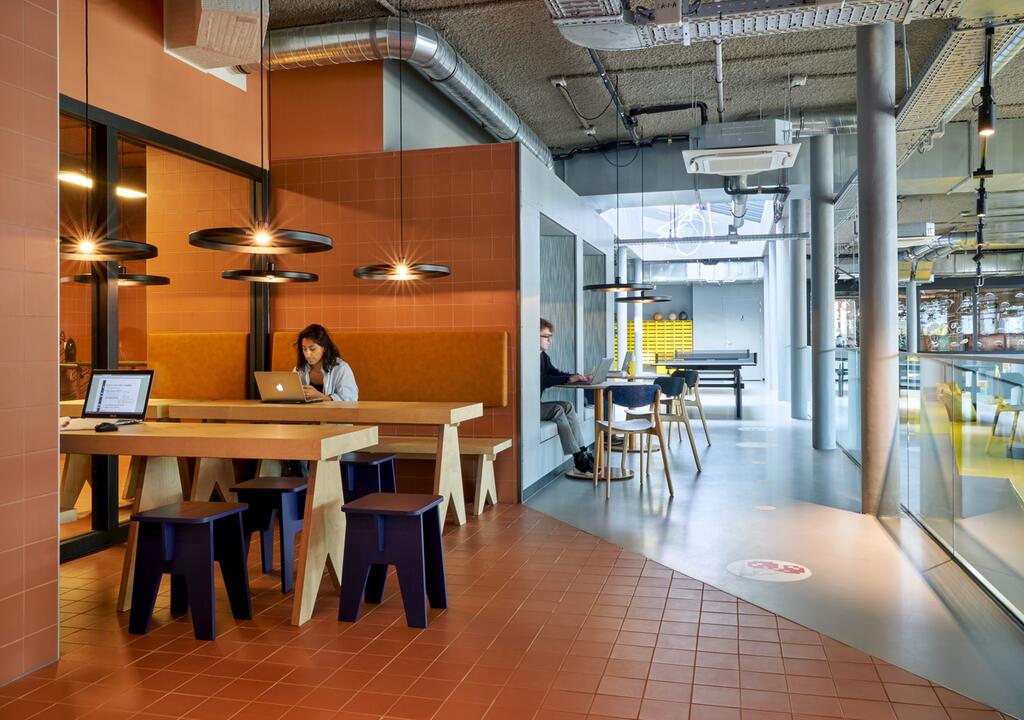
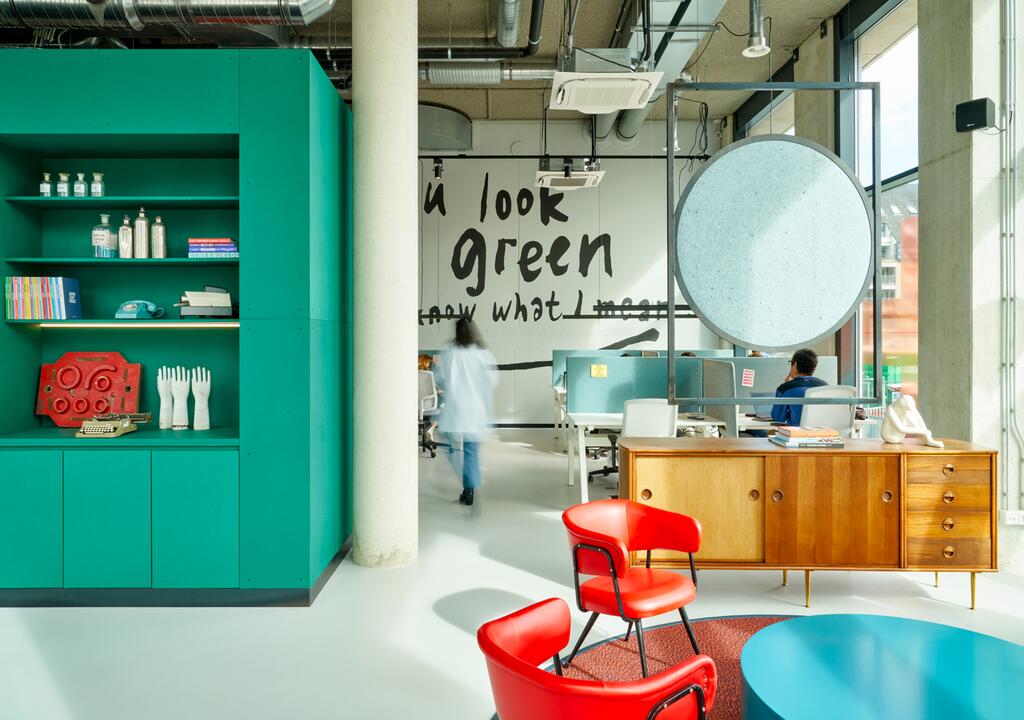
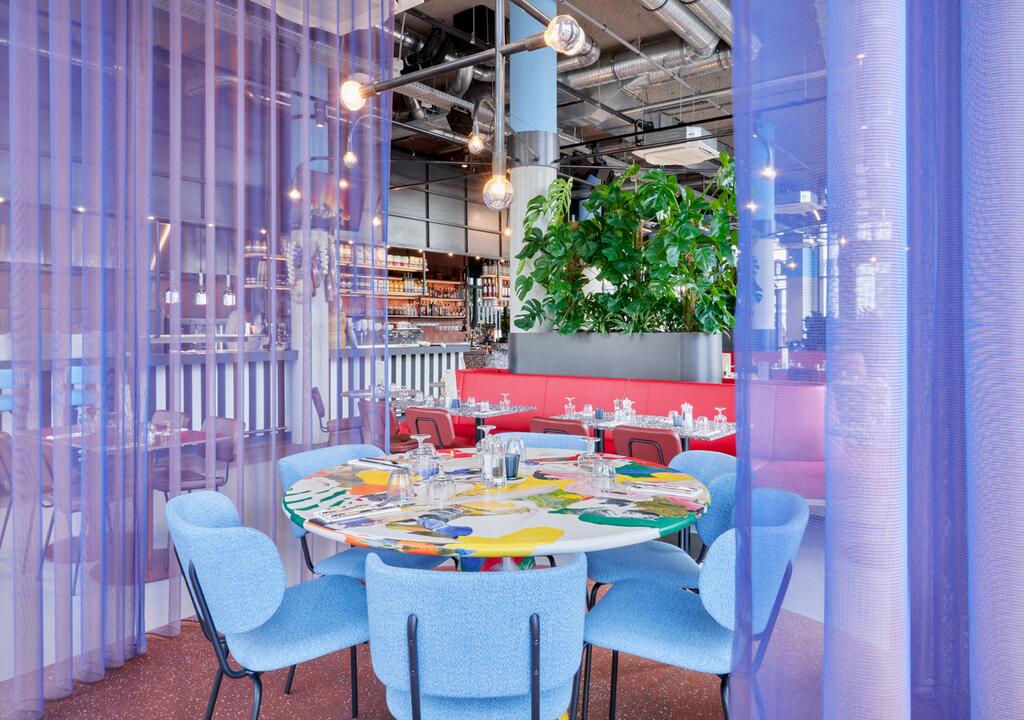
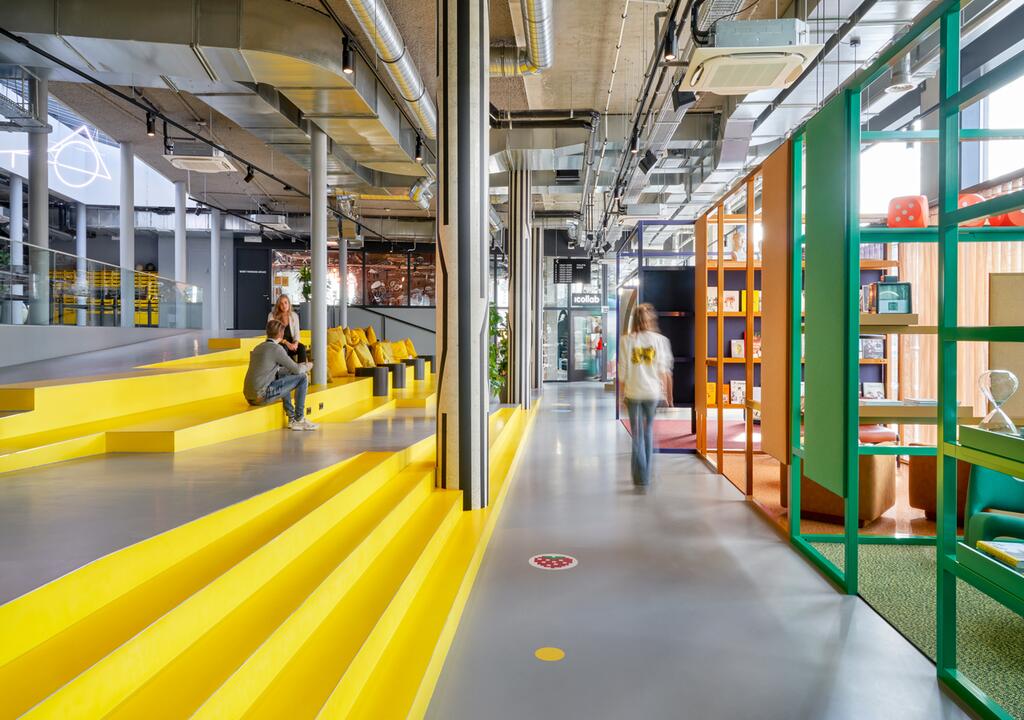
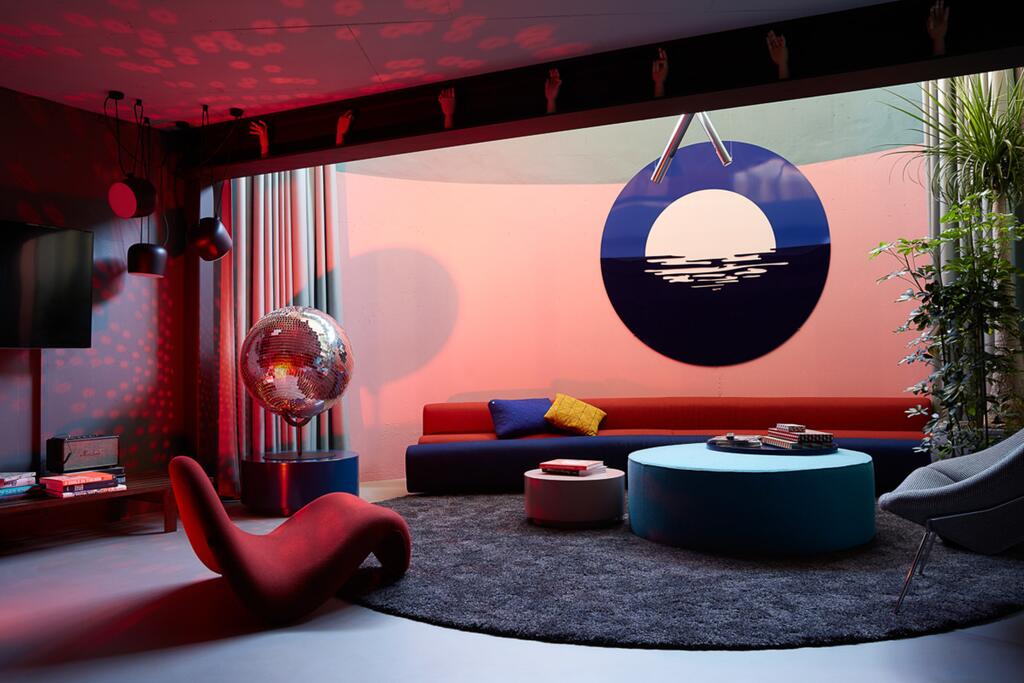
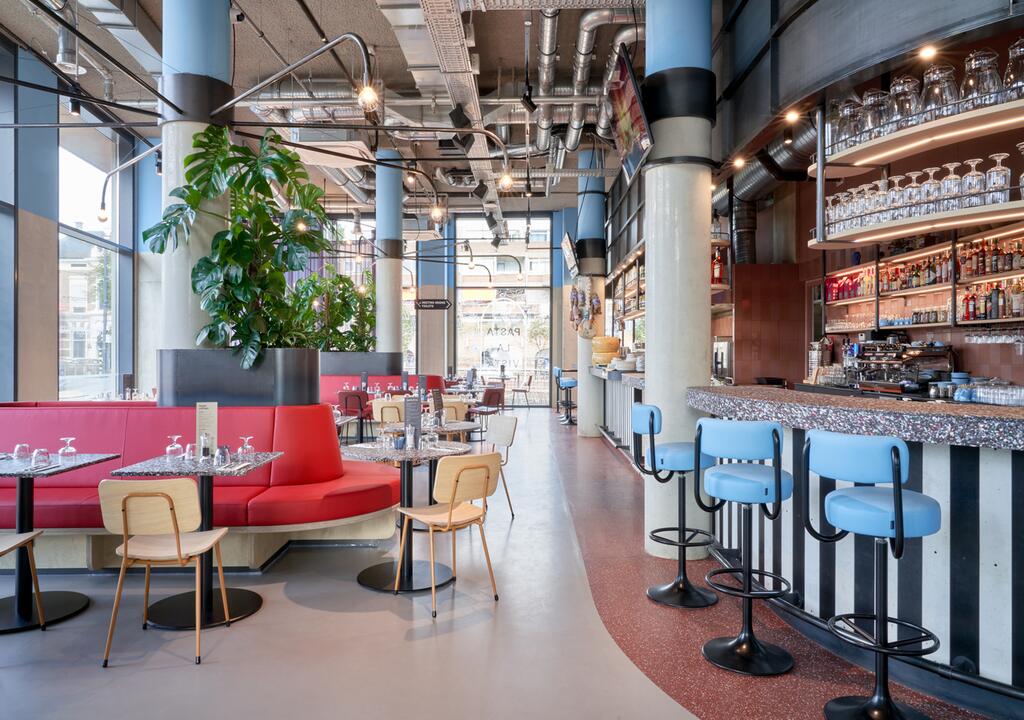
Rather than filling the building with predictable references to Delft Blue, the interiors look towards the city’s scientific side. Patterns inspired by computer grids, data and technology appear across floors and walls, while streamlined forms reference engineering and aerodynamics. Bold graphics, communal tables, flexible furniture and flashes of colour give the public spaces the energy of a university campus crossed with a contemporary hotel lobby. It is playful rather than precious. And because so much of life here happens outside the bedrooms, the communal spaces aren’t decorative extras. They’re the point of the building.
Designed to Meet Someone
The traditional hotel lobby is usually somewhere you pass through. Here, you’re supposed to stay. There are places to work, eat, exercise, study, meet, attend events or simply sit with a laptop. Hotel guests mingle with long-stay students and co-workers, creating the possibility of the sort of accidental encounters conventional hotels increasingly try to manufacture. At The Social Hub, they happen naturally because different groups genuinely use the same building. You might arrive for two nights. The person sitting beside you could be living here for a semester.
Circular Thinking
That forward-looking philosophy extends to sustainability. The Delft property was conceived around principles of circular design, looking beyond operational efficiency towards what happens to materials and interiors over their entire lifespan. Reuse, recycling and repurposing inform material choices, while modular elements allow parts of the interior to be adapted rather than simply discarded when requirements change. It’s an appropriate approach for a hotel in a city obsessed with solving problems through design: don’t just ask what something looks like today, but what can happen to it tomorrow.
Stay, Study, Work, Repeat
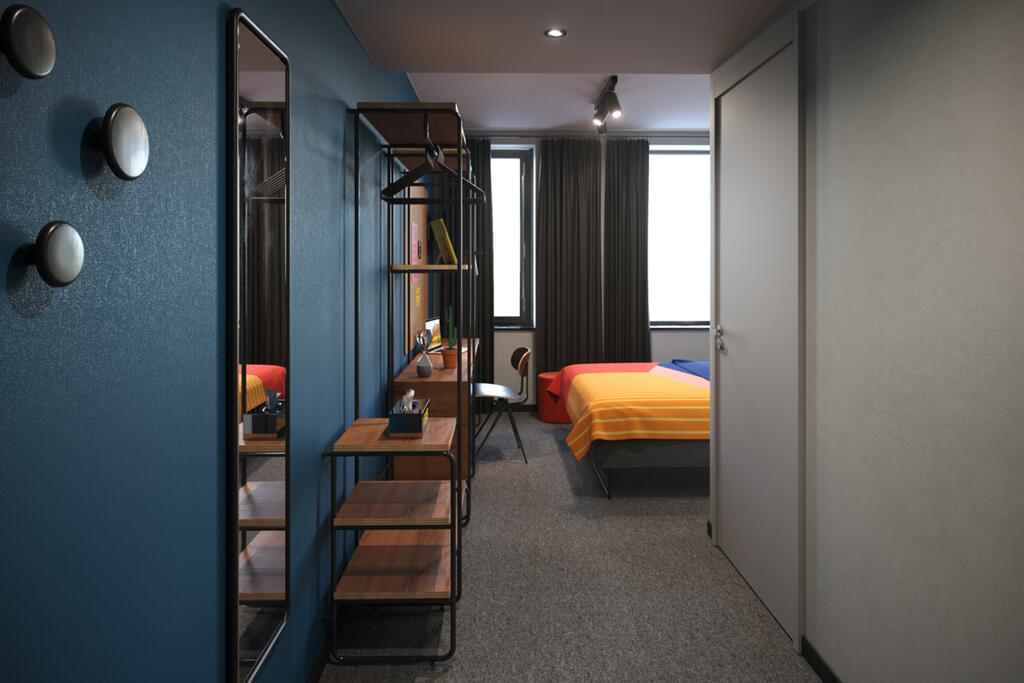
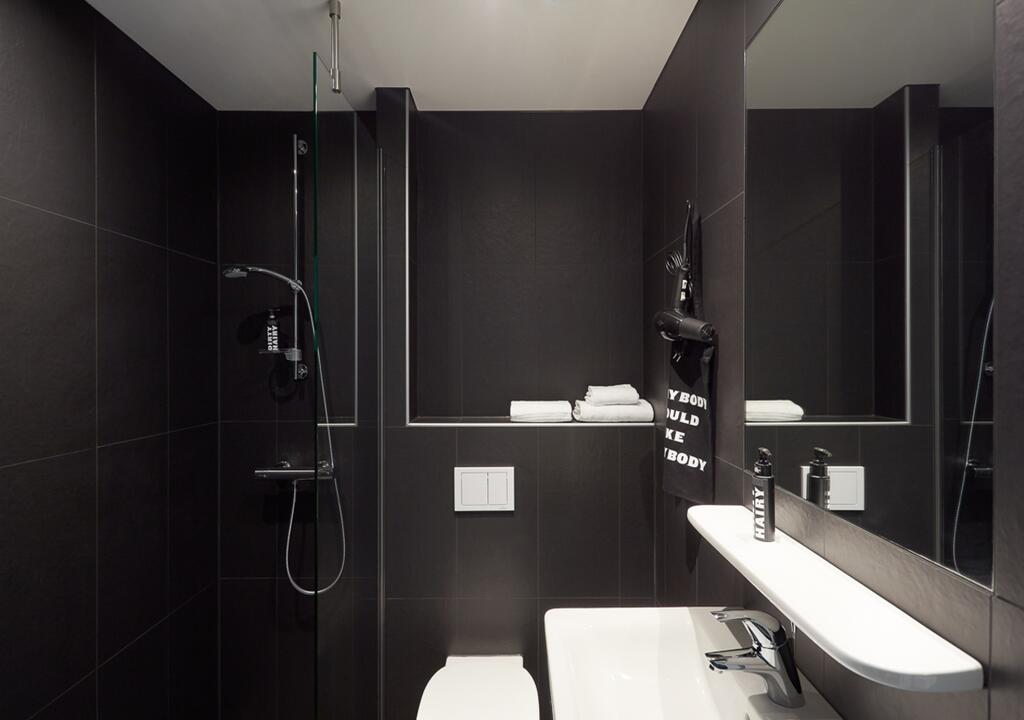
The bedrooms themselves are deliberately straightforward. This isn’t a hotel built around marble bathrooms and hushed corridors. Its luxury is access. Access to communal spaces. To people. To somewhere comfortable to work. To events and ideas. To Delft itself. That makes The Social Hub particularly suited to solo travellers, younger guests and anyone who finds the anonymity of a conventional business hotel rather depressing. Because here, disappearing into your room somewhat misses the point.
The Hotel as Social Infrastructure
The Social Hub Delft is interesting not because it has reinvented the hotel room. It hasn’t. What it questions is everything around it. By combining hotel, student accommodation, co-working, events and social spaces, it treats hospitality less as a temporary transaction and more as a piece of urban infrastructure. In historic Delft — a city whose future is being designed in laboratories just down the road — that feels remarkably appropriate. Come for a bed. Stay for the collision of ideas.